

With its terraced vineyards and scenic roads, the Portuguese Douro Valley invites you to explore it at a leisurely pace: take a ride on a rabelo boat, discover wine museums, and stop at its miradouros to admire the ever-changing landscape of the Douro.
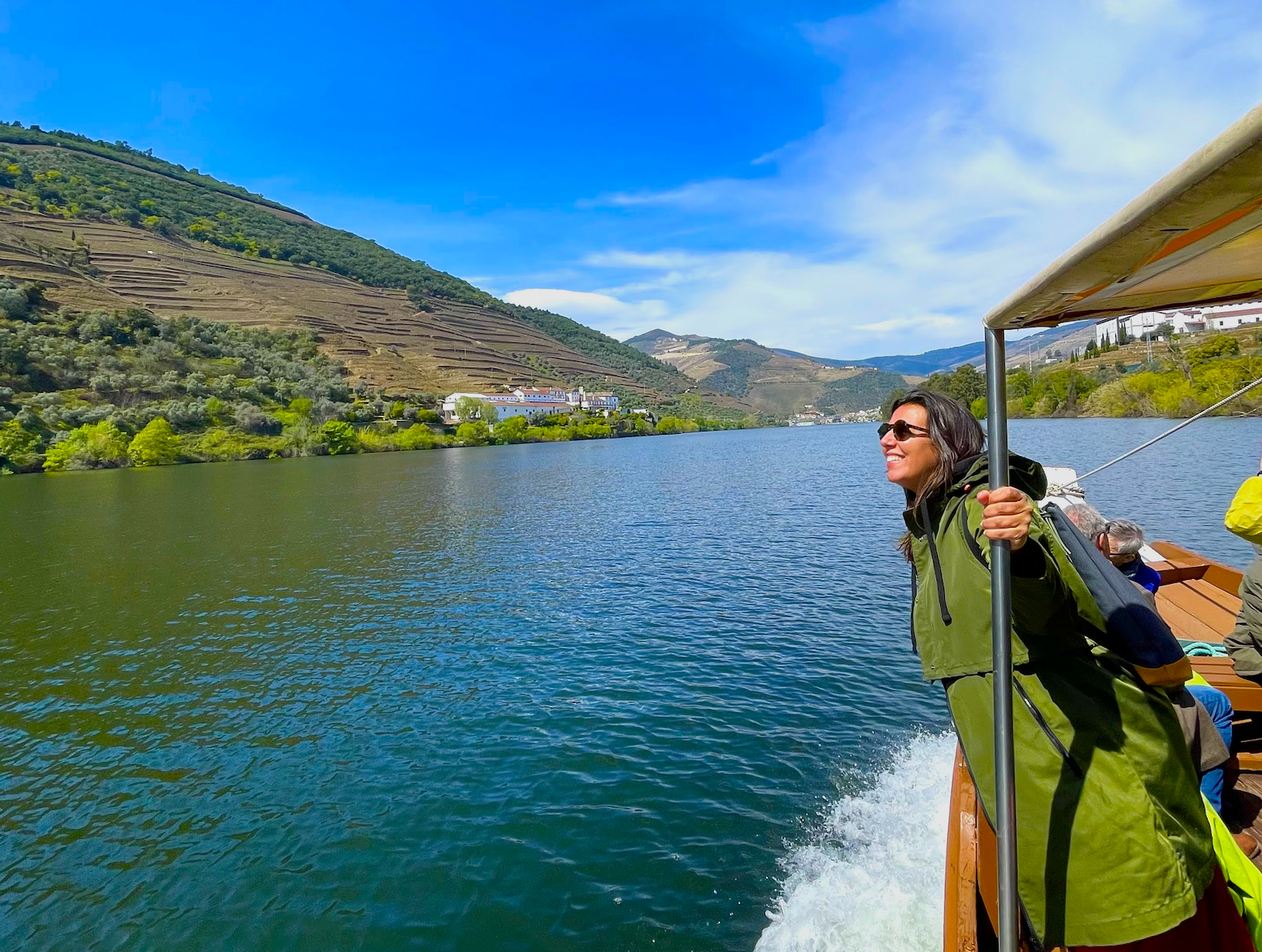
Peso da Régua is the gateway to its wine culture and the world’s oldest demarcated wine region. In the heart of the valley, Pinhão offers the classic rabelo boat ride to take in the landscape from the water, while a constellation of viewpoints —such as São Leonardo de Galafura—that frame the valley with light that shifts by the hour encapsulate the beauty of the Alto Douro Vinhateiro, a World Heritage Site. Further east, Foz Côa connects the journey to prehistory through its rock art and spectacular views: here, the Douro is not just admired, it is understood.
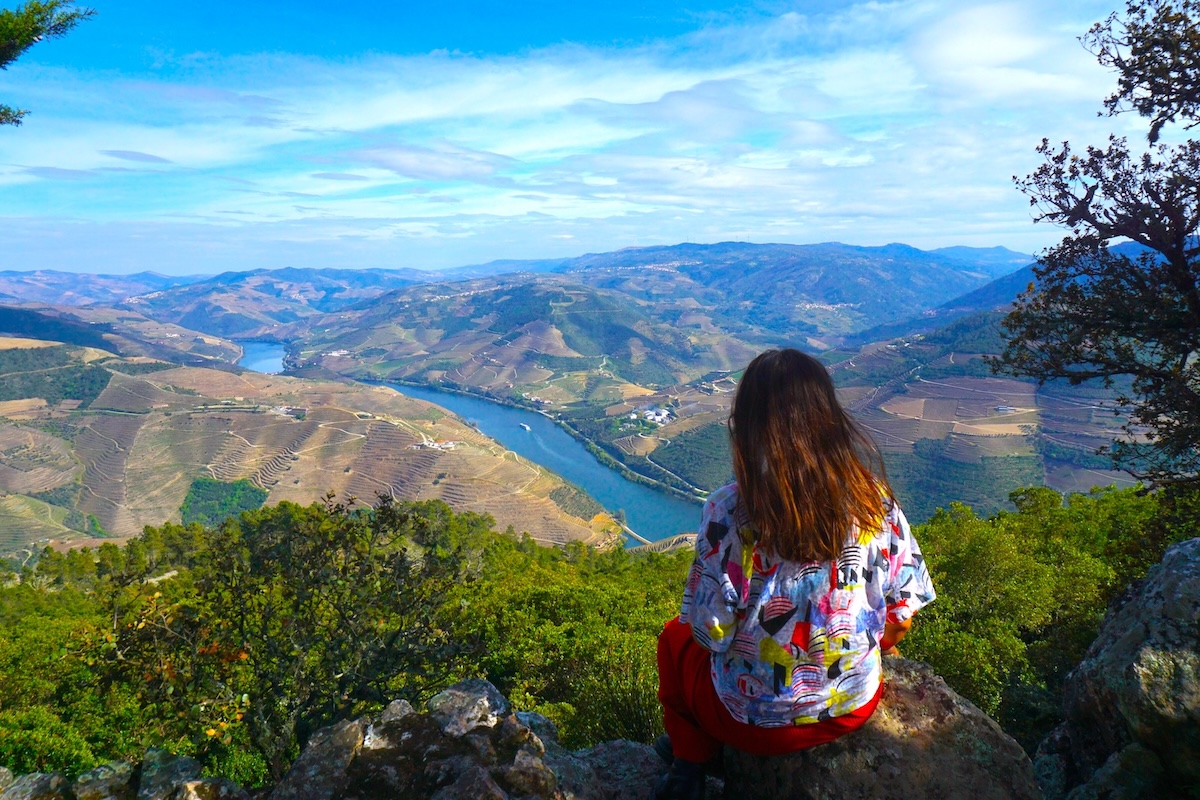
In this guide, we invite you to explore a region where beauty isn’t just admired— it’s discovered glass in hand, to the slow rhythm of the river and the golden sun that envelops everything. We’ll tell you everything there is to see in the Portuguese Douro Valley with practical tips, one- or multi-day itineraries, where to stay, and even where to eat so your getaway is as incredible as ours has been.
Basic information for traveling to the Douro Valley
Language: Portuguese
Currency: Euro (€)
Population: 183,886 (in 2021)
When to visit: In our opinion, the best months are April, May, June, and October, due to good weather and fewer tourists. That said, the three areas of the Douro Valley have different climates, and depending on what you’re looking for, other months might be better (for example, if you want to visit during the grape harvest). More info here
How many days: At least 3 days (a weekend), 5 days is recommended, and if you can, a week to explore at a more leisurely pace and even treat yourself to a stay at one of the incredible accommodations—even better. More info here.
How to get there: There are flights with low-cost airlines from several European cities to Porto, the closest airport to the region. We recommend using flight comparison sites likeSkyscannerandKiwiand being flexible with your dates. To explore the region, the best option is to rent a car, and if you’re coming from other parts of Portugal or Spain, you can drive directly there. There are also some public transportation options (train and bus) and day trips like this one if you don’t want to drive or want to go for a day from Porto. More info here.
Where to stay: If you’re basing yourself in the three areas, the best approach is to split your nights between Peso da Régua/Lamego, Pinhão, and Vila Nova de Foz Côa, though there are plenty of unique accommodations to choose from in between. If you’re looking to treat yourself, one of the most sought-after options is the Six Senses Douro Valley. More info here
What tours to book: Among the must-do experiences on this trip is the a rabelo boat ride on the Douro and, of course, visiting a vineyard estate with a wine tasting, such as Quinta do Bomfim, Quinta da Portela, or Quinta da Faisca. We also recommend the olive oil and wine tasting at D’Origem. If you’re traveling during peak season (summer and September during the grape harvest), it’s best to book both tours in advance.
What to bring: here’s a list of essentials for your backpack on this trip (check out our favorites from Decathlon)
How to get around: The best option is to rent a car so you can travel at your own pace, though you can also reach some places by train or bus, or book tours. More info here
How much does it cost: Starting at €70/day per person (approx.) for a 5-day trip with a rental car and the most economical private accommodation options for two. More info here
Internet connection: If you are visiting for a few days, your phone supports eSIM and you don’t want to complicate things, we recommend Holafly eSIM (unlimited data, 5% discount with the code RANDOMTRIP) or Airalo eSIM (limited data, but cheaper, 15% discount with the code RANDOMTRIP15). Otherwise, the cheapest way is to get a local SIM (the main companies are Vodafone, Meo and Nos). More info here
Time zone: UTC +1. The time in the Douro Valley (Portugal) is one hour behind the Spanish mainland and the Balearic Islands

When to visit the Douro Valley
There are several factors to consider regarding the best time to visit the Douro Valley, although the most special time (but also the most popular, with higher prices and the need to book everything well in advance) is September, as it is harvest season. In general, in terms of climate, the best time is spring or fall, as this is an area with a wide temperature range, featuring very cold winters and very hot summers. It is commonly said in the region that the climate consists of 9 months of winter and 3 months of hell.
Climate
The climate in the Douro Valley varies across the three regions it is divided into, which we’ll discuss later in this guide:
Here are the tables showing the minimum and maximum temperatures, as well as the average number of rainy days, for various locations in the Douro Valley (from west to east): Baixo Corgo, Cima Corgo, and Douro Superior.
All three zones experience a wide temperature range, with cold winters and very hot summers, although the easternmost zone (Douro Superior) is the driest and hottest, and the westernmost zone (Baixo Corgo) is the wettest and rainiest.
Based on the climate, the best times to visit the Douro Valley, in our opinion, are the spring and fall months.

Below is a summary of the monthly climate at two locations in the Douro Valley: Peso da Régua (Baixo Corgo) and Torre de Moncorvo (Douro Superior):
Monthly climate in Peso da Régua
| Month | Minimum temperature | Maximum temperature | Rainy days |
|---|---|---|---|
| January | 5ºC | 12ºC | 10 |
| February | 5ºC | 13ºC | 8 |
| March | 7ºC | 16ºC | 8 |
| April | 9ºC | 18ºC | 9 |
| May | 11ºC | 21ºC | 8 |
| June | 14ºC | 26ºC | 4 |
| July | 16ºC | 29ºC | 2 |
| August | 16ºC | 30ºC | 2 |
| September | 15ºC | 26ºC | 5 |
| October | 11ºC | 20ºC | 10 |
| November | 7ºC | 15ºC | 10 |
| December | 5ºC | 12ºC | 11 |
| Month | Minimum temperature | Maximum temperature | Rainy days |
Monthly climate in Torre de Moncorvo
| Month | Minimum temperature | Maximum temperature | Rainy days |
|---|---|---|---|
| January | 3ºC | 10ºC | 9 |
| February | 4ºC | 13ºC | 7 |
| March | 6ºC | 16ºC | 7 |
| April | 8ºC | 18ºC | 9 |
| May | 11ºC | 21ºC | 7 |
| June | 14ºC | 27ºC | 4 |
| July | 17ºC | 31ºC | 2 |
| August | 17ºC | 31ºC | 2 |
| September | 15ºC | 26ºC | 5 |
| October | 11ºC | 20ºC | 9 |
| November | 7ºC | 14ºC | 9 |
| December | 4ºC | 11ºC | 9 |
| Month | Minimum temperature | Maximum temperature | Days of rain |
Tourist Demand
The peak tourist seasons (and therefore when you’ll find more people, longer lines, higher prices, and more difficulty getting into restaurants or popular attractions) are:
- Holy Week (March/April)
- Summer (July and August)
- Grape Harvest (September), the region’s peak season
- Long weekends (November, December)
We therefore recommend avoiding these dates if you want to enjoy the region at a more leisurely pace and with better accommodation prices.
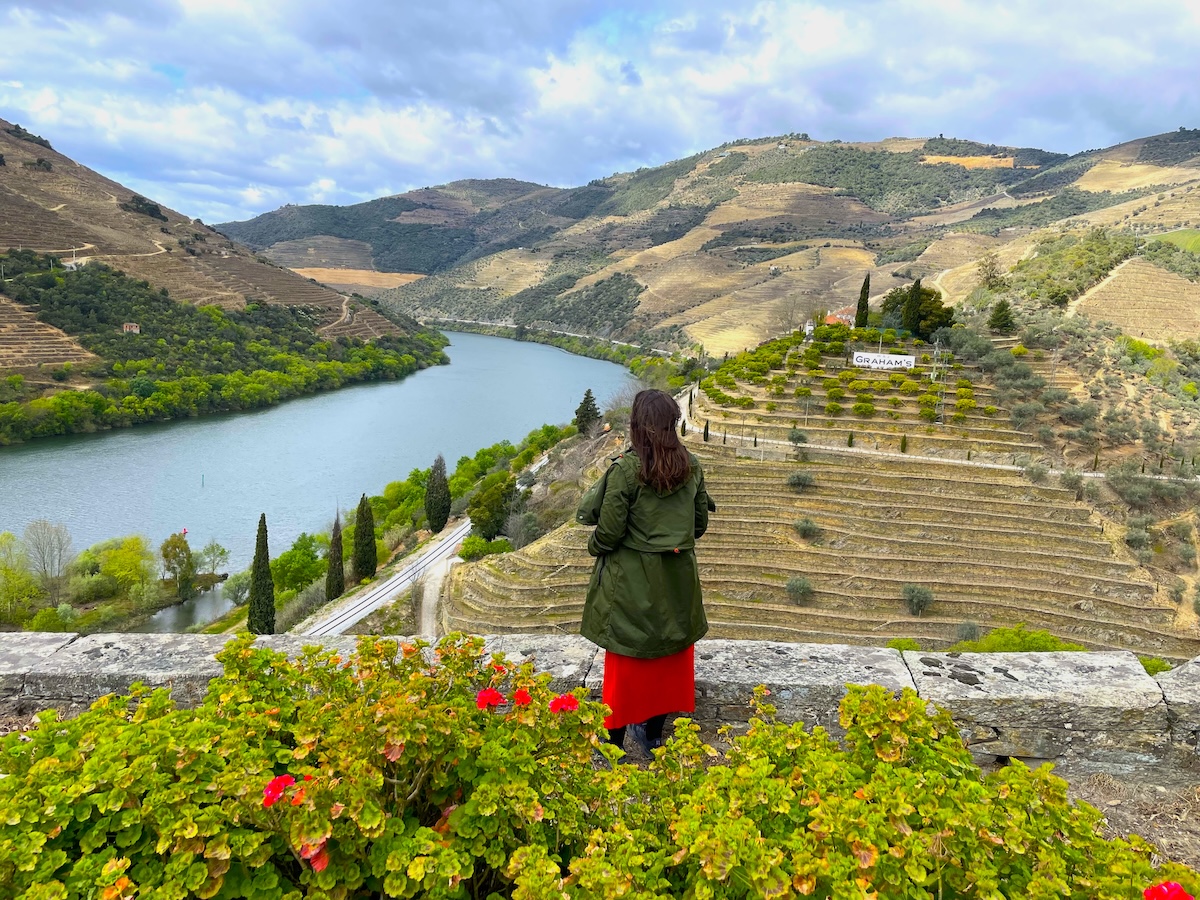
We went to Randomtrip in April, before Easter, and we really liked it, though we’re looking forward to going back at the end of the year , in September or October, to see greener scenery ( it was drier when we were there).

Festivities
If you want to time your trip to coincide with the most important event, that would be the grape harvest, which usually takes place in September. Some wineries and quintas organize special events so that visitors can participate in and/or observe parts of the harvest process. The best approach is to contact the different wineries directly to find out about their programs and prices, or check publications (mostly in Portuguese) that list them, such as Timeout
Another important festival in the Douro Valley is the Douro & Porto Wine Festival (in July, but check the dates on the official website), a festival featuring concerts, food, and of course, wine.

Summary: Best months to visit the Douro Valley
Based on the above, if you’re looking to visit the Douro Valley when it’s less crowded, with good weather and reasonable prices, the best months are April, May, June, and October.
- The most popular month is September, due to the harvest, but everything is more expensive and sells out faster
- In July and August, the heat can be too much, and there is high demand
- The best months (besides September) are April, May, June, and October.

How to get to the Douro Valley
If you’re traveling from far away, the closest airport to the Douro Valley is Porto, a well-connected city, so you have several options for getting there, depending on where you’re starting your trip.
Porto International Airport has connections to many European destinations and is served by low-cost carriers like EasyJet and Ryanair, so you’re likely to find good prices. We recommend using flight comparison sites like Skyscanner and Kiwi and being flexible with your dates.

Once in Porto, you have several transportation options:
- Renting a car, undoubtedly the best option since the Douro Valley is full of viewpoints and hidden spots that are hard to reach without your own vehicle. As always, we recommend comparing prices and companies on DiscoverCars
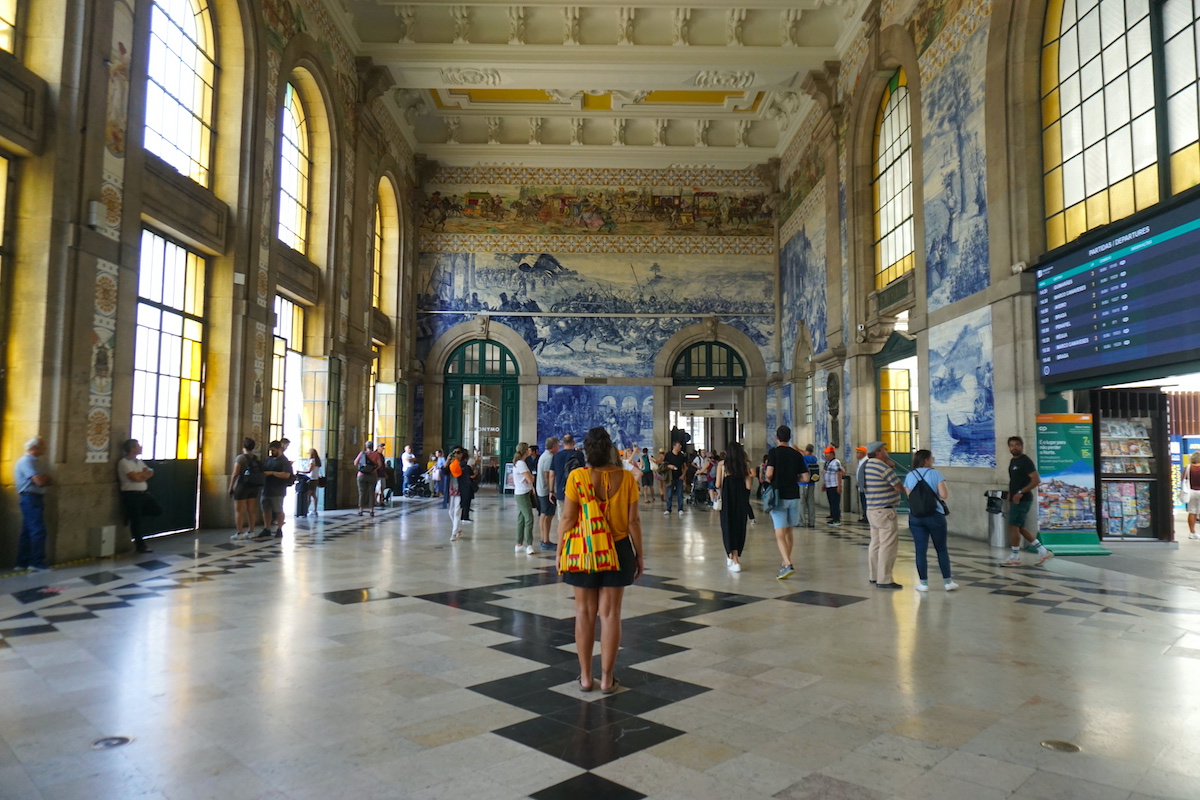
- By train, another excellent option to enjoy scenery from the train that you won’t be able to see from any other mode of transportation. Regional trains depart from the Porto-São Bento and Porto-Campanhã stations, stopping at some of the places we mention in the guide, such as Peso da Régua, Pinhão, or Pocinho (Foz Côa). You can check schedules and prices on the official CP (Comboios de Portugal) website, and you can view the official map with all the lines and stops here. CP also offers the special Comboio Miradouro, a daily scenic train to enjoy the views even more, which also departs from both stations in Porto (Porto-São Bento and Porto-Campanhã) and stops at the main points of interest mentioned in this guide (such as Régua, Pinhão, and Pocinho – Foz Côa); more info here. On certain dates, CP also offers the Comboio Presidencial and the Comboio Histórico
- By bus, Rede Expressos has direct buses from Porto to Peso da Régua and Lamego, with a transfer to Foz Côa
- By tour, if you don’t want to rent a car (or don’t drive) and want to make the most of your trip, the other recommended option is a tour (public transportation by train and bus takes you to some of the places but not all of them). There are plenty of tours from Porto; below are some options by car and by boat (keep in mind that these are day trips, so it’s impossible to visit everything included in this guide, but they can give you a good idea of the region):
- Vineyard and Winery Tour of the Douro Valley
- Complete Douro Valley Wine Tour with Lunch, Wine Tastings, and River Cruise
- Small-Group Tour of the Duero Valley with Wine Tasting, Lunch, and Boat Ride
- Premium Wine Tour, Winery Lunch, and Private River Cruise
- 1-Day Cruise to Régua
- 1-Day Cruise to Pinhão
- Tour of the Douro Region

How many days to spend in the Douro Valley
In our opinion, at least 2 to 3 days, and ideally 5 days, to get to know and enjoy the area without rushing from one place to another. However, if you can extend your stay to 7 days or more and treat yourself to one of the incredible accommodations in the area, you won’t regret it.
To make things easier, below we suggest several itineraries to help you plan your trip.

Things to see and do in the Douro Valley
This guide is organized into three areas so you can plan your route clearly and at your own pace: Baixo Corgo, Cima Corgo, and Douro Superior.
In Baixo Corgo, the western gateway—closest to the Atlantic and with an urban-wine-growing vibe—start strong: Peso da Régua and the Museu do Douro to get started, the Barragem da Régua dam to see how the river is tamed, and a constellation of viewpoints—Boa Vista, São Silvestre, Frende, Barqueiros, Serra das Meadas, São Domingos—that invite you to stop, breathe, and take it all in.
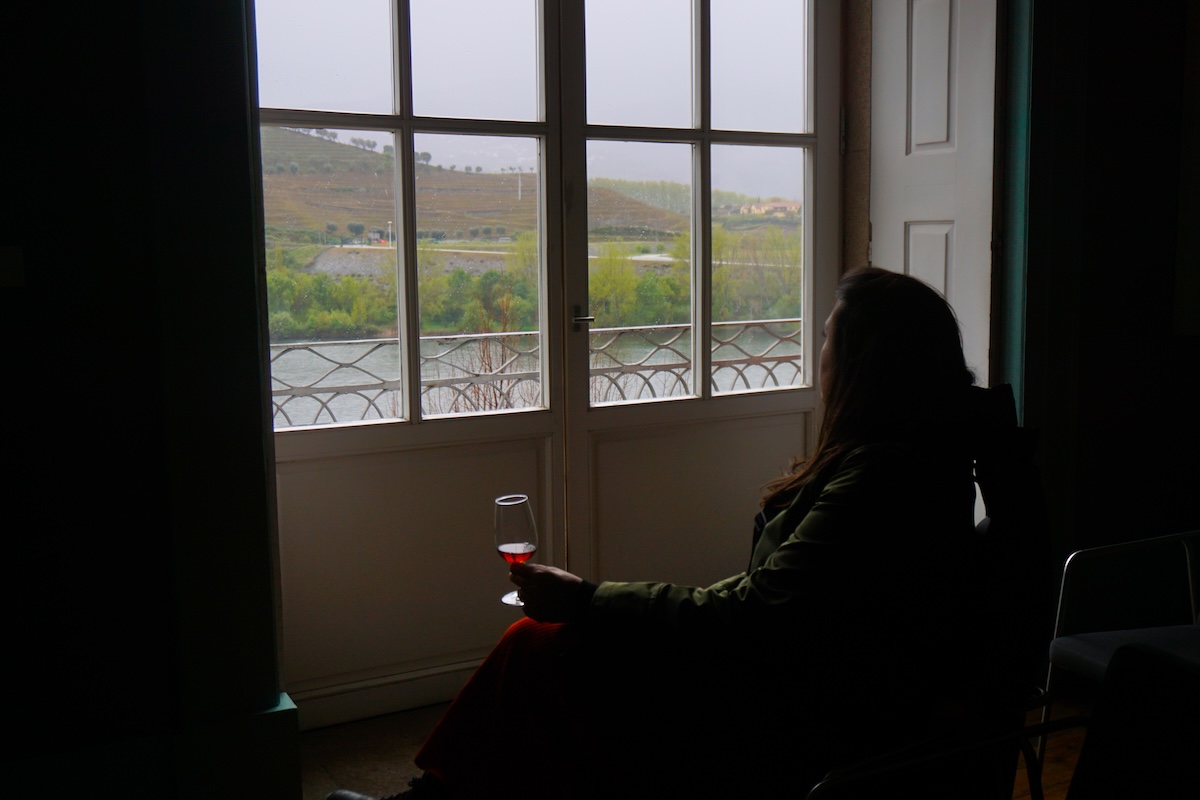
In Cima Corgo, the panoramic heart of the valley, where many emblematic quintas (estates) and iconic viewpoints are concentrated, the plan is to look and move: Pinhão and its rabelo boat ride to Tua, Casal de Loivos as a perfect postcard, and a list of viewpoints that never disappoint —São Leonardo de Galafura, São Salvador do Mundo, Vargelas, Rota do Douro, Ujo, São Lourenço, Olhos do Tua— with the N222 serving as the connecting thread between vineyards and quintas.

Finally, the Douro Superior (Upper Douro), now near the Spanish border, reveals wilder and more remote landscapes, perfect for combining wine, nature, and archaeology. Here, history takes center stage: Vila Nova de Foz Côa and its museum, the open-air Archaeological Park, and viewpoints such as the one at the museum itself or Santa Bárbara de Lousa, culminating with Castelo Melhor, Barca Velha, Foz do Rio Sabor, and Freixo Numão. In the Upper Douro, the Douro is experienced with the eyes… and with the memory.
Here you can see a map of the Douro regions (source):

Map of the Douro Valley
Here is a Google Maps map featuring all the points of interest in the Douro Valley included in this guide, so you can save it and view it on your smartphone. The three areas we just mentioned are color-coded (blue = Baixo Corgo, green = Cima Corgo, red = Upper Douro):
A Brief Introduction to the Douro Valley
Did you know that Port wine technically isn’t from Porto? Most of the wine is grown further inland, here in the Douro Valley region, where there are numerous wineries producing excellent “regular” wines with the “Douro” designation of origin.

In the 17th and 18th centuries, England and Portugal had special trade agreements that led many English people to settle in Portugal and devote themselves to growing and exporting wine (initially further north, in Viana do Castelo, and later in the Douro Valley in search of fuller-bodied wines). The fastest way to transport the wine was via the Douro River ( on the iconic Rabelo boat), which is why the port of Porto became the ideal location for exporting the wines, and why the wine came to be known as “Vinho do Porto”/”Port wine.”

To better preserve the wine during the sea voyage, a little brandy was sometimes added, fortifying it and preventing it from spoiling. Although that process is not followed today, it was the precursor to what defines Port wine today (it used to be added for transport; now it is added during the fermentation process).
To add even more intrigue to the story, and as you can see, the wineries aren’t even in Porto today: they’re located across the river in Gaia (which isn’t part of Porto), where the wine ages—in theory, due to the climate.
In short, if you’re interested in learning more about Port Wine and other wines from the region, you’ve come to the right place because ideally you should spend a few days visiting the beautiful Douro Valley region, to which we’ve dedicated this guide. If you don’t have much time, you have the option of taking a day trip to the Douro Valley from Porto, with a round-trip in a single day.

Baixa Corgo Area
The Baixo Corgo is the gateway to the Douro from Porto: greener and more humid, with low terraces along the river and riverside towns and villages like Peso da Régua, considered the birthplace of Douro viticulture and home to the Museu do Douro, ideal for catching up and understanding why this valley lives and breathes wine. Here you’ll find classic viewpoints overlooking vineyards and river meanders (Imaginário, São Silvestre, Barqueiros, Frende, Boa Vista, Serra das Meadas, São Domingos), and between one panoramic view and the next, Lamego adds a dose of history and azulejos, as well as active river infrastructure like the Régua Dam, which provides the cherry on top with “live engineering” whenever a boat passes by. In short: an ideal area to start strong with views, wine culture, and—thanks to the lack of mountain driving—zero drama behind the wheel.
Peso da Régua and the Douro Museum
Peso da Régua (or simply “Régua”) is the main town in the heart of the Douro Valley, which became a key hub for the wine trade thanks to the arrival of the railroad and the landing stage for the characteristic rabelo boats. It serves as the gateway to the Upper Douro and is an excellent starting point for your itinerary through the Baixo Corgo region.

Considered the wine capital of the Douro and one of the main centers of wine tourism in Portugal, one of Régua’s must-see attractions is the Douro Museum, housed in the historic Casa da Companhia Velha on the riverbank—a building of recognized heritage value, restored in 2008 and a symbol of the region’s wine-making legacy.
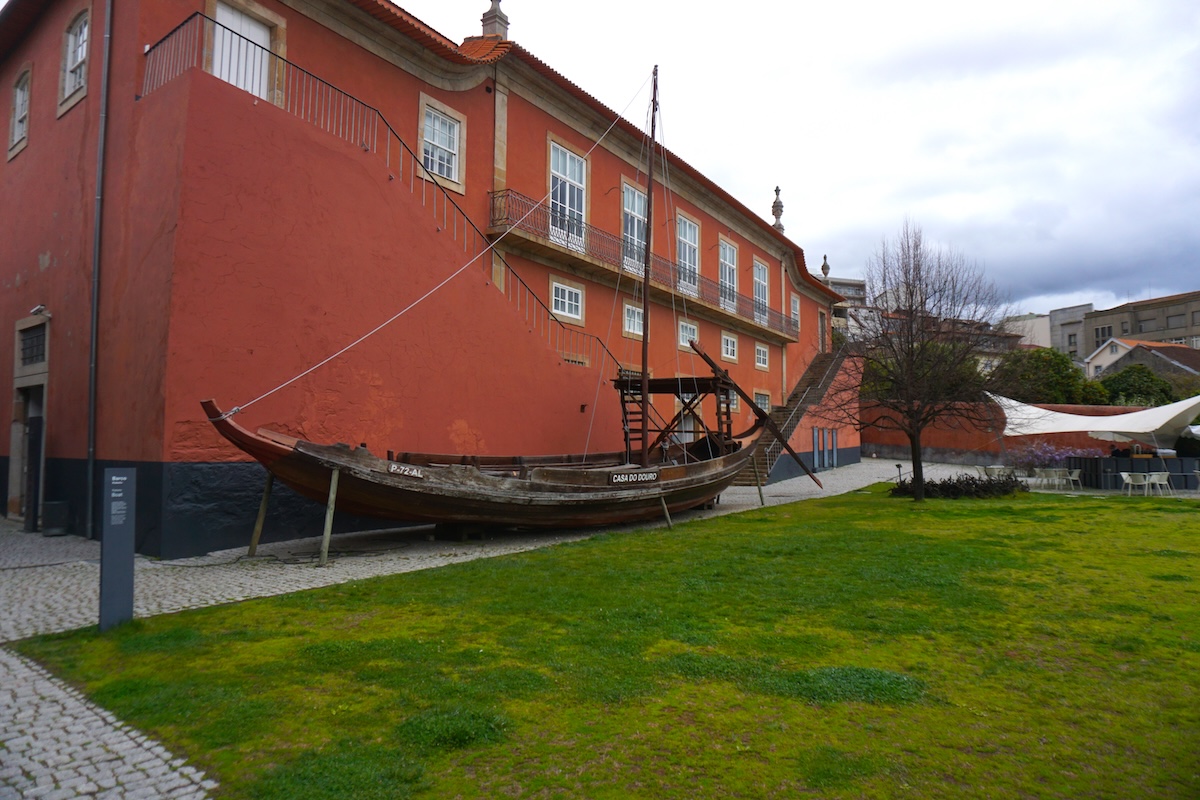
The museum traces the historical, geographical, and economic evolution of the wine-growing region, featuring interactive exhibits on cultural identity, the vineyard landscape, and the traditions of Douro wine. It also features a space dedicated to the artist Armanda Passos, a library, a gift shop, a restaurant with river views, and a wine bar with a terrace where you can enjoy a delicious glass of wine. The guided tour or audio guide also introduces visitors to collections on winemaking, the rabelo boats, and the valley’s ecosystems.

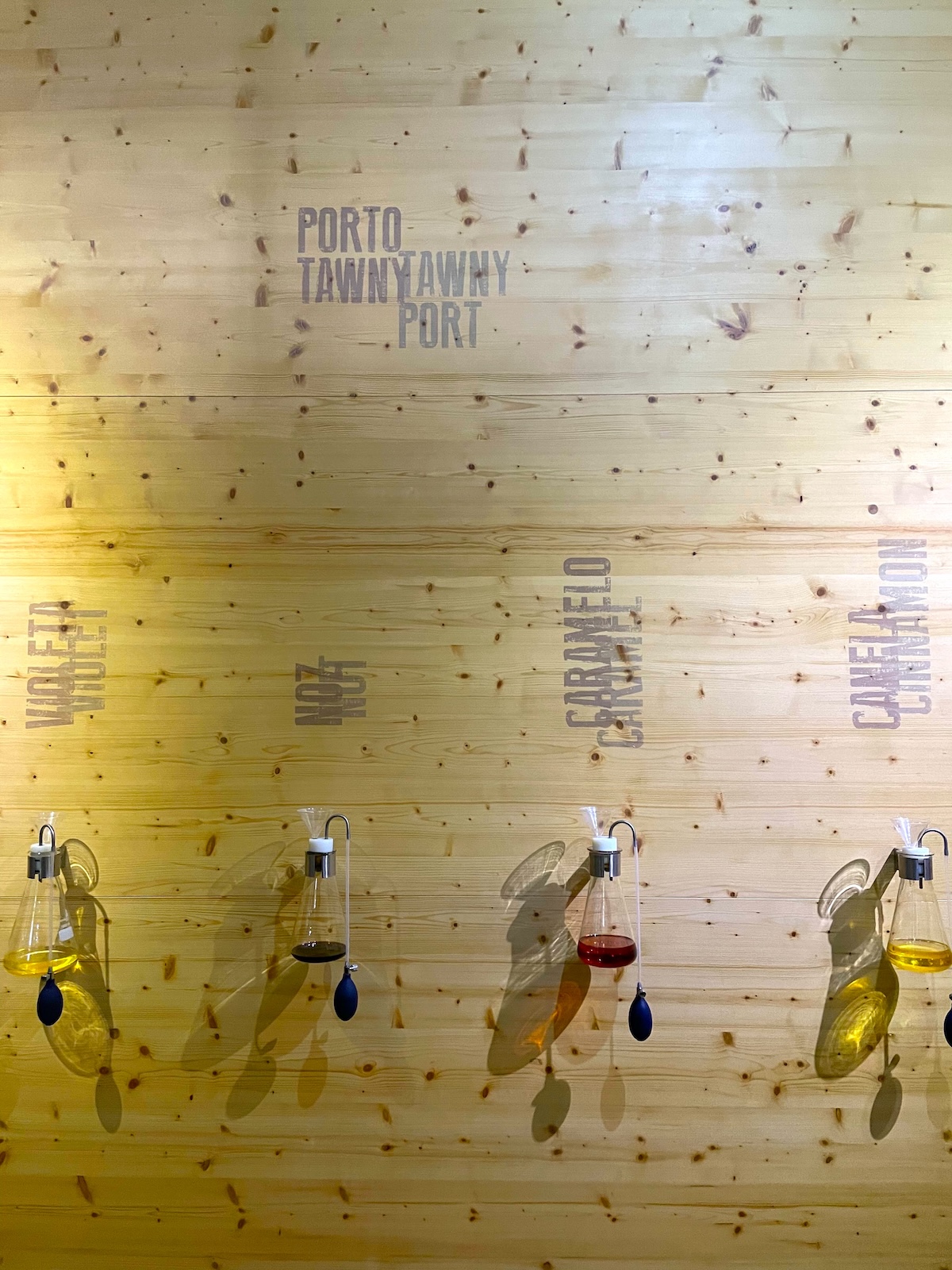



Opening hours: March through October from 10:00 AM to 6:00 PM (last admission at 5:45 PM); November through February from 10:00 AM to 5:30 PM (last admission at 5:15 PM). Closed on December 25, January 1, and May 1. Price (includes a glass of Tawny Port): €8/adults; €6.40/Douro residents; €4/under 25 and over 65; free admission for children under 12 (and on May 18, International Museum Day). There is also an option that includes lunch for €25 at the museum restaurant.
Miradouro do Imaginário
The Miradouro do Imaginário is unique in that it is shaped like a rabelo boat, the emblem of traditional wine transport along the Douro. In fact, its name, Imaginário, invites us to imagine that we are in an authentic rabelo suspended in the air, about 145 meters above the river.

From this viewpoint, you’ll enjoy a privileged panoramic view of the valley with its long curves winding through green hills.
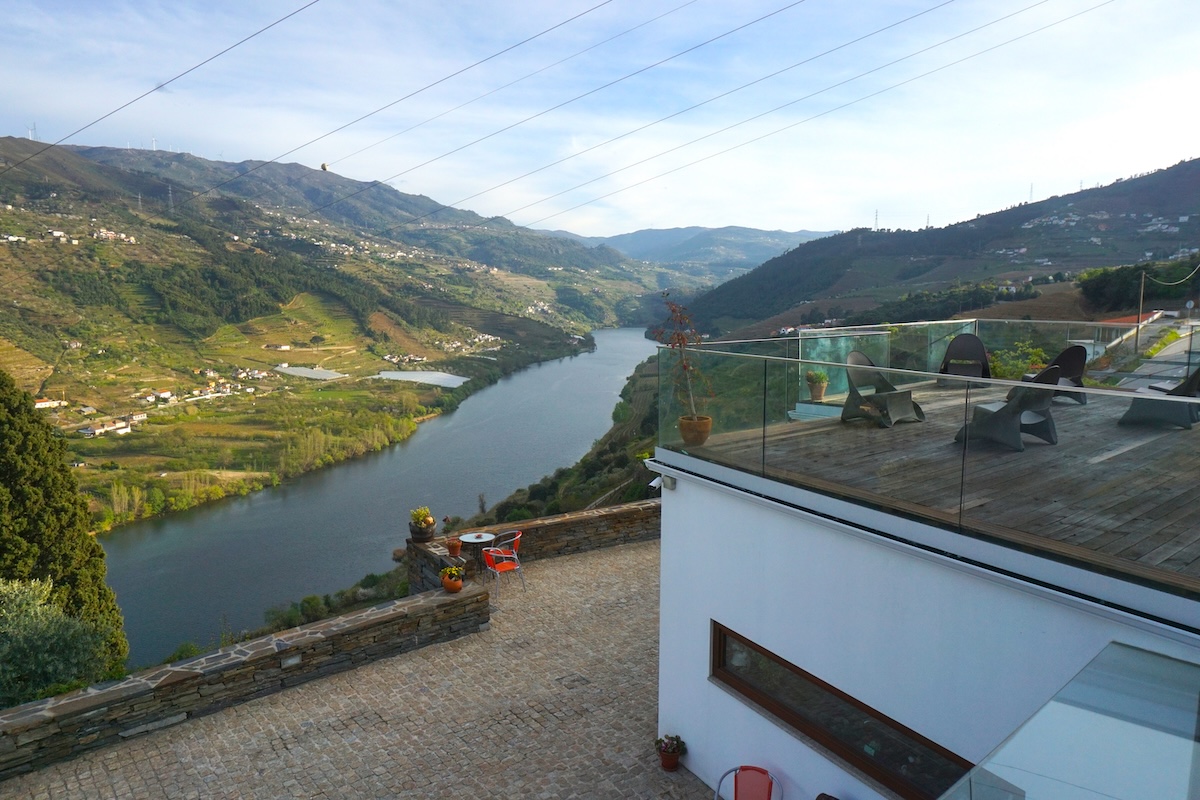
At RandomTrip, we stayed a few nights very close to this viewpoint, at a guesthouse with a pool overlooking the Douro River and the vineyards, the Imaginário D’El Rei- Guesthouse

São Silvestre Viewpoint (Cimo do Douro)
The Miradouro de São Silvestre offers one of the best panoramic views in the area, a sweeping 360º vista from the summit of the mountain of the same name. It sits at an altitude of 530 meters, and you can enjoy the views from a swing!

Nearby is a small chapel dedicated to Saint Sylvester with a spectacular view and an area with tables where you can have a snack.


Barqueiros Viewpoint
The Barqueiros Viewpoint stands out for its breathtaking view of the Douro Valley, with terraced vineyards and the iconic Casa da Vista Alegre, an elegant mansion that dominates the landscape from its hilltop position. It features 3 or 4 parking spots (here), a rest area or picnic spot with benches and tables, inviting you to stop and take in the surroundings.
Frende Viewpoint
Less well-known, less visited, and more modest than other nearby viewpoints, the Frende Viewpoint can easily be overlooked, so take your time driving along the road if you want to explore the best viewpoints in the Mesão Frio area.
Here, you’ll enjoy the north bank of the Douro with sweeping views of terraced vineyards stretching across the nearby hills.
Boa Vista Viewpoint
At the Miradouro da Boa Vista, a 10-minute drive from the city of Lamego, you’ll find a panoramic view of the Douro Valley, where terraced vineyards stretch across the slopes, forming a green mosaic that fades into the horizon. From here, you can gaze upon the winding Douro River, surrounded by hills that frame a classic Douro postcard scene.
In addition, the view from the Miradouro includes the city of Lamego and the town of Peso da Régua, which appear as small dots in the distance, and, in front, the imposing Serra de Marão.
Like most of the viewpoints we mention in this guide, if you visit at sunrise or sunset, you’ll enjoy a unique visual spectacle that changes with the light of day, bathing the landscape in warm, golden hues. The viewpoint has benches where you can rest and the option to have a picnic while taking in the scenery.
Miradouro da Serra das Meadas
From the Miradouro da Serra das Meadas, located at an altitude of about 860 meters, you can enjoy a sweeping panoramic view of the Douro Valley. The landscape includes traditional villages, extensive terraced vineyards with their famous quintas, pine forests, and olive groves. From here, you can also see the city of Lamego—which we’ll discuss next—and parts of the Douro River, as well as the imposing Serra de Marão.
Lamego
Lamego is a historic city in the Douro Valley that stands out as an ancient episcopal center with Roman and medieval roots, where in 1143, at the Cortes de Lamego, Afonso Henriques was proclaimed the first king of Portugal.
The city is dominated by two famous hills: one featuring the 12th-century Lamego Castle and the other the Baroque sanctuary of Nossa Senhora dos Remédios, with its majestic staircase decorated with tiles—both sites well worth a visit.
The Lamego Castle, whose medieval structure includes a walled enclosure and a 13th-century cistern, is ideal for enjoying panoramic views of the city. Additionally, on your way out, you can stop by the Porta dos Figos Archaeological Center, located in the historic Barrio do Castelo. This small museum is a “journey through time,” displaying artifacts that reveal the city’s evolution over more than two thousand years, from the Roman period (1st to 5th centuries), through the Suebi-Visigothic era (5th–7th centuries), and up to the Middle Ages. You can see remains of the ancient medieval walls, everyday objects such as pottery and glass, and even a significant Roman coin hoard from the 4th century. Additionally, the space features an interpretive exhibition with video projections and interactive screens that explain the history of Lamego. Hours: Tuesday through Sunday, 10:00 AM to 1:30 PM and 2:30 PM to 6:00 PM. Price: Free admission.

The Sanctuary of Nossa Senhora dos Remédios is impressive for its striking 700-step staircase and Rococo façade, as well as being a key site during the religious festivities in September. Admission to the sanctuary is free.
If you have more time and can wander through the historic city center, the Lamego Cathedral (Sé de Lamego ) stands out as a significant example of Gothic architecture featuring Italian frescoes, while the Municipal Museum, located in the former episcopal palace, houses Flemish tapestries and Renaissance art. Avenida Doutor Alfredo Sousa is ideal for soaking up the local atmosphere, enjoying the gardens, and sampling traditional cuisine.

São Domingos Viewpoint
The Miradouro de São Domingos is one of the most spectacular natural viewpoints on the Douro, with sweeping views that take in the Serra do Marão, the river’s course near Peso da Régua, and, to the west, the staircase and the sanctuary of Nossa Senhora dos Remédios in Lamego, making it a prime spot for photographing the vineyard landscape and the city from above.

In addition to the lookout point, you’ll find the small Chapel of São Domingos here, with documented references dating back to 1163 and a tradition of medieval pilgrimages; local chronicles mention royal visits in the 15th century and a“fertility stone”associated with fertility rites located next to the sacristy, which adds significant historical and cultural interest to the stop. If possible, try to visit at sunrise or sunset for the best light and views of the valleys and vineyards, especially on clear days.


Régua Dam
The Barragem da Régua Lock (also known as the Bagaúste Dam) allows for a maximum drop of about 28.5 m on the Douro River and is an interesting spot to watch river cruises pass between Peso da Régua and Pinhão, with a pedestrian walkway over the dam and nearby parking to view it from above. It is part of a system of five Portuguese dams that make the Douro navigable as far as Barca d’Alva, and the best times to visit are when cruise ships are passing through; these typically operate during the high season between spring and fall on the Régua–Pinhão and Porto–Régua routes.

Cima Corgo Area
Cima Corgo is the scenic (and photogenic) heart of the Douro, centered on Pinhão: a drier climate, sharply defined slate terraces, and narrow valleys that concentrate some of the most iconic landscapes of the Portuguese vineyards. Here the journey is more immersive: rabelo boats and short cruises between Pinhão and Tua let you view the vertical terraces from the water, while lookouts like Casal de Loivos, São Salvador do Mundo, São Lourenço, or São Leonardo de Galafura offer postcard-perfect panoramas.
Winding along the N222 (yes, the famous one), you’ll find stops well worth the detour: Favaios for bread and muscatel, D’Origem for olive oil and local curiosities, and gems like Ujo, Olhos do Tua, or Vargelas to remind you that the Douro has no “bad angle” for the camera. Here it’s time to switch between driving and walking: you climb, look, breathe, take a photo, and repeat, understanding why so many iconic quintas chose these slate-covered slopes with their drier climate and abundant sunshine. A friendly warning: time can be deceiving; 20 km here can take 40 minutes if you keep stopping “just to see one more viewpoint” (which, yes, is worth it).
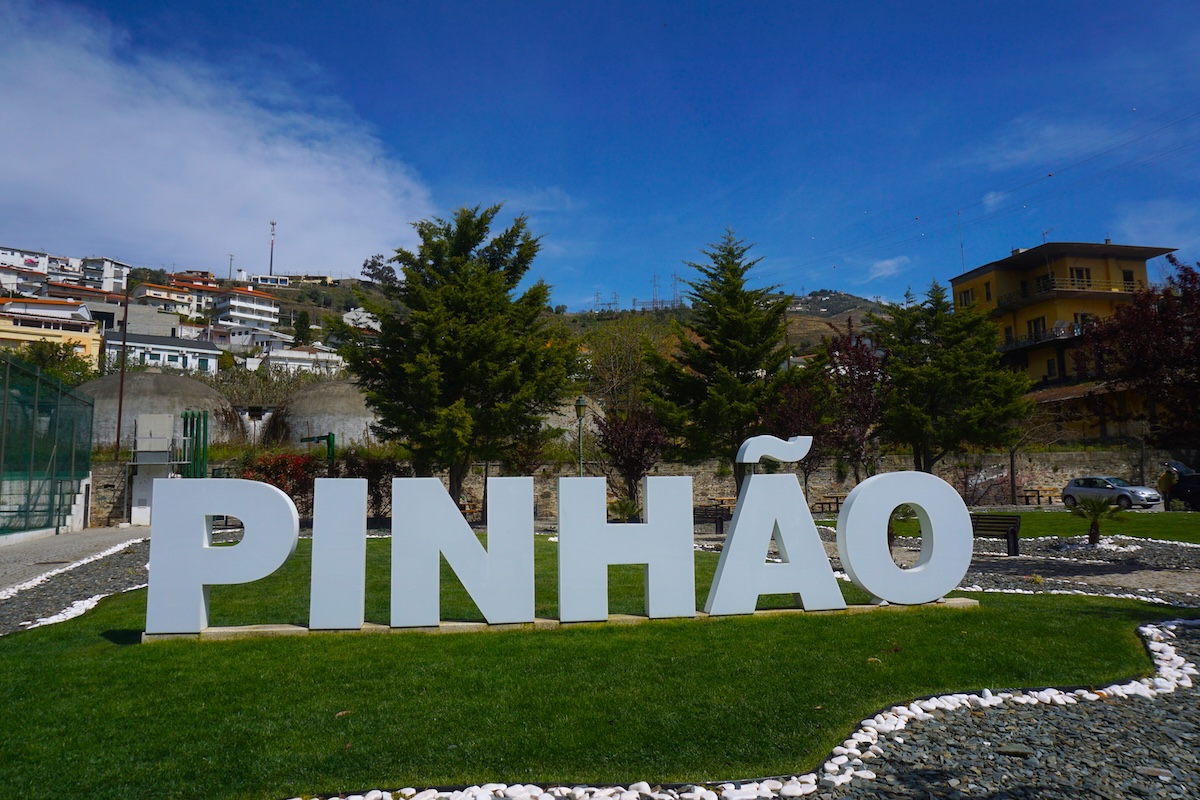
Pinhão
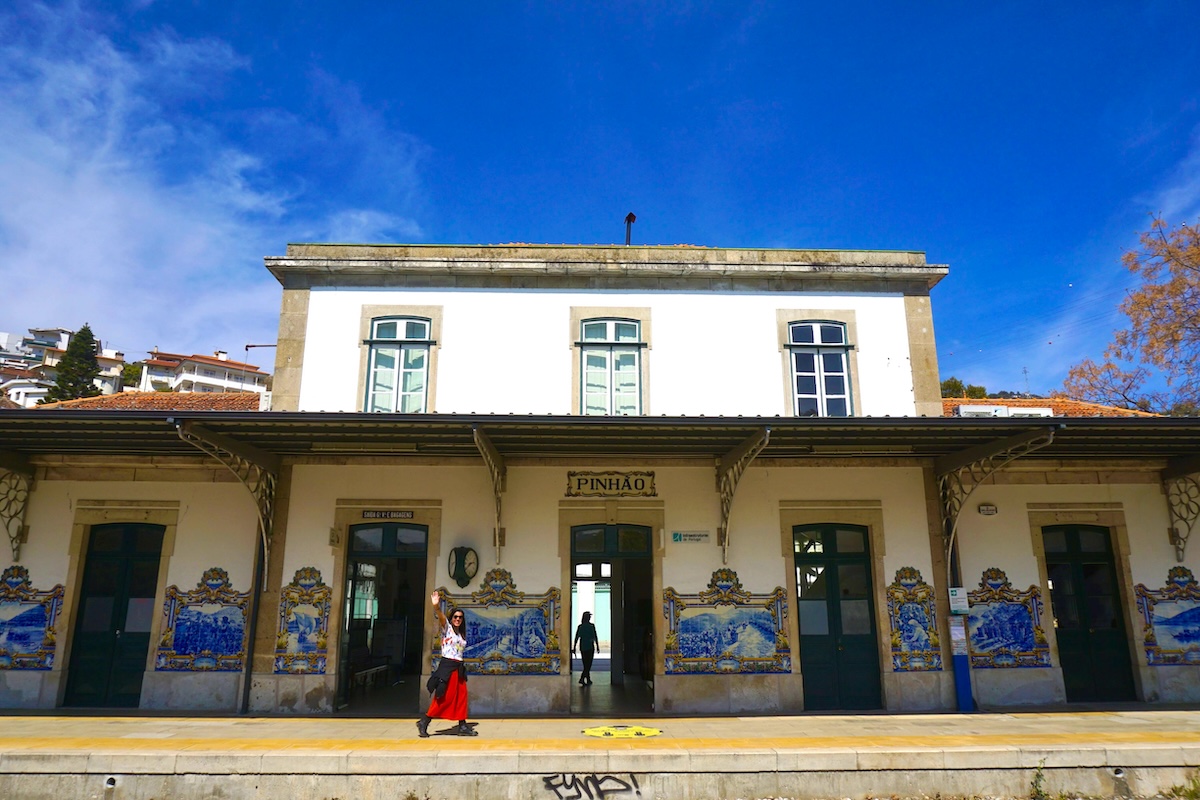
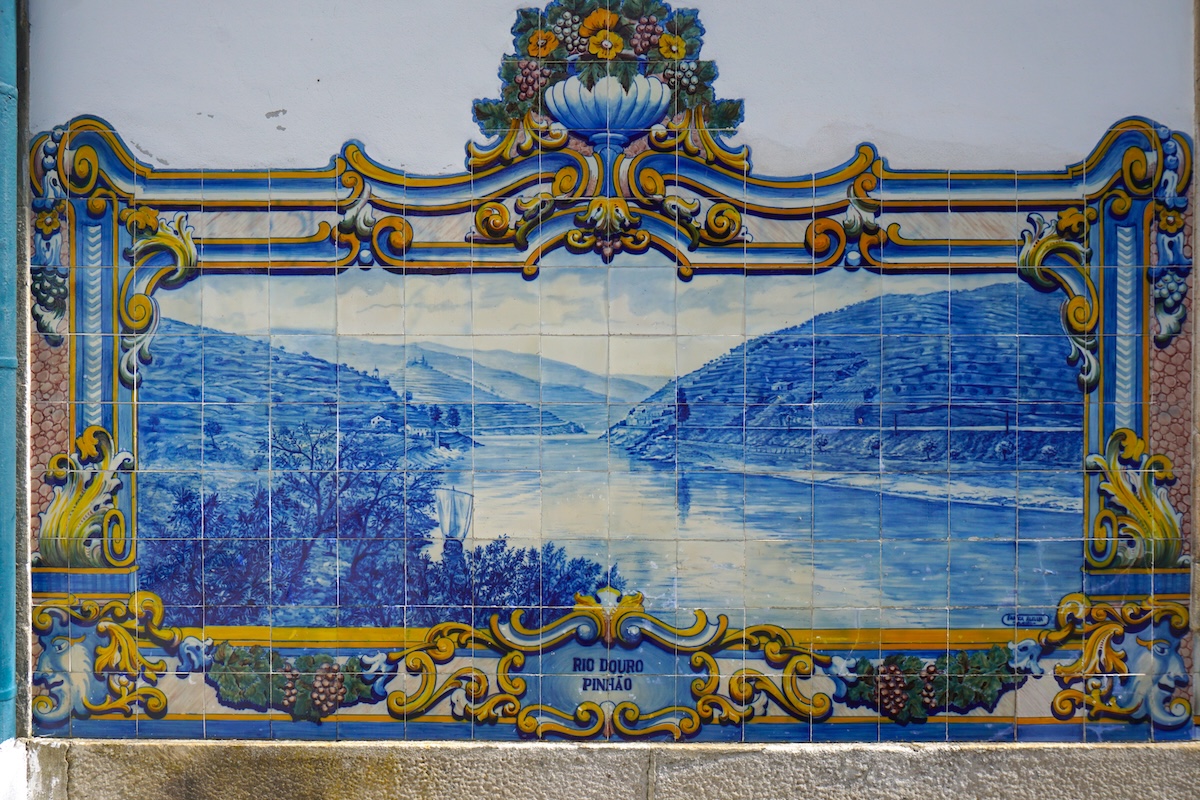
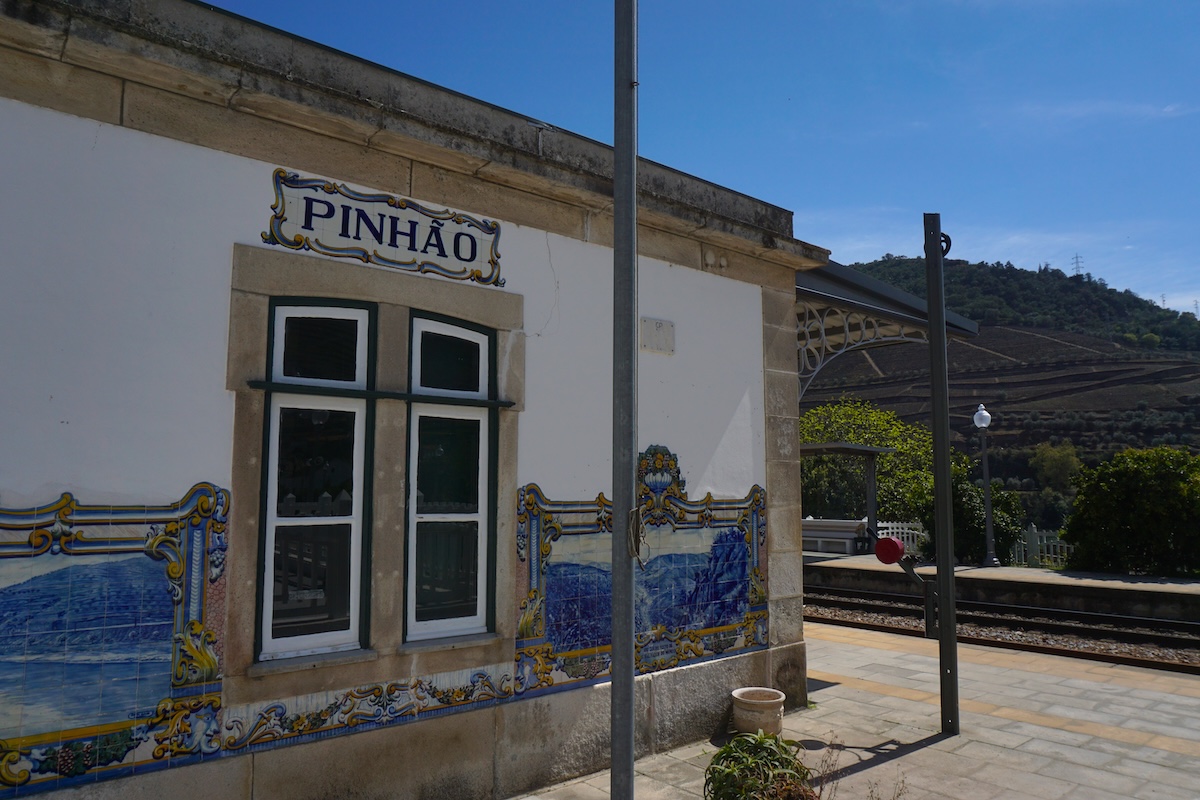
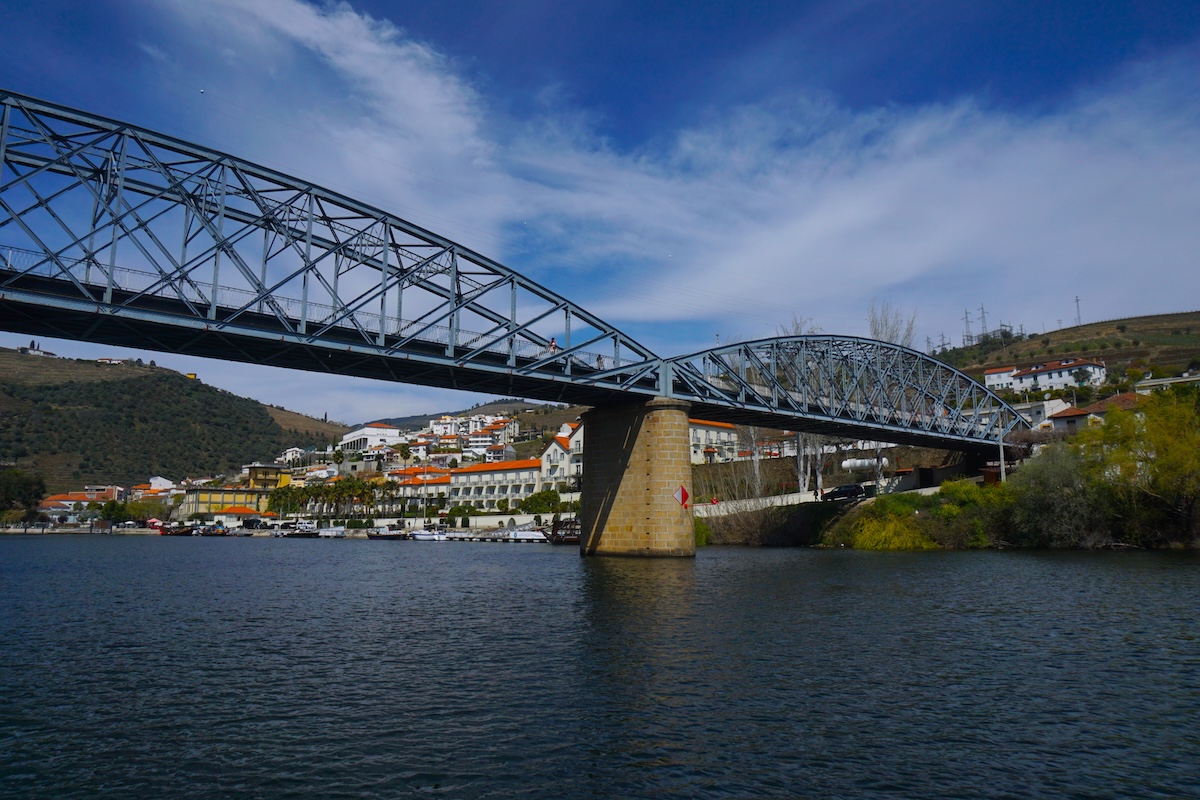
Pinhão is the gateway to the Cima Corgo: small, easy to navigate, and surrounded by terraced vineyards stretching as far as the eye can see. The essentials can be covered in a well-planned stop: the train station with its tile panels dedicated to the grape harvest, a stroll along the pier with departing boats and views of the metal bridge, and a visit to one or two nearby quintas to understand how vineyards are cultivated on slate slopes. Practical tip: park near the pier or the train station, explore the town center on foot, and book a wine tasting or winery tour in advance during peak season (such as this one).


The Pinhão Train Station (Estação Ferroviária de Pinhão), with its 1930s tiles depicting the grape harvest and wine transport, is part of the Douro Line and is a local heritage landmark. Admission is free all day.


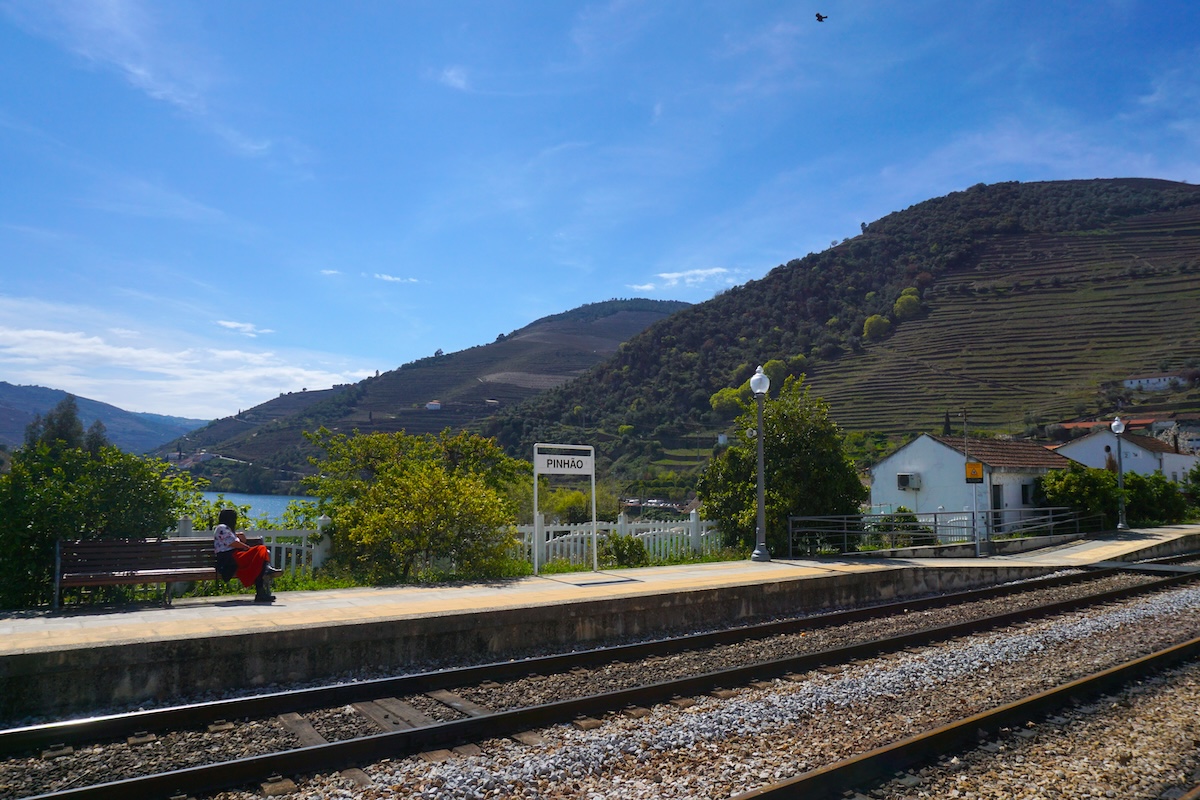


The Pinhão Pier and riverbank ( Cais do Pinhão) is where the traditional boats, the rabelos, depart for the route between Pinhão and Tua, which we highly recommend and will detail in the next section. It’s also a great spot to admire Pinhão’s famous metal bridge or simply to enjoy the peaceful flow of the river.

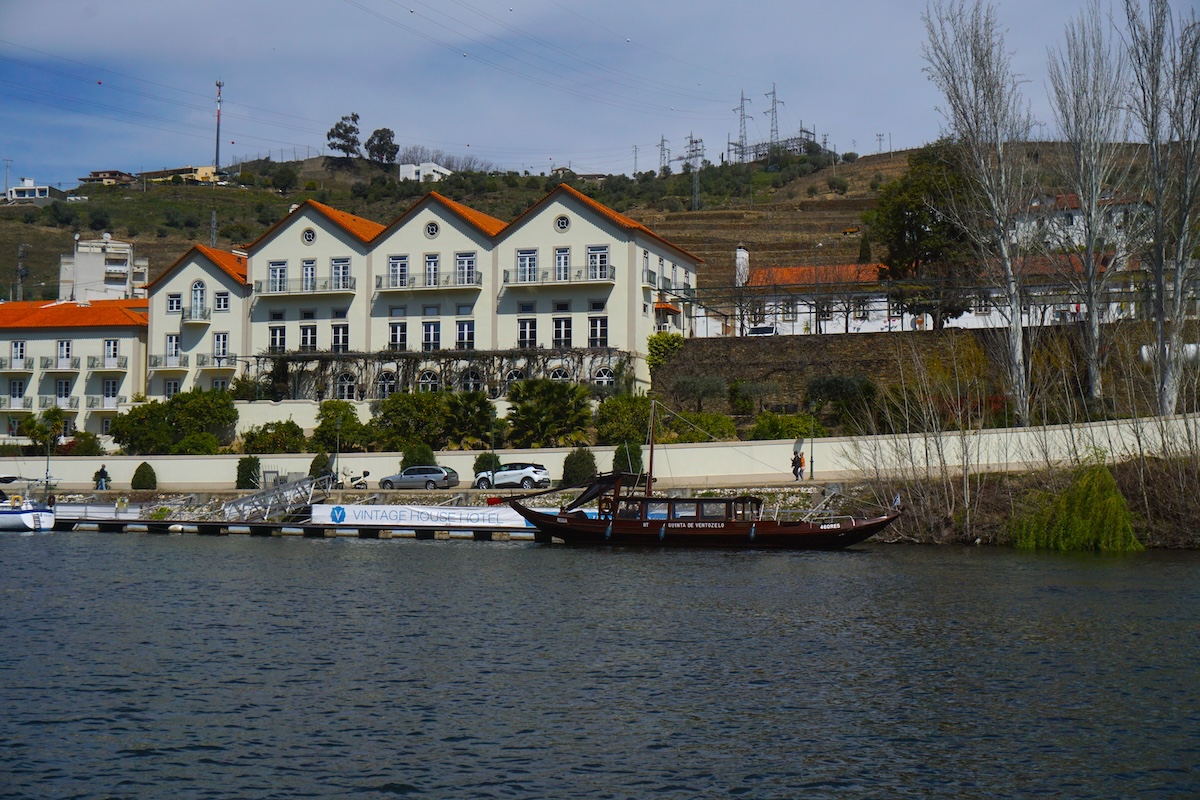
Finally, in Pinhão there are several nearby quintas to visit and taste their wine on 45–90-minute tours that include a walk through the vineyard, a guided explanation, and a tasting.
At Randomtrip , we visited Quinta do Seixo, the estate with the vineyards of the famous Sandeman winery ( which you may know for its Port wine, especially if you’ve already visited the city and stopped by to taste it at their cellar), where we had an incredible tour and tasting of 5 Casa Ferreirinha Douro DOC wines, but there are several quintas that offer guided tours and tastings by reservation, such as Quinta do Bomfim (the Symington family’s visitor center and museum). If you’re visiting during peak season (summer and September during the harvest), it’s best to book in advance and confirm the schedules on each estate’s official website.


Traditional boat ride (rabelo) between Pinhão and Tua
The rabelo boat ride between Pinhão and Tua is the easiest—and in our opinion, the most beautiful—way to see the vertical terraces from the water and understand why this valley is a World Heritage Site. Departures are frequent during the high season (spring through fall), with 1- to 2-hour trips upstream to Tua and back, costing around €15 per person. It’s well worth it, and you can book your trip here.


Arrive at the pier, buy/validate your ticket, and set sail. Useful tips: book a morning or evening slot for the best light, bring a hat and sunscreen in summer, and confirm the exact boarding point at the Pinhão pier; if traveling in winter, check for reduced schedules.

Book your rabelo boat ride here (€15/person)
Casal de Loivos, viewpoint, and D’Origem (Oil Museum)
Casal de Loivos, a small village of traditional regional houses—some of which are rural tourism accommodations with stunning views, such as Casa da Bela Vista or Castas D’ouro Guesthouse —is worth a visit for two reasons: a “postcard-perfect” viewpoint and D’Origem, a small olive oil museum with tastings that’s quick to visit and leaves a lasting impression. Plus, to top it off, you can walk there from the Pinhão station via the PR20 Pinhão–Casal de Loivos circular route if you’d like to combine train travel, a stroll, and scenic views.


The Casal de Loivos Viewpoint offers a panoramic view of Pinhão, the Douro River’s meander, and its iconic quintas. If you’re driving, take it slow and enjoy the scenery; you can reach the viewpoint via the winding, narrow M585 road. If possible, visit in the morning or at sunset to see the views in the best light.

D’Origem is an old wine press converted into a museum-shop where they explain the traditional method of making Douro olive oil and offer olive oil and wine tastings (book here). The visit lasts between 30 and 60 minutes, making it perfect to combine with the viewpoint. Hours: Monday through Sunday, 10:00 AM to 6:00 PM, with last entry at 5:00 PM (hours may vary by season; it’s best to call ahead to confirm at +351 254 732 176). Price: Oil and wine tastings start at €15 per person; book here

In addition, D’Origem also offers accommodations that are a viewpoint in themselves, where you can stay in one of its stunning rooms overlooking the Douro. Check out D’Origem Rooms here.


Favaios
Favaios is a wine-growing village with two “superpowers” that are easy to remember (and, in fact, the reason most Portuguese people know it before they even set foot there): Muscat wine and four-pointed bread. Compact, with a local vibe, and right in the heart of the Douro plateau, it’s the perfect stop to combine a short museum visit, a wine tasting, and a leisurely stroll through the town center.

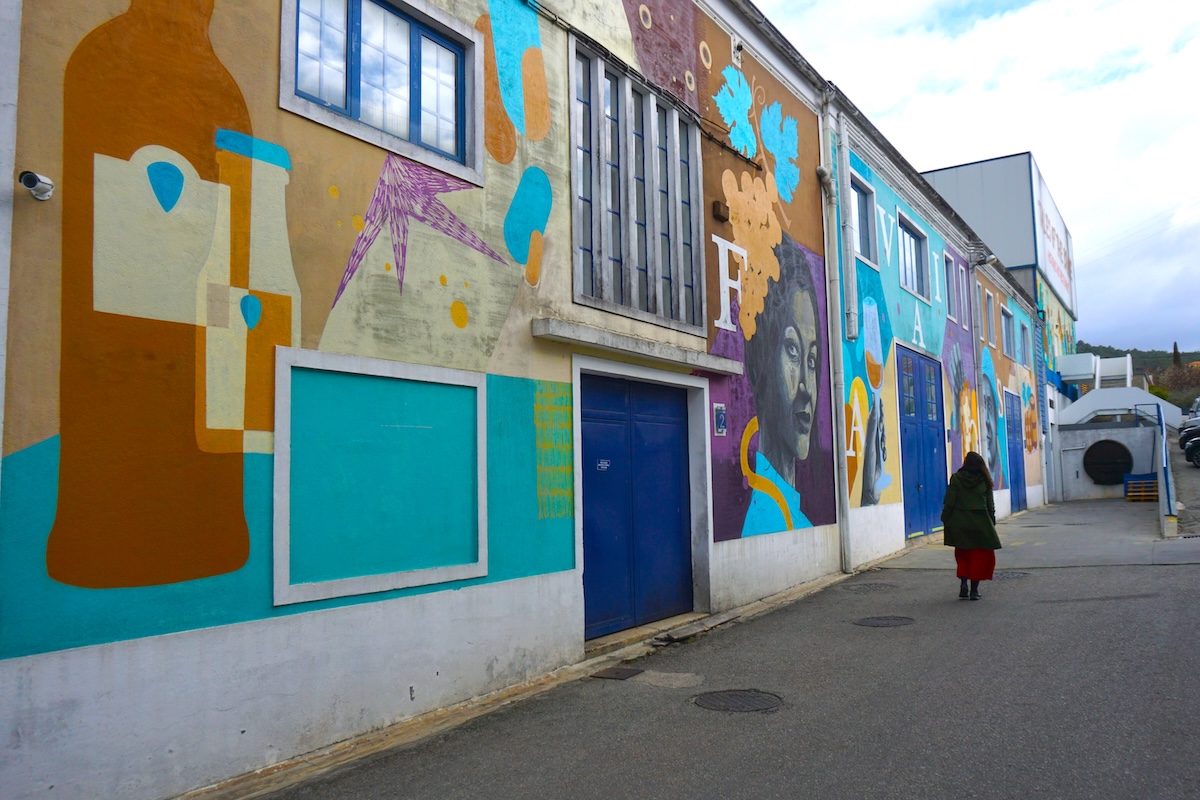
The Favaios Museum Complex – Bread and Wine is the municipal museum housed in a building with an 18th-century façade. It explains, in a clear and modern way, the history, traditions, production processes, and interesting facts about the traditional four-pointed bread and the local muscatel. Hours: Daily from 9:30 AM to 1:00 PM and from 2:00 PM to 5:30 PM; closed on Christmas, New Year’s Day, Good Friday, and Easter Sunday. Price: Standard admission: €1.50/person; children under 12, free. Contact (tel. +351 259 950 073) to confirm visits; occasionally, a simple Muscat tasting is included in the tour itself. Recommendation: check on the day to see if a tasting is included.

The Adega Cooperativa de Favaios is the home of Favaios Muscatel. It typically offers guided tours and tastings by reservation, often as part of packages combining a museum visit and a winery tour. Hours vary by season, and prices depend on the program.
Here you can book a tour of the Quinta da Avessada winery for just €10 per person—a 160-year-old estate with a wine shop and Muscatel-themed experiences, including lunches and guided tours. This tour includes a visit to the interactive museum and a tasting of two types of Port wine and a Muscatel, along with cheese, jam, and bread.

Favaios also has several viewpoints and walks you can take. For example, you can climb up to the Santa Bárbara chapel (with views of the vineyards) and combine it with one of the Tua River viewpoints near the town of Alijó, such as Ujo, which we’ll discuss below, if you’re up for a short scenic detour. For hikers, the PR13/PR14 trails connect Favaios with Sanfins do Douro or Alijó, winding through vineyards and historic sites.
Alijó
Alijó is a great base for combining Tua viewpoints, wine-growing villages, and short routes through vineyards without wasting time on transfers. If you visit this town in the heart of Cima Corgo, take a short stroll to the Igreja de Santa Maria Maior and the iconic century-old plane tree next to it, the local meeting spot.

Also in the center of Alijó is the beautiful Pousada Barão de Forrester, a historic palace and one of the country’s first inns—where you can actually stay! Check out the hotel’s incredible facilities and rooms at this link.


Before you leave, or if it’s too sunny or hot (especially if you’re visiting the region in spring or summer), make a quick stop at the “Homem do Douro” monument in the adjacent roundabout: welcome shade on hot days, a bench to sit on, and a great view of the church’s façade before continuing on your way to the Tua Valley or Favaios.
Miradouro do Ujo
The Miradouro do Ujo is one of the best viewpoints along the Tua: an elevated ledge with a direct view of the river carved into the landscape, slate-covered slopes, and terraced vineyards, halfway between a “Grand Canyon” atmosphere and the classic Douro. The panorama opens up to the middle Tua Valley, with very photogenic river bends and almost complete silence off-season.
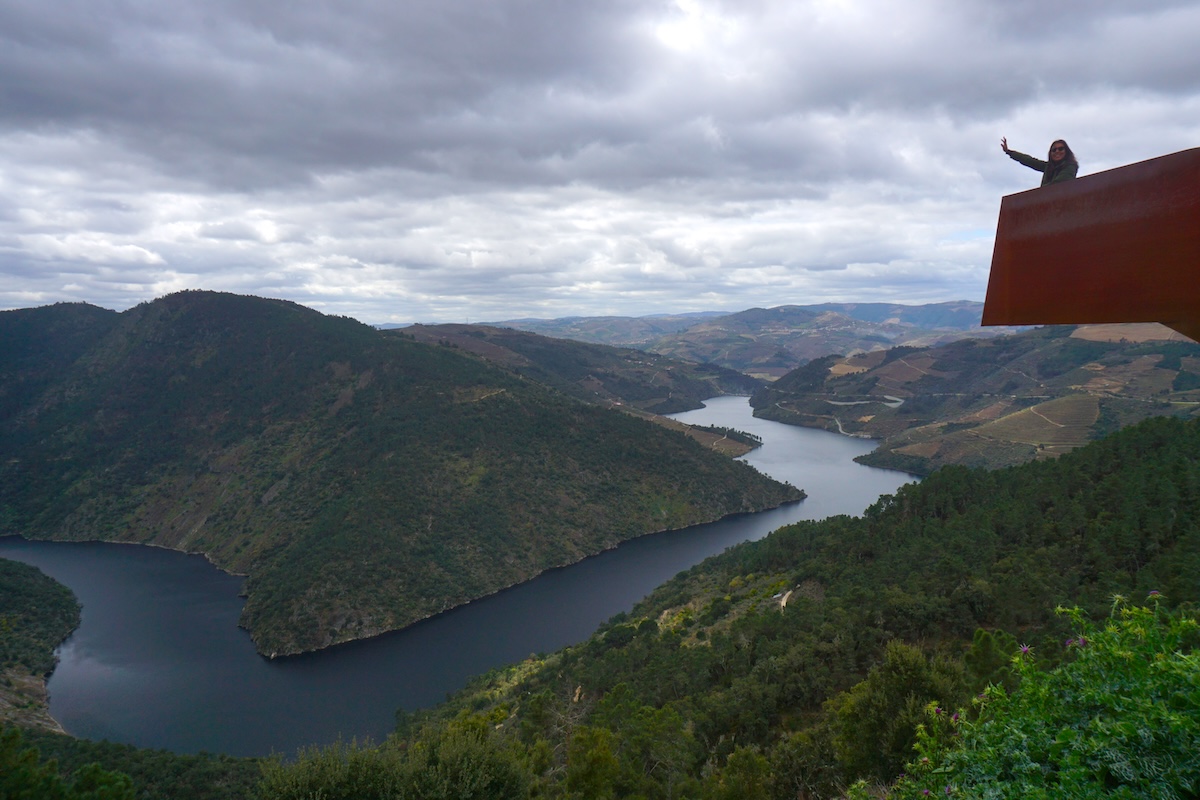
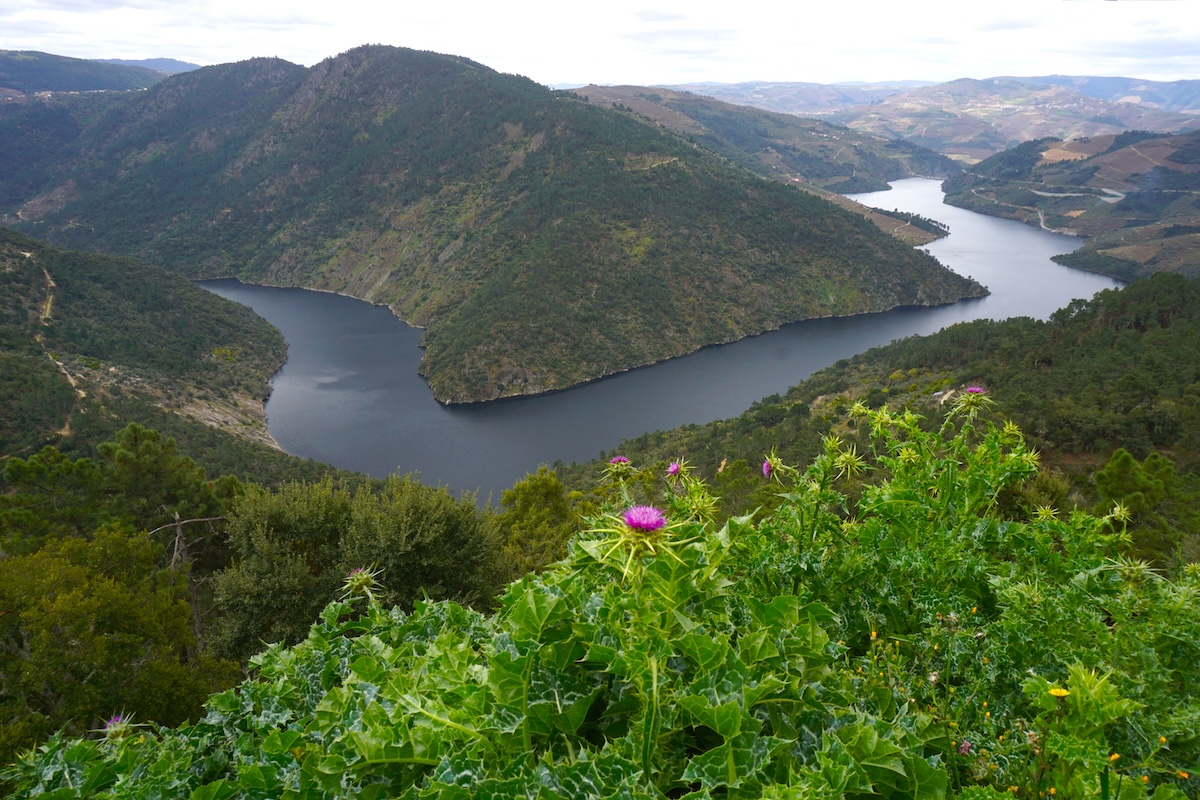

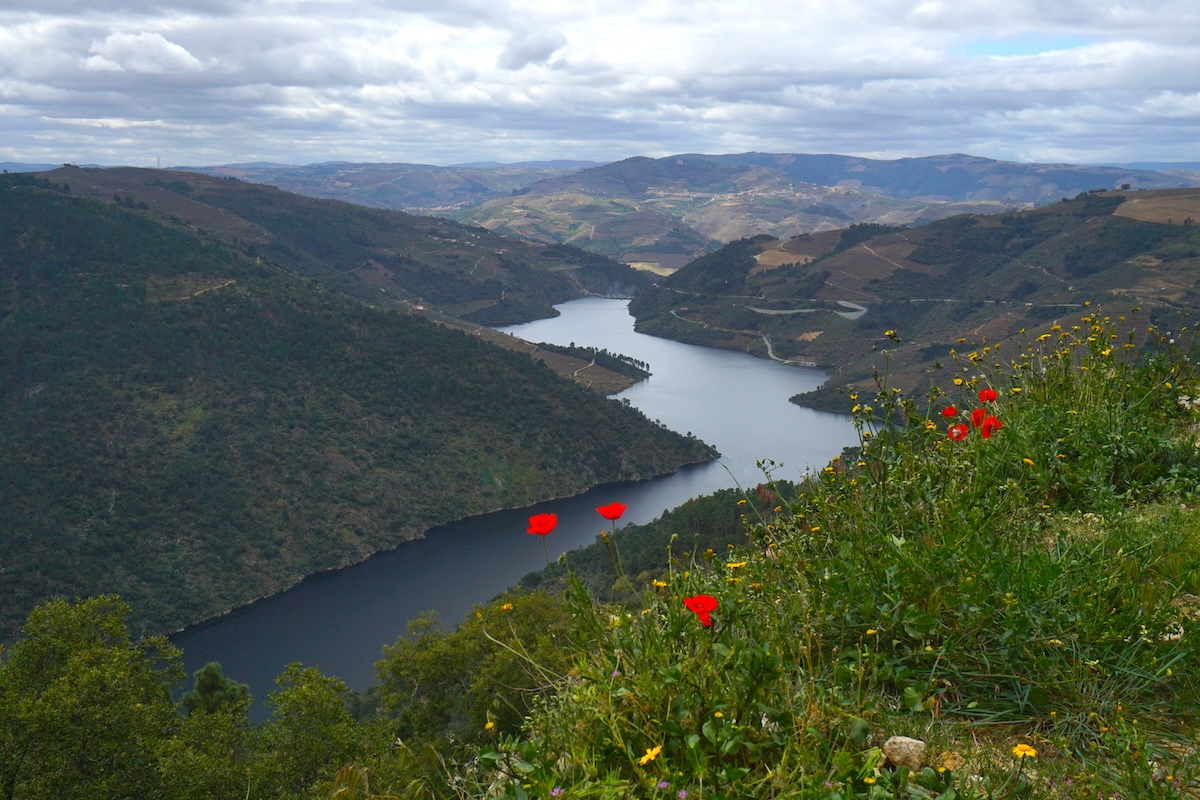
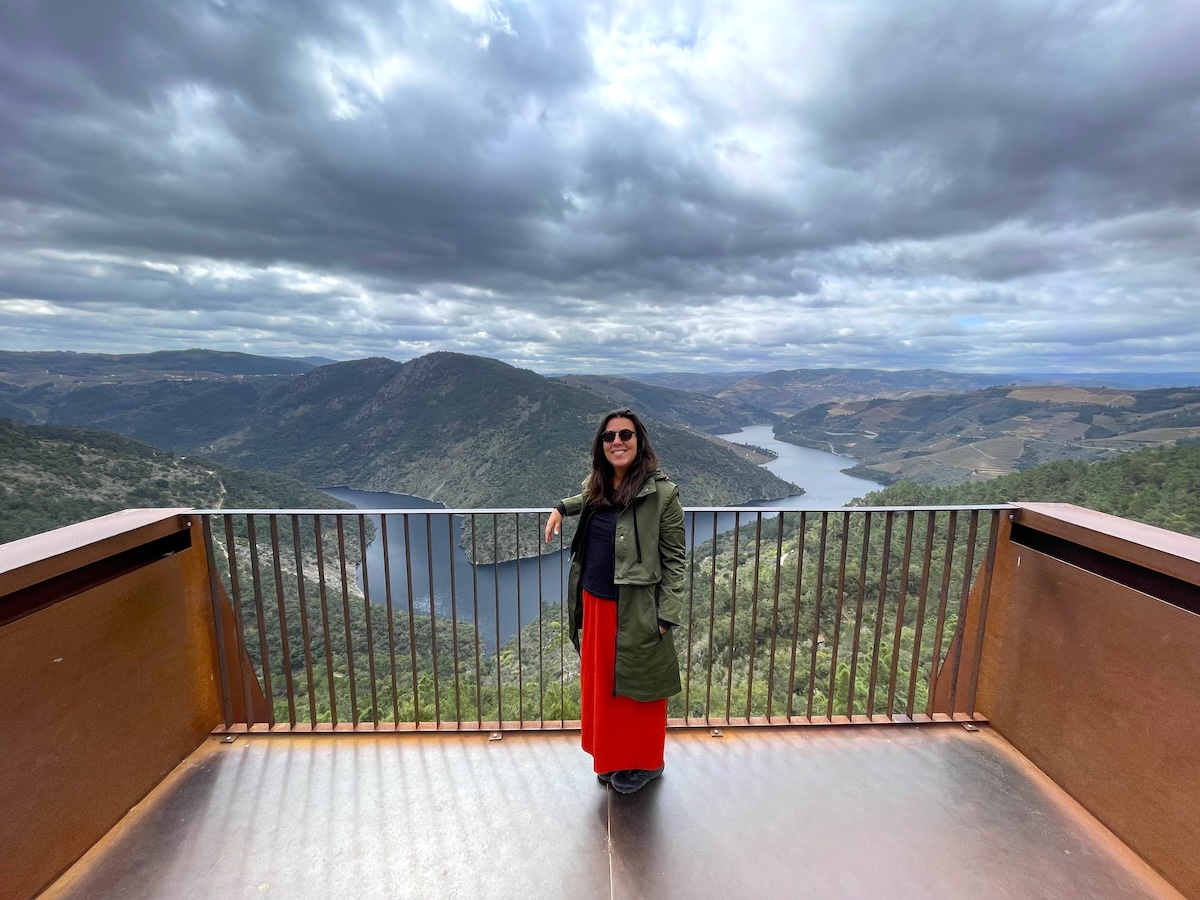
Access is by road, and there is a small parking lot; it’s best to take your time due to the narrowness of some sections and choose morning or evening for the best light.
Miradouro das Fragas Más
Miradouro das Fragas Más is a “wild” balcony overlooking the Tua Valley, offering views of the rocky cliffs that give the place its name and the river’s meanders in a very peaceful setting. You reach it via the village of São Mamede de Ribatua along a local road with curves and narrow sections, so it’s best to take your time and park nearby.
If you want to add “meaningful kilometers,” the PR1 ALJ trail starts at the Jardim das Laranjeiras in São Mamede de Ribatua and connects sections of Roman road, the village of Safres, and the Fragas Más viewpoint itself, returning along the São Mamede riverbank across its Roman bridge. It’s a roughly 10-km circular route of moderate difficulty, winding through vineyards, cork oak forests, terraced orange groves, and offering views of the Tua River. The trail is well-marked and is the best way to explore the landscape surrounding the viewpoint without relying so heavily on a car.
São Lourenço Viewpoint
The São Lourenço Viewpoint is a sculptural viewpoint with wide-open views of the Tua Valley, designed to “enter” the silhouette of Saint Lawrence (a work by sculptor Paulo Moura) and frame the landscape of vineyards, olive groves, and cork oaks with the river in the background. It is open to the public and free of charge, and is marked as part of the Rota dos Miradouros in the municipality of Carrazeda de Ansiães.

Access is direct from the municipal road connecting Pombal de Ansiães with São Lourenço; you can park next to the viewpoint, and, as always, it’s best to visit at sunrise or sunset if possible.

In the same area, you’ll find the Caldas de São Lourenço (hot springs known since Roman times with hot water flowing year-round) and the Cais de São Lourenço, integrated into local trails and ideal if you’re in the mood for a walk and a dip in the thermal waters.
Anta de Zedes
Anta de Zedes —also known as “Casa da Moura”—is one of the best-preserved dolmens in northeastern Portugal. It is a funerary monument from the Late Neolithic/Chalcolithic period (third millennium B.C.), featuring a polygonal chamber and an east-facing passageway, with up to eight interlocking orthostats and the capstone standing out, as well as traces of ochre paintings inside with wavy lines and a motif interpreted as a “staff.” It is a classified monument frequently cited in regional studies; from an educational standpoint, it is considered uniquely valuable as one of the few from this period still standing in the Trás-os-Montes region. If it rains during your visit, avoid stepping on the surrounding clay soil to prevent erosion of the residual burial mound.

Access is outdoors; it is located on the outskirts of Zedes, where you can see the Church of São Gonçalo and Solar dos Barbosas, in case you’d like to round out your visit with 19th-century historic architecture.
If you’re interested in extending your megalithic tour in the municipality, there’s also the Anta de Fonte Coberta in Vila Chã (Alijó), featuring engraved orthostats and designated a National Monument since 1910, just a short drive away within the Cima Corgo area.

Parambos Viewpoint
The Miradouro de Parambos is a very accessible viewpoint overlooking the Tua Valley, perfect for a short stop between viewpoints, offering an unobstructed view of the river, the village of Castanheiro do Norte directly ahead, and, on clear days, a beautiful play of shadows across the vineyard slopes and scrubland.

It is located next to the EN214 (Parambos–Castanheiro do Norte section), signposted as “Miradouro de Parambos” or “Miradouro da Costa.” There is a small parking lot, benches, and a picnic table, ideal for a quick picnic with a view.
In our opinion, it’s not as spectacular as the viewpoint we’ll tell you about next, Olhos do Tua, but it’s a convenient spot to stop and take in the valley without having to walk if you’re looking for a “wide-angle” shot of the Tua and a quick stop.
Olhos do Tua Viewpoint
The Olhos do Tua Viewpoint is probably the most iconic viewpoint in the Tua Valley. Upon arrival, you’ll find a platform with a metal railing and unobstructed views of the river canyon, which is especially photogenic at sunrise and sunset.

The Olhos do Tua viewpoint is very easy to reach by road, and you can park right next to it. If you’re coming from Pinhão/Cima Corgo, allow plenty of time: the 15–25 km drive can take 35–45 minutes due to curves and “just-for-a-photo” stops that always run long, especially during peak season (June through September).

This viewpoint is a signposted part of the Rota dos Miradouros de Carrazeda de Ansiães, which includes seven viewpoints: Miradouro da Senhora da Graça, Miradouro (and waterfall) da Fraga do Ôla, Miradouro Rota do Douro (which we’ll discuss next), Miradouro do Senhor da Boa Morte, Miradouro dos Olhos do Tua (this one), Miradouro do São Lourenço ( which we mentioned in this guide three points ago), and, finally, Miradouro da Brunheda.
Carrazeda de Ansiães Castle
Carrazeda de Ansiães Castle is a medieval walled complex situated on a hill overlooking the Tua River and nearby villages, offering a panoramic view.
The complex retains an oval-shaped walled perimeter with an arched main gate and includes both the castle ruins and the church within the walls, documented as “Santa Maria” or “Nossa Senhora do Castelo.” There are interpretive panels on-site to enhance your visit, and we recommend visiting the castle first thing in the morning or late in the afternoon for the best light, and then continuing on to nearby viewpoints, such as the impressive Olhos do Tua mentioned earlier.
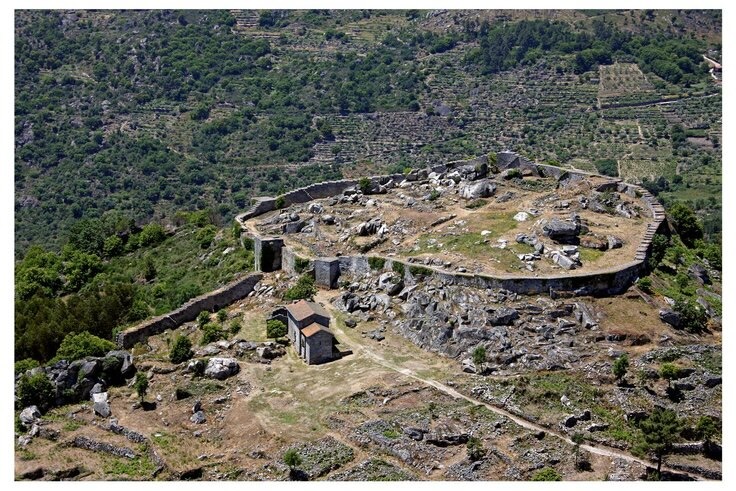

Access to the castle is free and open to the public; there is no ticket office or set visiting hours. You can park near the local road, and the final stretch on foot is short but steep with uneven terrain, so be sure to wear comfortable shoes.
Rota do Douro Viewpoint
The Miradouro Rota do Douro is designed to “frame” the Douro River, without the need for a hike or complicated logistics.
Signposted along the Rota dos Miradouros de Carrazeda de Ansiães mentioned earlier, it’s accessible via local roads in good condition, and you can park right next to it in a designated area.
Vargelas Viewpoint
The Vargelas Viewpoint is a balcony overlooking a very photogenic meander of the Douro, with terraced vineyards stretching down to the water and a picture-perfect view.
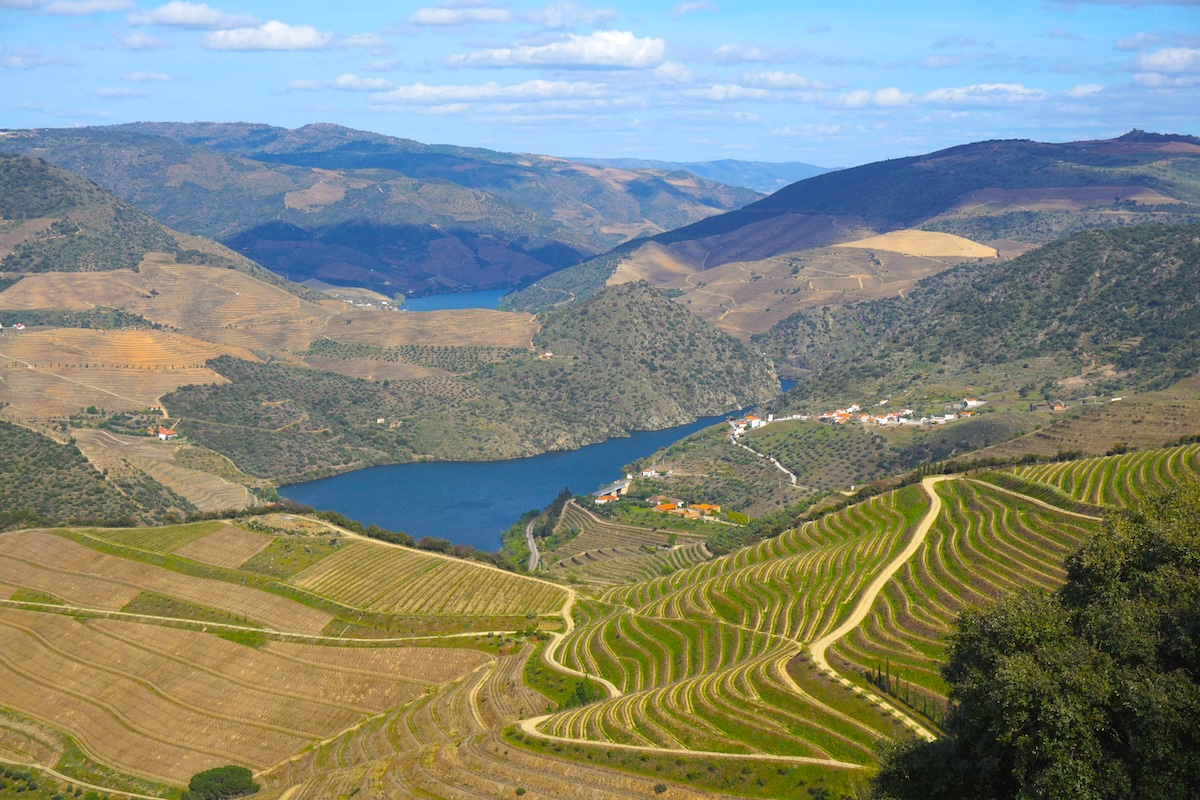
It is a common stop on scenic road trips and is often combined with São Salvador do Mundo, which we’ll discuss next, on the same day to get two different perspectives of the same stretch of the river. Access is via local roads in good condition but with curves and narrow sections, so it’s best to take your time; parking is available right next to the viewpoint.


São Salvador do Mundo Viewpoint
Considered the largest sanctuary in the Alto Douro Wine Region, the Miradouro de São Salvador do Mundo consists of a cluster of small chapels rising up the hillside, the oldest dating back to the 16th century.
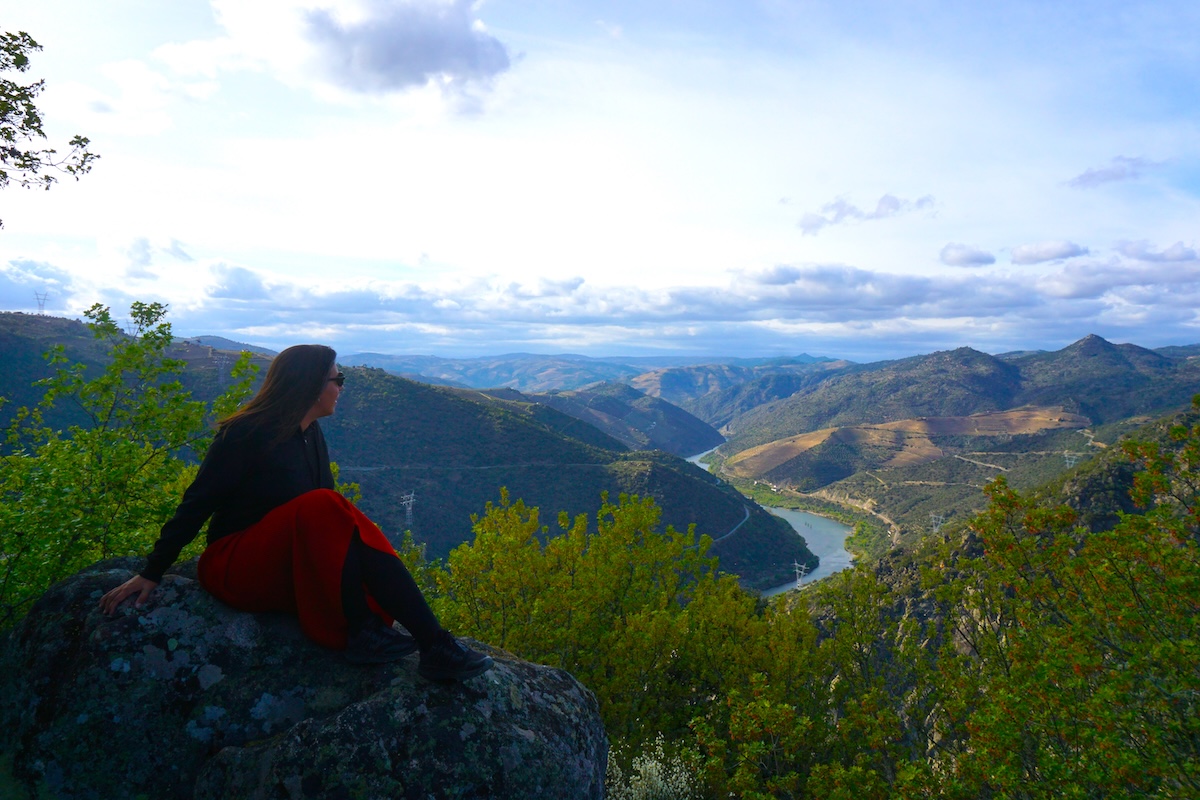
In addition to the views of the Douro River valley, with the Valeira Dam and the historic Valeira Waterfall (famous as the site where Baron Forrester died) visible in the background, the site also features various archaeological remains found at the excavation site that attest to human occupation dating back at least to pre-Roman times.


It is a public, free-to-enter viewpoint; access is easy (there are signs for “São Salvador do Mundo” from São João da Pesqueira), and you can drive up and park almost at the summit. It features short trails connecting hermitages and rock formations, making it suitable for a quick visit or a brief walk depending on how much time you wish to spend there.
São João da Pesqueira and São Xisto
On the way to the viewpoint mentioned above, it’s worth stopping at these two picturesque villages: São João da Pesqueira and São Xisto.
In São João da Pesqueira, you can take a stroll down the charming Rua dos Gatos and visit its Wine Museum. Additionally, it holds the oldest charter in present-day Portugal, granted before the creation of the Portuguese nation, between 1055 and 1065, which was crucial in securing the settlement of the region.


On the other hand, São Xisto is a small village nestled on the slopes of the Douro River, with schist houses and views of the river.


Miradouro Capela Nossa Senhora de Lourdes
The Miradouro Capela Nossa Senhora de Lourdes features, as its name suggests, a white chapel at the summit, as well as a balcony offering a 360-degree panoramic view of the Douro and, to the west, the confluence of the Tua River with its railway station in the background.
It is considered one of the most beautiful viewpoints in the Douro, and you can drive almost all the way to the top, with a short final stretch on foot from the small parking lot.
Nossa Senhora das Neves Viewpoint
In addition to boasting a sweeping 360º view, the Miradouro Nossa Senhora das Neves also features a chapel—a small hermitage dedicated to Nossa Senhora das Neves that crowns the hill—and a swing from which to enjoy the natural panorama of the vineyards, the Douro River valley, and the confluence of the Tua, with Soutelo do Douro at its feet.
The viewpoint is located at an altitude of 680–685 m, making it one of the highest viewpoints in the municipality. It is easily accessible by road and has limited parking.
Abelheira Viewpoint
The Abelheira Viewpoint, with its sweeping views of the Douro and the terraced vineyards, is perfect for a quick, photo-worthy stop.

National Road 222 Lookout
The Miradouro Estrada Nacional 222 is located, as its name suggests, along the scenic (and famous) N222 national highway connecting Peso da Régua and Pinhão. The N222 is considered one of the most enjoyable scenic routes in the Portuguese Douro Valley, ideal for leisurely driving and stopping at its viewpoints, such as this one.
This viewpoint, named after the N222, offers a stunning view of the mosaic of vineyards and meandering rivers. You can drive there and park right on site.
Miradouros da Doroteia
The Miradouros da Doroteia are a series of natural viewing platforms surrounding Quinta Dona Doroteia that overlook a highly photogenic stretch of the Douro, featuring terraced fields and the river’s meandering curves framed by historic vineyards. Notable nearby properties include Quinta Vale D. Maria and Quinta do Malhô on the hillsides.

Cedovim Viewpoint
The Miradouro de Cedovim, less well-known than the previous ones and more discreet, offers a clear view of slate terraces, hillside vineyards, and the river in the background, with the terraces surrounding quintas such as Quinta Vale D. Maria and the Doroteia quintas mentioned earlier.
Casais do Douro Viewpoints
At the Casais do Douro Viewpoint, you’ll have direct views of the river and iconic quintas of the Cima Corgo region, such as Quinta do Seixo—which we visited on Randomtrip and where we tasted five wines—on the left, or Foz Torto on the right.
It has the unique feature of being a viewpoint at ground level—or rather, “at vineyard level”—unlike most of the viewpoints we suggest in this guide, which are higher up and offer spectacular panoramic views. This makes it the perfect complement to get this close-up view of the slate terraces and historic vineyards with the Douro at your feet. It’s also ideal for understanding how the quintas are situated on the hillside.

Valença do Douro Viewpoint
The Miradouro Valença do Douro is also a vineyard-level viewpoint with direct views of the Douro River and the terraces surrounding historic quintas in the Cima Corgo region, such as Quinta do Seixo, which we visited (and recommend) on Randomtrip, as well as other historic quintas.
São Leonardo de Galafura Viewpoint (Poetic Viewpoint)
The Miradouro São Leonardo de Galafura is the literary viewpoint of the Portuguese Douro Valley and one of our favorites.

It is also known as the Poetic Viewpoint, and the one responsible for this “nickname” is the great Miguel Torga, a Douro-born doctor and writer (from the Douro region) who immortalized it in his *Diário XII* with the famous description of the Douro as an “excess of nature.”

It was at this viewpoint that Miguel Torga defined the valley with the famous phrase that every traveler ends up memorizing and that you’ll read on plaques next to the chapel and the picnic area. The nearly complete panorama of terraces, hills, and the winding course of the Douro is one of the valley’s most recognizable views.
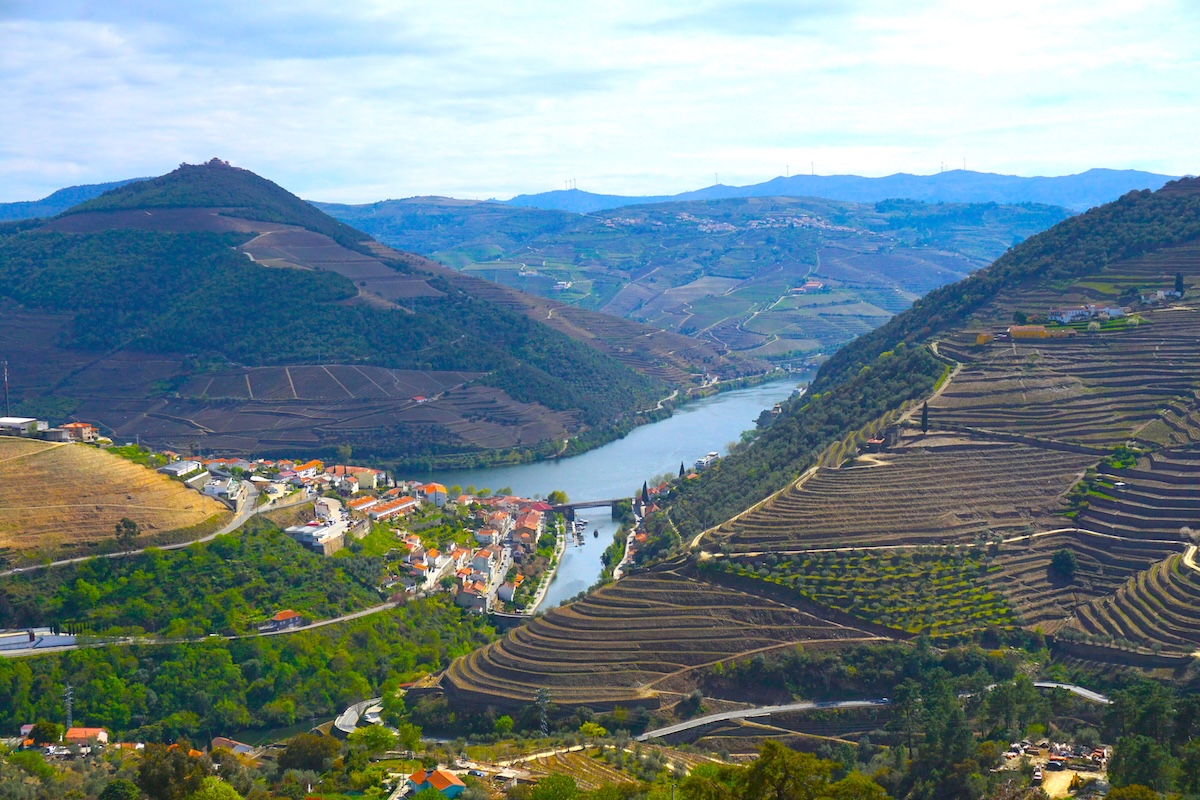


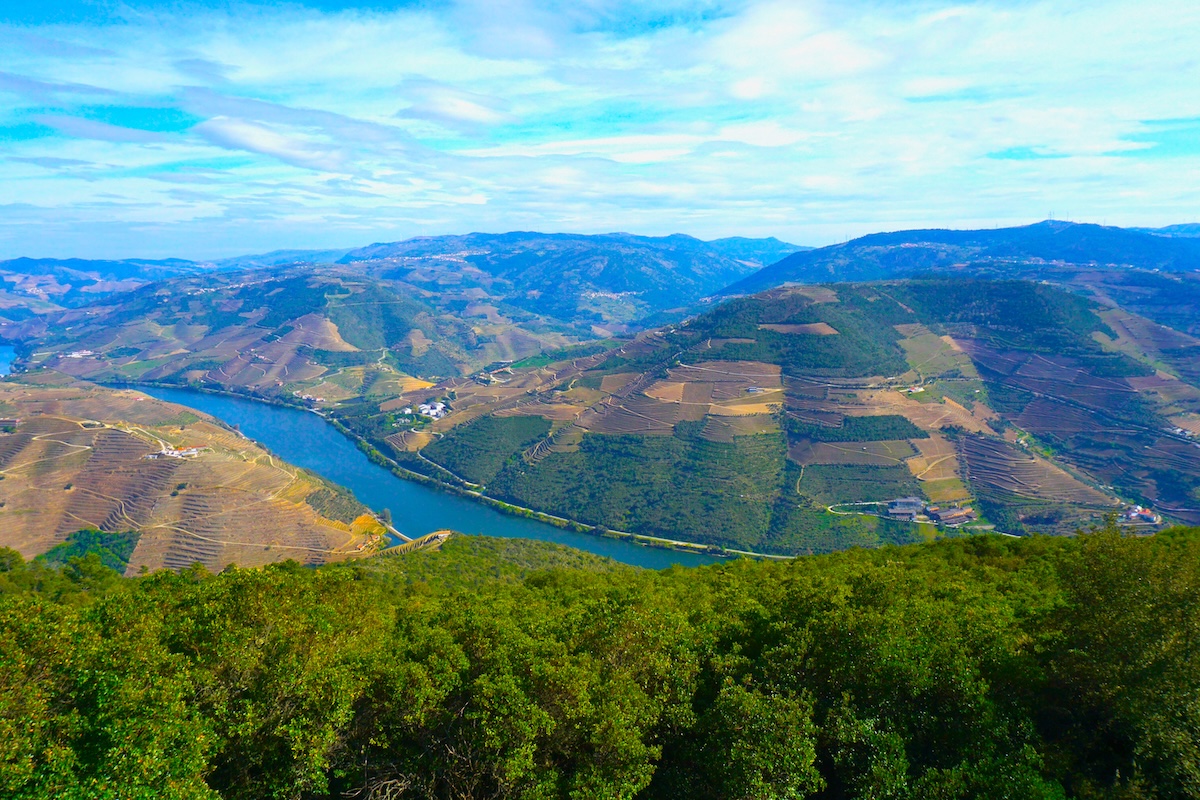
The truth is that São Leonardo de Galafura is the perfect combination of landscape and culture, just a short drive from Régua via a well-maintained mountain road. It has it all: it’s easily accessible, free, and, for all these reasons, has become, in our opinion, a must-see stop. In our case, we enjoyed the sunset there and recommend it as one of the best spots on your trip to watch the sun go down.

Miguel Torga, the pen name of Adolfo Correia da Rocha, was born in São Martinho de Anta (1907), practiced as an otolaryngologist in Coimbra, and is one of the great Portuguese voices of the 20th century. If you’re curious and want to learn more about his life and work, they’re well documented at the Casa/Espaço Miguel Torga, about a half-hour drive from the viewpoint. Hours: Wednesday through Friday from 9:00 AM to 12:30 PM and from 2:00 PM to 5:30 PM; Saturdays and Sundays from 10:00 AM to 12:30 PM and from 2:00 PM to 6:30 PM; closed on Mondays and holidays. Price: Free admission.
Upper Douro Region
The Upper Douro is the easternmost and wildest stretch, with less rainfall, greater temperature variation, and open landscapes where the river flows between plateaus and canyons. The experience here is more remote: long roads, silence, and solitary viewpoints (Santa Bárbara de Lousa, Senhora do Castelo, Barca Velha) overlooking vast expanses of vineyards and hills. Here, the cultural highlight is world-class: the Museum and Archaeological Park of Vila Nova de Foz Côa, with guided tours of its open-air Paleolithic art sites—designated as a World Heritage Site—that explain what this area was like before vineyards or scenic roads even existed.
All around, viewpoints like Santa Bárbara de Lousa or Barca Velha, villages with character such as Freixo de Numão and Castelo Melhor, and the confluence of the Sabor River to add nature on a grand scale. This is a region where you need to plan for gas, water, and schedules, but the reward is a Douro free of rush and crowds, with sunsets that look like they’ve been filtered… but haven’t. Ideal for those who want to go “a step beyond” the classic Régua–Pinhão route.
Vila Nova de Foz Côa
The first impression we had upon arriving in Vila Nova de Foz Côa, known simply as Foz Côa, was that nothing had happened there since the Paleolithic era; but that changed as we ventured deeper into the town. While it’s true that the Côa Archaeological Park is the area’s star attraction and the reason the town earned the nickname “Portugal’s capital of rock art,” Foz Côa—the gateway to the Upper Douro— hides a small historic center brimming with symbols that transport us back to medieval times.
The Mother Church of Vila Nova de Foz Côa (Nossa Senhora do Pranto) features a highly decorated Manueline façade with a portico of Renaissance figures and Manueline elements, a Baroque bell tower, and an interior with ceiling paintings that several guides highlight as a surprise in a church of regional significance. We didn’t go inside at Randomtrip, so we can’t confirm. It’s located in Praça do Município, the heart of the historic district, next to the City Hall and the Pelourinho, which we’ll discuss below.

The Pelourinho of Vila Nova de Foz Côa is a historic 16th-century column, a symbol of the former municipal power. It is decorated with details typical of the Manueline style and topped with an armillary sphere, an icon closely linked to the history of Portugal.
A little further on, the Clock Tower, located on the site of the old castle, is one of the most visible remnants of the medieval wall of Vila Nova de Foz Côa; its construction is associated with the reign of King Afonso V (15th century), and next to it you can see sections of the surviving wall.
The City Hall (Câmara Municipal) of Vila Nova de Foz Côa is located in Praça do Município and serves as the seat of local government; in front of it are several commemorative sculptures, the best known being the Monument to King Dinis (there is also a Monument to the Emigrant and other public works).

For a quick tour, we recommend heading straight to Praça do Município, visiting City Hall, the Church, and the Pelourinho, then taking a short detour to the Clock Tower, and if you’d like to sit for a bit, grab a coffee at Praça da República to soak up the local atmosphere before heading to the Côa Museum/Archaeological Park.
In addition to being the capital of rock art, Foz Côa is also Portugal’s almond capital, so if you visit the area in February or March, the almond trees in bloom add a special touch to your stroll through the city and the nearby viewpoints.


Although the area is famous for its rock engravings, the truth is that the town’s economy relies primarily on agriculture, especially almonds, but also extra virgin olive oil and wine. As a fun fact, it’s in the municipality of Foz Côa—with its schist soil and wide temperature range (cold winters of -10°C and summers of +40°C)—that the legendary, charismatic (and very expensive) Barca Velha wine is produced.

Côa Park: Côa Valley Archaeological Park and Côa Museum
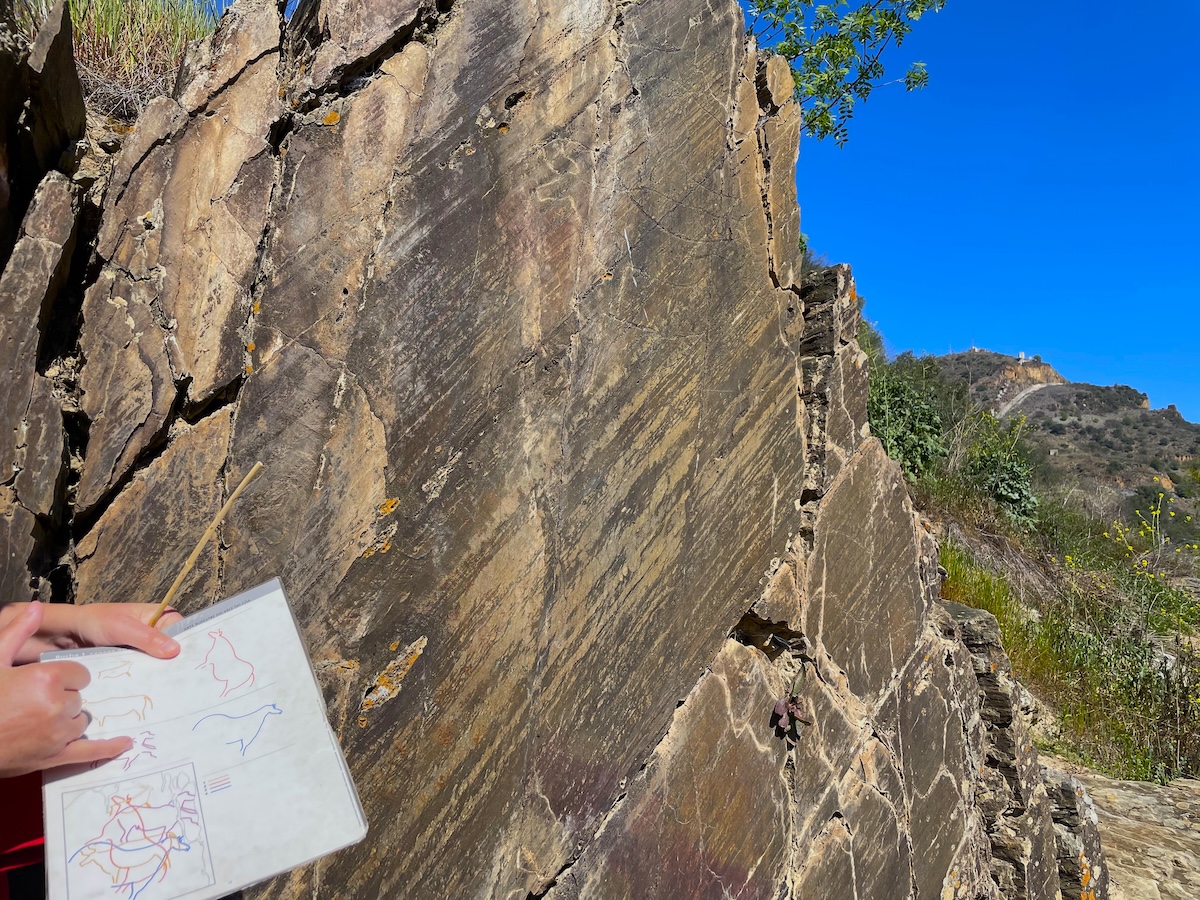
The Côa Valley Archaeological Park is Europe’s most important open-air “gallery” of Paleolithic rock art, protected by UNESCO alongside Siega Verde, and features over a thousand engraved rocks at some 80 different open-air sites—a phenomenon far rarer than the famous cave paintings found at sites like Lascaux or Altamira.
In this landscape of schist and a warm microclimate, hunter-gatherers who explored this territory primarily carved their art between 30,000 and 12,000 years ago, with continued activity in later periods. The exceptional state of preservation is due to the rock type (slate/schist), the vertical slopes that drain water, and a patina of oxides that “seals” the surface.


The subject matter of the rock art in Foz Côa is dominated by large herbivores (the engravings are mostly zoomorphic)—horses and aurochs, as well as deer and goats; mammoths do not appear because the Côa has a microclimate that is clearly warmer than the peninsular average, although human figures and fish emerge at the end of the Upper Paleolithic. The panels, always vertical and facing the river, likely functioned as “territorial markers” ritual sites, or social markers; the chronology is inferred from style and superimpositions.


Four techniques stand out : pecking and abrasion (hard quartzite), incision (imported flint, no local source), and scraping (river pebbles). Schist (xisto in Portuguese, not to be confused with slate— ardósia in Portuguese) is essential for conservation; it is also used in the walls of the region’s vineyards.


Recent history is key to understanding the site. Open-air Paleolithic art was very rare before Côa: its discovery in 1991 transformed the view of prehistory in the Iberian Peninsula, revolutionizing the myth of caves as the sole refuge of rock art. The conflict over the Côa Dam in 1991 led to urgent excavations and public debate; the scientific community (led by António Martinho Baptista and with the determination of local experts) succeeded in permanently halting the dam’s construction in 1996, followed by UNESCO inscription and the achievement of permanent protection in 1998.

The Côa Valley contains more than 13,000 engravings (over 6,000 from the Upper Paleolithic), spanning five distinct phases and featuring overlapping panels considered prehistoric “altars.” The importance of the work of the last “engravers,” such as António Seixos, is highlighted in the park as an example of cultural continuity.

Today, the Côa Valley is a global benchmark for open-air Paleolithic art and a symbol of heritage preservation, with the museum opening in 2010 as the gateway to the site.
Miguel Torga said that the Douro was an “excess of nature”; at Randomtrip, we dare to say that the Côa is an excess of outdoor rock art—overflowing and surprising—due to its preservation and the way the techniques interact with the local geology and with the long-distance networks that can be inferred from shared styles. It is fascinating that Paleolithic art, though separated by thousands of years and kilometers, shows continuity in forms and communication, suggesting that our ancestors shared not only territory but also knowledge and symbols through a network.

To visit the park and the area, we have several options (visiting the museum on your own or taking guided tours of the engravings, by day or by night, and on foot or by boat); we detail them below
1. Self-guided tour of the Museu do Côa
The Museu do Côa (admission €8), opened in 2010, is the gateway to the park and is an award-winning work by architect Souto de Moura, nestled on the hillside where the Côa and Douro rivers converge. Its architecture evokes the Vilariça Fault, a large, ancient active tectonic fault (though with little seismic activity) stretching about 250 km that passes through Foz Côa, among other places, and which diverted the course of the Douro.

Inside the museum, you’ll find the permanent exhibition explaining Upper Paleolithic chronologies, techniques (pecking, abrasion, incision, scraping), depicted fauna, and the “turning point” that came with the discovery of open-air rock art in the 1990s—very interesting for understanding what you’ll see later outdoors. Additionally, the museum also organizes workshops and educational programs (by appointment).


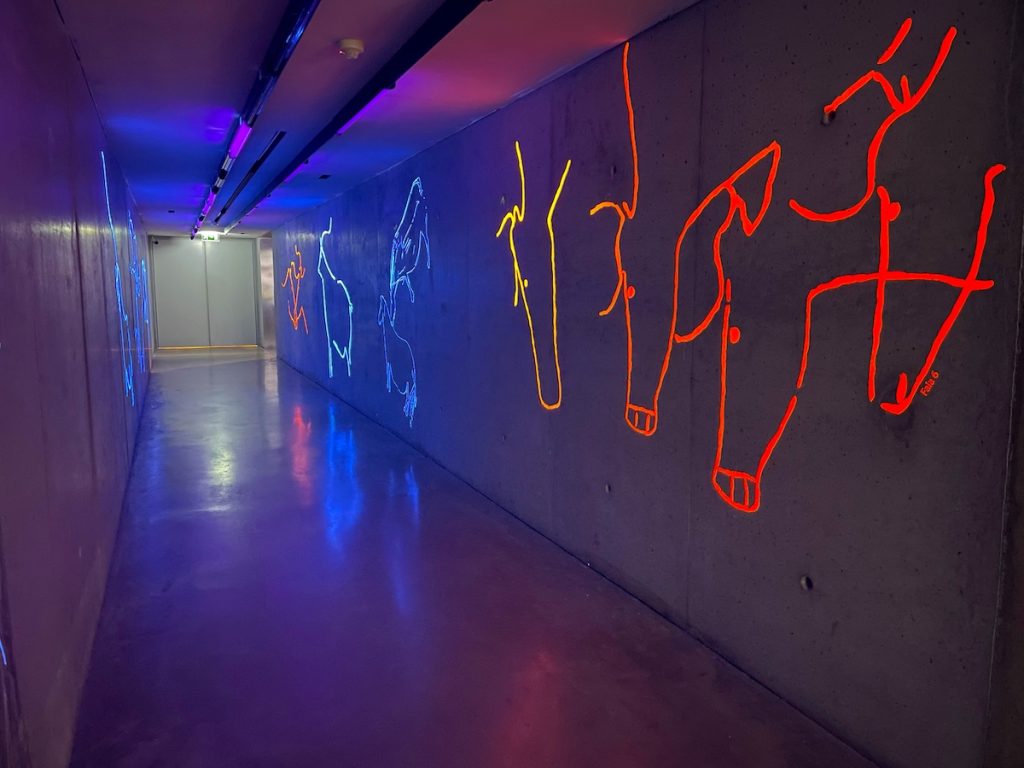
The museum handles reservations and serves as the departure point for visits to the Park’s sites (Canada do Inferno and Ribeira de Piscos; the Penascosa site departs from Castelo Melhor), so the museum will function as your logistical and informational hub before you reach the engraved rocks. All visits are conducted in small groups with a park guide, and advance reservations are required.

2. Daytime or Nighttime Guided Tours
There are four sites open to visitors in the Archaeological Park:
- Canada do Inferno (daytime guided tour): Rock 1 was identified here—the first discovery that triggered the valley’s protection in the 1990s—and today there are about 50 registered rocks in the site (some submerged by the Pocinho reservoir following the landscape alteration of 1991), with flaking and abrasion techniques predominating, along with chronologies from the Early Upper Paleolithic (approx. 30,000–23,000 BCE) featuring animal panels and ritual overpaintings. As a fun fact, the name “Inferno” isn’t a coincidence—in summer, temperatures can reach 50°C…

- Ribeira de Piscos (daytime guided tour): notable for featuring human figures from later phases of the Upper Paleolithic, as well as horses, aurochs, deer, Pyrenean goats, and other species now locally extinct
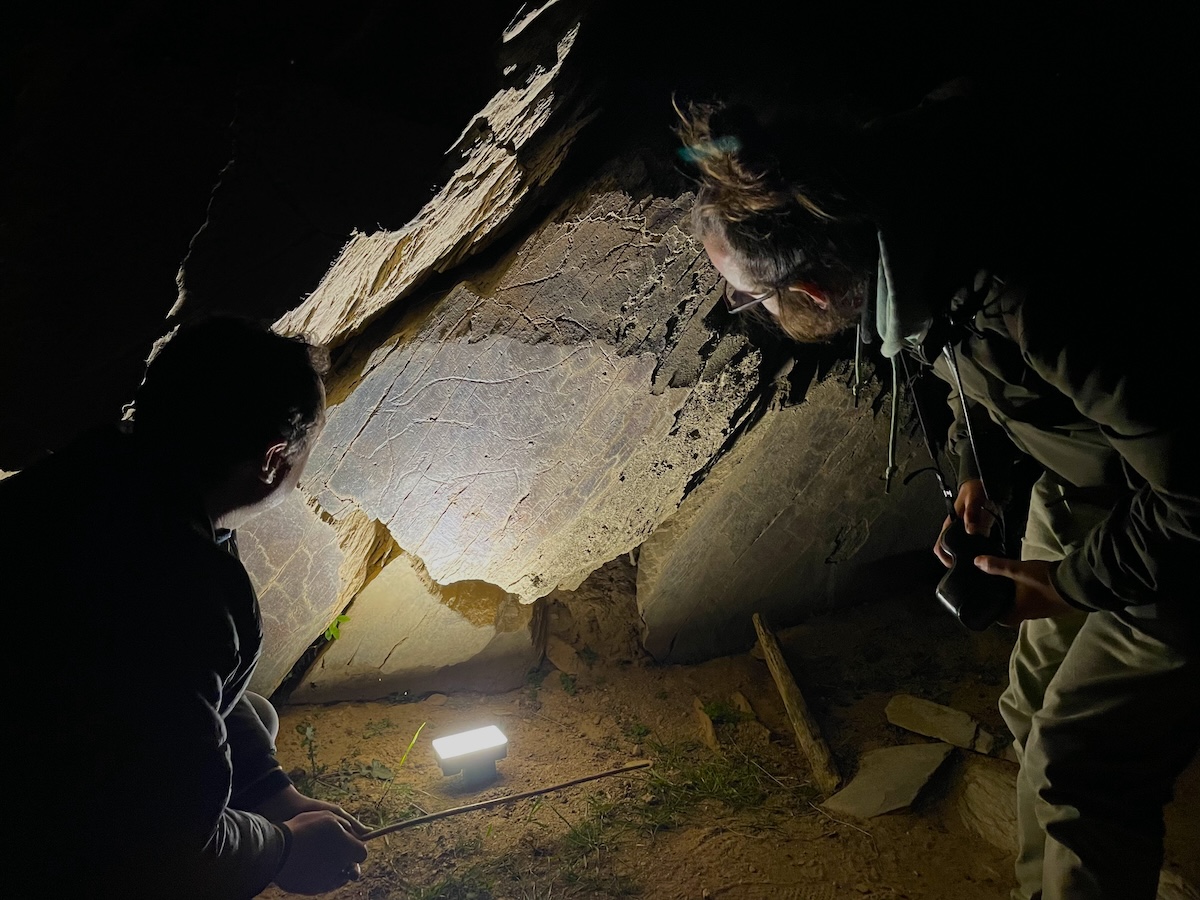
- Penascosa (guided day or night tour): it is particularly educational and best appreciated in the low evening light or with LED lighting during night tours—something the park itself takes into account when scheduling tours based on the sun’s position. This site is not accessed from the museum but from Castelo Melhor.


- Fariseu (guided daytime tour by boat or kayak): this site is unique in that it is only accessible by boat or kayak and only during the summer months (June–September, 3 km upriver). While reservations are always required, they must be made well in advance for this site, as capacity is limited in summer.


The daytime and nighttime tours of the different sites are both worthwhile for different and complementary reasons. At Randomtrip, we did both: we took the daytime tour with the interesting and passionate Gloria, an architect from whom we learned a great deal; and we took the nighttime tour with Carlos and loved it (though mosquito repellent is a must):


- Daytime tour: you take in the entire landscape: you see how the vertical rock faces interact with the river, you appreciate microclimates, rock types, and context, and you can clearly distinguish contours and overlaps.
- Schedule: Daytime tours take place during the Museum’s opening hours, Tuesday through Sunday, from 9:00 AM to 5:30 PM or 6:00 PM, depending on the season, with limited spots and advance reservations required. Tours last approximately 1.5 hours.
- Daytime Tour Price: €18/adults; €12.50/youths; free admission for children under 6. The kayak tour of the Fariseu site costs €42/adults and €20/children under 12. You can purchase tickets for daytime tours directly on the Museum’s website, by calling +351 279 768 260 or +351 965 778 799, or by emailing visitas@arte-coa.pt
- Night tour (Penascosa): a strong light is projected at ground level onto the rocks, casting shadows that make the motifs “emerge”: this makes it easier to isolate figures on panels with layers of engravings and to make out details that are impossible to see under general lighting; it’s a great way to understand the technique and intent behind the overlays, and is ideal on warm nights or during a full moon between spring and fall (just don’t forget your mosquito repellent).
- Schedule: The night tour departs from the Castelo Melhor center (at the reception center in the village) and is accessed by official 4×4 with a guide along a dirt track for about 6 km, with a total walking section of about 600 m; very easy difficulty. The tour lasts approximately 1.5–2 hours to see five key rock formations in the area, and the schedule is adjusted to the last light of day depending on the season. Spots are limited, and advance booking is required.
- Night Tour Price: €22/person. You can make a reservation by calling +351 279 768 260 or +351 965 778 799, through the contact form on their website, or by emailing visitas@arte-coa.pt. You can also book this tour


RandomTIP: If you have time and are interested in the subject matter, we recommend organizing your visit to the park as follows: the museum in the morning to provide context for what you’ll see outdoors, Canada do Inferno mid-morning to understand the “before and after” of the dam, and Penascosa in the evening or at night to “read” the panels in low light. If you have extra time, Ribeira de Piscos offers human-scale figures and a slightly longer hike, and if your trip falls between June and September, you might consider visiting Fariseu by boat or kayak to complete the picture from the water. Remember to book in advance and pay attention to the park’s visiting hours. Wear comfortable shoes, and bring water and a hat during the warmer months, and try to arrive 15–20 minutes before each tour.
Passadiços do Côa (Côa Walkways)
From the Museu do Côa, a trail of wooden walkways—the Passadiços do Côa—winds down from the museum to the old Côa station, featuring lookouts and interpretive panels on rock art, biodiversity, and the Douro River. It’s 930 linear meters long, with about 890 steps and a 160-meter elevation gain—a short but “intense” adventure (especially challenging on the way up)—and best of all, it’s free.

It starts next to the Museu do Côa (upper parking lot; access to the walkway from the lower side, next to the bar-restaurant), and ends at the Antigo Apeedeiro do Côa (the decommissioned Côa Station), next to the river, which will take you about 45–75 minutes round-trip depending on stops and due to the demanding climb up steps and almost total sun exposure. Ideally, try to avoid the middle of the day in summer (and be sure to bring water and a hat); and if you go in the winter months, be careful—after rain, the wood can be slippery (be careful where you place your hands due to splinters, and don’t let unsupervised children near the railings).
That said, the great thing about taking this walk along the boardwalks is that you get two attractions in one: the Côa Rock Art and the Alto Douro Wine Region, with informational panels that perfectly tie in with what you see at the museum and the park’s main sites if you take a guided tour later.
Santa Bárbara Viewpoint
The Santa Bárbara Viewpoint, less than a 5-minute drive from the Côa Museum, offers a 360-degree panoramic view featuring the Vale de Figueira to the south, São Xisto with its schist houses, and the Ferradosa station/bridge to the north; to the west, the Douro River comes into view, and in the distance, the granite ridge of São Salvador do Mundo.

Castelo Melhor
The historic village of Castelo Melhor, with its medieval castle, serves as the gateway to Penascosa, one of the main sites within the Côa Archaeological Park (where we took a night tour with Randomtrip). The village has its own visitor center, and a 4×4 route winds through almond and olive groves to the Côa River “beach.” Indeed, from this reception center, you set off in an official 4×4 with a guide along a dirt track for about 6 km, with a total walking section of about 600 m. The hike is very easy and takes approximately 1.5–2 hours to see five key rock carvings in the complex. You can book the night tour here


The perfect plan here is twofold: first, a heritage walk through the castle and the parish church, and then a guided tour of Penascosa at sunset/night to view the rock engravings in the best light.
Castelo Melhor Castle is a fortress classified as a Property of Public Interest since 1982. The castle has an irregular polygonal layout built of schist, with a north gate featuring a pointed arch flanked by turrets and, within the courtyard, a circular cistern. A 5-minute walk from the castle is the Church of Castelo Melhor (Parish Church of the Holy Spirit), documented as far back as 1321, which rounds out a brief stroll through the hamlet before heading down to explore the valley.

Moncorvo Tower
A good way to combine a visit to the rock formations of Foz Côa with the nearby viewpoints is a walk through the beautiful Moncorvo Tower.

Torre de Moncorvo boasts a rich medieval past, significant iron mines, and one of the most notable churches in Trás-os-Montes. The name Moncorvo is associated with Mendo Curvo (Mem Corvo)—about whom there is a legend—and with the castle that founded the town, reinforced in the 13th–14th centuries and granted a new Manueline charter in 1512. Moncorvo is also associated with the agricultural and textile trade (flax, hemp, and later silk) and, later, iron mining, which explain the monumental scale currently seen in its parish church and defensive ruins.

The legend of Torre de Moncorvo tells that a farmer named Mendo or Mem found a hidden treasure on Mount Reboredo and, to test his secret, told his wife that a raven had “given birth” to two chicks; she told her neighbors, and the gossip spread throughout the region, so Mendo, fearing for his gold, built a large tower to guard it, which the people began to call Torre de Mendo (or Mem) do Corvo, a name that over time was simplified to Torre de Moncorvo.


For a short stroll through Torre de Moncorvo, we recommend starting in its historic center, at the Mother Church (National Monument), a large granite temple begun in the 16th century and completed in the early 17th, featuring a Renaissance portico, and which is worth visiting for its main Baroque altarpiece (1752–1754) and a series of chapels featuring National, Rococo, and Mannerist carvings. Next, walk along the section of the city wall and through the Puerta da Vila, crowned by the Chapel of Nossa Senhora dos Remédios (17th century)—the most easily identifiable landmark on the walk through the historic center—and on to the Castle and medieval quarter (where sections of the wall and gates from the fortification commissioned by King Dinis remain, with reinforcements added in the 14th and 15th centuries).


Barca Velha Viewpoint
The Miradouro da Barca Velha offers a view of “two rivers”: a clear panorama of the Douro’s meander and the mouth of the Sabor River (which we’ll discuss in the next section). On clear days, the large, iconic quintas of the Upper Douro, such as Quinta do Vale Meão, are easily identifiable.
The name of the viewpoint, Barca Velha (old boat, in Portuguese), evokes the medieval boat that once crossed between Trás-os-Montes and Beira, not the charismatic (and extremely expensive) wine of the same name—one of Portugal’s most legendary wines, which we discuss in the Foz Côa section—though the truth is that the vineyard landscape from the viewpoint makes it a perfect subject for a photo.
Foz do Rio Sabor
Foz do Rio Sabor is the confluence of the Sabor River and the Douro River, a peaceful area with a river beach, a pier, and a green space ideal for swimming, picnicking, and scenic boat rides along the stretch of the Douro between Valeira and Sabor.
The construction of the Baixo Sabor Dam created a chain of lakes and viewpoints accessible via the three official, signposted circular scenic routes in the Lagos do Sabor area, which you can explore by car or motorcycle:
- Foz do Sabor Panoramic Route: approx. 40 km, passing through Torre de Moncorvo, Foz, and the Sabor River Beach, the São Gregório Viewpoint, the Vale do Sabor Viewpoint, and the Póvoa Viewpoint.
- Lagos do Sabor Panoramic Circuit: approx. 120 km, passing through the Chapel and Viewpoint of São Gregório, the Felgar Environmental Interpretation and Animal Rehabilitation Center (CIARA), Carviçais, the Chapel and Viewpoint of Santo Antão da Barca, Alfândega da Fé, and the Cabreira Viewpoint.
- Fragas do Sabor Panoramic Circuit: approx. 111 km, passing through Mogadouro, Fragas do Sabor, the Conrad Discontinuity Viewpoint, Albufeira do Azibo, Foz do Azibo, Poço dos Paus, and the Convent of Balsemão
Nearby is also the Ecopista do Sabor, the former railway line converted into a bike and walking path between the Douro and the Sabor, more than 35 km of dirt track, with illuminated sections in urban areas and restored railway heritage.
Freixo de Numão
Freixo de Numão is a museum village in the Upper Douro known for its archaeological and ethnographic heritage, featuring prehistoric, Roman, and medieval sites, as well as granite architecture and small chapels in its historic center. Must-sees include the Casa Grande Museum, the Chalcolithic-Bronze Age hillfort of Castelo Velho, and the Roman-Medieval complex of Prazo, which form a signposted archaeological trail starting from the village center.

The Casa Grande Museum features collections of local archaeology spanning from the Paleolithic era through Roman and modern times, as well as a section on ethnography and local history; it serves as the gateway to the archaeological circuit. Hours: Tuesday through Sunday from 9:00 AM to 12:00 PM and from 2:00 PM to 6:00 PM; closed on Mondays and on specific holidays such as May 1, December 25, Easter Sunday, and the first Sunday in September. Price: €2/general admission; €1/youth (youth card) and seniors over 65; free admission for children under 12; there is also a combined ticket with the Côa Museum for €6.50 (reduced €4).Contact and reservations: museucasagrande@hotmail.com; phone +351 279 789 117 / 279 788 145; advance reservations may be required for guided tours or access to the municipal archaeological circuit.
The Castelo Velho de Freixo de Numão is a monumental fortified settlement dating from 3000–1300 BC, perched atop a schist spur with walkways and a viewpoint overlooking the Côa and Duero valleys. Hours: Open to the public Friday through Sunday from 10:00 AM to 12:30 PM and from 2:00 PM to 5:30 PM. Price: Free admission.
The Prazo Archaeological Site is a hillside archaeological complex with settlements dating back to the Neolithic period, featuring a Roman villa (1st–4th centuries) and a basilica with a medieval necropolis, clearly visible thanks to its terraces and walls. It is often colloquially nicknamed by those who like to make (dubious) travel comparisons (which we’re not fans of) as the “Portuguese Machu Picchu,” precisely because of its terraced layout. Access is free and well-signposted from Freixo de Numão, and if you’d like a guided tour, you’ll need to book it at the Casa Grande Museum, as there is no ticket office at the site itself and tour schedules may vary by season and availability.


In addition, there is also a must-see church in Freixo de Numão, the Igreja Matriz de São Pedro (Parish Church of Freixo de Numão), which retains Romanesque features with later Mannerist and Baroque renovations, and recent restoration work has uncovered 15th–16th-century murals. Visits to the interior of the church depend on the parish schedule and worship services, and are usually combined with a stroll through the historic district (pillory, granite houses) and admission to the Casa Grande Museum.


Get inspired by the Instagram stories from our trip to the Douro Valley
If you want to get inspired by our adventures in real time, we’ve saved them on our Instagram at Randomtrip_Blog (are you following us yet?), in our highlights, a selection of what we did during our days in the Portuguese Douro Valley. If you click on this link, you can watch the videos we recorded at several of the spots we recommend in this guide. Are you curious?

The Best Hiking Trails in the Douro Valley
Exploring the Douro on foot means following the contours of its terraced vineyards, connecting viewpoints, and peering into canyons where the river and the vineyards face each other in panoramic views, villages, faces, and smiles you won’t reach by car. Here are some of the most recommended trails in the Douro Valley, with approximate length, duration, and difficulty:
Some recommended trails:
- Serra das Meadas and Lamego viewpoints: a circuit of natural balconies overlooking Régua and the Varosa Valley, winding through forests and terraced fields. 8–10 km long, circular route, approx. 2.5–3.5 hours. Randomtripper Fofisana Difficulty Scale: Easy–Medium. Link to the route on Wikiloc
- São Leonardo de Galafura: an ascent through vineyards and olive groves to the valley’s most iconic viewpoint; sweeping panoramic views of the Douro River’s meander. 9–11 km in length, loop trail, approx. 3–4 hours. Randomtripper Fofisana Difficulty Scale: Medium. Link to the route on Wikiloc
- Casal de Loivos to Pinhão: ridge walk through terraced fields with views of Pinhão and a final descent to the river; spectacular sunsets. 6–7 km long, out-and-back, approx. 2–2.5 hours. Randomtripper Fofisana Difficulty Scale: Easy-Moderate. Link to the route on Wikiloc
- São Salvador do Mundo (São João da Pesqueira): a path of hermitages and granite outcrops overlooking the Tua and Douro rivers; short but steep elevation gain. 4–5 km long, loop, approx. 1.5–2 hours. Randomtripper Fofisana Difficulty Scale: Easy-Moderate. Link to the route on Wikiloc
- PR3 Trilho da Foz do Tua (Carrazeda de Ansiães): combines a castle, quartzite cliffs, and views of the Tua River; rocky terrain. 11–13 km long, loop, approx. 3.5–4 hours. Randomtripper Fofisana Difficulty Scale: Medium. Link to the route on Wikiloc
- Rota do Côa – trails in the Côa Valley: undulating trails through almond groves and vineyards with access to rock art panels (guided tours). 7–9 km long, linear/loop depending on the section, approx. 2–3 hours duration. Randomtripper Fofisana Difficulty Scale: Easy. Grande Rota do Vale do Côa


Where to stay in the Douro Valley
If you’re looking for views of vineyard terraces, infinity pools, and wine-tasting options right at your accommodation, the Douro Valley offers everything from charming guesthouses to wine quintas and luxury hotels. Choose a base according to your plan: Régua/Lamego for easy access to Baixo Corgo, Pinhão/Alijó for the heart of the valley, and Foz Côa/Moncorvo for wilder landscapes and rock art.

Here are some recommendations, by area (Baixo Corgo, Cima Corgo, or Douro Superior), from lowest to highest price depending on what you’re looking for:
Where to stay in Baixo Corgo (Peso da Régua and Lamego):
- Imaginário D’El Rei – Guesthouse (Mesão Frio — western border, very close to Pinhão): where we stayed on Randomtrip and highly recommend it. A small hotel with a pool and jacuzzi offering views; friendly service and scenic viewpoints just a few minutes away. Double rooms starting at €115/night.



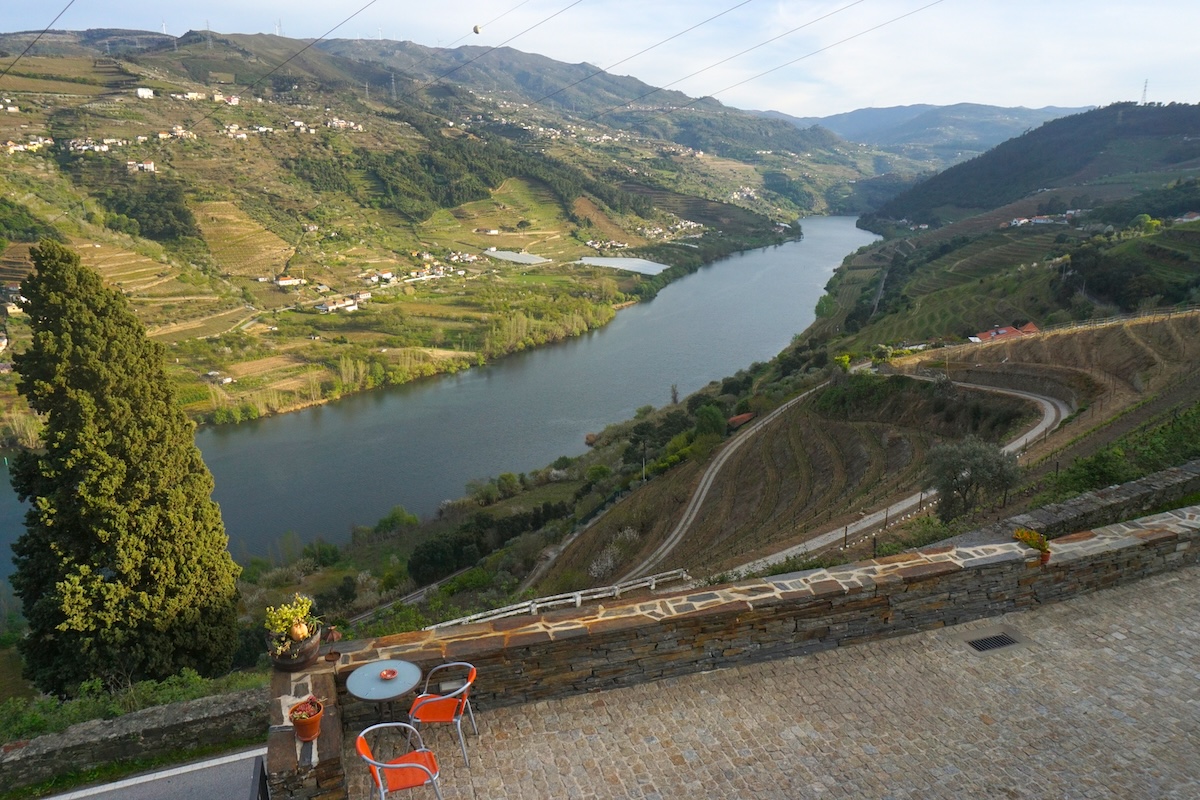
- Casa do Salgeiral Douro (Peso da Régua): a house a 20-minute walk from the Museu do Douro with double rooms starting at €45/night
- Casa da Fonte (Peso da Régua): two-bedroom house starting at €49/night
- Original Douro Hotel (Peso da Régua): charming hotel in a historic building, an ideal base next to the Douro Museum; cozy double rooms, breakfast. From €88/night.
- Delfim Douro Hotel (Samodães/Lamego): panoramic hotel with a pool and restaurant; double rooms and suites starting at €98/night.
- Quinta do Fôjo (Lamego): adults-only B&B on a country estate with a pool offering views and a garden; comfortable double rooms starting at €100/night.
- Hotel Régua Douro (Peso da Régua): classic hotel with an outdoor pool and some river views; spacious double rooms and a restaurant starting at €104/night.
- Vila Galé Collection Douro (Lamego/Samodães): Modern hotel facing the river with a spa and pool; double rooms starting at €137/night.
- Pacheca The Wine House Hotel (Lamego): iconic estate with wine tastings, a restaurant, and unique accommodations; rooms and suites starting at €275/night.
- Six Senses Douro Valley (Samodães/Lamego): one of the most sought-after options for a special treat in Portugal’s Douro Valley, this luxury resort set in a historic estate with a spa, indoor/outdoor pool, restaurant, and wine experiences is unforgettable. Rooms and suites starting at €792/night.


Where to stay in Cima Corgo (Pinhão, Alijó, Ervedosa):
- Casa Seixas Batista (Pinhão): fully equipped two-bedroom house starting at €80/night
- LBV House Hotel (Pinhão): modern hotel with outdoor pool and bar; double rooms with valley views starting at €101/night.
- Casa de Casal de Loivos (Casal de Loivos): guesthouse with one of the best panoramic views of the Douro; pool with views; double rooms starting at €180/night.
- Ventozelo Hotel & Quinta (Ervedosa do Douro, 20 min. from Pinhão): one of our favorite options in the area ( but you must book in advance), this estate features a panoramic pool, restaurant, wine tastings, and marked trails; rooms and cottages starting at €216/night.
- Quinta de la Rosa (Pinhão): a riverside wine estate with a pool, restaurant, and wine tastings; rooms and suites starting at €220/night.
- The Vintage House – Douro (Pinhão): a 5-star hotel on the riverfront with a pool and restaurant; rooms and suites with views. From €235/night.


Where to stay in the Upper Douro (Vila Nova de Foz Côa, Torre de Moncorvo, Freixo):
- HI Foz Côa – Youth Hostel (Vila Nova de Foz Côa): a functional budget option; private and shared rooms. From €44/night.
- Hotel Freixo Douro Superior (Freixo de Espada à Cinta): A comfortable and functional hotel serving as a base for the eastern part of the valley; seasonal outdoor pool. Double rooms starting at €67/night.
- Quinta Alto da Fraga (Vila Nova de Foz Côa): country estate with a pool offering views; double or family rooms; well-maintained rural setting, ideal base for exploring Foz Côa and the rock art. Rooms from €125/night.
- Quinta da Terrincha (Adeganha, Torre de Moncorvo): country estate with vineyards and olive groves, featuring an outdoor pool and wine tastings. Apartments and villas with kitchens starting at €150/night.
- Casas do Côro (Marialva, Mêda – near Foz Côa): boutique complex with a pool, restaurant, and regional experiences; rooms and suites. From €255/night.


Where to eat in the Douro Valley
Eating in the Douro means pairing the landscape with the dish: baked or Lagareiro-style cod, roast kid or lamb, naco na pedra, duck rice, and hearty soups that call for bread; and, of course, Douro and Port wines to round out every bite without rushing. Here is a list, by region, of the restaurants we tried on our trip and recommend:
Where to Eat in Baixo Corgo
- Tasca da Quinta (Peso da Régua): a minimalist tavern with 5 tables set among antique objects and traditional pottery; traditional tapas and dishes paired with wines from small producers; reservations are a must.
- Castas e Pratos (Peso da Régua): creative cuisine in an iconic railway building next to the station; extensive wine list with over 700 selections; famous for its duck rice au gratin (it’s spectacular!). We visited this restaurant a few years ago, in 2022, and ordered a starter of shrimp and avocado, the duck rice (of course), a delicious dessert with pumpkin and ice cream, wine, and water, and paid €89 for the two of us.


- Aneto & Table (Peso da Régua): a restaurant where you can sample wines from the Aneto winery and have a light bite. At Randomtrip, we tried the scrambled eggs with shiitake mushrooms, Portuguese cheese au gratin, alheira “caramel,” two glasses of wine, and water, and paid €35 for the two of us.


- O Armazém (Peso da Régua): a charming spot to sample tapas, cheeses, and cold cuts while enjoying some of the local wines.


Where to eat in Cima Corgo
- Cais da Estação de Ferradosa (São João da Pesqueira): a former train stop with a terrace overlooking the river offering beautiful views; for food: afternoon snacks and classic regional dishes at lunchtime; dinner by reservation only.
- Toca da Raposa (Ervedosa do Douro): a restaurant where you can try traditional regional dishes such as Arroz de Cabrito or Ensopado de Javalí.
Where to eat in the Upper Douro
- Côa Museum (Museum Restaurant, Vila Nova de Foz Côa): glass-enclosed dining room and terrace with views of the archaeological valley; signature dishes and tapas with local touches.
- Arco-íris (Figueira de Castelo Rodrigo): grilled and oven-baked specialties such as naco na pedra, bacalhau, and lamb; family-friendly atmosphere.


Nearby Cities (Easy Access to the Douro Valley)
- Cais da Villa (Vila Real): restaurant housed in the old train station; daily lunch special and à la carte menu in the evening; a blend of regional cuisine and creative dishes in a unique architectural setting.
- Casa de Pasto Chaxoila (Vila Real): traditional Trás-os-Montes cuisine at a good price; we recommend sitting on the terrace surrounded by greenery for a leisurely lunch.


Travel itineraries for the Douro Valley
As you can see, the Douro Valley is vast and has plenty to see, so we believe a minimum of 3 days is necessary to explore it, though we recommend 5 days to visit more places and have a more complete experience. If you can extend your stay to 7 days or more, choosing one of the incredible accommodations to treat yourself and relax, all the better.
2-3 Day Itinerary for the Duero Valley (a weekend)
If you only have 2–3 days, we recommend two options: either spend one day in each area to get an overview of the Douro Valley, or focus solely on one or two areas. Here are two suggested itineraries
3 days in the Douro Valley: 1 day per area
- Day 1: Baixo Corgo Area—visit Peso da Régua, the Douro Museum, and some of the viewpoints in the area
- Day 2: Cima Corgo Area – take a rabelo boat ride from Pinhão, enjoy a wine tasting and visit a vineyard, and explore some of the viewpoints
- Day 3: Upper Douro Region—visit the Côa Museum, take the tour to see the rock art, and if time permits, visit some of the villages and/or viewpoints in the area.


3 days in the Douro Valley: Cima Corgo and Upper Douro
- Day 1: Cima Corgo Region – visit villages (Favaios, Alijó, Castelo Carrazeda, Ansiães…) and viewpoints
- Day 2: Cima Corgo Area – Rabelo boat ride from Pinhão, wine tasting and visit to a winery, and visits to other viewpoints
- Day 3: Upper Douro region—visit the Côa Museum, take the tour to see the rock art, and if time permits, visit some of the villages and/or viewpoints in the area.

4-5-day itinerary through the Douro Valley
In our opinion, 5 days is the perfect amount of time to discover the Douro Valley. Here is our suggestion of a 5 days itinerary:
- Day 1: Baixo Corgo Region – visit Peso da Régua, the Douro Museum, and some of the viewpoints in the area
- Day 2: Cima Corgo Region—visit villages (Favaios, Alijó, Castelo Carrazeda, Ansiães…) and viewpoints
- Day 3: Cima Corgo Area – take a rabelo boat ride from Pinhão, go wine tasting and visit a winery, and visit other viewpoints
- Day 4: Upper Douro Region – visit the Côa Museum, take the tour to see the rock art, and if time permits, visit some of the villages and/or viewpoints in the area.
- Day 5: Upper Douro region—visit other villages (Castelo Melhor, Torre de Moncorvo…) and other viewpoints that we didn’t have time for on the first day.


Transportation: Renting a Car in the Douro Valley
As we mentioned at the beginning of this guide, in our opinion, the best way to explore the Douro Valley is by car. If you live nearby and have a car, it’s easy; if not, the most common option is to fly into Porto Airport and rent a car there to explore the Douro Valley at your own pace. As always, we recommend comparing prices and companies on DiscoverCars

The roads in the Douro Valley are beautiful, with scenic overlooks at every turn and winding along the Douro River; driving on them is a pleasure and, in our opinion, easy and comfortable.
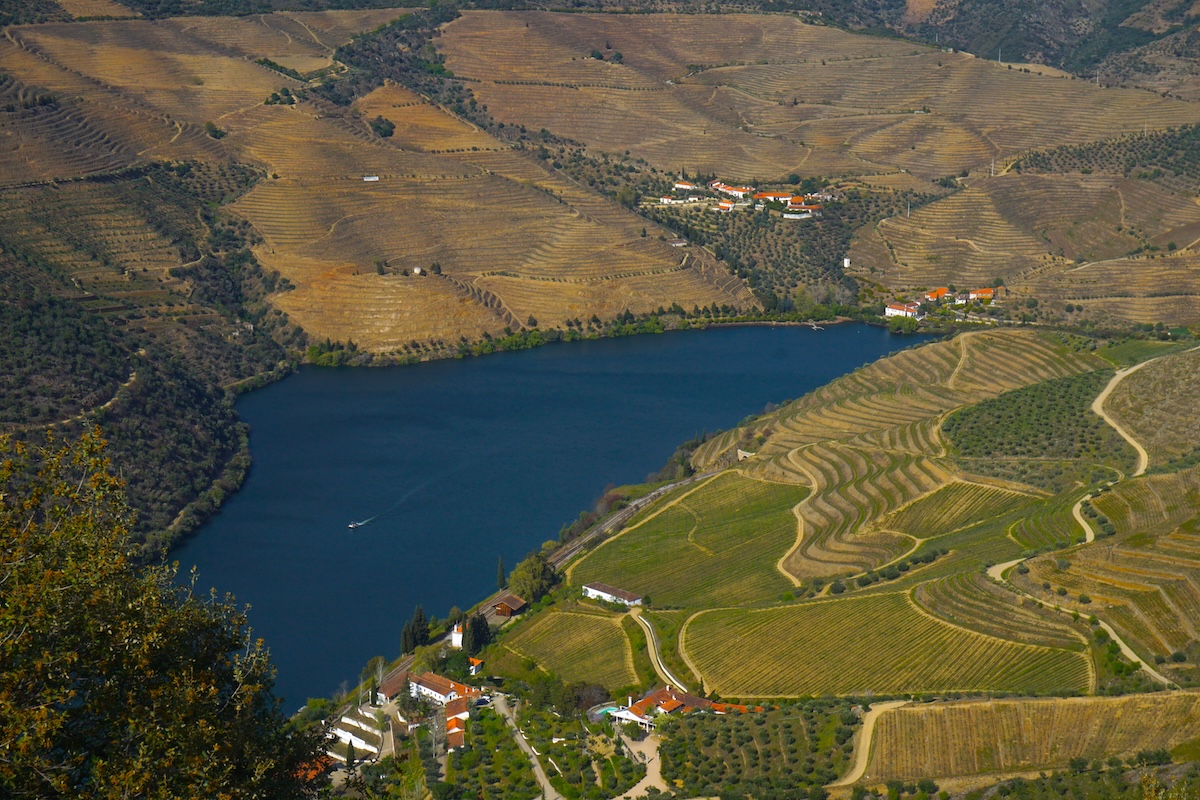
In case you can’t or don’t want to rent a car, here are your other transportation options:
- Taking the train is a great way to enjoy scenery you won’t see from any other mode of transportation. Regional trains depart from the Porto-São Bento and Porto-Campanhã stations, stopping at some of the places we mention in the guide, such as Peso da Régua, Pinhão, or Pocinho (Foz Côa). You can check schedules and prices on the official CP (Comboios de Portugal) website, and you can view the official map with all the lines and stops here. CP also offers the special Comboio Miradouro, a daily scenic train to enjoy the views even more, which also departs from both stations in Porto (Porto-São Bento and Porto-Campanhã) and stops at the main points of interest mentioned in this guide (such as Régua, Pinhão, and Pocinho – Foz Côa); more info here. On certain dates, CP also offers the Comboio Presidencial and the Comboio Histórico

- By bus, Rede Expressos has direct buses from Porto to Peso da Régua and Lamego, with a transfer to Foz Côa
- On a tour, a recommended option to make the most of your time if you don’t drive (public transportation by train and bus takes you to some of the places but not all). There are plenty of tours from Porto; below are some options by car and by boat (keep in mind that these are day trips, so it’s impossible to visit everything included in this guide, but they can give you a good idea of the region):
- Vineyard and Winery Tour of the Douro Valley
- Complete Douro Valley Wine Tour with Lunch, Wine Tastings, and River Cruise
- Small-Group Tour of the Duero Valley with Wine Tasting, Lunch, and Boat Ride
- Premium Wine Tour, Winery Lunch, and Private River Cruise
- 1-Day Cruise to Régua
- 1-Day Cruise to Pinhão
- Tour of the Douro Region

Some tips forrenting a car in Portugal:
- In our opinion, driving in Portugal is more reckless than in Spain, especially on secondary roads. Drive carefully, and if someone behind you is in a big hurry, let them pass.
- Gas is more expensive than in Spain, so keep that in mind when calculating your travel budget.
- For tolls, you have two options:
- Sign up for the Via Verde device (so you can drive through without stopping, and the rental company charges your card later). Some car rental companies offer this, though you have to pay by the day and it doesn’t always pay off.
- Do not sign up for the Via Verde option: in that case, you’ll have to use the manual lanes and pay on the spot. The problem is that there is a type of toll in Portugal that does not have a manual payment option (these are arches equipped with cameras and Via Verde detectors). If you do not rent the device and pass through one of these, you will have to pay later. You can do this in person at CTT (Post Office) offices in Portugal or online
- Insurance: check if the base rental price includes insurance with a deductible. If not, you can pay extra to lower or eliminate the deductible, or purchase DiscoverCars’ additional insurance. Be sure to review your options carefully.

How to get internet in the Douro Valley
If you have a European carrier, you can likely use your data plan there at no extra cost (check the terms with your carrier).
If that’s not the case, and if your phone supports eSIM and you don’t want to complicate things, we recommend theHolafly eSIM(unlimited data, 5% discount with the code RANDOMTRIP) or theAiralo eSIM(limited data, but cheaper, 15% discount with the code RANDOMTRIP15).
The other option, which is cheaper but more of a hassle because you’ll have to take the time to go out and buy it in person, is to purchase a local SIM card (the three main carriers are Meo, Vodafone, and Nos).

Estimated budget: how much does it cost to travel to the Douro Valley?
Estimating a budget is tricky since it depends heavily on your type of trip: how many activities you want to include, whether you’ll eat out or cook to save money, the type of accommodation you’ll use… In any case, to give you an idea, here are the average prices and what we consider the average daily cost (we reiterate that these are APPROXIMATE prices and may vary at any time):
- Flights: With low-cost airlines, you can find round-trip flights to Porto starting at €40 per person from various airports in Spain and Europe, though prices vary depending on the season and day of the week. Use flight comparison sites like Skyscanner and Kiwi to find the best price.
- Transportation: In our opinion, the best option is to rent a car; depending on the season and how far in advance you book, you can find cars starting at around €15/day (with a deductible)
- Accommodation: Starting at €45/night for a room with a private bathroom or a small apartment with a kitchen, though the Douro Valley is full of luxury accommodations with significantly higher prices—keep this in mind if you want a more special experience.Find accommodations of all types and price ranges on Booking, with up to a 15% discount.
- Restaurants: The selection of restaurants isn’t that extensive, and there are also plenty of upscale options (high-end quintas with higher prices), but you can always find options between €10 and €30 per person, catering to all tastes.
- Tours: Some of the top activities in the Douro Valley require a fee: visiting a winery and doing a wine tasting (from €15/person), taking a rabelo boat ride on the Douro (from €15/person), visiting the Museu do Coa (€18), and tours to see the rock art (from €18/person)
In total, a 5-day trip to the Douro Valley can cost between €70 and €90 per person per day, based on the cheapest accommodation options, eating out at affordable restaurants, renting a car, and visiting some of the paid attractions.

Useful Apps for Traveling to the Douro Valley
Here are some apps that might come in handy for your trip to Porto:
- Google Maps (Android/iOS): this is what we use to save and organize all the places we want to visit or have already visited, and as a GPS to navigate the city or when renting a car. It also includes public transportation information to help you find the best route. You can view other people’s reviews of places, photos, restaurant menus, contact numbers, and more. You can also open our map within the app , which includes all the places featured in this guide
- Maps.me (Android/iOS): an app similar to Google Maps but one that works offline (although Google Maps can also work offline, this one works better) and which in many cases has information that Google Maps doesn’t have
- Windy (Android/iOS/Web): an essential app for our trips. It lets you check forecasts for rain, clouds, wind, etc., to help you plan your days based on the weather (since some places lose a lot of their appeal depending on the weather). Obviously, the forecasts aren’t 100% reliable. It also shows available webcams.

Tips for traveling to the Douro Valley as a responsible tourist
Respect others: don’t play loud music if you’re at a viewpoint to enjoy the sunset; if you bring a can or plastic bottle, pick up your trash; don’t throw away cigarette butts, etc. Leave the place better than you found it.
Don’t be complicit in animal abuse: Don’t support any activity or attraction where animals are kept in captivity and/or used for human entertainment.
Always travel with travel insurance: medical expenses, theft, or flight issues during a trip can cost you a fortune, so it’s best to get travel insurance. We always use IATI and highly recommend it. If you purchase your insurance through this link, you’ll get a 5% discount.

Checklist: What to Pack in Your Backpack/Suitcase for the Douro Valley
Here’s a list of essentials you can’t forget to pack for your trip to the Douro Valley:
The Portuguese Douro Valley awaits you with terraced vineyards, rabelo boats gliding through meandering rivers, and a succession of viewpoints that light up every sunset: from Régua and Lamego to Pinhão and Foz Côa, it’s a journey to be seen, savored, and heard to the leisurely rhythm of the Douro River. Here, the world’s oldest demarcated wine region invites you to get lost on scenic roads, toast at quintas steeped in centuries of history, and walk among terraces that tell the story of a unique landscape—so get your camera ready, make room in your schedule for a tasting, and let the Douro set the pace of your journey… Boa viagem, Randomtripper!
