

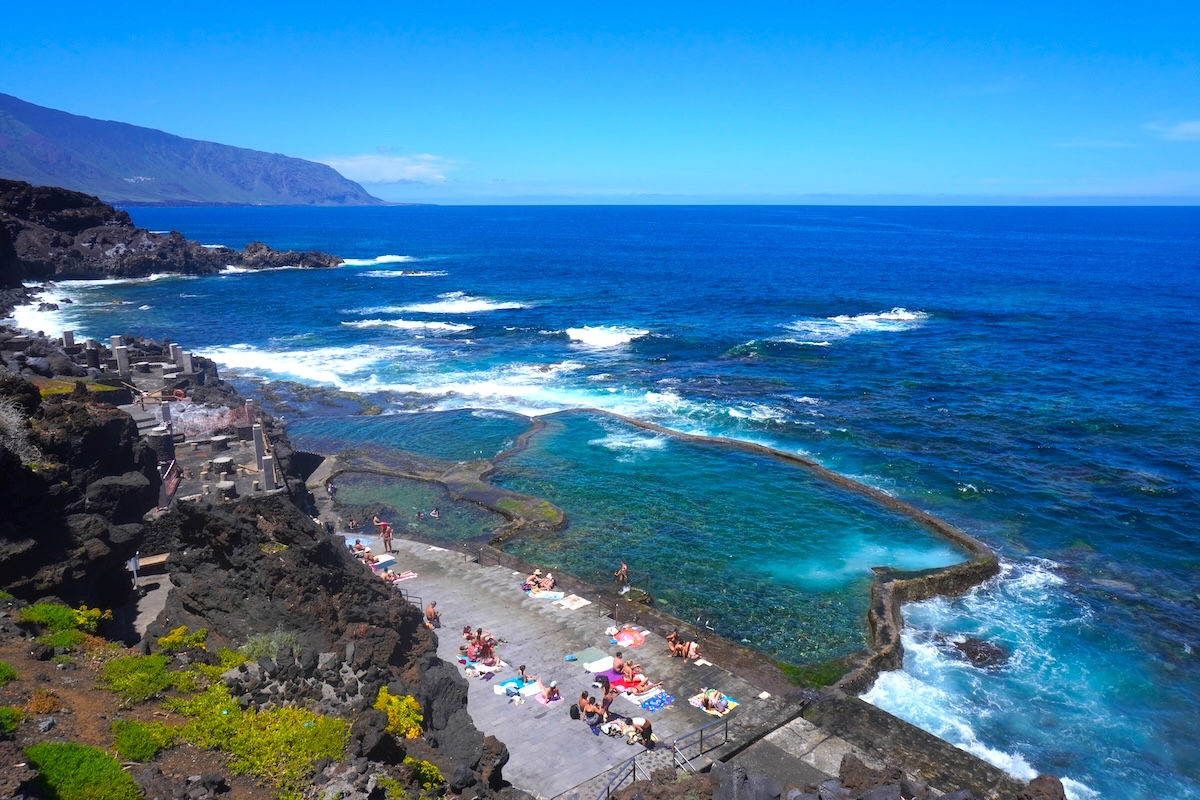
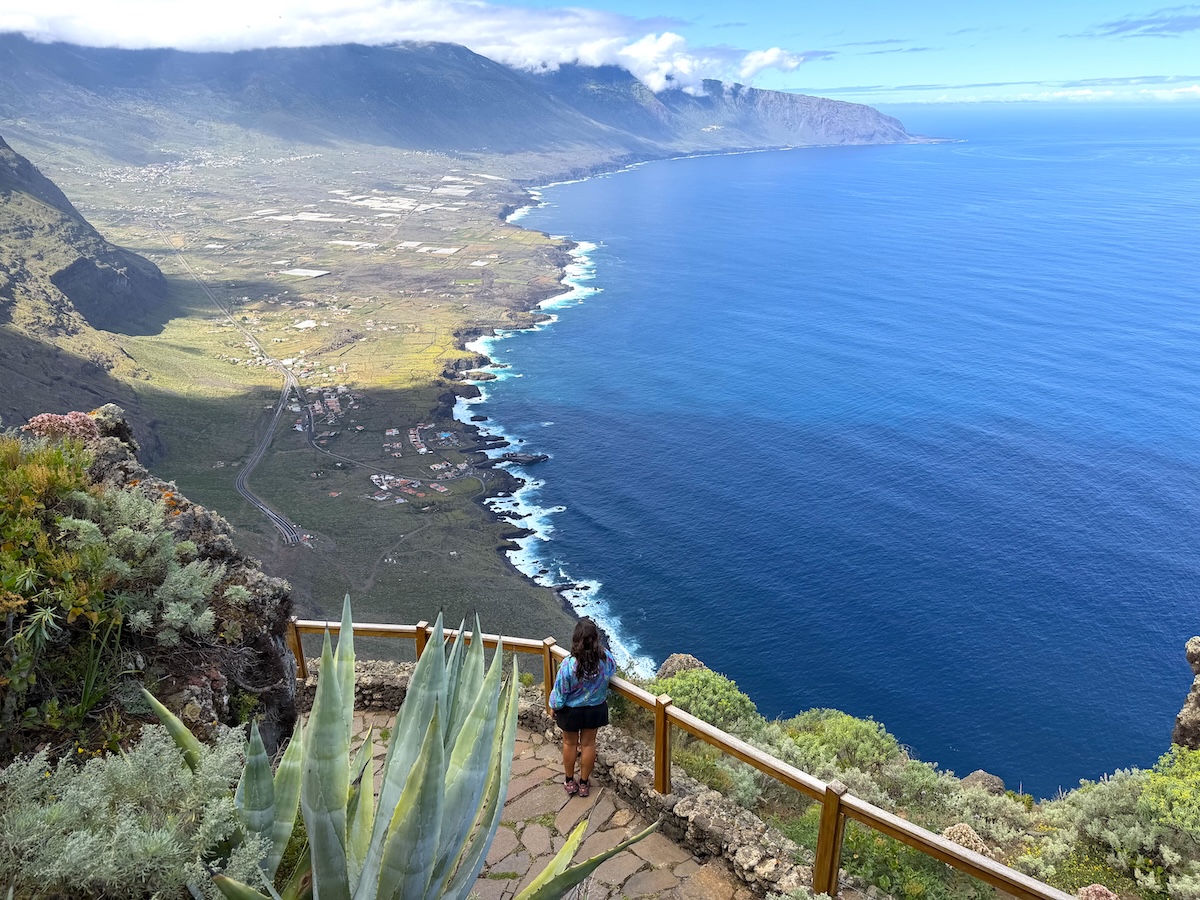
Science-fiction-like landscapes among volcanic roads, trees that seem to live on their knees, lookouts with breathtaking panoramic views, and turquoise natural pools that beckon you to swim across them. And yet, the best of the island of El Hierro can’t be captured in a guidebook: time passes in slow motion, homes are open to everyone, and people don’t ask what you’re doing but rather who you are and what time you’re heading to the sea tomorrow. You breathe in the sea, dive to its depths, and end the day with a cold beer and some potatoes with mojo sauce at sunset. Be warned: life on El Hierro is addictive, and despite being one of the smallest islands in the Canaries (after La Graciosa), a week isn’t enough to get to know it thoroughly-especially if you plan to dive and enjoy that incredible seabed, considered one of the best diving spots in Europe.
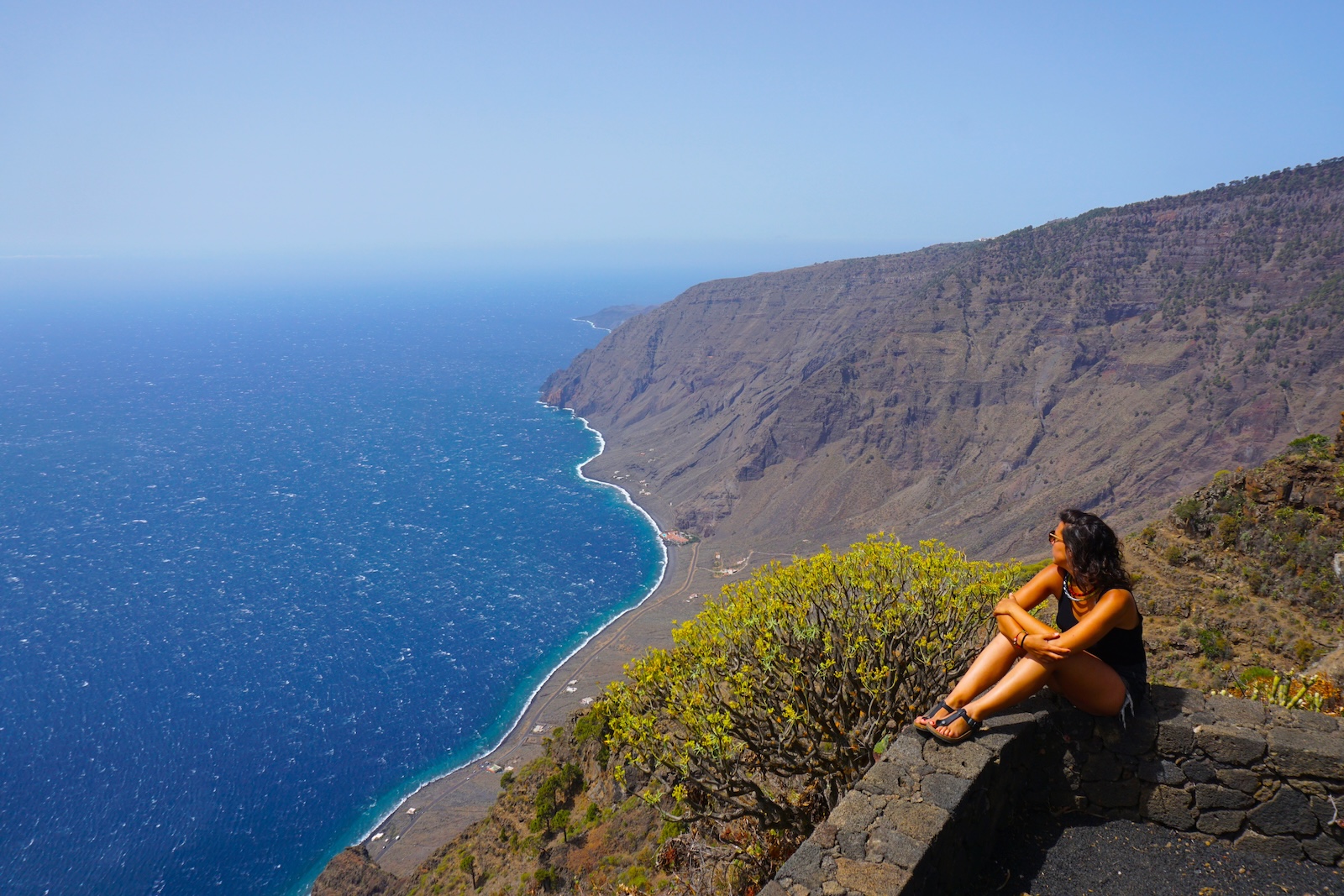
The island’s popularity has skyrocketed thanks to the TV series “Hierro”, drawing more tourists to the island and prompting the local government to put up signs at the show’s filming locations for movie buffs (if that’s you, we’ve got more info here), but it remains an island where you can enjoy a peaceful getaway, free from hustle and bustle or crowds, even at the height of summer.
In this post, you’ll find everything you need to plan your trip to El Hierro, an island that has earned its place as one of our favorite Canary Islands: how to get there, things to see and do, how many days to spend, the best time to visit, how to get around, where to dive, where to stay, and even where to eat.
Basic facts for traveling to El Hierro
El Hierro is the second-smallest and least populated island in the Canary Islands archipelago (the smallest, as of 2018, is the island of La Graciosa, recognized as the eighth Canary Island). Designated a Biosphere Reserve in 2000, it’s a leader in sustainability. In addition, its Mar de las Calmas Marine Reserve makes it one of the best places to dive in Europe.
Language: Spanish
Currency: Euro
Population: 11,147 (as of 2020)
When to visit: The climate is spring-like all year round, but it’s best to visit between May and October to enjoy its incredible natural pools with pleasant water temperatures. Find out more about when to visit here.
How many days: It depends on whether you’re diving or not. A minimum of 2 days, not counting diving days. Ideally, 5 days. More information here.
How to get there: There are no direct flights from outside the archipelago, so to reach El Hierro, you’ll first need to fly to Tenerife or Gran Canaria, from where you can travel to El Hierro by boat or plane (to find the cheapest option, we recommend using flight comparison sites like Skyscanner and Kiwi and being flexible with your dates). We’ll tell you everything we know about how to get to the island here.
Where to stay: The ideal and most strategic base for exploring the island is La Frontera (we stayed at Los Verodes and Apartamentos Altavista), but if you’re going diving, you’ll need to stay in La Restinga or, at the very “top,” in El Pinar. For a special treat, you can stay at one of the smallest hotels in the world, the Hotel Puntagrande, or at the Parador. More info on where to stay here.
What to pack: Here’s a look at what’s always in our backpack
How to get around: The best option is definitely to rent a car. More info here.
How much does it cost: Starting at 50€/day per person (approx.) for a one-week trip. More information on pricing here.
Time zone: UTC +1. The time in El Hierro and the Canary Islands is one hour behind mainland Spain.
When to visit El Hierro
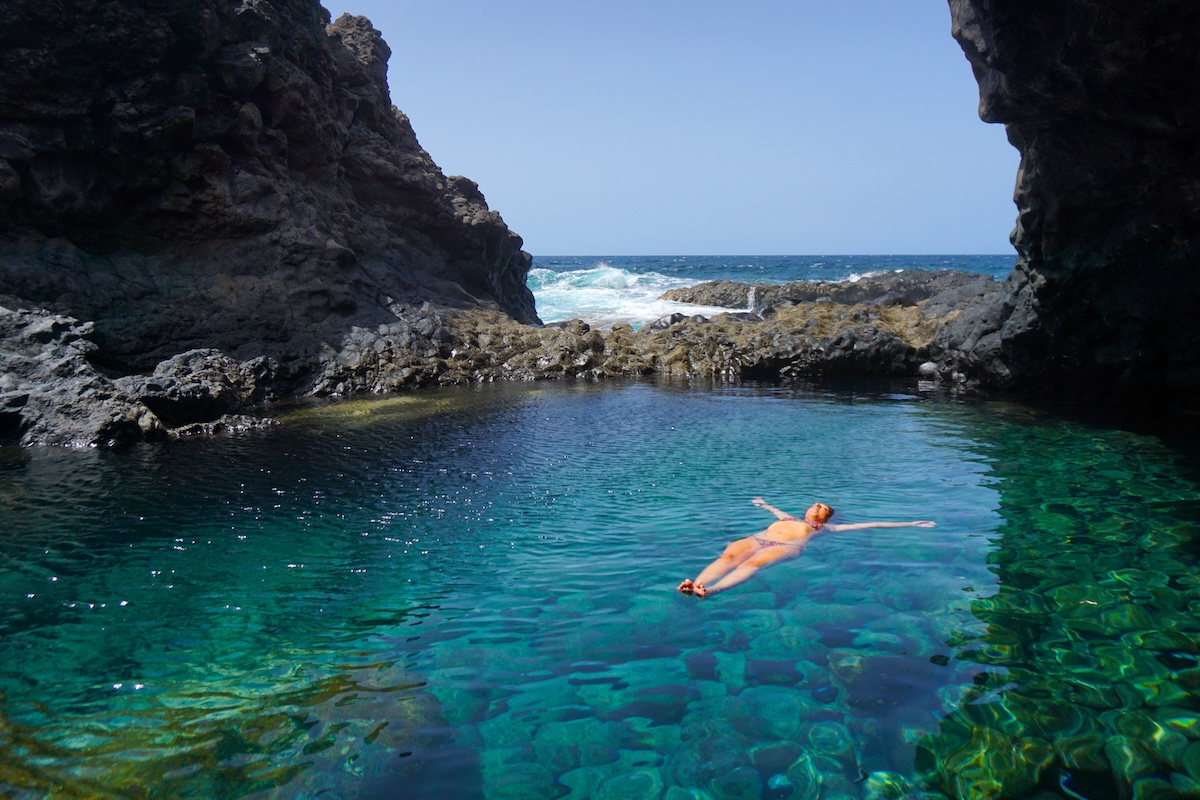
Although temperatures on the island are mild year-round, to fully enjoy its natural pools (one of the island’s biggest attractions), with guaranteed temperatures above 25° and little chance of rain, we recommend visiting between May and October.
At Randomtrip, we visited El Hierro for the first time in July and had great weather; the waters of the natural pools were perfect for a nice swim and a dip, and we went diving in the Mar de las Calmas Marine Reserve in water around 23°C, which was very pleasant for diving. We returned to El Hierro in May 2026, and we were lucky enough to catch a few very hot days, so we were able to enjoy the island’s natural pools once again.
Another advantage of visiting an island like El Hierro is that you won’t run into many people, even during peak season. We were able to enjoy much of the scenery we show you in this guide all to ourselves, even in July.
Weather table for El Hierro, with temperatures and rainy days per month:
| Month | Lowest temperature | Maximum temperature | Average water temperature | Rainy days |
|---|---|---|---|---|
| January | 17ºC | 19ºC | 20ºC | 6 |
| February | 17ºC | 19ºC | 20ºC | 5 |
| March | 17ºC | 19ºC | 20ºC | 4 |
| April | 17ºC | 20ºC | 20ºC | 3 |
| May | 18ºC | 21ºC | 21ºC | 2 |
| June | 20ºC | 23ºC | 22ºC | 1 |
| July | 21ºC | 23ºC | 23ºC | 1 |
| August | 22ºC | 24ºC | 23ºC | 2 |
| September | 22ºC | 25ºC | 24ºC | 4 |
| October | 21ºC | 24ºC | 24ºC | 4 |
| November | 20ºC | 22ºC | 23ºC | 5 |
| December | 18ºC | 21ºC | 22ºC | 7 |
| Month | Lowest temperature | Maximum temperature | Average temperature (water) | Rainy days |
How to get to El Hierro
There are no direct flights to El Hierro from outside the archipelago, so you can only get there from other Canary Islands, either by plane or by boat.
First, you’ll need to fly to Tenerife or Gran Canaria. There are plenty of flights between mainland Spain and other European countries to these two main islands. We recommend being flexible with your dates and using price comparison sites like Skyscanner and Kiwi.com.
You can also reach the Canary Islands by boat. Taking the crossing from the mainland (Huelva) to Gran Canaria or Tenerife is also ideal if you’re traveling with your own vehicle (your RV, for example) or want to bring your pet along and don’t want it to travel in the cargo hold. It takes longer (about 31 hours), but it’s an adventure in itself, with decks where you can relax, a self-service restaurant, and a bar. In this post, we’ll tell you about our experience aboard the Marie Curie, operated by Fred. Olsen Express and Baleària, in case you decide to give it a try.

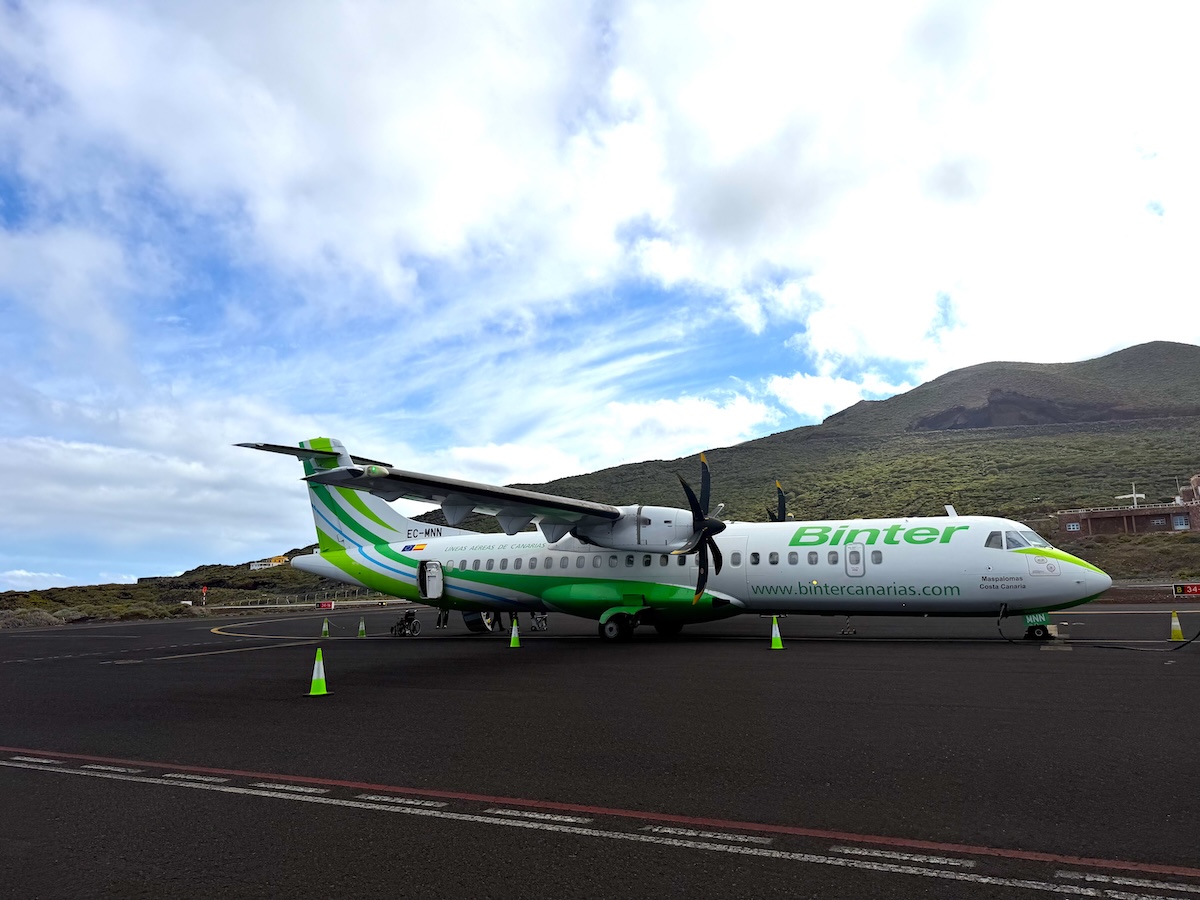
Once in Tenerife or Gran Canaria, you can reach El Hierro by boat (with Fred. Olsen or Baleària) or by plane (with Binter or CanaryFly). We recommend using price comparison sites like Skyscanner and Kiwi.com
How long to stay in El Hierro
This depends largely on whether or not you dive. Why? Because on the days you’re diving, you won’t be able to explore much of the island (aside from La Restinga and Tacorón) due to the altitudes involved and decompression sickness. We’ll tell you more about this in the “Diving in El Hierro” section.
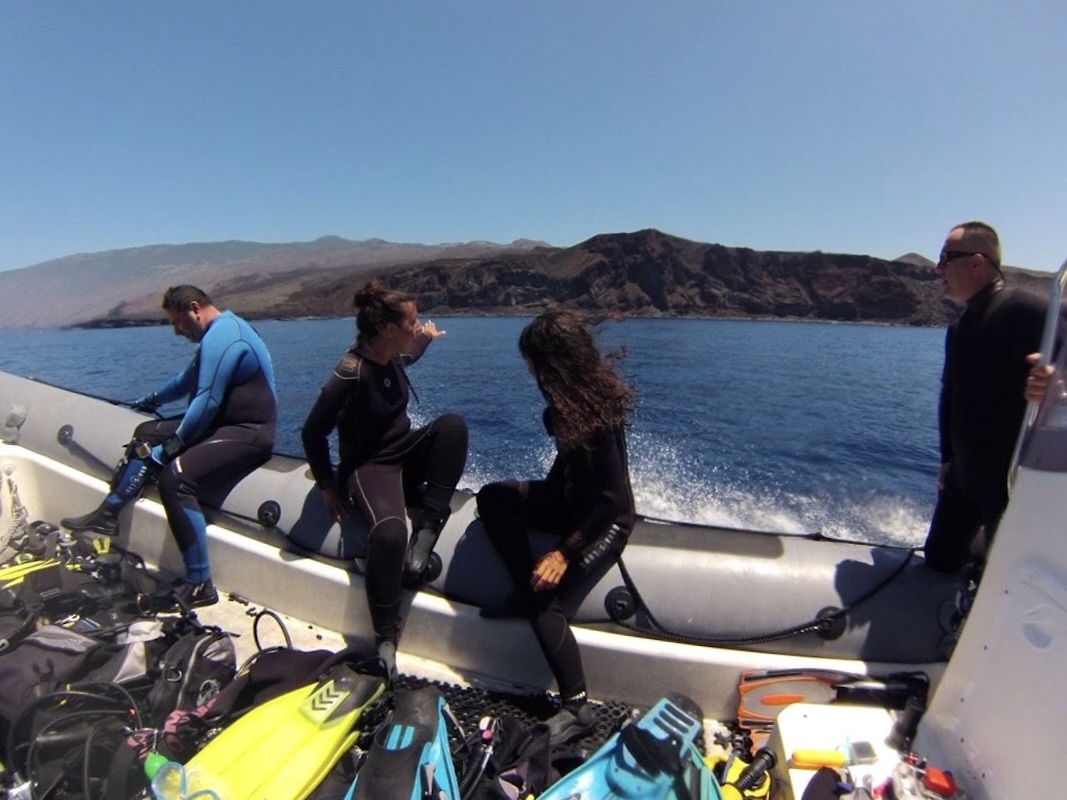
So, if you’re scuba diving, set aside about 2 or 3 extra days to enjoy the island. If you’re not diving, we’d recommend staying at least 3 days, though 5 days would be ideal. El Hierro is a slower-paced island that invites you to slow down, so the more days you can spend there, the better.
Canary Islands travel insurance
Do you know what cannot be missing in your luggage? A good travel insurance! We are affiliates of several specialized travel insurance companies and you can get a discount in some of them if you book with us:
Appart from the medical assistance in case something happens when you visit Spain, the insurance can also cover anything that happen while you get into adventures like hiking, kayaking, snorkeling and diving. Also, if something happens to your luggage (damage, theft, delays, losing it) or if your flight is cancelled or delayed (or, if because a delay you lose another connecting flight) a travel insurance can also help.
Carefully read the terms and conditions of each policy and hire the insurance that best suits your needs.
Things to see and do in El Hierro
Here’s a summary of the places of interest to visit in El Hierro, and below you’ll find a map and specific information about each location.
Things to see and do in El Hierro
- Natural Pools and Puddles: with turquoise waters
- Viewpoints: with breathtaking views
- Orchilla Lighthouse: where you can watch one of the best sunsets in Spain
- El Sabinar: the juniper tree that inspired Brian May (Queen) is the symbolic plant of El Hierro
- La Llanía: a fairy-tale forest in the middle of the volcanic island
- Beaches: with black sand that contrasts with the blue of the sea
- Las Puntas and one of the smallest hotels in the world
- Charming villages: such as La Restinga and La Frontera
- Diving in the Mar de las Calmas: one of the most beautiful seabeds in Europe
Map of El Hierro
Here’s a map of El Hierro featuring all the recommended spots in this guide: natural pools, scenic overlooks, beaches, restaurants, accommodations… You can access it via Google Maps on your phone to use while traveling around the island (many areas of the island have no cell service, so make a note of or save the places you want to visit along with any information you’ll need).
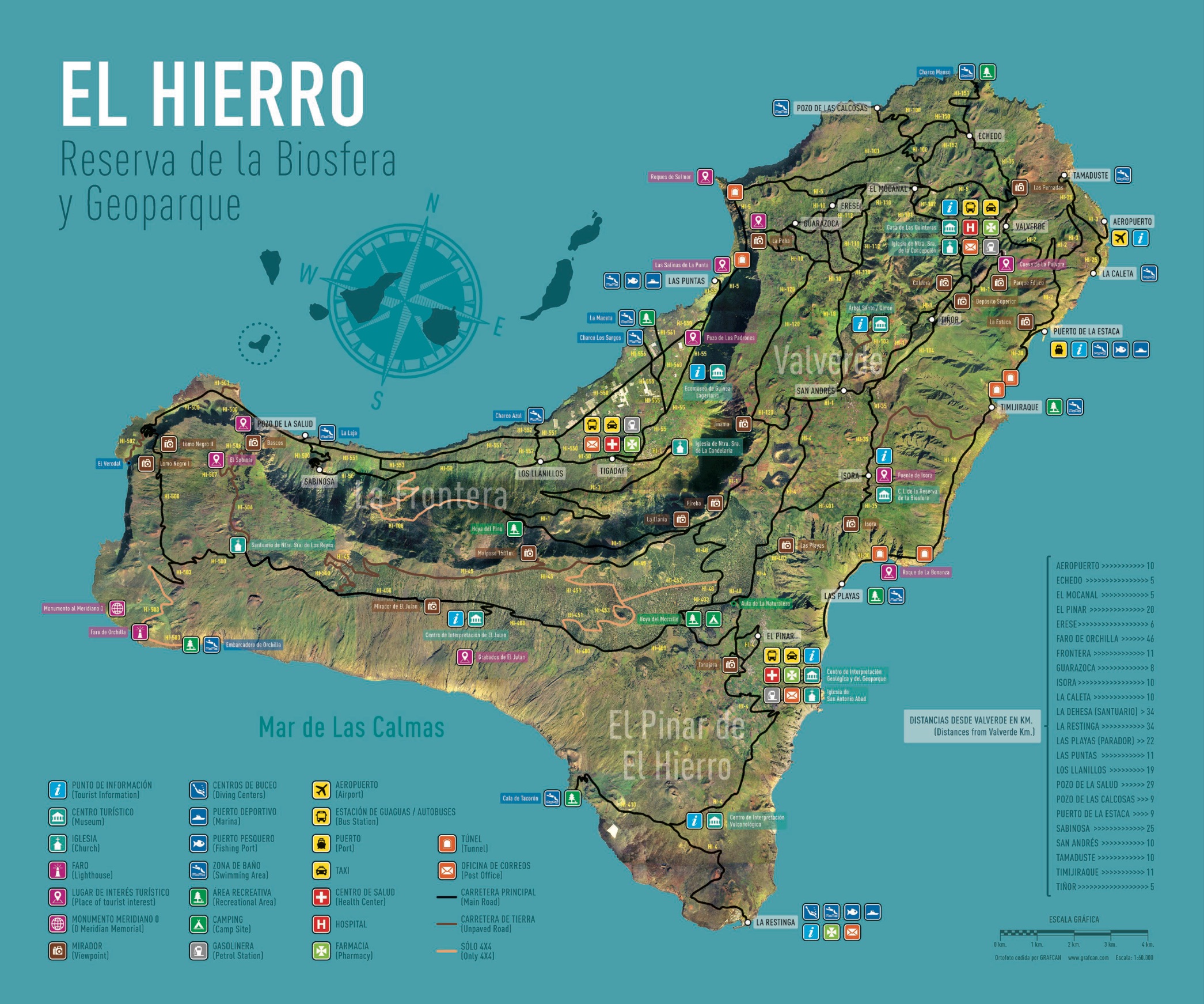
We’ve also included a tourist map showing the roads and some of El Hierro’s points of interest , which may come in handy during your trip. You can download it in high resolution by clicking on the image or by clicking here; it’s from the official elhierro.travel website.
A brief introduction to the island of El Hierro
El Hierro is the westernmost of the Canary Islands and the smallest of the seven self-governing islands, with an area of 268.71 km² and a population of just over 11,000 (only La Graciosa, at 29 km², is smaller, although it is administratively part of Lanzarote). Its history is shaped by a very specific factor: it has no rivers or springs, and learning to live without water has defined its character to this day.
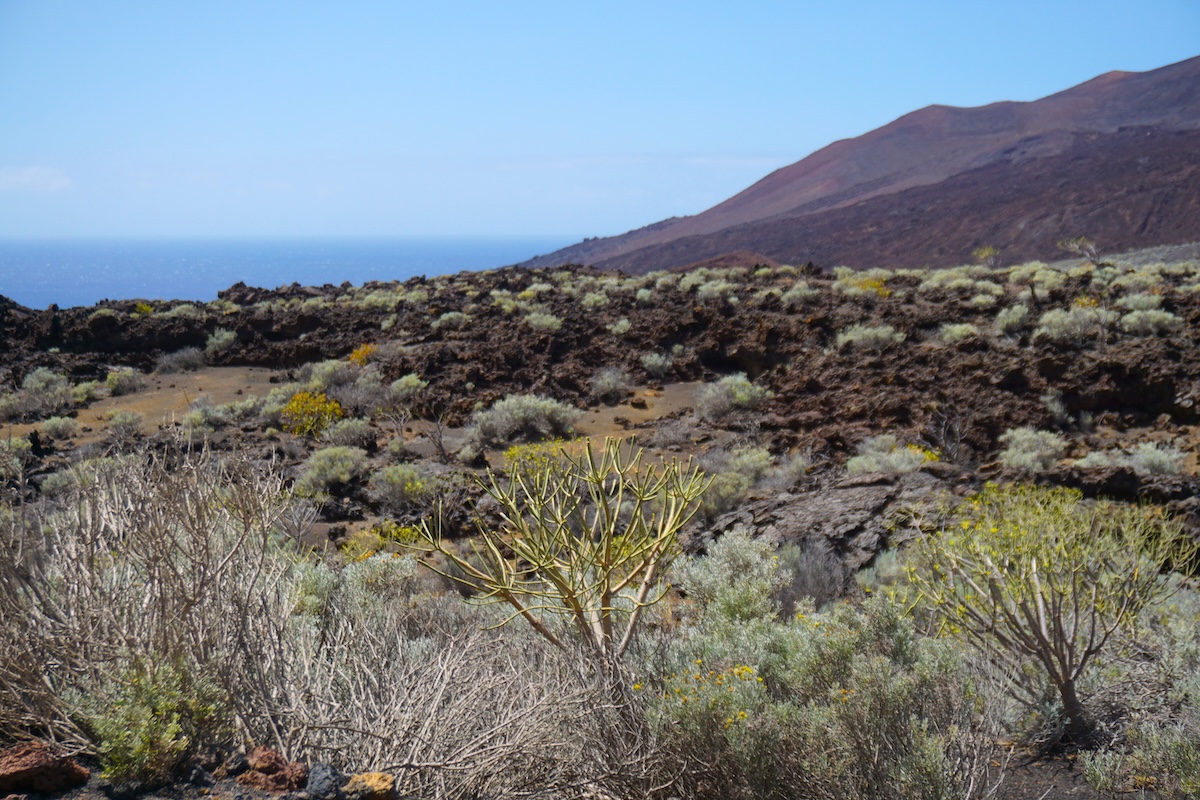
The first settlers, the Bimbapes (or Bimbaches, both terms are used, although several linguists argue that “Bimbape” is the most faithful to the traditional dialect), arrived from North Africa around the 5th century B.C. They lived in caves, raising small livestock and growing barley and wheat.
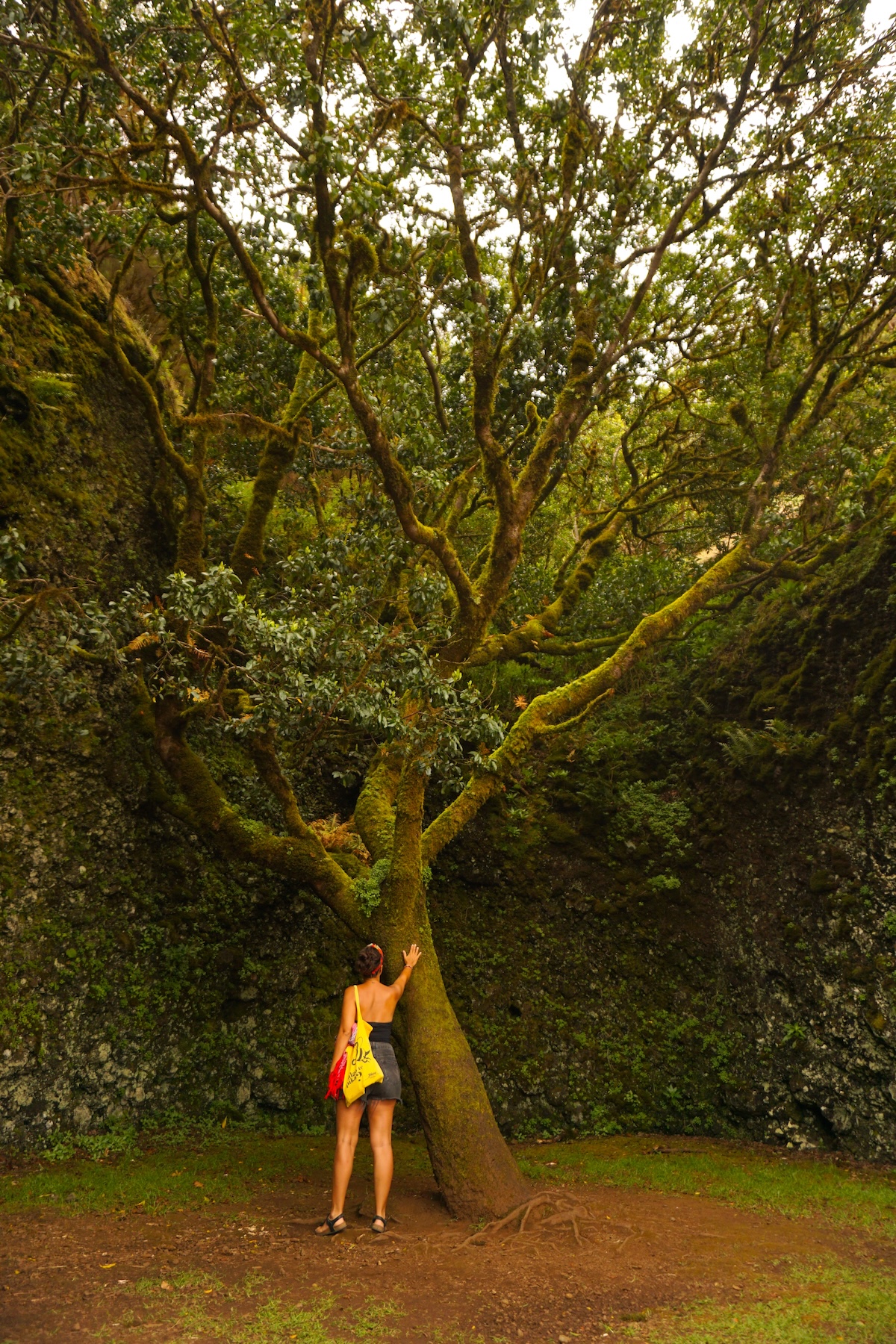
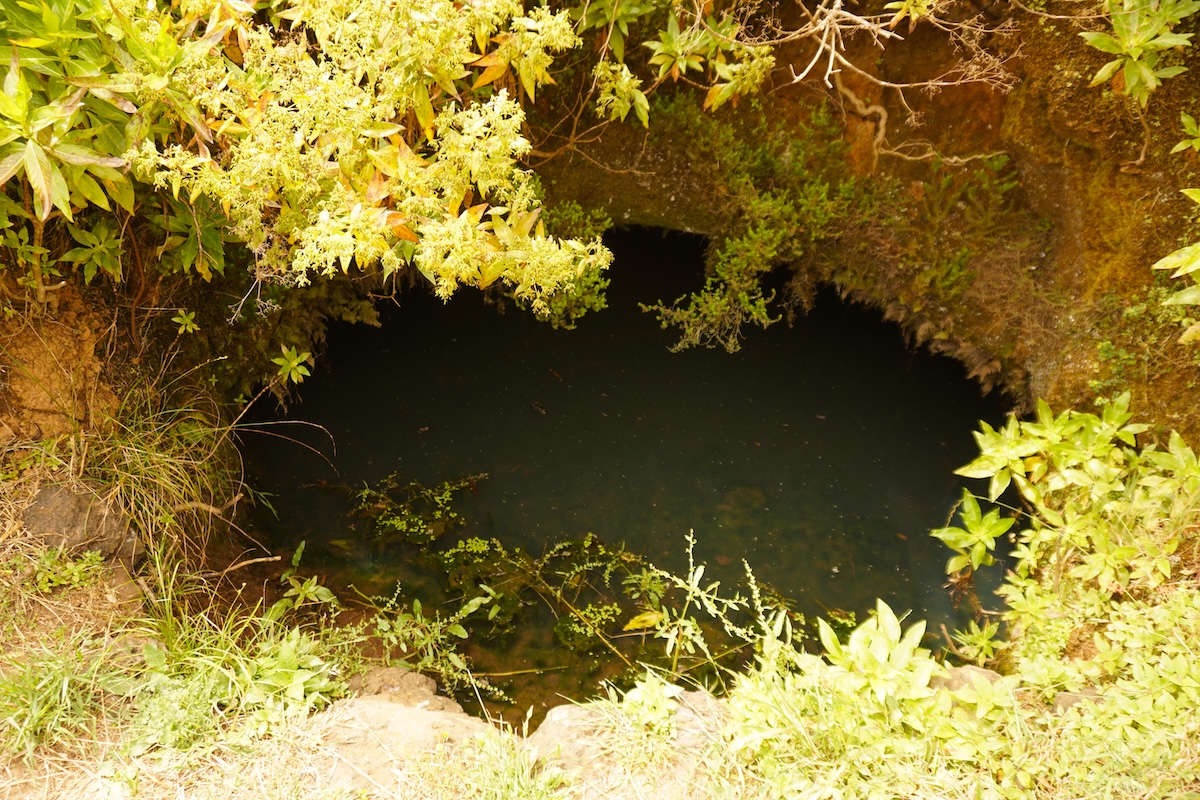
With no rivers or springs, they developed various systems to collect water, such as cisterns, troughs, and basins, but the most famous was the Garoé: a tree near Tiñor that condensed moisture from the trade winds and let it drip drop by drop into a small pool at its base, enough to supply the entire population. In the early 15th century, the Castilian conquest reached the island, led by the colonizer Jean de Bethencourt. The original tree was felled by a storm in the 17th century; the current one, planted in 1949 in San Andrés, remains a symbol of the island and appears on its coat of arms.
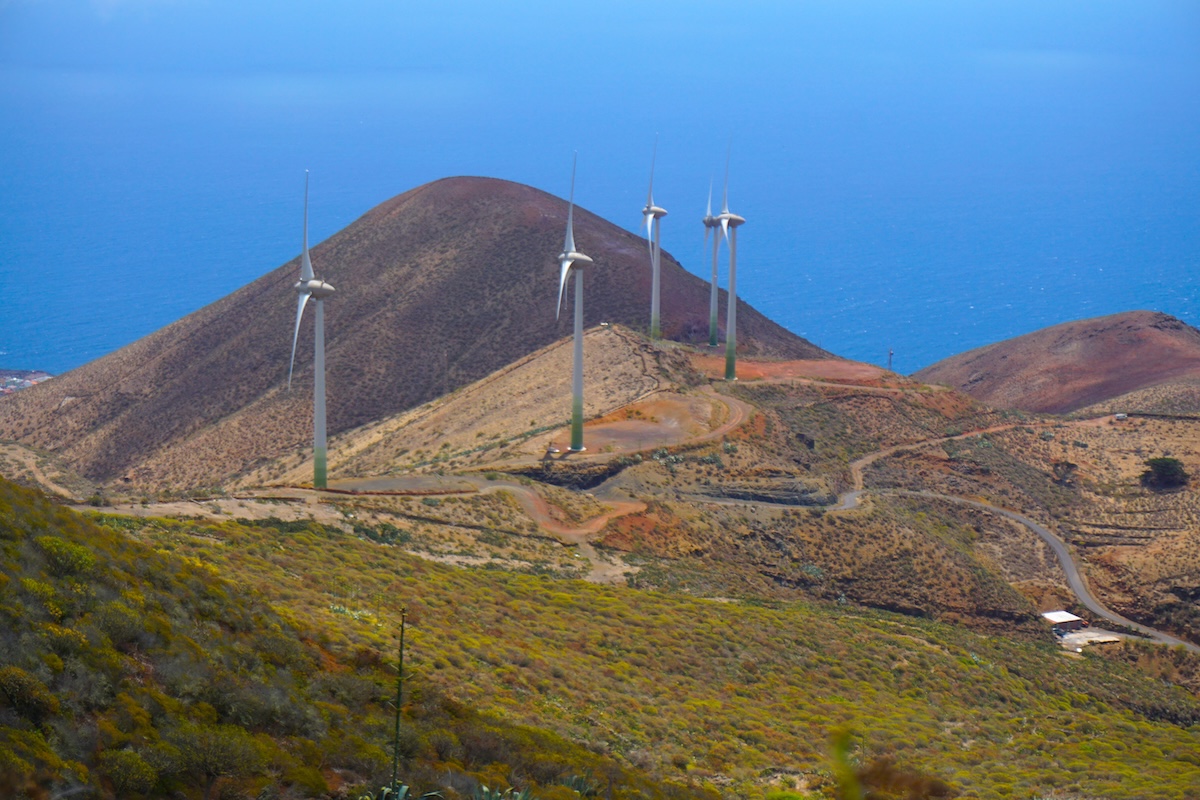
This historical obsession with water explains the current commitment to self-sufficiency: since 2014, the Gorona del Viento hydro-wind power plant has combined a wind farm with water reservoirs to generate clean electricity. This commitment was recognized on January 22, 2000, when UNESCO designated the entire island a Biosphere Reserve; today, more than 60% of its territory is protected.
Today, El Hierro is committed to peaceful and sustainable tourism, now the main driver of its economy, which coexists with fishing, agriculture, and livestock farming, the island’s other traditional pillars. A clear example of this commitment to fishing is the La Restinga-Mar de las Calmas Marine Reserve, created in 1996 at the request of the fishermen themselves: 750 hectares of volcanic seabed, calm waters, and excellent visibility, home to groupers, turtles, and even the occasional passing whale shark. All of this has made it one of the best diving spots in Europe.
Pasaporte turístico de El Hierro (El Hierro Tourist Passport)
As you’ll see below, some of El Hierro’s attractions charge an admission fee; if you plan to visit several of them, it may be worth getting the El Hierro Tourist Passport. It costs 17.95€ and grants you access to all the included attractions:
- Guinea Ecomuseum, Lizard Enclosure, and Volcanic Tube (9.50€)
- Casa de Las Quinteras Ethnographic Museum (4€)
- El Garoé – Sacred Tree (2.50€)
- El Julan Interpretation Center (5€) – does not include the guided tour
- Biosphere Reserve Interpretation Center (3€)
- Geological Interpretation Center (3€)
- Geopark Interpretation Center (5€)
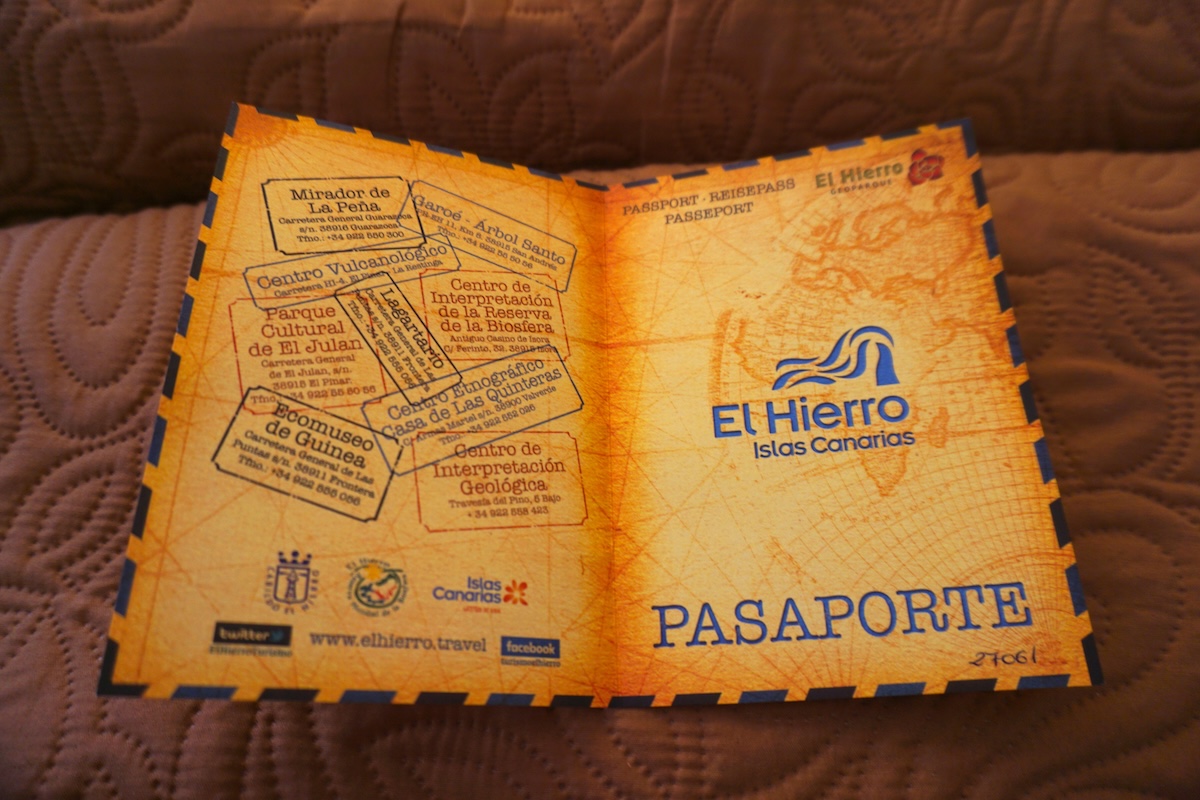
Depending on which ones you plan to visit, it might be worth getting the passport. You can purchase it at any of the included sites before paying the admission fee.
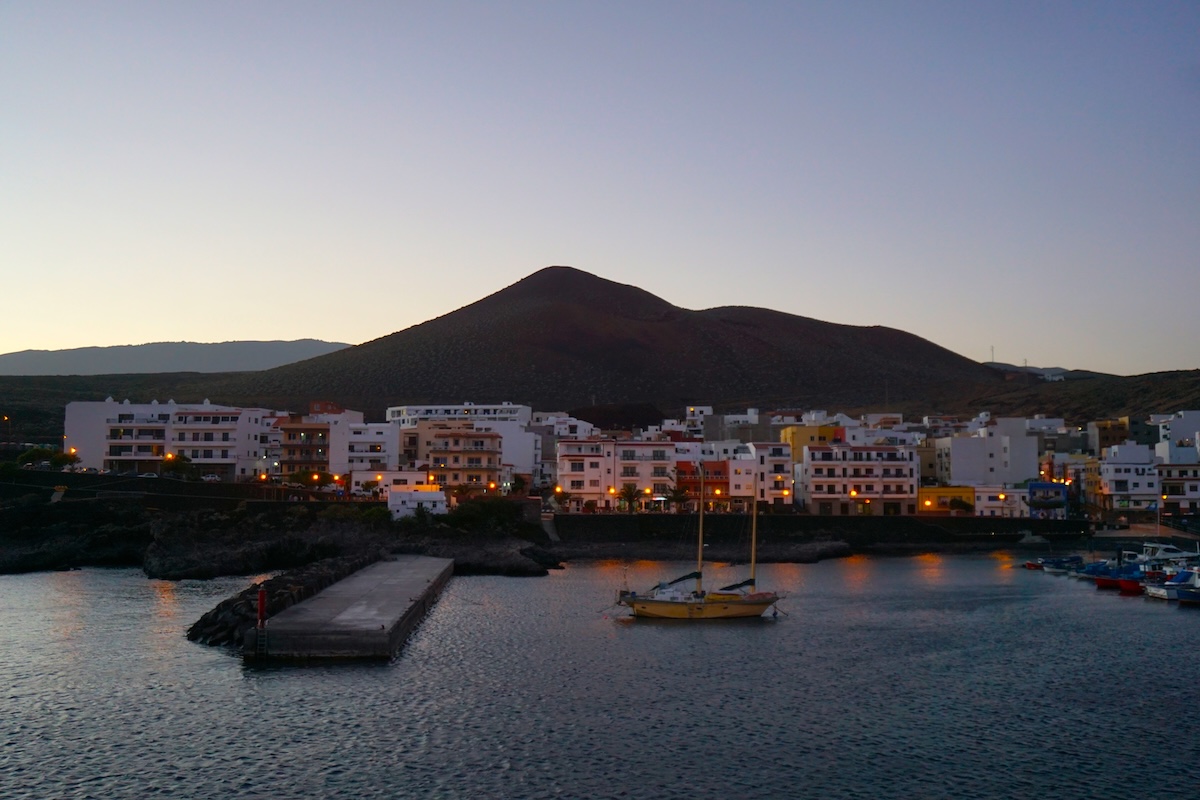
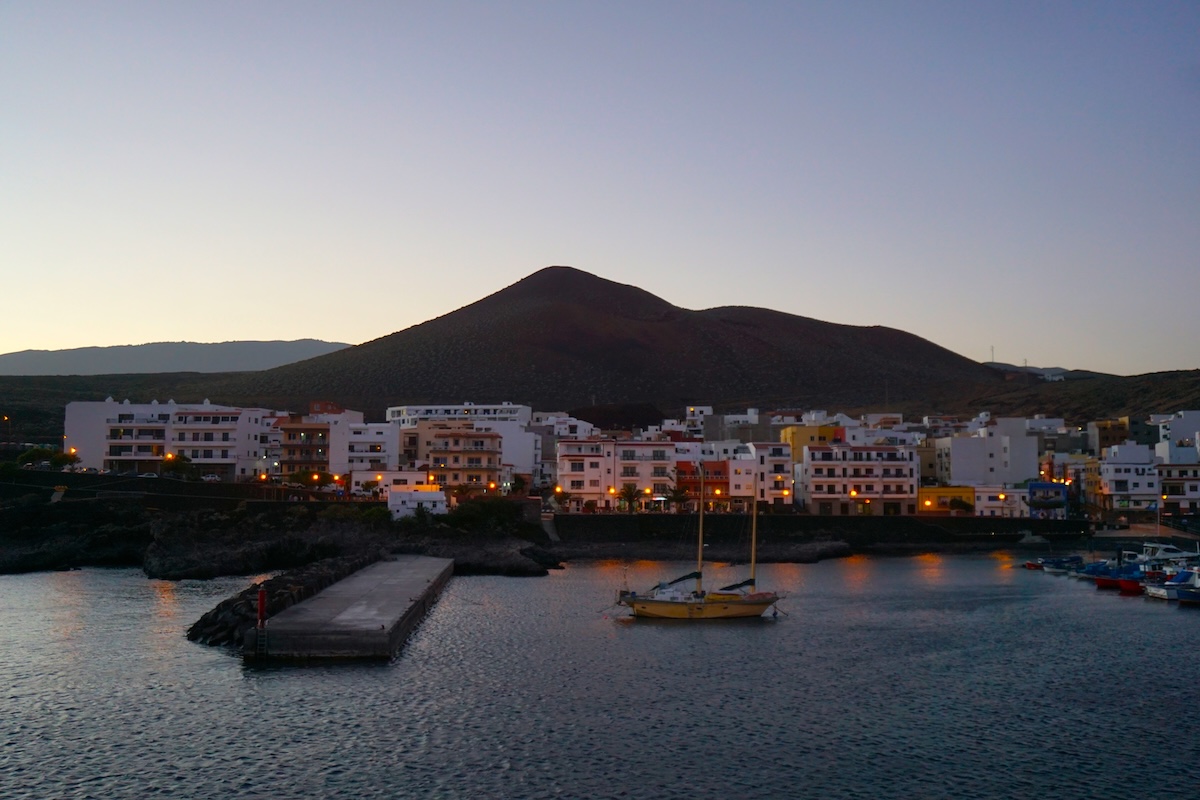
La Restinga
La Restinga is a paradise for scuba diving enthusiasts. The air is filled with the scent of the sea, conversations revolve around the sea, and divers explore its seabed.
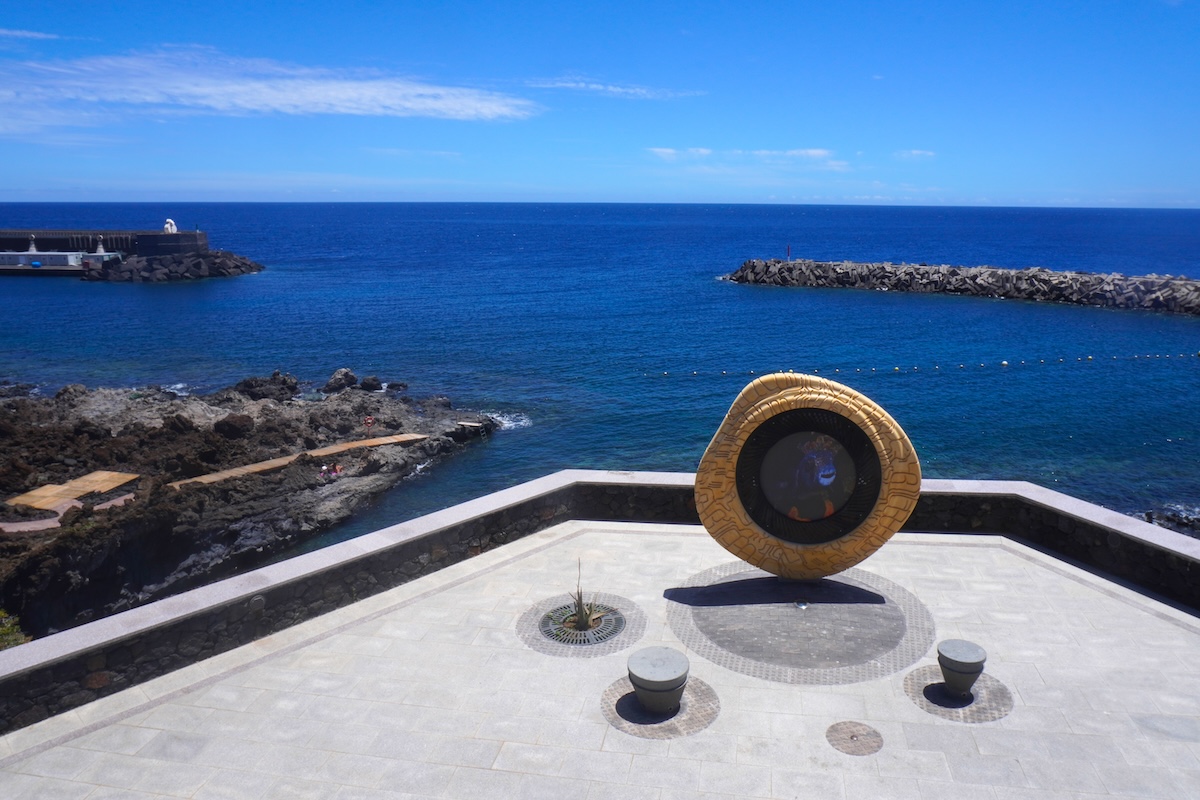
As we mentioned in the section on diving in El Hierro, La Restinga is home to most of the island’s dive centers and is where you’ll stay to go diving in the Mar de las Calmas Marine Reserve.
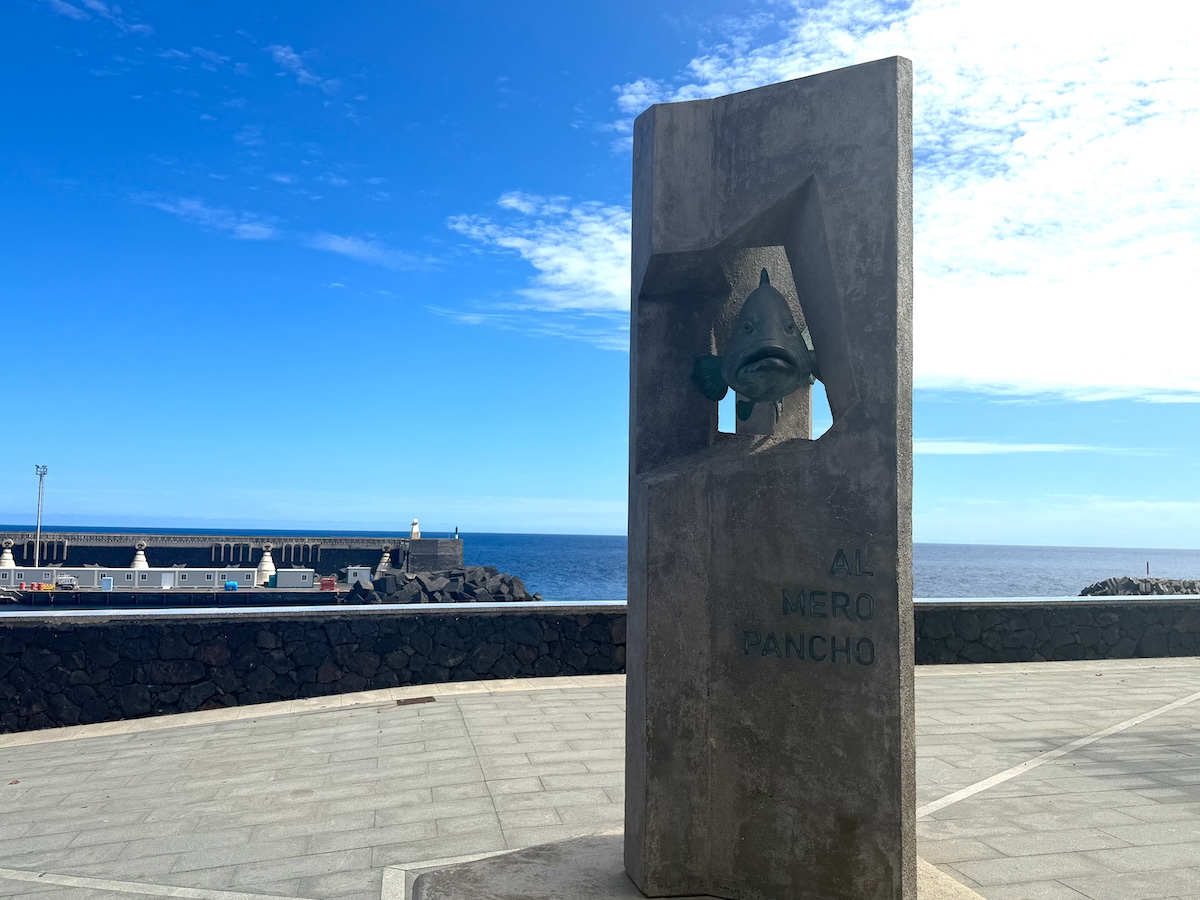
It also has a small, quiet Blue Flag beach in the harbor where you can relax (an urban beach with all the necessary amenities and calm waters), as well as several spots along the coast dotted with wooden hammocks where you can take a dip, like here or here.
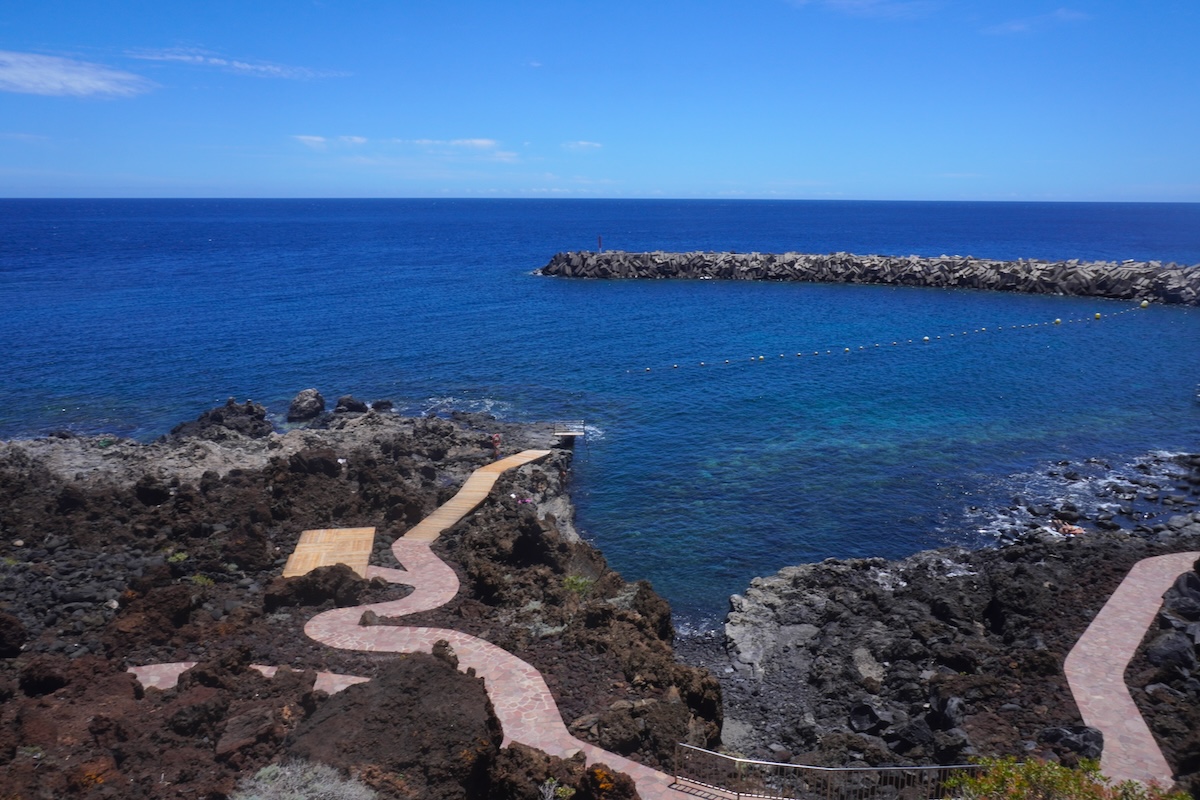
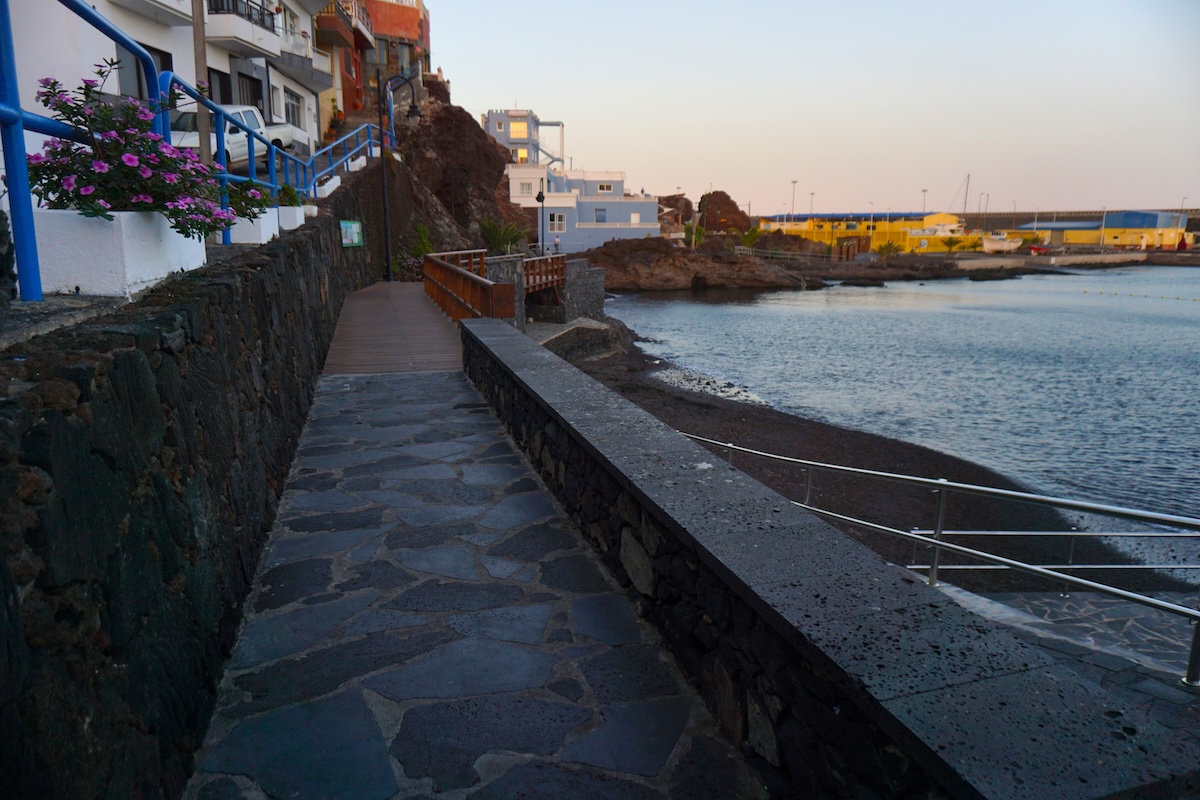
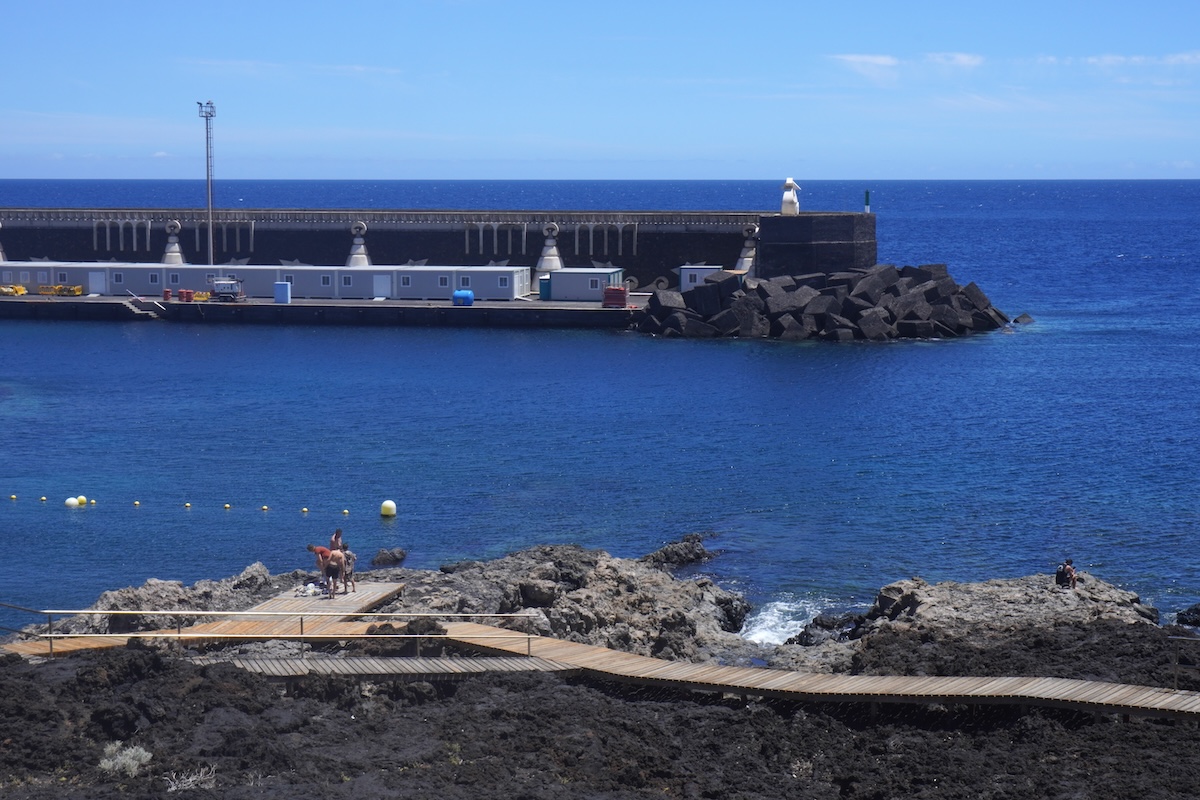
In town, there are a couple of supermarkets, an ATM, and several small restaurants and bars.
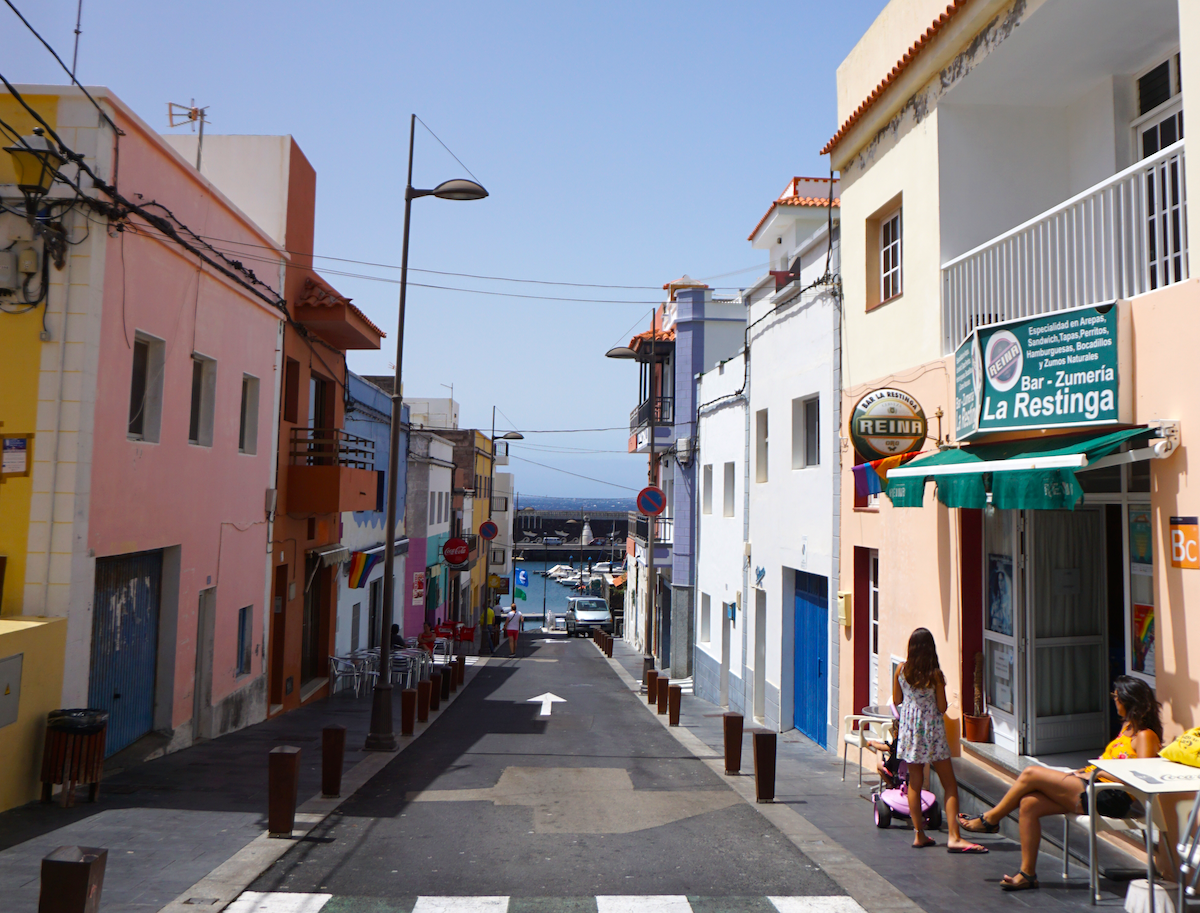
If you want to try scuba diving for the first time or go snorkeling, La Restinga is the place to be:
- Book a first-time diving experience in El Hierro here
- Book your snorkeling boat tour here
Geopark Interpretation Center
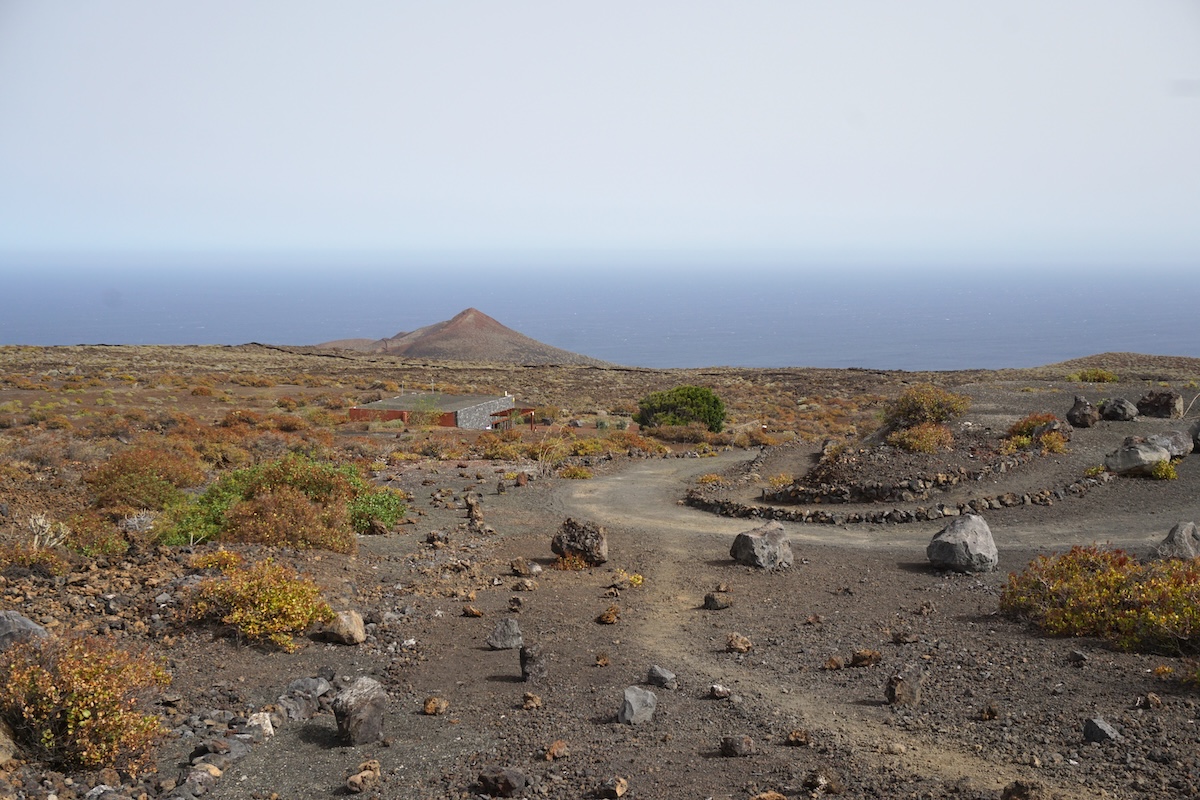
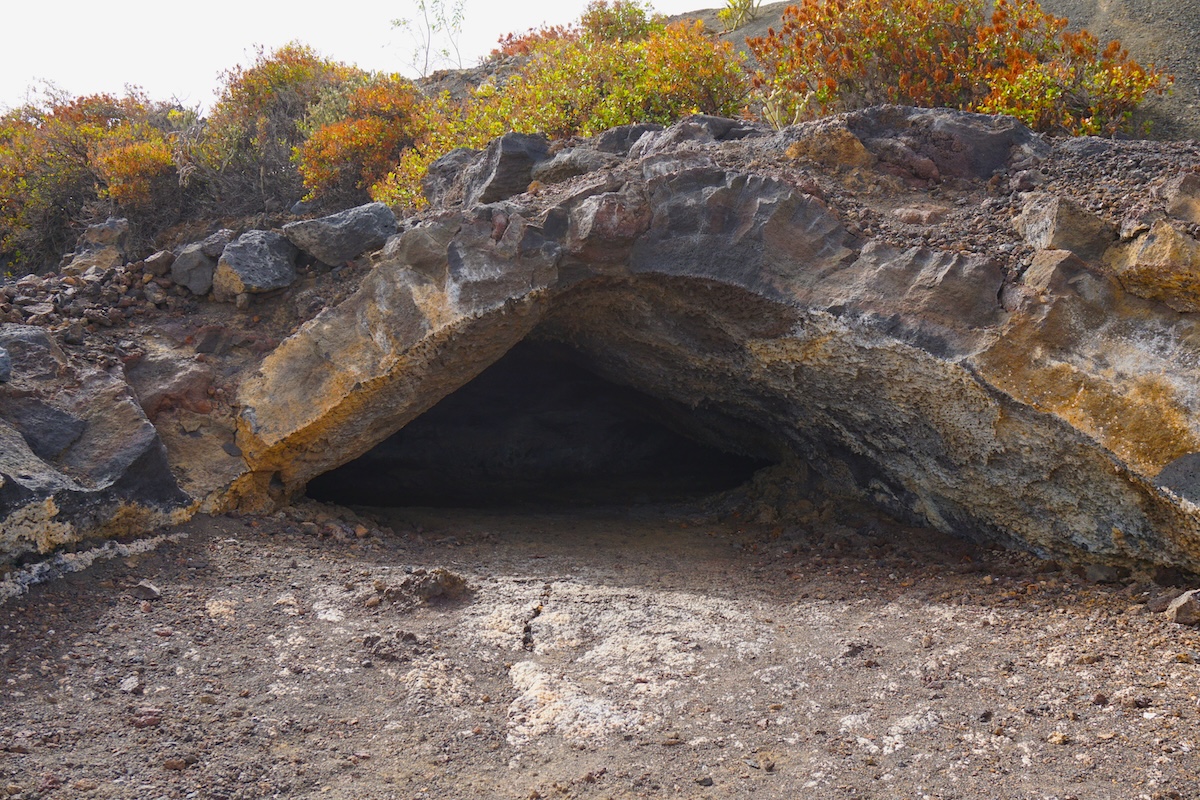
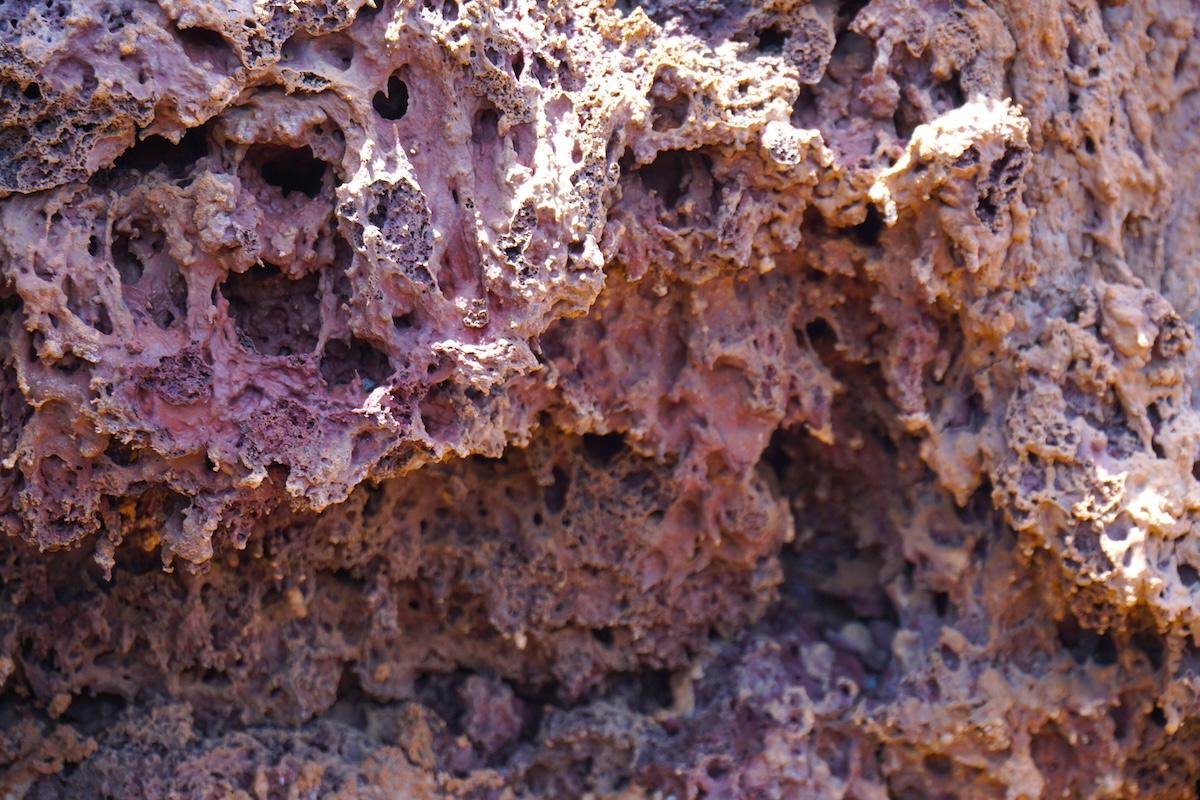
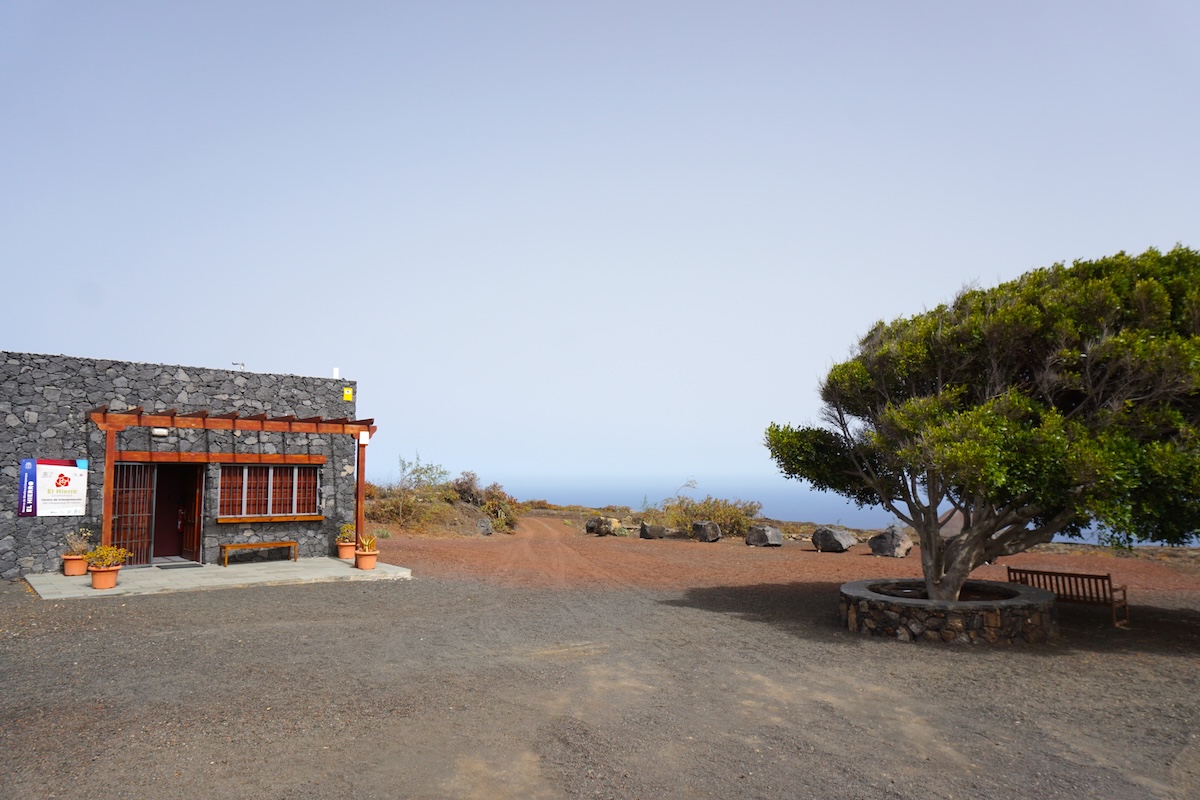
The Geopark Interpretation Center is a must-see if you want to learn more about the origin of the island of El Hierro and its evolution in recent years. The center consists of two buildings: one dedicated to volcanism in the Canary Islands, and the other focused on volcanism in El Hierro, particularly the 2011 undersea eruption.
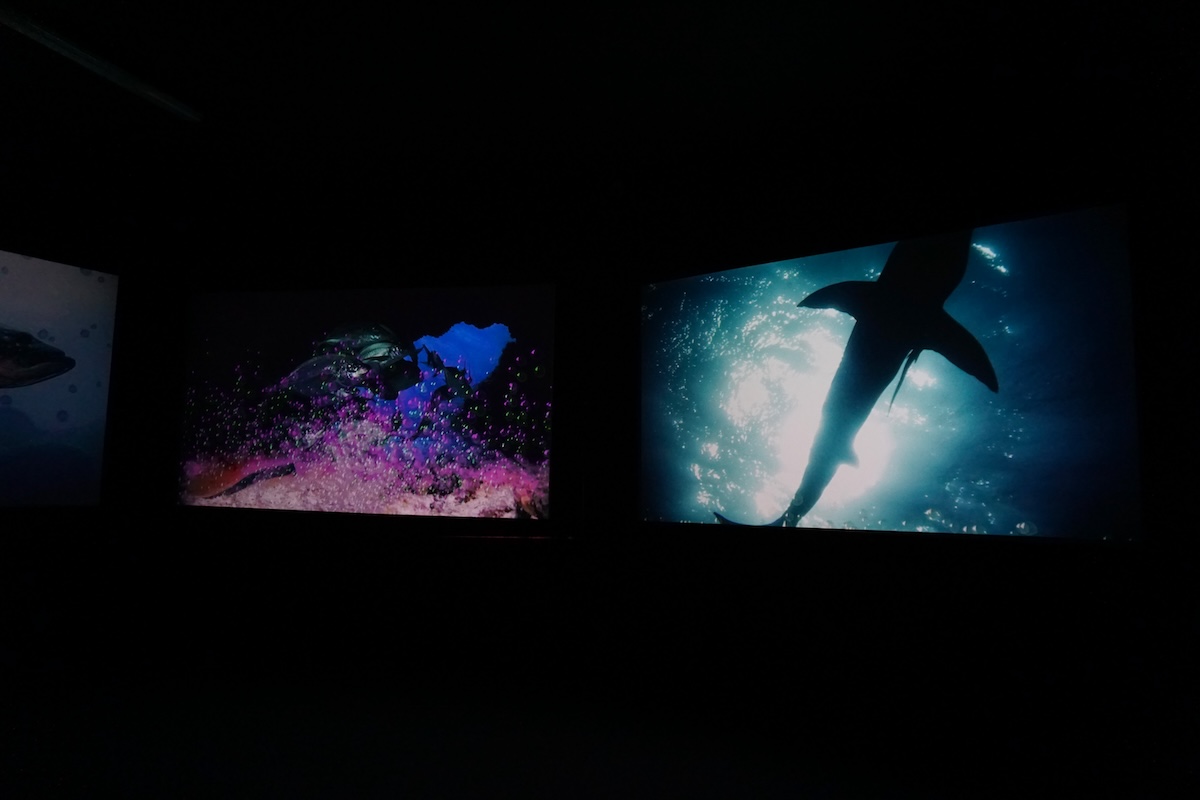
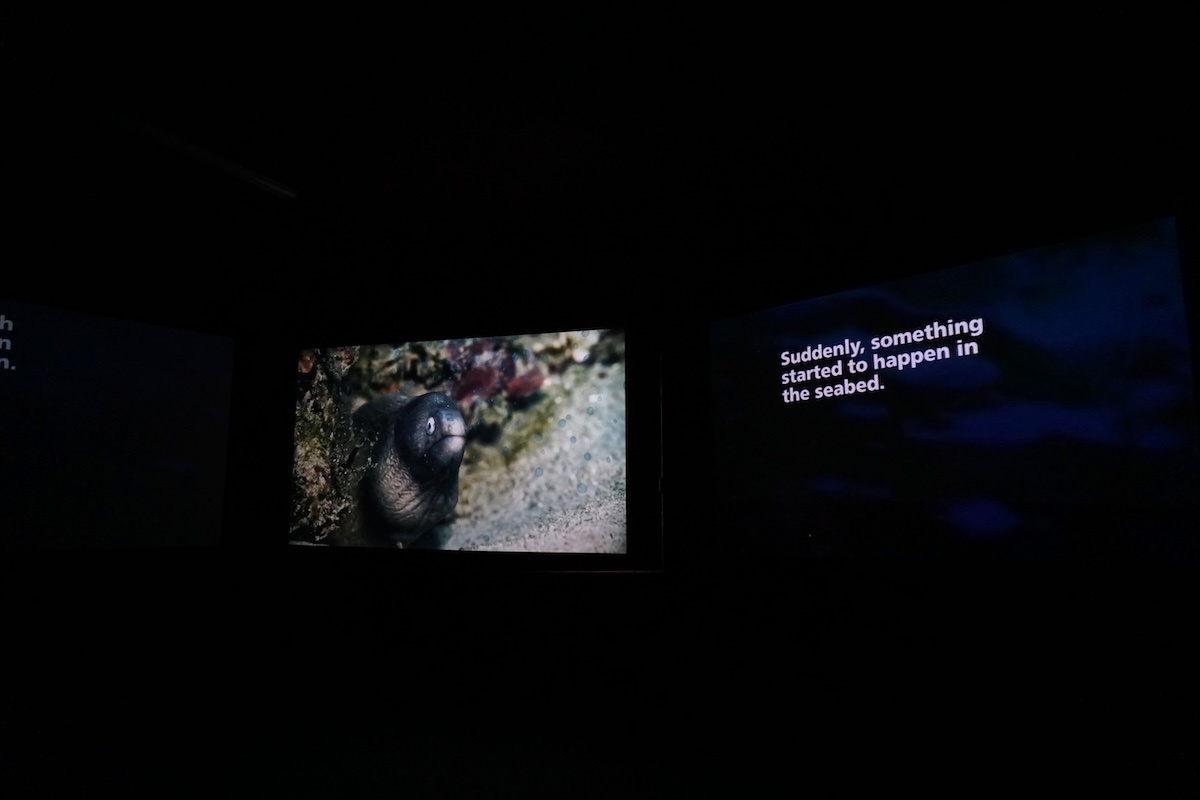
The Canary Islands are of volcanic origin, and in 2011, the island of El Hierro experienced an underwater volcanic eruption. For several months that year, there was intense seismic activity: the eruption began in October 2011 and ended in March 2012. La Restinga had to be evacuated several times.
Tacorón (natural pools and beach)
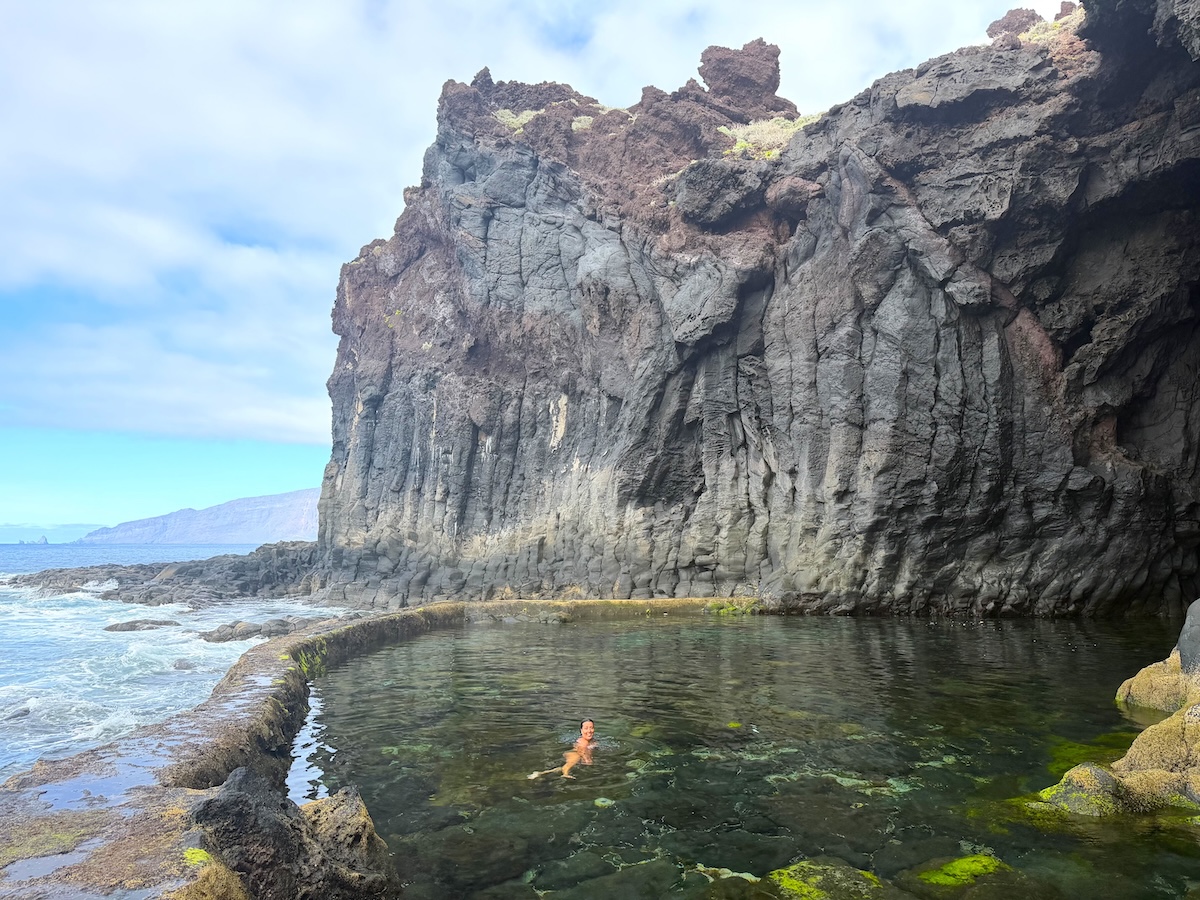
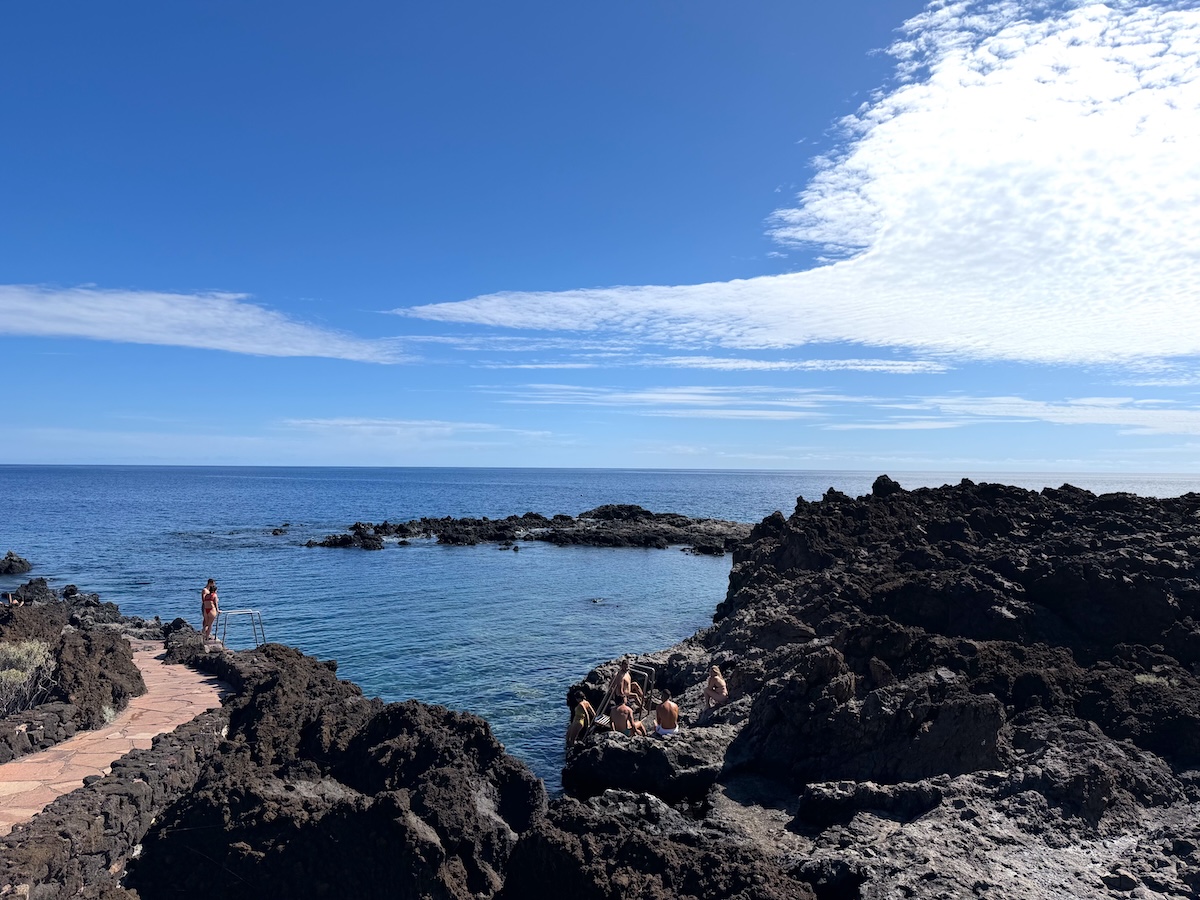
The “lifesaving” pools for those who come to El Hierro to dive. As we’ll explain in more detail in the section on Diving in El Hierro, on the days you go diving in the incredible seabed of the Mar de las Calmas, you won’t be able to venture too far from La Restinga due to depth and decompression sickness, so the natural pools of Tacorón, very close to La Restinga, will be your perfect late-afternoon plan.
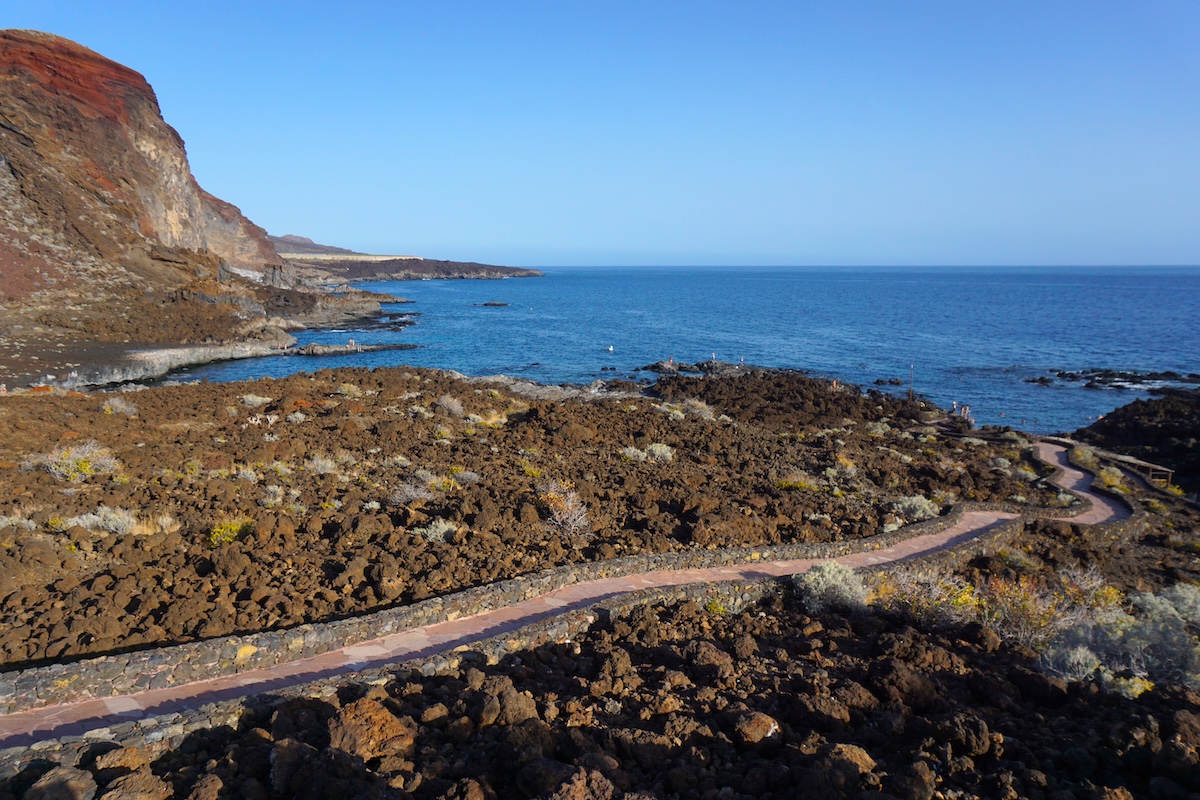
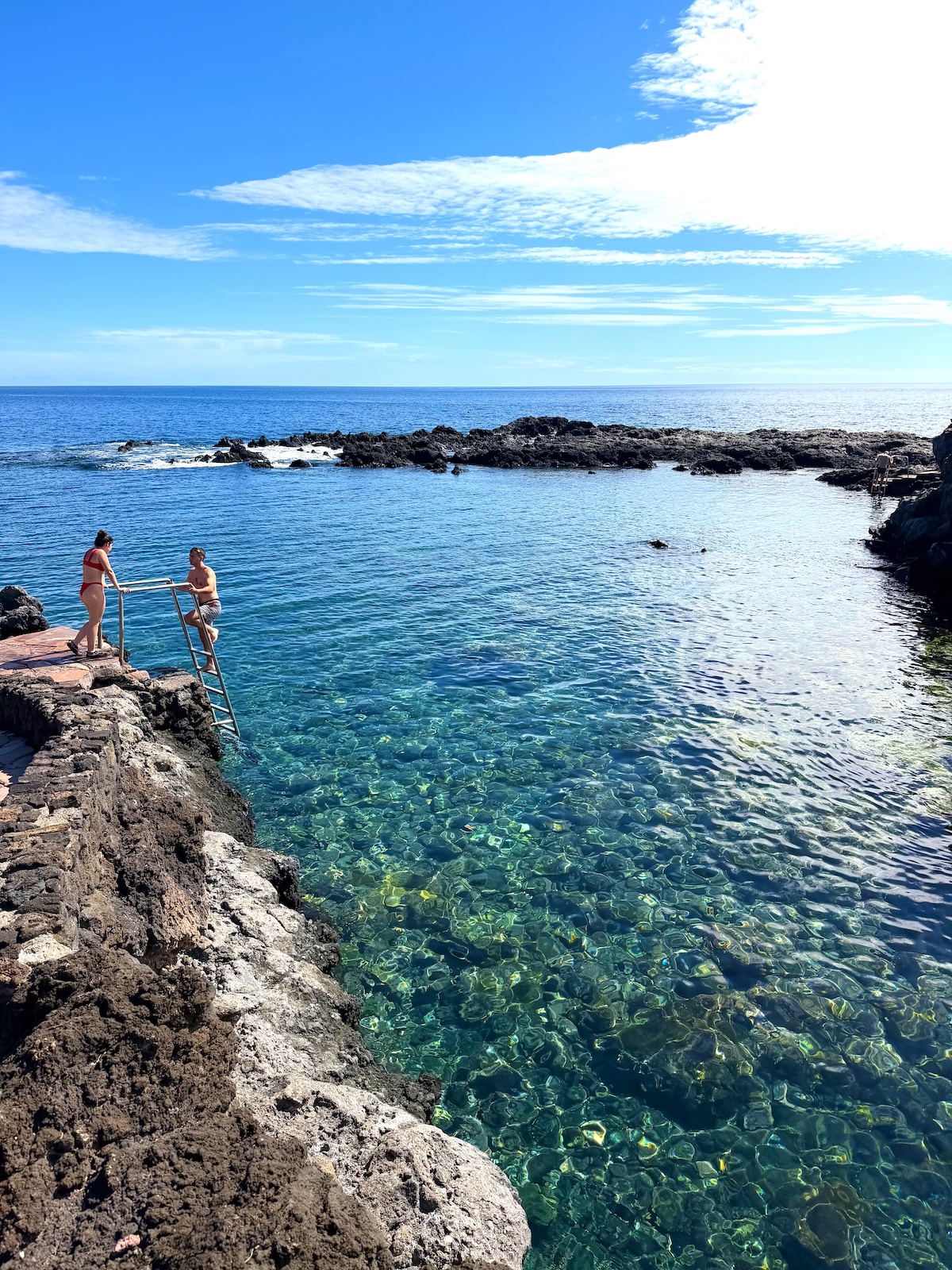
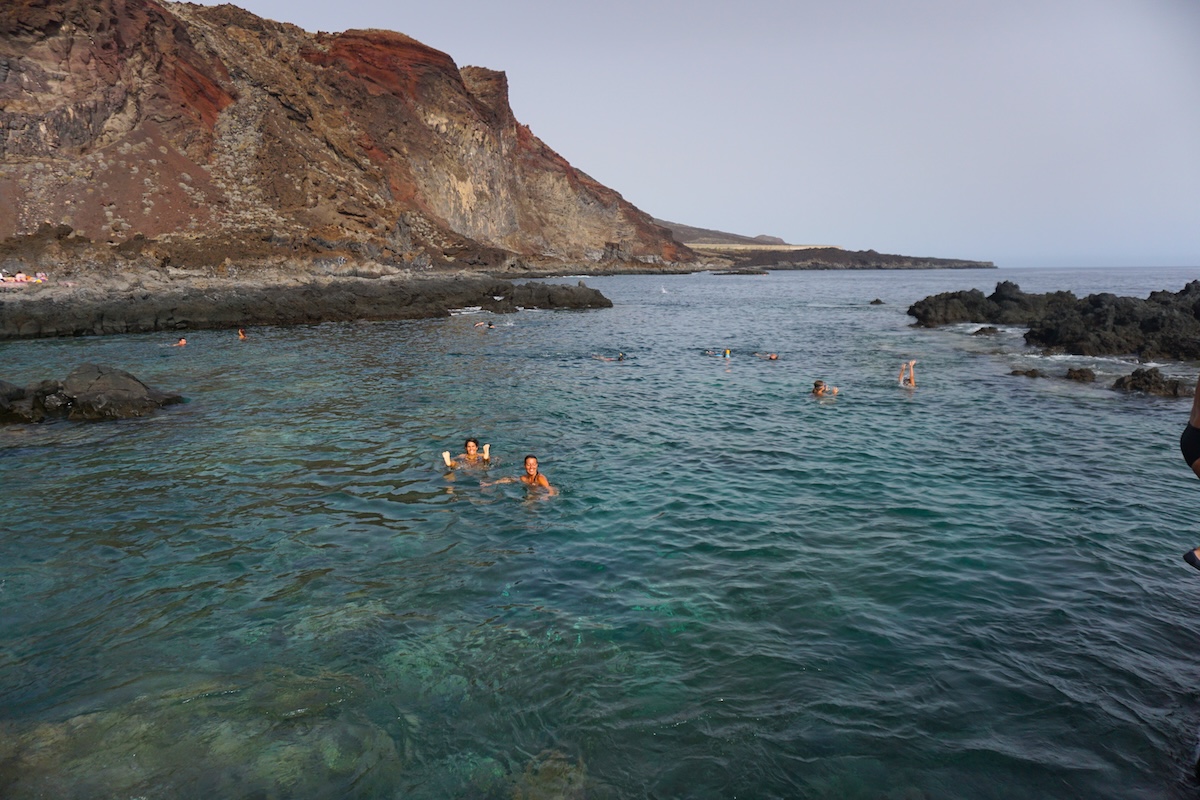
These pools are also a little paradise for snorkeling, so don’t forget your snorkel and mask!
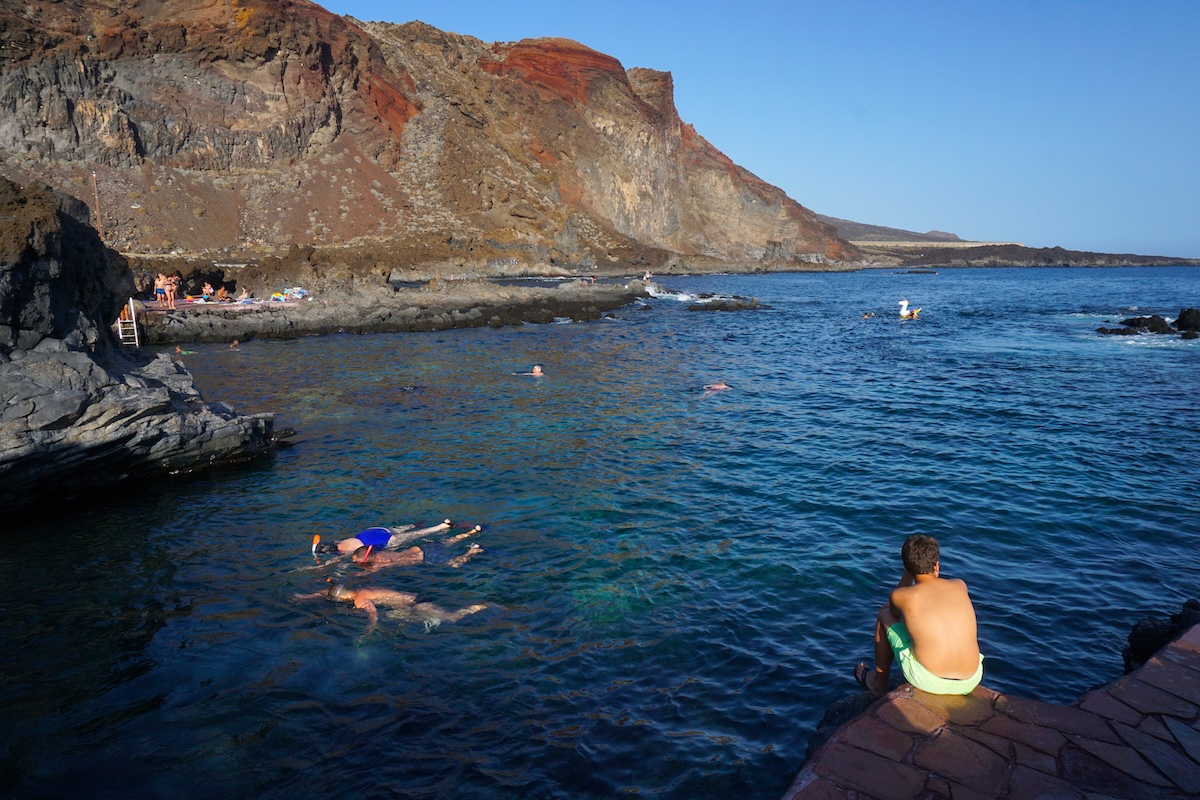
There’s also a beautiful red-sand cove that’s hard to reach and accessible only at low tide (check the tide times here). To get there, you’ll need to walk a short, unmarked path. Be careful on the last stretch (closed-toe shoes are recommended).
It’s a wild, secluded beach that’s completely off the beaten path. It’s best to visit at low tide, since it’s inaccessible at high tide. We didn’t happen to be there during low tide on our trip, so we’ve made a note to visit it on future trips. If you go, don’t miss it!
On the way down to Tacorón, you can stop to take in the views from the Tacorón Lookout.
El Pinar
The village of El Pinar, considered “the gateway to the south of the island“, sits at an elevation of 800 meters and is an area rich in fruit trees and surrounded by vast pine forests, which contrast with the volcanic landscape. As a municipality (which also includes La Restinga), it is the southernmost municipality on Spanish territory.
El Pinar maintains the traditional Herreño way of life based on livestock farming, agriculture, and handicrafts. It’s a great option for lodging, particularly for rural tourism, as there’s a wide selection of rural guesthouses in a peaceful and quiet setting. You can view accommodations here.
The town formerly belonged to the municipality of La Frontera (initially, El Hierro had two municipalities, Valverde and Frontera, the minimum required to become a “Cabildo”), but since 2007 it has been an independent municipality due to a conflict stemming from the island’s most important festival, La Bajada de la Virgen de los Reyes.
Las Playas viewpoint
The Las Playas viewpoint is, in our opinion, one of the most impressive on El Hierro. From this viewpoint, you can gaze down on Las Playas from above. The entire coastline stretches out in a perfectly defined line from Roque de la Bonanza (to the east) to Punta Miguel (to the south).
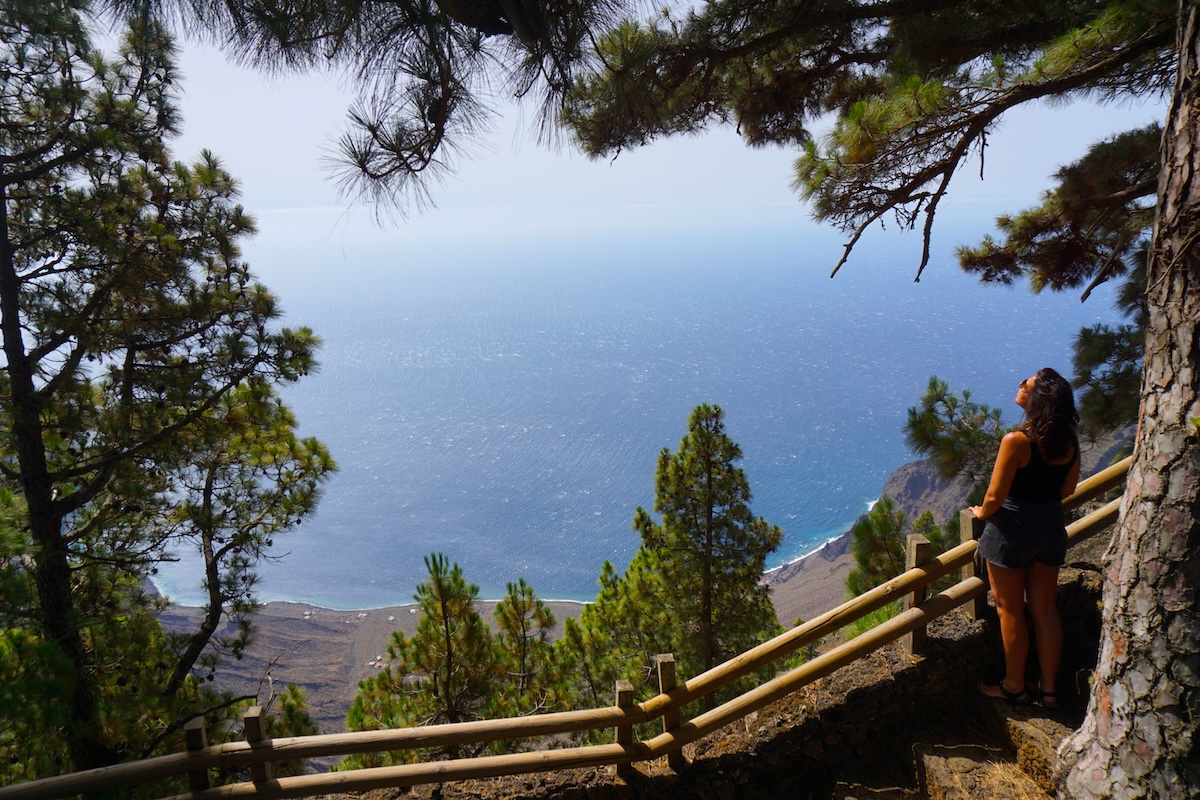
The famous Parador de las Playas (which we’ll tell you more about below) is located right below this viewpoint, where the greenery, shade, and cool breeze provided by the Canary Island pine forest will make your visit even more enjoyable.
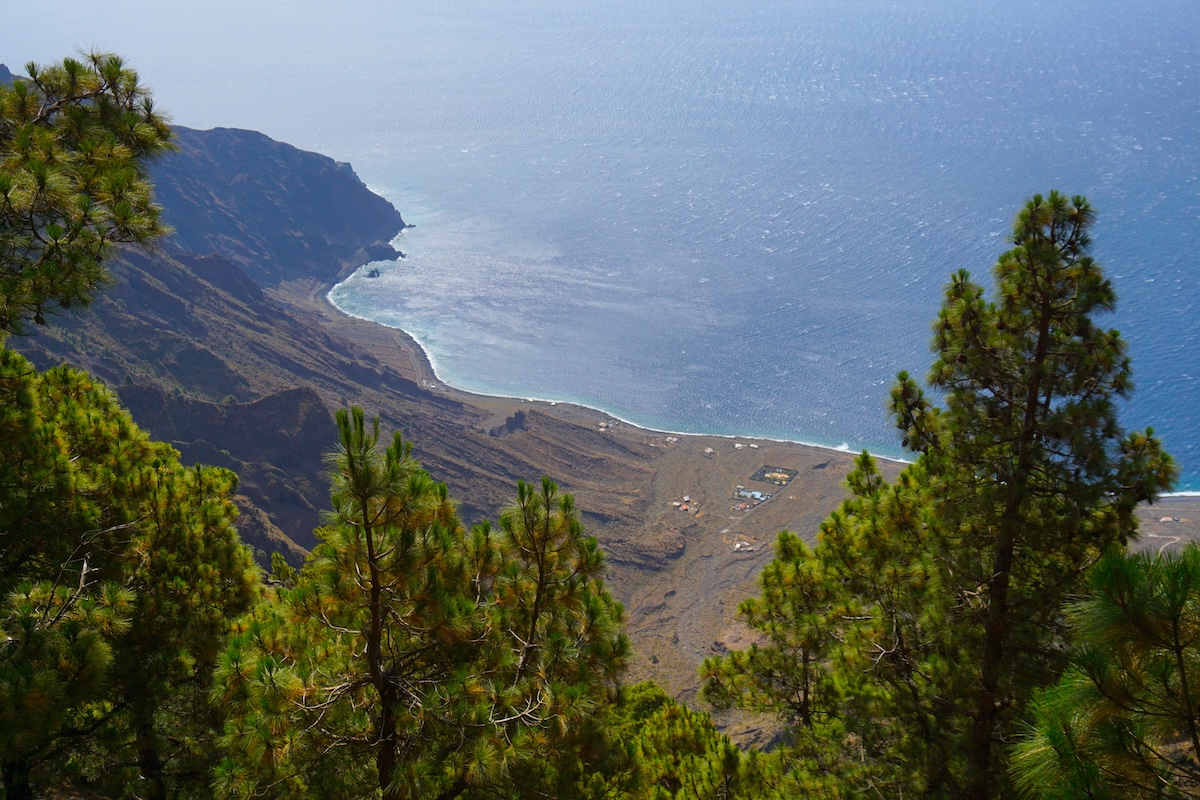
Isora and the Isora viewpoint
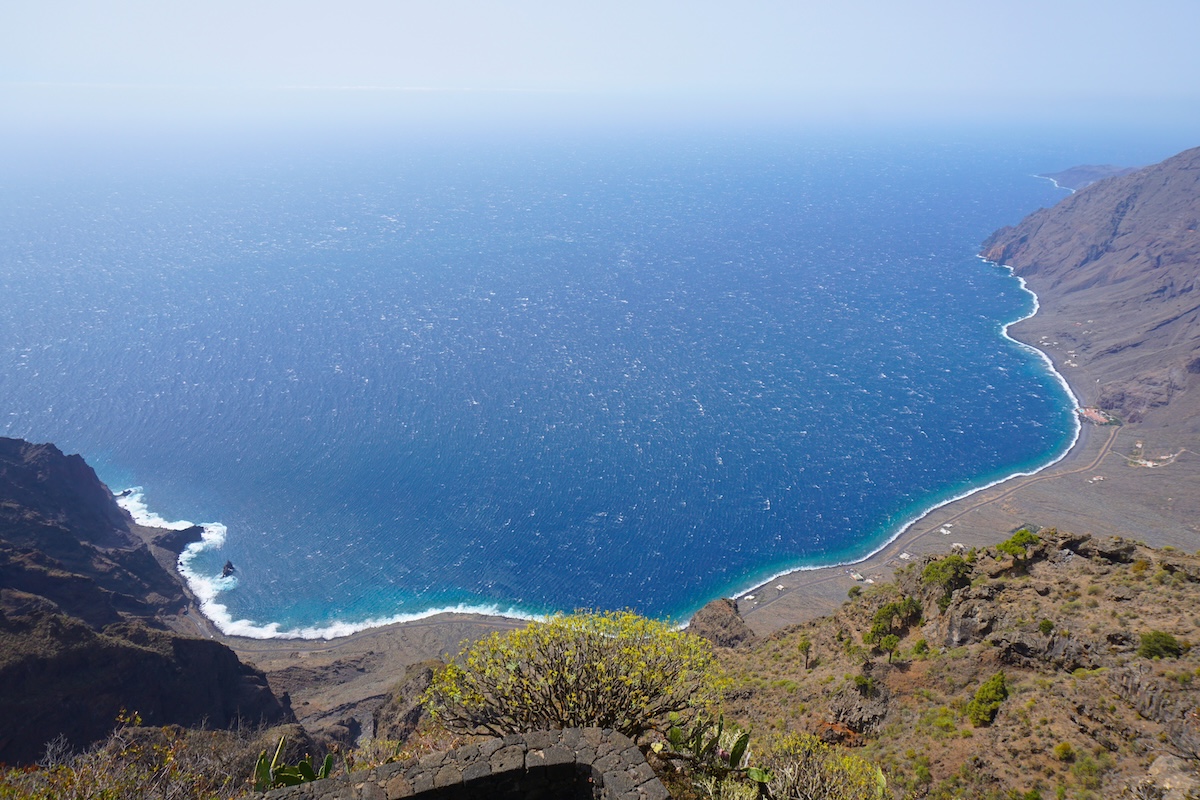
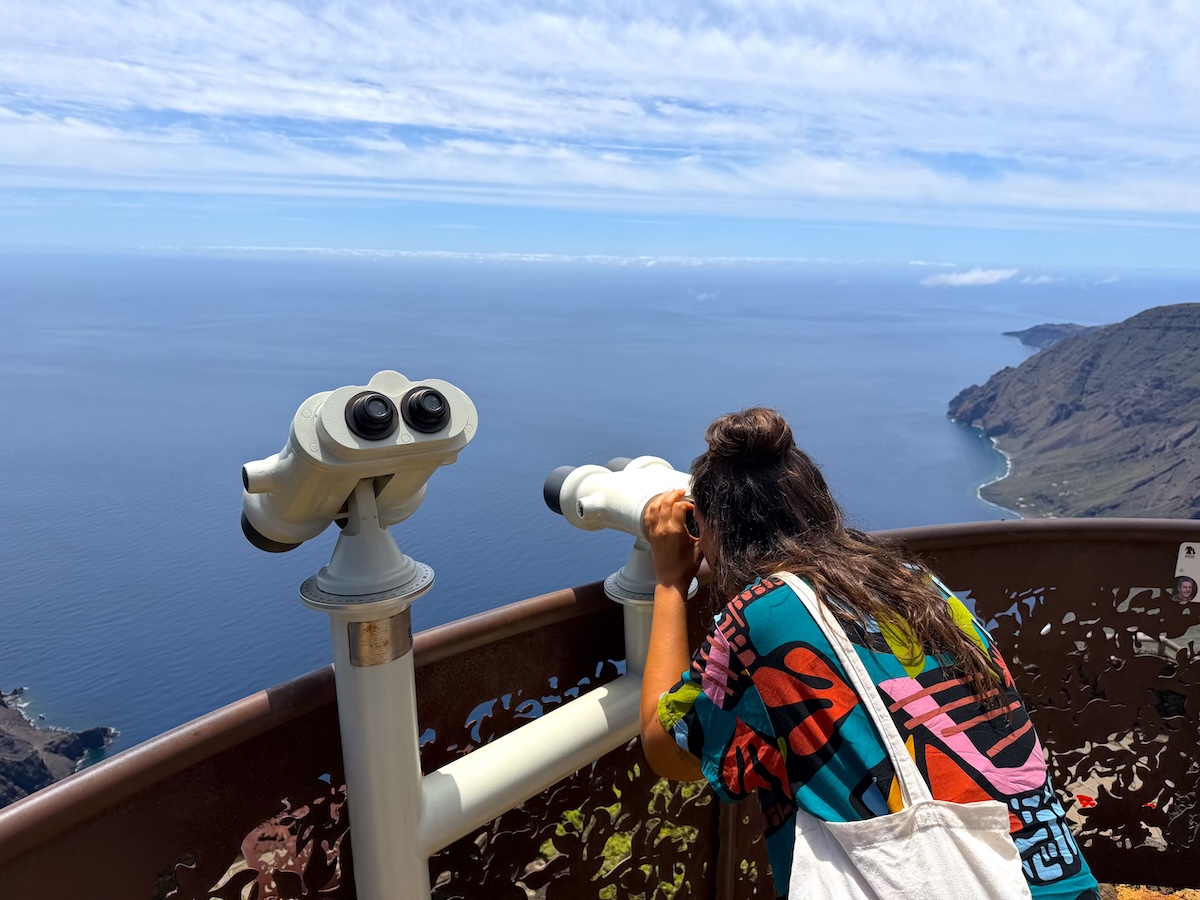
Although it overlooks the same coastline as the Las Playas viewpoing, but from further north, the Isora viewpoint has become our favorite.
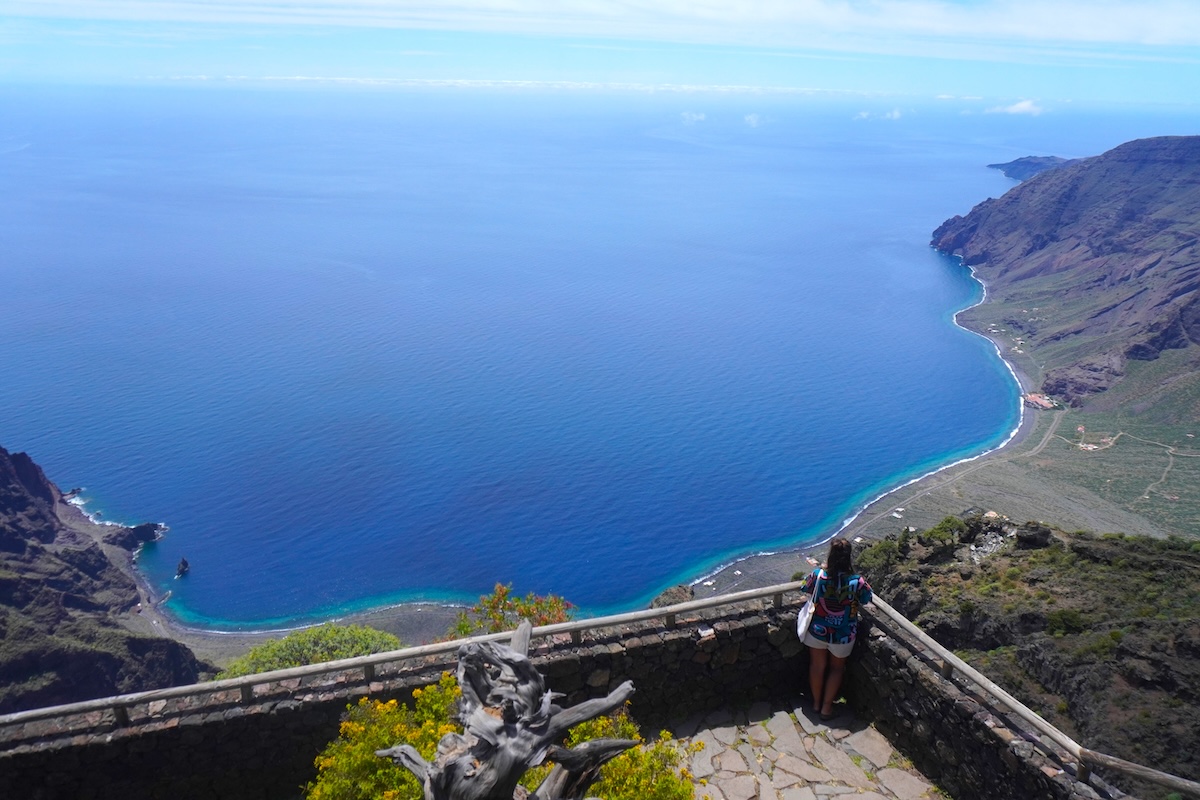
From here, you’ll have a panoramic view of the entire Las Playas coastline, where the various shades of blue contrast with the dark volcanic rock. To us, it’s the quintessential El Hierro postcard view.
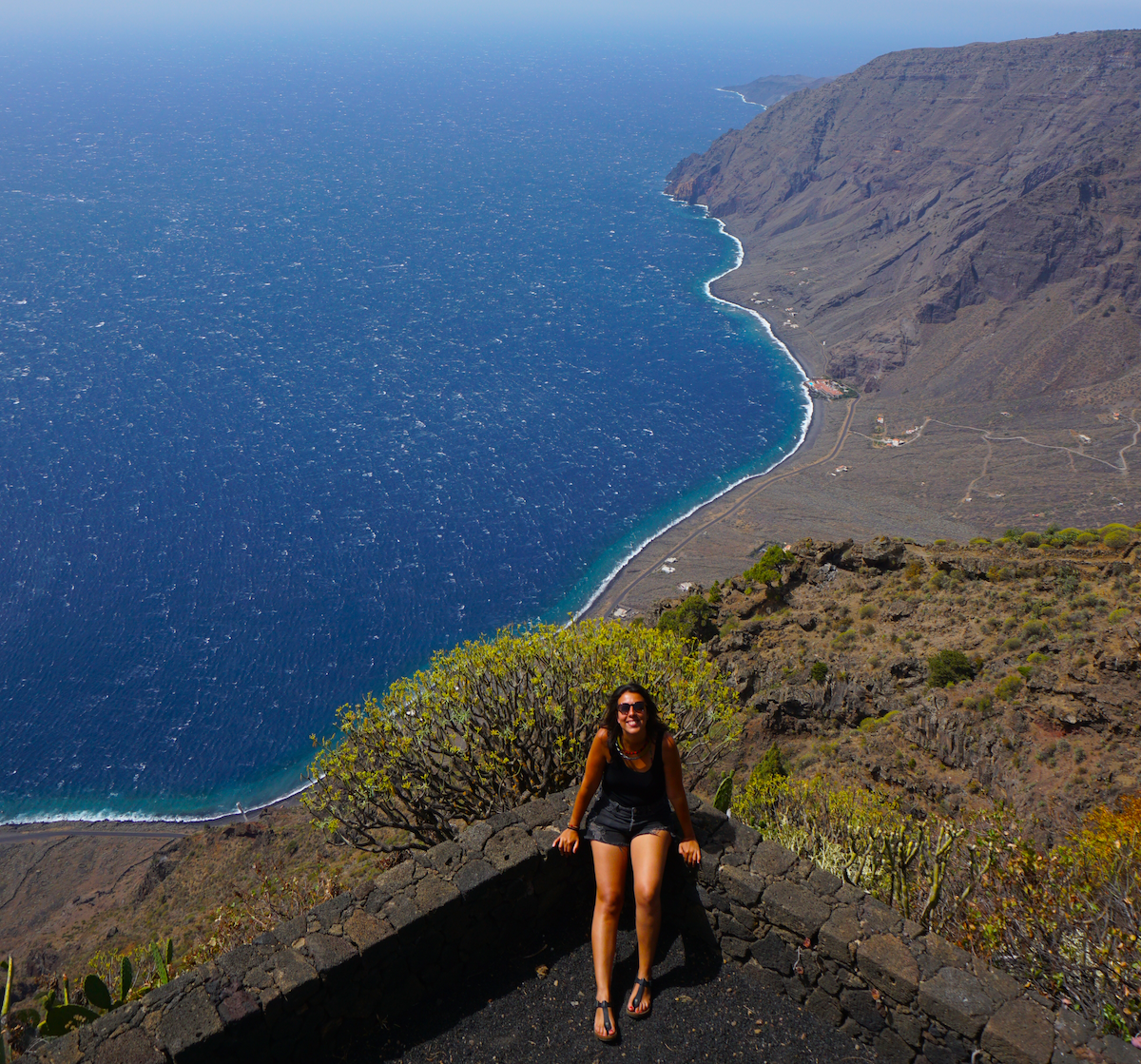
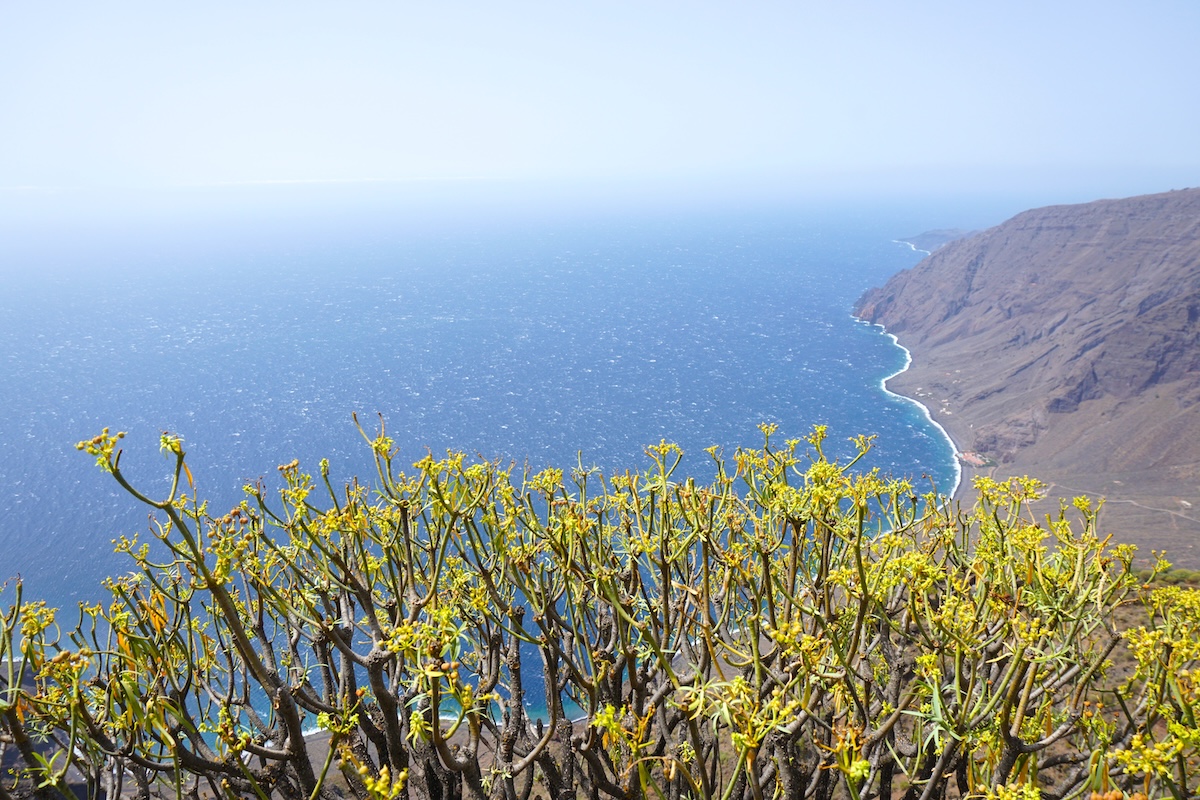
At 1,075 meters above sea level, a trail also starts here that descends steeply to Las Playas and the Roque de la Bonanza (more info in the hiking trails section). As this is a region with a long tradition of agriculture and livestock farming, during the descent you’ll come across several wayside crosses commemorating the shepherds who lost their lives there while searching for a lost goat from their flock.
In the town of Isora, we recommend visiting the Biosphere Reserve Interpretation Center to learn more about why the island of El Hierro is a biosphere reserve.
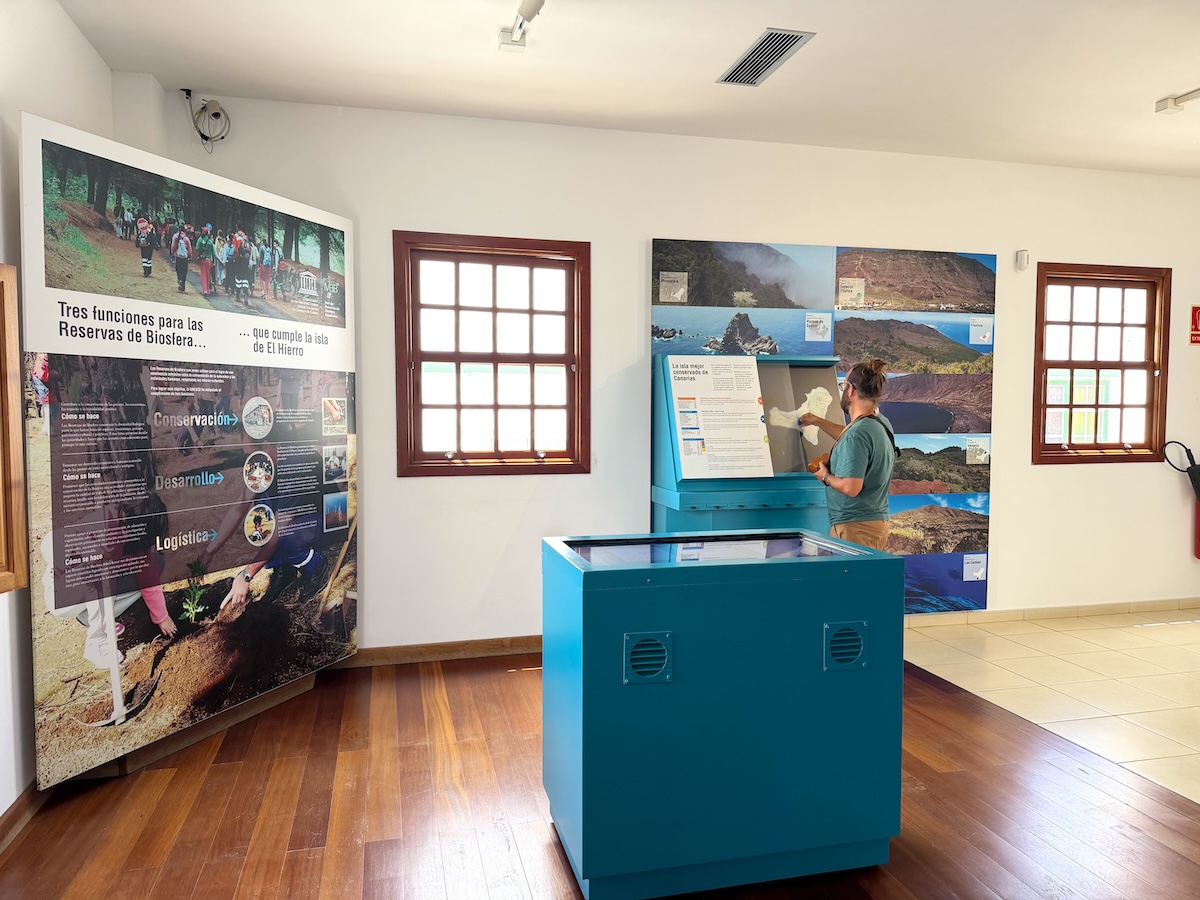
The center has two floors; on the lower floor, you can first learn about the “casinos” (the building itself, which used to be community centers), and on the upper floor, you can learn about why the area is a biosphere reserve. You also have the opportunity to watch a 10 to 15-minute video about the history of El Hierro.
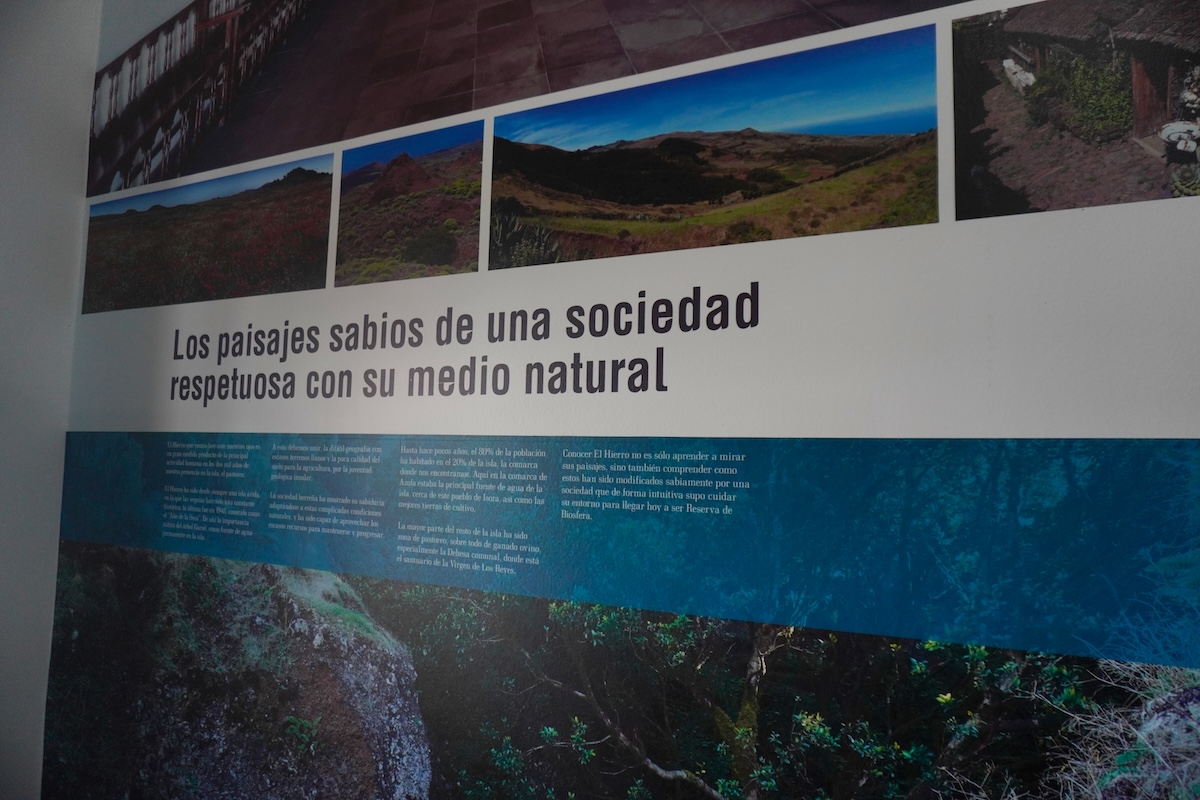
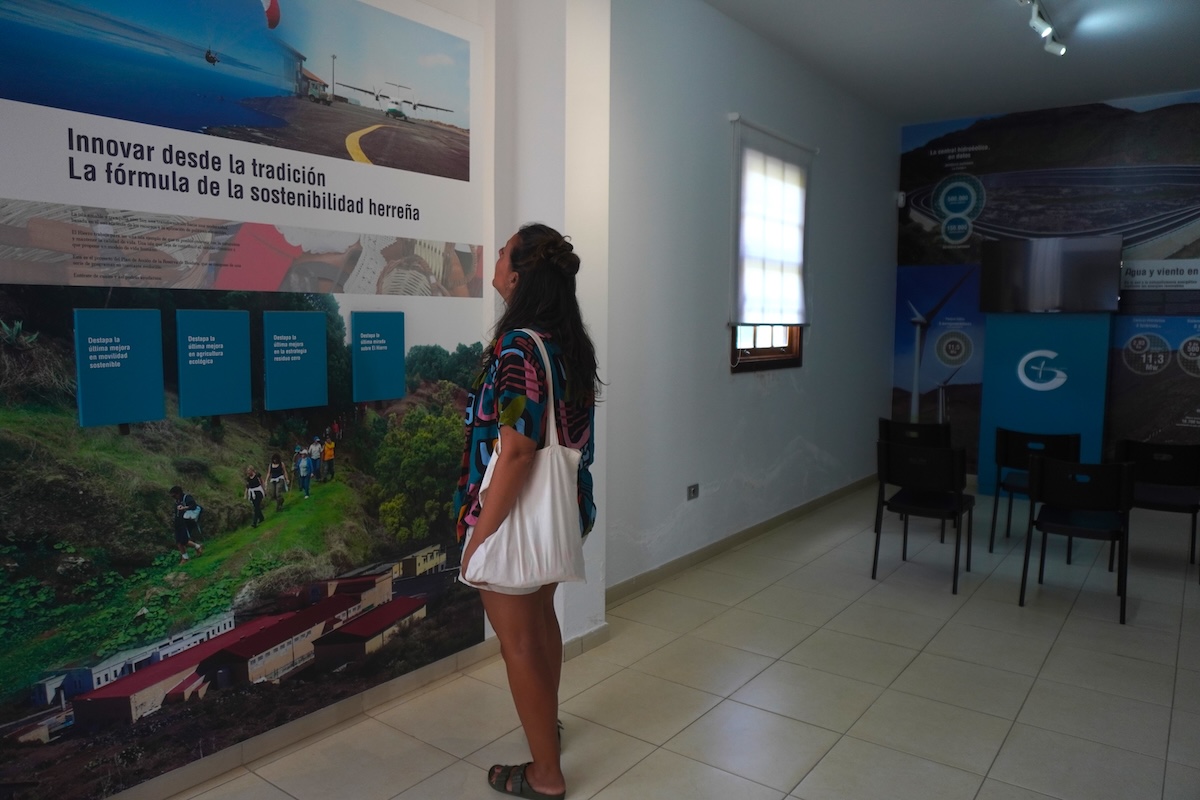
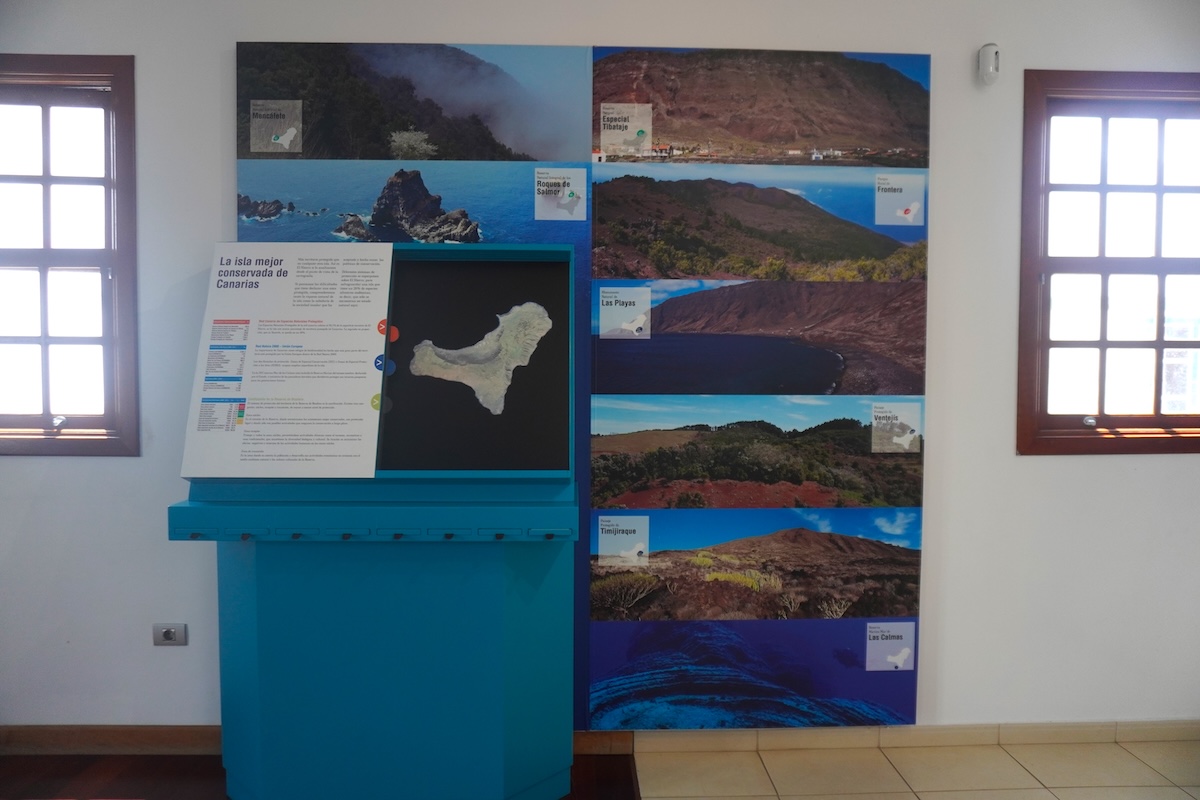
Admission costs 3€ and is included in the El Hierro Tourist Passport. Open Tuesday through Sunday from 10:00 a.m. to 2:00 p.m. / 2:30 p.m. to 6:00 p.m., last admission at 5:40 p.m.
The sacred tree of Garoé and the water trail
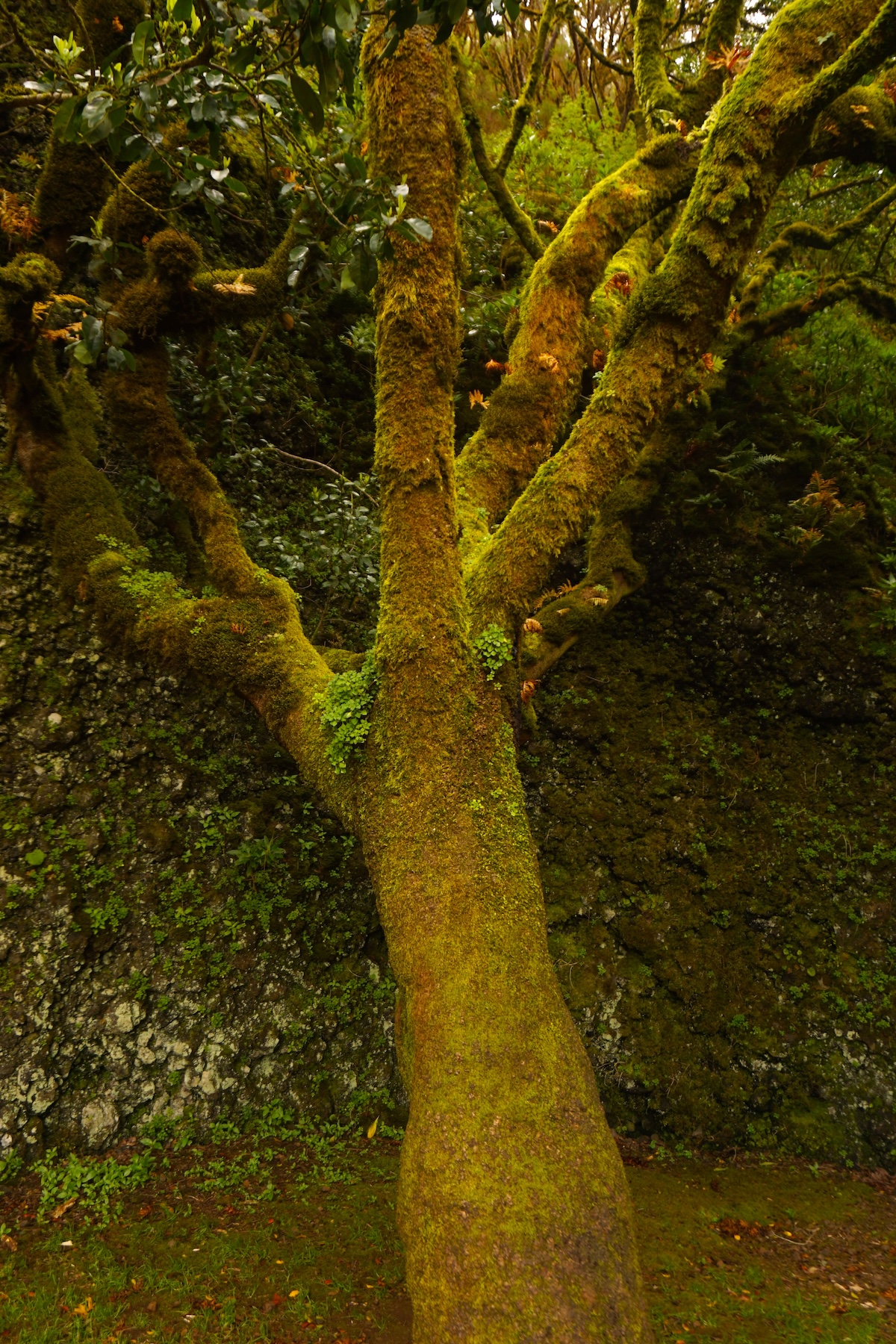
The Garoé Tree was sacred to the Bimbapes, the first inhabitants of the island of El Hierro. It is a highly symbolic and important tree for the island and, in fact, appears on its coat of arms.
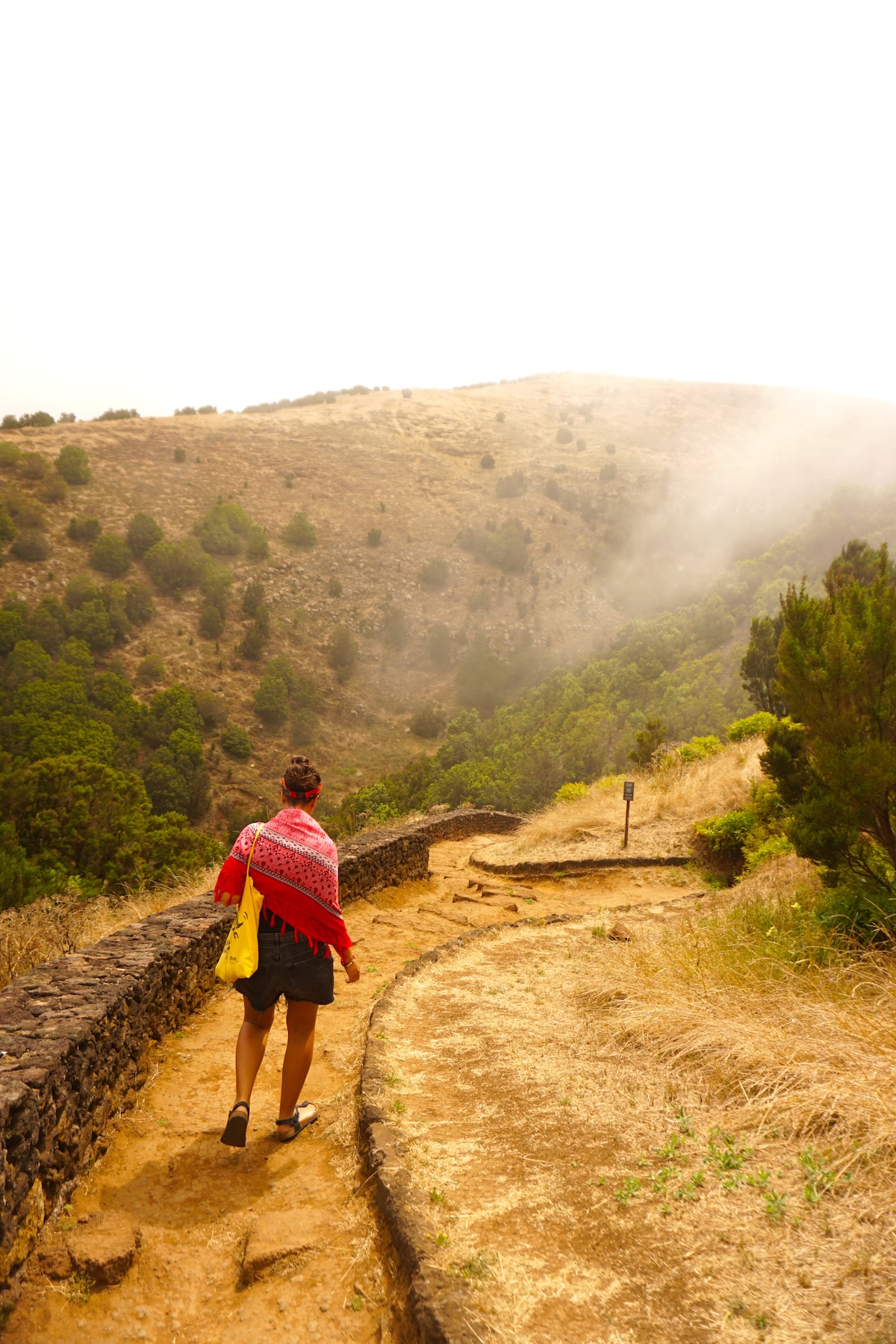
It is said that the tree saved the Bimbapes from dying of thirst, thanks to the water that flowed from its leaves. The original Garoé was destroyed by a hurricane in the 17th century, and another was planted in its place in 1949, the one we can visit today.
Before reaching the tree, we come to the Garoé Interpretation Center where we can learn more about the island’s past, the area’s rich archaeological heritage, and the phenomenon of horizontal rain.
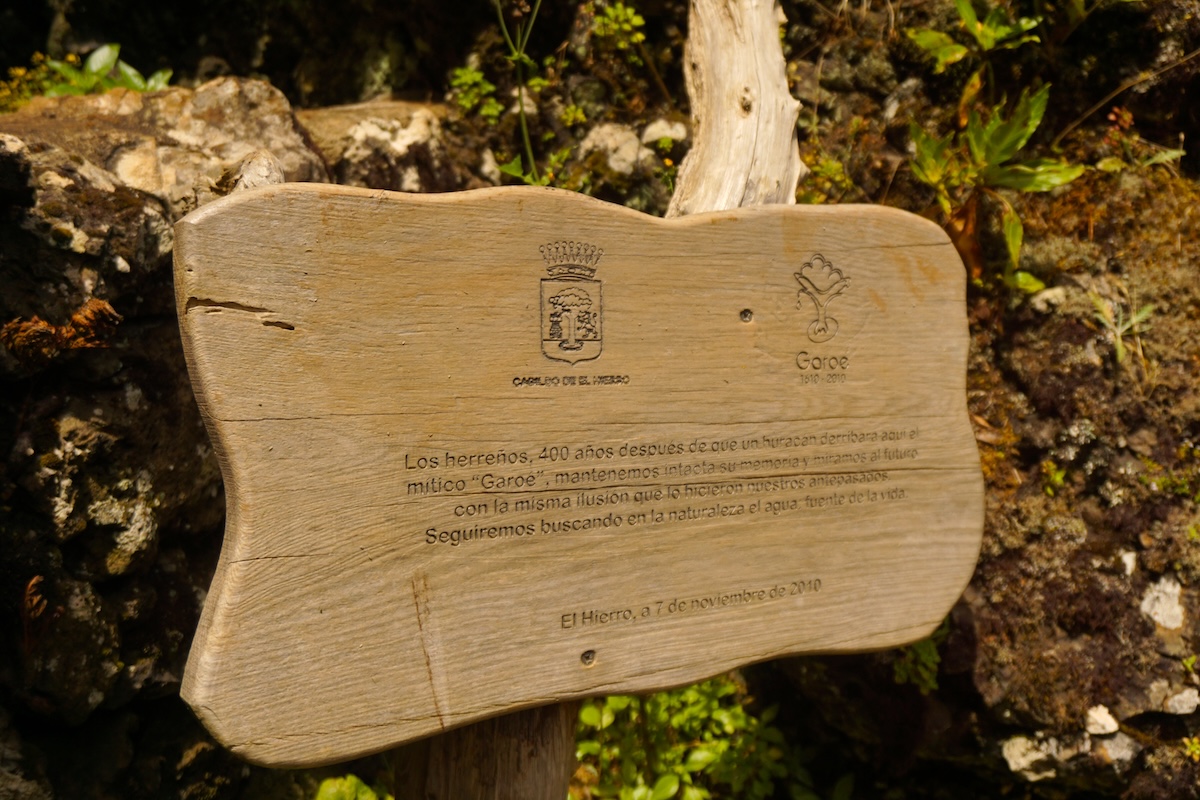
Next to the tree is a tribute from the people of El Hierro:
“We, the people of El Hierro, 400 years after a hurricane toppled the legendary ‘Garoé’ tree here, keep its memory alive and look to the future with the same enthusiasm as our ancestors did. We will continue to seek water in nature: the source of life.”
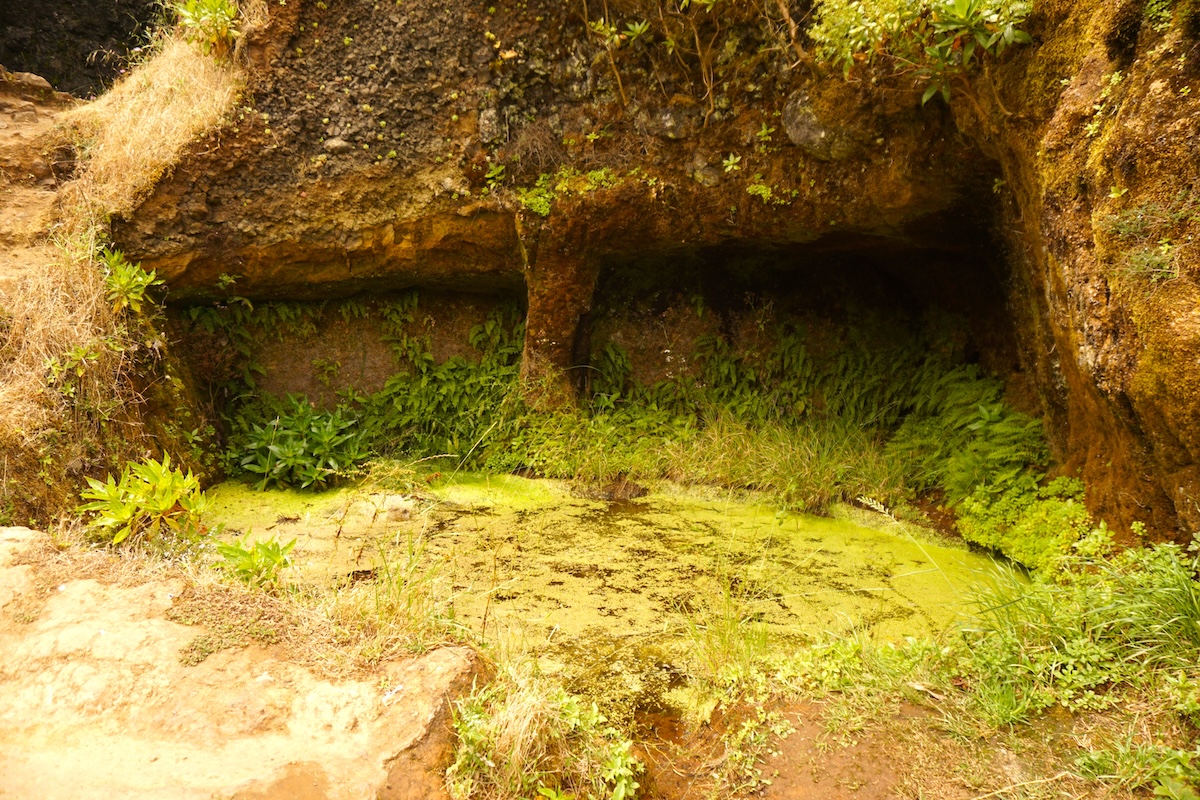
The road to Garoé is an unpaved track, and the trip takes a little while since you have to drive slowly. Also, on the way there, we came across a huge flock of sheep, so we had to wait a few minutes until they all passed by.
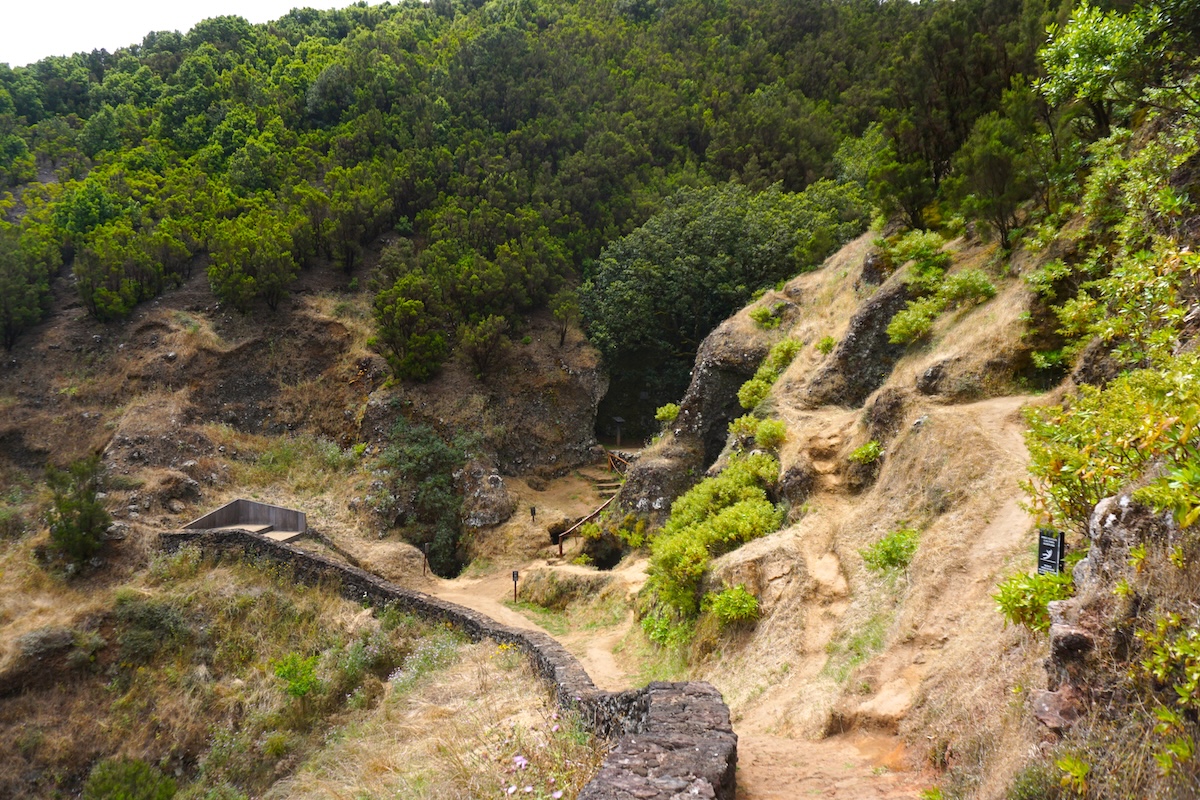
Admission costs 2.50€ per person and is included in the El Hierro Tourist Passport. Open daily from 10:00 a.m. to 2:00 p.m. / 2:30 p.m. to 6:00 p.m. – last admission at 5:40 p.m.
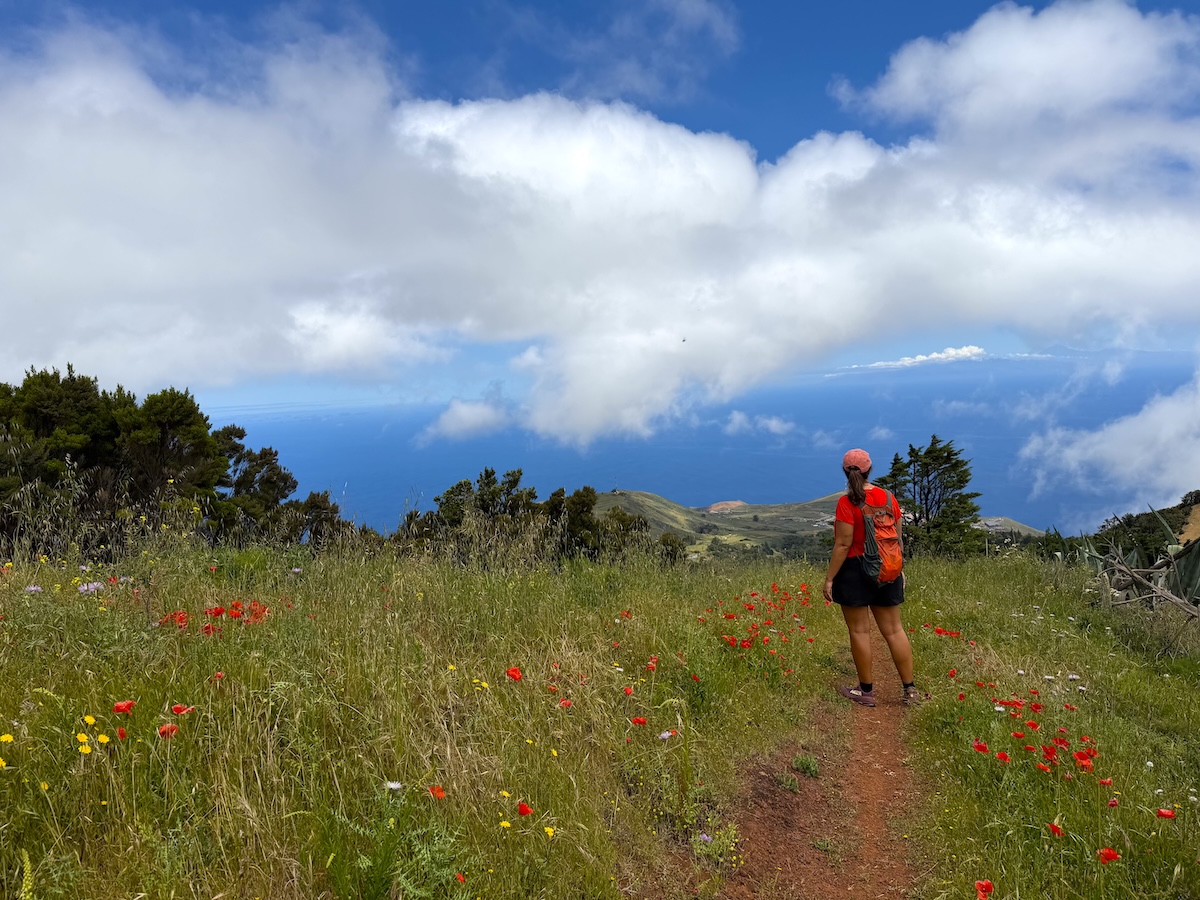
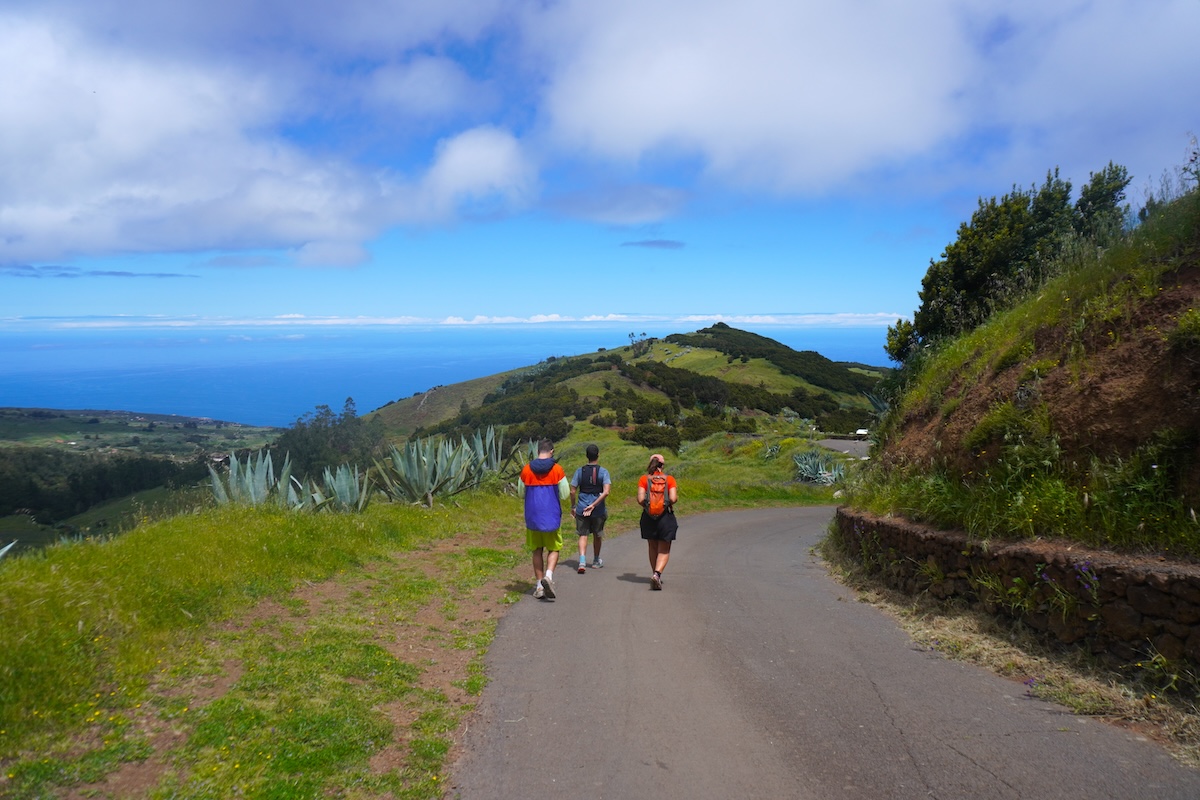
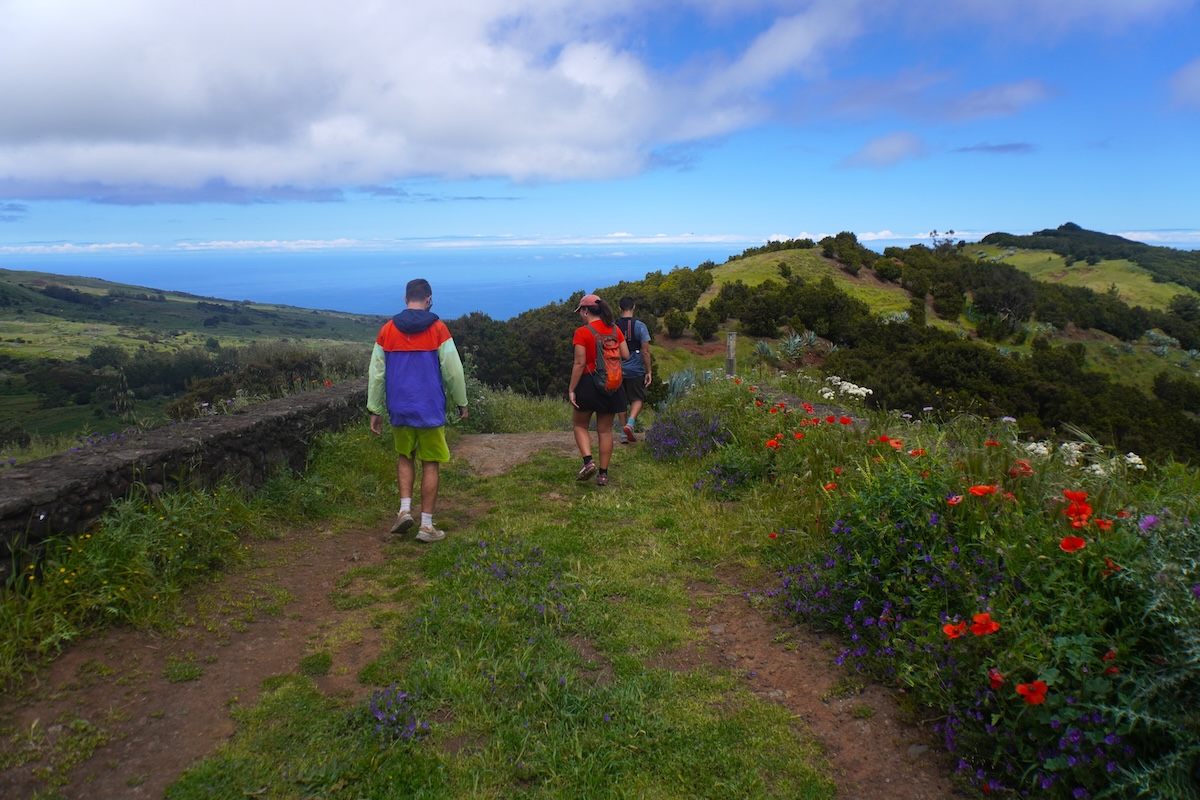
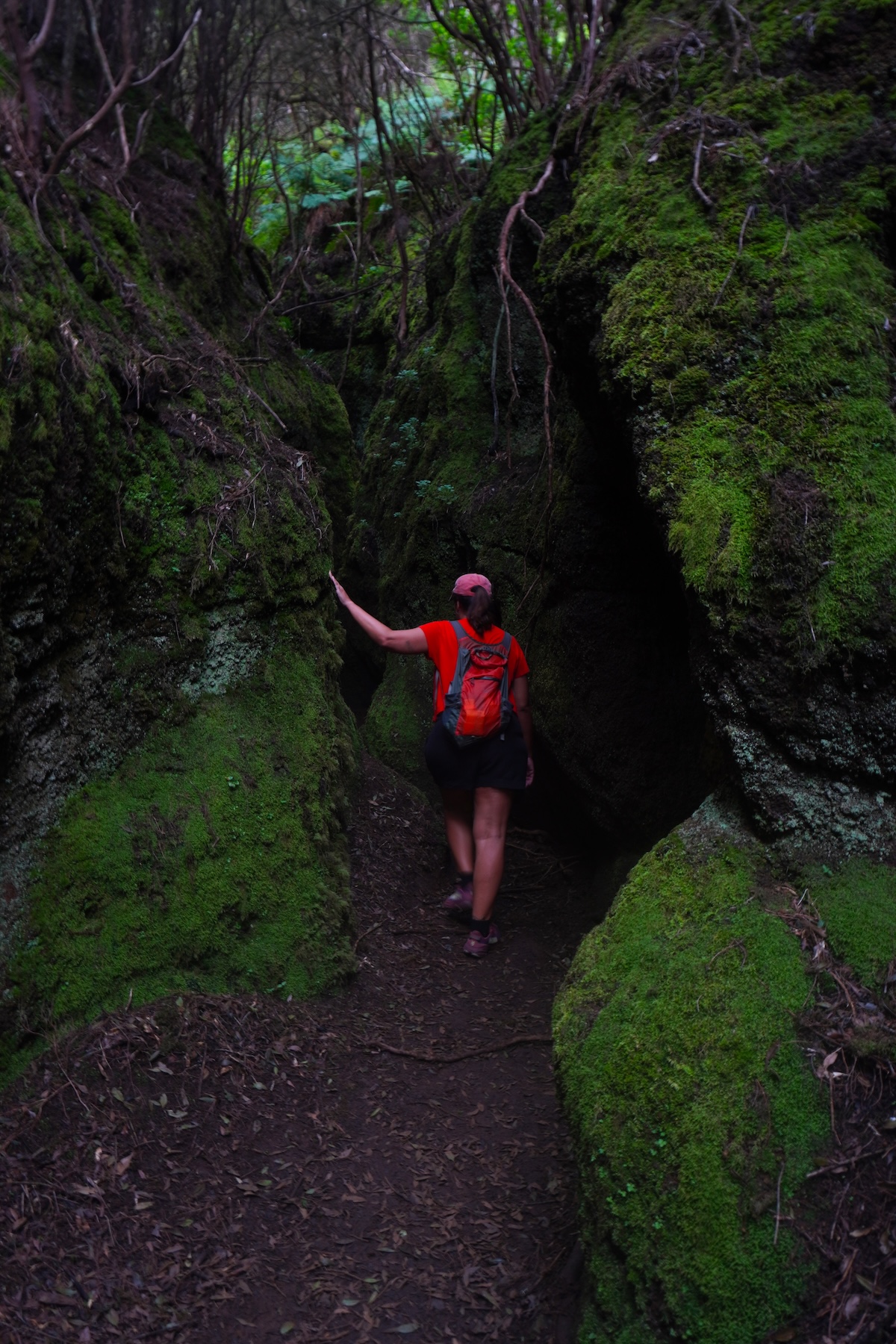
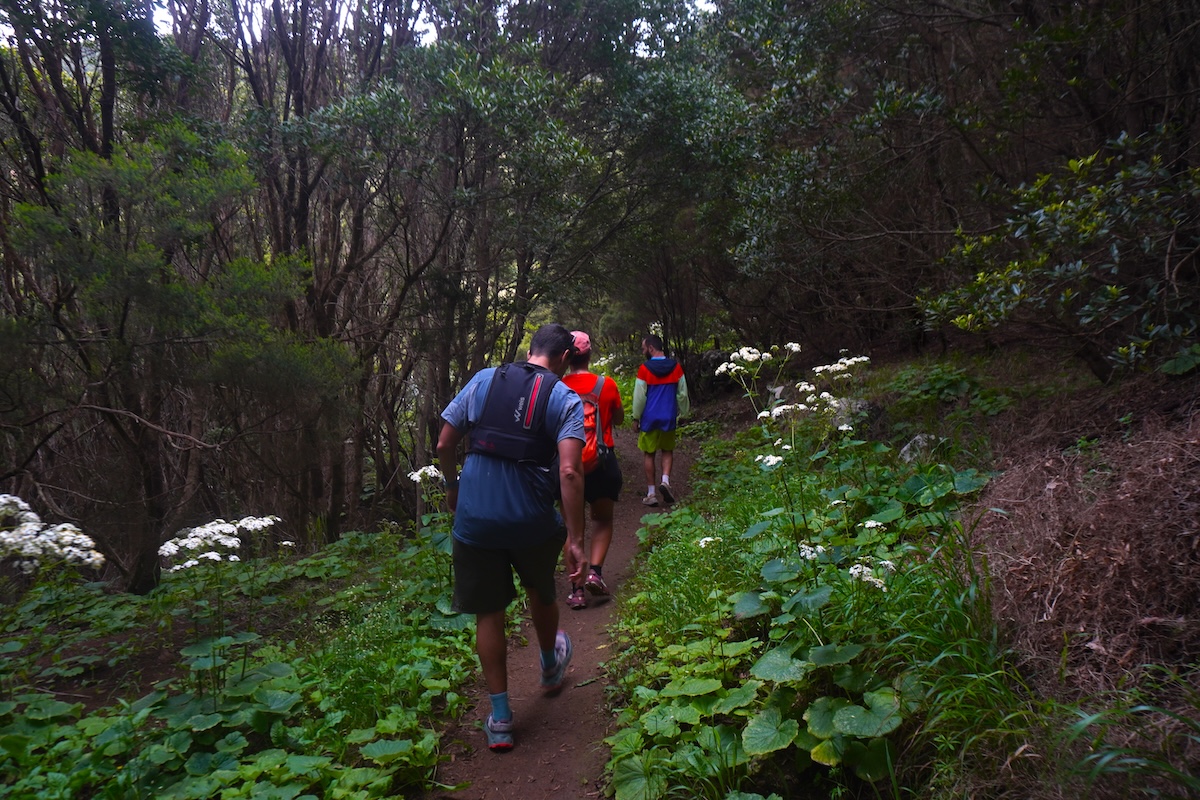
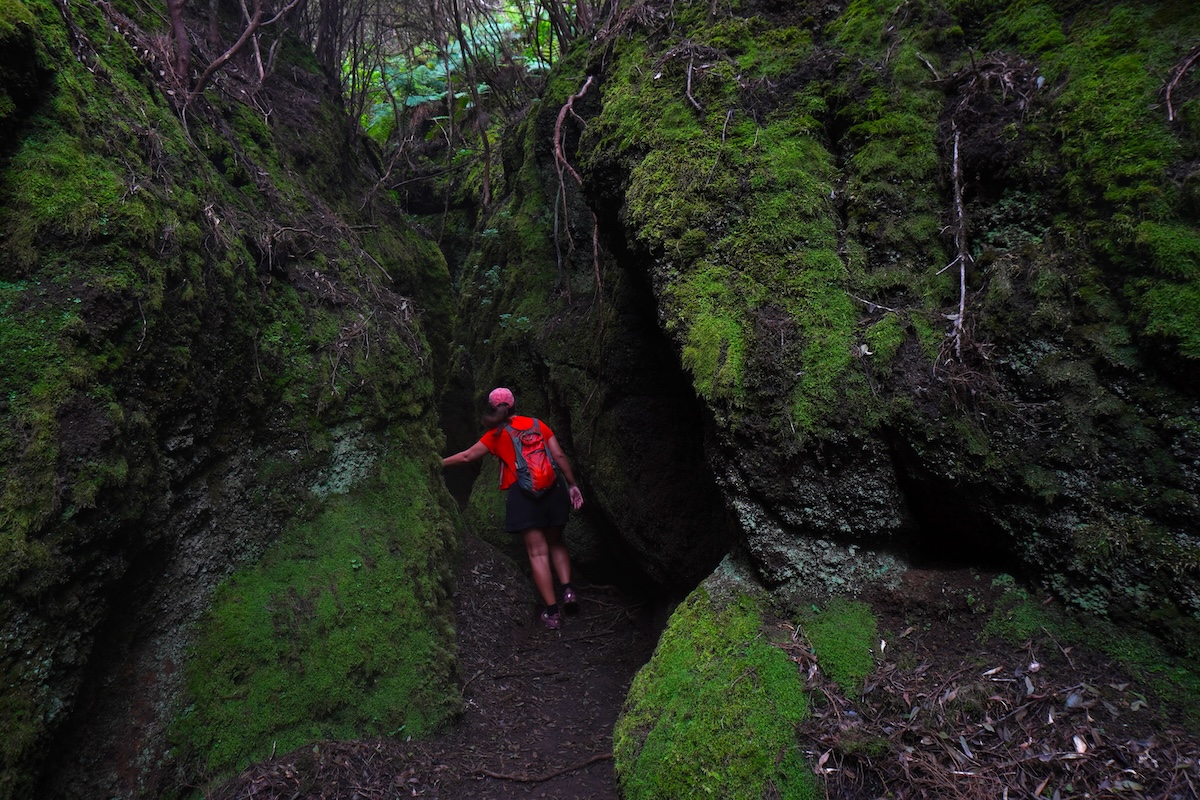
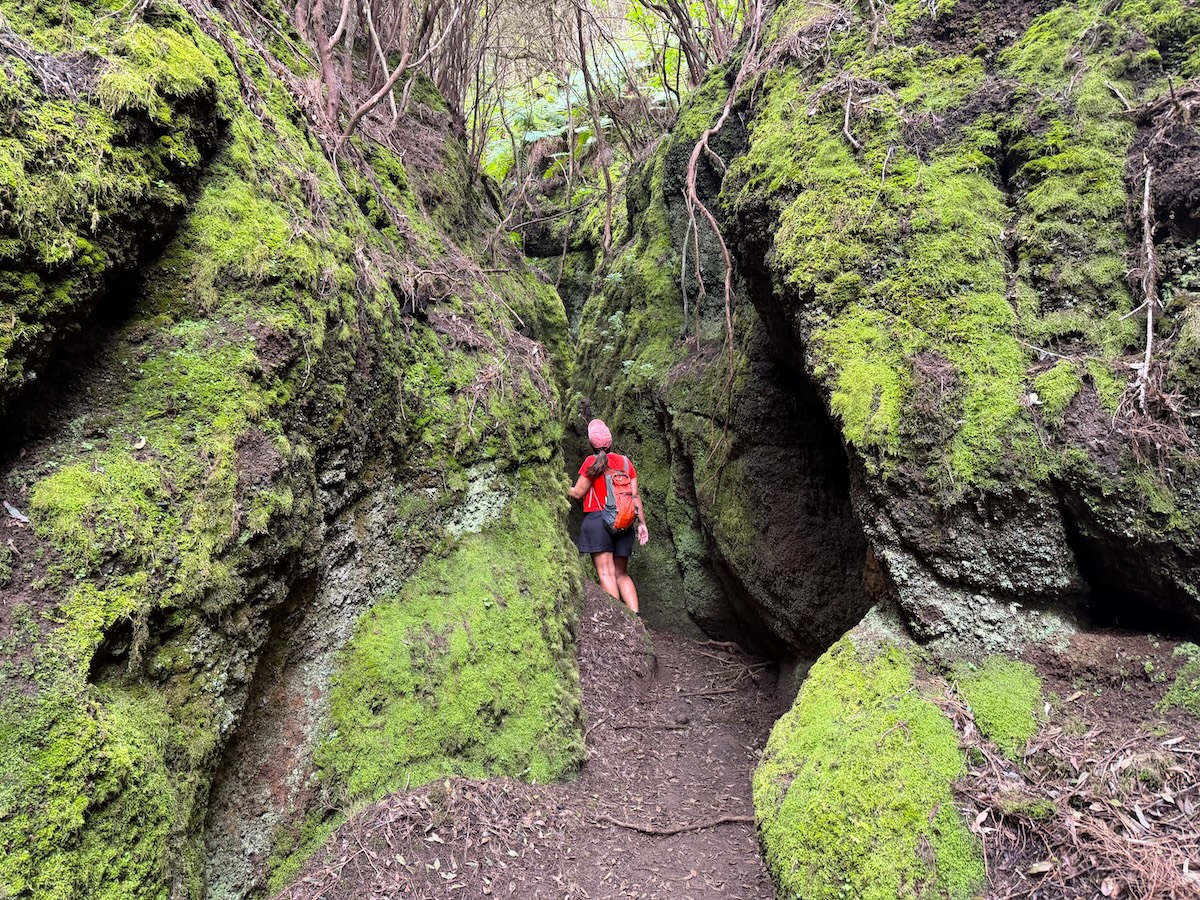
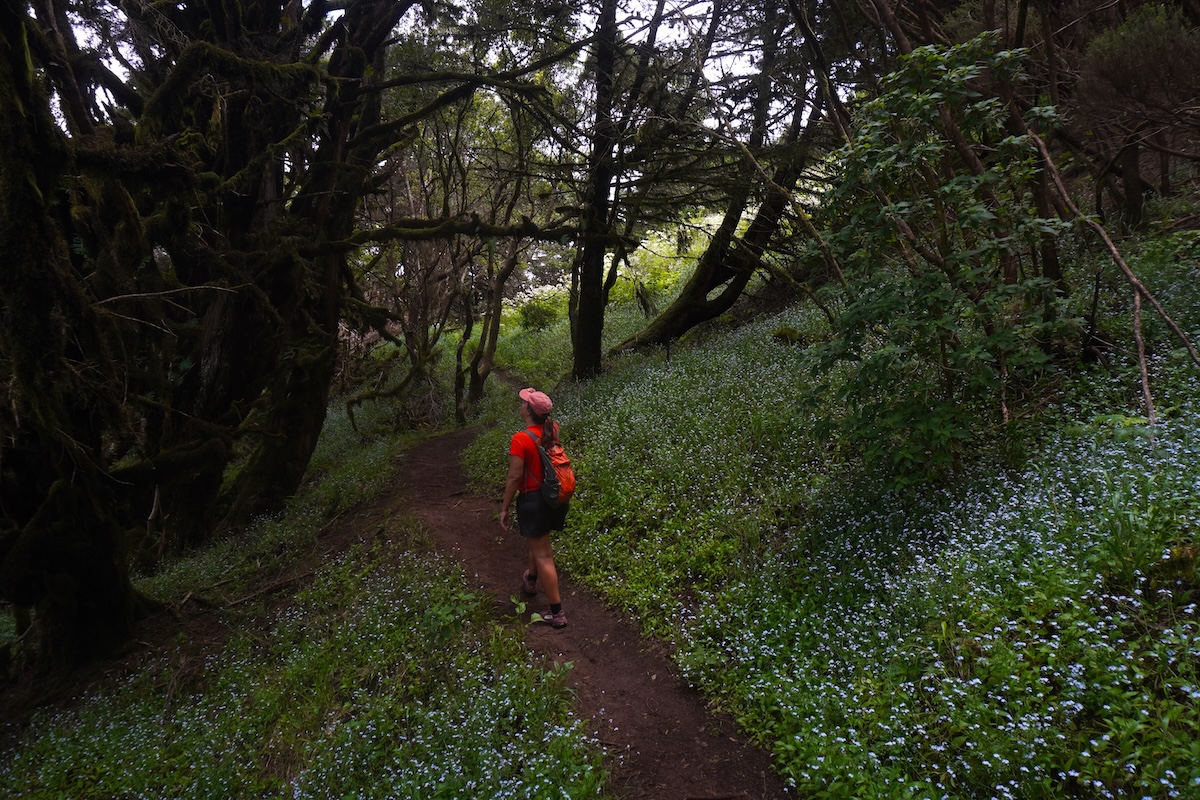
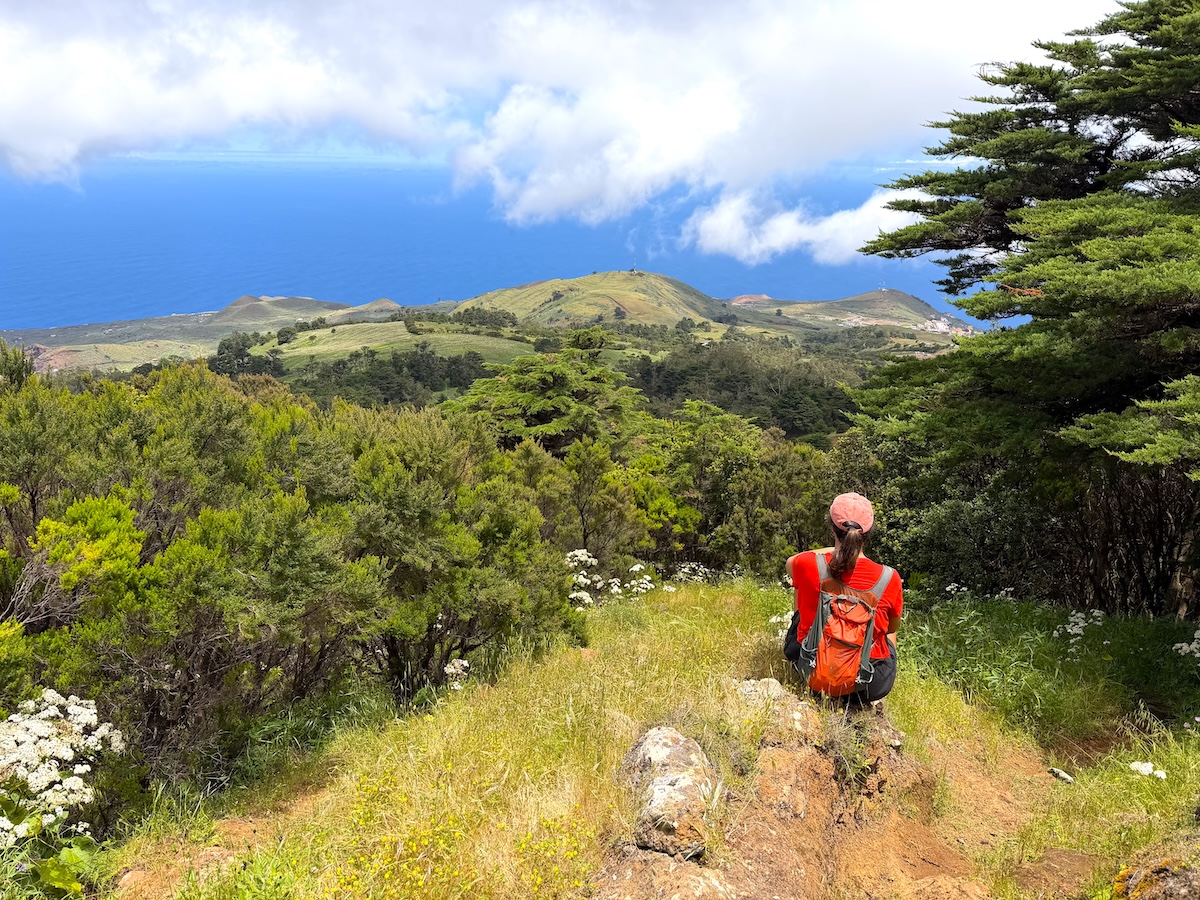
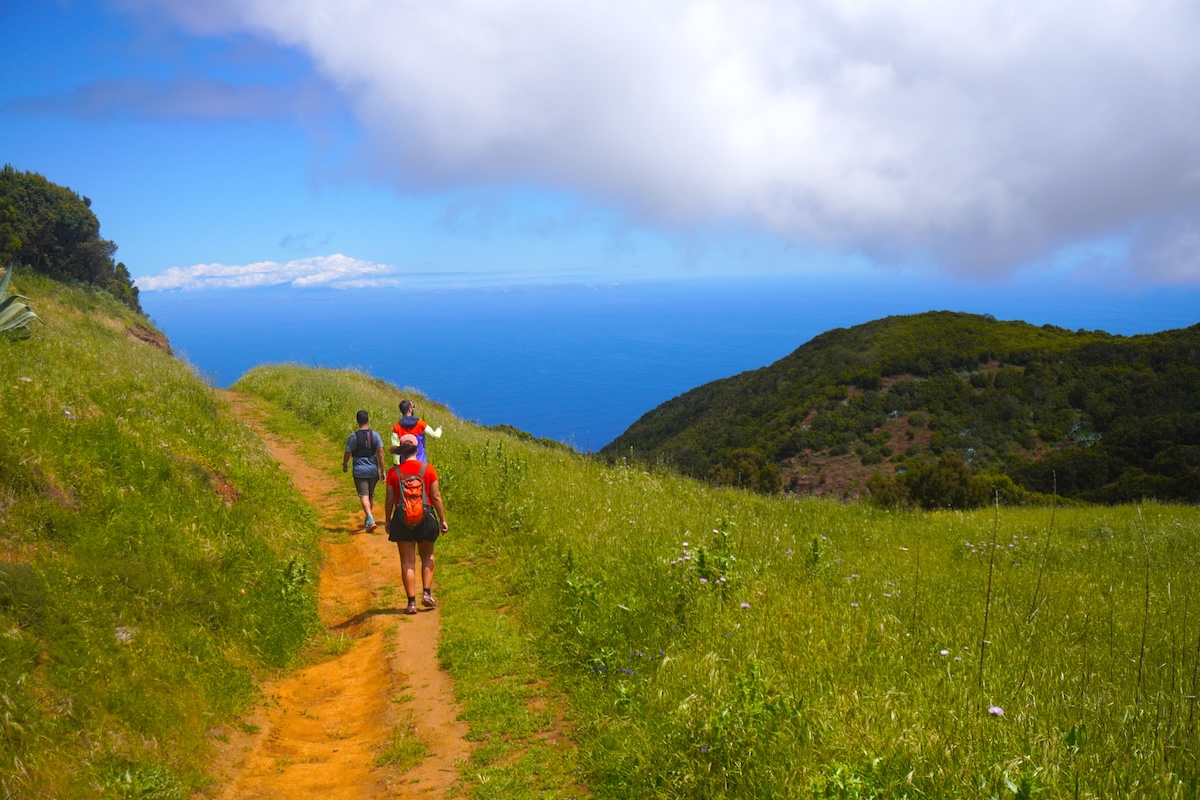
There’s also a circular trail in the area, the Ruta del Agua, which winds through laurel forest and meadows, where you can see how the Bimbapes or Bimbaches used to store water. If the weather cooperates, you’ll enjoy views of the sea and Mount Teide. In our case, we only did part of the trail with our friends Lío and Jaza, starting from Garoé.
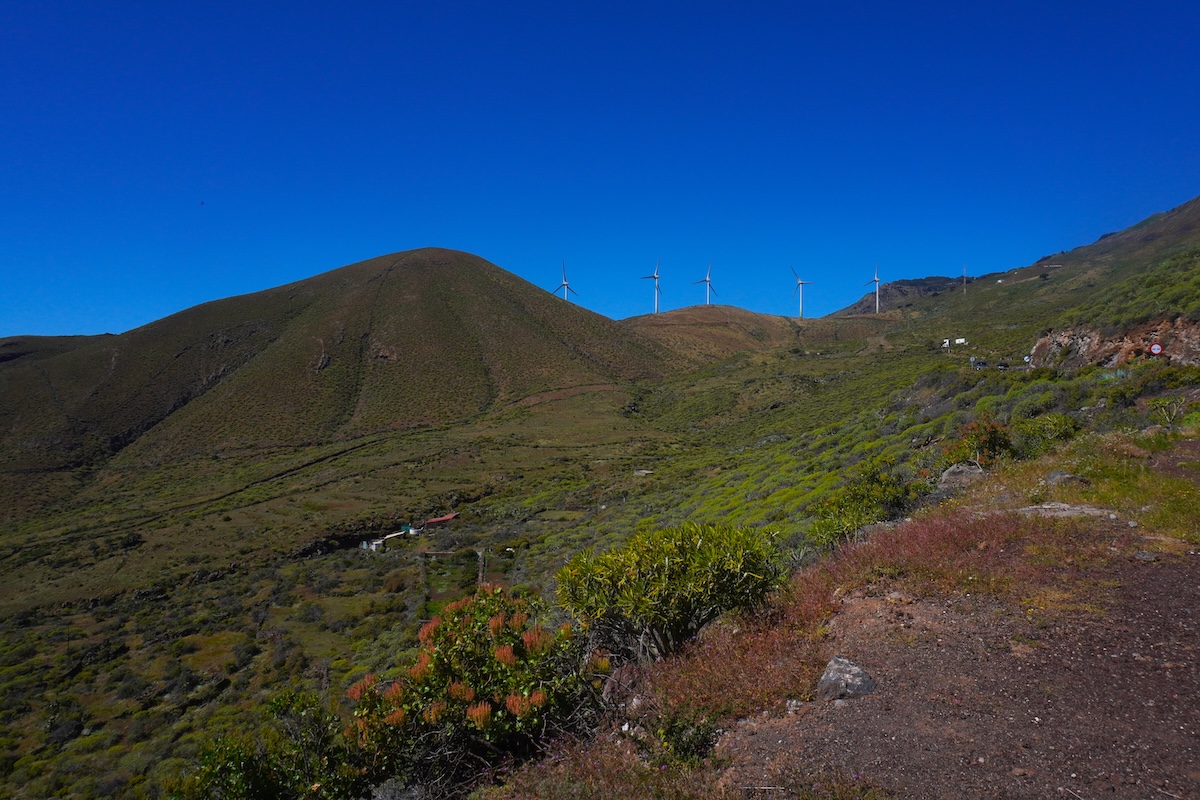
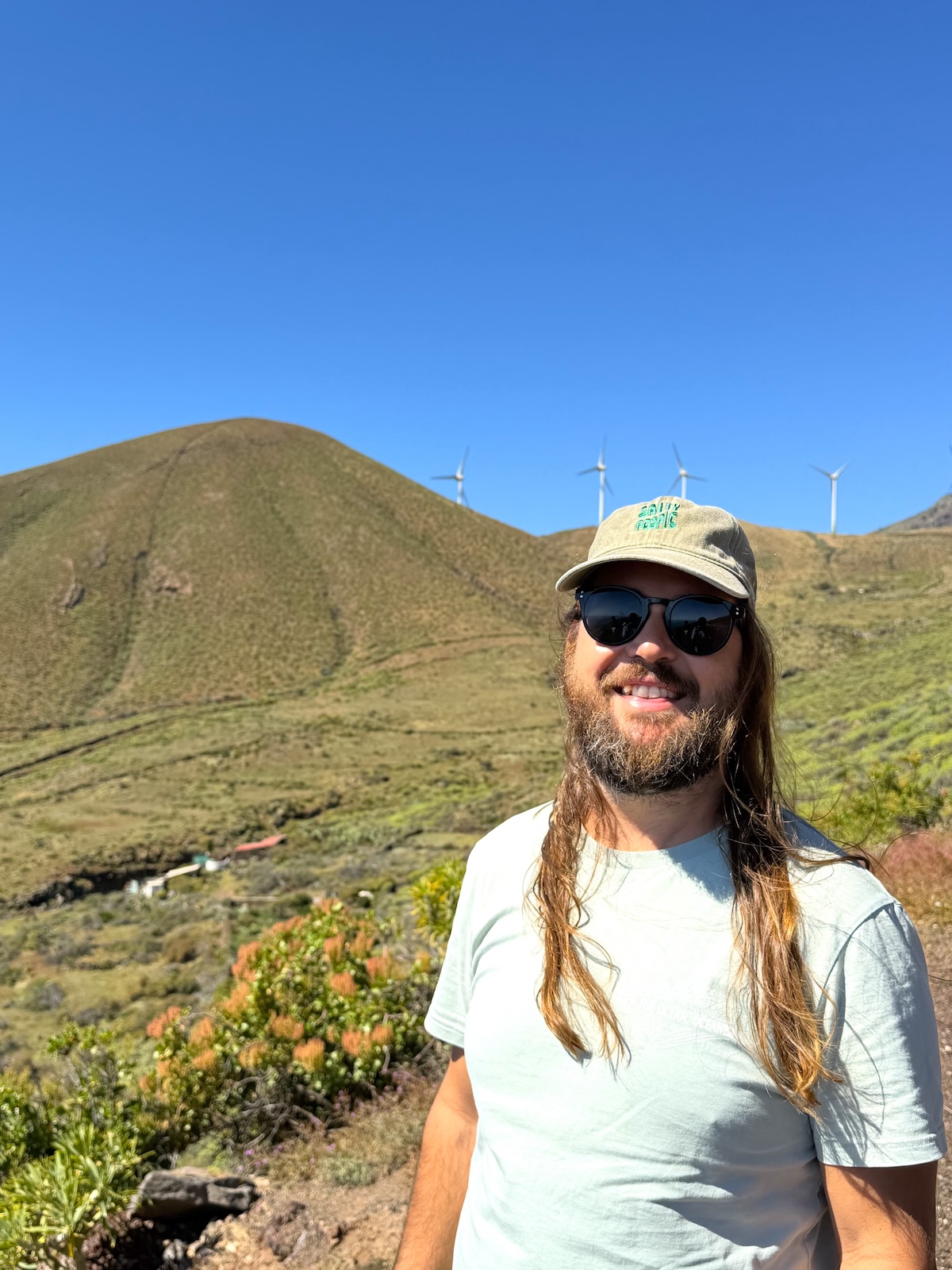
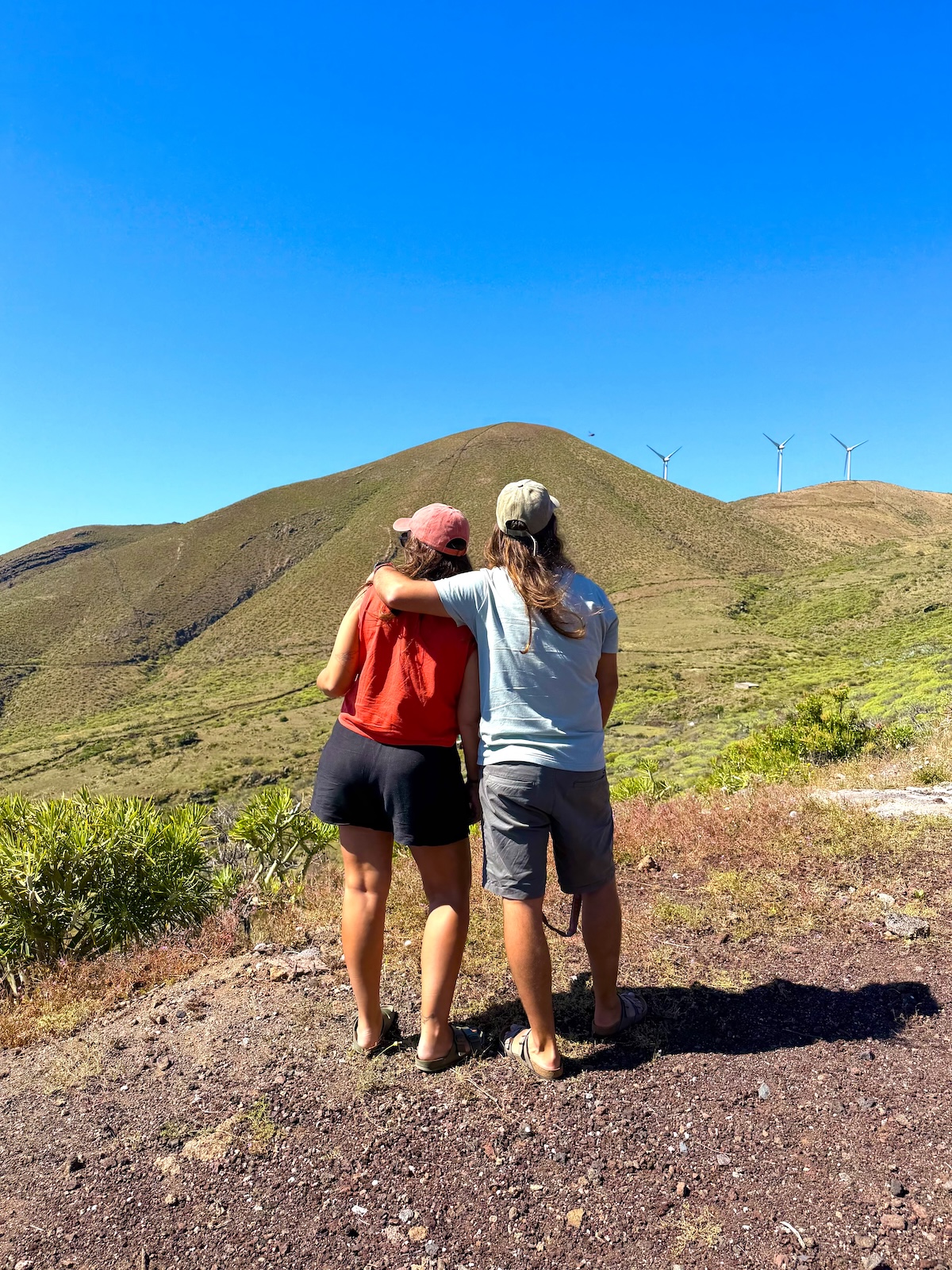
Wind farm viewpoint
Did you know that the island of El Hierro is one of the places in Spain with the highest percentage of renewable energy? Currently, it is powered year-round by between 44% and 50% renewable energy, using 100% renewable energy during certain periods
That’s right: through projects such as the“Gorona del Viento”wind farm (a project featuring five wind turbines and a water pumping system), a model of sustainability that has been in operation for several years now, the island generates enough energy to power itself and is gradually phasing out fossil fuels.
You can stop at the Wind Farm Viewpoint to see the facilities and enjoy the ocean views.
Villa de Valverde
The town of Valverde is the capital of El Hierro. Due to its location on a hillside at an elevation of 700 meters, and “far” from the sea, it has a microclimate that is much less sunny, and it often wakes up shrouded in fog.
Some of the things you can see and do in Valverde:
- Visit the Church of Santa María de la Concepción, built in the 18th century in the Baroque style, and the town hall, right across the street, featuring typical Canarian architecture.
- Visit the Casa de Las Quinteras Ethnographic Center, a historic home featuring an exhibition of the various traditional trades practiced on El Hierro, as well as reproductions of pre-Hispanic pottery (admission 4€, open Monday through Saturday from 10:00 a.m. to 2:00 p.m. / 2:30 p.m. to 6:00 p.m. – last admission at 5:40 p.m.)
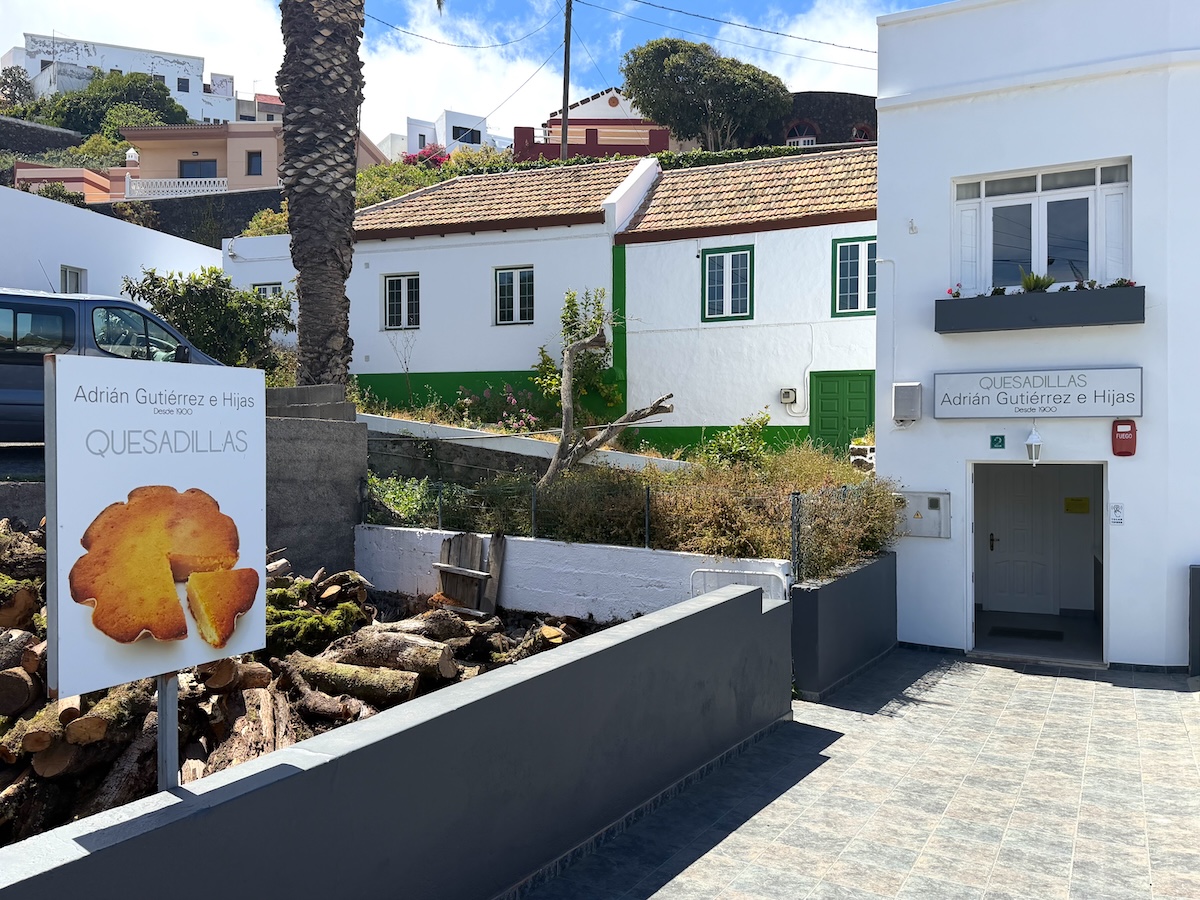
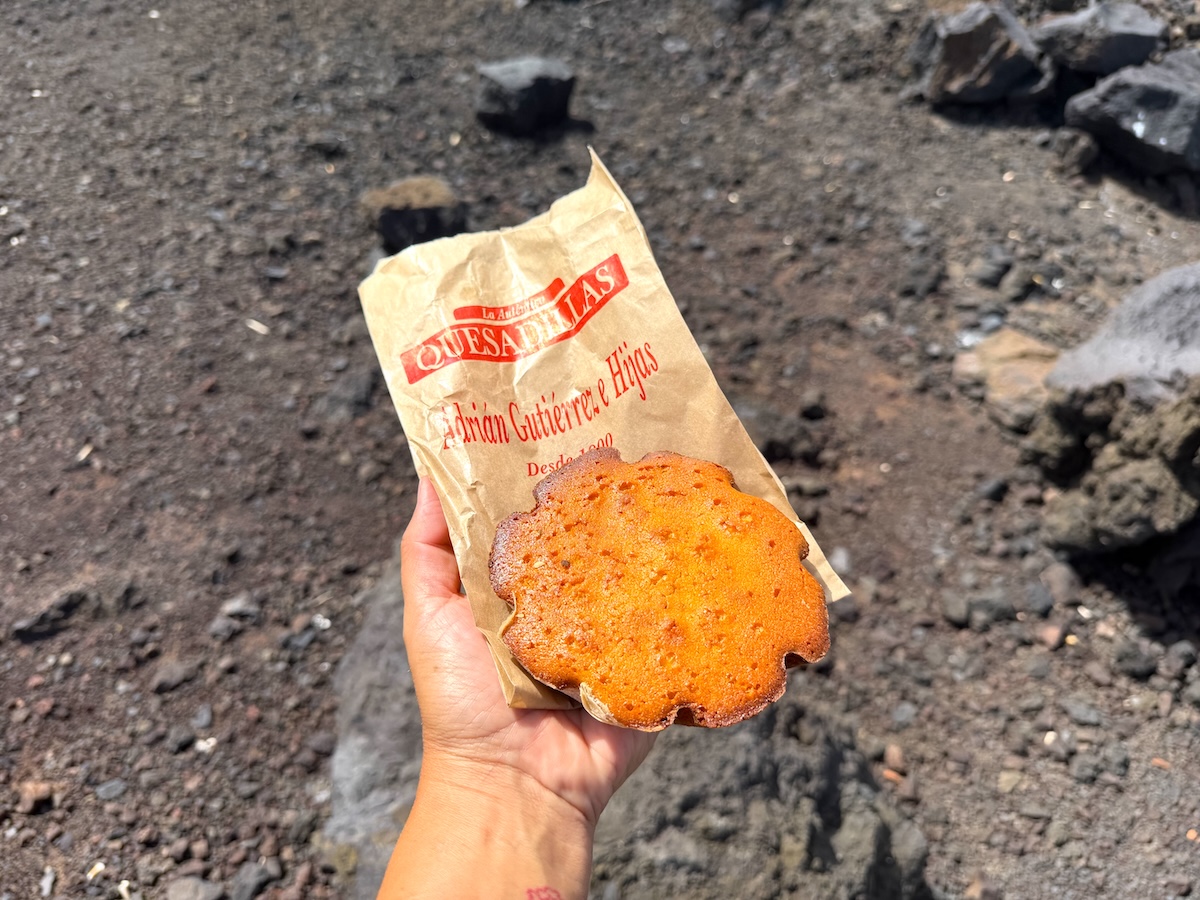
- Try and buy El Hierro-style quesadillas at Quesadillas Adrián Gutiérrez e Hijas (one of our favorites among the many we tried on the island)
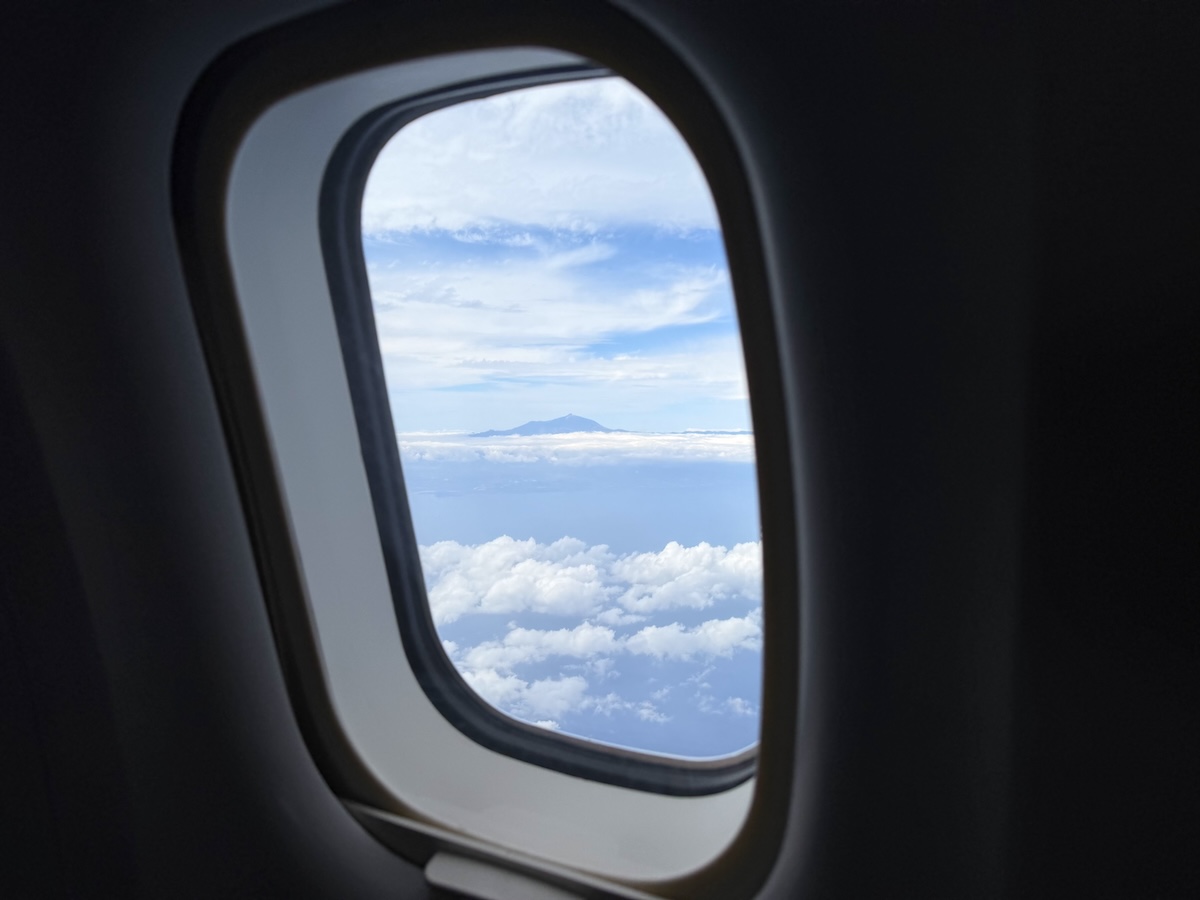
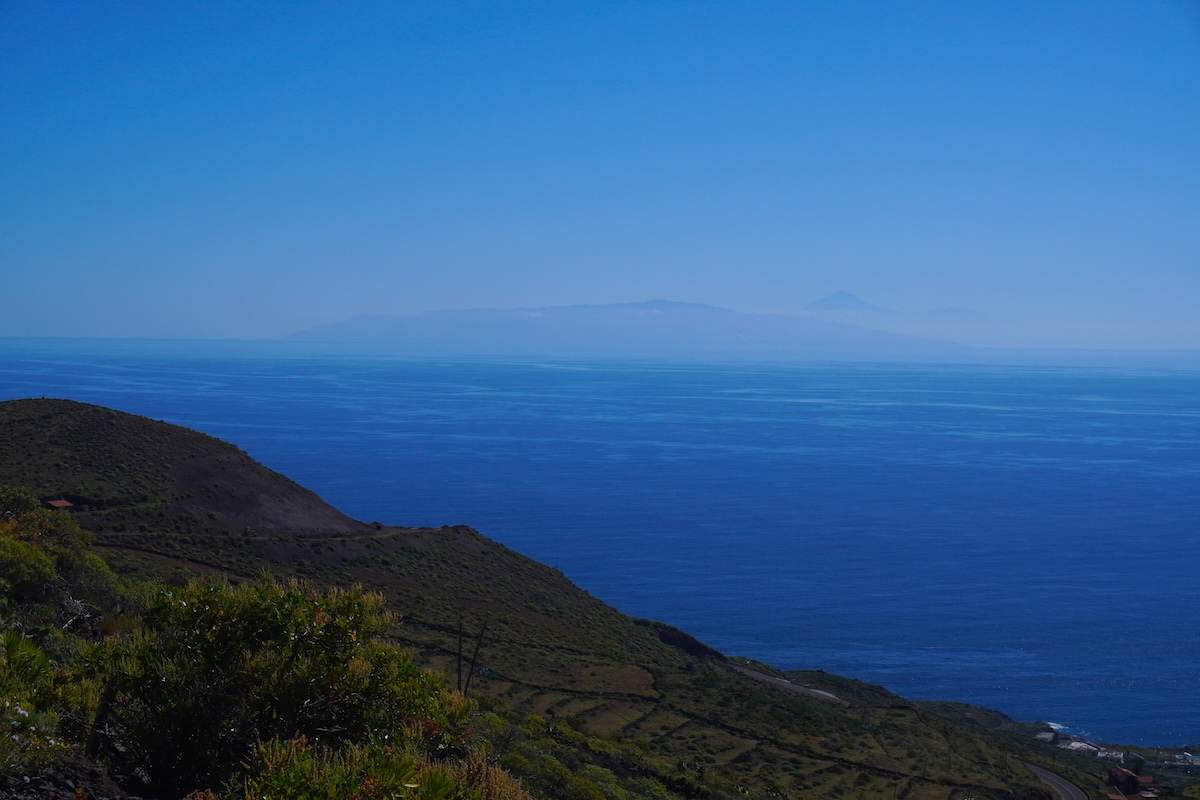
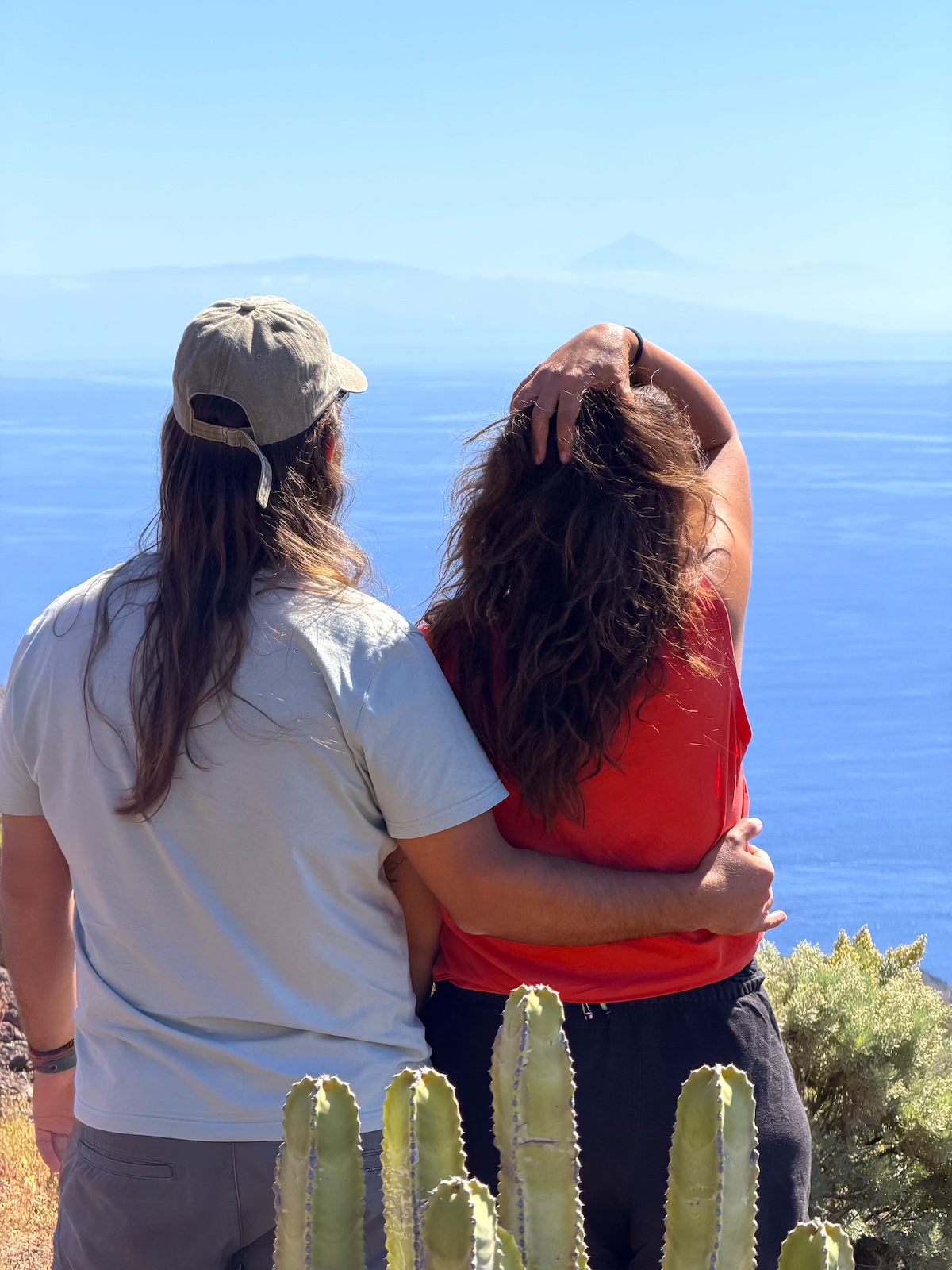
On your way to the following spots, we recommend stopping at the Tejeleita Lookout; if you’re lucky with the weather, you’ll have a beautiful view of Mount Teide on Tenerife
Tamaduste
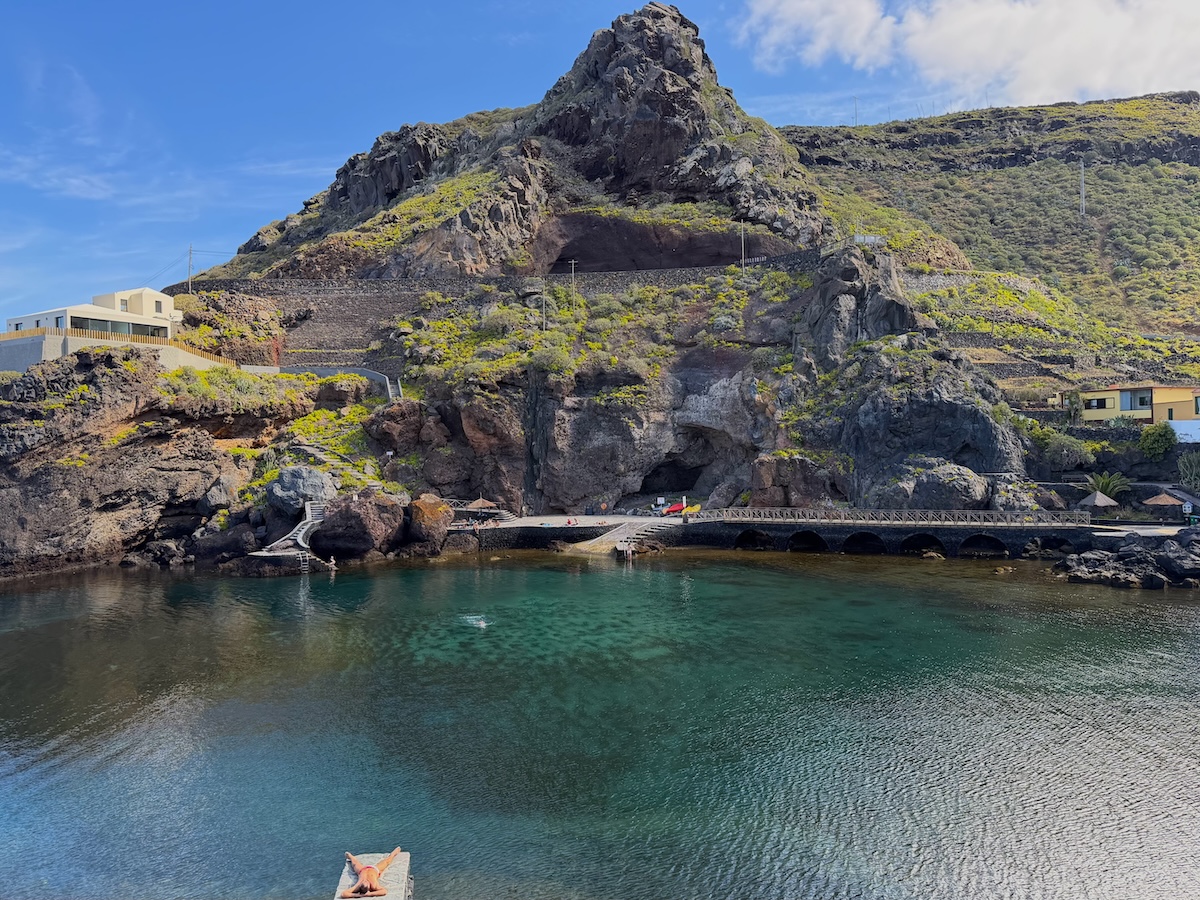
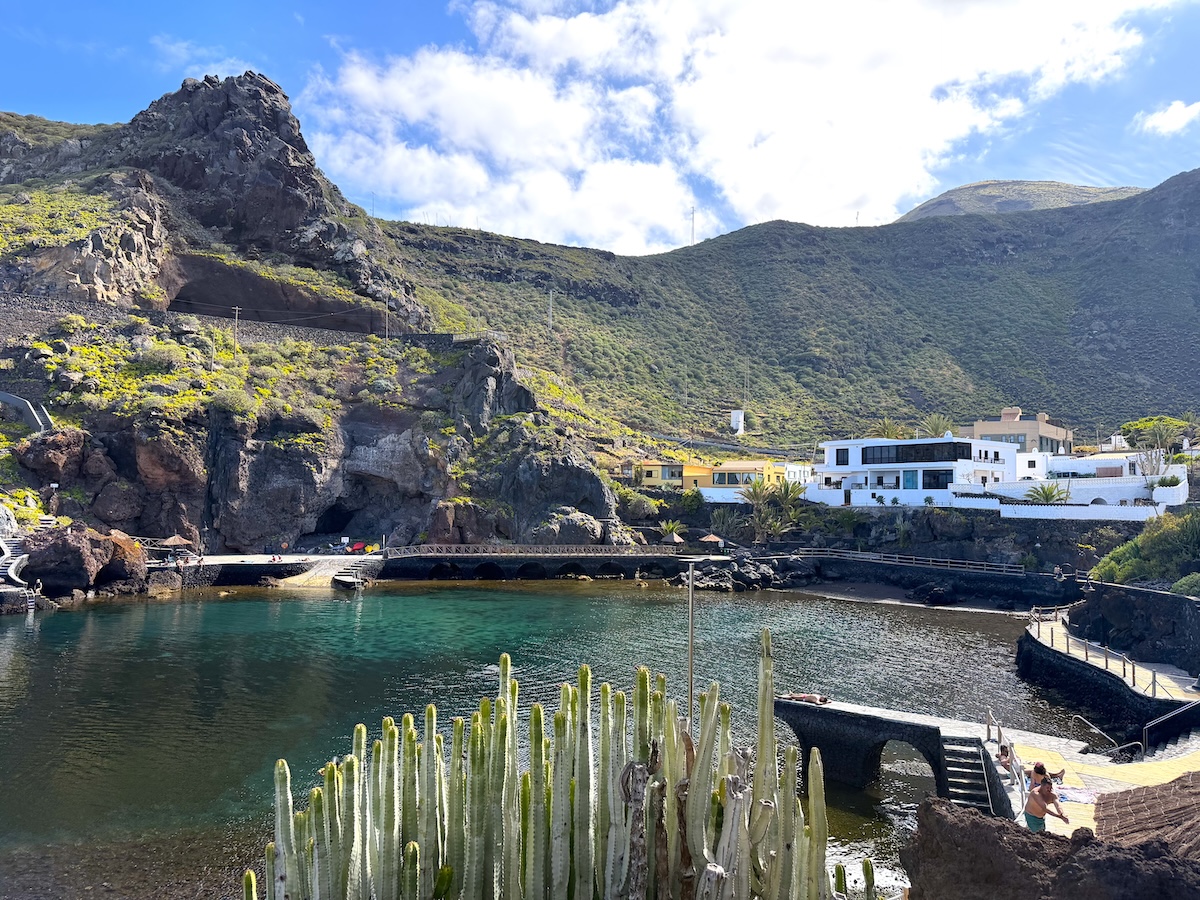
Tamaduste is a small, beautiful village that belongs to the municipality of Valverde; its tranquility makes it ideal for relaxing. It features colorful houses, all clustered together in a small bay, where you’ll also find a natural pool open to the sea, perfect for swimming alone or with your family.
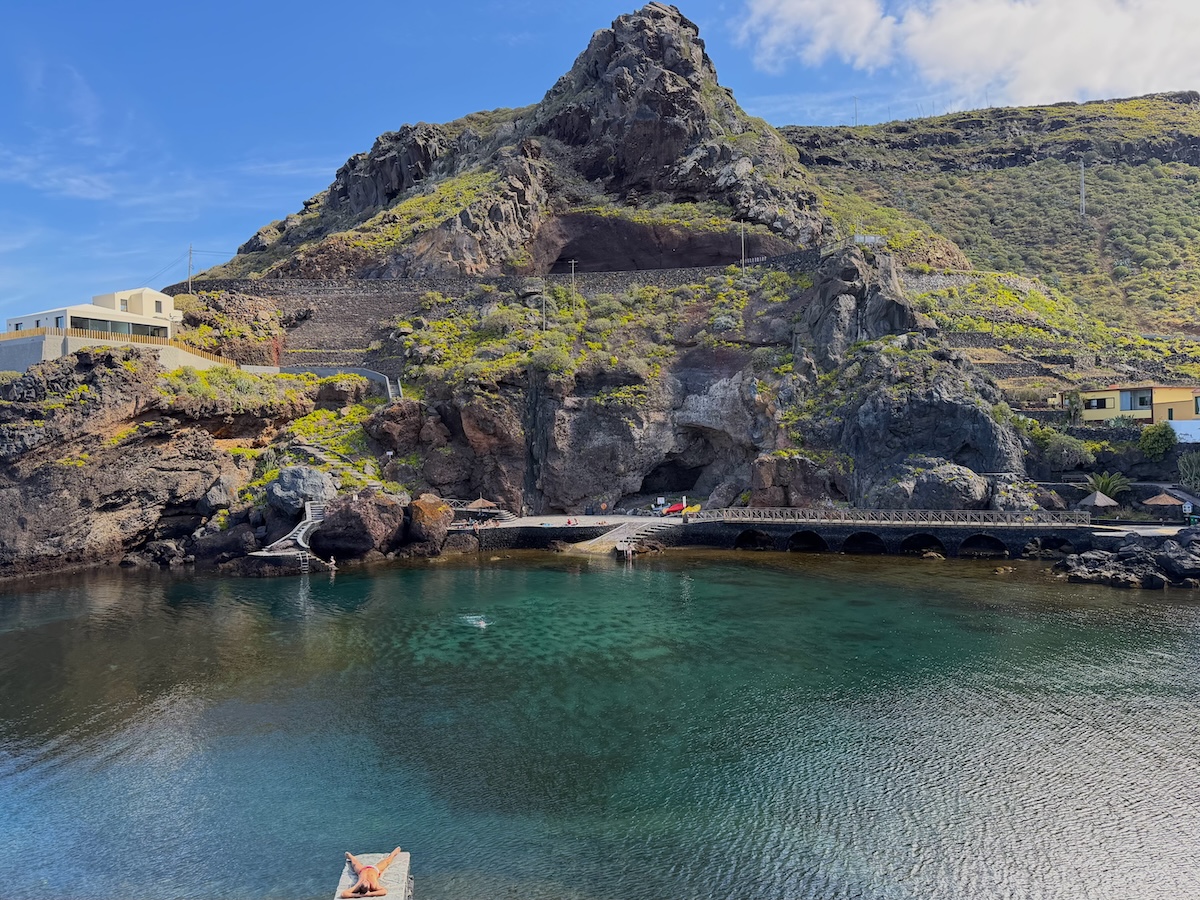
It’s more popular with locals than with tourists and is particularly photogenic. Don’t forget to bring your snorkeling gear, if you swim out into the ocean, you’ll find plenty of marine life.
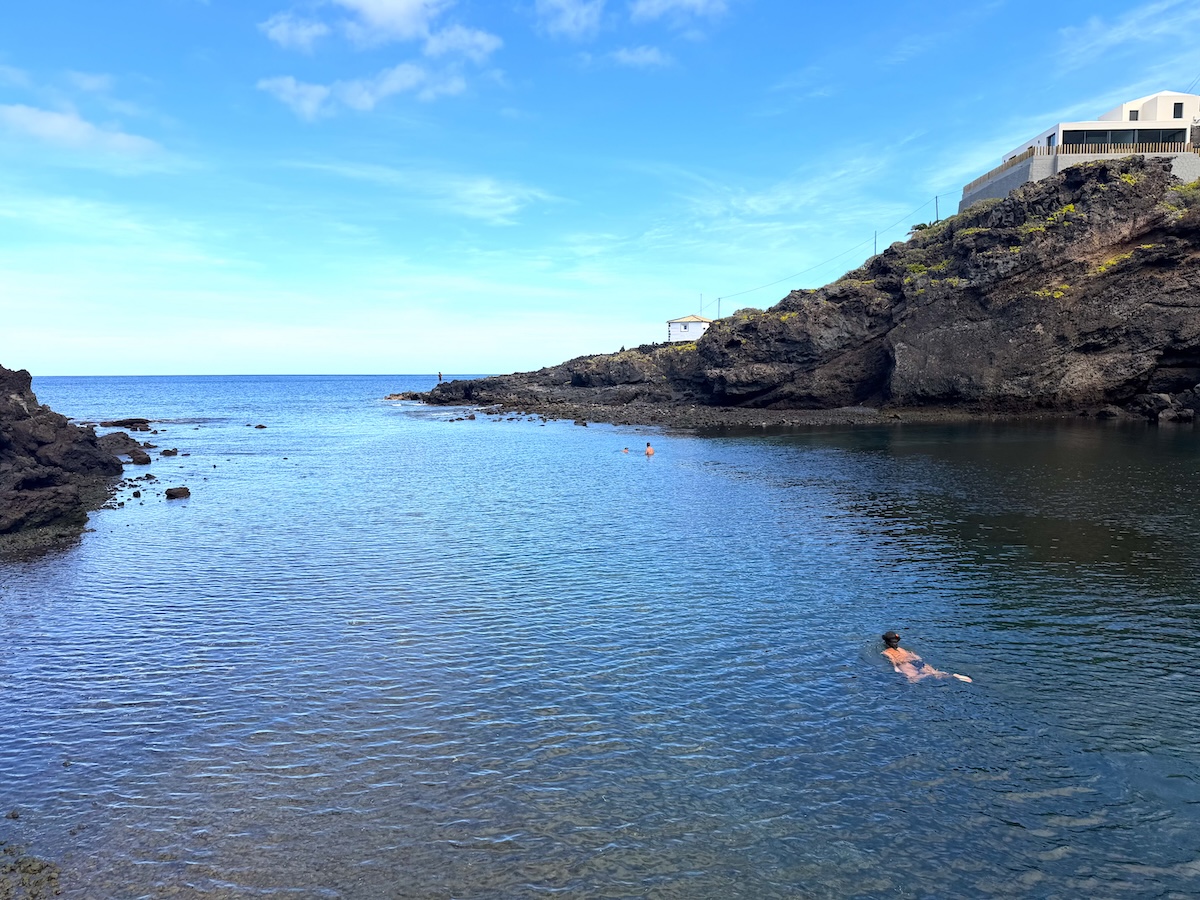
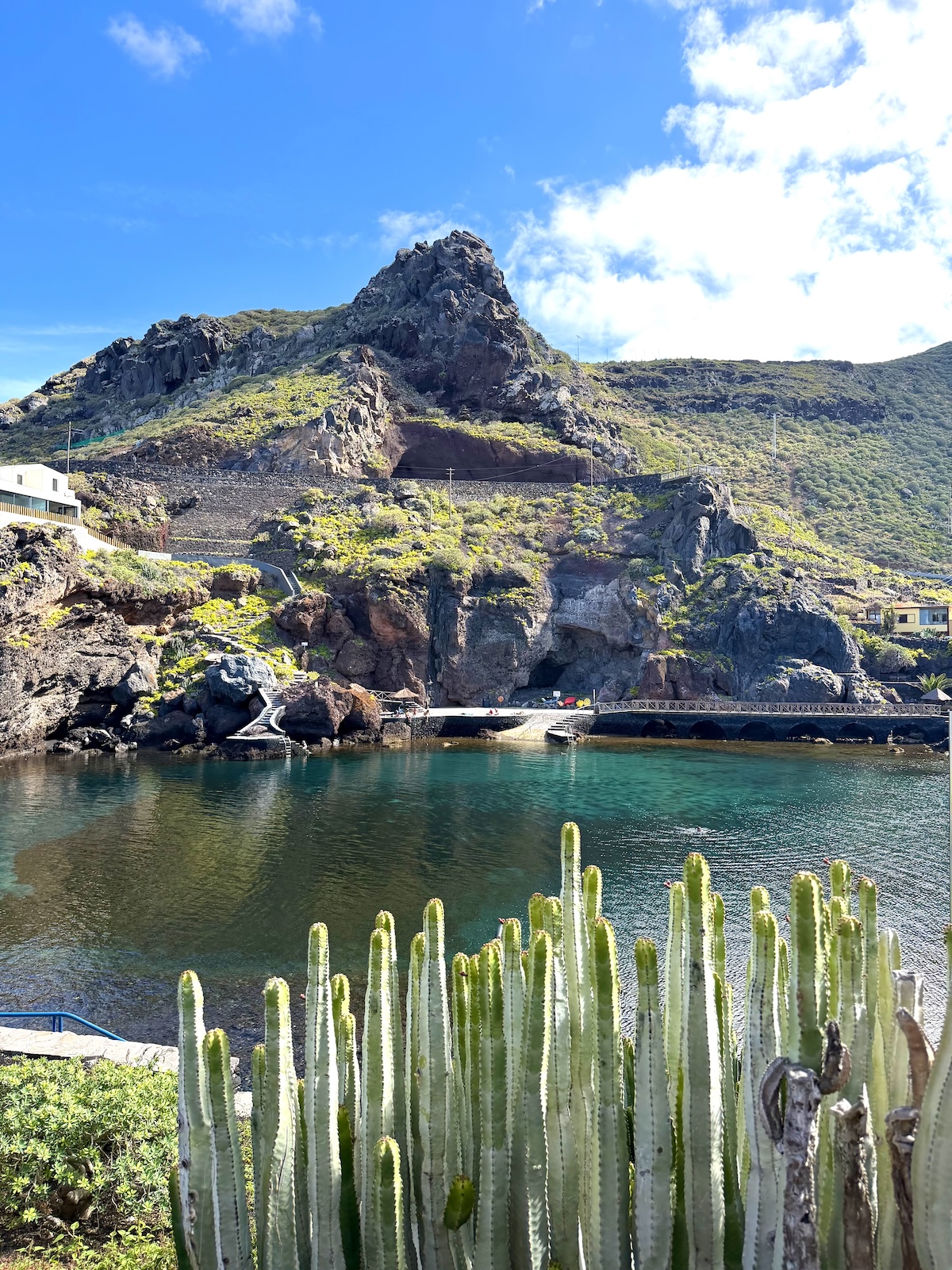
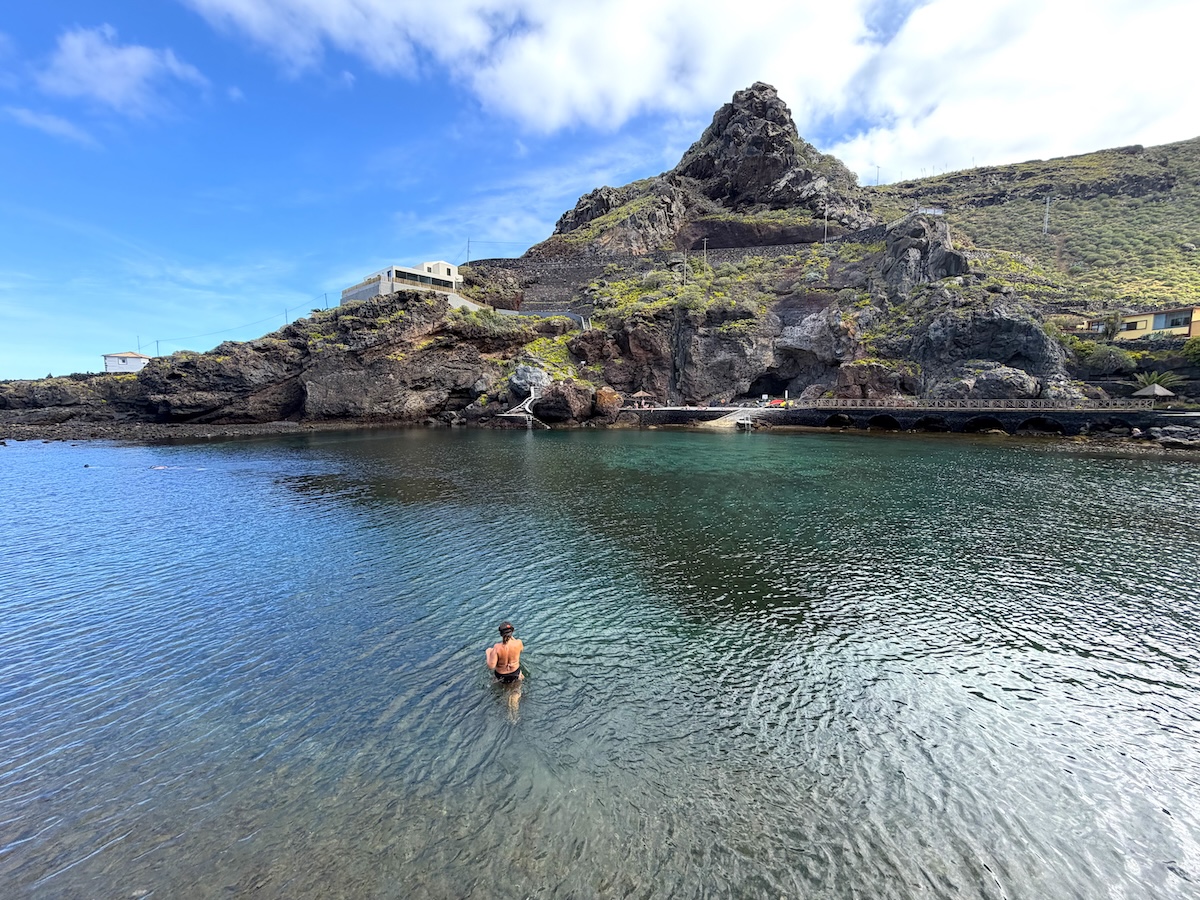
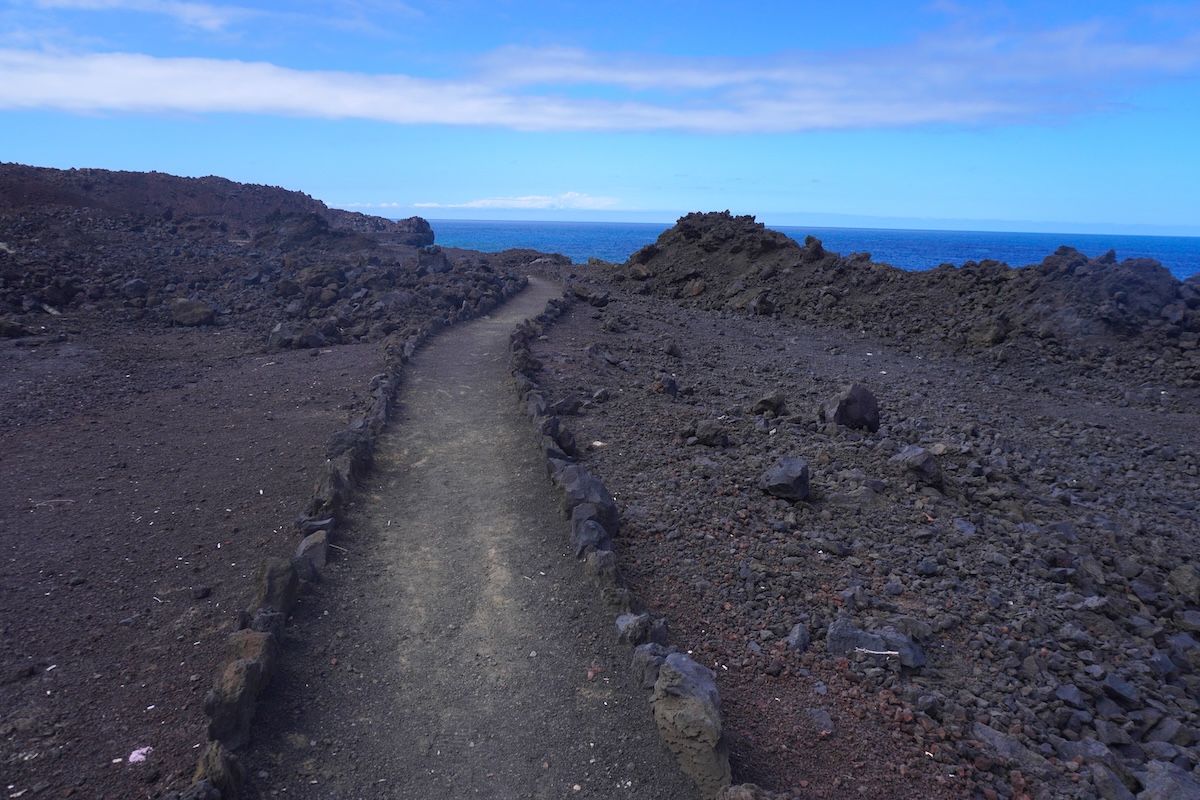
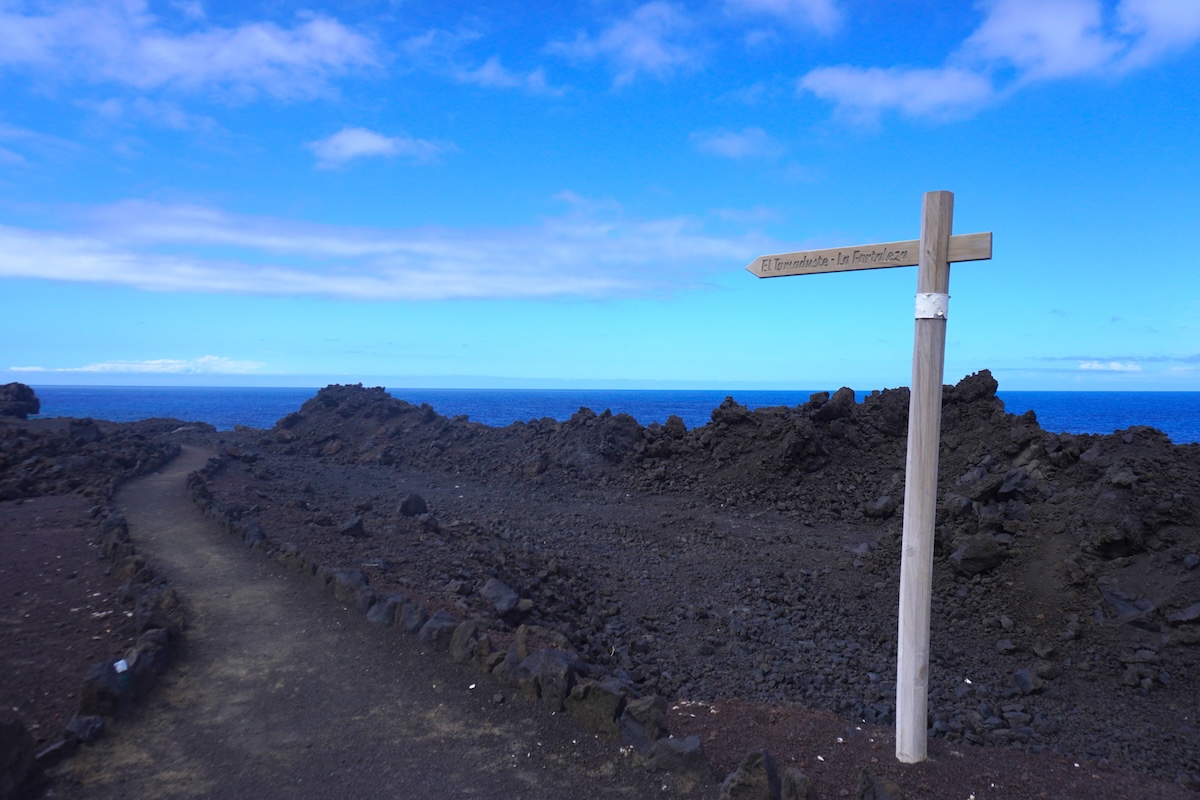
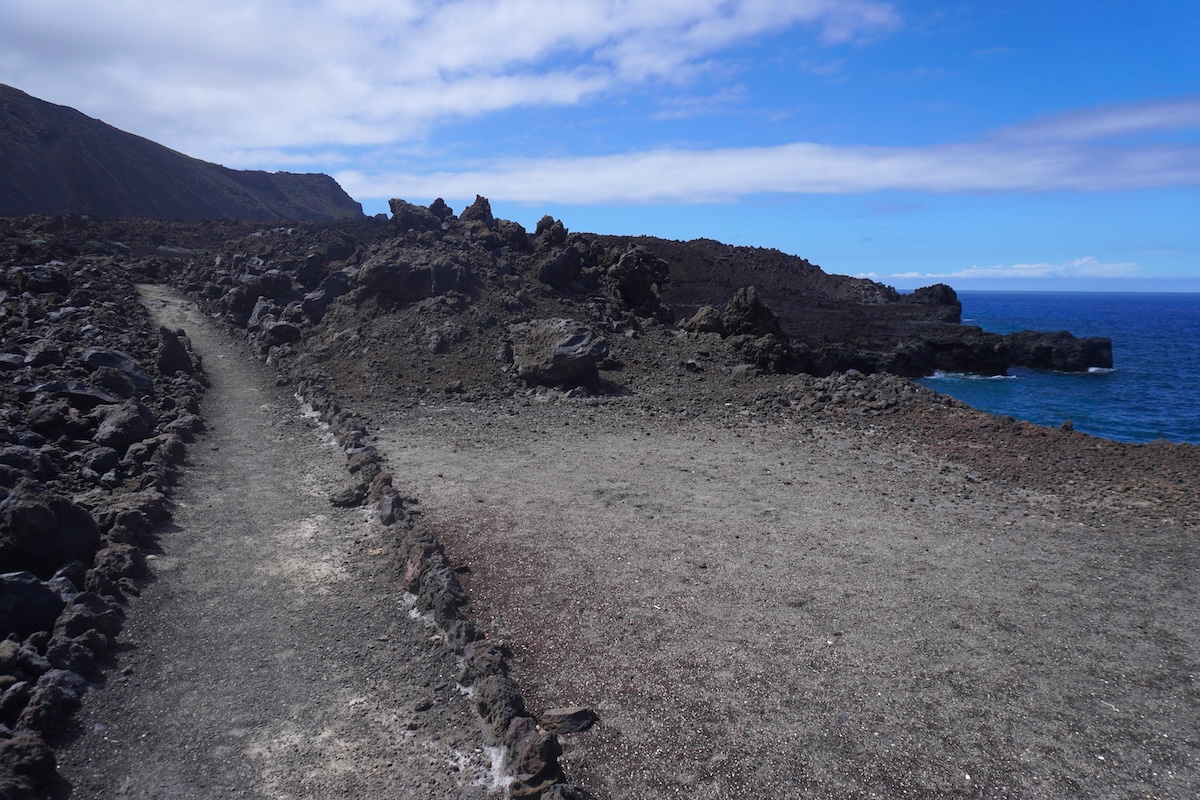
If you have time, we also recommend taking a walk along the Tamaduste Malpaís Trail (or at least part of it ), a short route through the malpaís (a Canarian term referring to volcanic terrain with irregularly shaped, jagged solidified lava).
La Caleta
La Caleta, on the east coast, has something for everyone: swimming directly in the open Atlantic, where goggles and a snorkel are essential (if the tide allows), and three pools of varying depths for those traveling with young children or who prefer not to venture too far out. Although these pools are man-made, they fill with seawater depending on the tides.
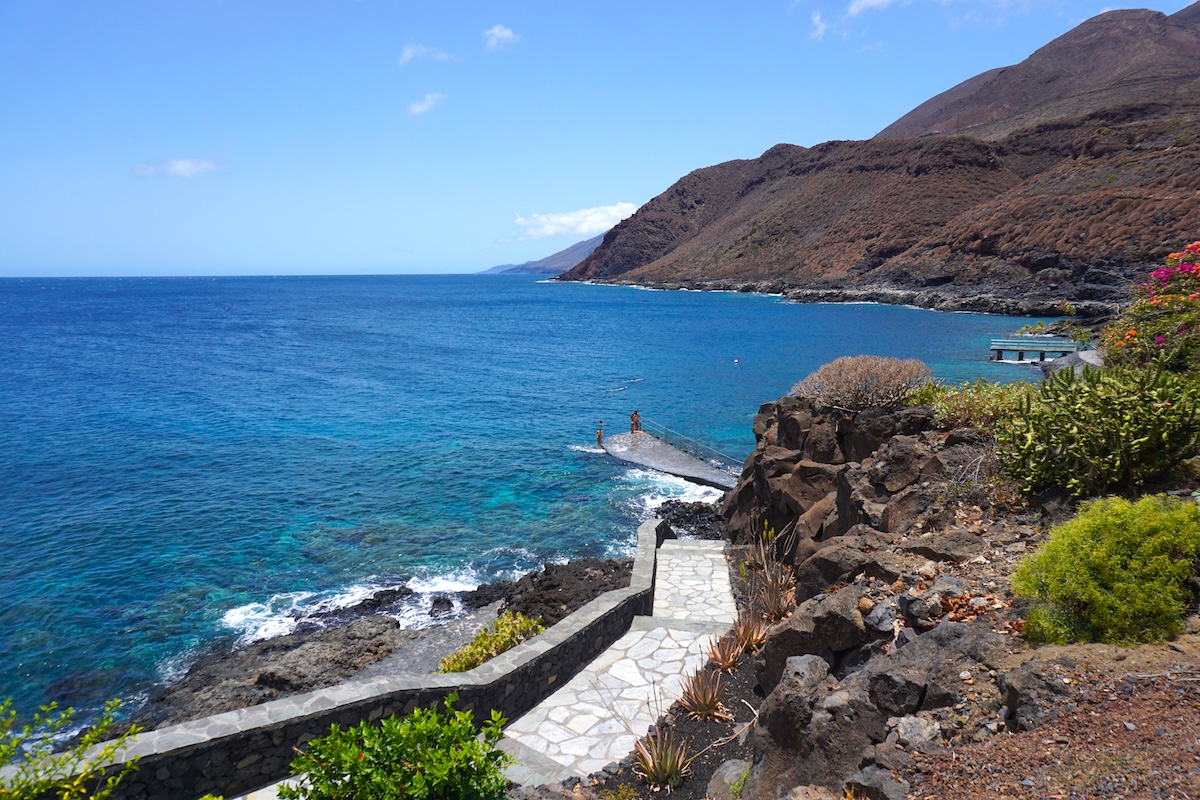
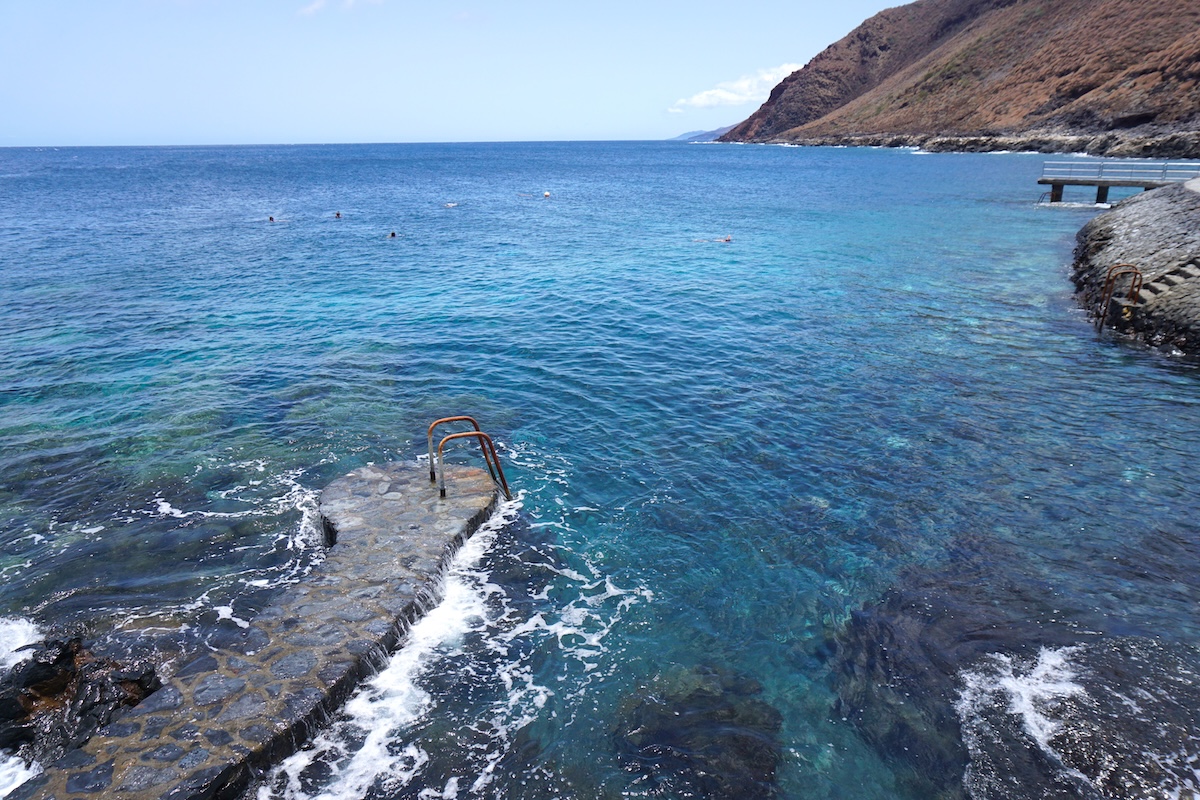
That said, no matter where you swim, know that there are showers available. So, thanks to both its proximity to the airport and the chance to take a freshwater shower before our flight, this was the plan we chose to say goodbye to the island of El Hierro and take one last dip before flying back to Tenerife on our first visit to the island.

Near the La Caleta pools, on the cliffs, there are some interesting archaeological sites with rock engravings (featuring Liby-Berber characters, the language of the ancient inhabitants of the Canary Islands).
Timijiraque Beach
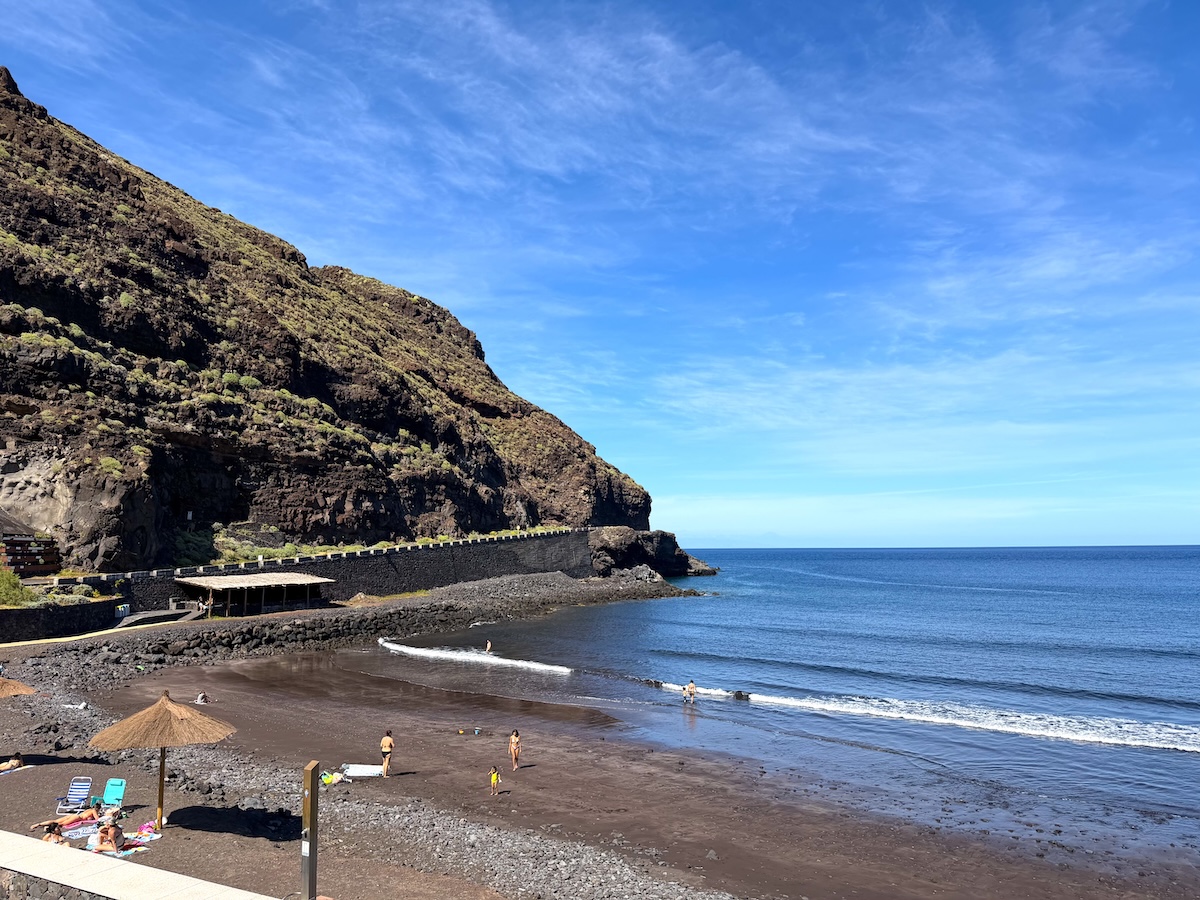
The Timijiraque Beach is located near Las Playas and is one of the few beaches where sand predominates. Timijiraque was officially designated a Protected Natural Area of the Canary Islands in 1994 (and has held Blue Flag status since 2021). You’ll find an unspoiled landscape with the remains of ancient salt flats and a very special and rare flora, such as the bird’s tongue plant. In addition, Timijiraque Beach has areas for picnicking and barbecuing (which, by the way, is quite common on the island of El Hierro).
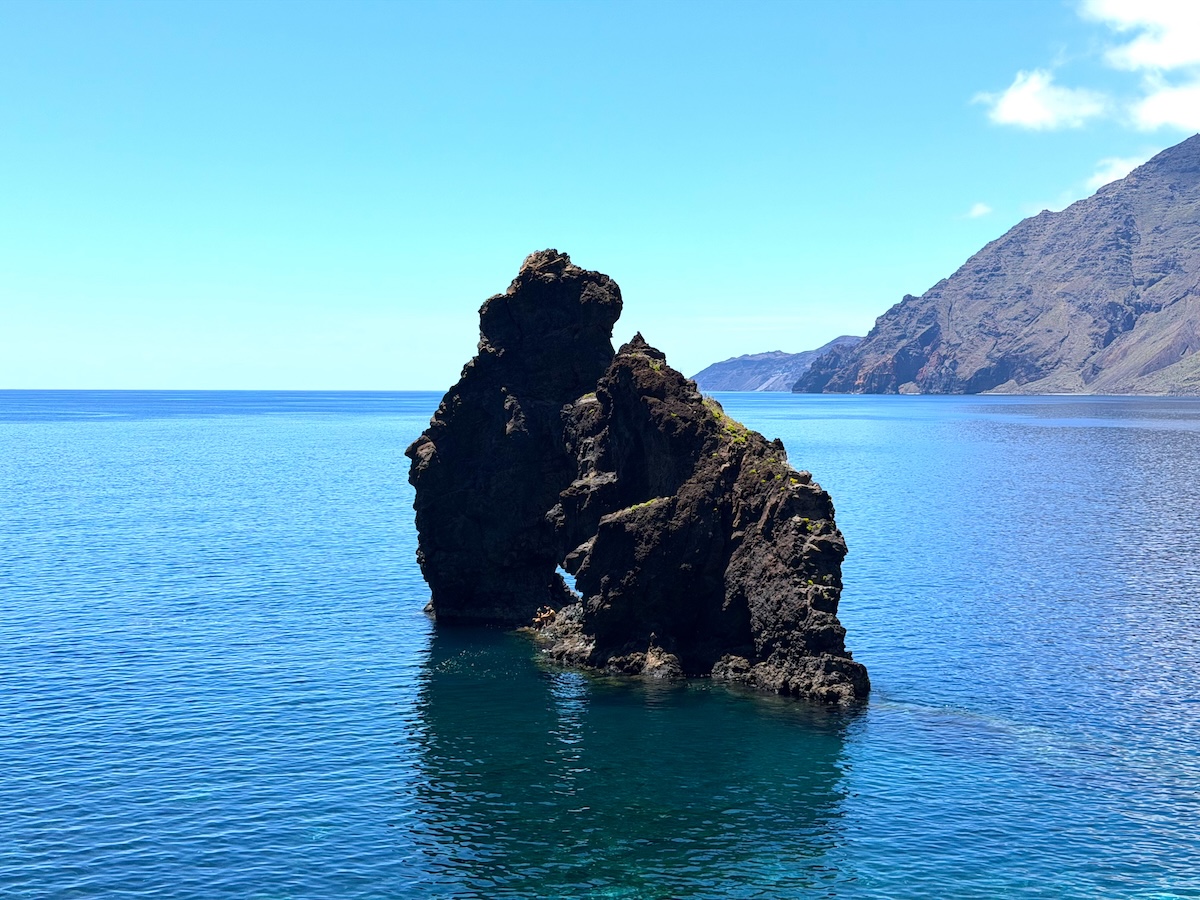
Roque de la Bonanza
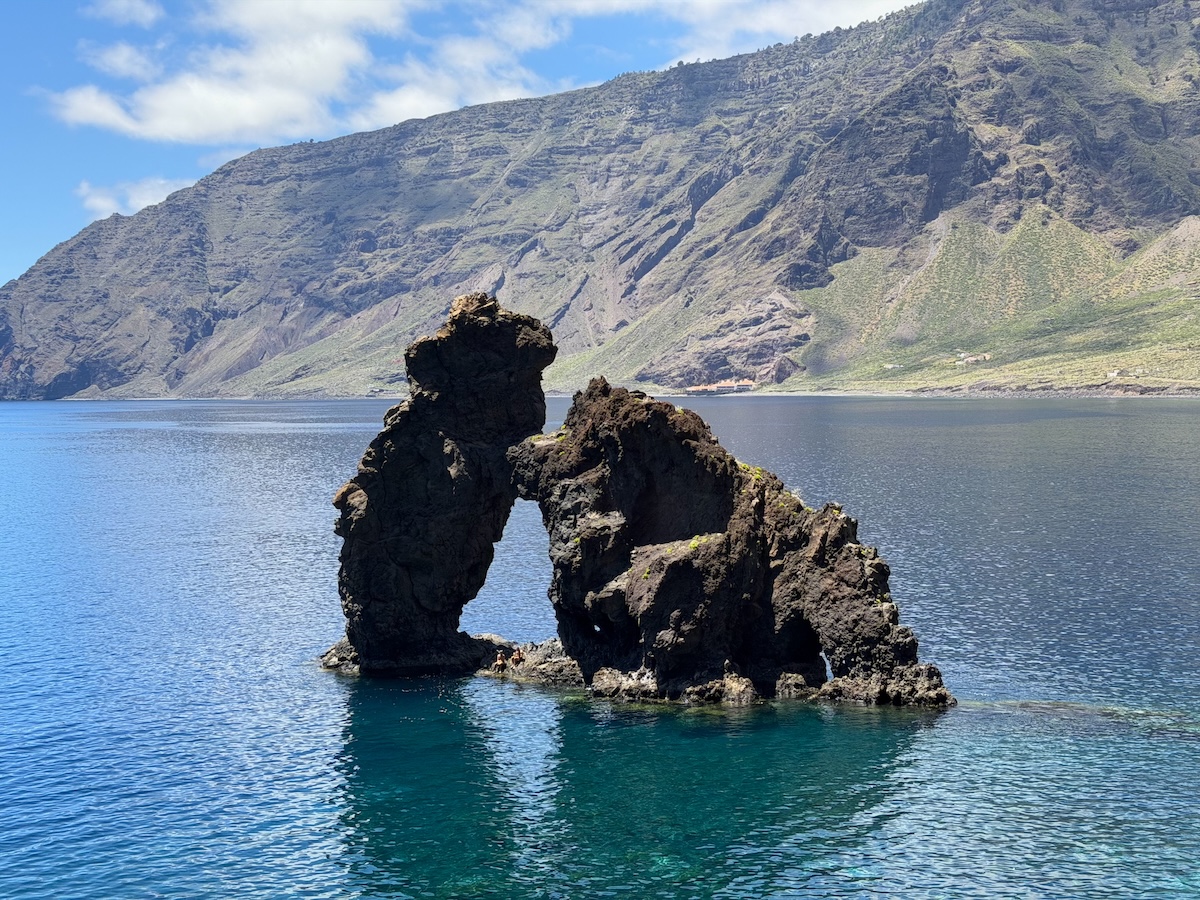
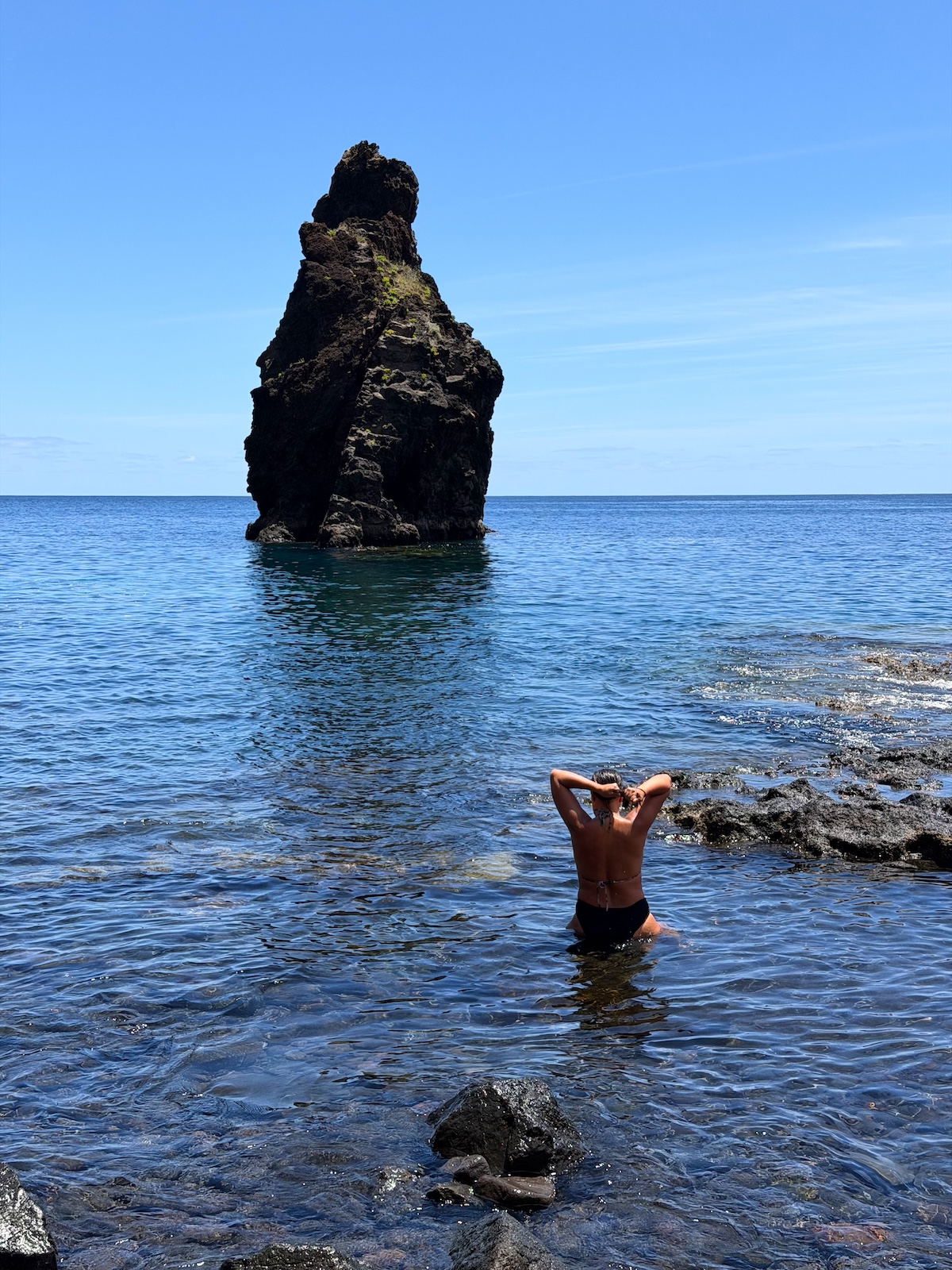
El Roque de la Bonanza is one of El Hierro’s natural landmarks. It is a volcanic rock formation that rises 200 meters above the ocean floor and 50 meters above sea level.
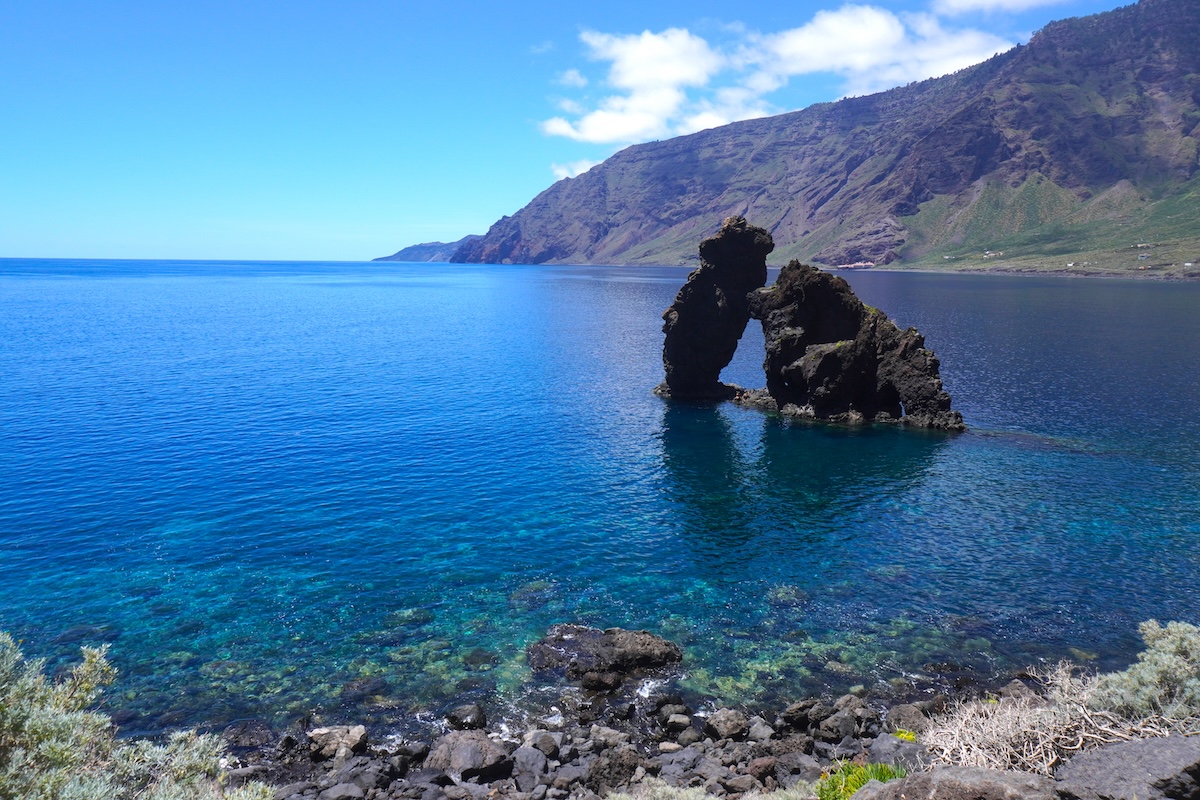
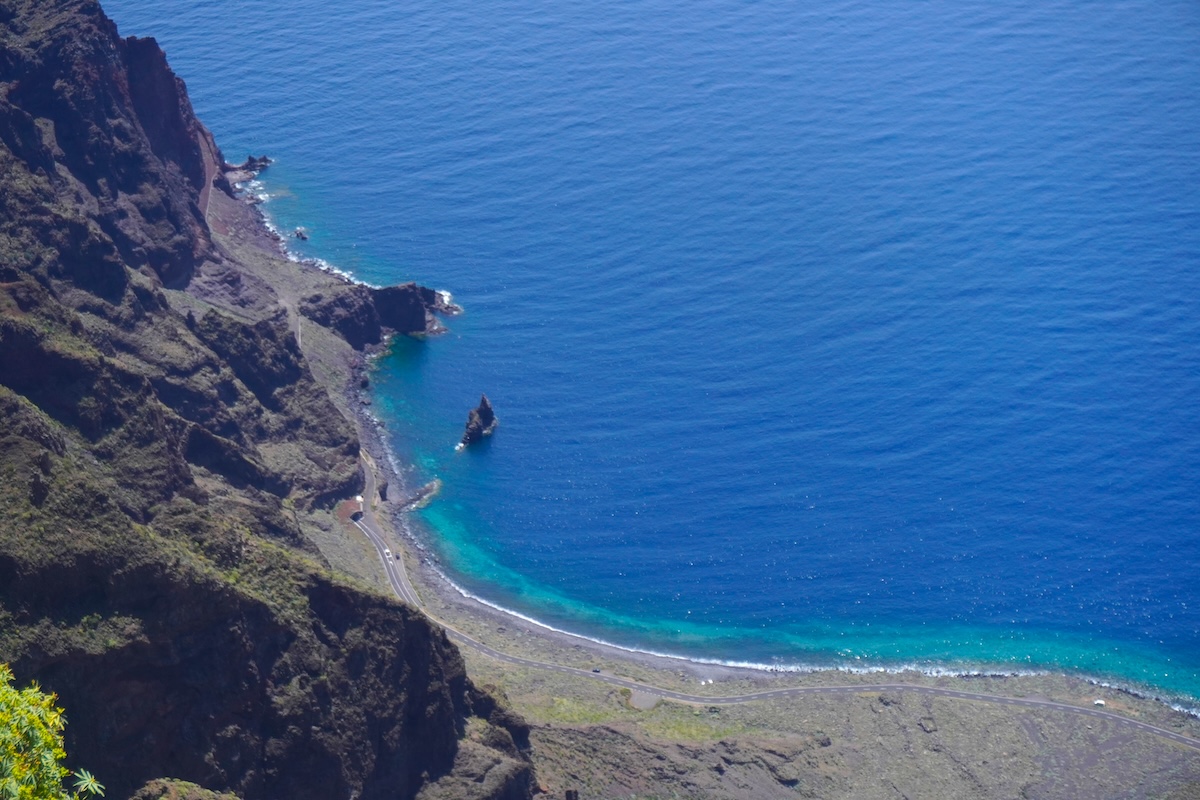
The best view of the Roque is from this lookout point; you can park your car after passing through the tunnel, roughly around here.
An interesting fact is that to reach the area, you have to go through a tunnel that isn’t very wide and where traffic is allowed in only one direction at a time, alternating via traffic lights. So when you reach the tunnel, you’ll probably have to wait a little while for the traffic light to turn green, even if no cars are coming from the other side (which is most likely, that’s how it was for us both on the way there and back).
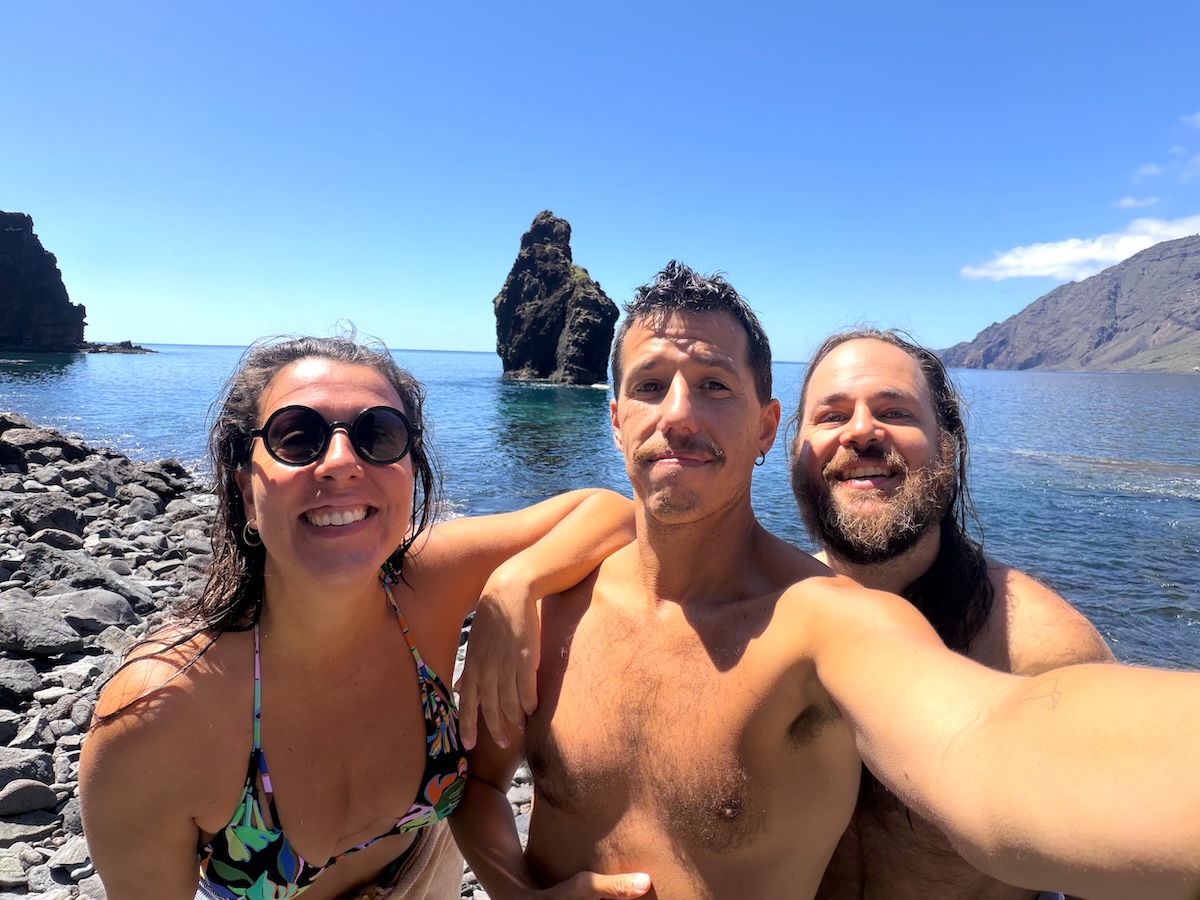
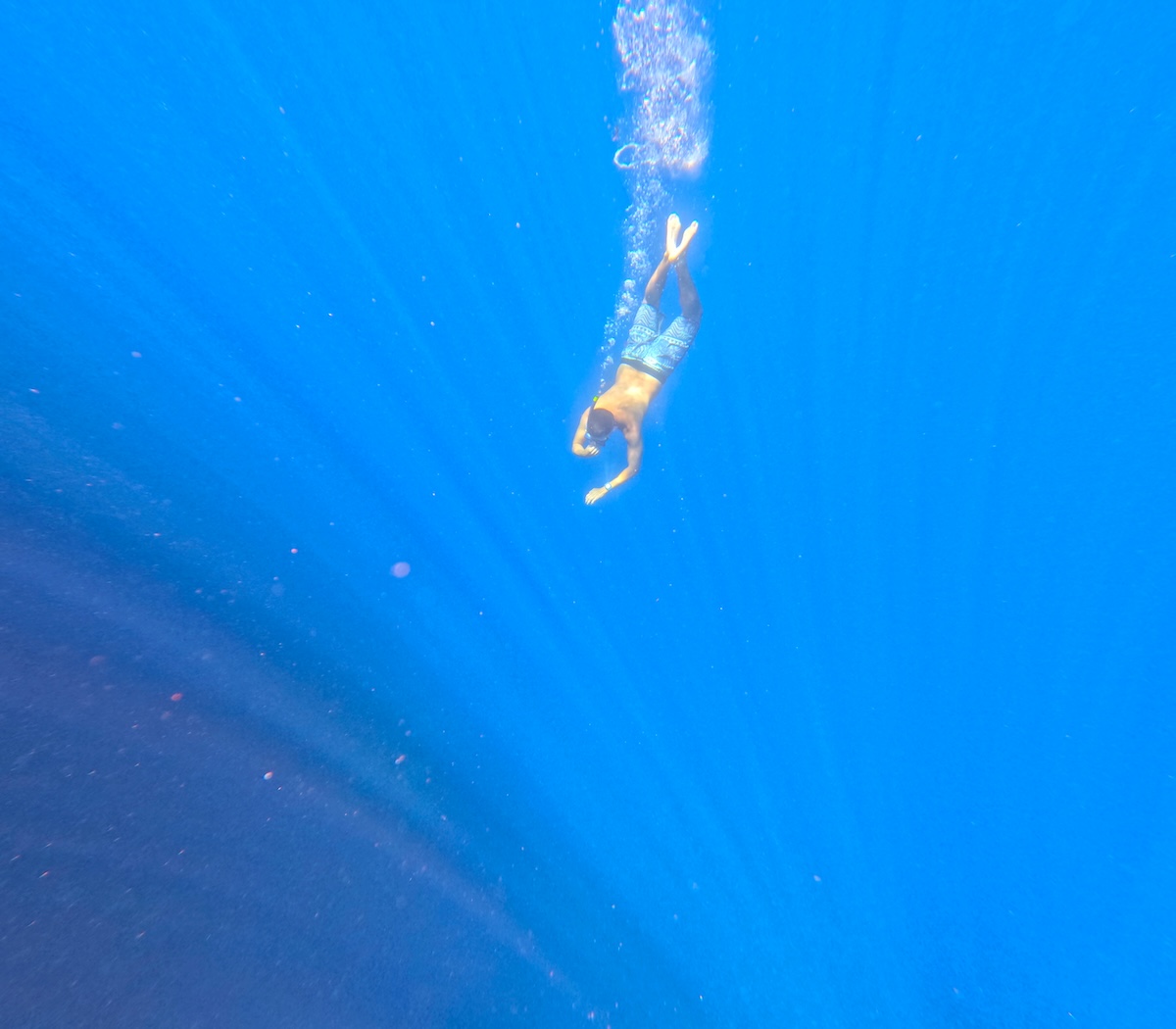
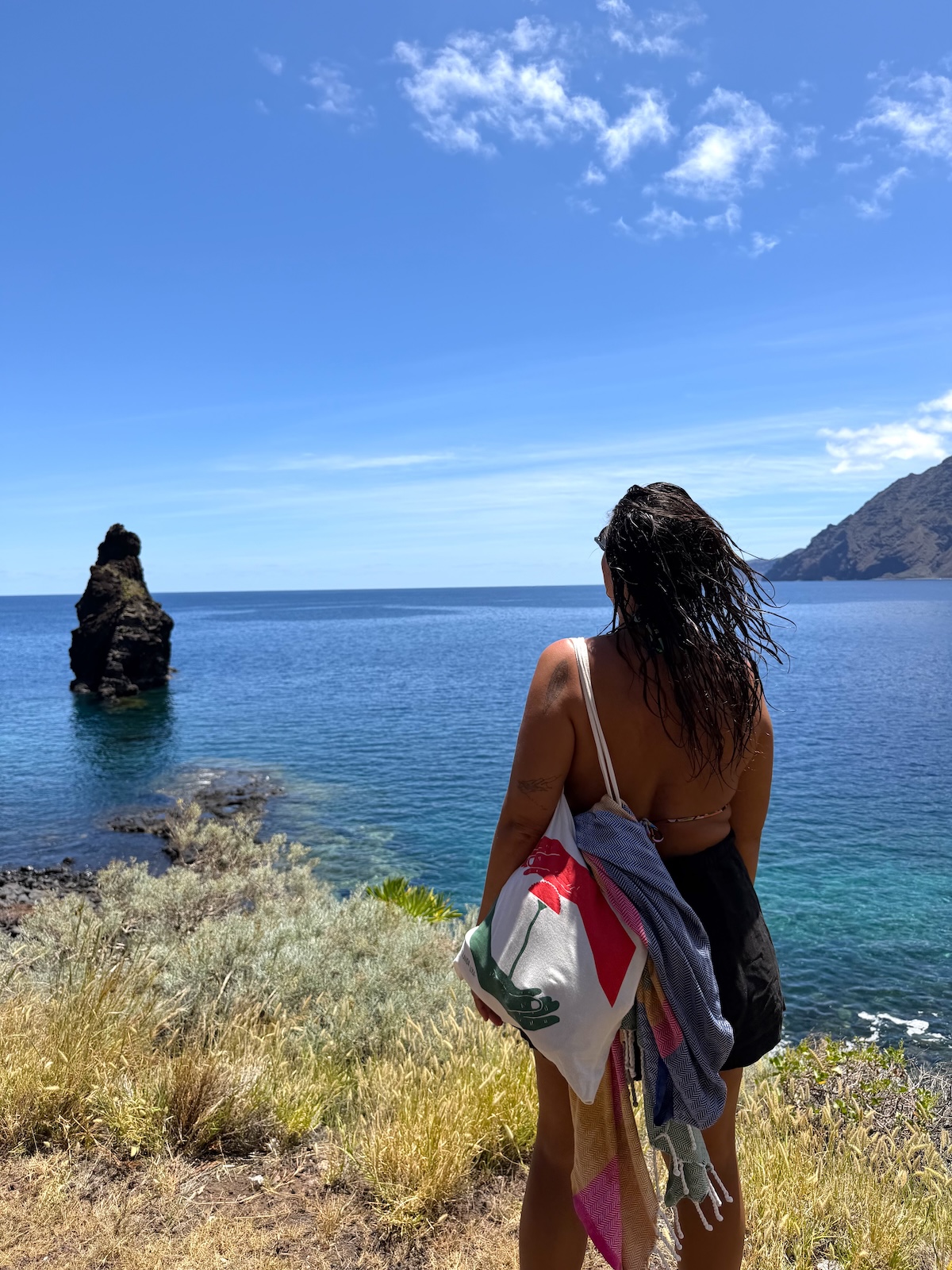
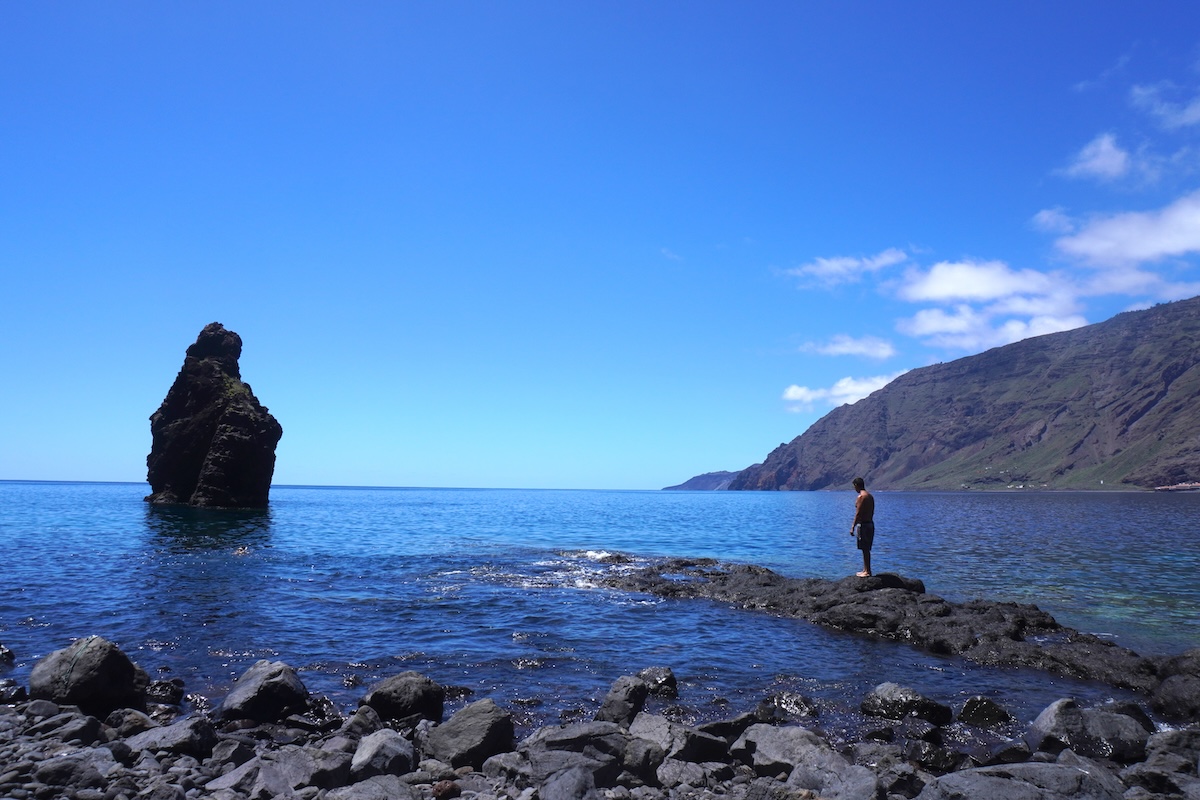
If you head down to the sea, there’s a lesser-known rocky beach right in front of the Roque de la Bonanza. If sea conditions allow, you can swim out to the Roque de la Bonanza and, with your snorkeling gear, admire the marine life surrounding this natural monument. That’s what we did on our last visit, and it’s really worth it.
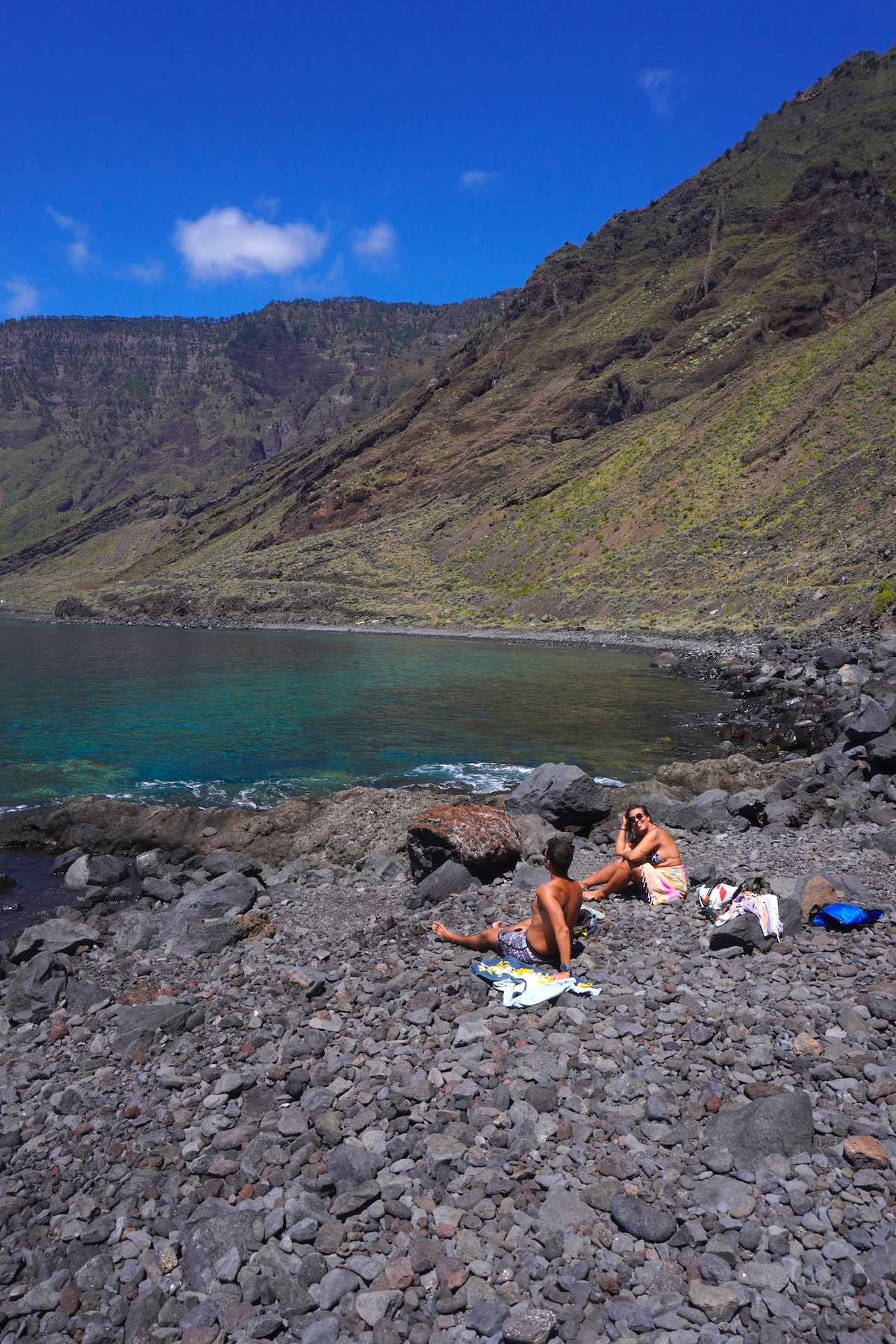
A little further on, there’s another rocky beach, Playa de las Almorranas, which also overlooks the Roque de la Bonanza.
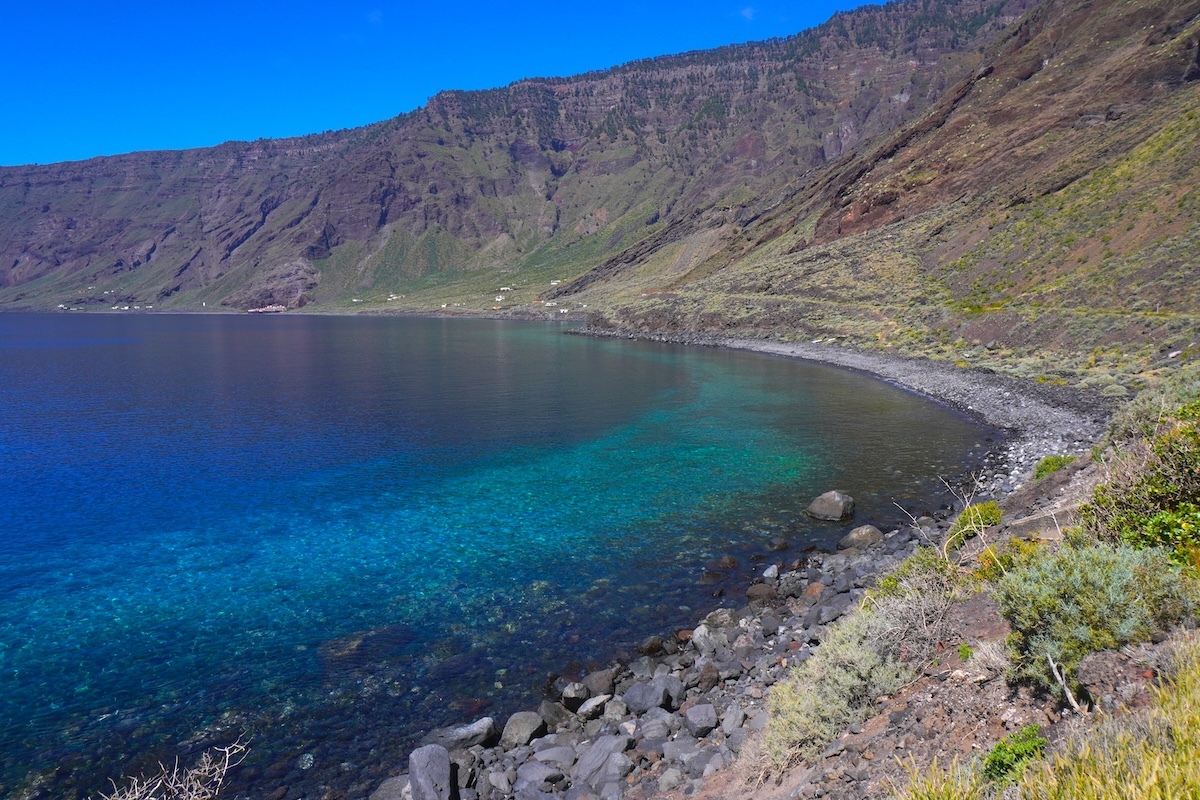
Las Playas and the Parador
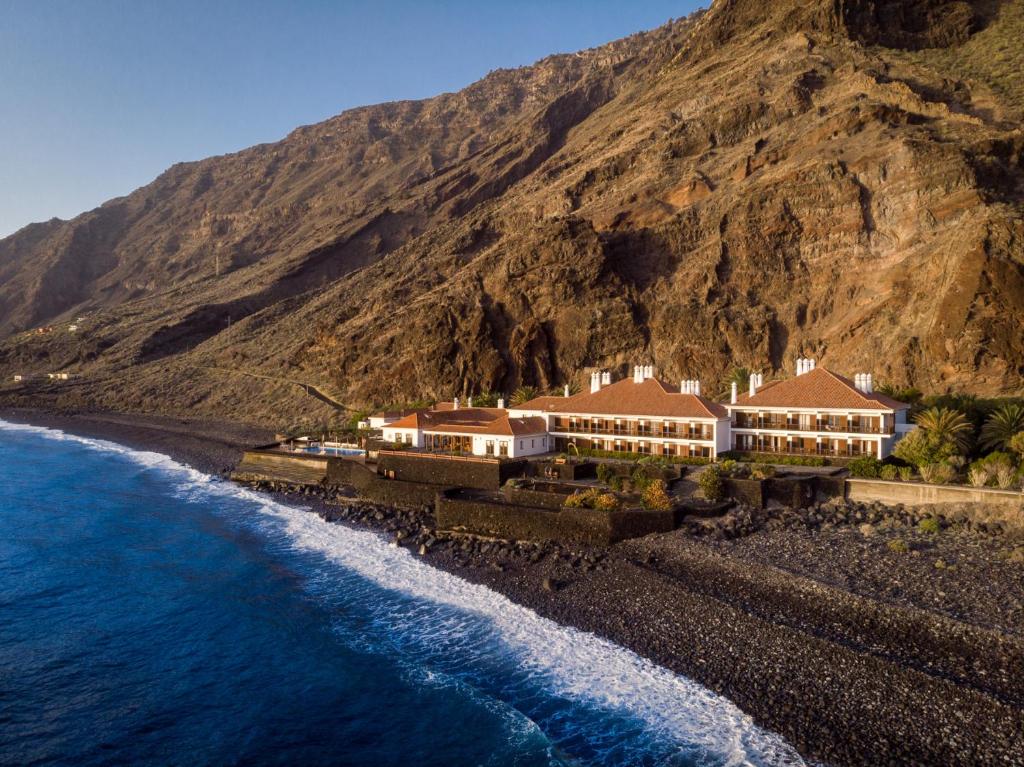
Las Playas (Las Playas Natural Monument) is an area in eastern El Hierro formed by several massive landslides.
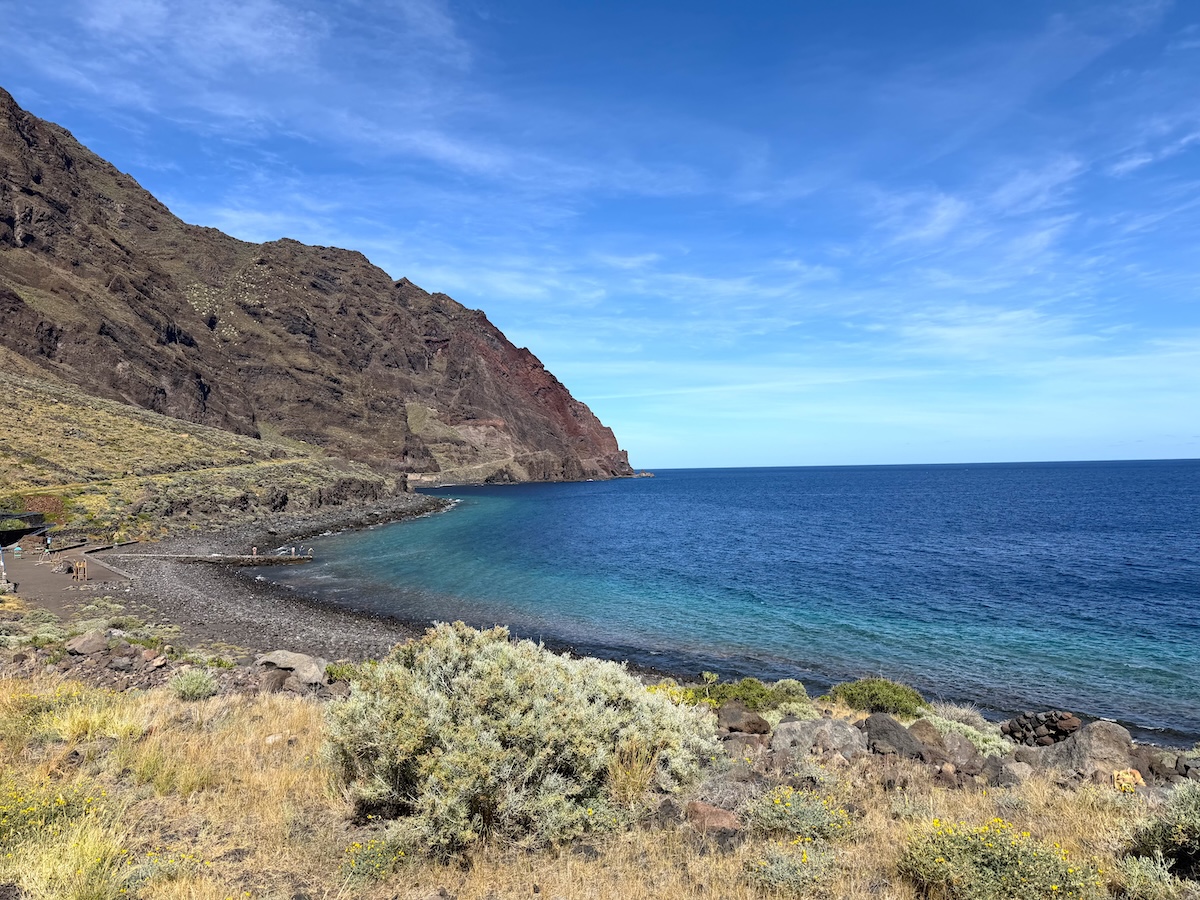
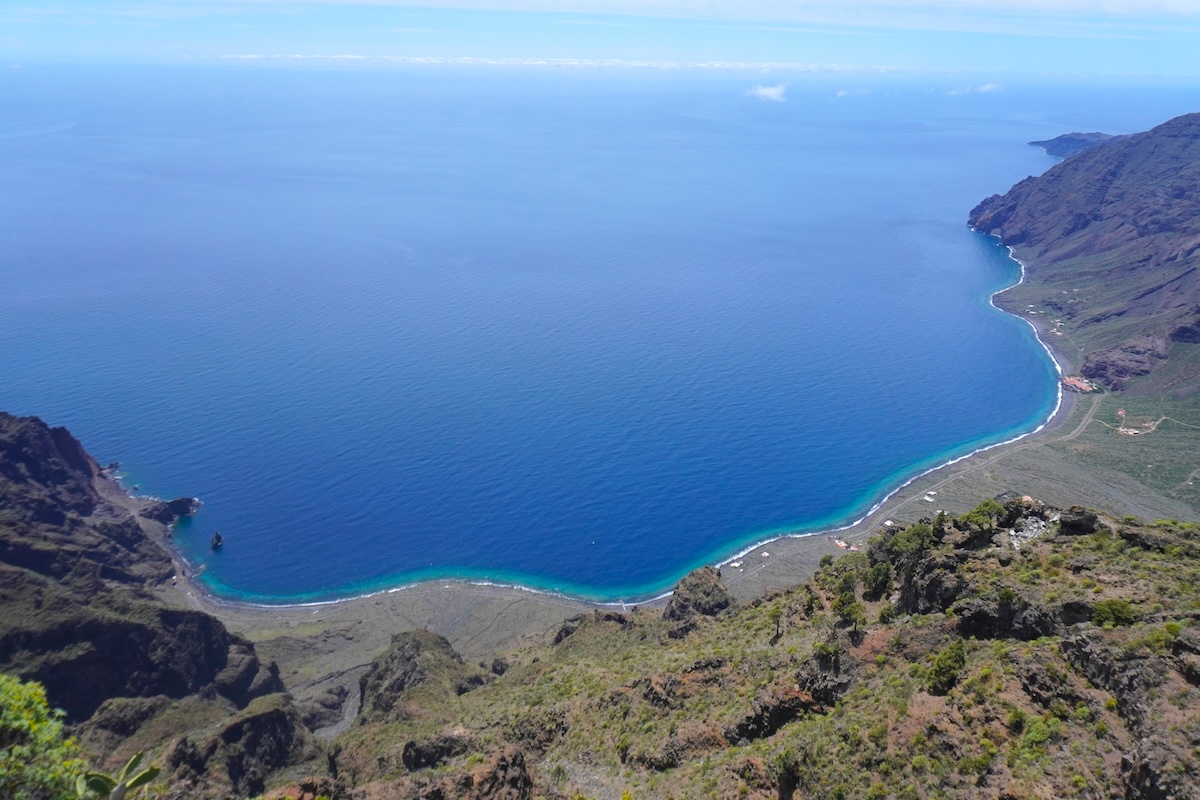
It consists of 9 kilometers of black volcanic sand beaches and small pebbles, arranged in a semicircular shape, with excellent access by car but with hardly any buildings or crowds.
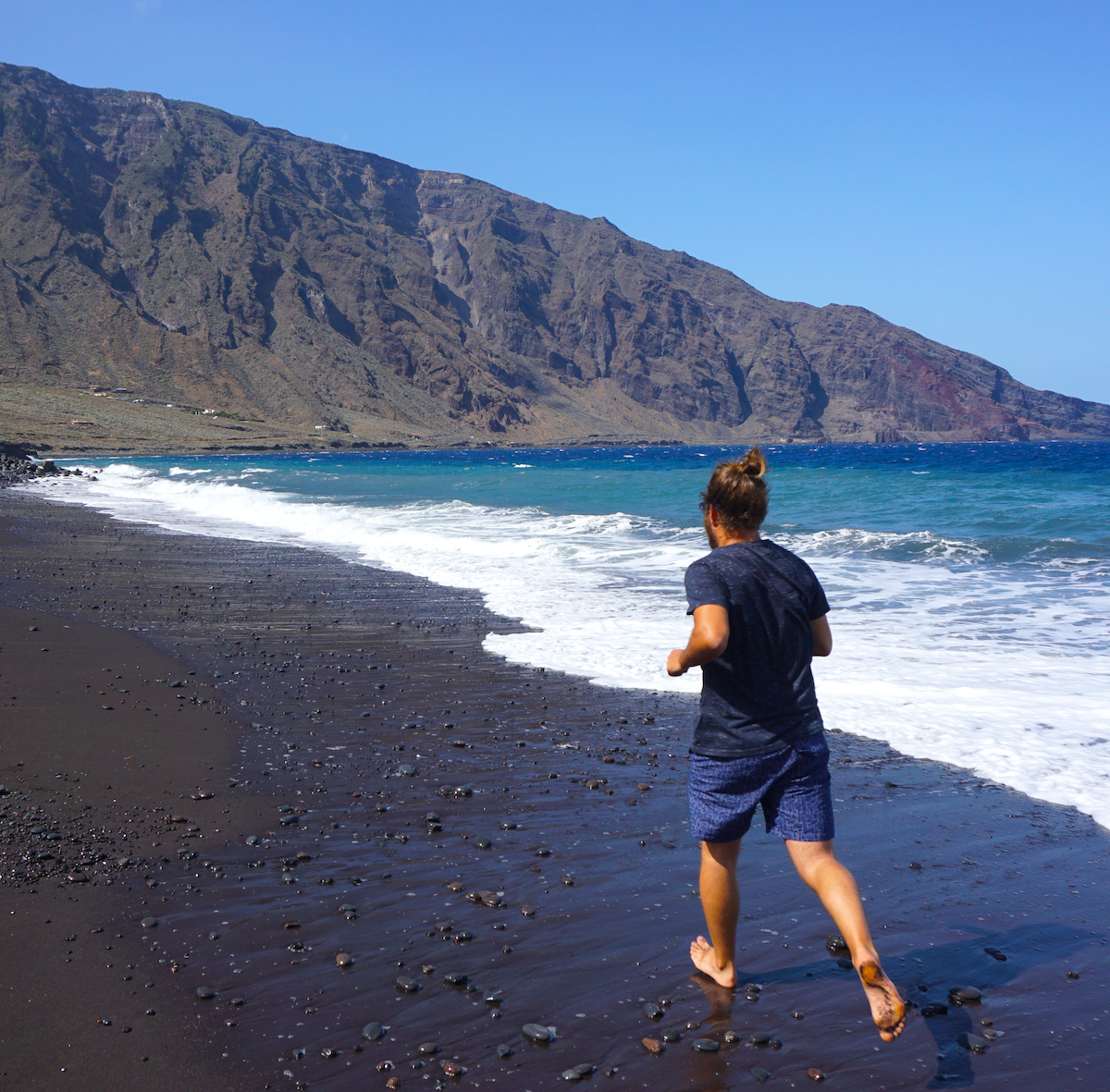
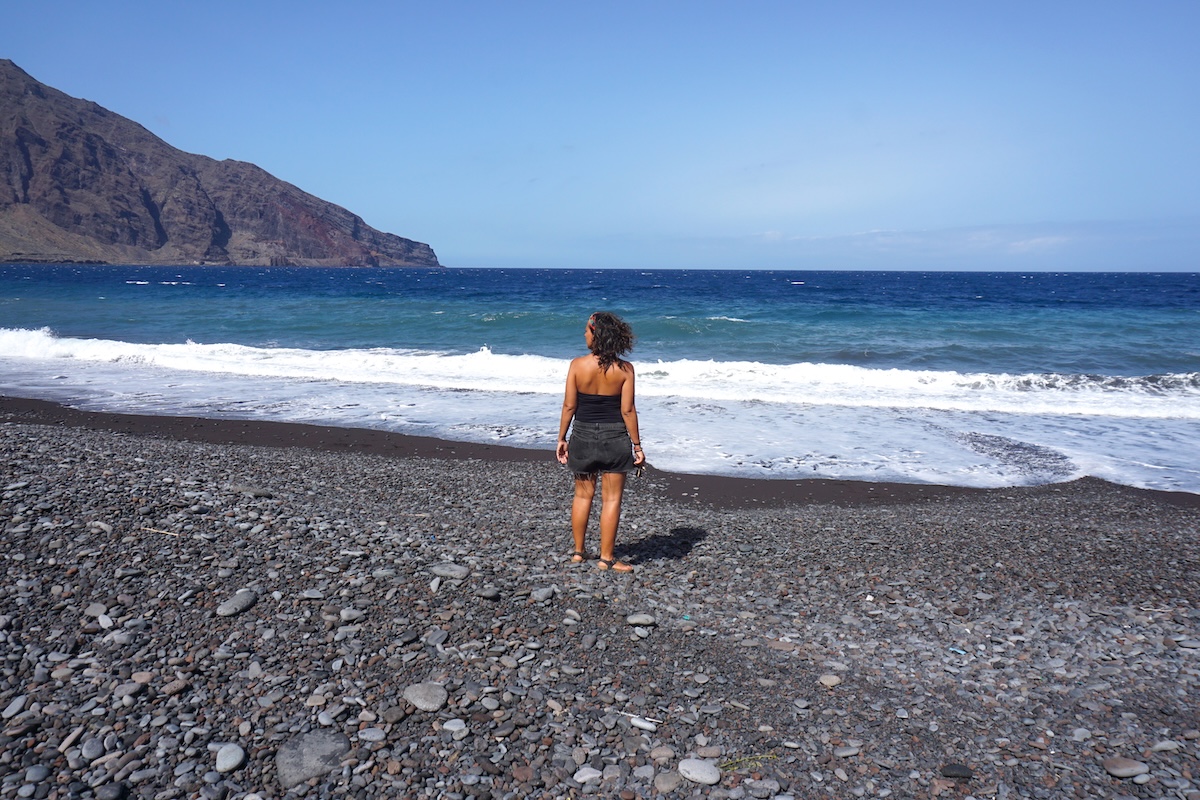
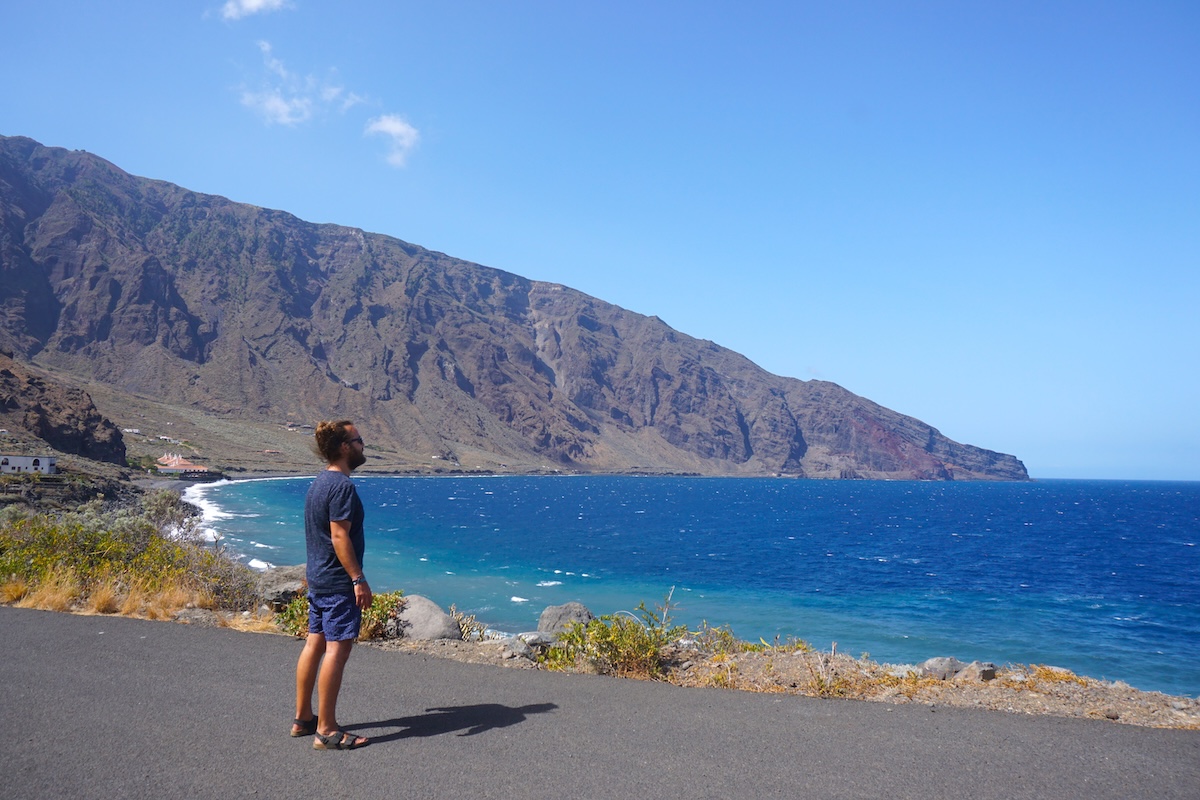
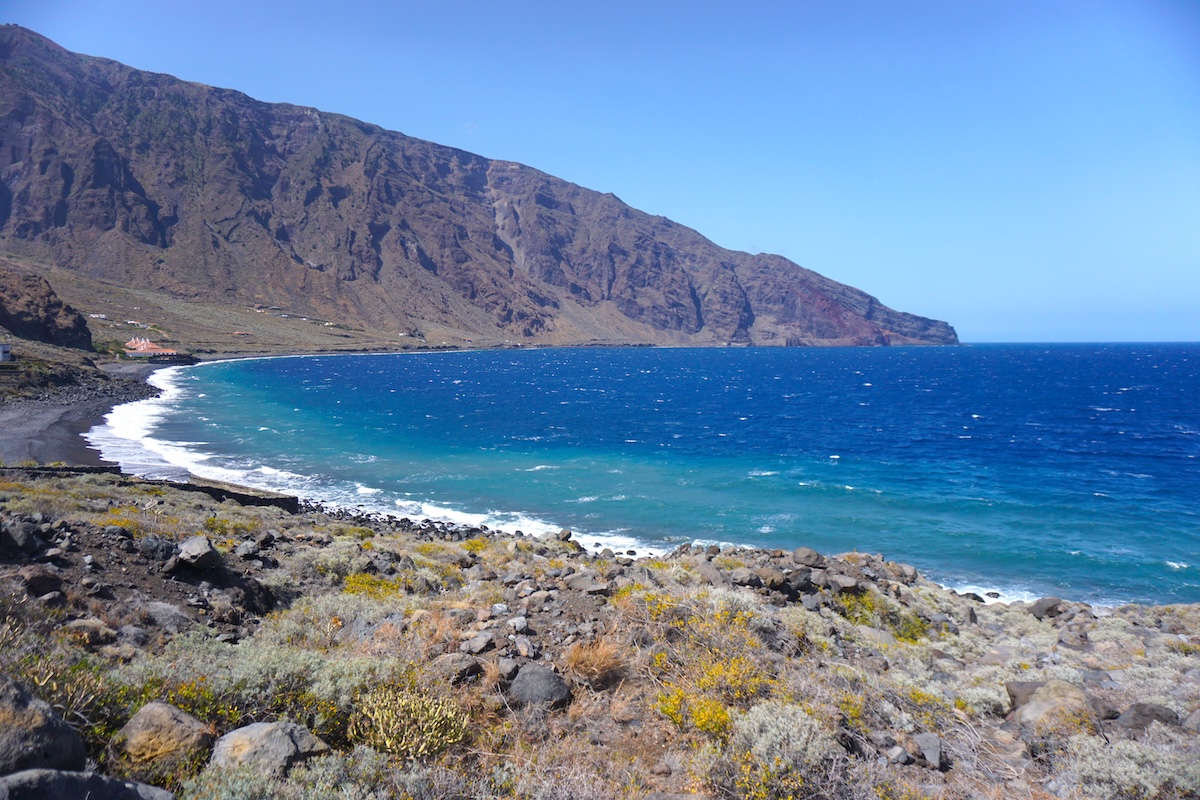
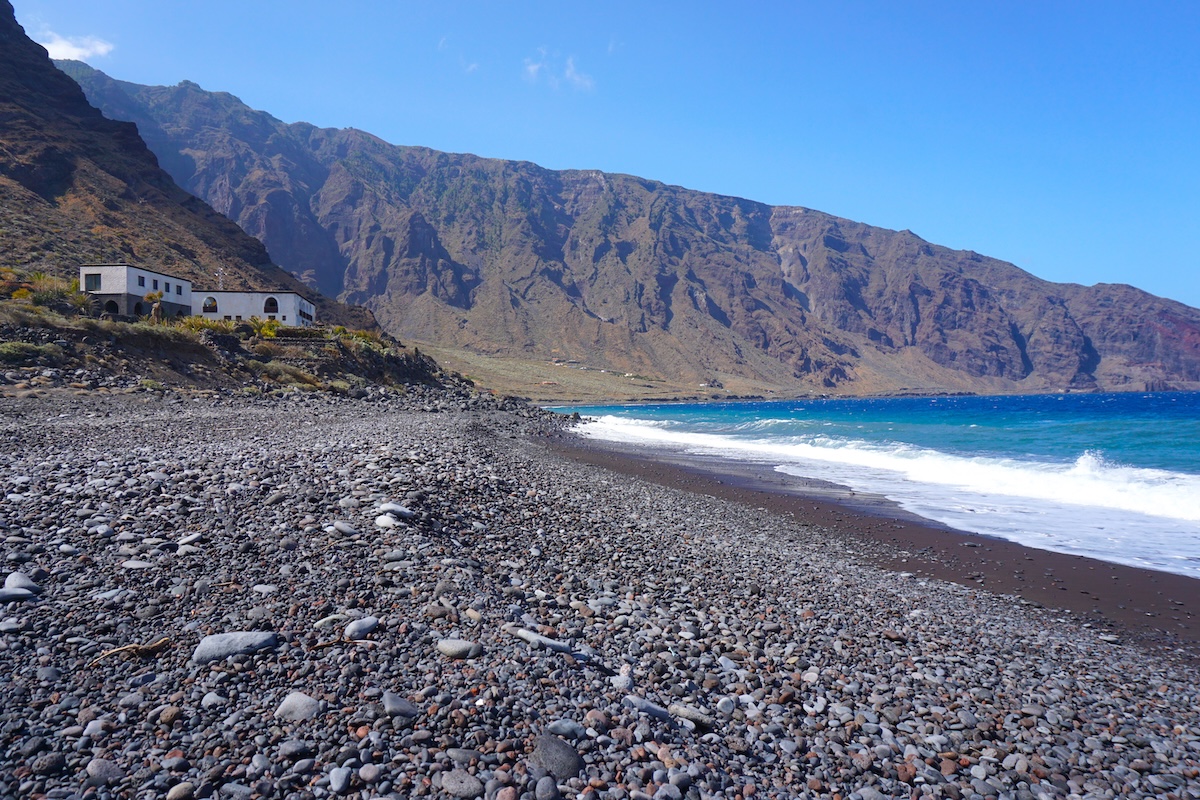
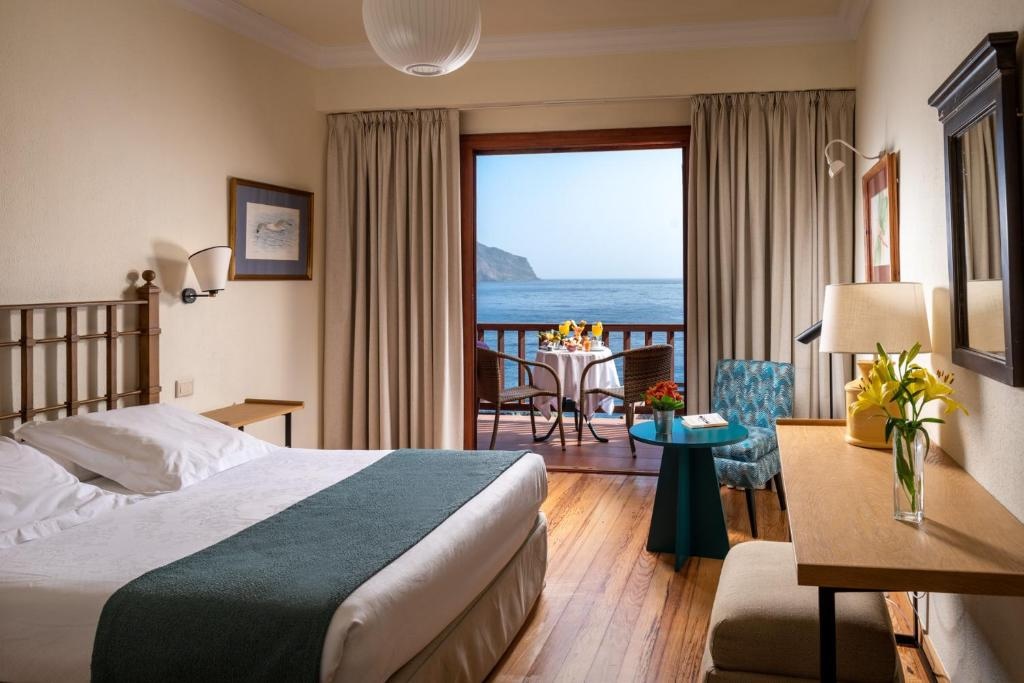
The Parador de El Hierro is an ideal place to treat yourself and spend a night or two when you visit El Hierro. Tucked away from it all in an incredible setting, it was the last Parador built in the Canary Islands, opening in 1981, and is perfect for unwinding:
Charco Manso
Charco Manso has several swimming areas, so you can head to a larger pool with a group or family, or even enjoy a sort of private natural pool if there aren’t many people around, which is quite likely.
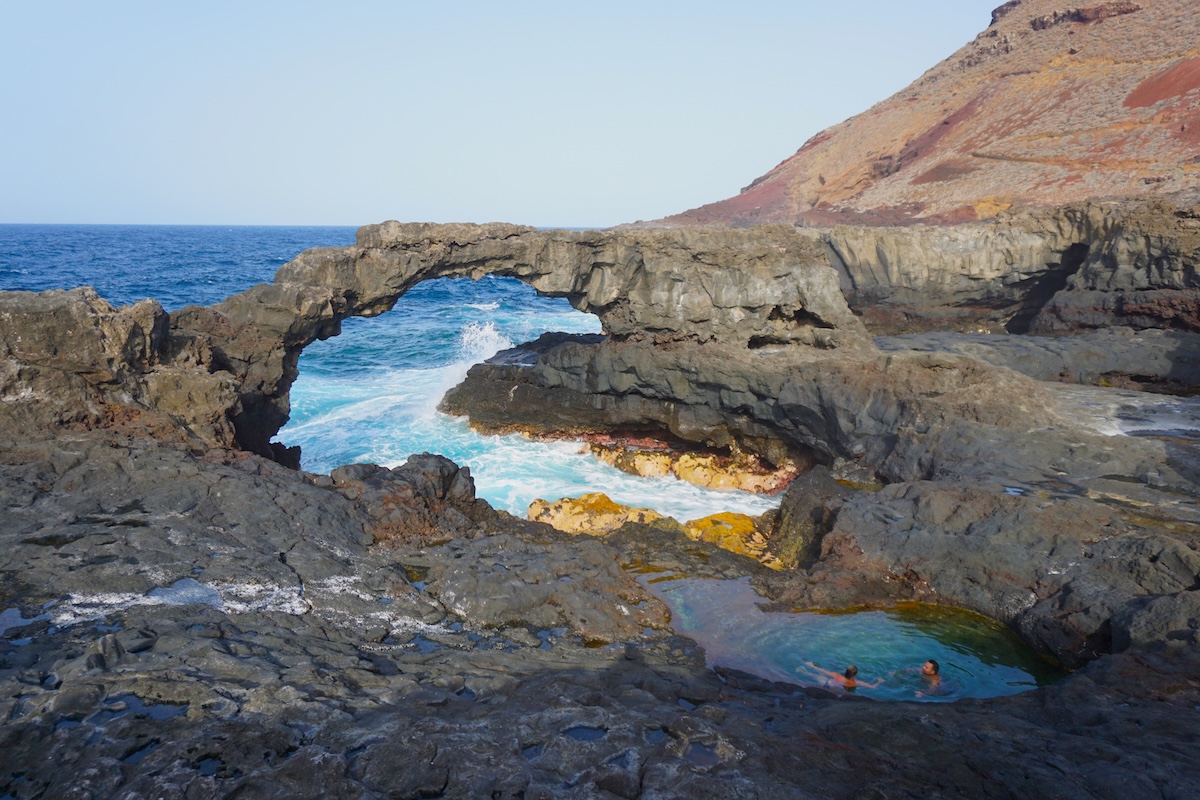
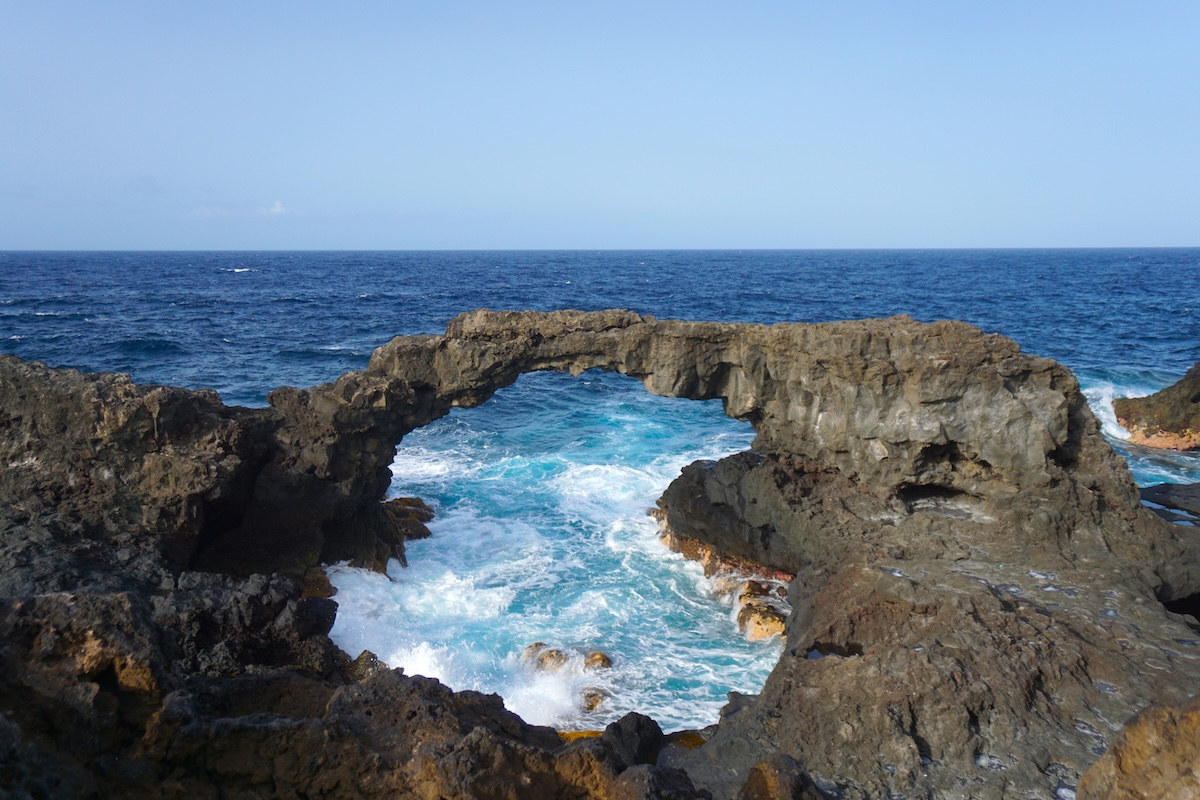
While El Hierro is already an island with few tourists (we went in the middle of July and enjoyed many of the sites all to ourselves), this rarely visited pool makes it easy to enjoy the peace and quiet. Its volcanic arch is reminiscent of the one at Las Puntas, which we’ll tell you about below, though it’s smaller.
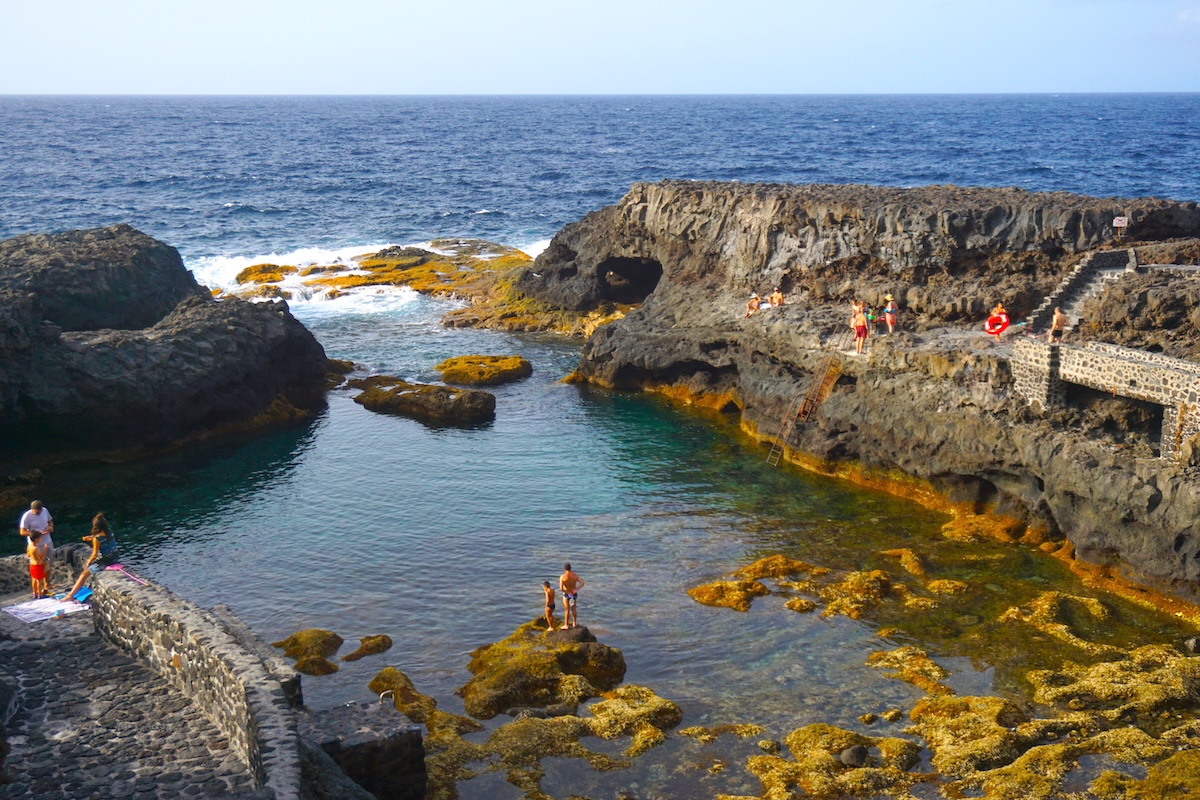
Pozo de Las Calcosas
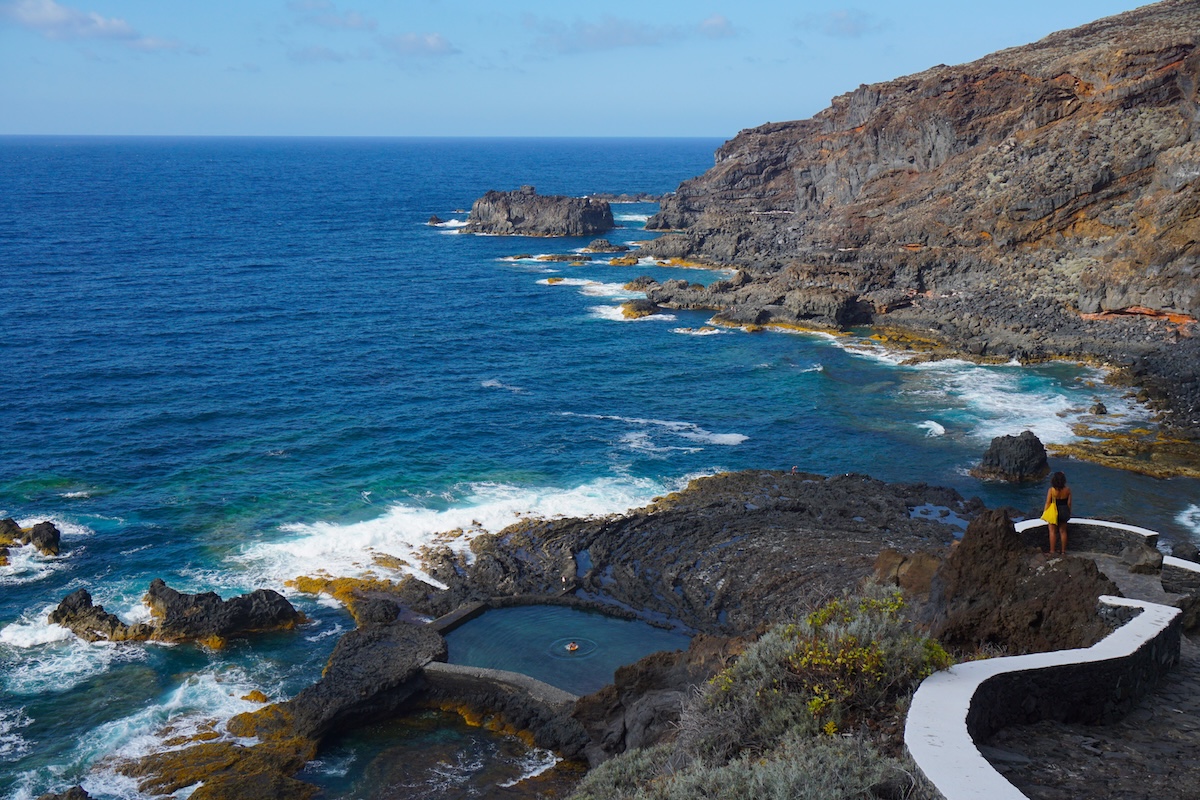
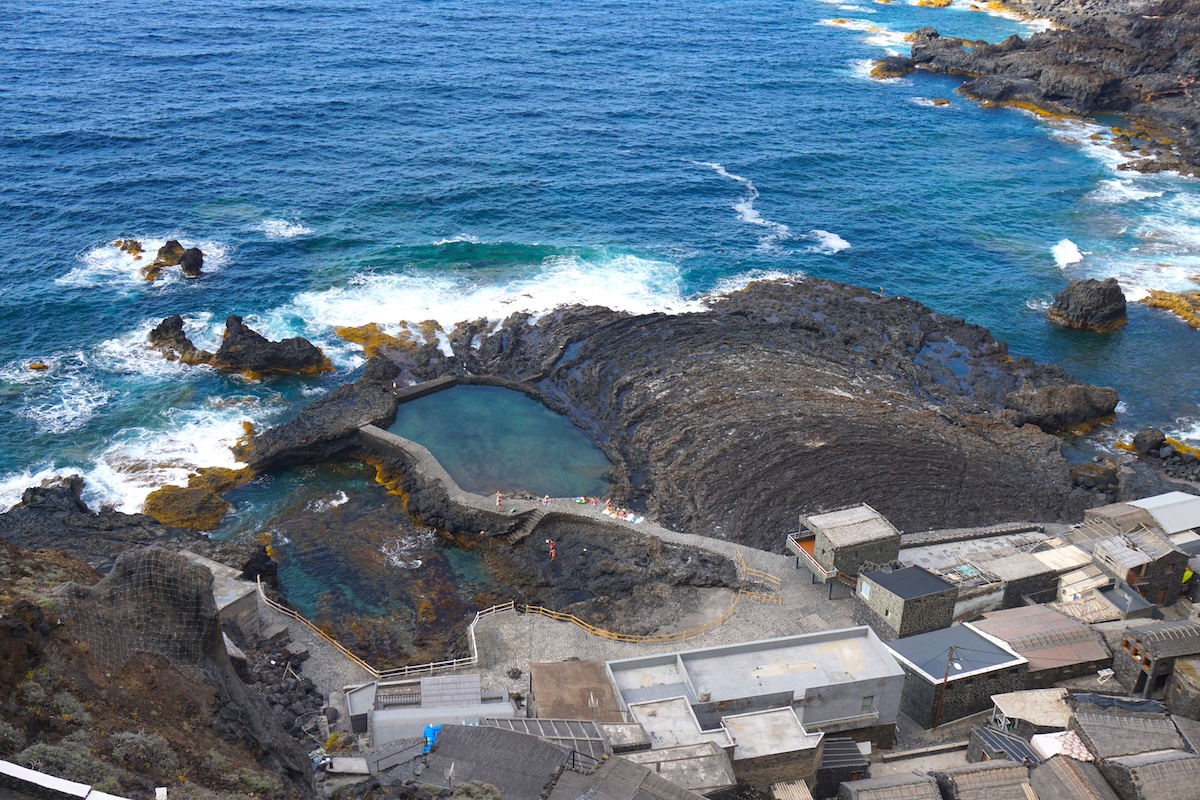
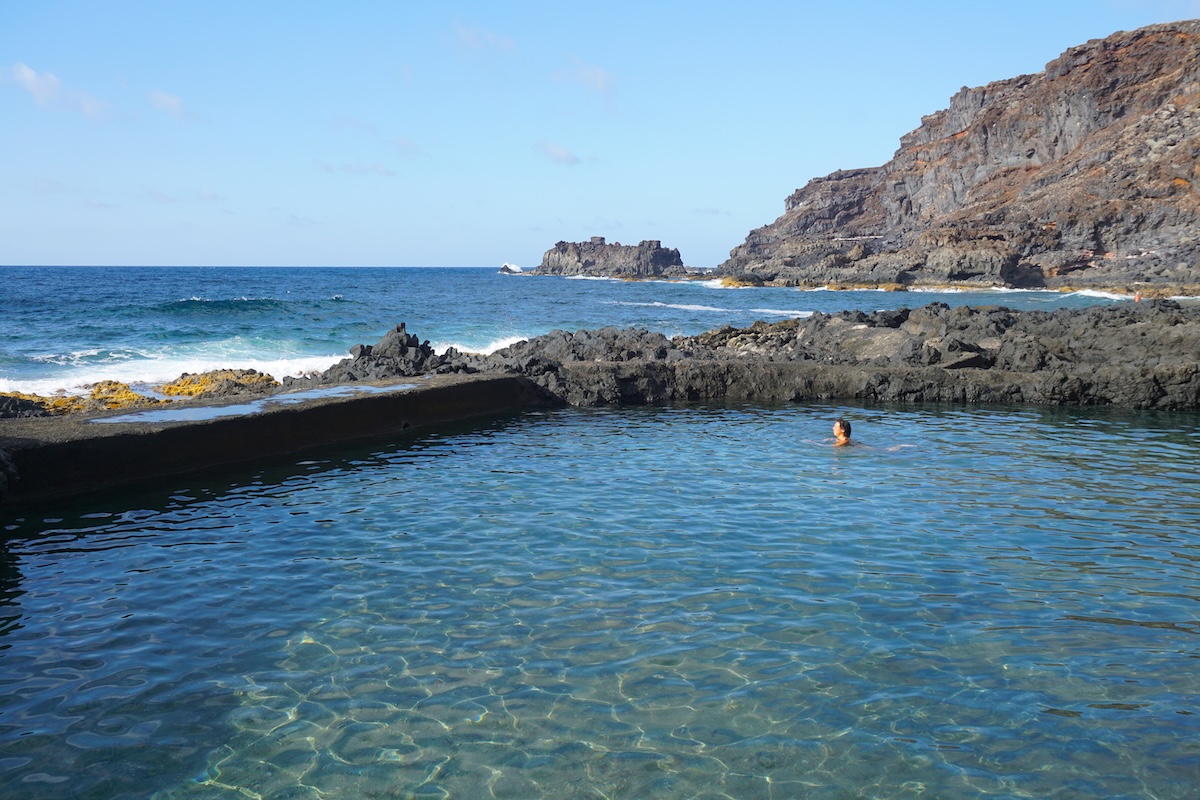
Pozo de las Calcosas is one of the must-see pools, in our opinion, and one of the most impressive. Not so much for the pool itself but above all for the views from above, before descending the steep staircase and beginning to discover the history that Pozo de las Calcosas holds.
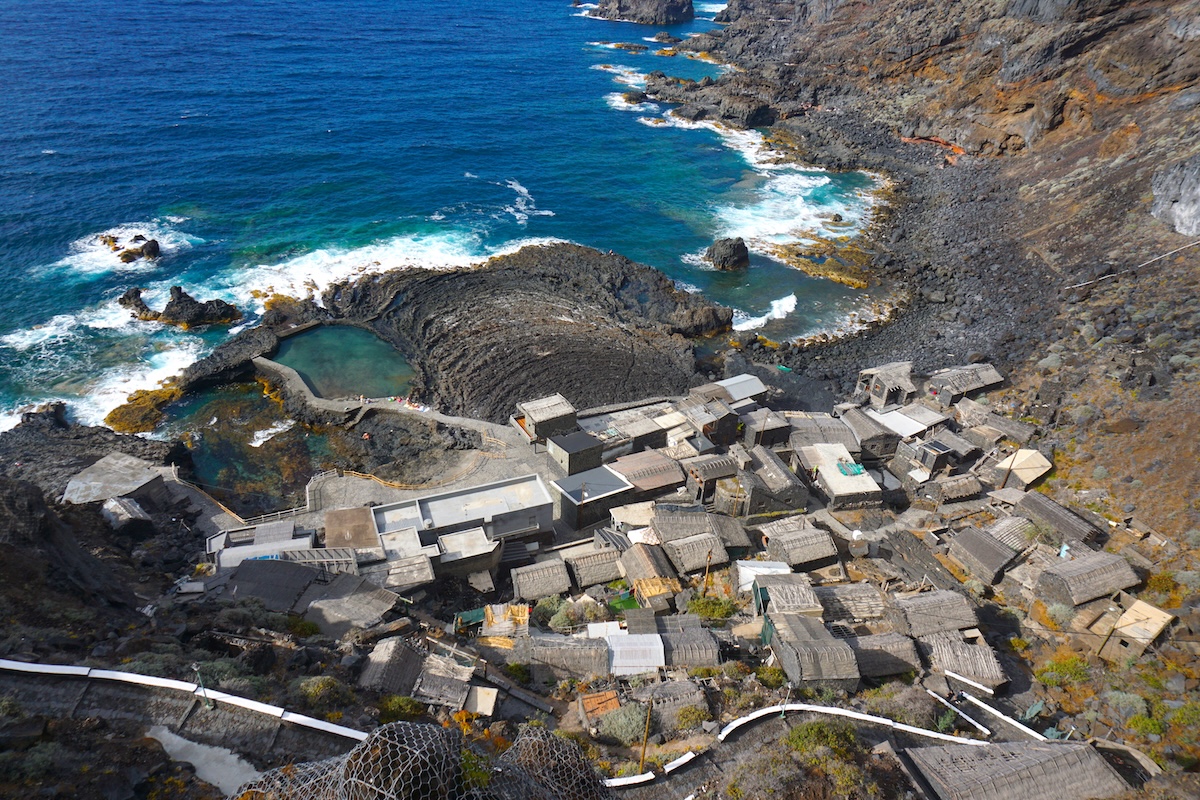
Before reaching the pool, you’ll pass through a village of historic houses built in the traditional architecture of El Hierro, with volcanic stone walls and thatched roofs. Apparently, these houses were built by fishermen to spend the summer in. Wander through some of the narrow alleys of the small village and don’t worry about getting lost: all paths lead to a dip in the water.
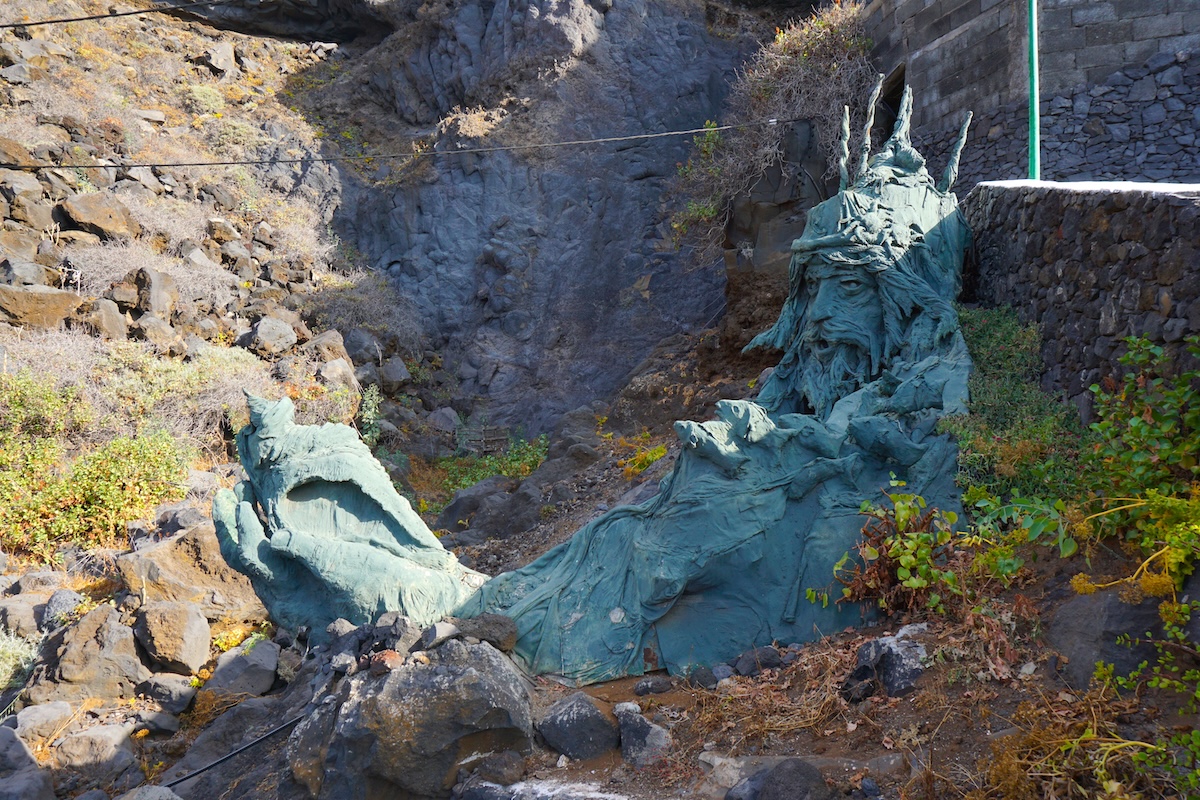
Another interesting feature of a visit to the Pozo de las Calcosas is that you’ll notice a statue of Neptune made from recycled materials (including appliances like old refrigerators) watching you, a work by artist Rubén Armiche (you can find more information about the artist and the work here):
Mirador de la Peña
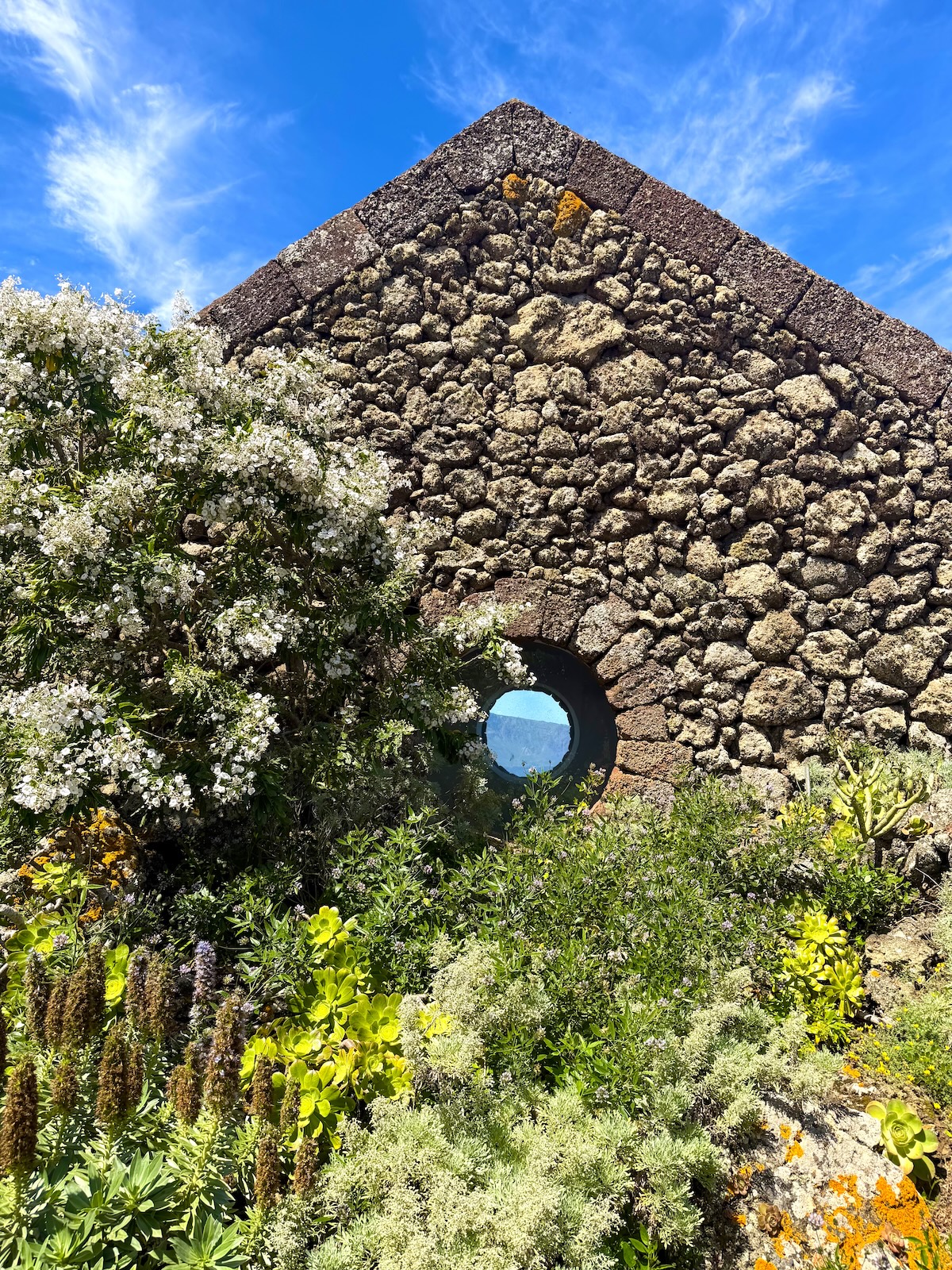
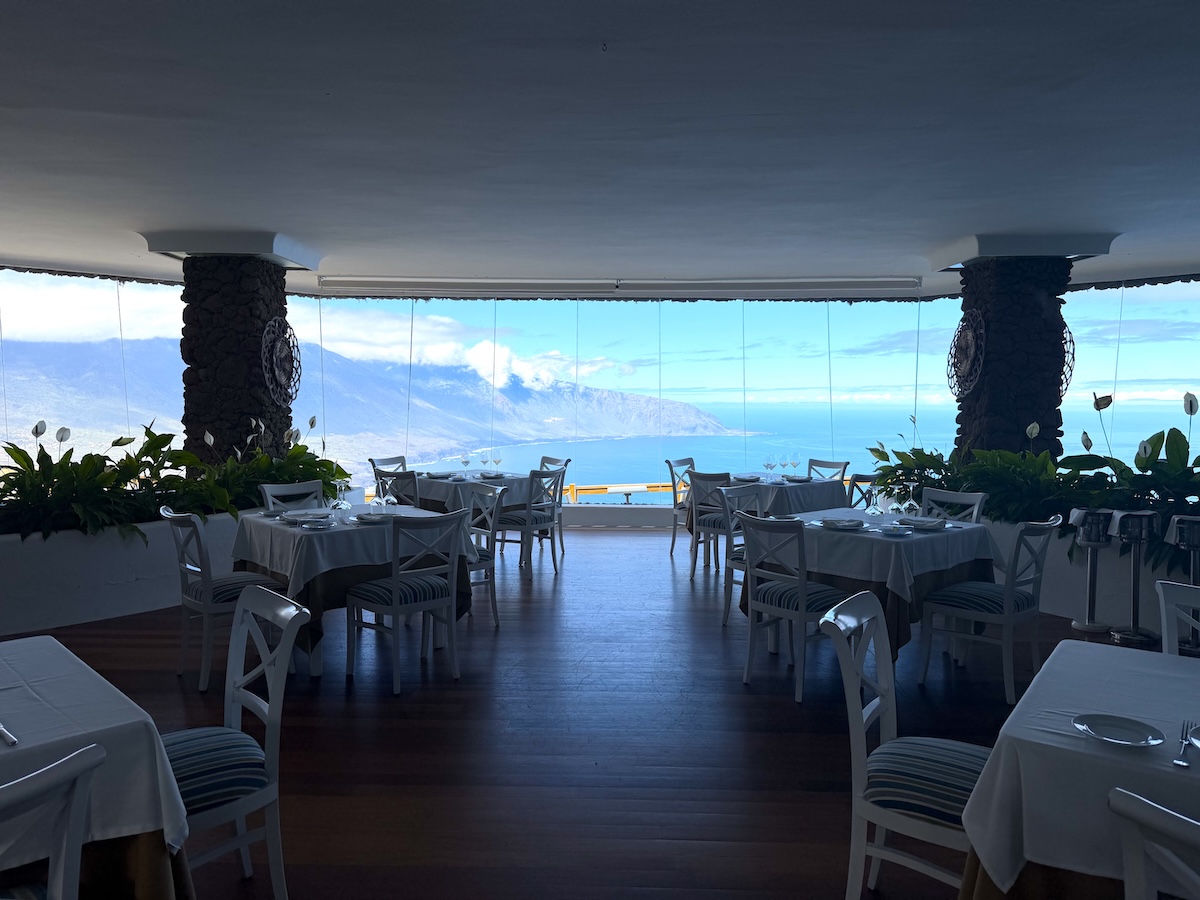
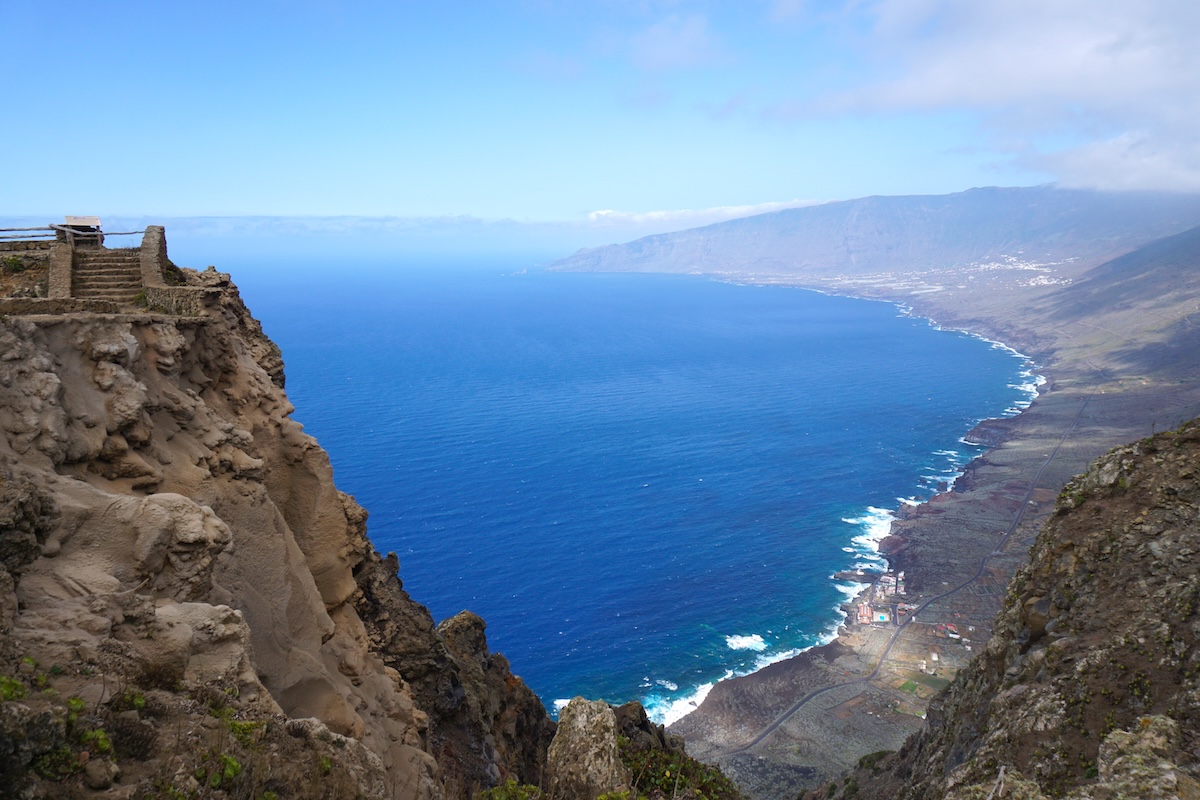
The Mirador de la Peña has its own name, as this restaurant-viewpoint was designed in the 1980s by Lanzarote-born architect César Manrique. If you’ve been to Lanzarote or are familiar with his work, you’ll recognize it immediately upon arriving at the viewpoint. Designated a site of cultural interest, it is the most interesting (and probably the most visited) viewpoint on El Hierro, architecturally speaking, built with natural local materials (stone and wood) and surrounded by gardens.
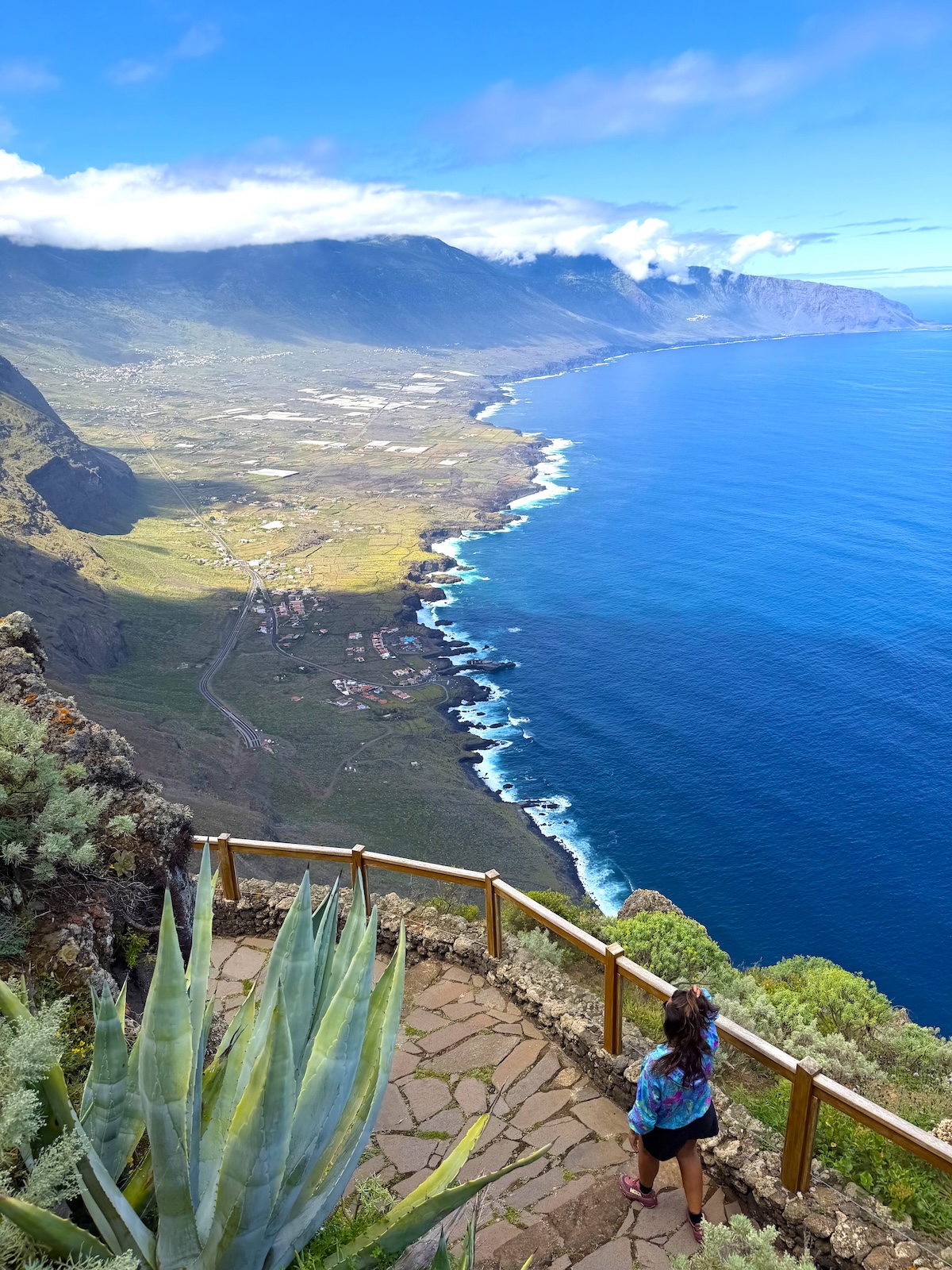
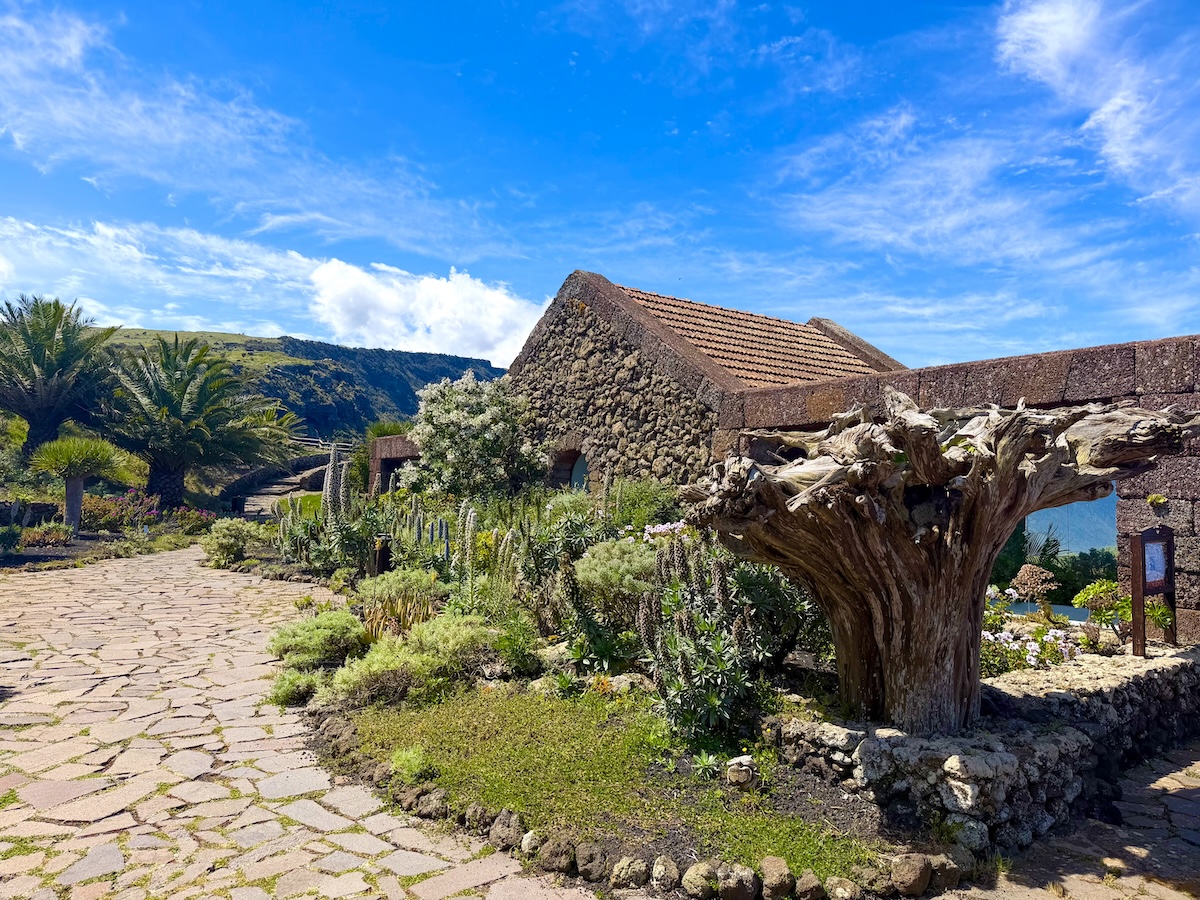
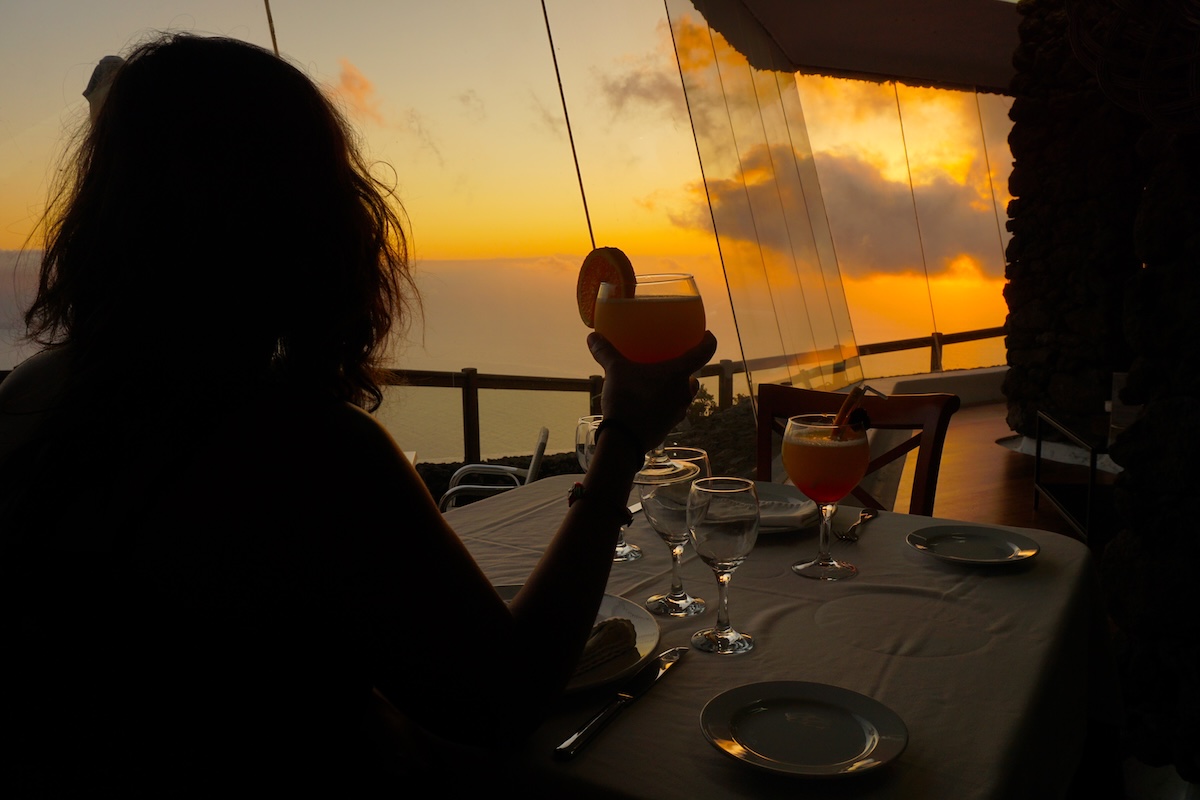
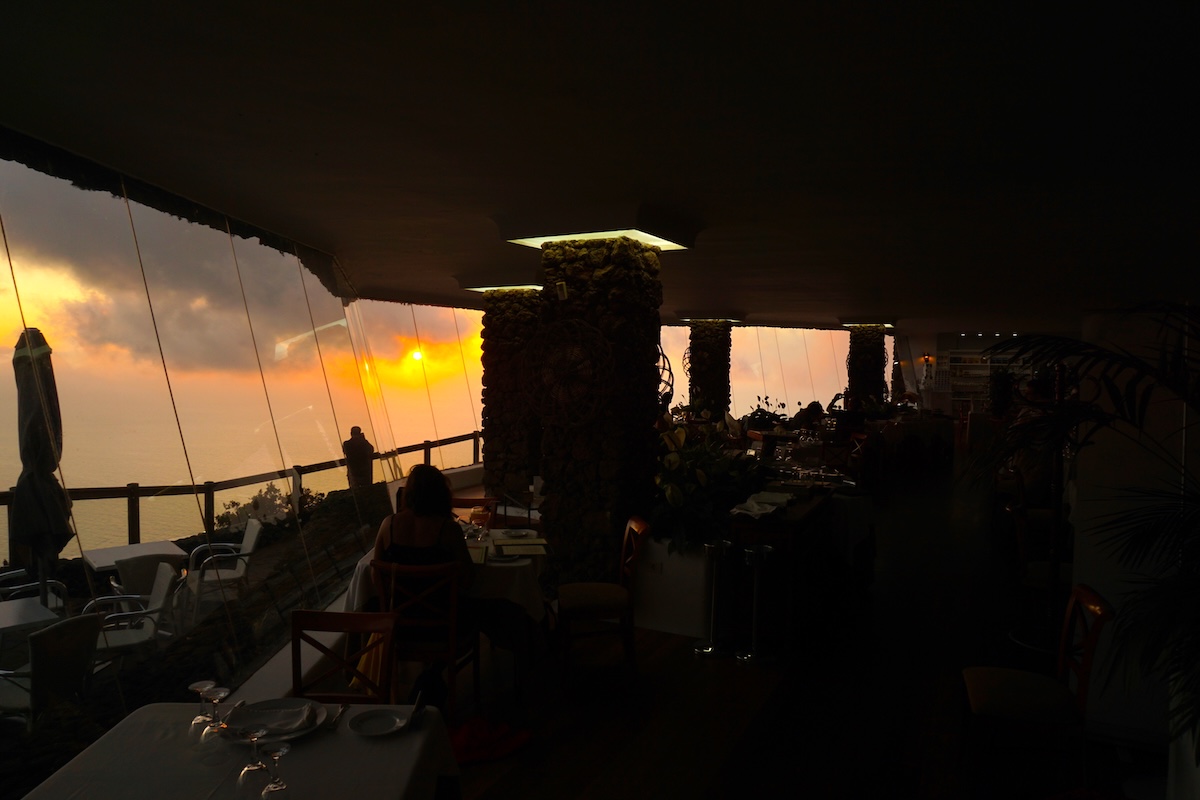
If you can, in addition to taking in the breathtaking views during the day, we recommend going to enjoy the sunset, which bathes everything in orange, including the Roques de Salmor in the middle of the Gulf. By the way, access to these two enormous rock formations, which are visible from the entire coastline, is restricted. It currently serves as a sanctuary for the colony of endemic giant lizards that were once believed to be extinct but have happily recolonized these two islets over the past 30 years thanks to conservation efforts (more information below, when we discuss the “El Hierro Giant Lizard Recovery Center”).
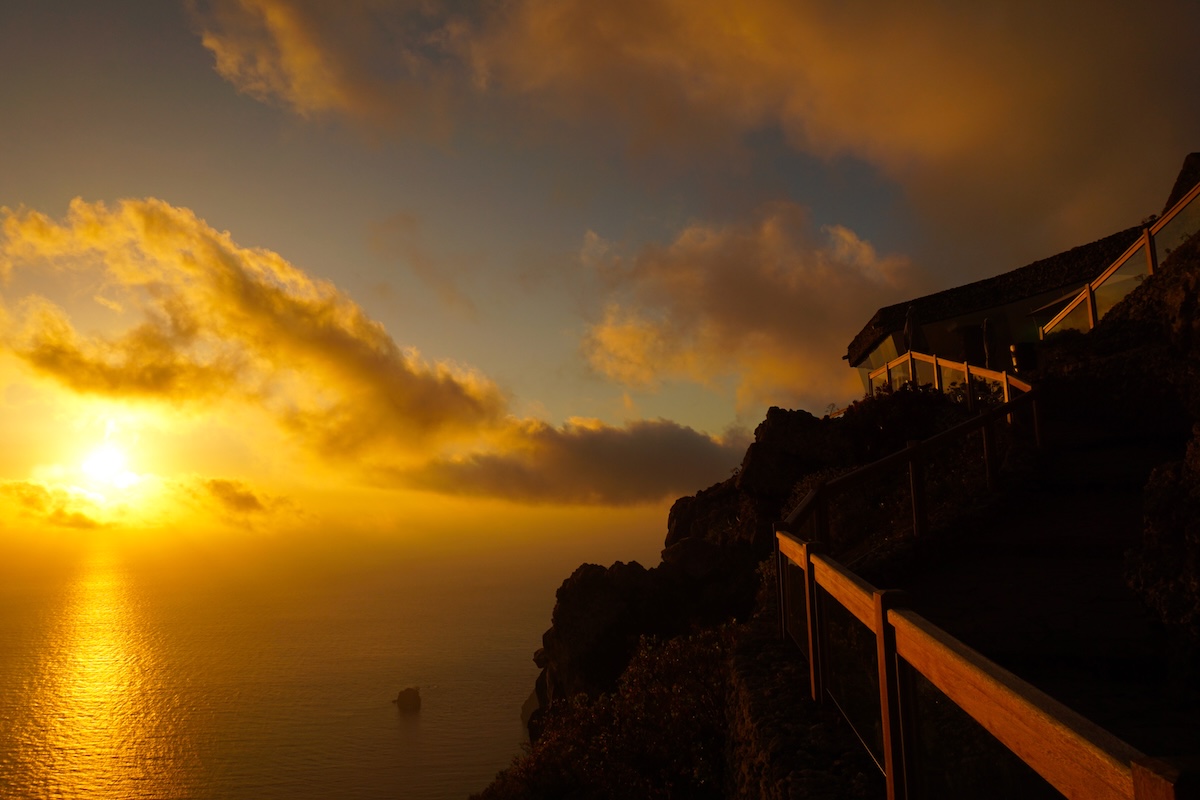
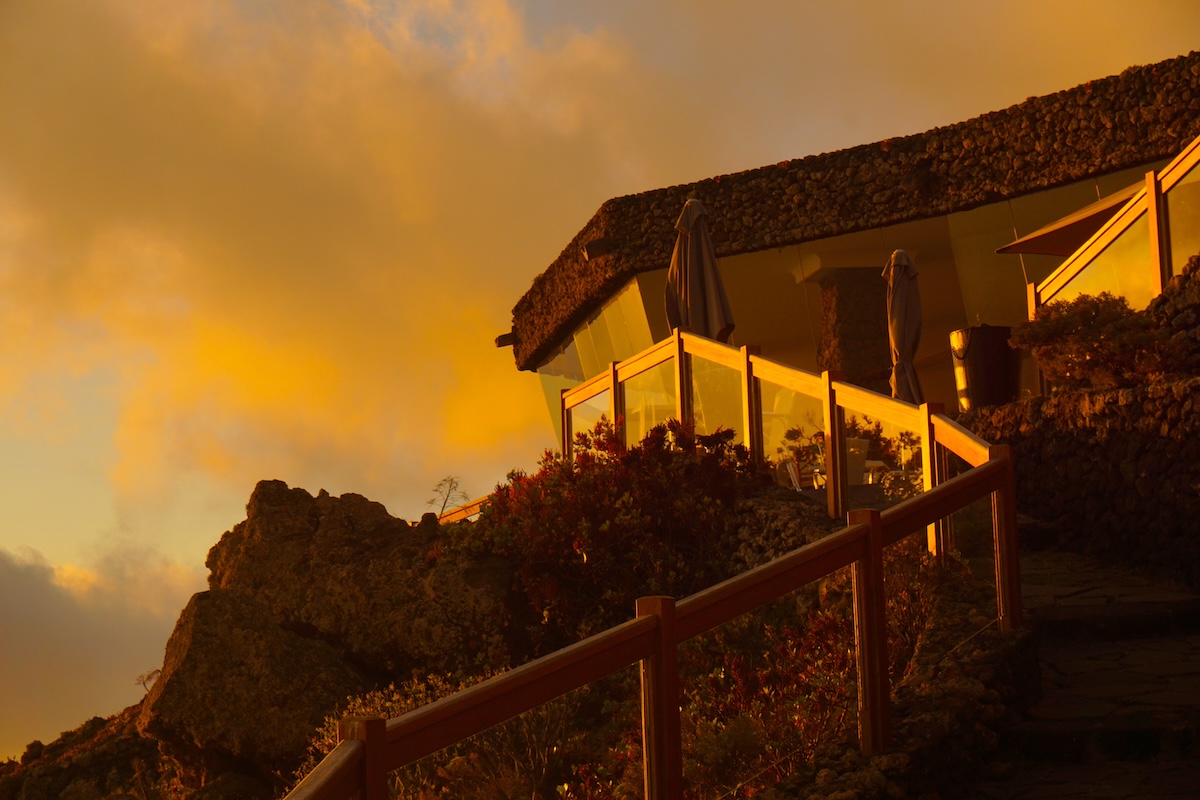
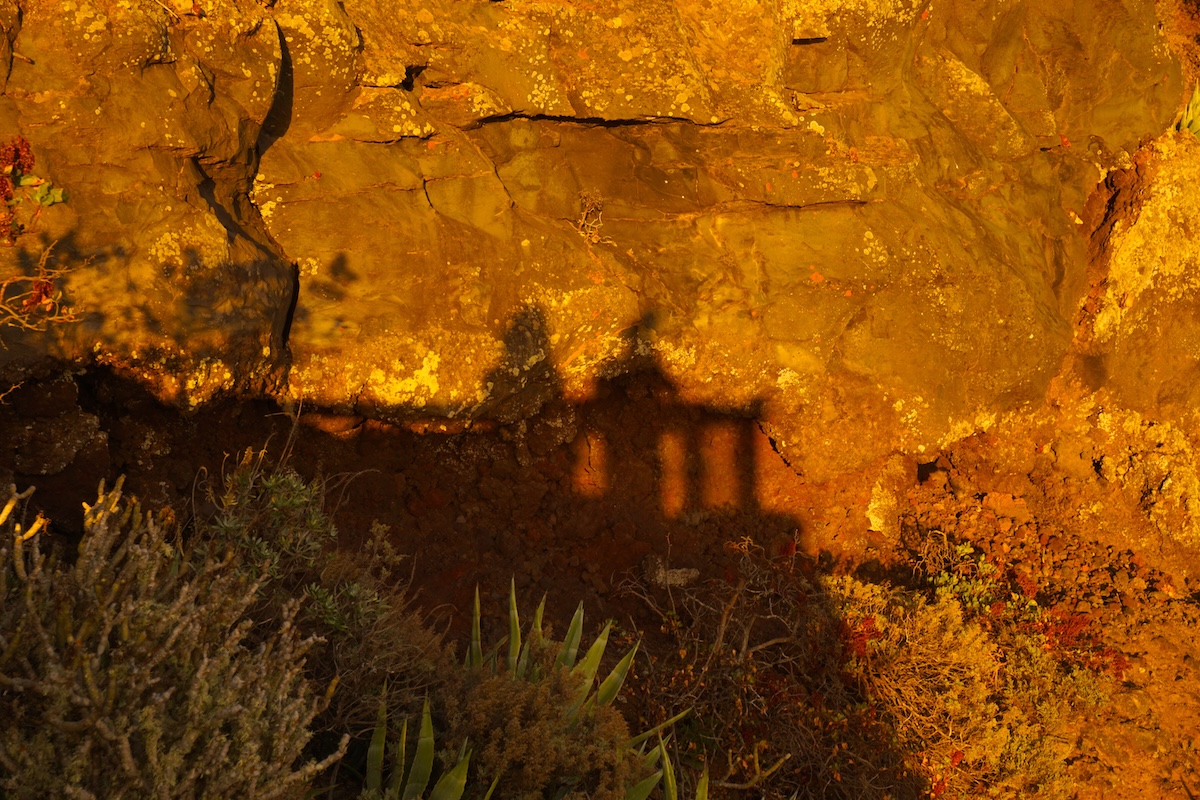
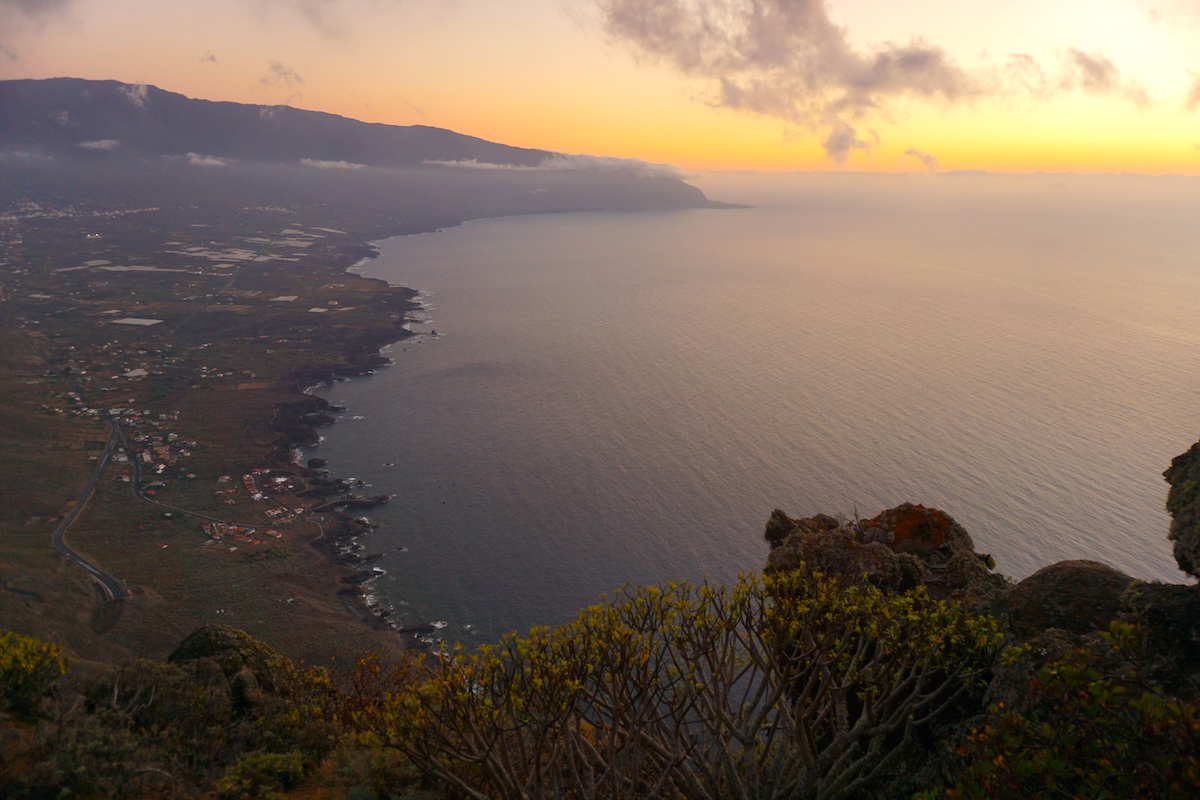
The views from the Mirador de la Peña, 700 meters above sea level, offer an incredible panoramic view of the El Golfo valley and the coast from the top of a cliff.
On our first visit to the island, we went there for dinner and to watch the sunset (dinner cost us 55€, cocktails included). In our opinion, considering the value for money, it’s better to go there for a drink at sunset and have dinner somewhere else, since we didn’t find the food spectacular for the price they charge. It’s better to go there to watch the sunset but then have dinner at La Pasada, which is nearby, for example.
Jinama viewpoint
The Jinama viewpoint has a very special feature: you can enjoy a spectacular view of the island of La Palma! Plus views of La Gomera and Tenerife, weather permitting.
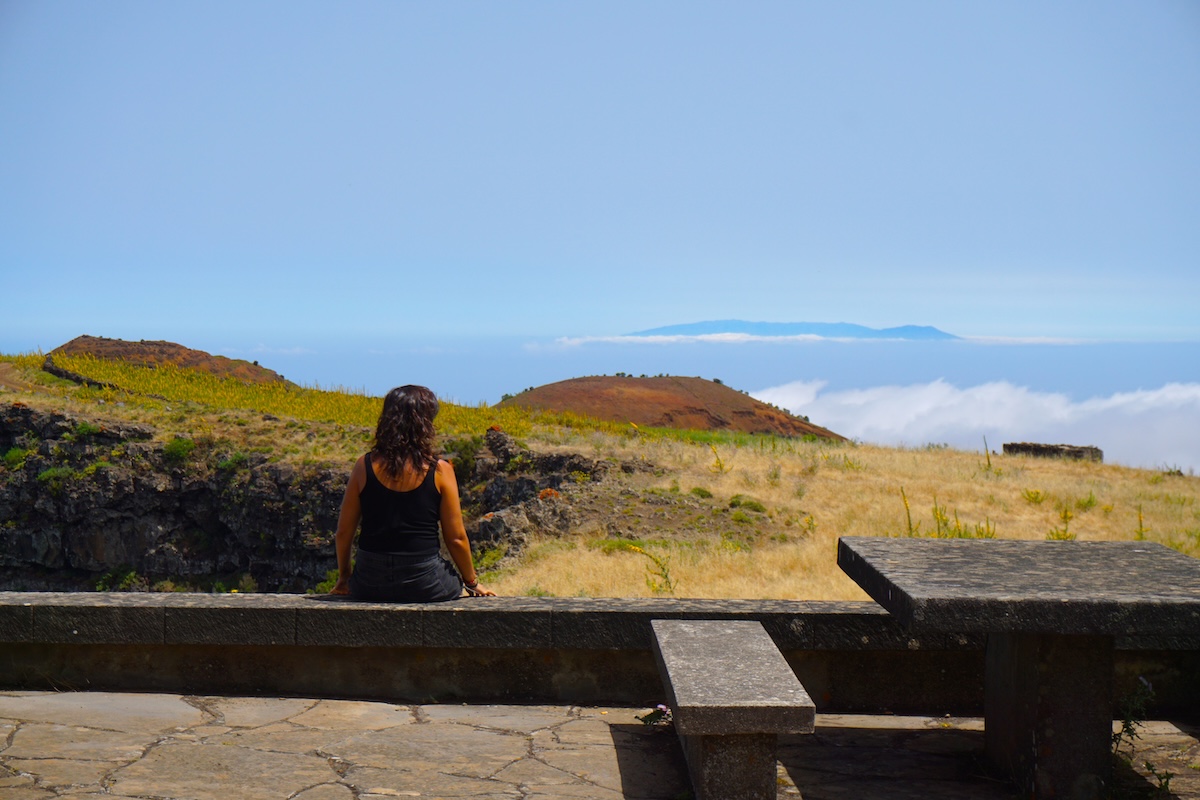
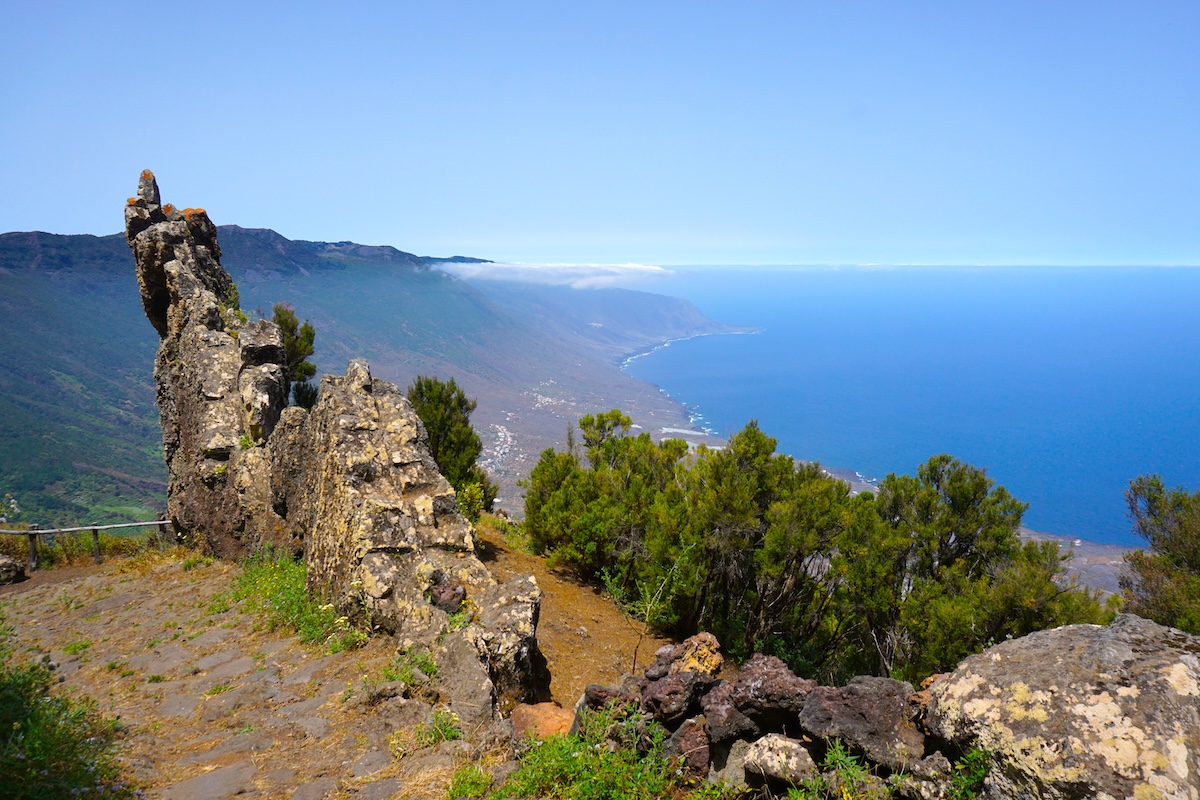
It also offers an incredible view of Golfo Bay and serves as the gateway to one of the island’s oldest hiking trails: the Camino de Jinama. We’ll tell you more in the section on hiking trails in El Hierro.
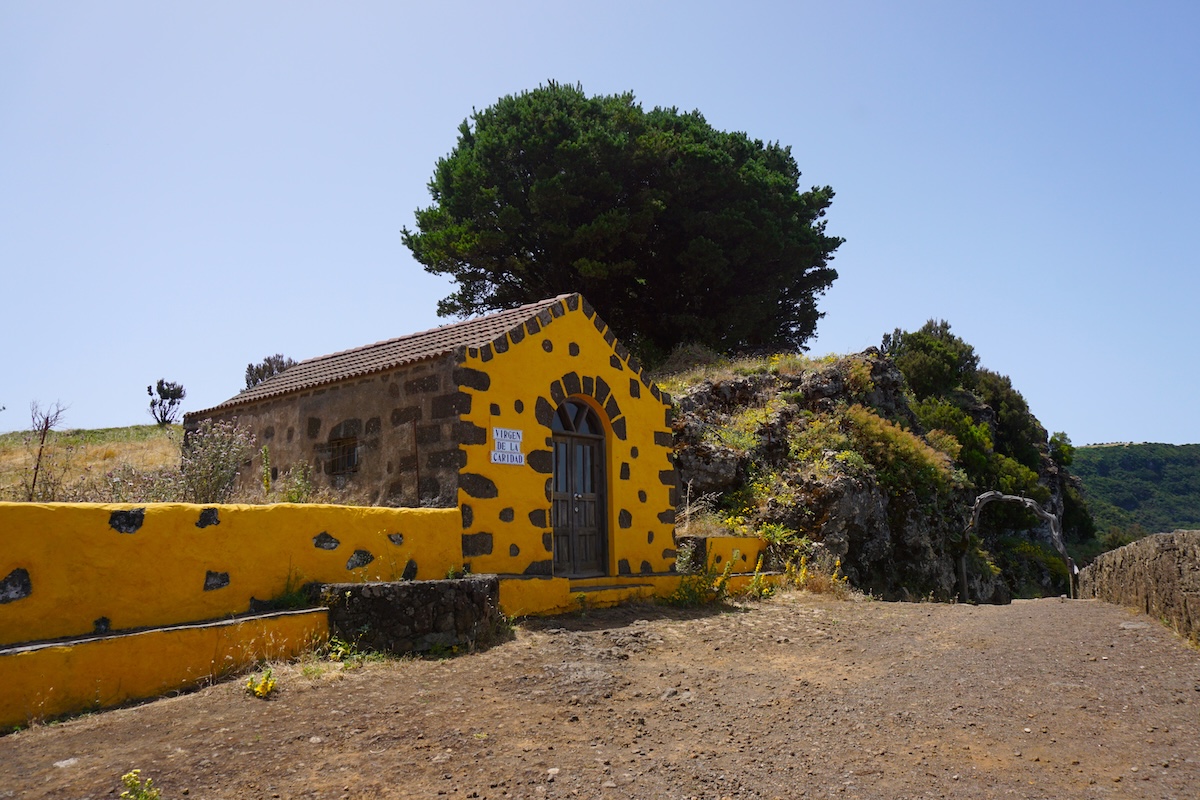
The small, colorful chapel of the Virgen de la Caridad is located right at the start of this trail, which connects the island’s most fertile region (known for its pineapple and banana plantations and vineyards) with the Nisdafe plateau, home to the sacred Garoé tree.
La Llanía: the ancient laurisilva forest
Would you expect to find something so green amid arid mountains and volcanic soil? Welcome to La Llanía, El Hierro’s ancient laurel forest.
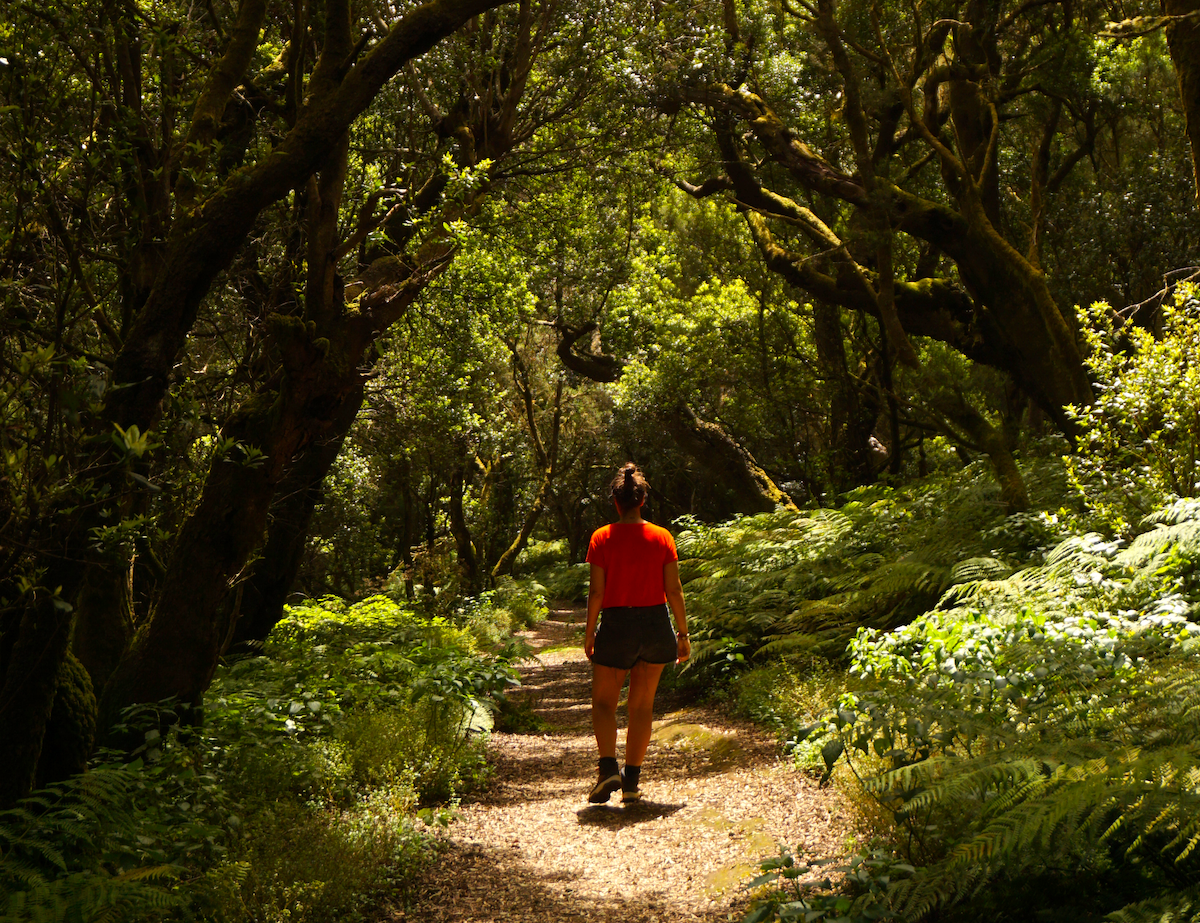
You can choose from three trails to get lost on, and with a little luck and imagination, on all of them you’ll encounter the fairies of El Hierro, the forest gnomes, the dancing witches, and even Alice’s cat! Are you up for a magical morning?
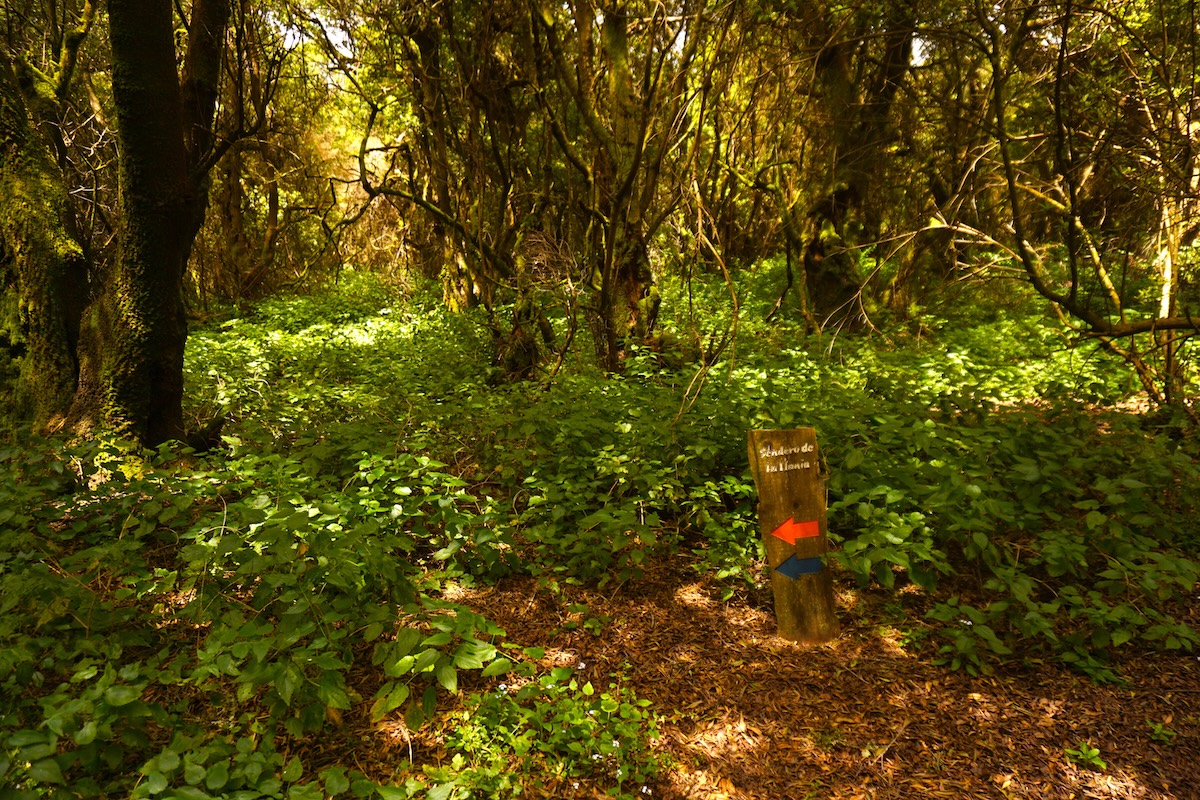
The ancient forest of La Llanía is, in our opinion, a must-see. At Randomtrip, we chose the La Llanía trail (the orange one, about 2 hours). We’ll give you more details in the Hiking Trails section.
The round-trip hike is seven kilometers long, where magic and lush greenery replace the arid volcanic landscapes found elsewhere on the island.
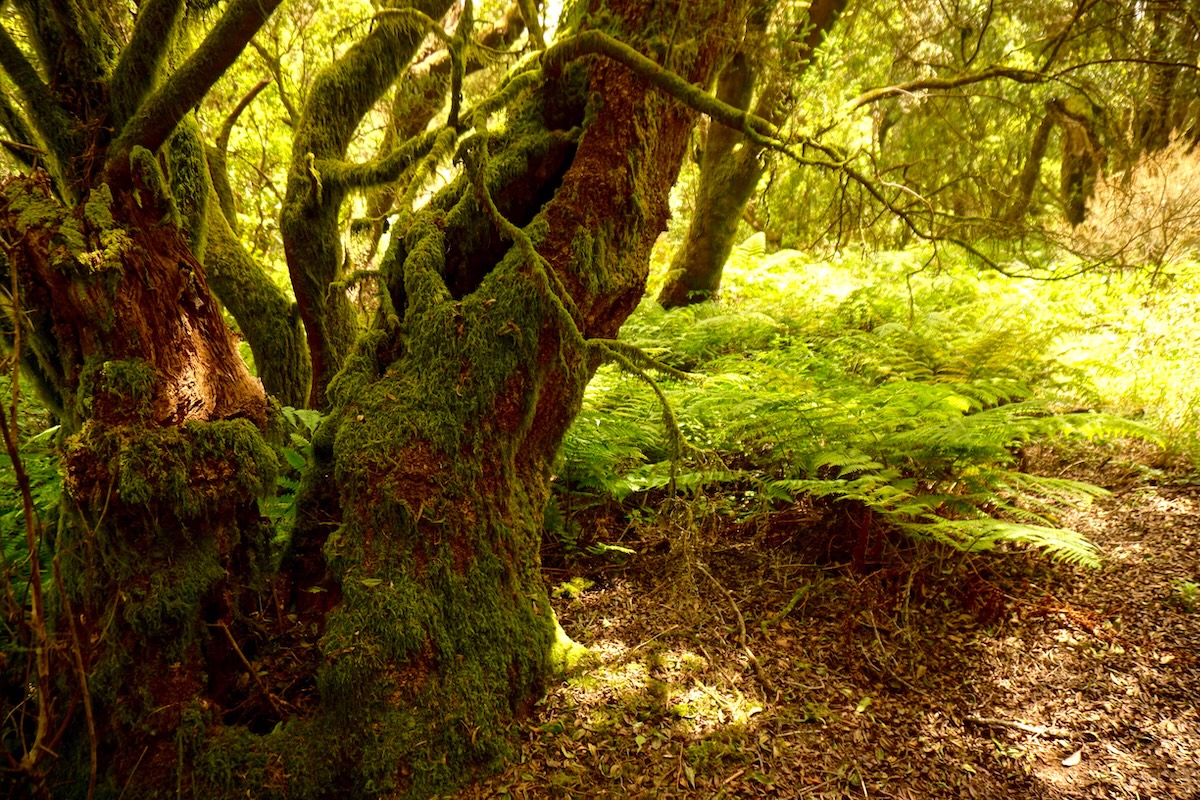
The first forest you’ll encounter is the Brezal, a dense, humid forest where we recommend bringing a sweatshirt because the temperature drops considerably here. Continue walking among the ferns until you reach the Llanía viewpoint, with its breathtaking views of El Golfo; and, with a bit of luck, if the sky is clear, you’ll be able to make out the silhouette of the island of La Palma.
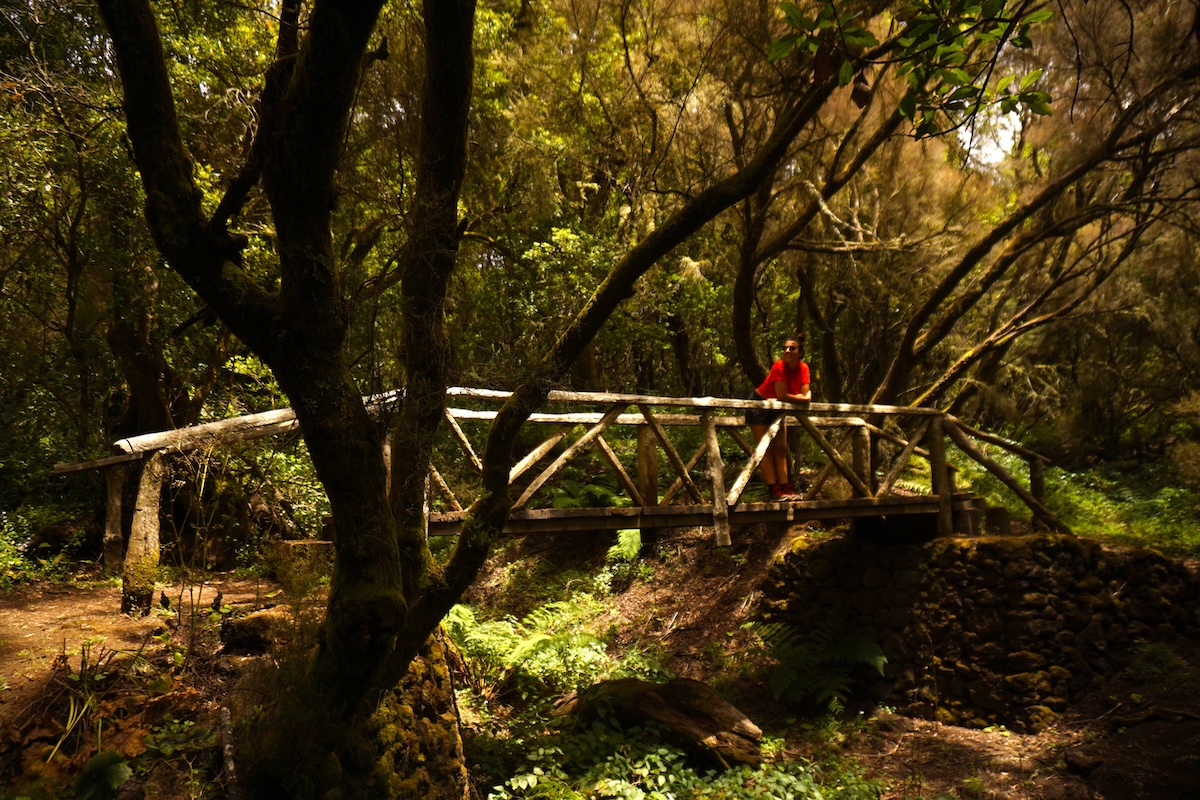
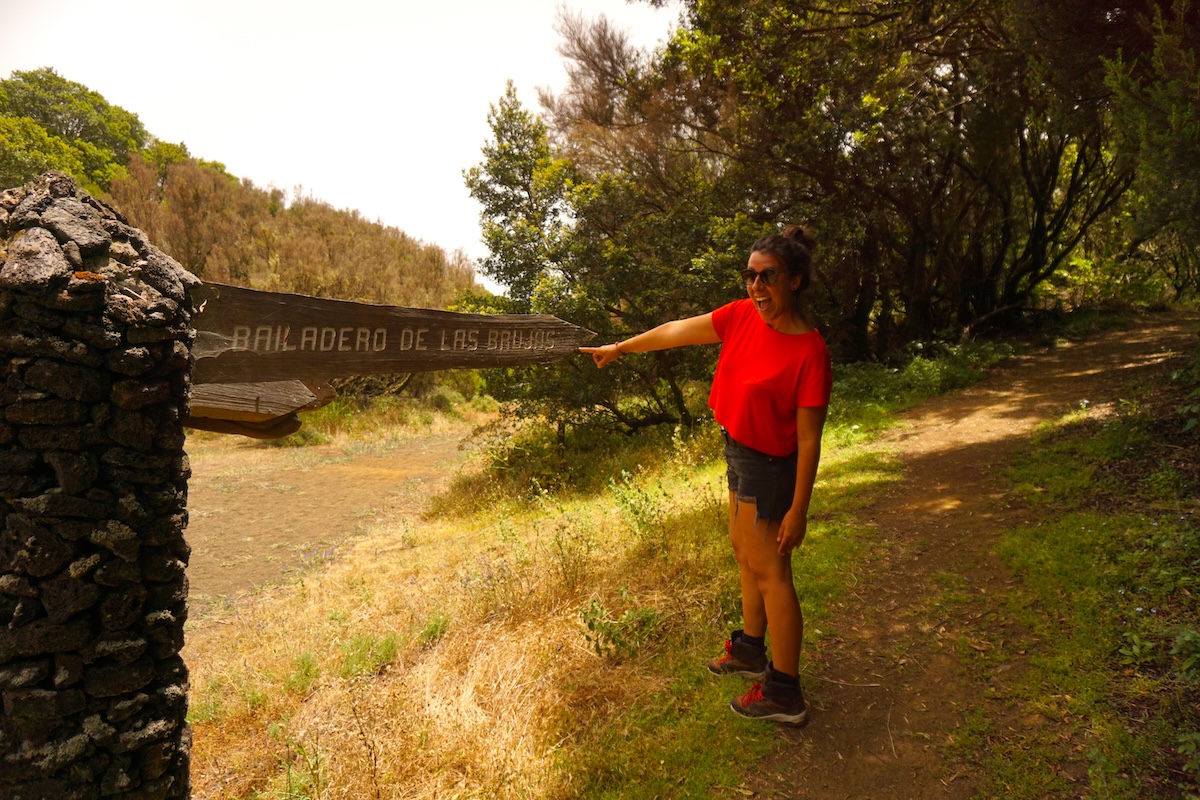
Head back into the Laurisilva forest, and you’ll reach the Bailadero de las Brujas. Legend has it that here, during the Middle Ages, witches would light bonfires, dance, and hold their covens. Apparently, their songs and laughter could be heard throughout the island…
Pico de Malpaso and its viewpoint
Pico de Malpaso (the indigenous name is Tinganar) is the highest point on the island of El Hierro, at 1,501 meters above sea level. You can reach it by car via a partially paved road and enjoy the views from its lookout point.
Malpaso is also symbolically very important to the people of El Hierro, as it is, forgive the redundancy, a mandatory stop on the traditional route taken by the Bajada de la Virgen de los Reyes procession since 1741, which we’ll discuss further below
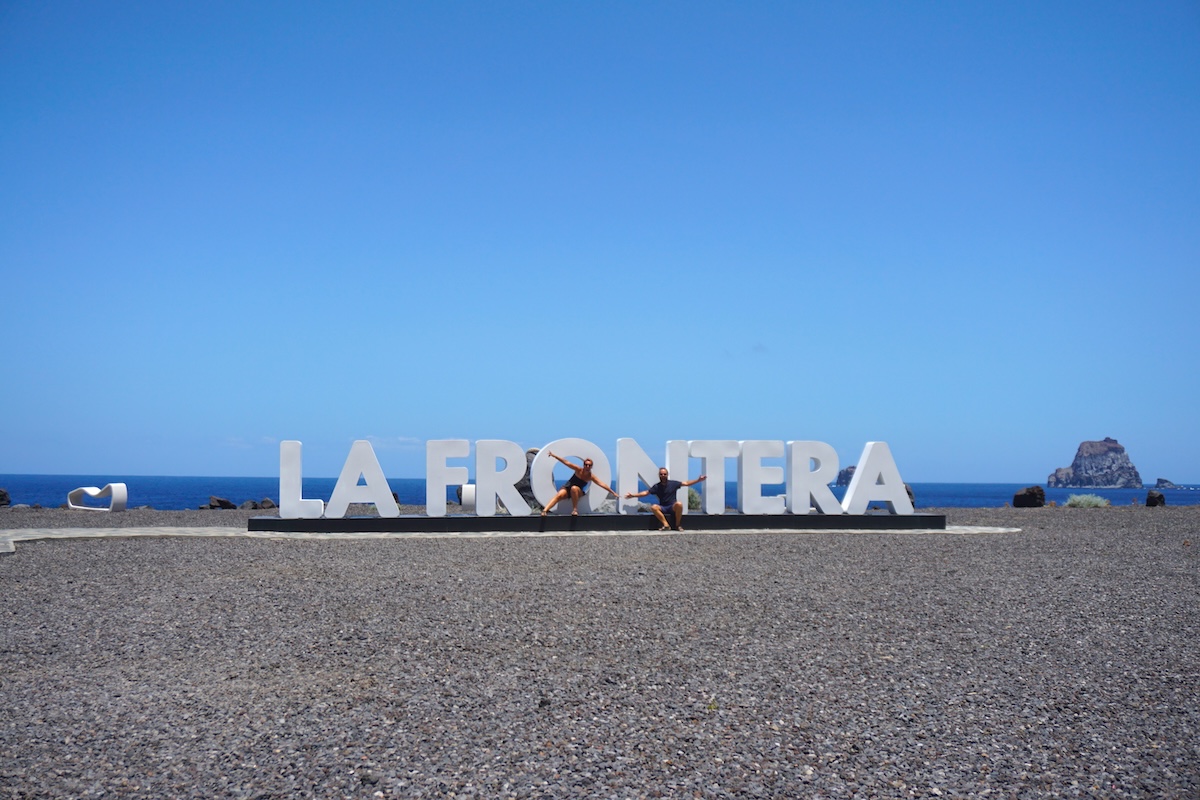
La Frontera – Tigaday
La Frontera is the second-most populous municipality on El Hierro, and we believe it’s the ideal base from which to explore the island (unless you’re going to dive, in which case you’ll need to stay at least as long as the number of days you plan to dive at La Restinga).
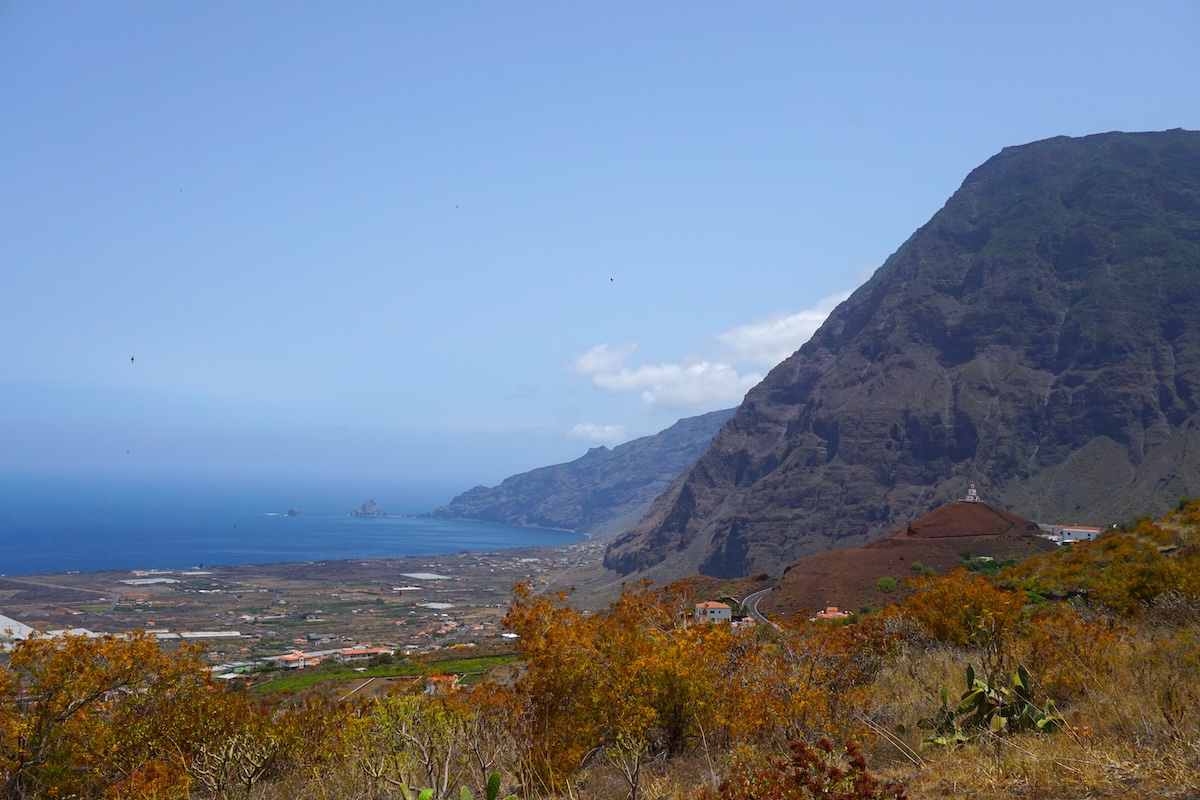
The drive down from the Jinama lookout point along the H1-1 offers incredible views of the town and its surroundings.
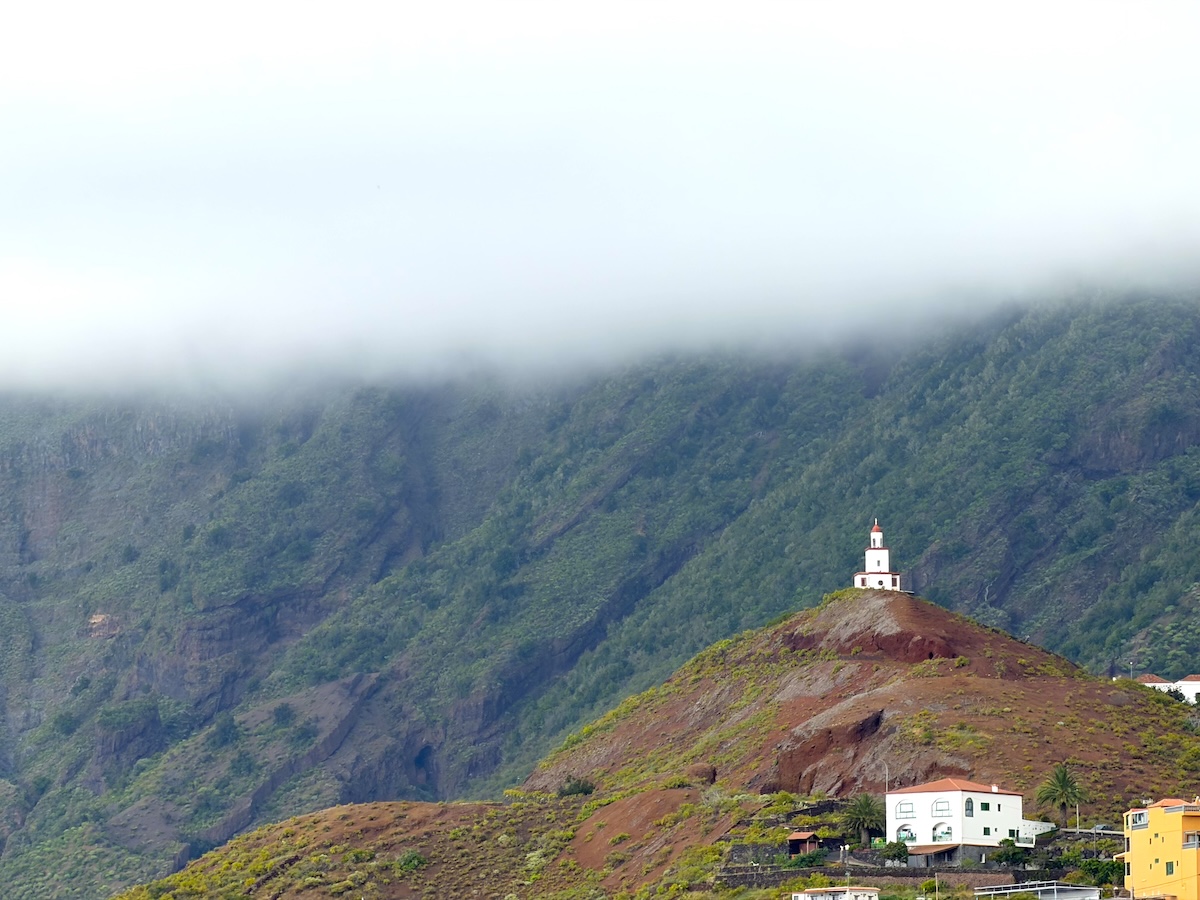
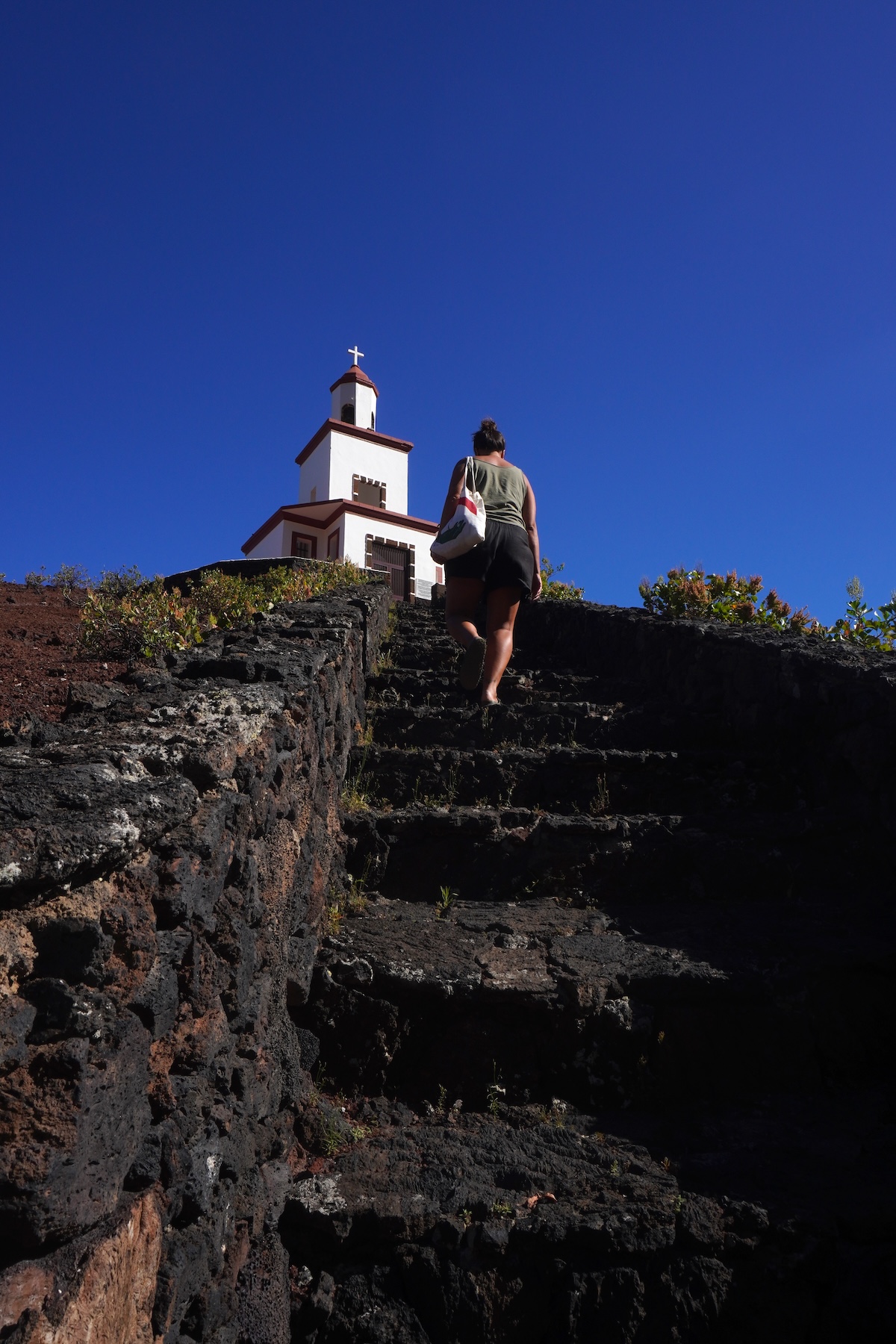
Before heading to any of its natural pools, which we’ll discuss in the points below, we recommend climbing up to the Campanario de Joapira (Joapira Bell Tower) to enjoy the views:
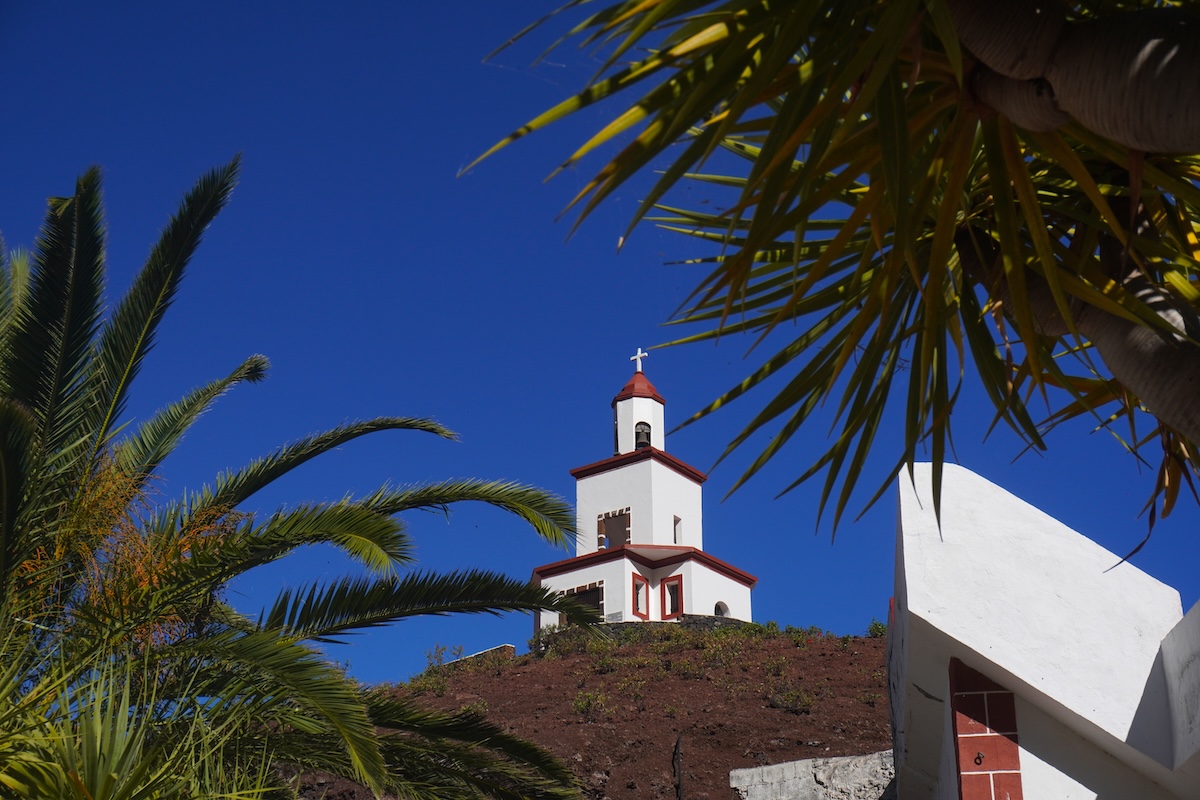
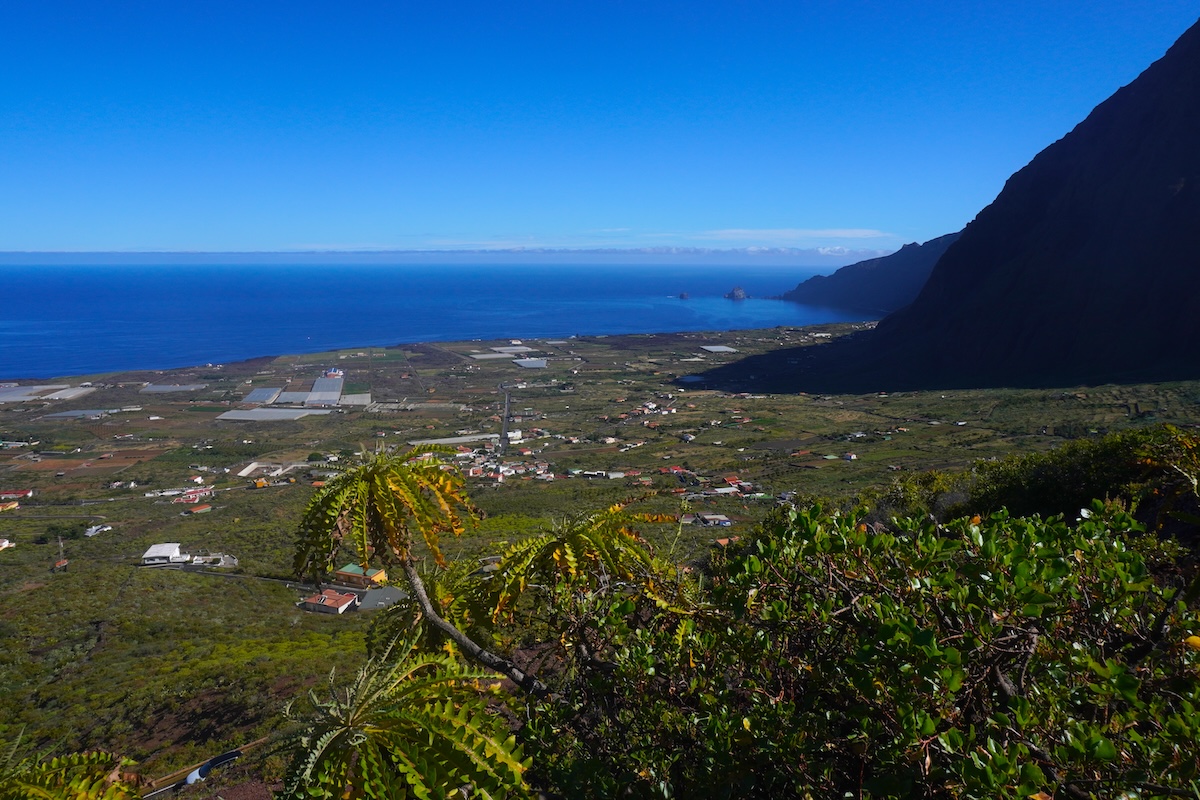
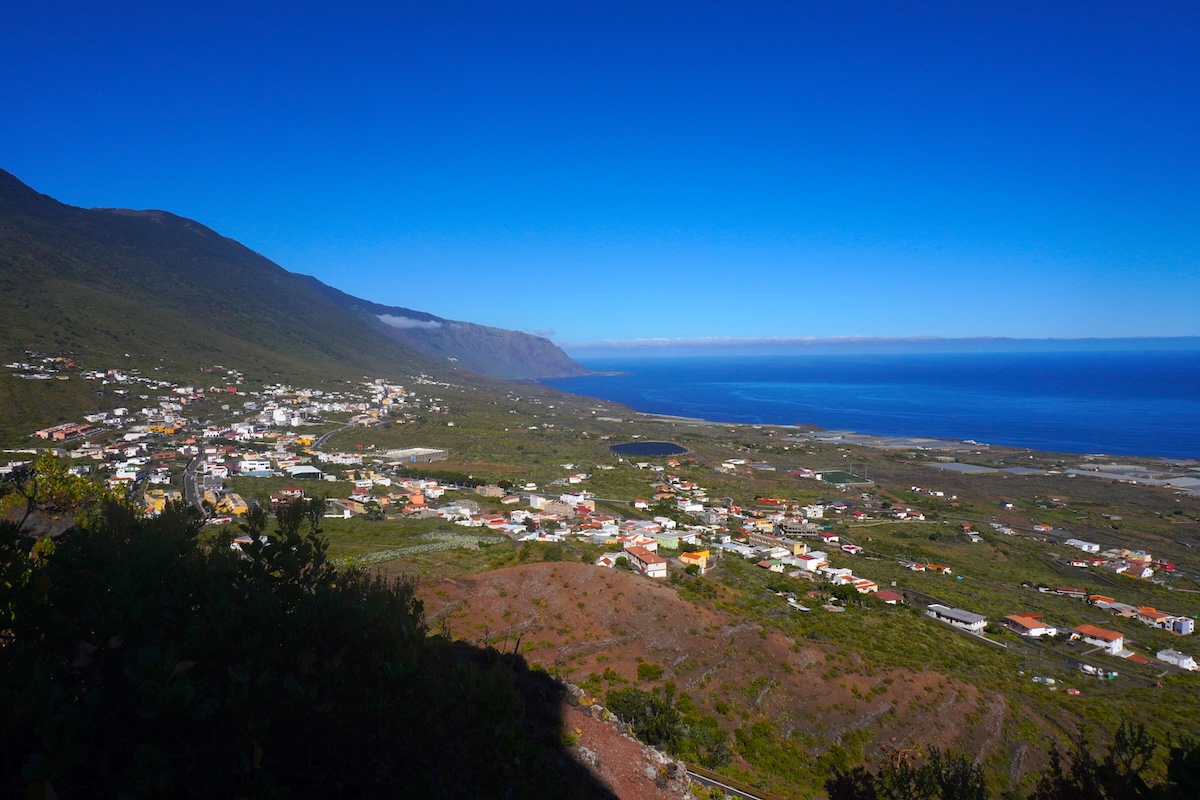
We also recommend visiting the Church of Our Lady of La Candelaria and the photogenic Campo de Lucha Ramón Méndez, from where you’ll also have beautiful views of the island.
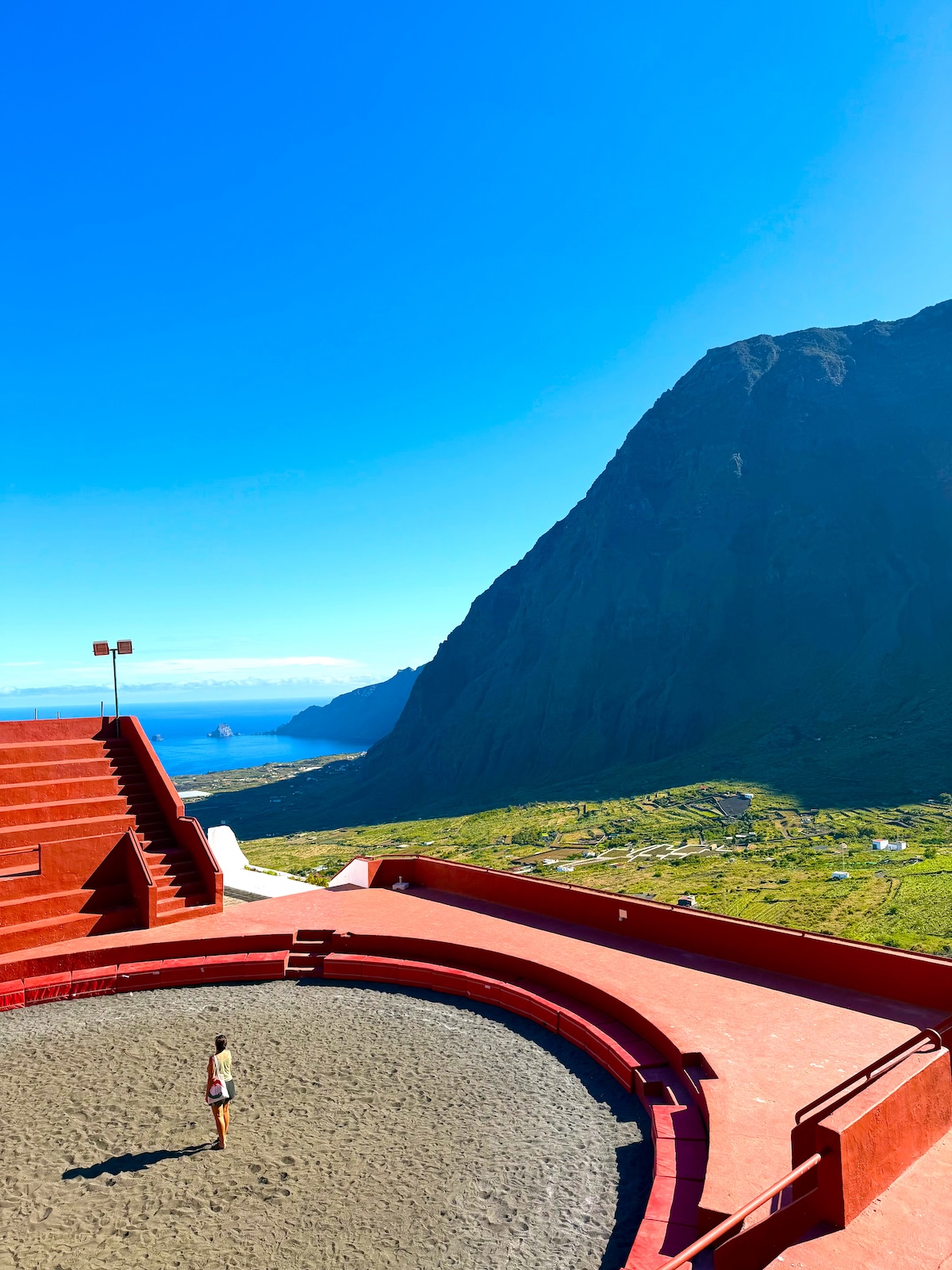
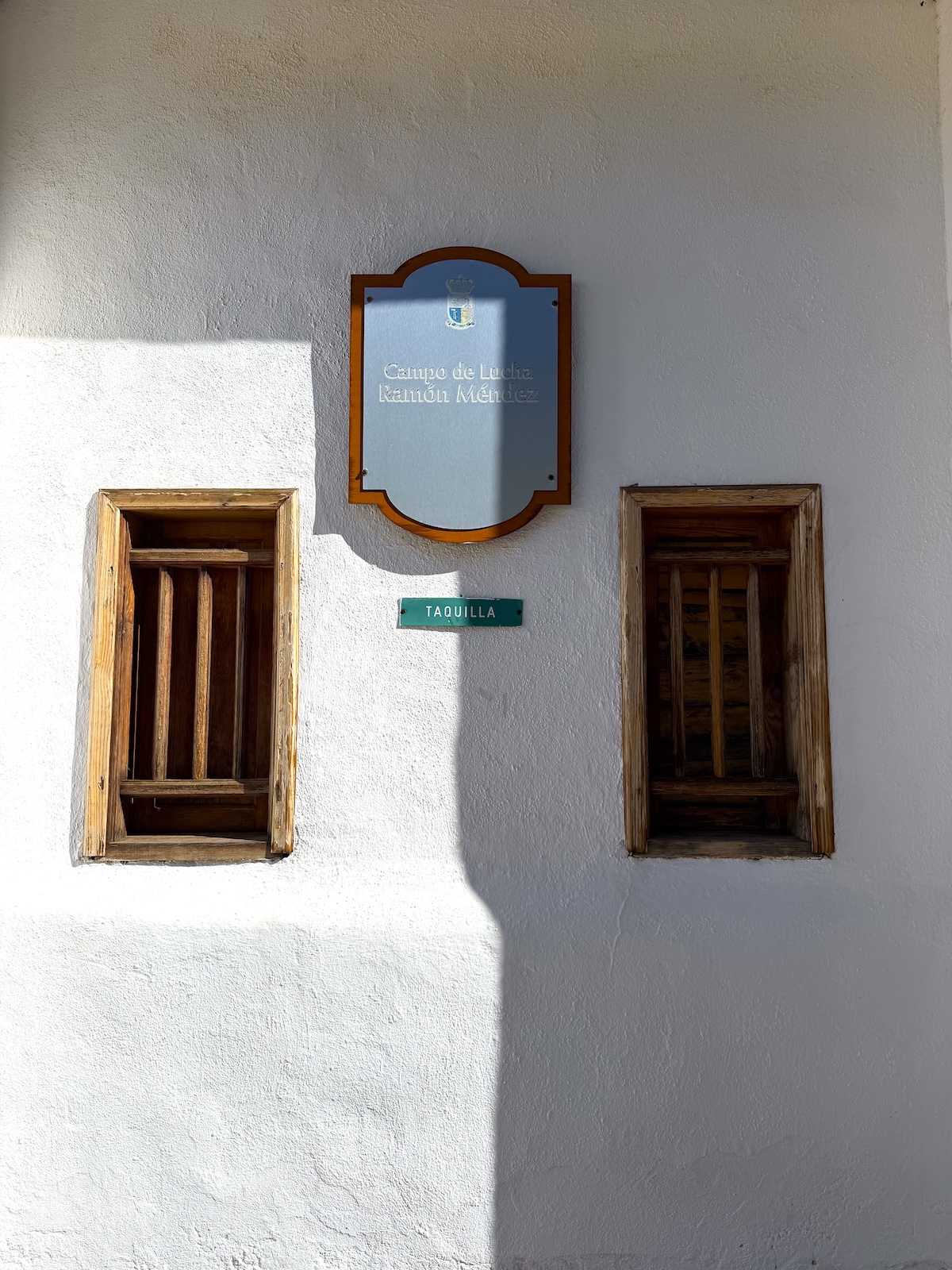
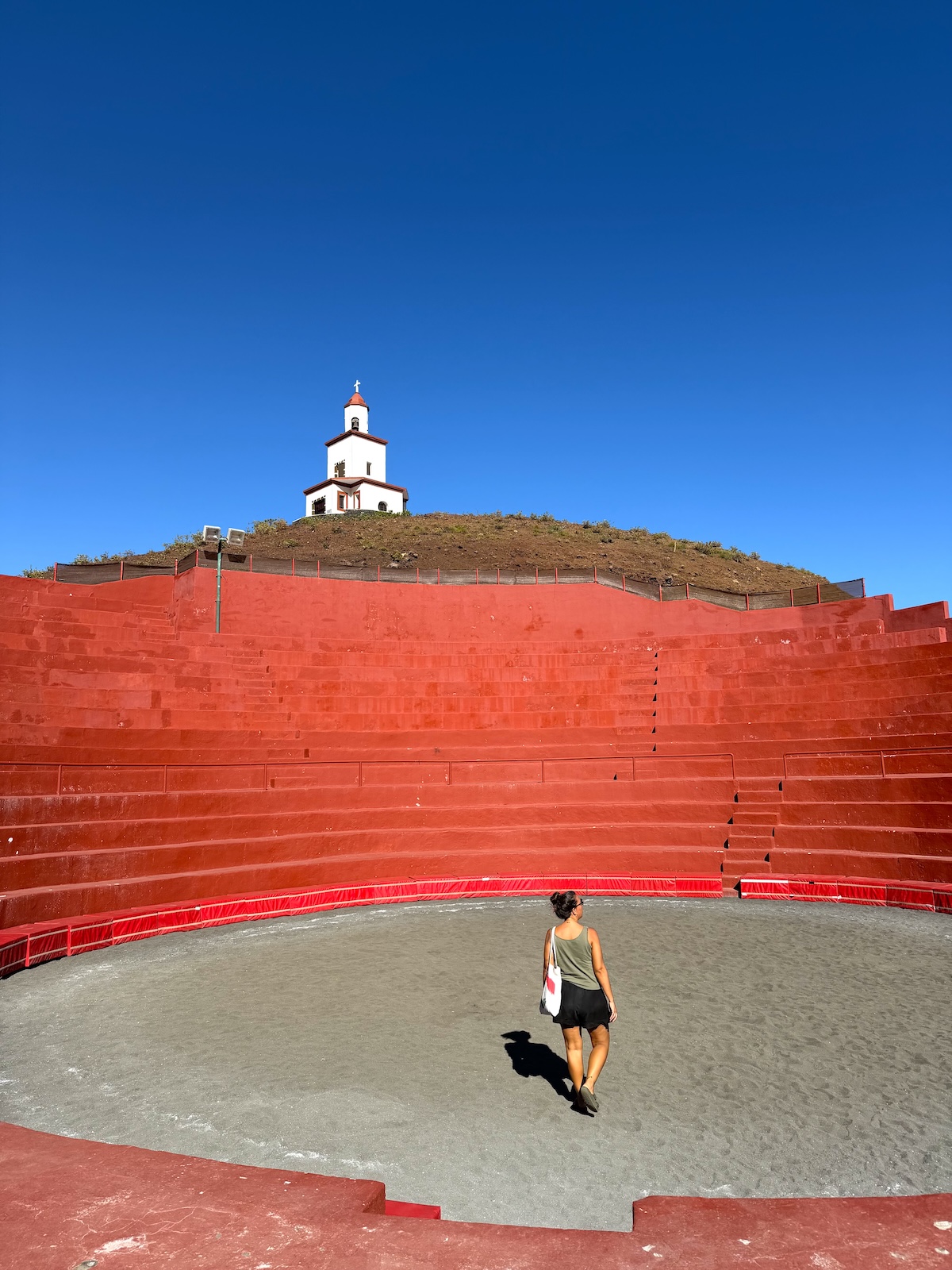
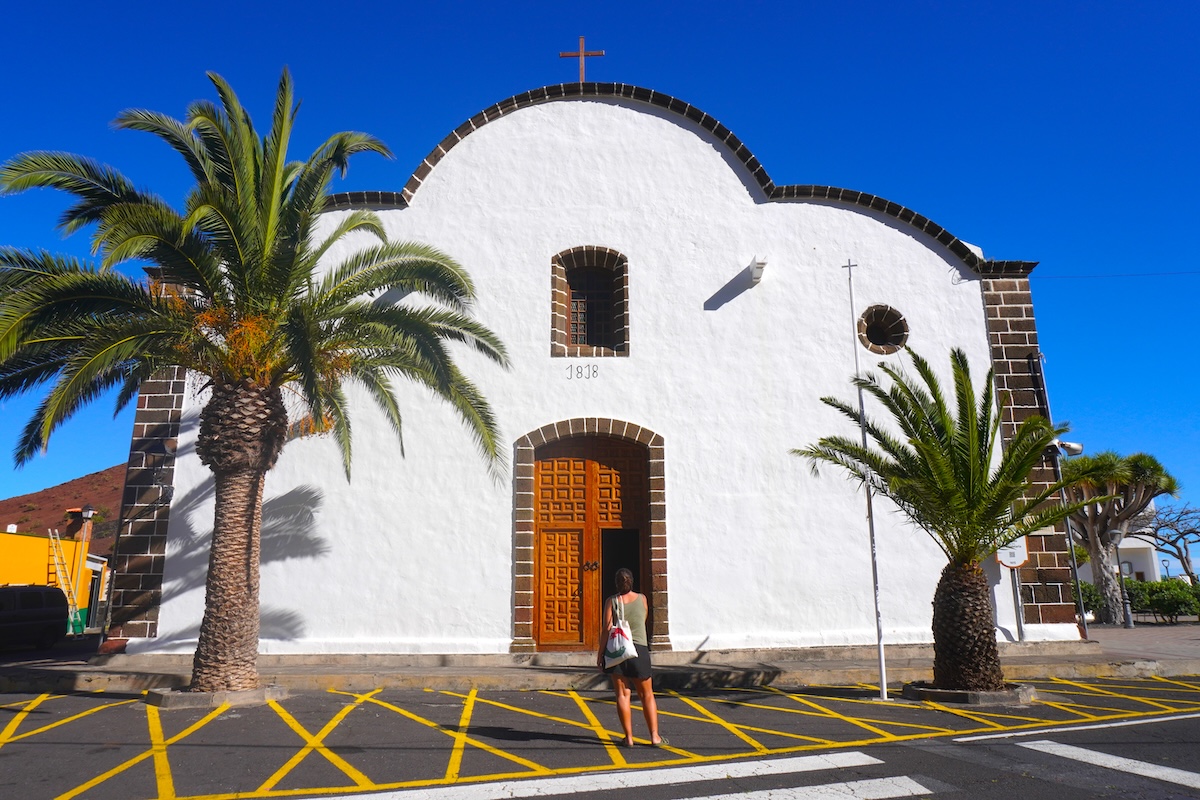
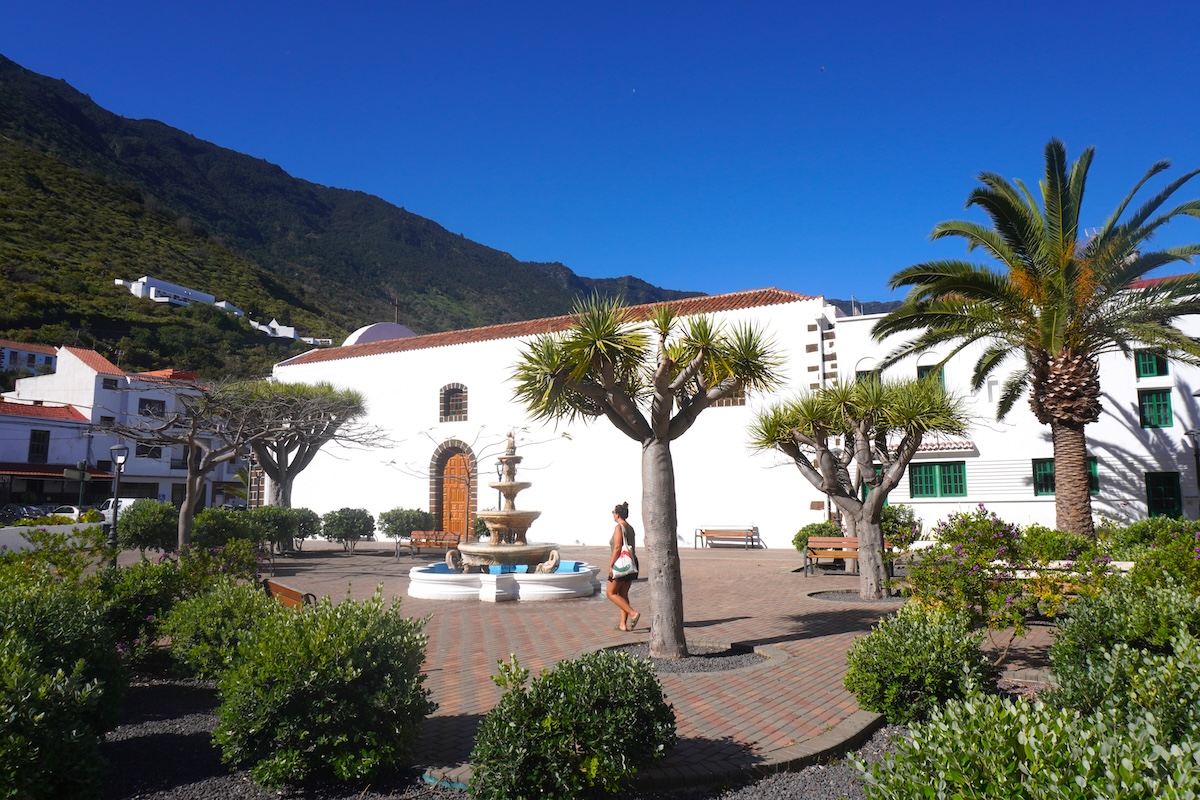
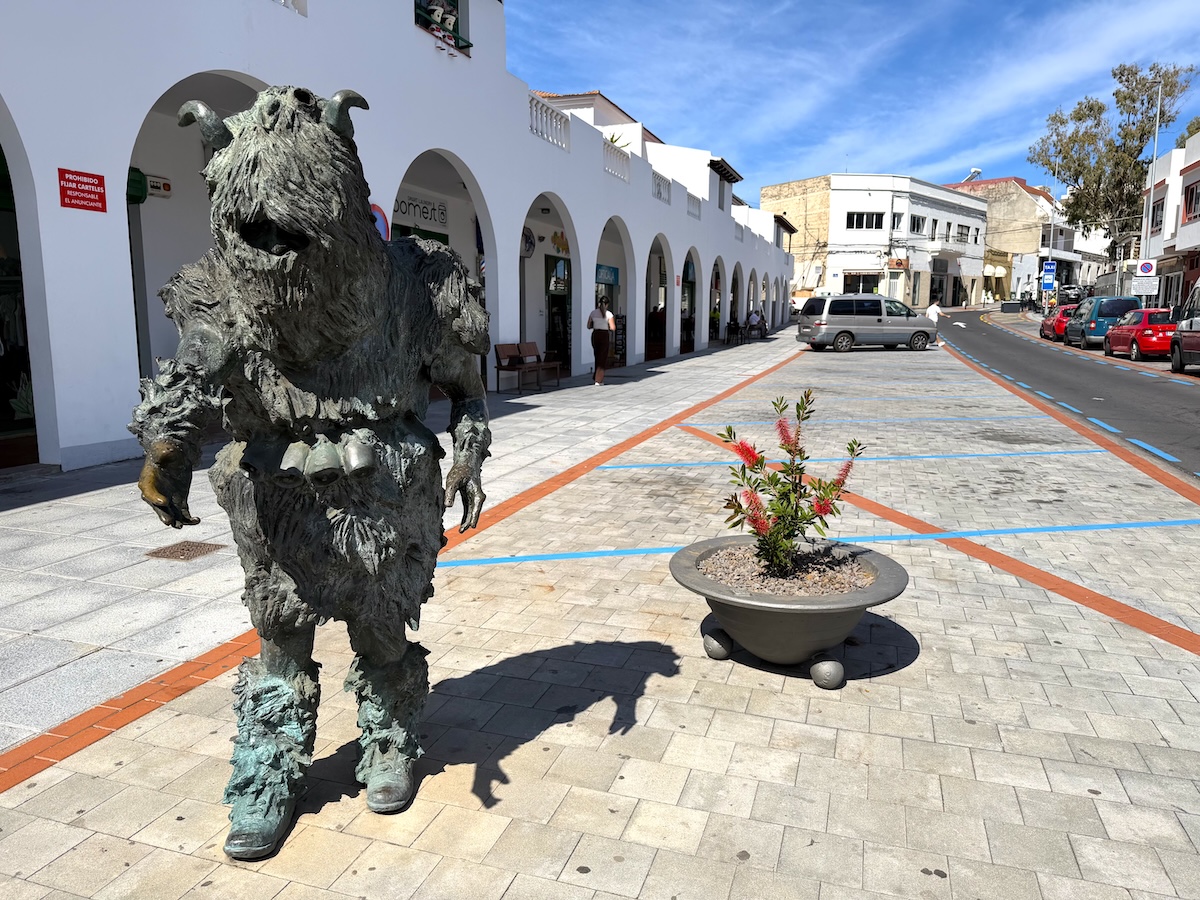
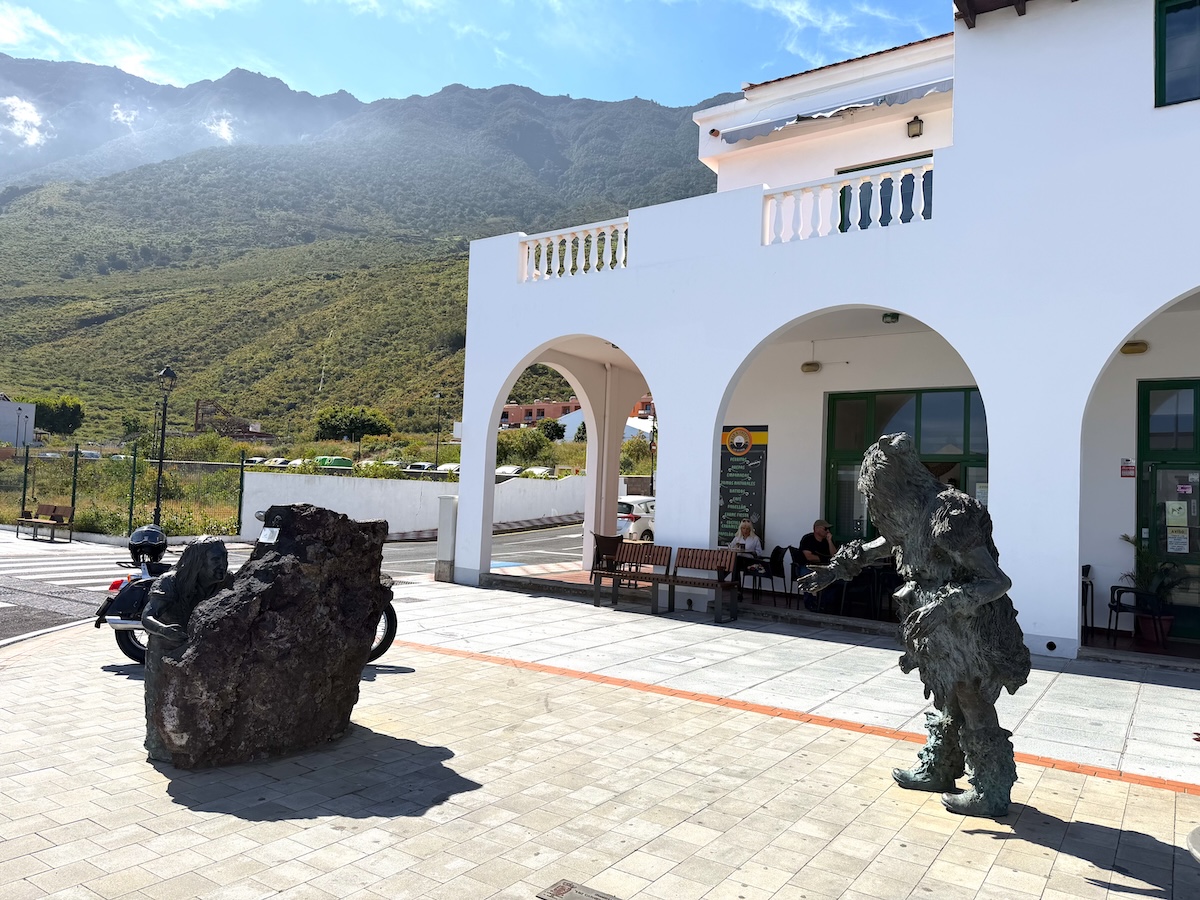
Once in the town center, in Tigaday, where you’ll find several restaurants and bars to grab a drink, don’t miss the sculpture depicting Los Carneros de Tigaday, an ancient pagan carnival tradition in which a group of people (usually young people) dress in sheepskins (rams, hence the name), as well as real ram’s horns; they smear their faces and bodies with shoe polish and run through the streets chasing the crowd and smearing unsuspecting people with shoe polish. You can find more information about the festival here.
Ecomuseo de Guinea, Lagartario, and Volcanic Tube
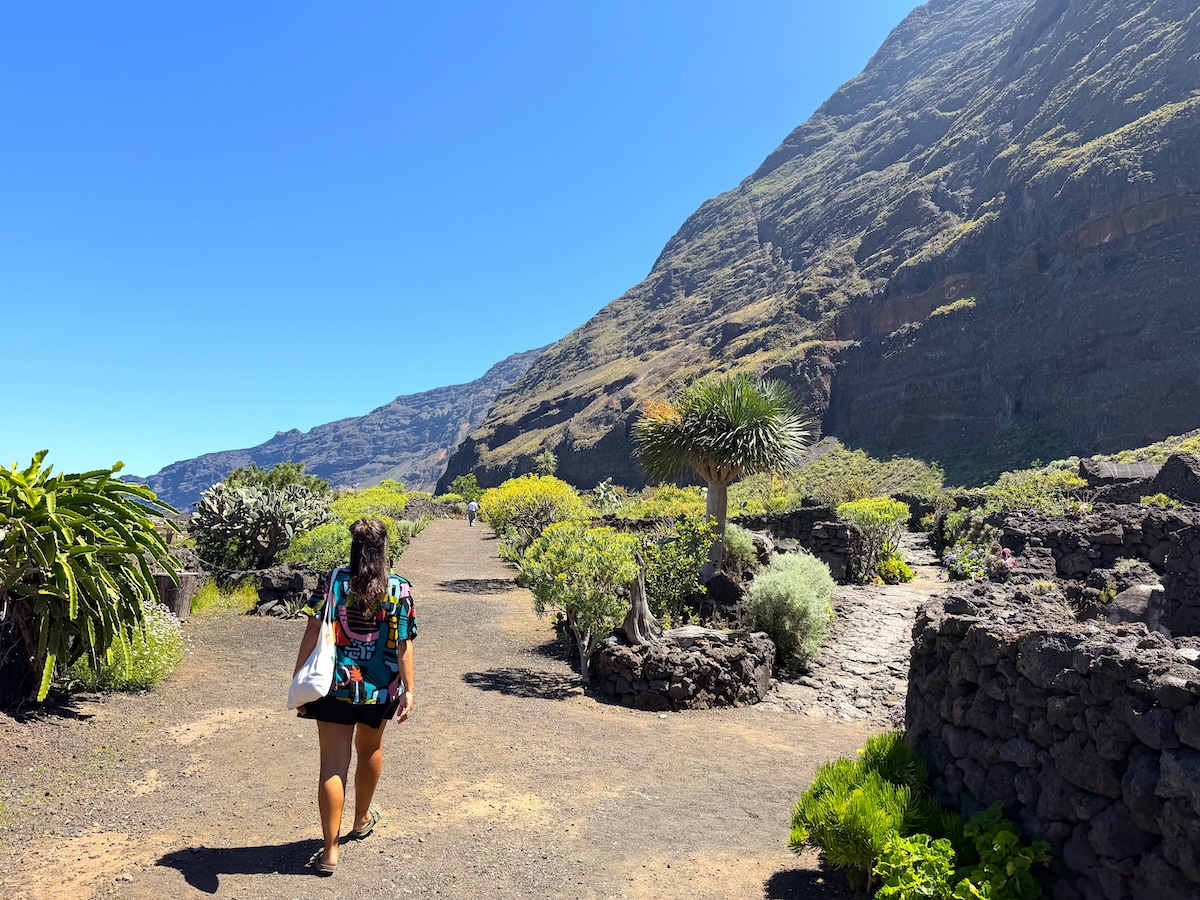
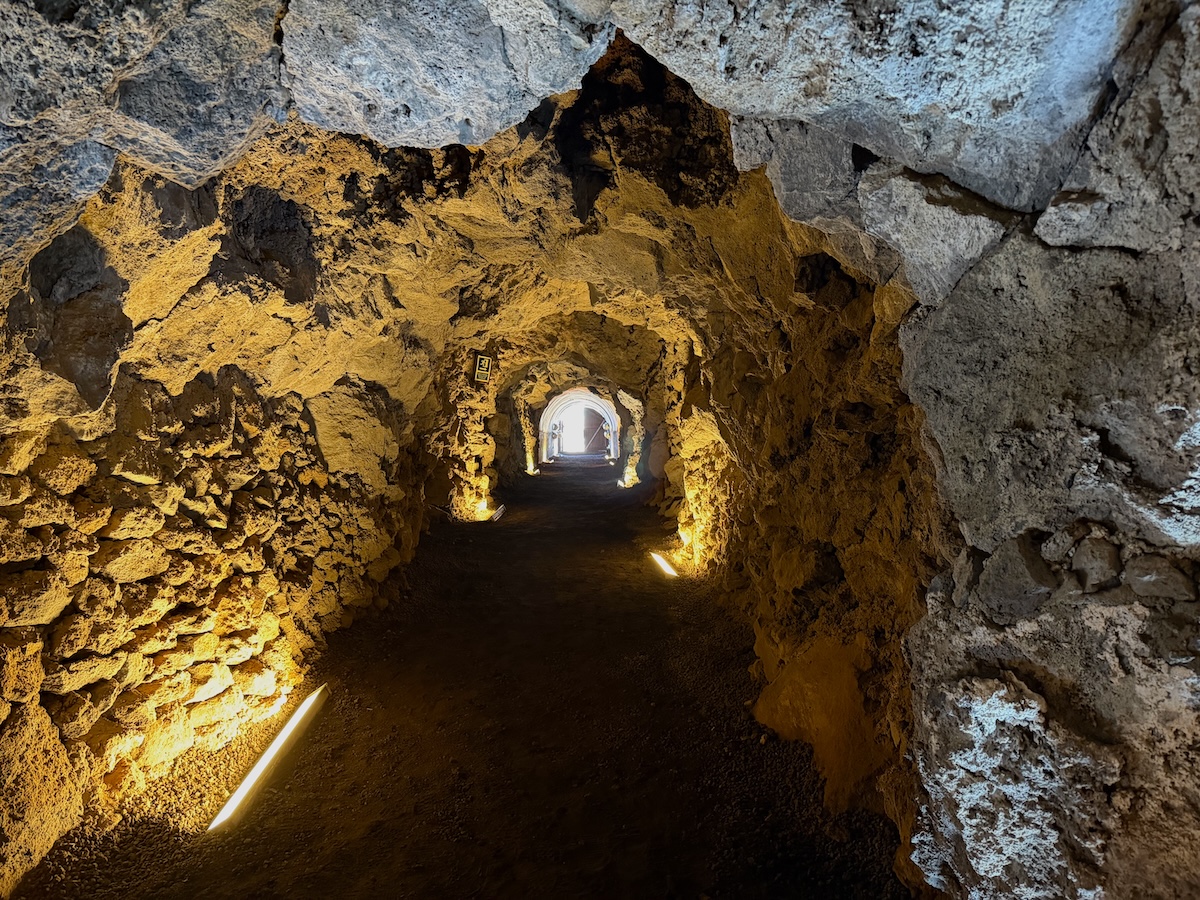
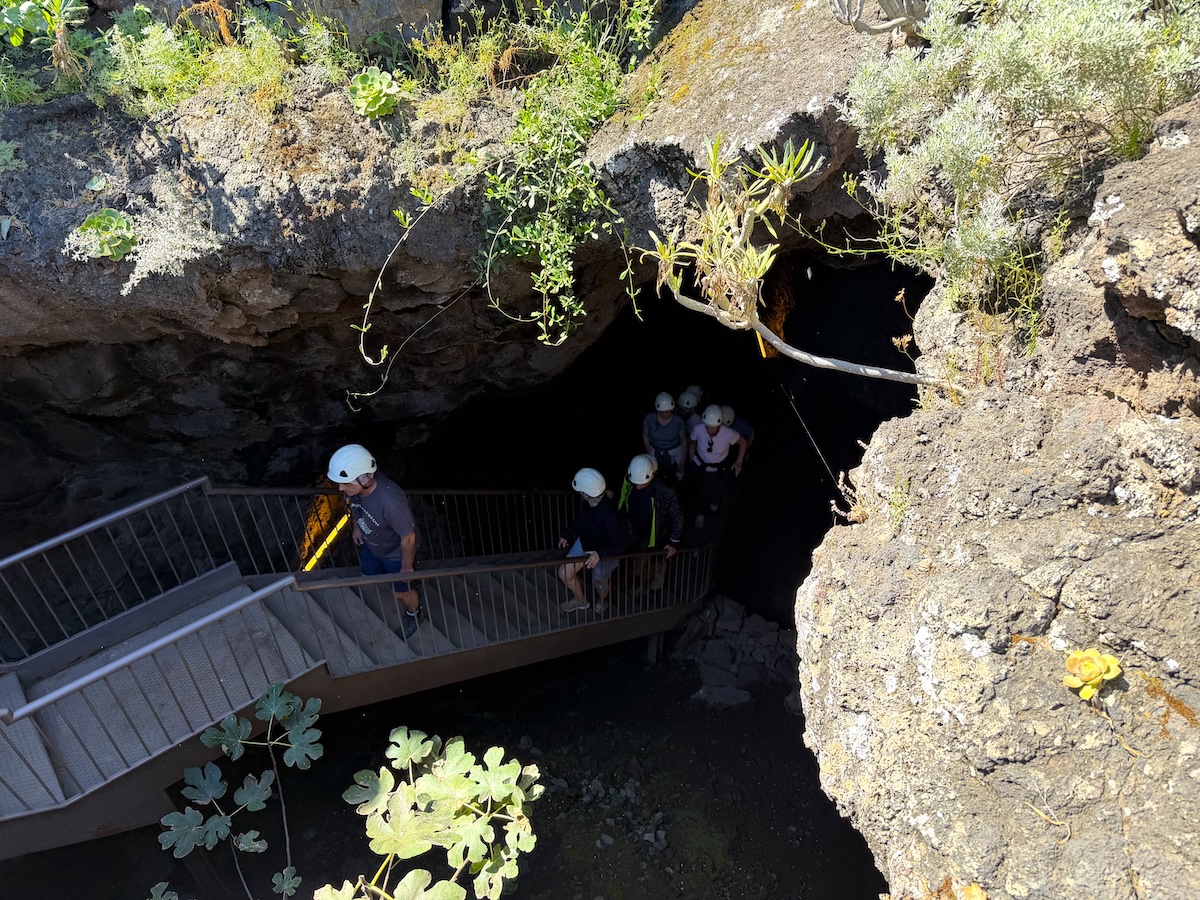
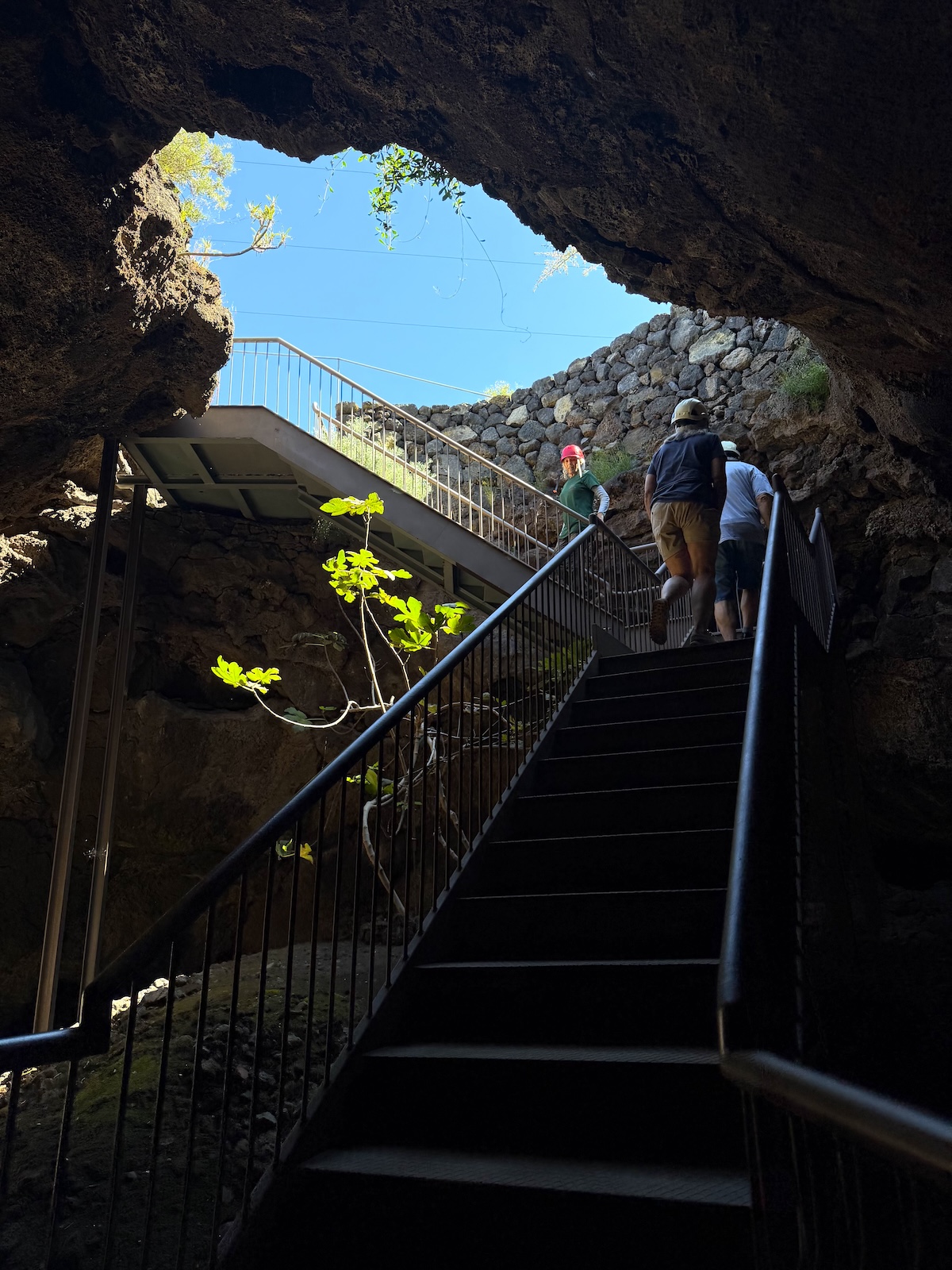
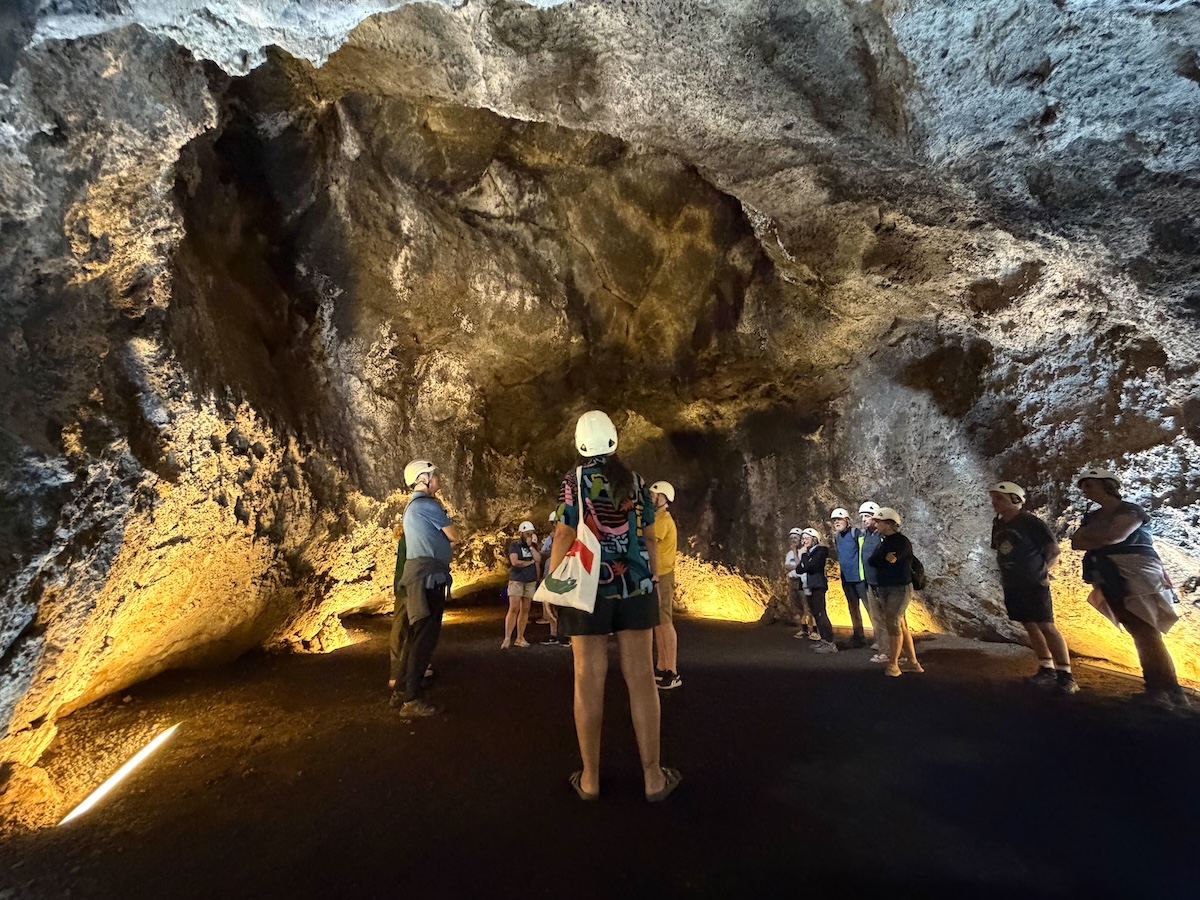
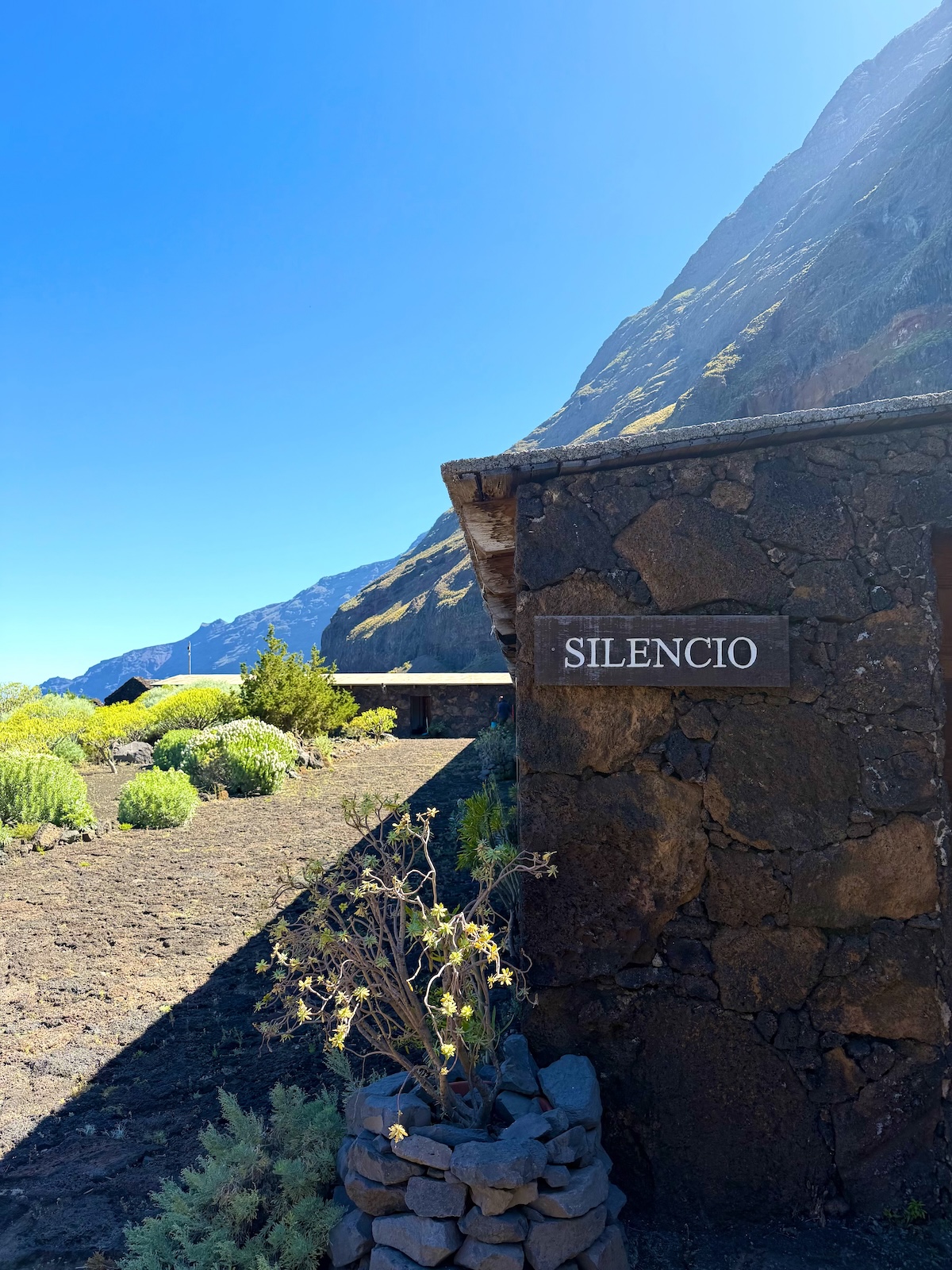
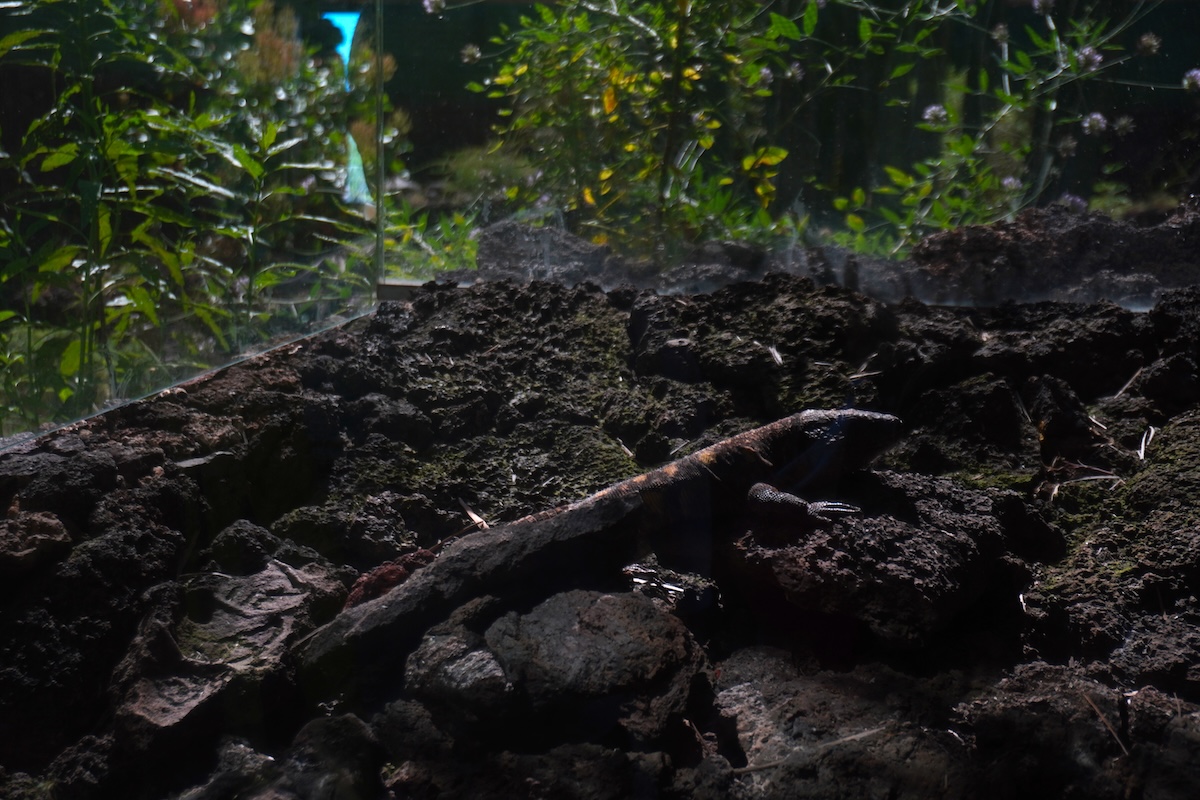
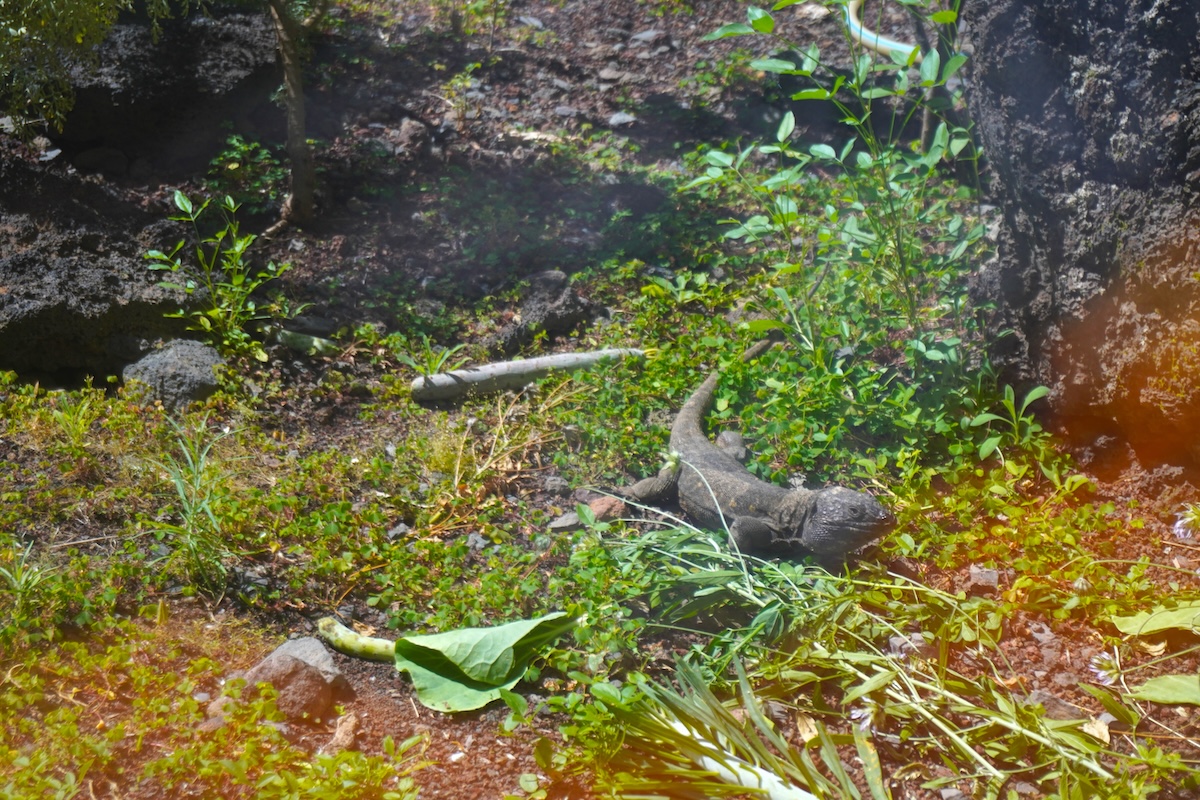
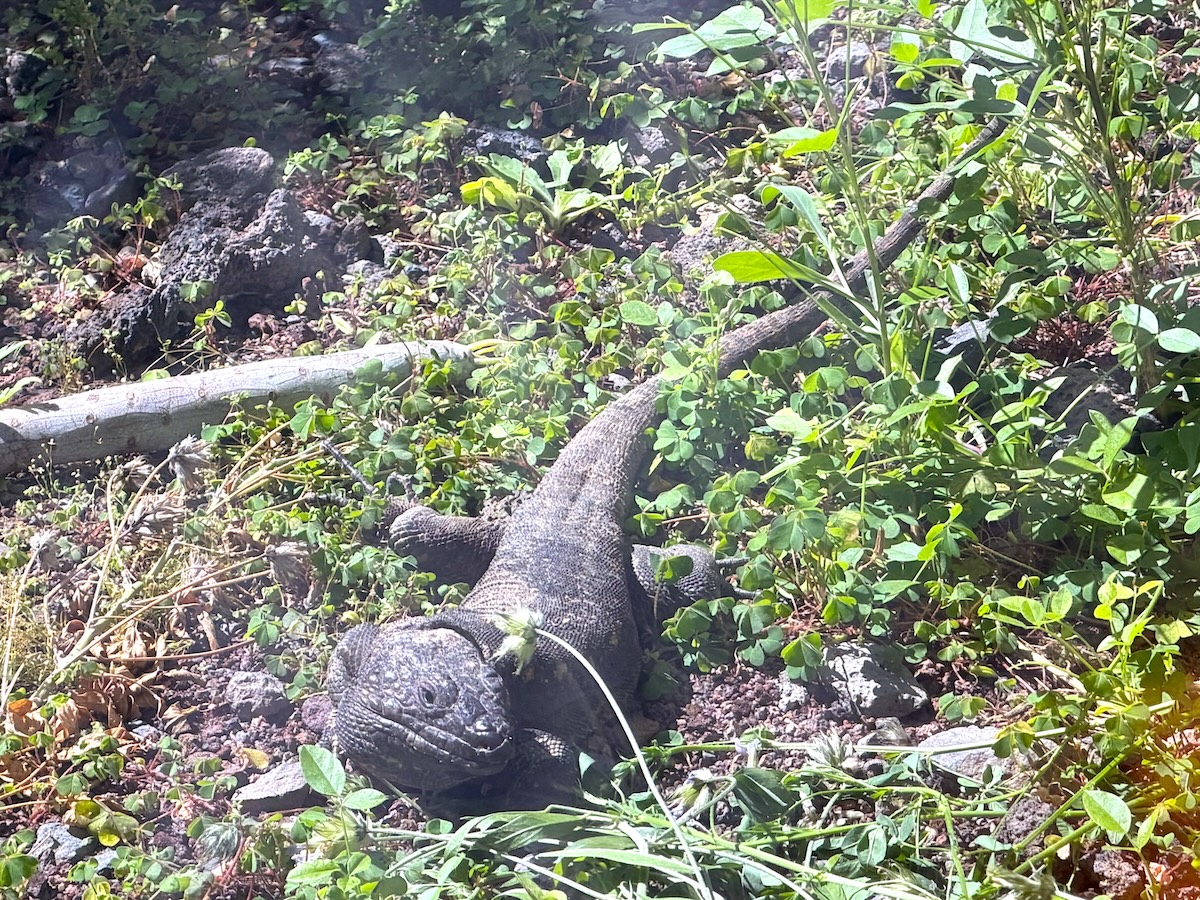
The Guinea Ecomuseum is an interesting museum where you can explore, via a guided tour, three sites: a volcanic tube, a lizard sanctuary (a center for the recovery and conservation of the El Hierro Giant Lizard, endemic to the island), and an ancient settlement (Poblado de Guinea) with dwellings from different historical periods to understand how people lived in this area.
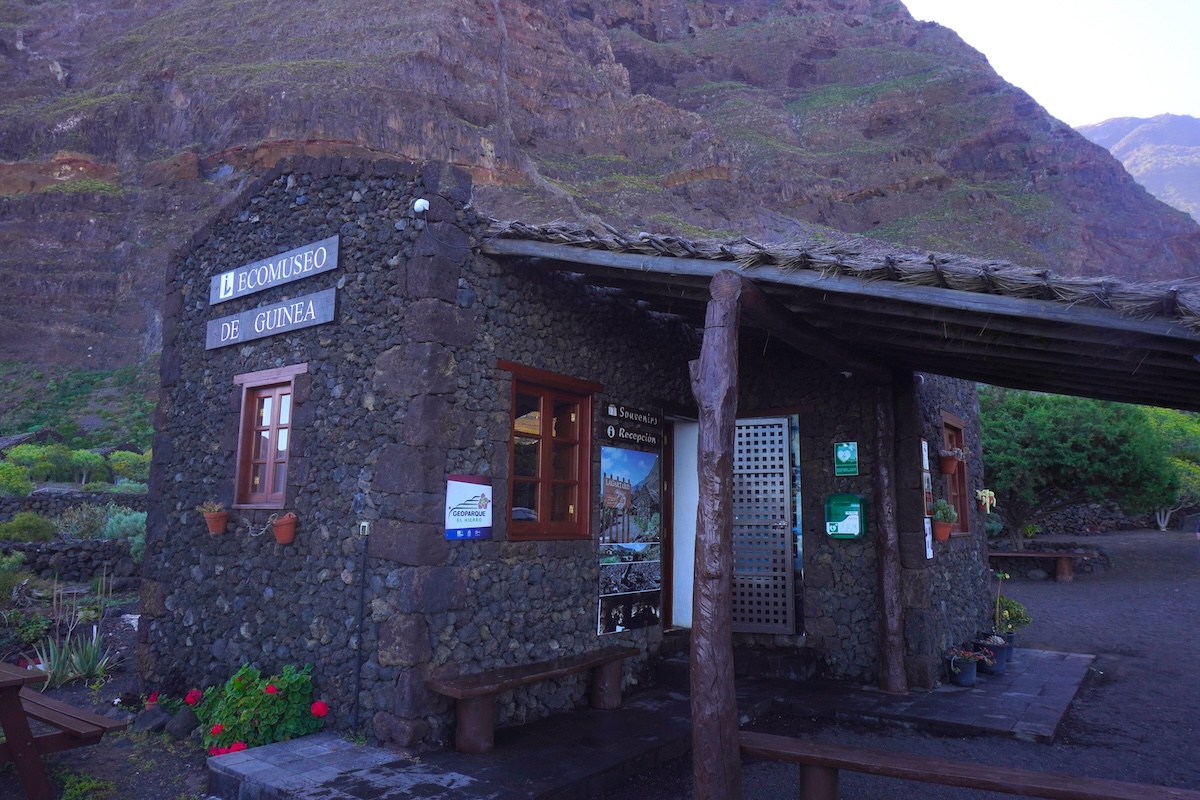
Admission costs 9.50€ (included in the El Hierro Tourist Passport); it is open daily from 10:00 a.m. to 6:00 p.m., last admission at 5:00 p.m., with the last guided tour at 4:00 p.m., and guided tours generally run every hour starting at 10:30 a.m. (schedules may vary depending on the number of visitors or other reasons).
Here’s some interesting information about each site:
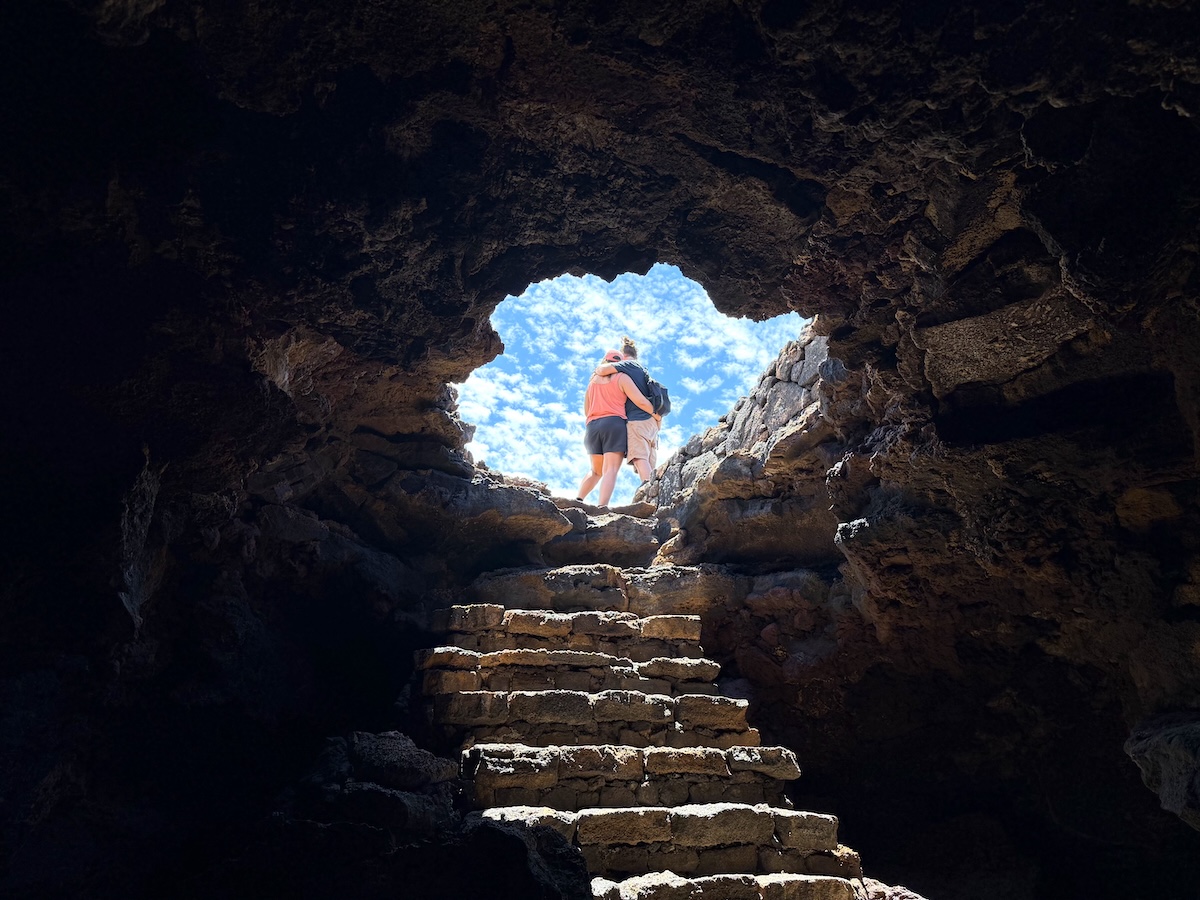
- Guinea Volcanic Tube: A volcanic tube forms when lava flows, solidifies on the outside to create a crust, and once it stops flowing, the interior remains “hollow,” creating the tube. When part of the tube’s ceiling collapses, light and water enter, and living creatures inhabit the interior; in the Canary Islands, this is called a jameo (if you’ve been to the island of Lanzarote, this word will sound familiar to you). This tube also has two “volcanic bubbles” (formed by escaping water vapor and gases that push the lava upward); the first, 10 meters high, is the largest on El Hierro and was discovered when construction began on the Lagartario, we can see an opening where light enters, which is how it was discovered.
- Lagartario – El Hierro Giant Lizard Recovery Center: The El Hierro giant lizard was considered extinct for many years, until local farmers rediscovered it in this area (in Fuga de Gorreta). A captive breeding program was established, and the lizards were later released into the wild at various locations (Roques del Salmor, El Julán, and other spots on the island). The only place where they “thrived” was at Roques del Salmor, since there are no predators there (on the island, cats, rats, and kestrels prey on them). They typically measure, on average, about 60 cm in length and weigh 500 grams. In the observation area, you have the chance to see several of these lizards, depending on your luck and the time of day.
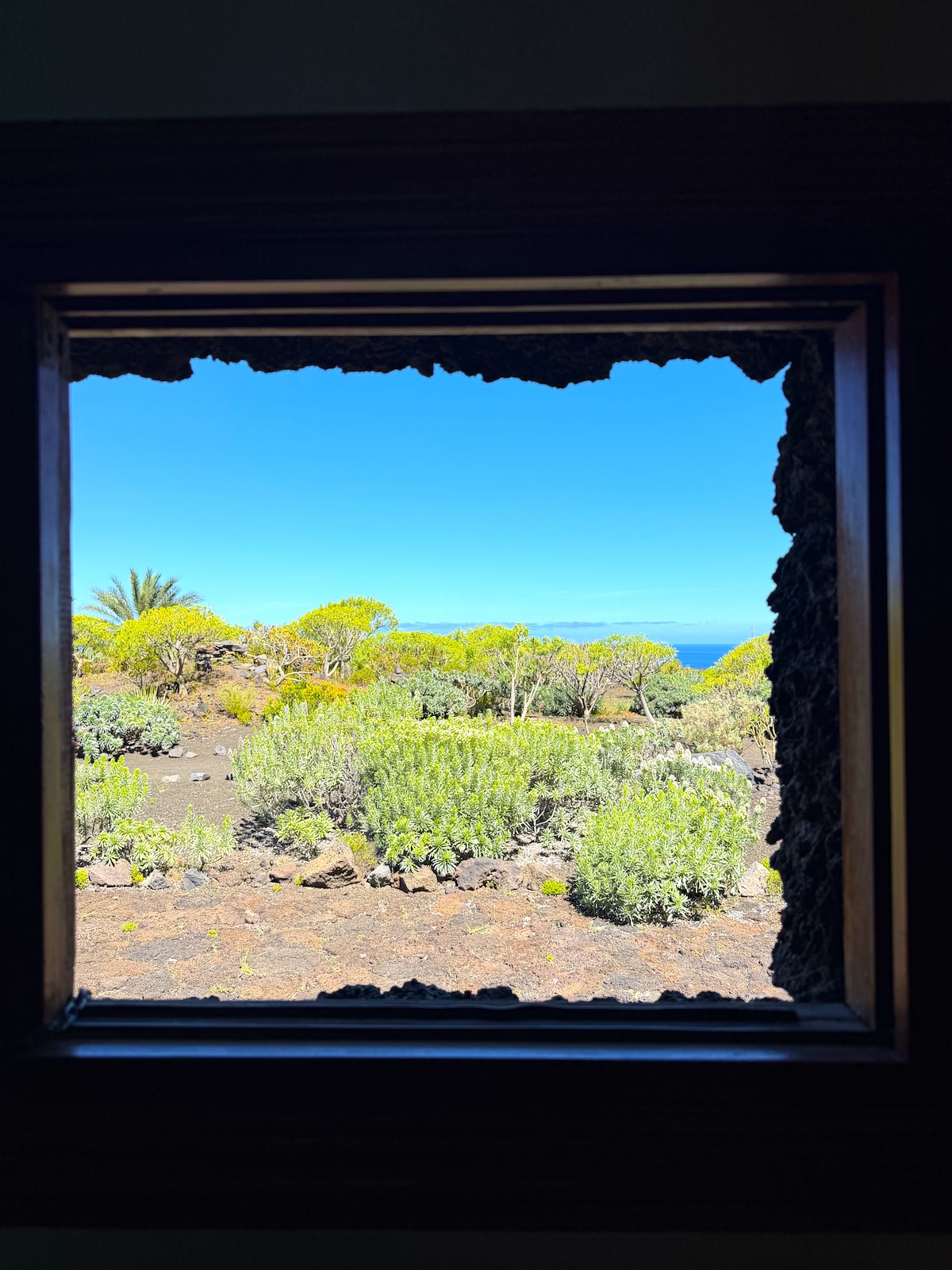
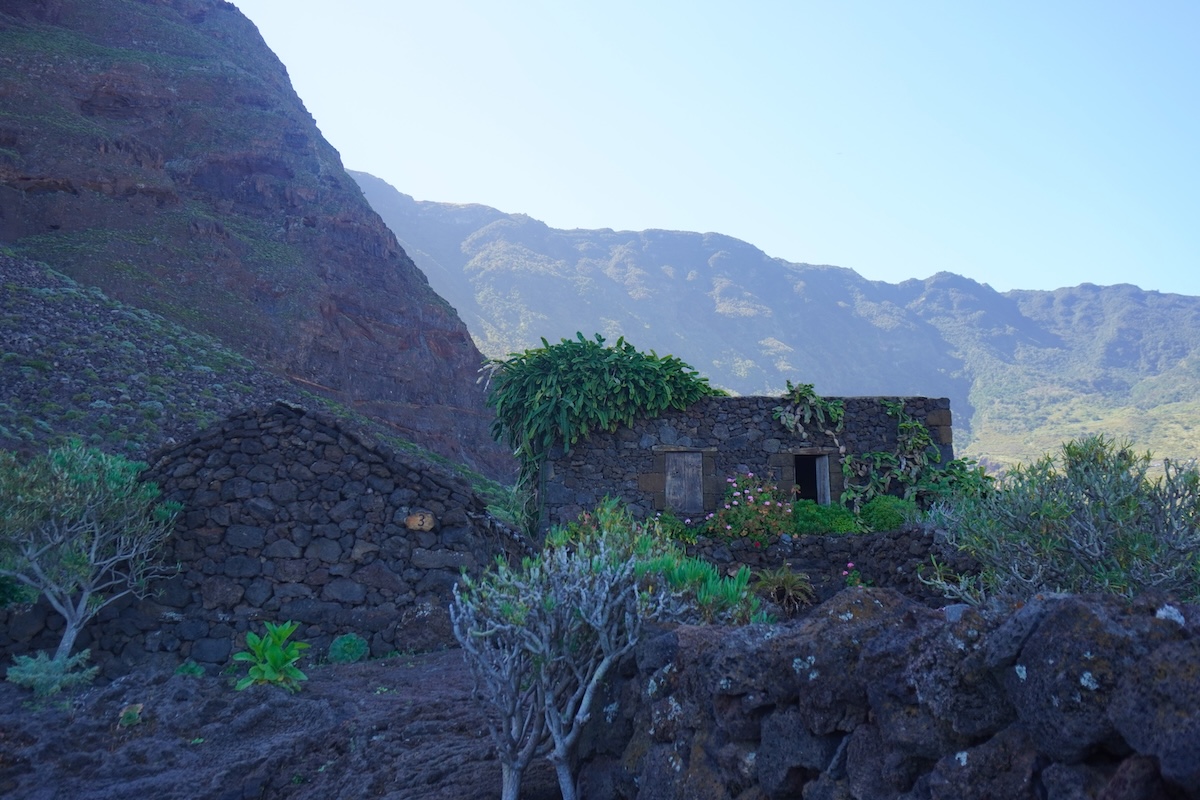
- Guinea Ecomuseum: Here you can see several traditional houses from different eras, depicting life on El Hierro. The village was one of the first settlements in this area (El Golfo), established by families who came via the Camino de la Peña (at that time, the only way to get here) to cultivate seasonal crops. They arrived carrying everything on their backs (animals, children, and so on) to farm and work, starting in the 15th and 16th centuries and continuing thereafter. The houses were built with volcanic stone, without mortar or any other binding material, and the roofs were made of rye straw; they collected rainwater in cisterns, cooked outdoors with firewood, and used “pinocha” (pine needles) for bedding; gofio was one of their main foods.
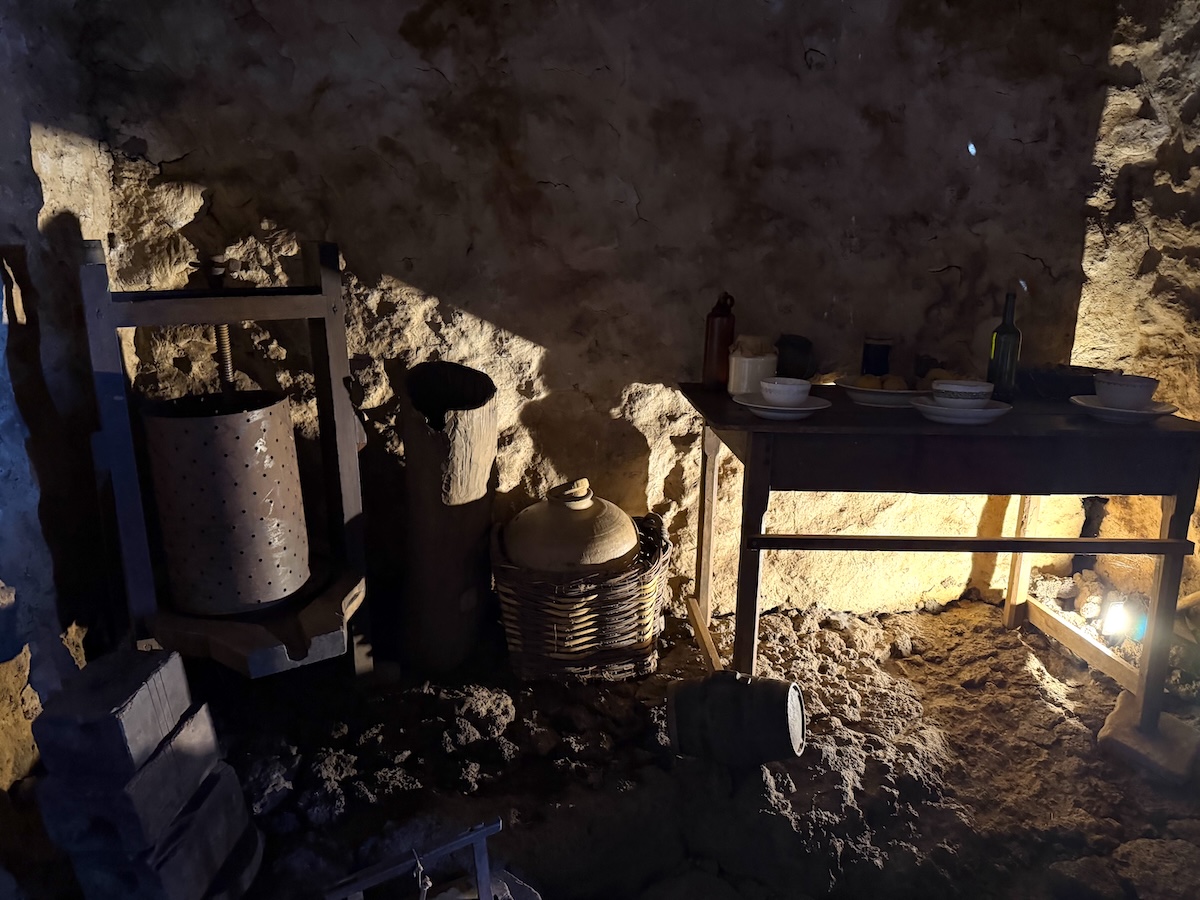
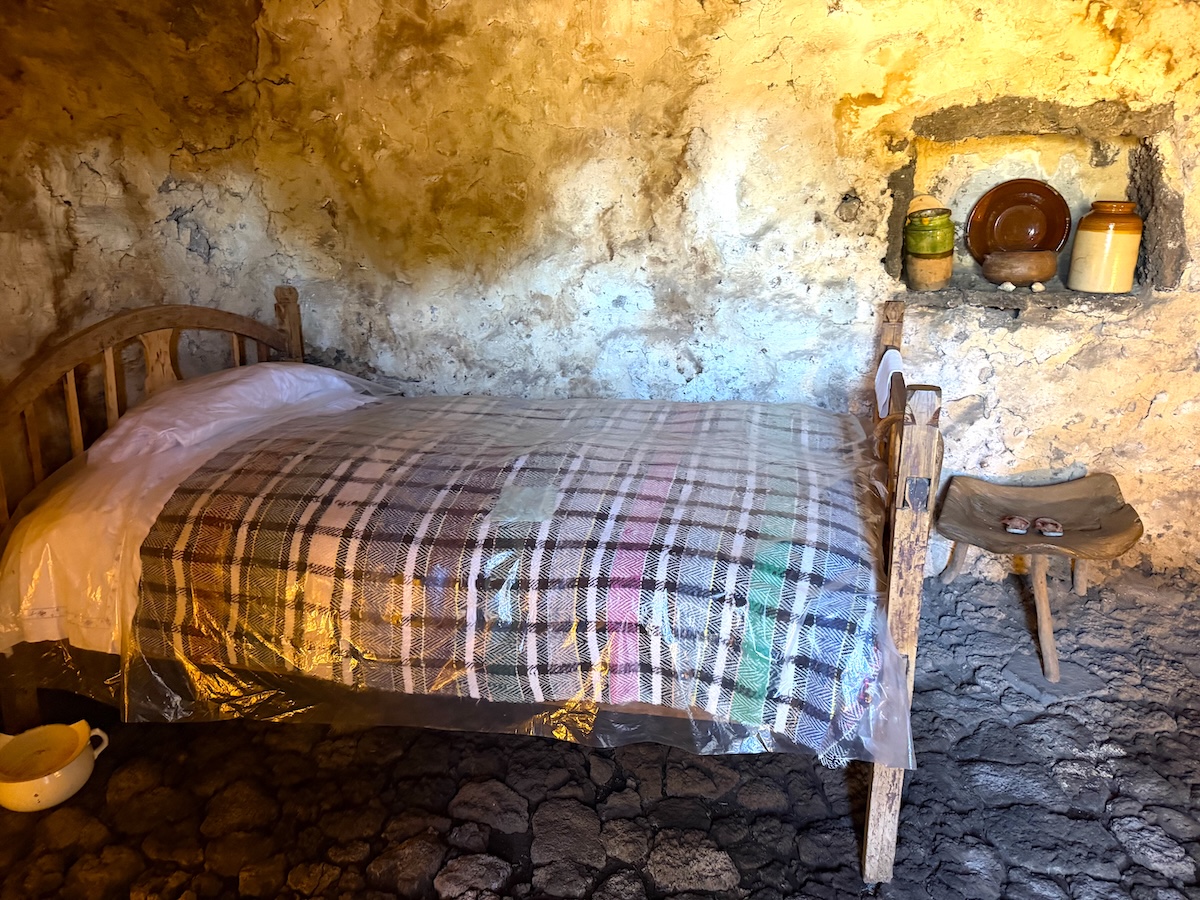
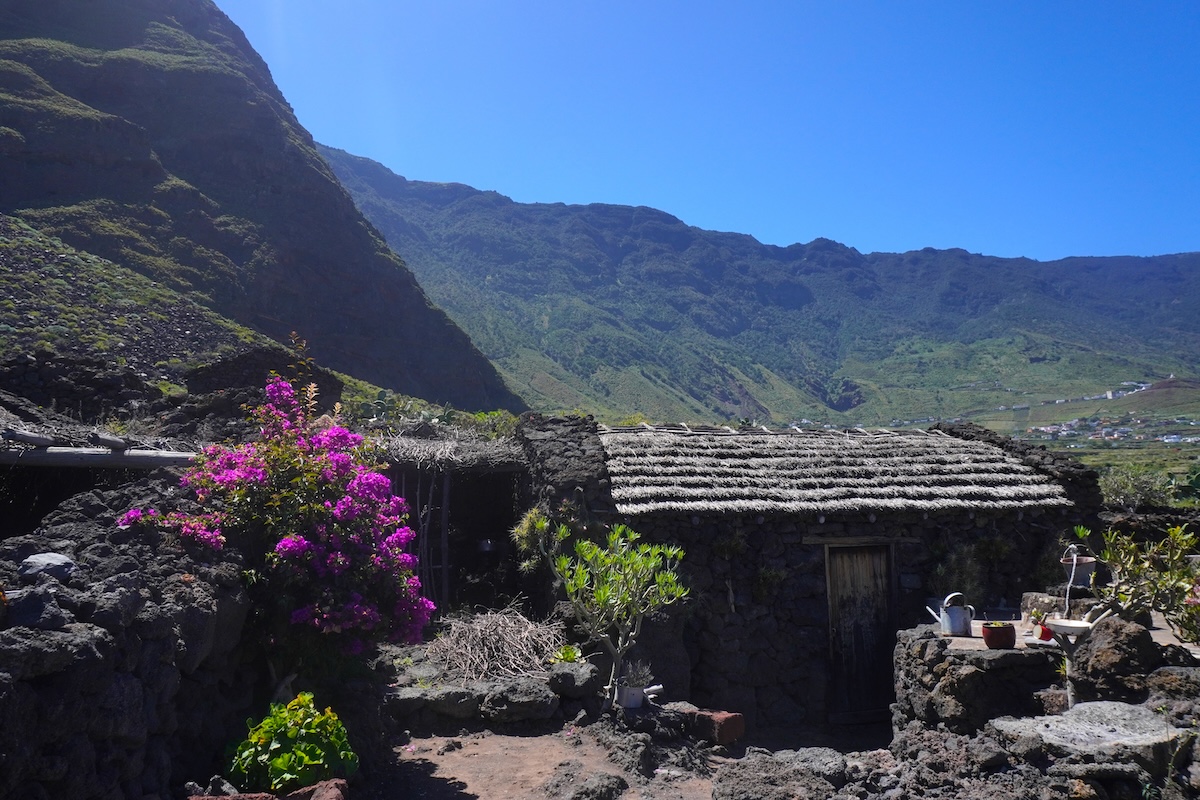
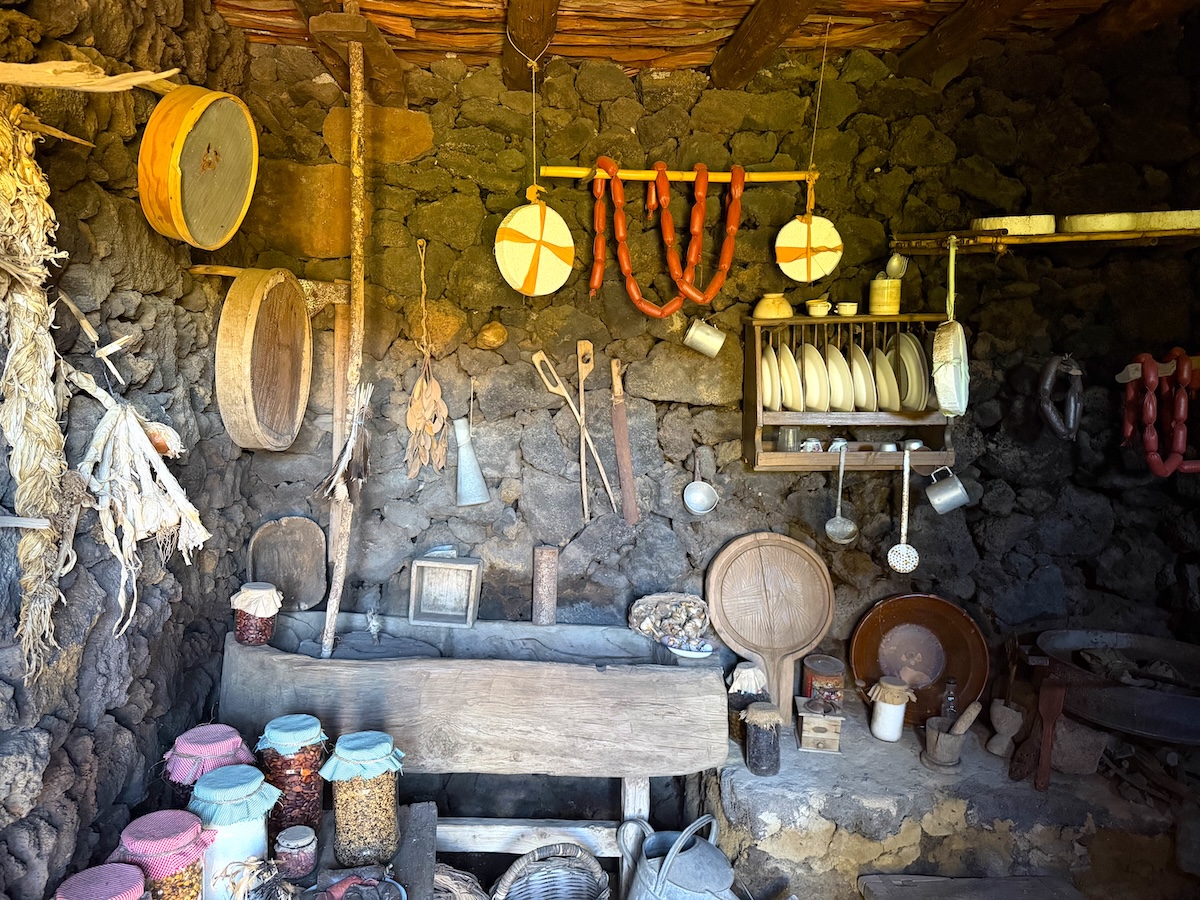
We highly recommend taking the guided tour; in our case, at least, the guide shared a wealth of interesting information and we learned a great deal. Our tour lasted about an hour.
Las Puntas and its Guinness World Record-holding hotel
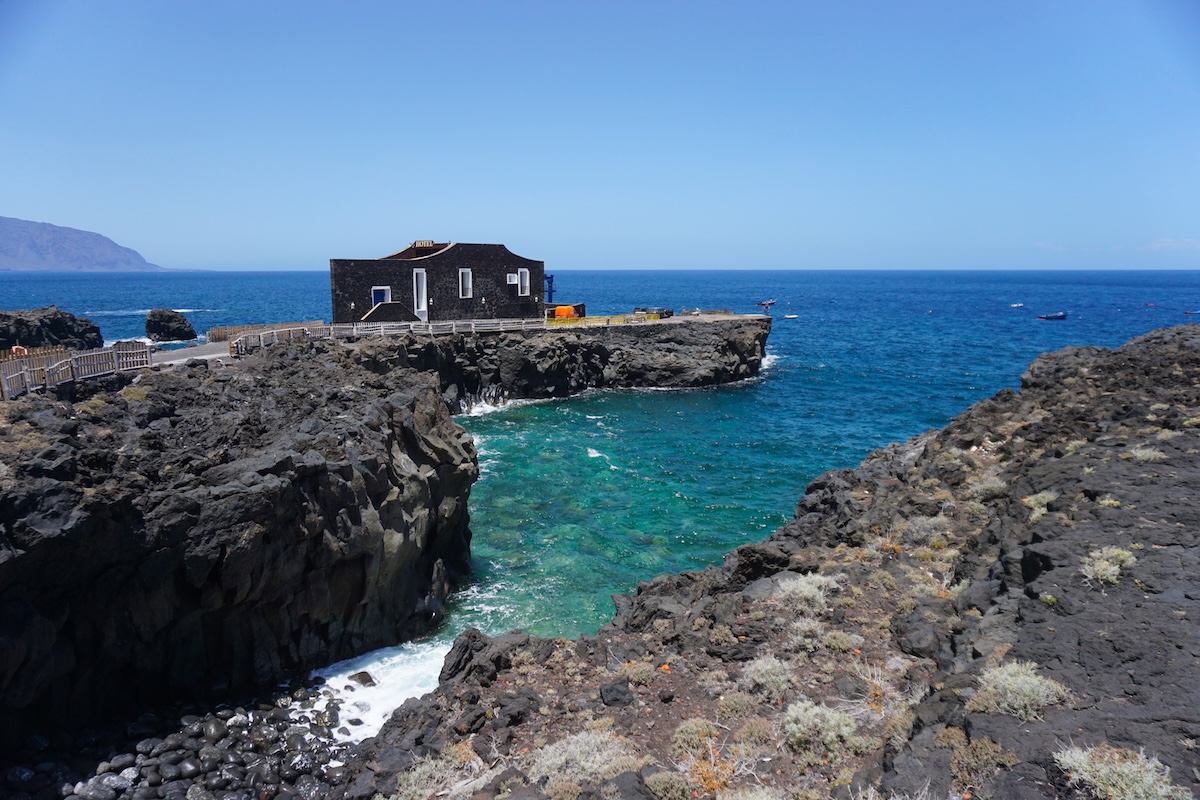
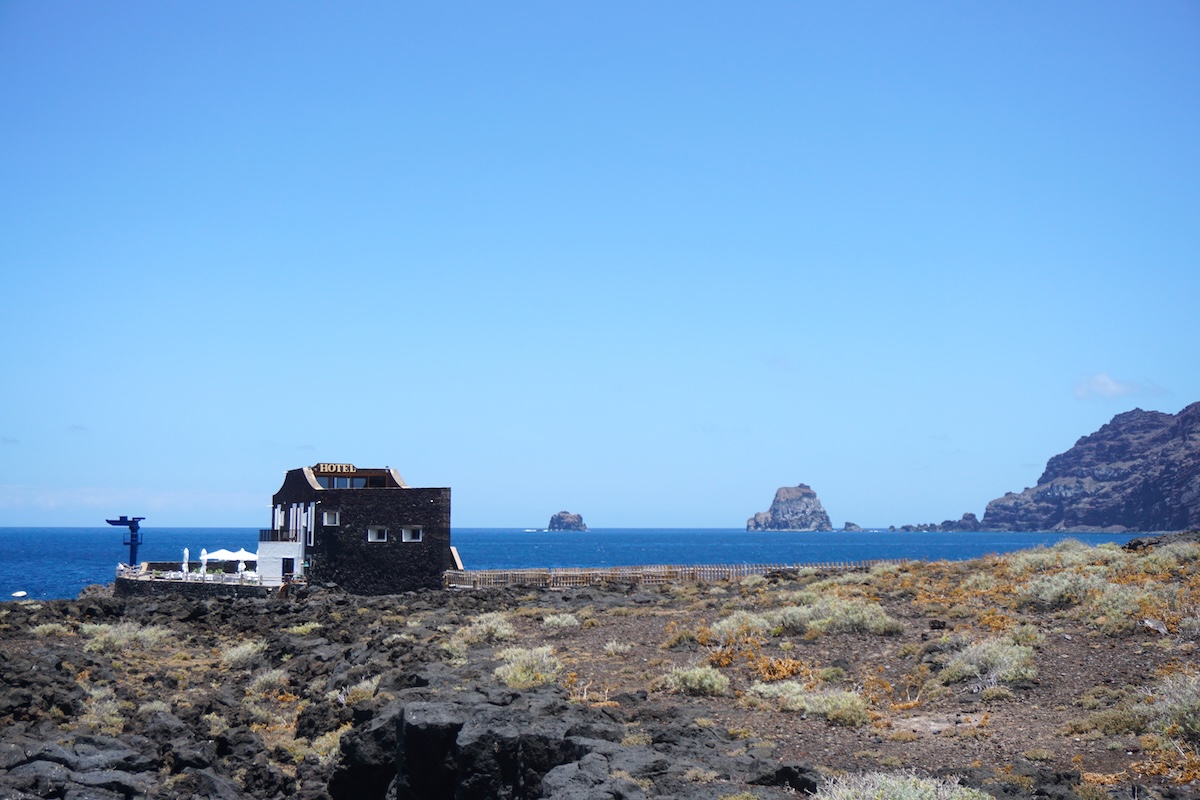
Las Puntas is a small coastal village, very close to Frontera, which is now famous for having a hotel that was once the smallest in the world.
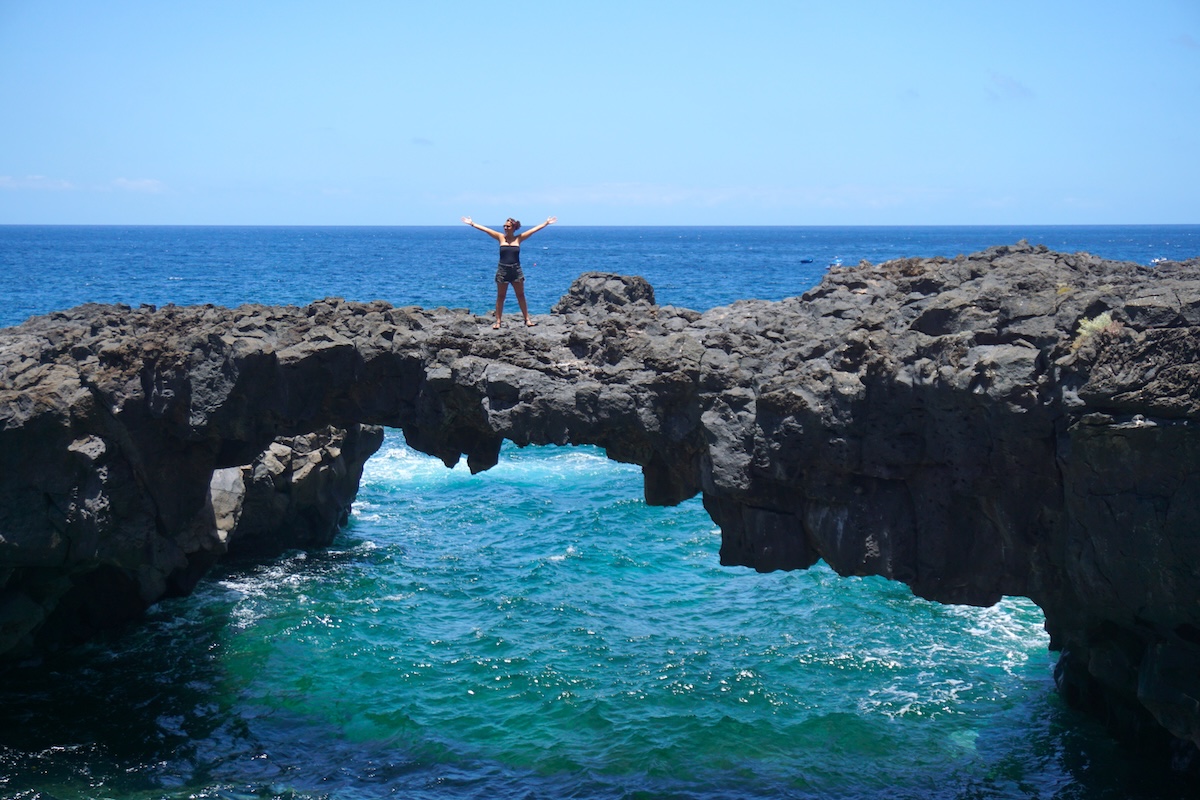
Another marvel that the island of El Hierro offers is this volcanic arch that acts as a bridge between a small natural pool in Las Puntas and the open sea.
The charming little hotel, one of the smallest in the world (in 1984 it held the title of the world’s smallest), has four rooms (by the way, Room No. 2 has a terrace) decorated with shipwreck artifacts. We’ll tell you more about this unique spot in the “Where to Stay” section.
La Maceta Natural Pools
The natural pools of La Maceta are the most accessible and family-friendly in the area. They offer good accessibility, parking, a picnic area with grills, restrooms, showers, and even a smaller pool designed for the youngest members of the family. For this reason, it’s one of the most popular pools. But it’s also one of the most beautiful.
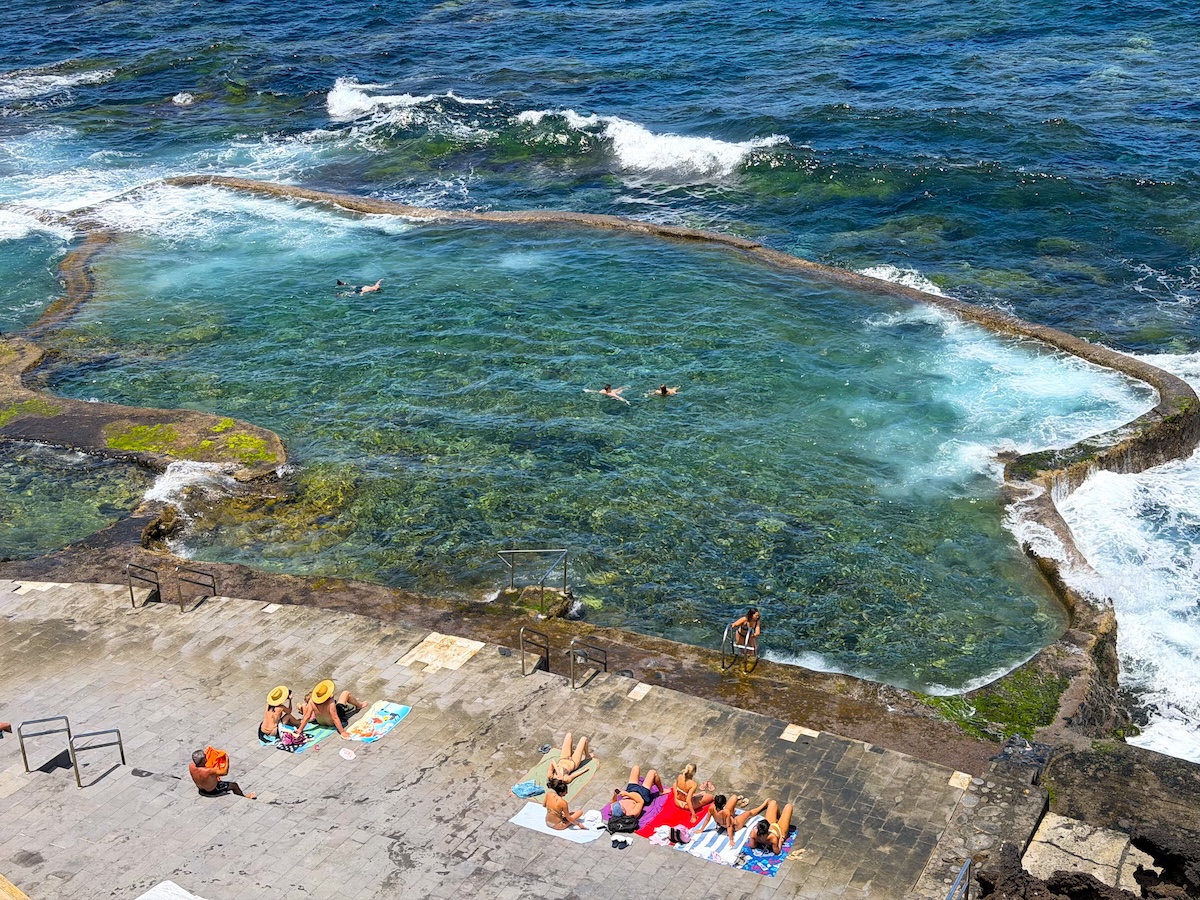
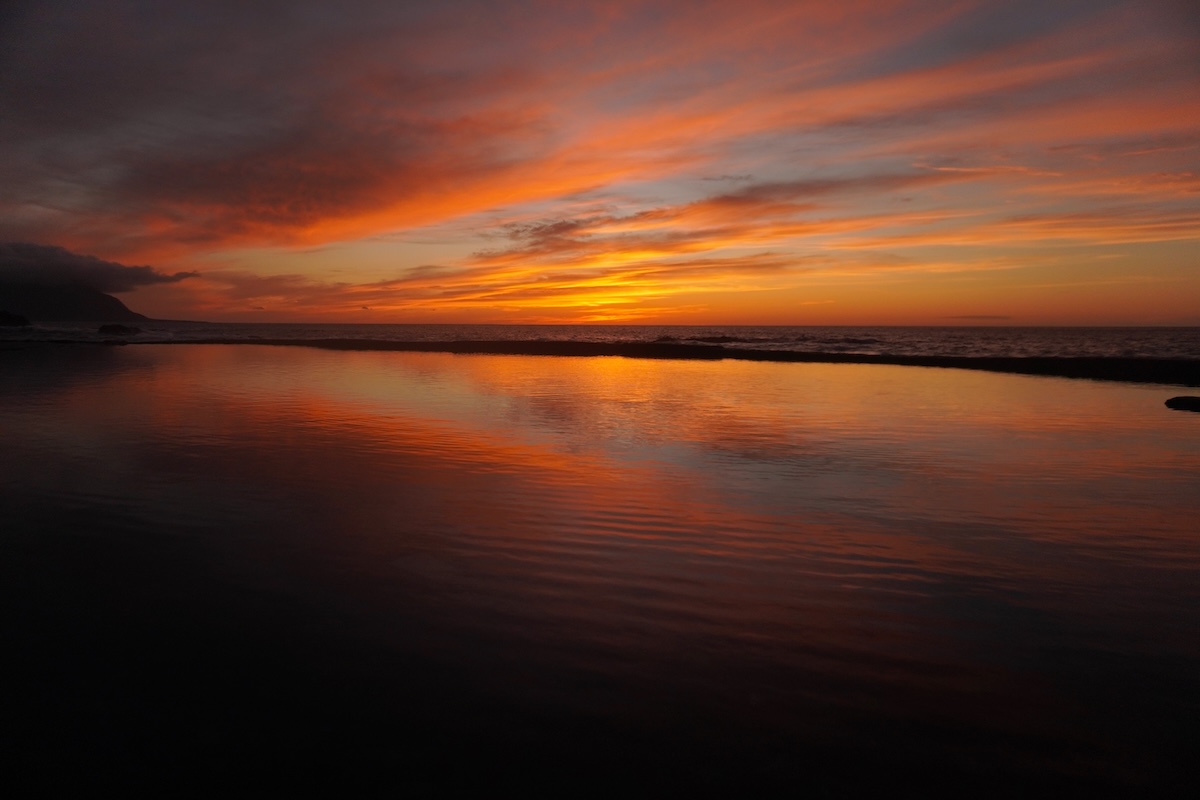
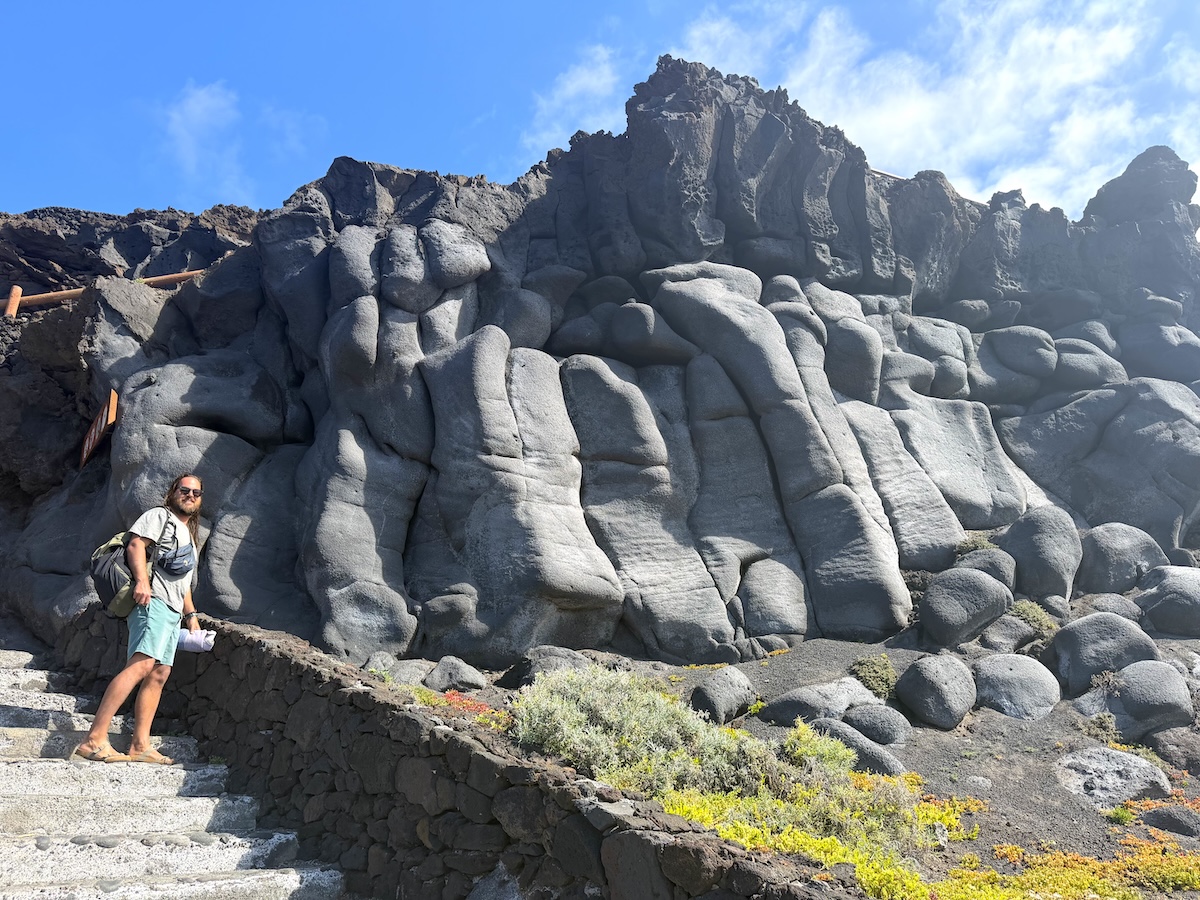
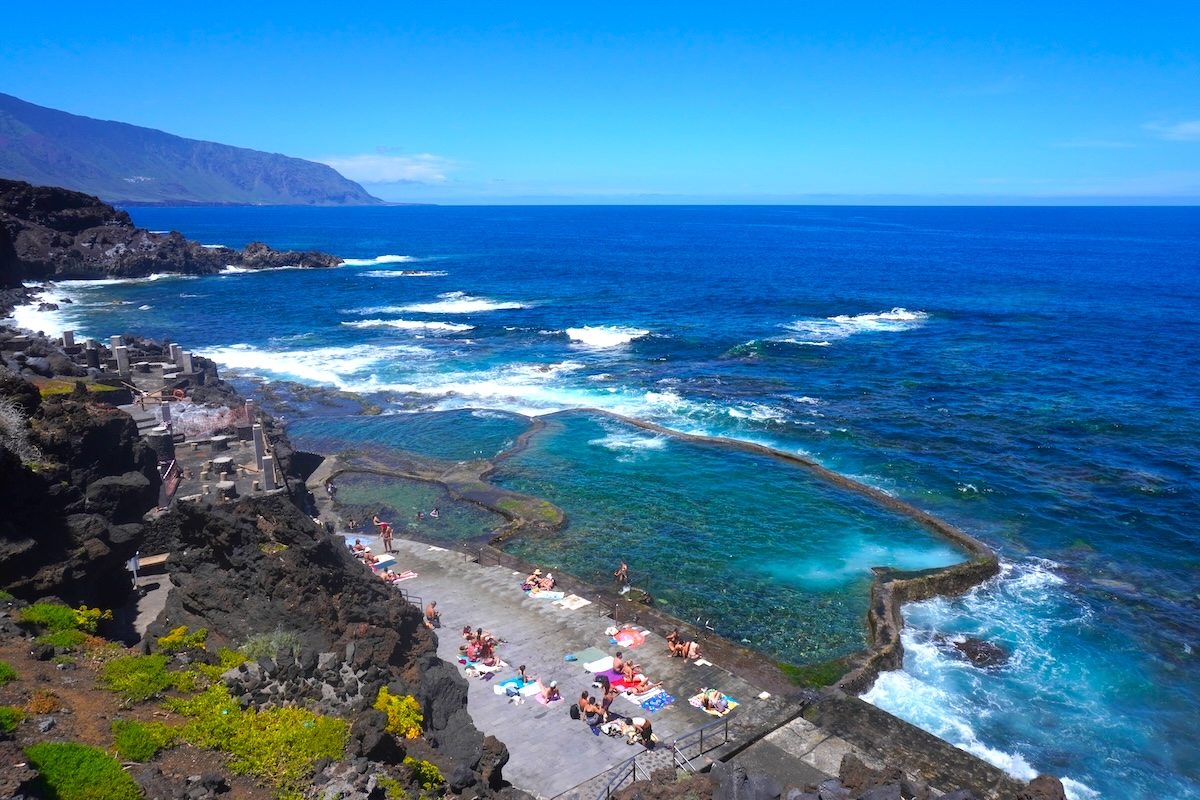
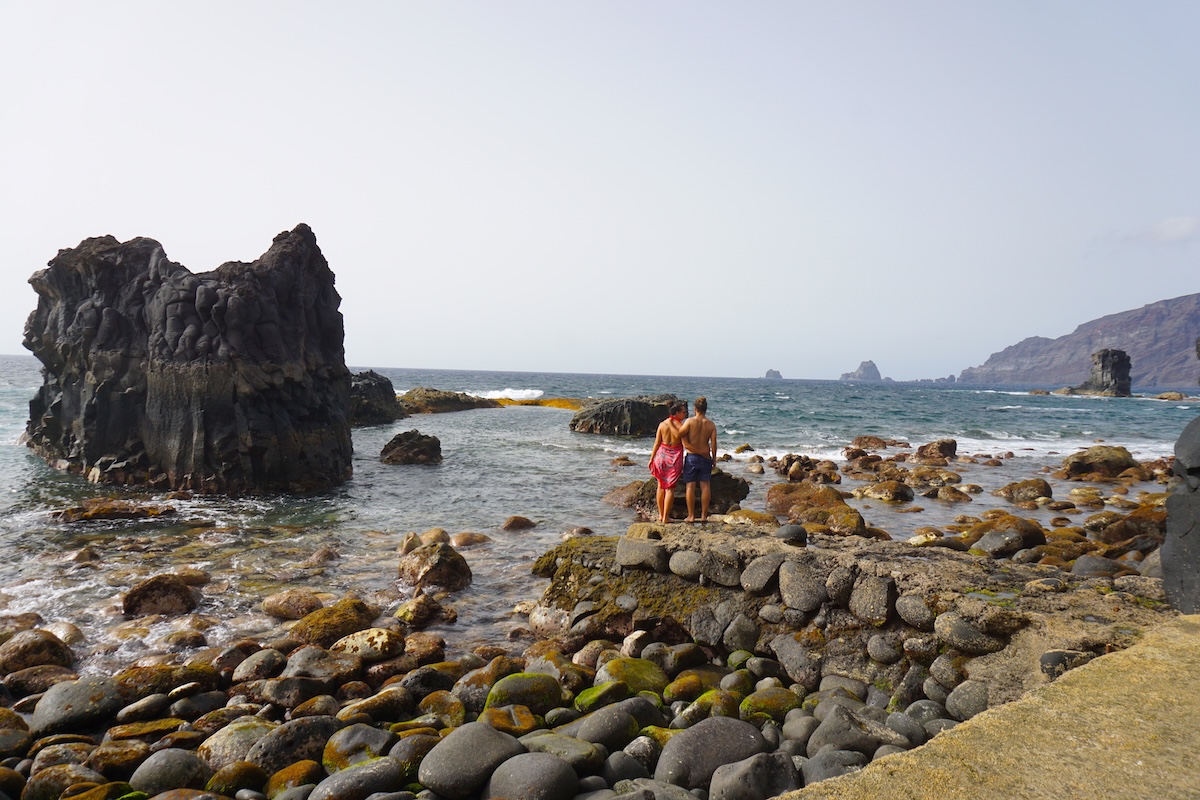
If you keep walking to the right of the La Maceta pools, you’ll come across landscapes as incredible as these.
Charo de Los Sargos
Charco de Los Sargos is without a doubt our favorite spot on El Hierro. It feels like we’re swimming in another world… Since they say a picture is worth a thousand words, here are not one, but two photos:
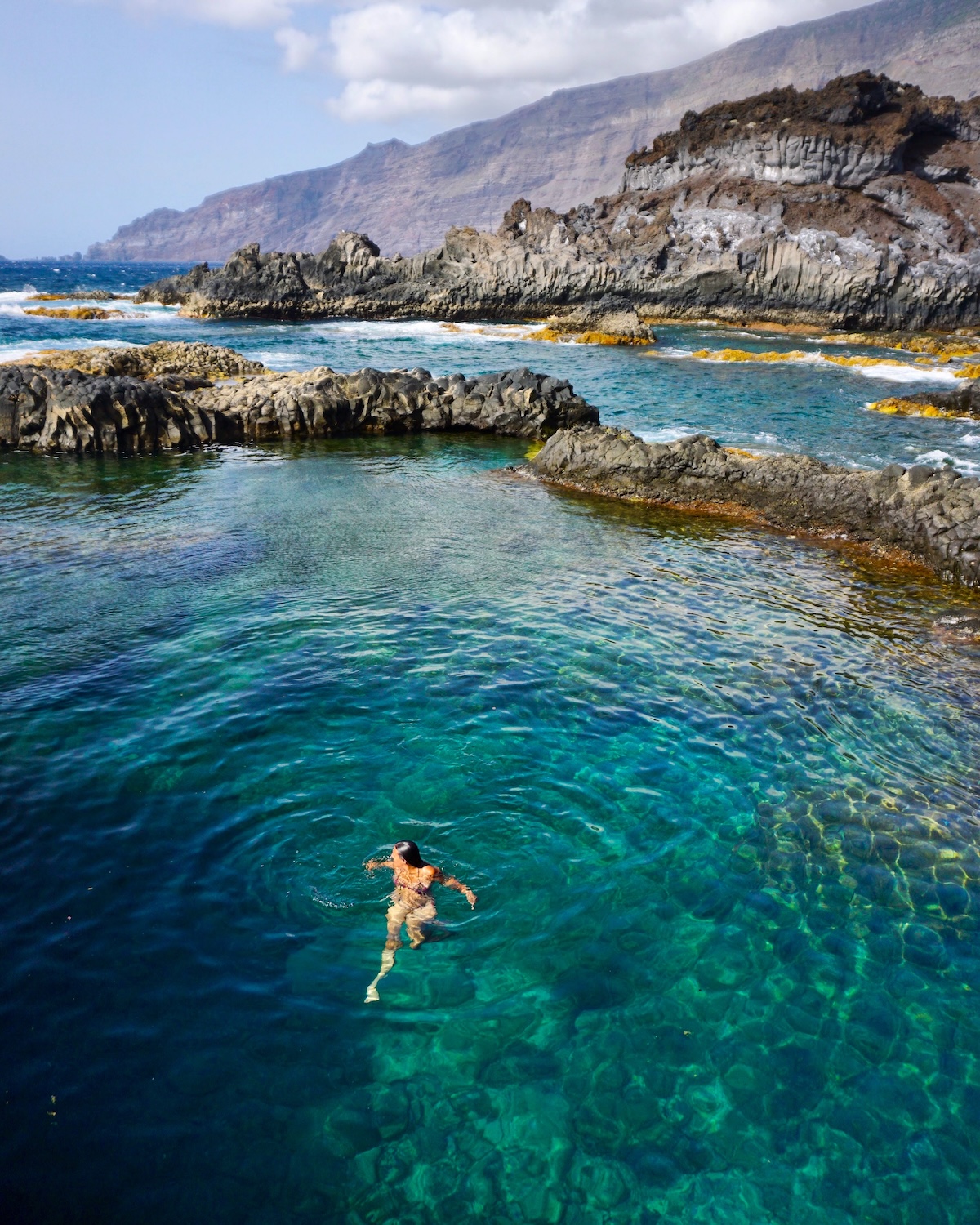
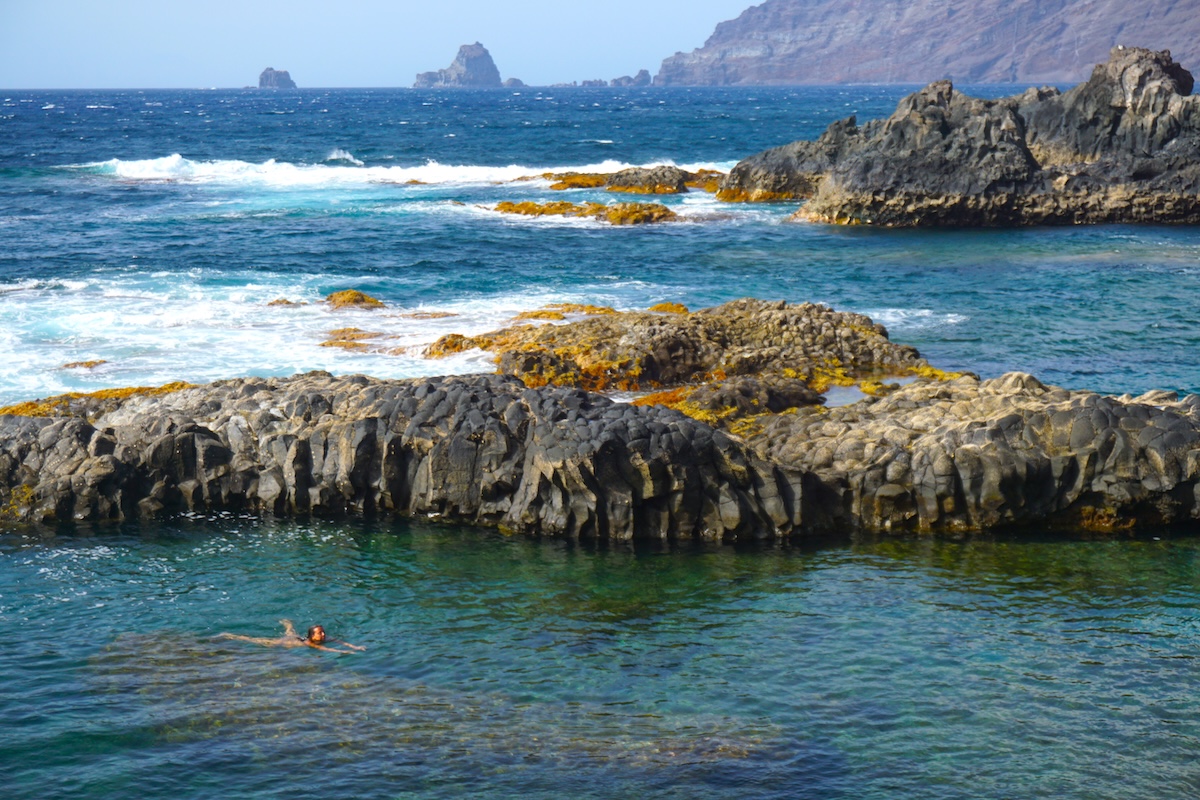
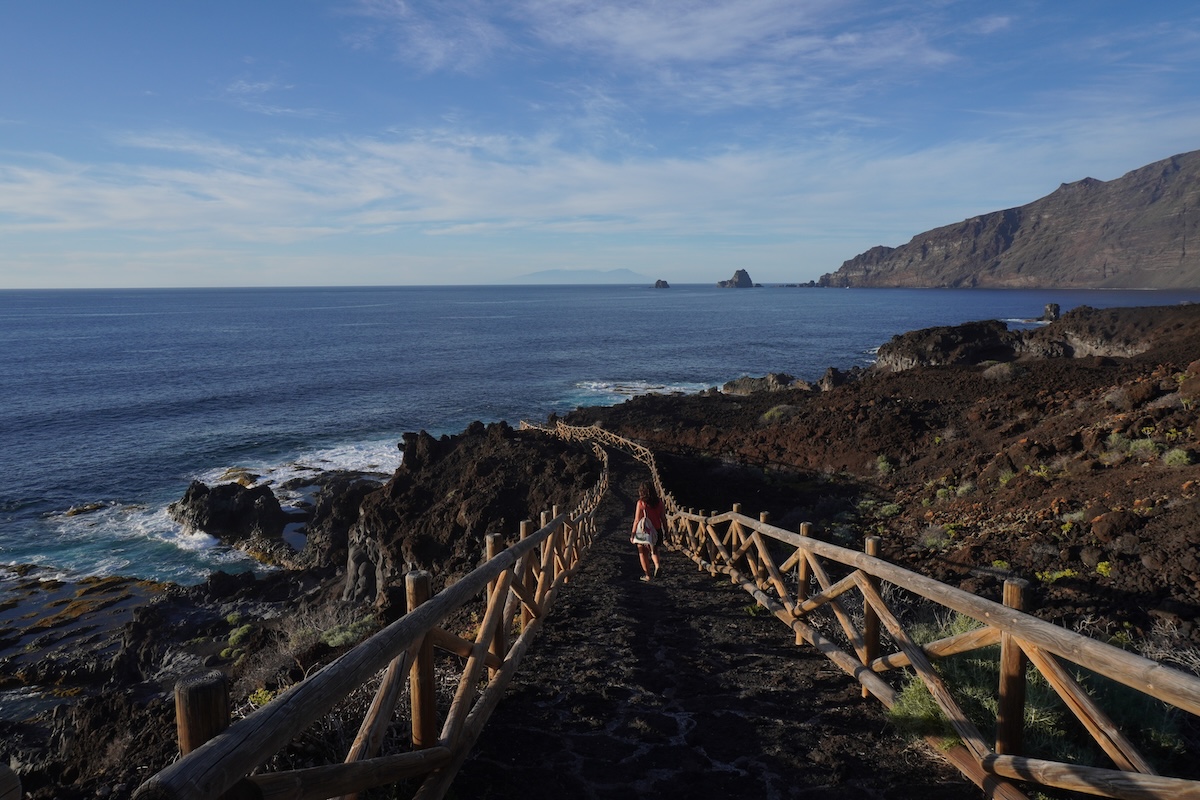
The truth is that both the crystal-clear water and the surroundings of Los Sargos are truly special. Even the walk to get to this pool invites you to head down there:
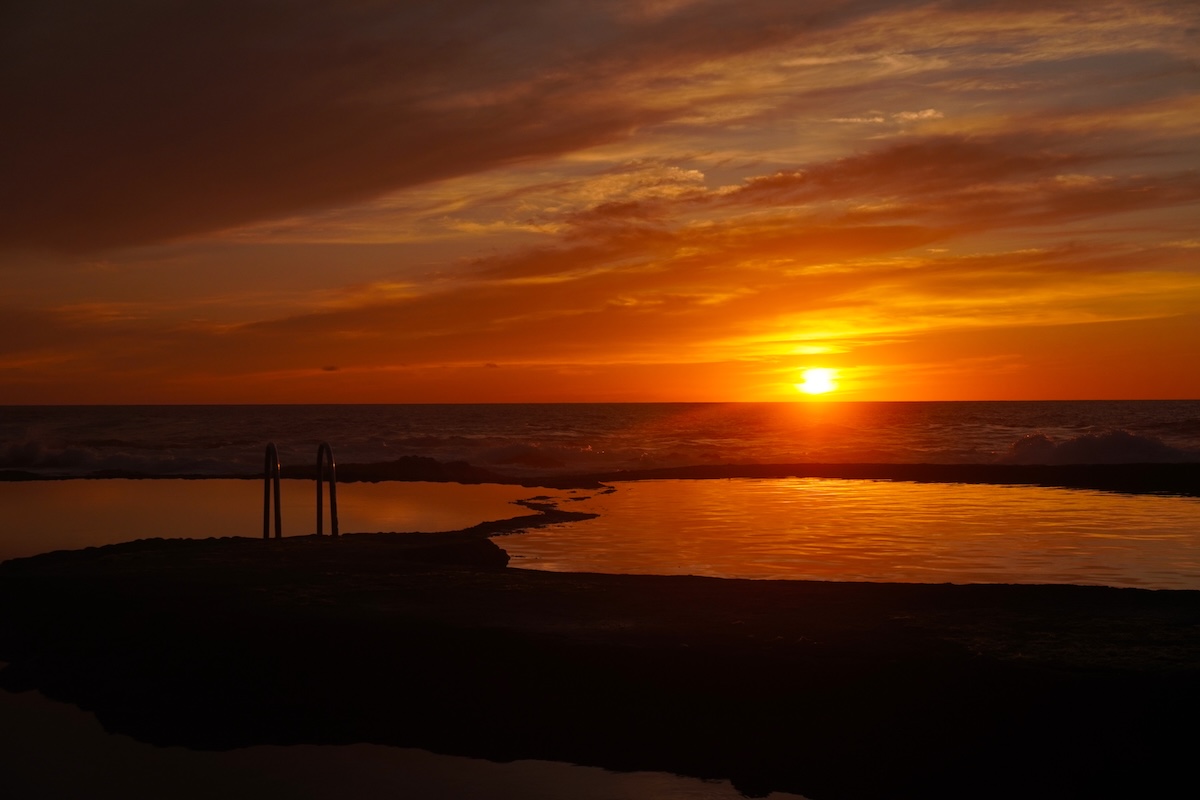
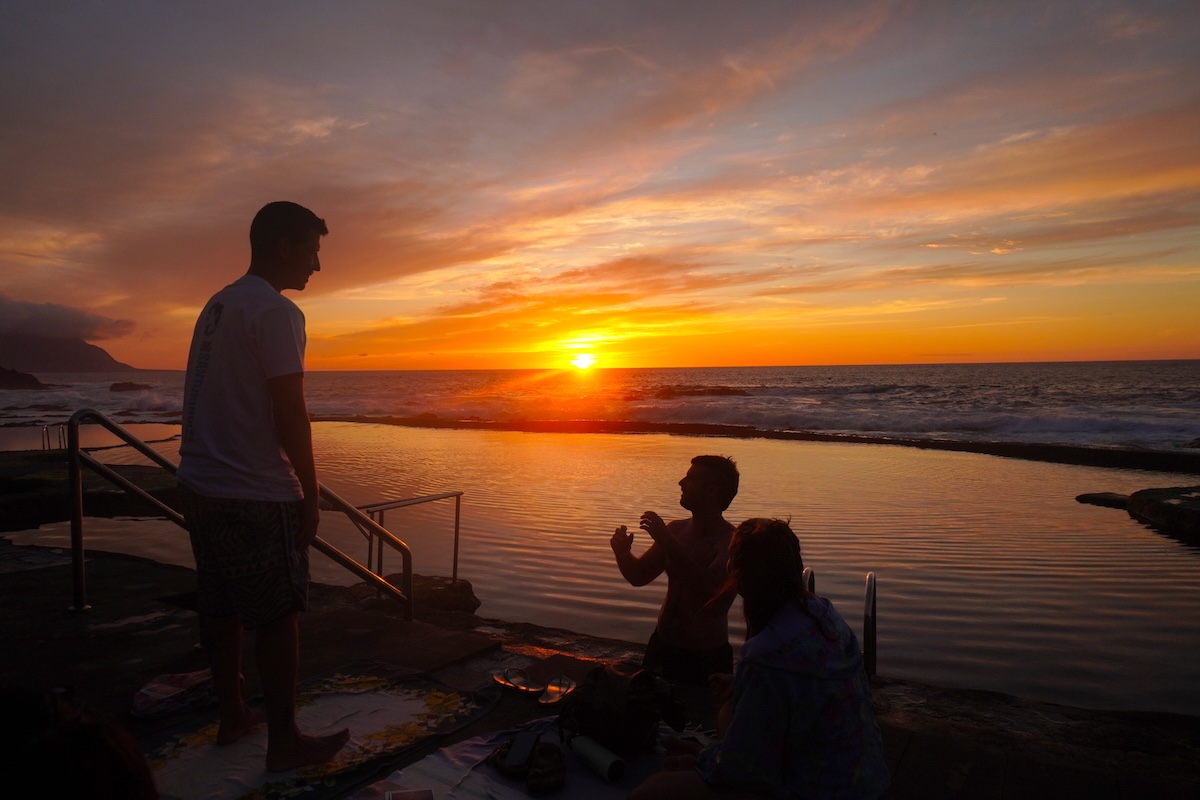
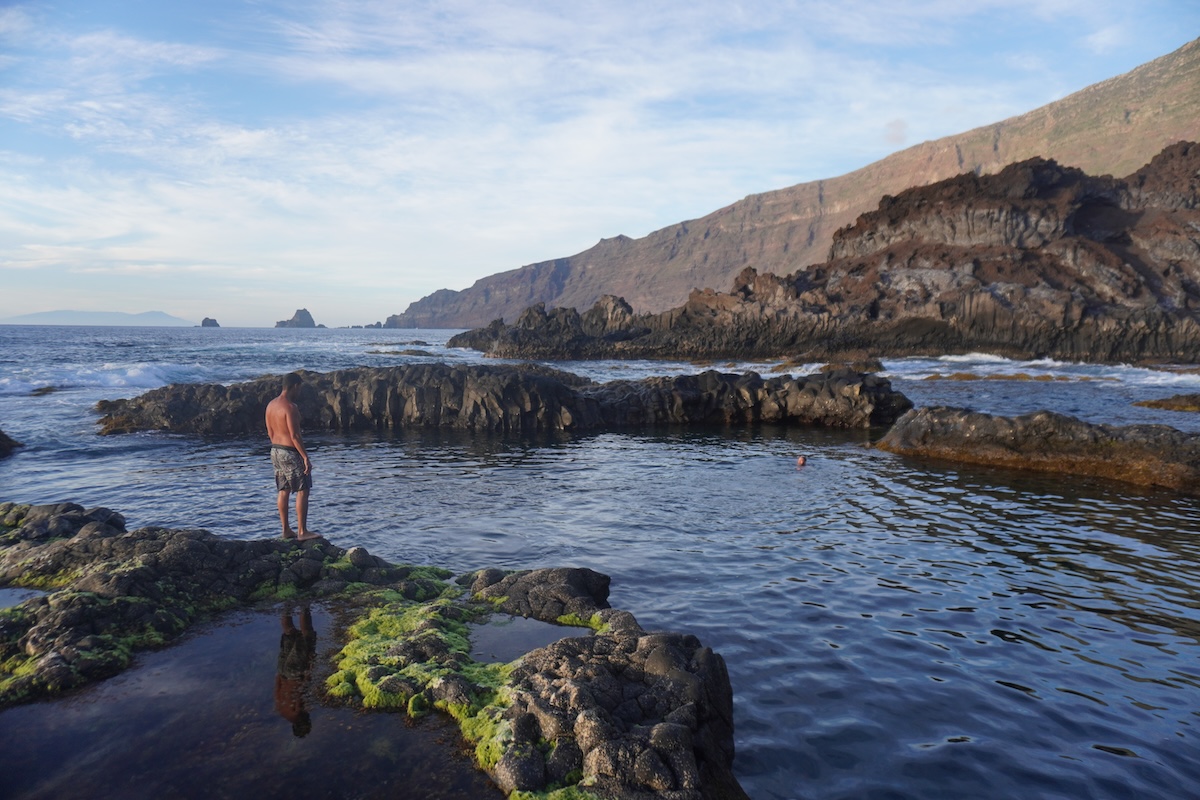
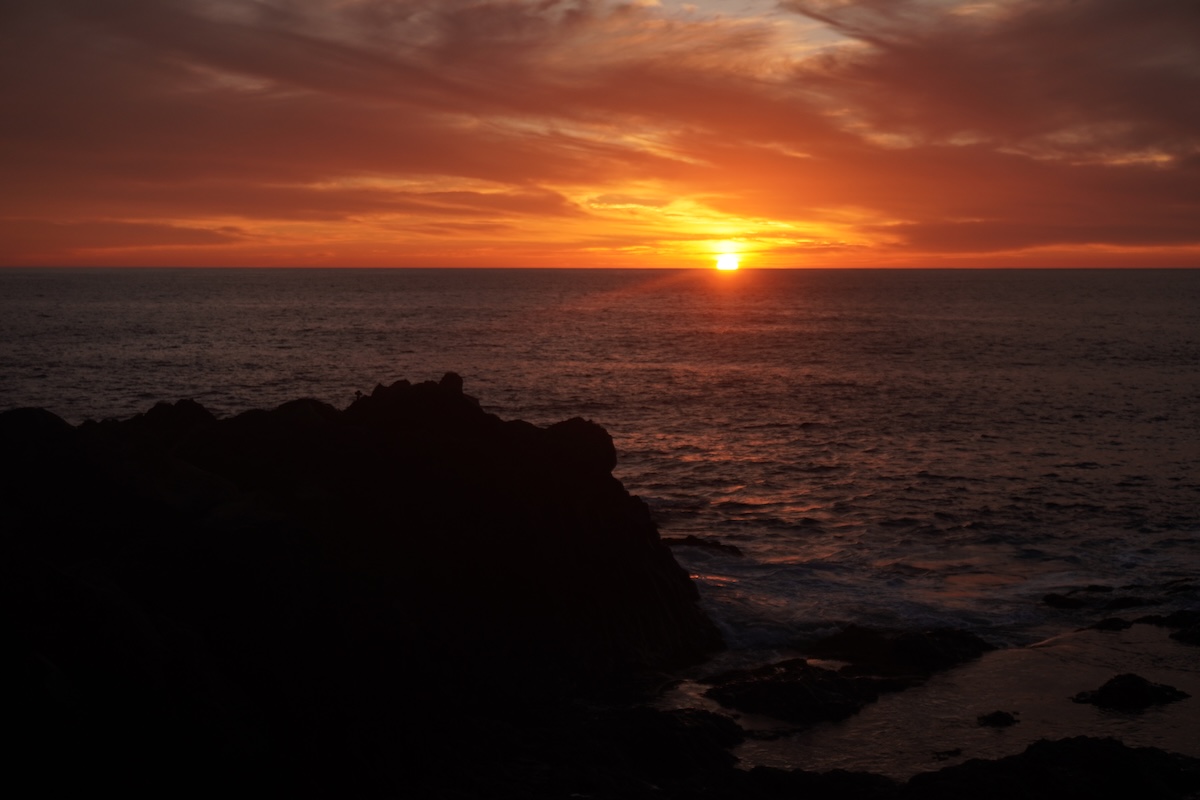
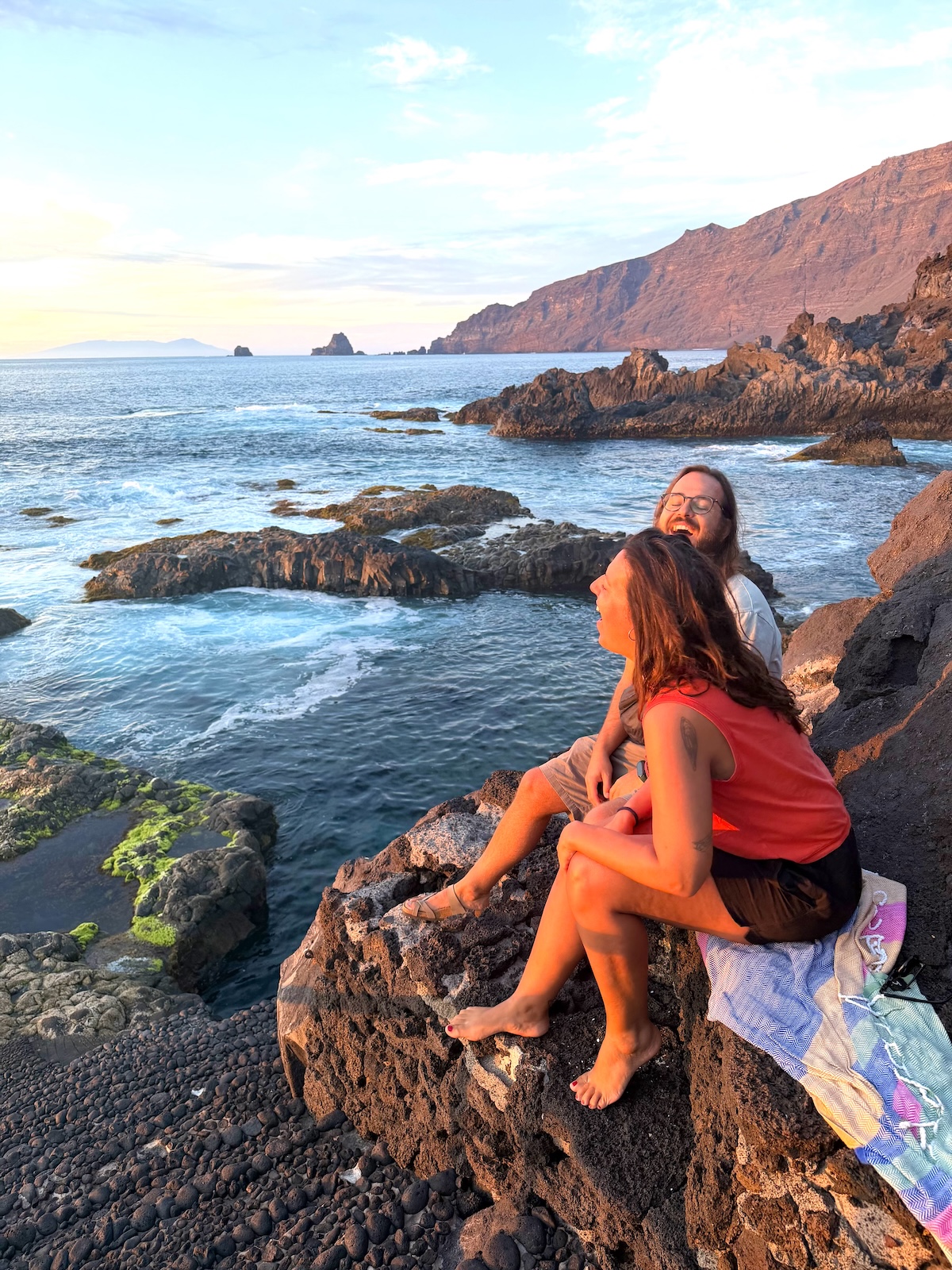
Although when we went, the sea was gently filling the Sargos pools, you might not be able to swim there depending on when you visit the island and the tide conditions (check the tides here). It’s another spot on the island where we love to watch the sunset:
Charco Azul
The Charco Azul is, without a doubt, the most famous pool on El Hierro, which takes away some of its charm since it’s small, has limited space, and is visited by many people, making it harder to enjoy.
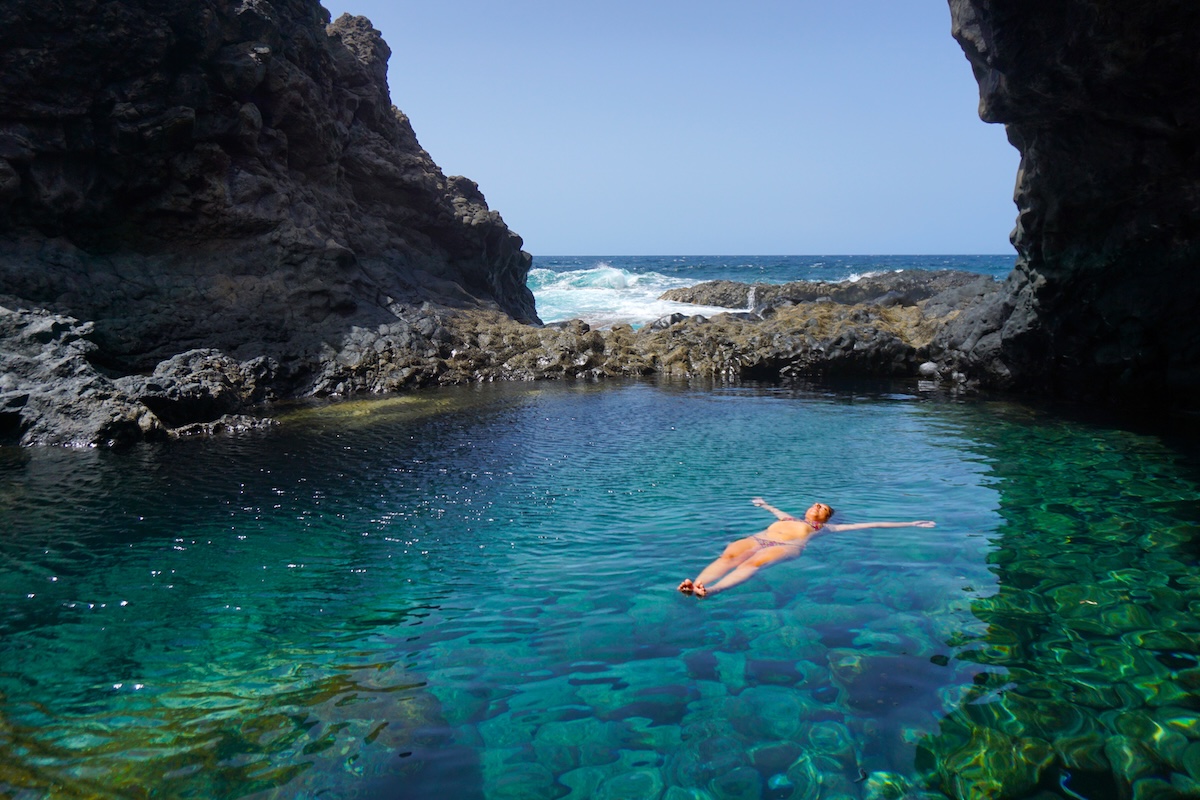
It’s the stunning color of this pool that gives it its name and makes it the best-known on the island. This natural pool is sheltered within a vault that the sea has carved out over time.
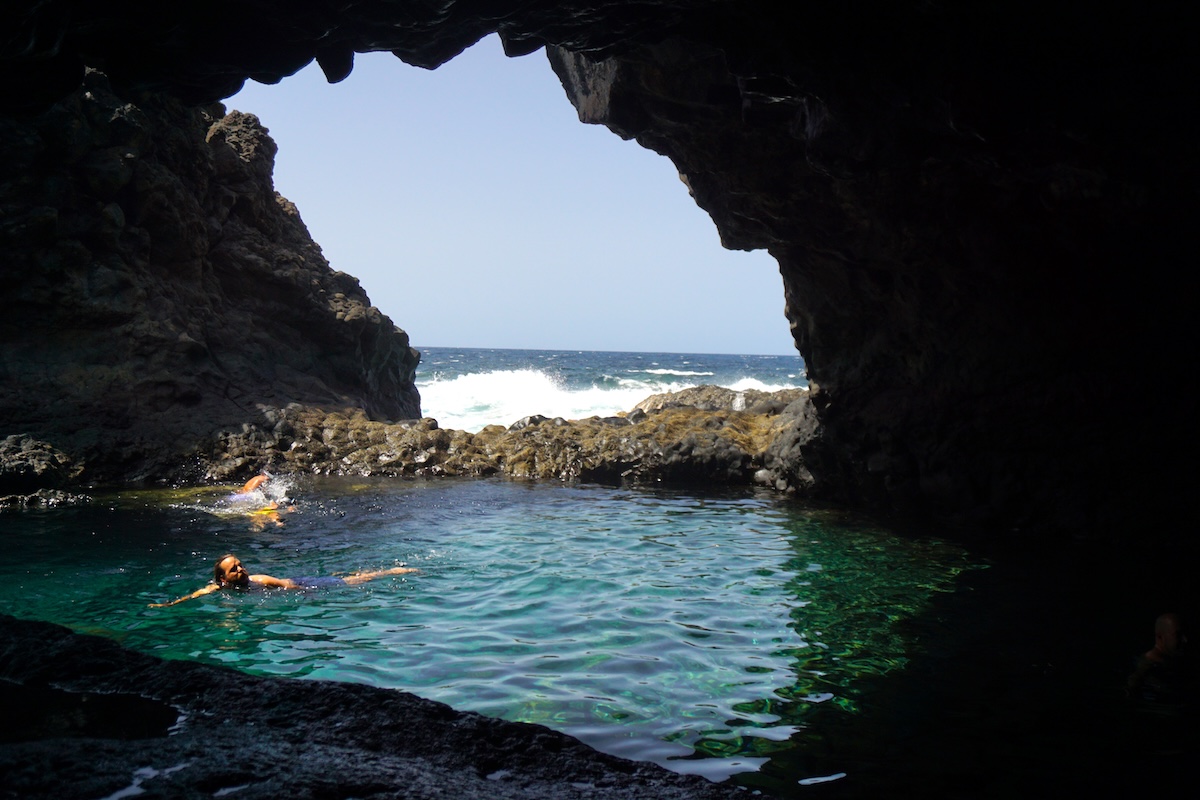
Keep in mind that you’ll need to time your visit right, it depends on the tide, so try to go at low tide (this applies to all the pools; check the tide times here). Because it’s so appealing and well-known, it can be hard to enjoy it in peace. Plus, it’s not a very large pool, nor does it have much “comfortable” space to relax in for a while. In any case, it’s highly recommended, don’t leave the island without taking a dip in the turquoise waters of the Charco Azul.
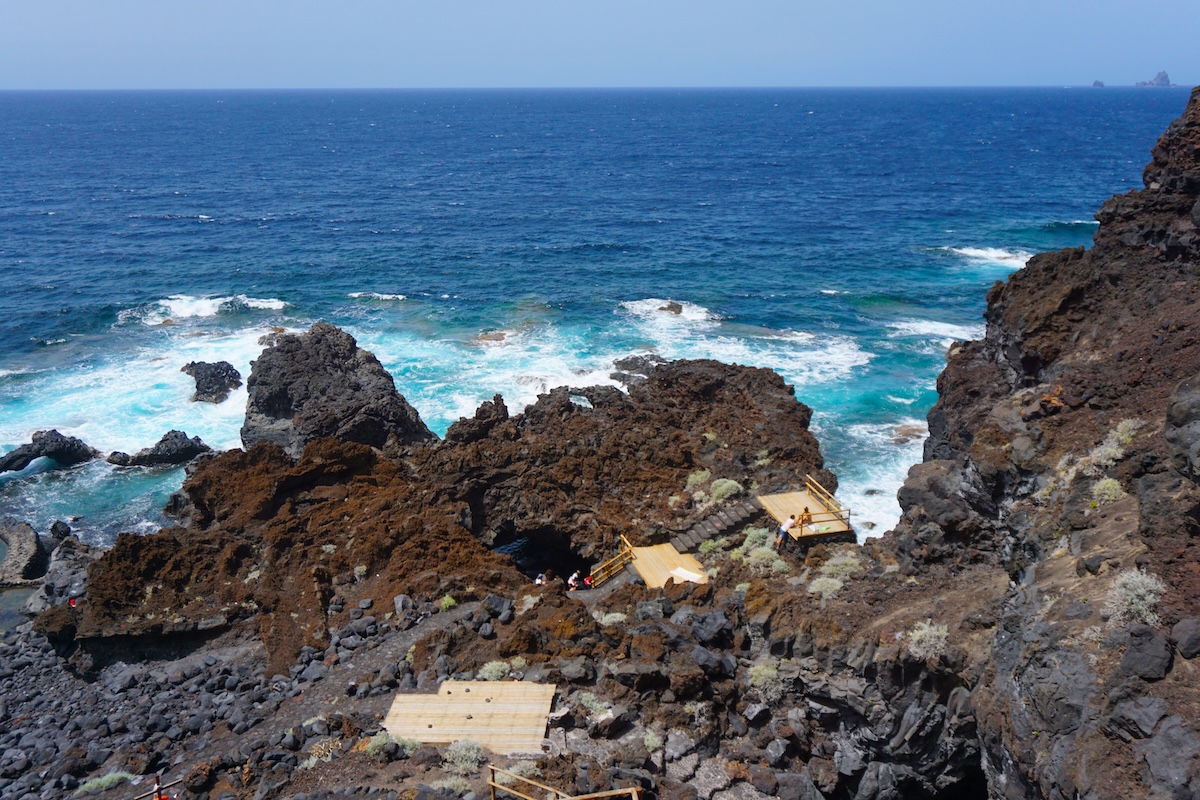
La Laja Pool
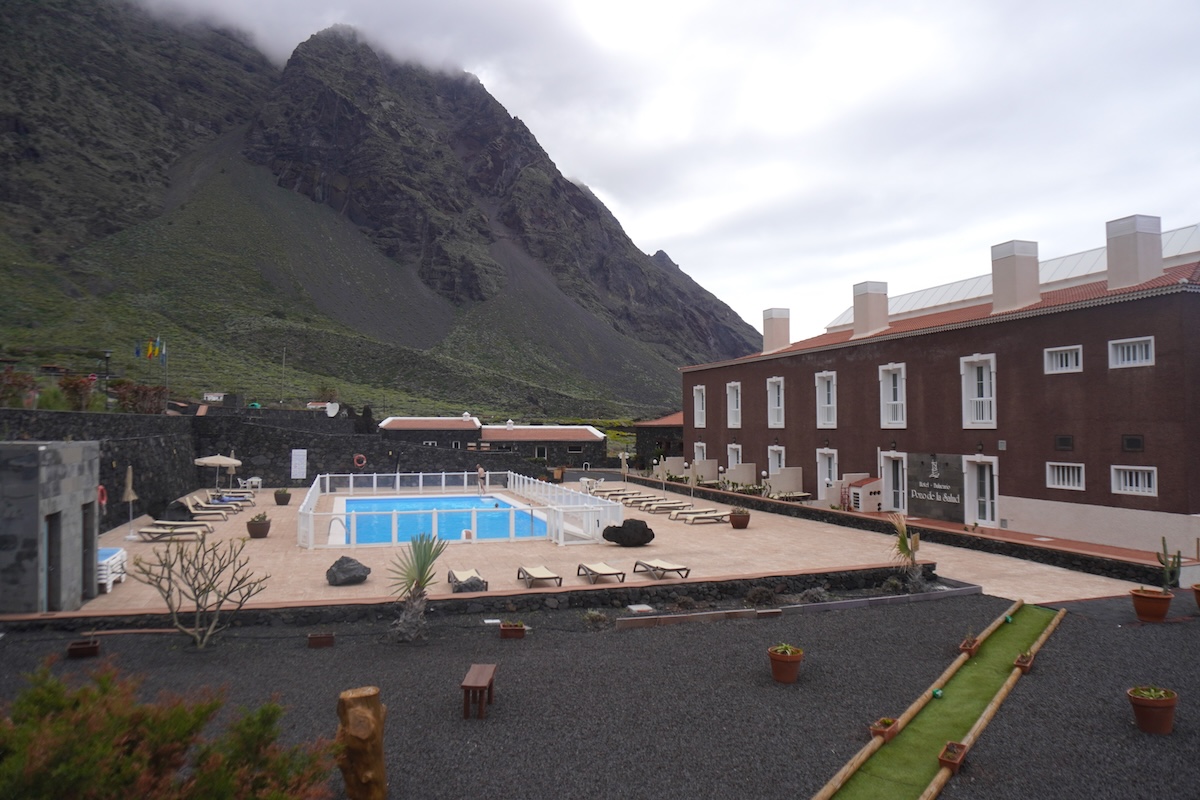
Probably the least crowded and least well-known on this list, among both visitors and locals, is the La Laja pool, located just before the Pozo de la Salud spa.
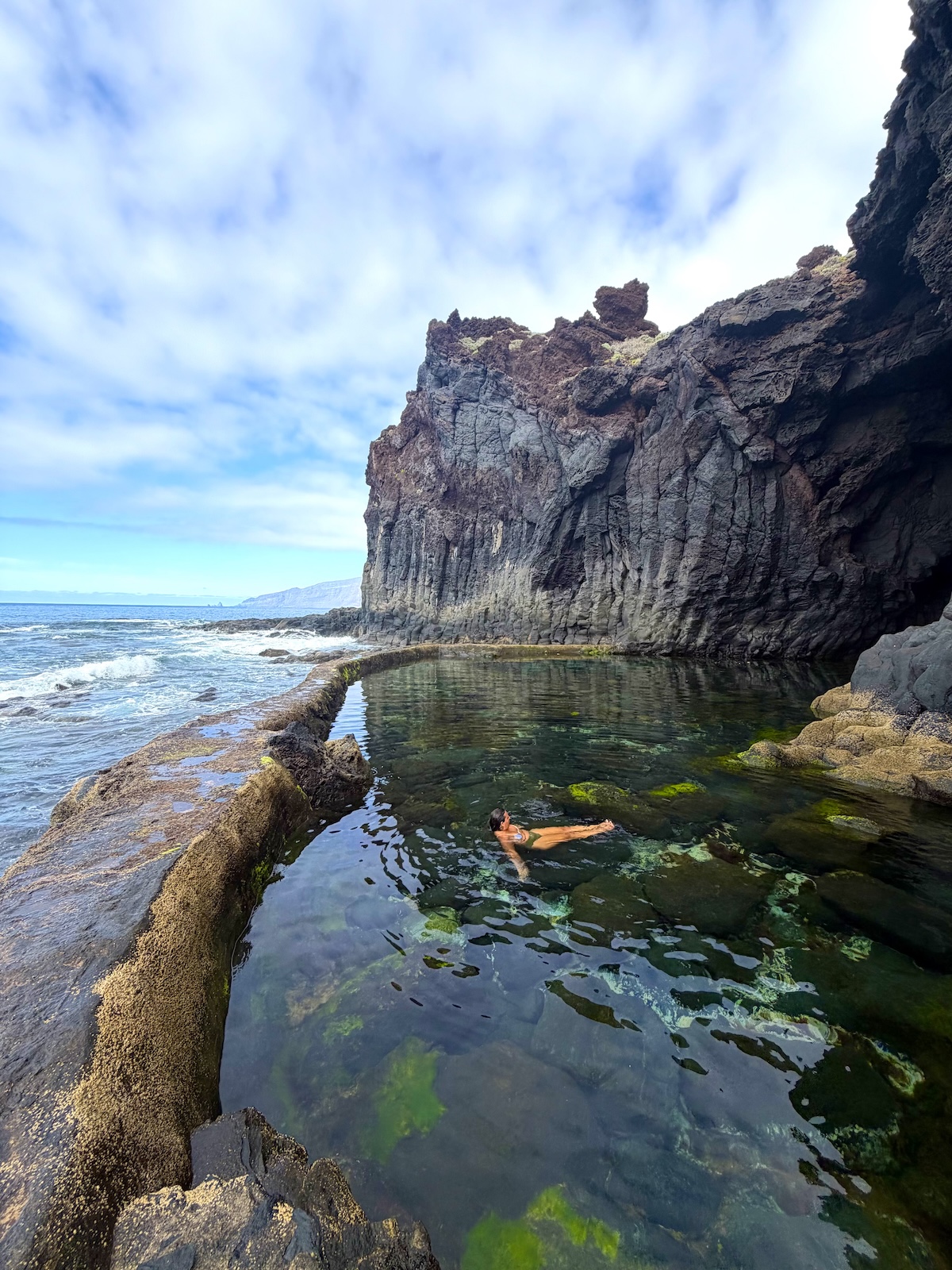
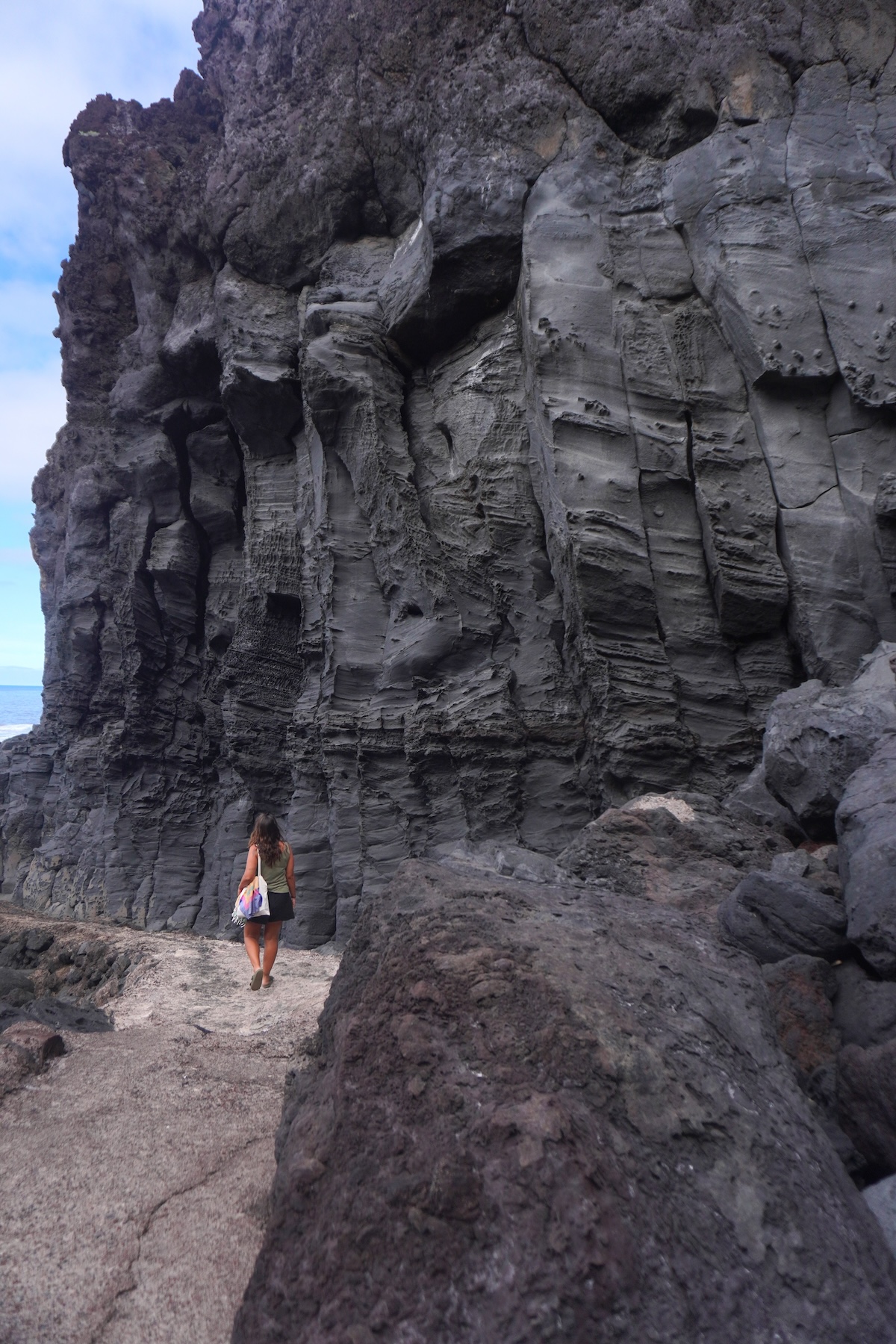
It’s only accessible when sea conditions permit; unfortunately, you can only visit right after high tide, since the pool has a crack and slowly loses water. So, once it fills up after high tide, the water doesn’t last long and gradually drains away. Check the tides here.
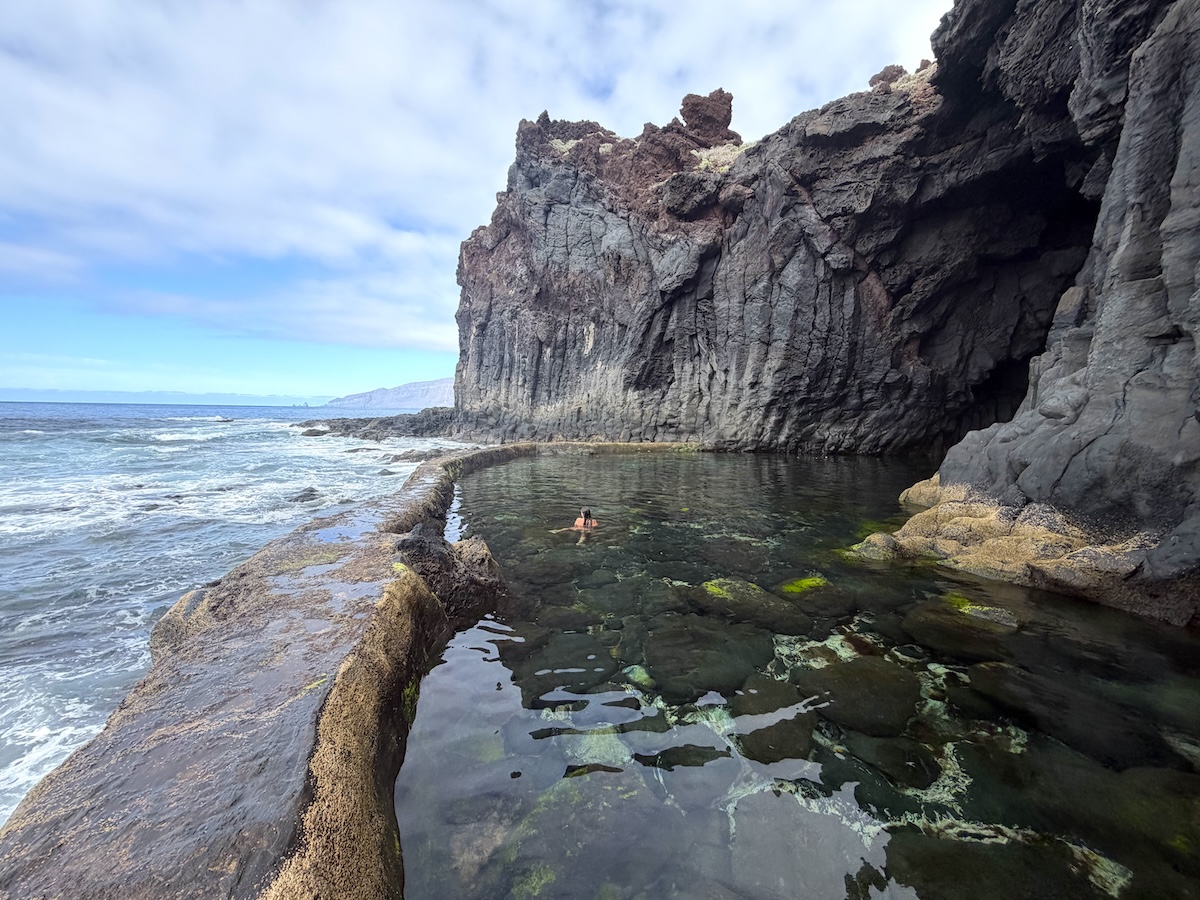
It’s very beautiful, as it’s surrounded by basalt columns and has incredibly calm water, making it extremely photogenic.
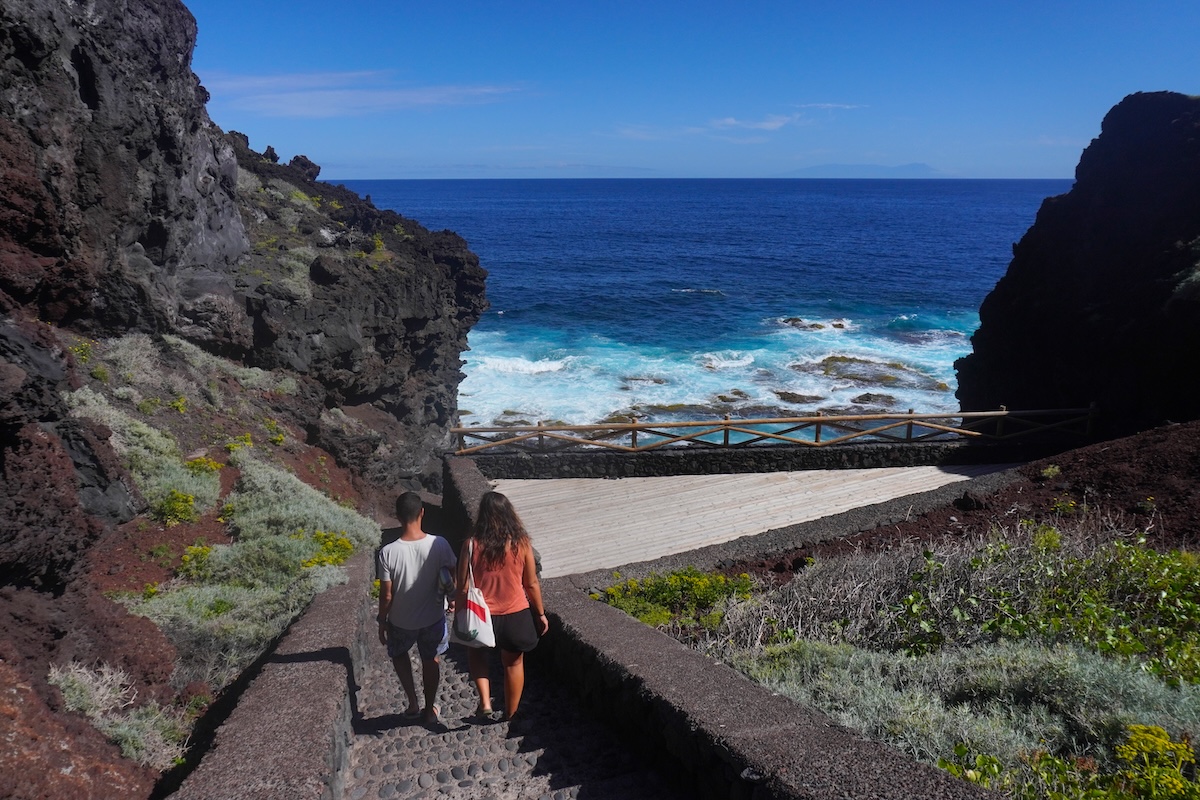
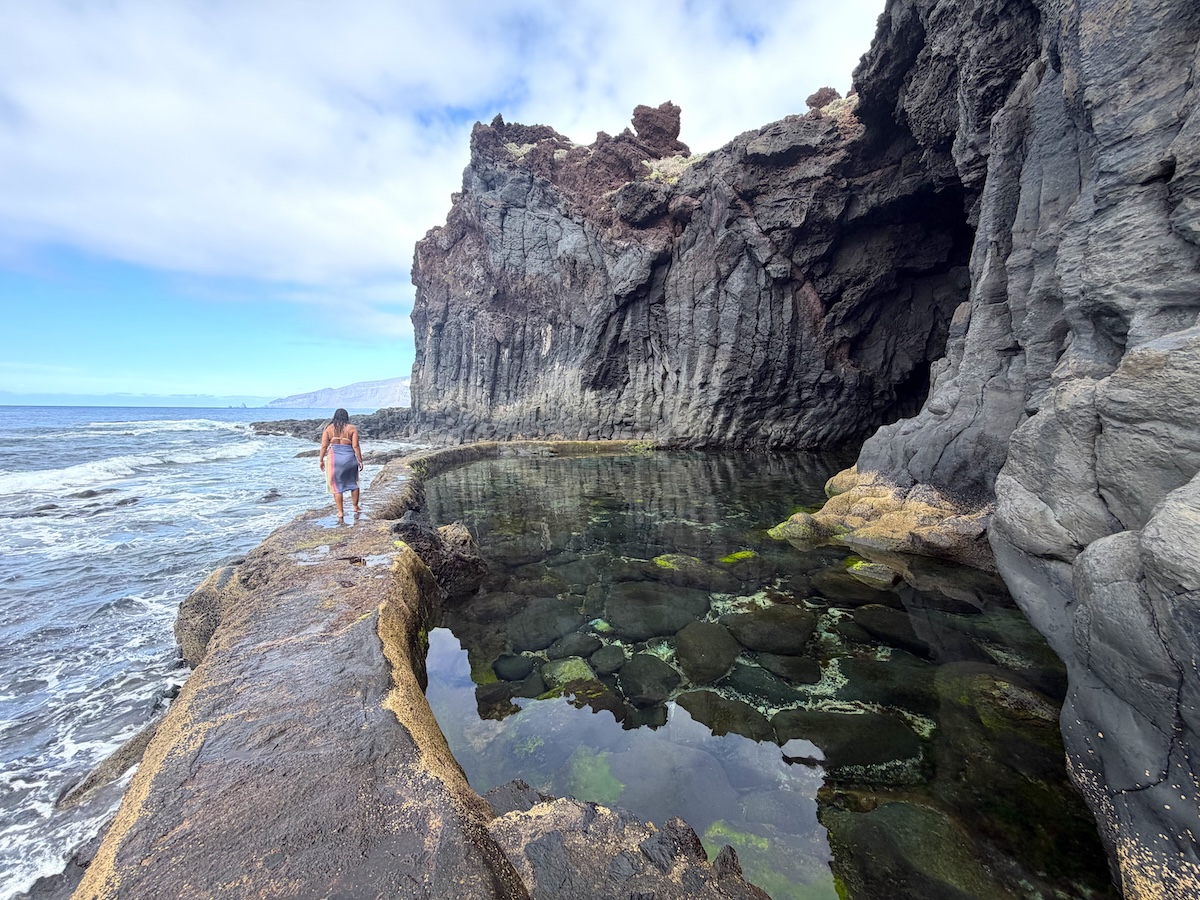
In our case, after a couple of attempts, we finally timed it right on our last trip to El Hierro (in May) and were able to enjoy it all to ourselves.
Pozo de la Salud
Pozo de la Salud is a well with water that has medicinal and healing properties, which is why the spa next to it was built, a place where you can stay today.
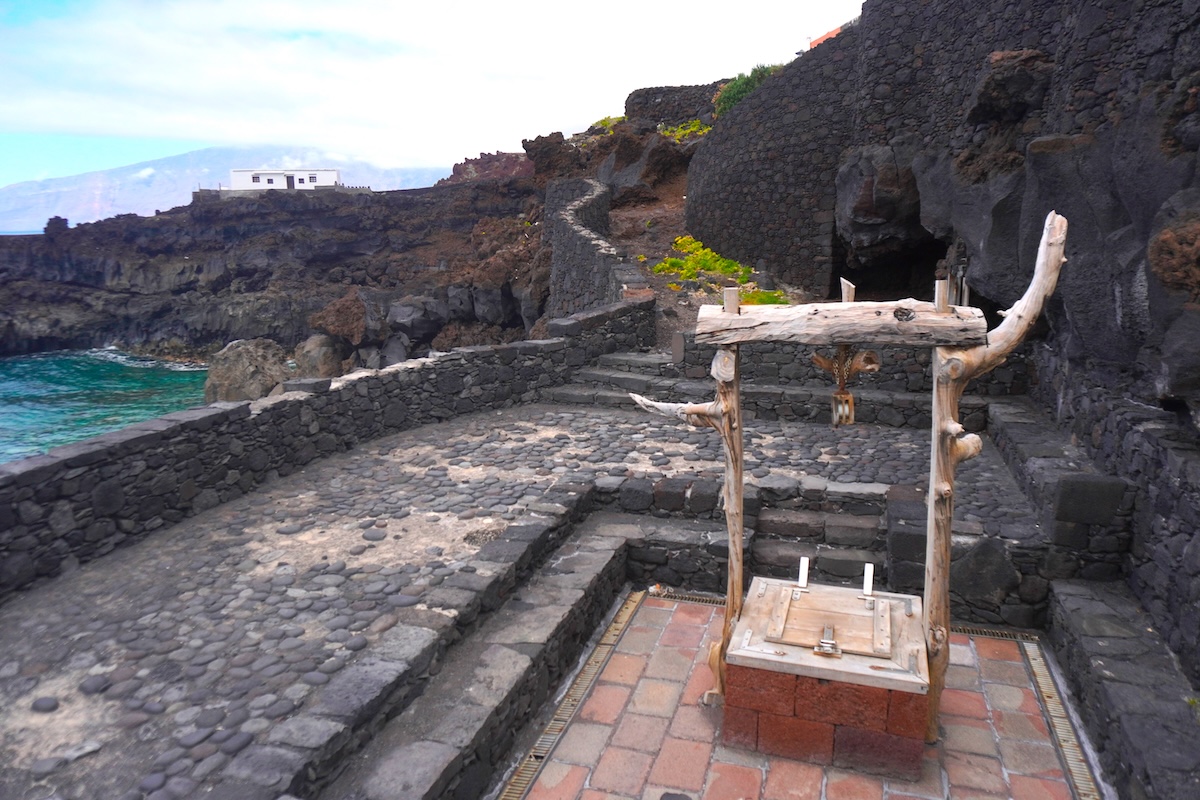
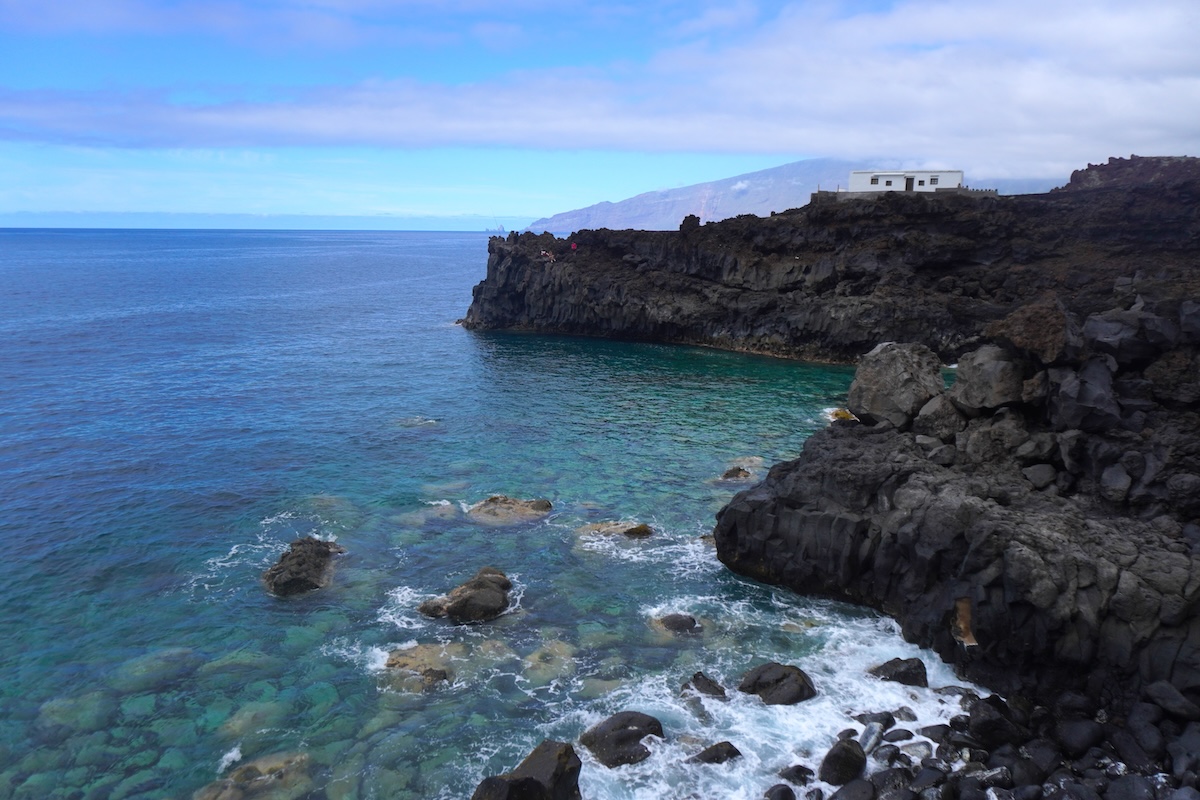
It is said that local shepherds observed the effects of these medicinal waters on their livestock. Starting in the 18th century, people began to take advantage of the waters’ properties for human consumption as well, and eventually, in the 19th century, they gained worldwide fame, even exporting the water abroad.
The current spa opened in 1996.
Arenas Blancas Beach
Arenas Blancas Beach, as its name suggests, is the only beach with any white sand on El Hierro. It’s formed from the remains of seashells carried in by the currents and eroded by the sea. The sea is usually calm here, and it’s a completely unspoiled and uncrowded beach.
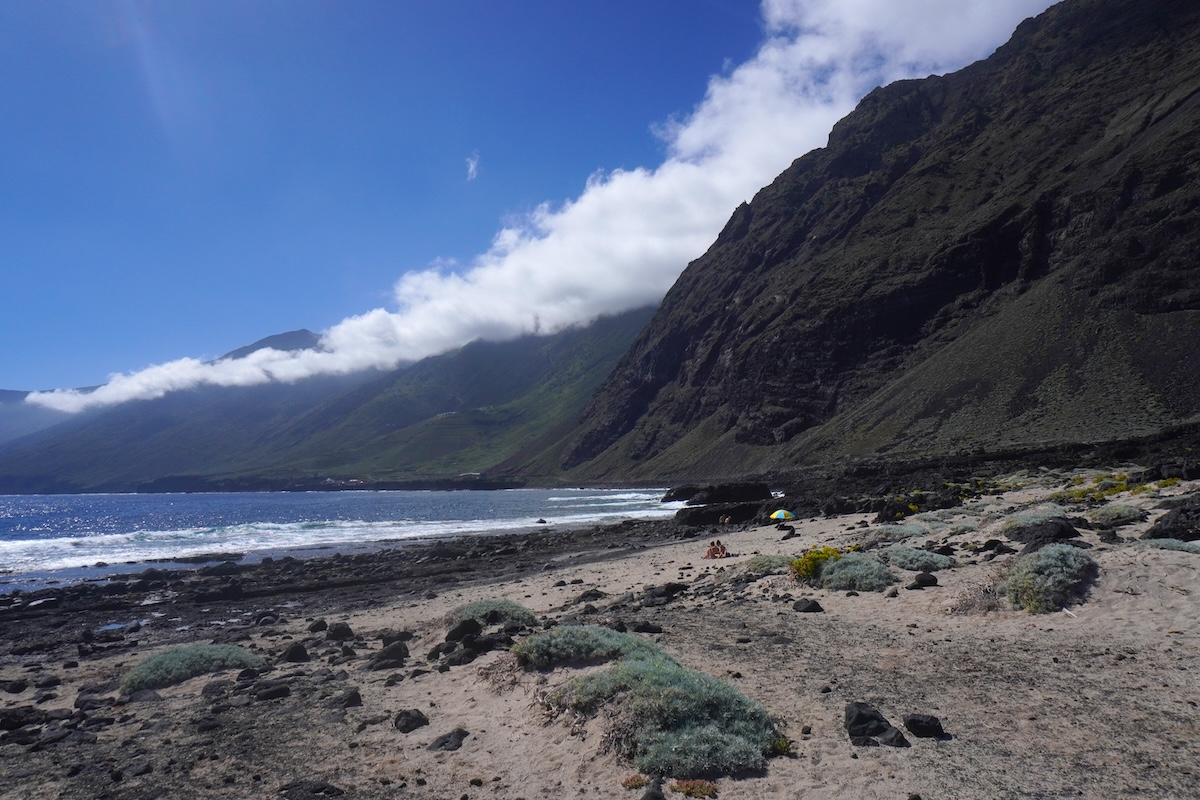
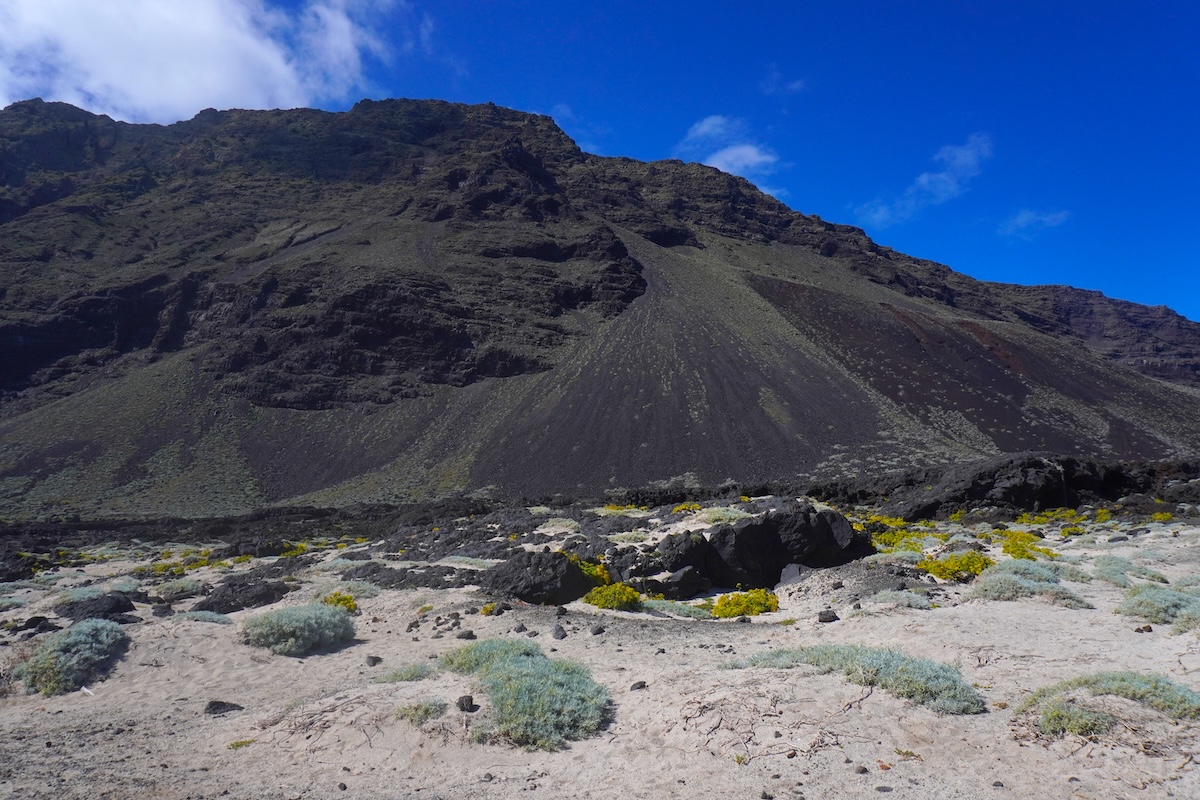
The white sand is the result of the grinding and decomposition of seashells and marine mollusks. As we’ve mentioned, this is the only place on El Hierro where you’ll find a beach with these characteristics.
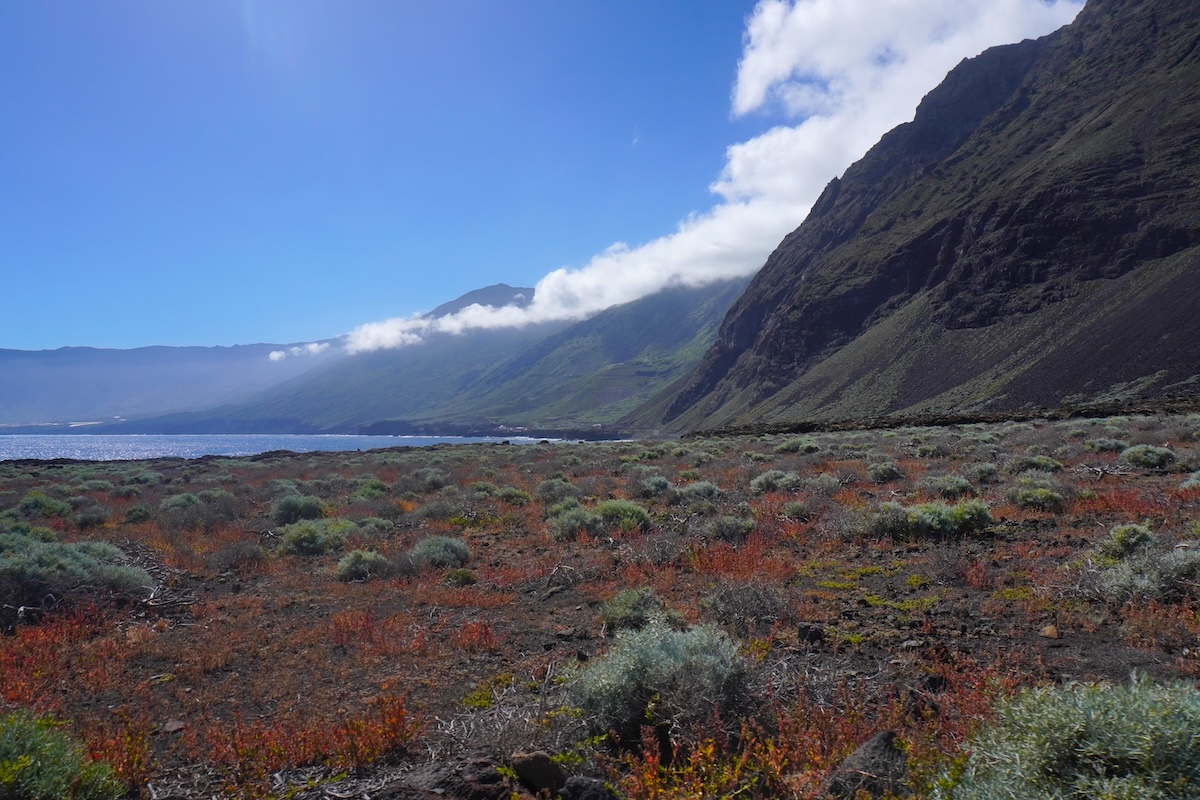
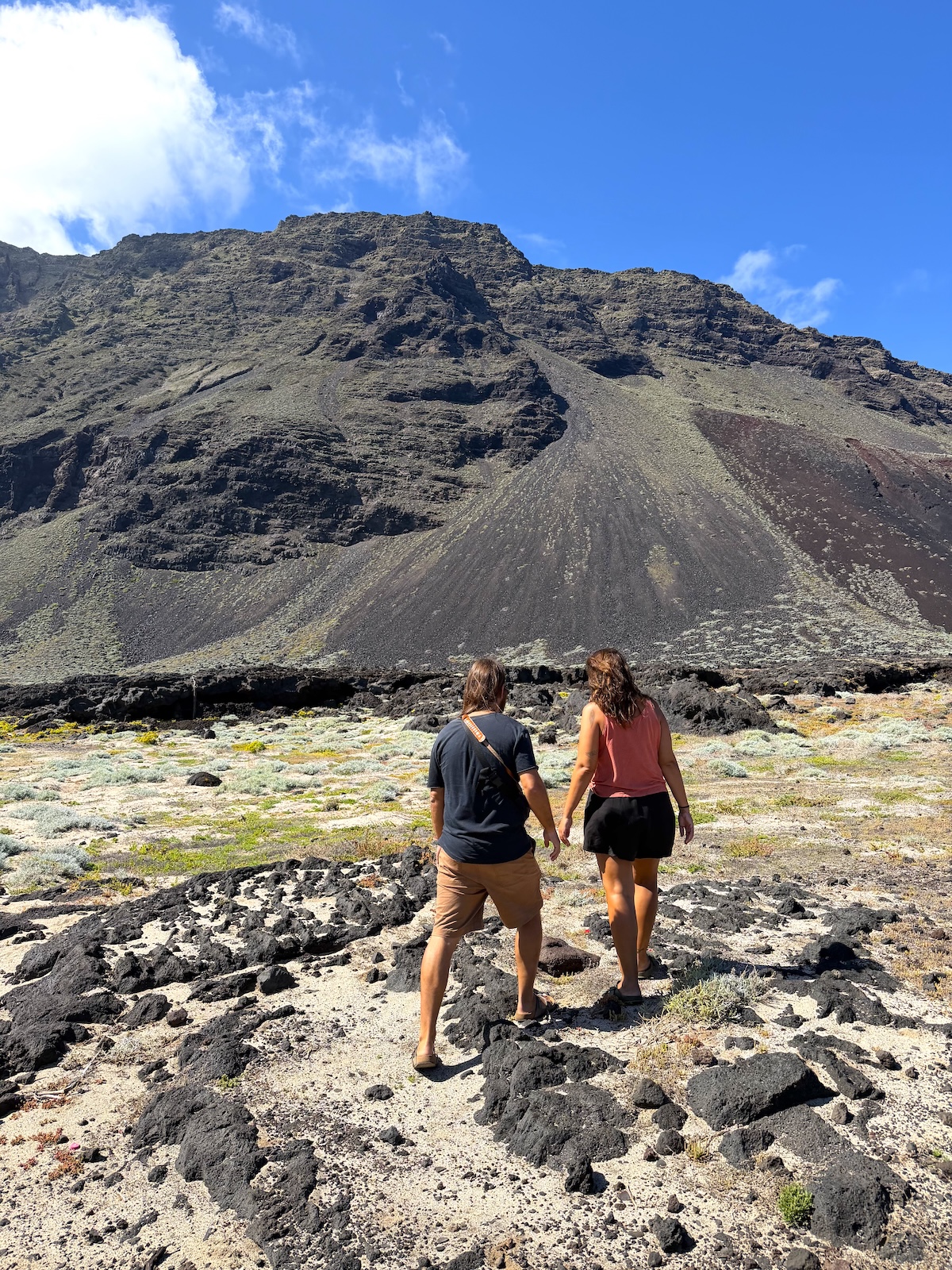
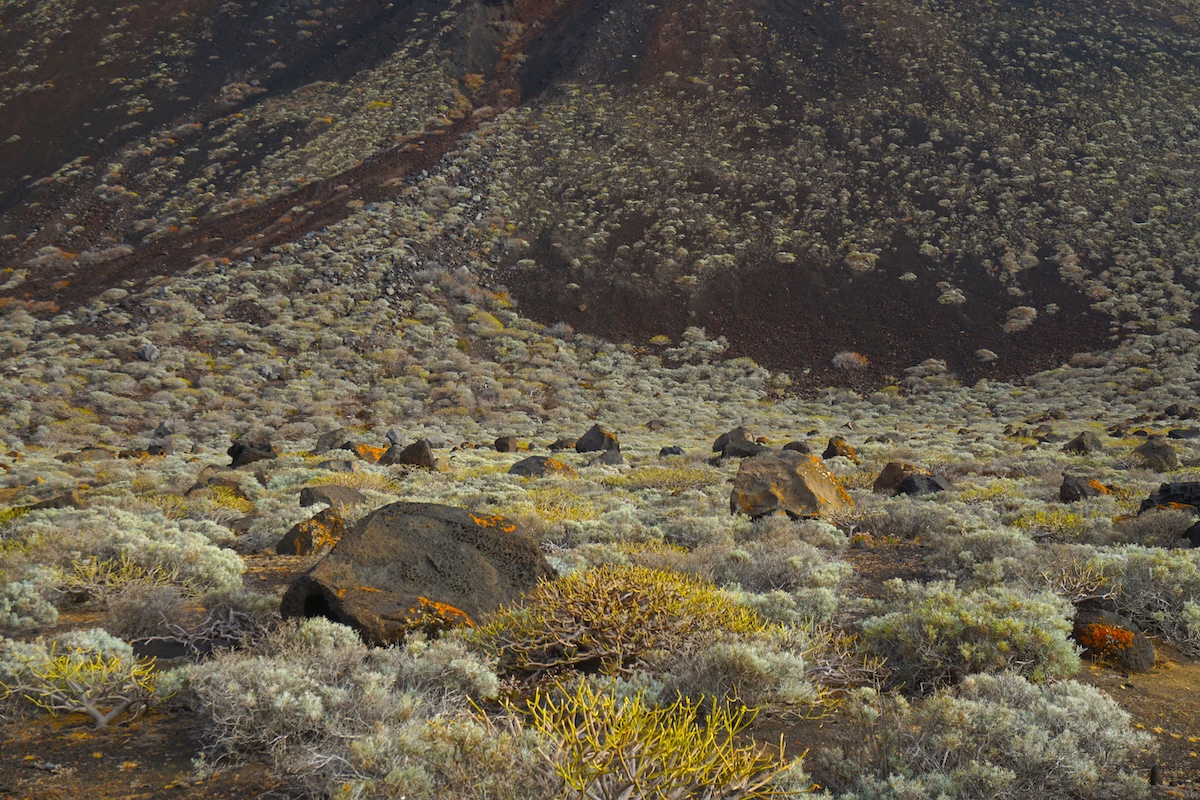
Verodal Beach
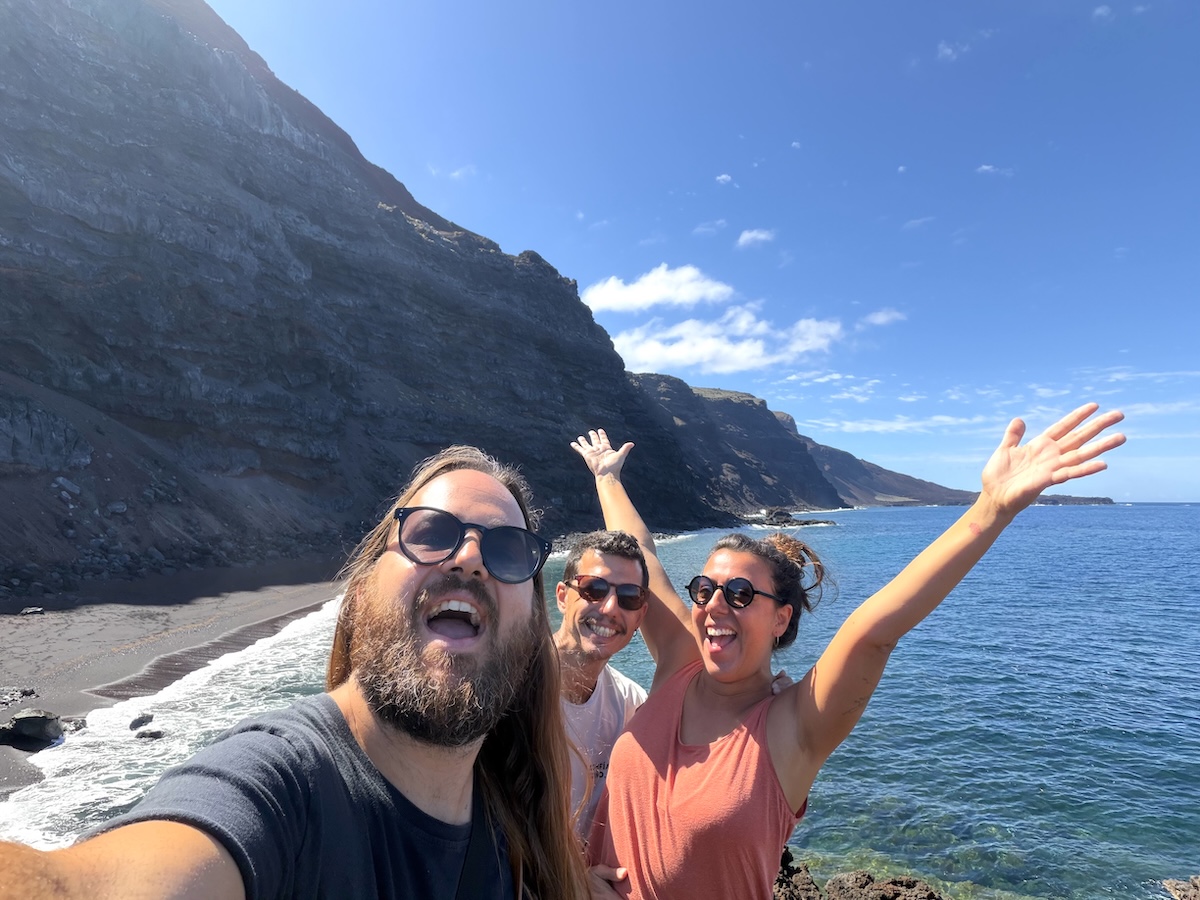
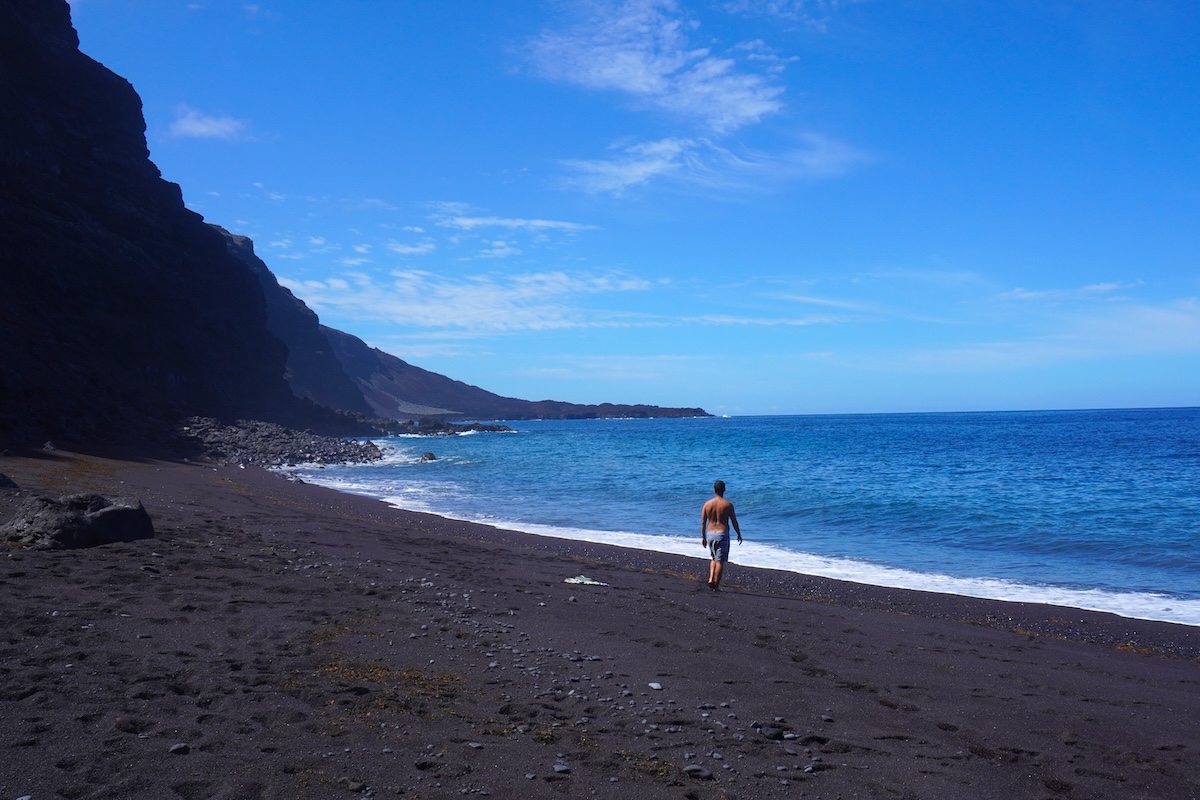
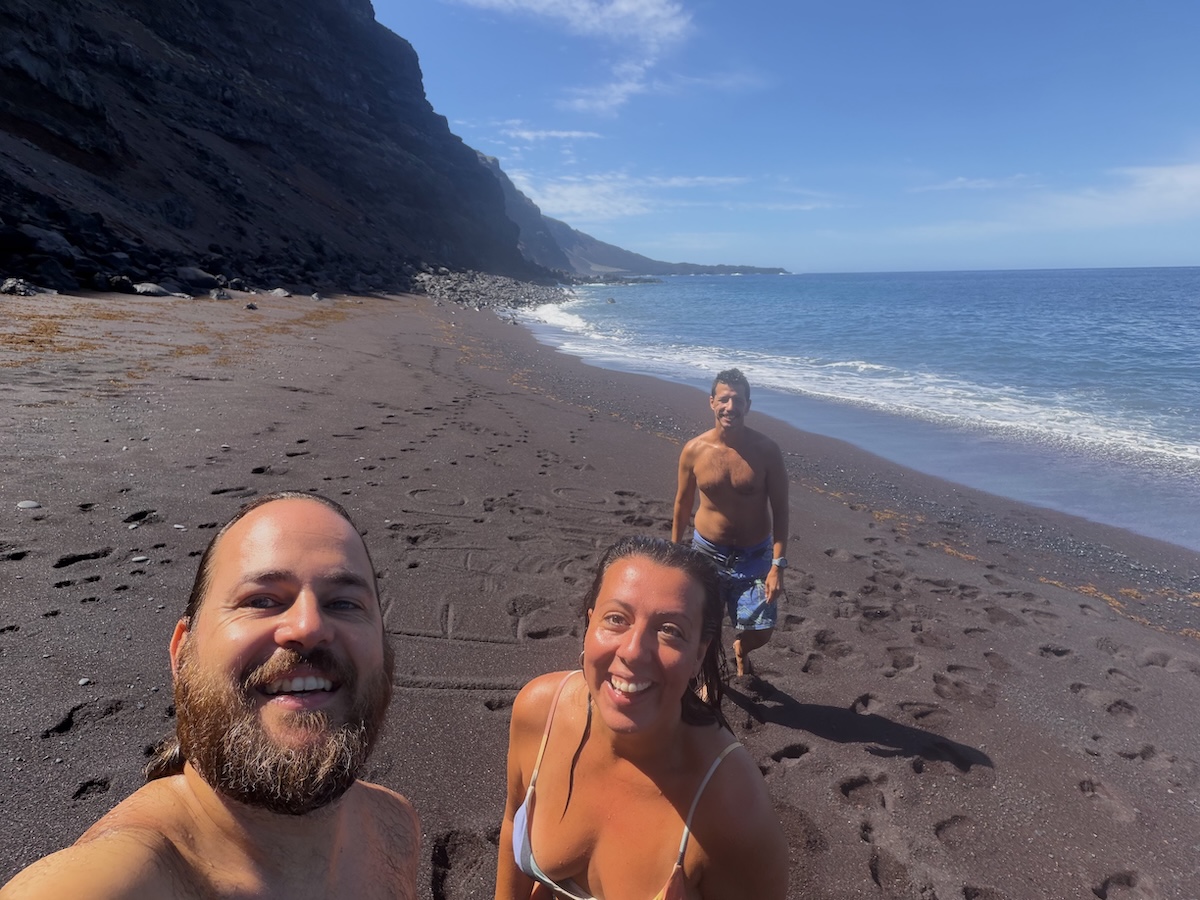
Verodal Beach is an incredible red/black sand beach that contrasts with the blue of the Atlantic and the cliffs. Unfortunately, there are strong currents, so swimming isn’t recommended (unless the sea is calm), but it’s worth visiting if only for the views. It can also be a special spot to watch the sunset.
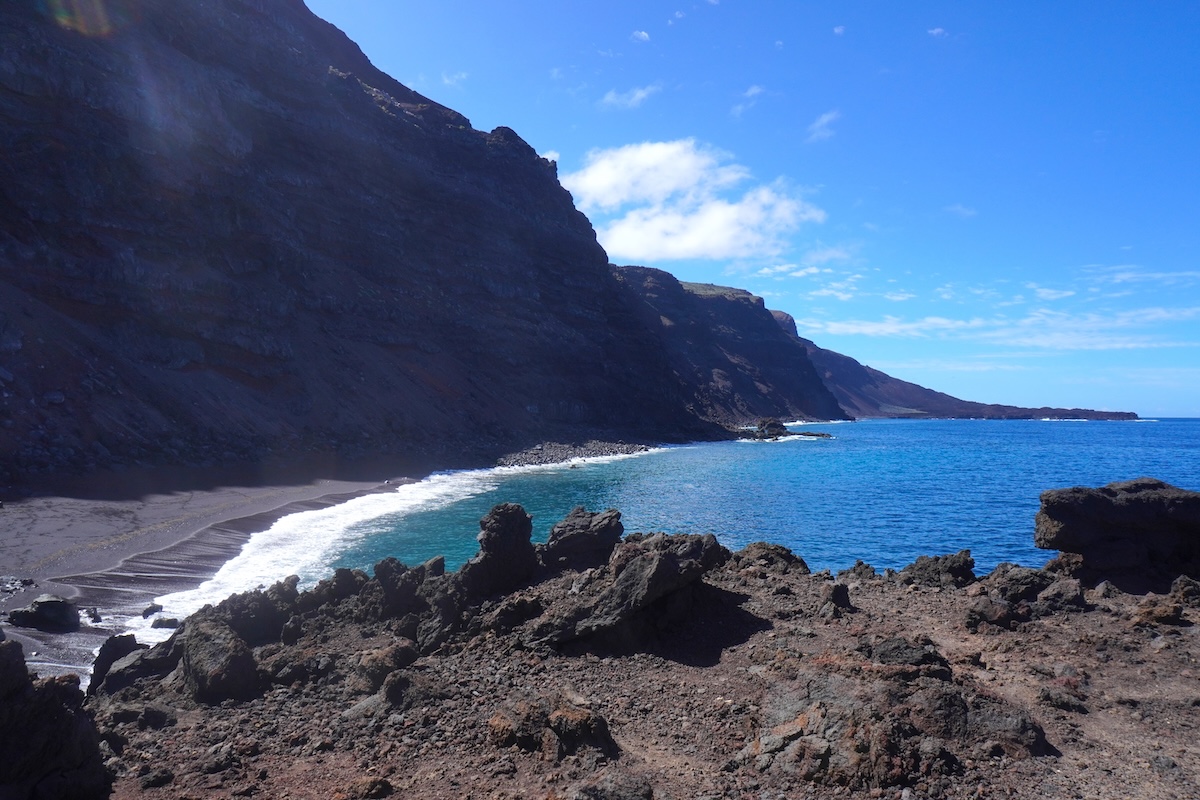
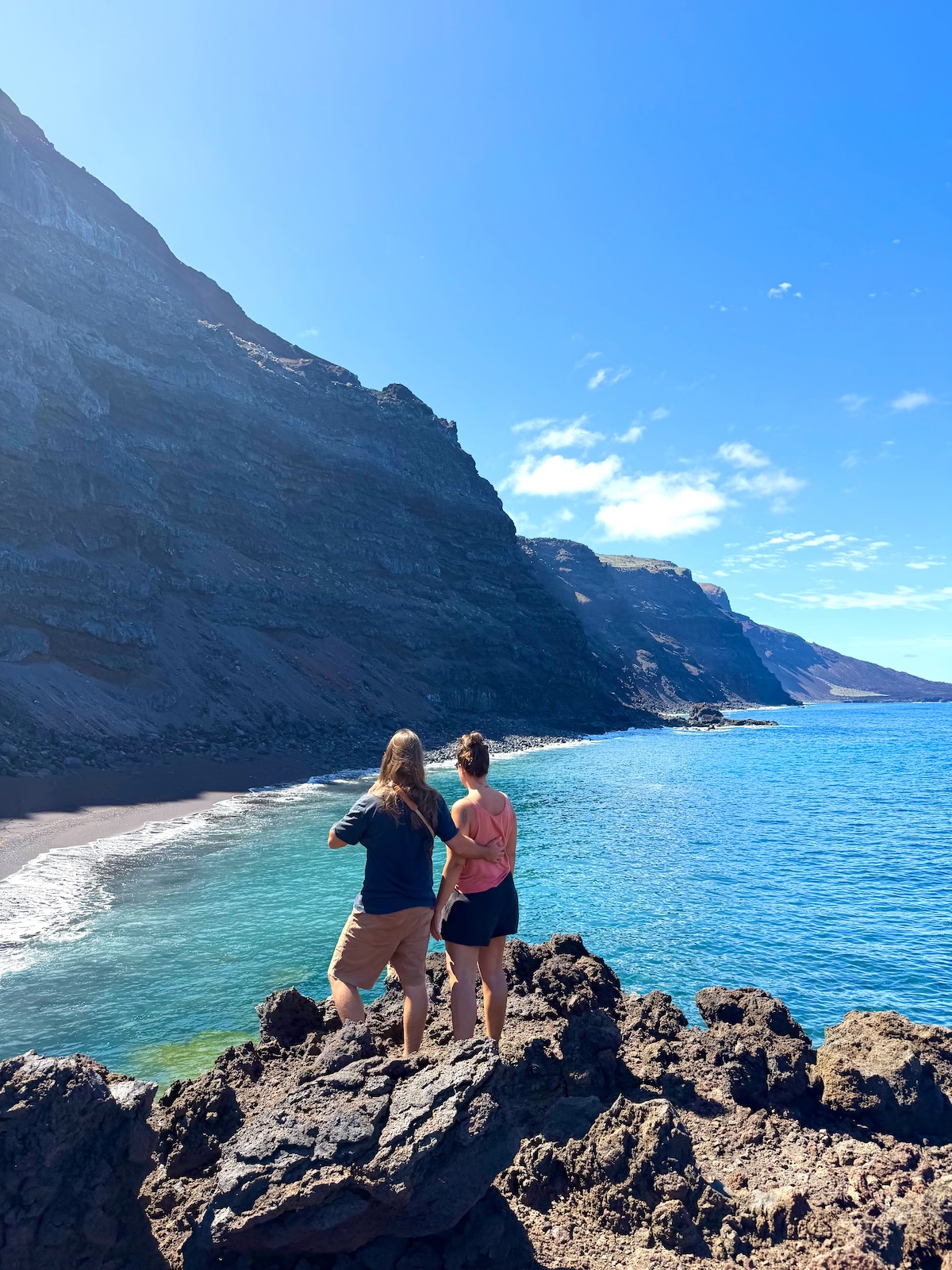
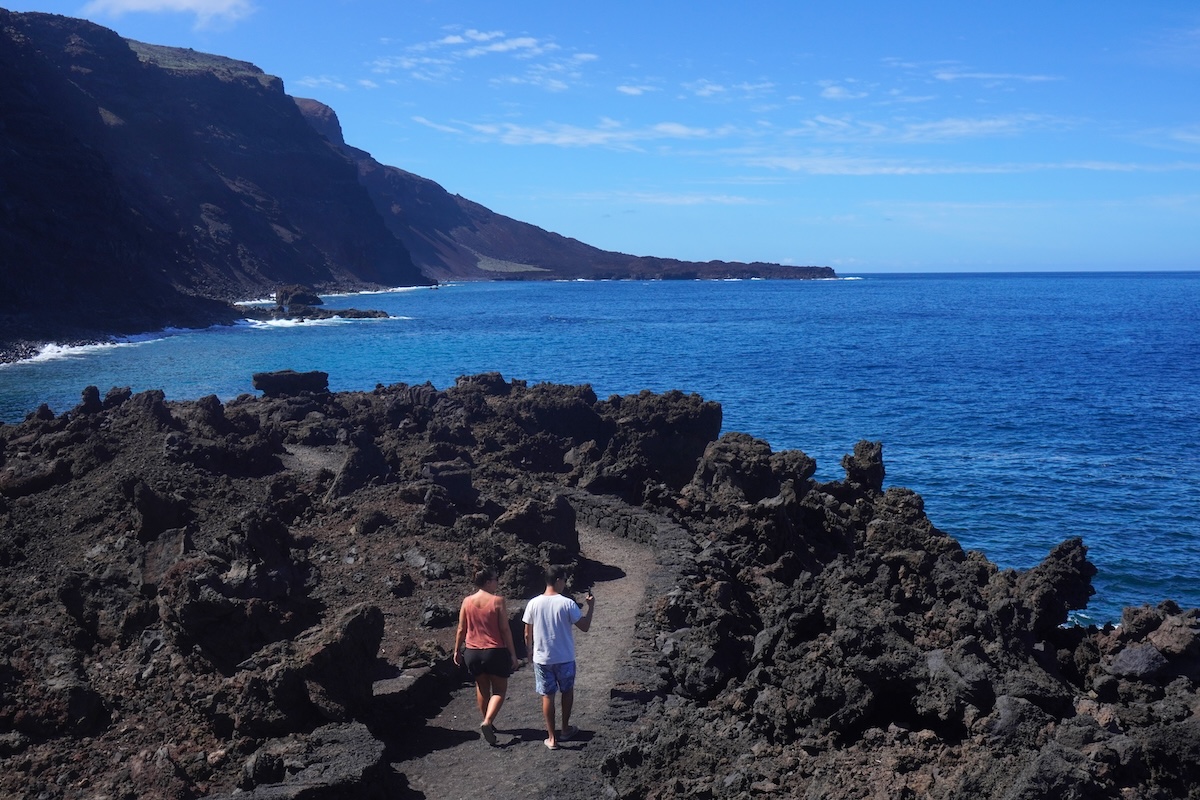
At Randomtrip, we visited it on our last trip to El Hierro, and we were lucky enough to have incredible weather and a super calm sea, so we were even able to take a dip in its waters, all by ourselves.
Lomo Negro viewpoint
The Lomo Negro viewpoint is one of the lesser-known lookouts on El Hierro. In fact, there are two: one right by the road (I) and another accessed via a short trail (II):
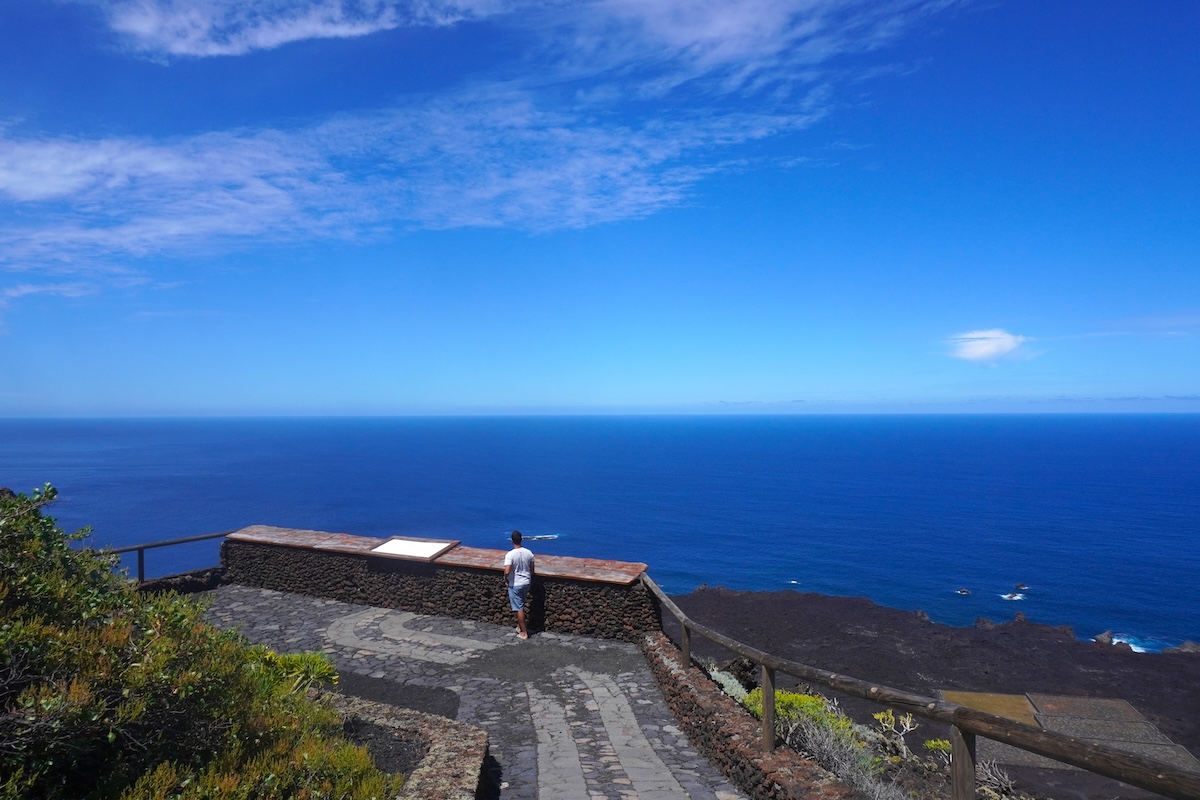
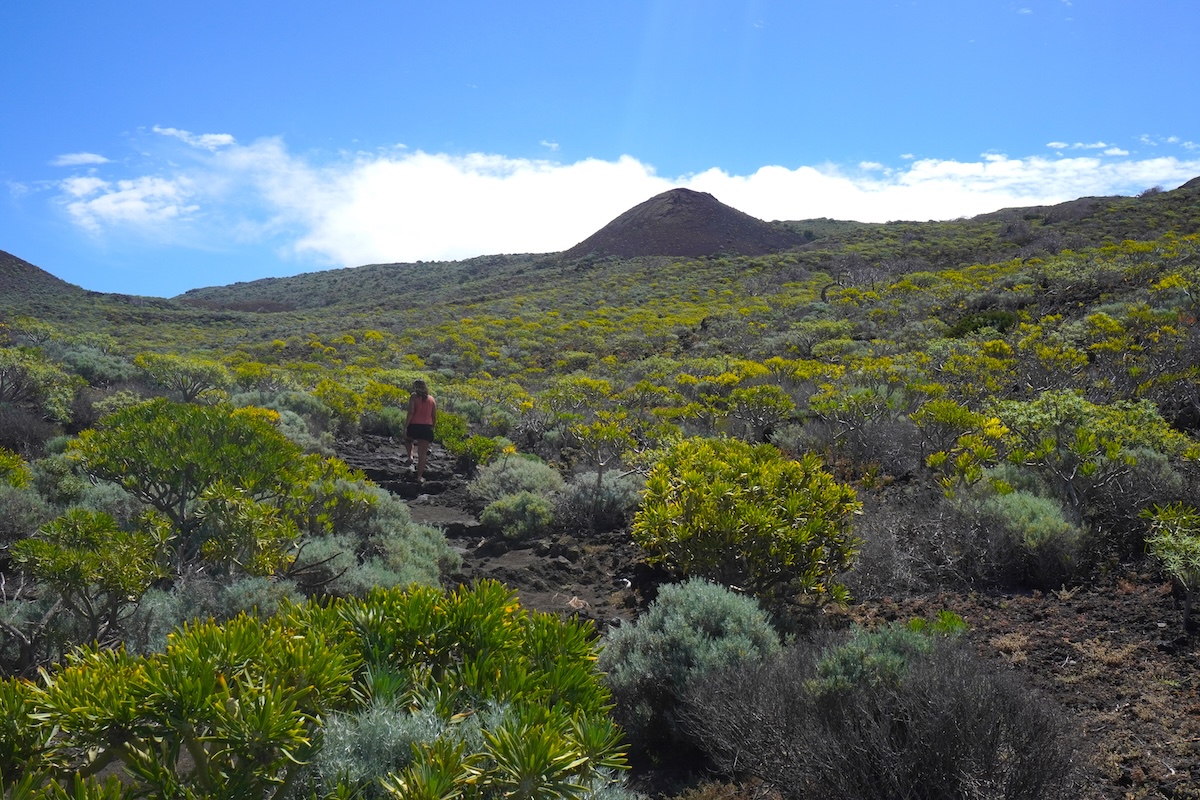
As the island formed, El Hierro’s volcanic activity gradually shifted toward the ends of the three ridges. This viewpoint is located at the end of the western ridge, above the Lomo Negro volcano, in a field of “young” lava (from about 1,800 years ago). Most of the eruptive activity during the final stage of El Hierro’s formation took place here .
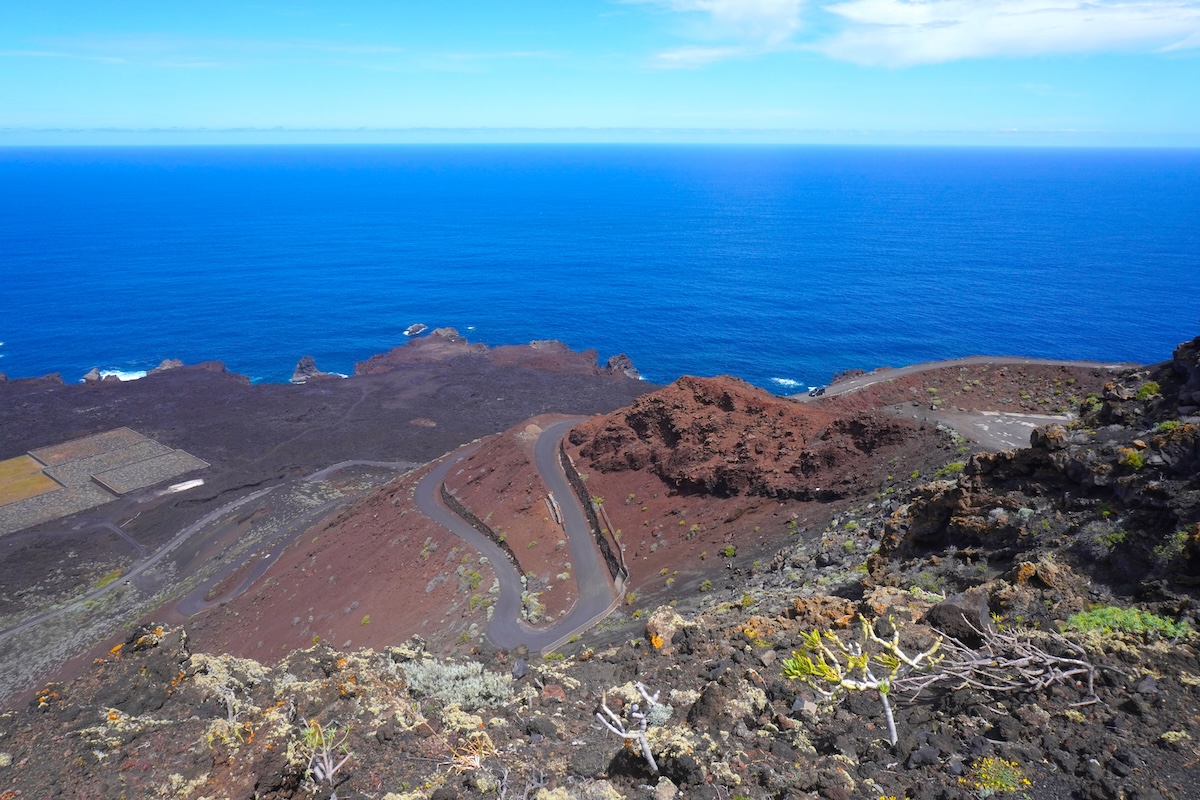
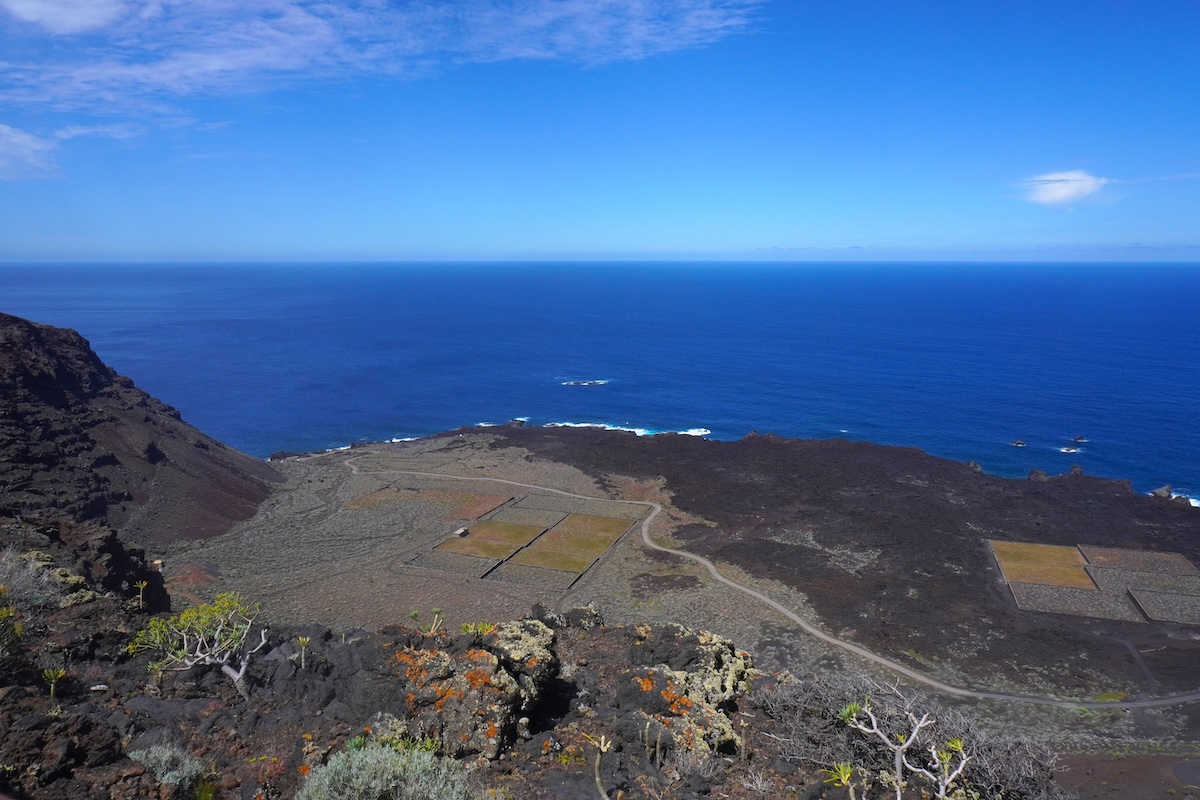
As Andy Warhol said, and as the geosite’s explanatory sign reminds us: “The earth is actually the greatest work of art.”
Orchilla Lighthouse, Meridian Zero, and Volcanic Tube
The Orchilla Lighthouse is another must-see if you visit the island of El Hierro. Located “in the middle of nowhere”, to reach it today (it used to be accessible only by sea) you’ll have to follow a winding paved road until you reach the lighthouse. It’s perfectly doable by car, though the road is narrow and you have to drive slowly, which is actually a plus for enjoying the views.
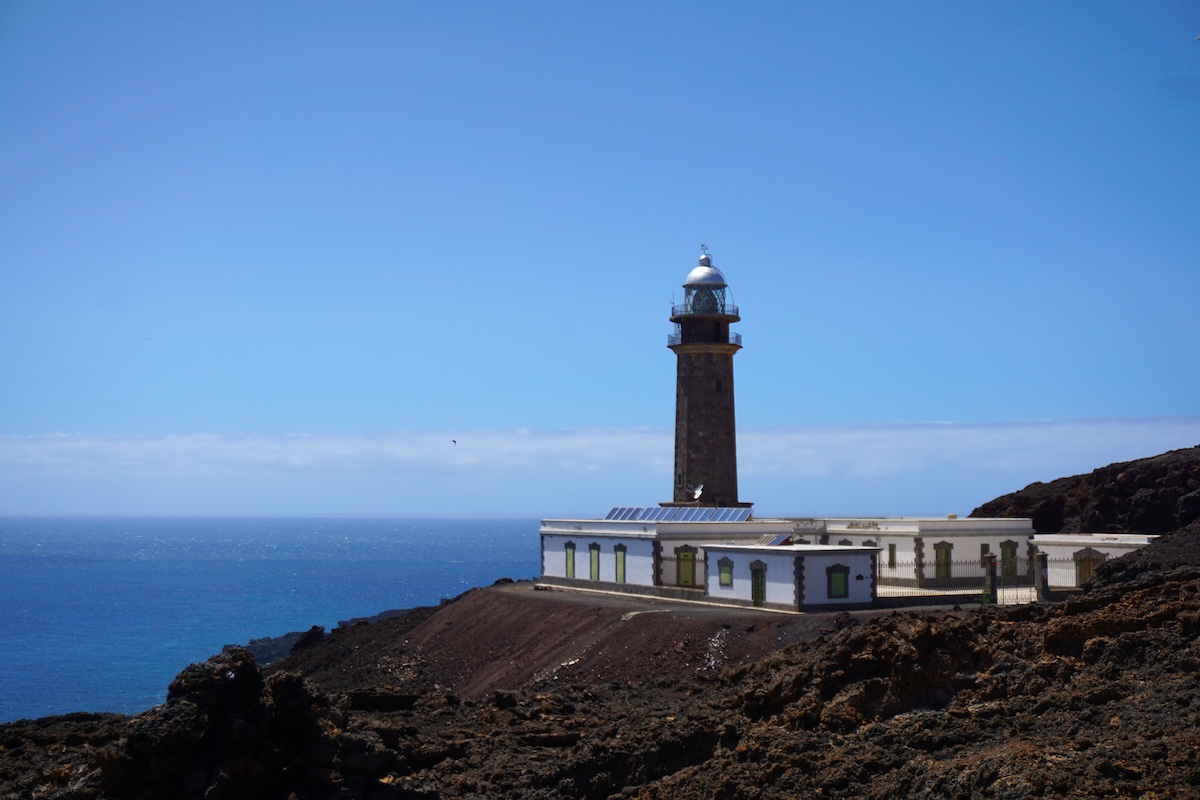
The lighthouse was built between 1924 and 1933 and is now automated. The lighthouse keeper who was stationed there until it was automated is still in charge of its maintenance. When we were there, it wasn’t open to visitors, unless you’re lucky enough to run into the lighthouse keeper if he’s visiting and invites you inside.
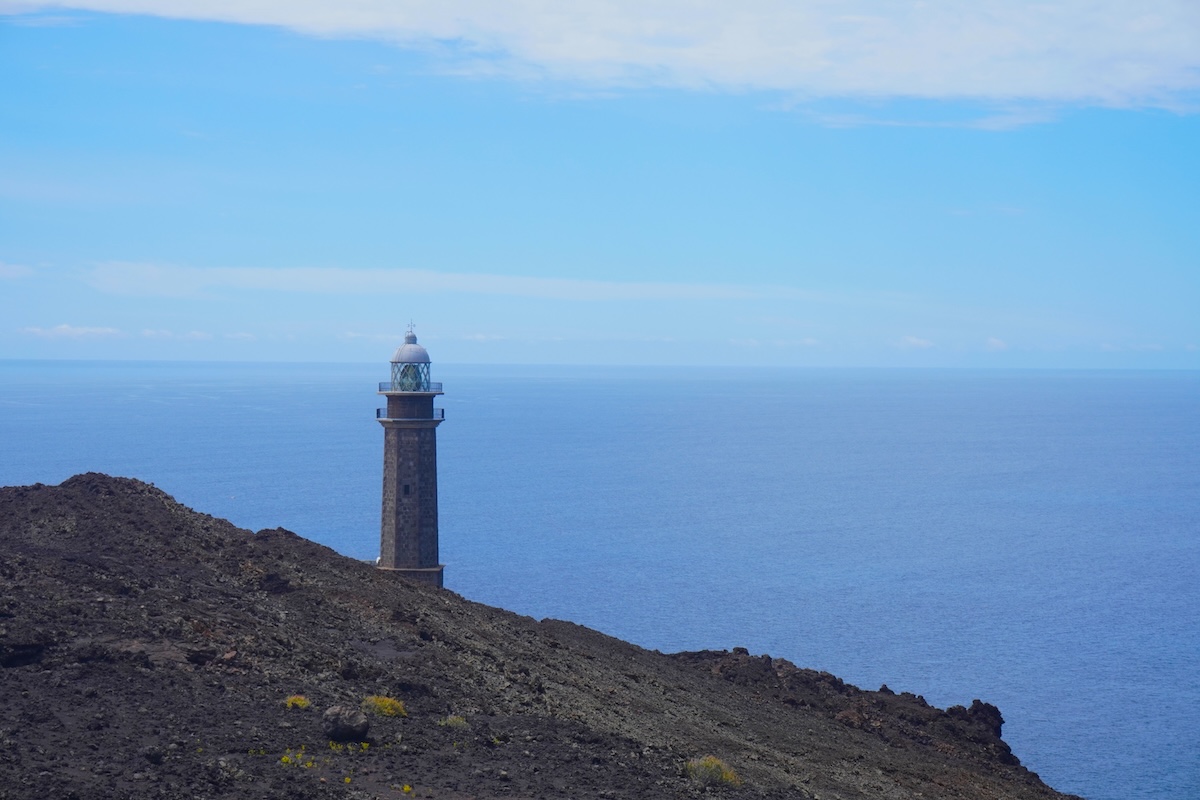
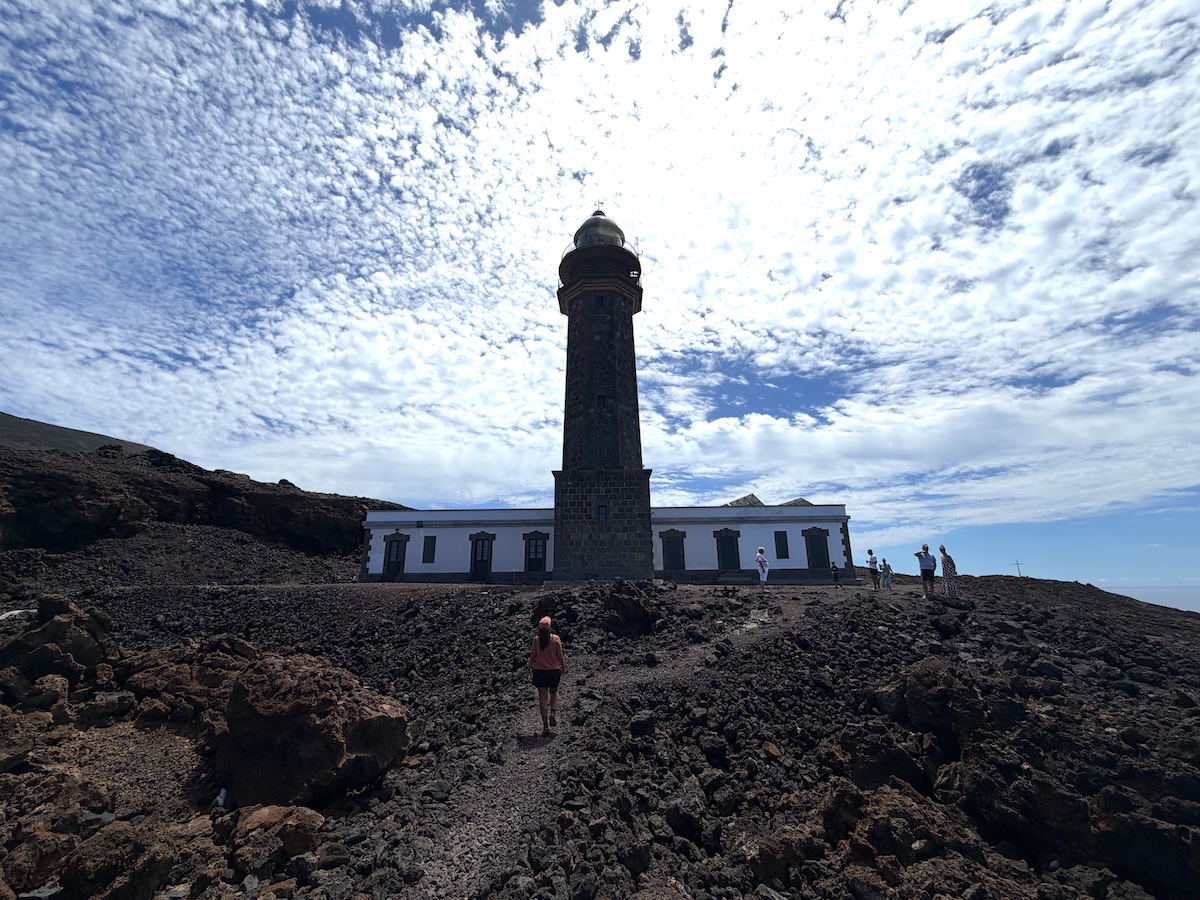
The Orchilla Lighthouse on our beloved island of El Hierro is on a special list: it’s one of the 10 best places in Spain to watch the sunset according to master traveler Paco Nadal. So off we went to enjoy the sunset. And although the natural filter of the Saharan dust cloud obscured the sun’s descent into the sea that afternoon, it was precisely that which made it so magical. It’s all a matter of perspective.
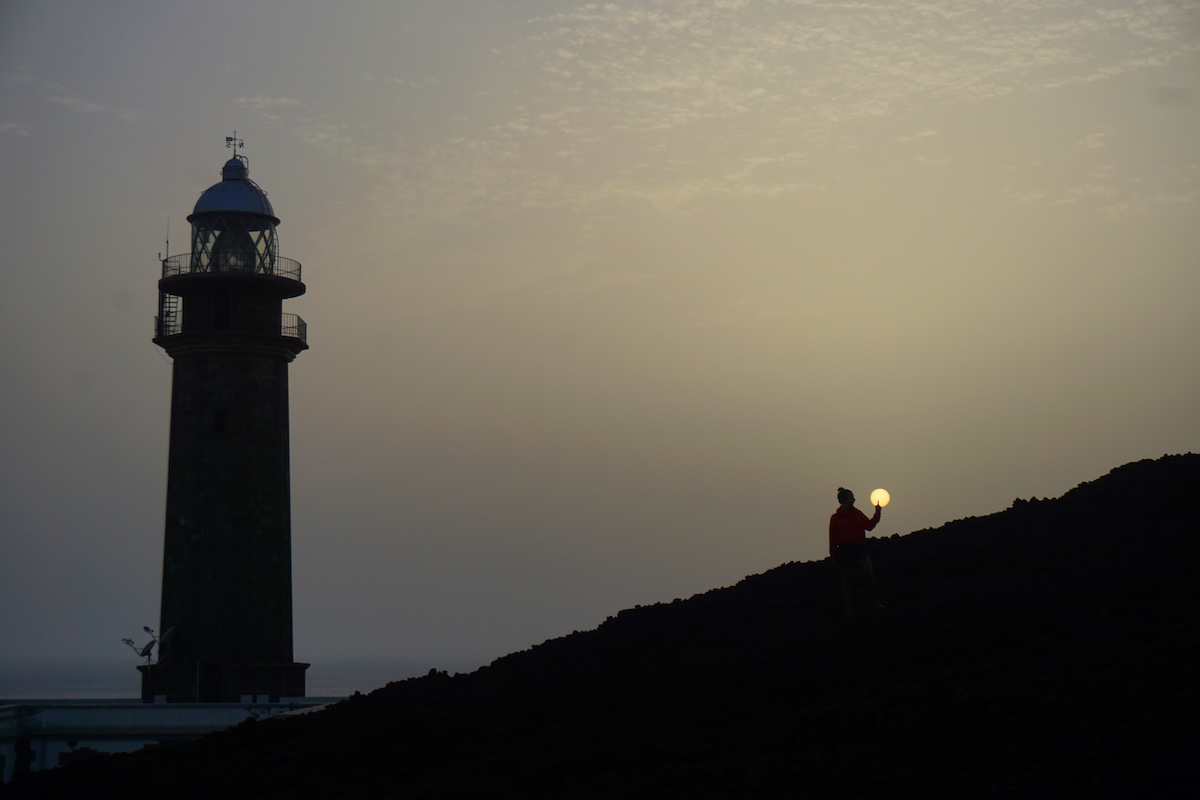
There are other points of interest in the area around the lighthouse:
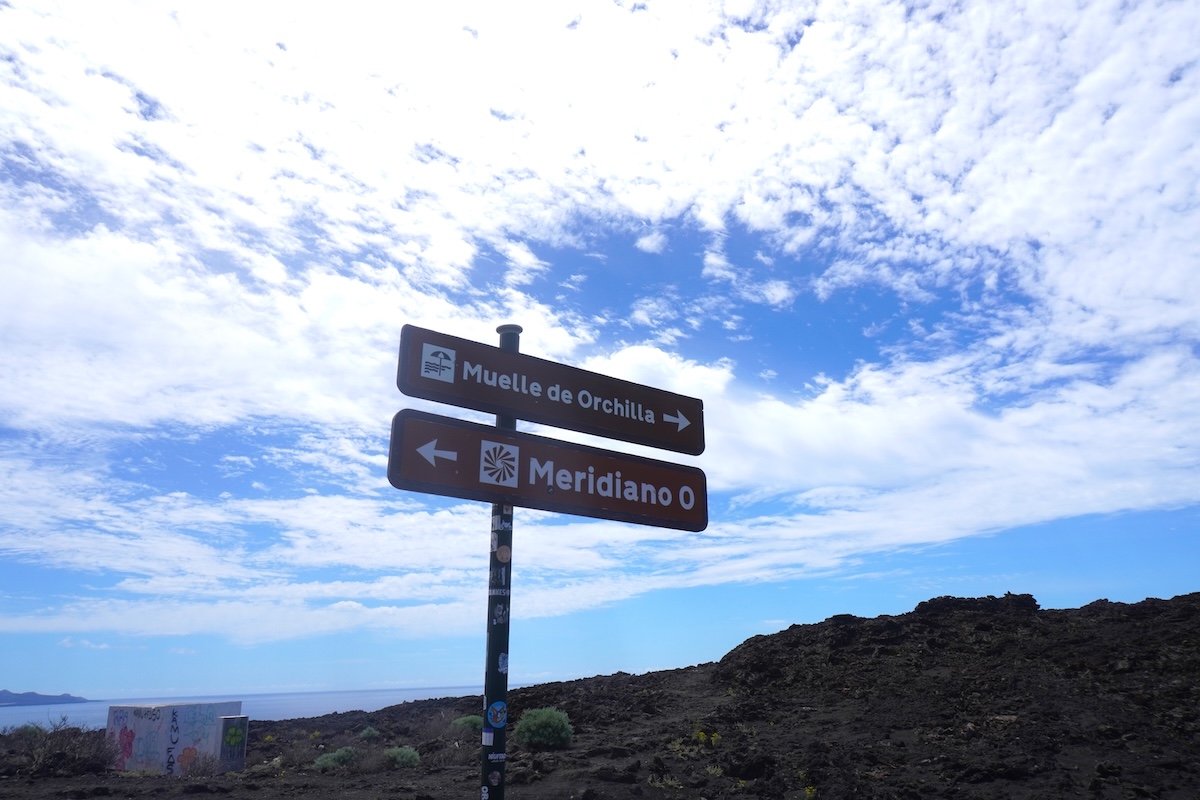
- Monument to the Prime Meridian. For many centuries, the island of El Hierro was home to the imaginary prime meridian, before it became the current Greenwich Meridian, which is why El Hierro is also known as “The Island of the Meridian.” In the past, it was believed that this area of El Hierro was the westernmost point in the world. On your way to the Orchilla Lighthouse, you can take a detour to see this small but symbolic monument to the zero meridian. Keep in mind, however, that the trail leading to it is not accessible by car-only by 4×4 (or on foot)
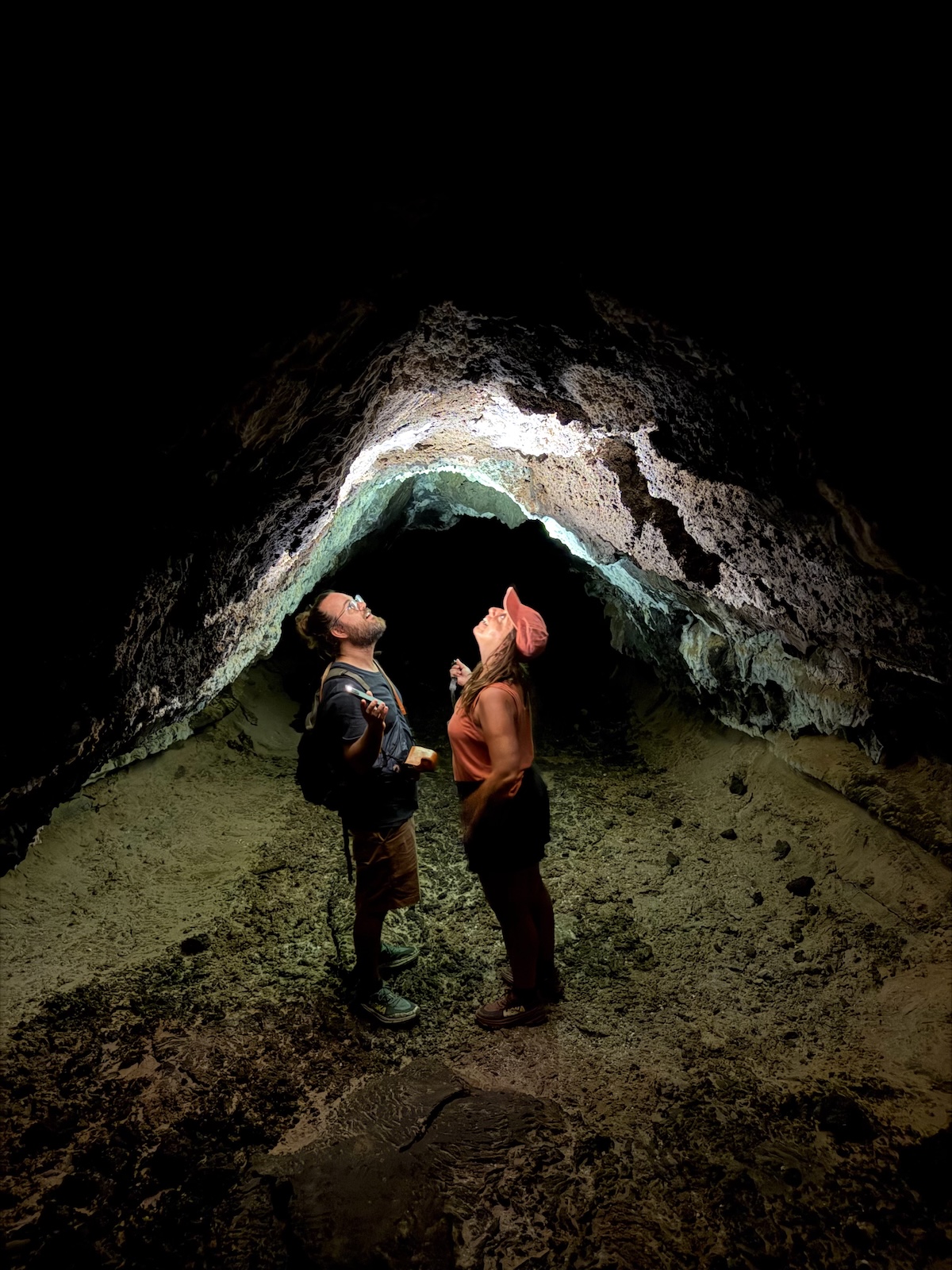
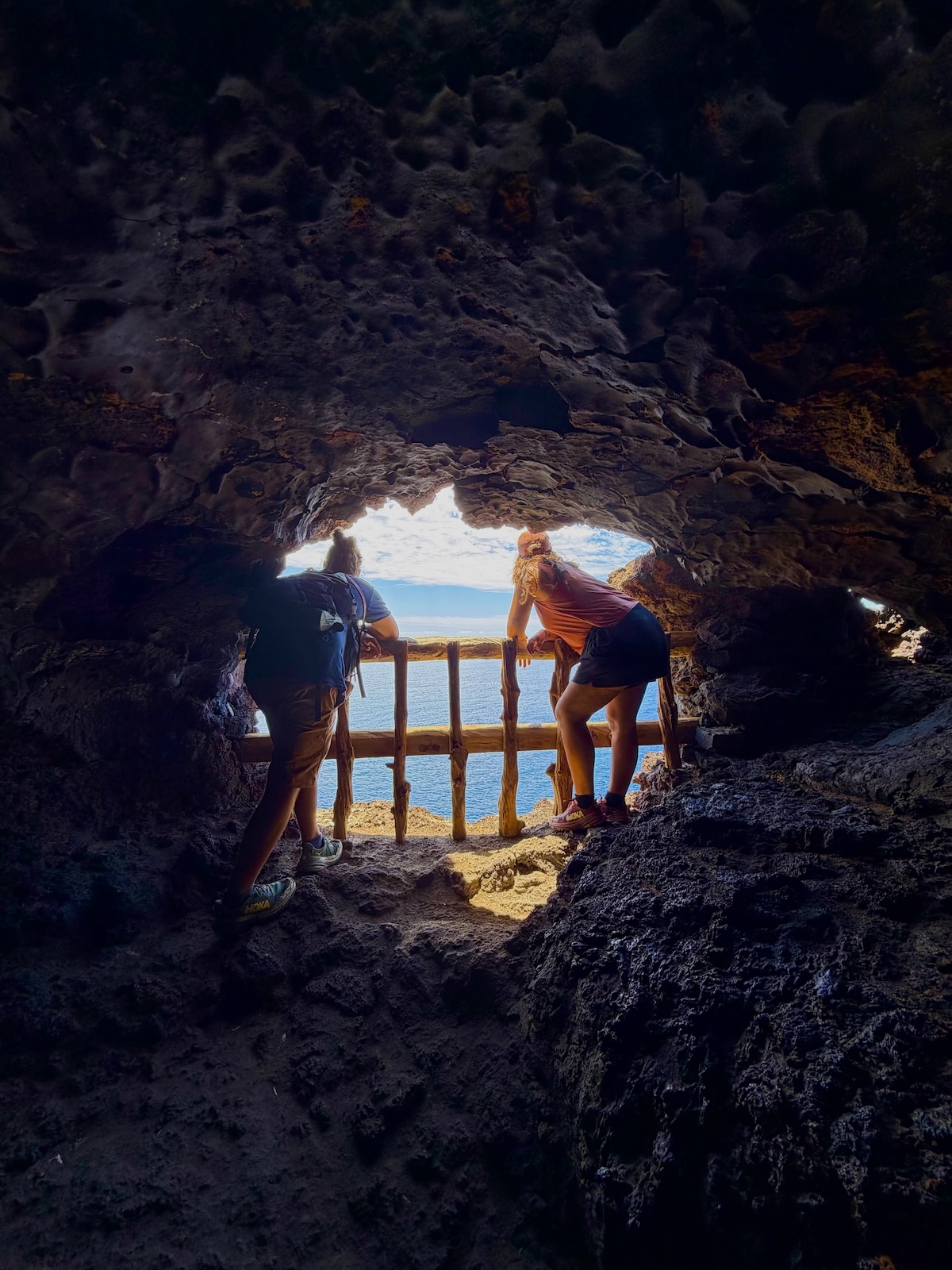
- Volcanic Tube: Near the lighthouse, there’s a volcanic tube with two “jameos” you can enter, and if you follow it all the way to the end, you’ll reach a stunning window overlooking the sea. Be careful! If you dare to go inside, you do so at your own risk (you’ll need a flashlight, and there are areas where you’ll have to crouch down to move forward).
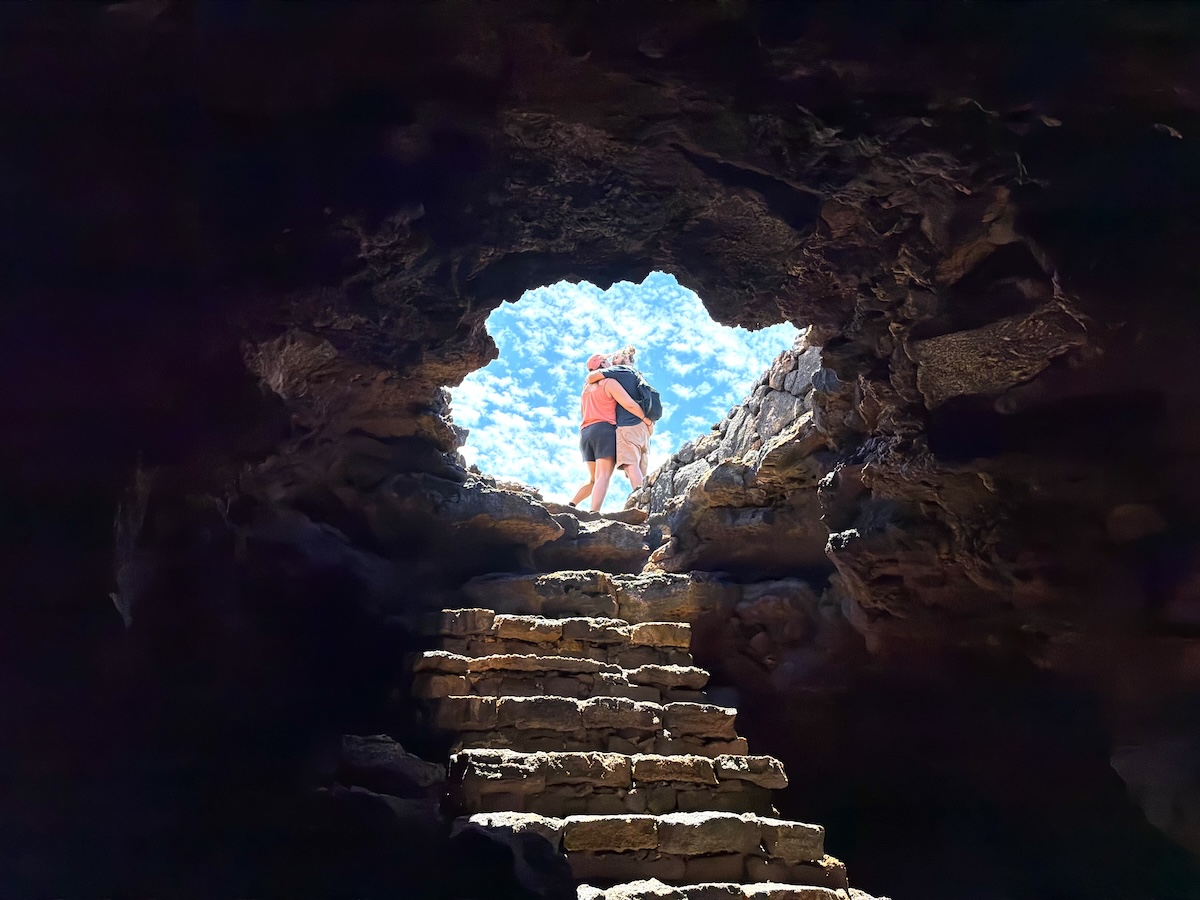
- Orchilla Lighthouse Pier. This pier is a remnant from the days when the lighthouse could only be reached by sea; you can now visit it and even take a swim there.
El Sabinar and the Chapel of Nuestra Señora de los Reyes
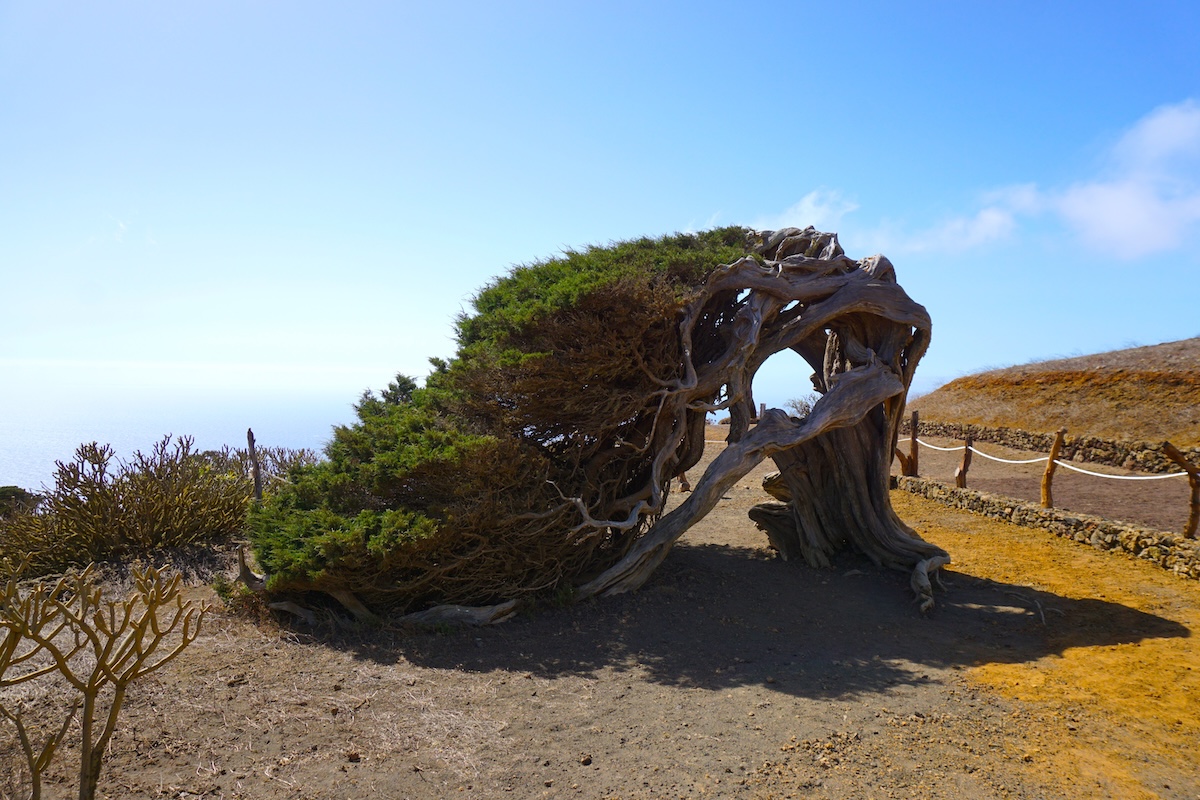
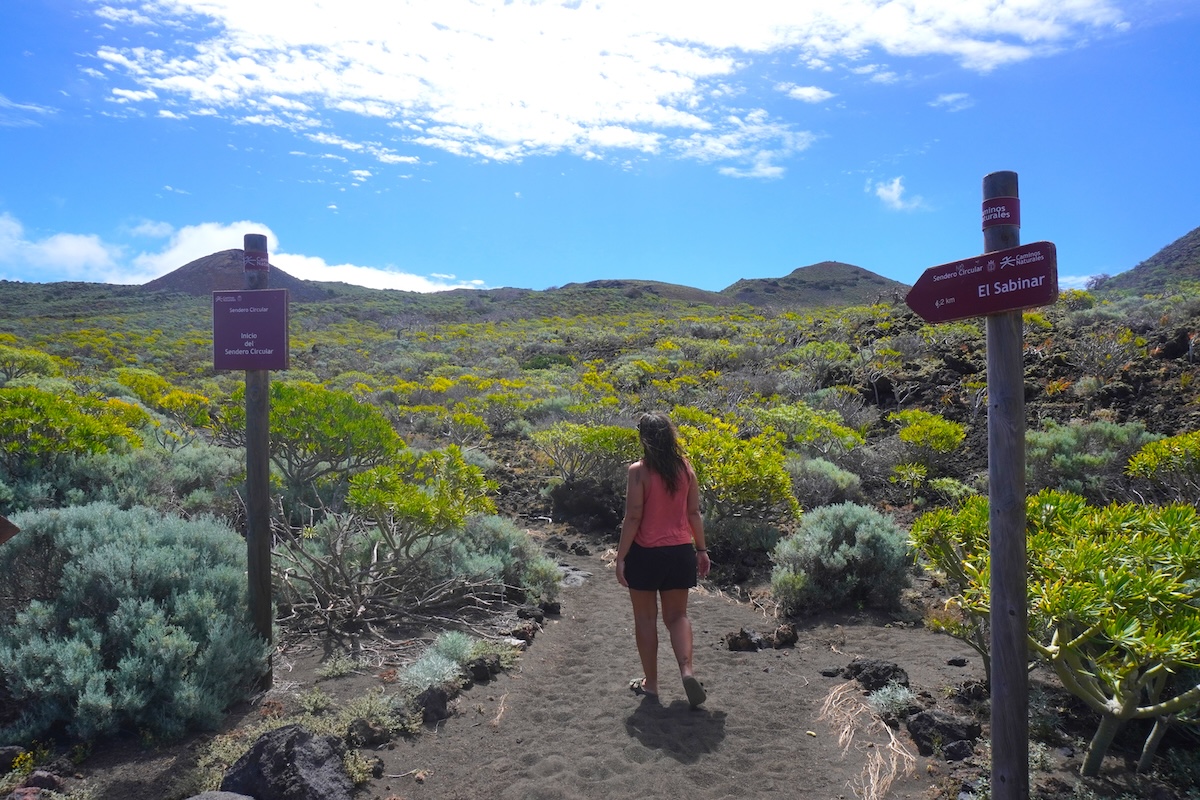
El Sabinar is one of the most famous spots on El Hierro, as it is home to several juniper trees (the island’s botanical symbol) with twisted, unimaginable shapes due to their location, completely exposed to strong winds, making them a true symbol of adaptation to adverse conditions.
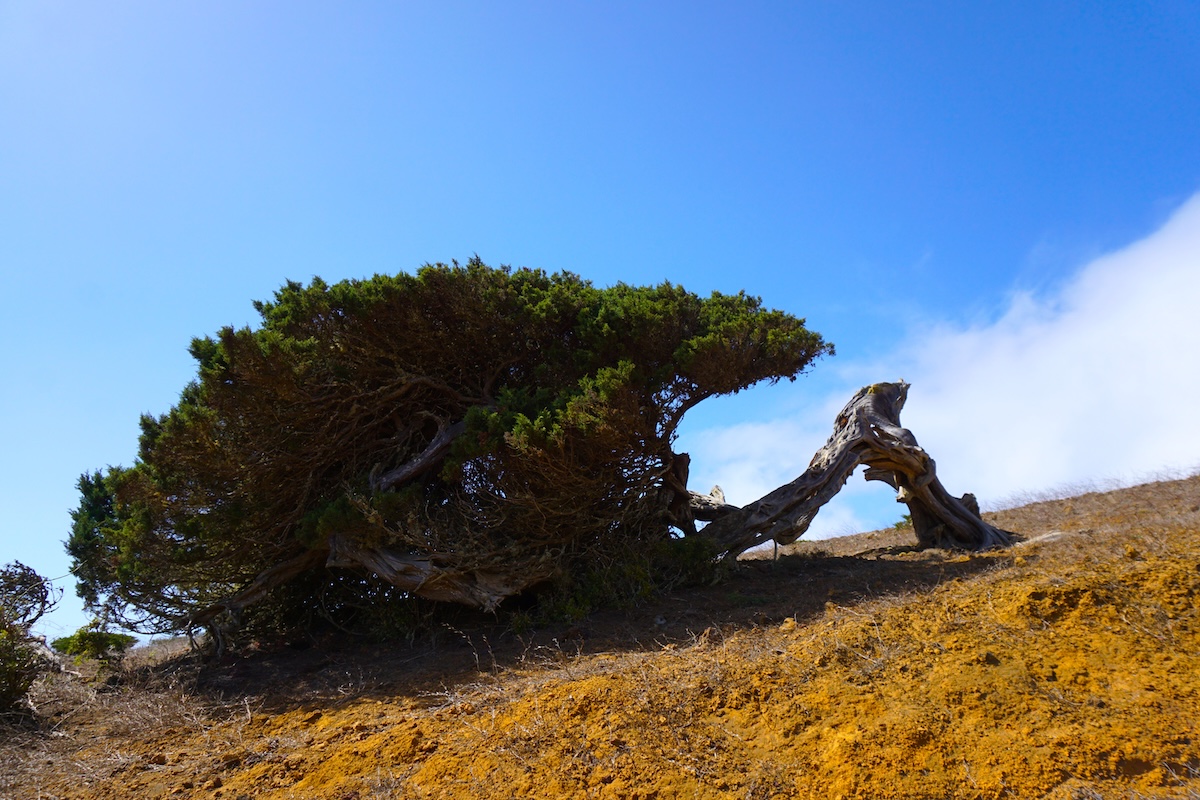
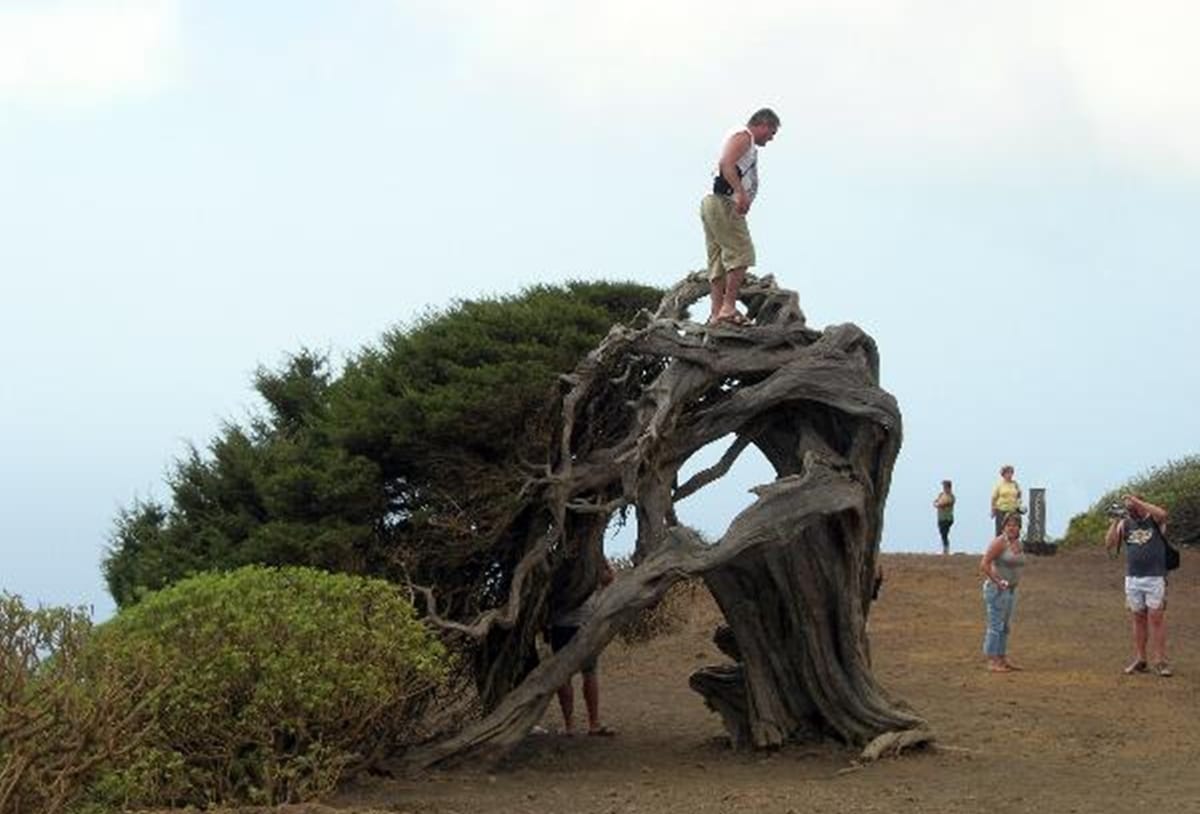
Unfortunately, another challenge facing El Hierro’s junipers today is tourism. The most famous one is now fenced off with ropes and a sign indicating that visitors must not cross the ropes, due to the lack of respect shown by many people, from climbing on top of the trees, to breaking off branches as souvenirs, to carving their names into them…
Here’s a picture of a tourist doing what you CANNOT and SHOULD NOT do:
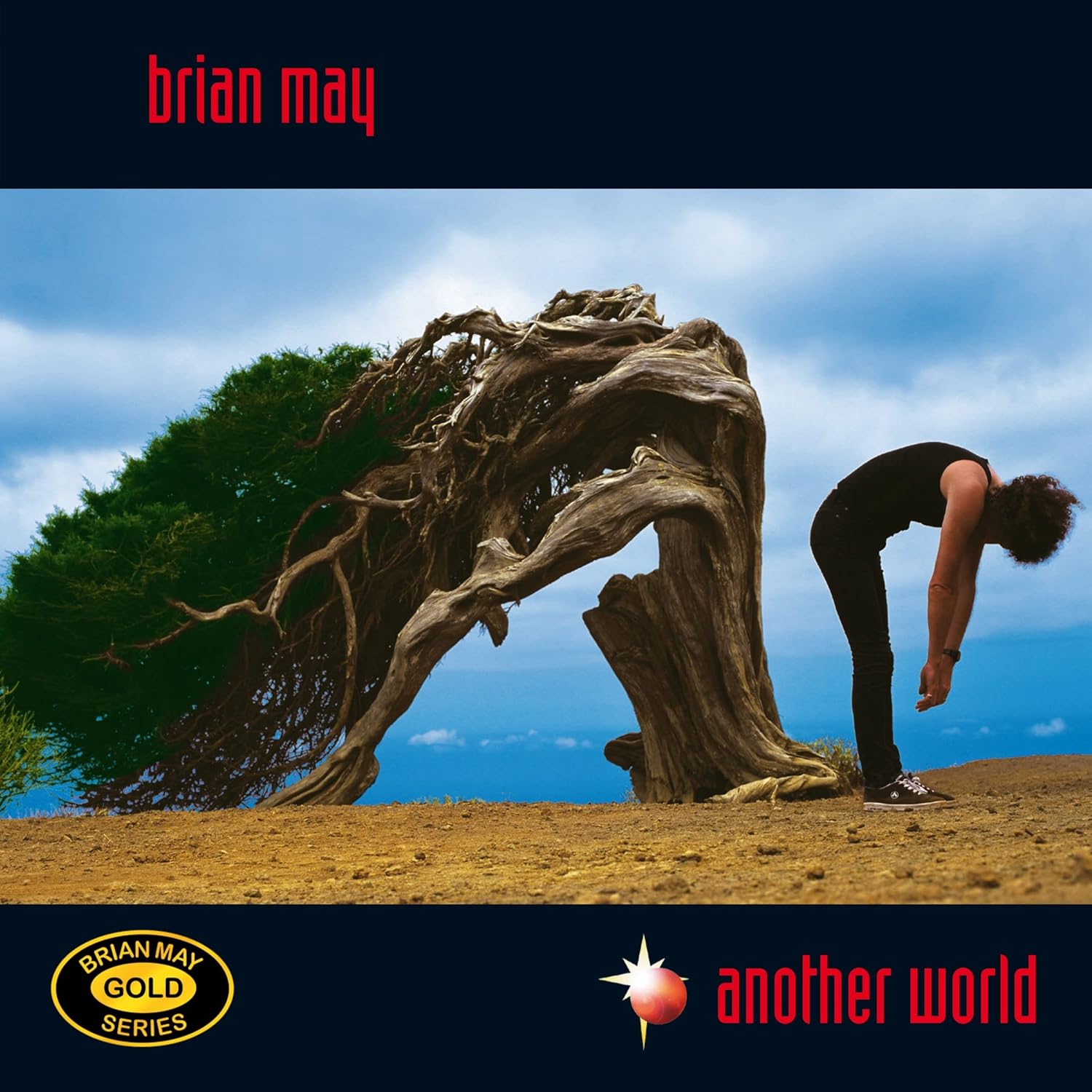
As a fun fact (and to restore a little faith in humanity after the photo of the previous troublemaker), we’d like to share that the El Hierro juniper appears on the cover of the album “Another World” by Brian May, former guitarist for Queen, who made a special “pilgrimage” there after seeing a photo of the juniper in a magazine and recognizing in it a metaphor for that phase of his life. In 2011, he himself published a letter expressing his sadness at seeing how little respect tourists were showing the Sabina, and a few years ago he returned to El Hierro to reconnect with the tree:
So now you know! Don’t fall into tourist traps and respect the Sabinas (as well as the rest of nature) by avoiding touching them, hugging them, cutting them down, stepping on them, or any other action that might affect their preservation.
On your way to the juniper grove, you’ll pass by the Chapel of Nuestra Señora de los Reyes. It was originally built in the 16th century, though the current structure is an 18th-century renovation. It’s entirely white, contrasting with the surrounding landscape, and offers beautiful views of the sea.
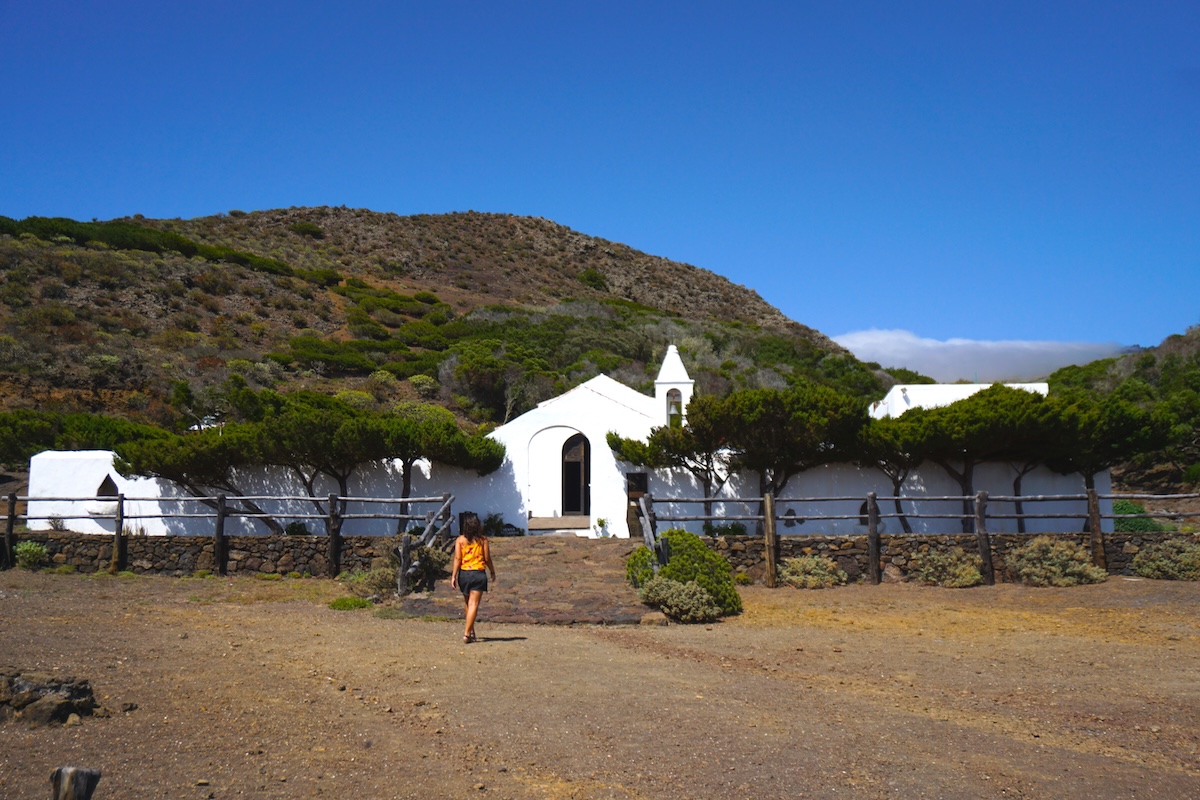
Located in a natural park, this chapel is dedicated to the Virgen of Los Reyes, patron saint of the island of El Hierro, who, according to legend, miraculously brought rain after periods of severe drought.
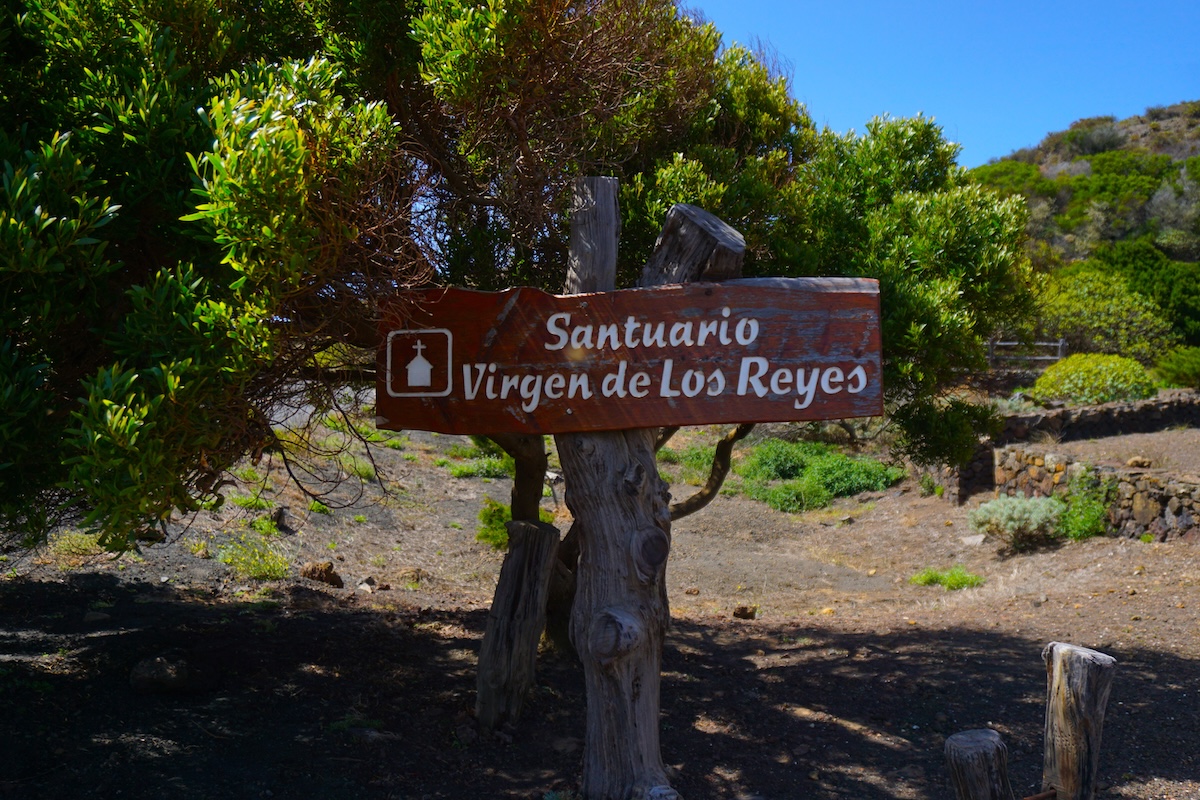
Because of this, the people of El Hierro celebrate the “Descent of the Virgen de los Reyes“, the island’s most important festival. During the festival, the Virgin is carried from the chapel to the capital (Valverde), a journey that lasts several days and includes stops in various villages.
This festival also served as the catalyst in 2005 for the separation of Frontera and Pinar de El Hierro into two independent municipalities.
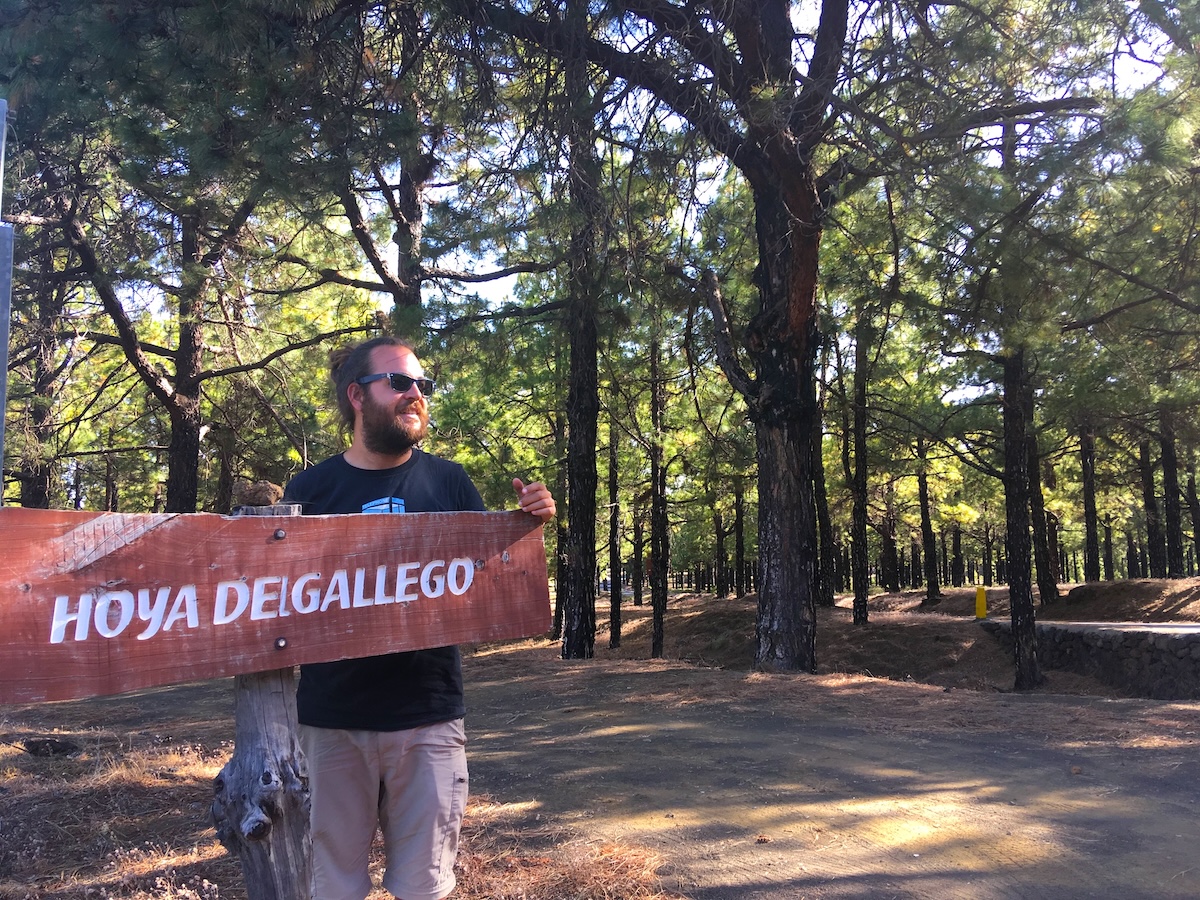
On the way to the chapel, along the road, we also came across “La Hoya del Gallego” and had to stop to take a photo of Randomtrip’s Gallego, of course!
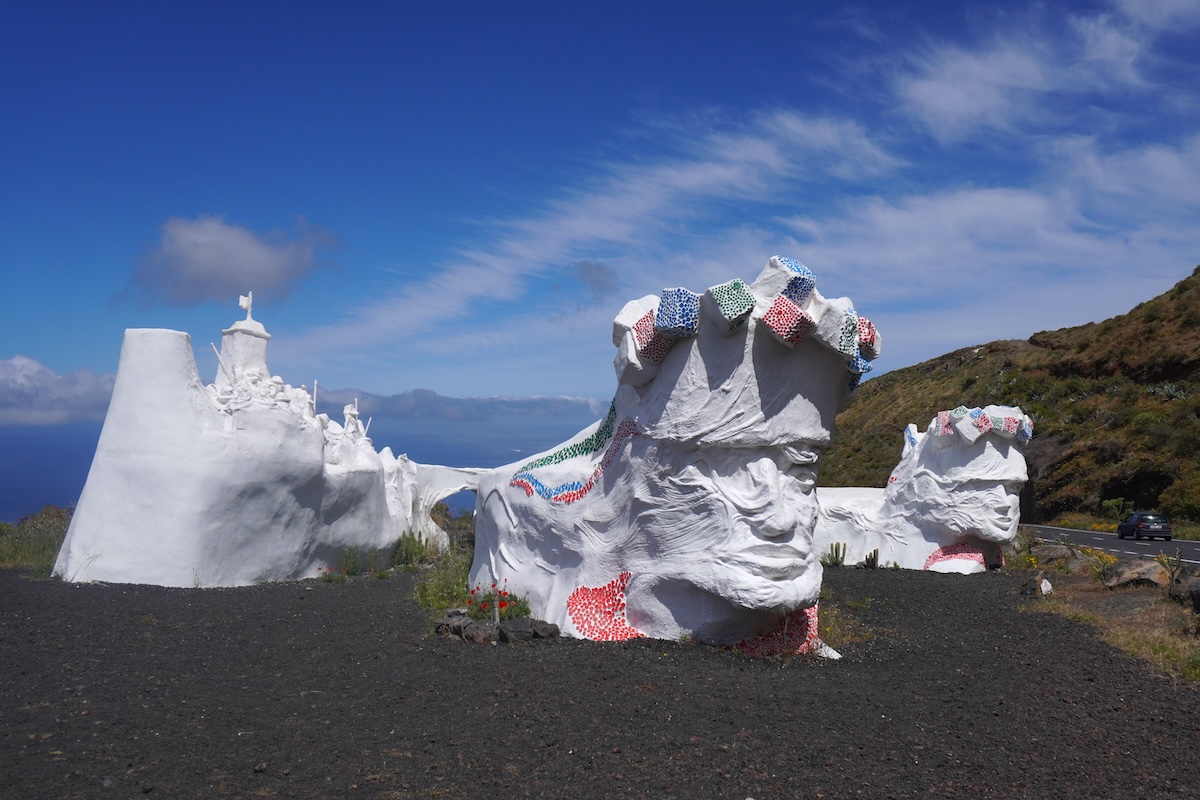
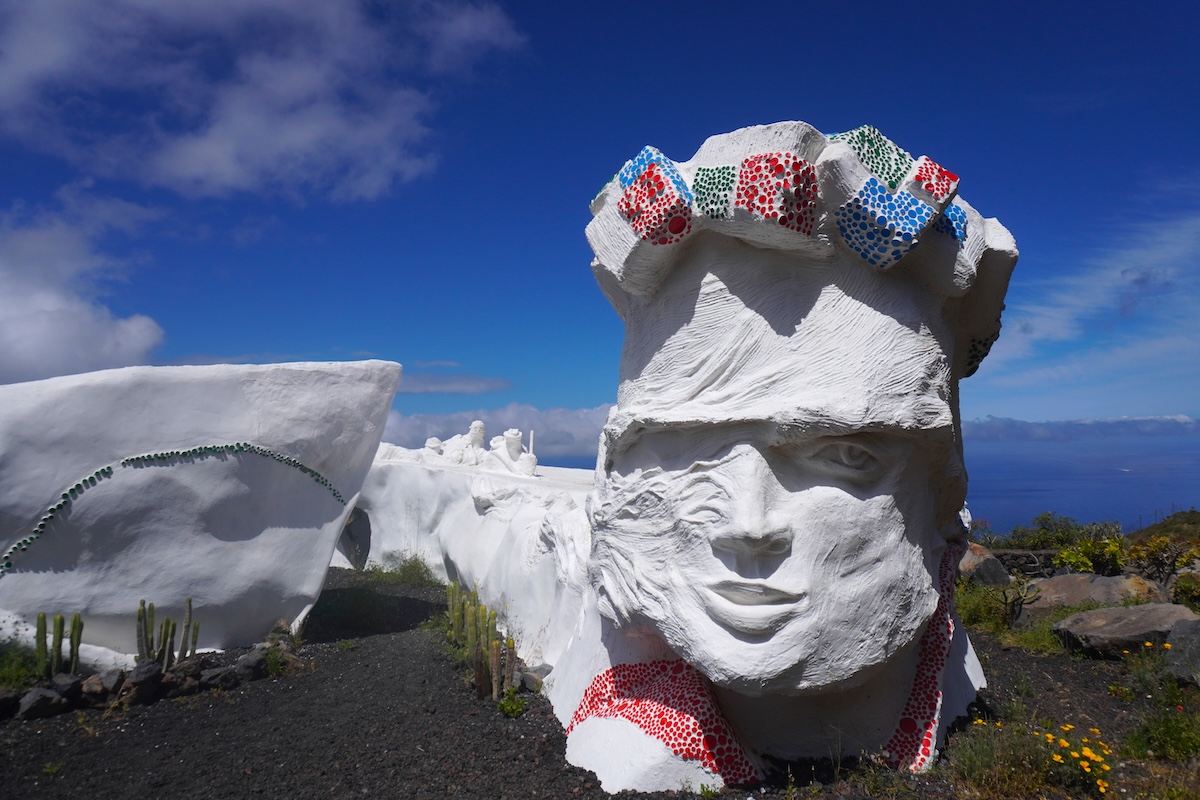
Local artist Rubén Armiche (the same artist who created the Neptune statue at Pozo de las Calcosas) created a sculpture in honor of the Bajada de la Virgen de los Reyes, located on the road leading down from Valverde toward the Puesto de la Estaca (more info here):
Bascos Viewpoint
If you take a stroll around El Sabinar, you’ll see more juniper trees, and after about a 15-minute walk, you’ll reach the Bascos viewpoint. During our visit, to be honest, we only ran into one other couple of tourists, and the path to the lookout seemed pretty neglected. When we arrived, we saw that part of the Bascos Lookout was closed due to the risk of a landslide.
Even so, from the area leading up to the viewpoint, there are spectacular views of the northern part of the island, don’t miss them!
El Julán
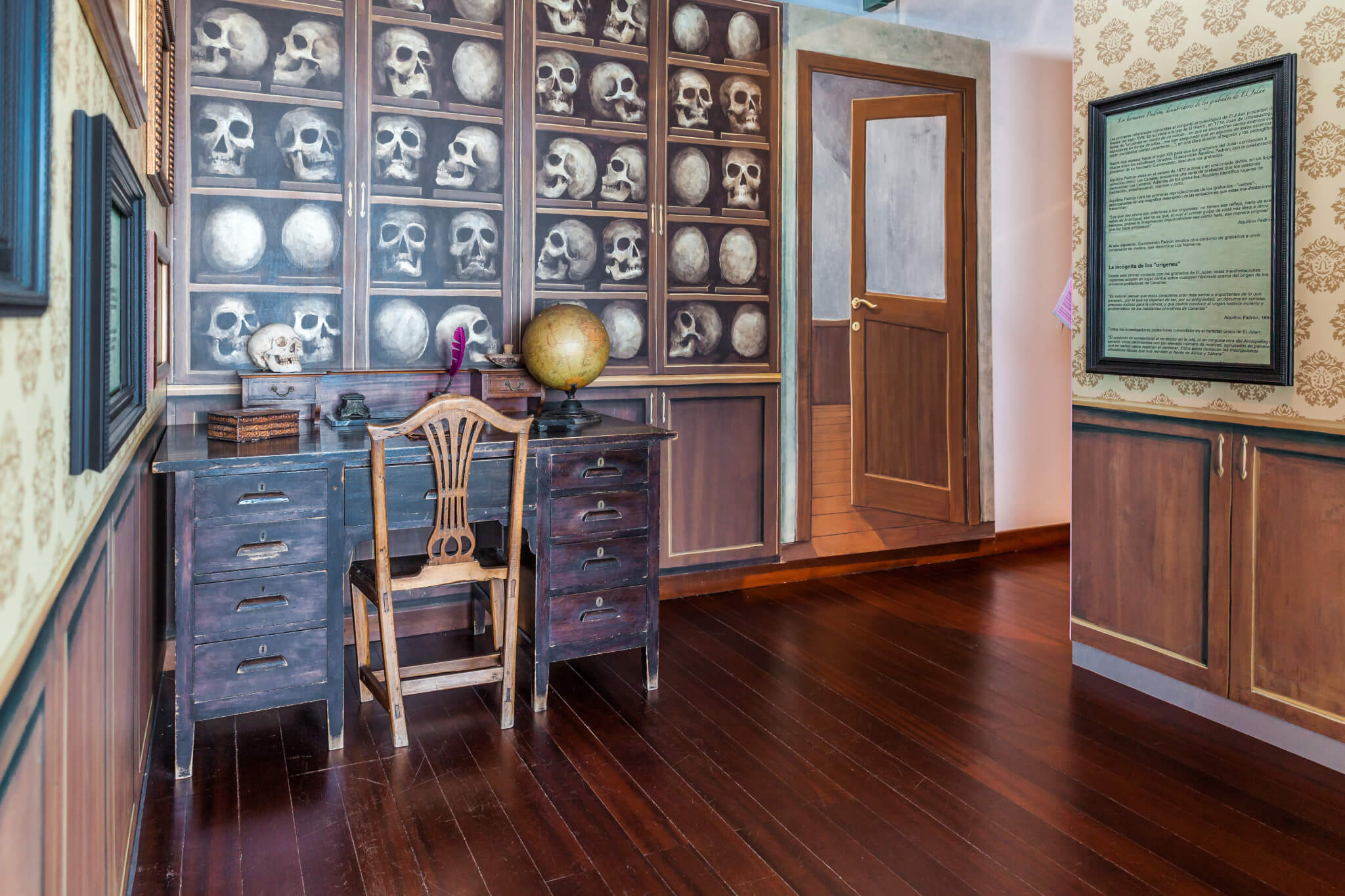
El Julán is an archaeological site where you can see petroglyphs left by the Bimbapes, the island’s ancient inhabitants. It features an interpretation center (admission to which is included in the El Hierro Tourist Passport) and offers the option of a guided tour, which must be booked in advance (at least one day ahead).
Guided tours are temporarily unavailable due to repair work on the access road. Check here to see if they are available again
The tour lasts about 4 hours, departing at 8:00 or 9:00 a.m. (depending on the option chosen, as it can be done by Jeep, on foot, or a combination of both), and includes a guide and a light snack of local products upon return. They recommend bringing plenty of water, sunscreen, a cap or hat, and closed-toe shoes (sandals are not permitted).
The price for the guided tour is 20€ per person. To make a reservation (at least one day in advance), contact them by email at geo.meridiano@gmail.com or by phone at 922558423.
The interpretation center is open daily from 8:00 a.m. to 4:00 p.m. Admission is 5€ per person (included in the El Hierro Tourist Passport). Here’s more information about Julan and the trail.
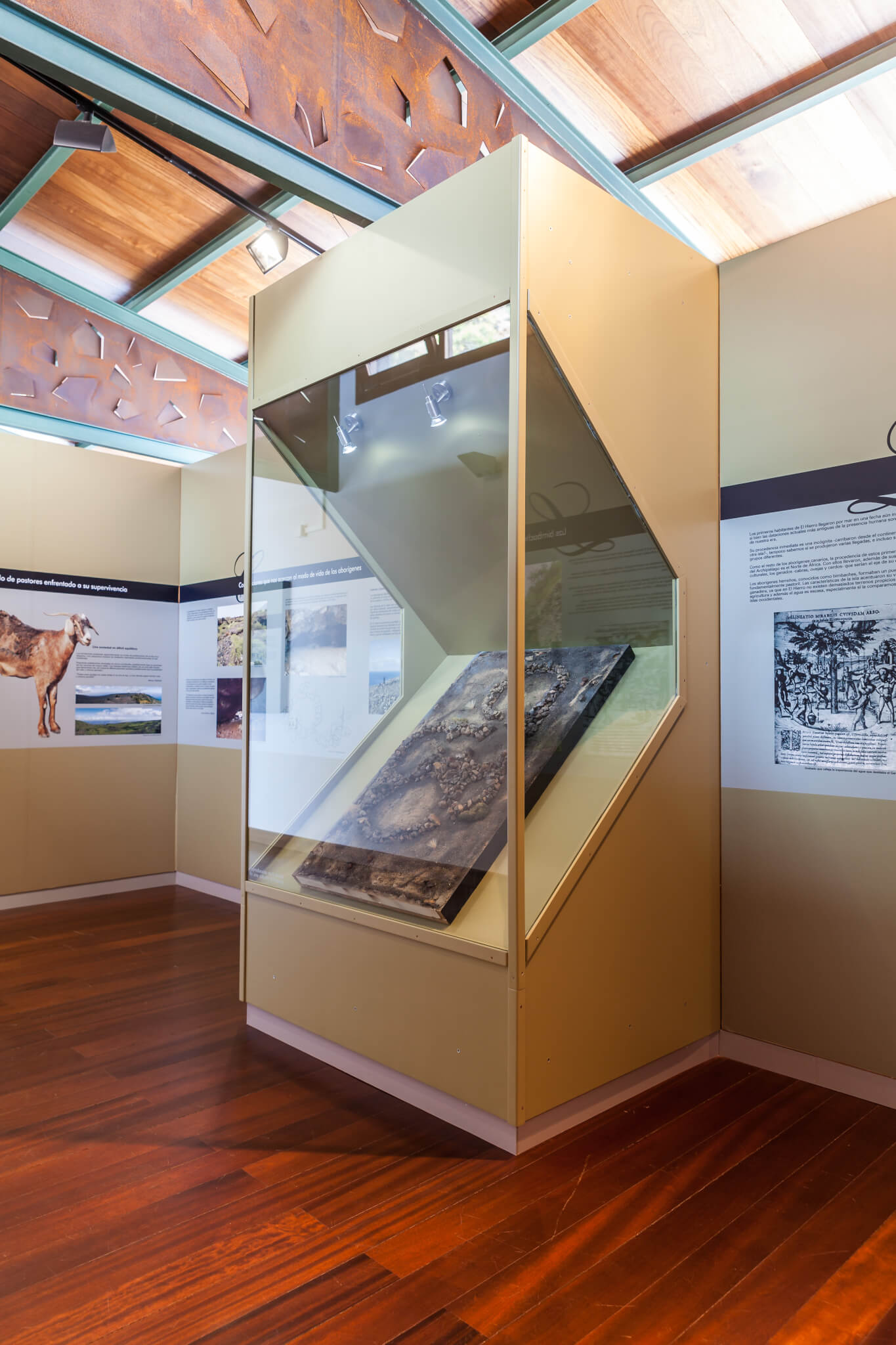
At Randomtrip, we were left wanting to do this route on both of our visits to El Hierro: on the first visit, it was canceled due to an orange heat warning, and on the second, it was temporarily closed for construction on the access road. The Julán has eluded us so far, but maybe we will get to visit it on our next time in El Hierro?
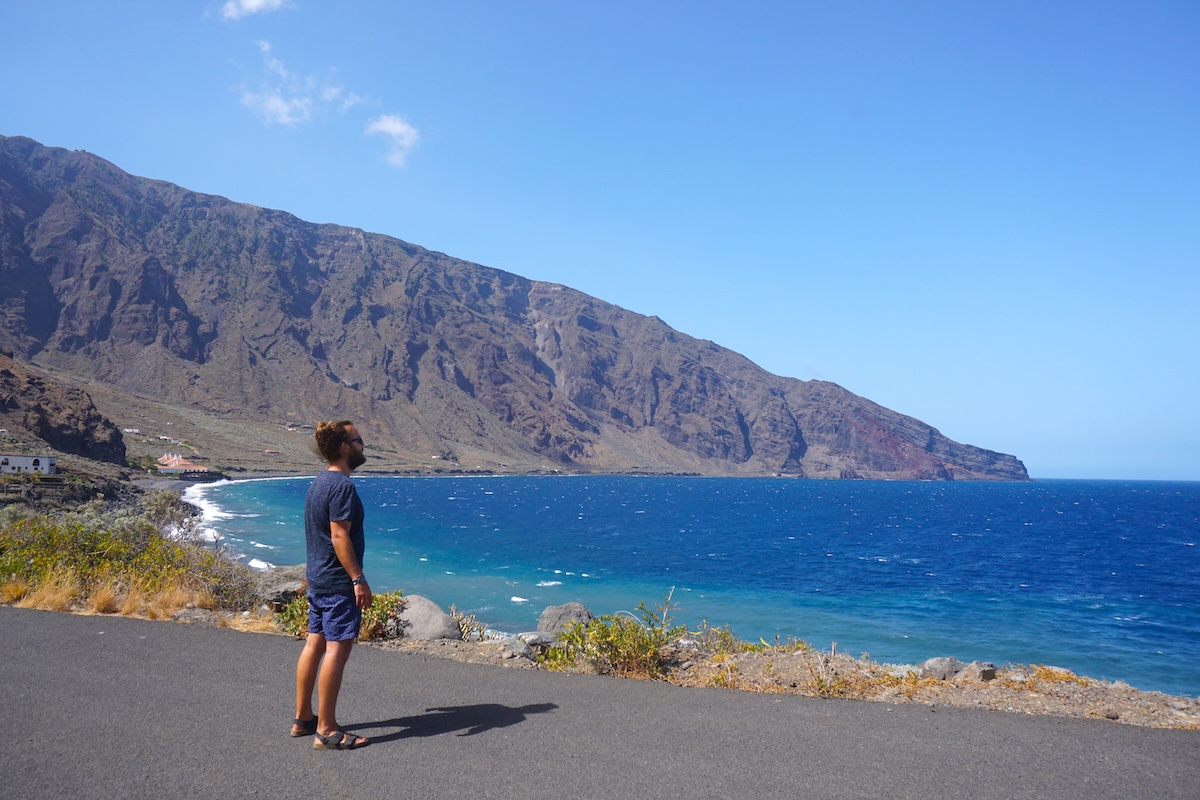
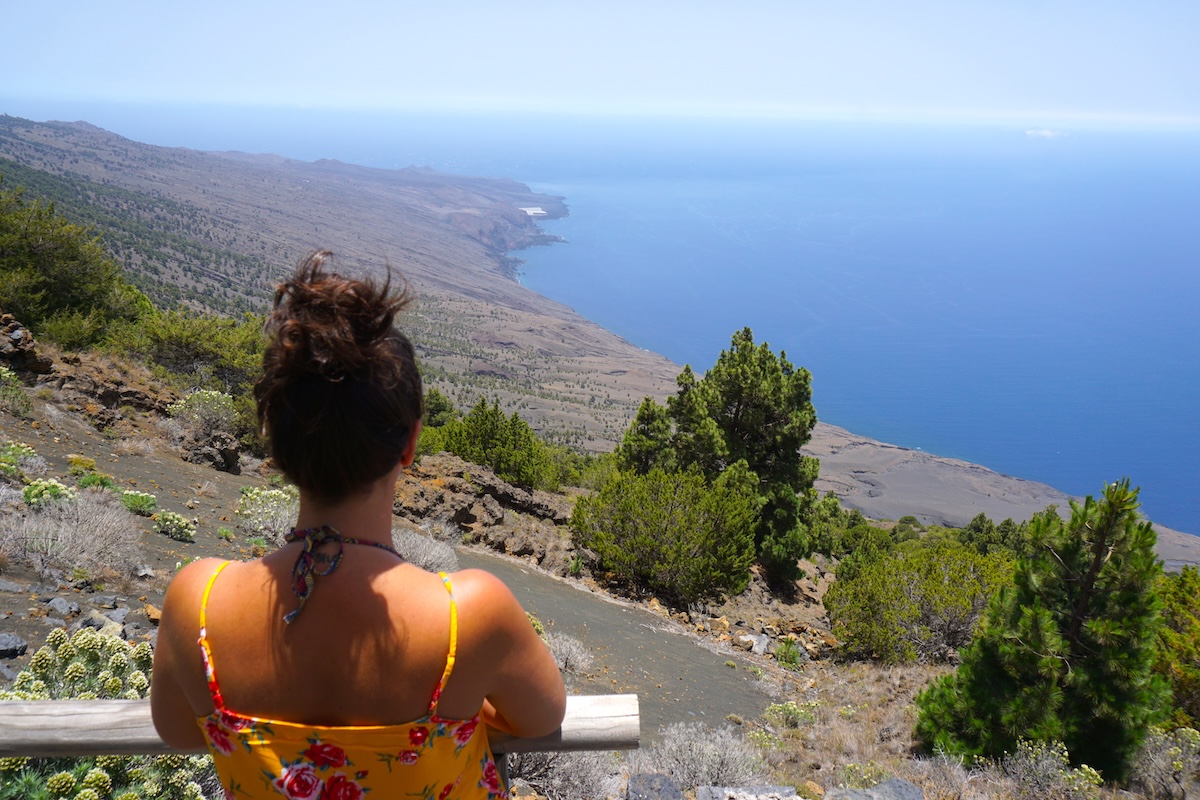
Along the main road, you can stop at the Mirador del Julán. From this viewpoint, you can admire the Mar de las Calmas in all its splendor. Along this coastline, the mountainside slopes continuously from an elevation of 1,500 meters down to sea level, dotted here and there with patches of greenery.
Paragliding on El Hierro
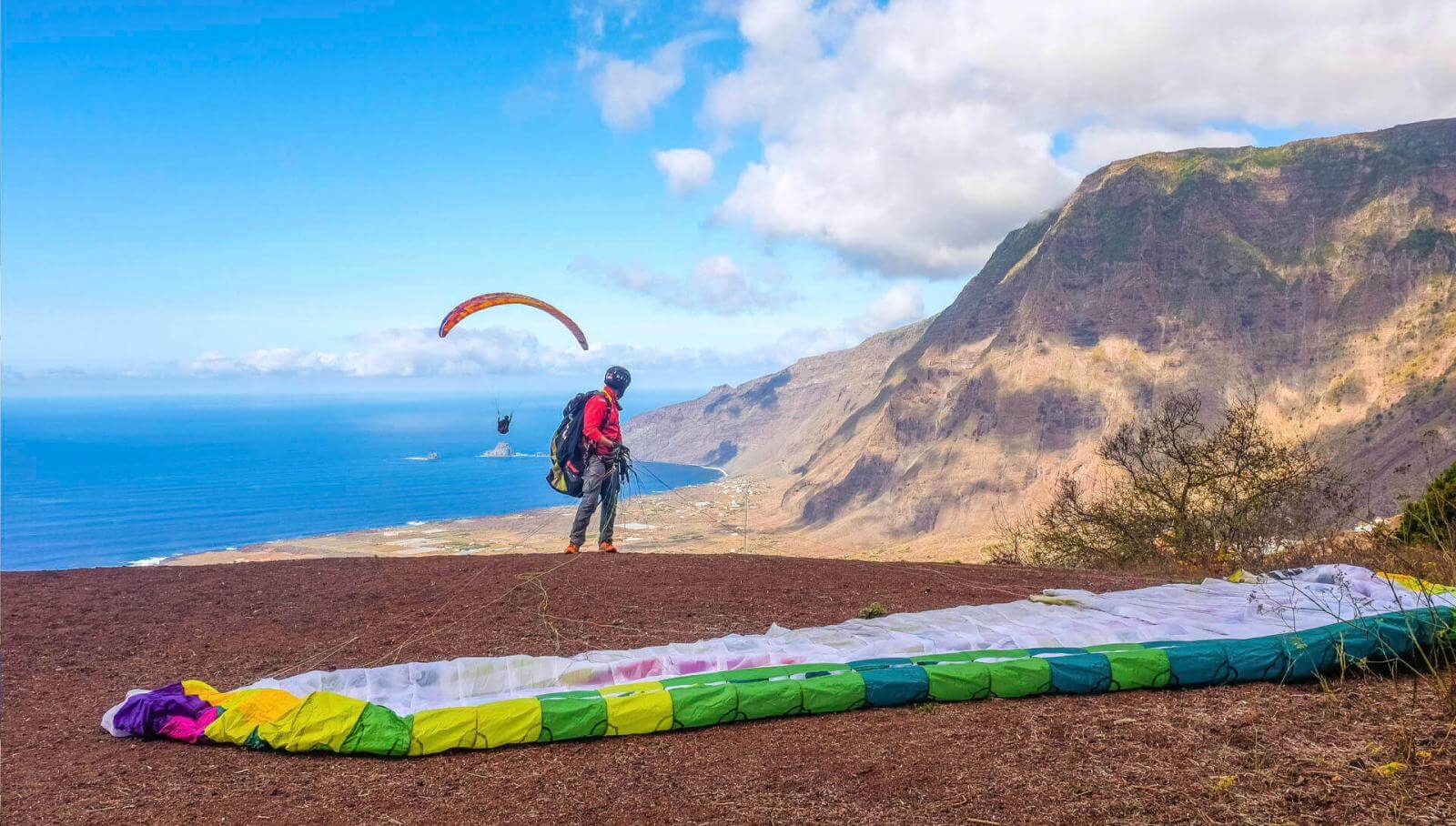
Although we didn’t do it on Randomtrip, the island of El Hierro is ideal for paragliding any time of year. If you’re interested, you can find out more about the best spots depending on the season and the companies offering this service at:
From what we saw, prices start at 100€, though it’s best to contact the companies directly to find out their rates and what’s included.
Get inspired by our Instagram Stories from our trip to El Hierro
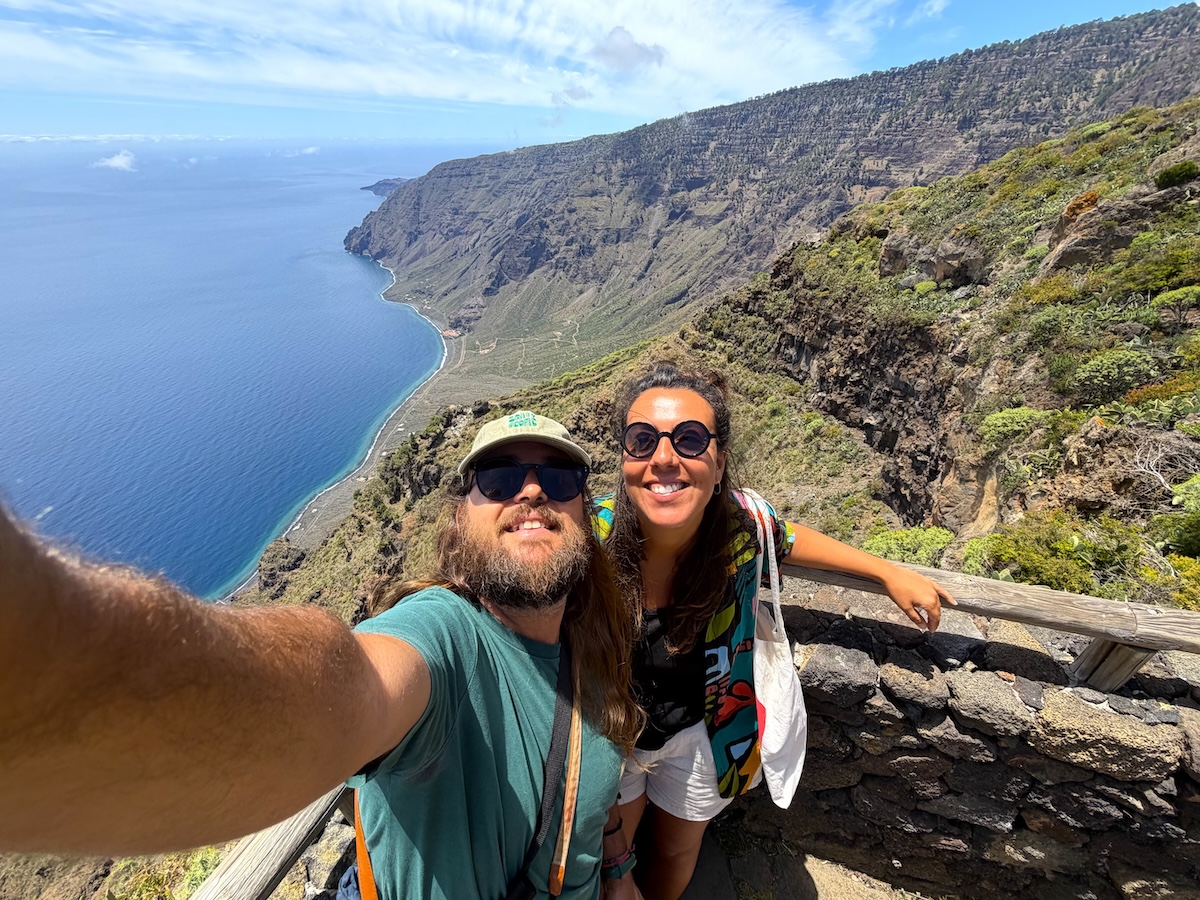
If you want to get inspired by our adventures in real time, we’ve saved a selection of what we did during our stays on the beautiful island of El Hierro, on both occasions we visited, in the Highlights section of our Randomtrip_Blog Instagram account (are you following us yet?). If you click on these links, you’ll be able to watch the videos we recorded at several of the spots we recommend in this guide. Are you curious?
Filming Locations for the Series “Hierro”
The series “Hierro,“ which we watched after our first visit (and which we highly recommend, both for the beauty of its landscapes and for its quality and plot), has sparked increased interest in the island and a tourism boom, especially at the locations featured in the series.
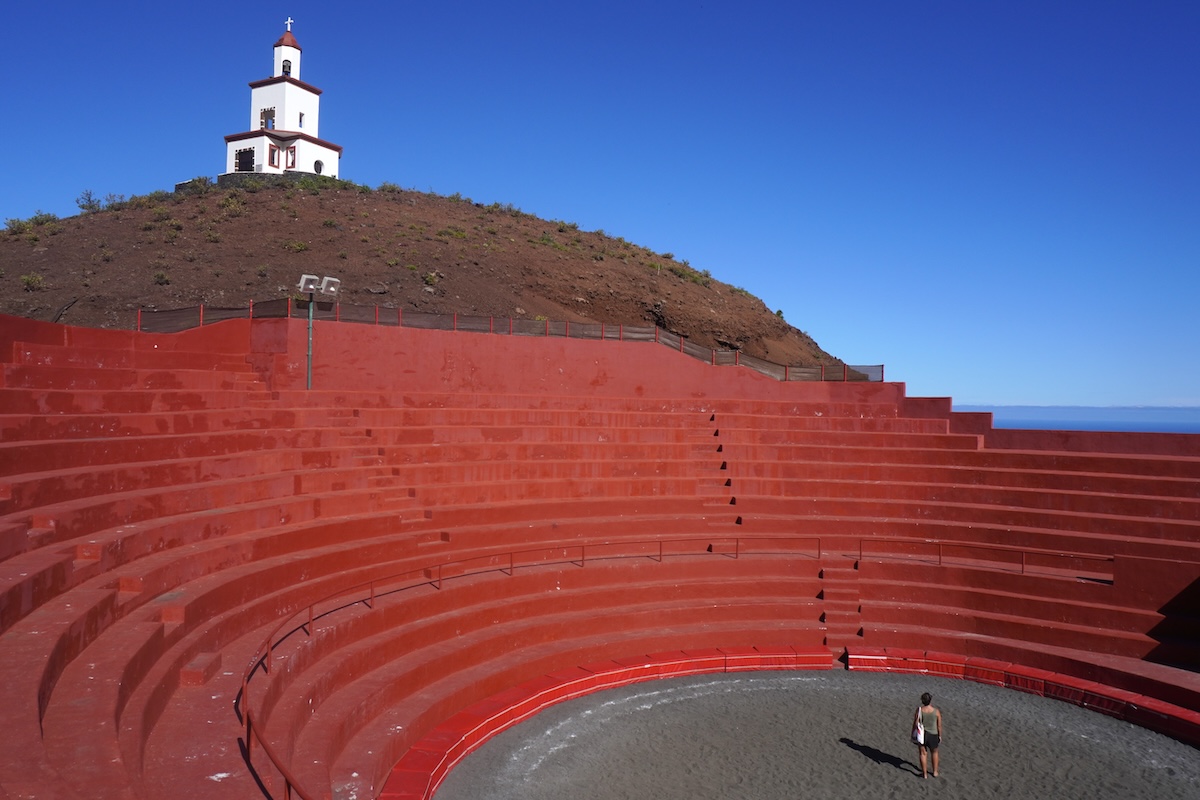
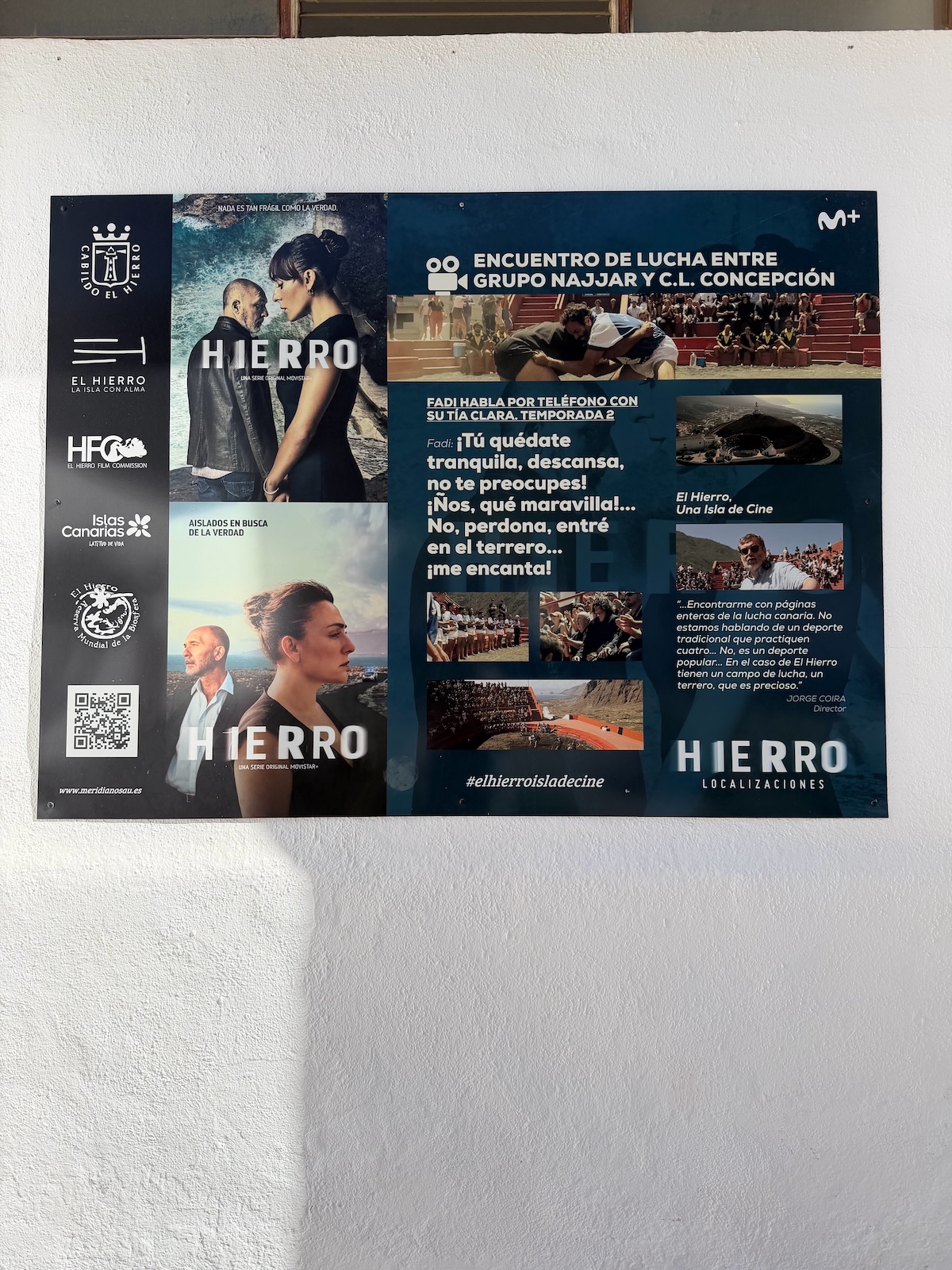
So much so that the Cabildo (the local government) itself released a map/itinerary featuring all the locations from the series (download the brochure with the locations here), in addition to placing informational signs at each location explaining which scene(s) from the series take place there, along with photos and dialogue from those scenes.
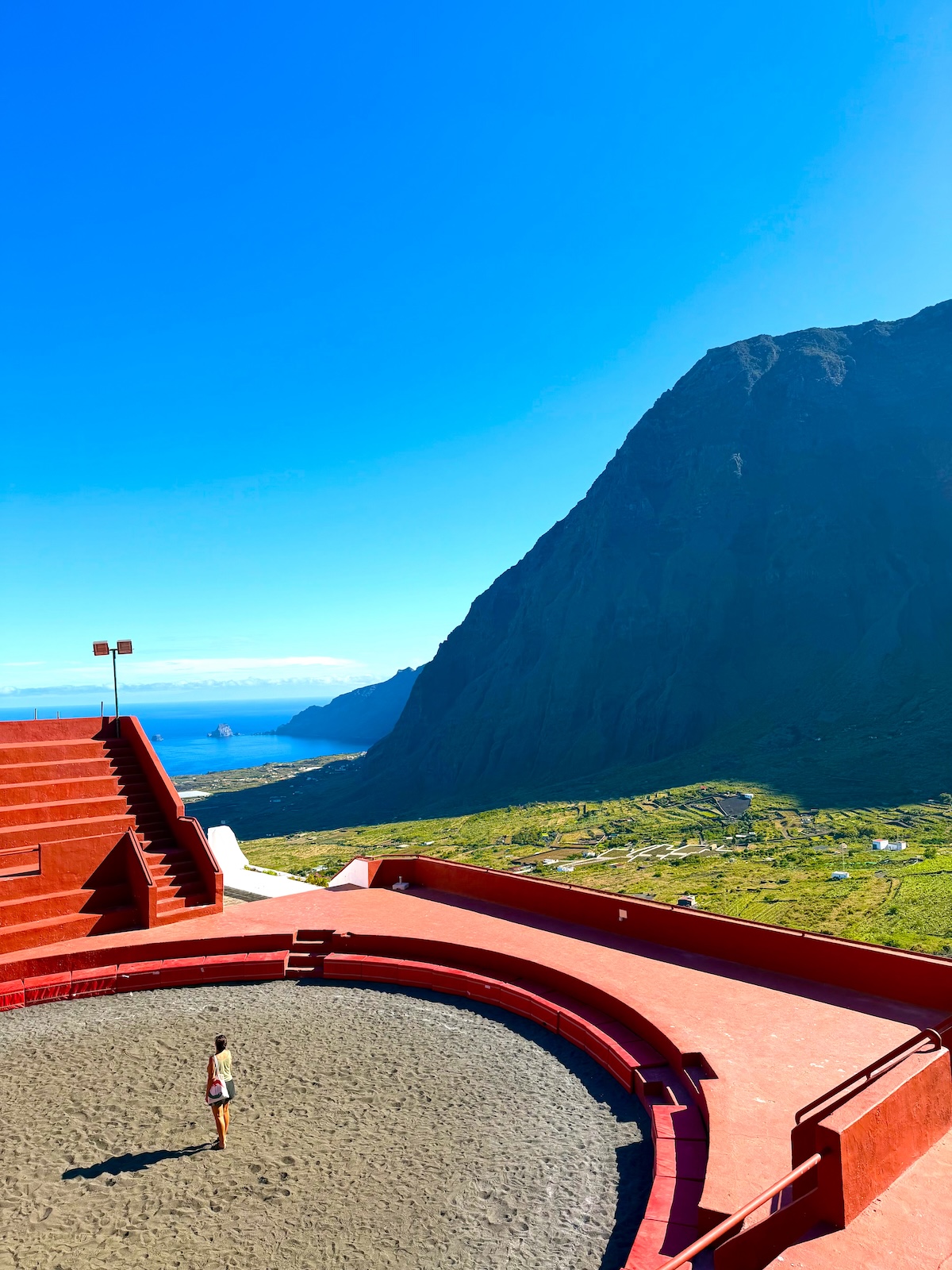
If you’re also a fan of the series Hierro and want to have the filming locations right at your fingertips, we’ve made it easy for you by including all the locations on our map, which you can view here
Where to Dive in El Hierro
Since this island is one of the best diving spots in Spain and among the best in Europe, thanks to its underwater volcanic canyons and the biodiversity of the Mar de las Calmas Marine Reserve, all the dive centers are concentrated in La Restinga, the small town in the south from which boats depart with divers eager to explore the ocean
The 2011 underwater eruption also fueled an explosion of biodiversity, where tropical fish, species from more temperate seas, and even populations of cetaceans that live here permanently coexist. Apparently, iron emissions from the Tagoro underwater volcano naturally fertilized the waters of the Atlantic, leading to a burst of life.
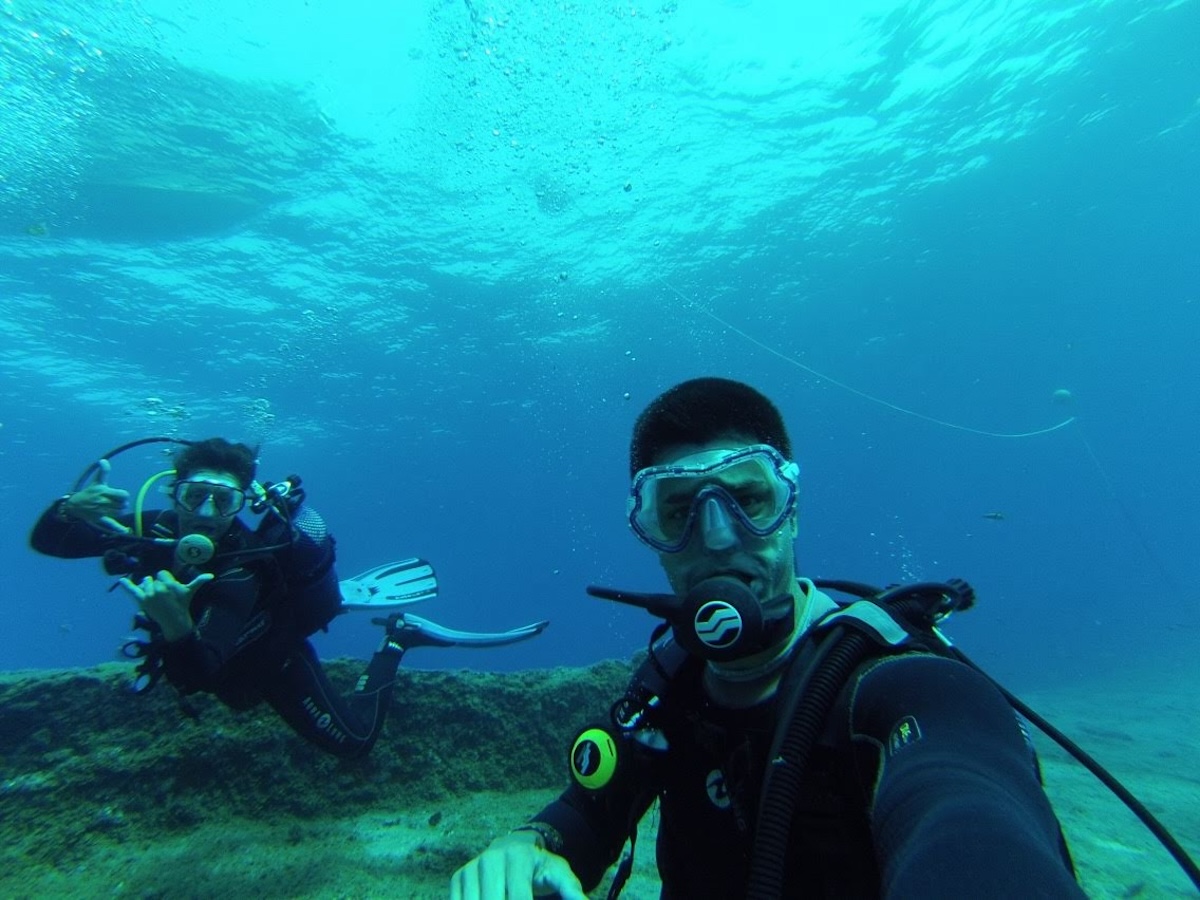
Things to Keep in Mind When Diving in El Hierro
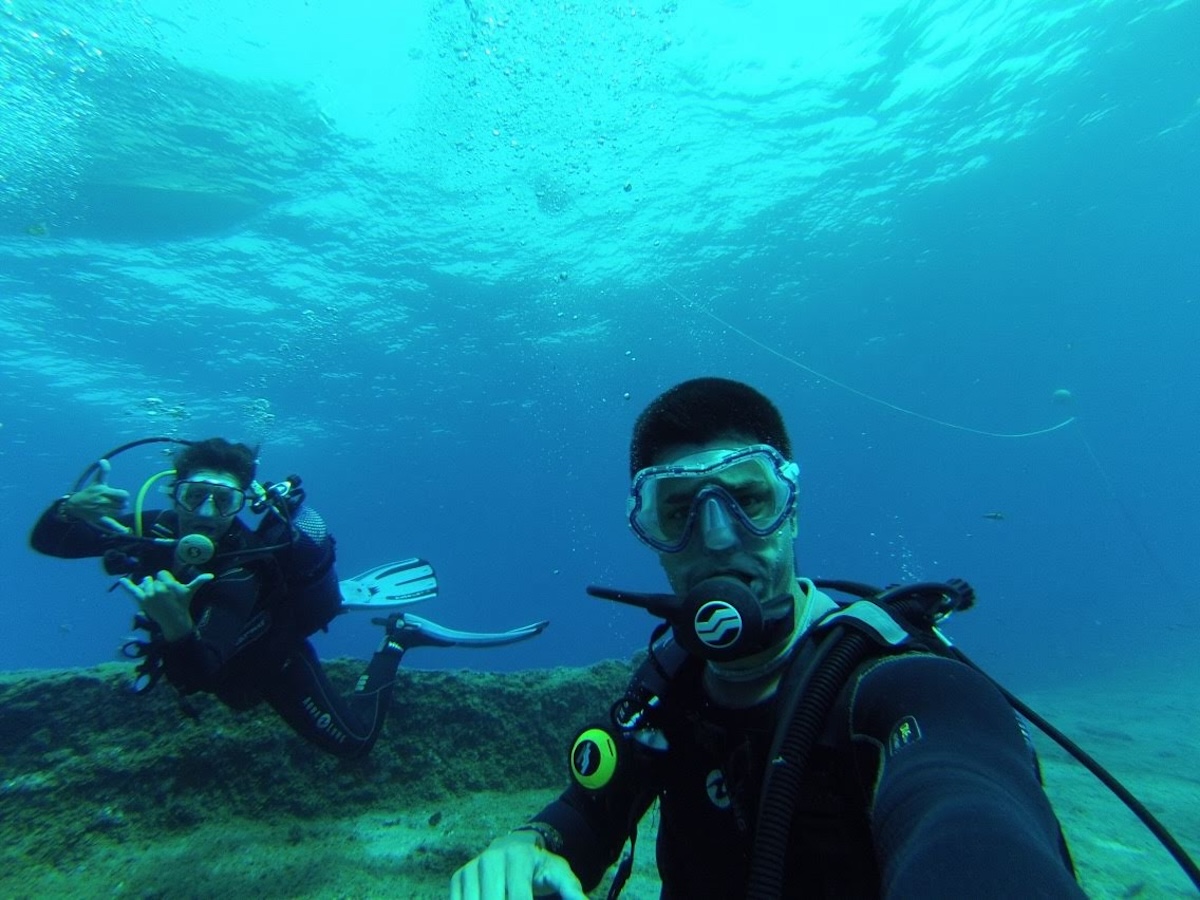
- Choose your season: You can dive year-round in El Hierro with excellent visibility (30 to 40 meters), but keep in mind that in winter the water temperature is around 18° and in summer around 24°, so if you’re a diver who gets cold easily, like Inês, summer is the better choice. Keep in mind, however, that the likelihood of seeing large pelagic species (manta rays, whales, or sharks) may be lower during this time of year. The great thing about diving is that every day is a surprise, you never know!
- Keep your diving abilities in mind: Some dive sites or certain types of dives at those sites may only be suitable for divers with advanced experience or a minimum number of dives under their belt, due to depth or currents. Check with the dive center before signing up.
- Choose a reliable dive center. The dive guide must be certified and experienced. The boat must have trained crew members. The equipment must be in perfect condition. Don’t forget that, along with your inseparable dive buddy, your equipment is your best friend underwater, so you must make sure everything is in perfect working order. Regulators must be clean and working 100%; wetsuits shouldn’t have too many holes… (you’ll probably try them on at the center the day before the dive); BCDs must close securely; tanks must be up to date on their inspections: check the date of the last inspection. The dive center where Inês dived no longer exists, but we’ve heard great things about El Bajón
- Get diving insurance. Inês has AxaSub and is very happy with it. If your trips are shorter, ExtraSub is also a good option.
- El Hierro and decompression sickness: keep in mind that when you return from dives, due to the residual nitrogen that builds up in your body, you shouldn’t go to high altitudes that same day. When we dive, we accumulate a certain amount of residual nitrogen in our bodies that we’ll need to gradually eliminate through breathing as the hours pass; therefore, on the same day, we shouldn’t go to high altitudes because our bodies will still have excess nitrogen in our tissues. For this reason, divers are advised not to fly for at least 12 hours after their last no-decompression dive, 18 hours if they were multi-day dives, and up to 24 hours if they were deep dives.
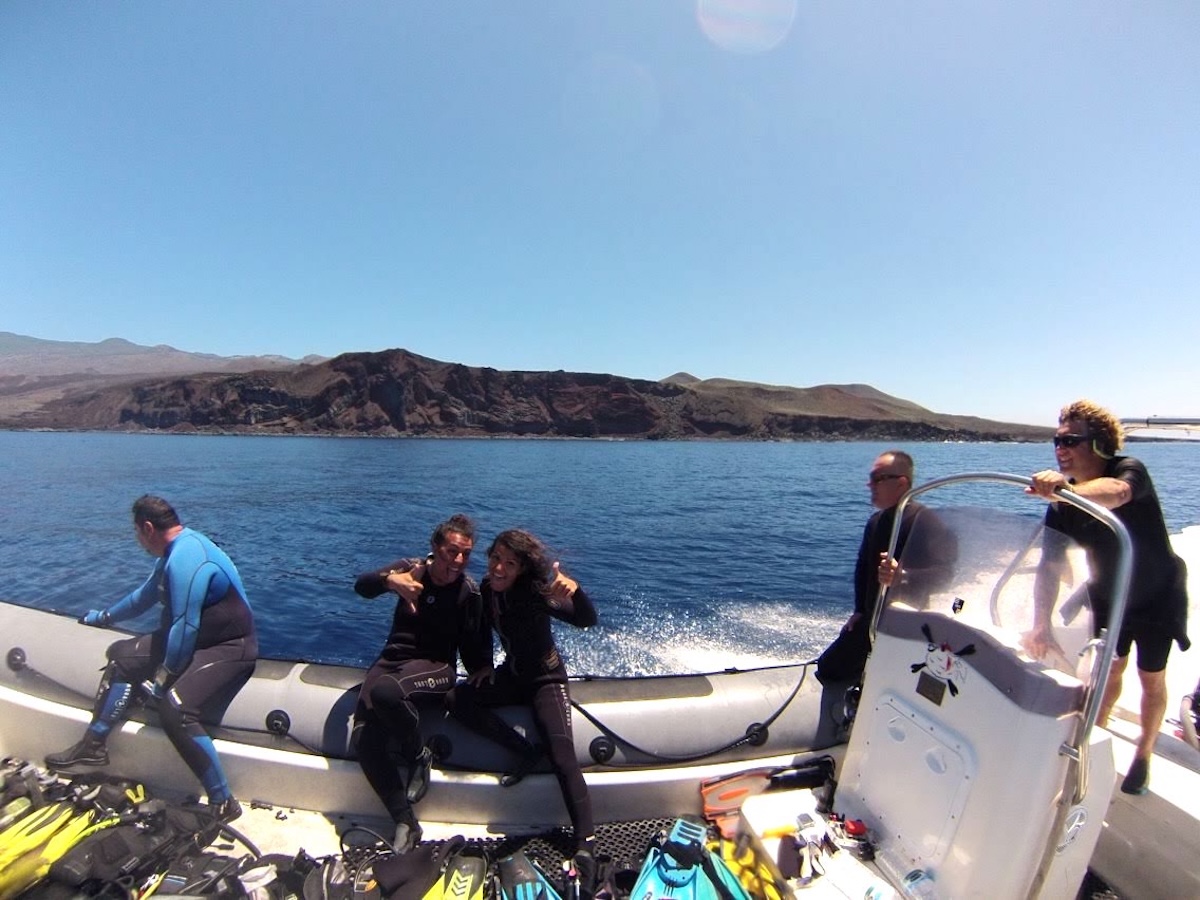
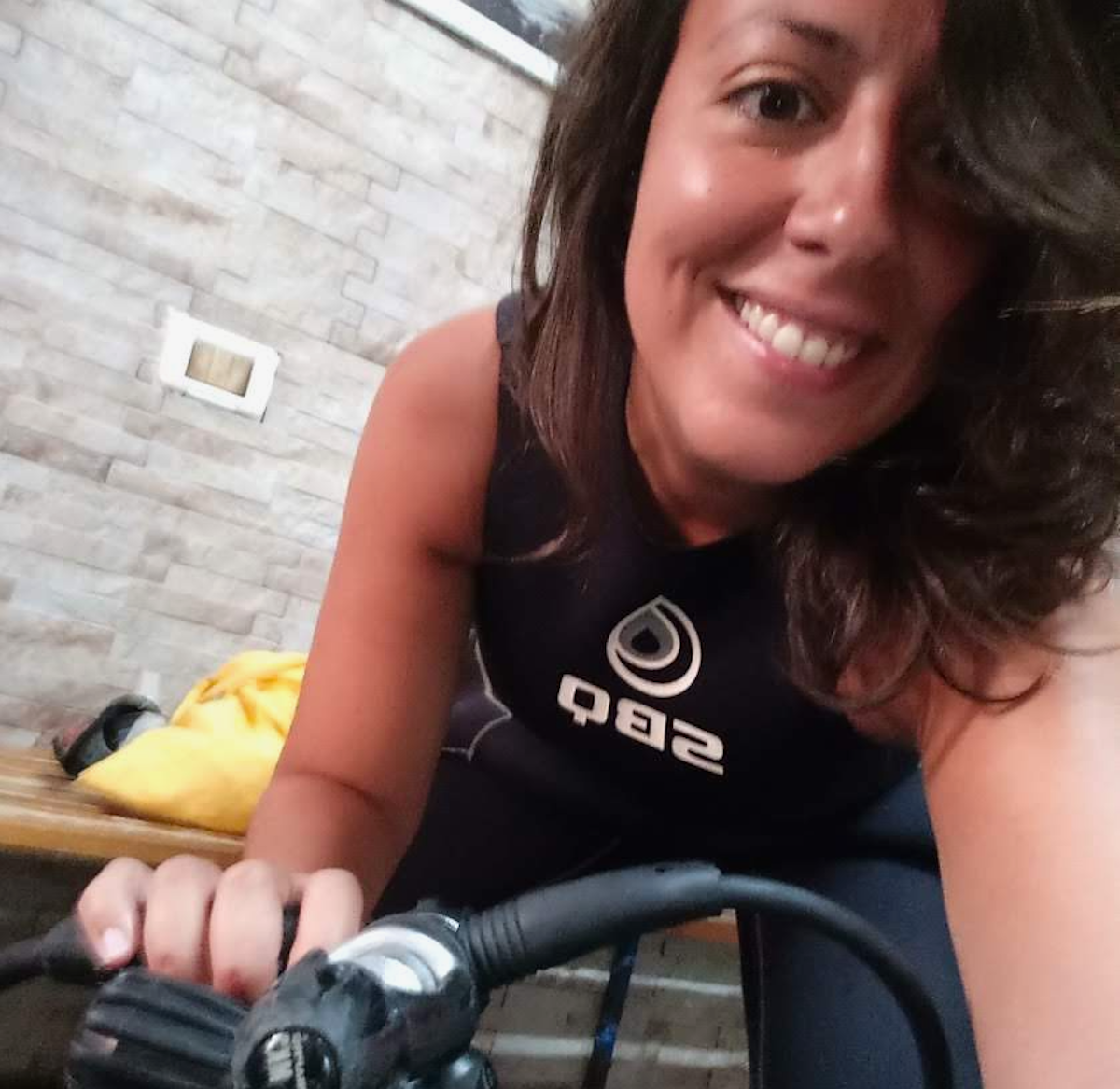
This means you should keep in mind that you shouldn’t leave La Restinga to go to other parts of the island on your dive days (at most, you can go to Tacorón or El Pinar) because to reach any other part of the island, the road passes through areas at too high an altitude, and you could put your health at risk (the road leaving La Restinga inevitably forces you to climb too high in altitude).
Fortunately, there’s Tacorón and its pools right next to the village of La Restinga, at a lower altitude, so we can explore a bit more. At Randomtrip, we decided to use our diving days to rest, and spend the other days continuing to discover the island.
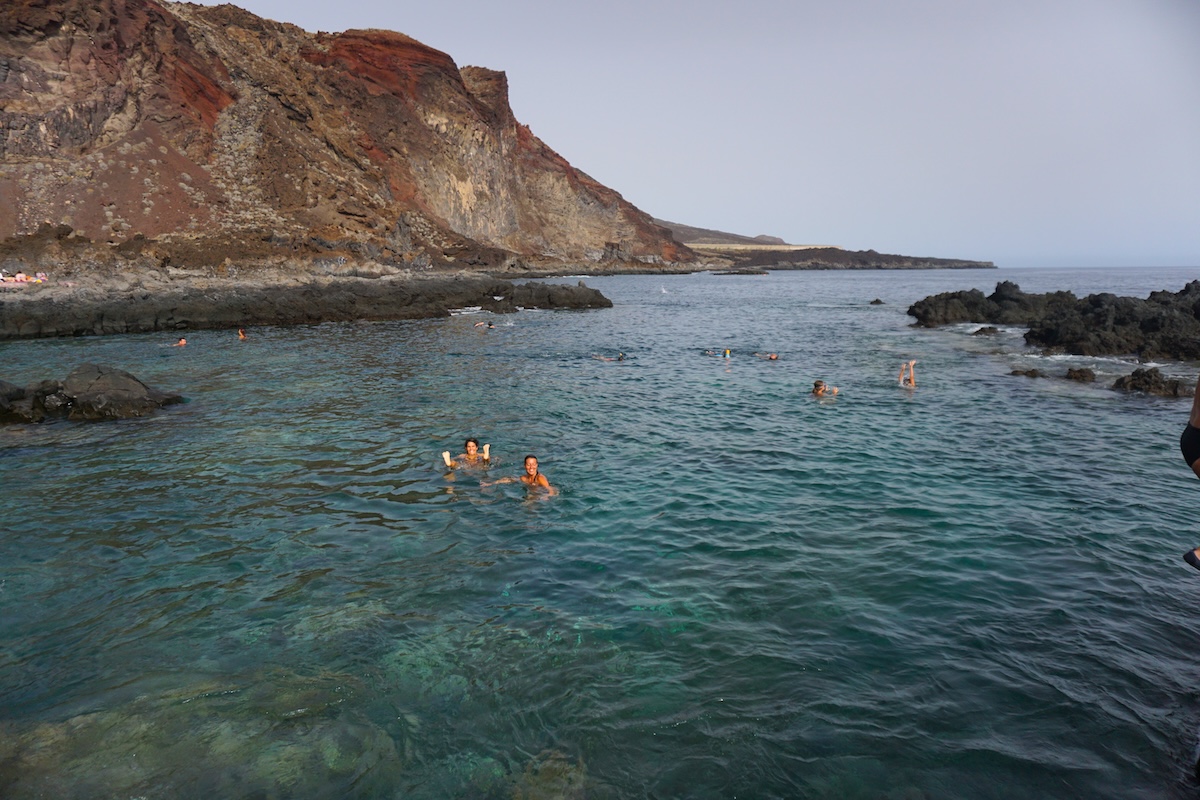
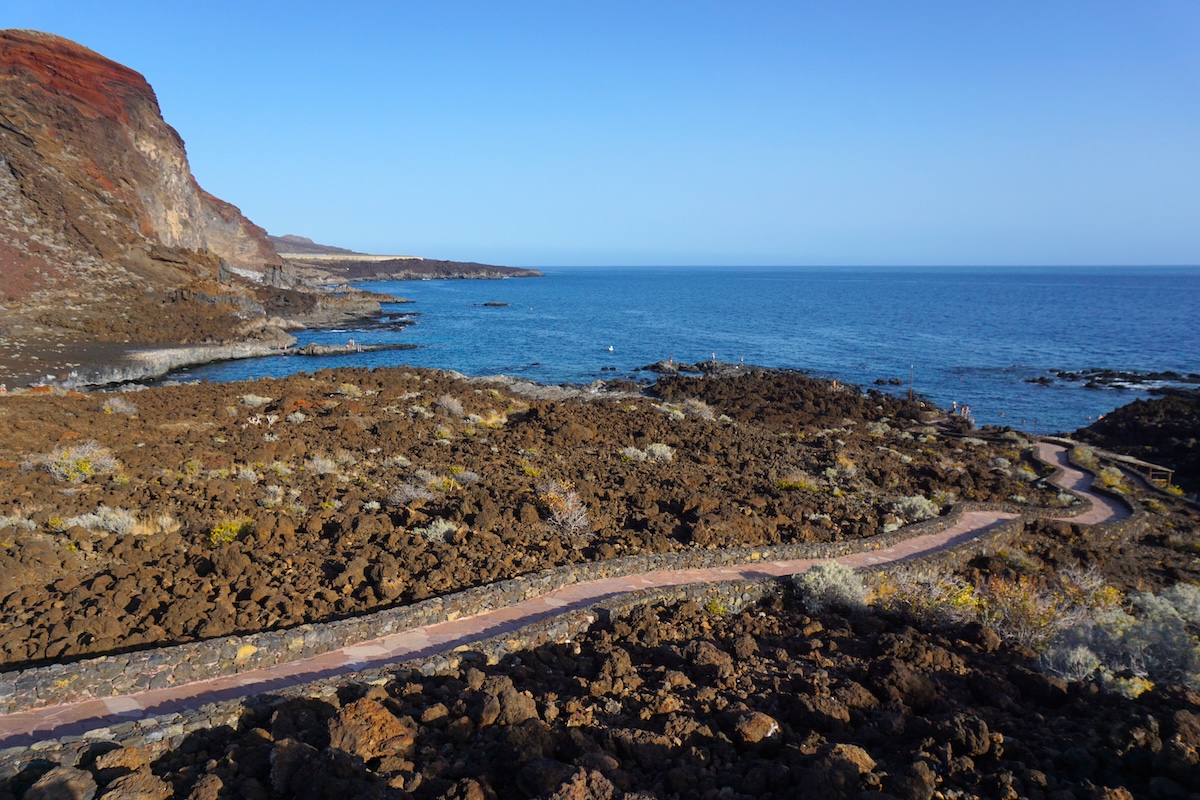
So the best place to stay if you’re coming to dive is right in La Restinga or, at the very “highest,” in El Pinar. More info in Where to Stay in El Hierro.
If you want to learn to dive in El Hierro, book an introductory dive here. If you’re not interested but know someone who is, we’ll just mention that it’s an ideal birthday gift…
If you don’t dive but still want to enjoy the seabed: opt for this snorkeling boat tour, also departing from La Restinga.
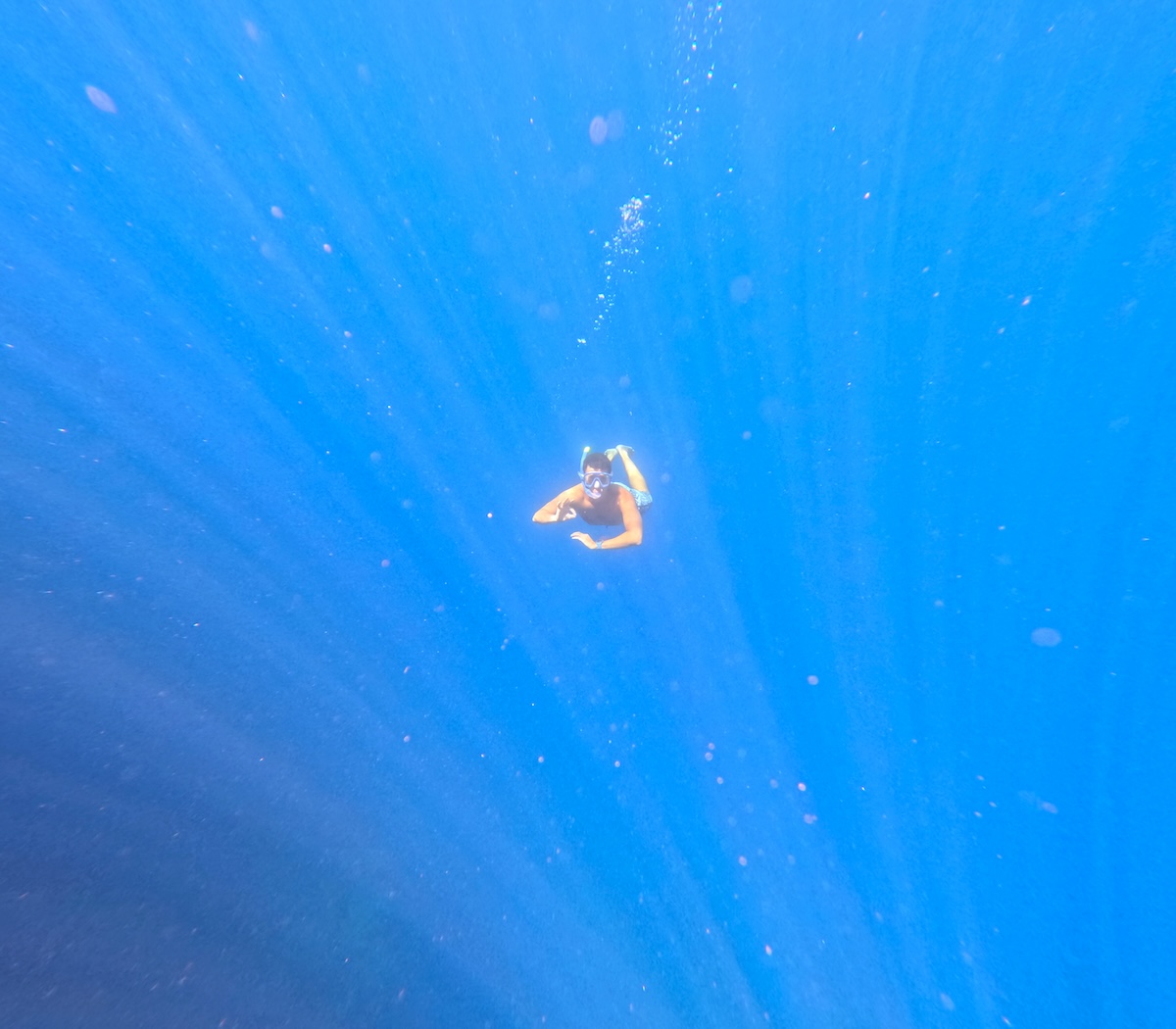
Dive Sites
Most dive sites are near the Restinga pier, so you never spend too much time on the boat. Plus, the Mar de las Calmas is sheltered from the trade winds, so the chances of a dive being canceled are very low.
I remember our dive at Baja Bocarones (with its two volcanic towers) and also the one considered the best dive in El Hierro: El Bajón. Around this jagged underwater mountain with vertical walls, there’s a concentration of marine life, we saw the biggest and most colorful grouper we’d ever seen! We also spotted beaked whales, El Hierro lobsters (huge ones), and an incredible seafloor with black and yellow corals.
With a little luck, you might spot a devil ray or even… a whale shark!
There are also several dive sites on the island’s east coast, such as La Caleta, Roques de Salmor, Roque Bonanza, and Baja Nacon.
Hiking Trails on El Hierro
Thanks to the variety of landscapes on the island of El Hierro, there are plenty of hiking opportunities; so if you enjoy walking in nature, and especially in solitude, since you probably won’t run into many people, be sure to include a hike in your travel itinerary.
- Jinama Trail: one of the island’s oldest trails, connecting the fertile region with the Nisdafe plateau, home to the sacred Garoé tree. This was the route the people of El Hierro took twice a year for the so-called “Las Mudadas,” when the island’s population moved to the Valle del Golfo, taking all their belongings and animals with them so they could tend to their crops and so the livestock could give birth in more pleasant temperatures. Here’s the route on Wikiloc
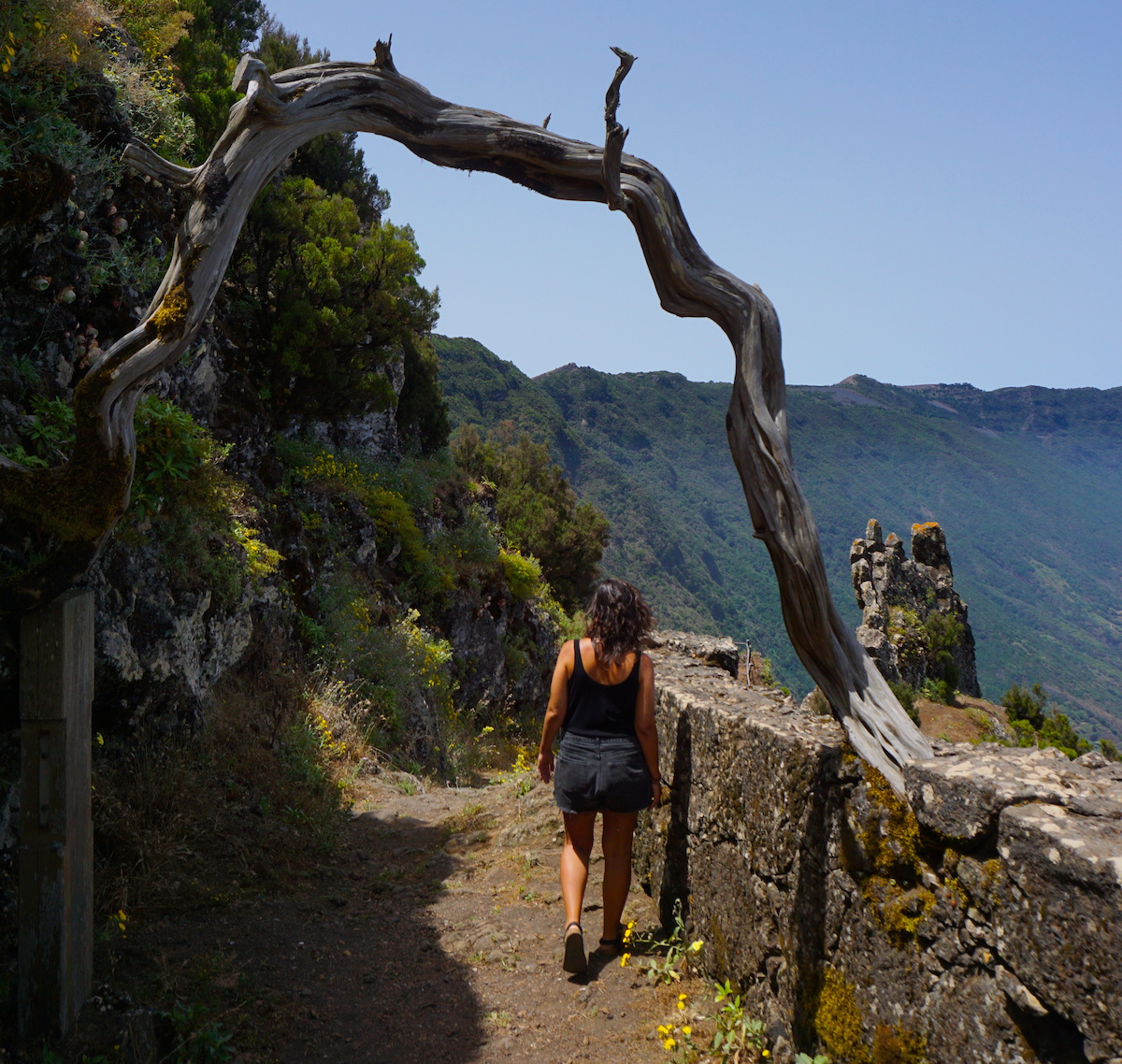
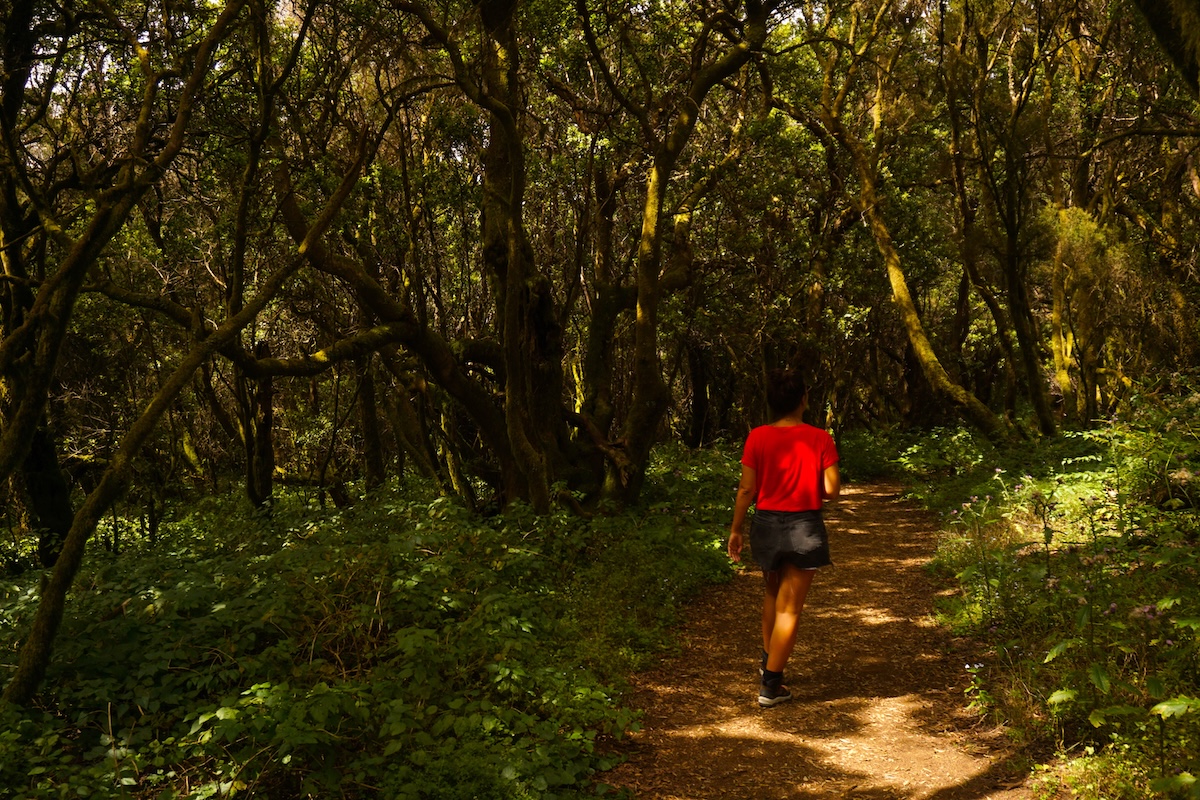
- Hike through the laurel forest in La Llanía: this was the only trail we did ourselves, it’s very easy, and we highly recommend it. It’s an orange-marked loop trail with three distance options (short, medium, or long), where you’ll find yourself immersed in a green oasis that contrasts sharply with the rest of the island’s landscapes. It looks like a fairy-tale forest! Remember to always bring plenty of water. Here’s the route on Wikiloc. This is the trailhead, where you can park your car.
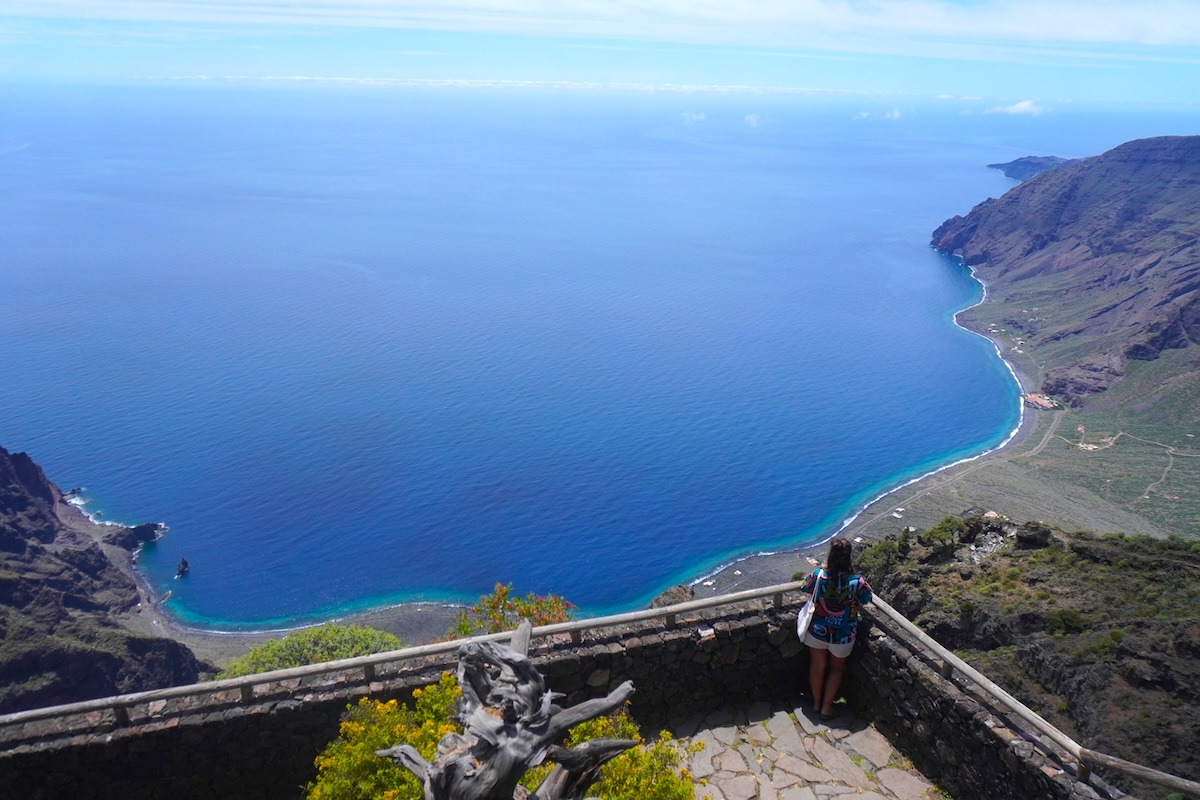
- Trail from the Isora Lookout to Las Playas: this was another route that caught our attention. If the views from the Isora Lookout were our favorites on the island, imagine hiking down from there to Las Playas, with those views all along the way, and then taking a well-deserved dip. This route is much more demanding due to the elevation change: your knees will feel it on the descent, and the climb back up must be pretty tough as well. During the descent, you’ll come across several crosses commemorating the shepherds who lost their lives there while searching for a lost goat from their flock. The best way to avoid the climb is to leave your car in Las Playas and have someone drive you to the Isora viewpoint (or vice versa). Here’s an example of a route that goes down one way and back up the other, on Wikiloc. More info on the route here.
- El Julan: a visit to the archaeological site with the petroglyphs includes a short optional hike on the way down (the ascent is by Jeep, and you can do a round trip by Jeep). More information in the El Julan section.
- Coastal Trail from Las Puntas to La Maceta: a hike along basalt cliffs along a stretch of the Gulf’s coastline. More info on the route on Wikiloc here.
More information on hiking trails on the island of El Hierro:
- Map with all routes in PDF format, available for download
- PDF trail guide, downloadable
- Hiking trails on El Hierro’s official tourism website
- Hiking trails on Wikiloc
- Hiking trails on Senderosdecanarias
Where to stay in El Hierro: best areas
Depending on how many days you’ll be on the island and your plans and interests, there are different accommodation options. The best and most strategic choice if you want to explore the entire island is Frontera but if you want to go scuba diving, you’ll definitely have to stay in La Restinga or, at the very “high,” in El Pinar if you’re looking for a less urban and more rural option.
Here are the places we stayed, those that were recommended to us, or those we had noted down as alternatives.
Where to stay in La Frontera
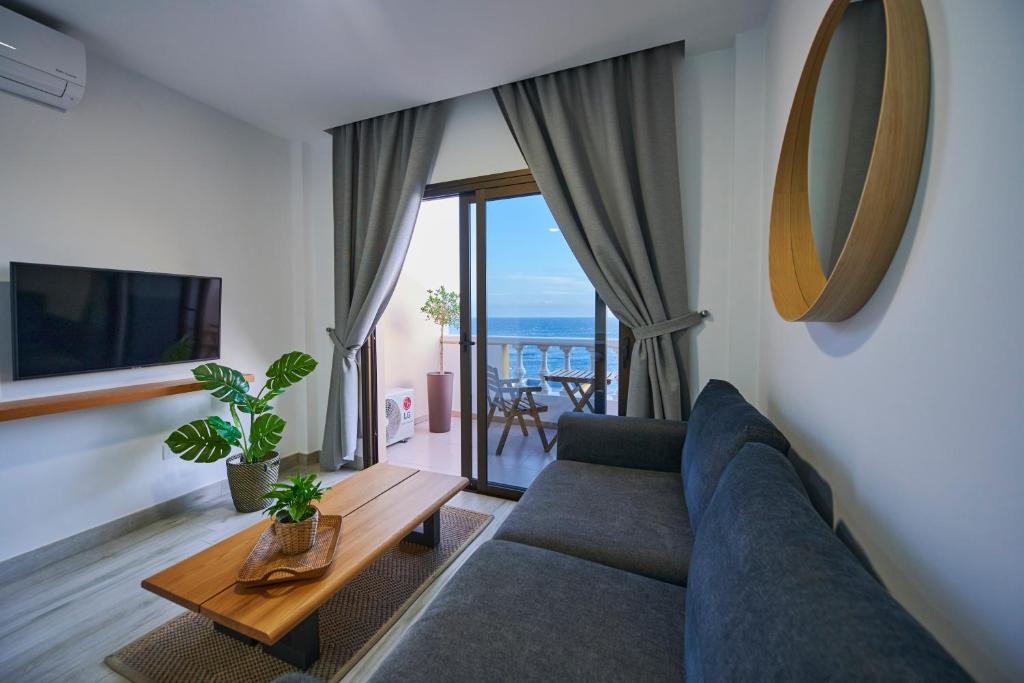
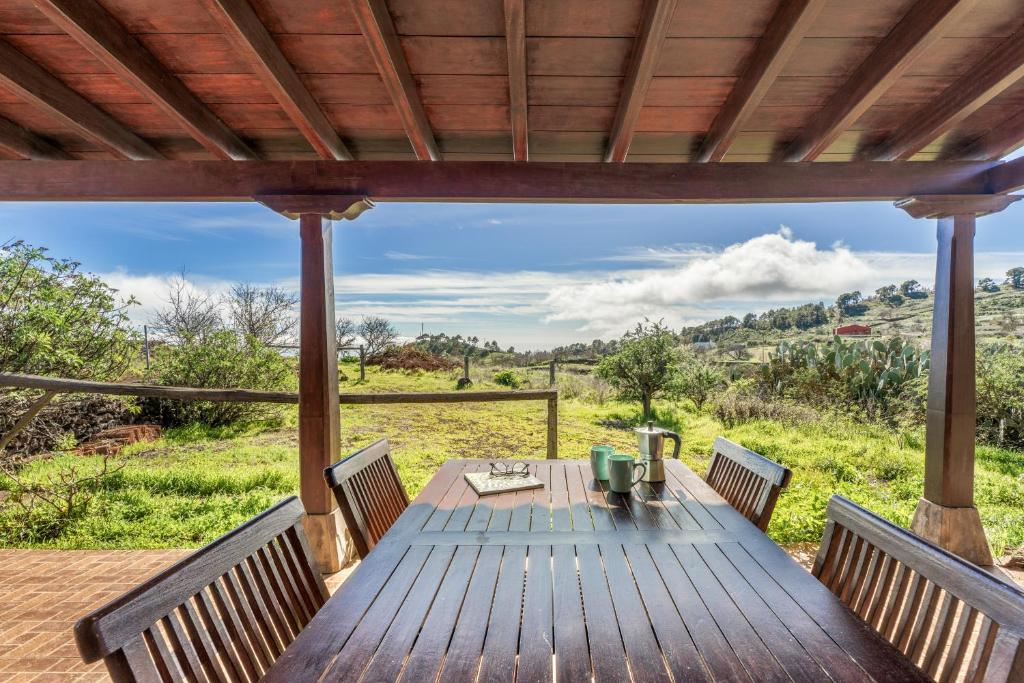
On our first trip to La Frontera, we stayed at Los Verodes (starting at 60€/night). Everything was just as shown in the photos: the bed was very comfortable, everything was clean, and the apartment was large, spacious, and bright. It had ocean views from the living room window, and they even welcomed us with a delicious quesadilla. Best of all, the shared terrace on the top floor, where you can enjoy the views, relax for a while with a book, and so on. At Randomtrip, we took advantage of it and went up there for breakfast.
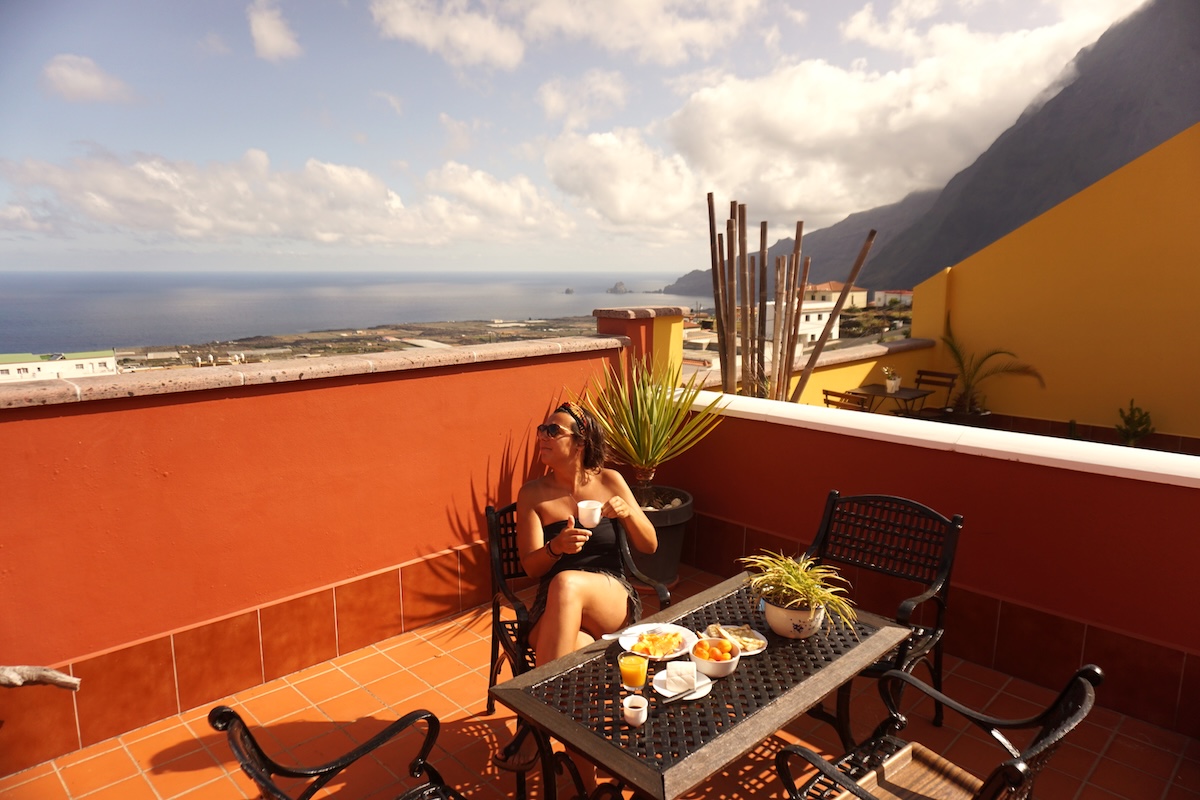
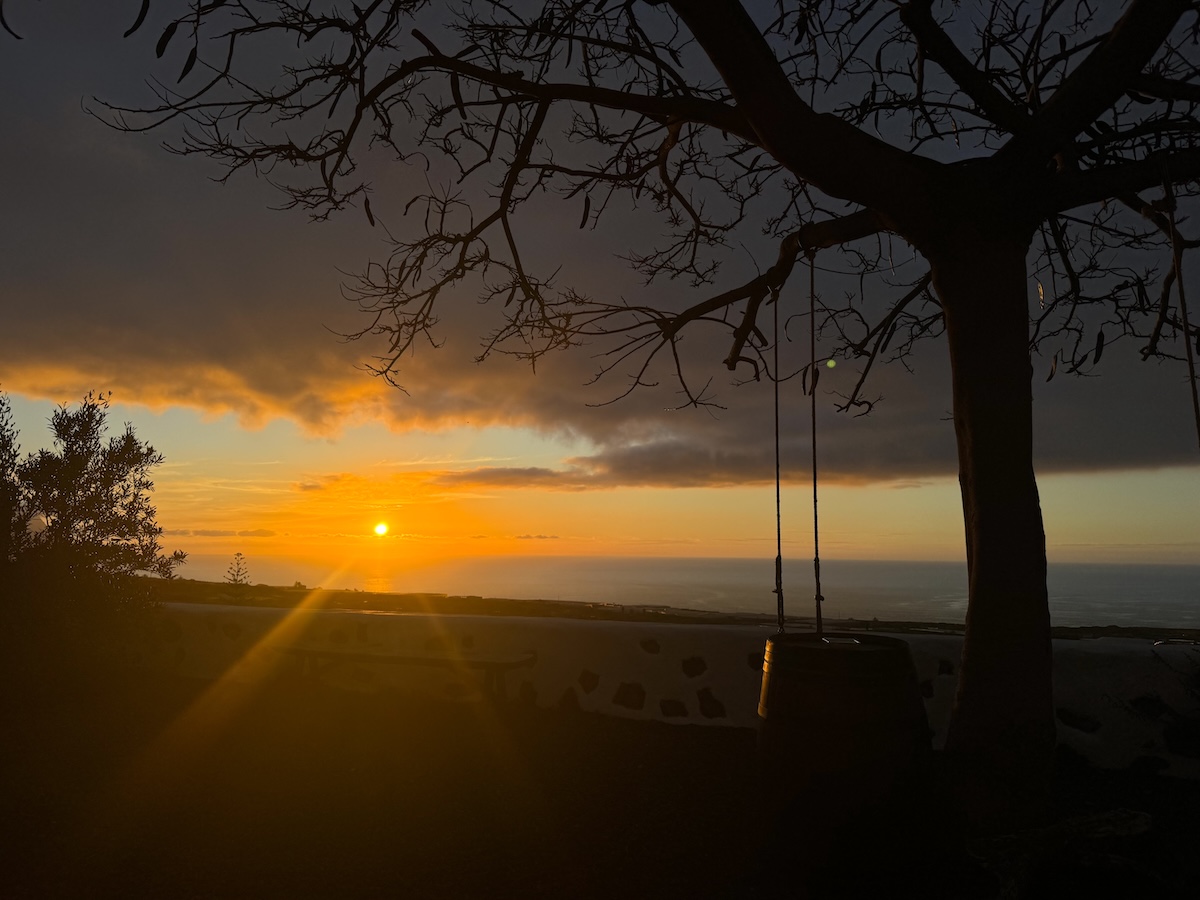
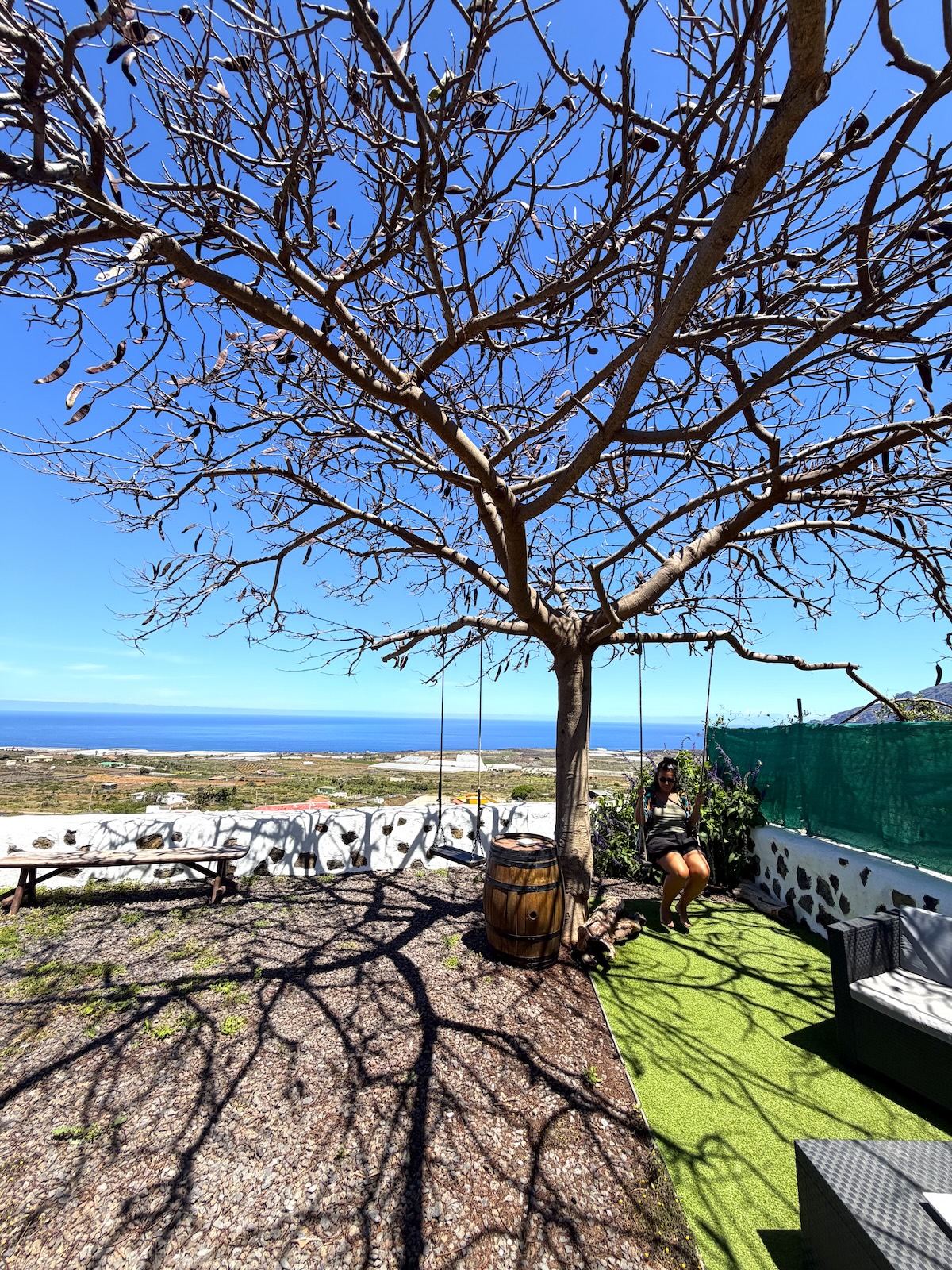
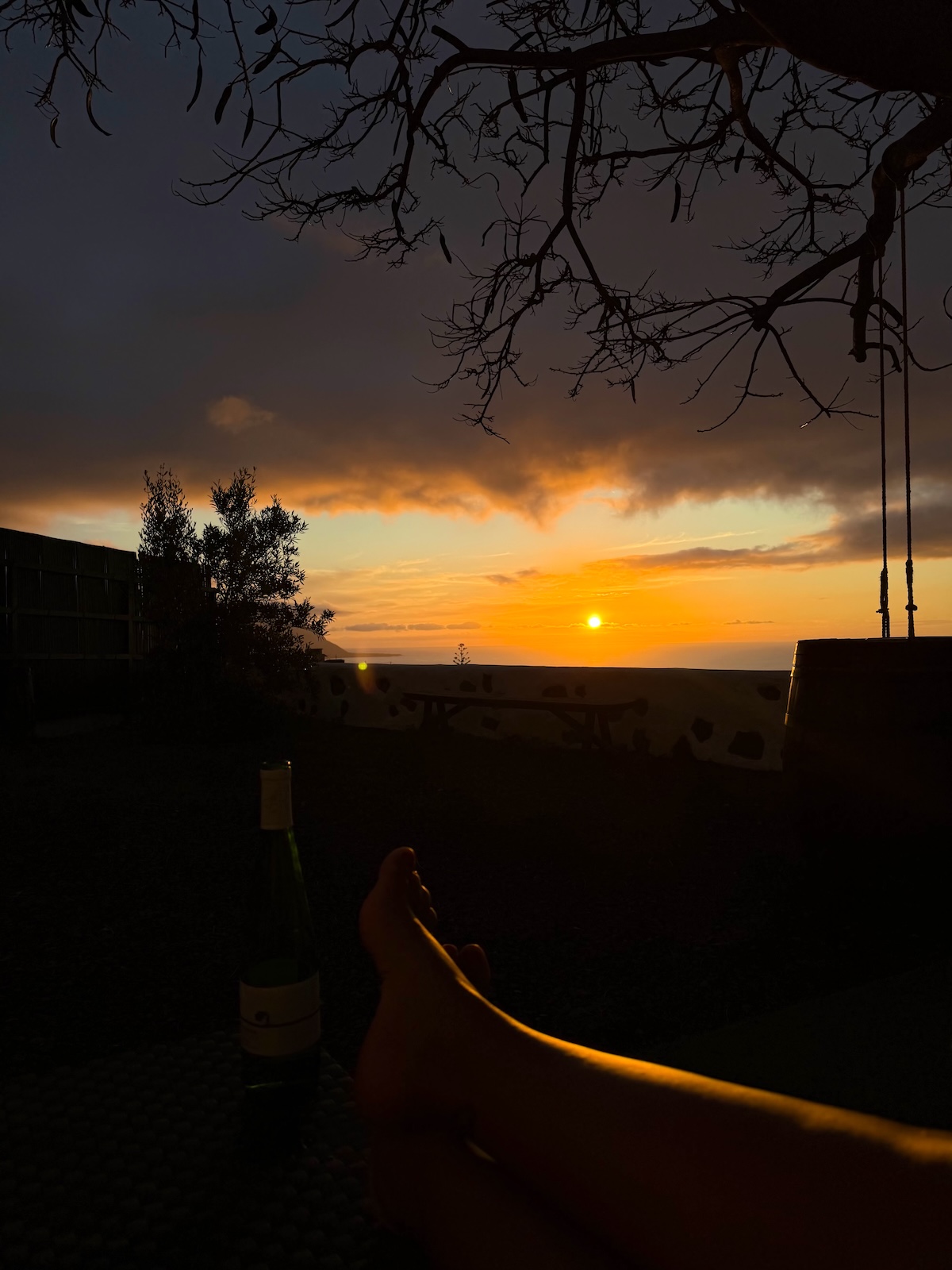
On our last trip to the island, we stayed at Altavista Apartamentos (starting at 60€/night), a studio apartment with a terrace, equipped with everything you need and offering beautiful views (the sunset from here was spectacular when we visited in May):
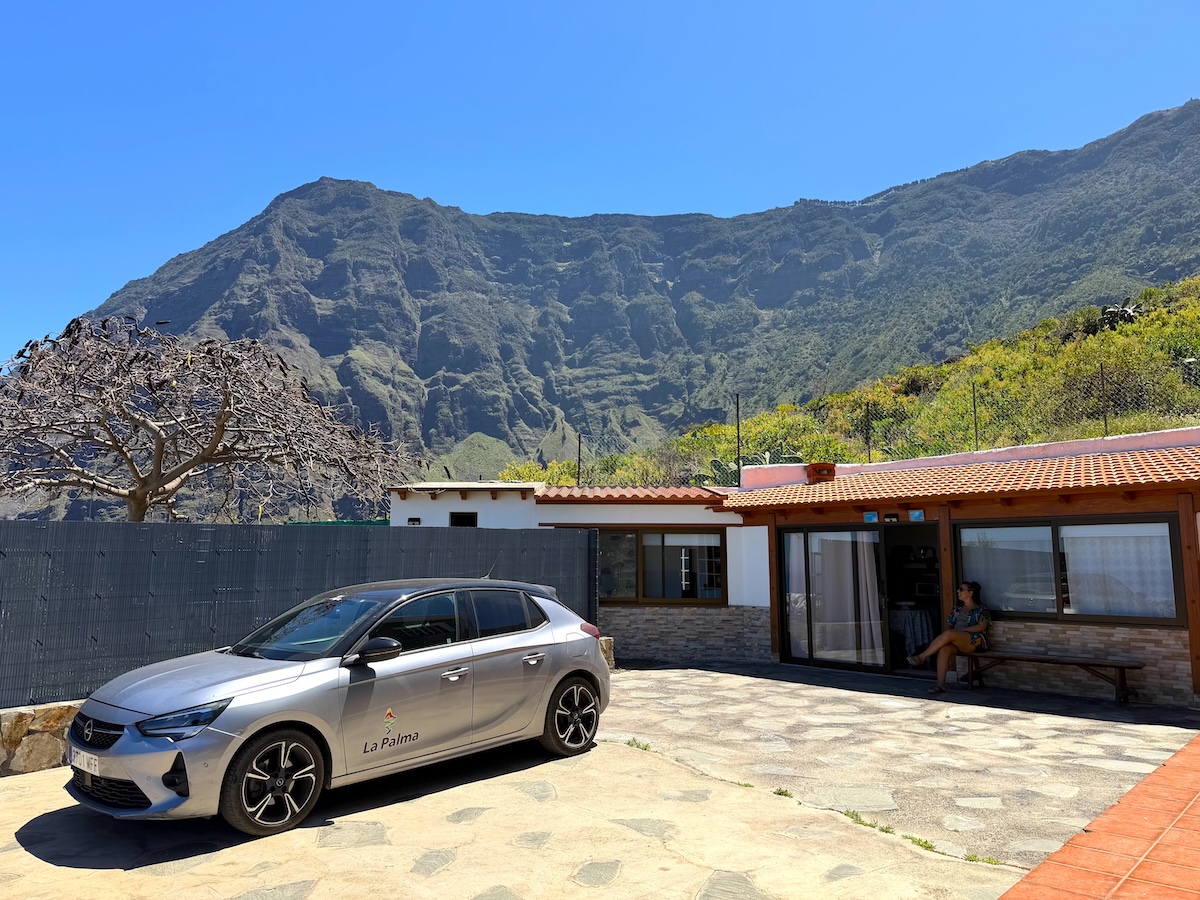
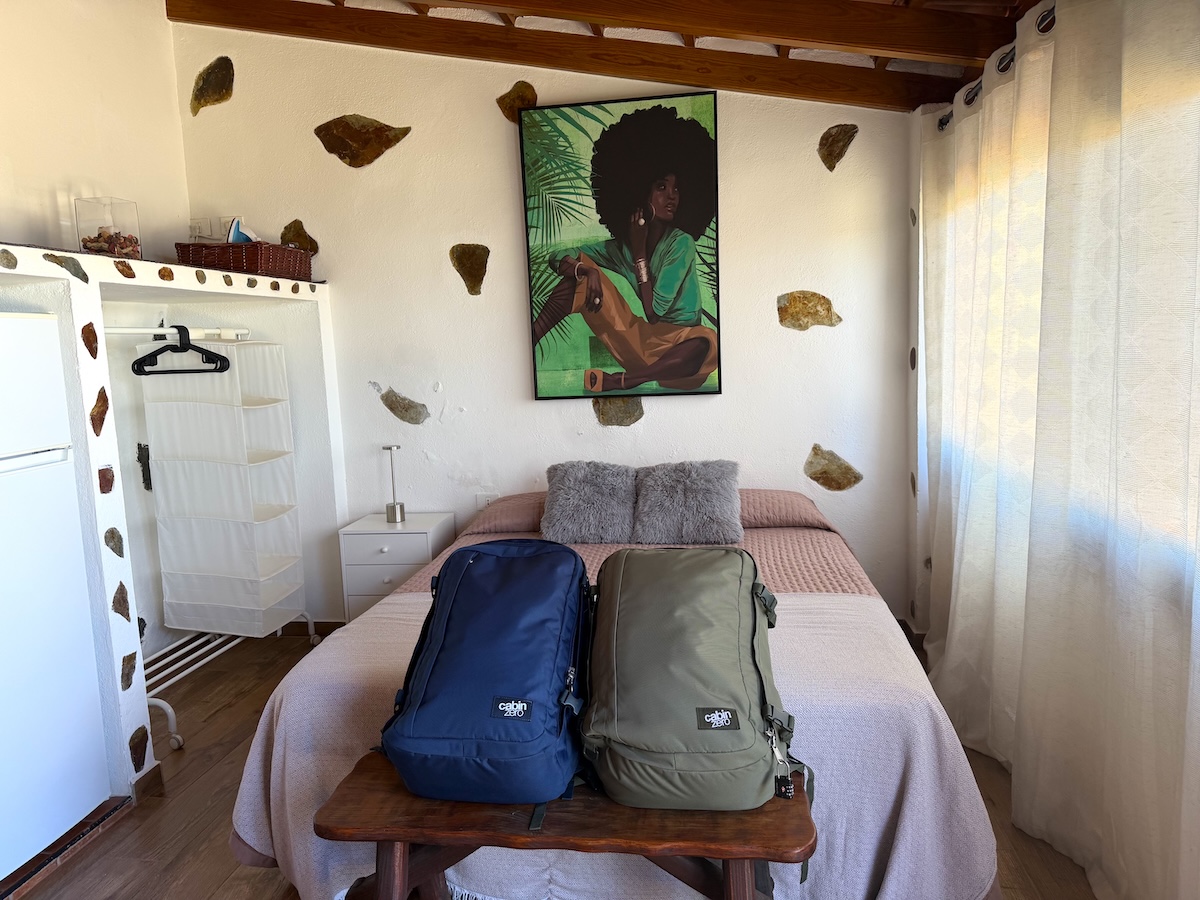
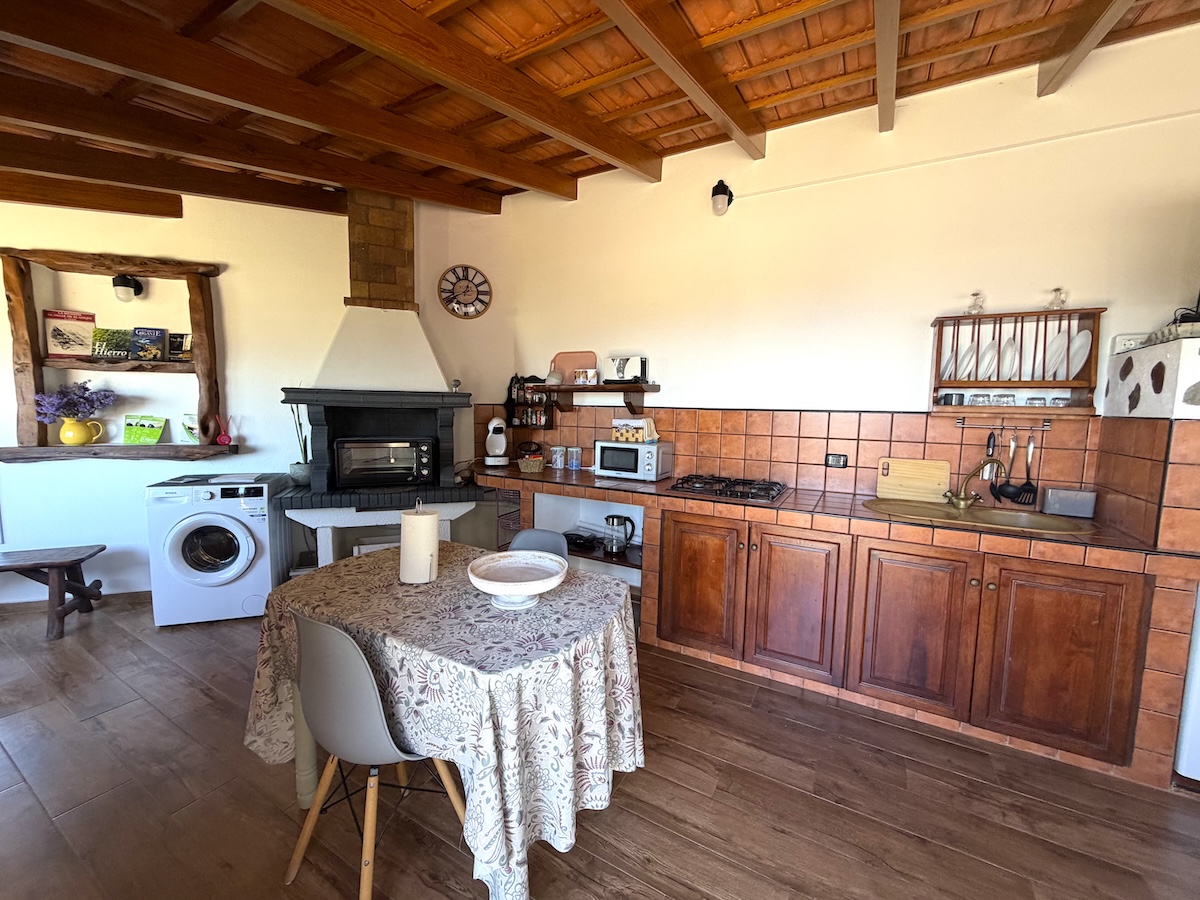
Other options we recommend in Frontera:
- VV Kampos Suites (from 69€/night): simple, affordable apartments
- Villa MarSalada (from 140€/night): a modern villa for 4 people with outdoor space and ocean views
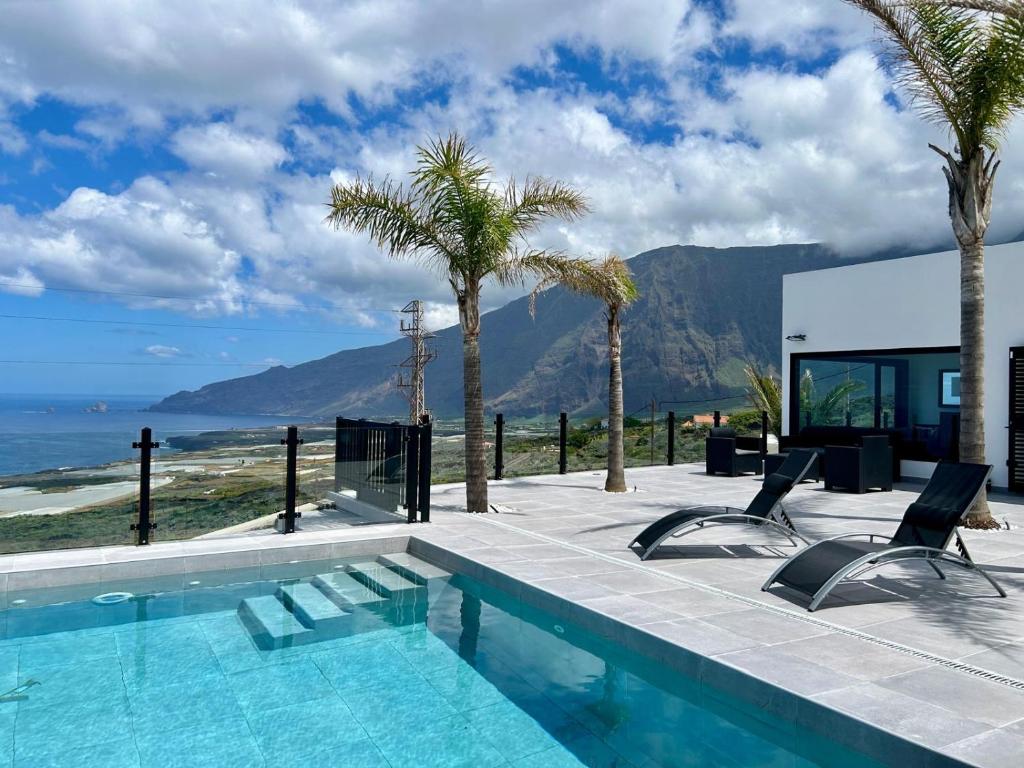
- Villa Calma (from 270€/night): a 3-bedroom villa (for 6 people) with an incredible private pool overlooking the Golfo Valley and the sunset.
- La Rayuela Suites Boutique (from 300€/night): a renovated family home with several rooms, some with garden views and others with ocean views.
Find more accommodations in La Frontera here
Where to stay in La Restinga
If you’re going diving, you’ll need to stay a few nights in La Restinga or El Pinar.
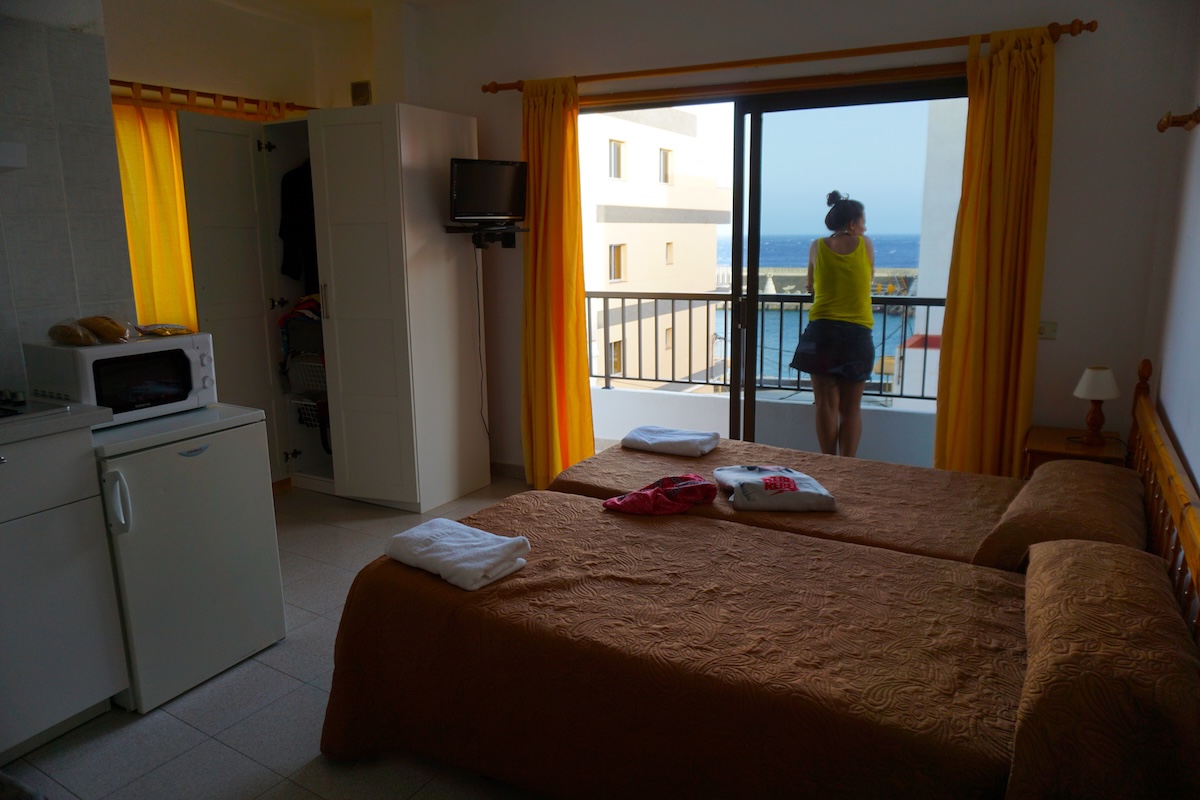
On our first trip with Randomtrip, we stayed a few nights at one of the Tanajara Apartments (starting at 30€/night), and we found it to be the perfect, affordable option for staying in La Restinga if you’re looking for something budget-friendly. The studio has an excellent location, close to everything in La Restinga. It’s exactly as shown in the photos, our apartment had ocean views, so for the price, it’s great! It has a small balcony. Plus, it has a kitchen, so we cooked dinner at home several nights (there are two supermarkets nearby).
Other options we recommend in La Restinga and El Pinar:
- Apartamentos Restinga (from 40€/night)
- Los Saltos (from 45€/night):
- Ecorestinga (from 60€/night) with a terrace
- La Casita de Mia (starting at 65€/night): a simple apartment for 2 people
- ABLANCAS (from 90€ per person): various types of more modern apartments with ocean or mountain views
- Casa Tanajara (from 66€/night-in El Pinar): a charming 2-bedroom house with wonderful views of the city and the sea.
- Hotel Lua Boutique Isla de El Hierro (from 94€/night-in El Pinar): a hotel with various room types (some with a balcony or terrace)
- vv Casa Rural El Pajar (from 90€/night-in El Pinar): a rural house in El Pinar
For a little treat in El Hierro
In Las Puntas: Hotel Puntagrande
If you want to treat yourself, the Hotel Puntagrande (starting at 250€/night) in Las Puntas, which we mentioned earlier, has been designated a Site of Cultural Interest. Known as “El Hotelito” by the locals, it was recognized by the Guinness Book of World Records in 1984 as the smallest hotel in the world. Currently, that distinction belongs to the Trafo Haus (or Transformer House), which measures 17.21 square meters.
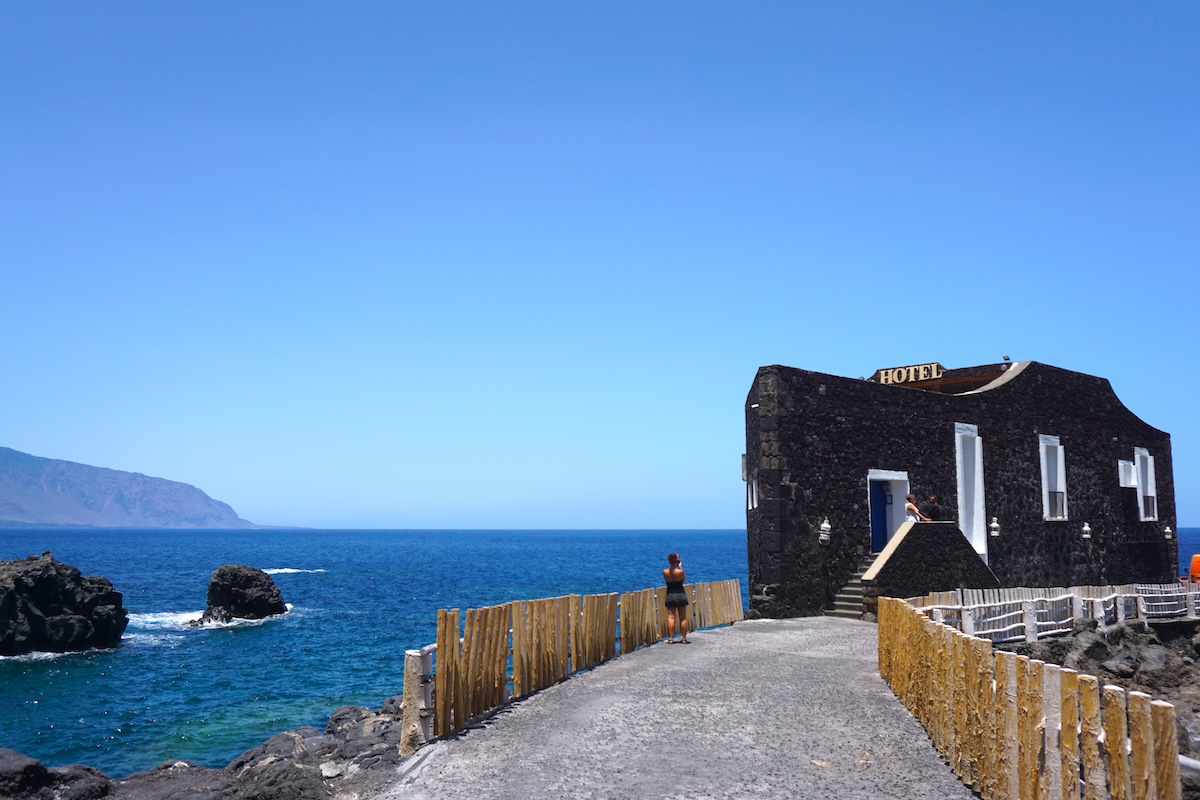
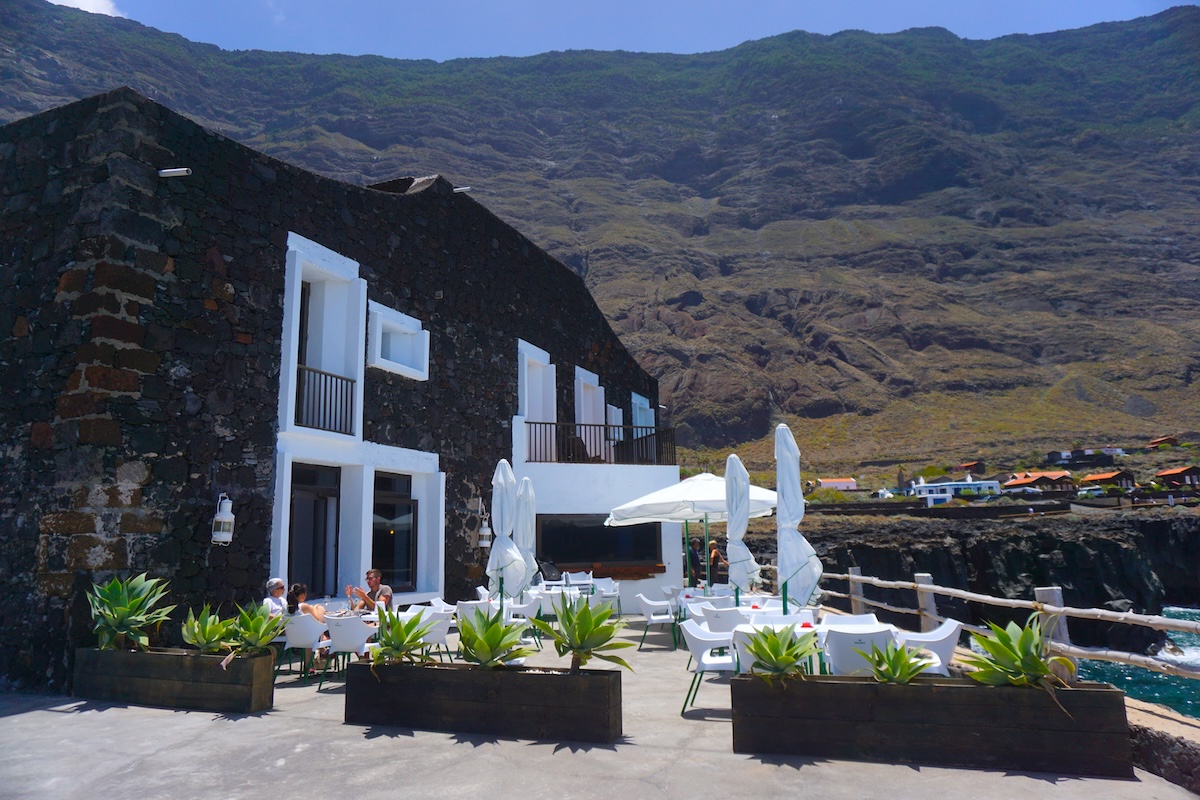
Inside, the Hotel Puntagrande houses marine artifacts and many objects steeped in nautical tradition, as well as some shipwreck remains. It’s expensive, yes, but in addition to the views you’ll wake up to, you’ll be able to say you’ve stayed at one of the smallest hotels in the world.
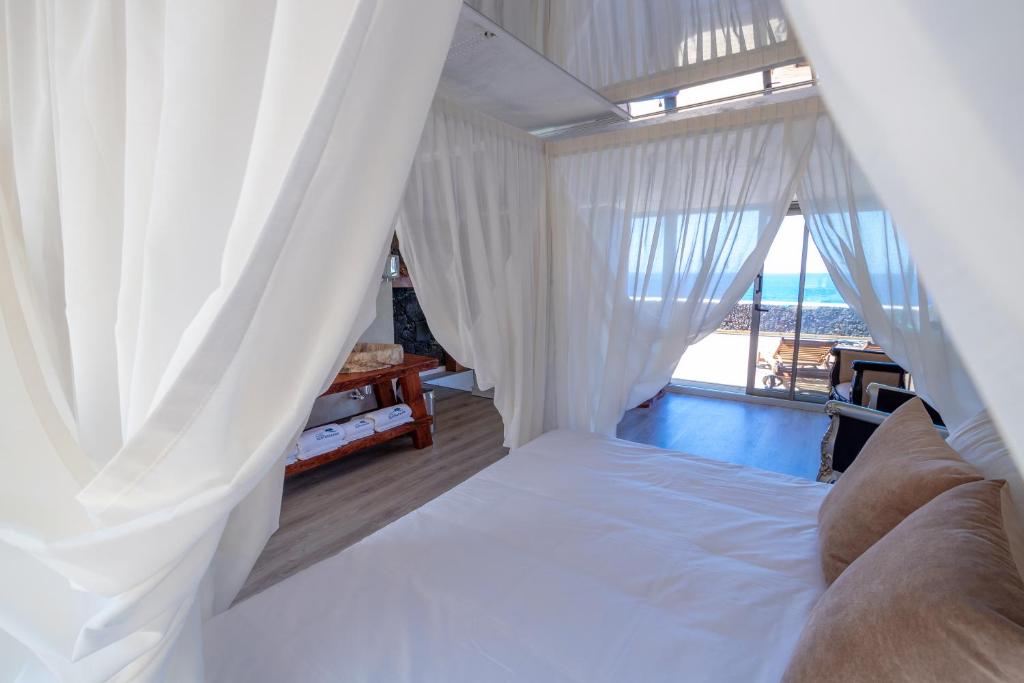
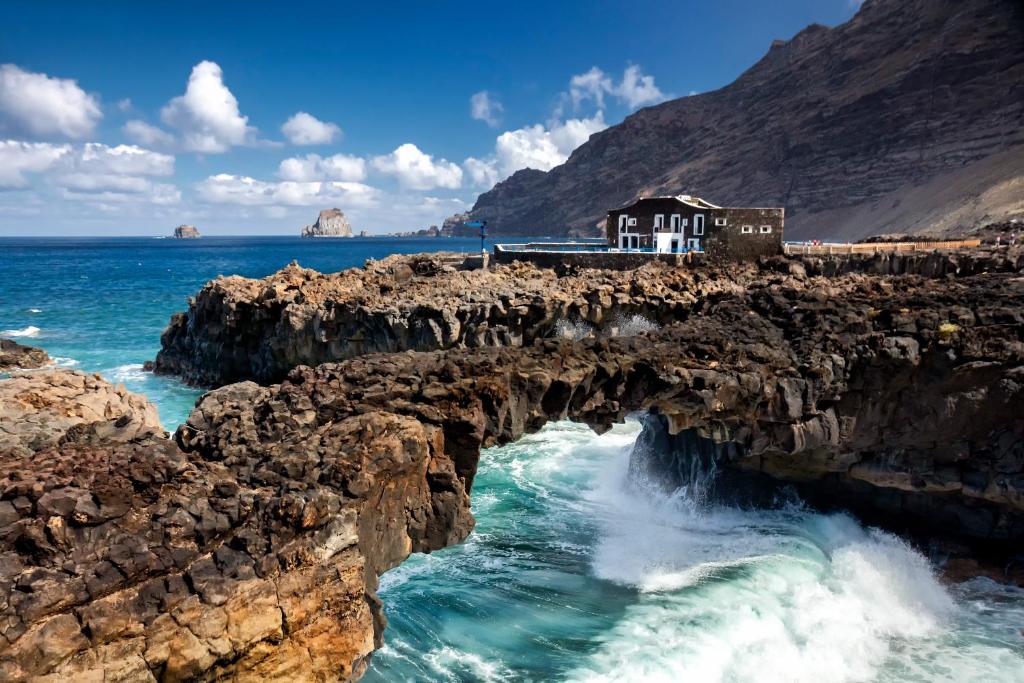
If you can’t or don’t want to treat yourself to this luxury in terms of lodging, you can treat yourself to a culinary experience at the hotel’s restaurant, as we’ll explain below in the “Where to Eat” section.
On Las Playas: The Parador
You can also stay at the Parador de El Hierro (starting at 88€/night): A few days here are perfect for relaxing and replenishing your body’s “iron” (Hierro) levels, with one of the island’s best beaches where you can take a dip in the sea.
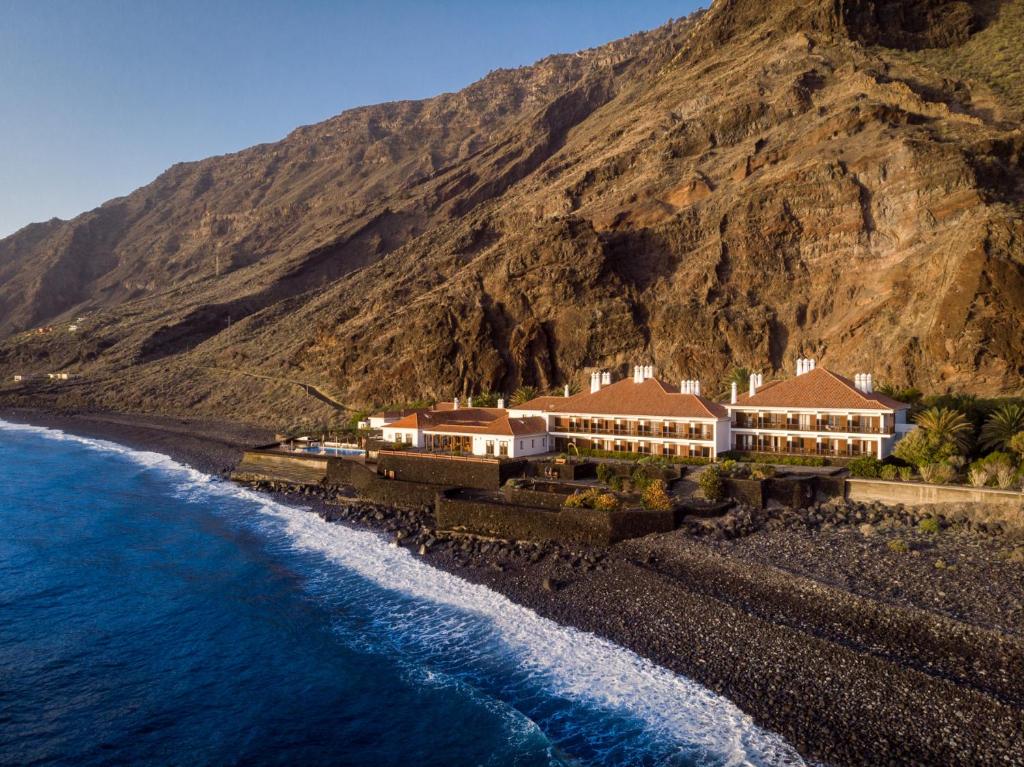
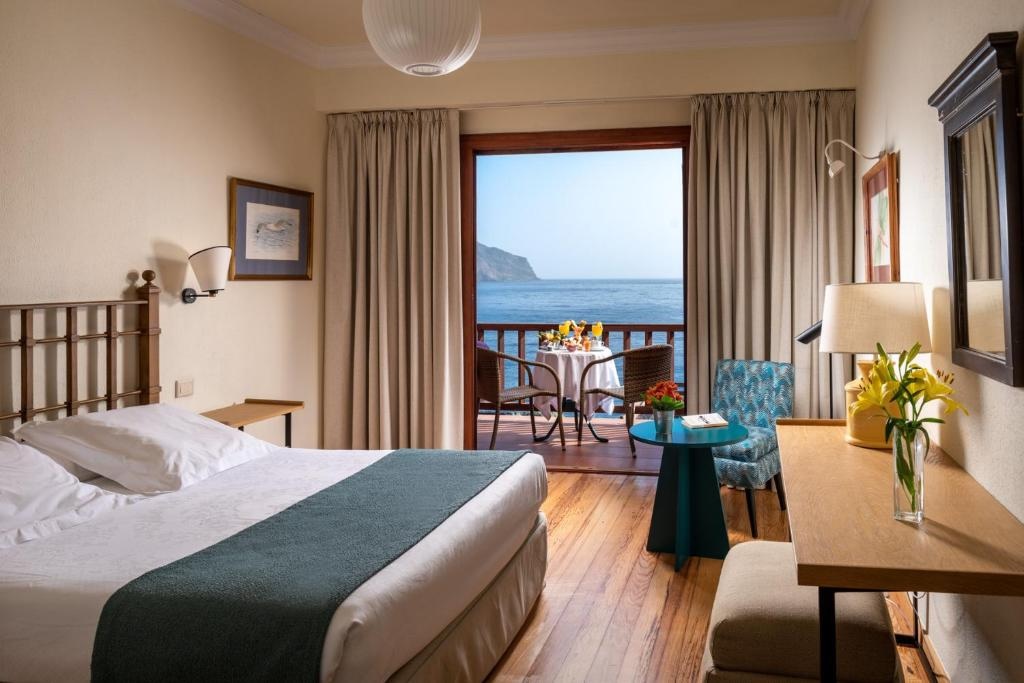
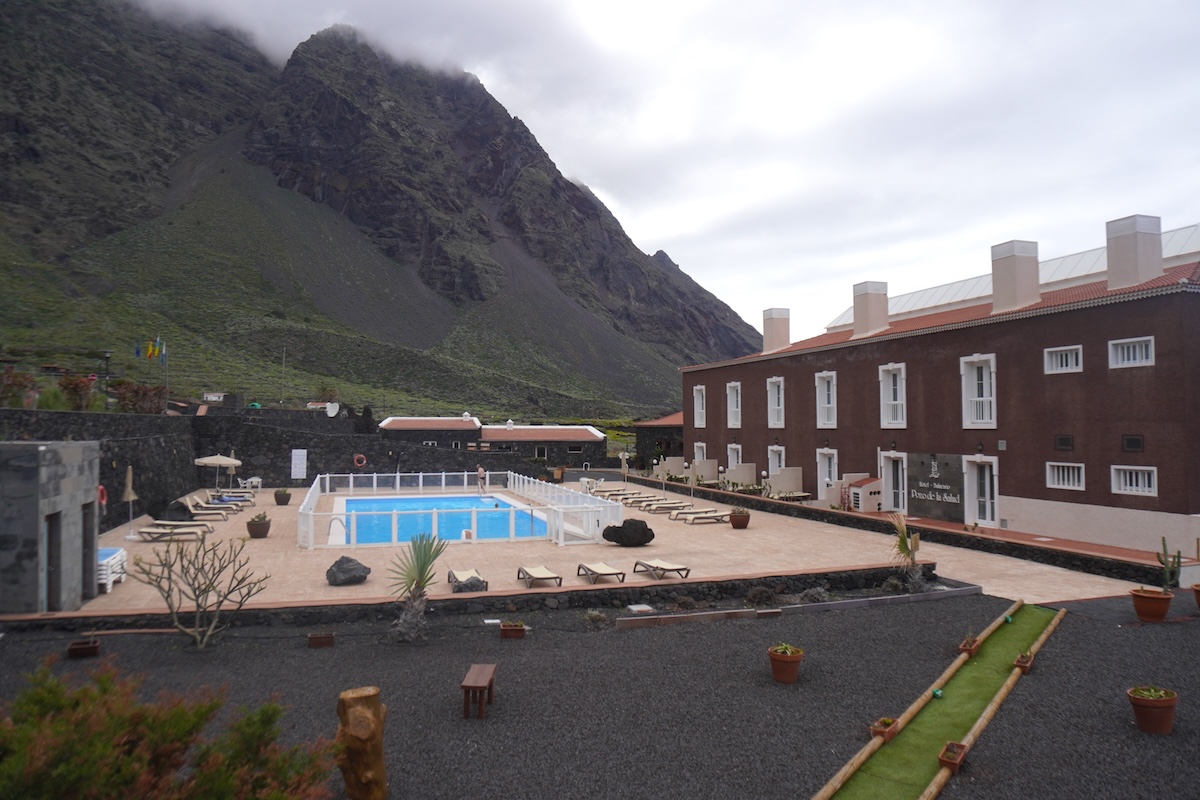
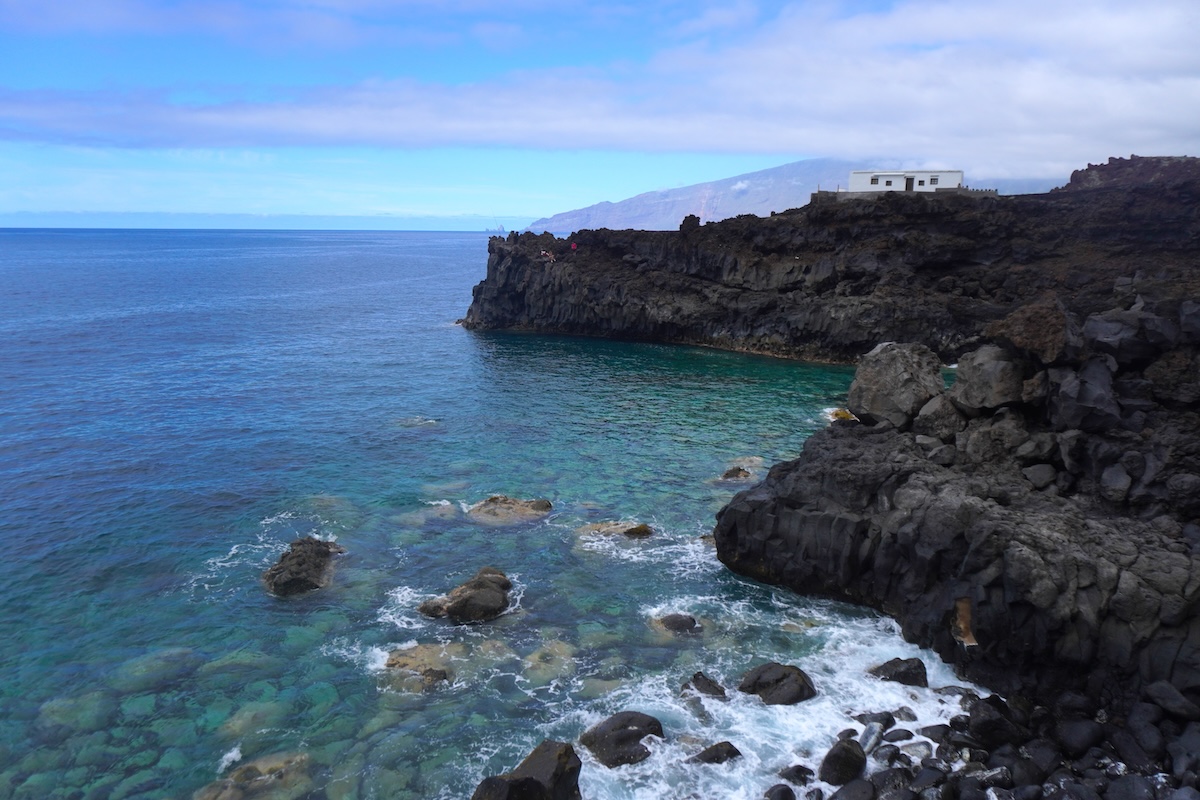
At Pozo de la Salud: the spa
The Pozo de la Salud Spa Resort (from 113€/night), featuring a spa, outdoor pool, and ocean views, is ideal for a romantic getaway where you can recharge your batteries in a candlelit hot tub.
Where to eat in El Hierro
On the island of El Hierro, you can try typical Canary Islands specialties (such as mojo picón and mojo verde with some delicious papas arrugás, something we could eat every day), but also traditional El Hierro dishes like potaje de berros, puchero, rancho con papas, escaldón, or lapas (limpets). Of course, since it’s an island, seafood dishes are found everywhere, though traditional El Hierro cuisine also includes meat dishes featuring rabbit, kid goat, or goat.
In most cases, the restaurants in El Hierro will pleasantly surprise you: delicious, hearty food and very friendly service.
Where to eat in Frontera and nearby
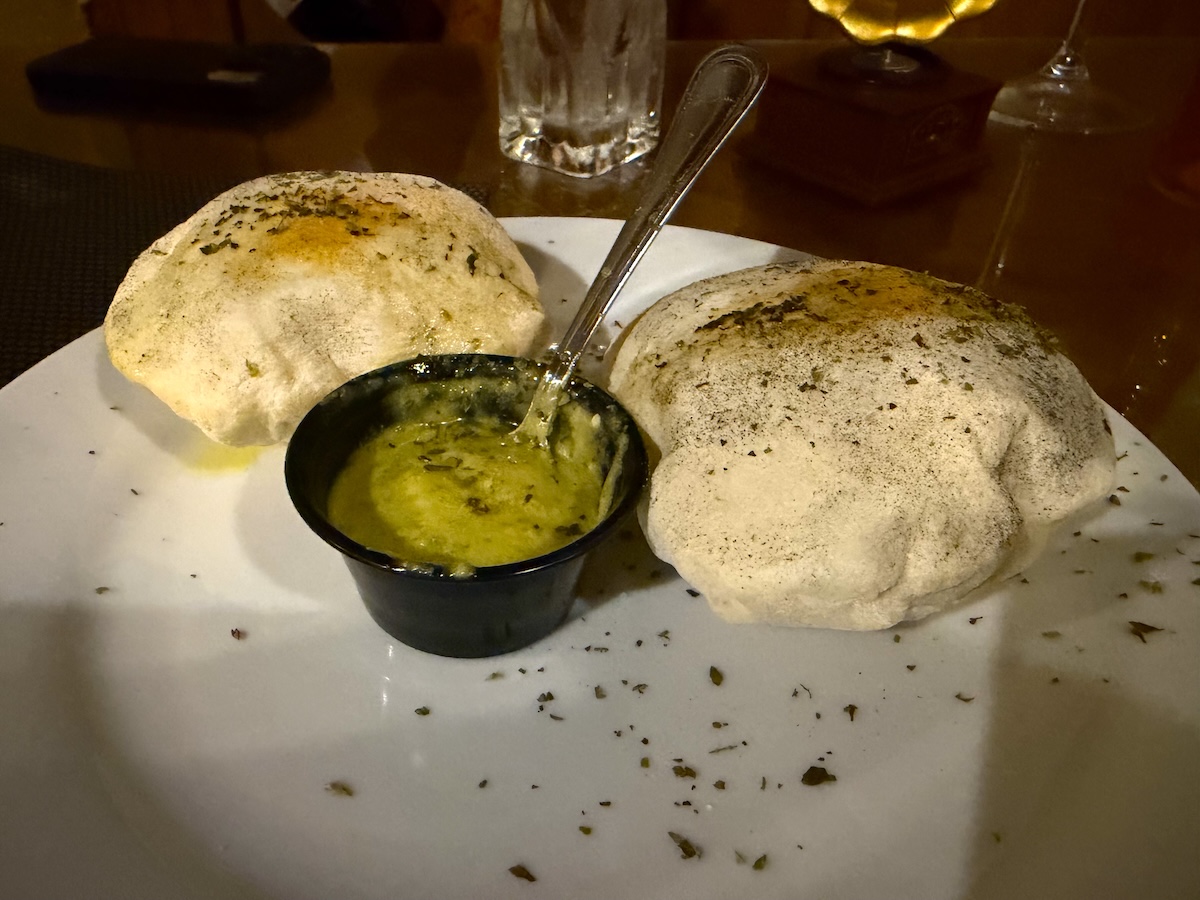
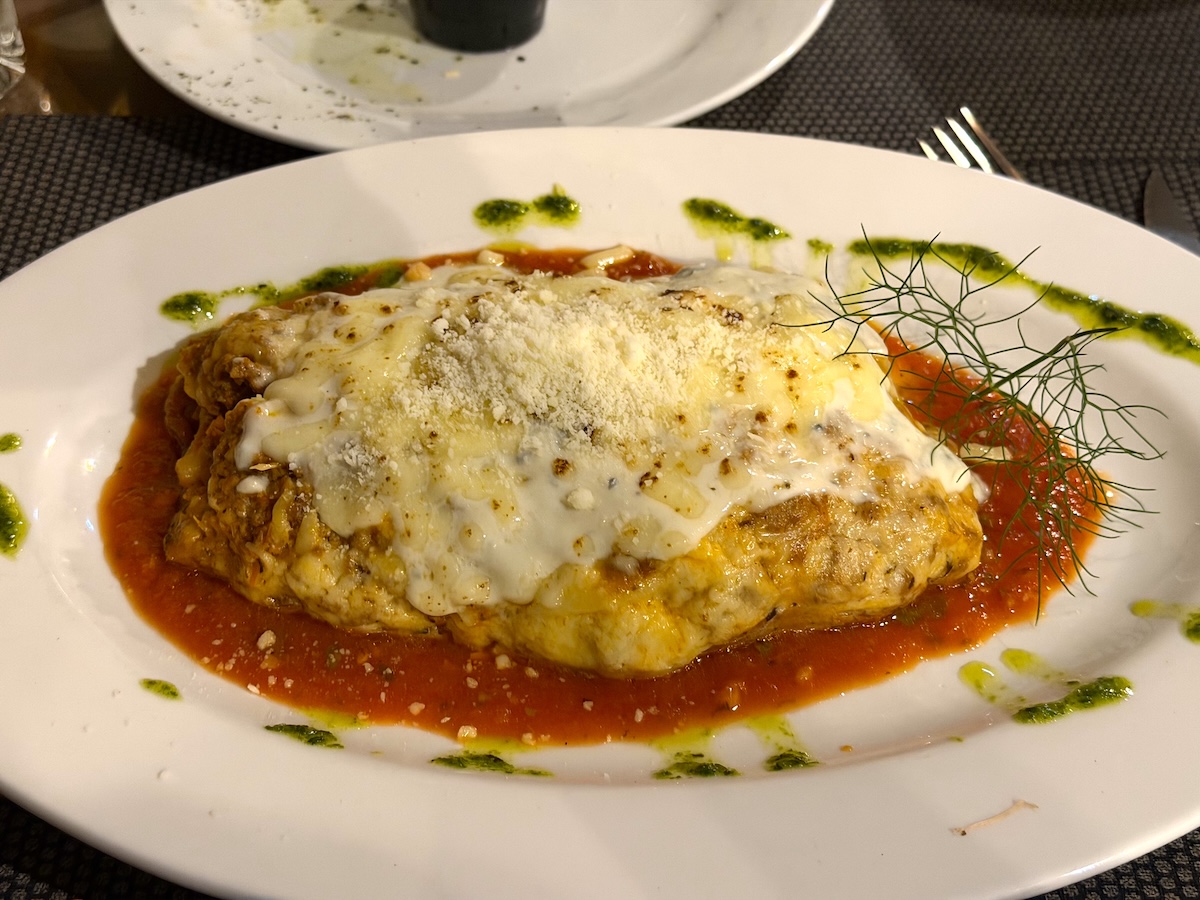
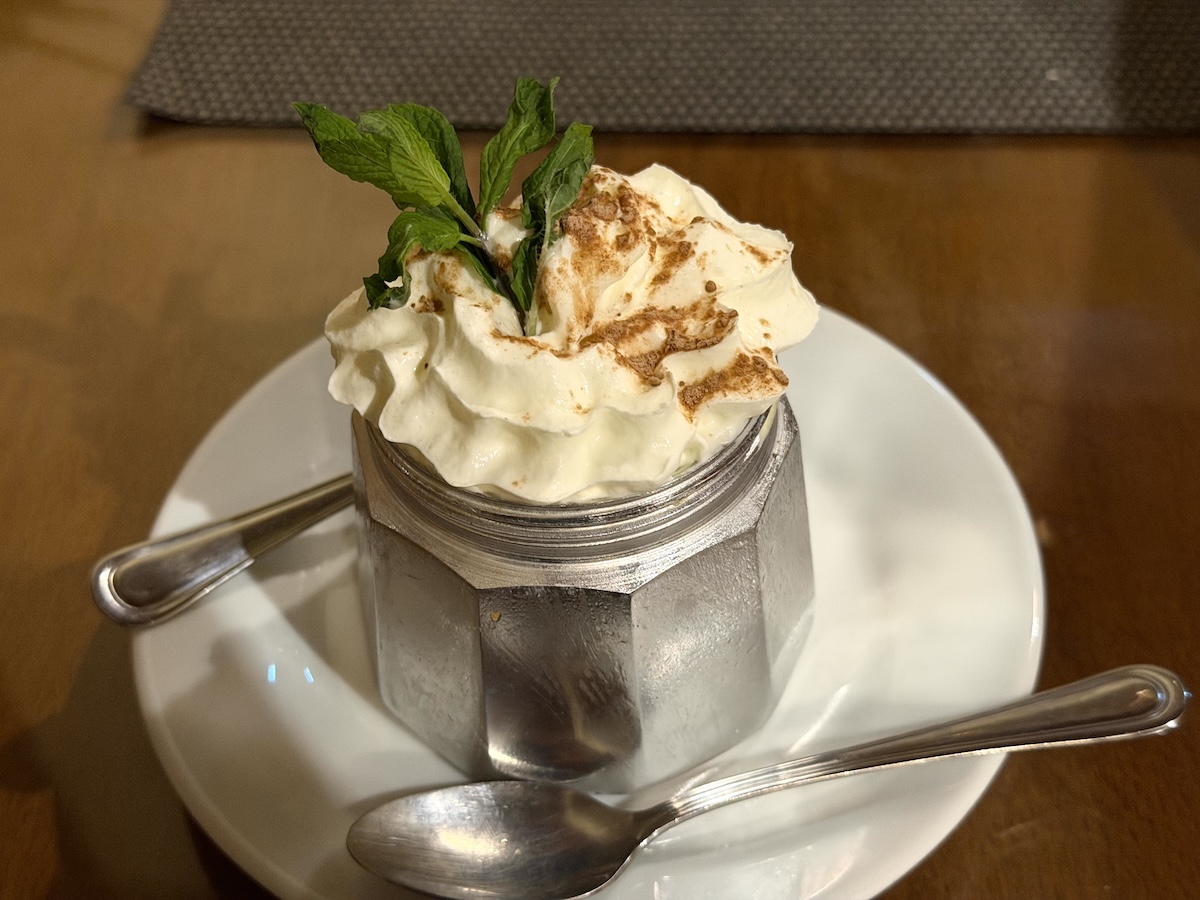
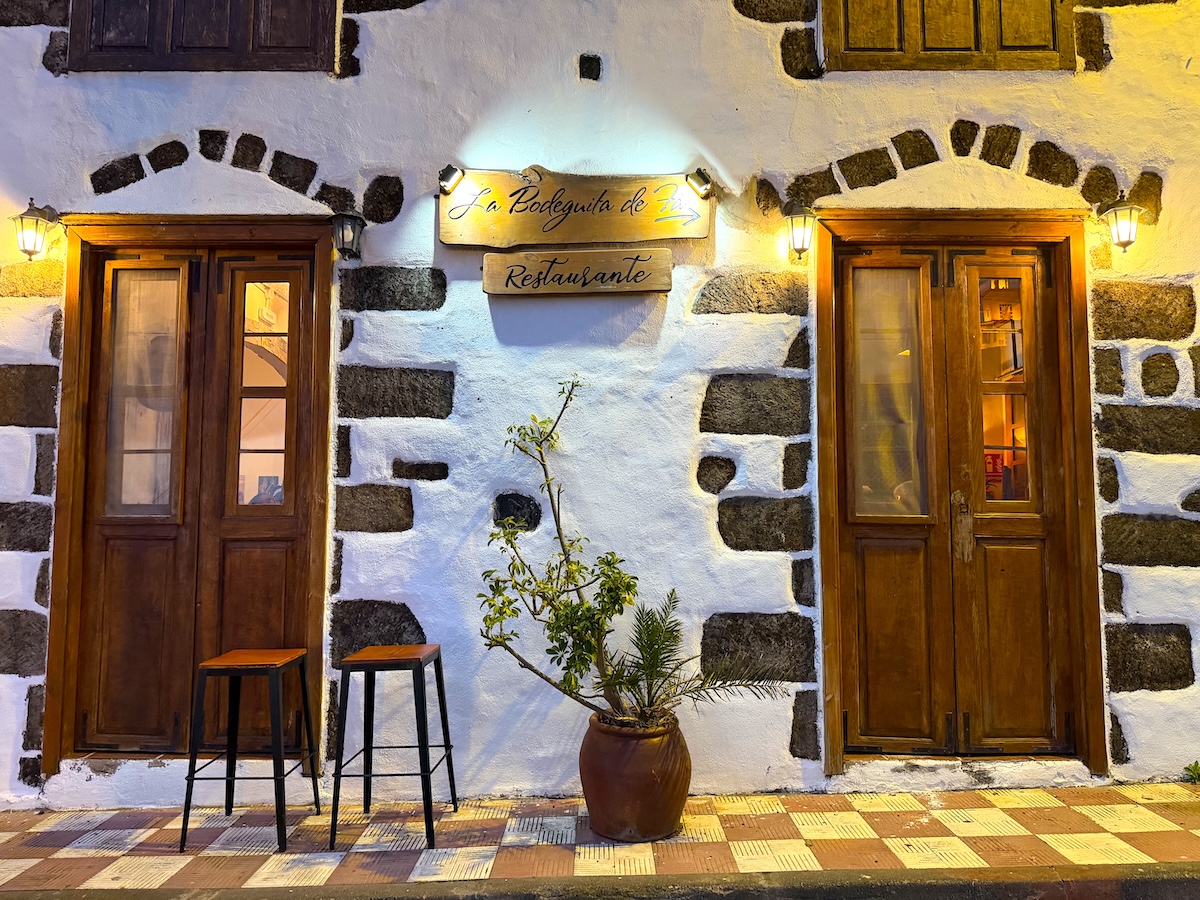
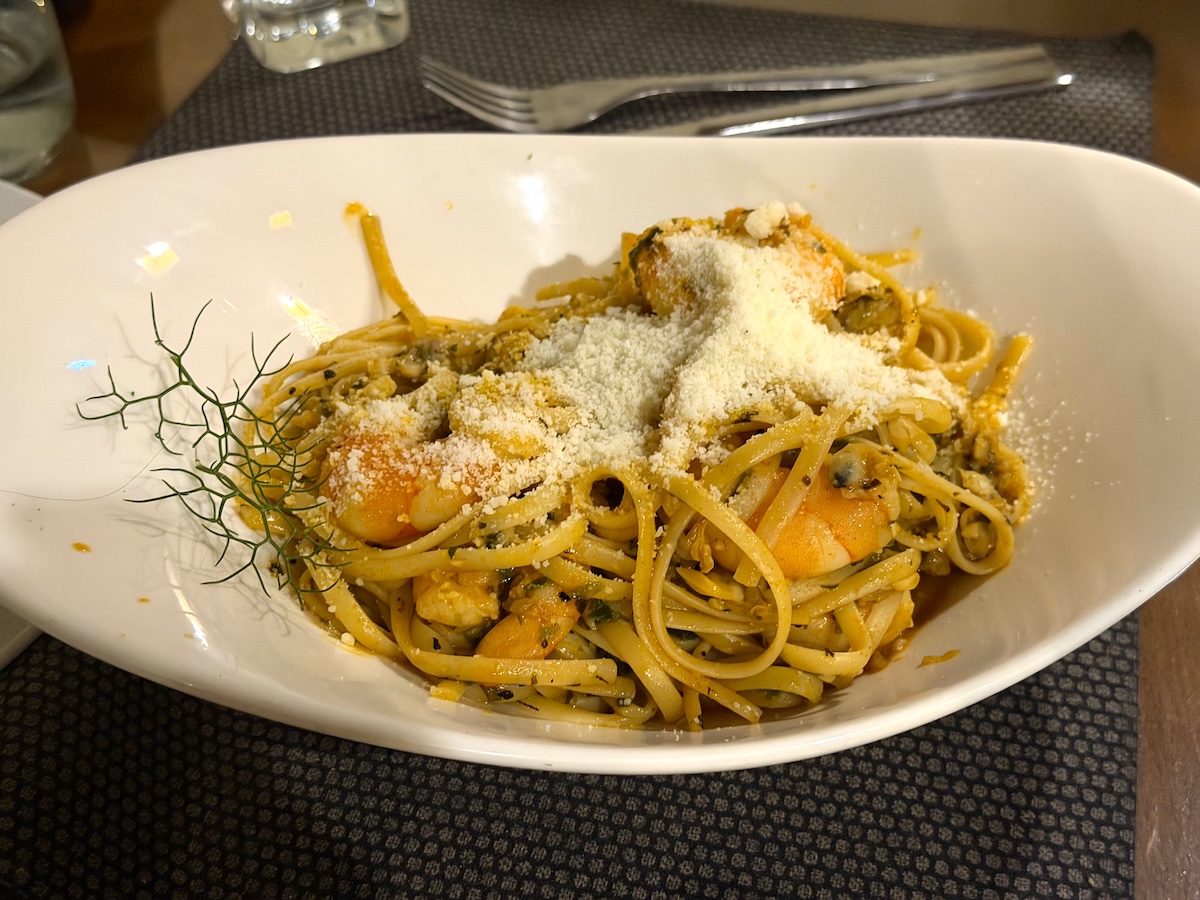
- La Bodeguita de Fa: a cozy Italian restaurant serving pasta, pizza, chicken milanesa, and pork knuckle, with generous portions. We ordered lasagna, linguine alle oglio with shrimp and clams, a glass of wine, and sparkling water. And tiramisu for dessert. We paid 49€
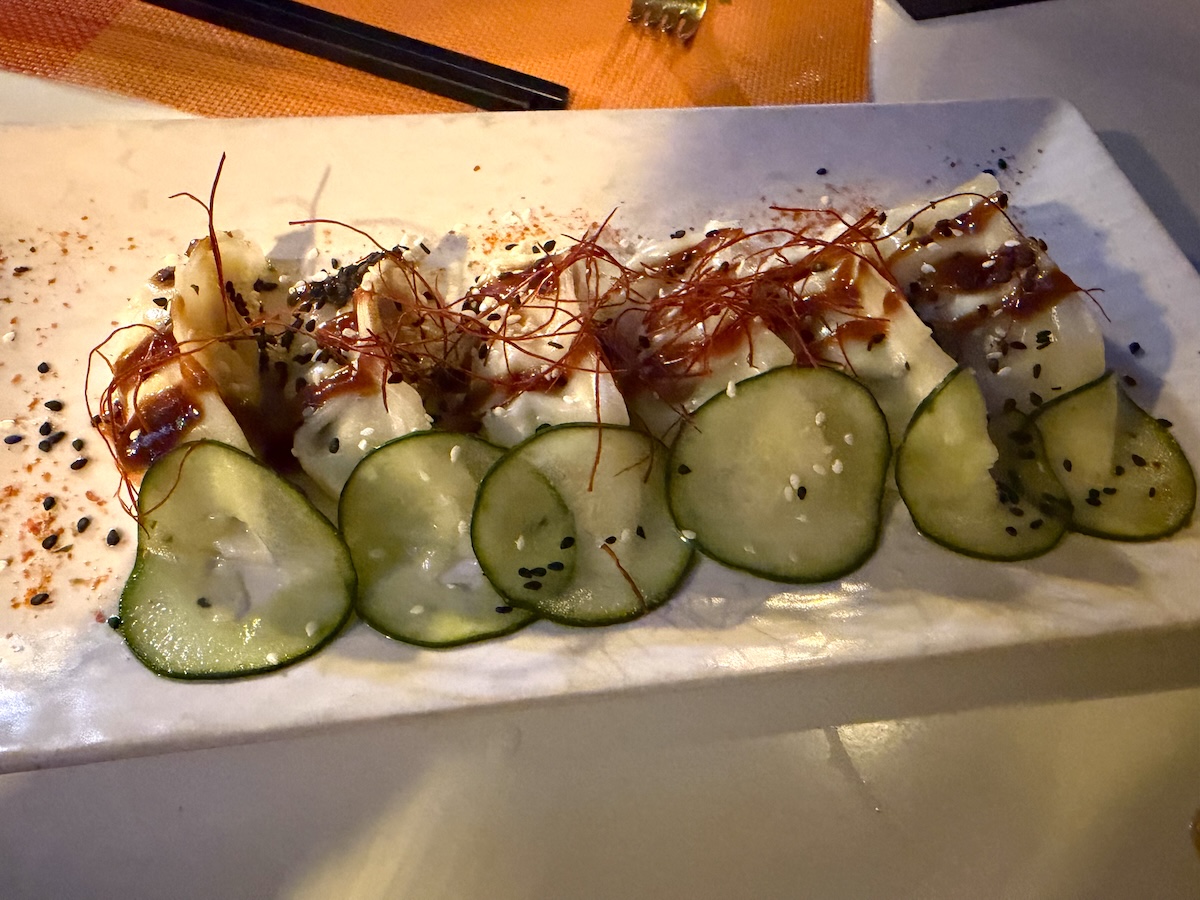
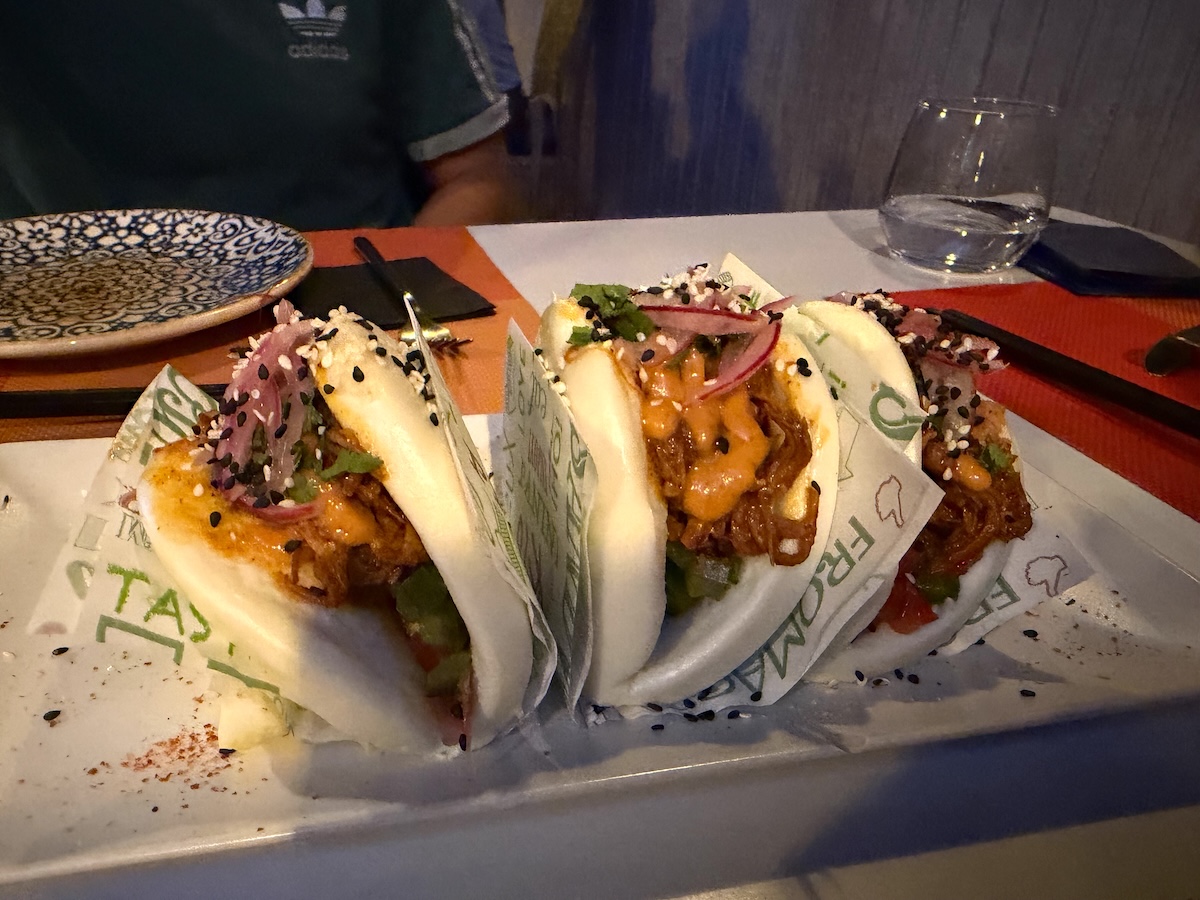
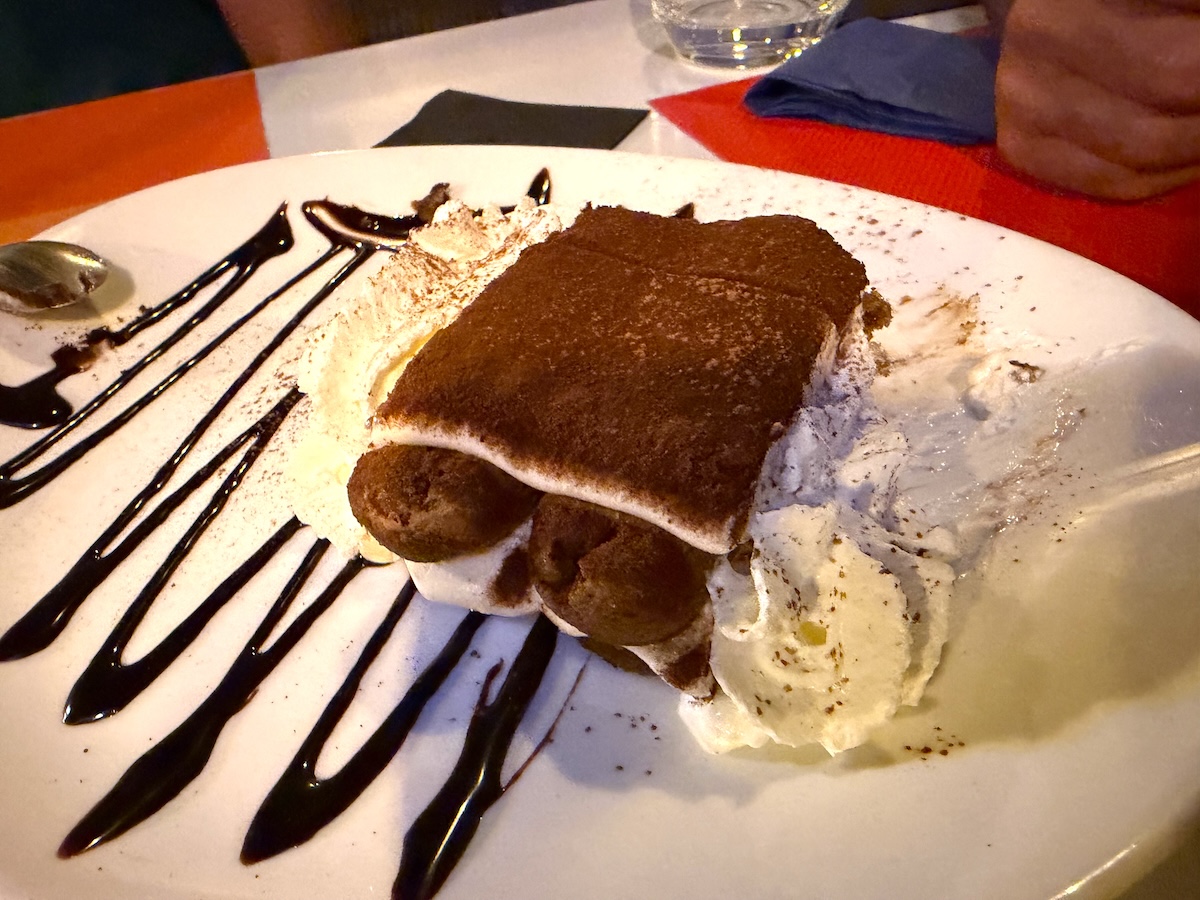
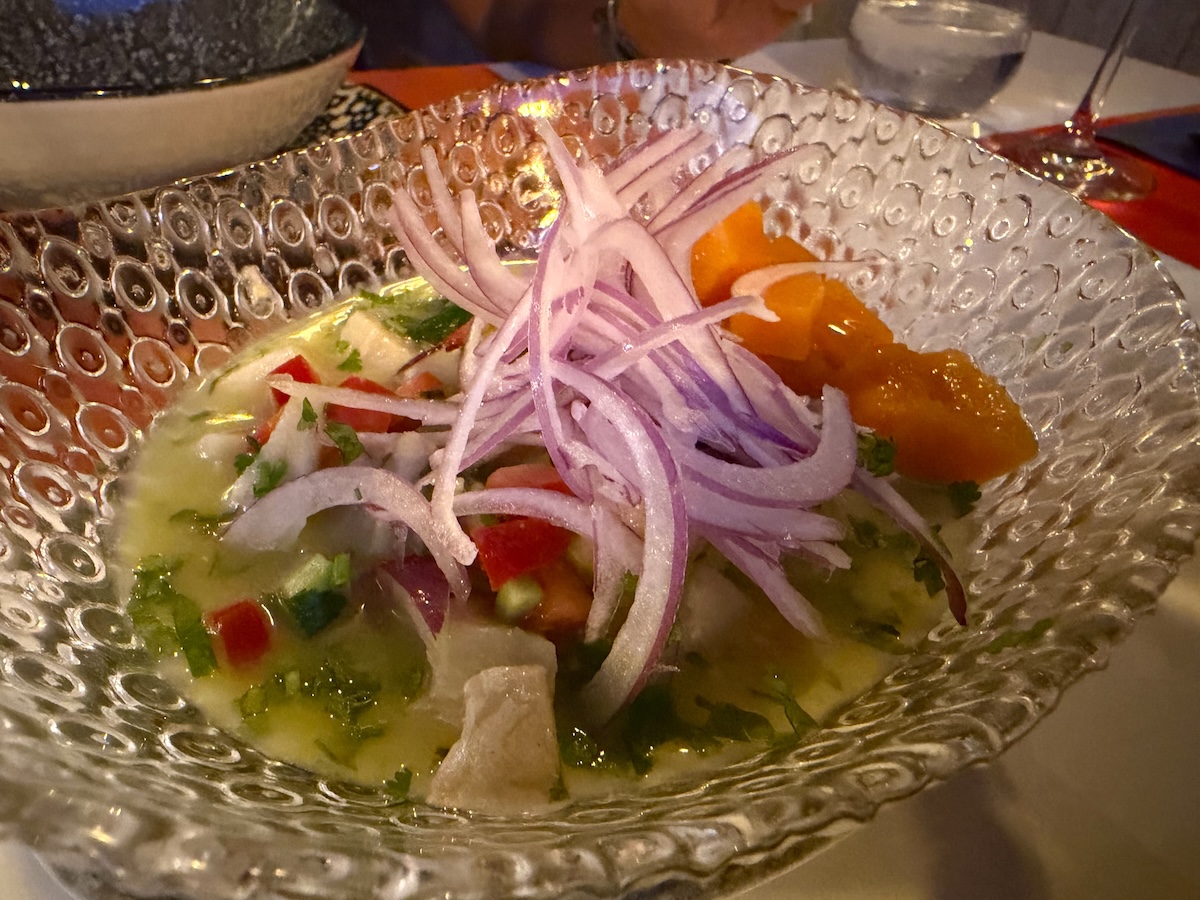
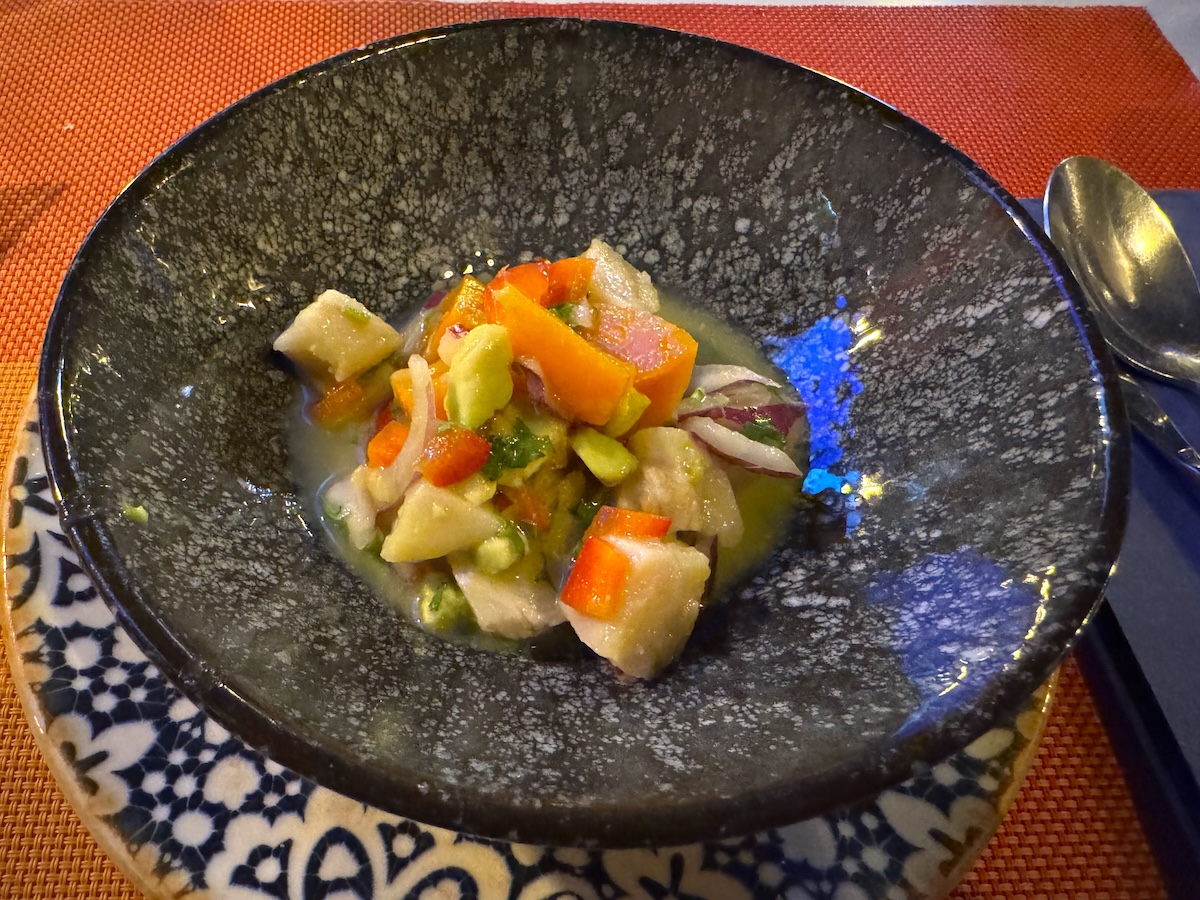
- Warapu Street Food: fusion cuisine from various parts of the world (Asia, Peru, Mexico, etc.). We went with our friend Lio and ordered ceviche (spectacular), cochinita baos (these were more standard), tuna sashimi croquettes, and delicious chicken gyozas; for dessert, tiramisu, along with a bottle of local dry white wine and water. The total for the three of us was 90€.
- Il Pomodoro Restaurant, an Italian spot with highly recommended pizzas
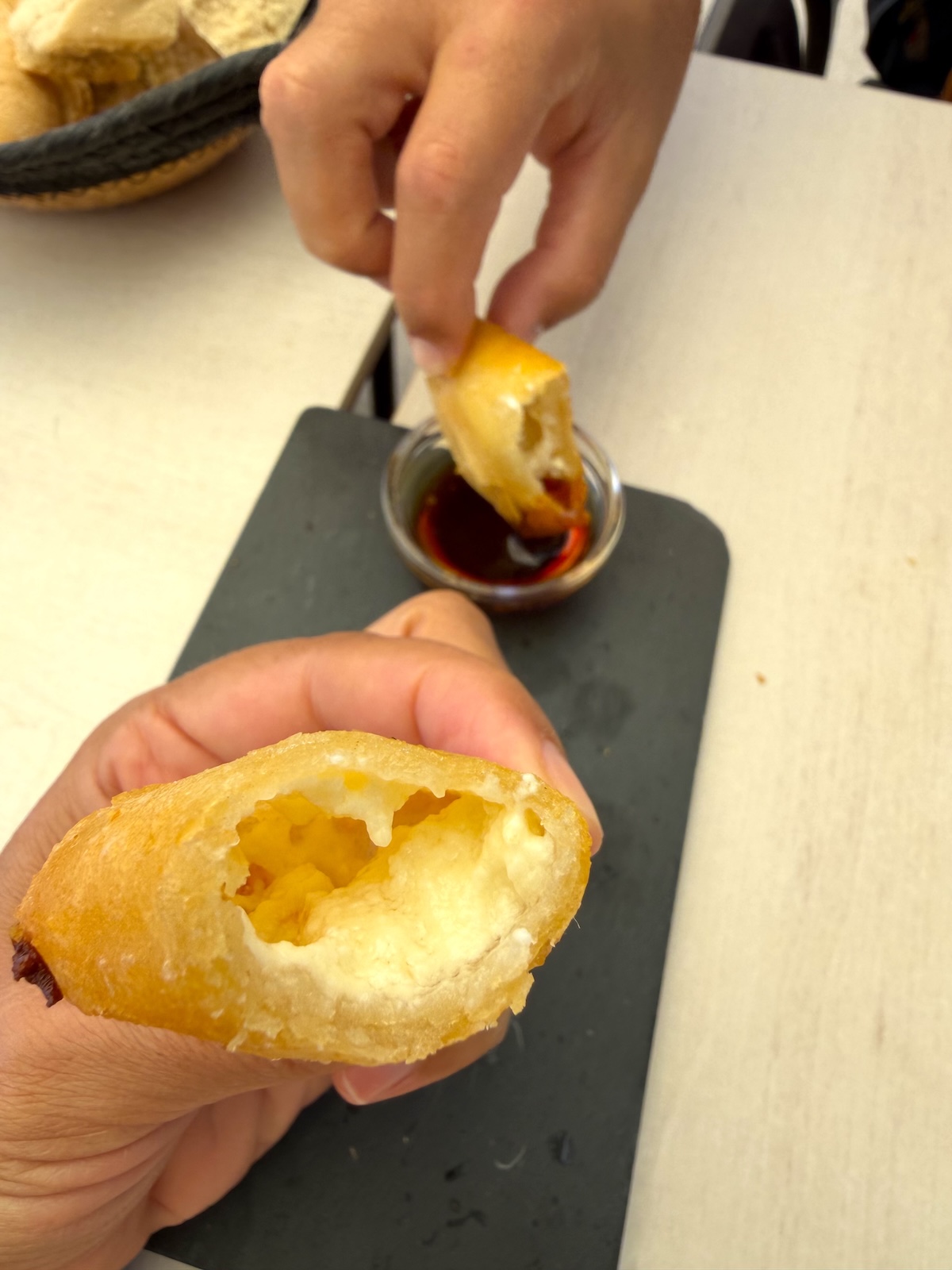
- La Taguarita, a place for snacks. We ordered arepas, tequeños, and a couple of drinks for 15€
- Volcán de El Hierro Restaurant: We tried to go with our friends Lio and Jaza, but it was full, it looks really good
- Kiosko La Maceta: right in the upper area of La Maceta natural pool, this kiosk has indoor and outdoor tables with stunning views of the sea and the Roques del Salmor. We ordered lapas and Herreño cheese, a small beer, and sparkling water, and paid 34€.
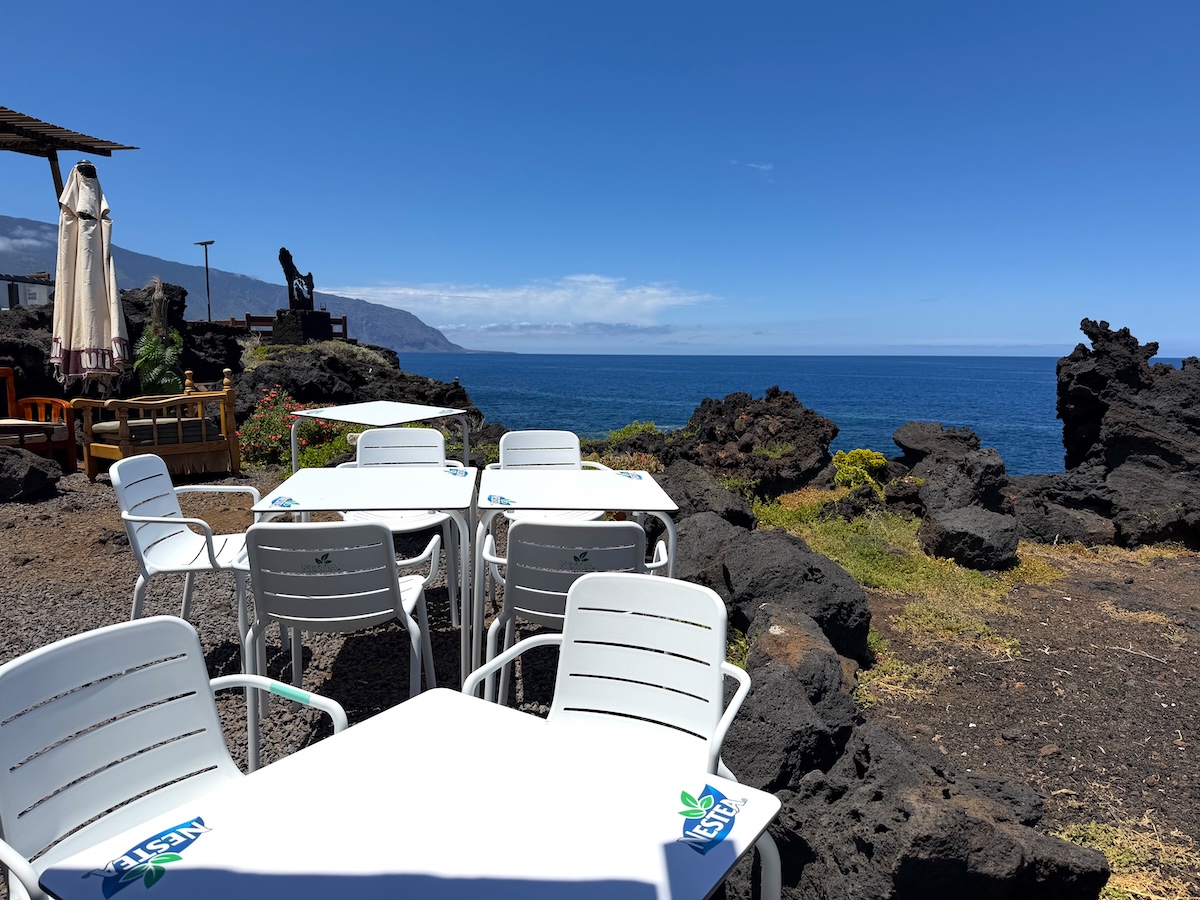
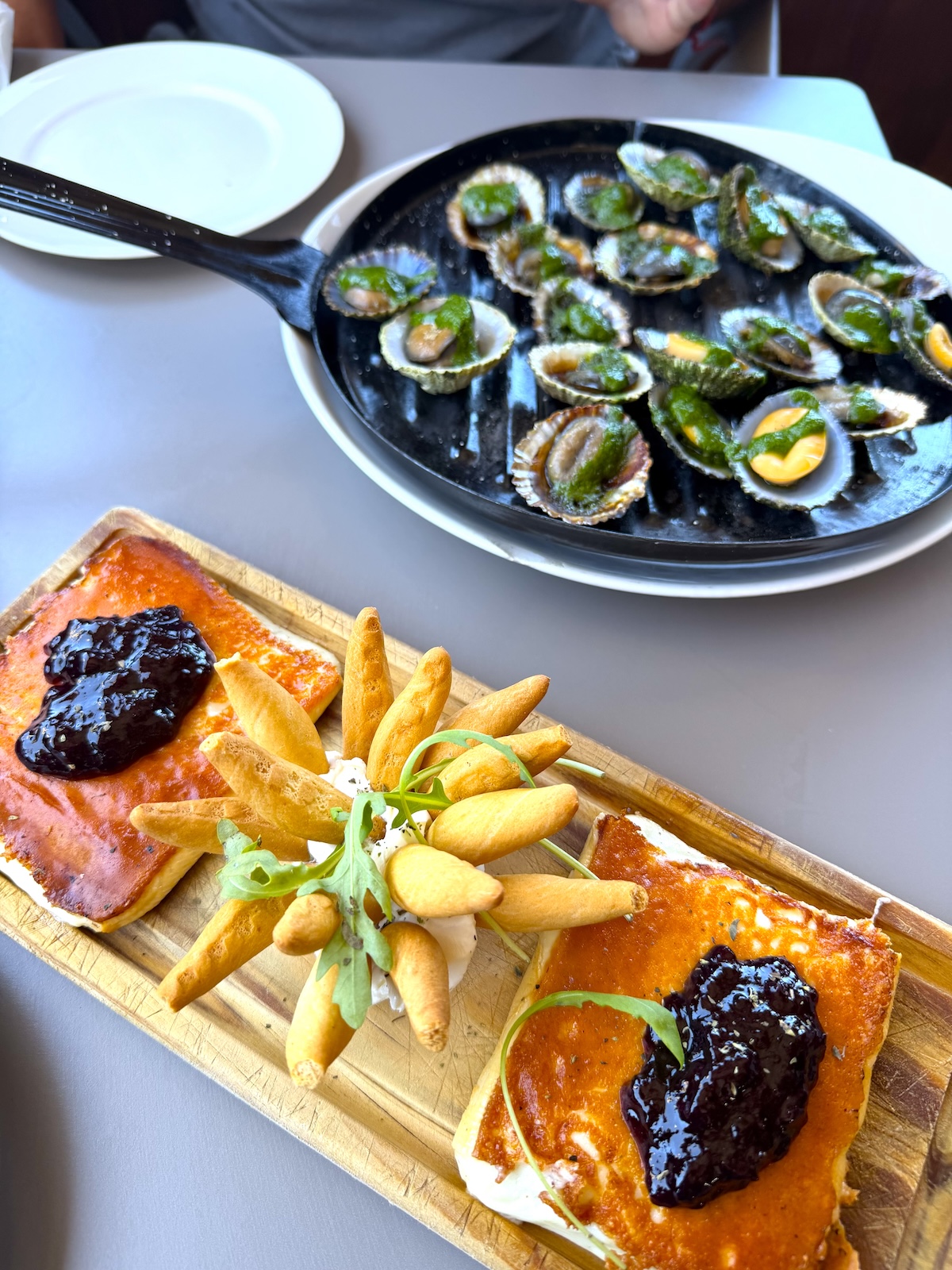
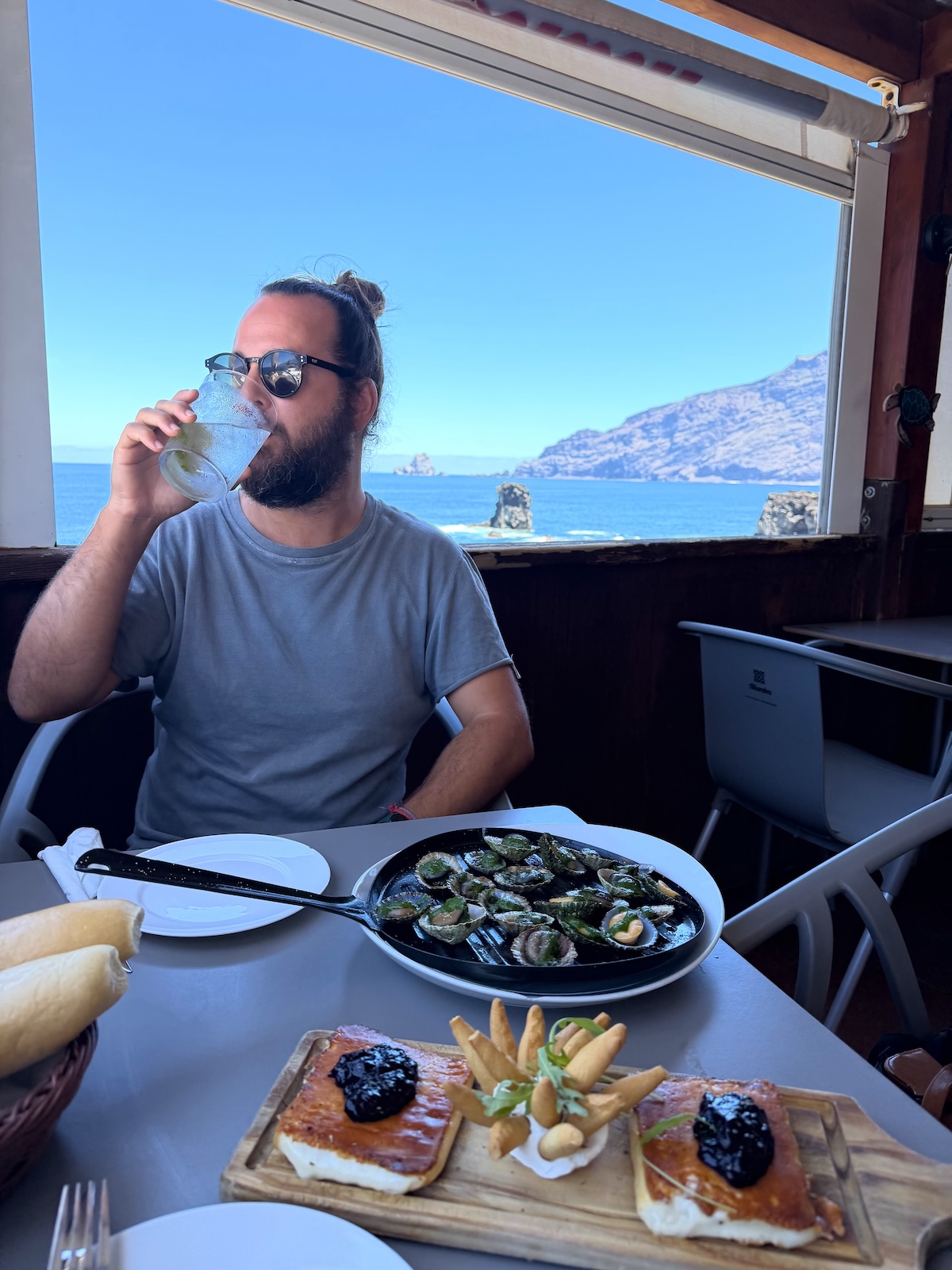
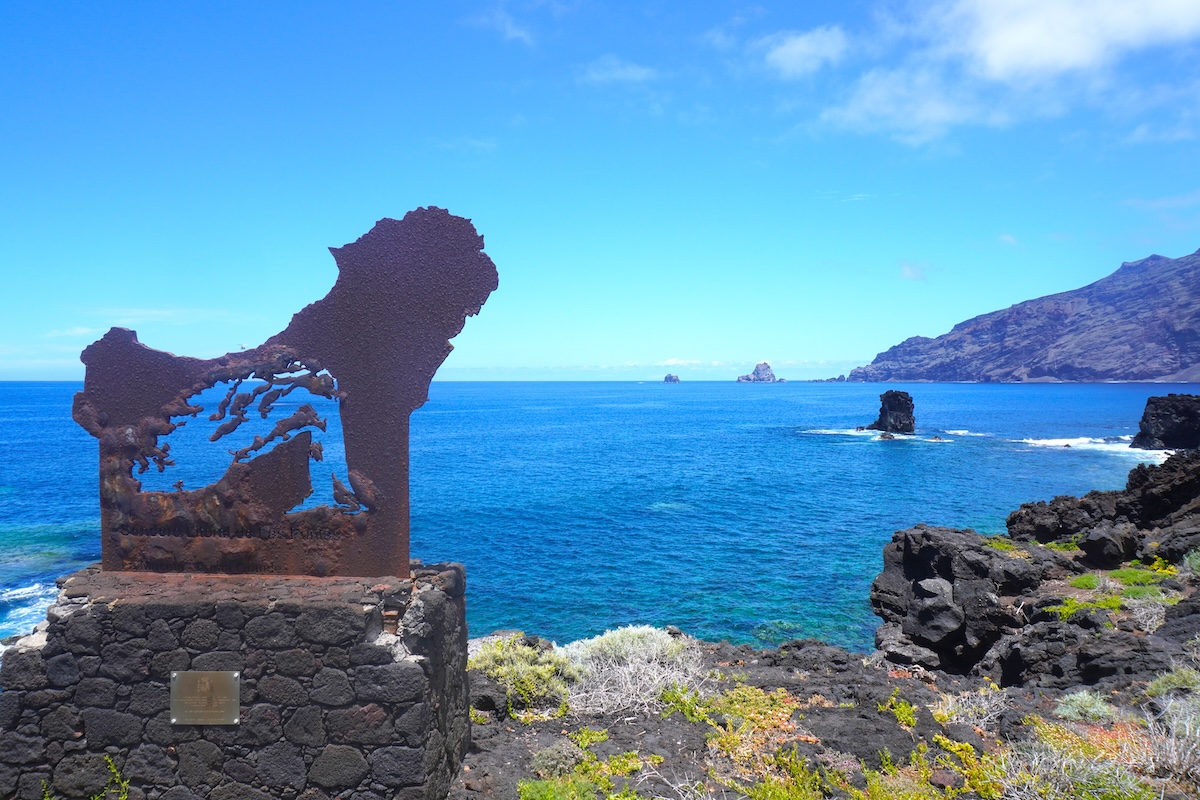
- Lays Restaurant: traditional cuisine, catch of the day, and fine wines from El Hierro (they even have their own). They recommend the fried octopus (we tried it and it is delicious!), limpets, fried cheese, and fresh fish.
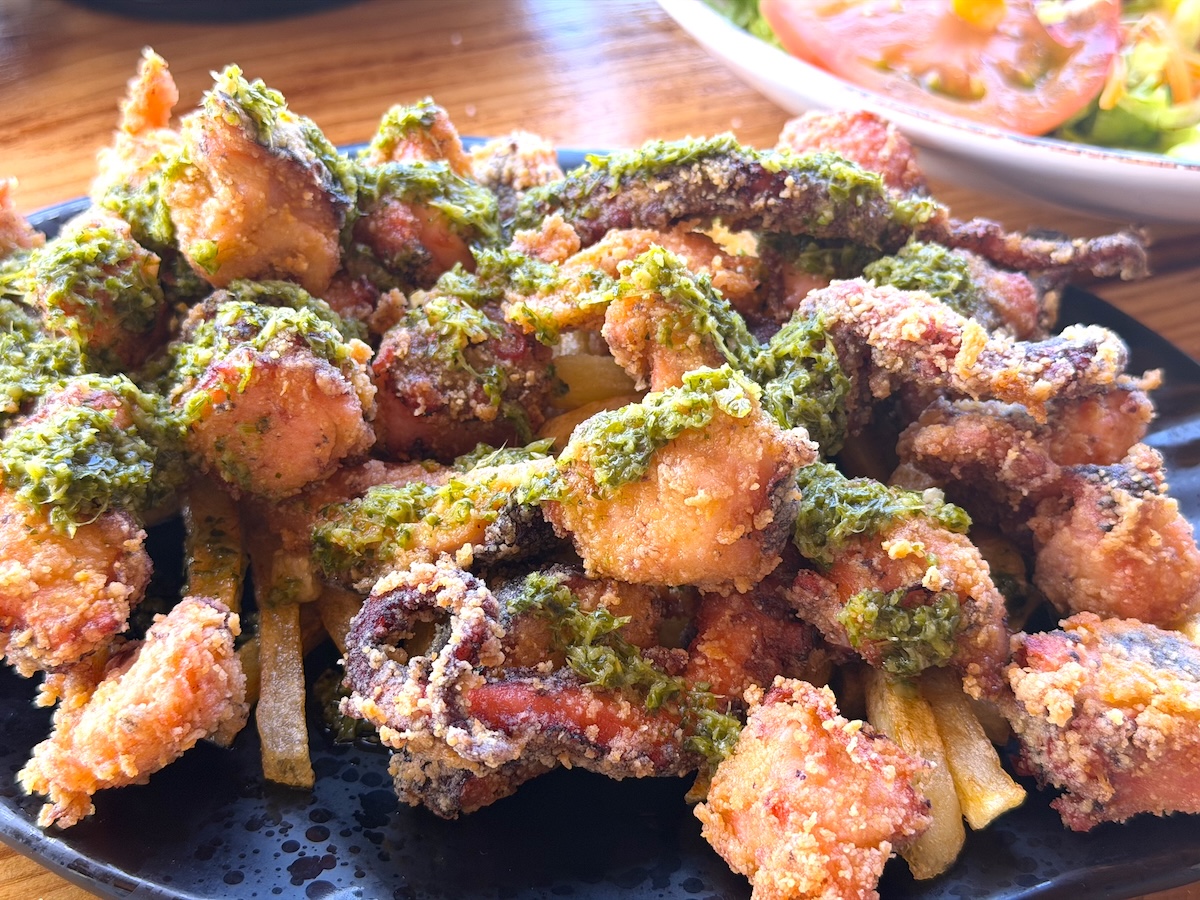
- Puntagrande Hotel Restaurant: a gourmet experience in a magical setting, at one of the smallest hotels in the world. A delicious and original menu with a taste of the sea and exquisite service.
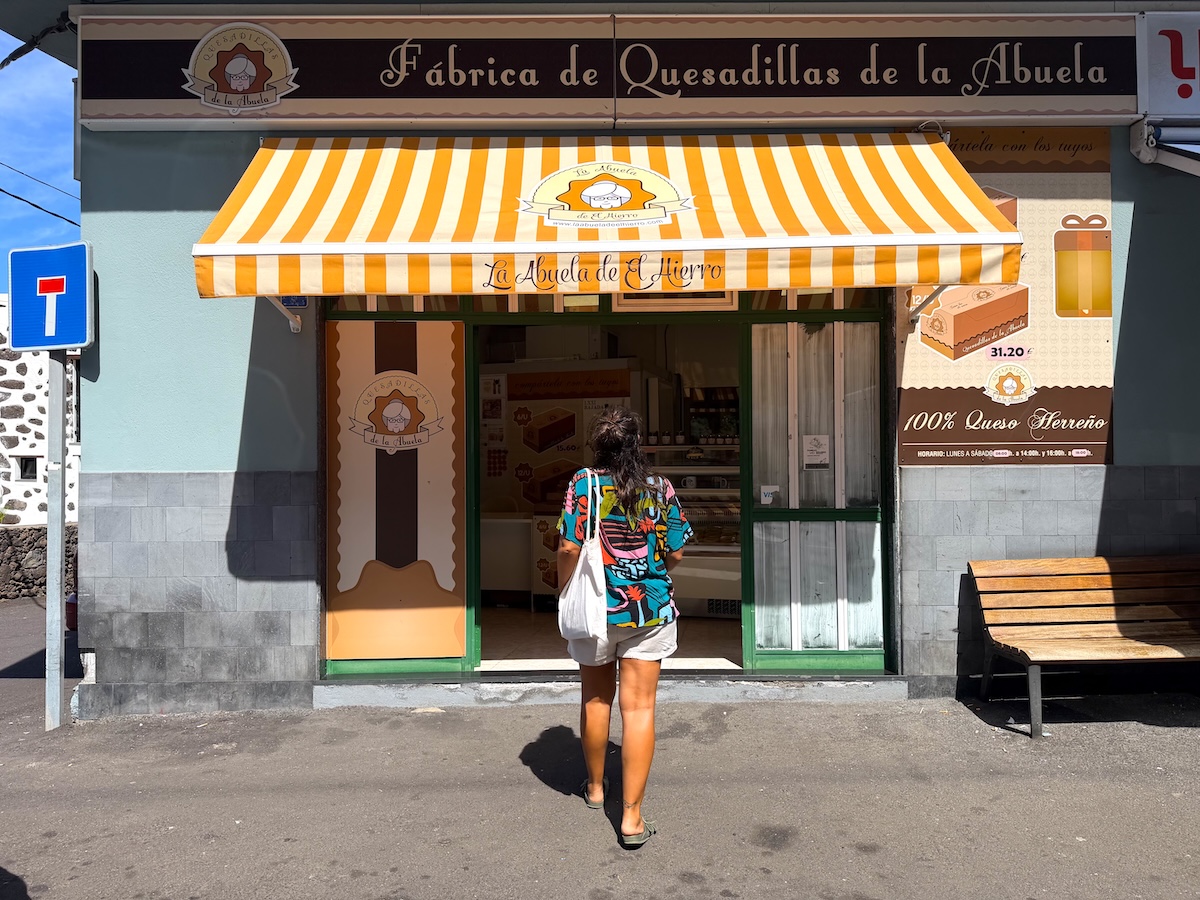
- La Abuela de El Hierro Quesadillas: a quesadilla factory
Where to eat in Valverde and nearby
Here are several of the restaurants we recommend in Valverde and the surrounding area
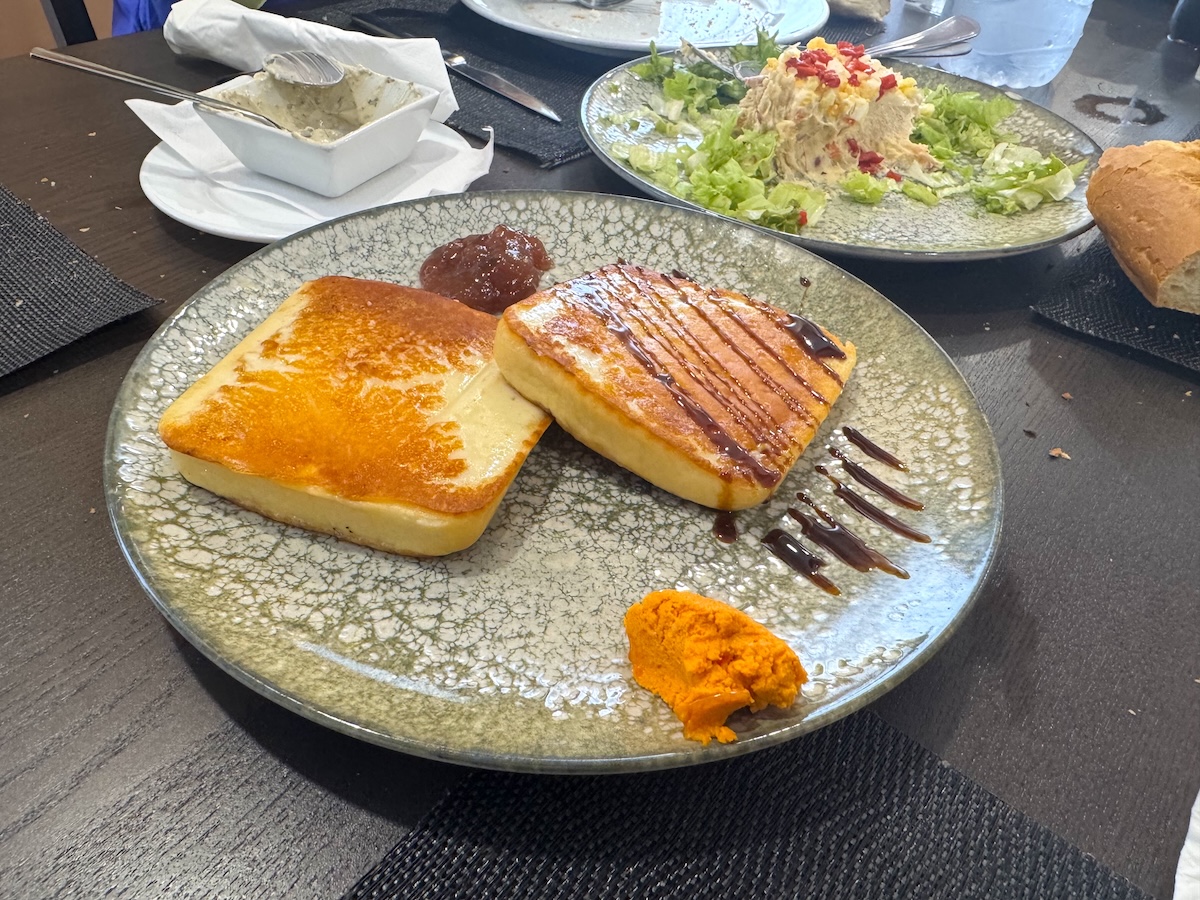
- Mesón del Norte: We went with our friends Lio and Jaza, everything was spectacular. We ordered grilled cheese, Russian salad, goat meat, beef tenderloin, octopus stew, two desserts, wine, beer, and water.
- La Penúltima: great sandwiches, arepas, and home-style cooking in general.
- 8Aborigen: for a special occasion, signature cuisine in El Hierro. Reservations are a must.
- Bar El Charquete: It was recommended to us to try the tortilla stuffed with avocado and cheese
- La Tafeña: It gets crowded, so it’s best to make a reservation. It was recommended to us to try the grilled cheese and the eggplant mille-feuille.
- La Nobleza: a gastropub with modern, high-quality dishes
- La Mirada Profunda: Considered one of the best restaurants on the island. Great reviews for the octopus stew with “papas arrugadas” and excellent mojo sauce, as well as the salad with avocado and melon.
- Quesadillas Adrián Gutiérrez e Hijas: one of our favorite quesadillas out of the many we tried on the island
- La Higuera de Abuela: One of the most highly recommended spots on the island, though it’s open seasonally and was unfortunately closed when we visited
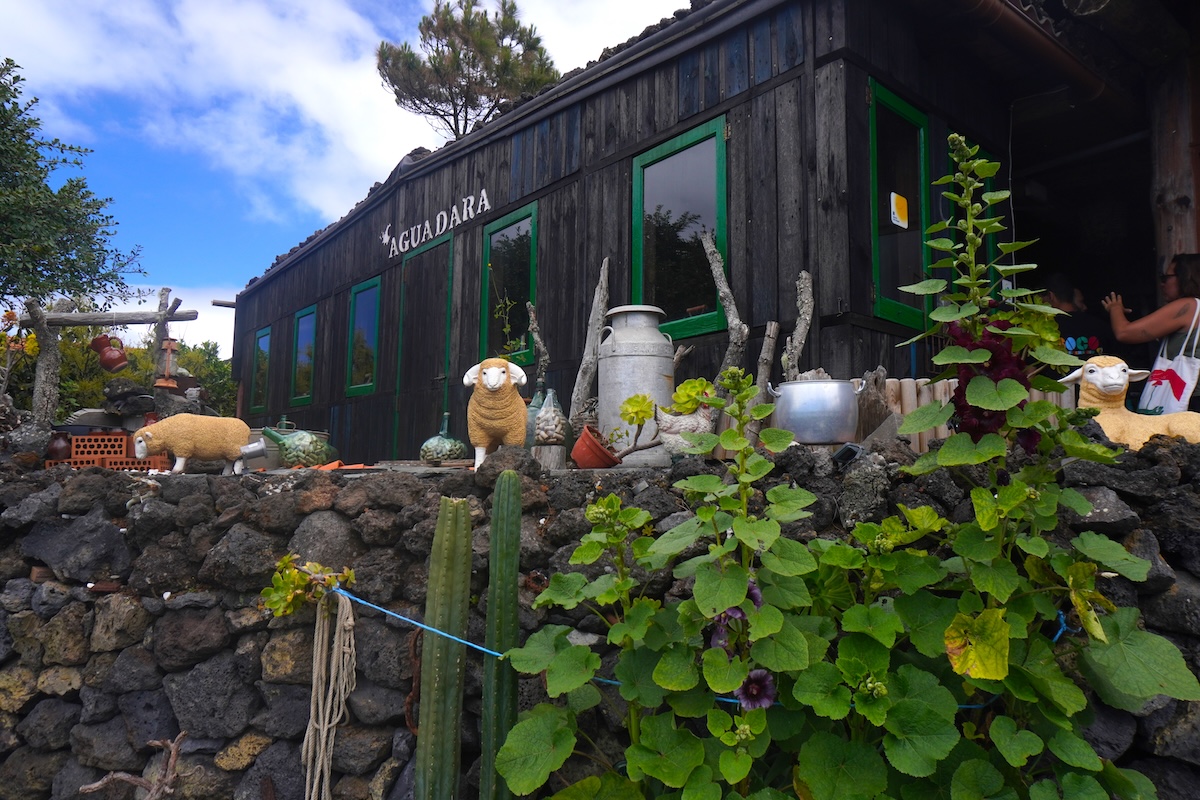
- Guachinche Aguadara: We went with several friends; the food is fantastic (we tried the grilled cheese, the garbanza, gofio soup, goat meat… everything was delicious)
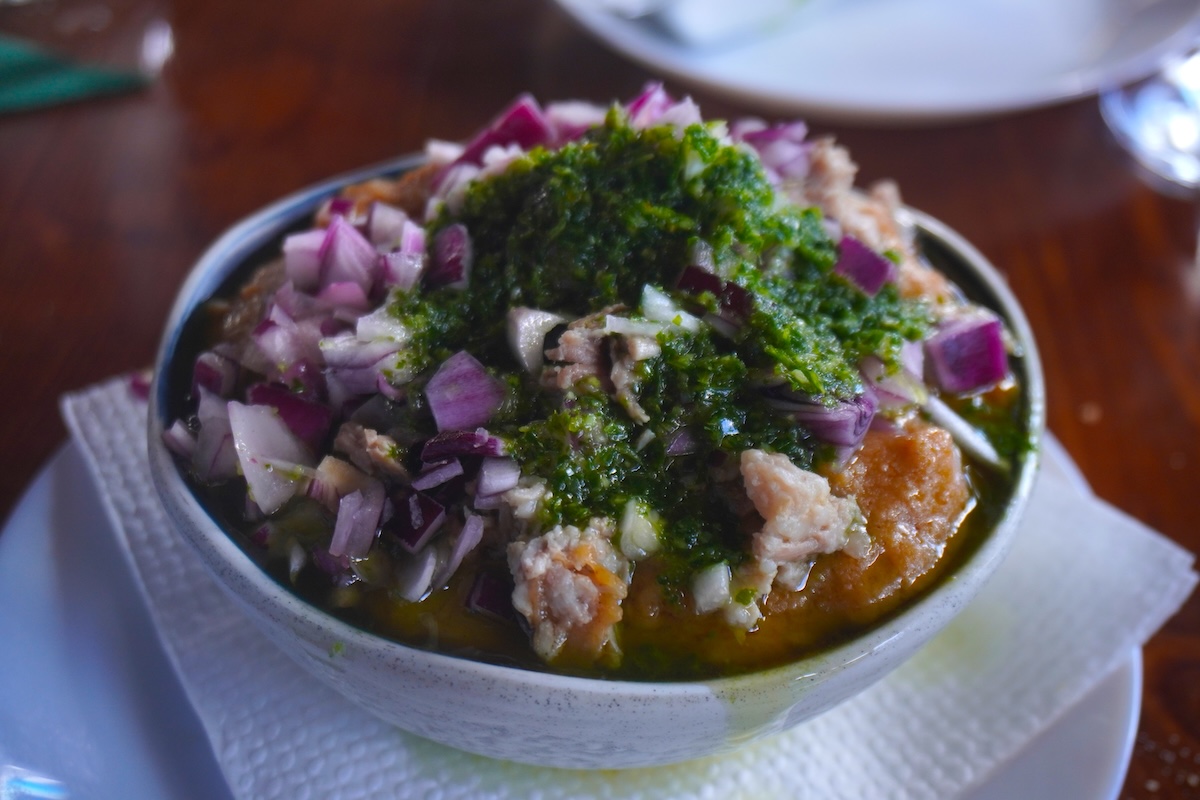
- Mirador de la Peña: We went up there for dinner and to watch the sunset (dinner cost us 55€ for two, cocktails included). In our opinion, considering the value for money, it’s better to go there for a drink at sunset and have dinner somewhere else, we didn’t find the food particularly spectacular when we were there.
- La Pasada: a great alternative to Mirador de La Peña for dinner, it has excellent food and service and is more affordable.
- Quesadillas Guarazoca: This is where they make some of El Hierro’s famous quesadillas in a wood-fired oven, so you can stop by to buy some. In our opinion, along with the ones in Valverde, these are among the best.
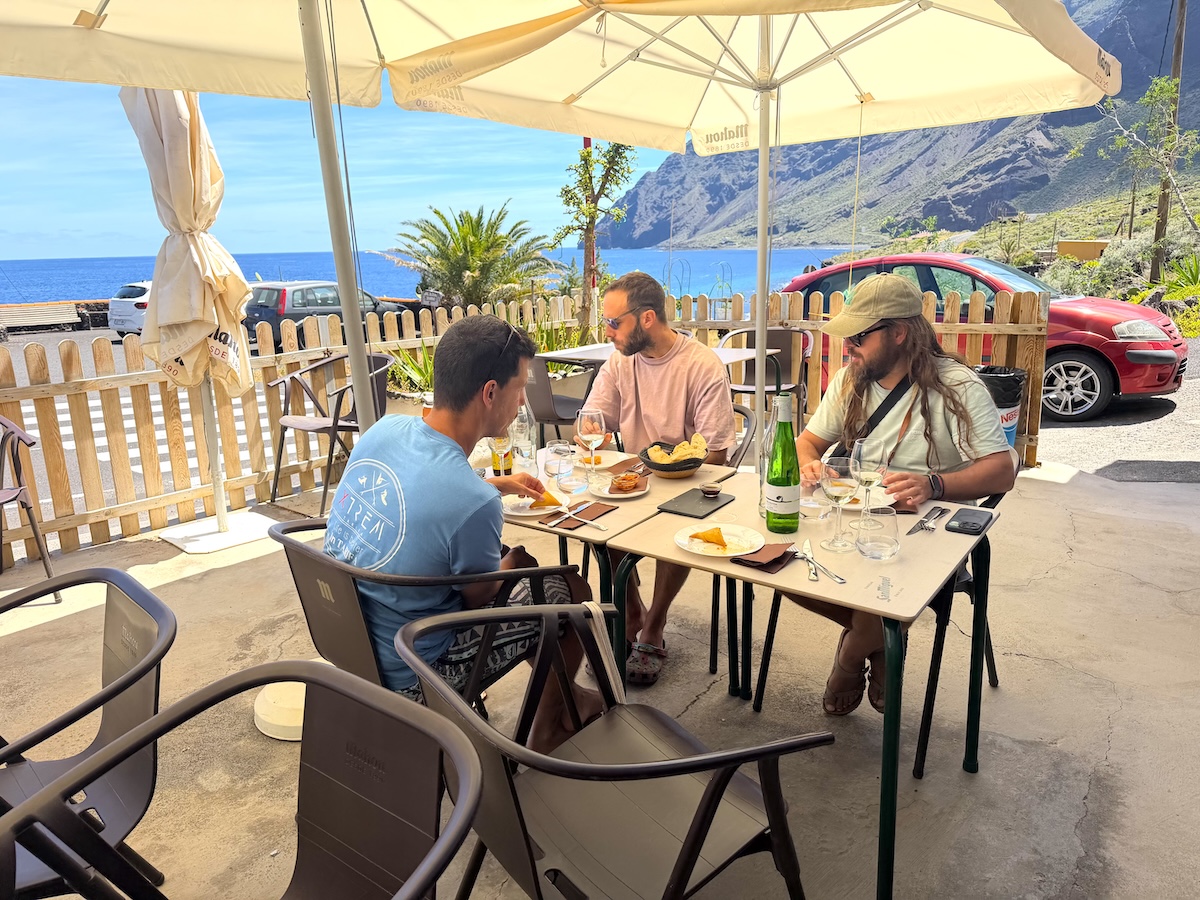
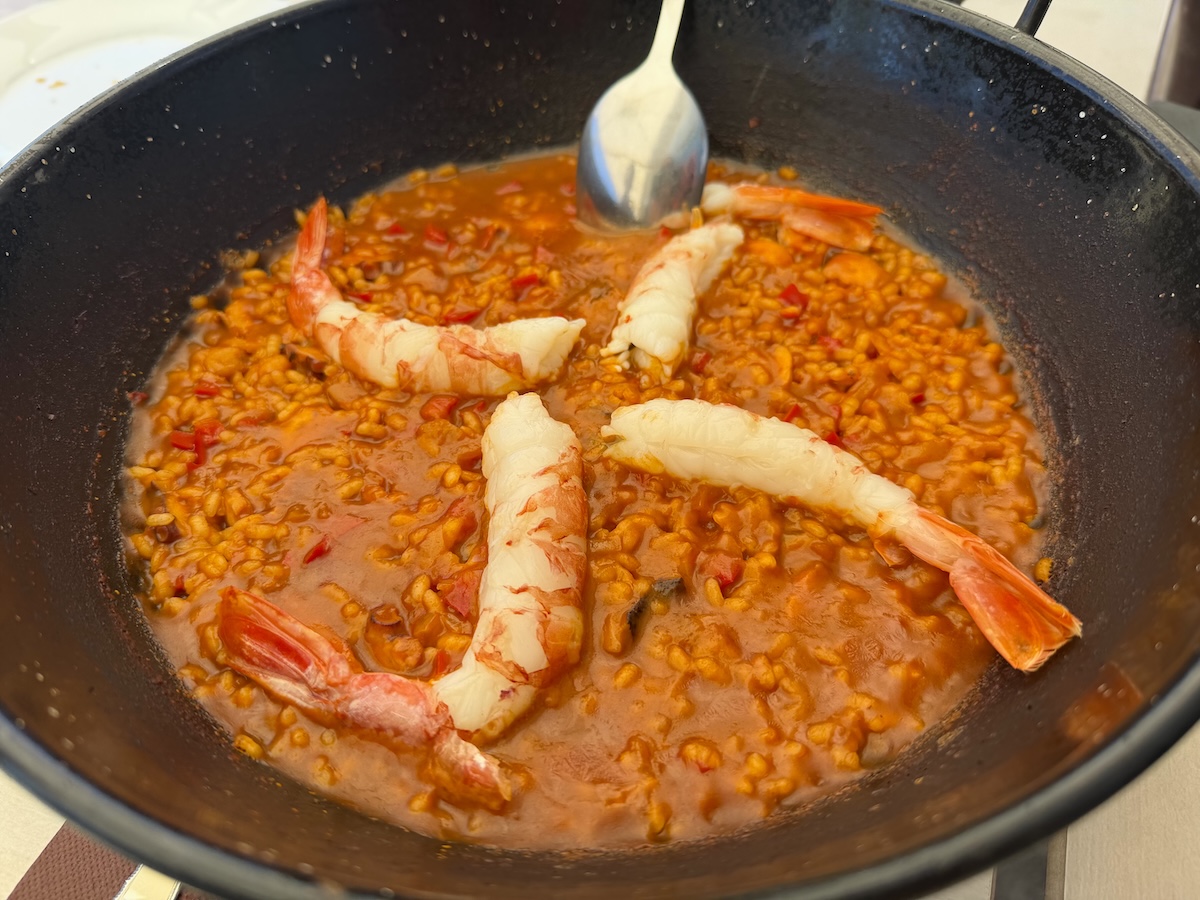
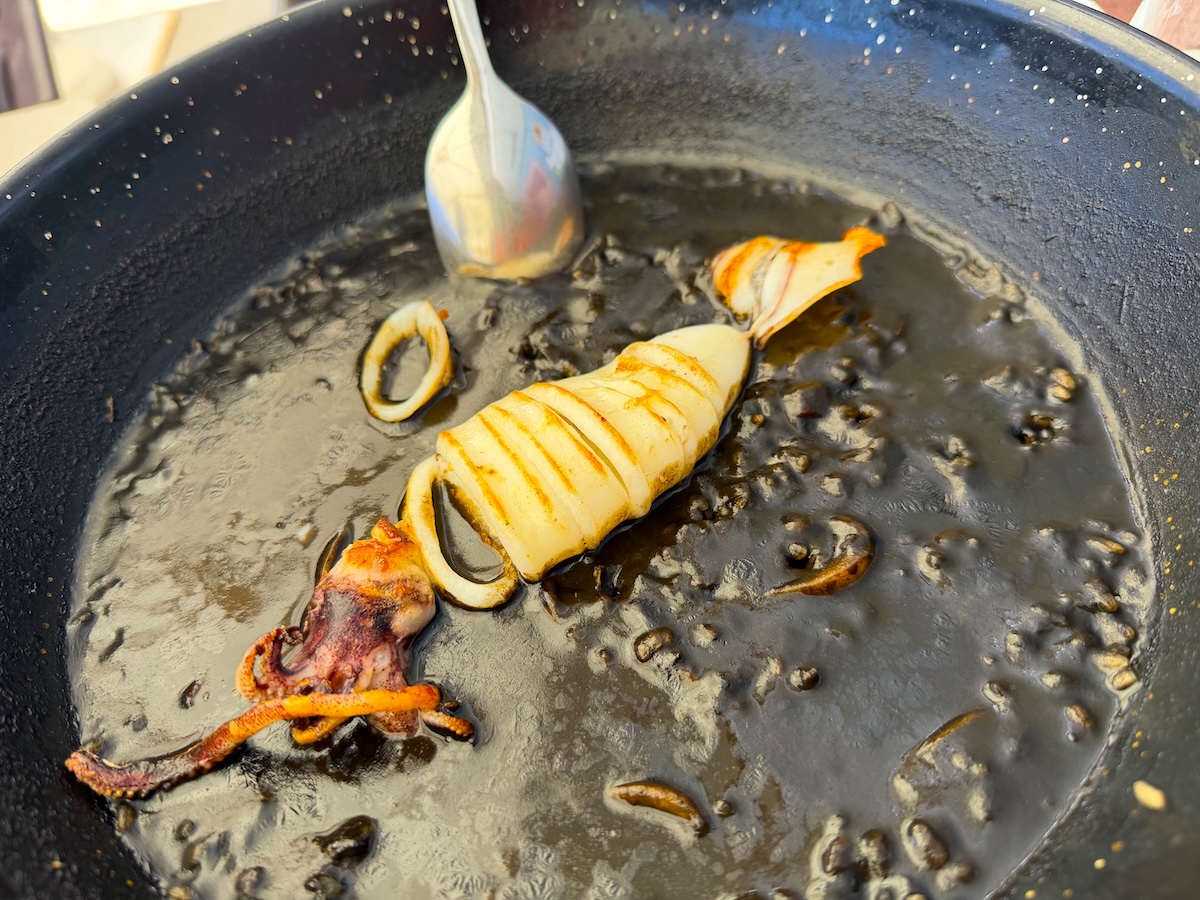
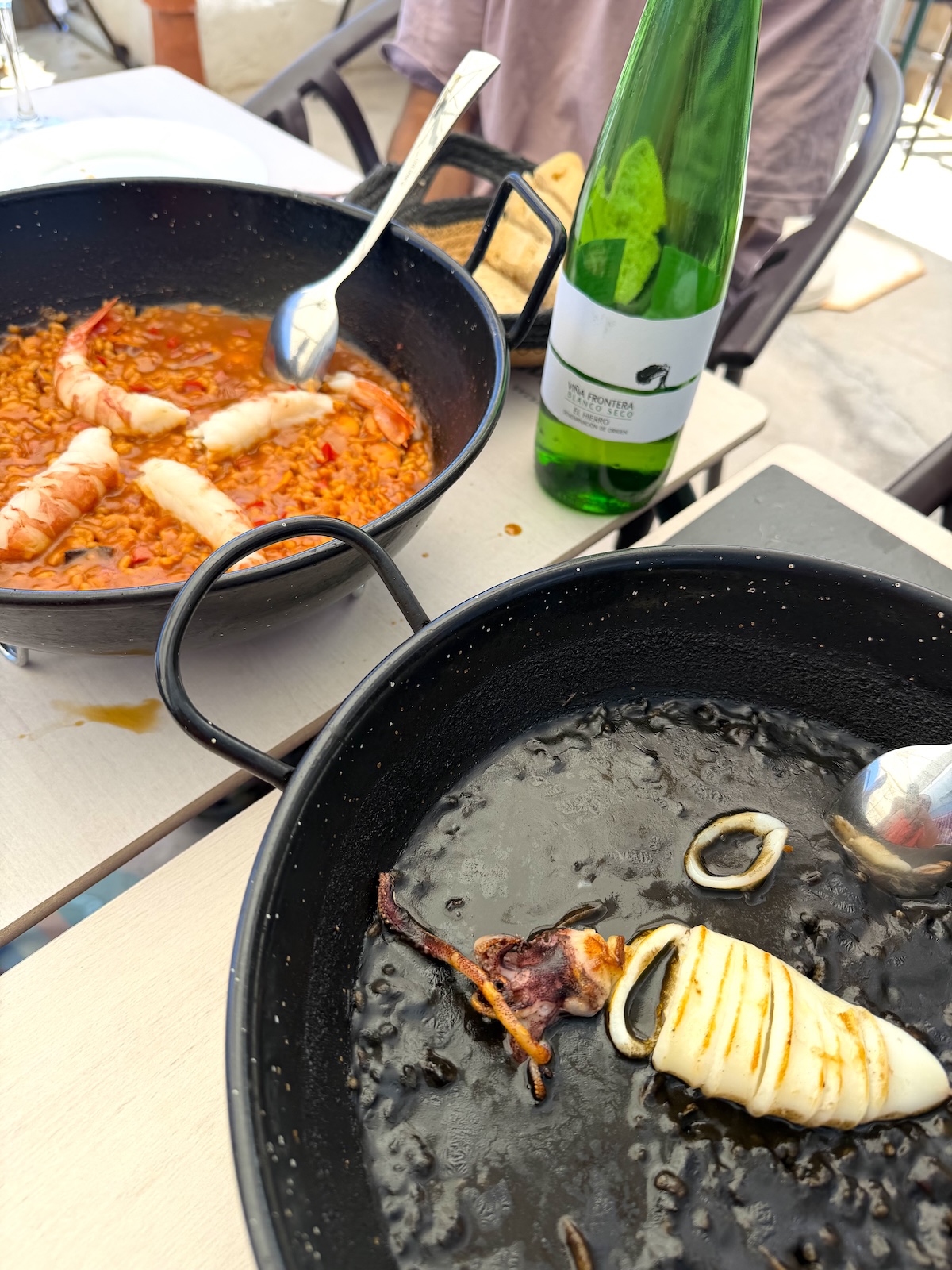
- Bohemia Restaurant: In Las Playas, we went there after snorkeling at Roque de la Bonanza, and we were pleasantly surprised. Great rice dishes, we ordered the black rice and the shrimp and octopus rice, samosas with cheese and honey, a bottle of El Hierro wine, water, etc., and we paid about 95€ to share among four of us.
Where to eat in La Restinga and El Pinar
Here are several of the recommended restaurants in La Restinga and El Pinar:
- Casa Juan: It was recommended to us, and they say you have to try the limpets soup, the fried shrimp, and the creamy limpets rice. Unfortunately, it was full when we tried to go.
- El Refugio: for fresh fish; they don’t take reservations.
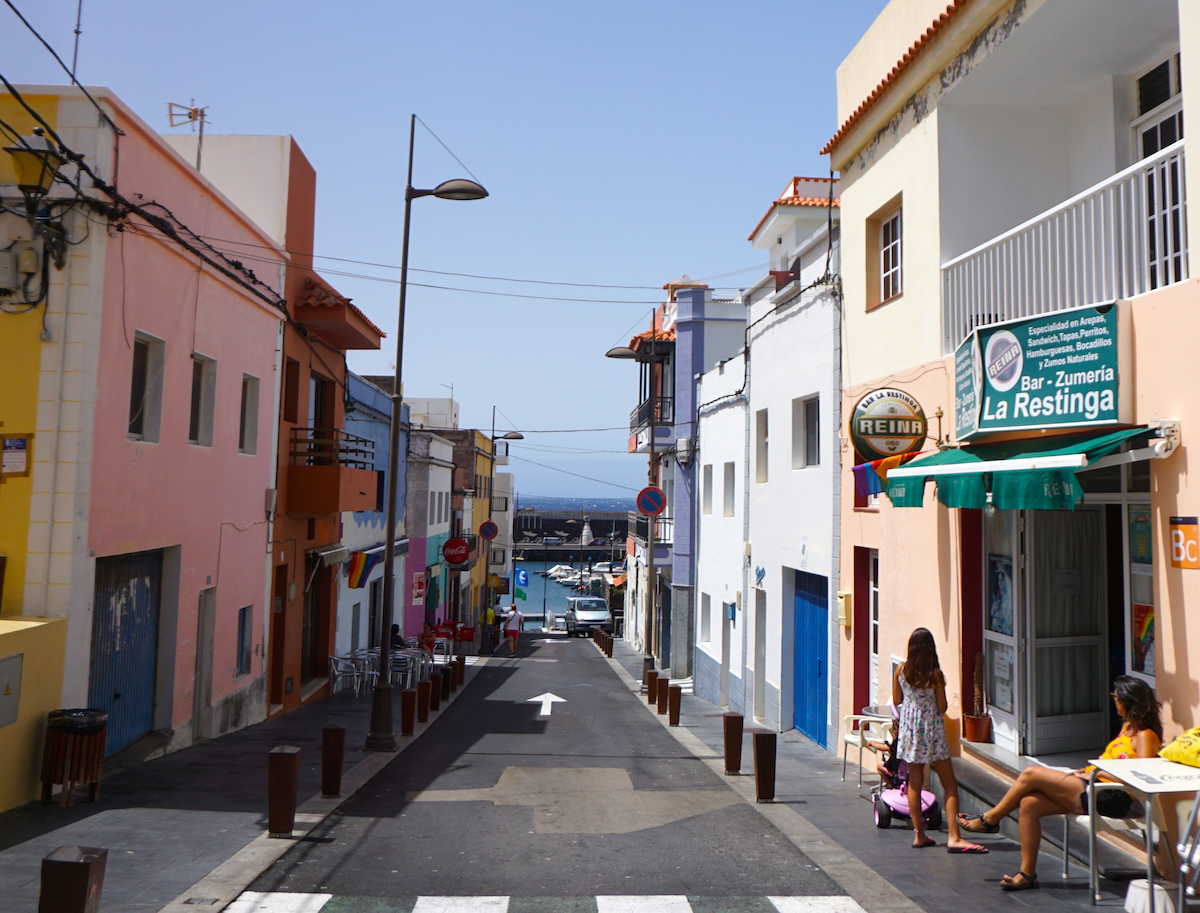
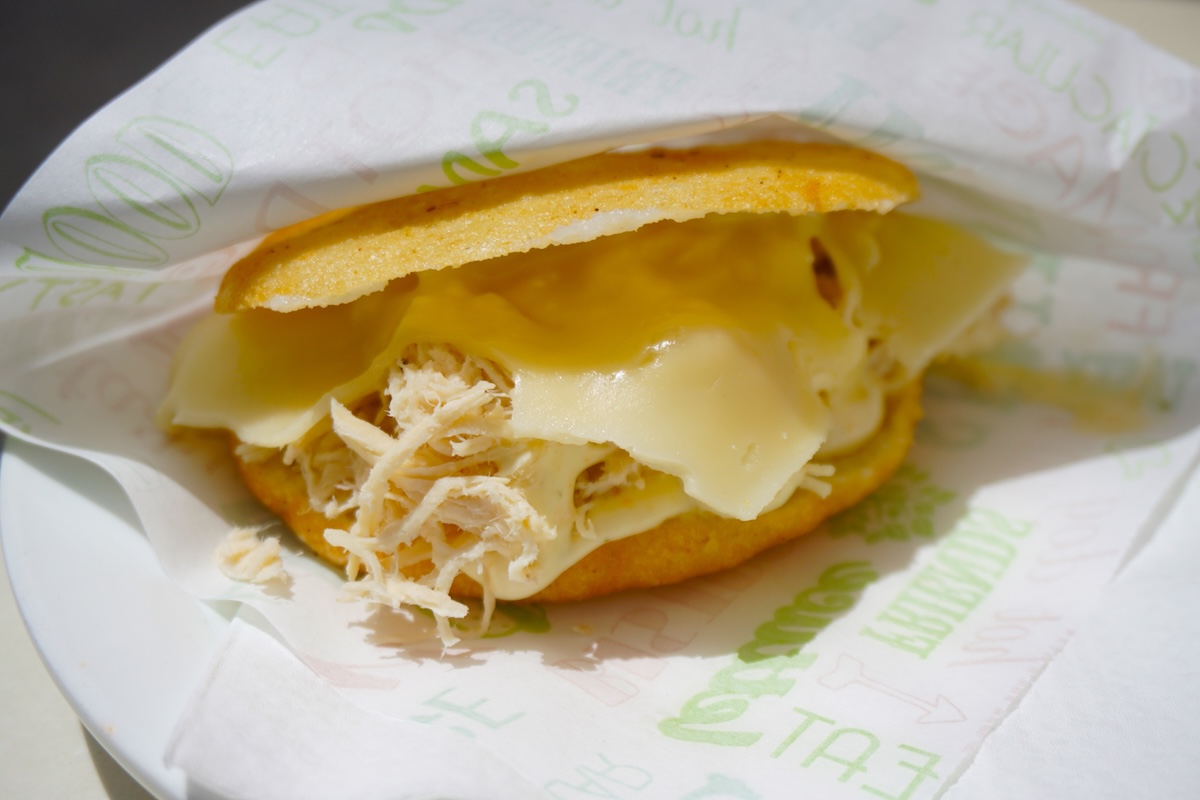
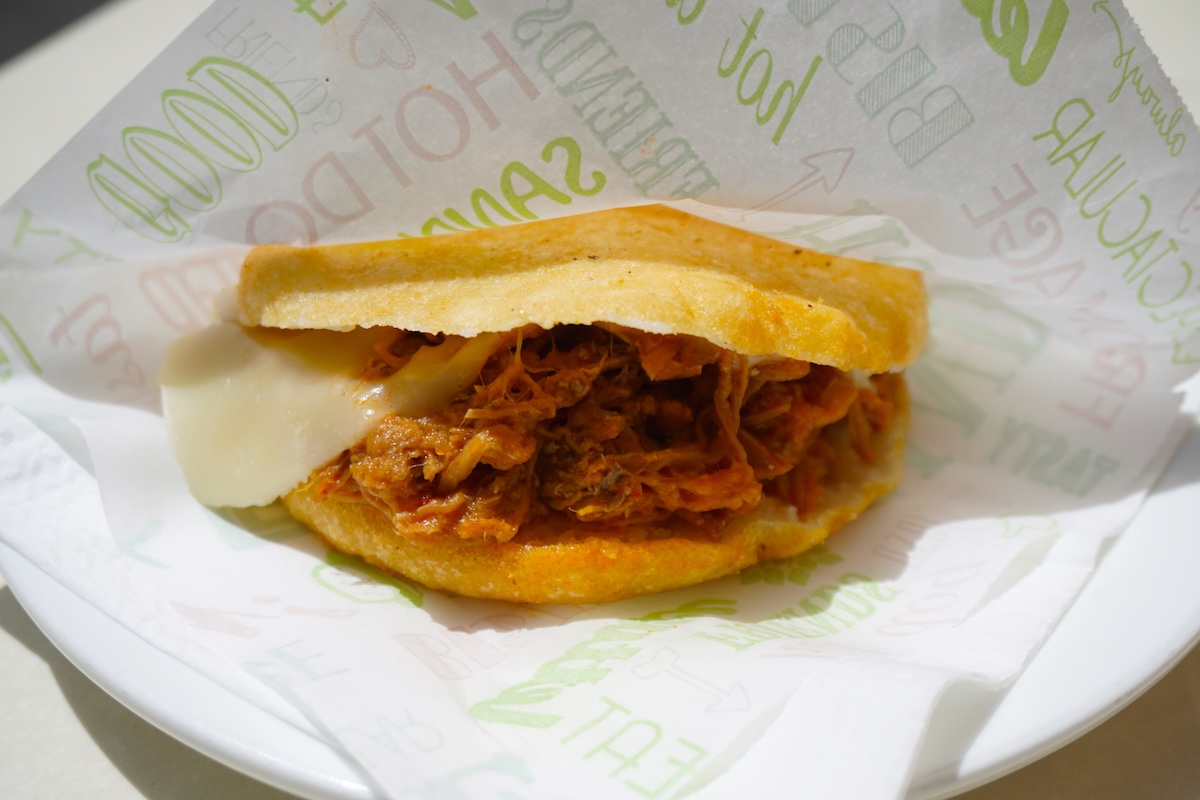
- Zumeria La Restinga: for arepas, sandwiches, and other items at good prices. We ordered two delicious arepas and two freshly squeezed juices for 10€
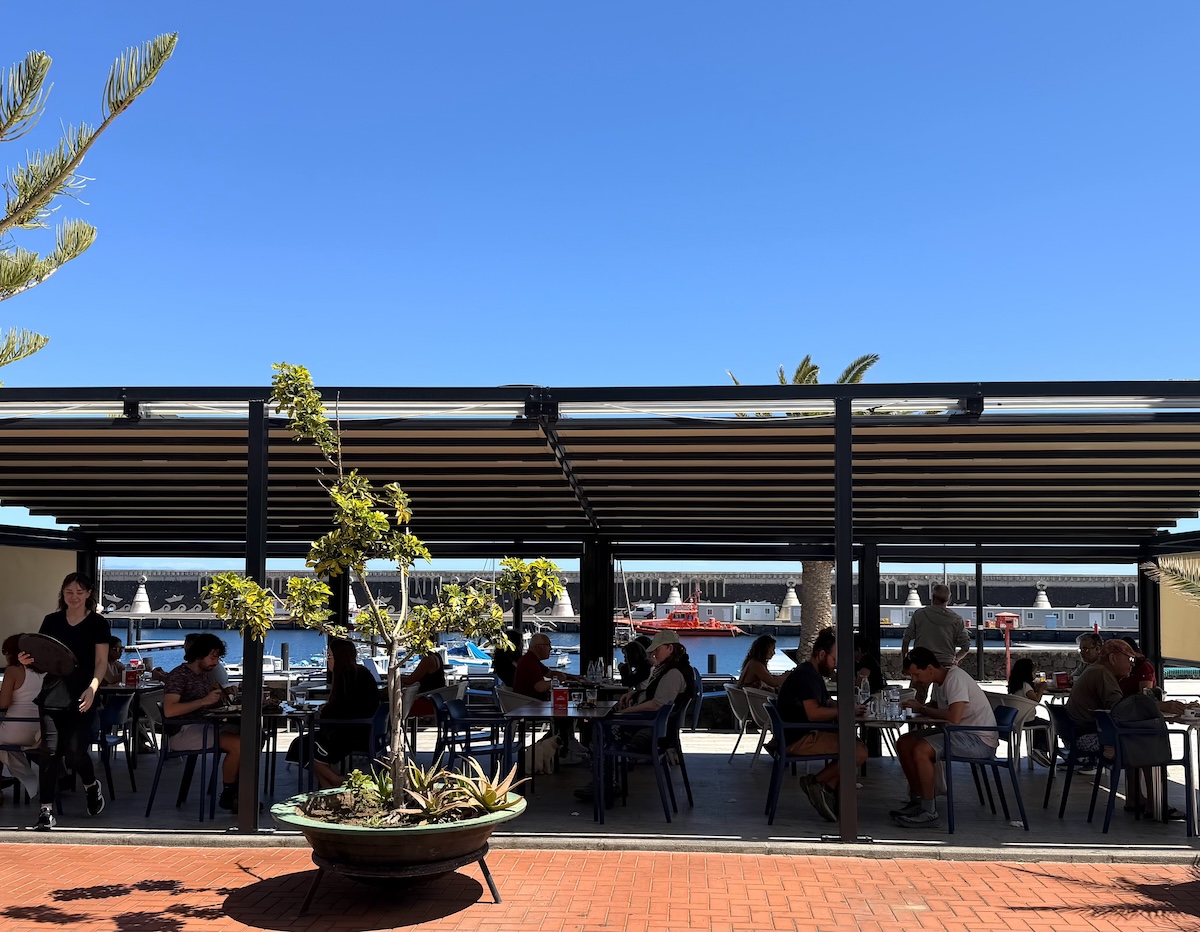
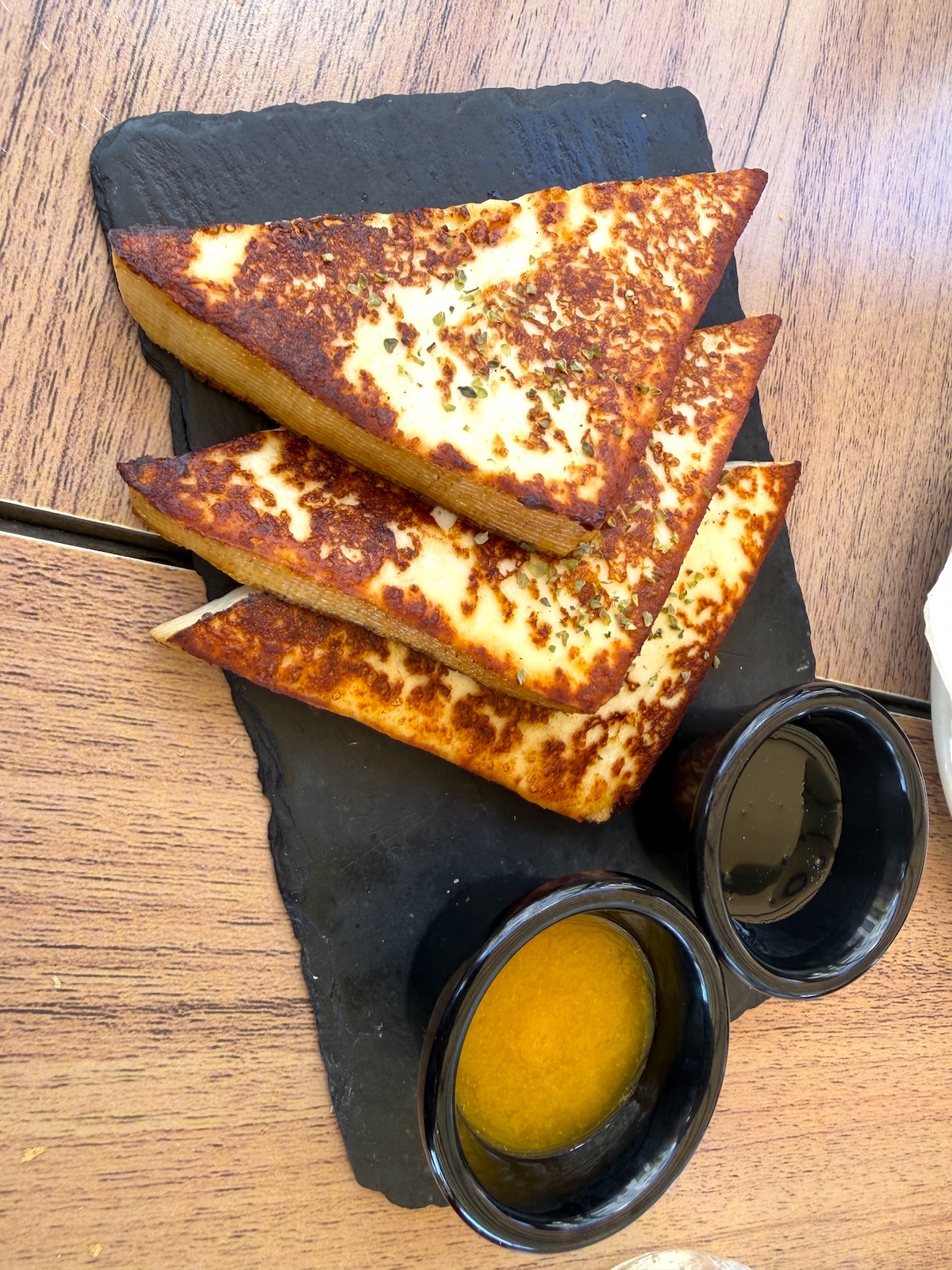
- Bar Mar de Las Calmas: for a bite to eat with a view of the sea. We shared a fish dish, fried baby squid, and El Hierro cheese, though it was nothing special, to be honest… If you can, we recommend the previous spots (Casa Juan or El Refugio)
- Tasca El Rincón: for fresh fish; they have a terrace.
- La Restingolita: fresh fish and great service on the boardwalk. We went to eat with our diving buddies Borja and Tania on our last day in La Restinga and really enjoyed it. They highly recommend the Peto en Salsa Eneldo and the rice stew.
- La Sabina (recommended by Miguel Ángel, whom we met at Monsters Divers on Pulau Weh), a local restaurant where you can eat goat meat
Travel itineraries for El Hierro
As you’ve seen, El Hierro has so much to offer! Below are some suggested itineraries based on how many days you have to visit “the island of the meridian.”
Things to see and do in El Hierro in 2 or 3 days (a weekend)
Although El Hierro is one of the smallest Canary Islands, we believe that a weekend isn’t enough to discover, and, most importantly, enjoy everything it has to offer.
If you just want to “check off” the sights, you might even manage it, but if you want to relax in some of its natural pools, go on a hike, or take your time enjoying the views from its lookouts, you’ll need more time.
Since time isn’t always on your side, if you only have 2–3 days to visit El Hierro, we recommend the following itinerary, which is quite packed, with Frontera as your base
- Day 1: Arrive in the morning, pick up your rental car, and go “charco-hopping” (you choose how many stops you want to make). From the airport to Frontera, you’ll find La Caleta, Tamaduste, Charco Manso, and Pozo de las Calcosas. You can stop for lunch at Las Puntas, and in the afternoon continue with more “charco-hopping” (you’ll find La Maceta, Los Sargos, and Charco Azul). You can return before sunset to watch it from the Mirador de la Peña and either have dinner there or at La Pasada, right next door.
- Day 2: We’ll start the day with scenic viewpoints; from Frontera, we’ll head up the HI-1 toward the Jinama viewpoint, then continue on to the Isora and Las Playas viewpoints. We’ll head down toward La Restinga (you can have lunch there or on the way there or back, in La Sabina or El Pinar). Then stop in Tacorón and retrace your steps toward El Sabinar, stopping along the way at the El Julán viewpoint. Visit El Sabinar and, if there’s time, the Los Bascos viewpoint. Before sunset, head to the Orchilla Lighthouse, where you’ll watch the sunset. Return via any route you like to Frontera for dinner and the night.
- Day 3: Last day! Depending on what time your flight is, you can make the most of it. We recommend heading to Las Playas in the morning; on the way back, stop at Timijiraque, and depending on how much time you have, you can take the opportunity to visit a pool you didn’t get to see on the first day before returning to the airport.
Things to see and do in El Hierro in 4 or 5 days
In our opinion, if you don’t dive, 4 or 5 days are the ideal amount of time to get to know the island of El Hierro better. It gives you time to visit several of its most impressive spots but also to relax at your own pace in one of its natural pools. Here’s the itinerary we recommend:
- Day 1: Arrive in the morning, pick up your rental car, and go “pool-hopping” (you choose how many stops you want to make). From the airport to Frontera, you’ll find La Caleta, Tamaduste, Charco Manso, and Pozo de las Calcosas. You can stop for lunch at Las Puntas, and in the afternoon continue with more “pool-hopping” (you’ll find La Maceta, Los Sargos, and Charco Azul). You can return before sunset to watch it from the Mirador de la Peña and either have dinner there or at La Pasada, right next door.
- Day 2: Hiking trail through Julán or La Llanía in the morning, followed by a visit to El Sabinar, Verodal Beach, and the Orchilla Lighthouse in the afternoon (with sunset at the Orchilla Lighthouse). Dinner in Frontera.
- Day 3: Viewpoint tour: Jinama, Isora, and Las Playas in the morning; Tacorón and La Restinga in the afternoon.
- Day 4: Relax at the natural pools you didn’t get to see on the first day, and visit Las Playas and Timijiraque
- Day 5: Garoé Tree in the morning, and if you have time before your flight, you can take the opportunity to visit any pools you haven’t seen yet (for example, La Caleta or Tamaduste are right next to the airport)
Things to see and do in El Hierro in a week (7 or 8 days) with Diving
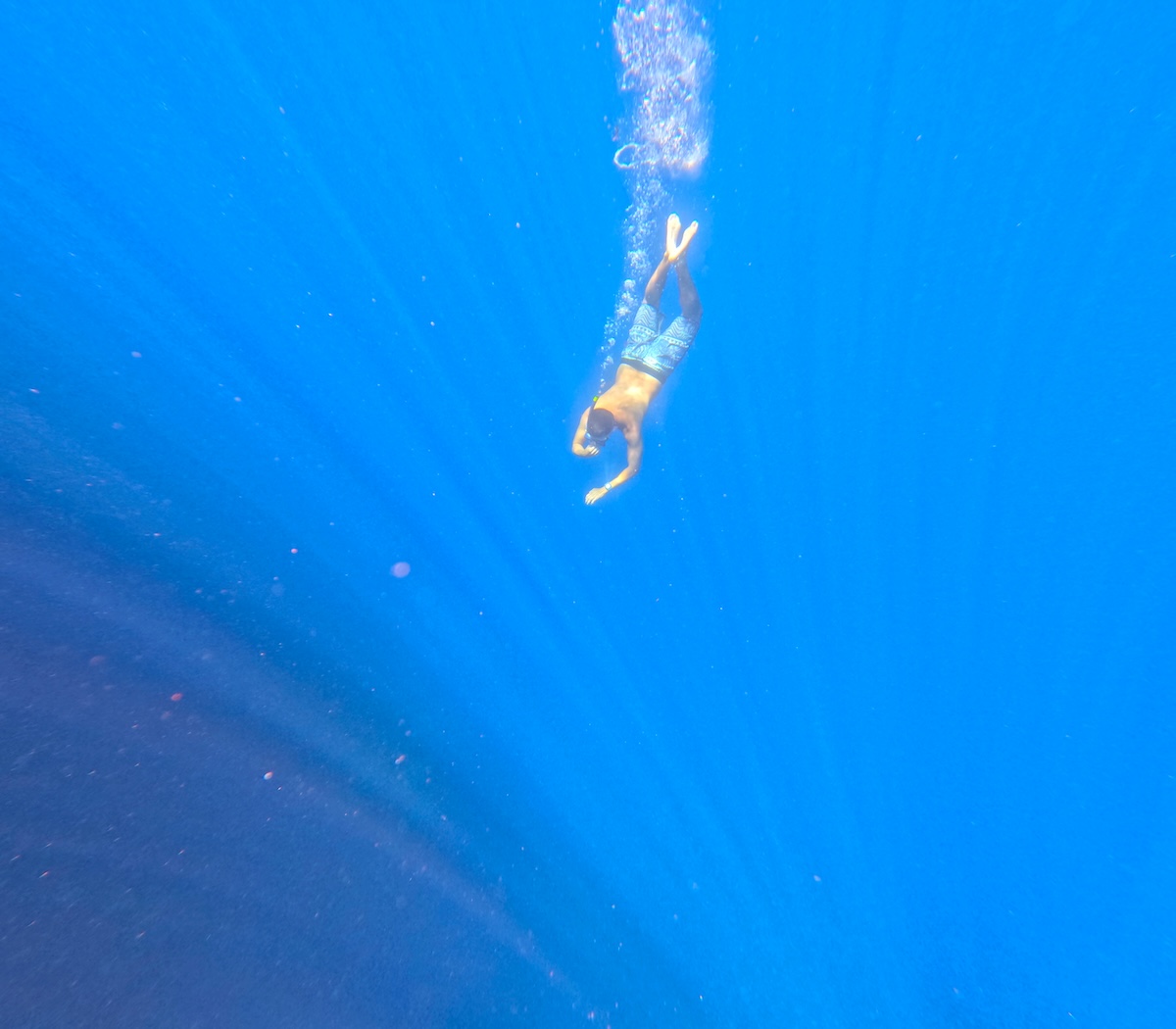
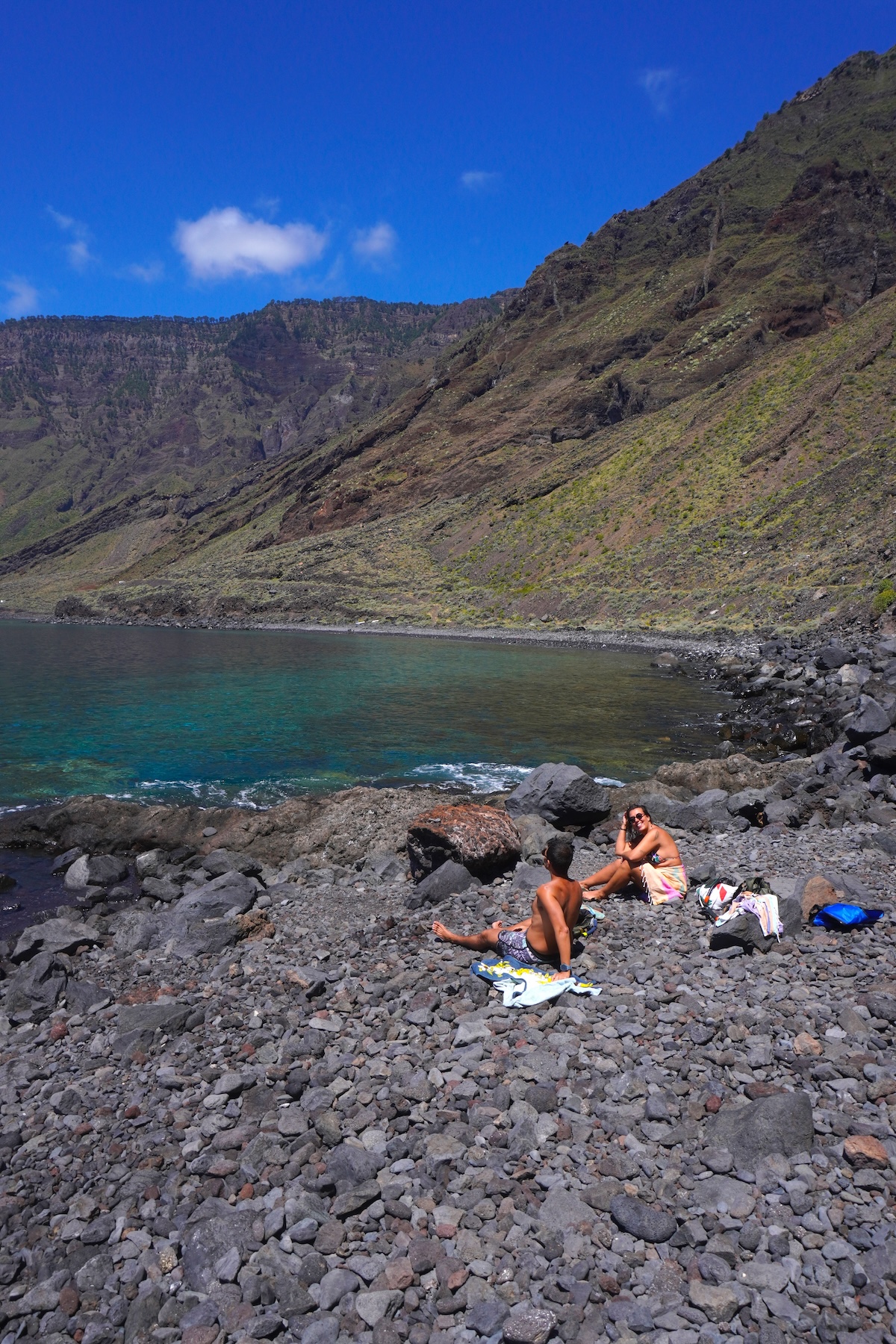
At Randomtrip, we spent 9 days in El Hierro, 3 of which Inês went diving (as we mentioned above, on the days you go diving, you can’t leave La Restinga and the surrounding area because the road forces you to climb to an altitude of over 1,000 meters).
We’ve adapted our itinerary for 7 or 8 days (one week), which we hope will serve as a guide for you.
- Day 1: Arrive by plane and drive in a rental car to La Restinga
- Day 2: Scuba diving in the morning, Tacorón’s natural pools in the afternoon.
- Day 3: Diving in the morning; Tacorón and the Volcanological Center in the afternoon.
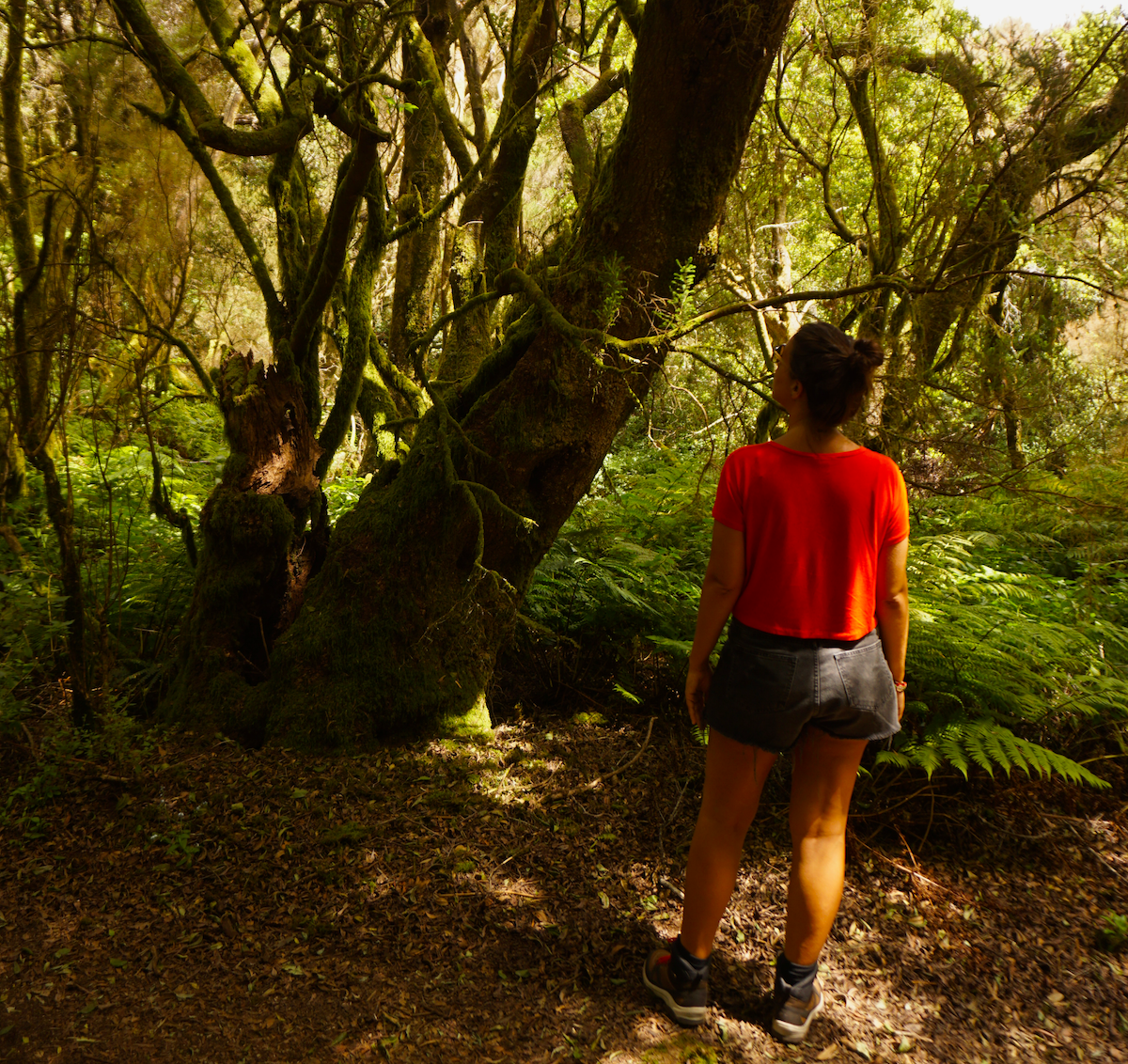
- Day 4: In the morning, a hiking trail through the laurel forest in La Llanía; in the afternoon, a drive along the island’s west coast: El Julán viewpoint, Virgen de Los Reyes Shrine, El Sabinar, and Los Bascos viewpoint. Sunset at the Orchilla Lighthouse, then on to Frontera, where we’ll stay for the rest of the trip.
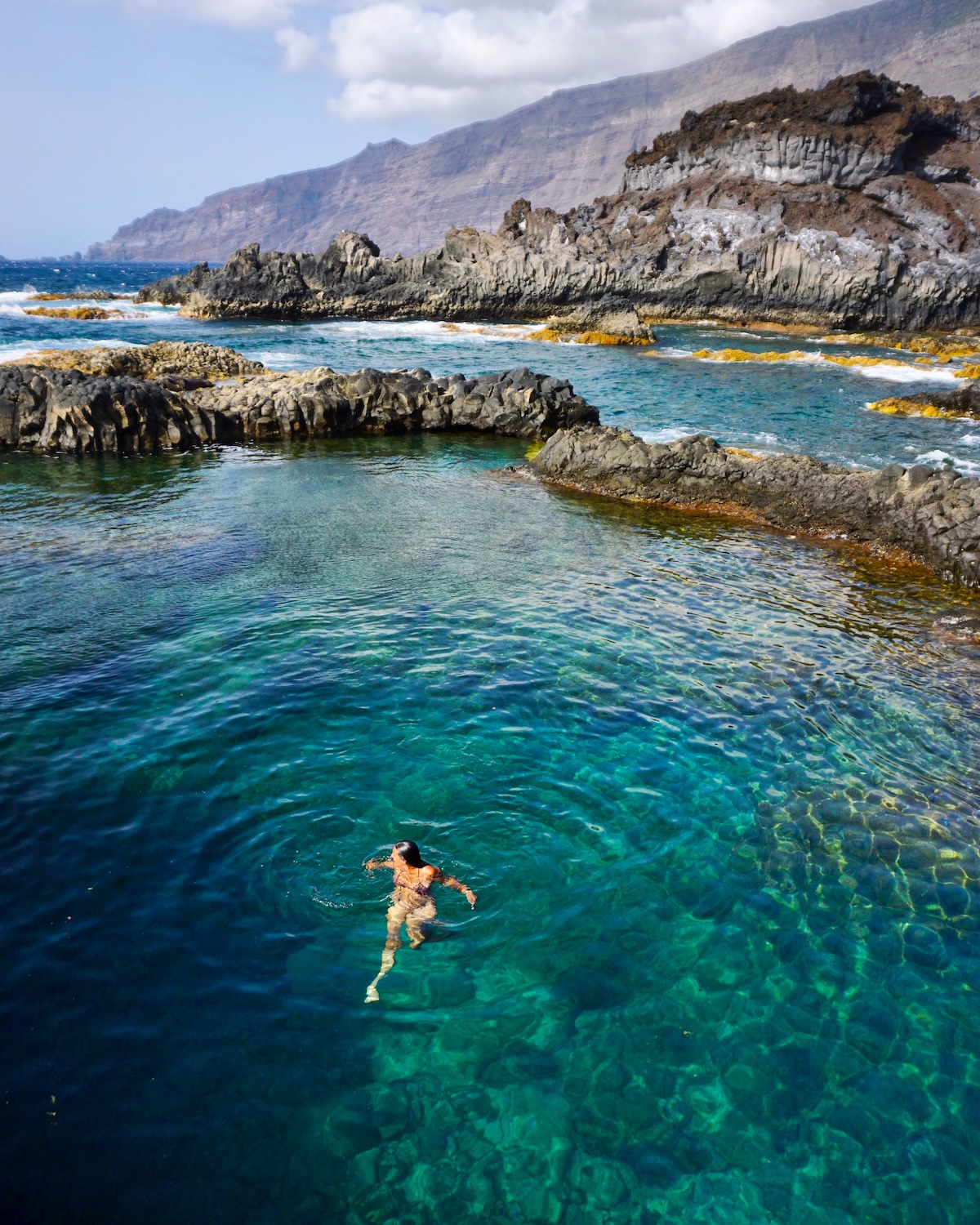
- Day 5: Charcos (La Maceta and Los Sargos), Arenas Blanas/El Verodal Beach, and sunset again at the Orchilla Lighthouse or return to Frontera.
- Day 6: Las Playas Lookout, Isora Lookout, Jinama Lookout, Charco Azul, Charco Los Sargos, Charco Manso and its arch, La Peña Lookout
- Day 7: Las Puntas, Las Playas, Timijiraque, Pozo de las Calcosas, La Peña Viewpoint
- Day 8: Árbol Garoé, Piscinas de la Caleta, and the airport.
Getting around: renting a car in El Hierro
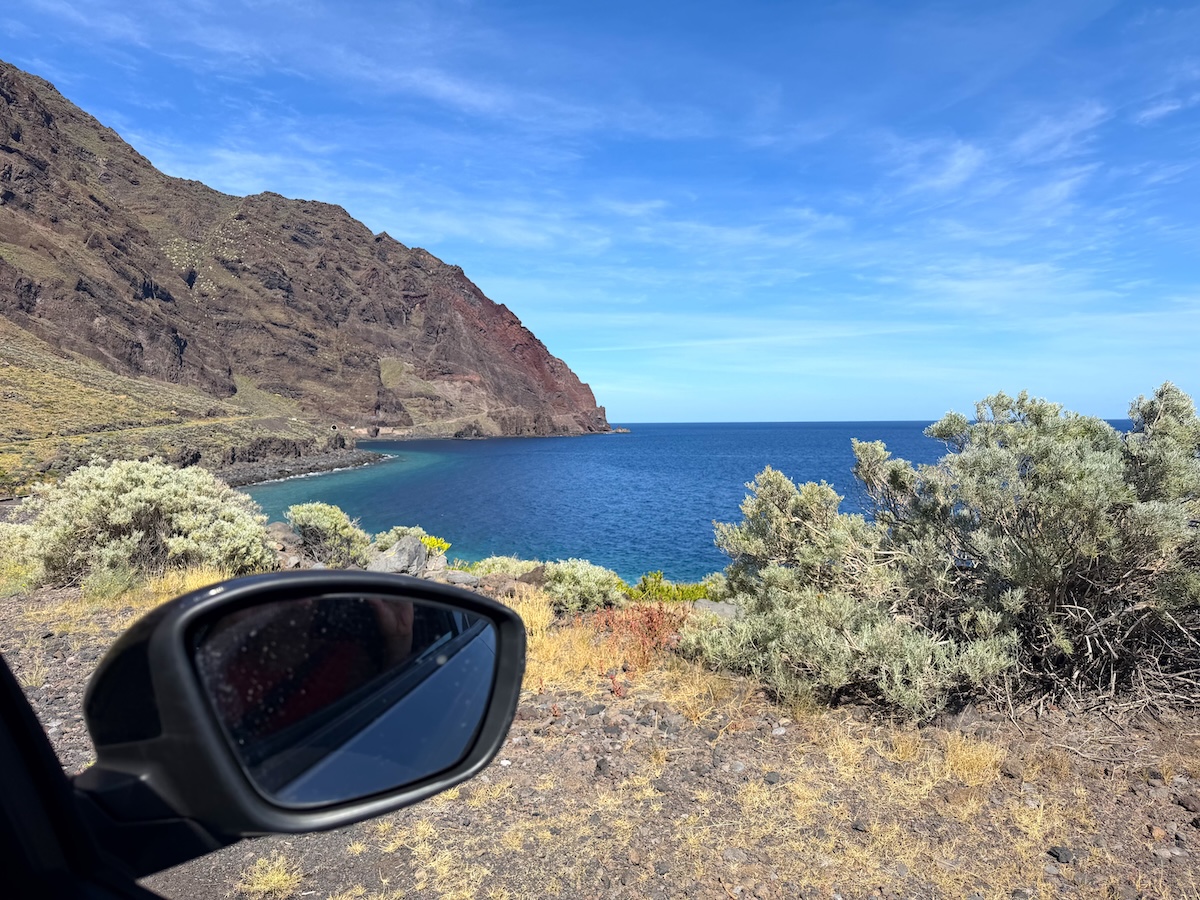
Although there are public buses, the best way to explore the island and enjoy it to the fullest is renting your own car, so you can save time on travel, reach places the bus doesn’t go, and go whenever you want (so you can enjoy those spectacular sunsets).
Car rental companies in El Hierro
In the Canary Islands, we usually rent from Cicar or Pluscar, which generally offer affordable, all-inclusive rates and the ability to easily modify or cancel a reservation, though we always compare prices with other companies since rates can vary depending on demand and the time of year. We recommend using comparison sites like DiscoverCars to find the best prices (though we also recommend carefully reviewing each company’s terms and conditions, not just the price).
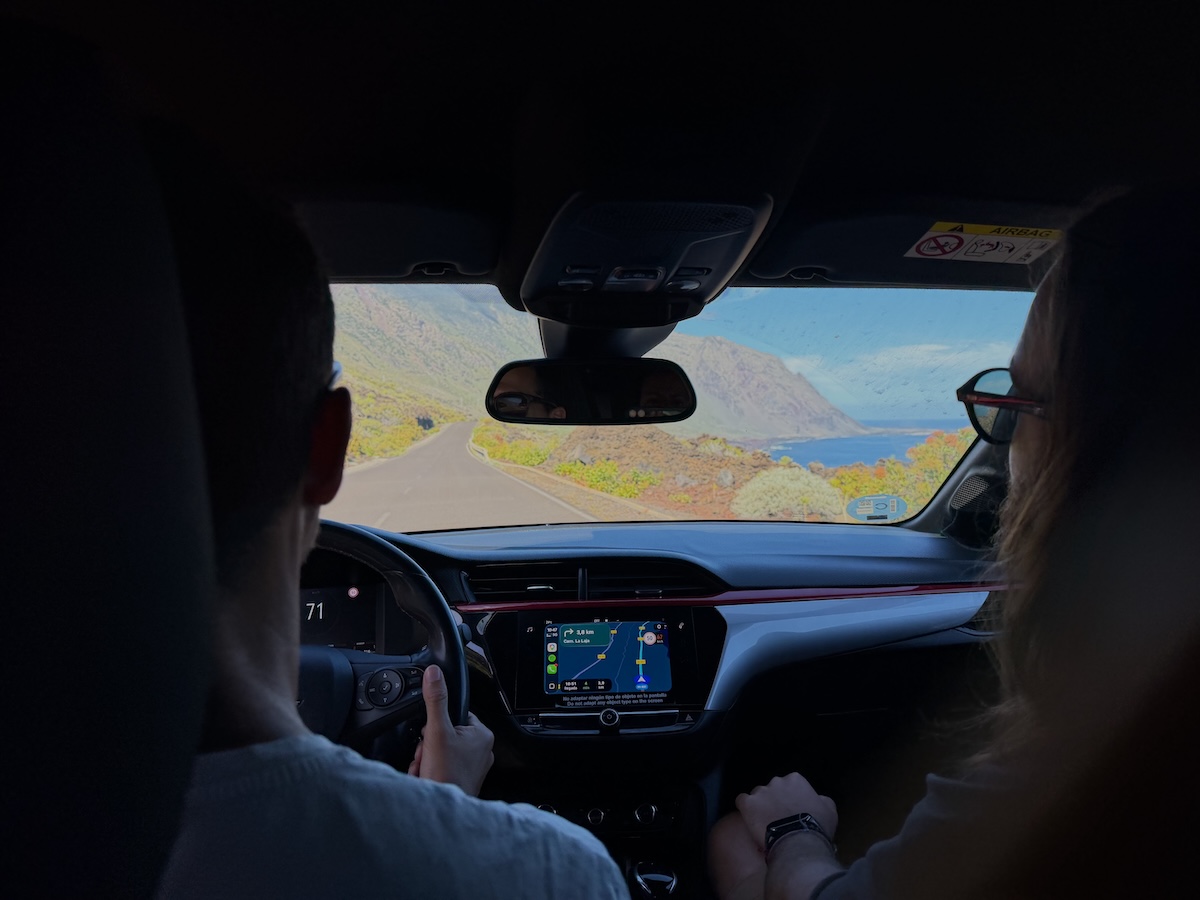
Other recommended companies in El Hierro are (all of them offer comprehensive insurance with no deductible, a second driver included, and a “fill-up” fuel policy):
- Pluscar
- Cicar and Cabrera Medina (they’re the same company)
- Payless (on El Hierro, it’s the same as Cicar)
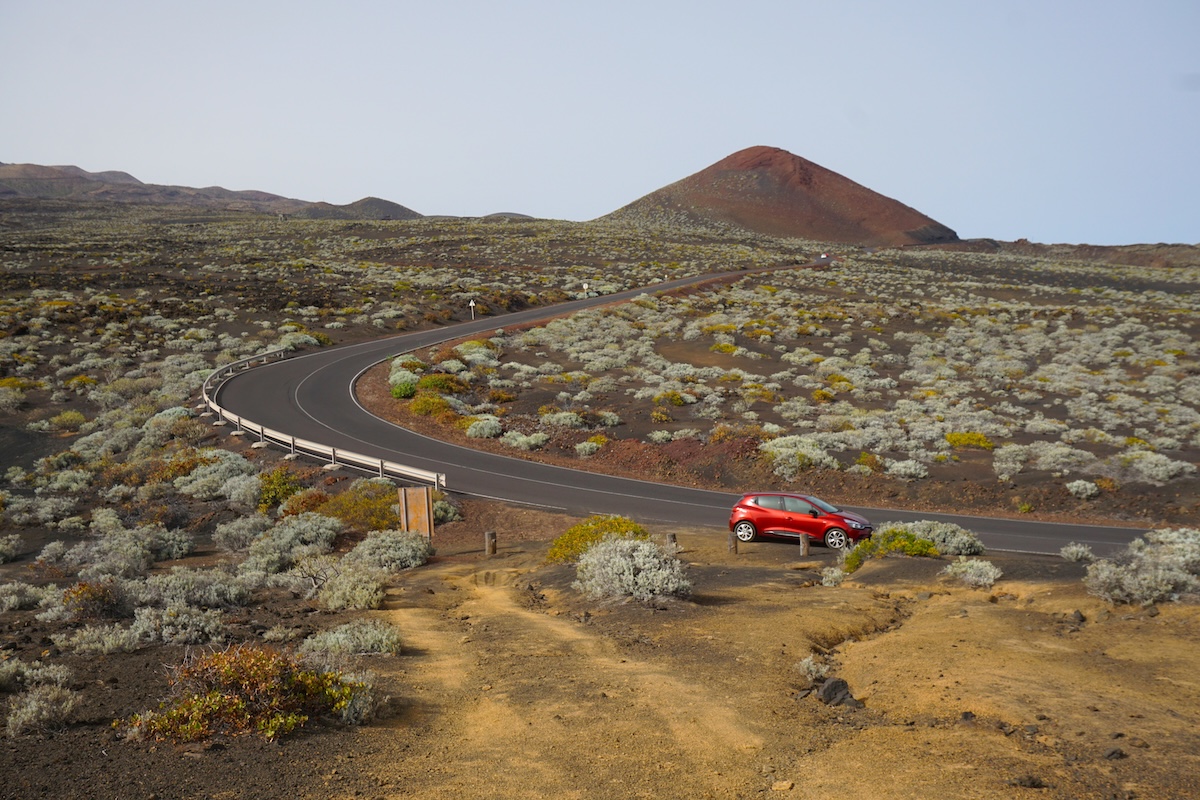
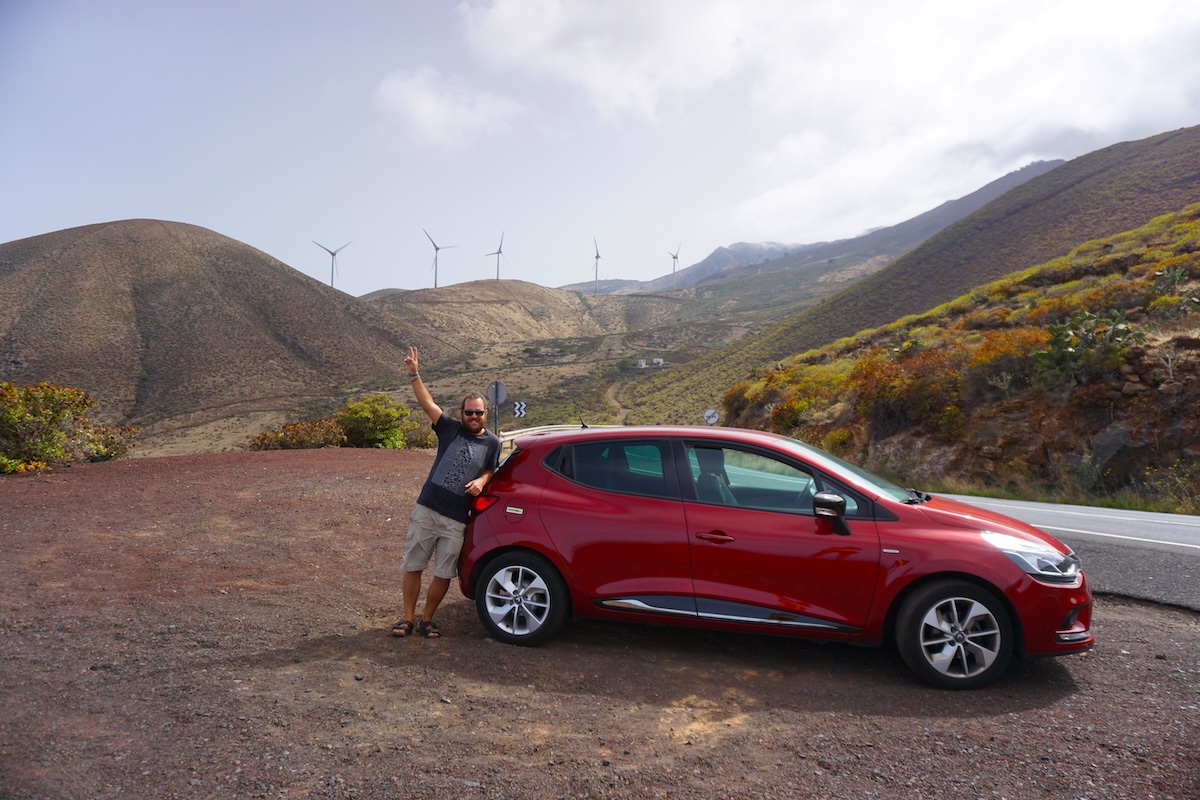
On our various trips to the Canary Islands, we’ve rented from several of these companies (Pluscar, Cicar, Cabrera Medina, and Autoreisen), and in every case, we’ve had no problems whatsoever.
As we mentioned, it’s a good idea to compare prices, so the best approach is to use comparison sites like DiscoverCars to see which option is cheapest based on your dates.
Important: Most car rental companies do not cover damage caused by driving on unpaved roads.
Gas stations on El Hierro
As we mentioned, there are only four gas stations on El Hierro: two in Frontera, one in El Pinar (near La Restinga), and one in Valverde (the closest to the airport).
Although the island is small, its terrain means you’ll spend quite a few hours behind the wheel and have to navigate many uphill and downhill stretches, so you’ll use more fuel than you might expect, it’s best to be cautious if you’re running low on gas.
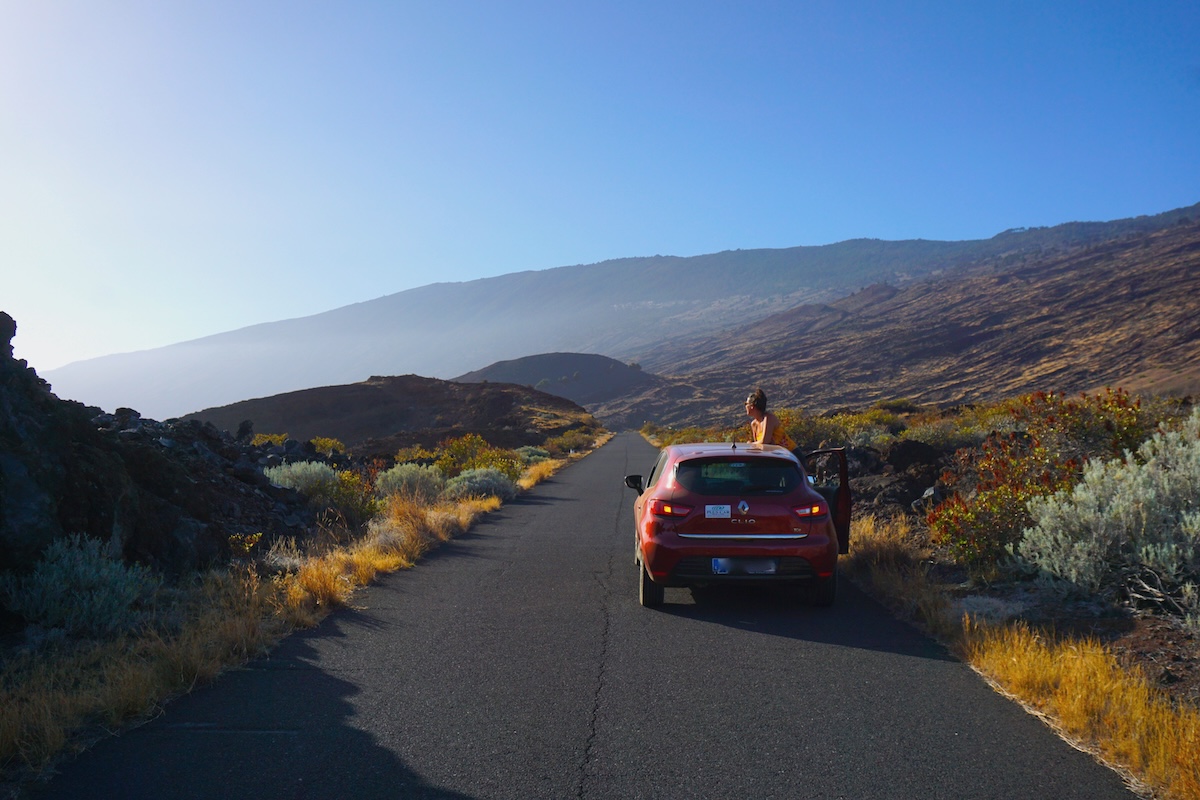
The map above also shows the gas stations, and we’ve listed them here as well so you can easily locate them:
- Gas station in El Pinar: https://goo.gl/maps/AyTeFmTyez22
- Gas stations in Frontera: One and Two
- Gas station in Valverde: https://maps.app.goo.gl/jyqHL4FNQeEQE2Ua6
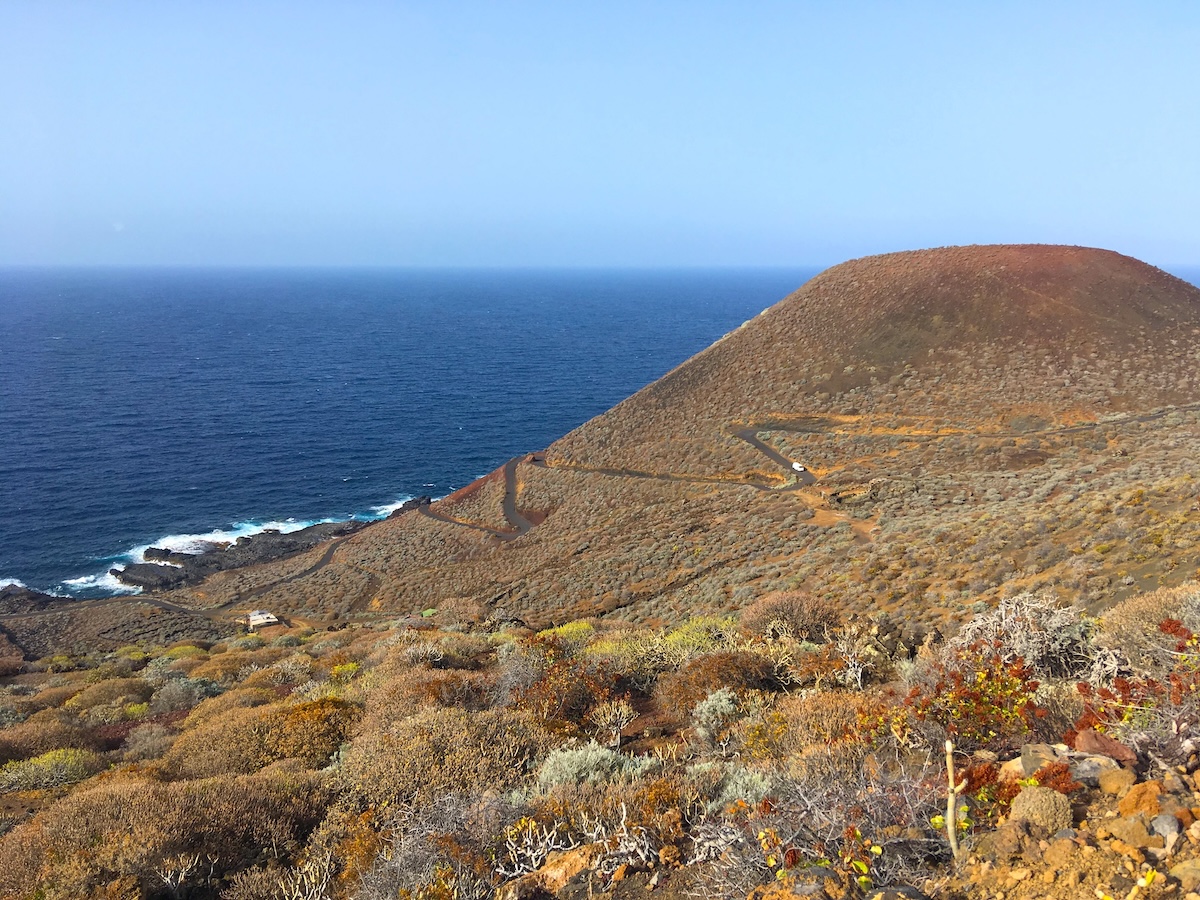
Where to park in El Hierro
El Hierro is the least visited island in the Canary Islands by tourists, which guarantees availability, good prices, relaxation, and excellent service. Therefore, you shouldn’t have any trouble finding parking anywhere. Both in La Restinga and in Frontera, we had no trouble parking right in front of or very close to our accommodations during our two trips to the island

How much does it cost to travel to El Hierro?
It’s hard to give an exact budget because it depends a lot on your travel style. What we can do is give you a price guide so you can use it to calculate your budget:
- Flights: With low-cost airlines like CanaryFly, you can sometimes find round-trip flights starting at 40€ (Binter is usually more expensive), departing from Tenerife Norte or Gran Canaria. You’ll also need to add the cost of the flight to Tenerife or Gran Canaria from your departure point. We recommend booking flights on Skyscanner and Kiwi
- Car rental: The cheapest car costs between 8€ and 30€ per day (depending on the company and the number of days), all-inclusive. Gas is cheaper in the Canary Islands; it will depend on how many kilometers you drive, but as a rough guide, a full tank for an economy car costs about 50€–60.
- Accommodation: starting at 30€ per night for a room with a private bathroom or a centrally located apartment with a kitchen.
- Meals at restaurants: between 10€ and 20€ per person
If you go scuba diving, you’ll need to factor in the number of dives you do.
In total, as a rough estimate, a 4 or 5-day trip to El Hierro with a rental car can cost between 300€ and 400€ per person (with the most economical options for car, lodging, and restaurants). A one-week trip to El Hierro, with a rental car and 4 scuba dives, can cost between 550€ and 700€ per person
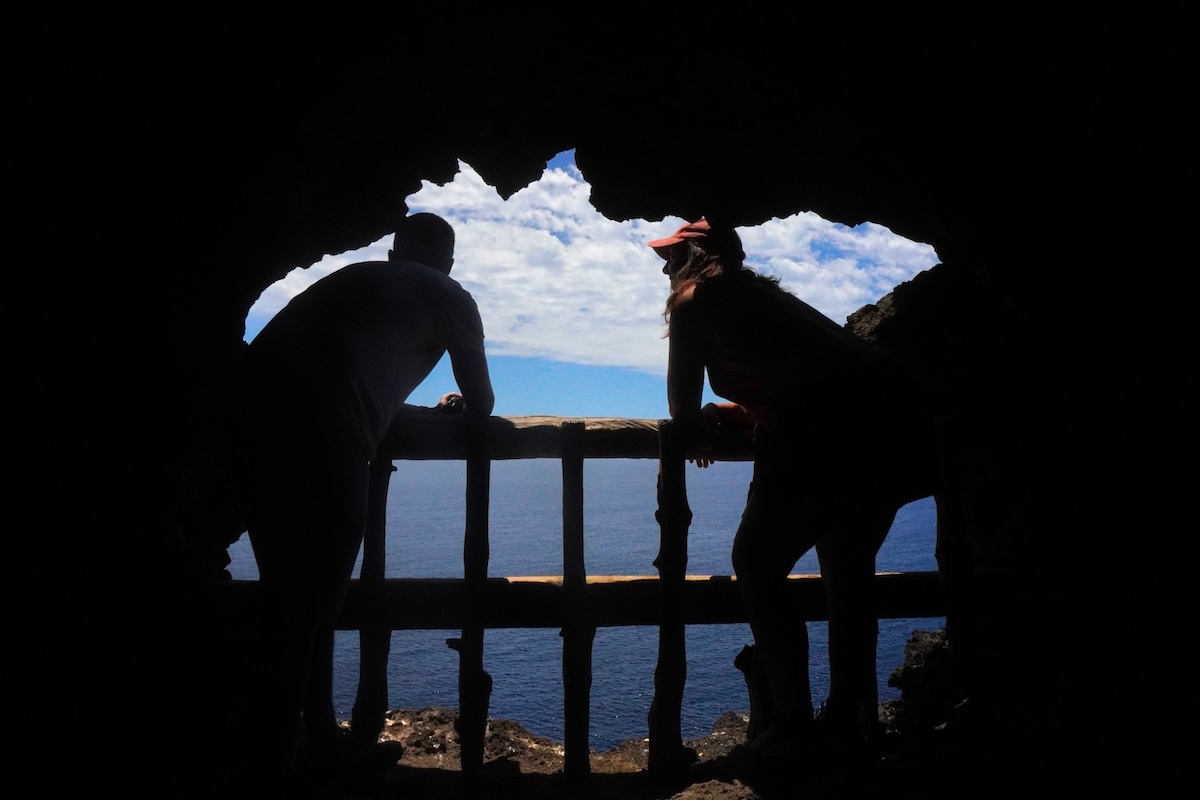
Useful apps for traveling to El Hierro
Here are some apps we recommend that will come in handy on your trip to El Hierro
- Windy (Android/iOS/Web): an essential app for our trips, especially in the Canary Islands. It lets you check forecasts for rain, clouds, wind, etc., to help you plan your days based on the weather. Obviously, the forecasts aren’t 100% reliable. It also shows available webcams
- Google Maps (Android/iOS): This is the app we use to save and organize all the places we want to visit or have already visited, as well as for GPS navigation in rental cars. You can view other people’s reviews of these places, photos, restaurant menus, contact phone numbers, and more.
- Maps.me (Android/iOS): An app similar to Google Maps but one that works offline (although Google Maps can also work offline) and, in many cases, has information that Google Maps doesn’t have, especially regarding hiking trails. It’s useful whenever you plan to hike a trail
- Tideschart (Web): to check the tides and decide when to visit the many tide pools on El Hierro.
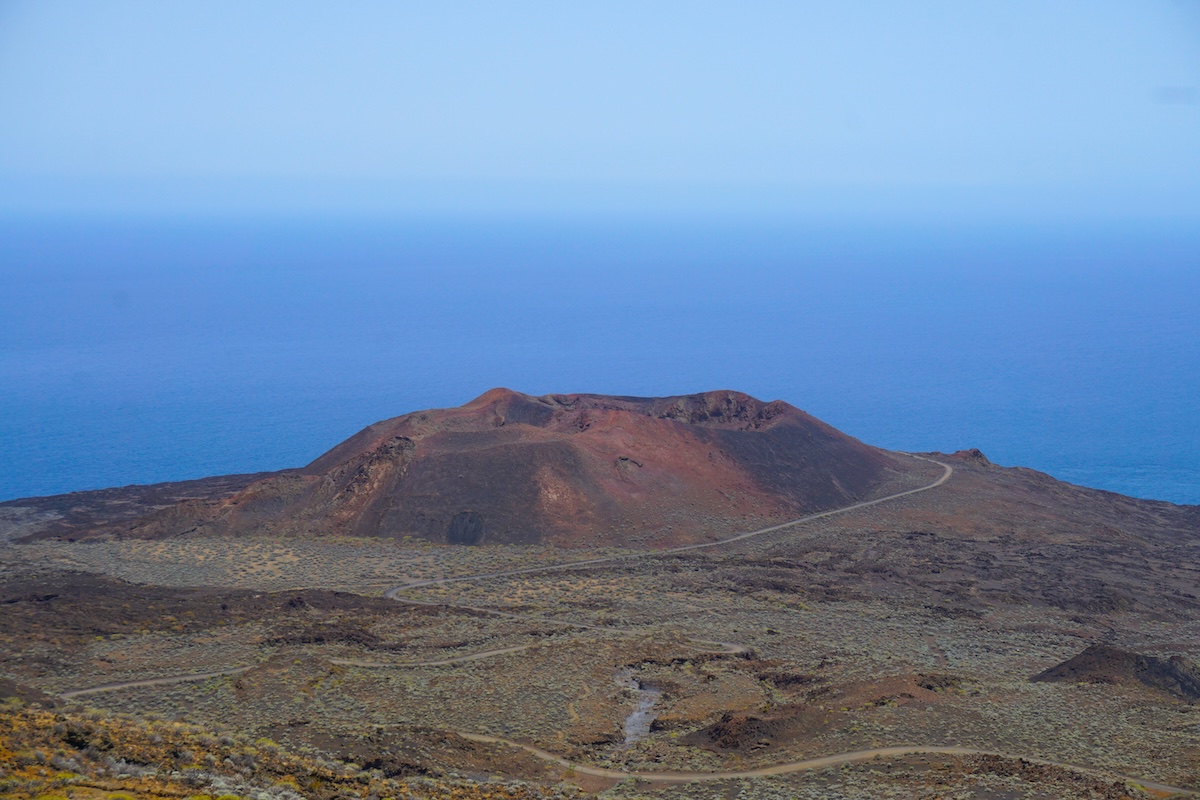
Tips for visiting El Hierro as a responsible tourist
- Respect the local flora and fauna. If you see a land or marine animal, do not touch it, harm it, scare it, or feed it. Do not interfere with their natural processes by contributing to changes in their behavior.
- Be respectful of El Hierro’s junipers (as well as the rest of nature); respect the fences and do not touch, hug, cut, step on, or do anything else that might affect their preservation.
- Don’t be complicit in animal abuse!
- Respect other people and the island: don’t play loud music on the beach (if you want to listen to music, use headphones), don’t leave trash behind, don’t throw away cigarette butts, etc. Leave the beach in better condition than you found it.
- Swimming is dangerous at some beaches due to strong currents. Don’t try to be a hero.
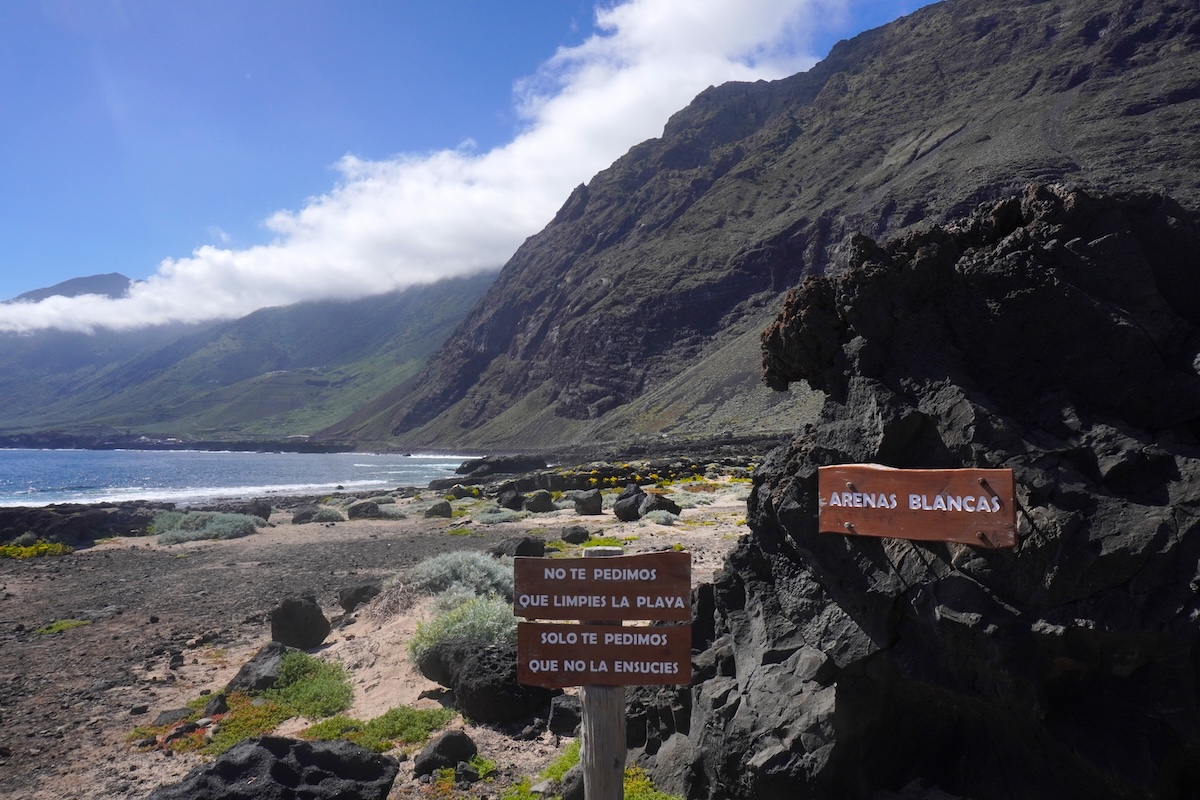
Checklist: what to take in your backpack/suitcase to El Hierro
Here’s a list of essentials you can’t forget to pack for your trip to El Hierro:
- A reusable water bottle like one of these to carry water with you all the time and void single-use plastic.
- Water Shoes like these ones, ideal for not hurting your feet when entering the water or not touching the ground. Keep in mind that in the Azores you will find lots of volcanic rock pools or pebble beaches so you will want to carry your water shoes at all times to make it easier to enter the water.
- Hiking shoes because the best way to get to know the Azores is by hiking the trails. At Randomtrip we use these Columbia ones.
- Snorkel kit (mask and tube) like this one, a must to take on this trip to contemplate the seabed.
- Water proof dry bag like this one, very useful for keeping your camera equipment, cell phone and wallet safe from getting wet on any boat trip (or even if the tide comes in on the beach).
- Fast drying towel like this one which doesn’t take a lot of space in your luggage
- A hat or a cap (like this one) and sunglasses to protect yourself from the sun
- Windbreaker waterproof jacket: like this one, to protect yourself from the sudden weather changes in Azores
- A good camera to register your adventures. At Randomtrip we carry a Sony ZV-E10 and a Gopro Hero12 Black (for underwater pictures)
- A Power bank: taking so many pictures will drain your batteries, so it’s always a good idea to carry a good powerbank. At Randomtrip we travel with these 2 (Anker 20000 mAh and Anker 10000 mAh), which allow us to charge both our phones and our cameras.
- First aid kit: In our first-aid kit there is always a medicine against seasickness (such as biodramine for seasickness on boats), antibiotics, anti-diarrhea medication (and a probiotic to recover more quickly), antihistamines, painkillers and antipyretics
- Mosquito repellent: like this one, it should have at least 15% deet
- Sun screen: always look for a Coral Friendly Sunscreen, i.e. one that protects your skin without harming marine ecosystems by avoiding ingredients such as oxybenzone and octinoxate, which are harmful to corals. Nor that it has been tested on animals.
- Travel insurance: always travel with travel insurance. We collaborate with different travel insurance companies so that you can get a discount with some of them:
Everything we’ve told you is sure to make you even more eager to discover the beautiful island of El Hierro, but to truly understand why it has become one of our favorite Canary Islands, you simply have to set foot on it…
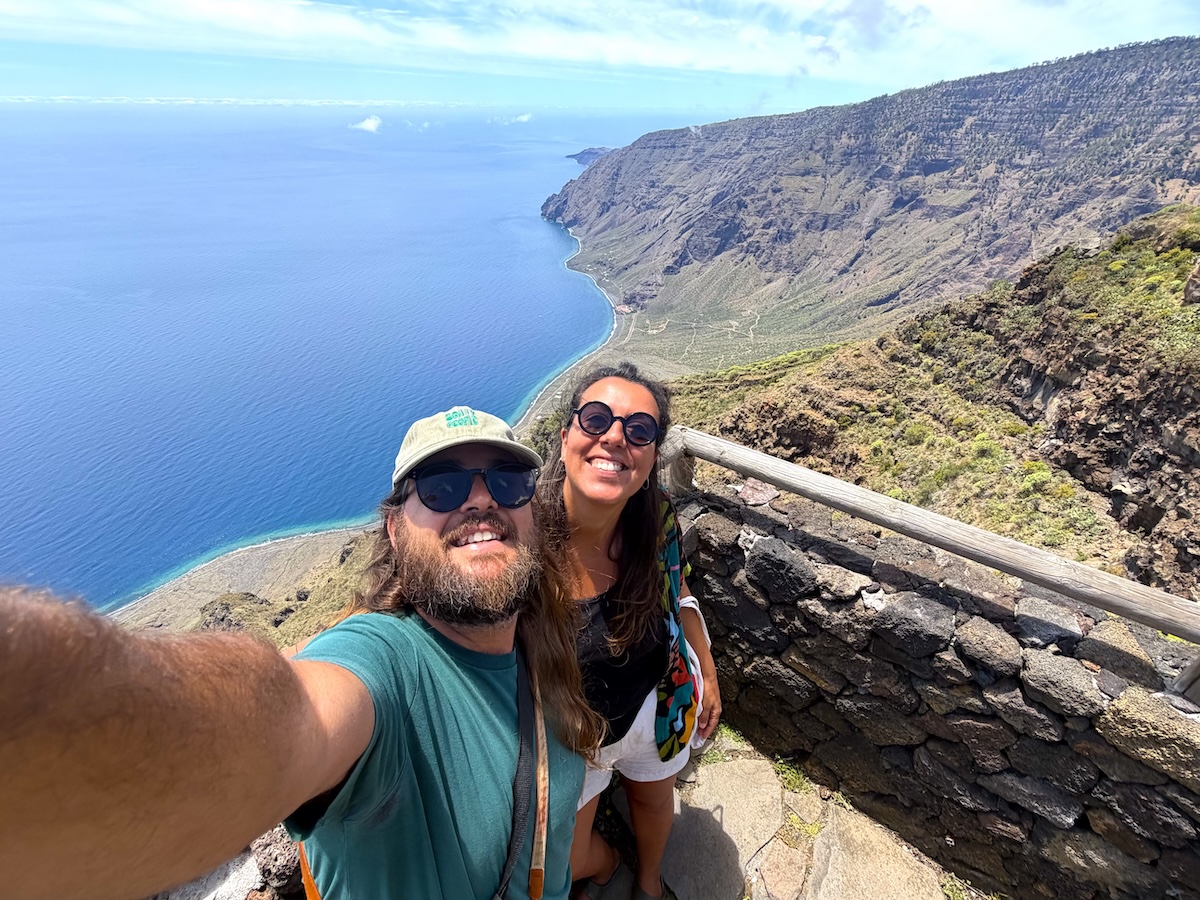
What are you waiting for? Come discover one of the most beautiful Canary Islands! Have a great trip!
