

Furnas is one of the oldest areas on São Miguel, formed approximately 750,000 years ago, and the most visited on the island. It is also a place unlike any other in the world. Once you arrive, you’ll understand why. The “Vale das Furnas” (Furnas Valley) is located in the crater of the Furnas volcano, one of the three still active volcanoes and the largest on the green island, where volcanic activity is evident in everything you are about to experience—through sight, smell, and even taste.

In this guide, we’ll tell you everything you need to know about visiting the Furnas area on São Miguel: what to see and do, how to enjoy its hot springs, where to try its geothermal cuisine, the best viewpoints, and the best places to stay if you want to spend a few nights in Furnas during your trip to São Miguel.
Basic facts for traveling to Furnas (São Miguel)
Language: Portuguese
Currency: Euro
Population: 1.399 (in 2021)
When to visit: Unlike other parts of the island, Furnas can be visited year-round, since the hot springs, in particular, take on a special charm on cloudy days, when it rains, and even when the temperature is a bit cooler. We tell you more (including a table with climate data and the number of rainy days per month) here..
How long to stay: In Furnas, you’ll need at least one day to enjoy the hot springs, try the geothermal food, take in the views from the lookouts, and even go for a hike.
How to get there: Furnas is located in the eastern part of the island, and although getting there isn’t difficult, the two access roads (one from the south and one from the north) are winding and the drive takes some time. The easiest way is by rental car (otherwise, you can take public buses, book a transfer, or pay a taxi)
Where to stay: At Randomtrip, we stayed at Quinta da Mó and loved it. Other options if you want to enjoy the hot springs more are the famous Terra Nostra or the Octant Furnas. More places to stay at Furnas here
Which tours to book: If you’re not renting a car, you might want to visit Furnas on an organized tour, such as this one, which takes you to several places in eastern São Miguel o this other one.
How to get around: In Furnas, you can reach many places on foot, although to get to the viewpoints and explore the rest of the island, the best option is to rent a car. At Randomtrip, we rented from Autatlantis and loved it: new cars and the best deductible policy. Find your rental car at the best price on this DiscoverCars comparison site. More info on how to get around here
How much it costs: Starting at 70€/day per person (approx.), including flights, rental car, private accommodation for 2 people and meals
Internet connection: If you are visiting for a few days, your phone supports eSIM and you don’t want to complicate things, we recommend Holafly eSIM (unlimited data, 5% discount with the code RANDOMTRIP) or Airalo eSIM (limited data, but cheaper, 15% discount with the code RANDOMTRIP15). Otherwise, the cheapest way is to get a local SIM (the main companies are Vodafone, Meo and Nos). More info here
Time zone: UTC +0. The time in the Azores archipelago (Portugal) is one hour behind the Portuguese mainland
Azores travel insurance
Do you know what cannot be missing in your luggage? A good travel insurance! We are affiliates of several specialized travel insurance companies and you can get a discount in some of them if you book with us:
Appart from the medical assistance in case something happens when you visit Portugal, the insurance can also cover anything that happen while you get into adventures like hiking, kayaking, snorkeling and diving. Also, if something happens to your luggage (damage, theft, delays, losing it) or if your flight is cancelled or delayed (or, if because a delay you lose another connecting flight), a travel insurance can also help
Carefully read the terms and conditions of each policy and hire the insurance that best suits your needs.
How to Get to Furnas and Where Furnas Is Located
Getting to Furnas from anywhere else on São Miguel is relatively easy if you have a rental car: Furnas is located in the eastern part of the island, inland, and has two access roads (one from the north—EN2-1A—and another from the south—EN1-1A). Both roads are full of curves, so you should drive calmly and slowly; in addition, it’s common to suddenly come across cows and/or farmers driving their tractors.
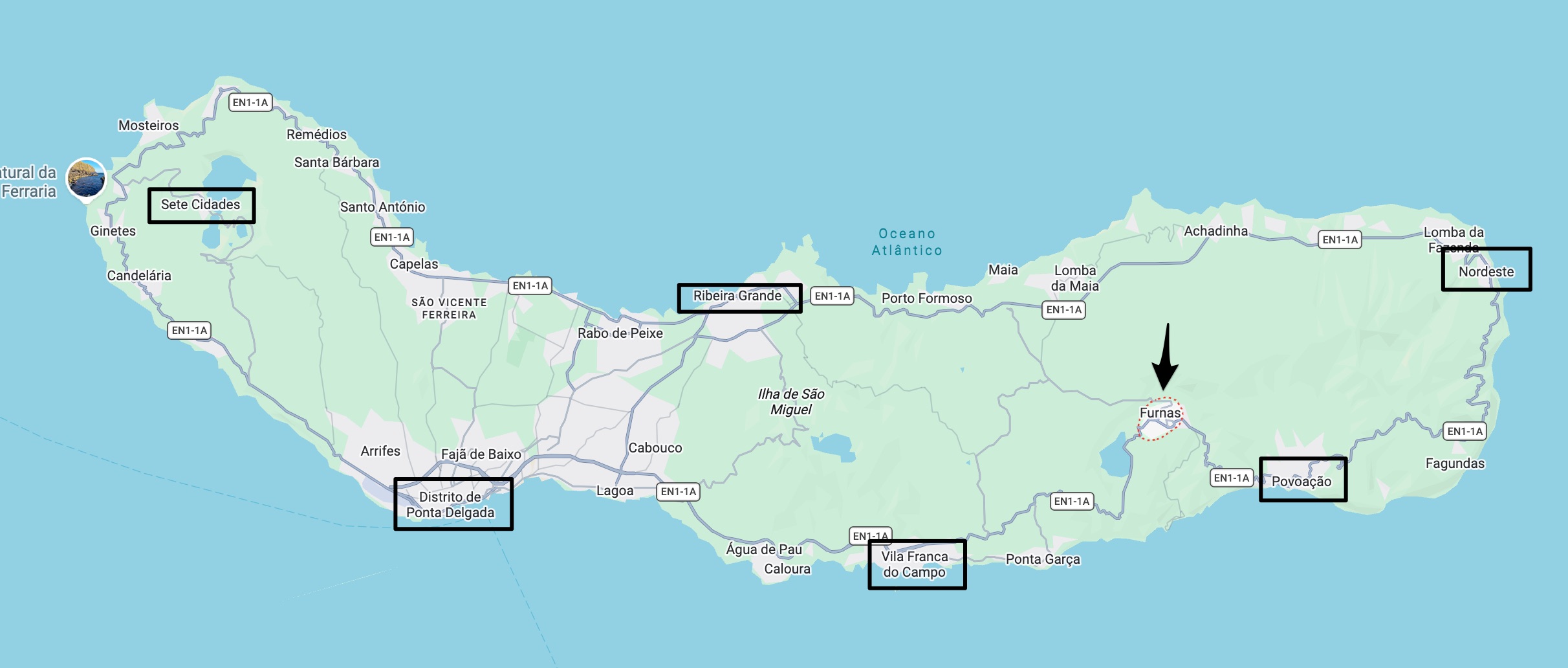
The easiest way is to plan your route from your current location using Google Maps, although here are the estimated driving times from other locations on São Miguel:
- From Ponta Delgada/airport to Furnas: 45–50 min
- From Ribeira Grande to Furnas: 30–40 min
- From Nordeste to Furnas: 30–40 min
- From Povoação to Furnas: 20–30 min
- From Vila Franca do Campo to Furnas: 25–35 min
- From Sete Cidades to Furnas: 1 hr 10 min–1 hr 20 min
If you don’t rent a car in São Miguel, there are other ways to get to Furnas:
- By bus: You can reach Furnas by bus from other parts of the island, although the schedules are limited and you’ll have to work around them. You can view the available routes and schedules here
- On a tour: If you’re staying in another part of the island, don’t have a rental car, and want to visit Furnas without too much hassle, the easiest and most affordable option is to book a tour like this one, which takes you to several places in eastern São Miguel or this other one.
- Book a transfer: If you’d like to book a transfer to Furnas directly from the airport or from other parts of the island, you can do so here in advance (prices starting at 70€ per vehicle from the airport or Ponta Delgada)
- Taxi: You can also get there by taxi; the fare from Ponta Delgada or the airport is between 50 and 70€.
Things to see and do in Furnas
Below, we’ve listed everything there is to see and do in Furnas. To make it easier for you, we’ve organized the attractions into 5 areas or categories:
- The Furnas lagoon (which is divided into two areas: the south and the north)
- The Furnas village
- The hot springs
- The viewpoints
- The Ribeira Quente area (just a 10-minute drive away)

1. Lagoa das Furnas area
And while the volcanic lakes are one of São Miguel’s main attractions, Lagoa das Furnas is a prime example of their allure.

This imposing lagoon also has a legend:
Once upon a time there was a boy who lived in a village where calm, peace and tranquility were the norm. Like every morning, the boy went to the fountain to collect water, but that morning something had changed: the water in the fountain was salty and undrinkable. He ran back to the village to tell everyone but no one believed him. No one except his grandfather.
Grandfather and grandson returned to the spring and found that the situation had worsened: the fish that used to swim in the small spring were floating, lifeless. They ran to tell the people about it, saying how imperative it was to go up the mountain in search of new land, but nobody believed them. Both climbed to the top of the mountain and saw a new island that had been born from the sea, it was the enchanted island of the Sete Cidades (yes, the same island of the legend that we told you before in this guide), and that was a sign that augured terrible changes. They went back to tell the people about it, but nobody believed them. A few days later, grandfather and grandson, together with all their livestock, moved to a neighboring village.
Weeks passed and, one day, the two returned to the village but… the village no longer existed. In the place of the village there was water, only water, a giant and enormous lagoon, the Lagoa das Furnas. It is said since then that the people still live under and around the lagoon, invisible, and that is why we see the bubbles of volcanic gas and, sometimes, flashes: it is them cooking…

There are two main areas of the lagoon that you can visit: the south and the north. Below is a list of all the places you can visit. To access the south area, you can park for free here, while for the north area, you’ll need to park here for €3 per person (or walk in for free).
Capela de Nossa Senhora das Vitórias
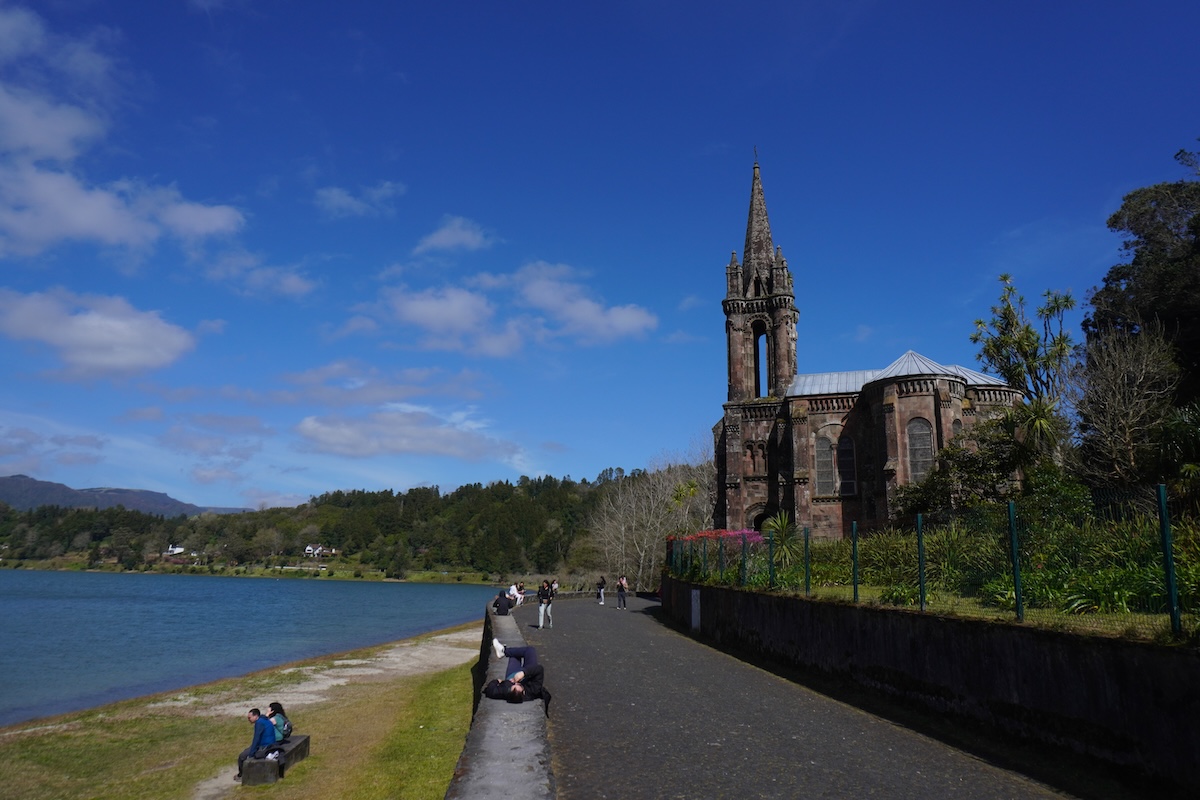
As we approached the lagoon from the south to see if we could find any traces of the legend, we came across a stunning church: the Chapel of Our Lady of Victories.
Located next to Lagoa das Furnas, this Neo-Gothic cathedral was built in 1886 as a testament to the faith of José do Canto, a native of São Miguel, when his wife fell ill with a serious disease. This symbol of love is built entirely of volcanic basalt and is open to visitors daily from 10:00 a.m. to 5:00 p.m. (until 6:00 p.m. in the summer); admission is €3 per person.
The chapel is located near José do Canto’s summer home, and both he and his wife are buried there.


Mata Jardim José do Canto
José do Canto also invested part of his money in creating the Mata Jardim José do Canto, a botanical garden featuring trees and plants from all over the world, designed by the famous French landscape architect Barillet-Deschamps. The chapel mentioned in the previous point is located within the garden, and next to it we can also see two houses, which are currently rented out as rural accommodations (Casa da Lagoa and Casa dos Barcos).


The garden has plenty to see (here you can view the official brochure with some information), including the Salto do Rosal (an impressive waterfall that takes about an hour round trip from the entrance), a Sequoia dating back to the time of José do Canto, the Vale dos Fetos (Valley of the Ferns), which has been reconstructed, as well as a huge variety of camellias.
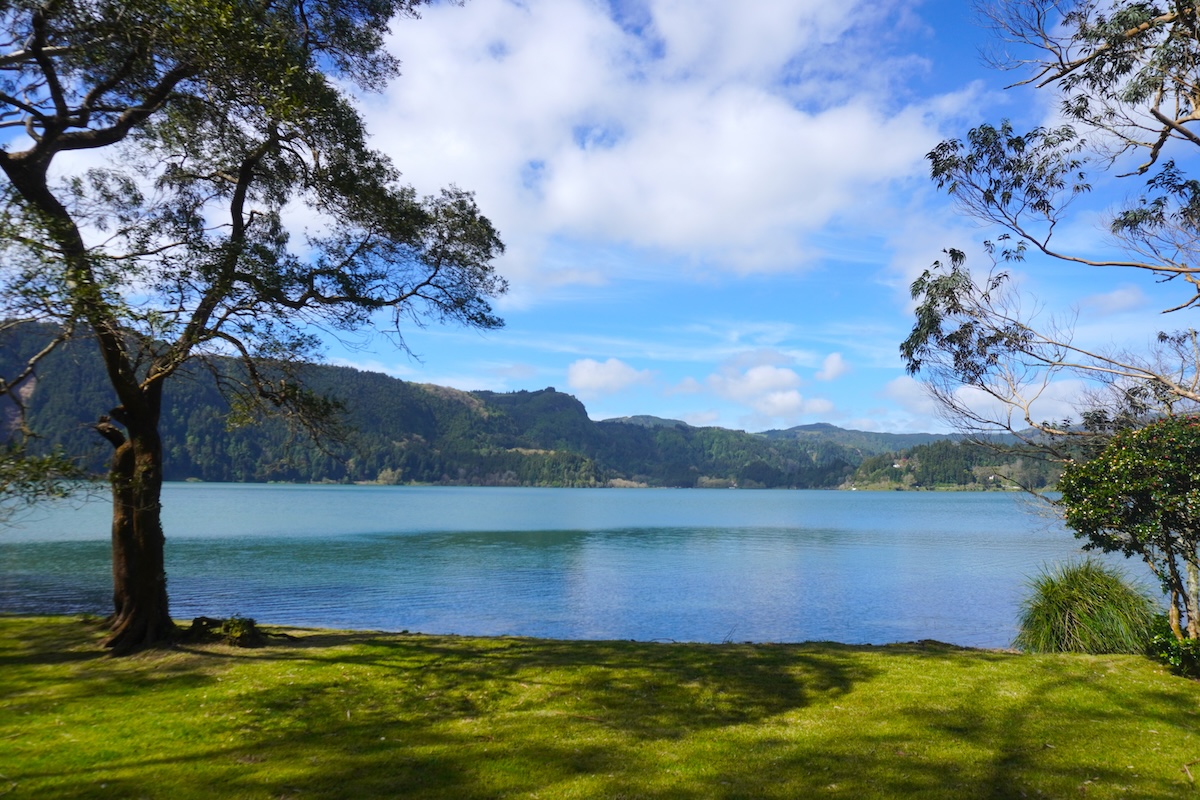
Admission is €5, and it is open from 10:00 a.m. to 6:00 p.m. (last admission at 4:20 p.m.)
Centro de Interpretação Ambiental das Furnas (Furnas Environmental Interpretation Center)
Also in the southern area, just a short walk from Mata José do Canto, we consider the Furnas Monitoring and Research Center a must-see, where you can learn more about the volcano’s history and the protection and restoration of ecosystems—not to mention that it’s architecturally stunning.

Inside, you can watch a comprehensive documentary that explains the history of the area: why people settled in this volcanic region (it was due to the availability of water), and the discovery of the diverse waters (hot, cold, iron-rich, acidic…), which make this area unique in the world. The people who live in Furnas live in constant contact with the volcano, always at risk: they hear the tremors, drink its waters, smell the fumaroles, and observe the vegetation (or the lack thereof). The danger is real, as volcanic activity is constantly monitored, though those who live there say the benefits outweigh the dangers.


In addition to the documentary, there are several exhibits where you can learn about the formation of the Azores, volcanology, and the history of the Furnas area.


Admission is €3, and it is open from 10:00 a.m. to 6:00 p.m. (last admission at 5:30 p.m.)
Wooden figurines: Gandalf and various animals
Also in the southern area—and as a fun fact—as you walk from the parking lot toward the other attractions in this area, you’ll come across a garden featuring several wooden figures, such as this Gandalf, this beaver, this whale, and this puppy.


The fumaroles of Lagoa das Furnas and the Cocido de Furnas
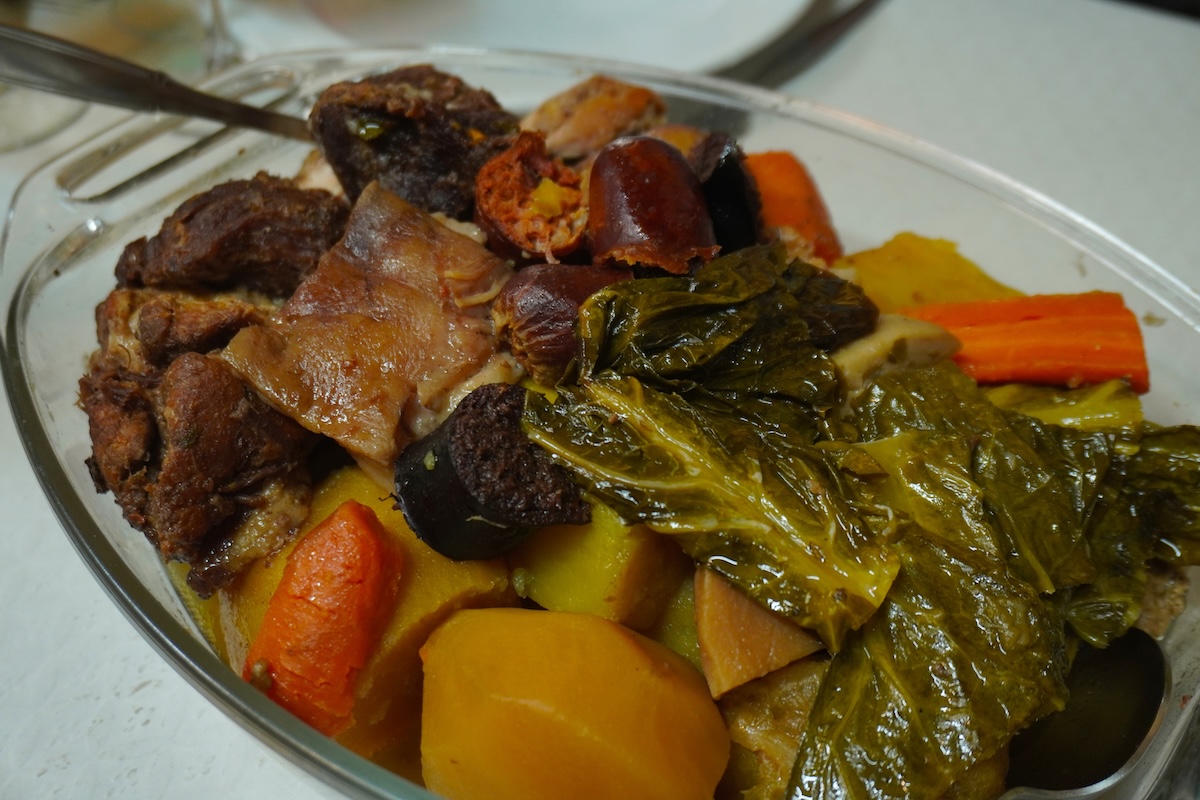
Once in the northern part of Lagoa das Furnas, we can see the fumaroles and smell their characteristic sulfur odor. We can also see some holes in the ground that serve as natural cooking pits where the famous dish is prepared: Cocido de Furnas!

After adding all the ingredients typically found in a “cozido à portuguesa” (meat, sausages, vegetables), the pot is wrapped in a linen cloth, and a man lowers it into a hole in the caldera, where volcanic heat will cook it. It takes several hours to cook; typically, the stew served in Furnas restaurants at lunchtime (starting at 12 p.m.) has been in the cauldron since 4 a.m. You can watch this process of removing the stews from the cauldrons: just be in this northern area of the lagoon around 11:30 a.m.

Please note! To access the area with the fumaroles and the “caldeiras” (cauldrons) where the stews are cooked, you must pay €3 per person if you are not a resident of the Azores. Parking is available here.
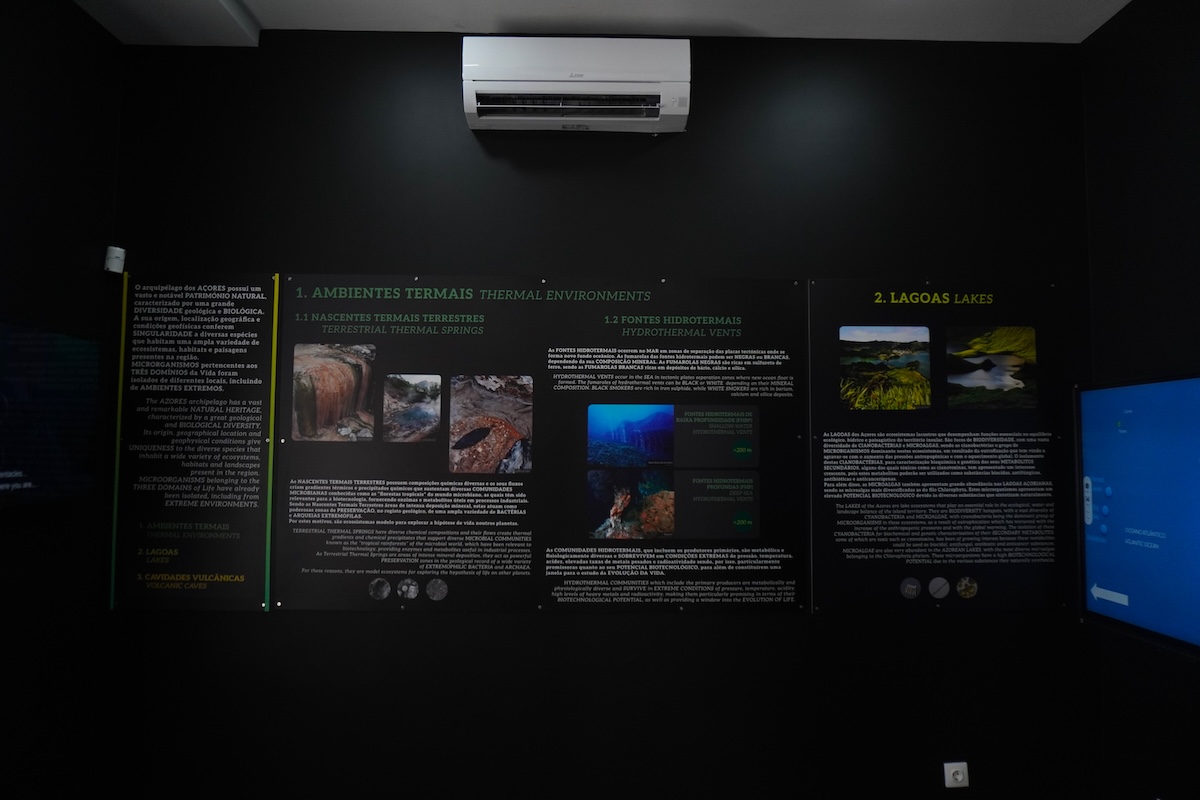
They also rent kayaks for exploring the lagoon; they cost €10 per hour per person:

You can try cocido at several places in Furnas; below is a list of the most well-known/recommended restaurants where you can try it.
You can also make a “DIY cocido” in Furnas and take it home—that is, you prepare it yourself in your pot and simply ask the staff to lower it into the pit so it can continue cooking there.

Parque Grená
Next to the Fumarolas is Parque Grená. Formerly a summer home, it changed hands several times before falling into disrepair, until it reopened in 2019 as a “natural park” (it remains privately owned).
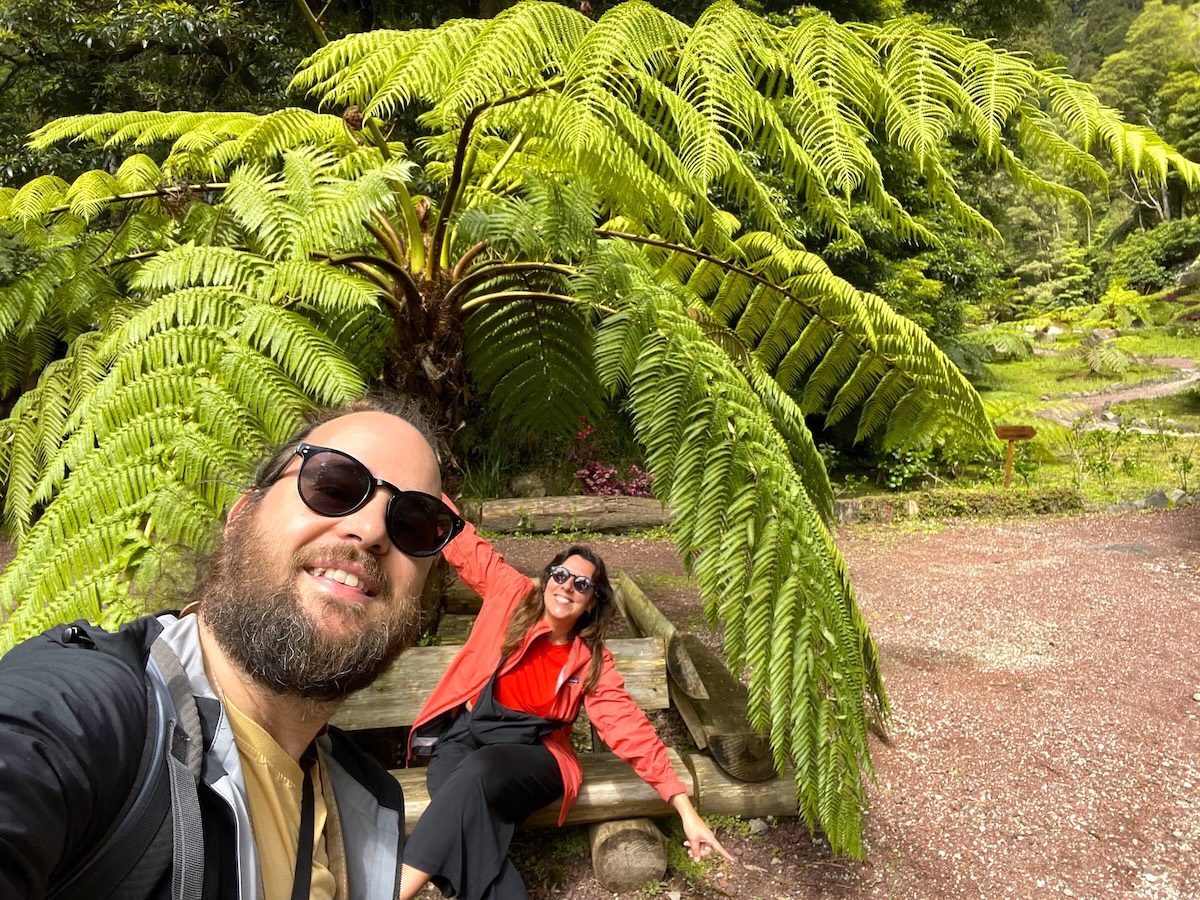
In our opinion, the entrance area is a tourist trap (with animals in captivity, unfortunately), and we find the admission price excessive for what it offers, but the trails and lookouts inside the park are indeed beautiful. If you decide to pay the entrance fee, we recommend spending at least an hour exploring the trails (though we have to say they aren’t very well marked) and stopping at the lookouts and waterfalls.

Here’s a sneak peek at some of the spots you’ll find in Parque Grená to whet your appetite:
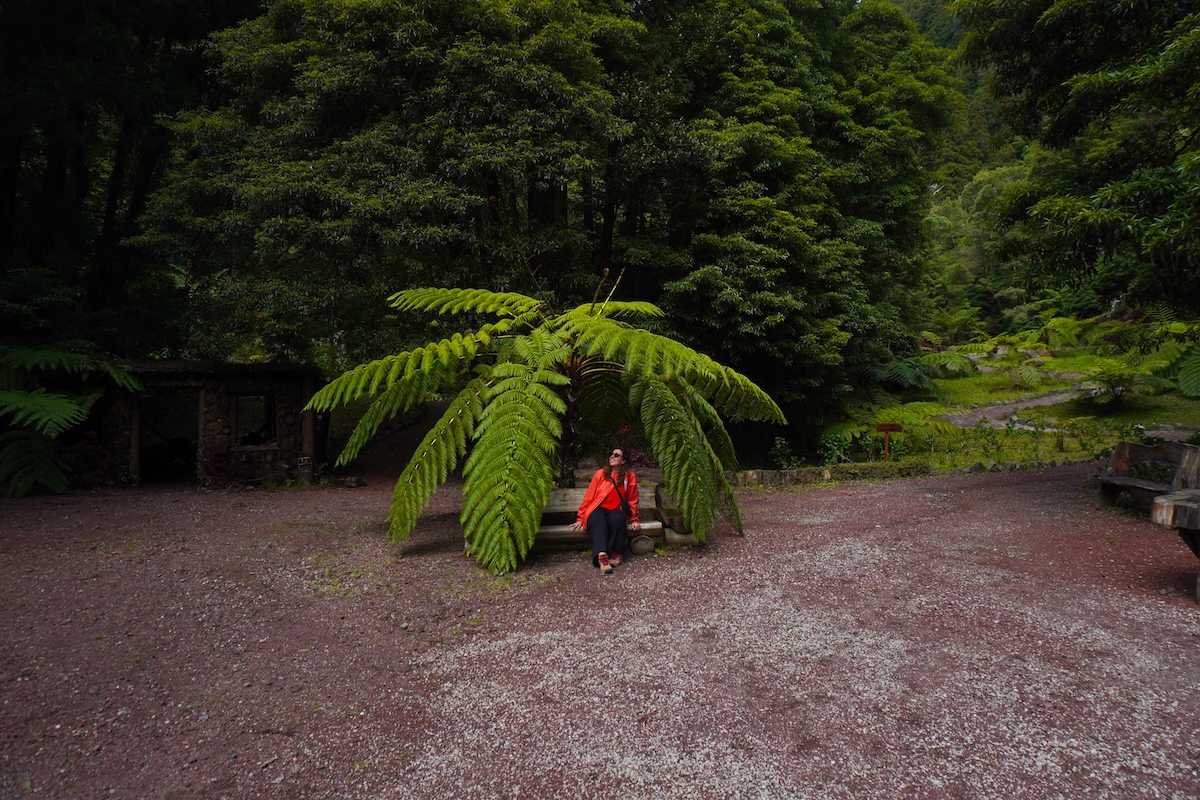


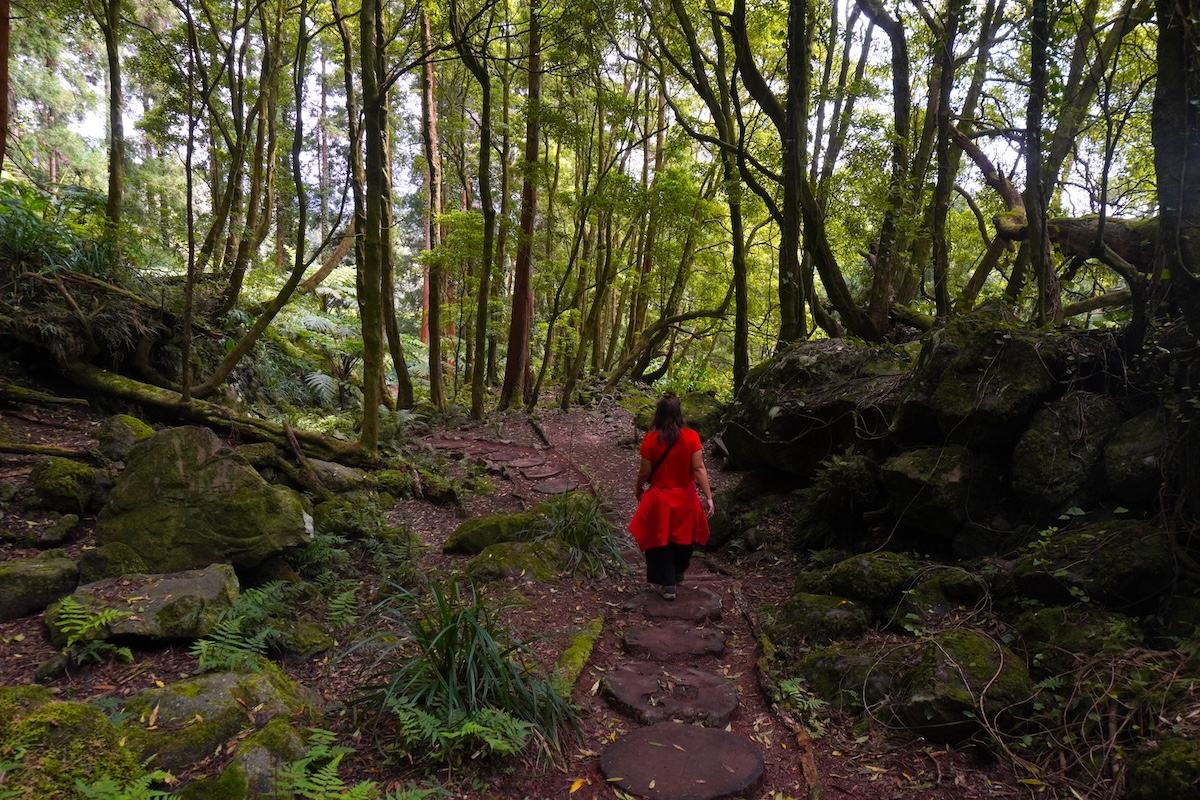
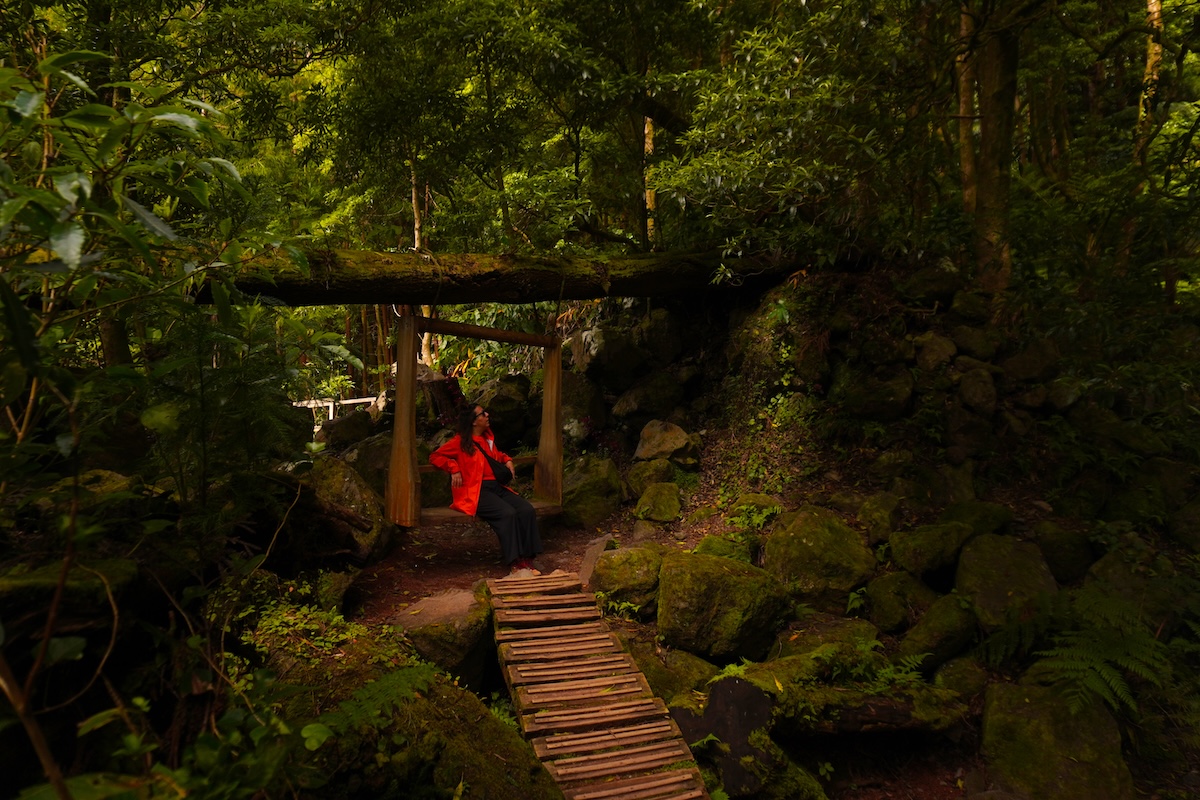


Inês even took a quick dip in one of the waterfalls, and near the entrance there are some artificial hot springs that are a popular spot for photos. Don’t forget to visit the ruins of the old house and the waterfall (Poço da Inglesa).
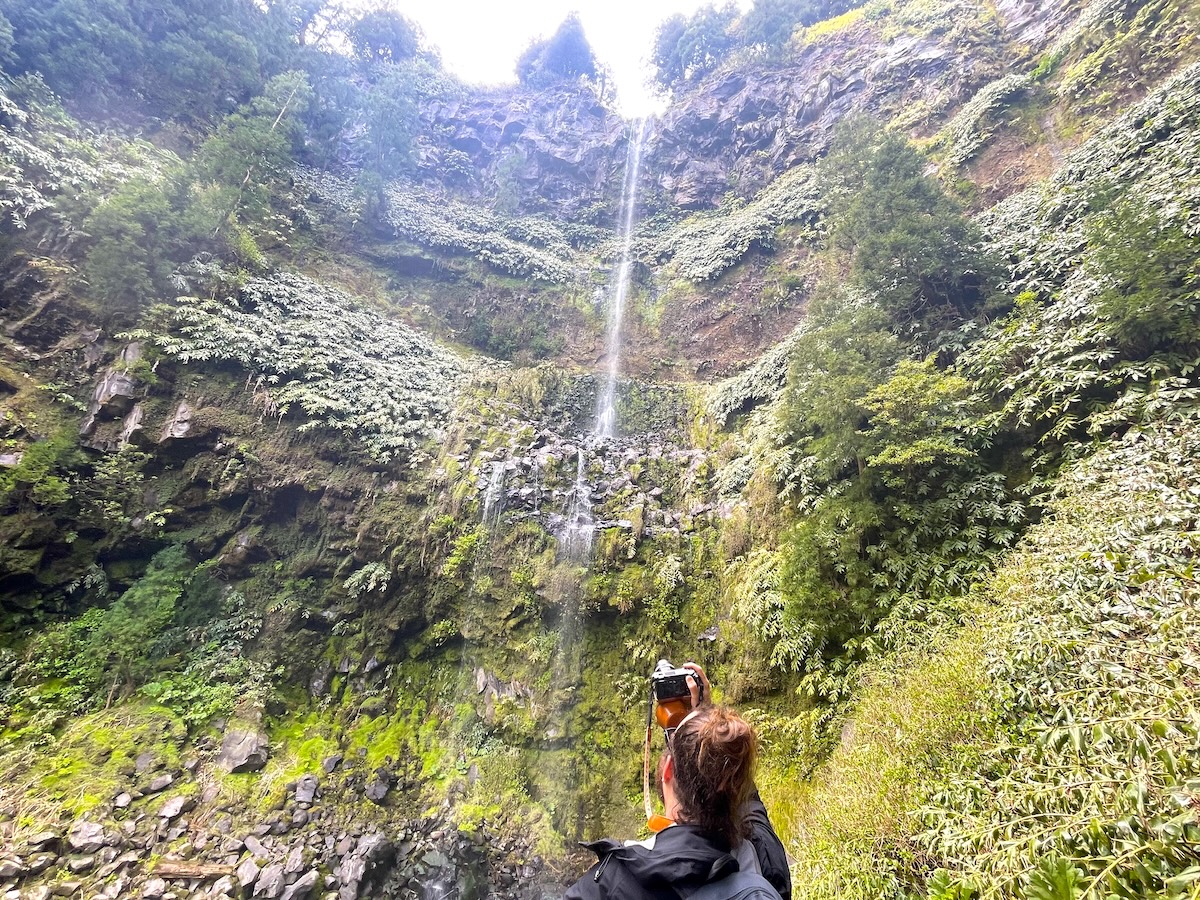
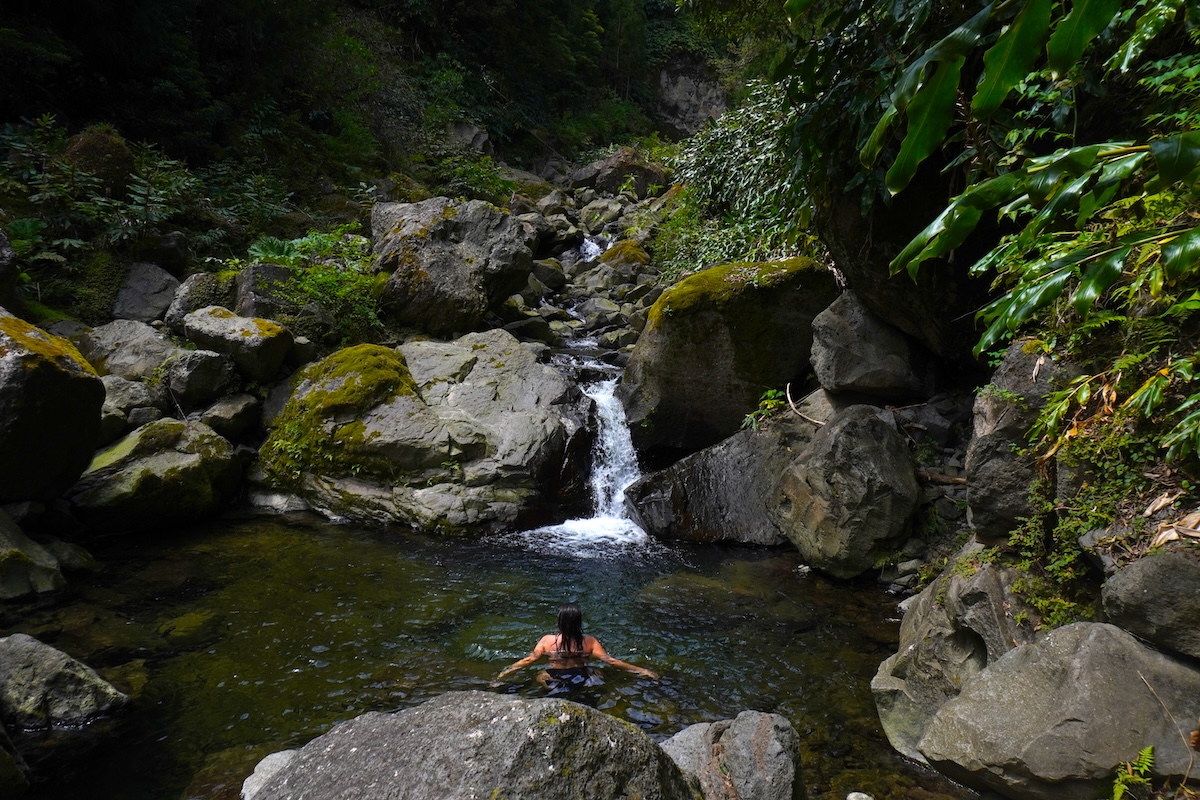


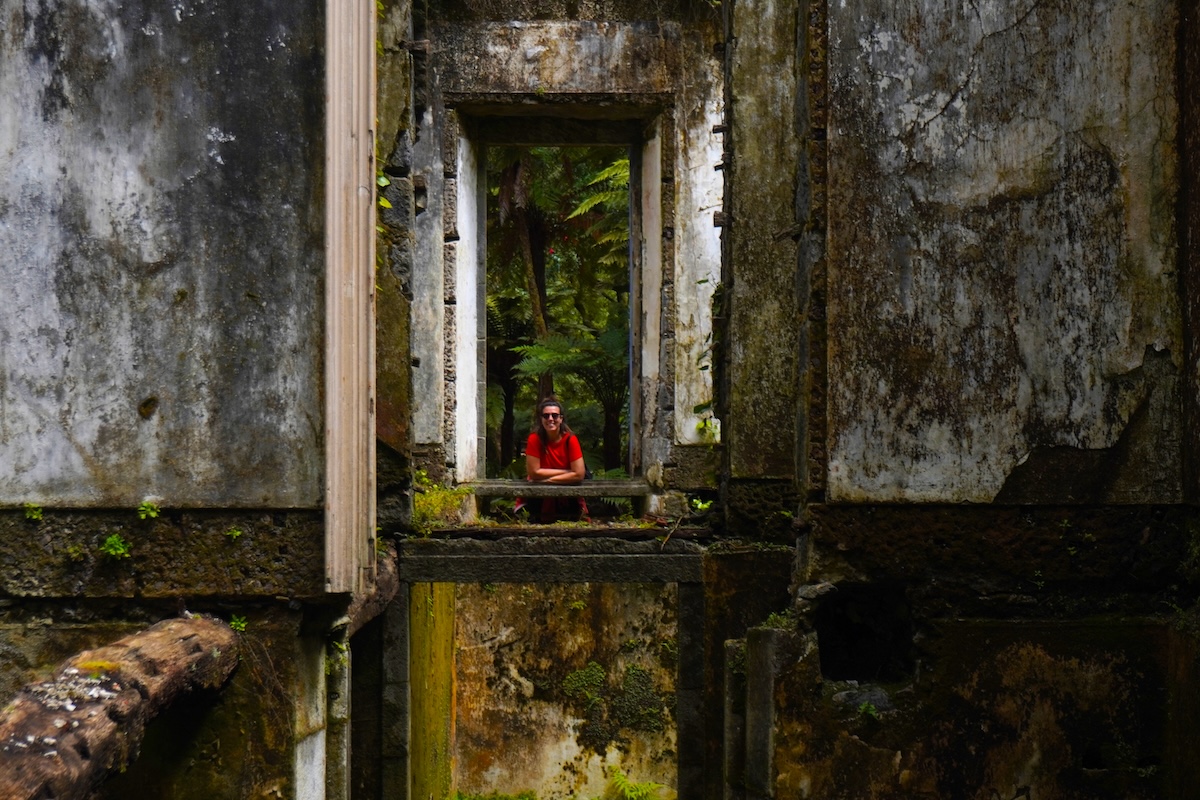
Admission is €10 per person (you must first pay the €3 fee to access the Fumarolas), and the hours are from 9:30 a.m. to 6:30 p.m.
PRC06 SMI Hiking Trail
If you want to enjoy Furnas’s natural beauty even more and visit all the places mentioned above without using a car, you can take the PRC06 SMI hiking trail (official information here, PDF brochure in Portuguese and English here). It’s a loop trail that circles Lagoa das Furnas, passing by all the places we mentioned earlier. It starts and ends in the village, but if you prefer, you can just hike the section that circles the lagoon.
Randomtripper Difficulty Scale: easy; it’s a fairly flat and straightforward route. The entire route is 9.5 kilometers long and takes about 3 hours to complete (not including any stops you might make at the Interpretation Center or in the parks).

2. Furnas Village area
It is impressive to arrive at Furnas village, located in the caldera of a volcano, and see how its inhabitants live there so peacefully, among the calderas and fumaroles of a dormant but active volcano. We could say that the village of Furnas is one of the clear examples of the resilience of the Azorean people, in this case in São Miguel (each island has its particularities).

Here are the main sights to see and places to visit in Furnas:
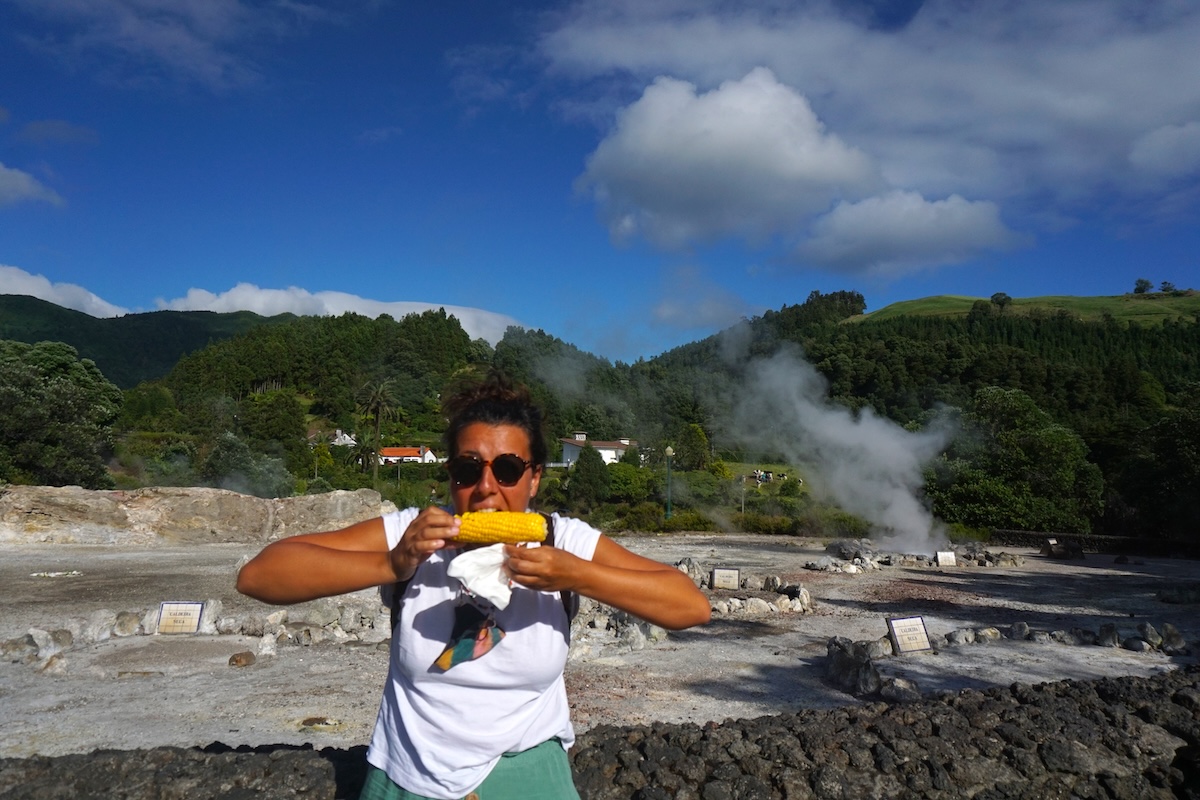
The Furnas Caldeiras and Boiled Corn on the Cob
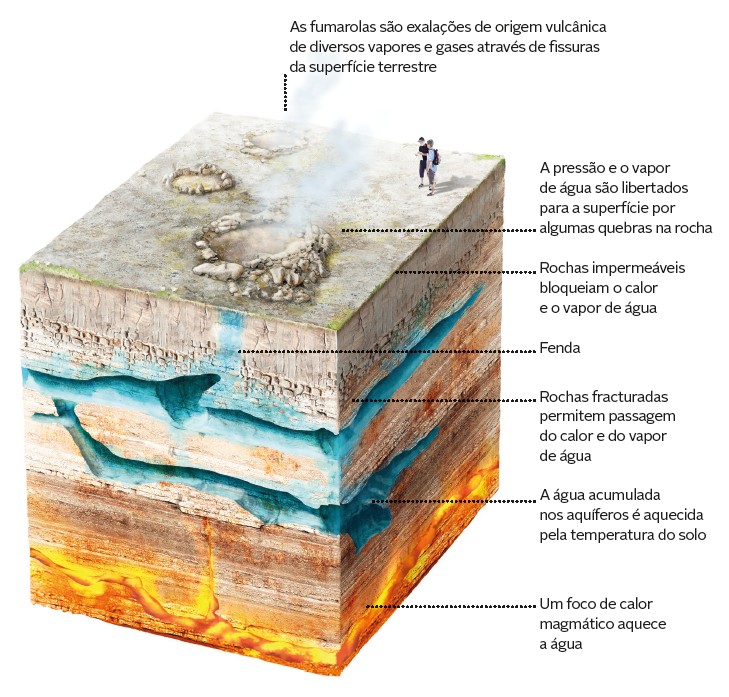
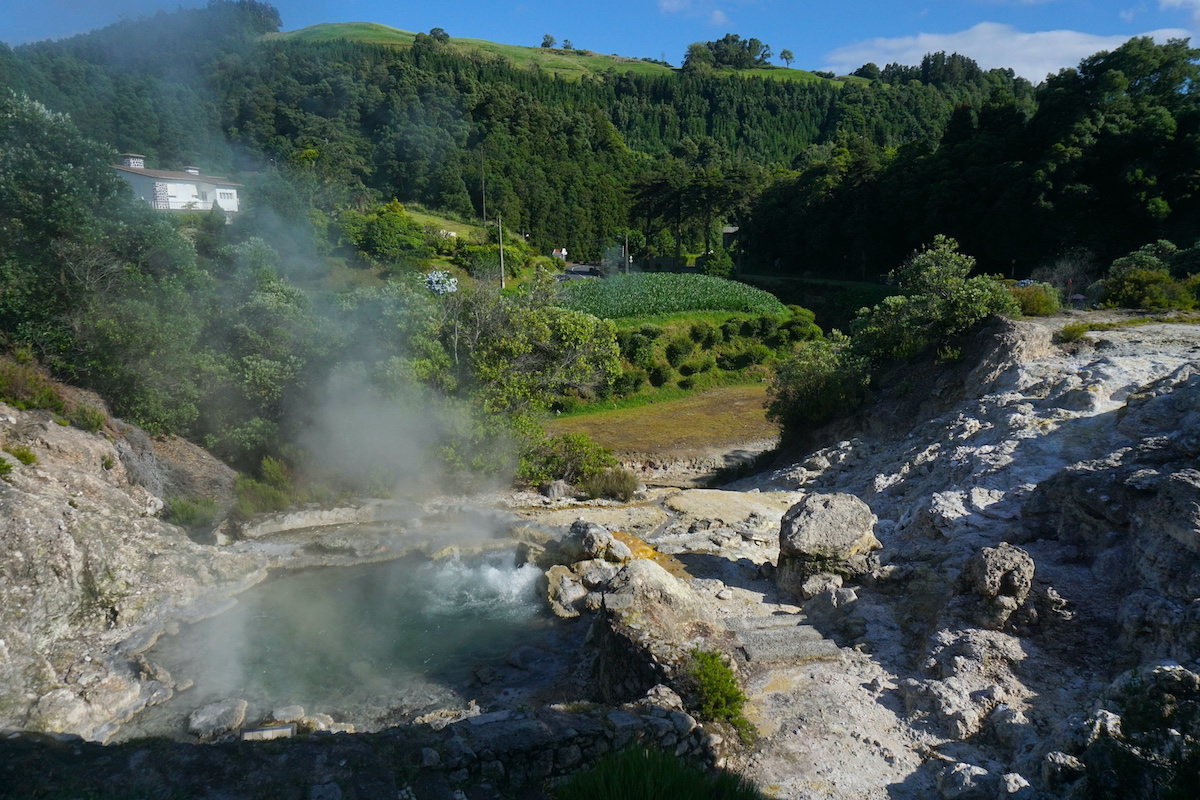
You can see the water boiling as a result of volcanic activity simply by strolling through the town center, and the steaming vents of the caldeiras of Furnas are visible from any of the overlooks we’ll mention later. These groups of calderas are known as “fumarole fields” (there are 4 in total in the Furnas Volcano area)

Because the magma is closer to the surface, it heats the water and the earth, creating mineral and thermal waters, and these hydrothermal vents (with outlet temperatures around 100°C) that release mainly water vapor and carbon dioxide (and to a lesser extent, hydrogen sulfide, which is what gives off the characteristic smell of sulfur or “rotten eggs”)

You can stroll around the area with complete peace of mind (being careful not to get too close and paying attention to the signs, as some of the water emerges at extremely high temperatures) and admire the scenery.

OMIC (Observatório Microbiano dos Açores – Azores Microbial Observatory)
The OMIC (Azores Microbial Observatory) is a small museum (a science and technology outreach center) focused on microbiology. It is an excellent place to learn more about the microorganisms on our planet, and especially those found in this volcanic region of the Azores.

The OMIC is truly a fascinating place where you can learn a lot: it has a room with microscopes where you can examine samples from the fumarole fields, observe the different types of life that inhabit various areas of the volcano (lakes, hot springs, etc.), and even learn how to wash your hands and check (using a gel and a light) whether you’re doing it right:

Admission to the OMIC costs €2.50, and its hours are:
- Winter (September through June): Monday through Friday, 10 a.m. to 5 p.m. (closed Saturdays, Sundays, and holidays)
- Summer (July and August): Monday through Friday from 10 a.m. to 5 p.m., Saturdays from 2:30 p.m. to 6 p.m. (closed Sundays and holidays)
Jardim da Alameda and Jardim das Quenturas
The Jardim da Alameda is an area in Furnas where you can take a leisurely stroll and enjoy the view of the river and some of the attractions along its banks, such as the bandstand, the artificial waterfall (and, unfortunately, an aquarium as well), and the Poça da Tia Silvina (which we’ll tell you more about below—a place where you can soak your feet in the hot springs for free).


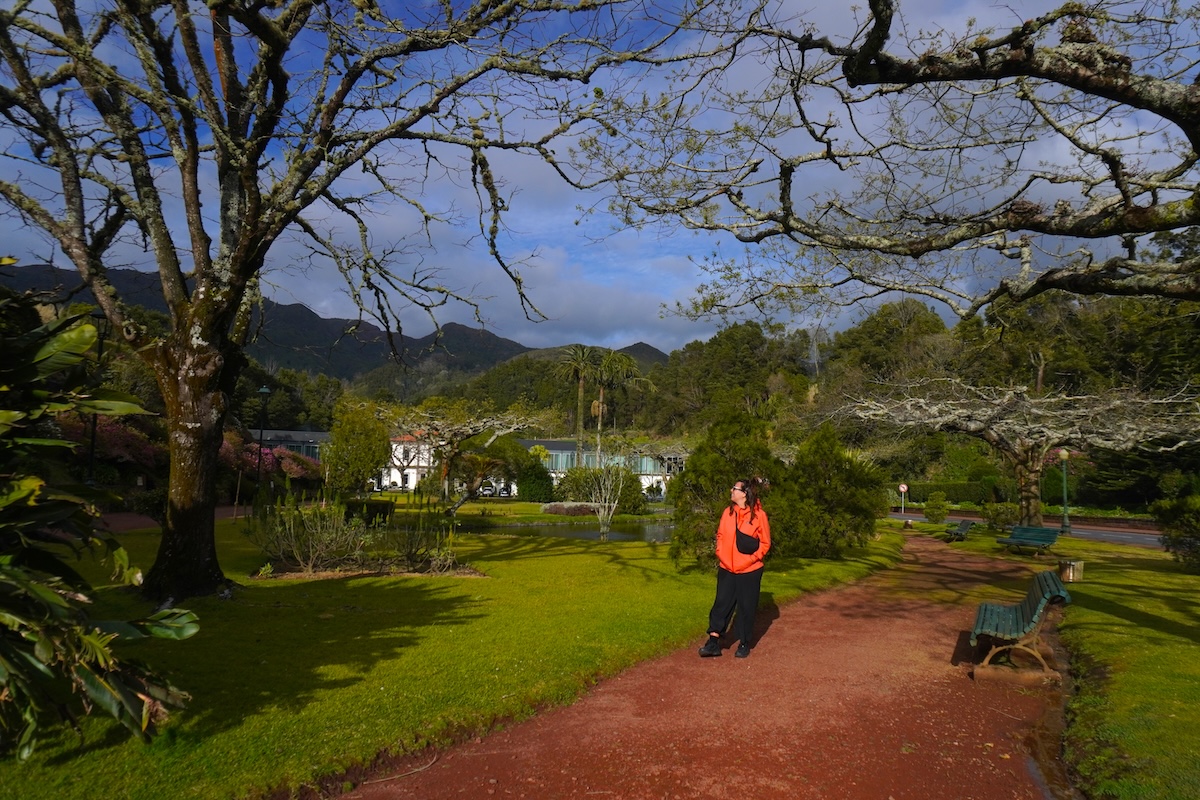
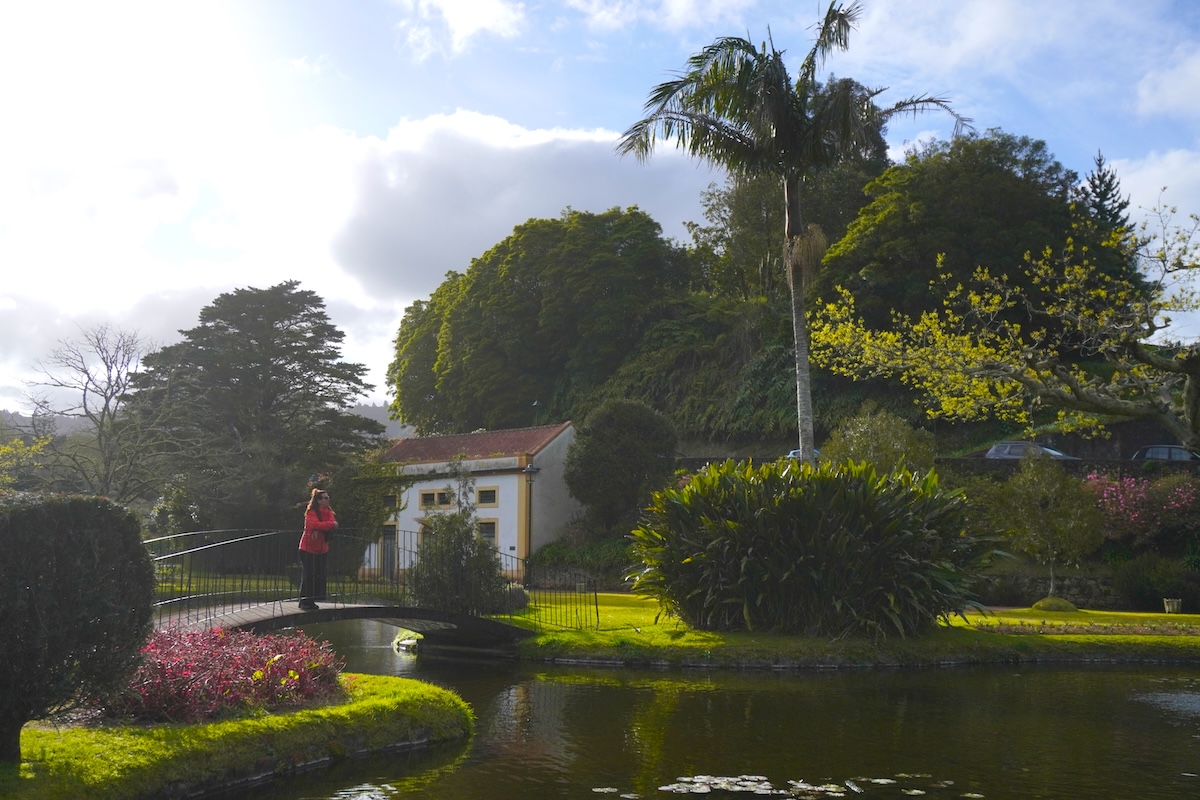
If you keep walking a few meters, you’ll come to the Jardim das Quenturas, a beautiful park with a lake surrounded by various hot springs


Casa Invertida (Upside-Down House)
Another interesting fact about Furnas is that one particularly windy day, a house was turned upside down… Just kidding! The Upside-Down House is a curious building (very close to the Quinta de los Cócteles) that belongs to the local power company. Go check it out, but don’t act too silly—it’s right next to the Municipal Police station.

Try the Furnas volcanic stew at one of its restaurants
As we mentioned earlier, the famous “Cozido das Furnas” is cooked for hours in the steam vents in the northern part of Lagoa das Furnas, so one of the most traditional experiences when visiting Furnas is to try it at one of the restaurants. Here is a list of the most well-known and highly recommended restaurants where you can do just that (we recommend making a reservation!):
- Tonys: it’s usually pretty crowded
- Vale das Furnas: next to the Furnas campground, recommended by our friend Iolanda, who says it offers good value for money
- Caldeiras e Vulcões, which offers vegan stews
- Baños Férreos, which we tried during our last visit to the island and loved
- Miroma, which locals also spoke highly of
- The restaurant at Terra Nostra, which, although more expensive, is excellent, according to some friends who stayed at the hotel and tried the stew at the restaurant.
In general, the portions of cocido are usually very generous, so a single serving is easily enough for two people, and it typically costs between €15 and €30, depending on the restaurant.


If you follow a vegan or vegetarian diet, there are other options besides vegan stew. At Randomtrip we tried the corn on the cob cooked in the cauldrons (€1 per cob) in the center of the village of Furnas. Delicious! (only in summer)
Chalet da Tia Merces
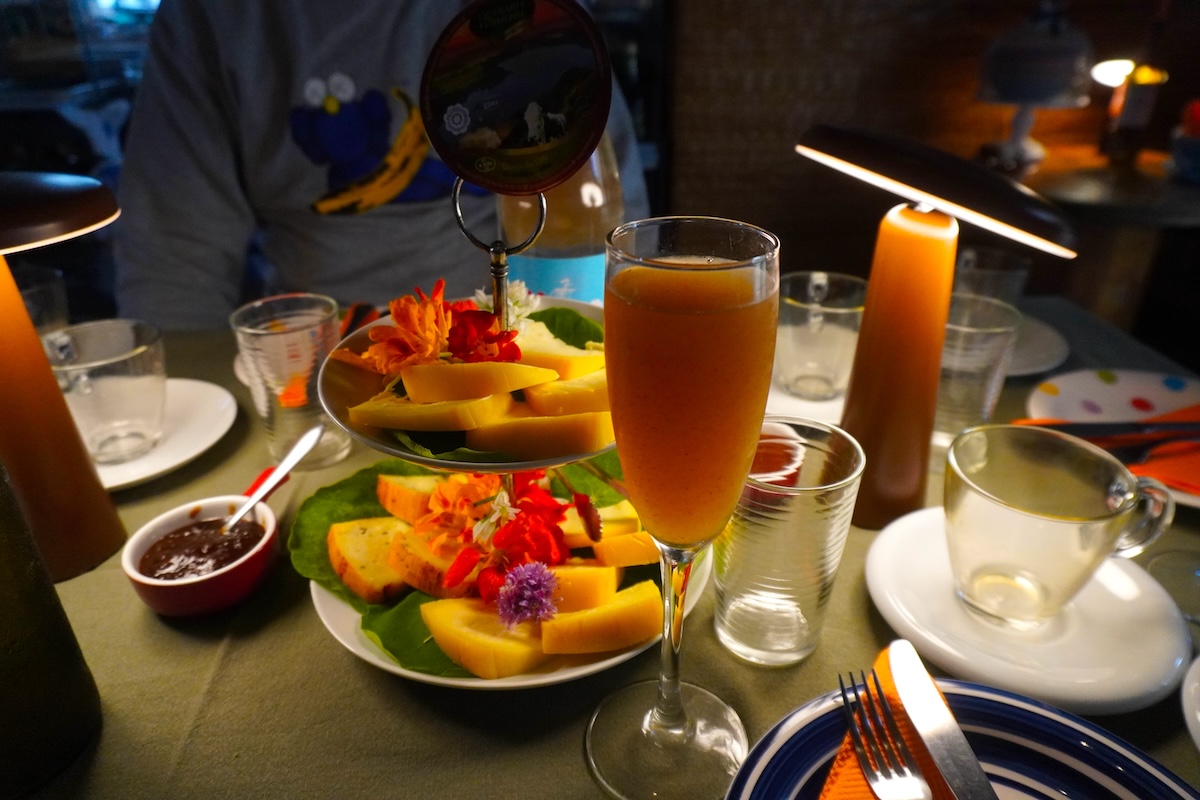
And if you’re looking for something heartier than a corn cob but lighter than a stew (with several meat-free and vegetarian options), you can try the Geothermal Brunch or the All Azores Tea Brunch with views of the fumaroles at the Chalet da Tia Mercês (by reservation only, 48 hours in advance).

On our first visit, we tried the “All Azores Tea Brunch,” which is made exclusively with local ingredients and features dishes made with products from all nine islands, as if it were a culinary journey through the archipelago. Plus, here you can try coffee produced in São Miguel. Did you think the only coffee produced in the Azores was from São Jorge? Here we discovered that’s not the case: for example, at Quinta Aguiar (Ginetes), they produce about 10 to 15 kg of coffee per year, so you can imagine what a privilege it is to try it.
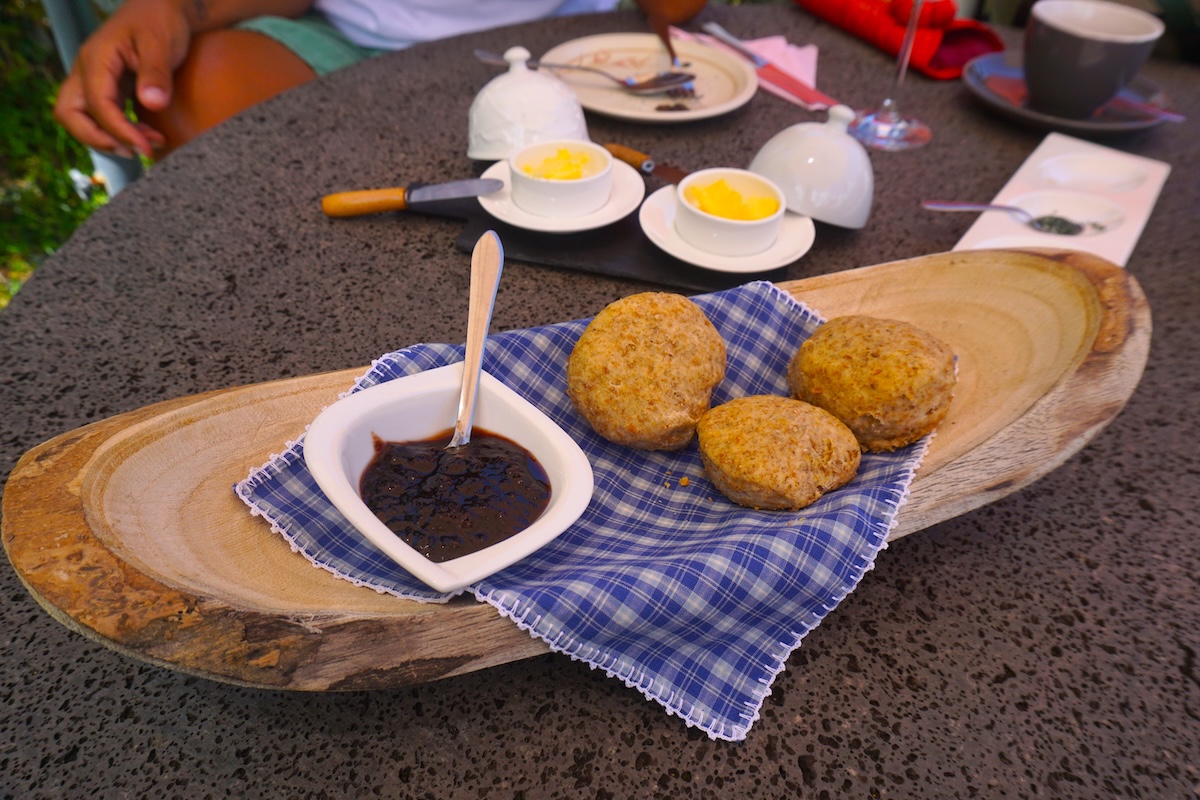
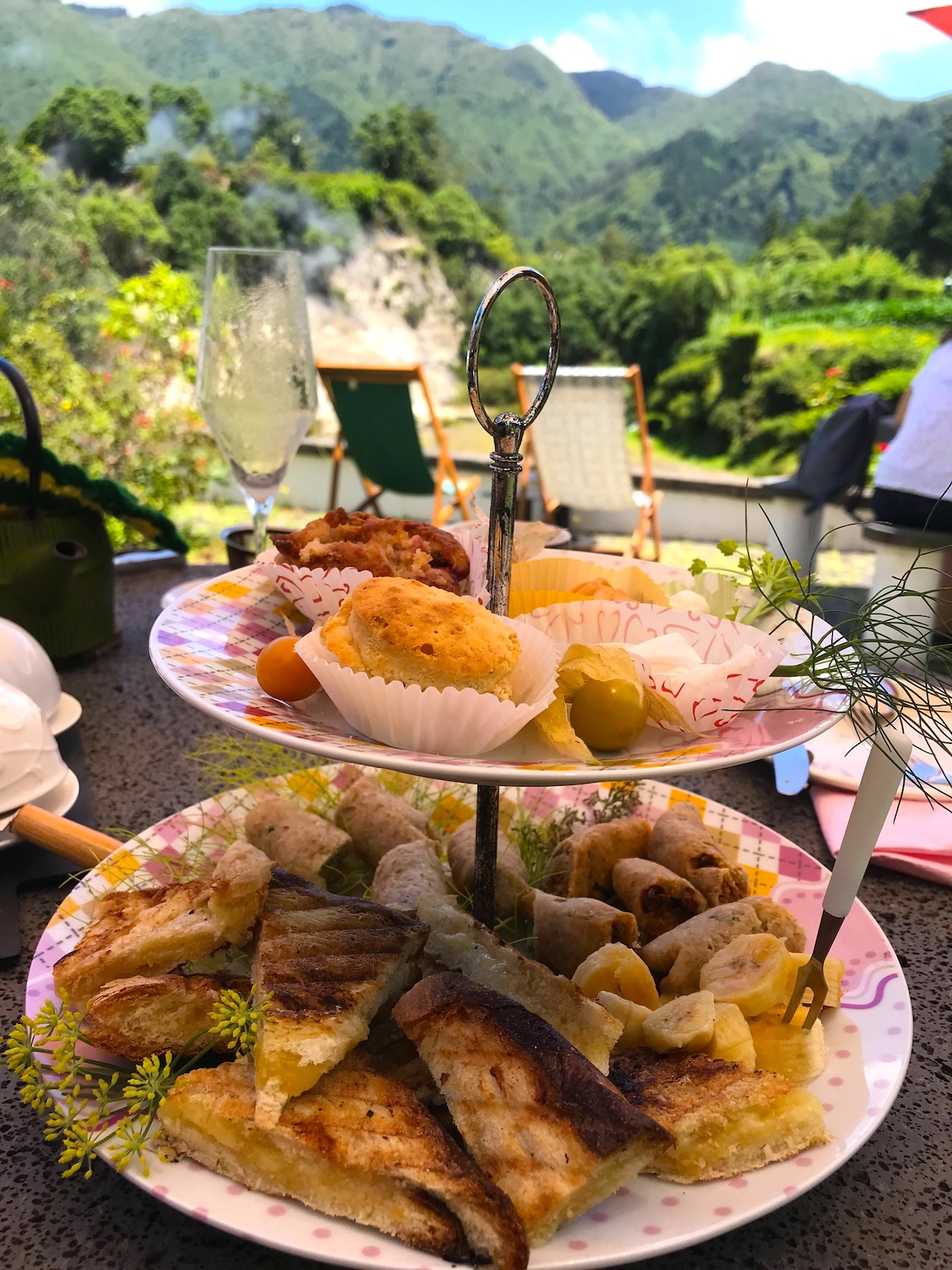
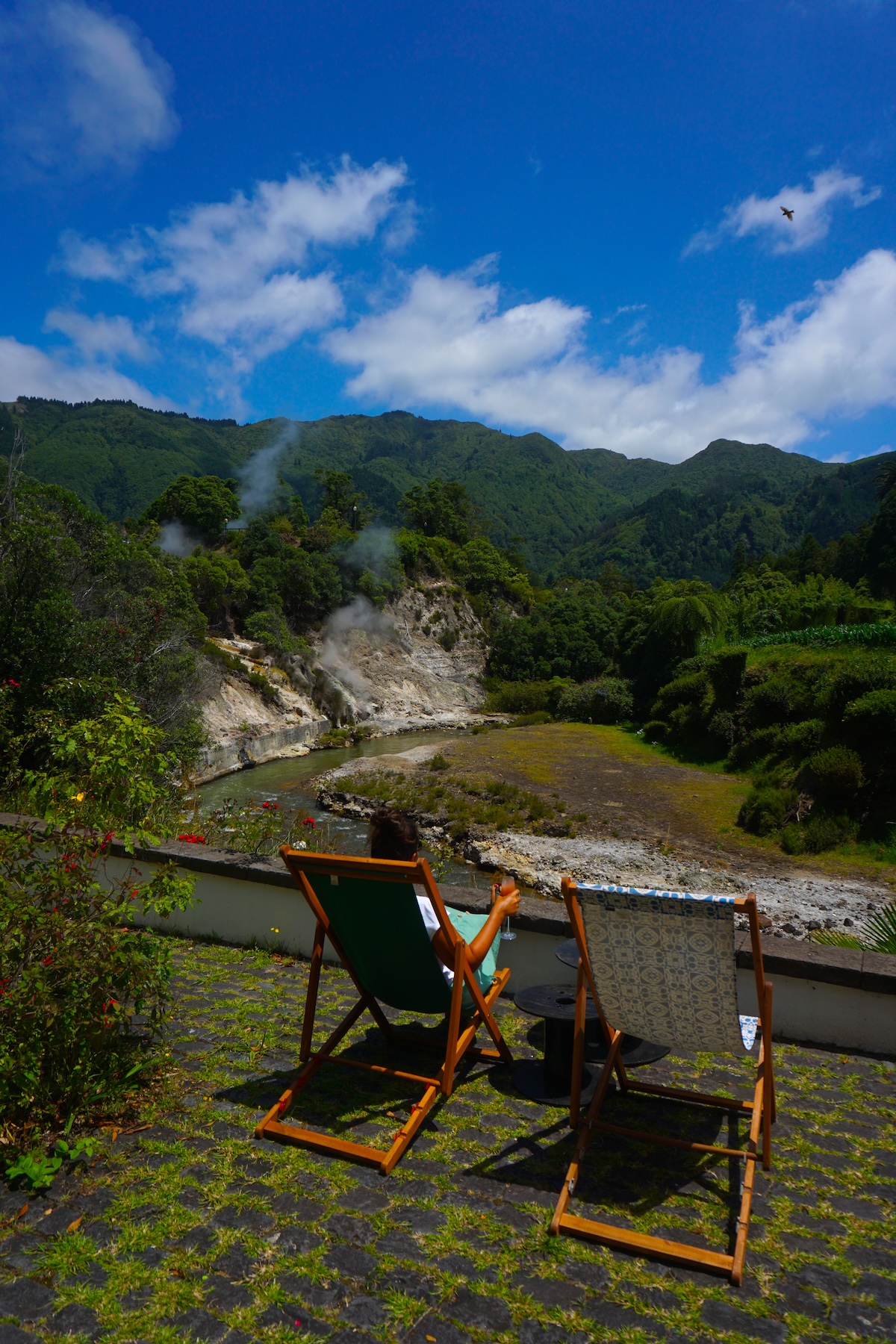

On another of our visits to São Miguel, in 2025, we returned to try the Geothermal Brunch, where Paula told us all sorts of interesting facts about the different types of drinking water in Furnas, how the water and temperatures affect tea preparation, made us a “magic tea” that changes color, and we sampled various foods cooked using Furnas’ geothermal heat in different ways (eggs, cheeses, cassava, etc.). We think it’s a perfect way to learn more about the area.



Try Bolo Lévedo, a traditional bread from Furnas
The Bolo Lévedo is an (addictive) sweet bread from the island, typical of this area: Furnas. It is similar (though not identical) to Madeira’s Bolo do Caco, and has gained widespread popularity thanks to tourism; today, it is used for just about everything (on its own, in sandwiches, in burgers, etc.).

The best and most traditional ones are those from Gloria Moniz and Rosa Quental. If you don’t gain a couple of pounds because of this bread (you’ll want to eat it for every breakfast and snack), then you haven’t really been to the Azores. At Rosa Quental, we tried the bolo lévedo with fresh cheese, and it was… spectacular! Plus, the prices are reasonable.

Try Furnas Cheese
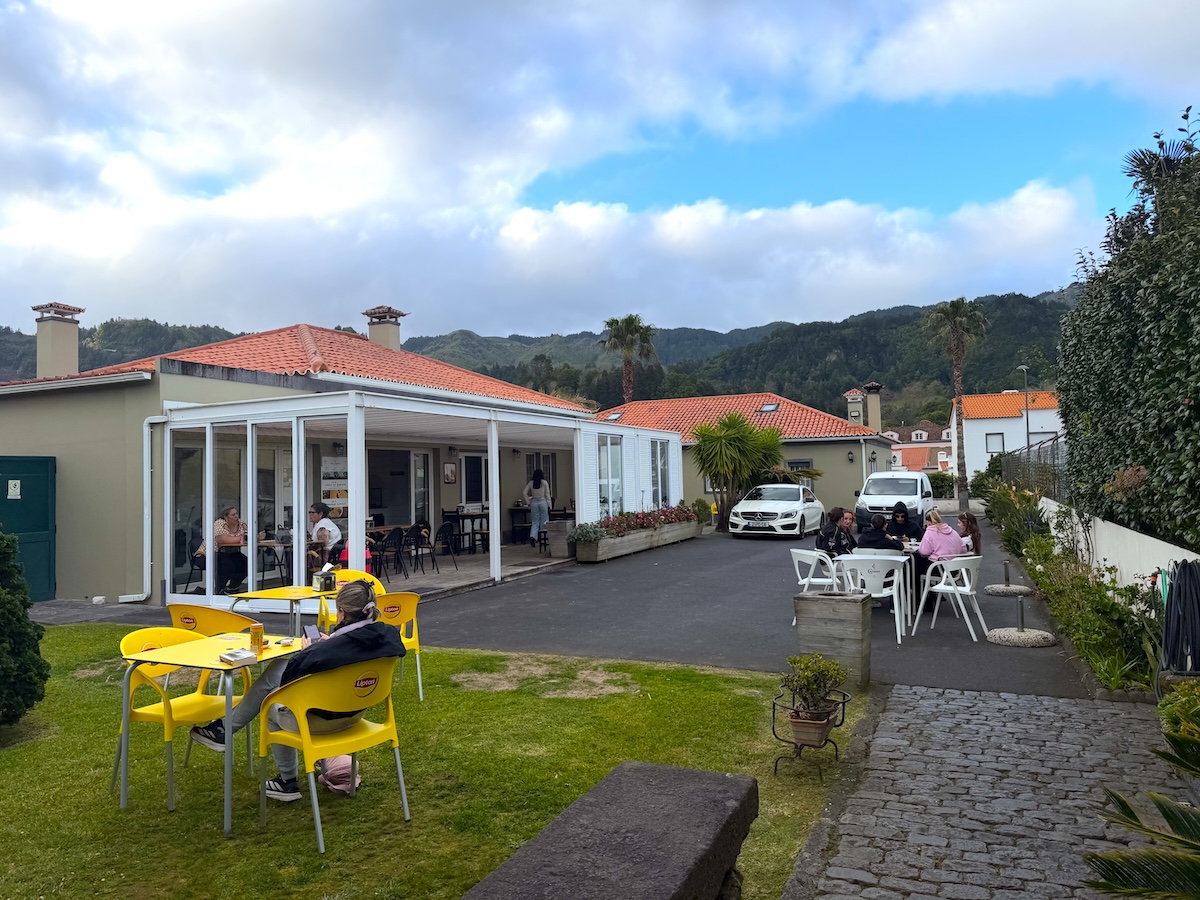
To taste and buy the traditional cheese made with brine from the bitter waters of Furnas (one of the 70 mineral waters in the area)—which is carbonated and rich in iron—you should visit the Queijaria Furnense, located very close to the entrance to Terra Nostra Park. Here, they produce about 340 cheeses a day, in 5 different varieties, with the butter-style cheese being the bestseller.

On the island, it is known as queijo do vale (cheese from the valley, from the Furnas Valley), and the idea to create the cheese and the cheese shop came from the owner, who, at age 16, wanted to create a unique cheese.



We recommend ordering the cheese platter so you can try a variety of cheeses.

Try the different waters of Furnas
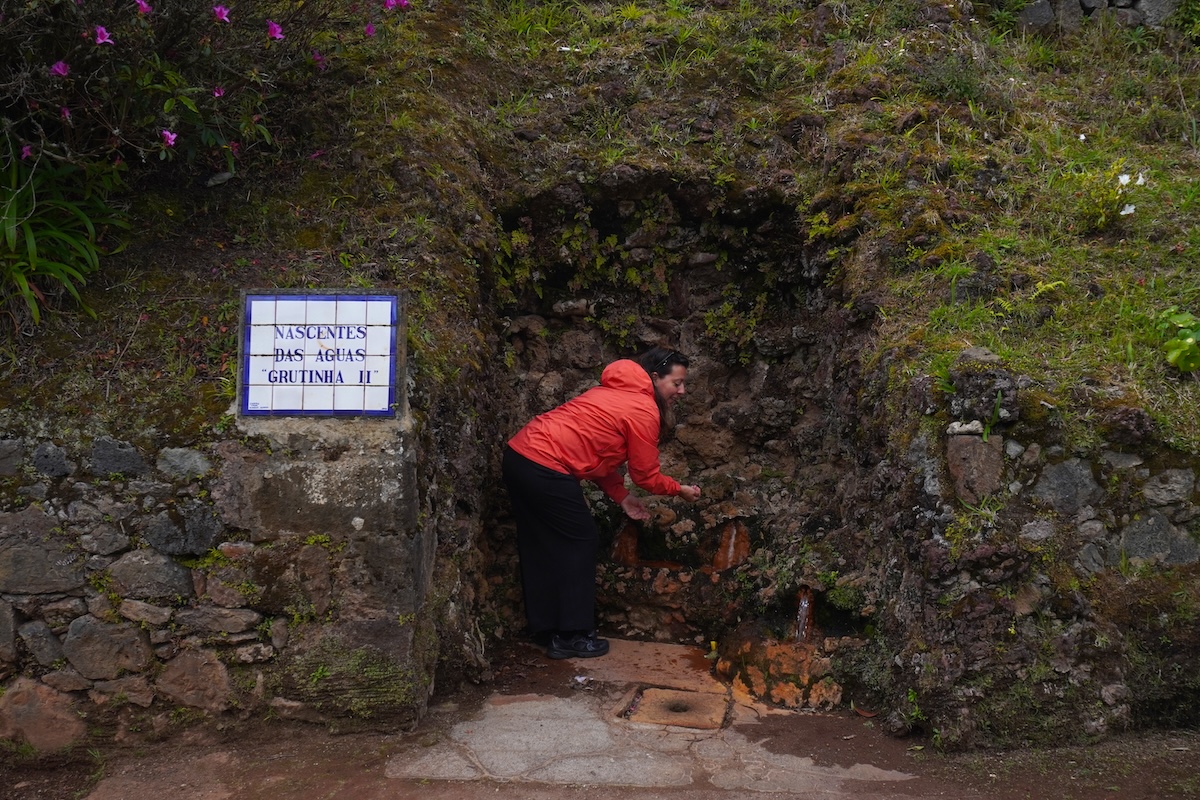
If there’s one thing that defines Furnas, it’s its waters. In addition to the famous hot springs—where you can relax, and which we’ll discuss below—Furnas also boasts a wide variety of natural mineral waters. You can find different springs or water sources in various parts of the village (for example, Fontanário Gloria Patri or Azeda do Rebentão), and you can also learn more about the waters and their properties and sample some at the Chalet da Tia Mercês (which we mentioned earlier in this guide).

Igreja de Nossa Senhora da Alegria and Igreja de Santa Ana
Since you’re strolling through Furnas, you might want to stop by its main church, the Igreja da Nossa Senhora da Alegria. The last eruption of the Furnas volcano (which is still active) occurred in 1630, leading to the depopulation of the area; however, after the eruption, the soil was more fertile than ever, so the area was repopulated and the Jesuits built a small chapel (dedicated to Nossa Senhora da Alegria). Next to the current church (a modern structure built in 1901), you can see a stone marking the spot where that old chapel once stood.


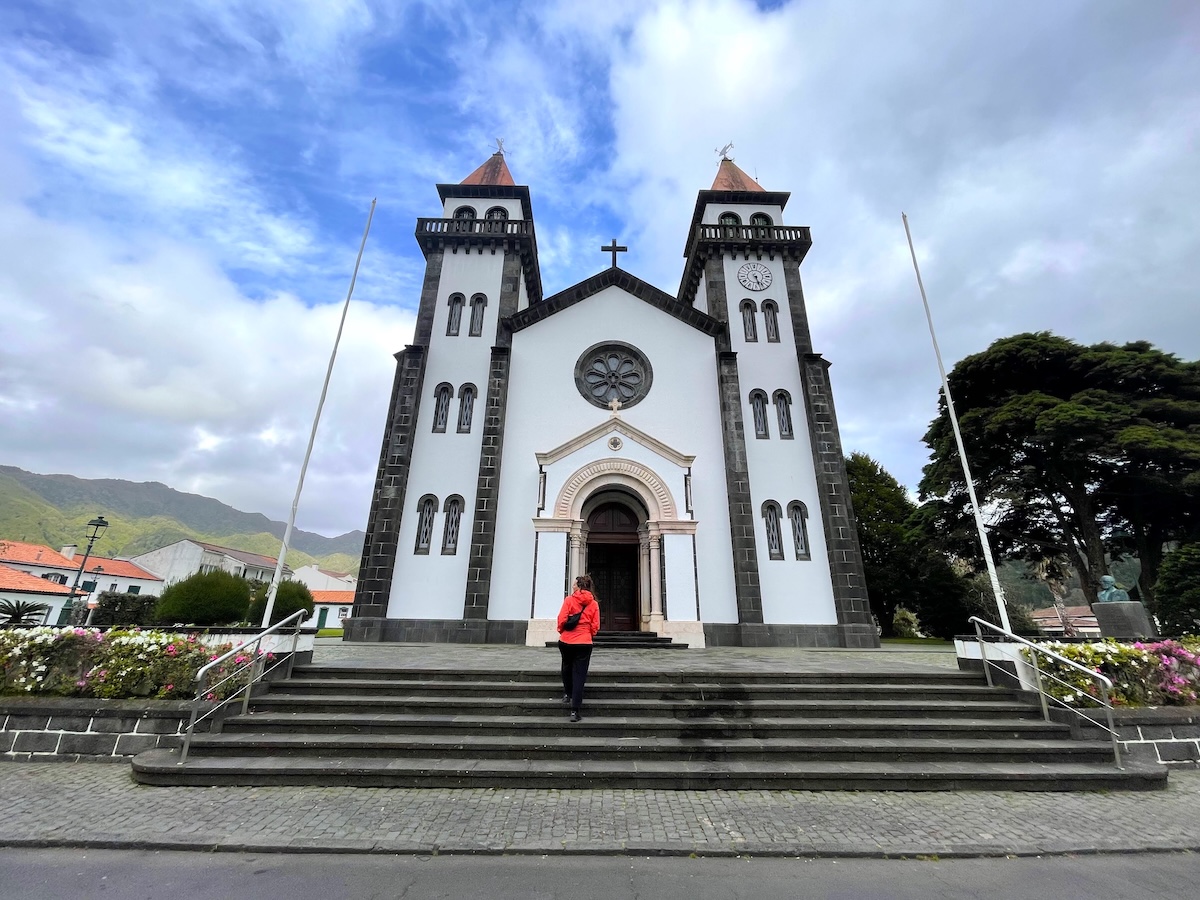
On the other hand, there’s also the small Church of Santa Ana, which, interestingly, has an império right next to it (very typical of the island of Terceira, though there are also a few here on São Miguel)

Furnas Aqueduct
As a point of interest, there is also an old aqueduct in Furnas, although it can only be seen from a distance (since it is on private property) and is in a state of disrepair.


At the end of the day, we recommend grabbing a drink at A Quinta (another local recommendation from our friend Iolanda): aside from the beautiful setting, surrounded by trees and great music, the cocktails are exquisite. No, they aren’t made with volcanic water—that’s the only thing around here that doesn’t involve volcanic activity. Try the pineapple or passion fruit caipirinha, and you won’t regret it.


We also recommend stopping by this traditional candy shop, if it’s open, to try some of its delicious creations.
One of the best options for staying in picturesque Furnas is the 4-star Octant Furnas hotel (from €200/night), which, of course, features a spa and wellness center and natural hot springs. There’s also the wonderful Quinta da Mó (from €205/night), an estate located 1 km from Lagoa das Furnas, featuring 1- and 3-bedroom cottages nestled among fruit trees, bamboo, and exotic plants—where we stayed during our last visit to Furnas.
If you’re visiting São Miguel with the whole family or a large group, you’ll be happy to know that you can wake up practically right next to Lagoa das Furnas by staying at Casa da Lagoa or Casa dos Barcos. At both locations, you rent the entire house, and bicycles and kayaks are included so you can explore the lagoon on your own.


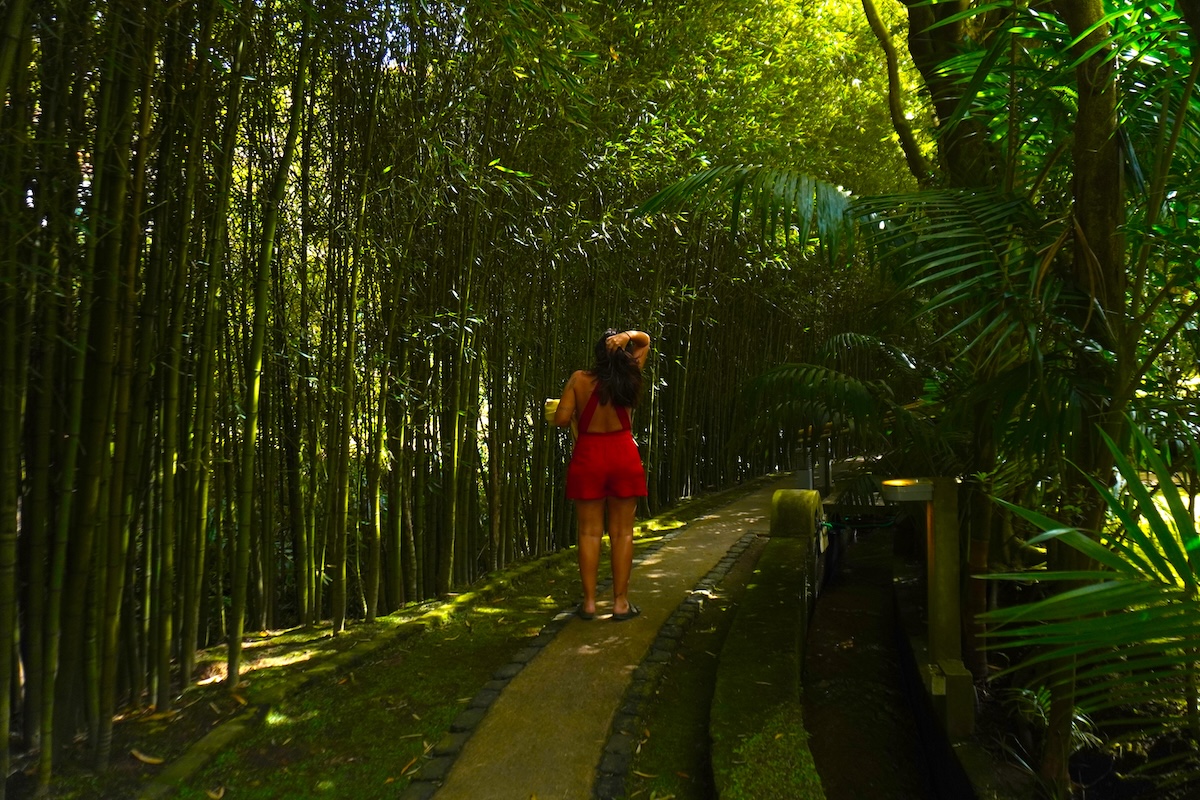


3. Hot springs in Furnas
If there’s one thing that sets Furnas apart and draws visitors there, it’s undoubtedly its natural hot springs. There are several ways to enjoy them, and we’ve listed them all here.
Important: If you plan to visit the hot springs in São Miguel, bring a dark-colored and/or old swimsuit, as it will likely get stained by the minerals in the water.
Terra Nostra Park
One of the island’s most beautiful gardens, guaranteed to provide a relaxing morning or afternoon. Terra Nostra Park features a huge botanical garden with a diverse array of flora (in fact, it boasts the world’s largest collection of camellias, with over 600 species), where you can stroll along four different trails, but its biggest draw is… its hot springs!
As soon as you enter the park through an avenue lined with beautiful ginkgo biloba trees, you’ll see a huge pond of iron-rich thermal water. At first, you might think the water is dirty, but it’s not! It’s the high iron content that gives it that “muddy” color. The water temperature ranges from 35°C to 40°C, making it suitable for all seasons (at Randomtrip, we tried it in winter and summer, and honestly, it’s even more enjoyable in winter).

In addition to the large main pool—which, despite its popularity, never has a line because it’s so huge (though you might have a hard time finding a bench to leave your things on; we left ours next to a tree)—Terra Nostra Park also has hot tubs!


There’s usually a bit of a line for these, but at least when we went in July, we didn’t have to wait long. The hot tubs are very nice, and they’re a great way to enjoy these healing hot springs with a little more privacy.
When you leave the main pool or the hot tubs, please note that the park has showers and restrooms located very close to the hot tubs.

Admission to Terra Nostra costs €17 per person, and it is open from 10:30 a.m. to 4:30 p.m. every day (last admission at 5:00 p.m.). There is no time limit once inside. You can buy tickets in advance online here
With your ticket, you get a discount on cocktails at the bar at the Terra Nostra Garden Hotel (made with edible flowers from the park), so we went there to try two. The bar is a bit posh but not too much; the terrace was absolutely lovely, with live music

If you want to stay overnight right in Terra Nostra Park and have access to the thermal pool and the park at any time of the day or night (remember that it closes to the public at 4:30 p.m., so you’ll only be sharing it with a few other hotel guests…) you can do so by staying at the Terra Nostra Garden Hotel. It’s absolutely wonderful.

Poça Dona Beija
Another option for enjoying the hot springs of Furnas is at Poça Dona Beija. It’s quite a bit smaller than Terra Nostra Park, but just as beautiful. Poça Dona Beija features three hot pools at 39°C and a river flowing through them at 28°C.
You need to buy tickets for Poça Dona Beija online here
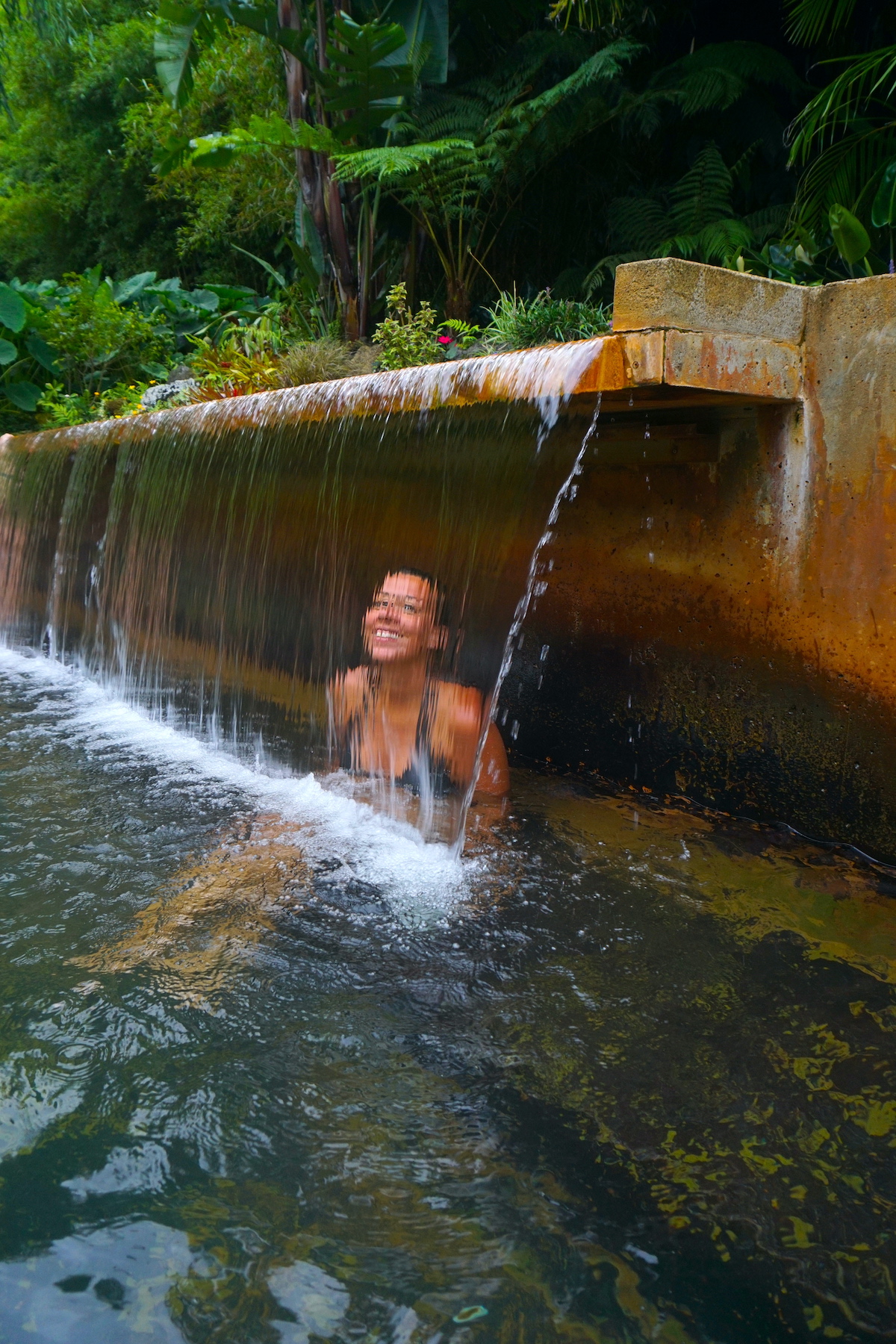
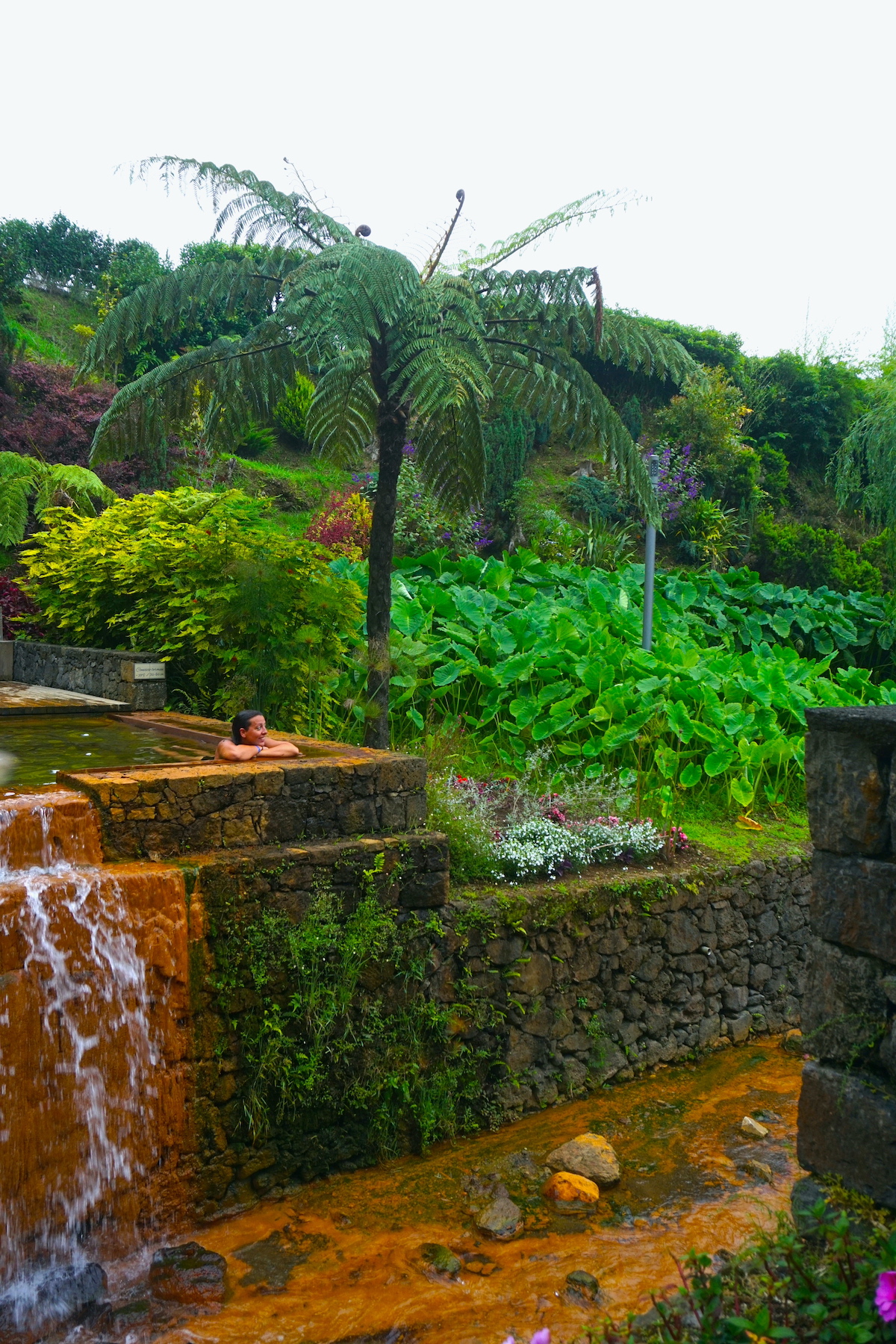
It’s open from 10:00 a.m. to 11:00 p.m., and yes, you’ve read our minds—enjoying it at night is truly special. The price for Poça Dona Beija is €12 until 5:30 p.m. and €16 starting at 6:00 p.m. There’s a 1.5-hour time limit inside, and the number of people allowed at any given time is also limited, so tickets can sell out. The last possible entry is at 9:30 p.m., and the pools close at 10:30 p.m.


At Randomtrip, we’ve enjoyed Dona Beija both day and night, as we’ve visited the place on several of our trips. We strongly recommend purchasing tickets in advance.

Here, just as we recommended at Terra Nostra, you’ll definitely want to bring an old swimsuit or one you don’t care too much about.
Poça da Tia Silvina
There’s also a free option to experience the benefits of the hot springs… on your legs. The Poça da Tia Silvina is a small pool of naturally hot water next to the river (cold water) where you can dip your legs and feel the contrast between the very hot spring water and the very cold river water right next to it.


Other options: Octant Furnas and Casa La Lola
Two other, lesser-known options for enjoying the hot springs of Furnas are two very special accommodations.
The Octant Furnas hotel (from €200/night) features both outdoor and indoor thermal pools, available 24 hours a day, as well as various treatment rooms offering spa services if you’re looking for total relaxation. The water comes from the “das Quenturas” spring, right in front of the hotel, at a temperature of between 58 and 60°C. It passes through a cooling system before reaching the various pools and hot tubs, where you can enjoy it at temperatures between 35 and 42°C.

On the other hand, if you’re traveling in a group or your budget allows, you can rent Casa La Lola, a private house with 3 bedrooms that sleeps up to 6 people, featuring thermal pools fed directly by a spring that runs through the property.
4. Viewpoints in Furnas
You can’t leave Furnas without enjoying some of its incredible viewpoints. Here’s a list of them.
Miradouro Pico do Ferro
The Miradouro do Pico do Ferro is probably the most famous viewpoint, offering the most beautiful view of the magnificent Lagoa das Furnas—or, more accurately, the giant volcanic crater filled with water. It is located about 5 km from the village of Furnas, at an altitude of about 570 meters, and you can admire the vastness of the lagoon, the green hills surrounding it, and the steaming dots of the hot springs. It has free parking, so it’s easy to get there by car.

From here, you can also reach the top of the Poço da Inglesa waterfall (which you can see from below in Grená Park, which we mentioned a little earlier)
Miradouro Lombo dos Milhos
The Lombo dos Milhos viewpoint is located at an altitude of about 330 meters, in the southwest of the Furnas Valley, offering a completely different panorama from the previous one, with stunning views of the village of Furnas. It is accessible by car, although the road leading to it is narrow and steep.

Miradouro Vista do Vale
From the Miradouro Vista do Vale, you can enjoy different views of the Furnas Valley, as its name suggests. You can park a few meters from the viewpoint, right here, although space is limited.


Miradouro do Castelo Branco
As we approach the small castle that gives the viewpoint its name, it looks as if it’s angry (note the two small windows that look like eyes and the large one that looks like a mouth), but it’s hard to say why: the 360° views from the rooftop of the Miradouro do Castelo Branco are absolutely stunning. On one side, the Furnas valley and lagoon, and on the other, Vila Franca do Campo and its photogenic islet.


We had so much fun playing with the silhouettes of the windows from the inside and the views from the outside of the castle that when we left, we hoped the castle would have changed its appearance, but no such luck.
To get there, park your car here and walk to the castle.
Miradouro do Salto do Cavalo
Our favorite viewpoint in this part of the island, the incredible Miradouro do Salto do Cavalo, was the only one of all those mentioned that we were able to enjoy all to ourselves—even in the middle of July—which leads us to suspect that it’s the least well-known viewpoint in this area.

We lost count of the shades of green we could see in the panoramic view from this lookout point. It sits at an elevation of over 700 meters above sea level, on the northern edge of the Furnas caldera, offering a view of the Povoação Valley and the Seven Hills, the Furnas Valley with the caldera and its lagoon, and stretching all the way to the sea.
Apparently, this lookout is very popular with paragliders, but when we went, we didn’t see anyone there. Also, there’s a hiking trail starting here that looks really great and that we want to try next time: an 18-km out-and-back route that starts at this lookout, passes by Pico da Vara (the highest point on São Miguel), and ends at the sea. More info on the trail here.
5. Ribeira Quente and Praia do Fogo
Near the Furnas valley, it is worth visiting Ribeira Quente, a fishing village between the hills and the sea. But the most interesting place there is its beach…
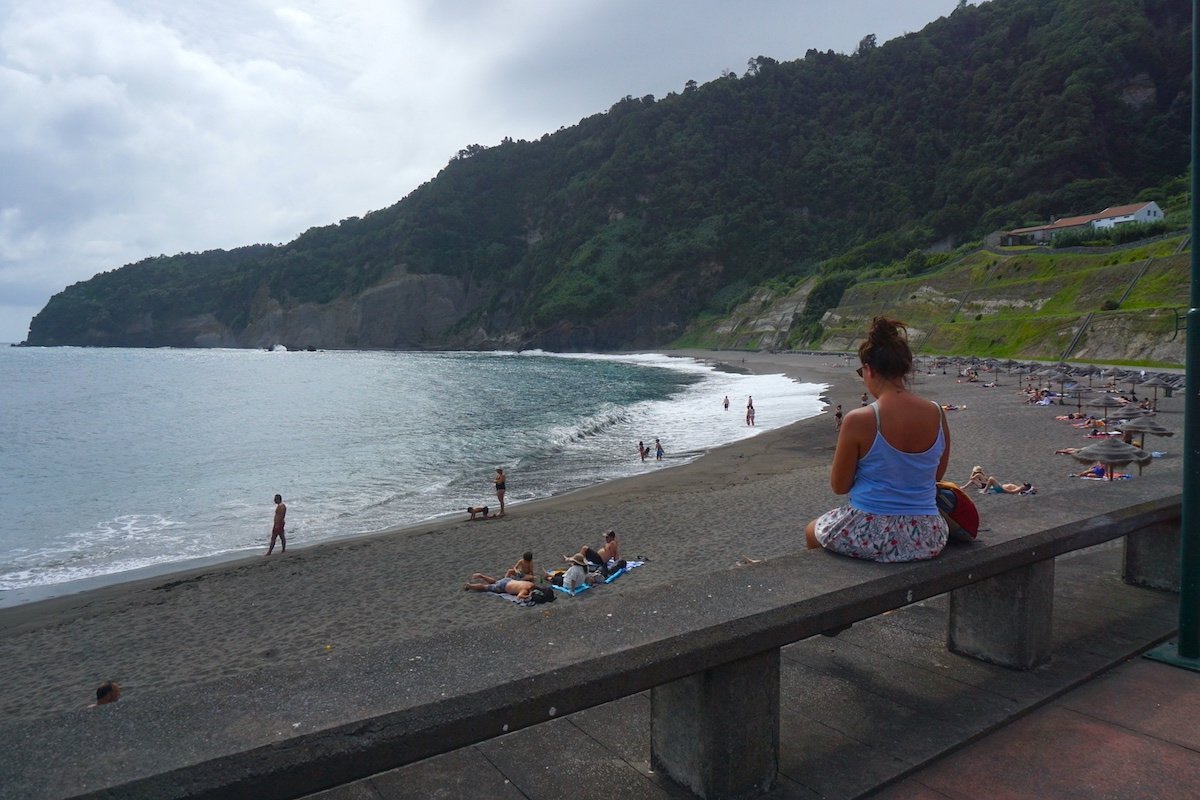
Praia do Fogo is a beautiful black sand beach in the shape of a bay bathed by a calm sea and a nice bar where you can have a drink. The particularity of this beach is that it has underwater fumaroles (hydrothermal springs) that make the sea water warmer, something that is, in theory, especially noticeable at low tide. The truth is that we did not notice anything and the water was quite cold… If you have more luck than us and find that it is true, let us know in comments!

On the beautiful and winding road on the way to this particular beach (the road leaves from Furnas, so it’s a good idea to visit this place on the same day you visit Furnas) there is a waterfall. It is located between the two tunnels that you pass and to get to it you have to park where you can outside of the tunnels and walk along the road (be careful, it can be dangerous).
Where to stay in Furnas
Furnas is undoubtedly one of the most special and unique areas of São Miguel and the Azores in general. A village located in the caldera of a dormant volcano, in Furnas you can enjoy the thermal waters, its fumaroles, the use of geothermal heat in gastronomy, its lagoon and its viewpoints.
Due to its location (there are two accesses to Furnas, one from the north and one from the south, both on winding roads), Furnas is not the ideal place if you are going to choose only one accommodation on the island, as it will take you longer to get to the other places in São Miguel. But if you divide your stay on the island in several accommodations, it is worth staying a few nights in Furnas, to enjoy the area with fewer people and to be able to enjoy its thermal waters at sunset without having to drive at night; from here you can also reach Nordeste and Povoação quickly due to its proximity.
At RandomTrip we stayed on our last visit in 2025 at the amazing Quinta da Mó (from 250€/night), an oasis in Furnas, partner accommodation of Casas Açorianas.
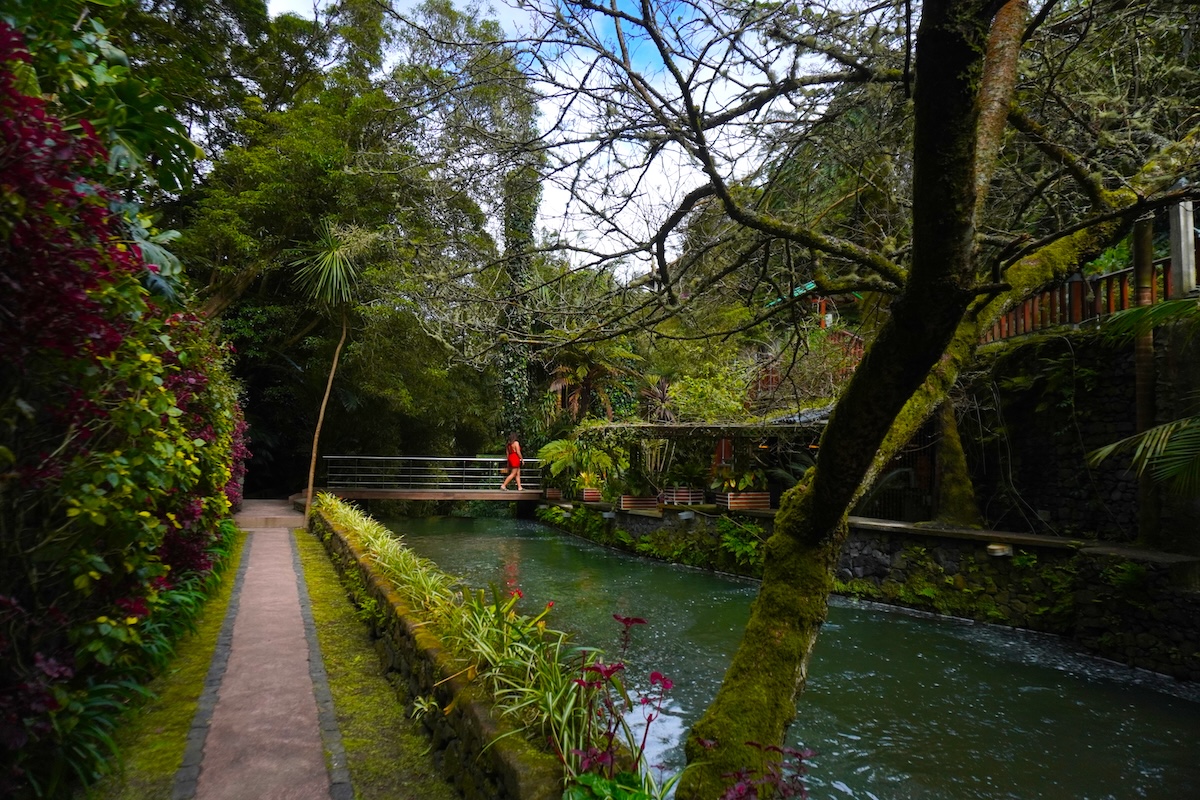
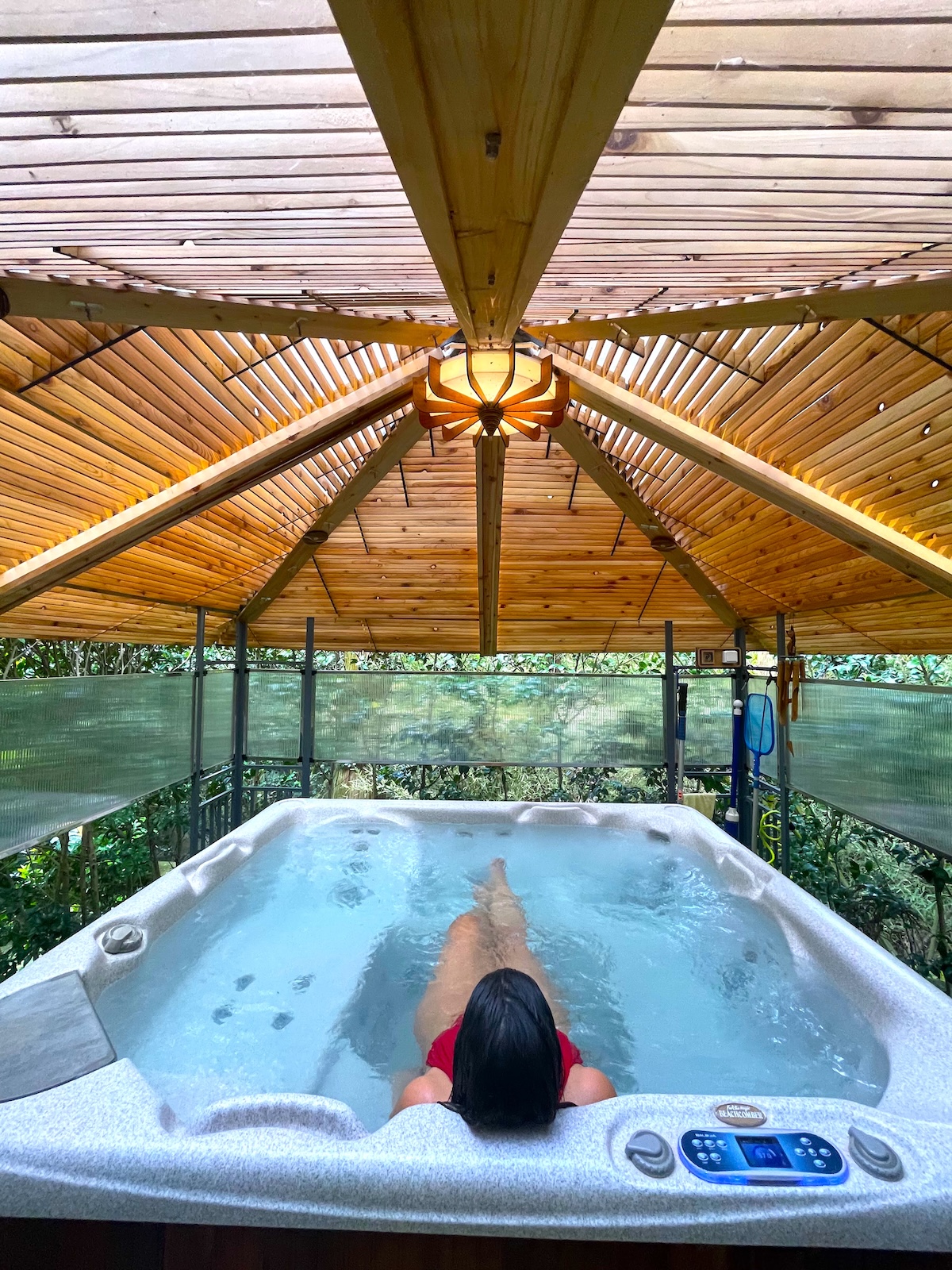
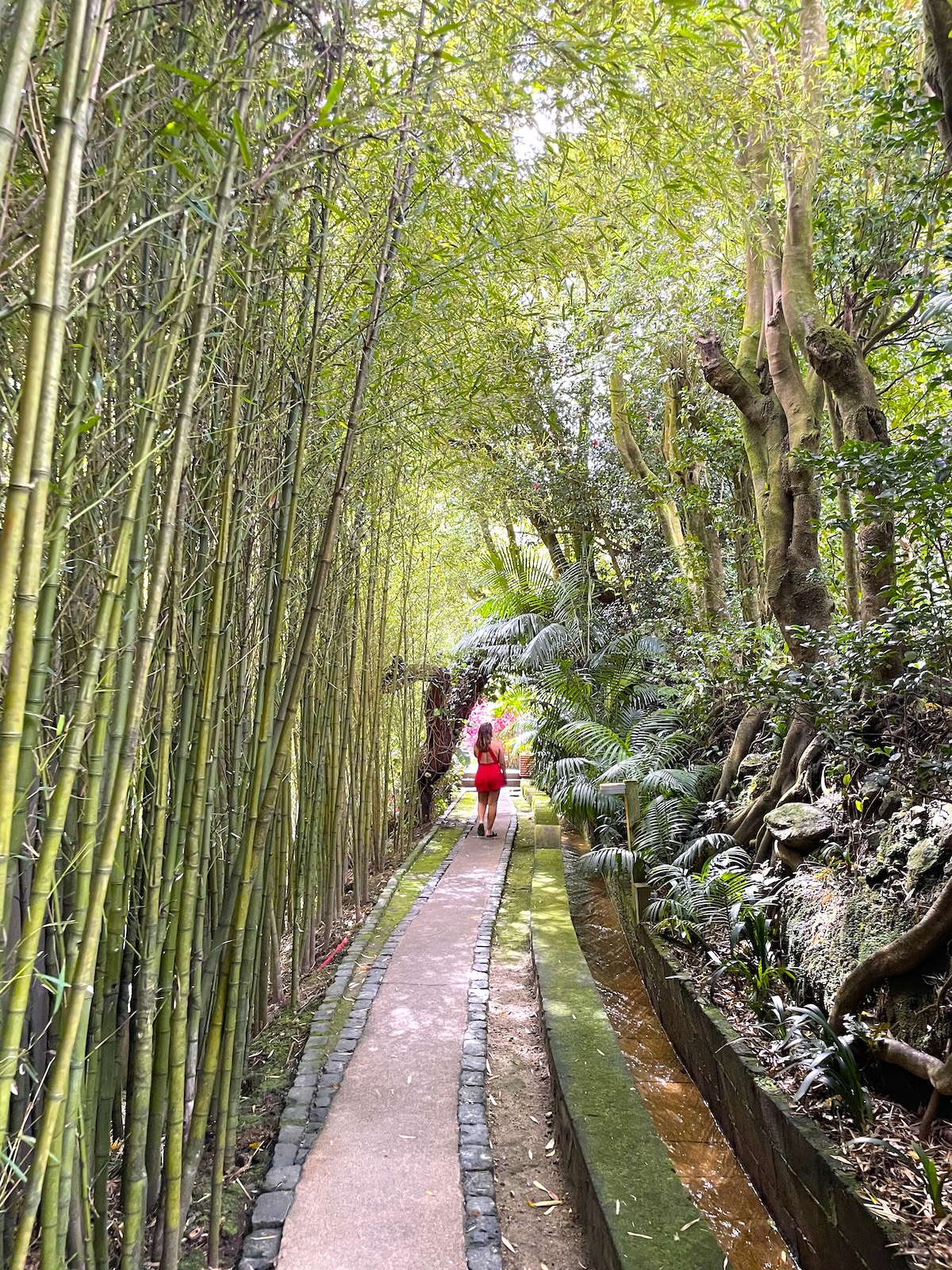
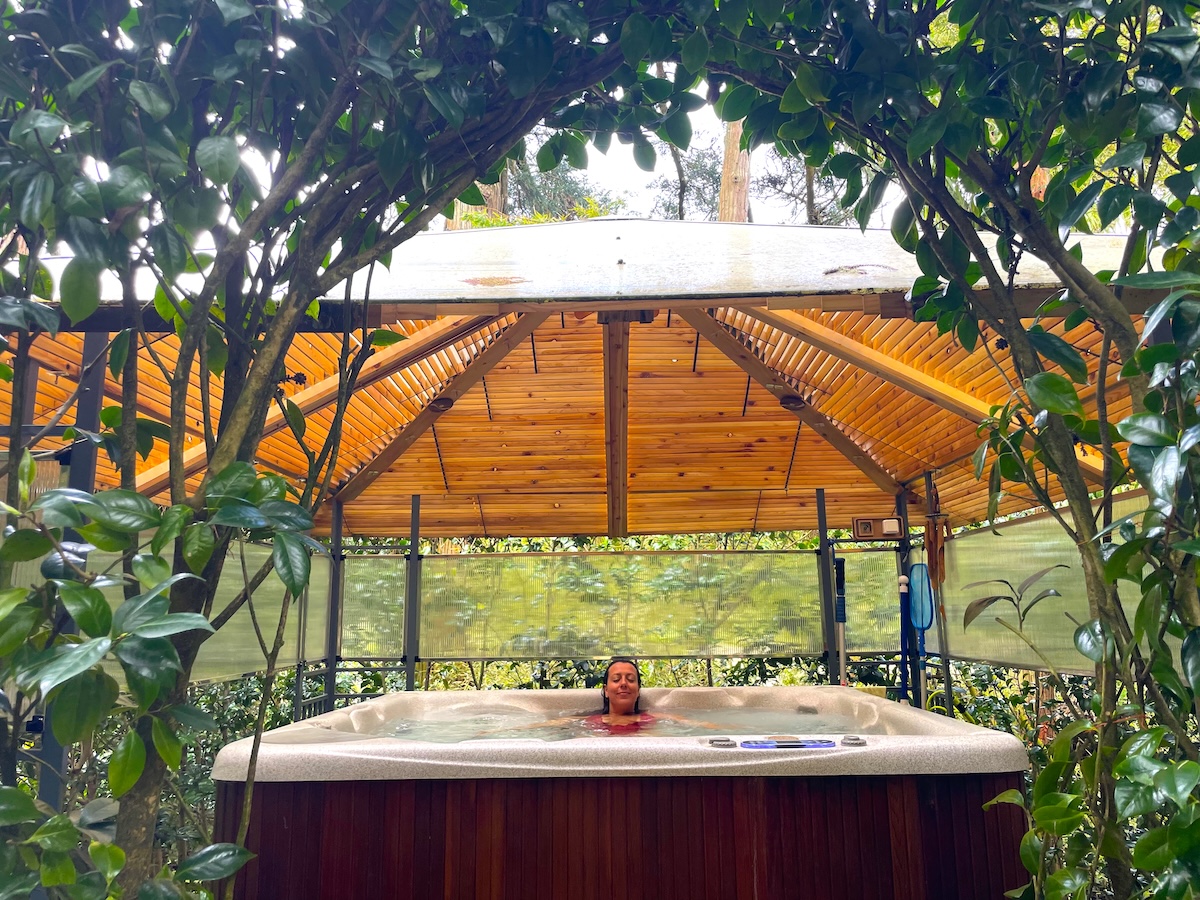
The location is very central, just steps away from Poça Dona Beija and within walking distance of the rest of Furnas’ attractions, but you can’t imagine what you’ll find behind the entrance gate until you walk in: a bamboo forest, a small stream running through the property directly from Lagoa de Furnas that will give you the soothing soundtrack along with the birdsong of your days here, a jacuzzi where you can relax in the middle of nature (or, if you prefer, a massage) and a room bathed in komorebi are just some of the highlights.
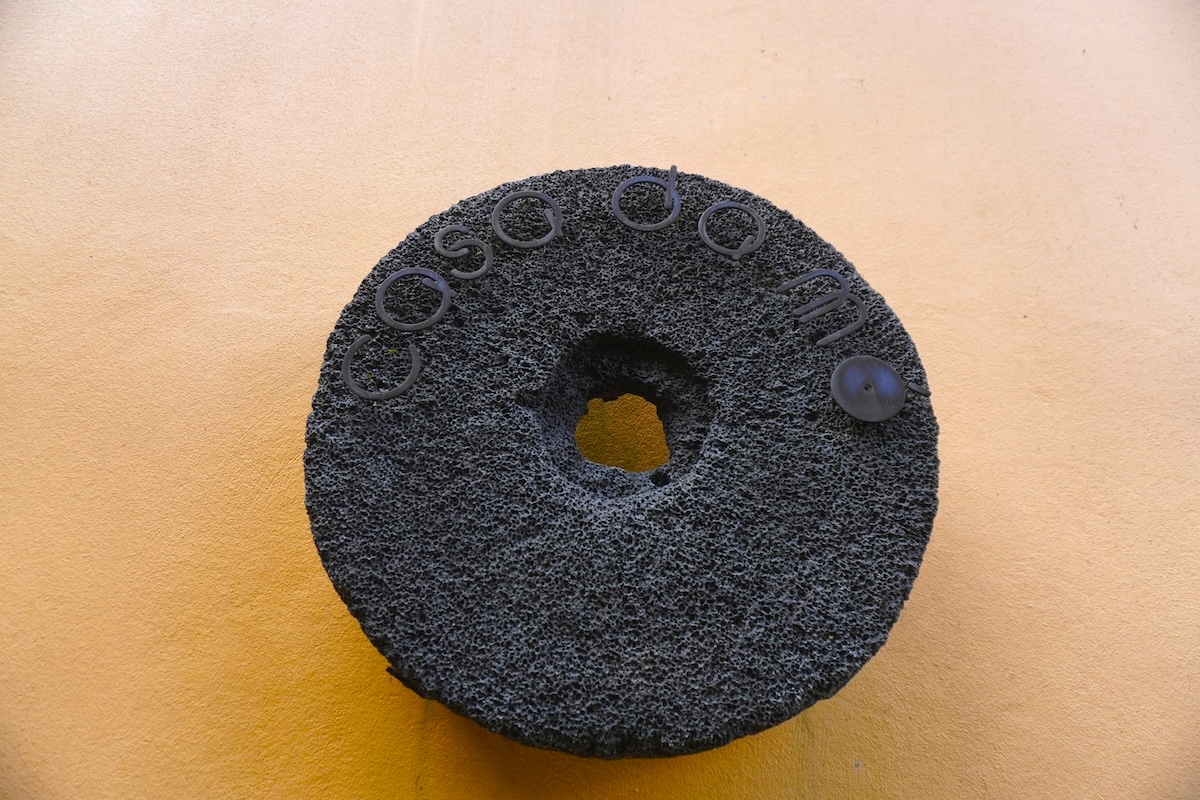
Like most of Casas Açorianas‘ rural lodgings, it has its history behind it. After being abandoned for several years, in 2007 this family began the restoration of an old water mill that was once used to grind the cereals that supplied much of the population of Furnas. Although the mill is no longer in operation, it was converted into Casa da Mó, the three-bedroom house on the estate, ideal if you are traveling with family or friends.

The following year, restoration work continued on three other buildings, one of which is the “Casa do Engenho“, where we stayed at Randomtrip, an old carpentry workshop where a hydraulic lathe used to manufacture, in addition to other furniture, the typical Furnas chairs.
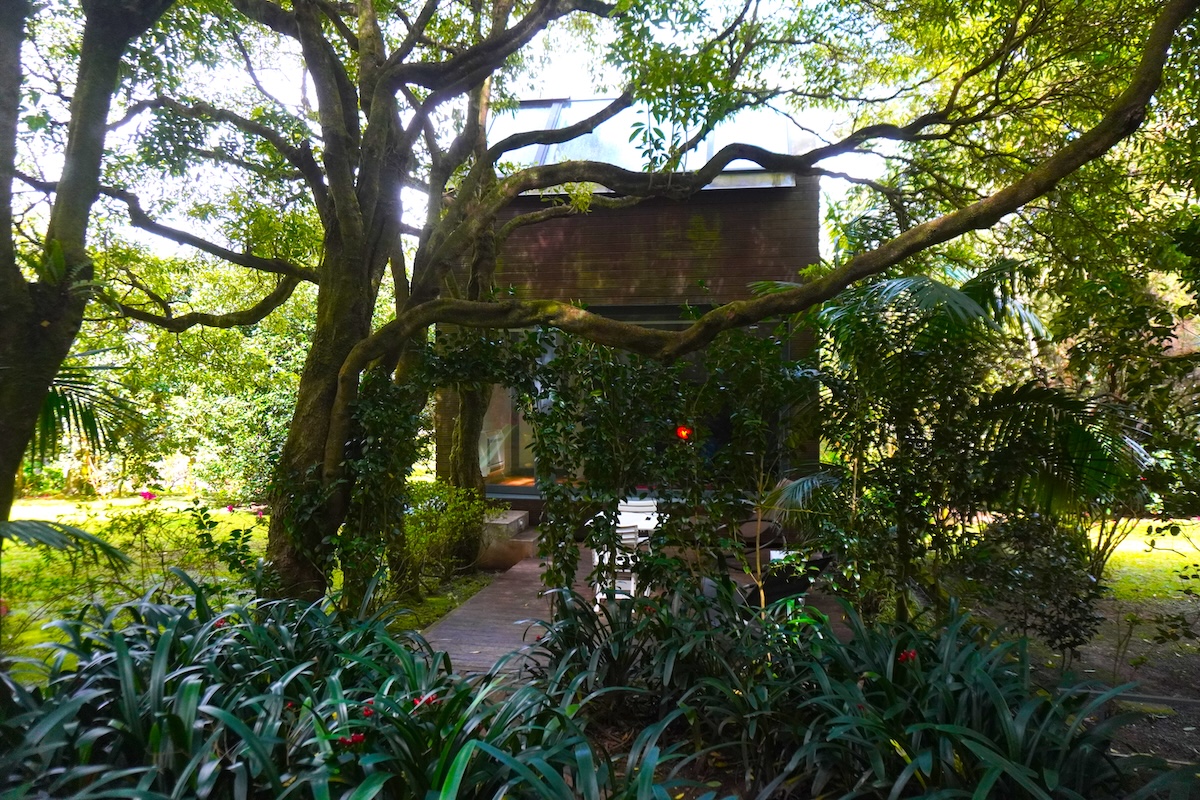
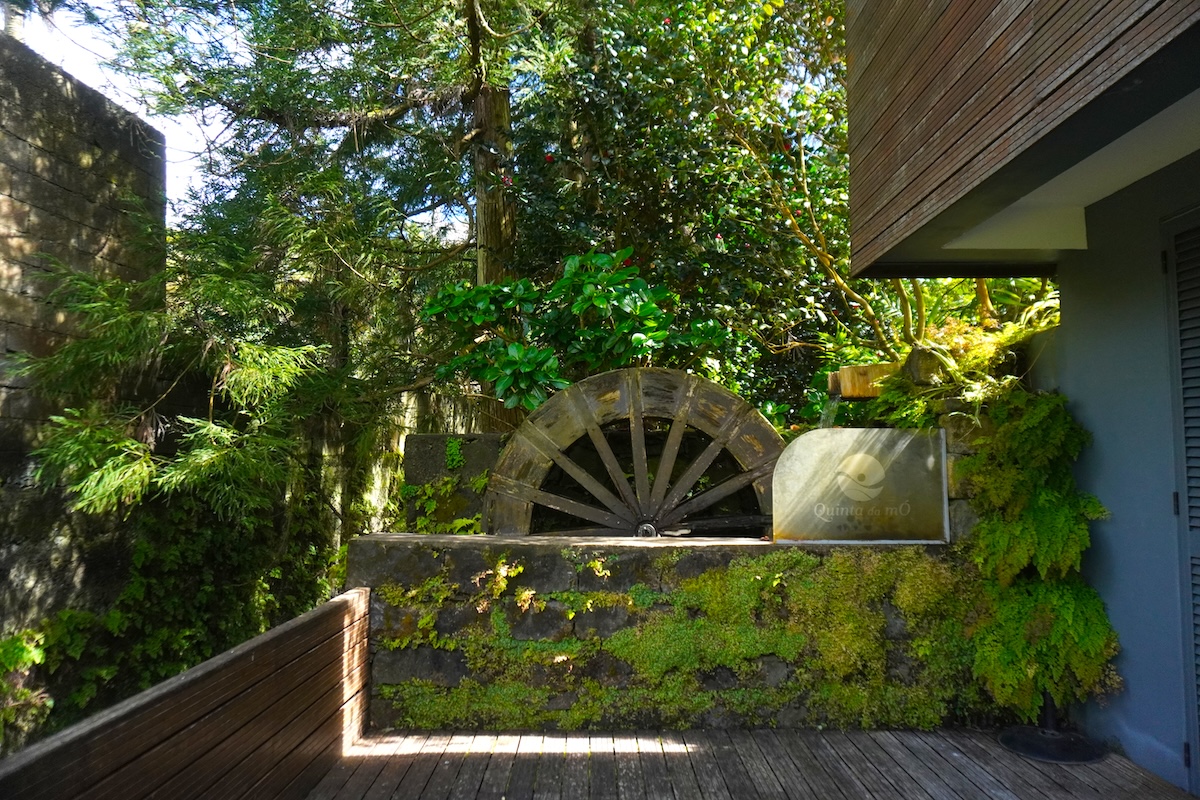
Casa do Engenho, where we stayed, consists of two floors. On the second floor is a double bedroom with a glass ceiling that gives it the relaxing komorebi, those rays of sun filtered by the leaves of the trees that bathe the room (don’t worry, there are automatic blackout curtains so you won’t wake up with the first rays of the day if you don’t want to). On the first floor you will find the bathroom and the living room with kitchenette with a large window opening onto your private terrace with panoramic views of the surrounding garden. The terrace is equipped with sun loungers, table, chairs and umbrella. Along this private terrace, next to the house, there is a small levada which, when crossed by water, turns a waterwheel that provides the soundtrack.

The other two reconstructed houses, “Granel” and “Cafuão”, were two old granaries, typical buildings that coexisted with the mills of the time, intended for the storage of grains and similar products.

Quinta da Mó currently has three one-bedroom bungalows and a house (Casa da Mó) with three bedrooms. The quinta (farm in Portuguese) has a dam with several species of fish, a garden with jacuzzi for massages that is a real outdoor spa, a bamboo path to walk to the cottage where breakfast is served (with local products overlooking the stream) and even a boat ride in a quieter area of the stream, all designed to make us continue to relax even after getting out of bed.
It is also worth mentioning that the attention we received at Quinta da Mó was very attentive, from the moment of check-in to the breakfast and cleaning service, we loved it!


Other accommodations that we recommend in Furnas:
Terra Nostra Garden Hotel (from 330€/night): if your budget allows it, you can stay in the Terra Nostra Park itself, in a high quality 4-star hotel where you can also enjoy its thermal waters after the park closes, with much less people and even at night (the park closes at 16:30h for the general public). The food at the restaurant is also highly recommended.
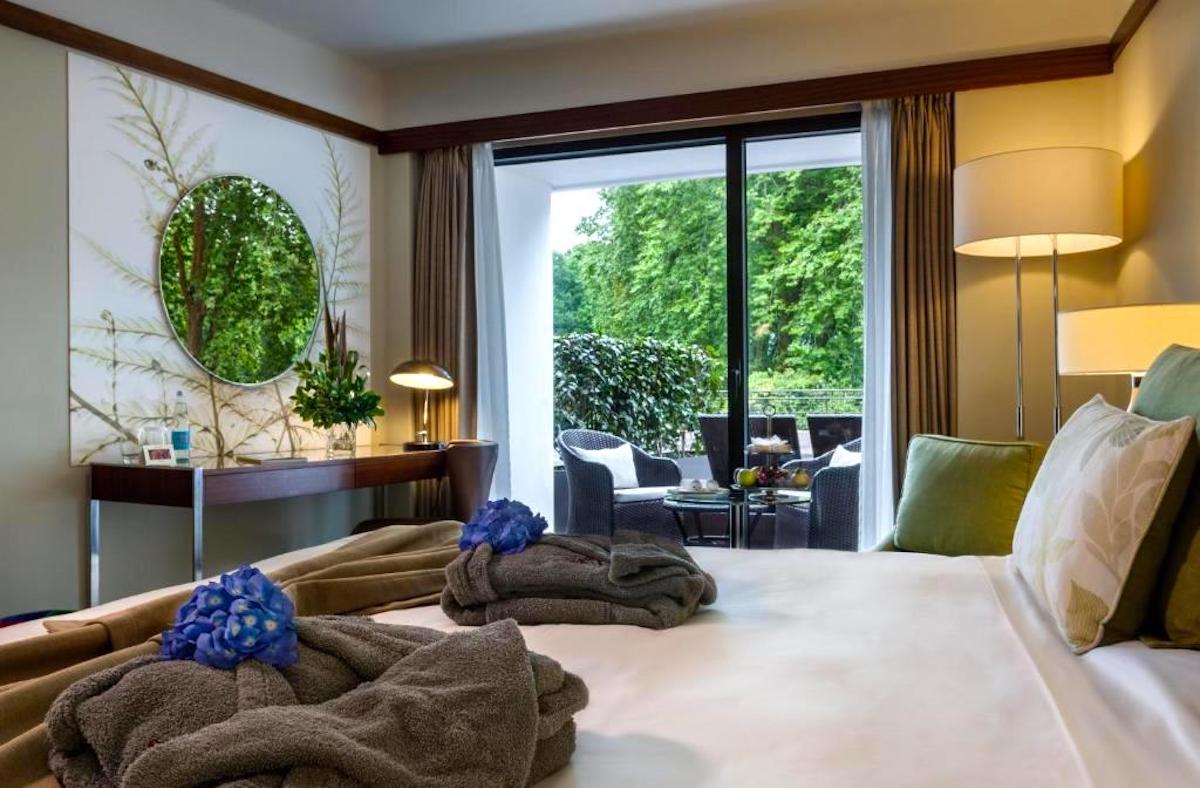
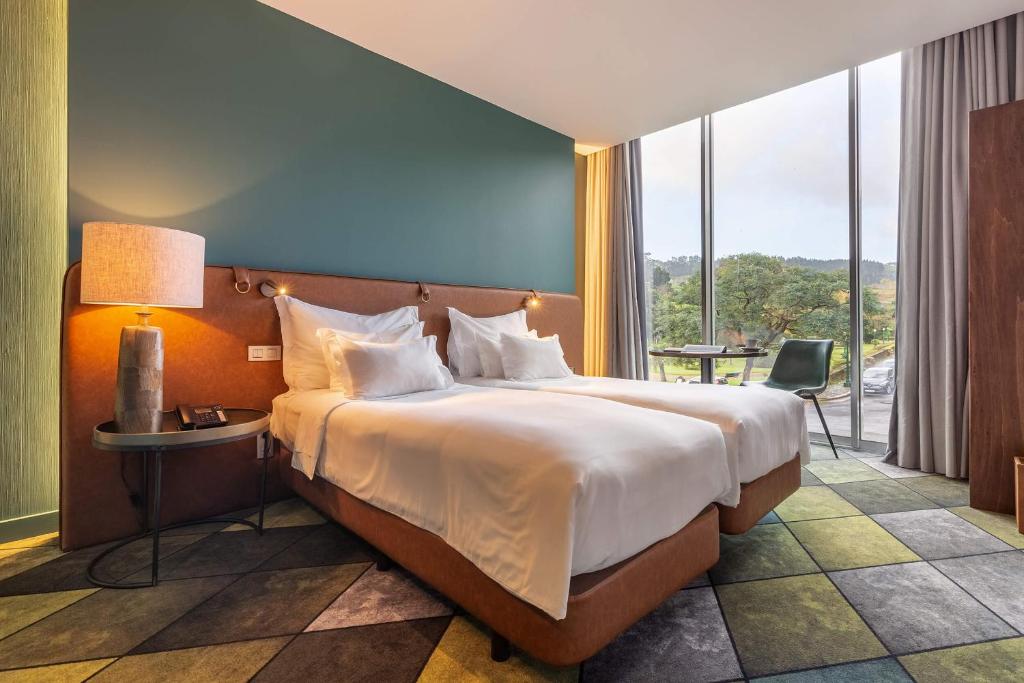
Octant Furnas (from 320€/night): 5-star hotel with indoor and outdoor hot springs (open 24 hours a day) and spa.
You can see more accommodations in Furnas here:
Where to eat in Furnas: best restaurants
Furnas is known for its use of geothermal heat in cooking. Here are the restaurants we recommend:
- Chalet da tia Mercês: a sustainable local project featuring local products from all the islands (reservations must be made at least 2 days in advance). They offer various experiences, such as brunches (Geothermal or All Azores Tea Brunch) or honey and mineral water tastings, all centered on harnessing the volcanic heat of Furnas and its variety of mineral waters. On our first visit, we tried the All Azores Tea Brunch (featuring products from all the islands), and on our second visit, the Geothermal Brunch, where Paula explained lots of interesting facts about the different drinking waters of Furnas, how the waters and temperatures affect tea preparation, made us a “magic tea” that changes color, and we tasted various foods cooked using Furnas’s heat in different ways (eggs, cheeses, cassava, etc.). We think it’s a perfect way to learn more about the area.


- Restaurants where you can try Furnas stew (reservations are recommended at any of them)
- Tonys: one of the most popular options; it’s usually pretty crowded
- Vale das Furnas: next to the Furnas campground, recommended by our friend Iolanda, who says it offers good value for the money
- Caldeiras e Vulcões: also quite famous, and they offer vegan stews
- Miroma: The locals spoke highly of the stew at this place
- Banhos Férreos: We tried it during our last visit to the island and loved it
- Restaurant at Terra Nostra: although it’s pricier, it’s excellent, according to our friends Iggy and Luis, who stayed at the hotel and tried the cocido there.
- Queijaria Furnense: a place to taste and buy the local cheese made with brine from the bitter waters of Furnas (one of the 70 mineral springs in the area), which is carbonated and rich in iron. Here, they produce about 340 cheeses a day, in 5 different varieties, with the butter-style cheese being the bestseller. On the island, it is known as queijo do vale (cheese of the valley, from the Furnas Valley), and the idea to create the cheese and the cheese shop came from the owner, who, at age 16, wanted to create a unique cheese. We recommend ordering the cheese platter to try several varieties.

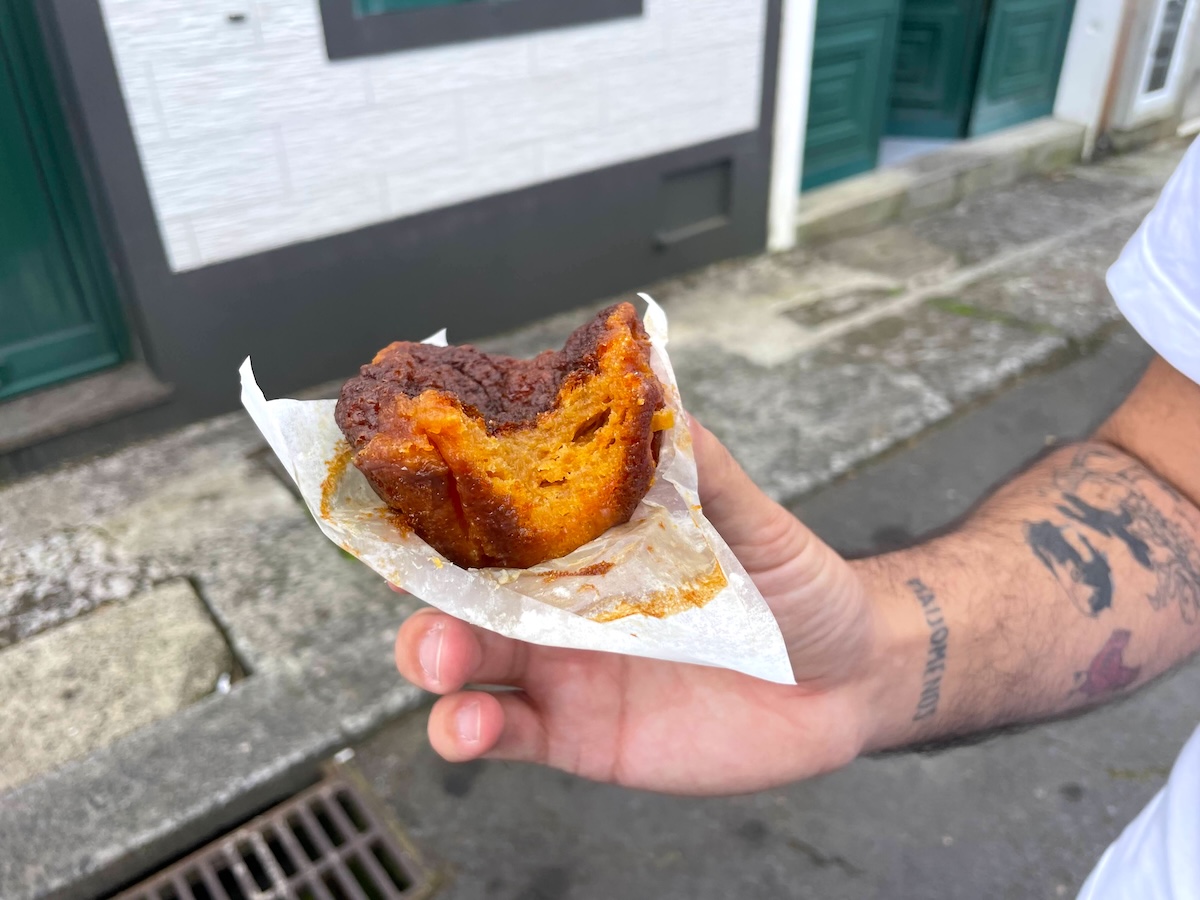
- Gloria Moniz and Rosa Quental: to try the famous bolos lévedos, which originated right here in Furnas. They’re served them plain or with various fillings (butter, fresh cheese, ham and cheese, cheese and chorizo, etc.)
- Restaurante Ponta do Garajau (Ribeira Quente): recommended for fresh fish, baked octopus, and limpets.
- Café Adelino (Ribeira Quente): a super-local restaurant recommended by our friend Raquel, who’s from São Miguel, for its garlic bread and chicken wings with hot sauce.
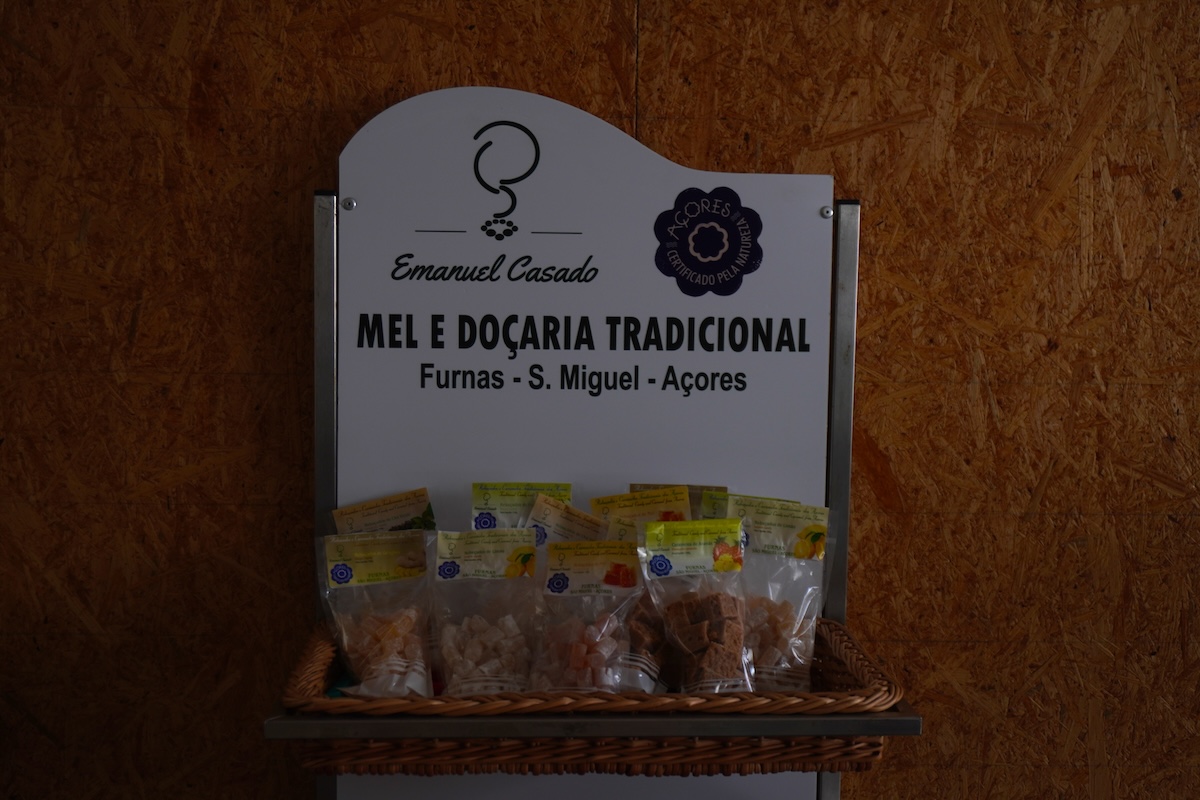
- Emanuel Casado – Mel e Doçaria Tradicional : If you’re craving something sweet, you’ll find a variety of honey-based candies and sweets here (they also sell honey).

Transportation: rent a car in São Miguel
As on all the islands of the Azores, we believe it’s essential to rent a car in São Miguel so you can fully enjoy the island, make the most of your time, and visit all the places recommended in this guide at your own pace.

At Randomtrip we rented a car through Autatlantis, both on São Miguel and the other islands, and everything went perfectly: the service upon arrival was quick and efficient, the car (a Citroën C3) was like new, and we didn’t have a single problem. But you really should use a comparison site (at Randomtrip we use DiscoverCars) to see which one offers the best price. Virtually all companies include a deductible in their insurance, and Autatlantis is one of those with the lowest deductible (€700, compared to €1,300–€1,500 at other companies).

On our last visit to São Miguel, we tried another company, Magic Islands, which we unfortunately cannot recommend. We booked directly with them, choosing the highest insurance coverage they offered (Plus). We had a flat tire, which wasn’t covered by the insurance (in theory, there was an extra insurance to cover that, but they never offered it to us—neither during the booking process nor when we picked up the vehicle), and the handling and service from that point on were terrible: they didn’t answer our calls even though we were calling during the hours they had specified for contact, the insurance company didn’t offer us any assistance (so we had to arrange the tow truck and everything else on our own), the car was missing its warning triangles, and we had to pay for a taxi from where we were (Nordeste) to Ponta Delgada so they could give us another vehicle. When we returned the vehicle at the end of the rental, they greeted us with an arrogant and cocky attitude, verbally threatening that they hoped we had photos of some scratches or they would charge us for them (we had a video to confirm they were already there), they ignored us for quite a while, and told us in a mocking tone that we had a hefty bill to pay (the cost of repairing the tire) and that “this wouldn’t have happened if you knew how to drive,” in a mocking tone. Completely unacceptable and inappropriate customer service. After many calls, emails, and complaints, they agreed to refund us only the cost of the assistance they should have provided, while we still had to pay for the tire replacement and the taxi. We recommend that you do not rent from Magic Islands Rent A Car, read the terms and conditions and reviews of each company carefully—not just the prices—and purchase the extra insurance from DiscoverCars.

Car rental prices in São Miguel rarely drop below €25 per day, and—especially in the summer—we recommend booking well in advance to avoid running out of cars or finding that the few available come with exorbitant prices (there have been summers when rates reached €100 per day, and we know several people who were unable to rent a car because they waited until the last minute).

You can check and compare other companies with availability for your dates on comparison sites like DiscoverCars. Be sure to carefully review each company’s rental terms (deductible, insurance coverage, fuel policy, reviews, etc.)—not just the price.

Parking in Furnas: In general, we didn’t have any trouble finding parking in Furnas; there are a few parking lots (some free, others paid) as well as some spots on the streets themselves. However, during peak season and at certain times of the day, it can be more difficult, and you may have to drive around a bit or park a little farther away. If you’re staying in Furnas, you can filter for accommodations that include parking (as was the case for us at Quinta da Mó)

Another option if there are no rental cars available or if they’re too expensive is to rent a motorcycle (scooter), although we honestly don’t recommend it because of the long distances you have to travel on São Miguel and the unpredictable and changeable weather in the Azores.
You can also get around São Miguel by public transportation: there are three bus companies that connect various parts of the island; you can view the schedules here. Connections and frequencies are quite limited, but if you’re traveling on a tight budget, this can be a good option for visiting some of São Miguel’s main attractions.

We hope this guide helps you plan your visit to the Furnas area on São Miguel. You can view our complete guide to the island here for more information about the other areas.
