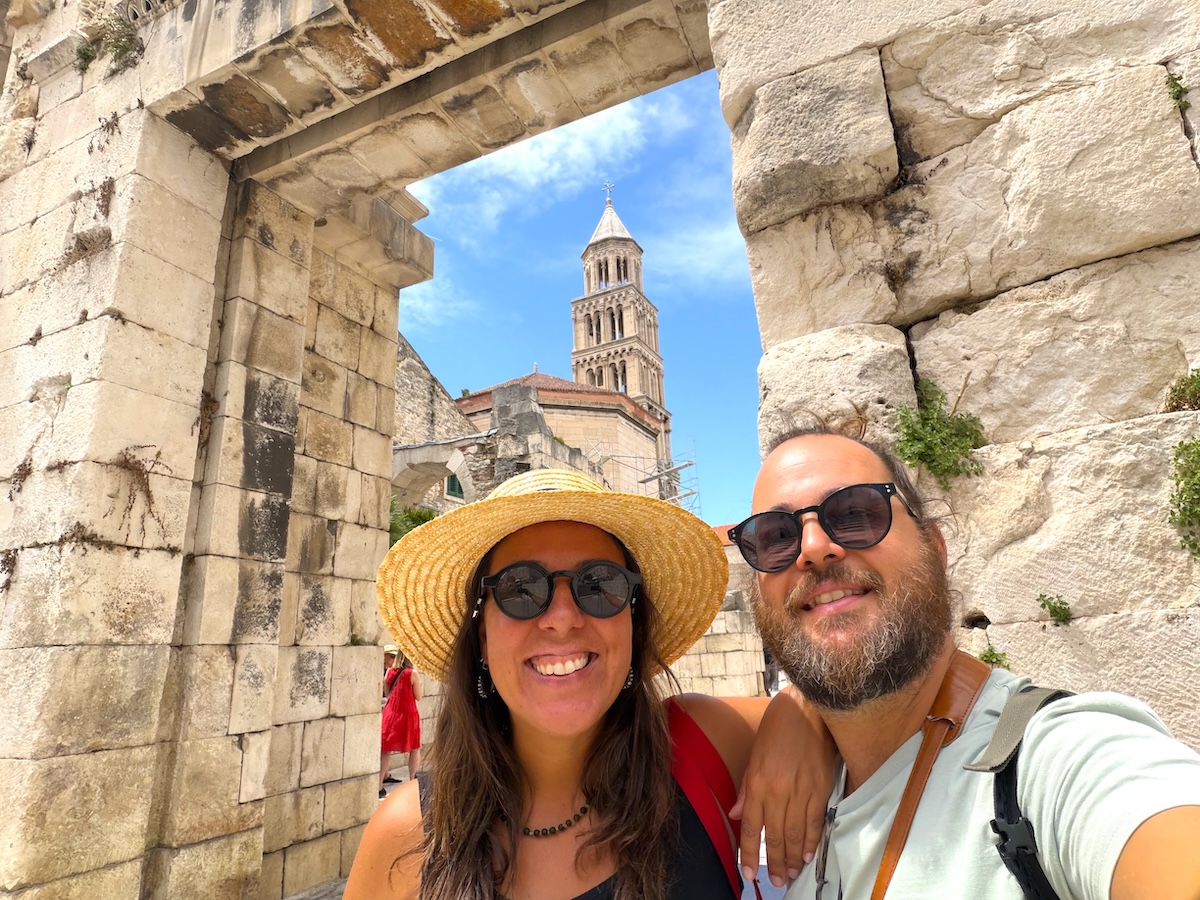
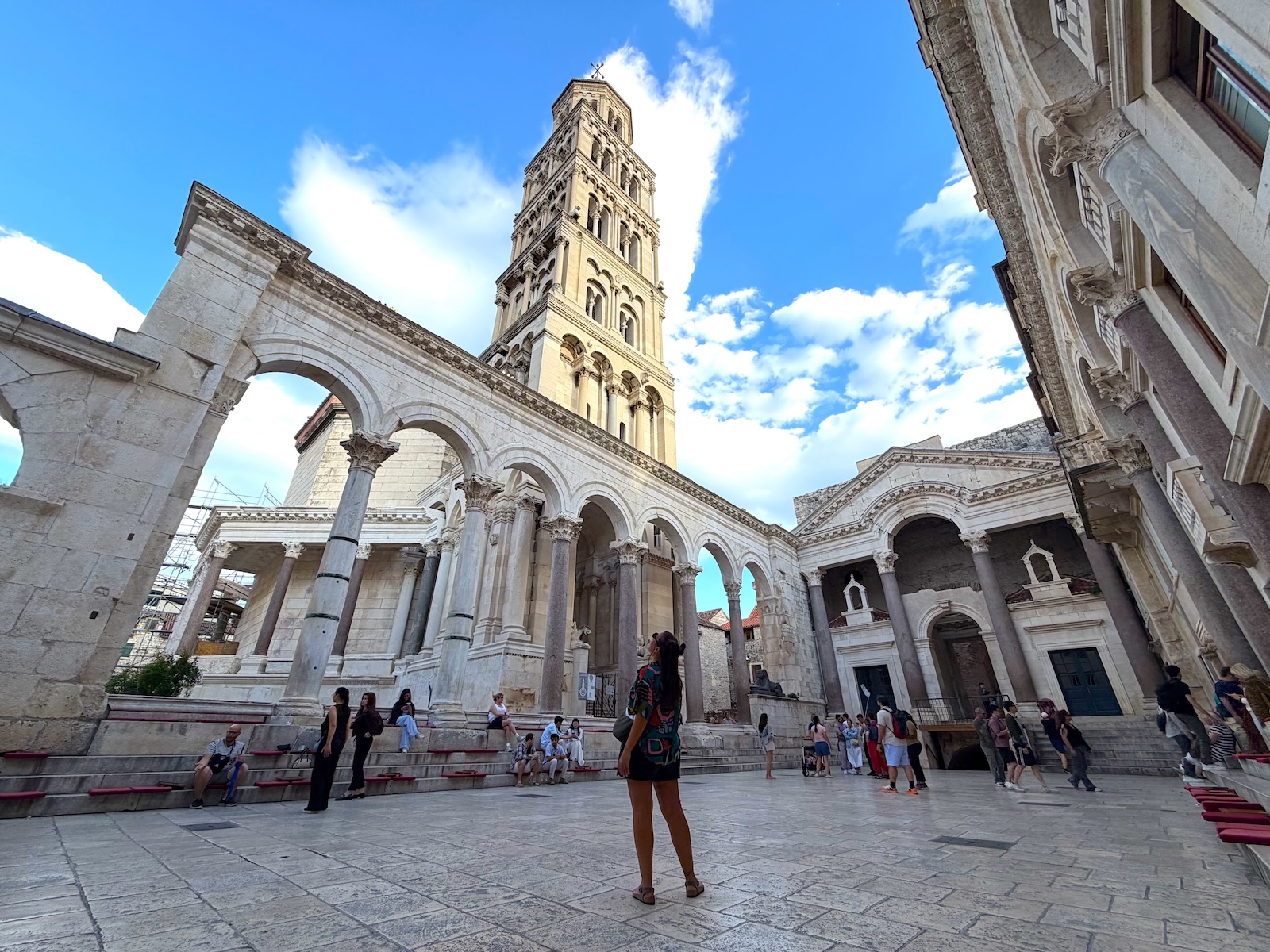
Split is a vibrant city with a historic center that’s a true open-air museum: a Roman emperor’s palace where people still live, work, and drink coffee, and which is best enjoyed with pomalo (that is, at a leisurely pace). Between Diocletian’s Palace, the Riva, the museums, and walks on Marjan, the city offers enough to see and do for several leisurely days, and a few more if you enjoy the beach.
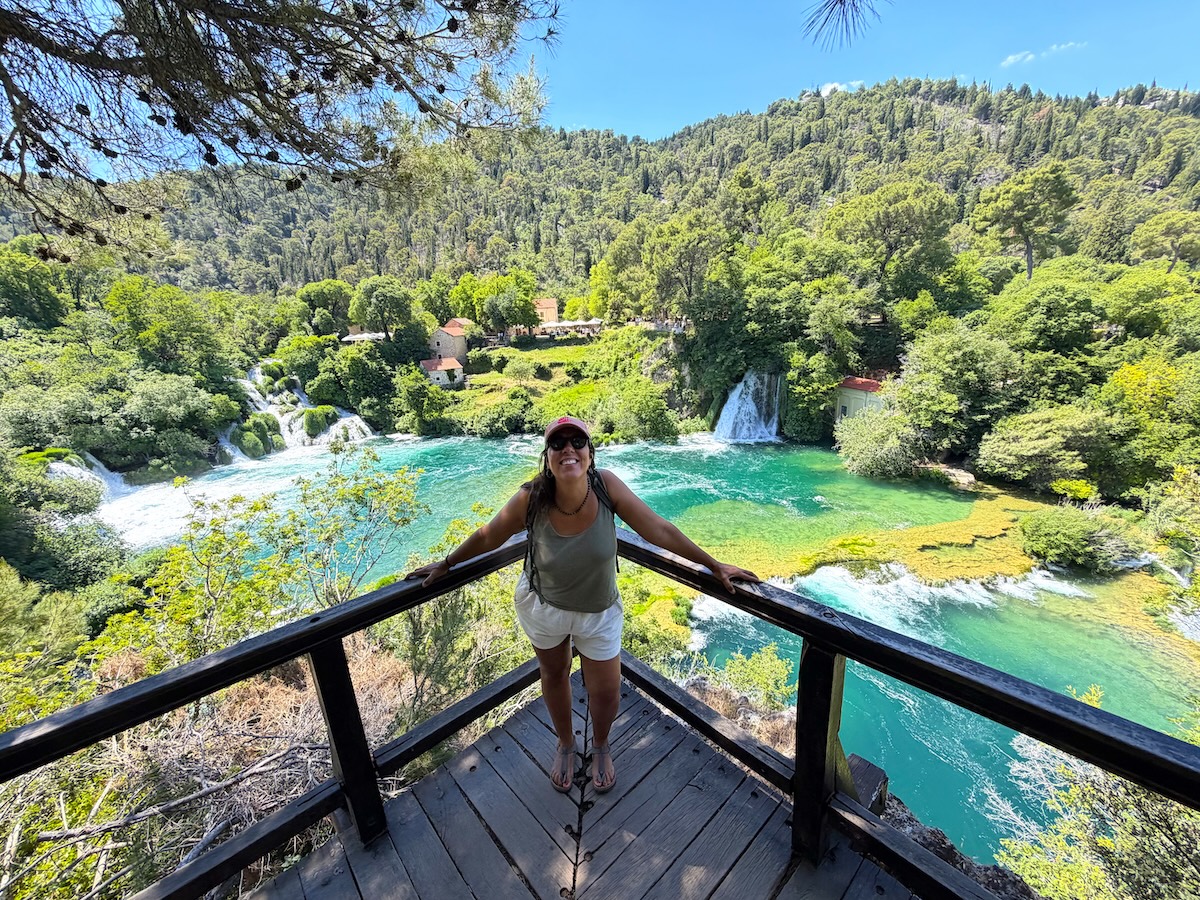
If you have time, it’s best to explore the surrounding area. Just a few kilometers away are Salona and the Klis Fortress, and a short distance away is Trogir, the Krka National Park and the islands (a great idea is to tour them by sailboat, as we did with More Sailing). If you plan your trip well, you can combine the best of the historic center with a side trip, making for a much more complete experience.
In this guide, we’ll tell you all the things to see and do in Split and the surrounding area, with specific itineraries for 1, 2, 3, or 4 days, including practical tips, where to stay, and even what to try and where to eat, so your trip will be just as incredible as ours was.
Basic information for traveling to Split
Official Language: Croatian
Currency: Euro (as of 2023)
Population: 150,000 (as of 2021)
Best time to visit: You can visit year-round, though if you want to enjoy the beaches and nearby islands, we recommend the middle of the year. Try to avoid July and August, when the city gets the most crowded. We’ll go into more detail about when to visit Split in this section of the guide.
How Many Days: Ideally, you’ll want 3-4 days to explore Split and its surroundings. In this section, we’ll share specific itineraries for Split to help you plan your trip.
How to get there: There are plenty of direct international flights to Split, so we recommend using flight comparison sites like Skyscanner and Kiwi and being flexible with your dates to get the best possible price. We go into more detail in this section of the guide.
Where to stay: Ideally, you should stay in the Old Town or nearby. At Randomtrip , we stayed in a simple, affordable apartment a 10-minute walk from downtown. We’ll go into more detail in the “Where to Stay in Split” section of the guide.
What to Pack: Good travel insurance (click this link for a 5% discount on the policy we always use) and here’s a list of must-haves for your backpack on this trip (check out our favorites from Decathlon)
Getting Around: The best way to get around Split is on foot, since most places in the historic center are within walking distance. To explore the surrounding areas, you can take an Uber or Bolt, ride the bus, or rent a car for complete freedom of movement. Find more info on getting around Split in this section of the guide
Cost: Starting at 70€/day per person (approx.), depending on the type of accommodation, meals, and how much you want to explore the surrounding area. More information on budgeting in this section of the guide.
Internet connection: If you are visiting for a few days, your phone supports eSIM and you don’t want to complicate things, we recommend Holafly eSIM (unlimited data, 5% off with the code RANDOMTRIP) or the Sim Local eSIM (limited data, but cheaper, 10% off with the code RANDOMTRIP). More info here
Time zone: GMT+1 in winter, GMT+2 in summer
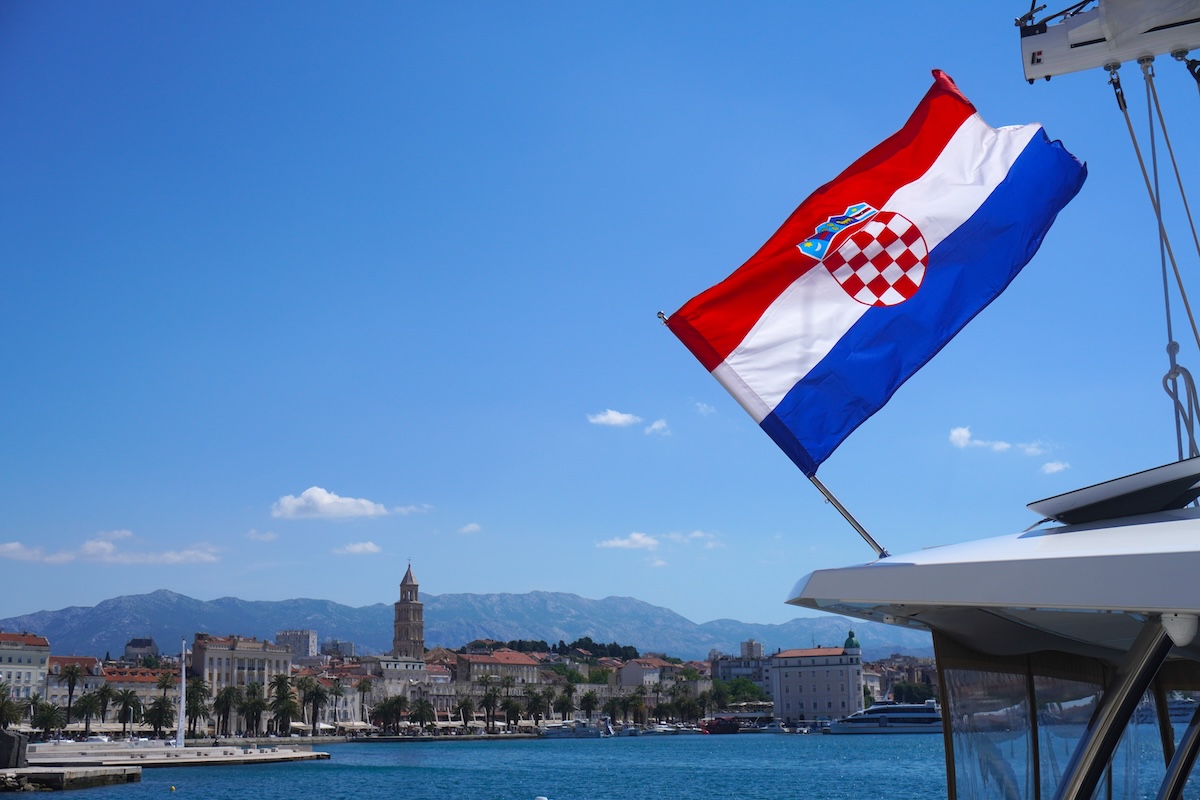
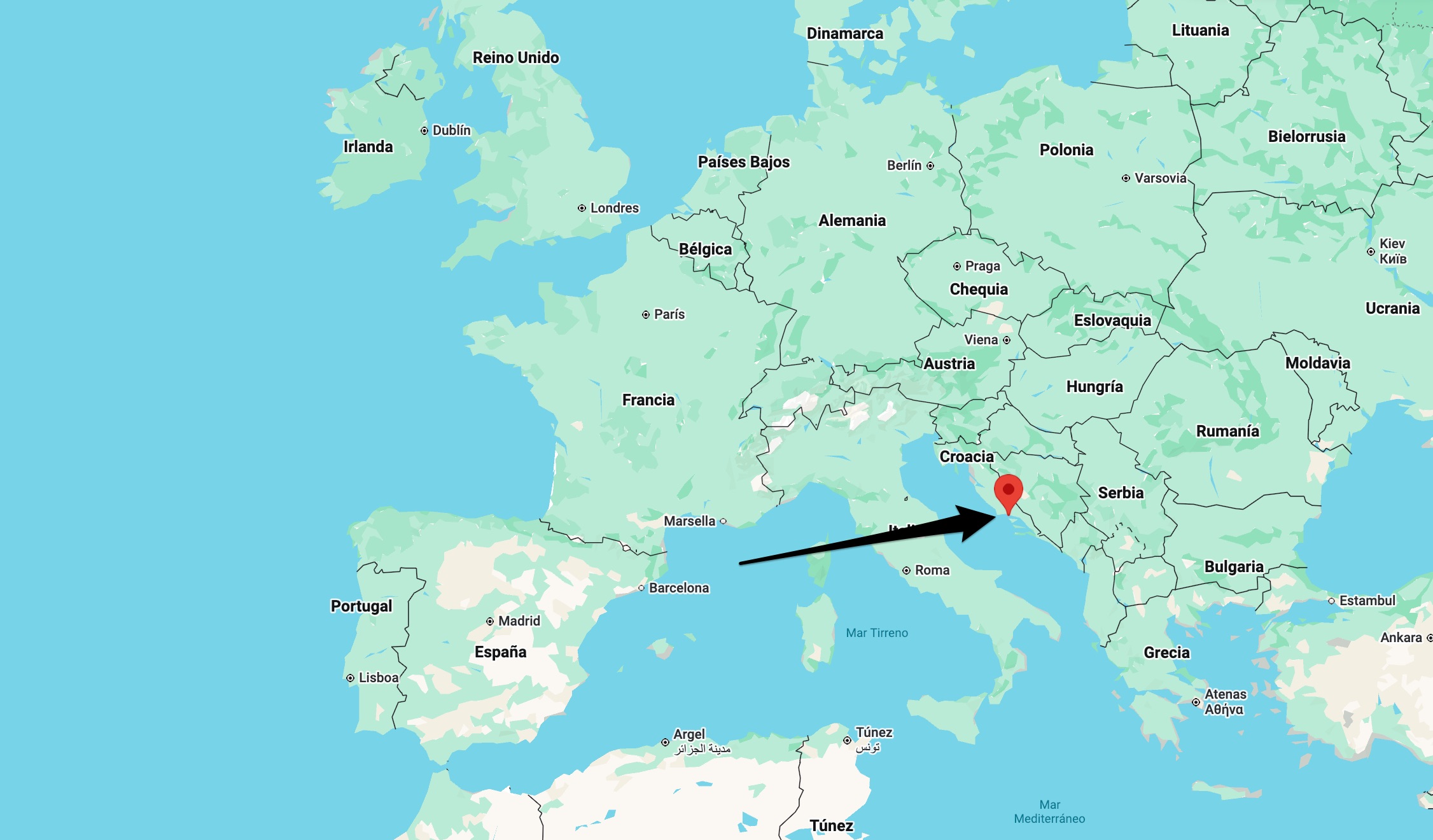
Where is Split?
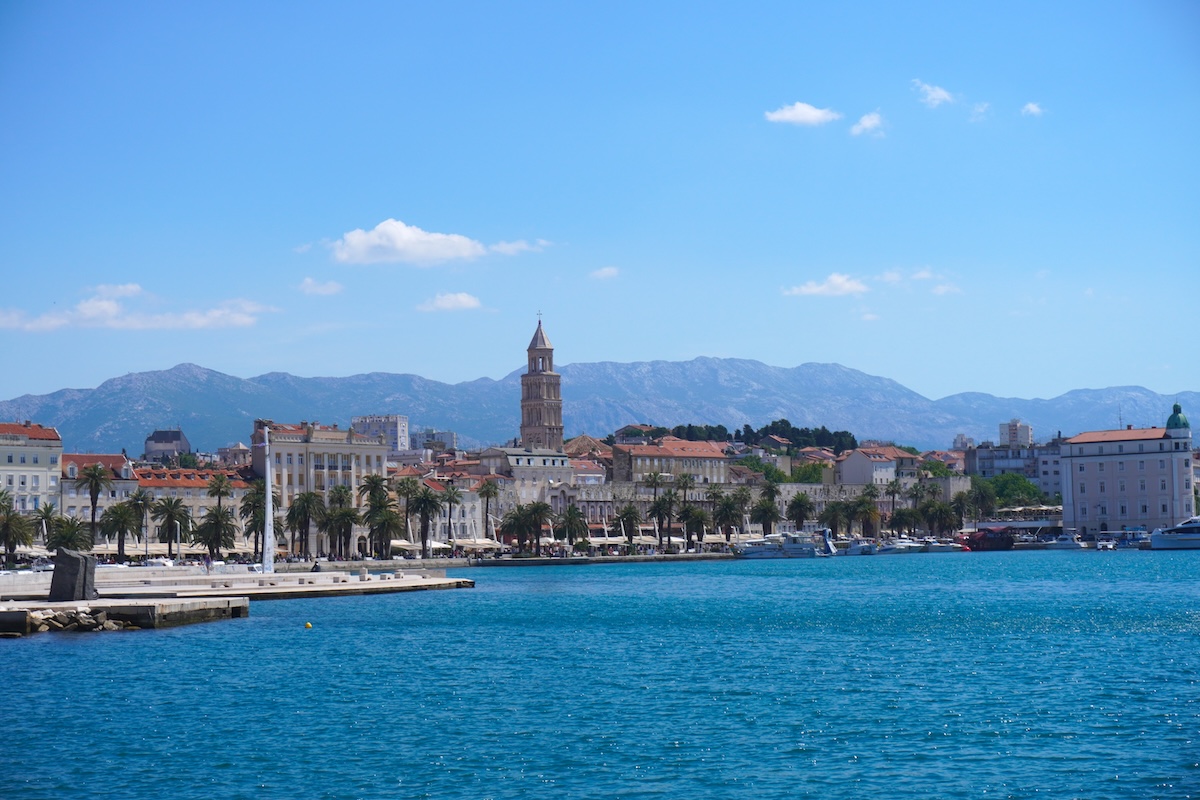
Split is located on the southern coast of Croatia. Here you can see Split’s location within Europe and the surrounding area:
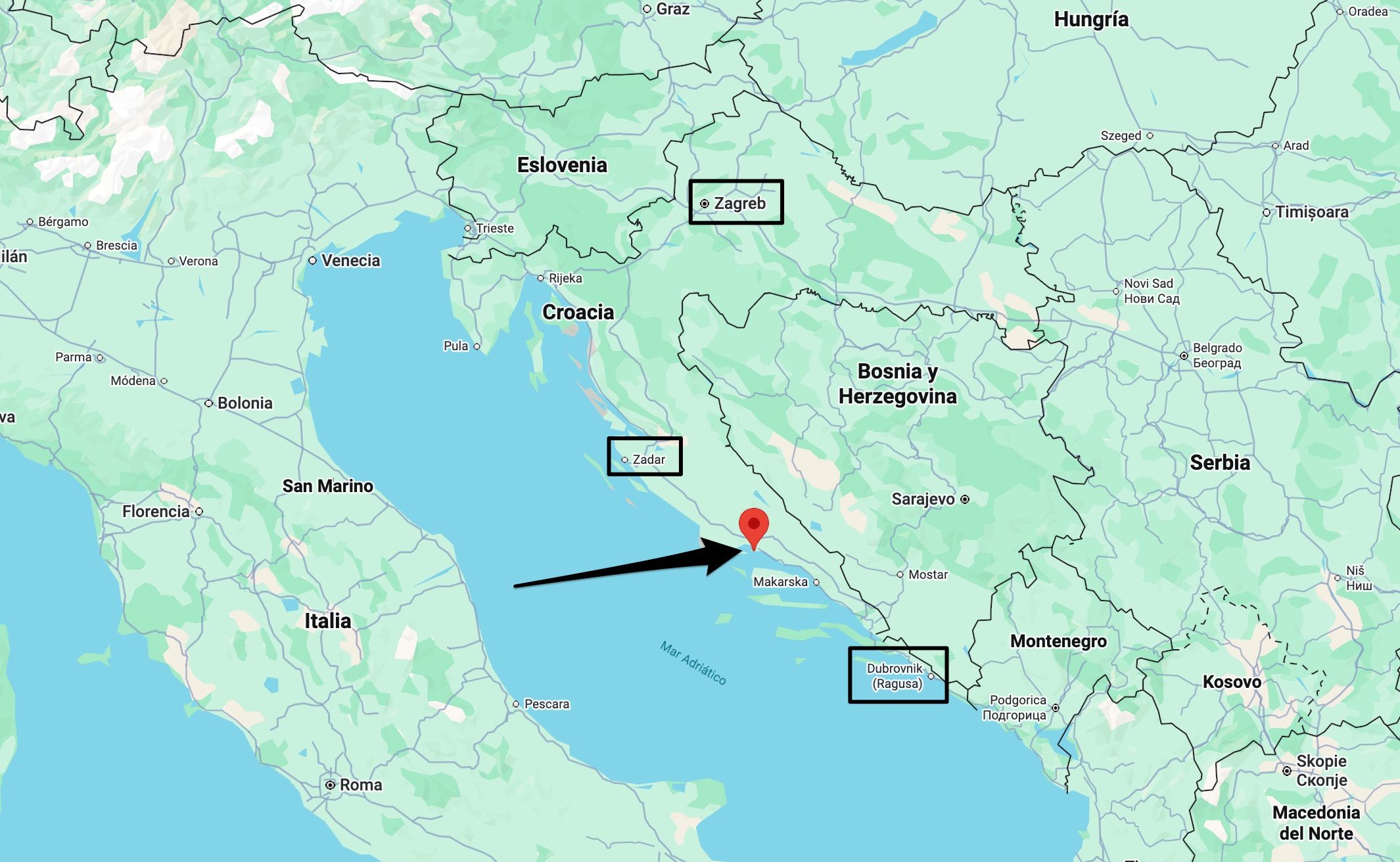
And on this other map, you can see Split’s location within Croatia, as well as other major destinations in Croatia such as Zagreb, Zadar, and Dubrovnik:
When to visit Split
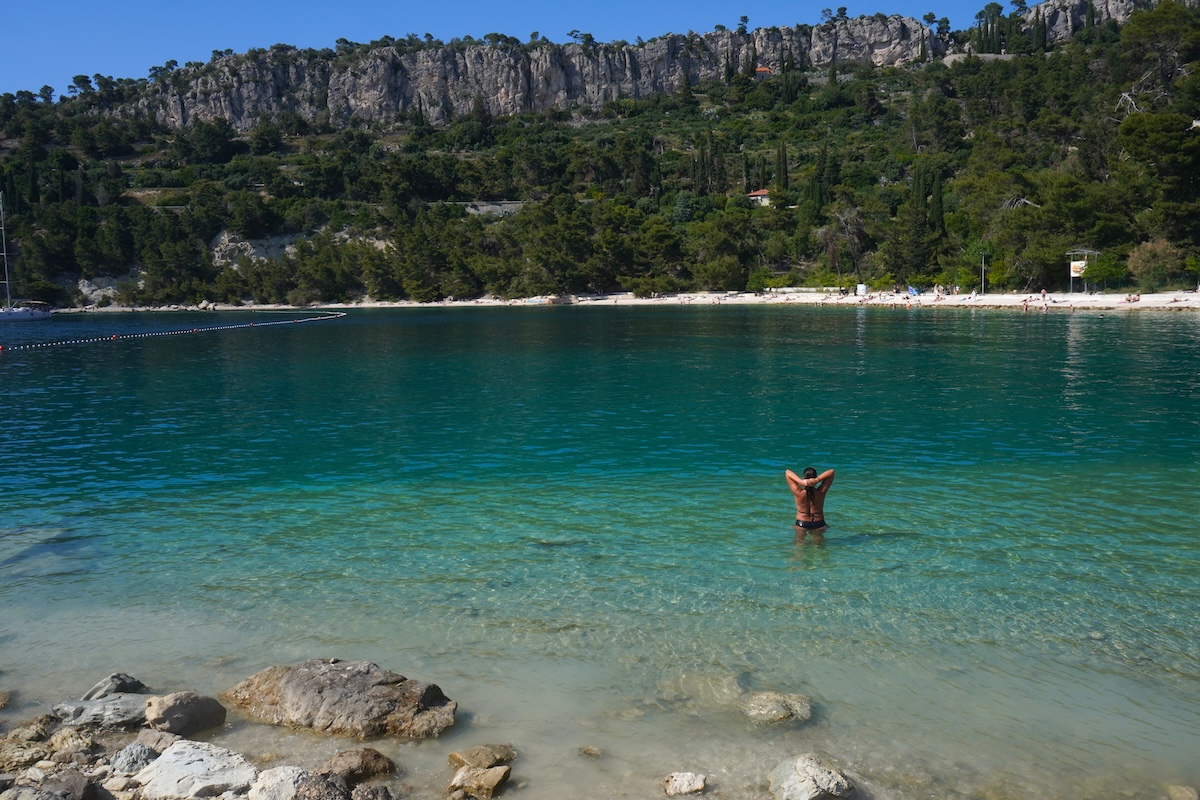
In general, we recommend visiting Split during the middle months of the year (April through October), when you’ll find the best weather, although it’s best to avoid the peak tourist months (especially July and August) when prices rise and everything is more crowded. May, June, September, and October would be our top picks, so you can enjoy good weather and even the beaches around Split. If you’re looking to save as much as possible and avoid the crowds, the winter months are ideal, since prices drop and you’ll get to enjoy the city “almost all to yourself” (though many tourist-oriented businesses are closed).
Weather in Split
The climate in Split is typically Mediterranean, with hot summers and mild, somewhat rainier winters.
Here’s a summary table of Split’s climate to give you an idea of what to expect:
Split climate table, with temperatures and rainy days per month:
| Month | Lowest temperature | Maximum temperature | Water Temperature (average) | Rainy days |
|---|---|---|---|---|
| January | 4ºC | 11ºC | 14ºC | 8 |
| February | 4ºC | 12ºC | 13ºC | 8 |
| March | 7ºC | 15ºC | 13ºC | 8 |
| April | 10ºC | 18ºC | 15ºC | 8 |
| May | 14ºC | 23ºC | 18ºC | 7 |
| June | 18ºC | 27ºC | 21ºC | 5 |
| July | 20ºC | 31ºC | 24ºC | 3 |
| August | 20ºC | 31ºC | 24ºC | 4 |
| September | 17ºC | 26ºC | 22ºC | 7 |
| October | 13ºC | 21ºC | 20ºC | 8 |
| November | 9ºC | 16ºC | 18ºC | 9 |
| December | 5ºC | 12ºC | 16ºC | 9 |
| Month | Lowest temperature | Maximum temperature | Water temperature (average) | Rainy days |
Tourist demand in Split
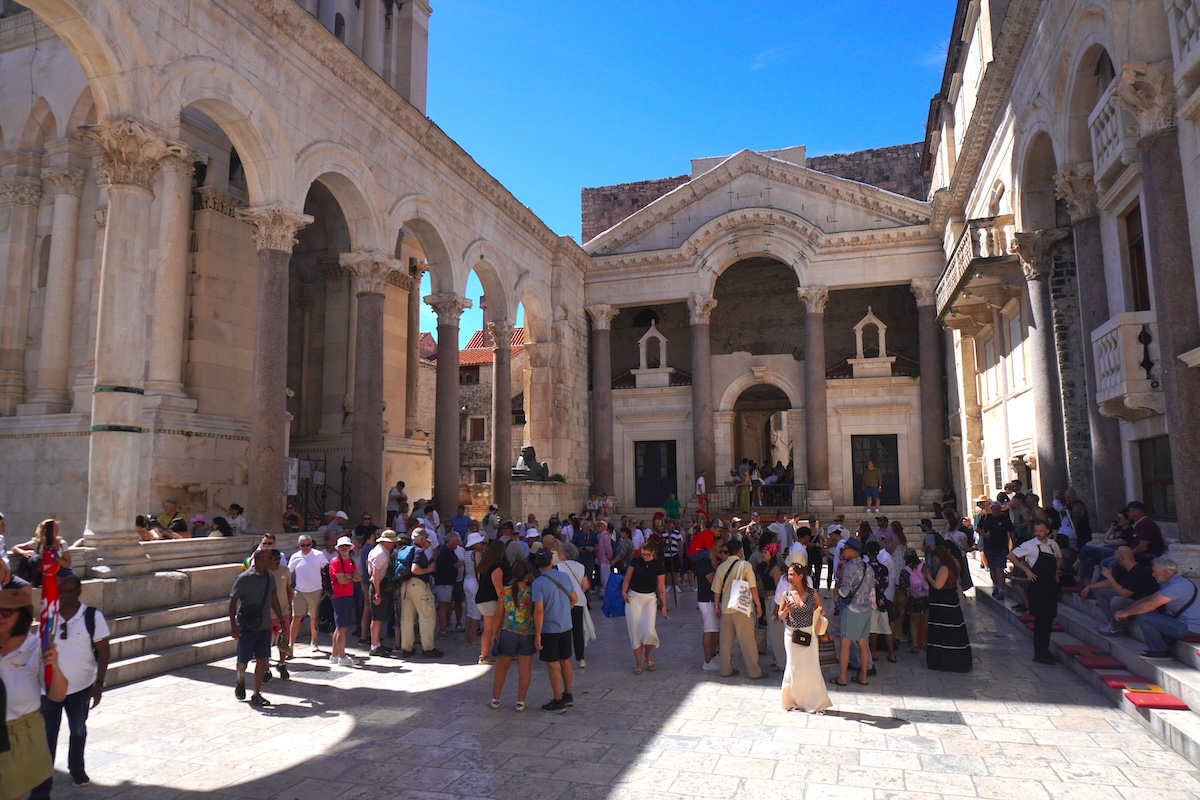
The peak tourist seasons (and therefore, when you’ll find more people, longer lines, higher prices, and more difficulty getting into restaurants or popular attractions) are:
- Summer (June through October): In addition to being school vacation time in many countries, which drives up demand (and prices), this is also the rainy season
- Easter (March/April)
- Long weekends (November, December)
So we recommend avoiding those dates if you want to enjoy the city at a more leisurely pace and with better accommodation rates.
Major festivals in Split
If you want to be in Split for the biggest celebrations or festivals of the year, don’t miss:
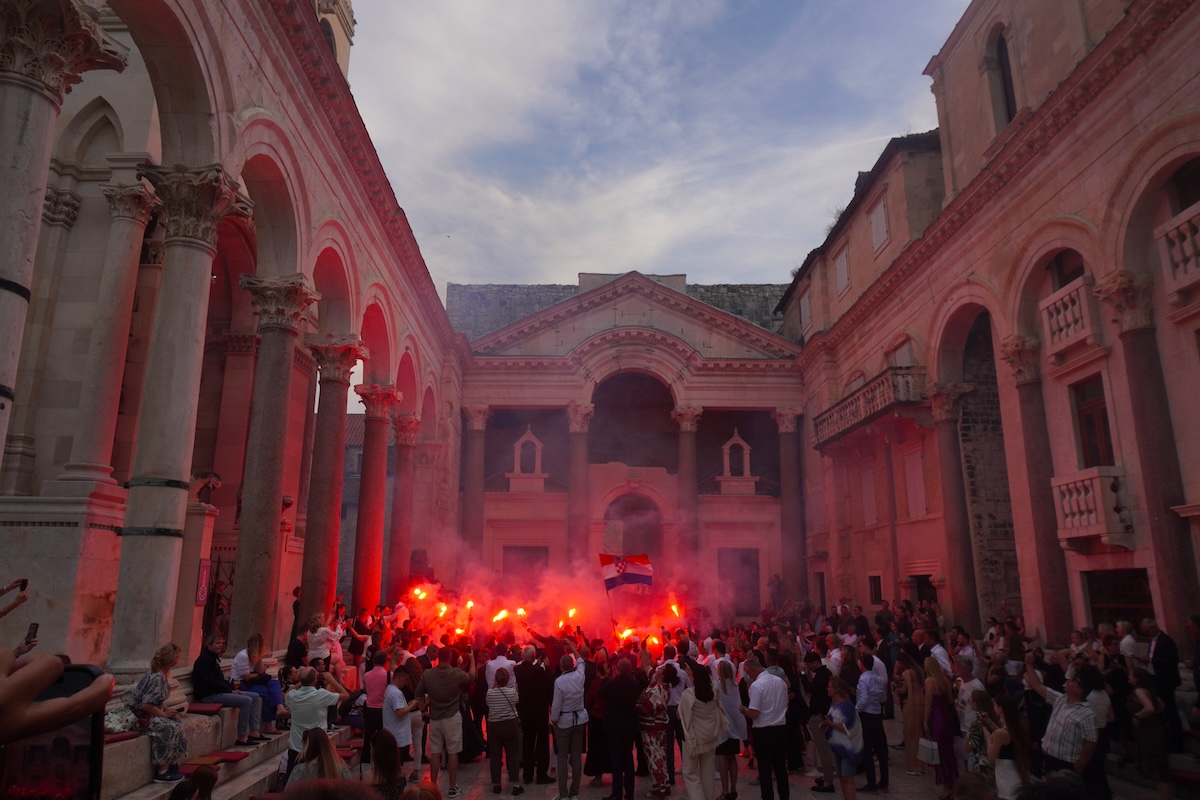
- Sudamja or City Day ( May 7): This is the feast day of Saint Domnius (Sveti Duje in Croatian), the patron saint of Split, whose 4th-century remains are preserved in the Cathedral. The day begins with a procession and a Mass, and includes a fair and concerts. It’s the city’s biggest day.
- Split Mediterranean Film Festival (June): a film festival dedicated to Mediterranean cinema, featuring more than 100 films over ten days. Its 19th edition (2026) took place from June 11 to 20 at four venues: the Bačvice open-air summer cinema, the Gripe Fortress, the Zlatna Vrata Cinematheque, and the Đardin, where screenings are free. For more information, visit fmfs.hr.
- Ultra Europe (July): a three-day electronic music festival in Mladeži Park. In 2026, it took place from July 10 to 12. Tickets sell out well in advance.
- Split Summer Festival ( Splitsko ljeto), from mid-July to mid-August: the city’s premier performing arts festival since 1954. It features opera, ballet, theater, and concerts, as well as exhibitions and street theater, in historic and outdoor venues such as the Peristyle of Diocletian’s Palace, Marjan Hill, and the town of Vrlika. It is organized by the Croatian National Theater in Split and, in 2026, took place from July 14 to August 14, with Verdi’s Don Carlos as the grand premiere. Seeing an opera in the Peristyle, with the Roman palace as a backdrop, is an experience that’s hard to top.
- Split Carnival (February), the Flower Festival (March), and Advent in Split ( December): if you travel outside the high season, these events have their own schedules
Summary: Best months to visit Split
Based on the above, if you’re looking to visit Split when it’s less crowded, with good weather, beaches, and more reasonable prices, the best months are May, June, September, and October. If you don’t mind skipping the beach, are more interested in the city’s cultural side, and want to save money, the best months are during the fall and winter (November through April).
How to get to Split
Otherwise, there are plenty of direct international flights to Split from various destinations in Europe, so we recommend using flight comparison sites like Skyscanner and Kiwi and being flexible with your dates to get the best possible price.
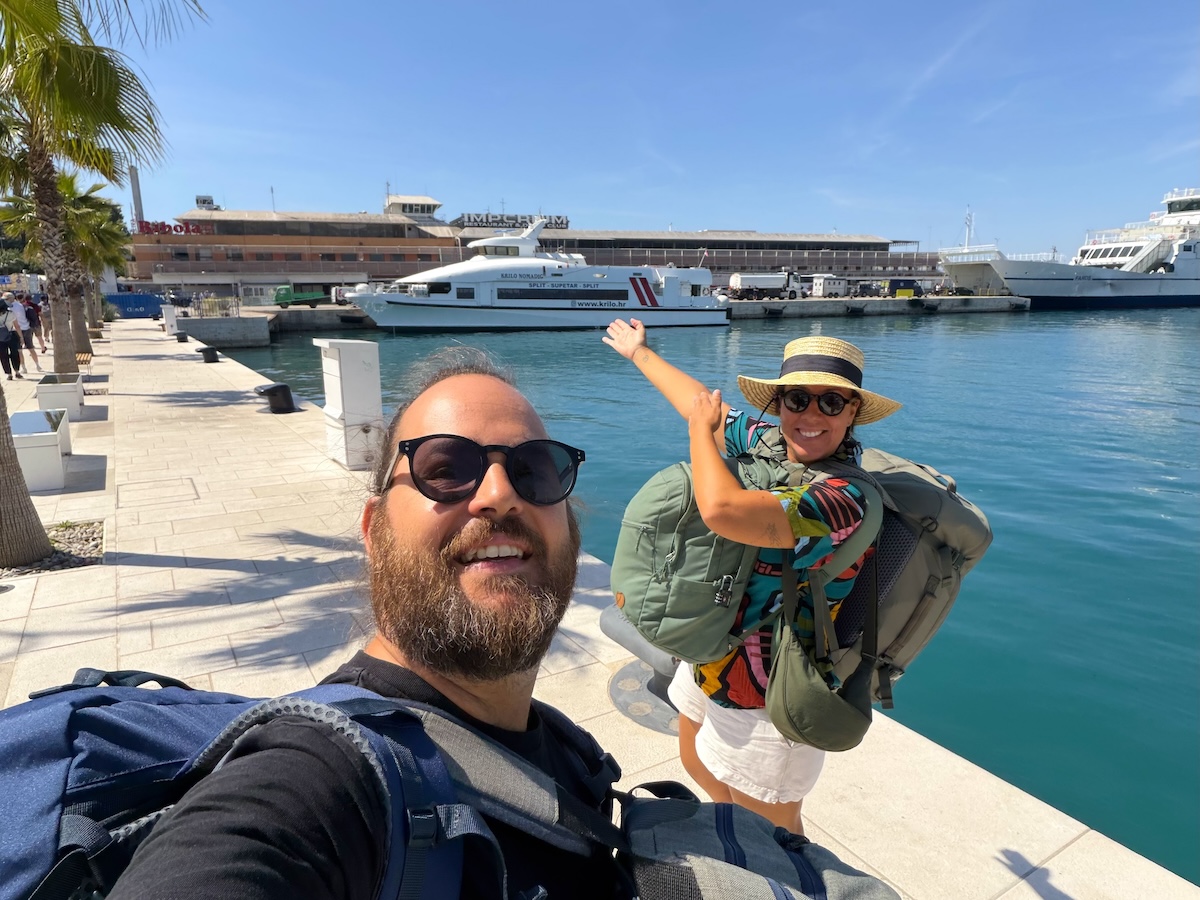
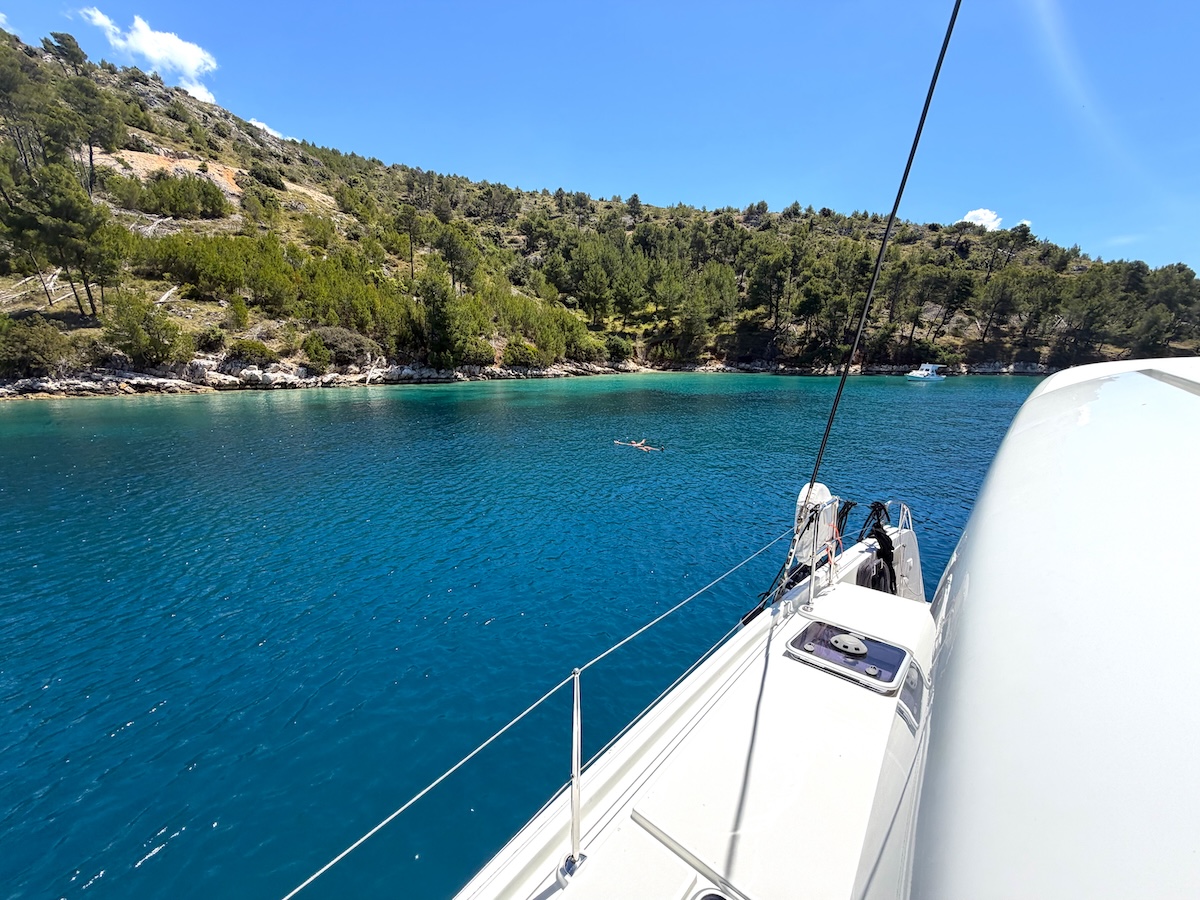
If you’re already in Croatia, you can get to Split in different ways depending on where you are (by plane, bus/car, or boat). In our case, we flew from Barcelona to Split; from there, we went to Trogir to take a sailing trip around the islands with More Sailing; we returned to Split for a few days; and from there , we took a boat to the island of Hvar (you can check connections, schedules, and prices here).
How many days to stay in Split
In our opinion, 3-4 days is the ideal amount of time to explore Split, including its historic center and some nearby attractions.
In this section, we’ll share specific 1-, 2-, 3-, and 4-day itineraries for Split to help you plan your trip.
Croatia travel insurance
Do you know what you should always have in your backpack? Good travel insurance! On our trip to Croatia, we purchased Heymondo Travel Premium. Beyond medical assistance in case something happens to you, the insurance also covers you for adventure sports. Plus, if anything happens to your luggage—damage, theft, delayed delivery, or loss—the insurance has your back. We use and partner with various insurance providers, and as a reader, you can enjoy the following discounts:
Carefully read the terms and conditions of each policy and hire the insurance that best suits your needs.
Things to see and do in Split
Map of Split
We’ve divided the places to visit in Split into two areas: the historic center (which is further divided into Diocletian’s Palace and other sites) and the surrounding area. We’ve assigned a different color to each area to make them easier to identify. Everything is on a Google Maps map that you can save to your smartphone to use during your trip.
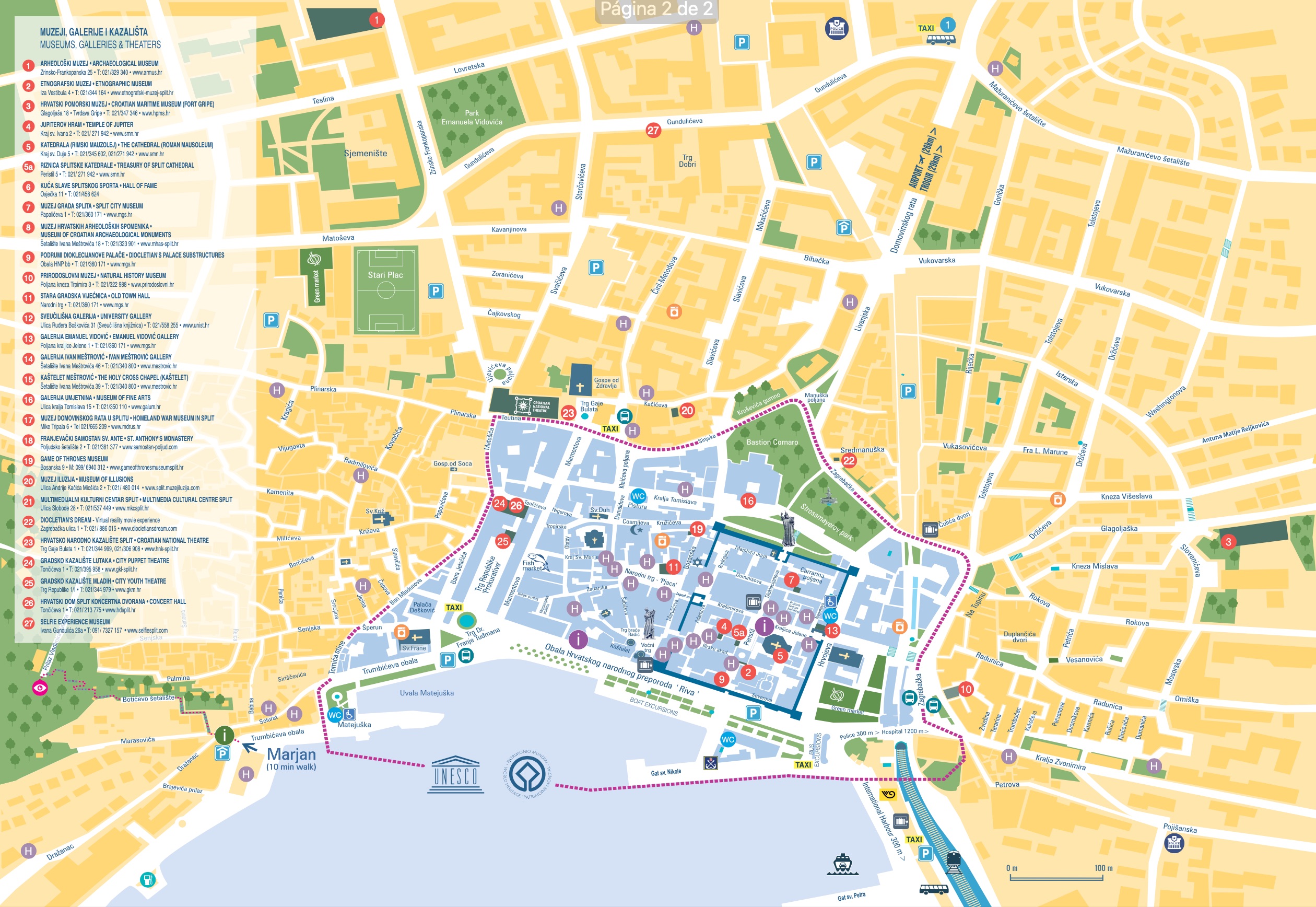
Here you can also view the official tourist map of downtown Split (you can download it in a larger size and higher resolution here)
Introduction: A brief history of Split and responsible tourism in the city
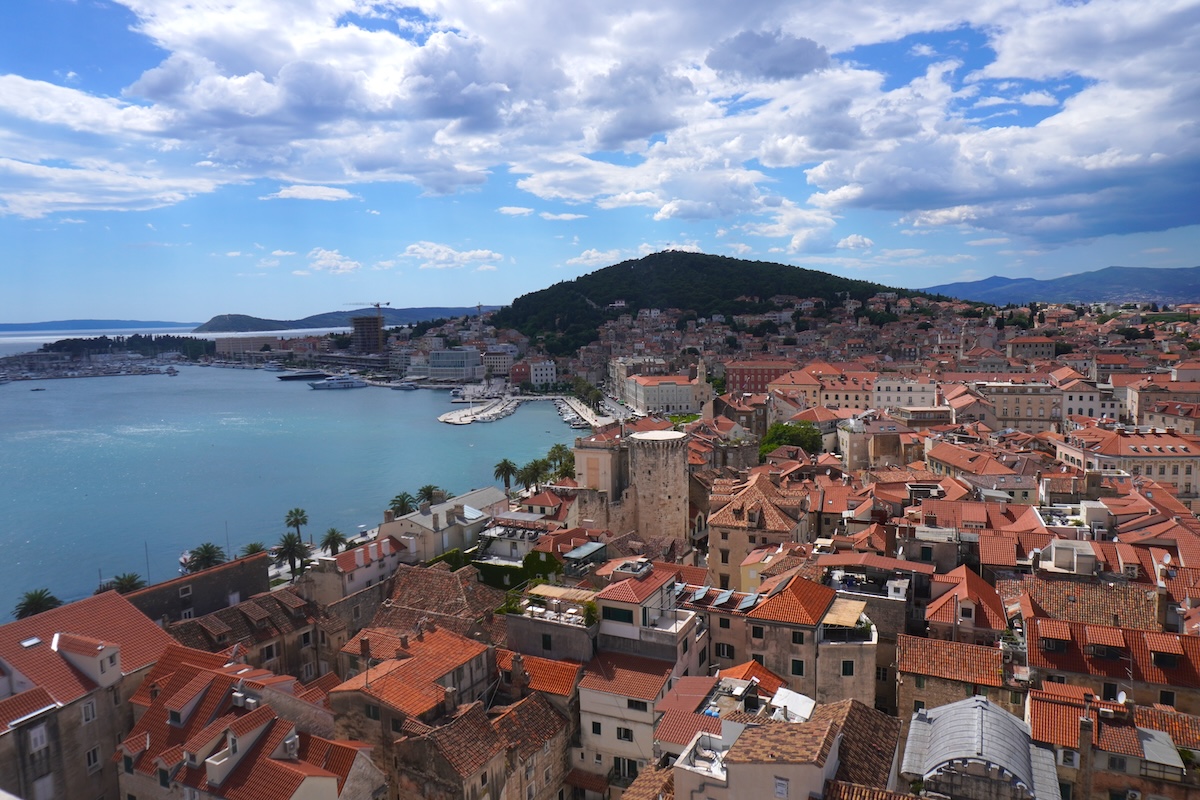
Before it became Split, this stretch of coastline was home to the Illyrians (from the 10th century B.C.), and, in fact, one of their tribes, the Delmatae (already mentioned in Roman sources in the 2nd century B.C.), comes the name of the entire region, Dalmatia. Later, the Greeks called the place Aspálathos, after a yellow plant that still covers the area every spring. But the true protagonist of this story is one specific person: Diocletian, the Roman emperor.
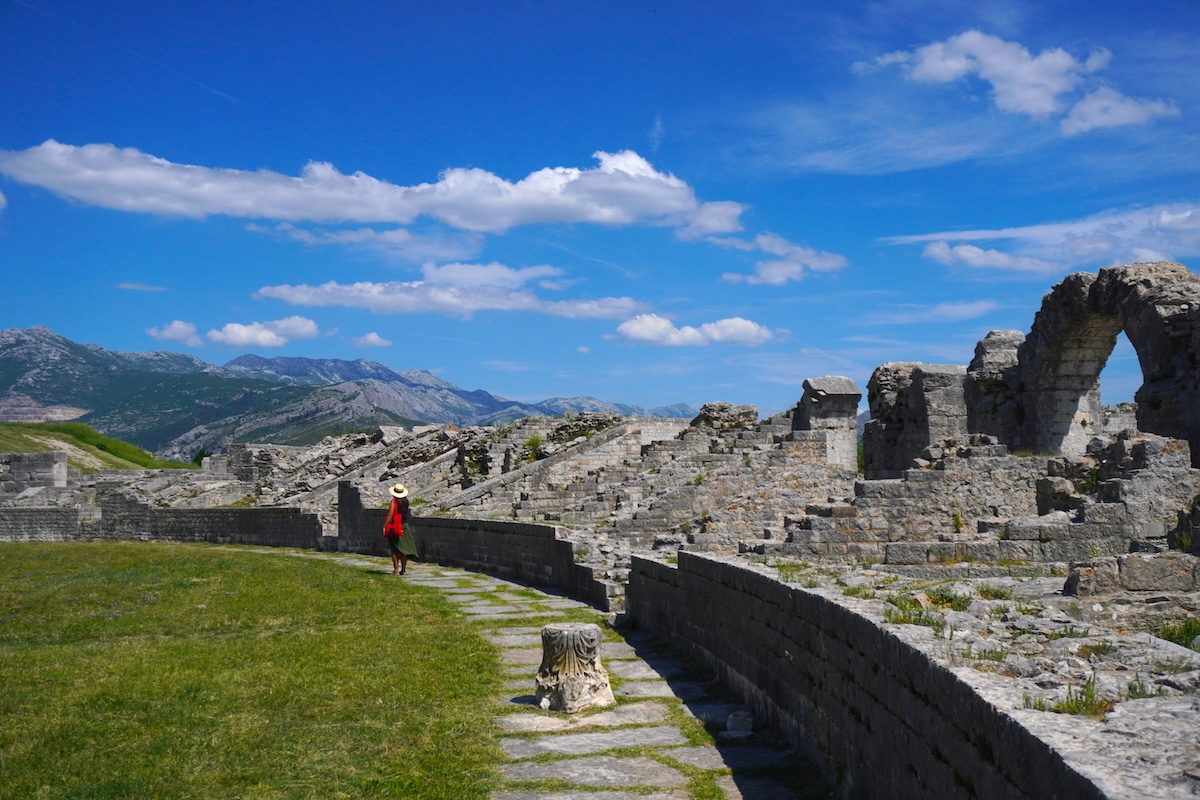
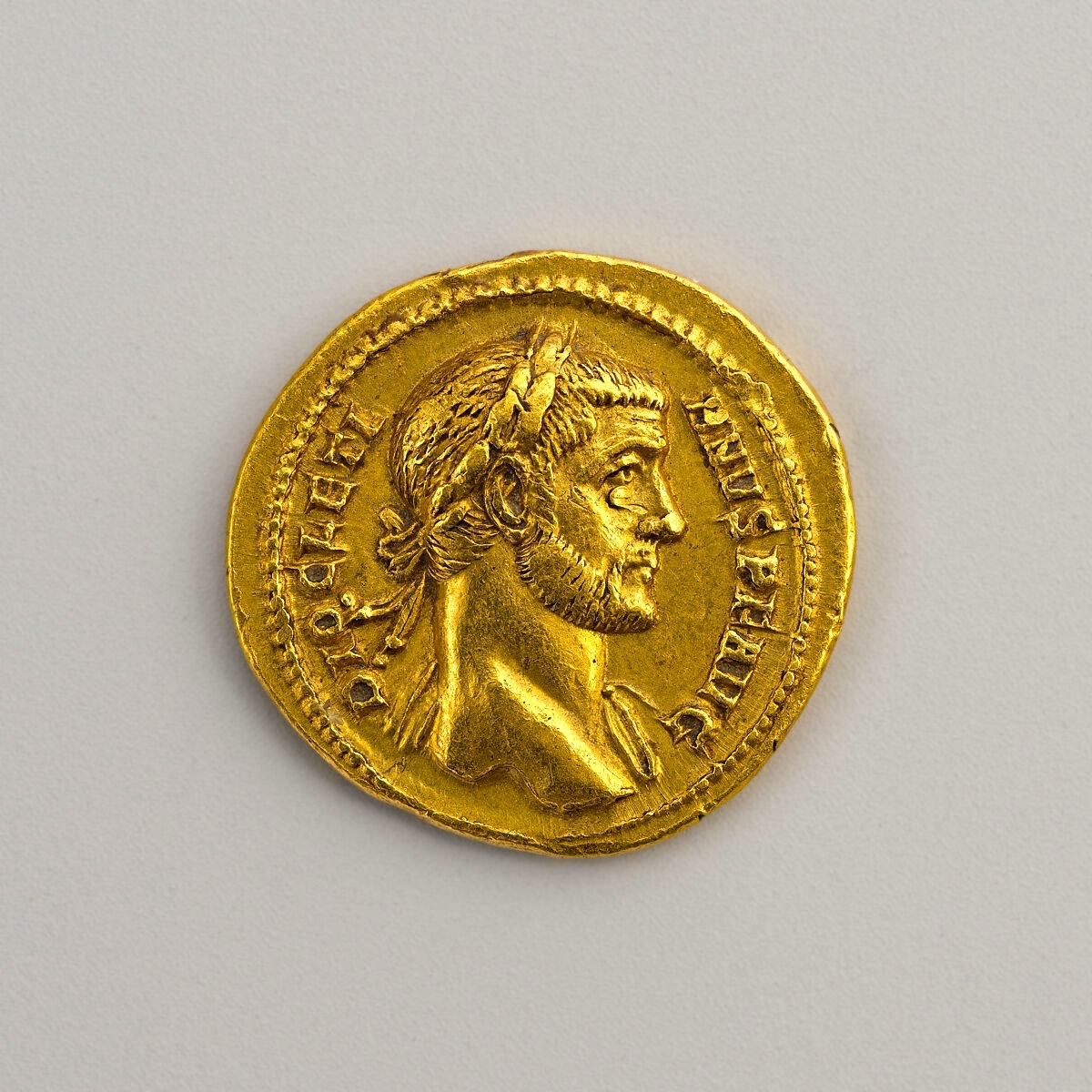
Diocletian was born around 245 AD near what is now Split, close to Salona (6 km from Split lies one of the most important cities of the Roman Empire at that time, whose ruins you can also visit), the son of humble parents, and rose from the rank of a common soldier to the imperial throne.
It is said that when Diocletian was a young soldier in Gaul (modern-day France), a priestess called him stingy in a tavern, and when he joked that he would be generous once he became emperor, she replied that he would be so the day he killed a wild boar. Diocletian spent years hunting wild boars without success, until he personally executed the officer who had assassinated Emperor Numerian: his name was Aper, which in Latin means, precisely, “wild boar.” The soldiers proclaimed him emperor that very day, in 284.
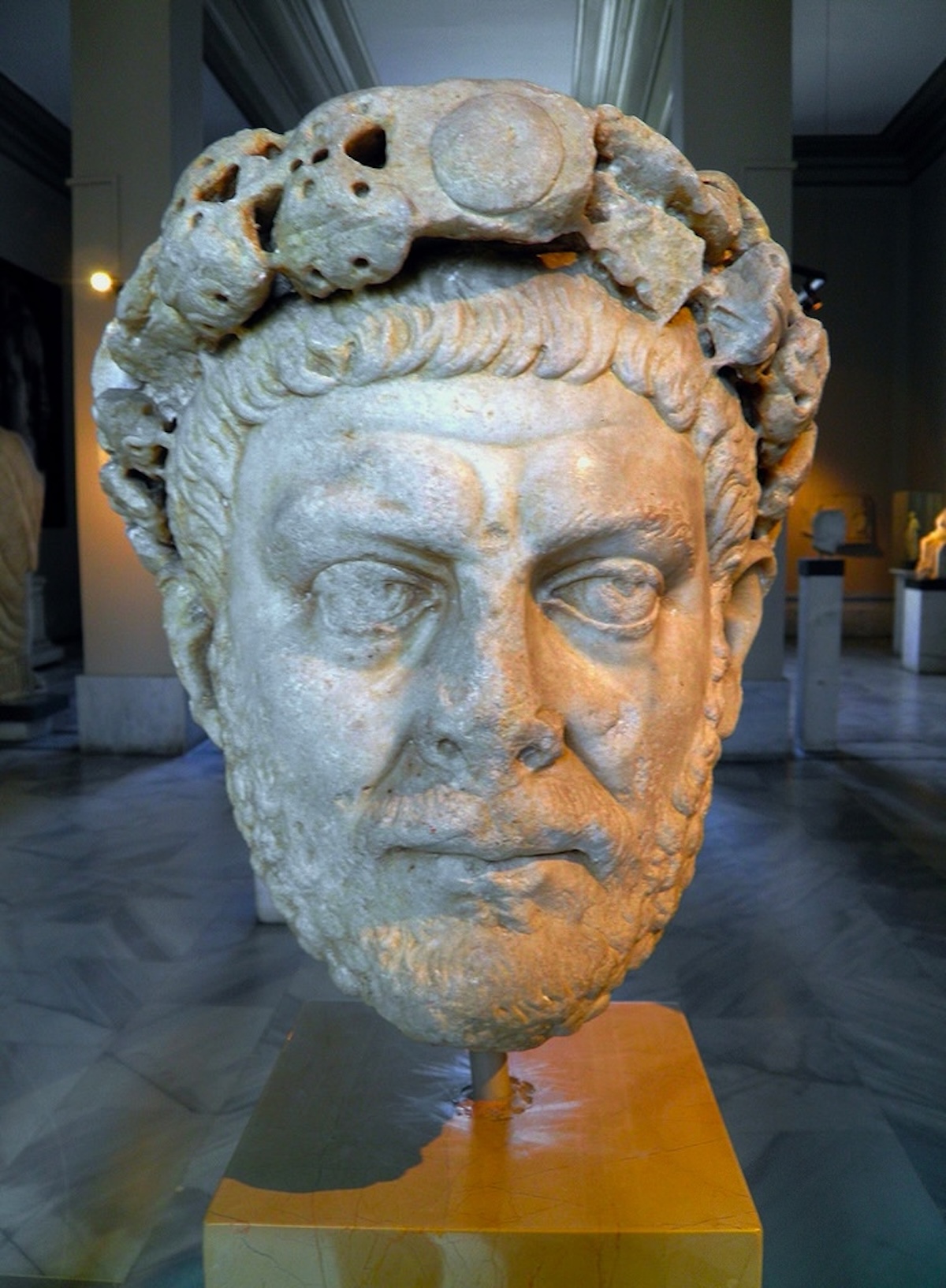
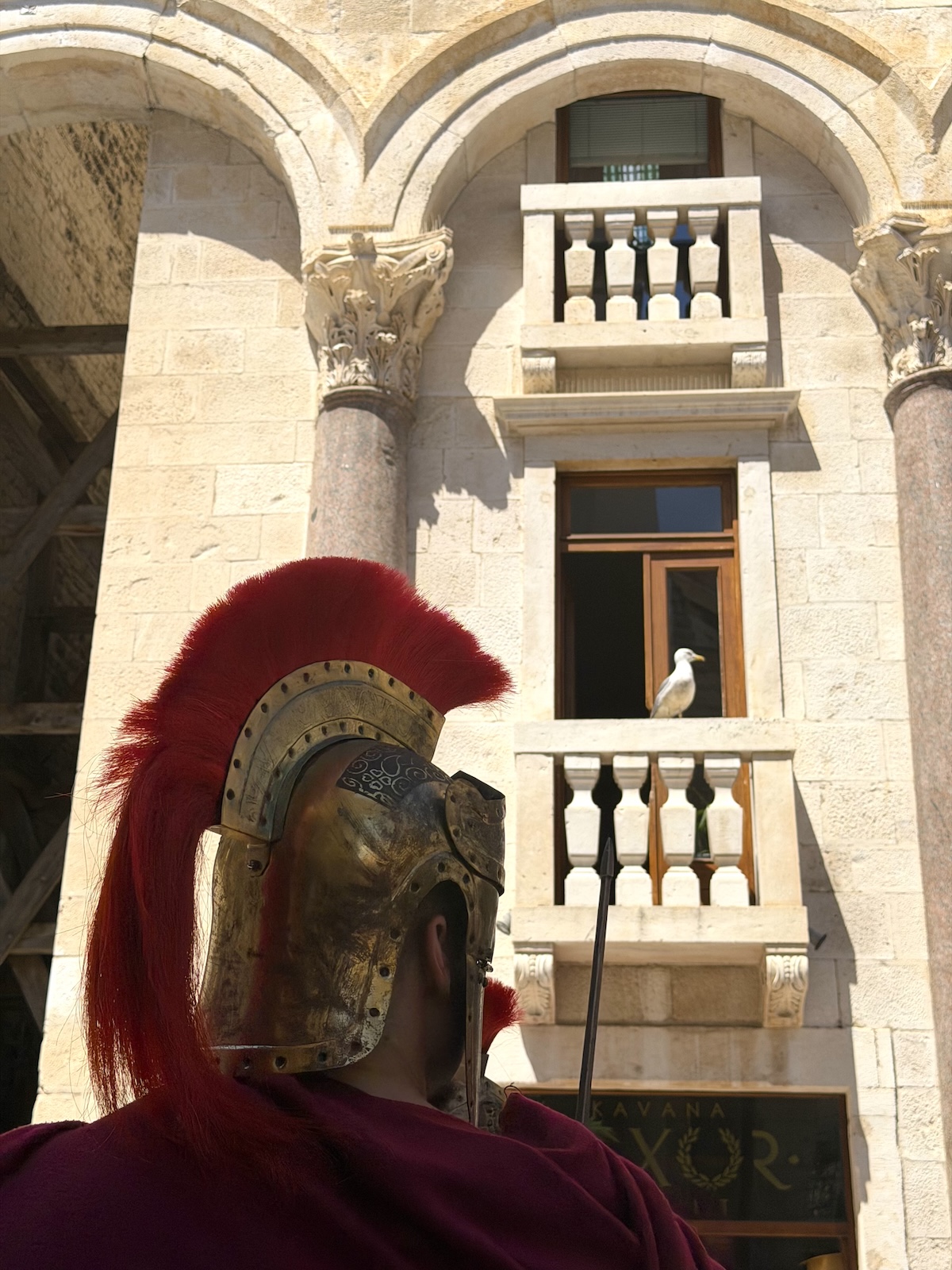
He ruled for 21 years (a rare feat in a time of crisis when many emperors were assassinated) and in 305 he did something no emperor had ever done before: he retired of his own accord. And he didn’t just go anywhere: he built a veritable palace-fortress by the sea, complete with massive walls, to spend his retirement there.
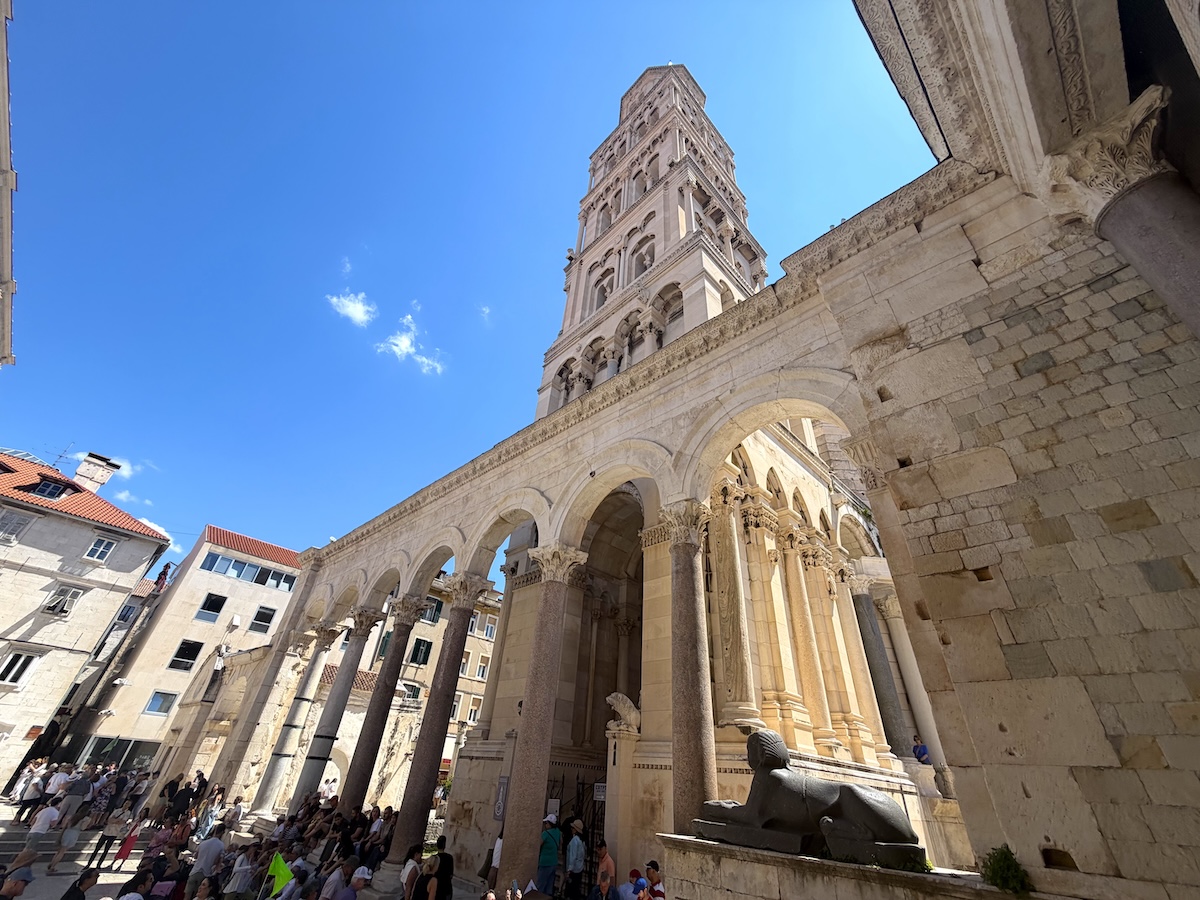
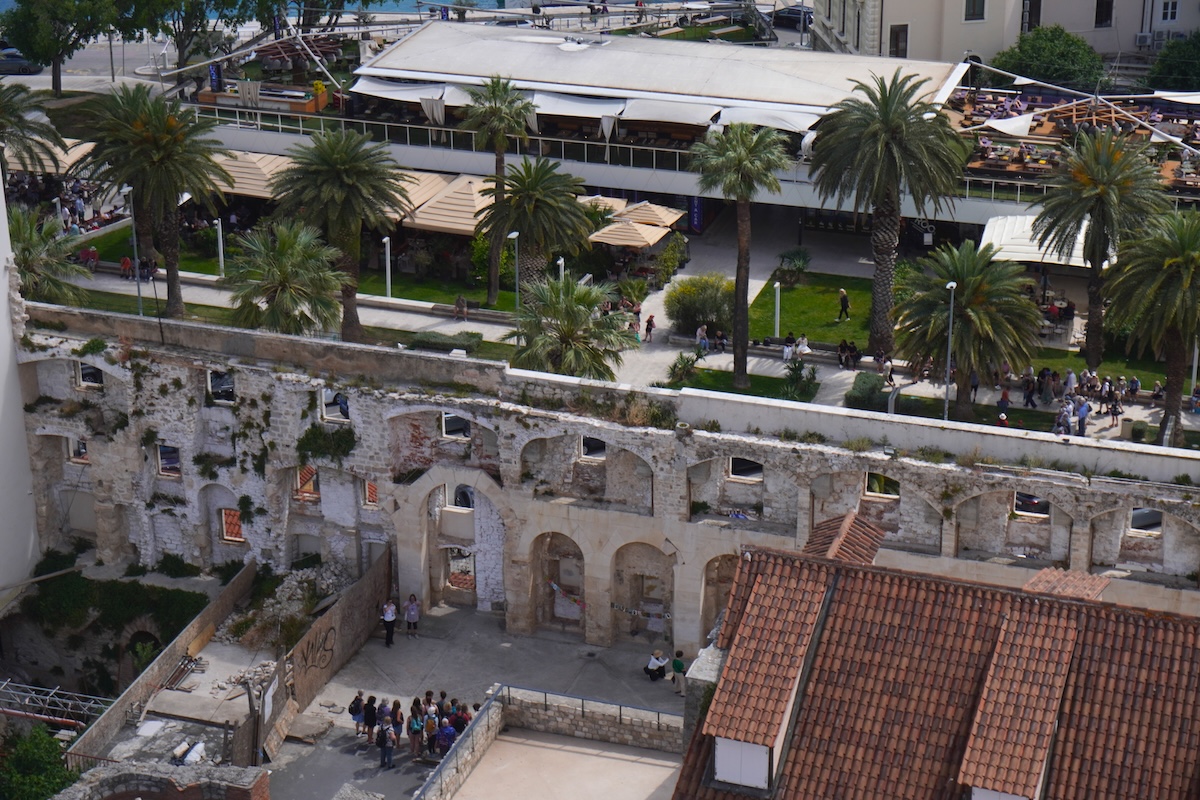
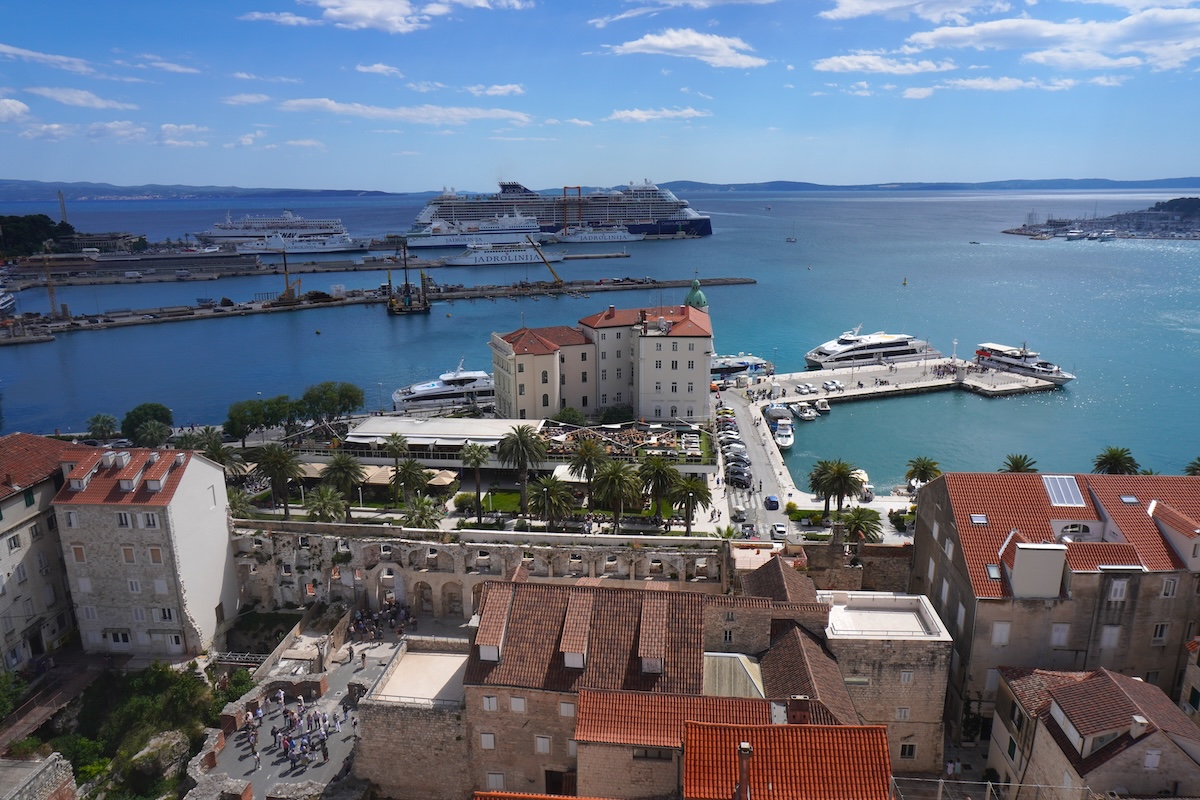
There are several theories (which are not mutually exclusive) as to why he chose this exact location for his retirement: it was close to his homeland (Salona); the area had sulfur springs that were used at the time (and this idea is still defended today) to treat the rheumatism and other ailments the emperor suffered from; and the location, a well-protected peninsula facing the Adriatic Sea, was strategically ideal.
It is said that, once retired, he proudly grew cabbages and even remarked that if his former colleagues in Rome saw how well they turned out, they would stop asking him to return to power.
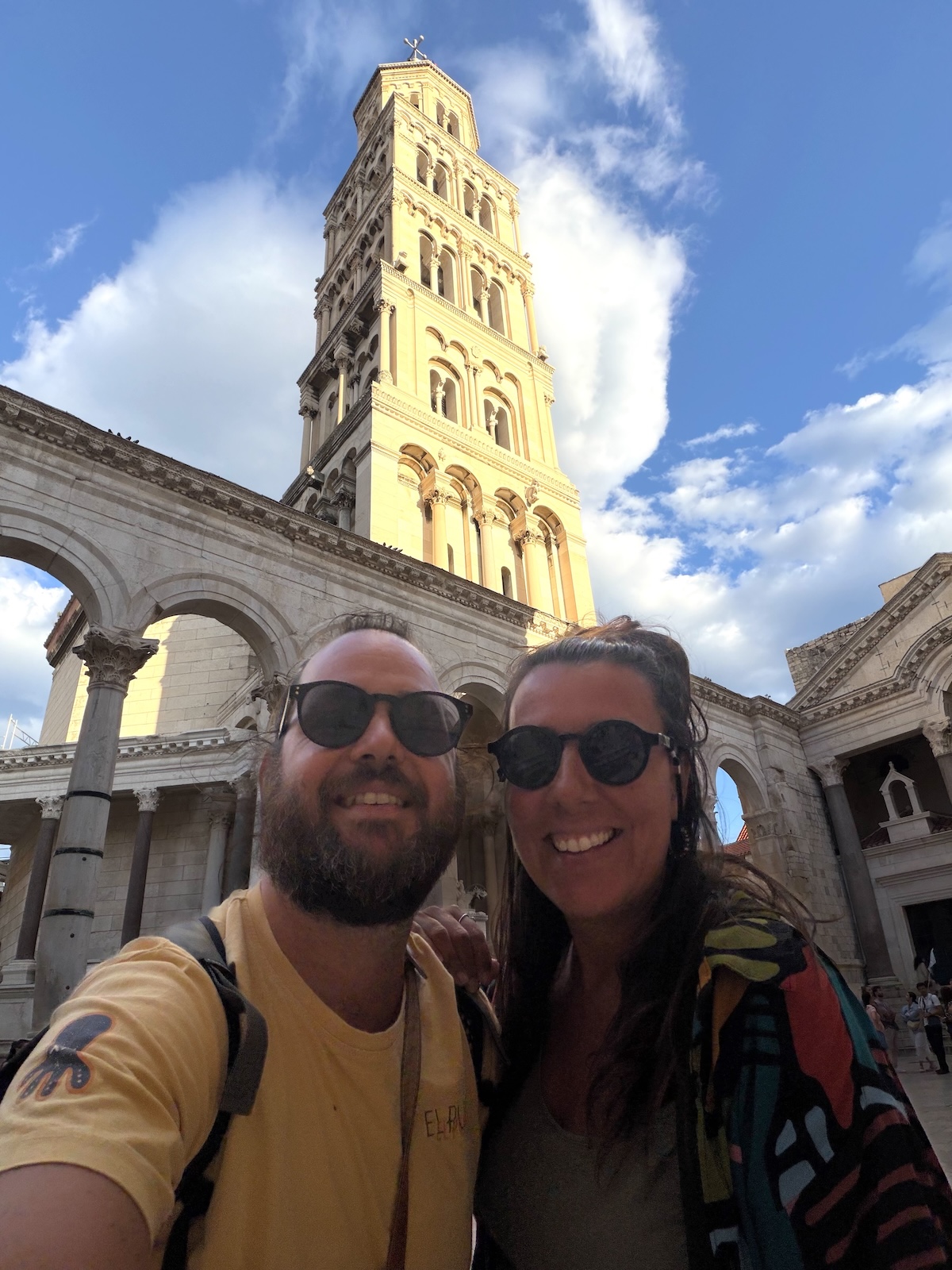
That palace is the origin of Split and its undisputed centerpiece: centuries later, its walls would come to shelter an entire medieval city, and today, more than 1,700 years later, they still stand, with people living (and many more visiting) among their columns. Since 1979, the entire complex has been designated a UNESCO World Heritage Site . Few cities can claim that their old town is, literally, the home of a Roman emperor.
Today, thanks to its heritage, its cultural and culinary offerings, and the attractions in the surrounding area, more and more tourists are including Split in their tour of Dalmatia and aren’t limiting themselves to just the beautiful (and always crowded) Dubrovnik.
This surge in tourist interest means the city offers an ever-growing array of cultural experiences for both visitors and residents alike, but it also has a downside: the strain of so many people on a historic center that remains, above all, a neighborhood home to thousands of people year-round. That’s why, beyond simply enjoying it, it’s worth visiting with pomalo (calmly, as they say here) and with respect: if you take tours, it’s best to do so in small groups with local guides, since large free tours have a massive impact on noise, traffic, and community life.
In addition, the City Council has been enacting municipal ordinances that prohibit drinking alcohol in public (and prohibit businesses from selling it between 9:00 p.m. and 6:00 a.m. during peak season) and walking around in swimwear or without a shirt outside of beach areas, both of which are punishable by a fine.
Important: Split Card
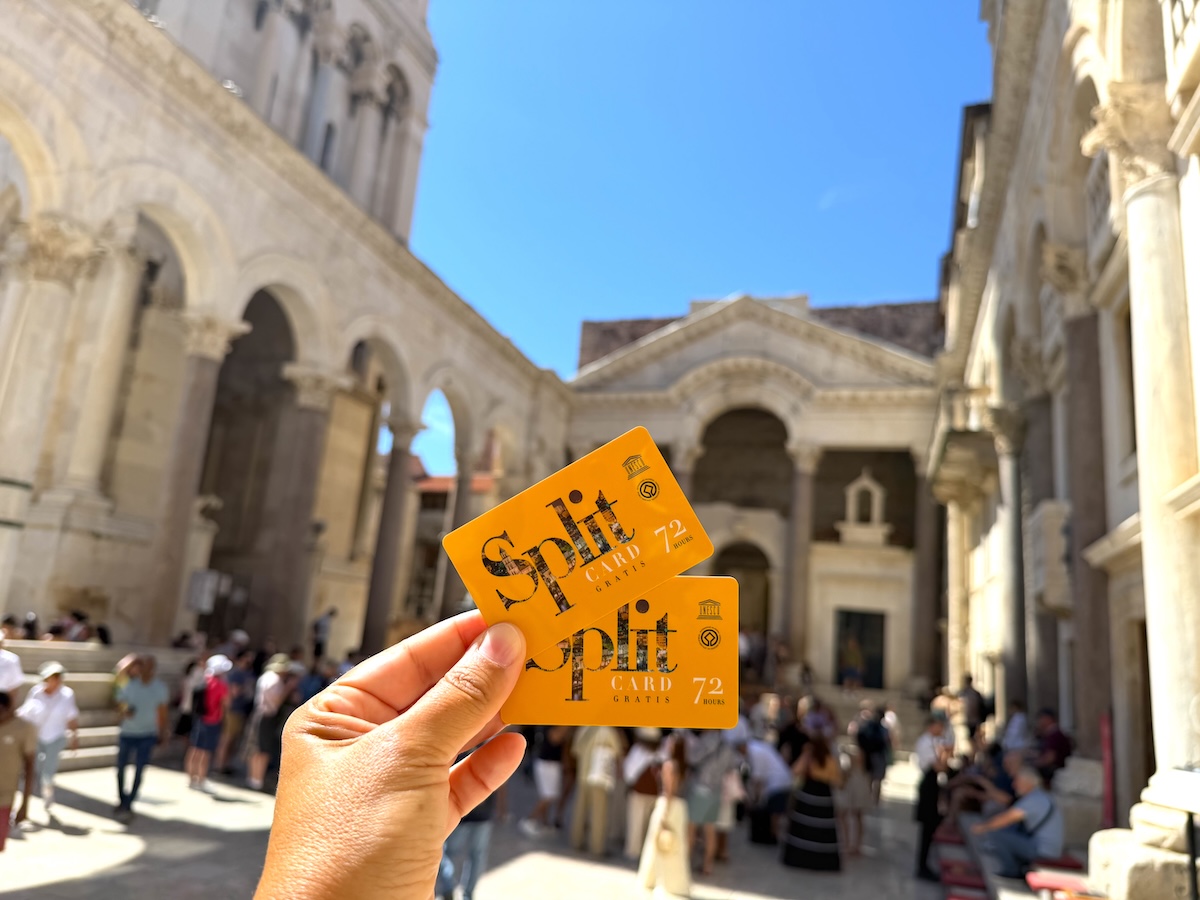
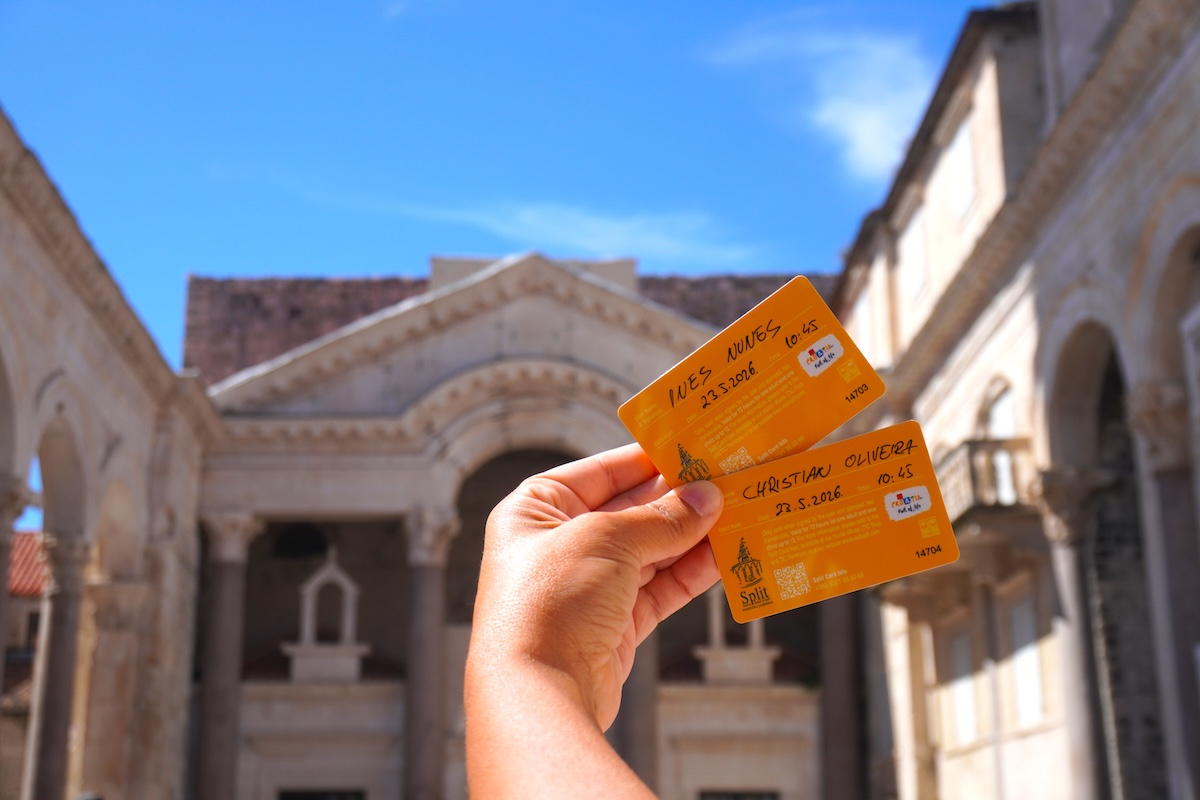
The Split Card is a free discount card, though you can only get it if you meet a minimum stay requirement in the city. During the summer season (April through October), you must stay 5 nights or more in Split; in winter (November through March), 2 nights are sufficient. You can pick it up in person at tourist information centers (Peristilo, Riva, or Stobreč), and it’s valid for 72 hours (3 days) from the time you activate it. Note: Unlike the Dubrovnik Pass, it doesn’t include admission to major monuments (such as the Cathedral or the bell tower) nor does it offer different validity periods; it’s simply a free card that gives you some discounts.
Is the Split Card worth it?
If you meet the minimum number of nights, yes, definitely: it’s free, so you have nothing to lose (just take a few minutes to go to one of the booths and request it). If you don’t meet that minimum, there’s no option to buy it separately, so it simply doesn’t apply to you. And even if you can get it, don’t expect it to save you money on the main attractions in the Old Town (e.g., Split Cathedral): its value lies in lesser-known sites and optional activities (e.g., the Palace Cellars, museums).
What’s included?
With the Split Card, you get, among other things (you can see the complete and updated list of discounts here)
- Free admission to the Emanuel Vidović Gallery, the Ethnographic Museum, and the Natural History Museum
- 50% off admission to the Archaeological Museum, the ruins of Salona (Tusculum), and the Croatian Maritime Museum
- 30% off at the Meštrović Gallery (and the Kaštelet)
- 25% discount on the Subterranean Chambers of Diocletian’s Palace
- Varying discounts at theaters, shops, car rentals, and some boat tours. Note: Most of these discounts are only available when paying in cash (not all, but it’s best to bring some cash).
How do you get it?
To get your Split Card, all you have to do is go to a tourist information center, show proof that you’re staying for the required minimum number of nights (for example, with your Booking.com reservation confirmation), and they’ll give it to you. At Randomtrip, we went to the tourist office located right in the heart of Peristilo, showed our Booking.com reservation confirming that we were staying for 5 nights, and they gave us our free cards. There are also two other tourist information centers where you can get your Split Card: one in Riva and another, a bit further away, in Stobreč.
Things to see and do in Split’s old town
Split’s historic center was born from Roman Emperor Diocletian’s idea to retire here after two decades of ruling and, to that end, to build a palace befitting his status. That idea gave rise to much more than just a palace. Just a few minutes’ walk away , you’ll find Venetian-style squares, markets, a bookstore with a plaque commemorating a difficult episode in the city’s history, terraces you’ll find hard to leave, and museums where you can lose yourself. At RandomTrip, we explored Split with “pomalo” (it sounds like the name of a cocktail, but it’s a Croatian word from the Dalmatian coast meaning “calmly, without haste”) and we believe it’s the best way to do it.
Diocletian’s Palace
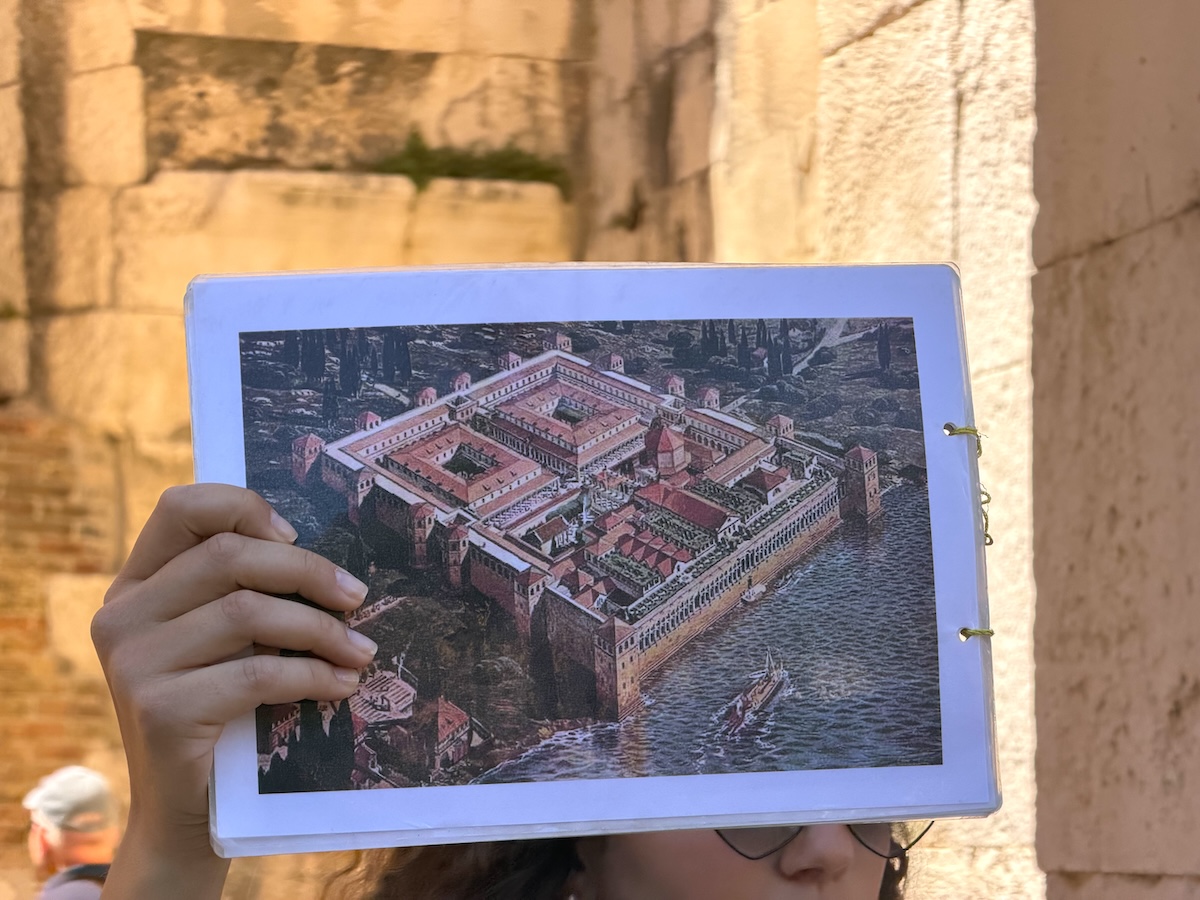
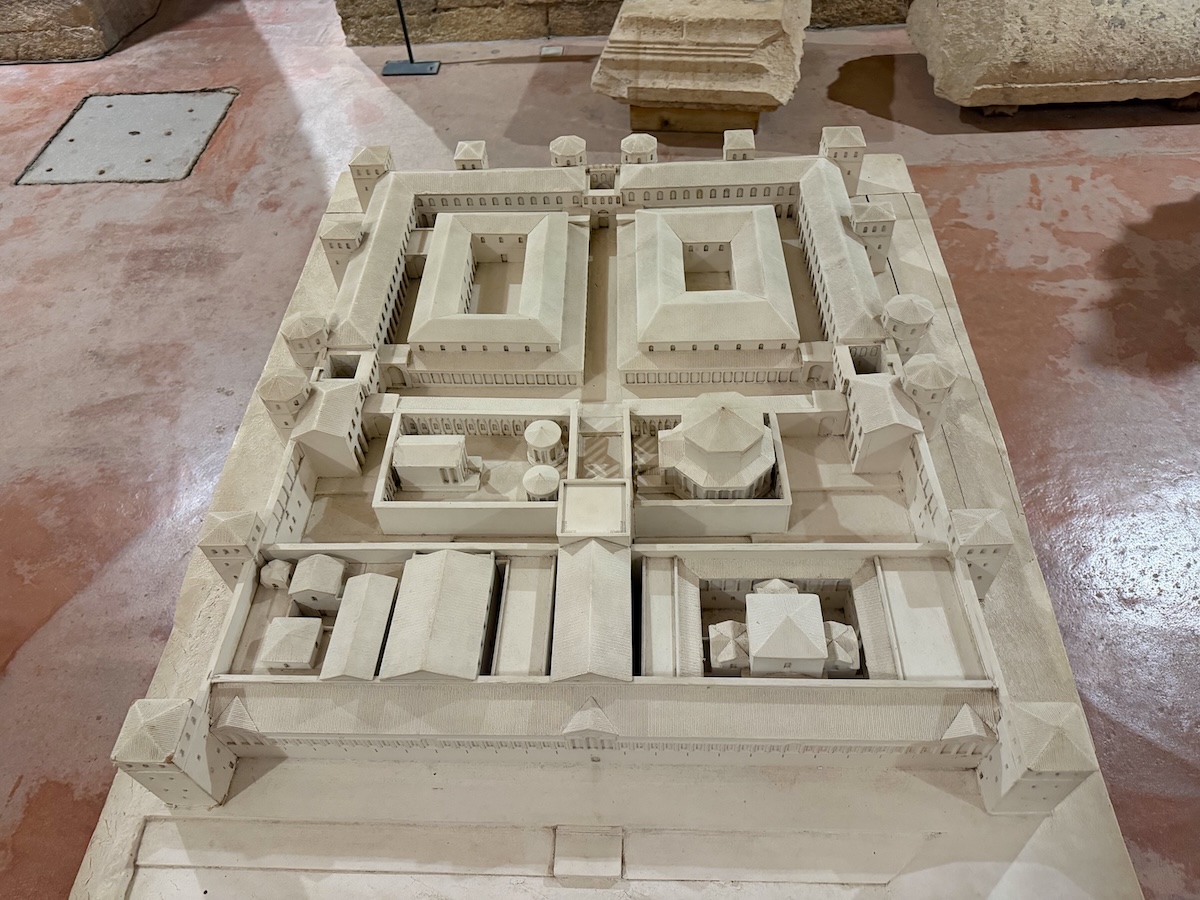
Emperor Diocletian’s palace was built between 295 and 305, the year he decided to retire, using white limestone brought from the nearby island of Brač and other materials sourced from various parts of the Roman Empire, including Egyptian sphinxes. The complex, covering more than 30,000 m², combines two things that don’t usually go together: from the outside, it looks like a Roman military camp, with its thick walls and straight streets intersecting at right angles, just like any army barracks. But inside, especially in the part where the emperor lived, it is pure luxury befitting an imperial villa: marble columns, courtyards with views, and sculptures everywhere.
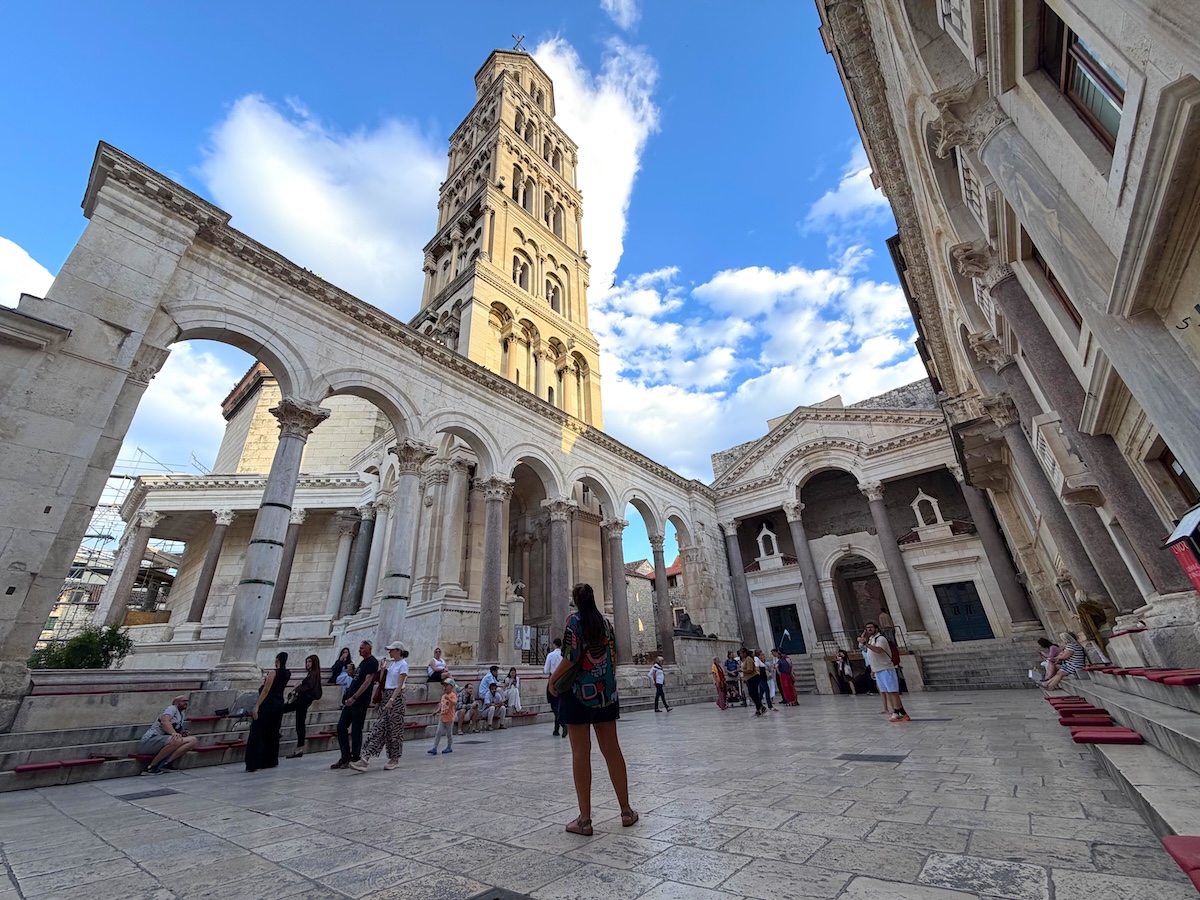
Two major streets, one running north to south and the other east to west, divide the palace’s layout into two distinct halves. The southern half, facing the sea, was the emperor’s private residence, while the northern half housed the military garrison.
The heart of the complex is the Peristyle, the plaza where those two streets intersect, which impresses anyone the moment they arrive. Beneath the former imperial quarters lie the palace’s cellars, a space that for centuries served as a dumping ground for local residents and which, unintentionally, helped preserve the entire structure intact until excavations began to restore the area. In 2006–2007, during the renovation of the Riva, the promenade that runs along the palace’s southern facade, archaeological excavations uncovered the waterfront from Diocletian’s time: a wall of stone blocks from Brač and a platform where goods were unloaded, long before the promenade we walk on today.
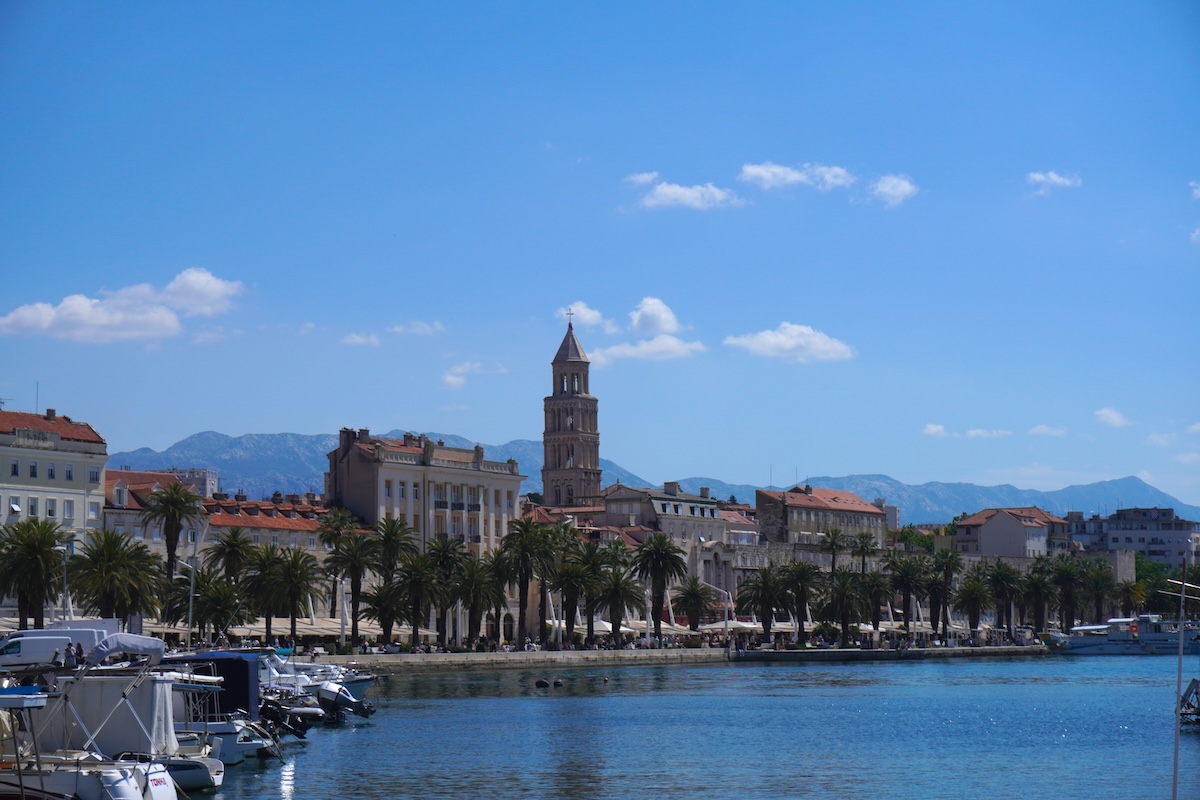
After Diocletian’s death, the palace remained imperial property, and centuries later, in the early 7th century, when nearby Salona was razed by the Avars, its inhabitants took refuge within these very walls and ended up staying there forever. This is how one of Split’s most intriguing landmarks came to be: a living palace, over 1,700 years old, that remains home to more than 3,000 people.
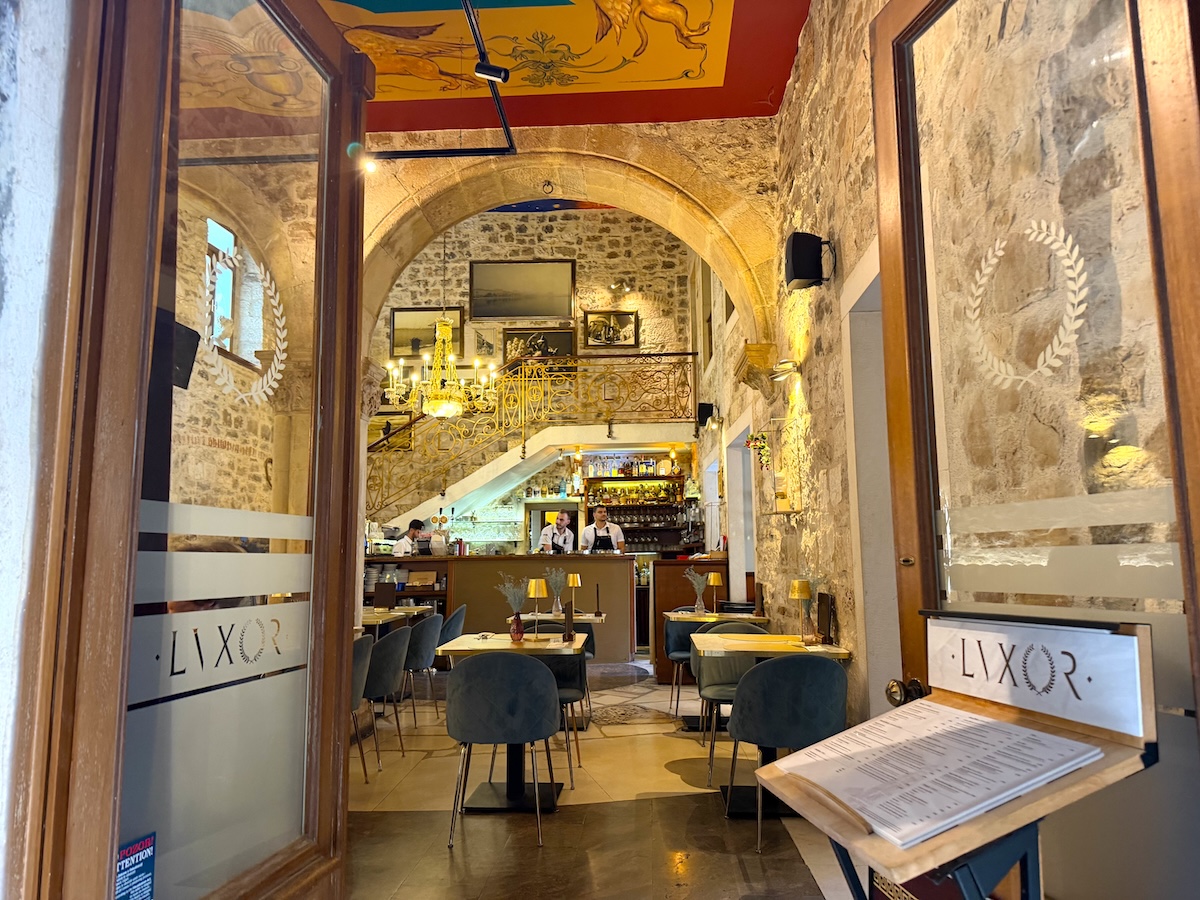
Well, the truth, as we were told, is that most of the residents rent out their homes, which means there’s a price tag for anyone who wants to spend the night, literally, inside a Roman emperor’s palace and a UNESCO World Heritage Site (designated as such since 1979). If you’re curious and/or want to treat yourself, take a look at this selection of accommodations in Diocletian’s Palace.
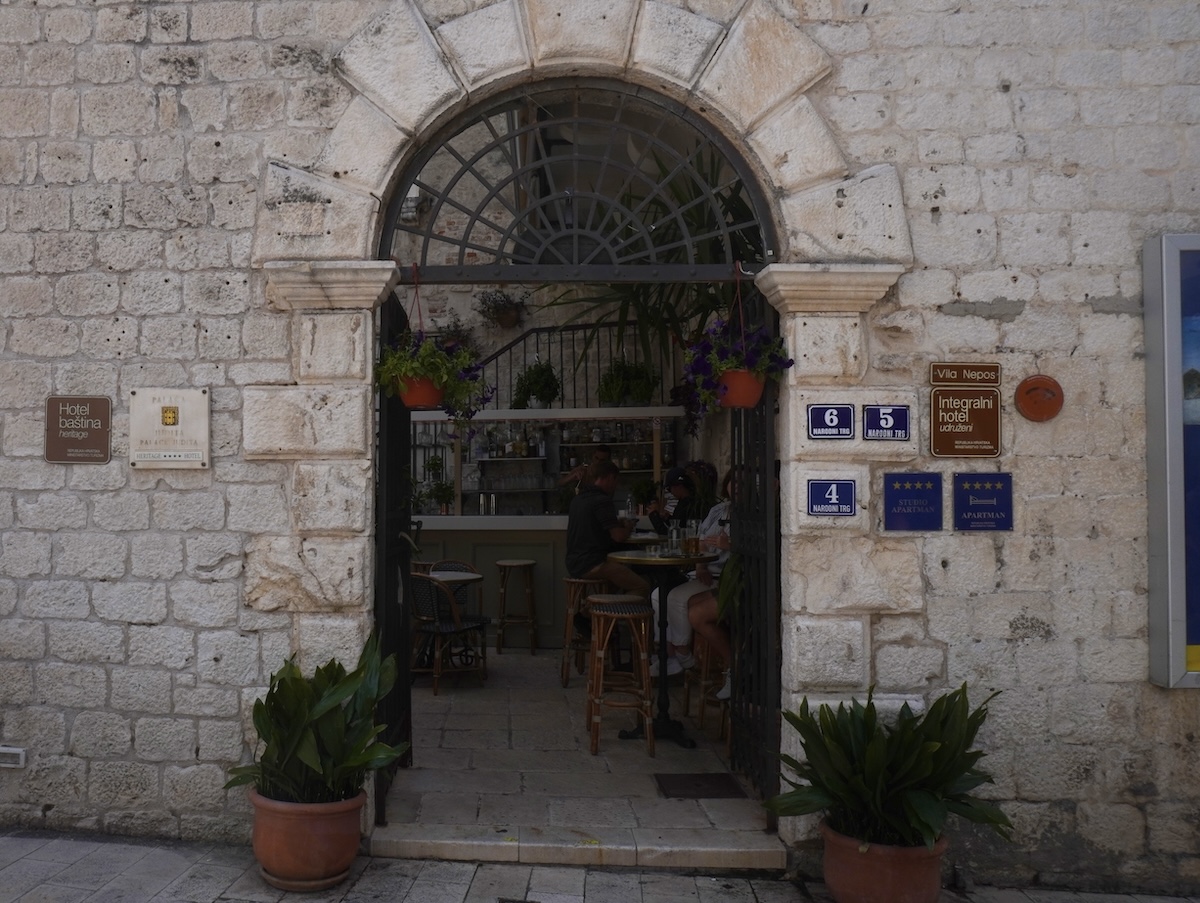
Plus, whether you’re staying inside or not, you can wander through the palace’s alleys at any time of day or night without paying an admission fee: it’s not a closed-off museum, but an open-air gem, a neighborhood with restaurants, shops, and terraces nestled among columns from that very era.
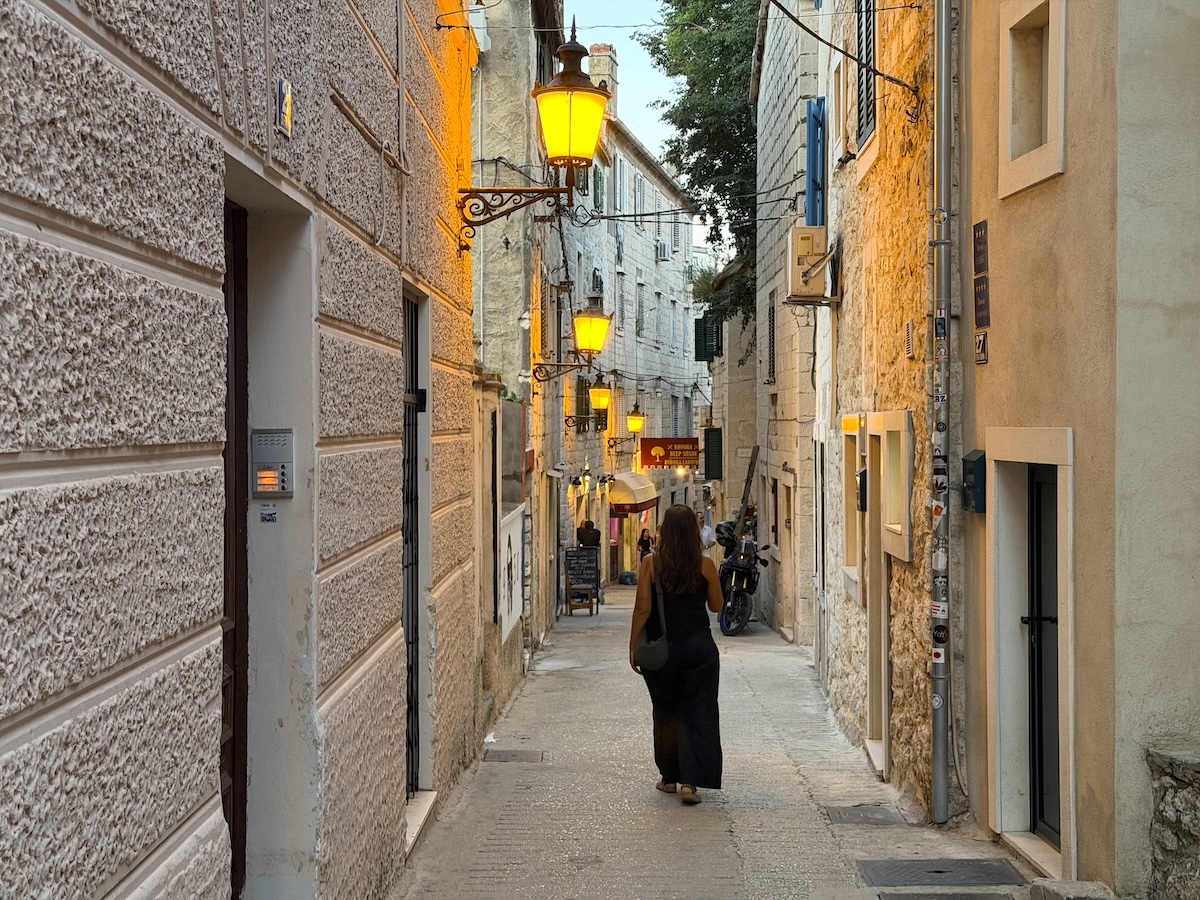
The Palace’s 4 Gates
Like any proper Roman military camp, the palace has a gate at each cardinal point, and all four lead to the same place: the Peristyle, the heart of the complex. Each gate originally had a name based on its orientation (North, South, East, West), and it was the Venetians who, centuries later, renamed them after the metals we use today (Gold, Iron, Silver, Bronze).
North Gate (Gold) or Golden Gate
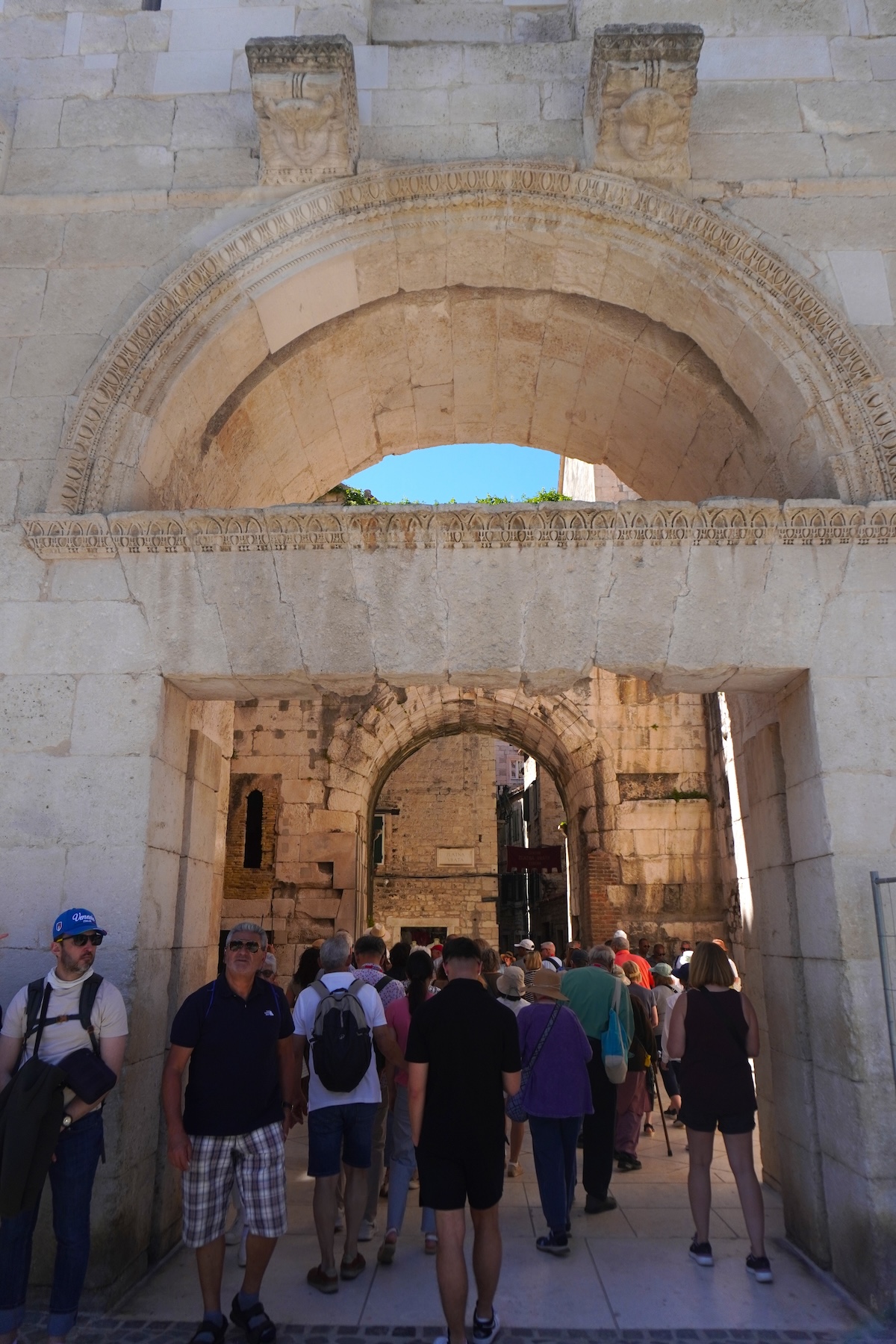
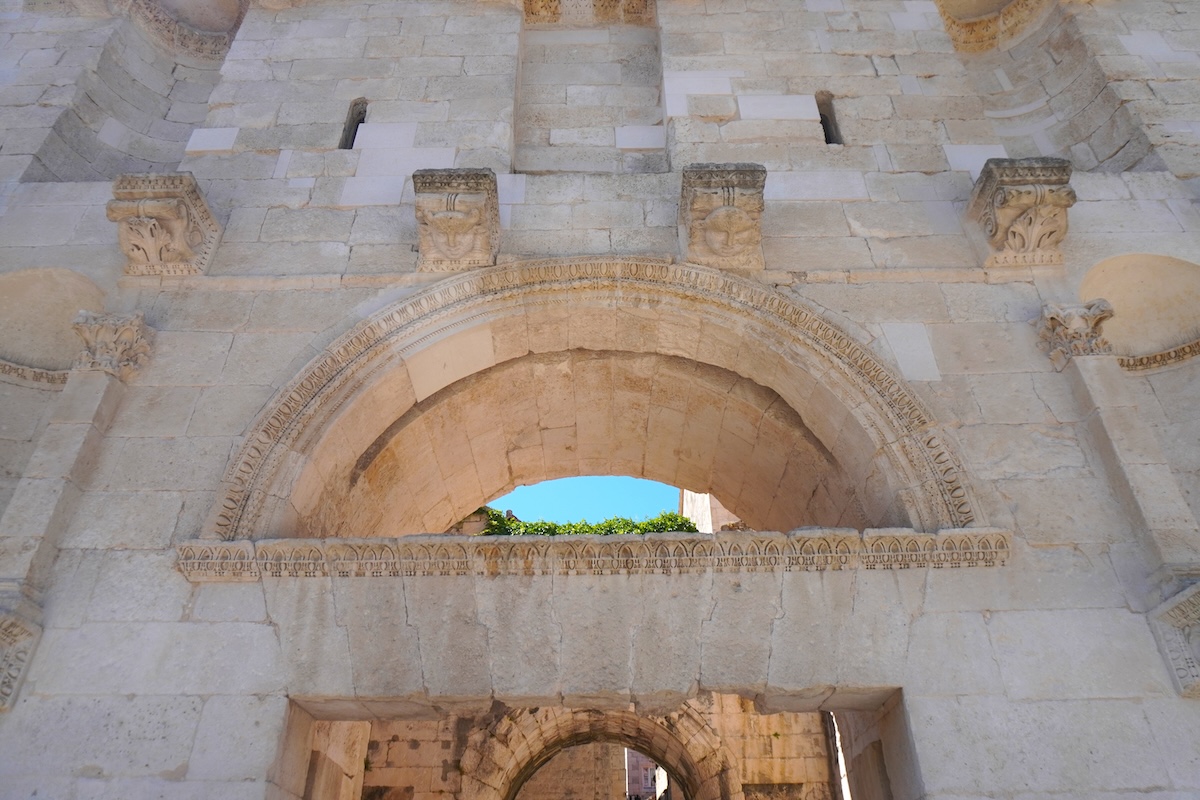
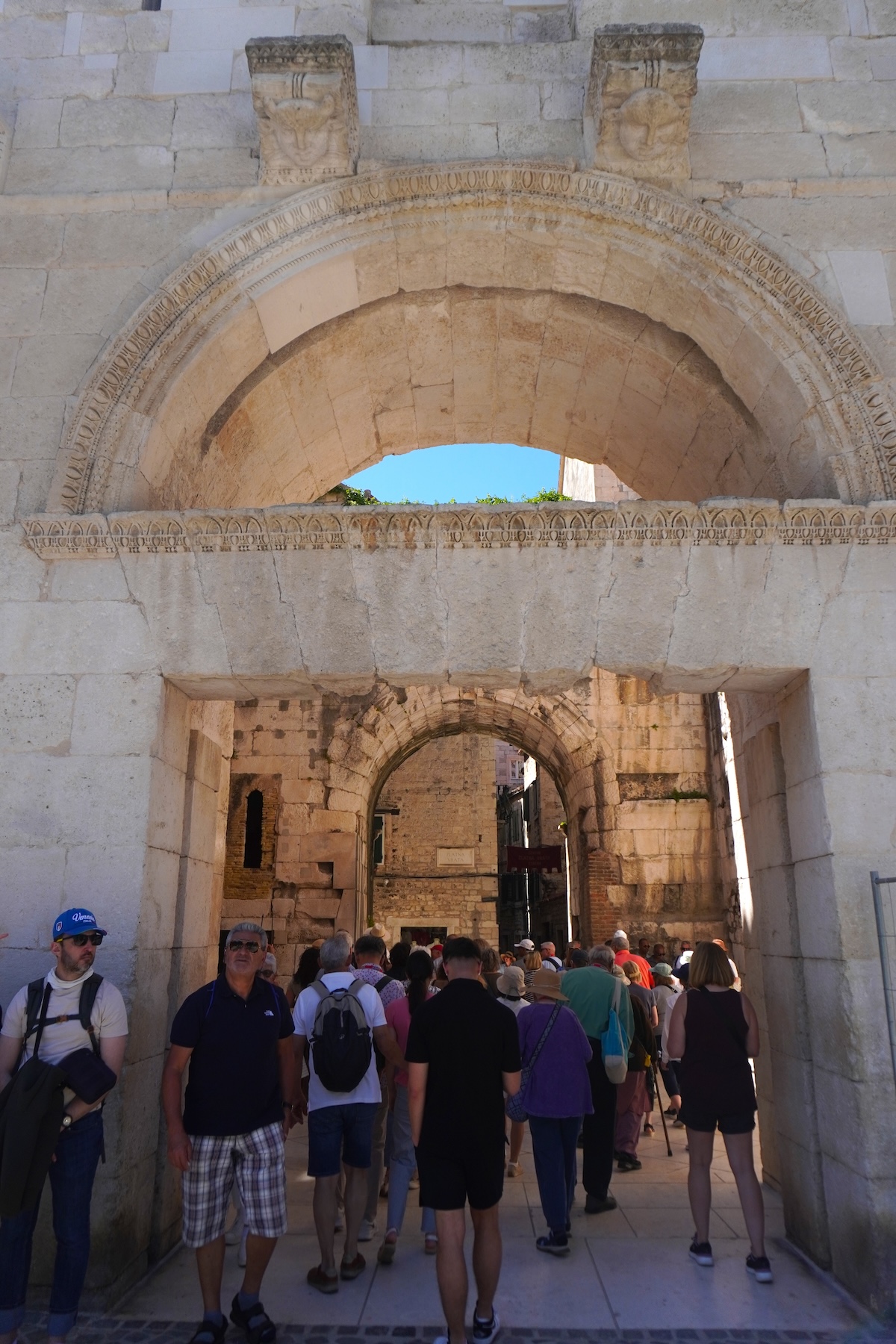
The North Gate (Gold) or Golden Gate is the main gate and the most monumental of the four: Diocletian himself entered through here after his abdication to retire to his palace.
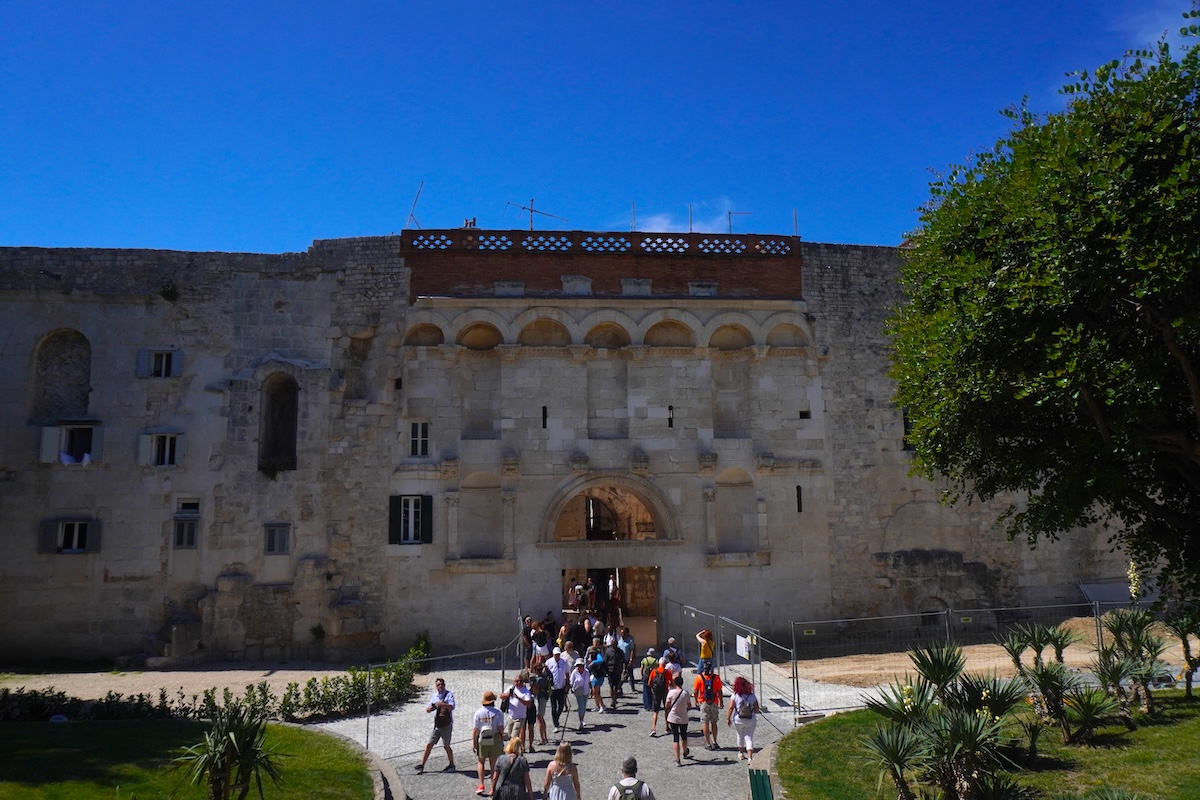
It was built as a double defensive gate with a facade decorated with niches that housed statues of Diocletian and his three co-emperors. The main street leading directly to Salona began here, and only the emperor and his family were permitted to use it. Local legend has it that here, at the Golden Gate, soldiers would trap enemies (thanks to the gate’s double doors) and greet them with boiling oil.
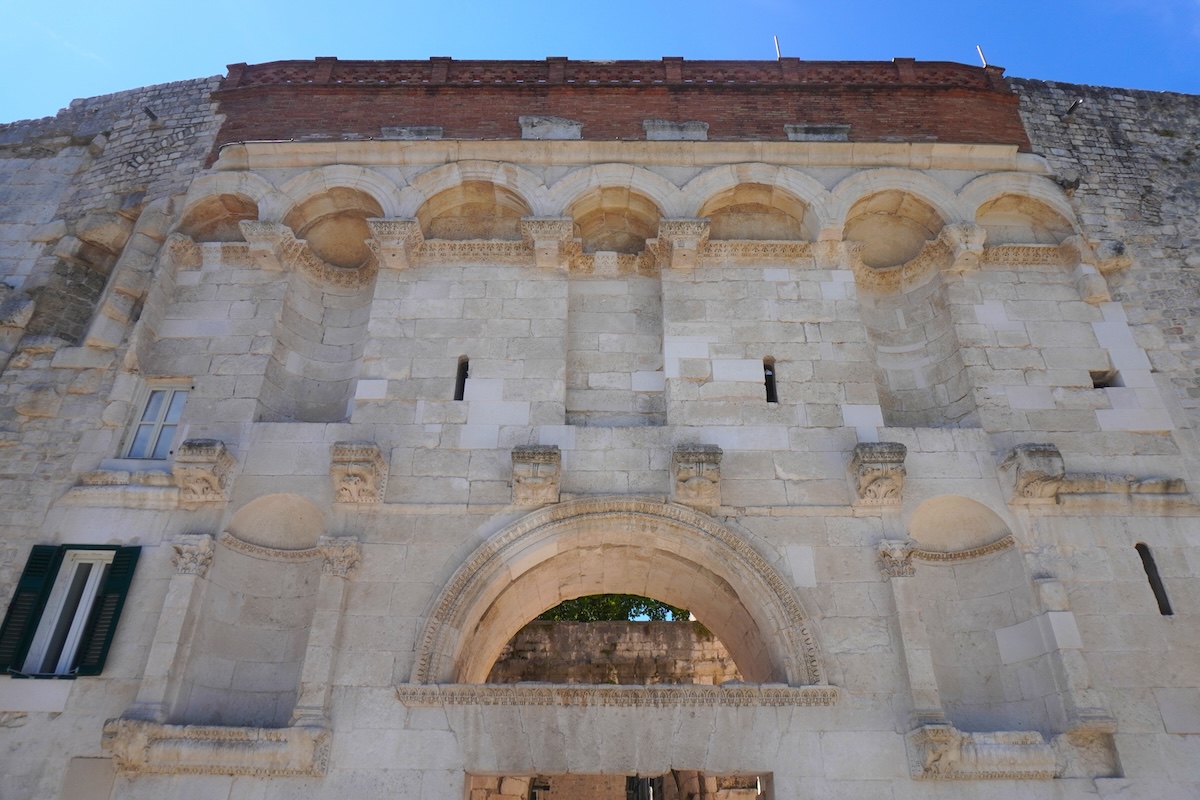
At the top of the gate, take a look at the three small, bricked-up windows: they belong to the Church of St. Martin, the smallest and oldest church in Split, which has been in use since the 6th century and is now run by a small community of nuns. There’s also a small apartment available for rent on Booking (you don’t have to be religious to stay there) in case you’d like to stay in what is probably one of the city’s most unique accommodations.
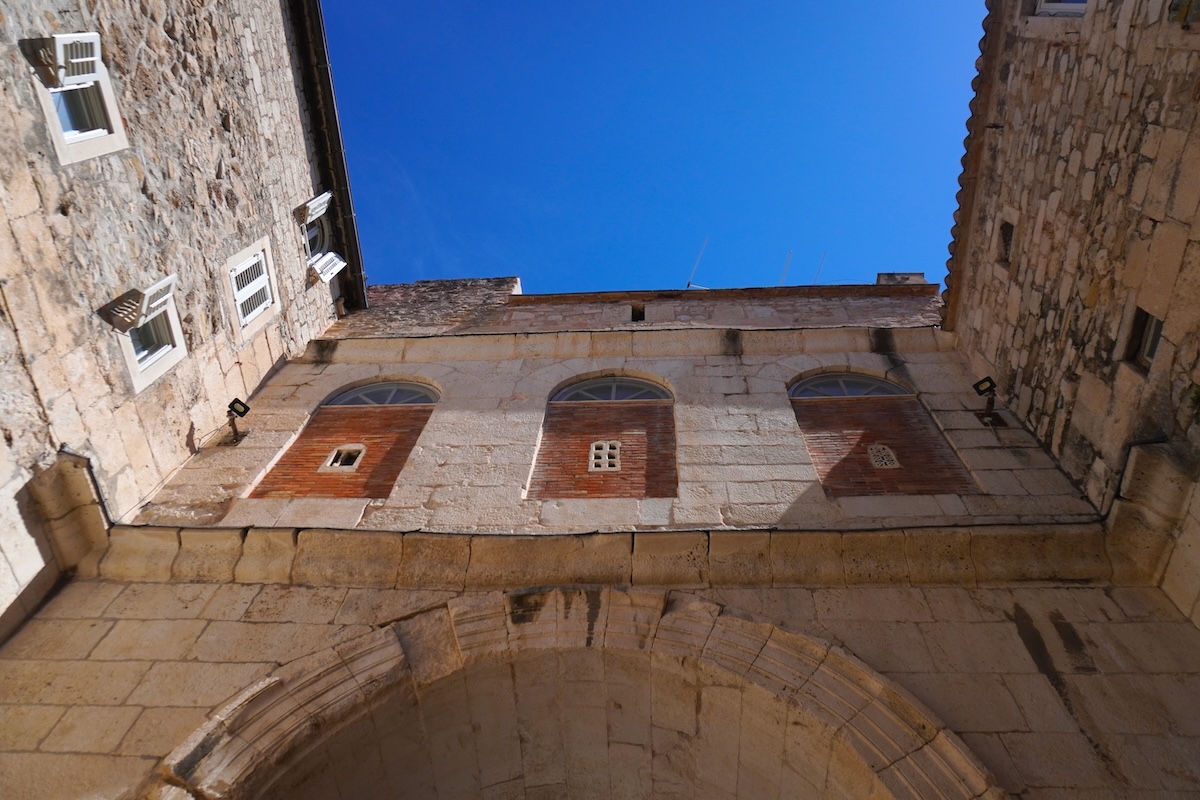
It’s also the gate most overrun by groups on free tours, which disrupt the daily lives of the locals.
West Gate (Iron Gate)
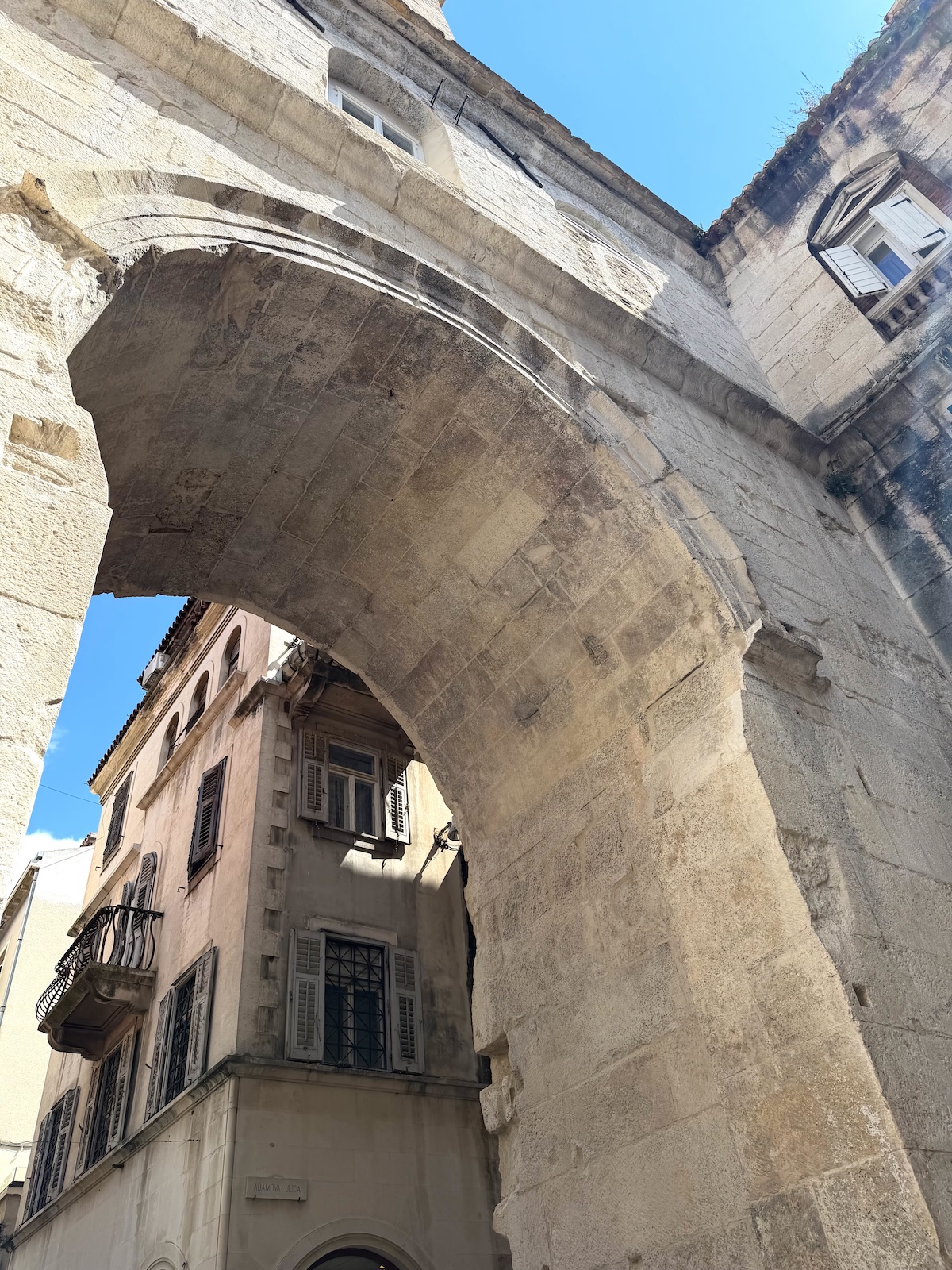
The West Gate (Iron Gate) is the only one of the four that has been in continuous use from Roman times to the present day.
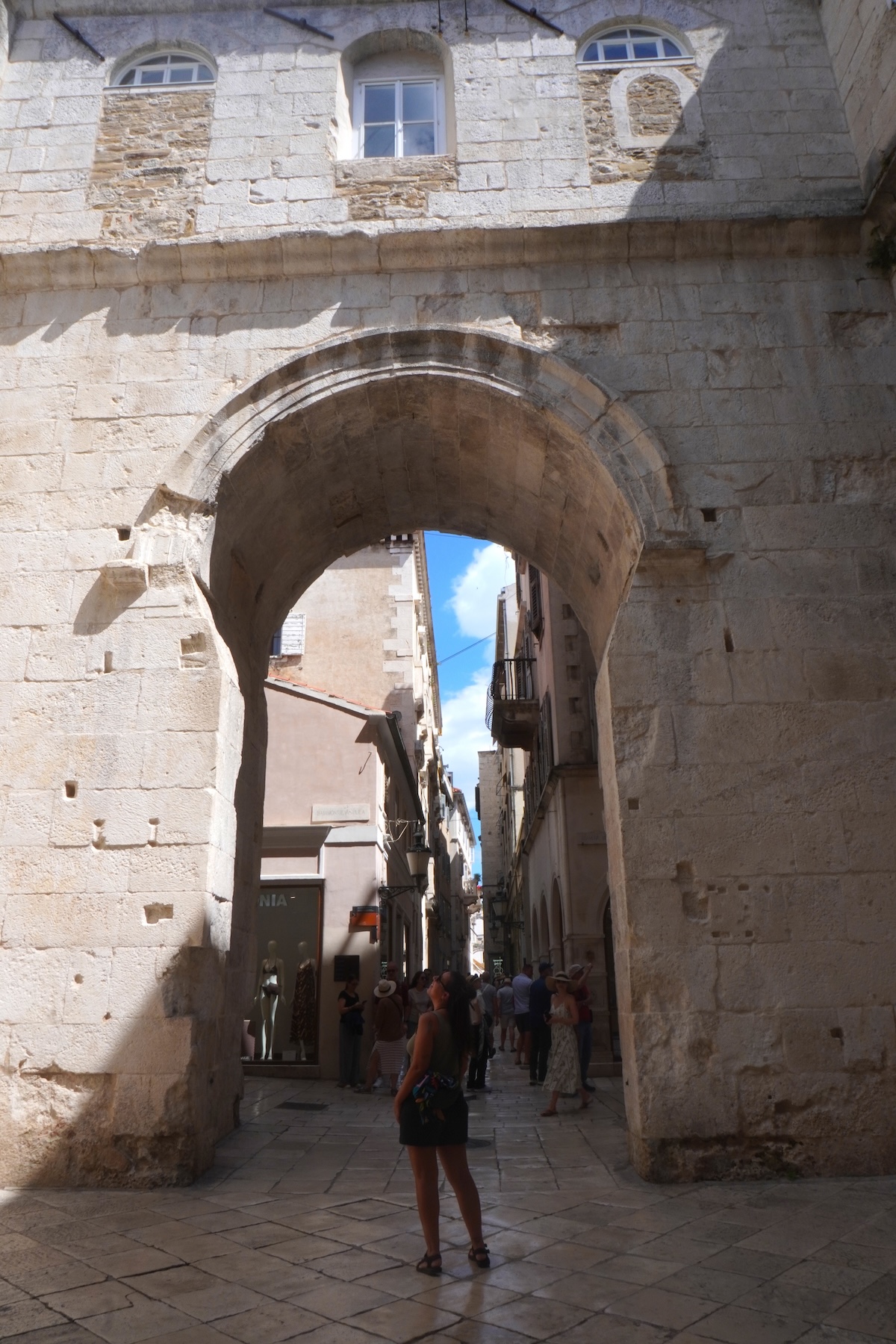
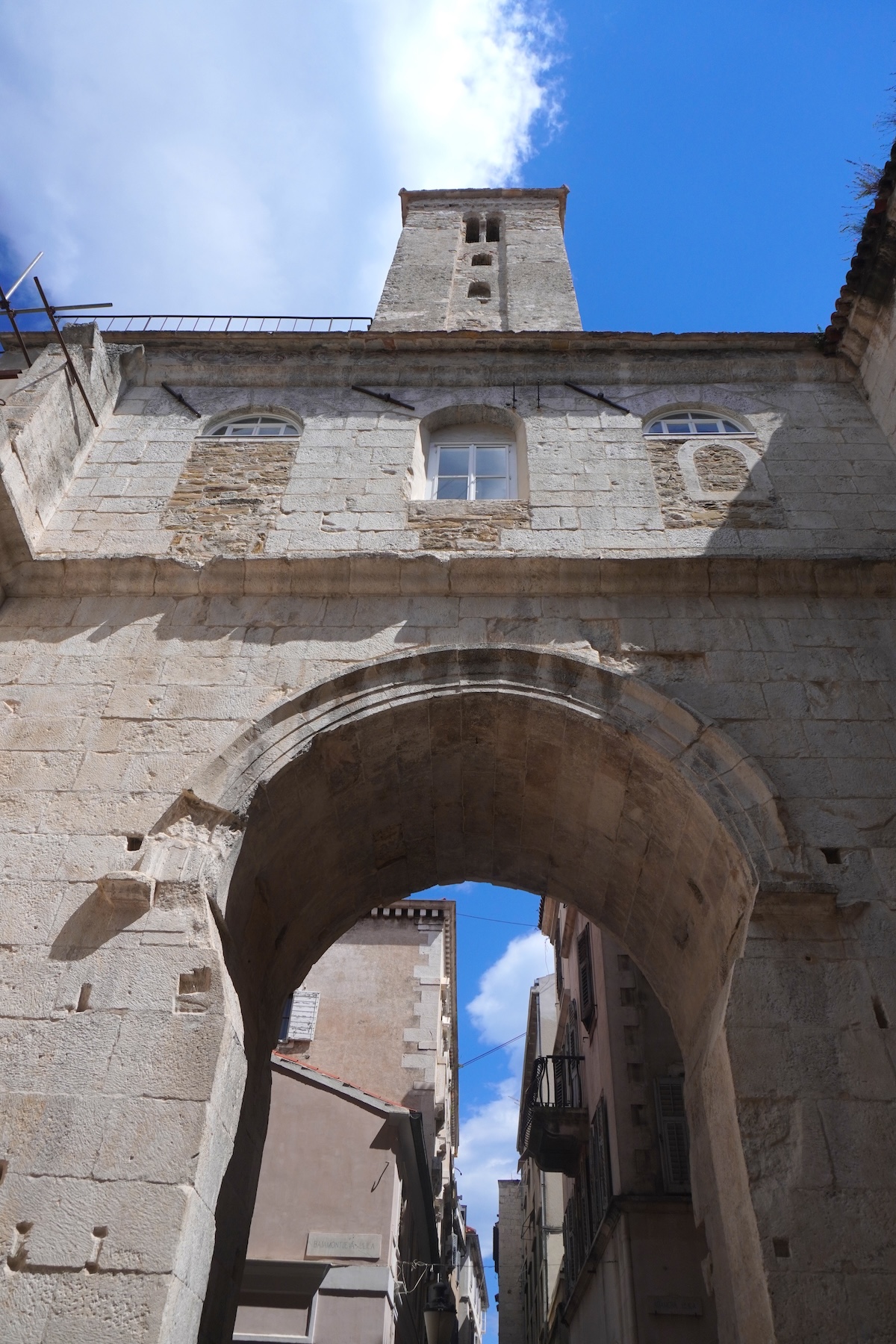
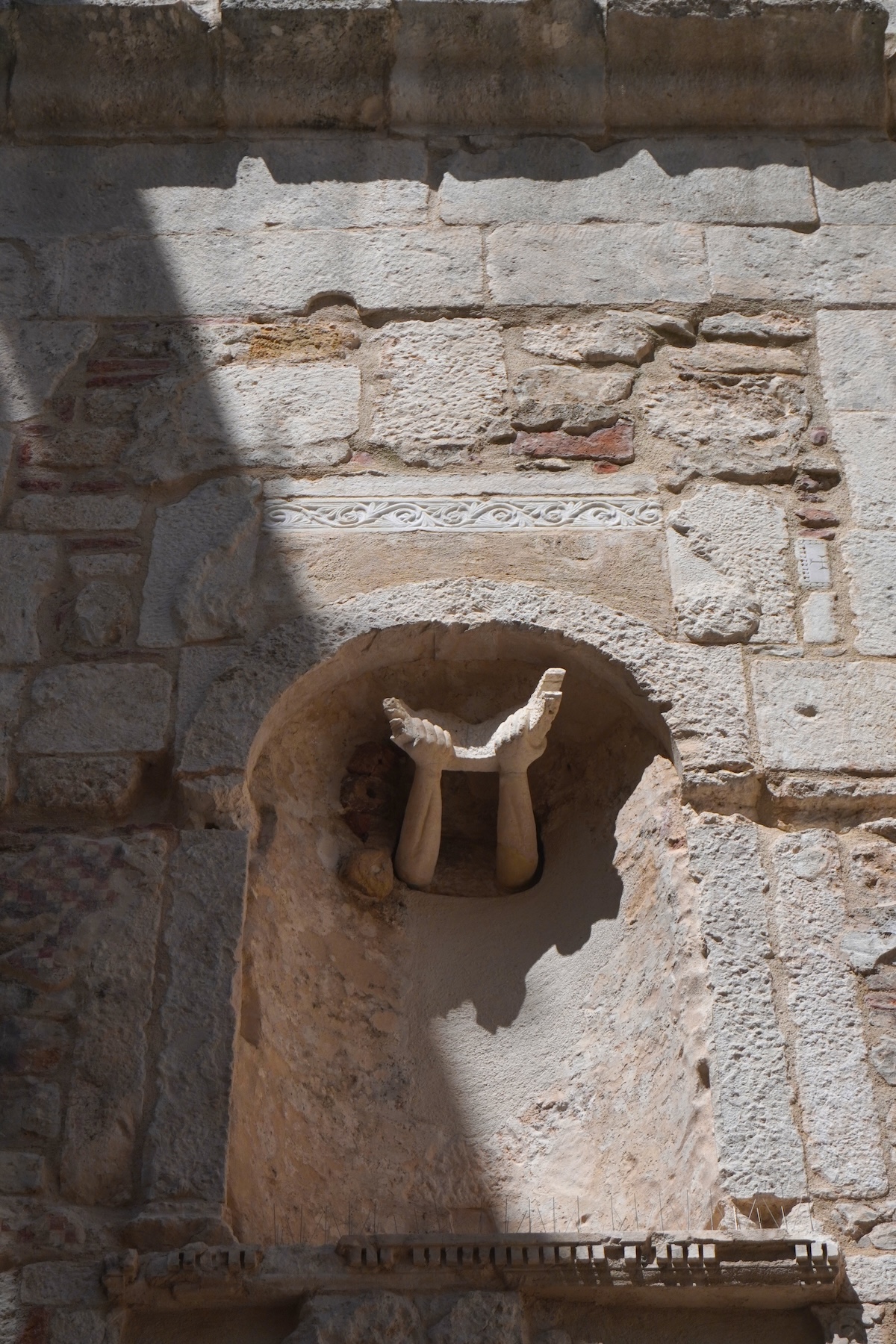
Originally, the top of the gate featured a relief of Nike, the Greek goddess of victory, which Christians replaced with a cross in the 5th century. In the 6th century, a small church dedicated to Saint Theodore (now known as Our Lady of the Bell Tower) was built above it, and later the city clock was added, a curious feature in that it marks 24 hours instead of the usual 12. Like the Golden Gate, it is a double gate, with a space in between designed for defense.
East Gate (Silver Gate)
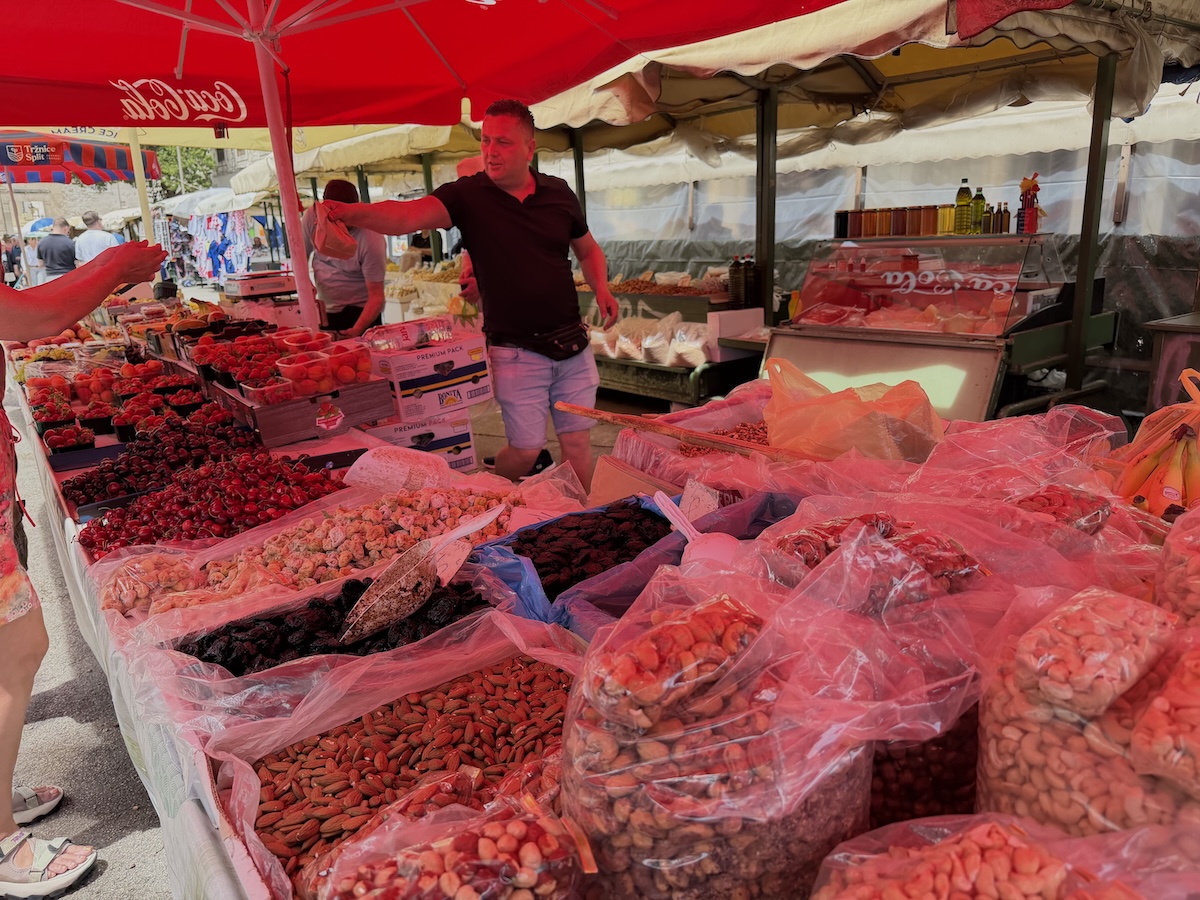
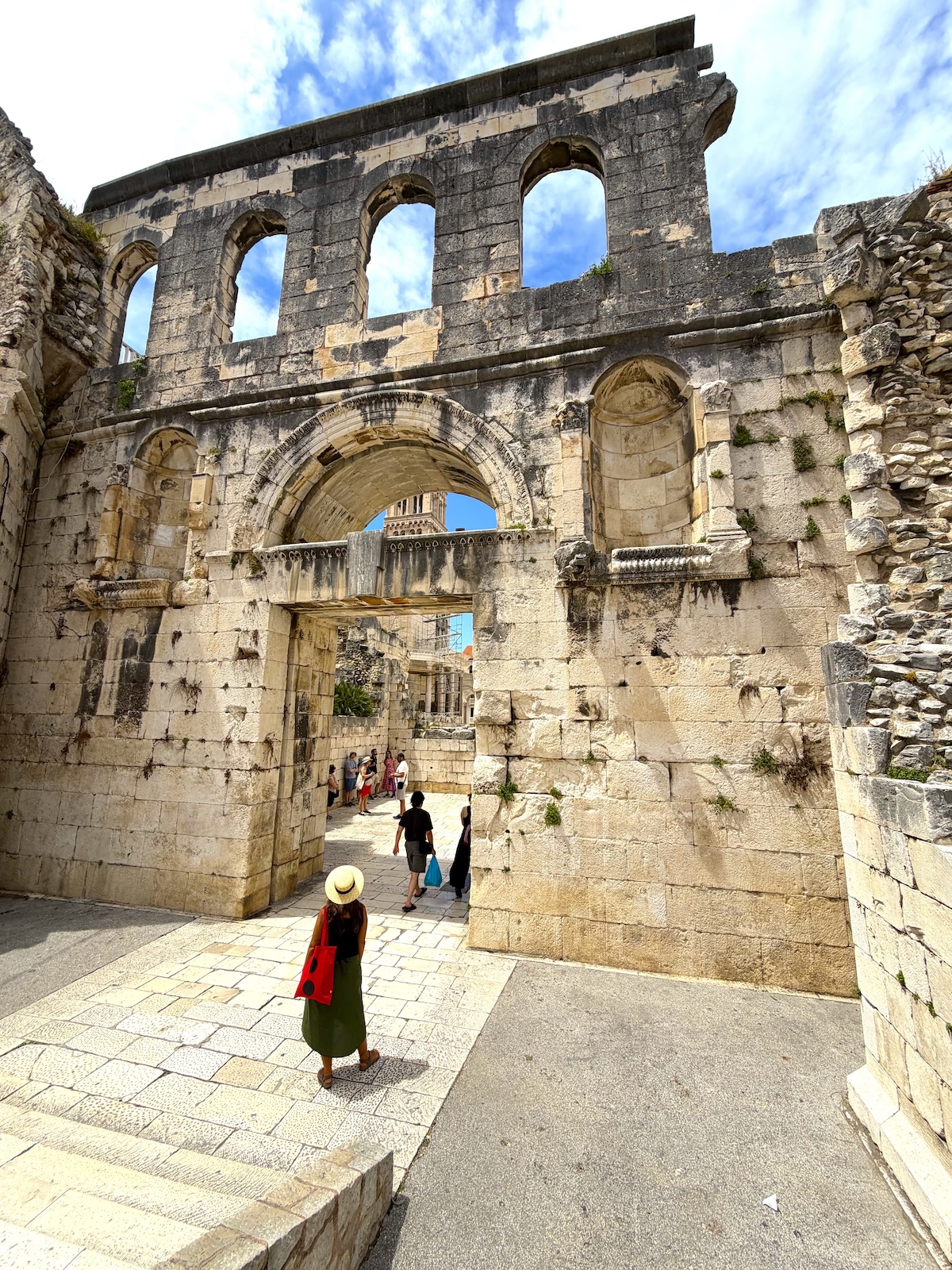
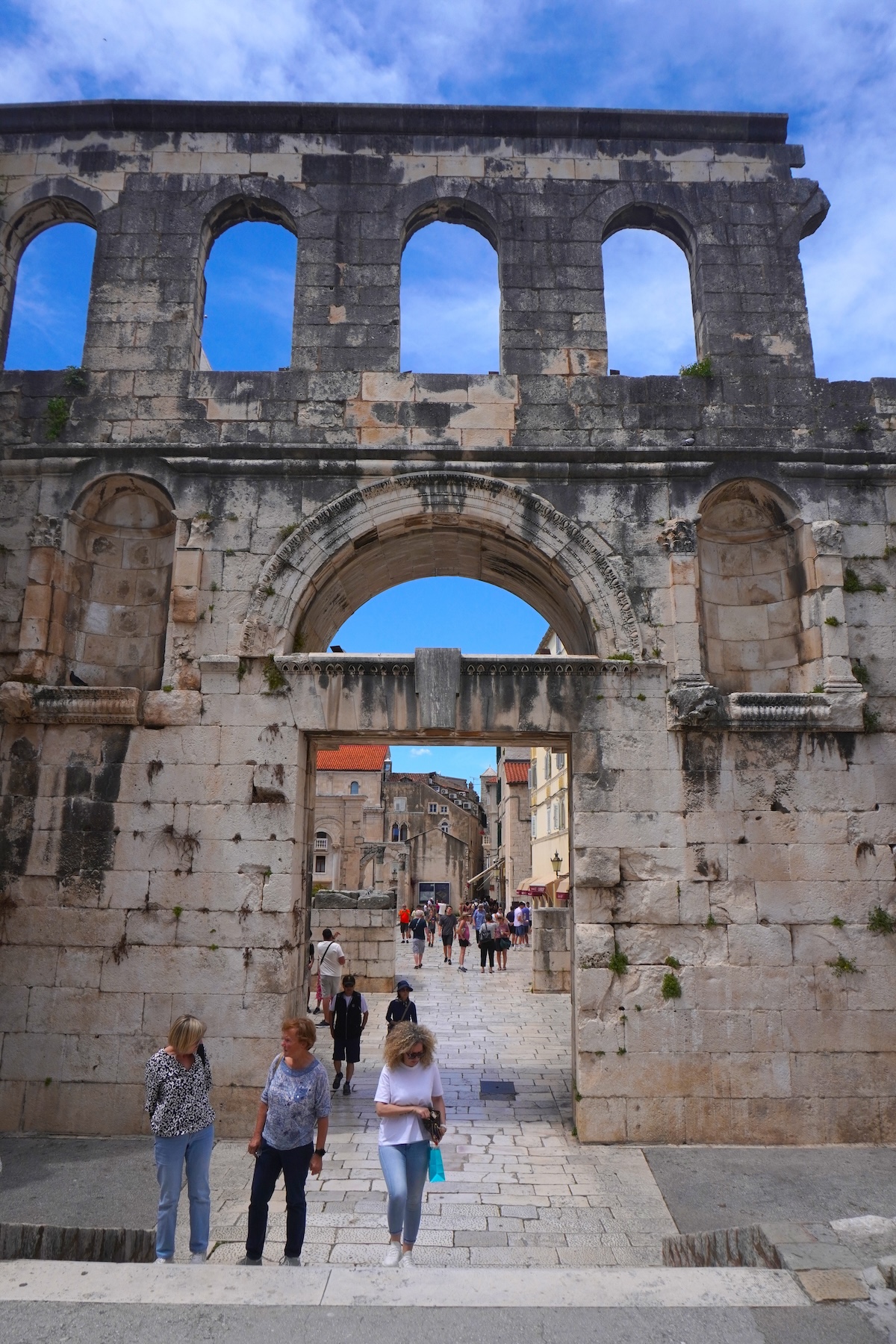
The East Gate (Silver) is the simplest and most everyday of the four: it opens directly onto the Pazar, Split’s fruit and vegetable market (though it currently has more souvenir stalls for tourists than anything else), so it’s the gate most frequently used by locals to enter and exit the city (avoiding the others, which are crowded with people on free tours).
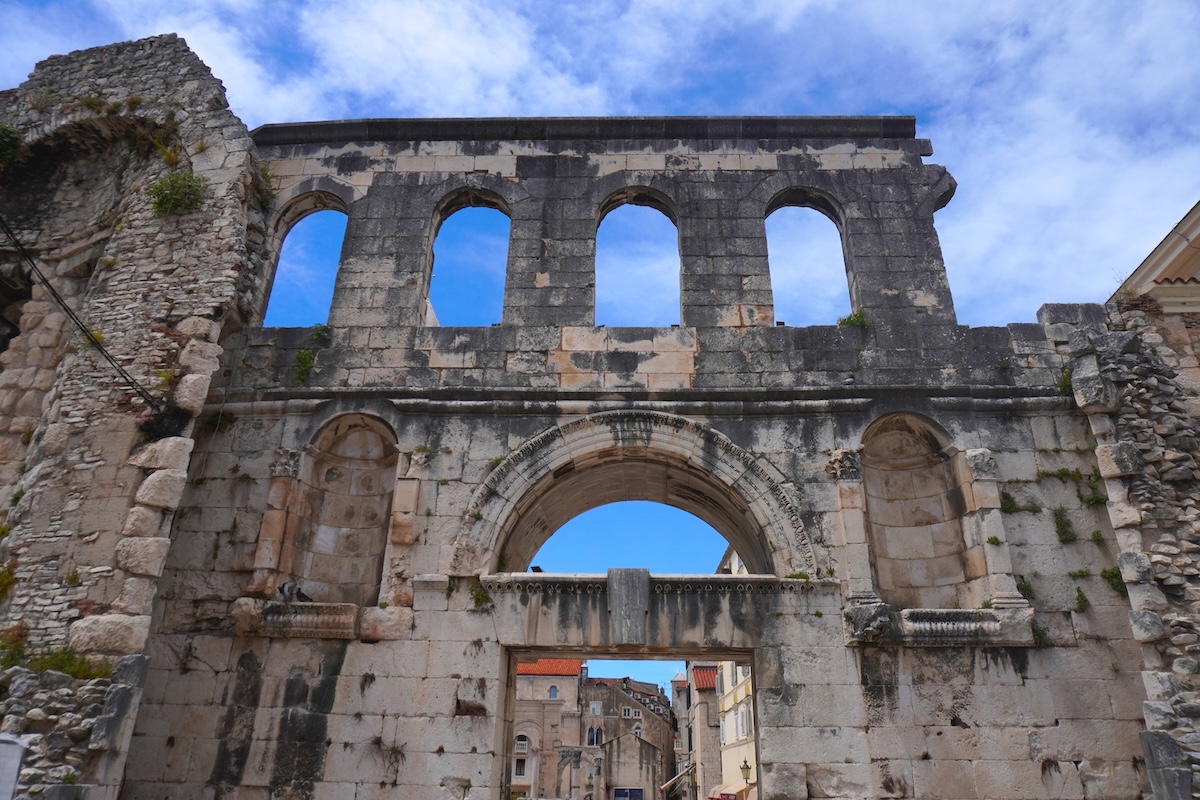
The Silver Gate faces the site of the ancient Roman city of Epetium (now Stobreč). In the 6th century, a small church dedicated to Saint Apollinaris was built on top of it.
South Gate (Bronze Gate)
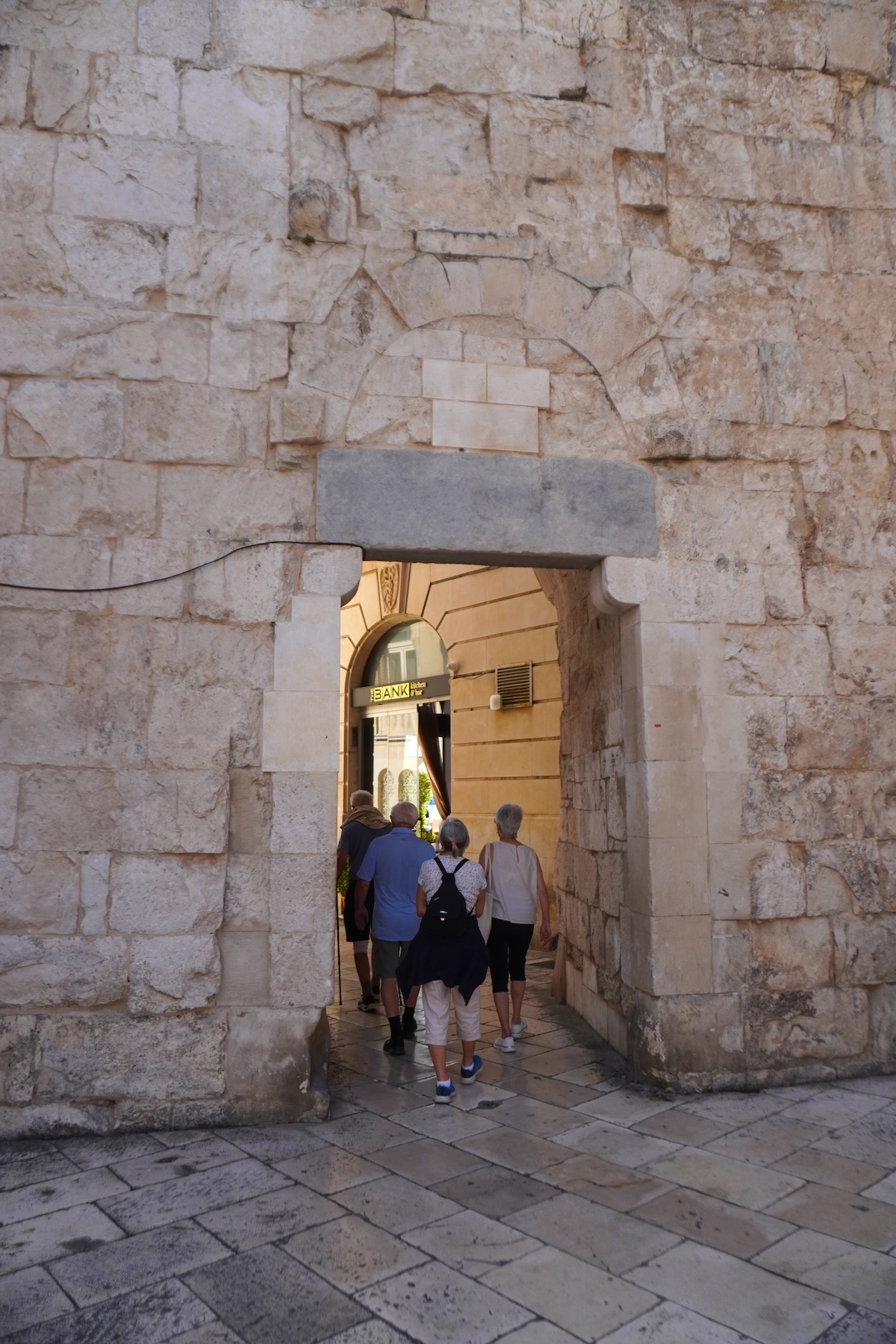
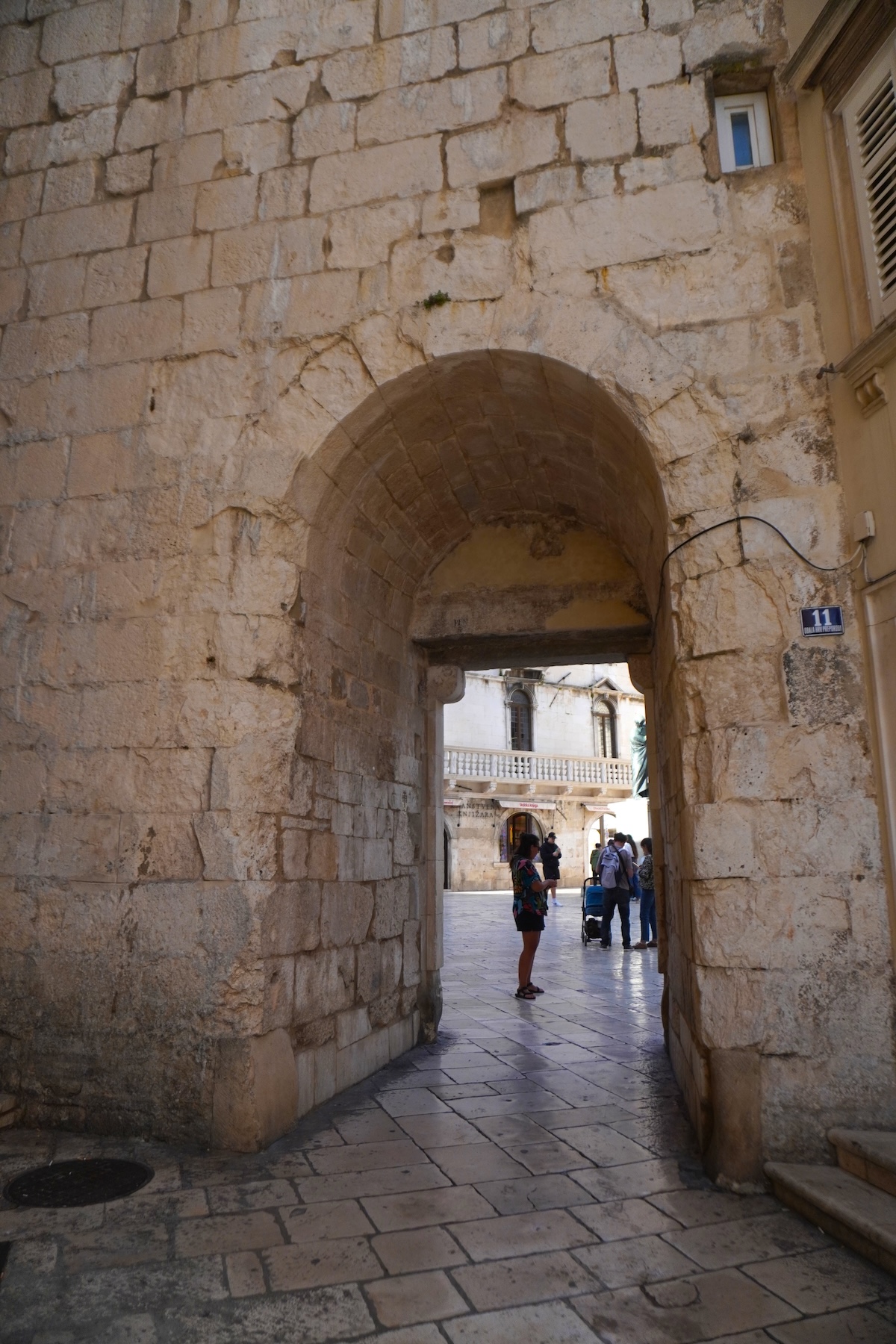
The South Gate (Bronze Gate) is much more modest than the other three; this was the gate that led directly to the sea, since before the the Riva existed, the water reached right up to the wall itself. It served as an entrance for supplies arriving by boat and as a quick escape route for the emperor in case of danger. Today, it connects directly to the palace’s basements (the “Substructures,” where access to the interior requires an admission fee, though the main corridor leading from the gate is open to the public), making it one of the gates through which the most people pass each day.
All four gates are open to the public free of charge, 24 hours a day.
Peristyle
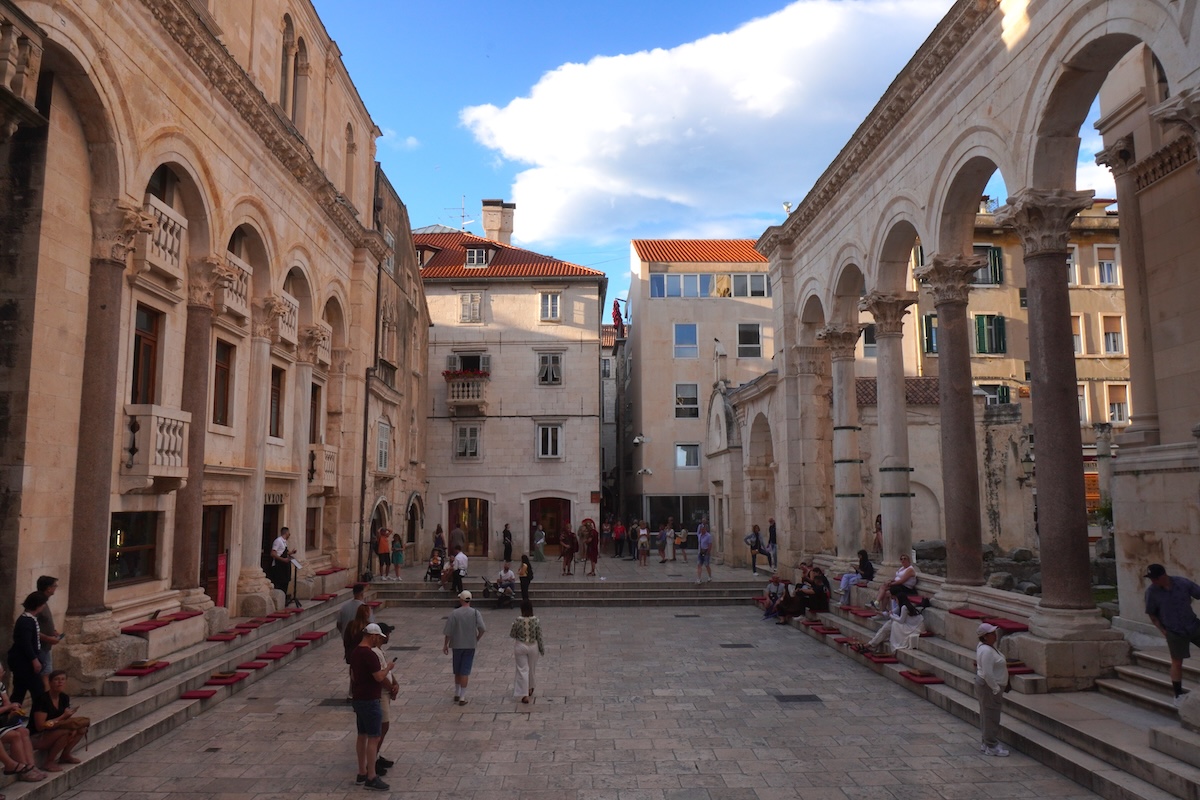
The Peristyle is the plaza where the palace’s two major Roman streets, the north-south and east-west thoroughfares, intersected. It could be said to be the palace’s center, as well as the setting where Diocletian would appear before the people. It is surrounded by red granite columns brought from Egypt, a color associated with the ceremonial nature of the site.
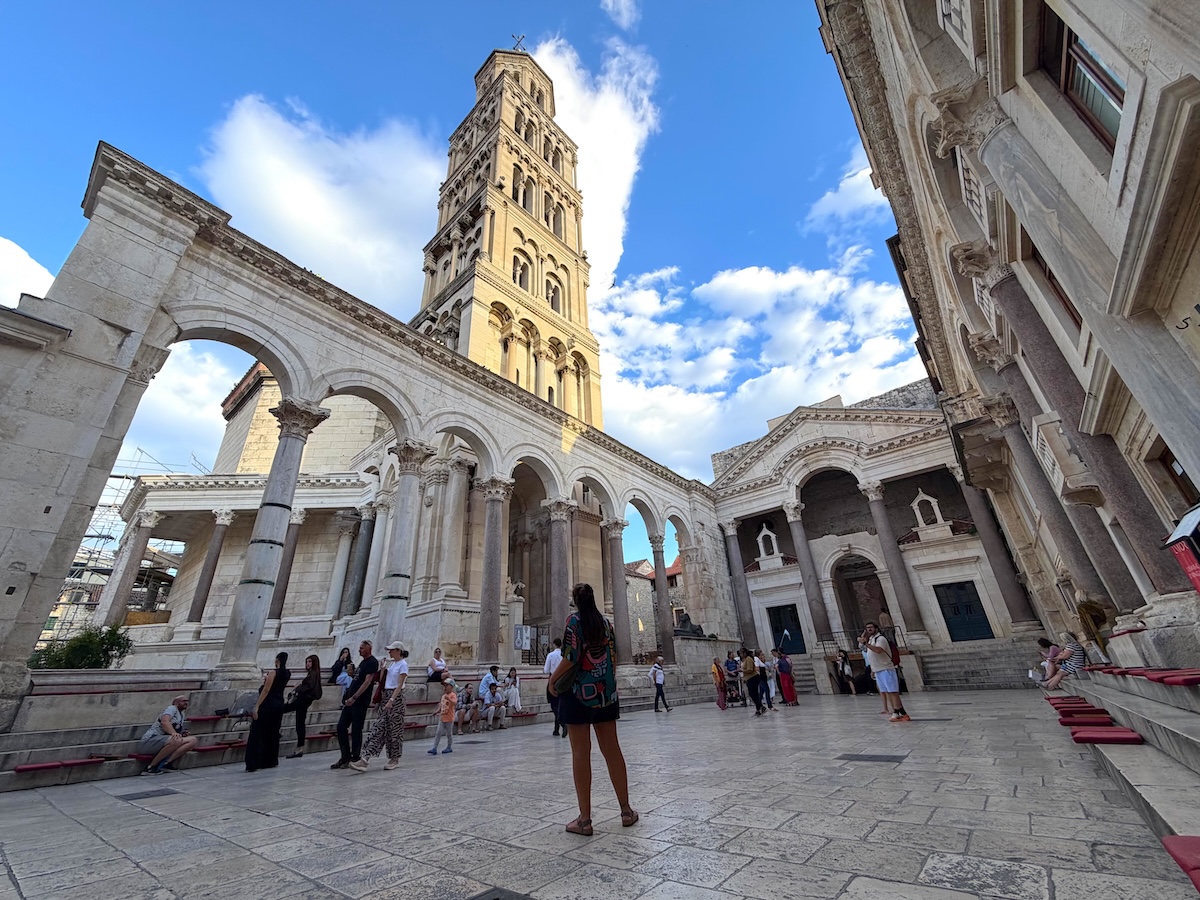
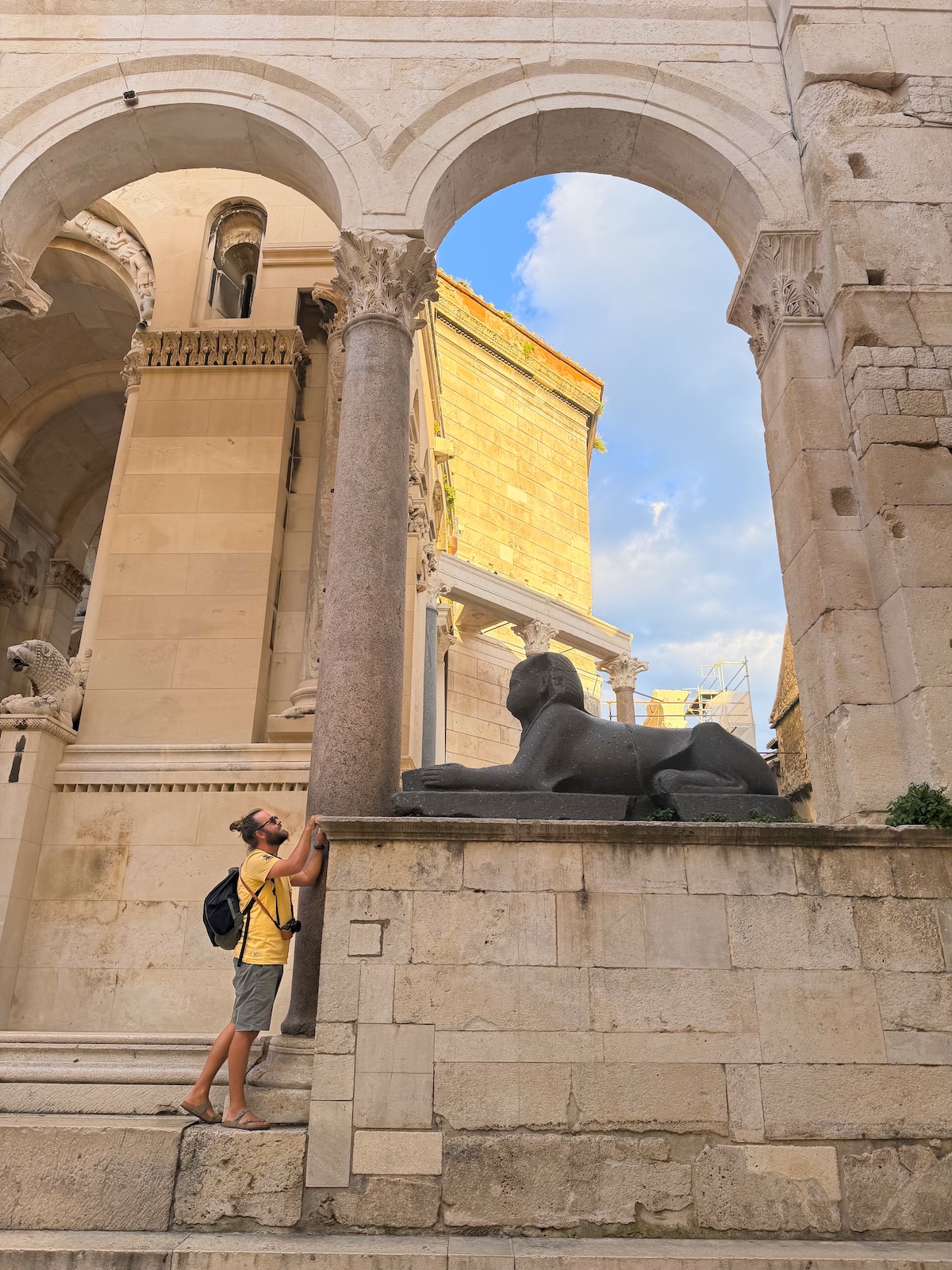
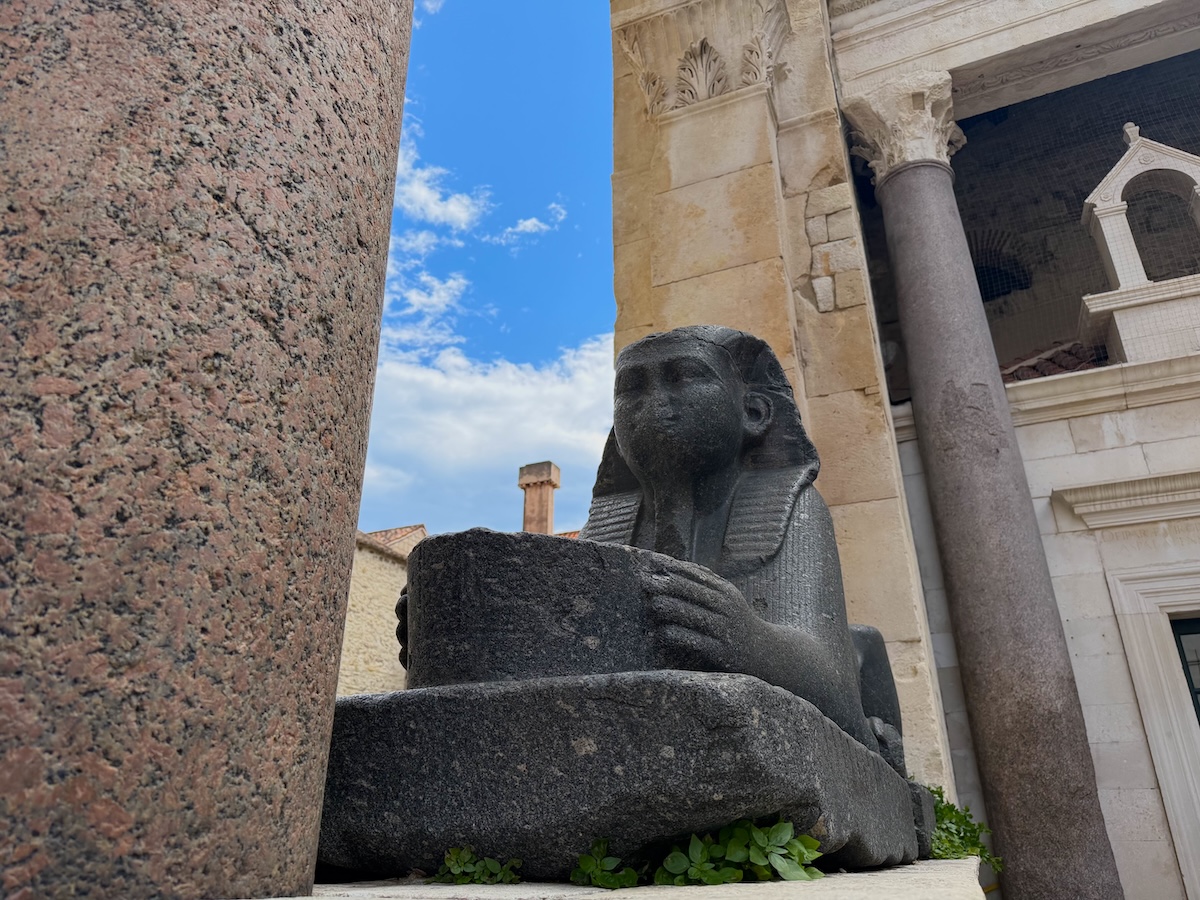
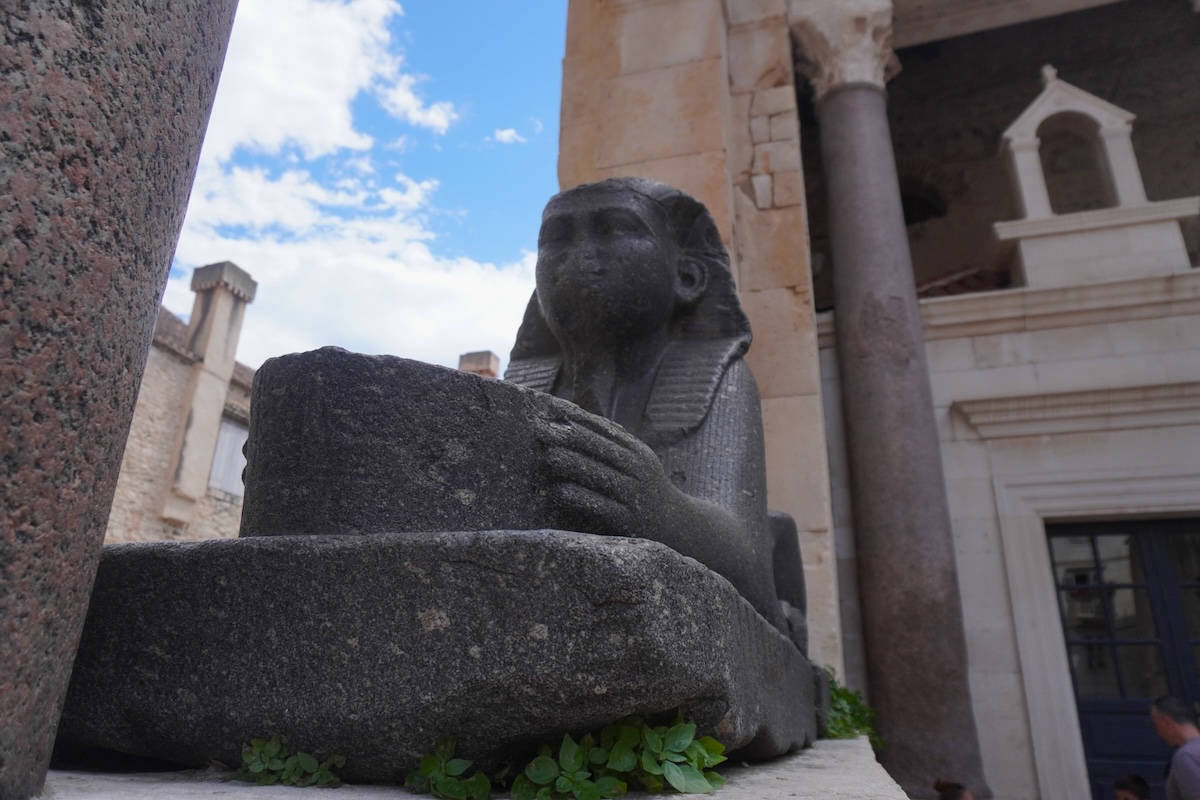
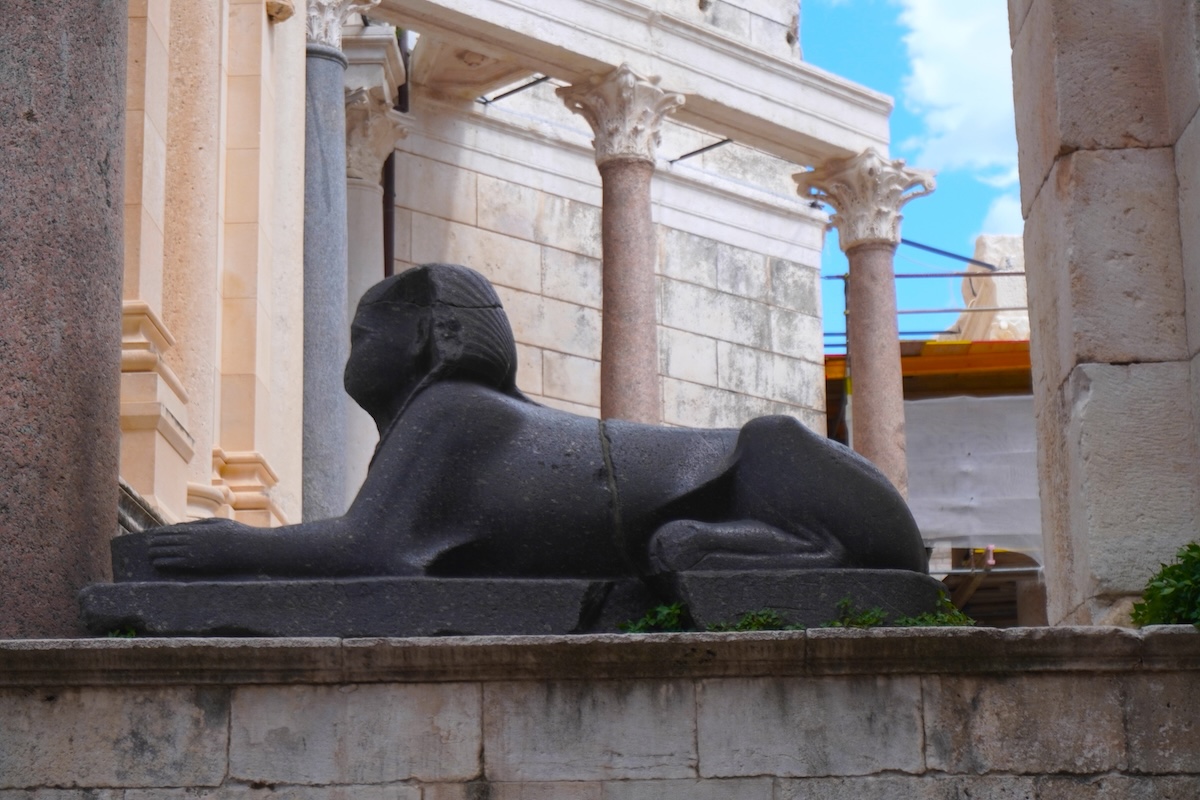
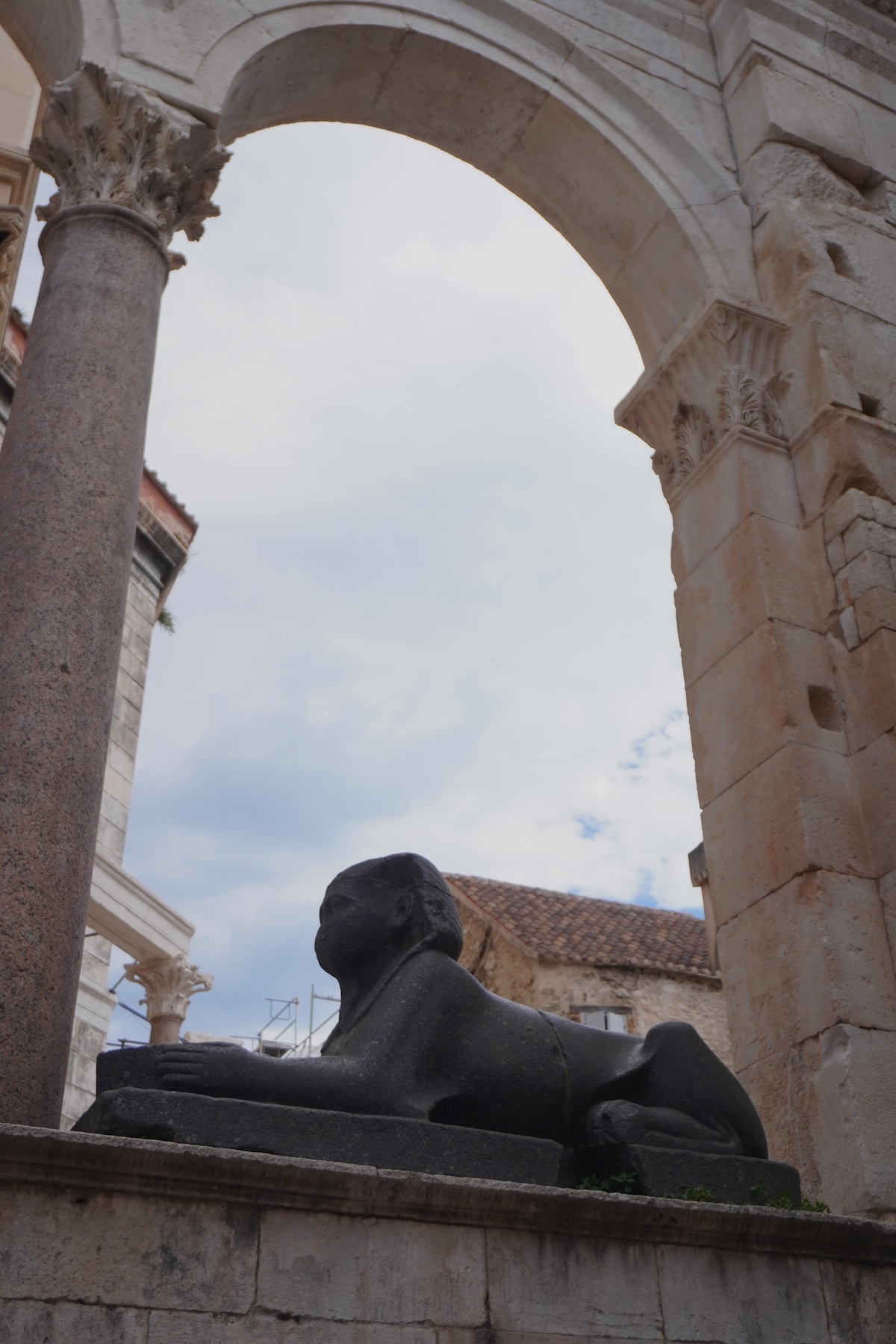
Next to the cathedral’s entrance stands an Egyptian sphinx carved from black granite, generally dated to around 1500 B.C. (about 3,500 years ago), one of several that Diocletian had brought to decorate his palace.
The square is flanked by some of the most important features of the palace’s architectural complex: the Cathedral of St. Duje, which served as Diocletian’s mausoleum; one of the exits from the palace’s underground chambers; and, in the background, a flight of stairs leading up to the Protiron, the monumental portico that provided access to his private quarters. From there, Diocletian would appear, presenting himself as a descendant of Jupiter and demanding to be worshipped. We’ll discuss all of this in greater detail when we cover each specific point.
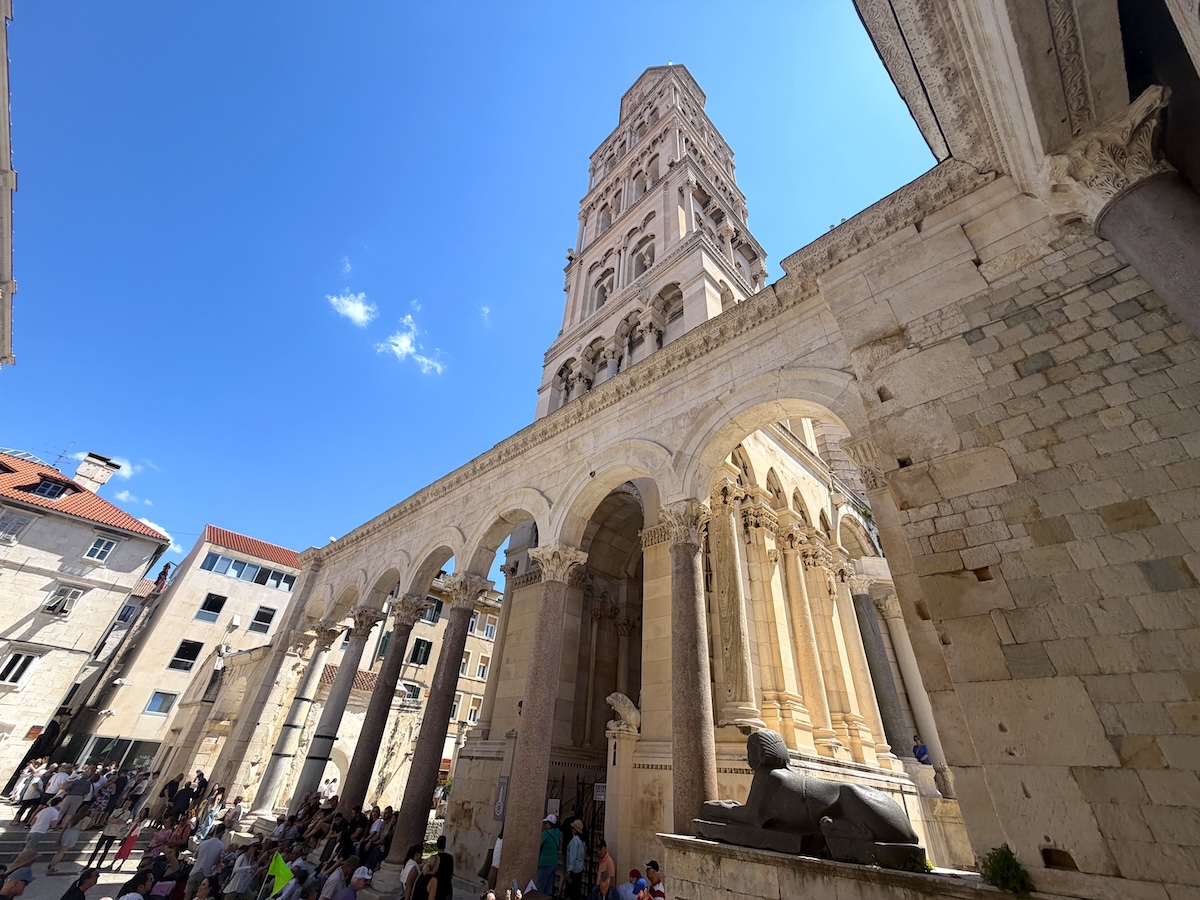
Today, the Peristyle remains the city’s main gathering place, quite crowded with tourists and free tours, with a few terraces where you can have a coffee (at an “emperor’s price”) among Roman columns. The square is open to the public free of charge and can be visited at any time of day or night. The surrounding monuments (the cathedral, the bell tower, and the larger rooms in the basement) require an admission fee, which we’ll cover below in their respective sections.
Sphinx
Next to the cathedral’s entrance, in the Peristyle, stands a Sphinx made of black granite, approximately 3,500 years old, older than the palace itself (which is about 1,700 years old) and likely the oldest object in the entire city.
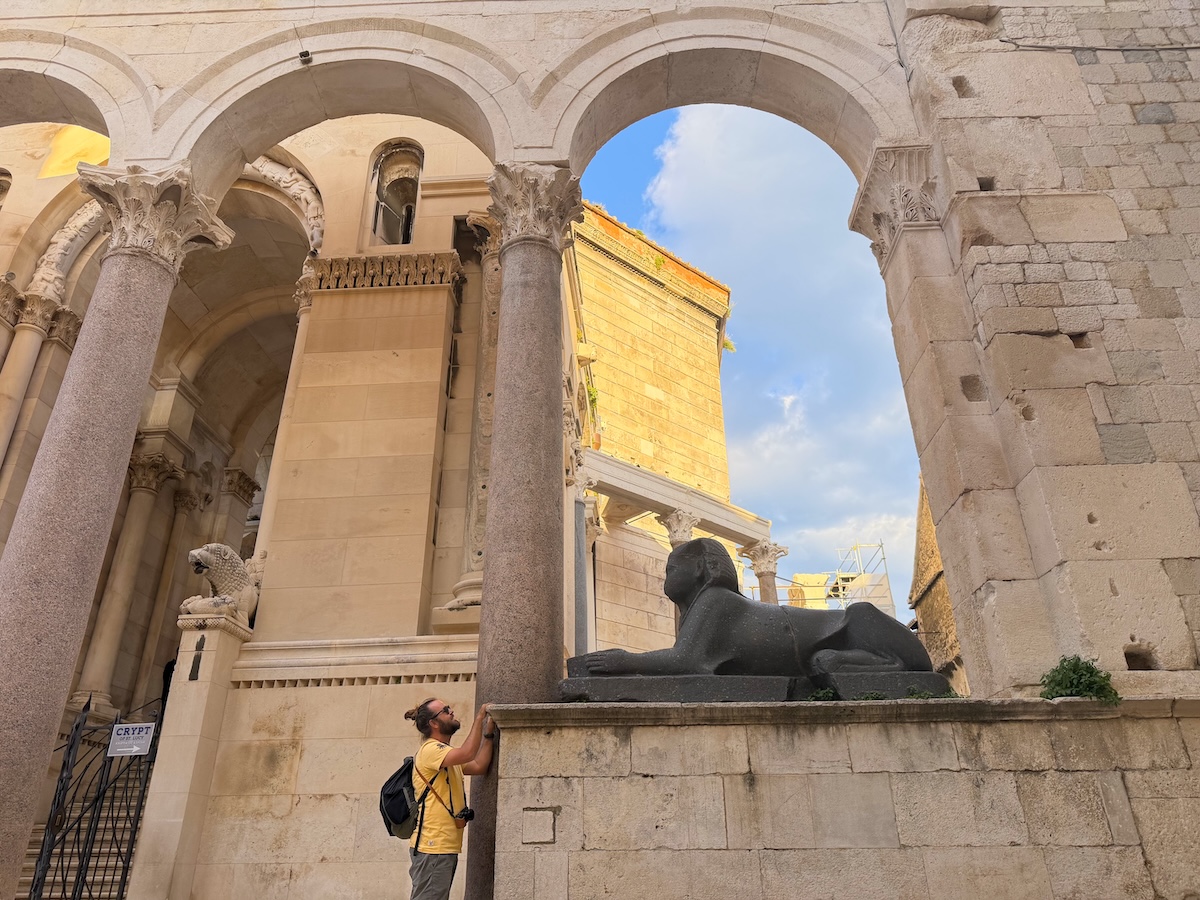
It is attributed to Pharaoh Thutmose, who reigned in Egypt in the 15th century B.C., and ended up here because Diocletian, fascinated by Egyptian culture, brought a total of twelve sphinxes to decorate his palace. Eleven of them were destroyed by the early Christians, who did not look kindly upon so many Egyptian pagan symbols in their new cathedral, so this is the only one that remains practically intact, head and all.
It’s no coincidence that the columns surrounding the square are made of red granite: red was associated with purple, the color reserved for the emperor since the time of Diocletian, so the entire square was designed to reinforce his image of power.
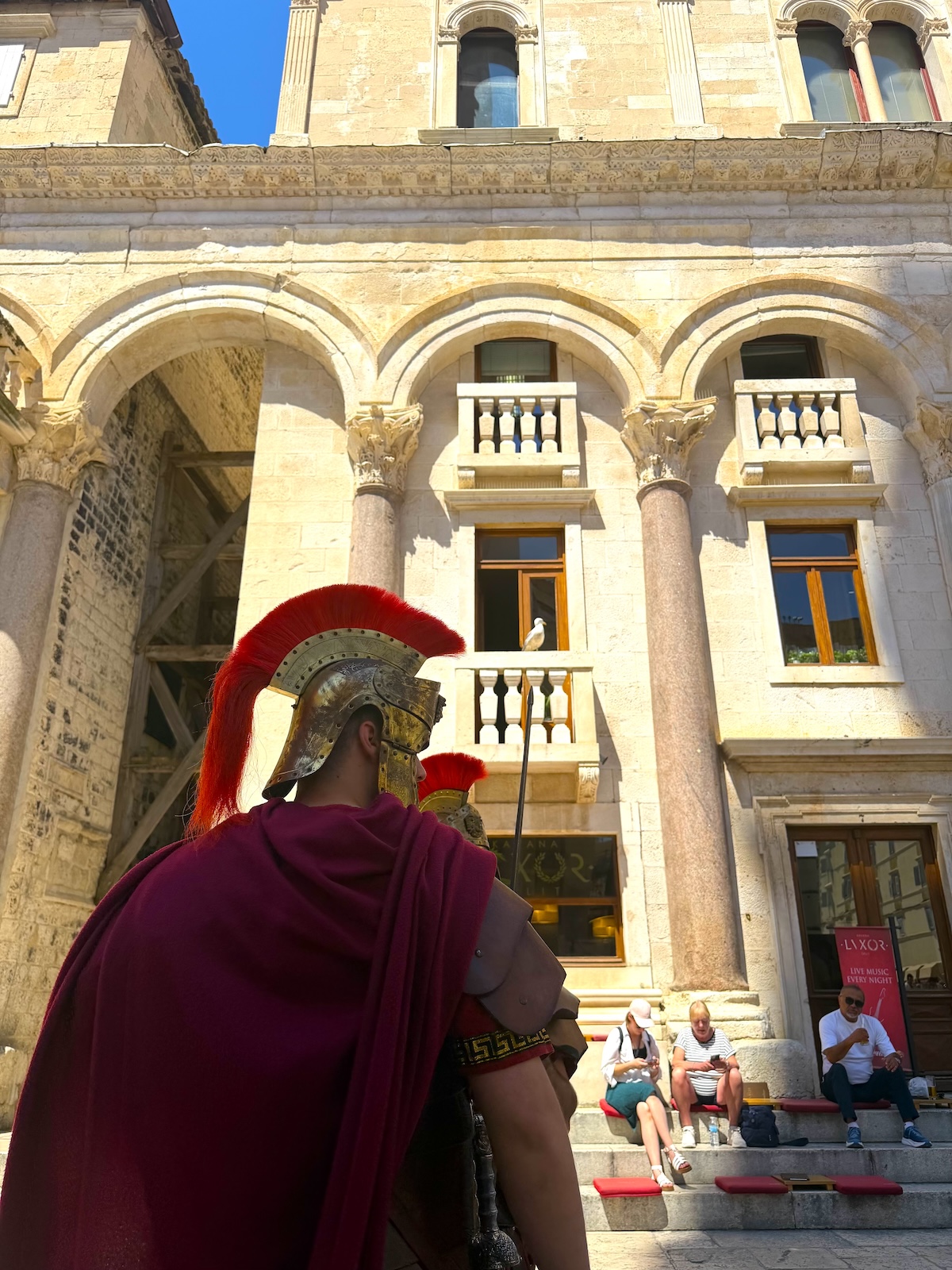
If you visit Split between late May and late September, don’t miss the changing of the guard organized by the City Hall every day at 12:00 p.m. sharp in the Peristyle itself: Roman soldiers, the “emperor,” and the “empress” reenact the scene for anyone who happens to be there at that time. It’s free and lasts about 15 minutes.
Split Cathedral – Cathedral of St. Domnius (Splitska katedrala)
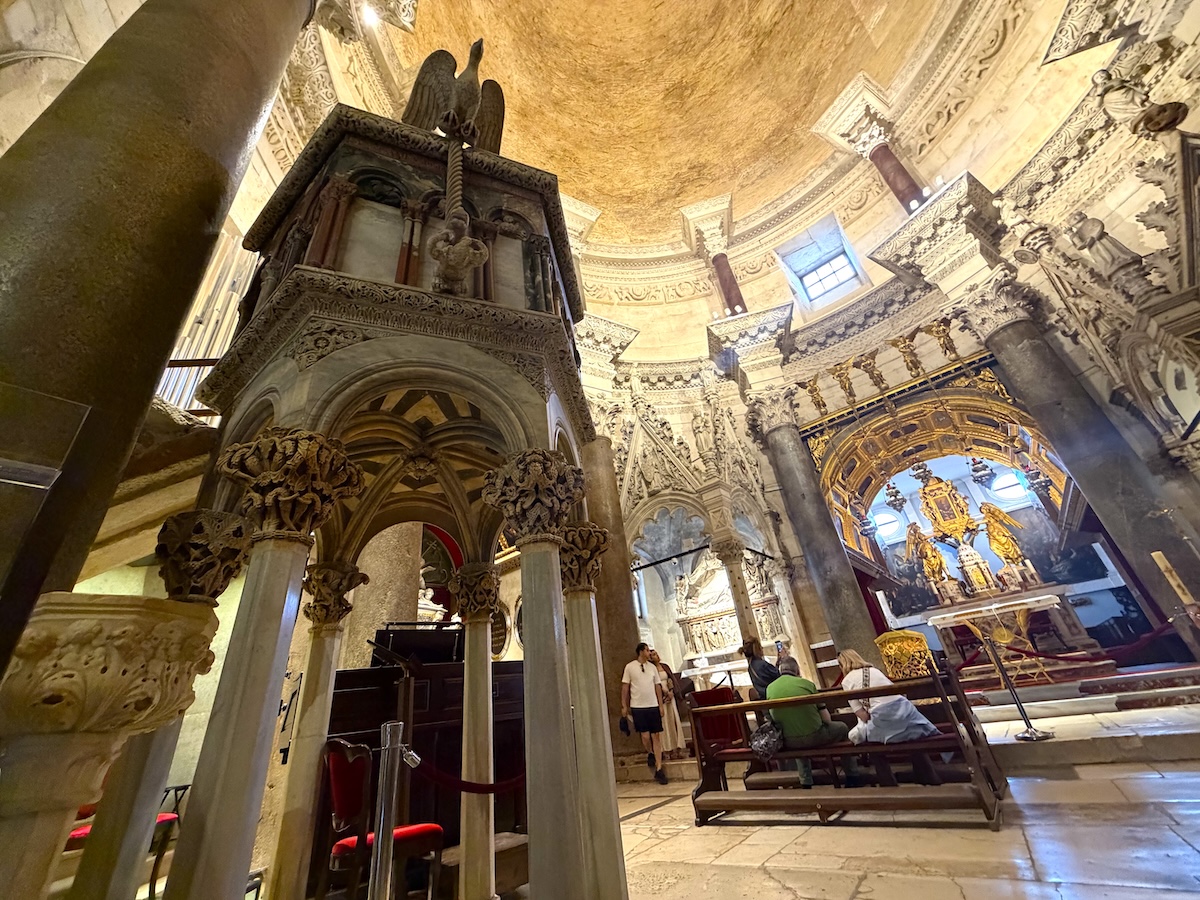
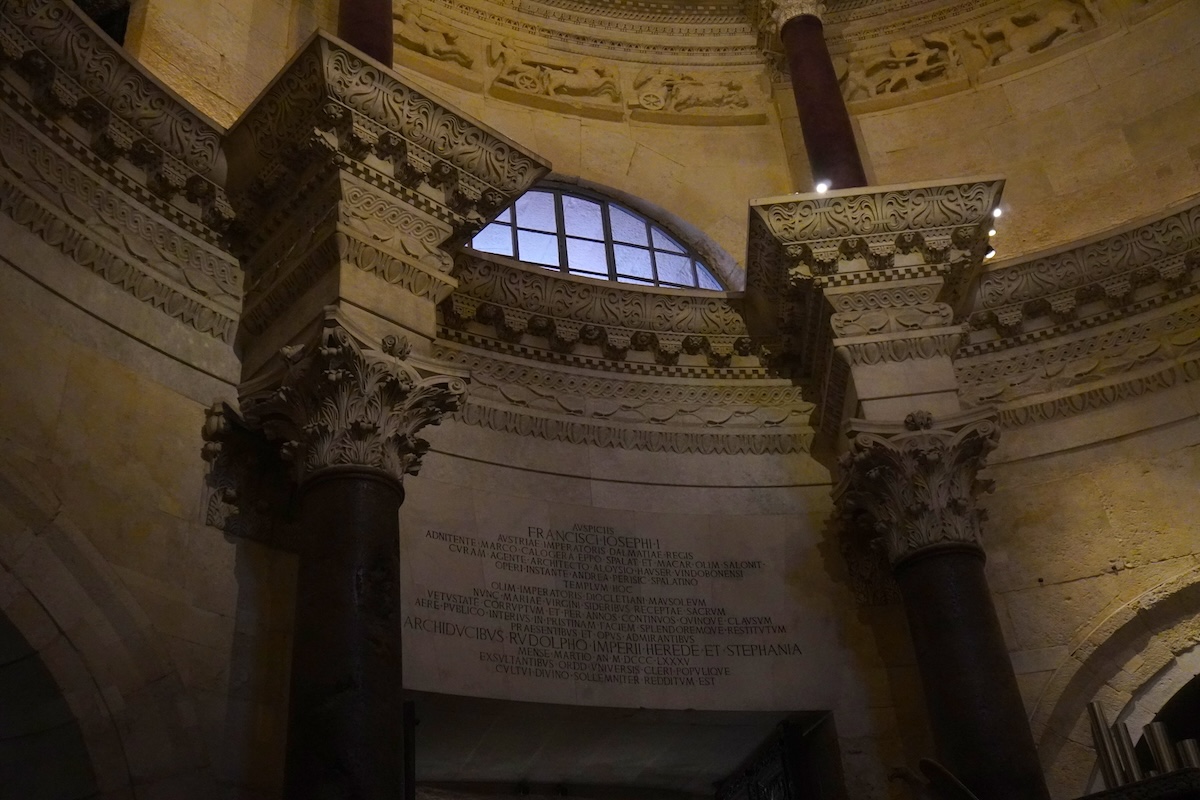
Split Cathedral began as Diocletian’s mausoleum, built alongside the rest of the palace, and in fact, archaeologists believe Diocletian’s sarcophagus is located in the center of this octagonal hall.
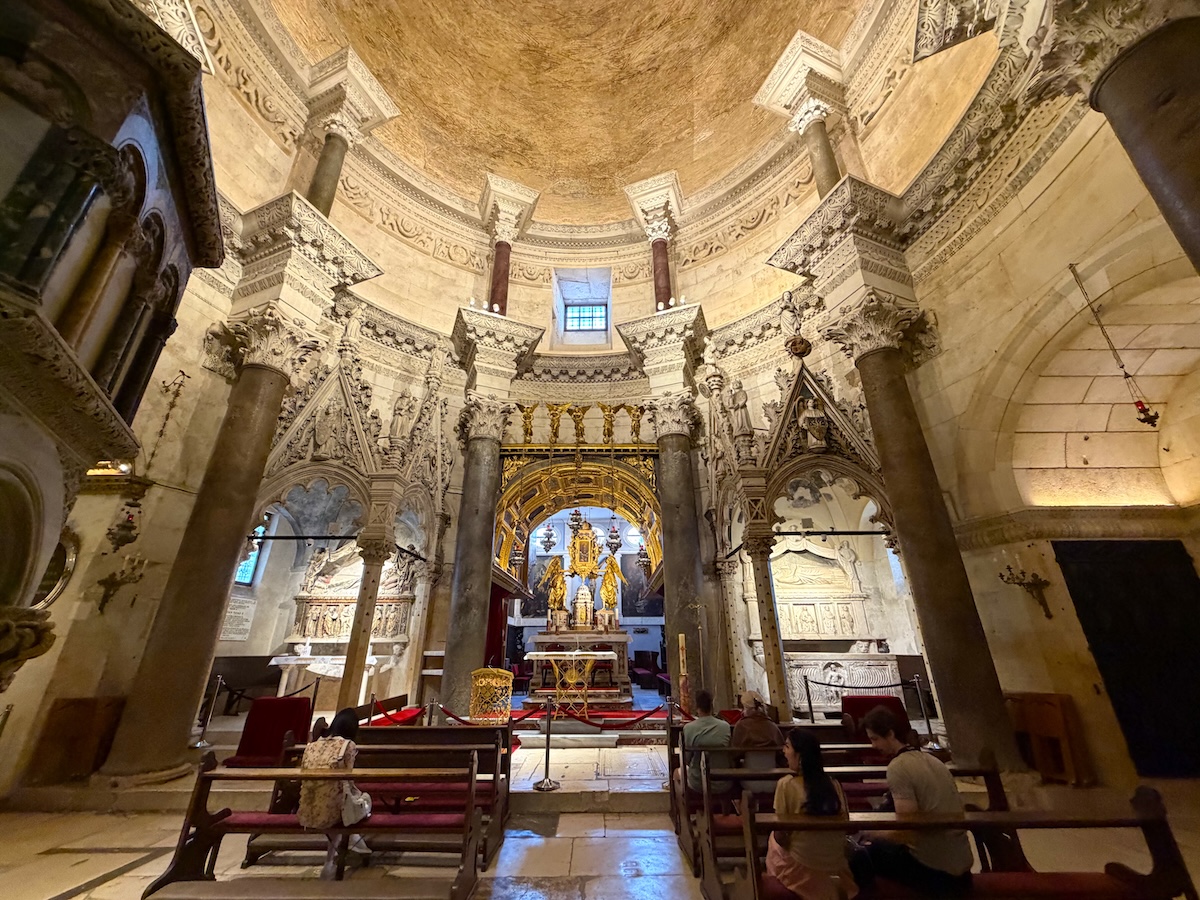
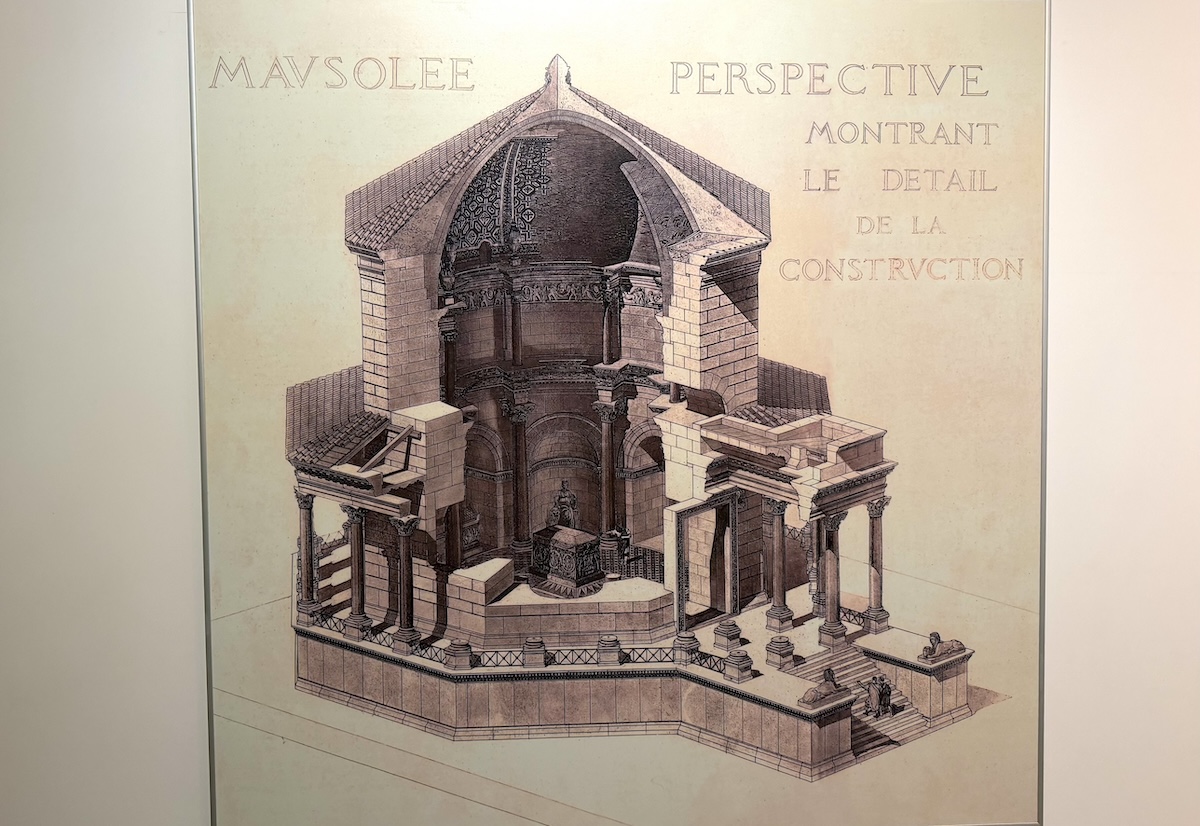
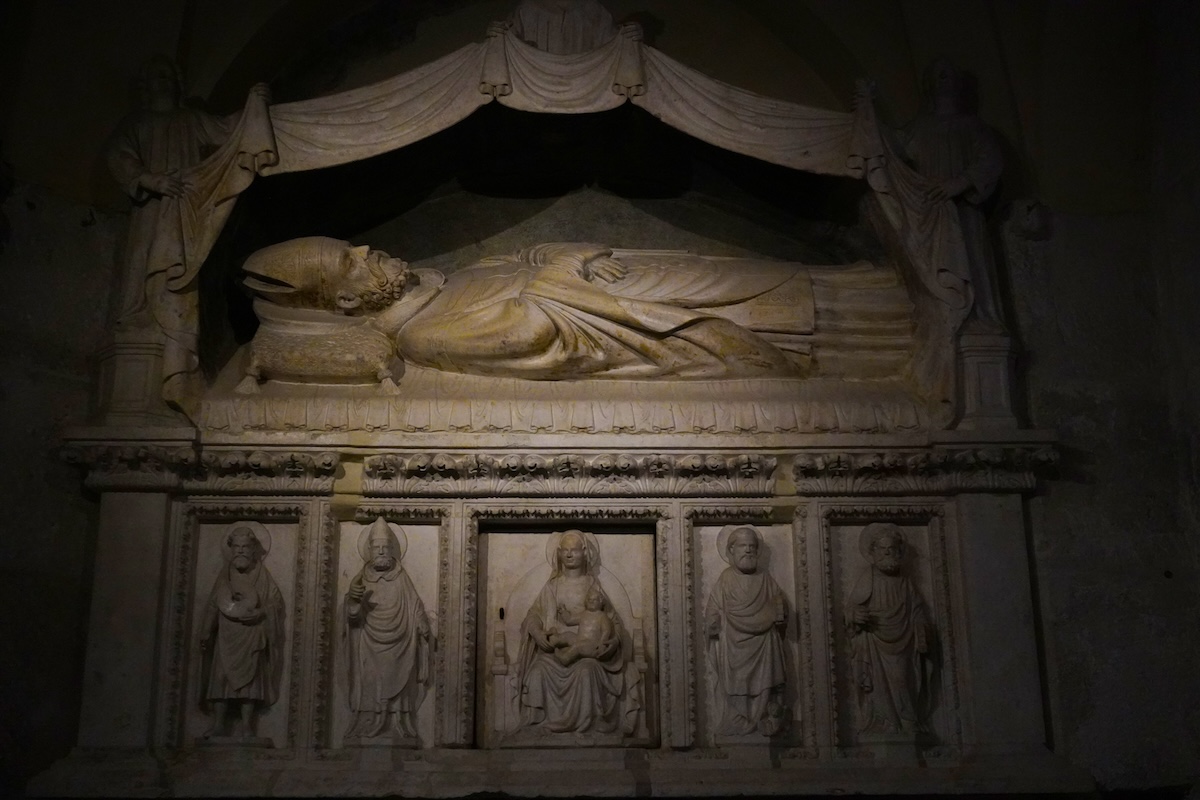
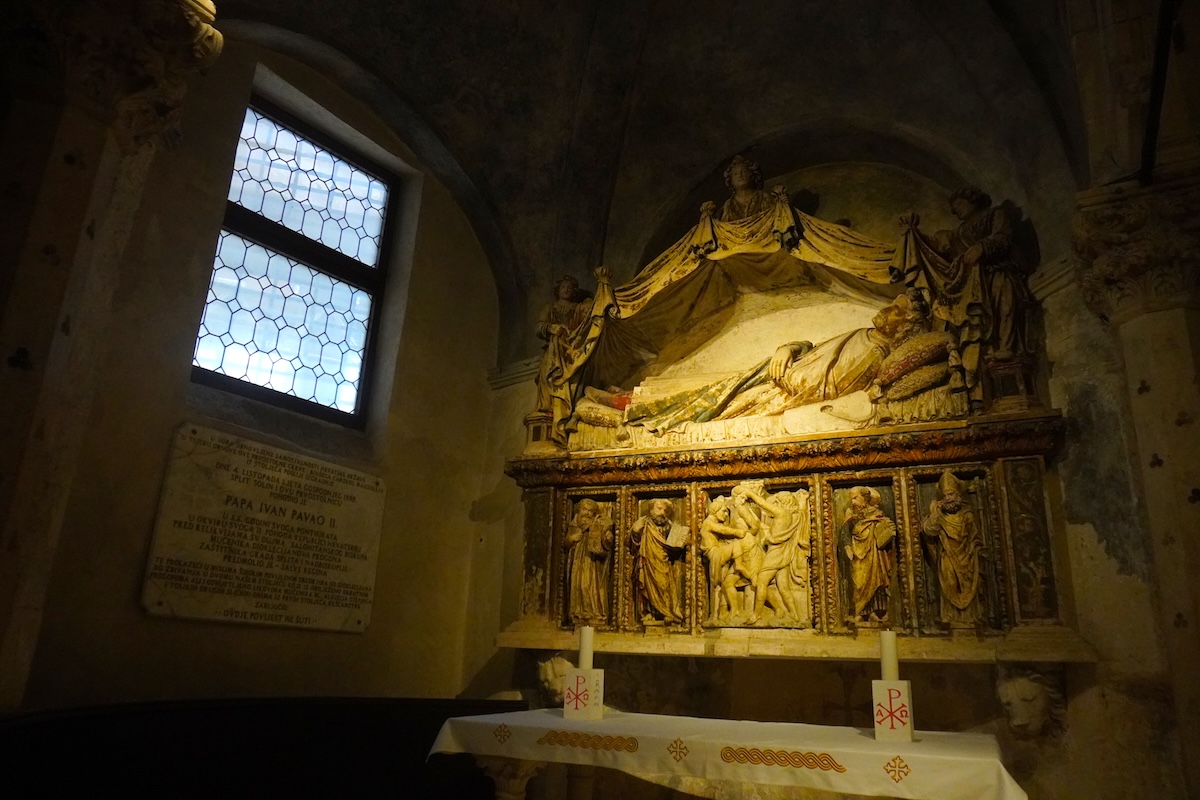
Around the 7th century, after Diocletian had died and his remains had been removed, Christians consecrated the building as a church and dedicated it to Saint Duje, the bishop of Salona whom Diocletian himself had ordered to be executed, one of Split’s most talked-about ironies.
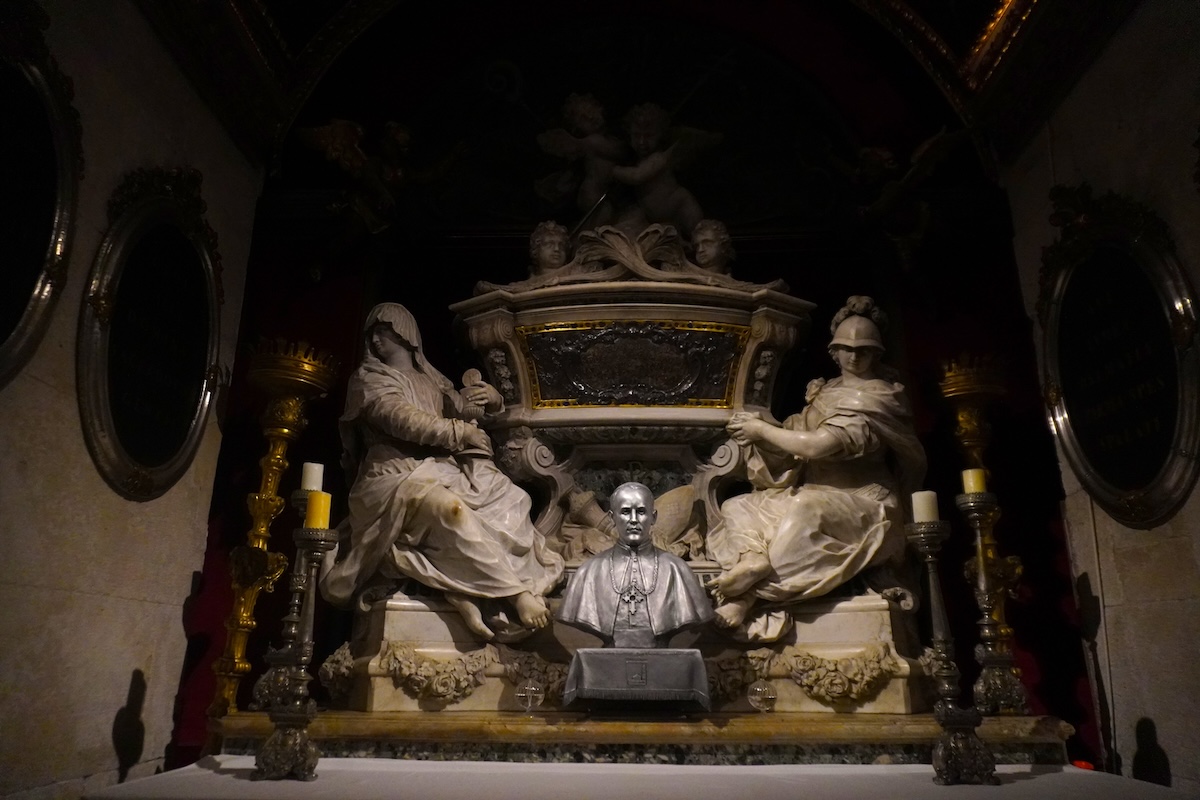
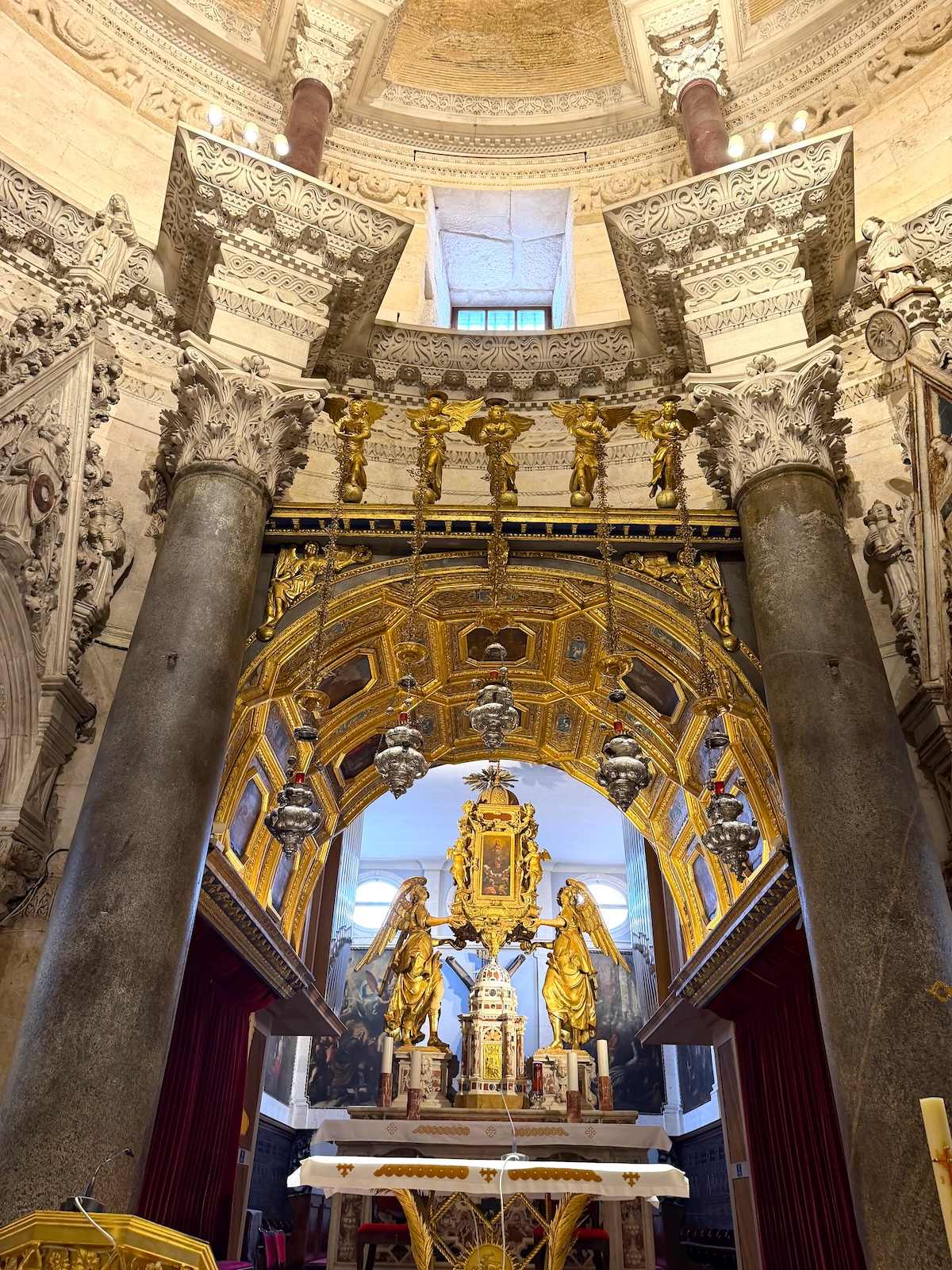
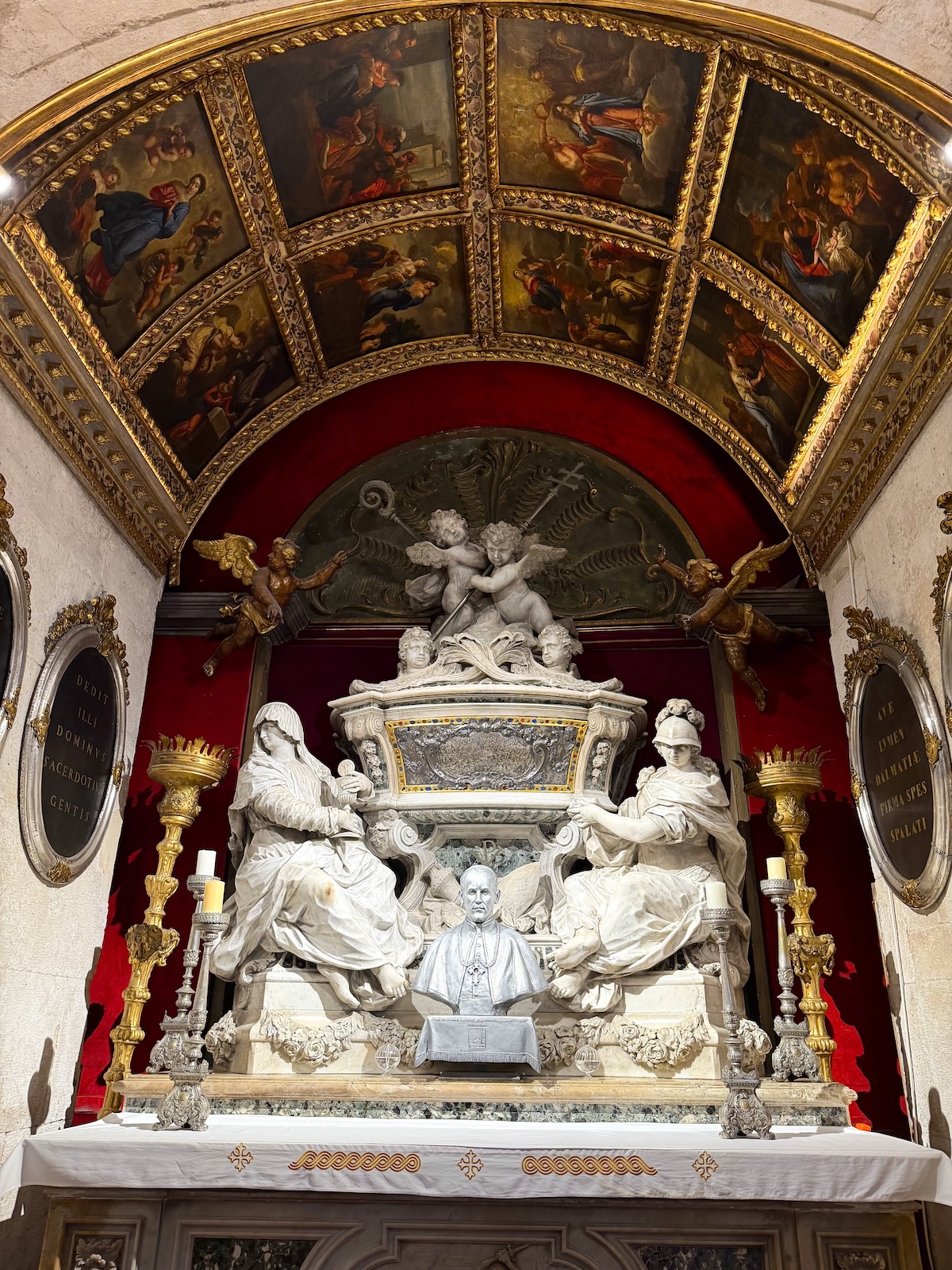
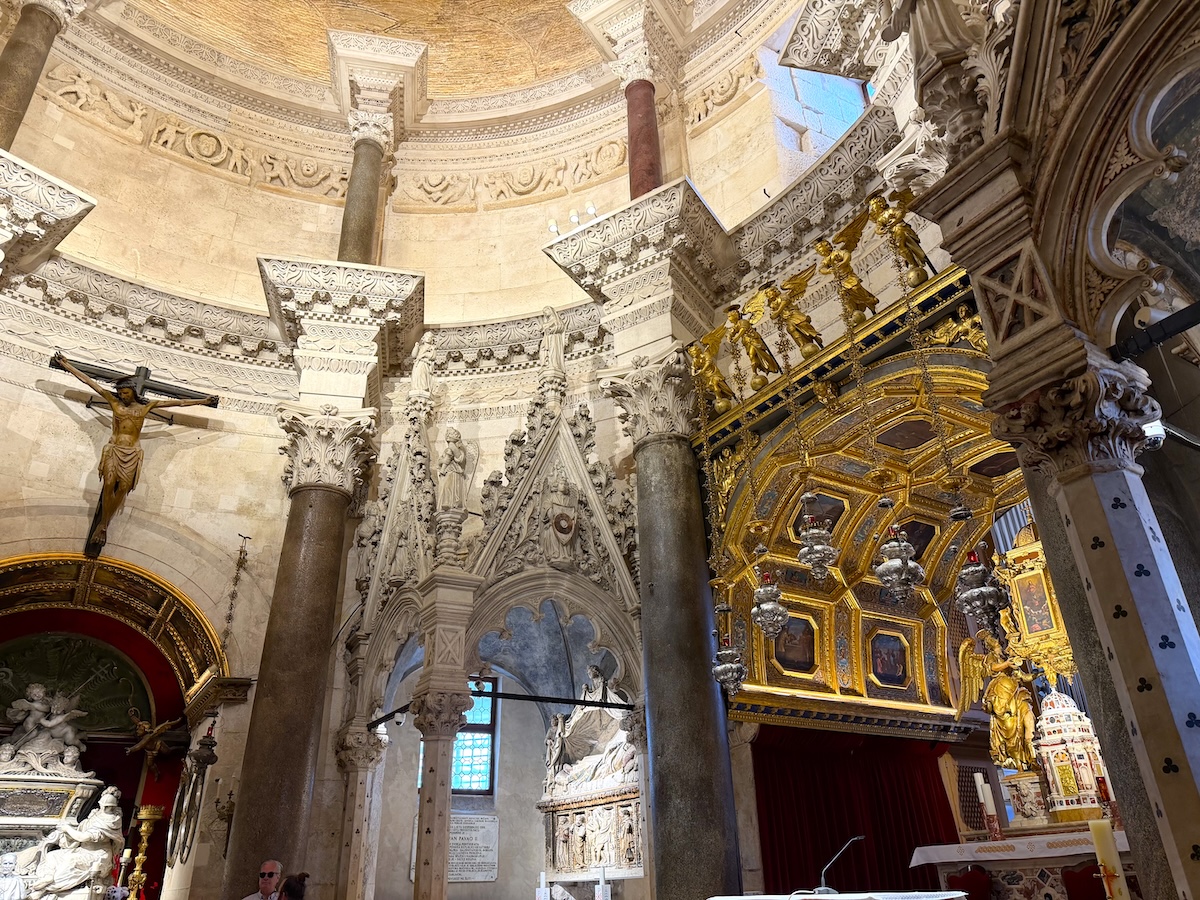
The walls, columns, and dome of the original mausoleum are still standing, making it one of the oldest cathedrals in the world still in continuous use (the oldest Catholic cathedral on the planet, according to The Split Guide). Inside, the space is small (an octagonal Roman hall, not a Gothic nave), so a visit takes no more than twenty minutes, but it’s worth taking a look at the 13th-century carved wooden doors and the ornate pulpit. Since it’s an active church, there’s a dress code (shoulders and knees must be covered; no beachwear), and you may happen to be there during a Mass.
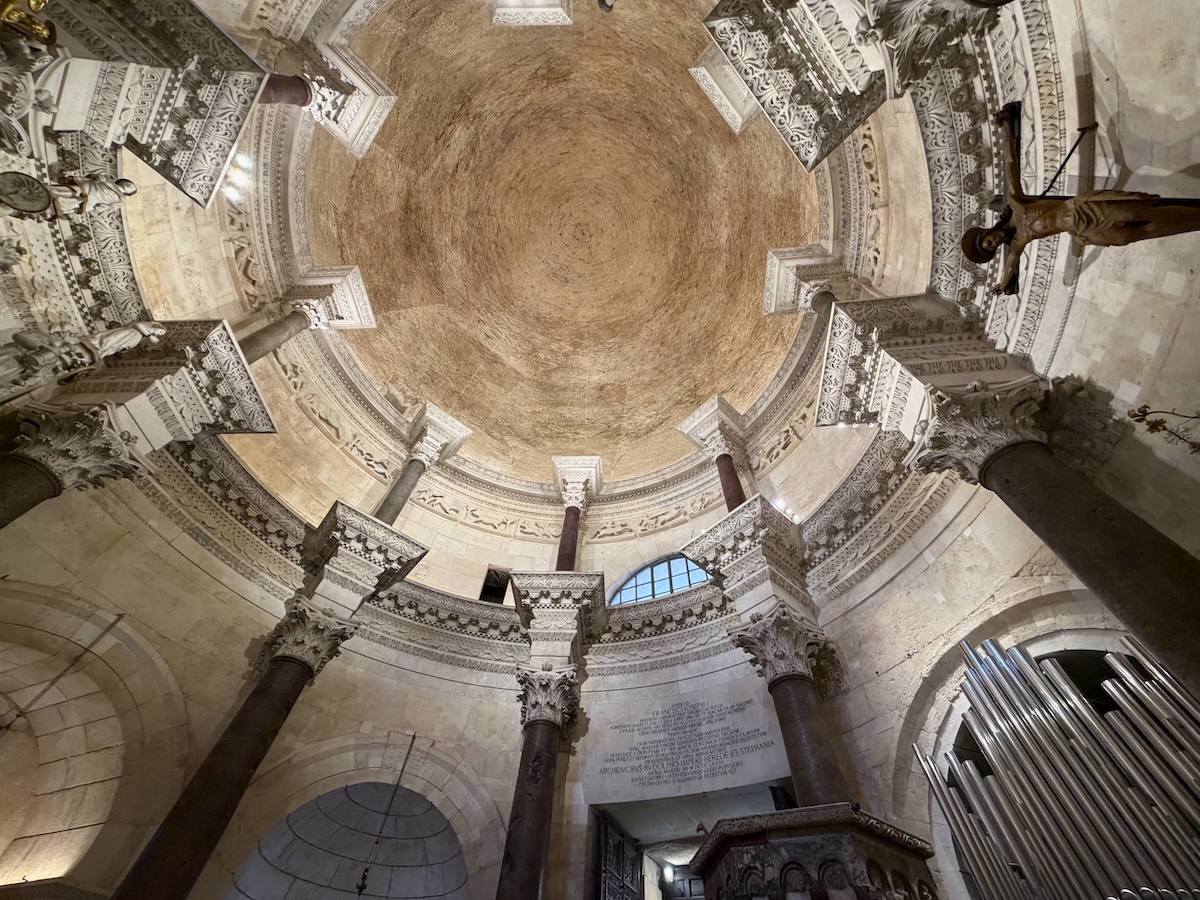
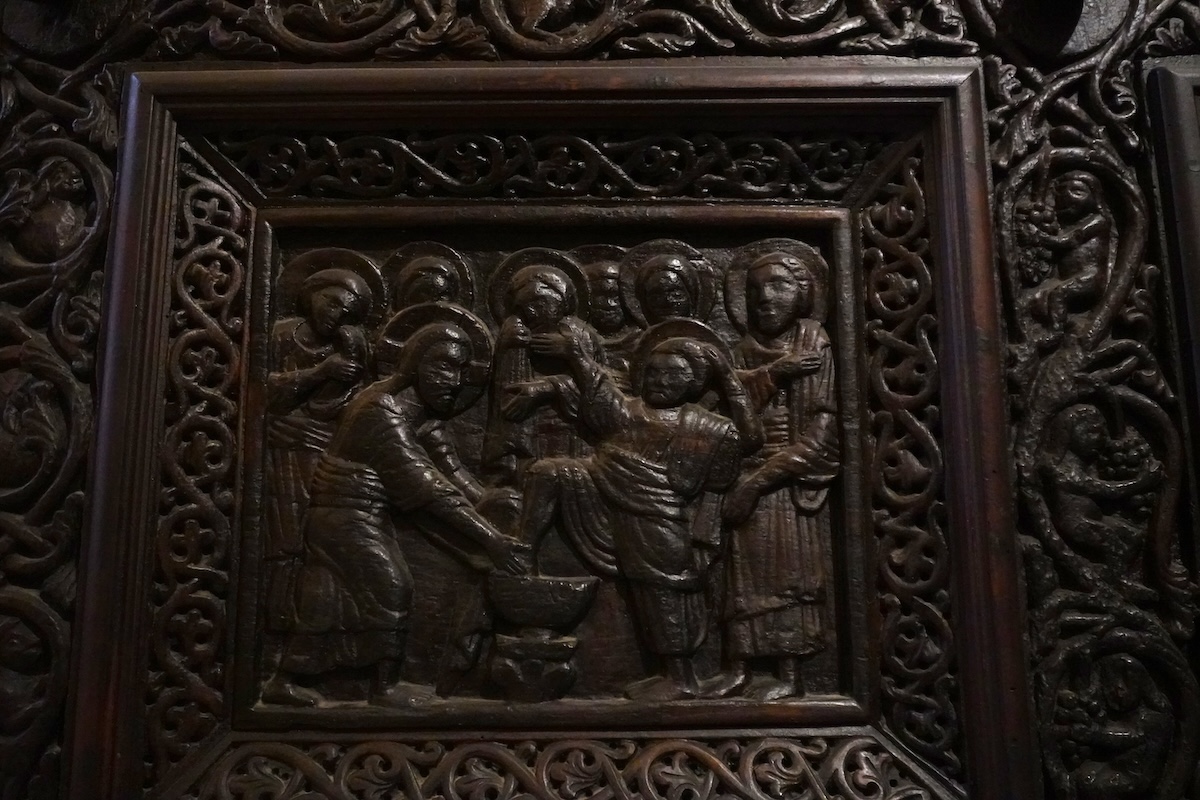
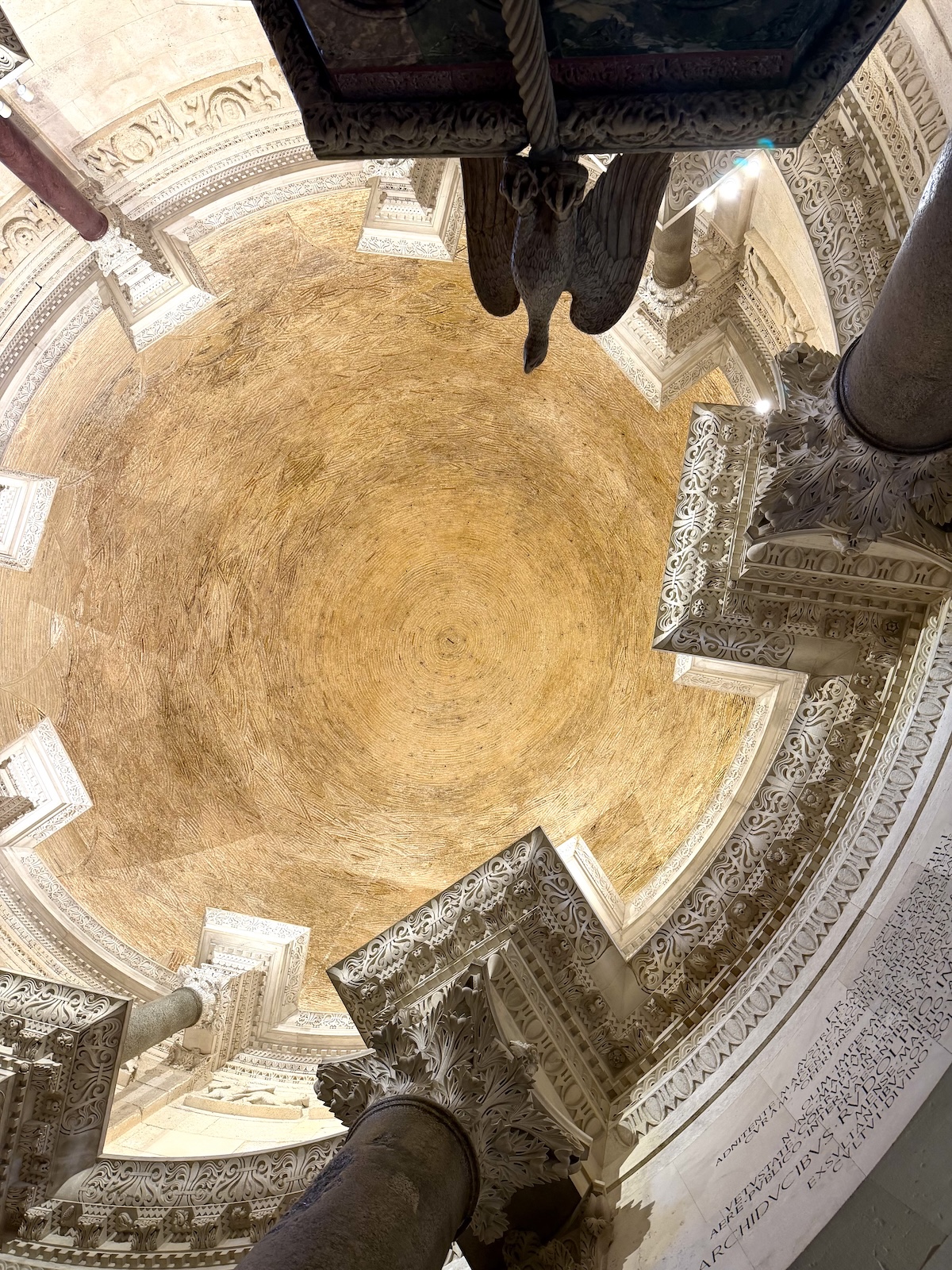
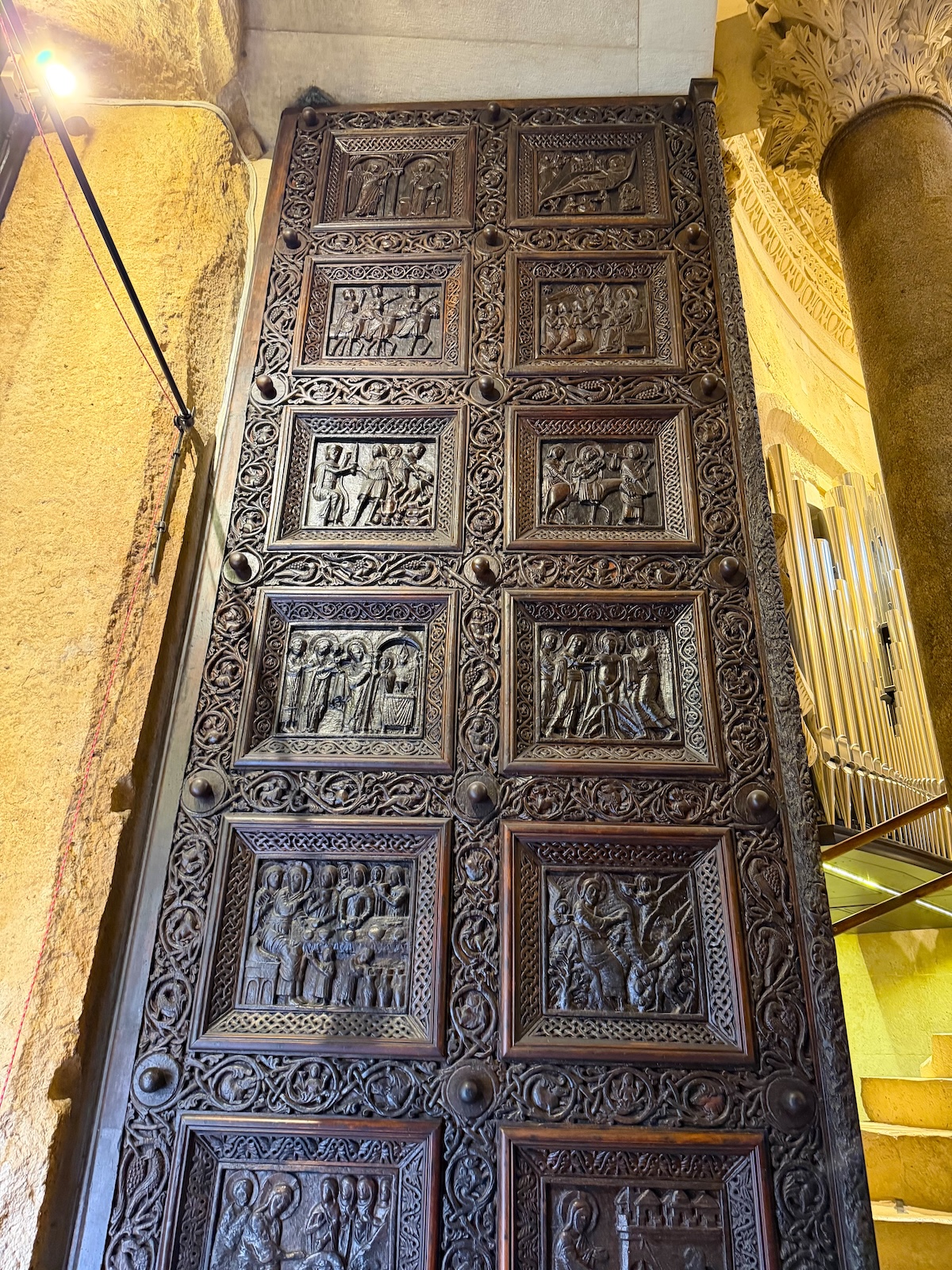
Admission: €6, or included in all combination passes (Blue, Red, Green, Yellow, Purple, and Gold – see below for pass information). Hours: Open Monday through Saturday from 8:15 a.m. to 7:30 p.m., and Sundays from 12:30 p.m. to 5:30 p.m. Same hours for the Crypt, Bell Tower, and Treasury.
Crypt
Beneath the cathedral’s main hall lies the Crypt, a small chamber dedicated to Saint Lucy, a Christian martyr who, like Saint Duje, was executed during the persecutions of Diocletian. It is accessed through a separate door (with a separate admission fee) on the side of the building and is a simple, quiet space: just a single room with a single statue of the saint. Every December 13, Saint Lucy’s Day, a Mass is still celebrated here.
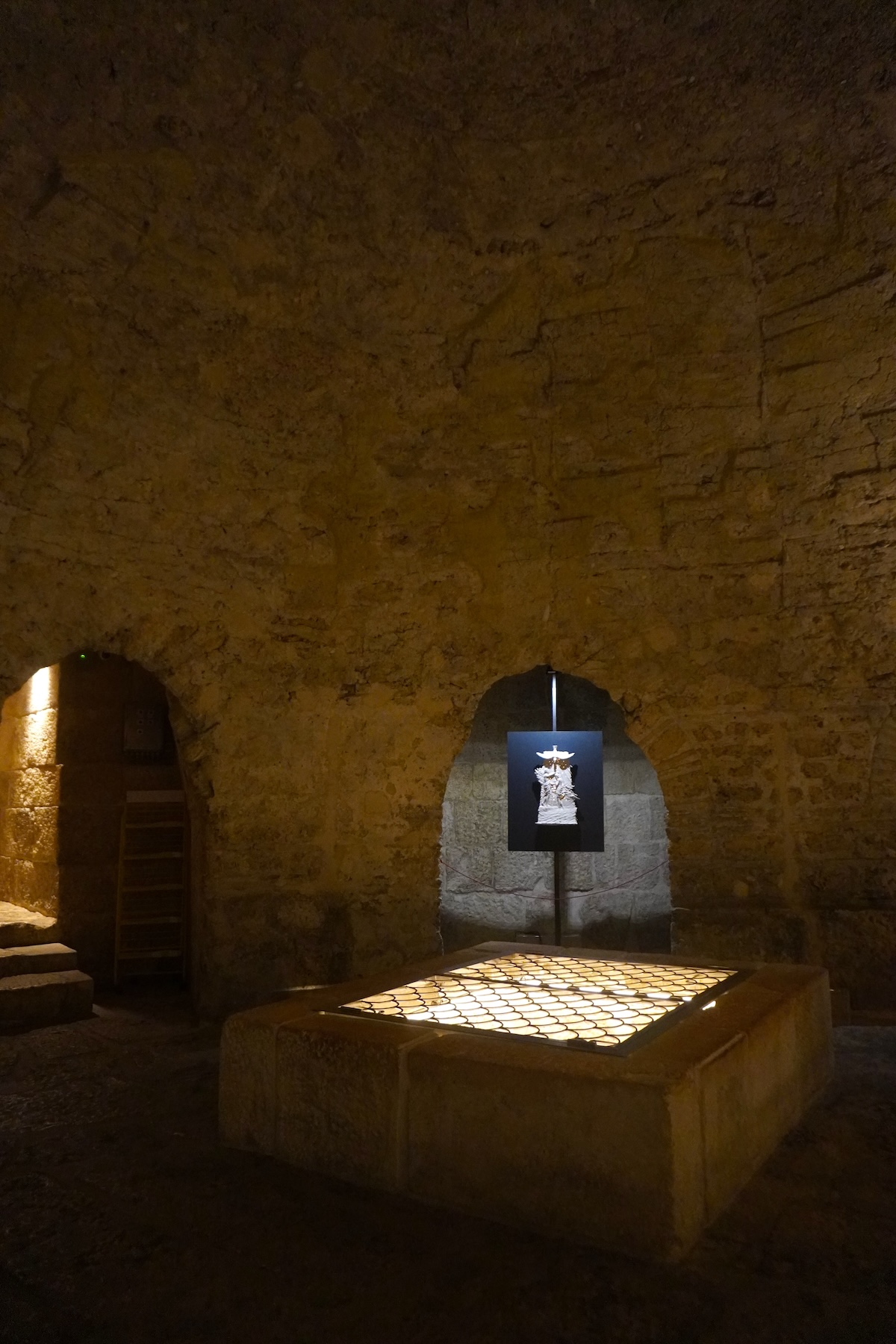
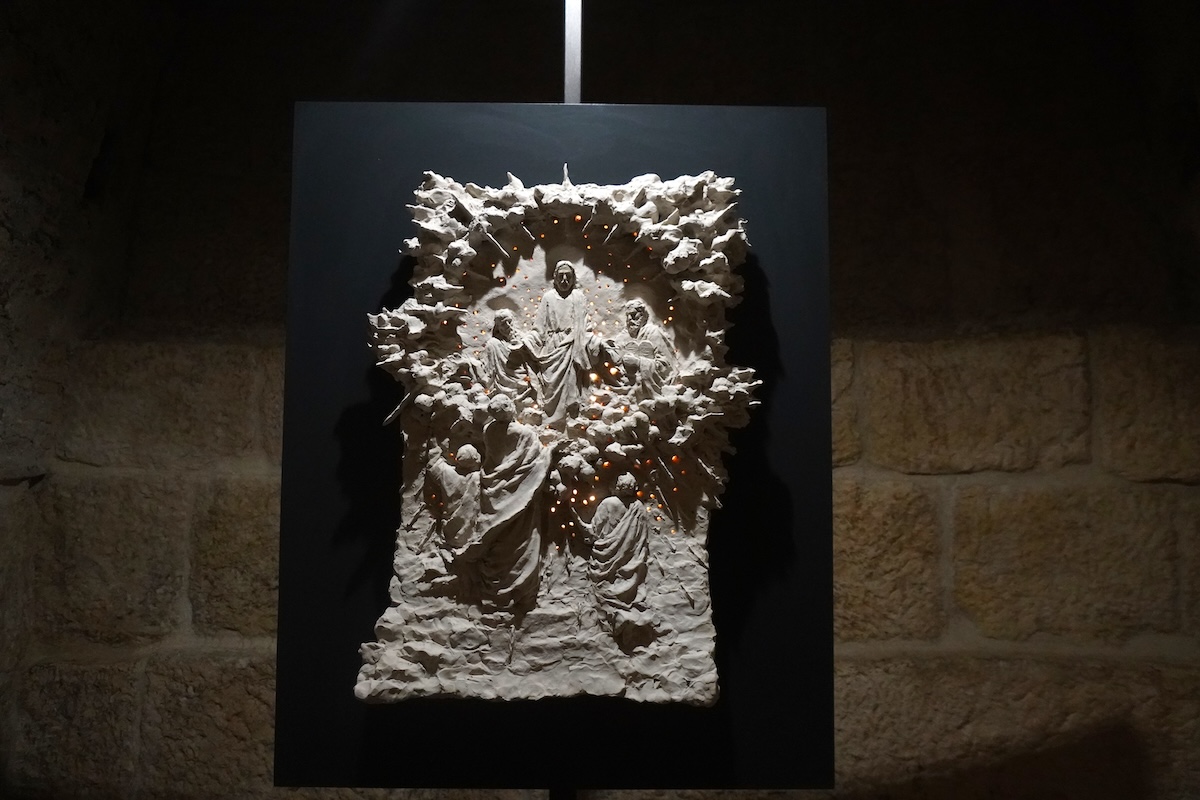
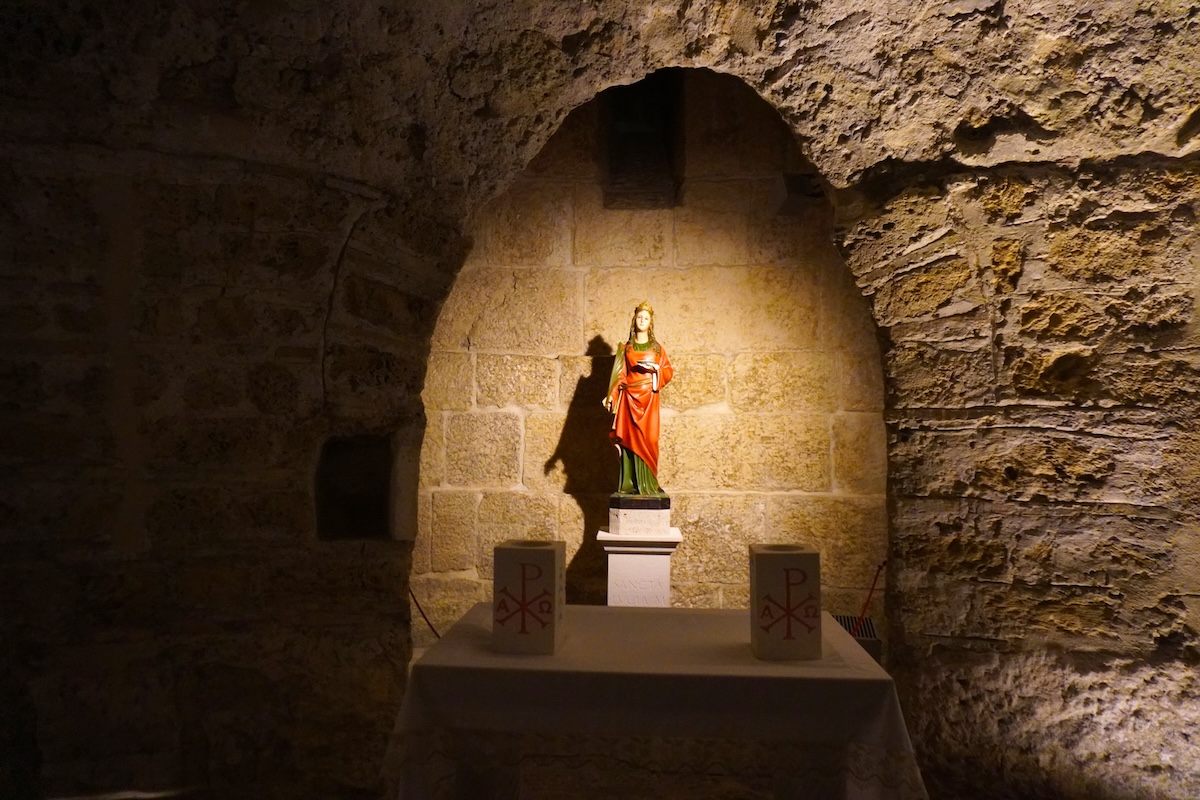
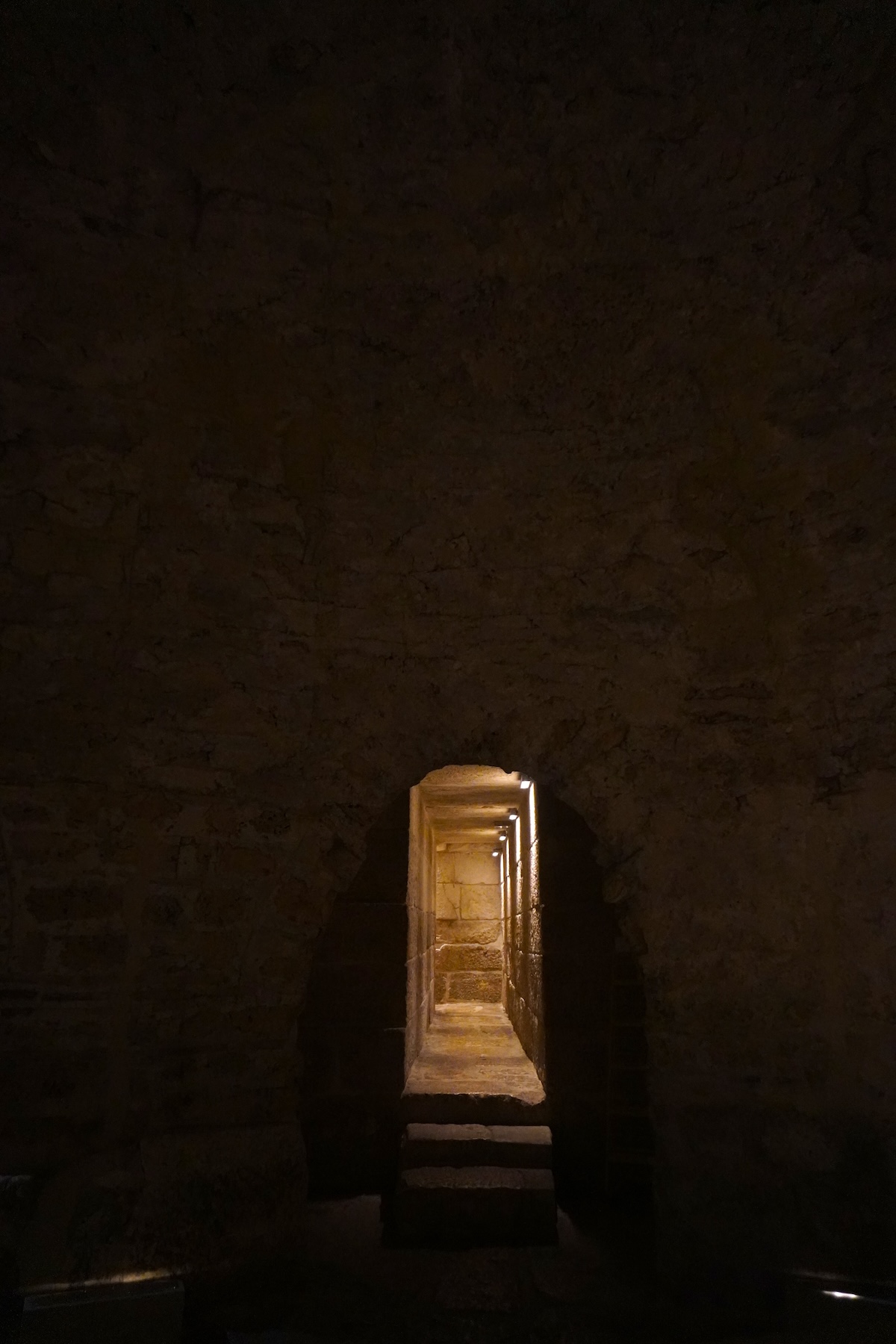
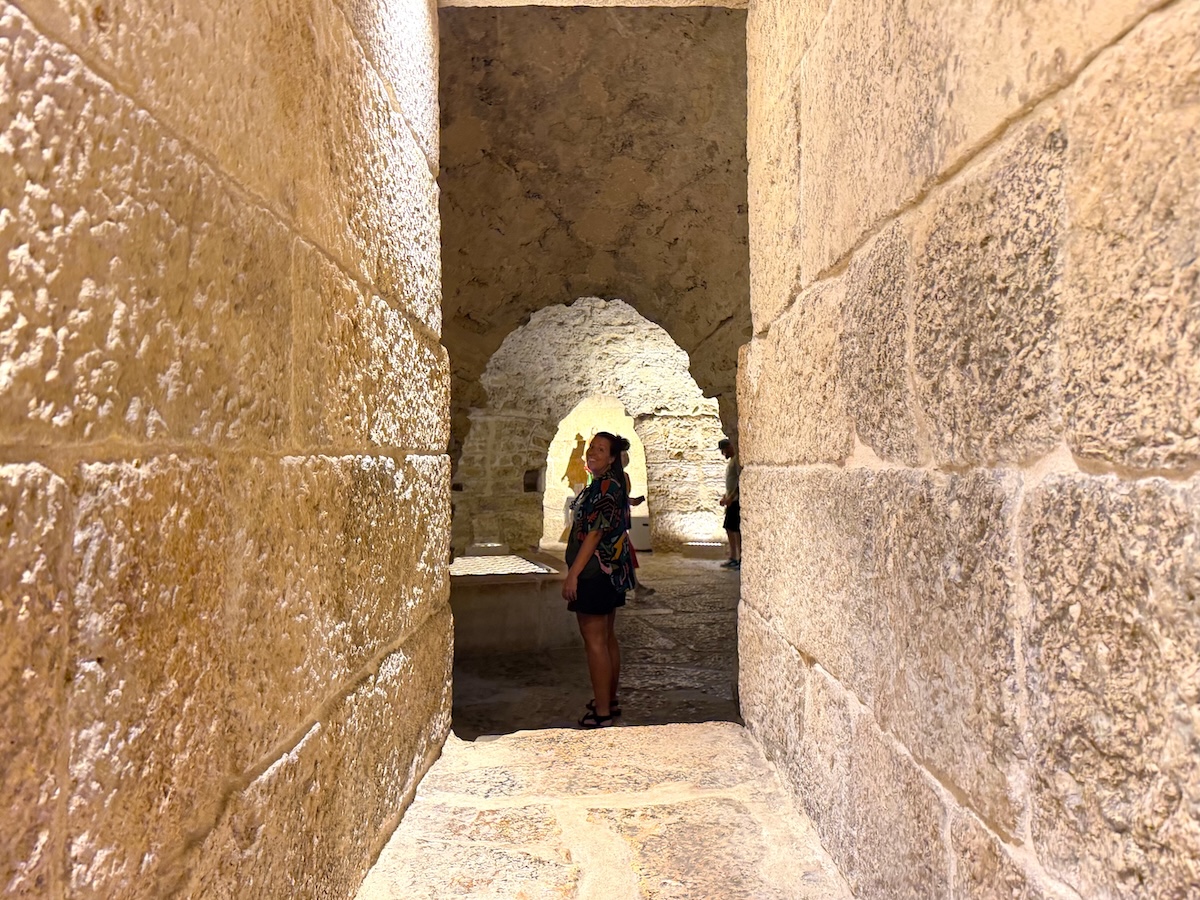
Admission costs €4, or is included in the Blue, Red, Purple, and Gold combo passes (see below for information on the passes).
Bell Tower
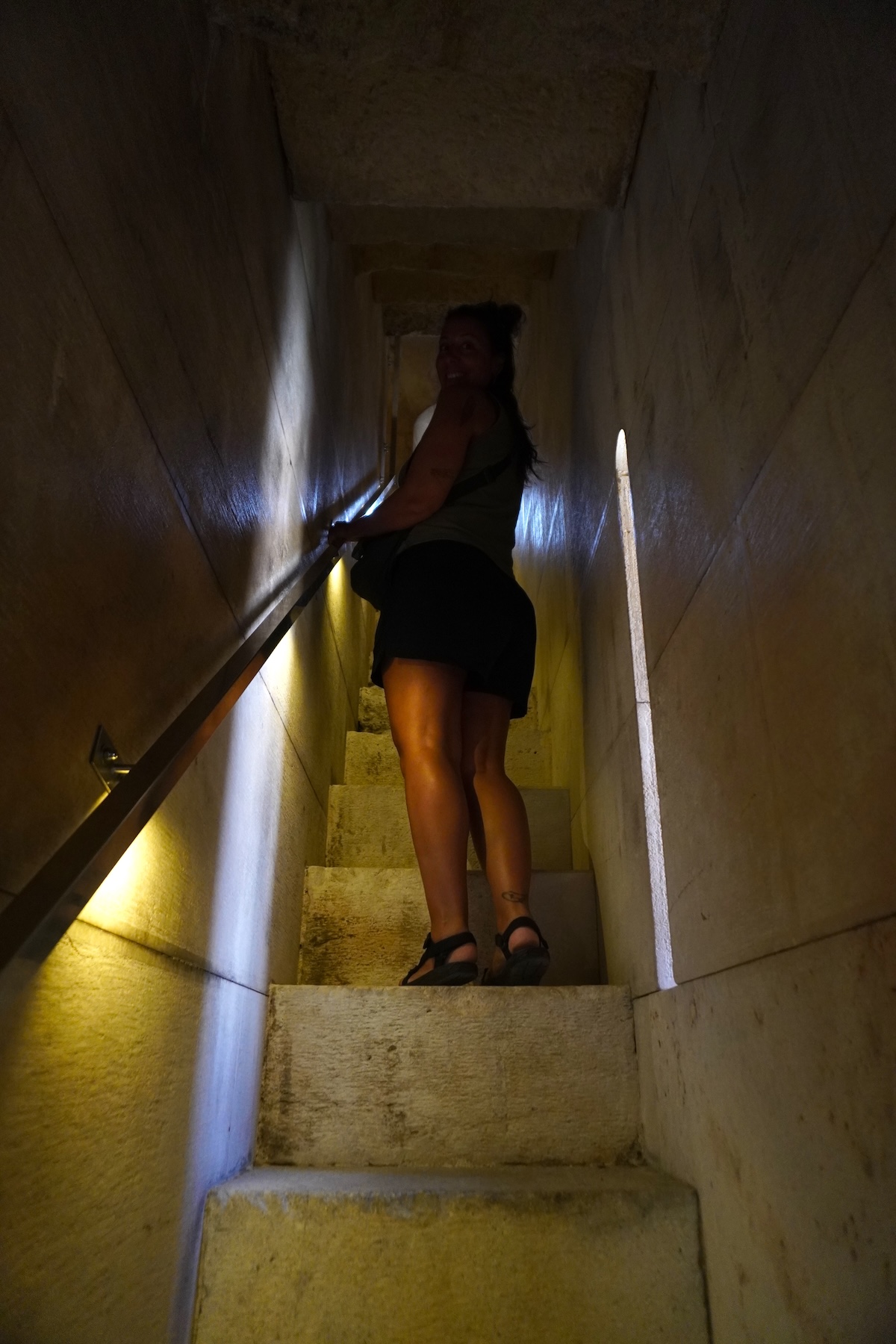
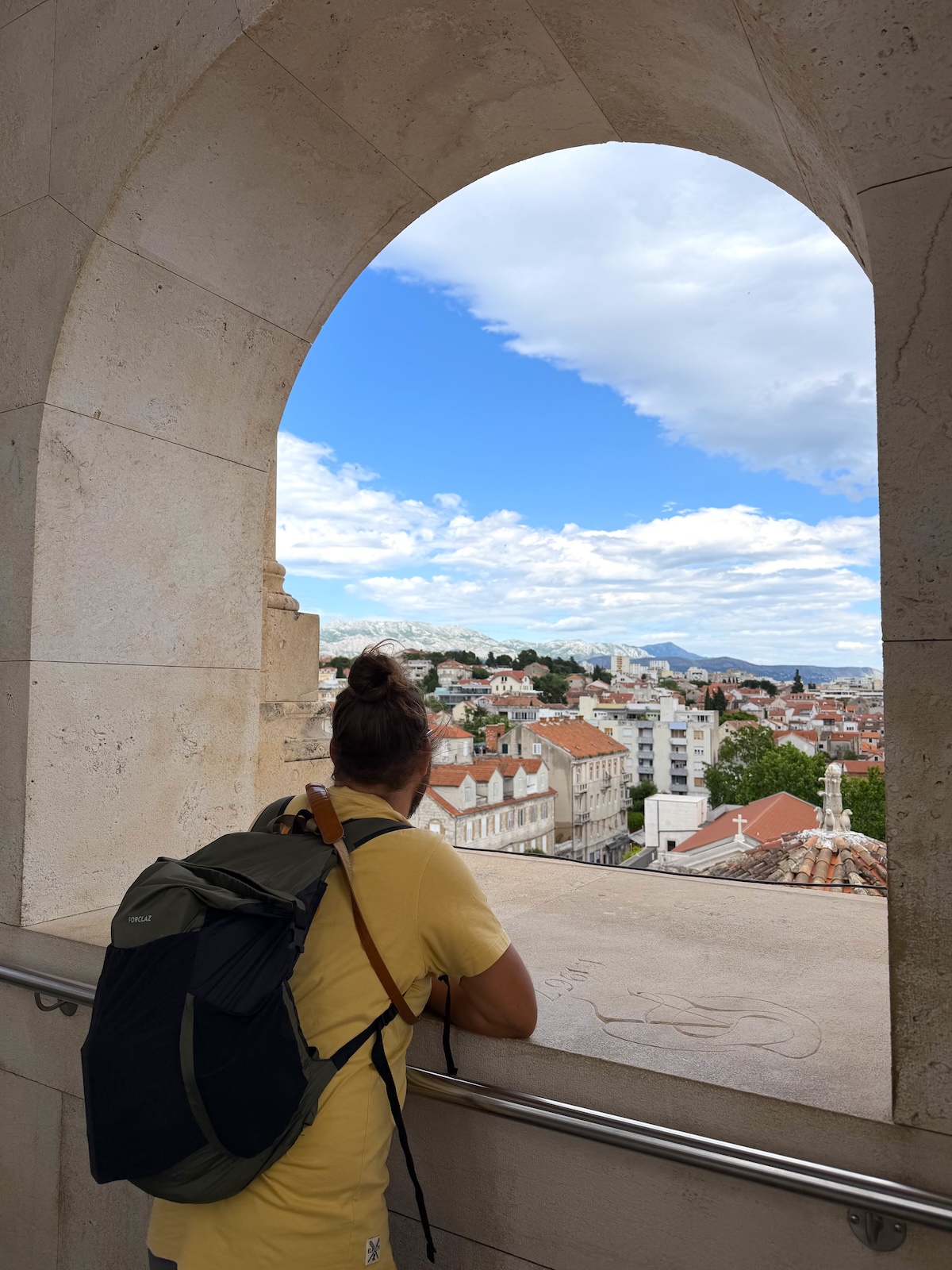
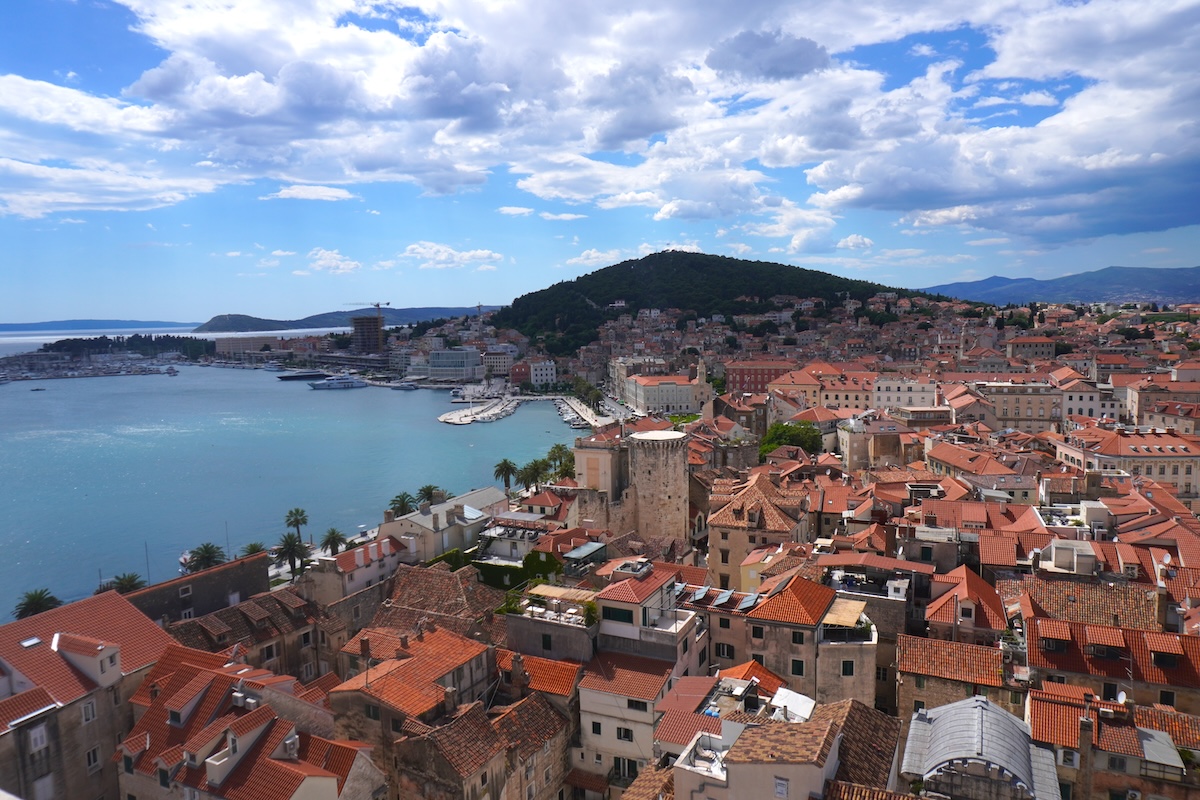
Construction of the 57-meter-tall Romanesque bell tower began in the 12th century and continued for over 300 years. Climbing to the top involves about 200 steps up an openwork metal staircase (you can see the drop below the entire way up), but the reward is a panoramic view of the rooftops of the Old Town, the Riva, the harbor, Marjan, and the islands in the distance.
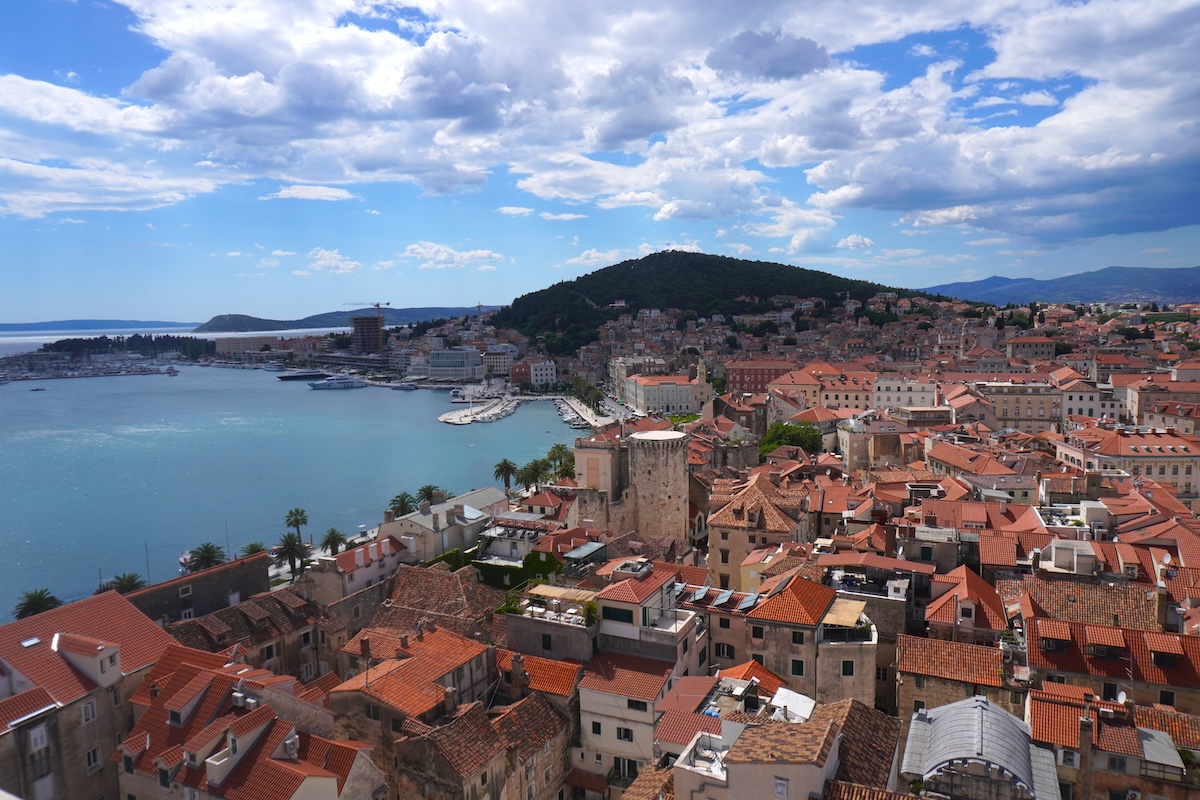
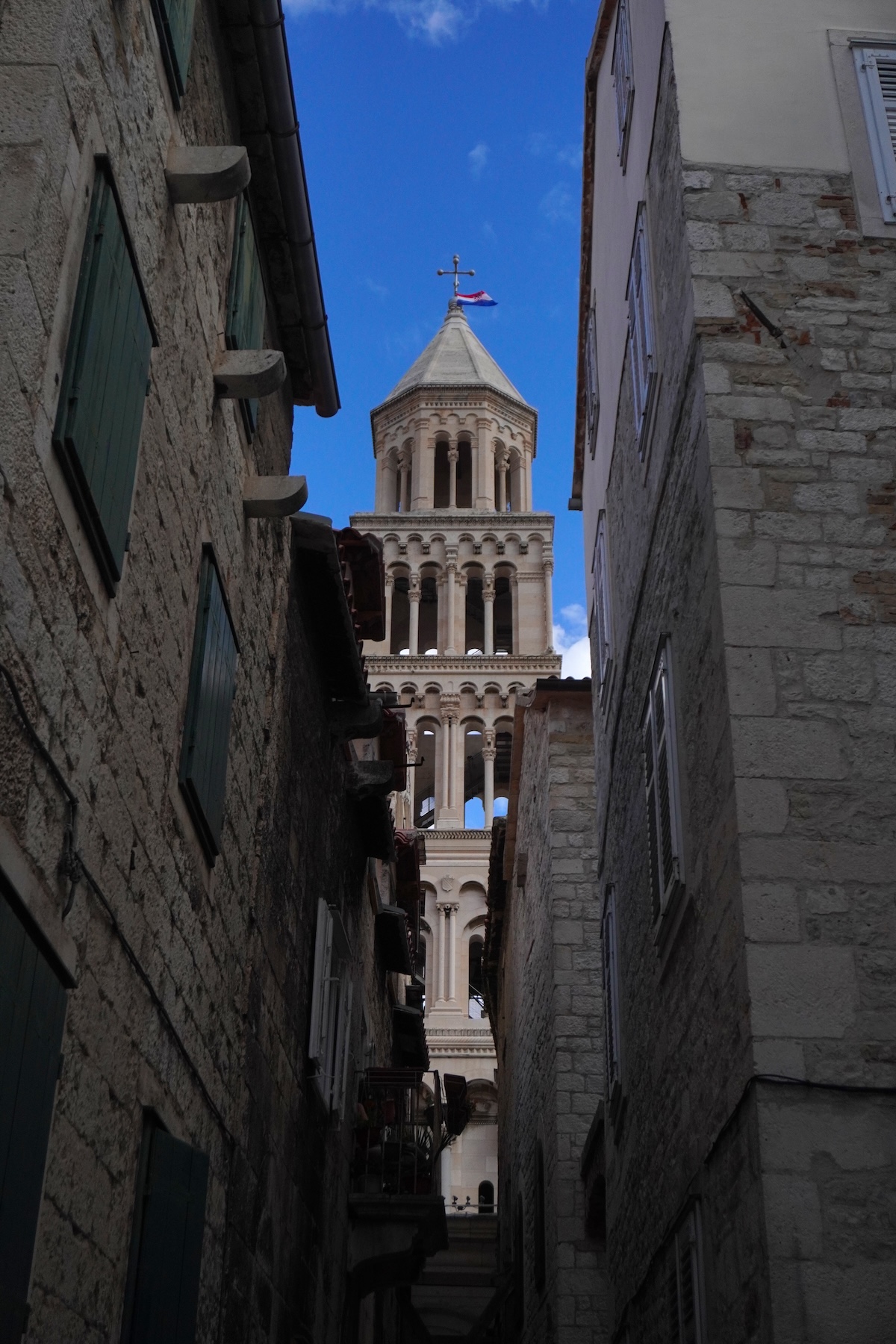
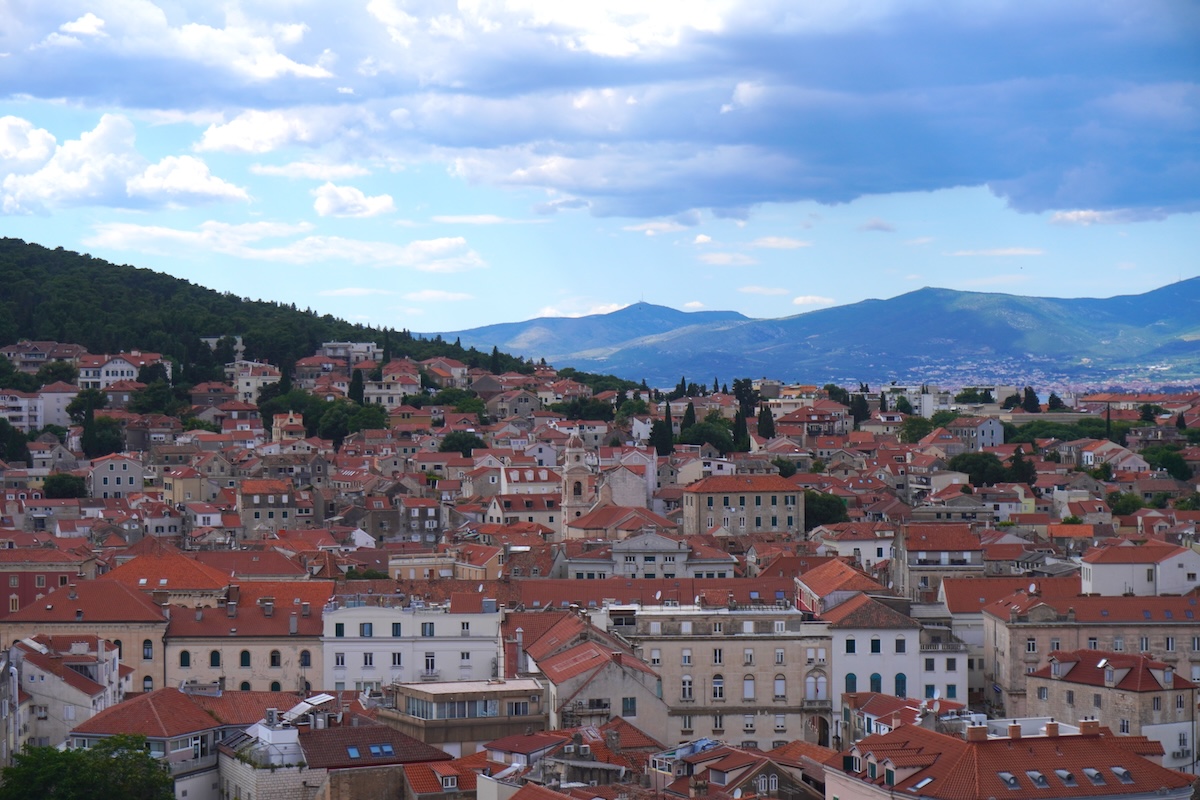
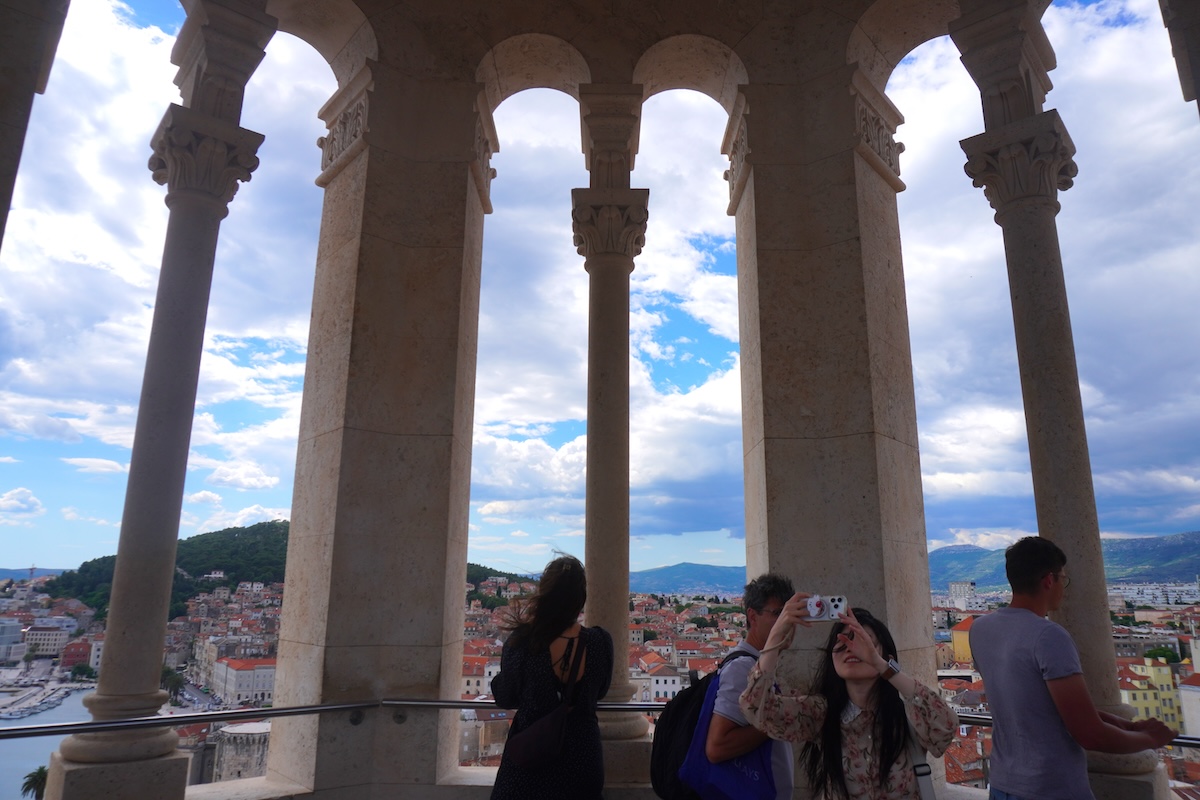
Admission costs €8, or it’s included in the Green, Yellow, Purple, and Gold combo passes (see below for information on the passes). It follows the same hours as the cathedral (Monday through Saturday 8:15 a.m.–7:30 p.m., Sundays 12:30 p.m.–5:30 p.m.). It is not wheelchair accessible.
Treasury
The Treasury is housed in the Skočibušić-Lukaris Palace, next to the ticket office itself, and features works of sacred art linked to the cathedral’s history.
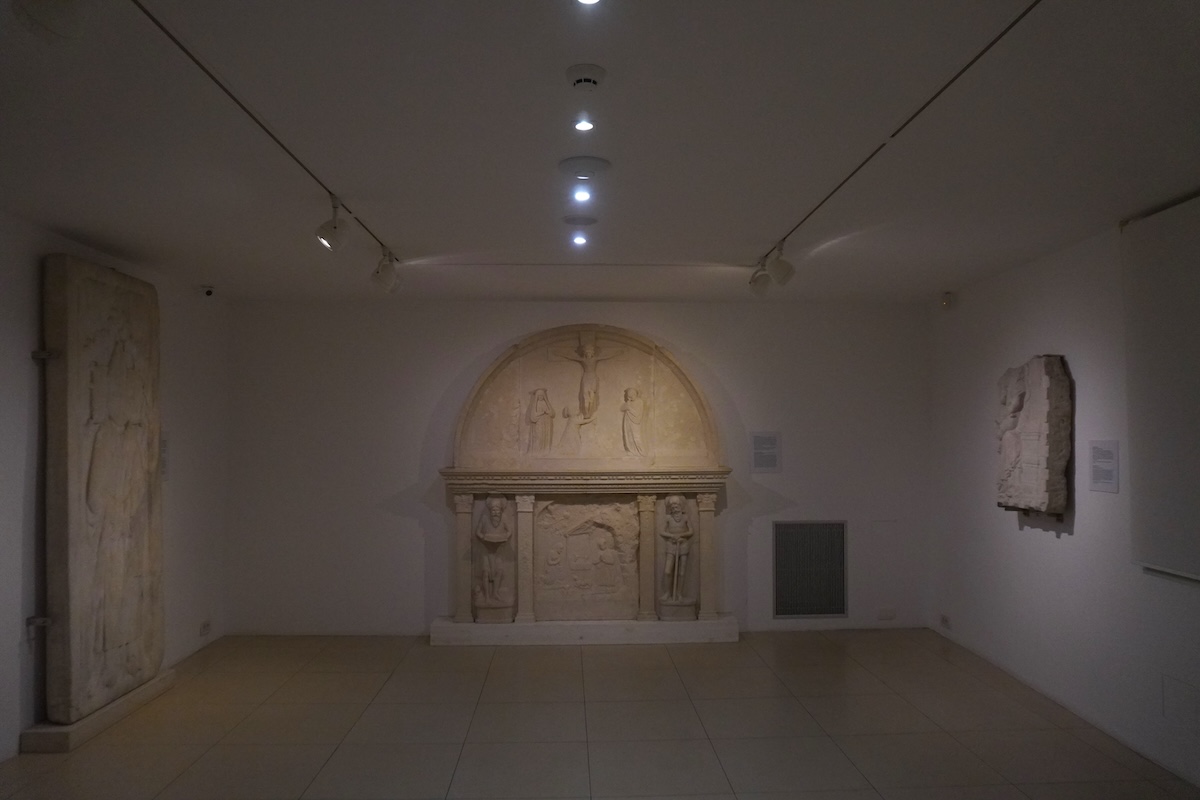
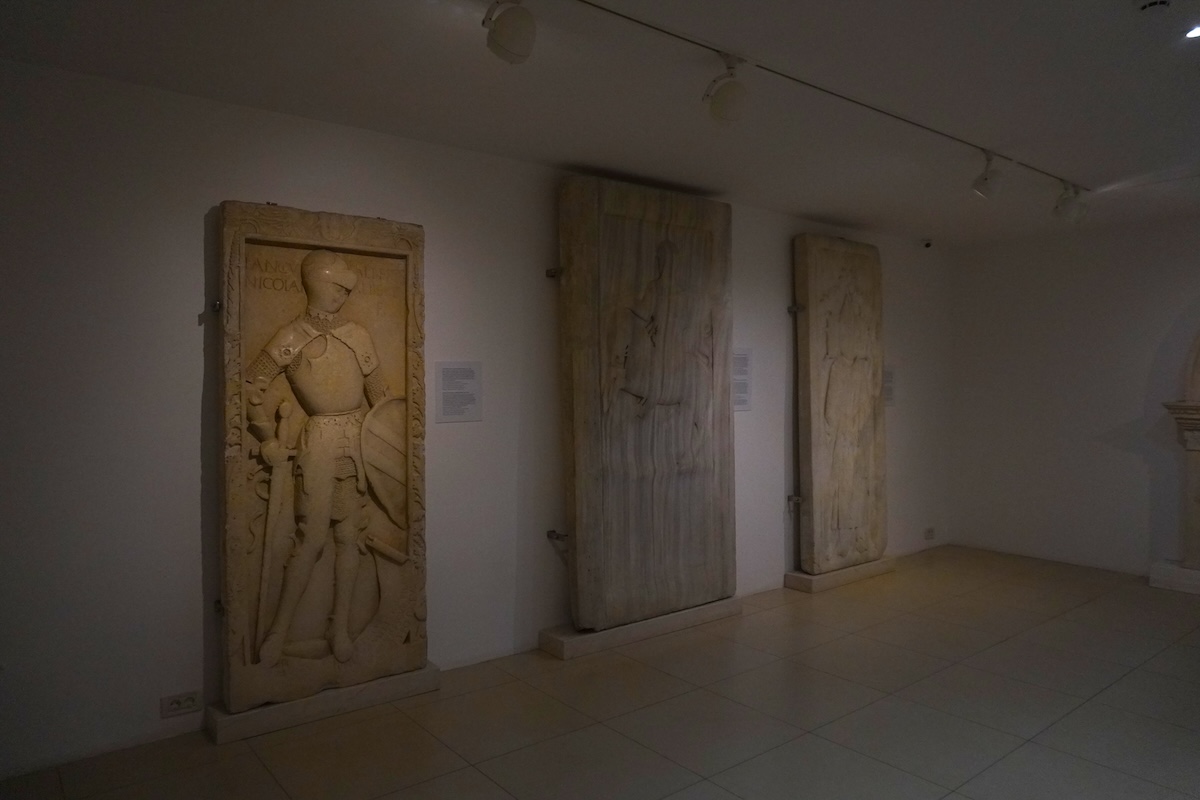
Admission costs €6, or is included in the Red, Green, Yellow, Purple, and Gold combo passes (see below for information on the passes).
Ticket Types (and Passes) and Best Time to Visit Split Cathedral
There are several types of tickets, which include access to different parts of the cathedral. Since the four attractions (Cathedral, Crypt, Bell Tower, and Treasury) are sold separately or as a combo, here’s what offers the best value based on the prices of each option:
- Individual tickets:
- Cathedral (€6)
- Crypt (€4)
- Bell Tower (€8)
- Treasury (€6)
- Baptistery/Temple of Jupiter (€4)
- Audio Guide App (5 €)
- Combination passes:
- Blue Pass (€10): Cathedral, Crypt, and Baptistery. Compared to the €14 it would cost to buy those three tickets separately.
- Red Pass (€11): Cathedral, Treasury, Crypt, and Baptistery. Compared to the €20 it would cost to buy those four tickets separately.
- Green Pass (€13): Cathedral, Bell Tower, and Treasury. Compared to the €20 it would cost to buy those three tickets separately.
- Yellow Pass (€14): Cathedral, Bell Tower, Treasury, and Baptistery. Compared to the €24 it would cost to buy those four tickets separately.
- Purple Pass (€16): Covers everything, all five sites (cathedral, bell tower, treasury, crypt, and baptistery). Compared to the €28 it would cost to buy the five tickets separately. This is the one we decided to buy on Randomtrip.
- Gold Pass (€19): Same as the Purple Pass, all five attractions, plus the audio guide app included. This is a savings compared to the €33 it would cost to buy the five tickets and the app separately.
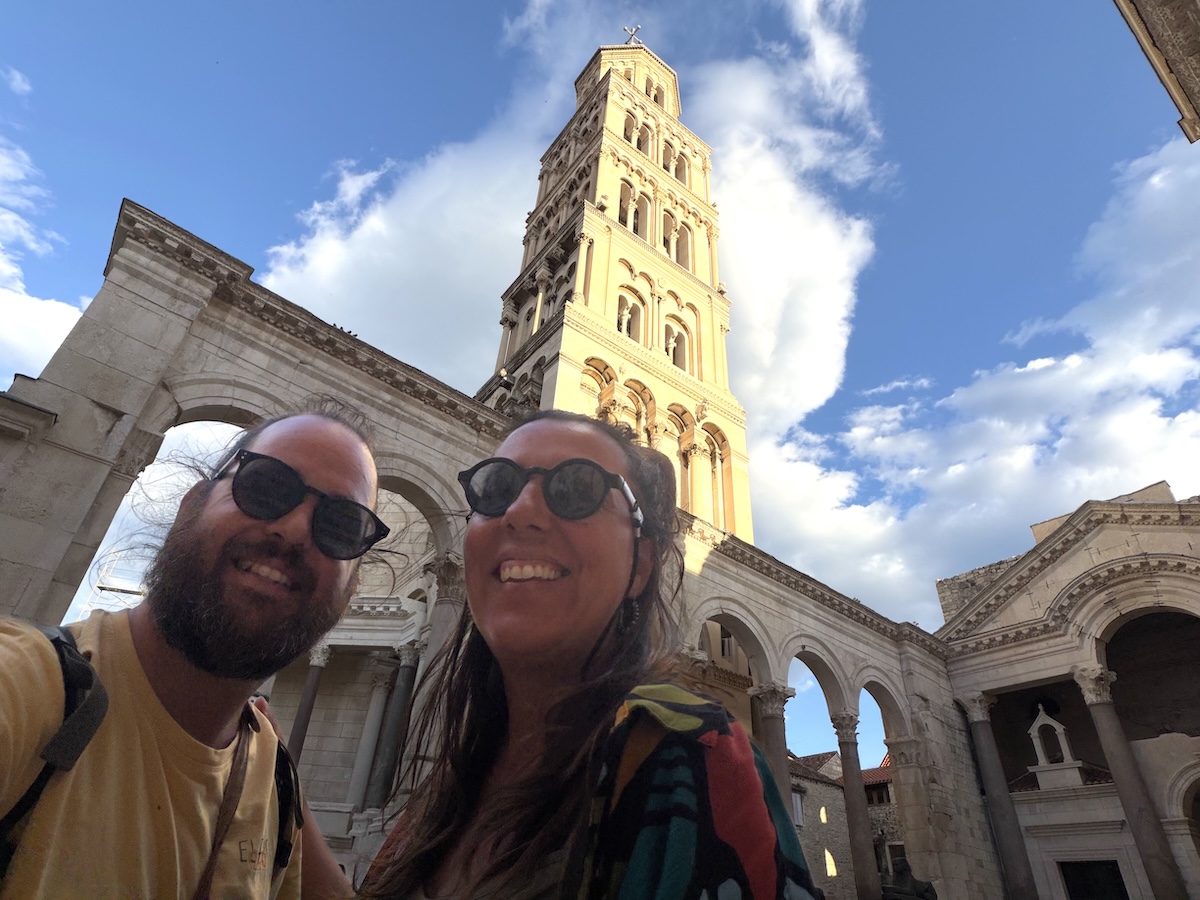
At RandomTrip, we chose the Purple pass, and that’s the one we recommend if you’re interested in visiting the different sites: what we liked best were the views from the Bell Tower, the Crypt (after all, the emperor’s former mausoleum), and the Temple of Jupiter (or Baptistery), which we’ll discuss below, and we loved it! So for just a couple of euros more, it’s worth seeing all five sites instead of stopping halfway. If you also like to have your visit thoroughly explained with an audio guide, the Gold Pass adds that for an extra €3.
One more tip, based on our own experience: try to go between 3:30 p.m. and 4:00 p.m. In the morning, the place gets crowded with tours and large groups, which makes the visit much less enjoyable.
Vestibule
After the Peristyle, a flight of stairs leads up to the Vestibule, the antechamber you had to pass through to reach Diocletian’s private chambers.
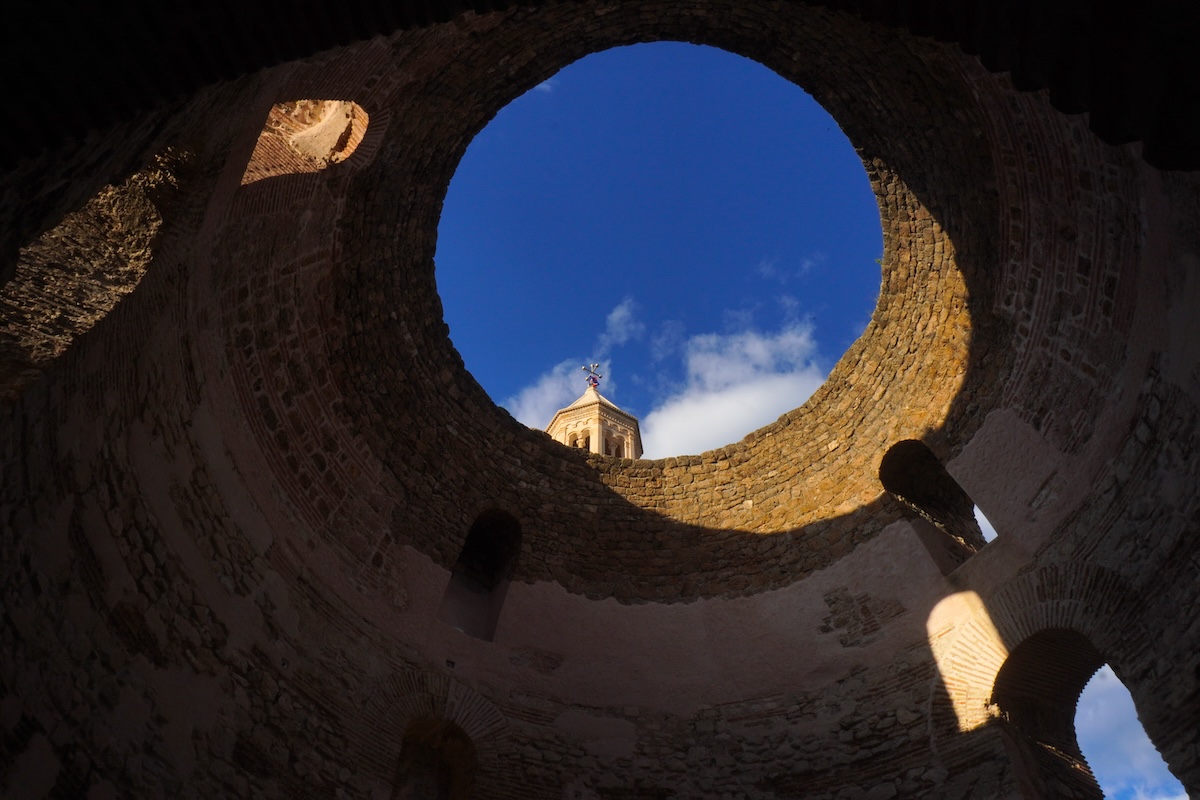
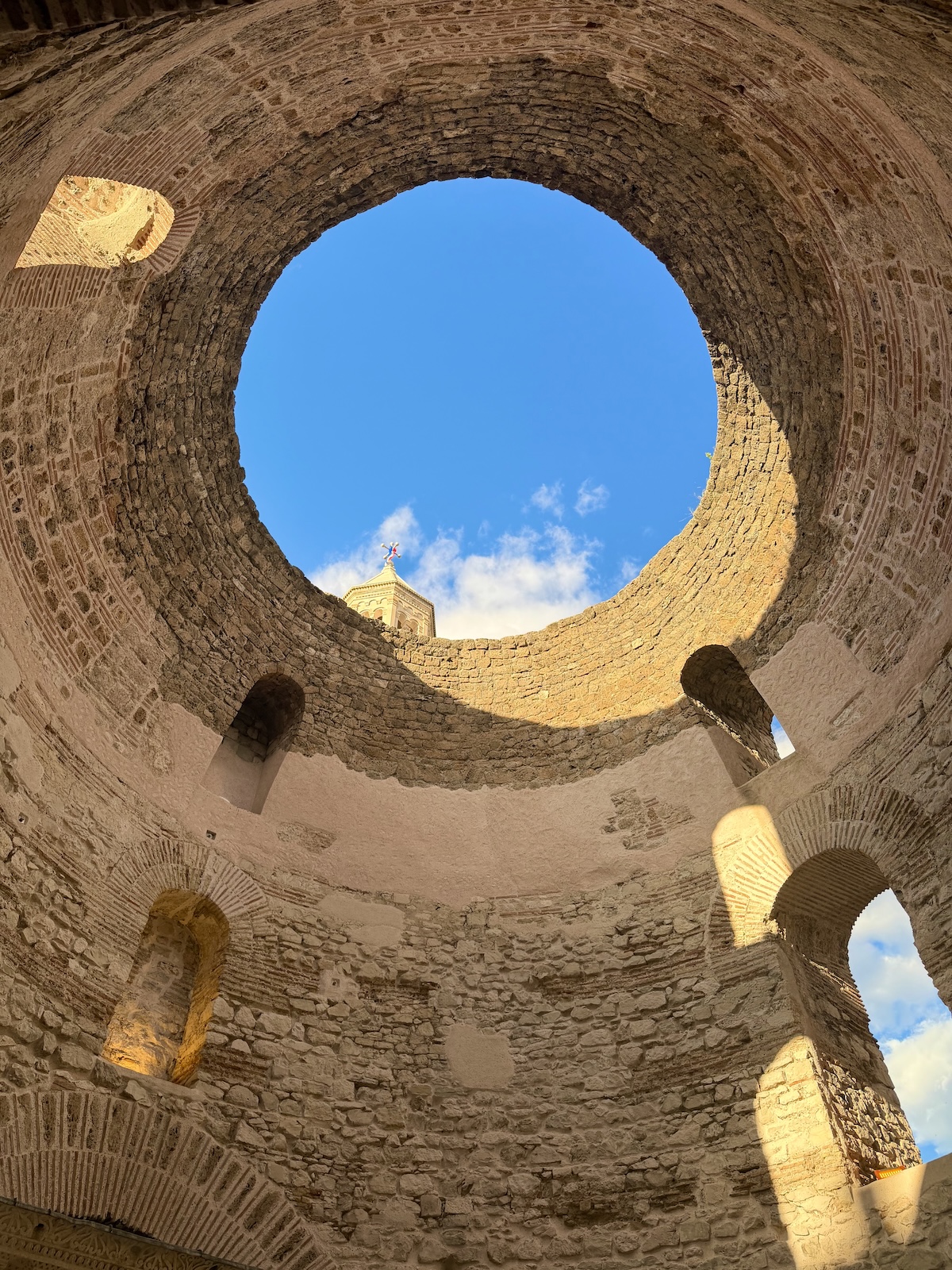
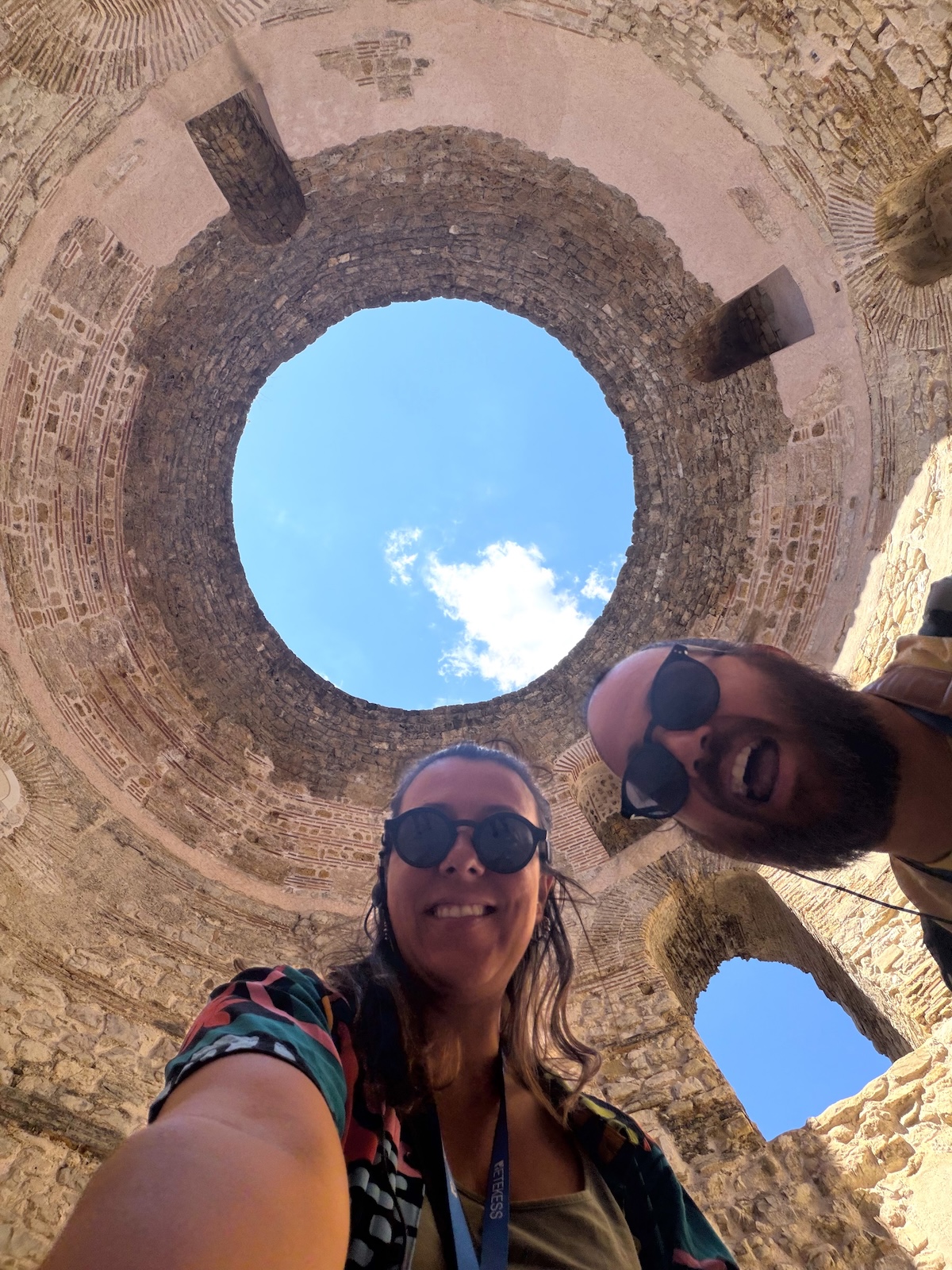
From the outside, it’s rectangular, but inside it’s a completely circular hall, 12 meters in diameter and 17 meters high, which was originally topped by a dome. Today that dome is open to the sky, so light streams in directly from above, something that in Roman times was no accident: the golden mosaic that covered the dome, illuminated by oil lamps, was designed so that anyone entering would feel as though they were entering the residence of a god, not merely an emperor. The four semicircular niches surrounding the hall, now empty, once held statues of deities whose exact identities have been lost to time.
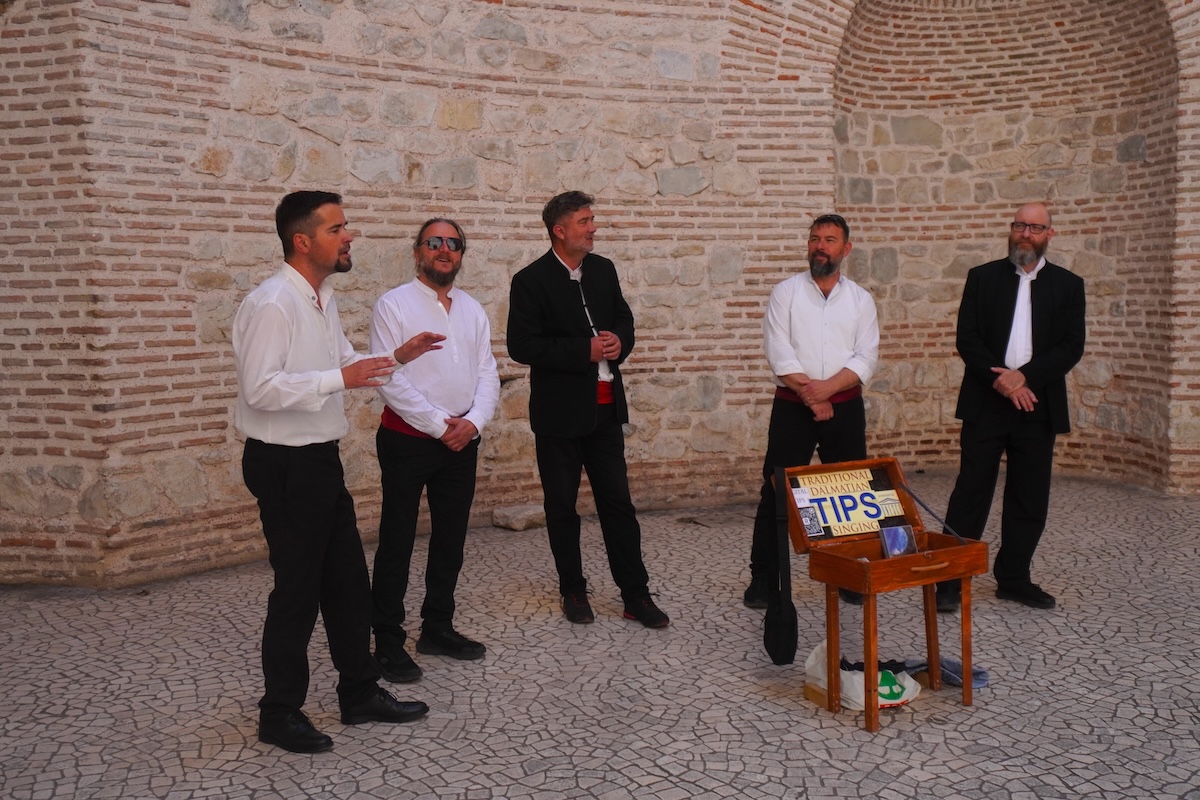
Today, the Vestibule is known above all for its acoustics. It’s not uncommon to find klapa groups here – singers (usually men, though there are also women’s groups) – singing a cappella in the Dalmatian dialect, with songs that speak of the region and its people. They always wear the same traditional attire and choose this spot precisely because of the echo created by the dome. The genre is recognized by UNESCO as Intangible Cultural Heritage, so it’s not just folklore for tourists, it’s a living tradition. If you stop to listen, it’s customary to leave a small tip, of course. And to say thank you.
Just like the Peristyle, admission is free and open at all times.
Split Ethnographic Museum (Etnografski muzej Split)
Tucked away just behind the Peristyle is Croatia’s oldest ethnographic museum, the Split Ethnographic Museum, founded in 1910 by Kamilo Tončić, a civil engineer who had been collecting folk art pieces for years, although its official opening wasn’t celebrated until 1927. The building itself is part of the attraction: it occupies the former palace of the Božičević-Natalis family, a medieval structure that incorporates original arches from Diocletian’s private quarters and remnants of the 7th-century Church of St. Andrew of Fenestris, one of the oldest in the city.
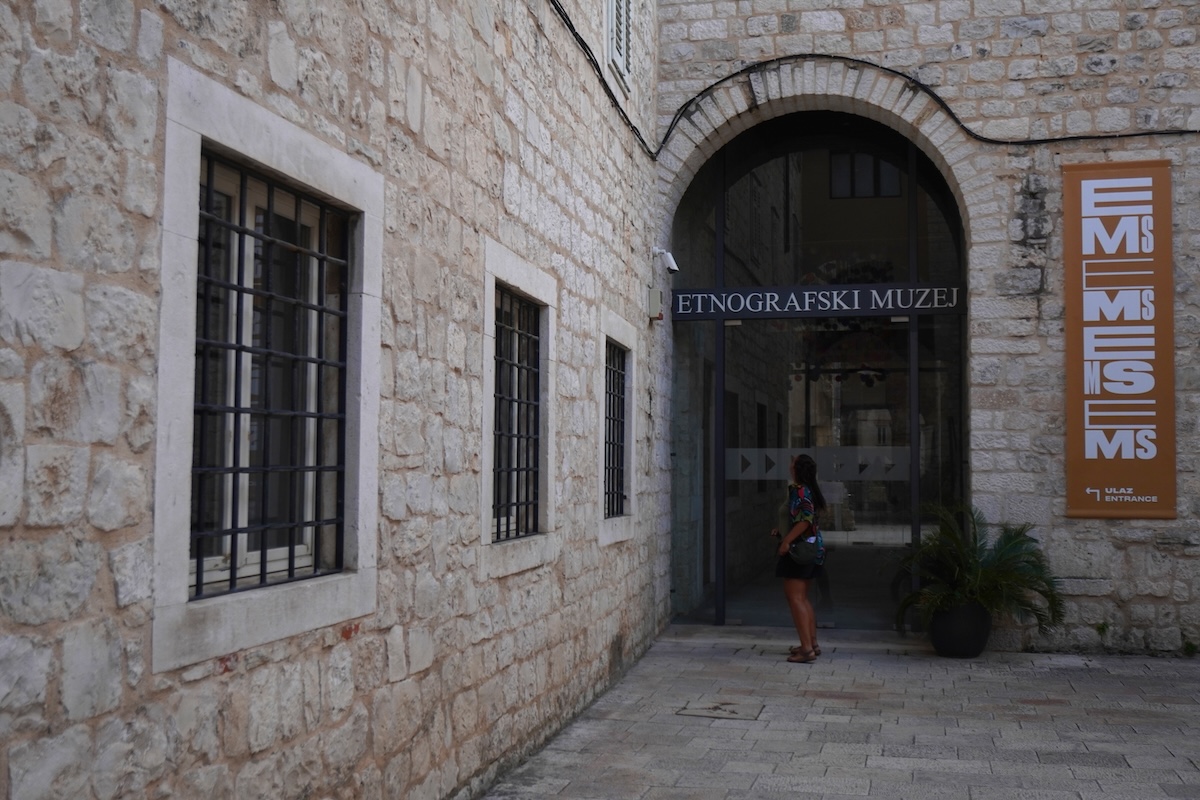
Inside, the collections trace traditional Dalmatian life: regional costumes from various towns and cities, lace handmade by the nuns of the island of Hvar, and a 19th-century room furnished exactly as it was used at the time, offering a glimpse into how people in this area lived long after Diocletian retired.
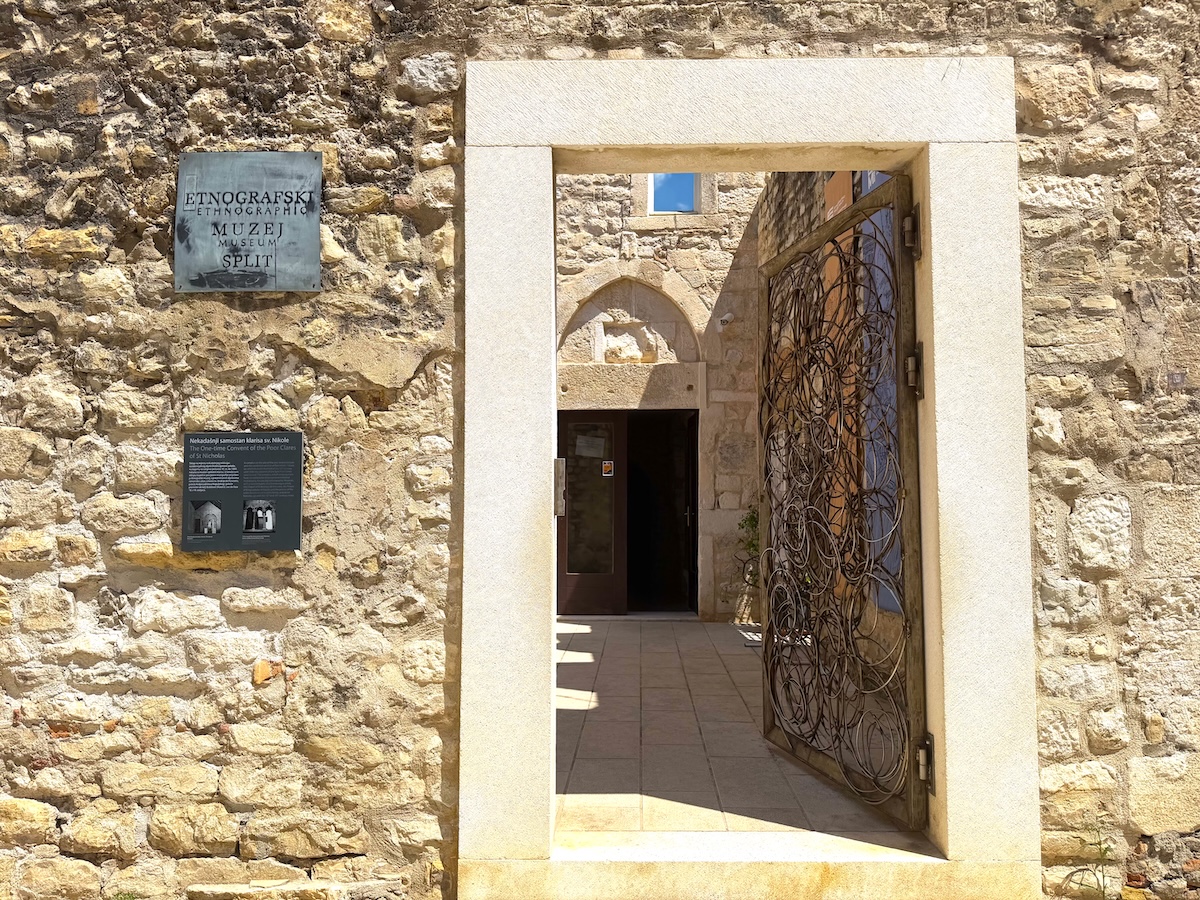
Admission: €7, with a discounted rate of €4 for children, students, and seniors. A family ticket is available for €15, and a reduced-price ticket for €2 if you only want to see the museum’s lobby. Admission is free for people with disabilities and, on Mondays, for seniors who present a Croatian ID. If you have the Split Card, admission is free.
Hours:
- From November through May, it is open Monday through Friday from 9:00 a.m. to 4:00 p.m. and Saturdays from 10:00 a.m. to 2:00 p.m. (closed Sundays)
- From June through August, Monday through Friday from 9:00 a.m. to 7:00 p.m., Saturdays from 10:00 a.m. to 5:00 p.m., and Sundays from 10:00 a.m. to 2:00 p.m.
- In September, Monday through Friday from 9:00 a.m. to 6:00 p.m., Saturdays from 10:00 a.m. to 5:00 p.m., and Sundays from 10:00 a.m. to 2:00 p.m.
- In October, Monday through Friday from 9:00 a.m. to 5:00 p.m. and Saturdays from 10:00 a.m. to 2:00 p.m. (closed on Sundays).
- (Closed on holidays)
The Palace Basements (Dioklecijanovi Podrumi) or Game of Thrones Dragon Dungeons
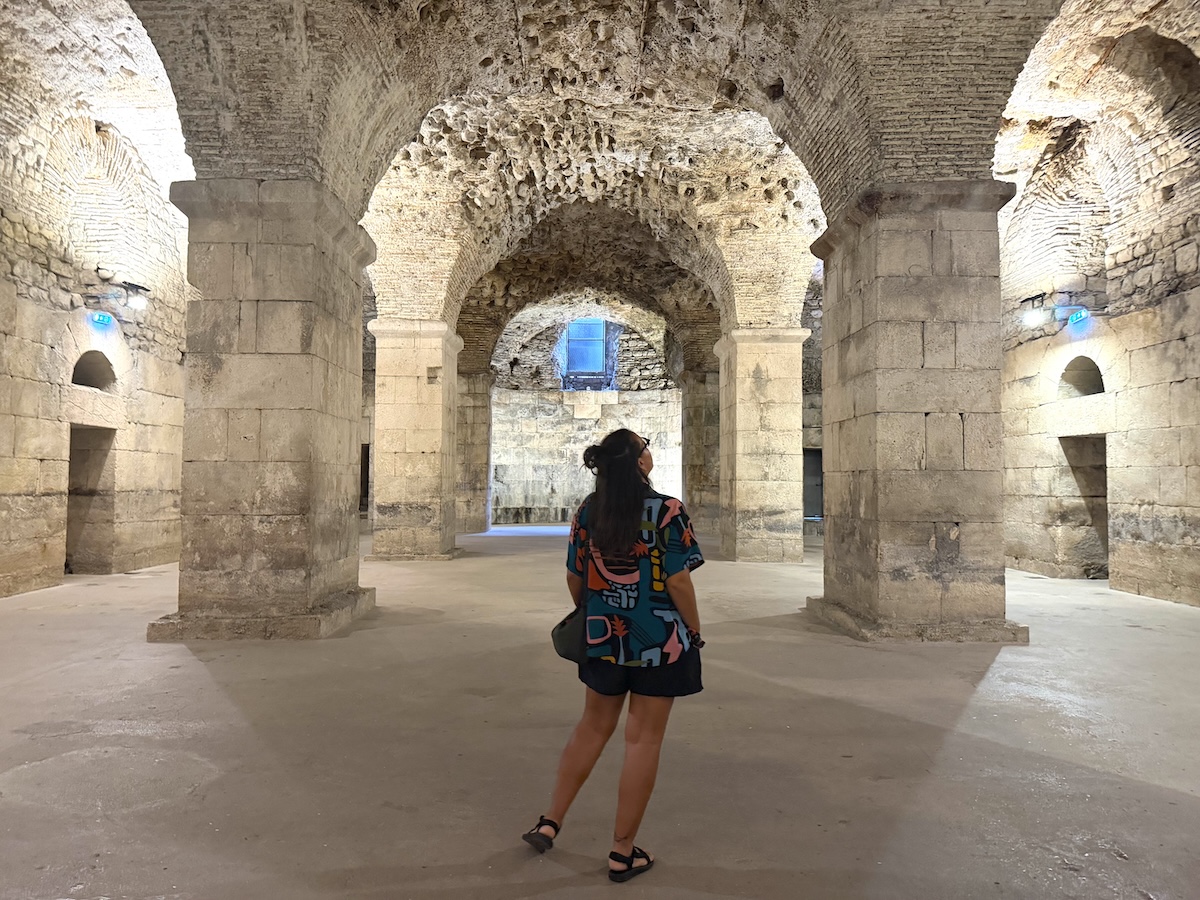
Their official name is the Sub-structures of Diocletian’s Palace, and they are colloquially known as the Diocletian’s Palace Cellars. The seaside plot where Diocletian’s private residence was built was a sloping rock face descending toward the coast. To level it with the upper part of the palace, this platform was erected, and the imperial apartments were built on top of it. The cellars also protected those apartments from sea moisture and groundwater.
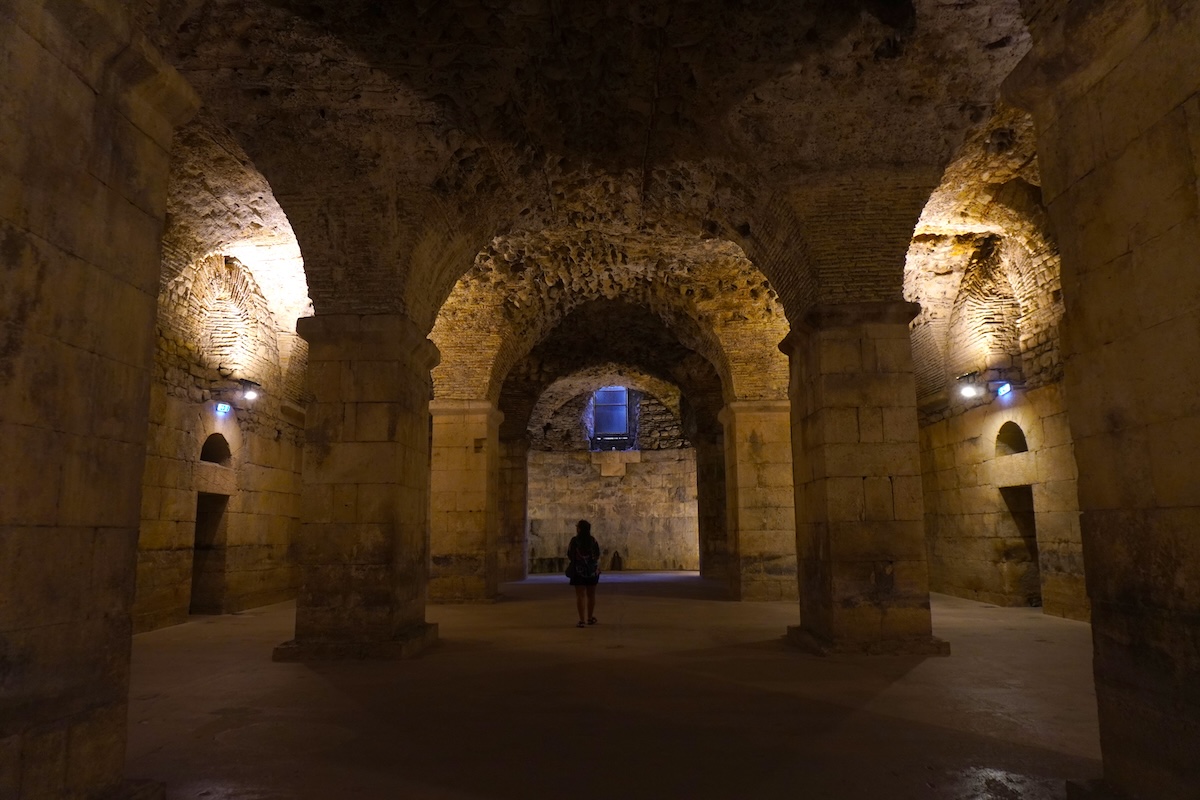
Over the centuries, beginning in the early Middle Ages, as the city expanded into the palace, the cellars gradually filled with trash and debris from the floor above. As it turns out, this waste eventually turned into compost and preserved the entire structure until archaeologists began excavating it. The cellars were also repurposed: within them are remnants of an oil and wine press from the early Middle Ages.
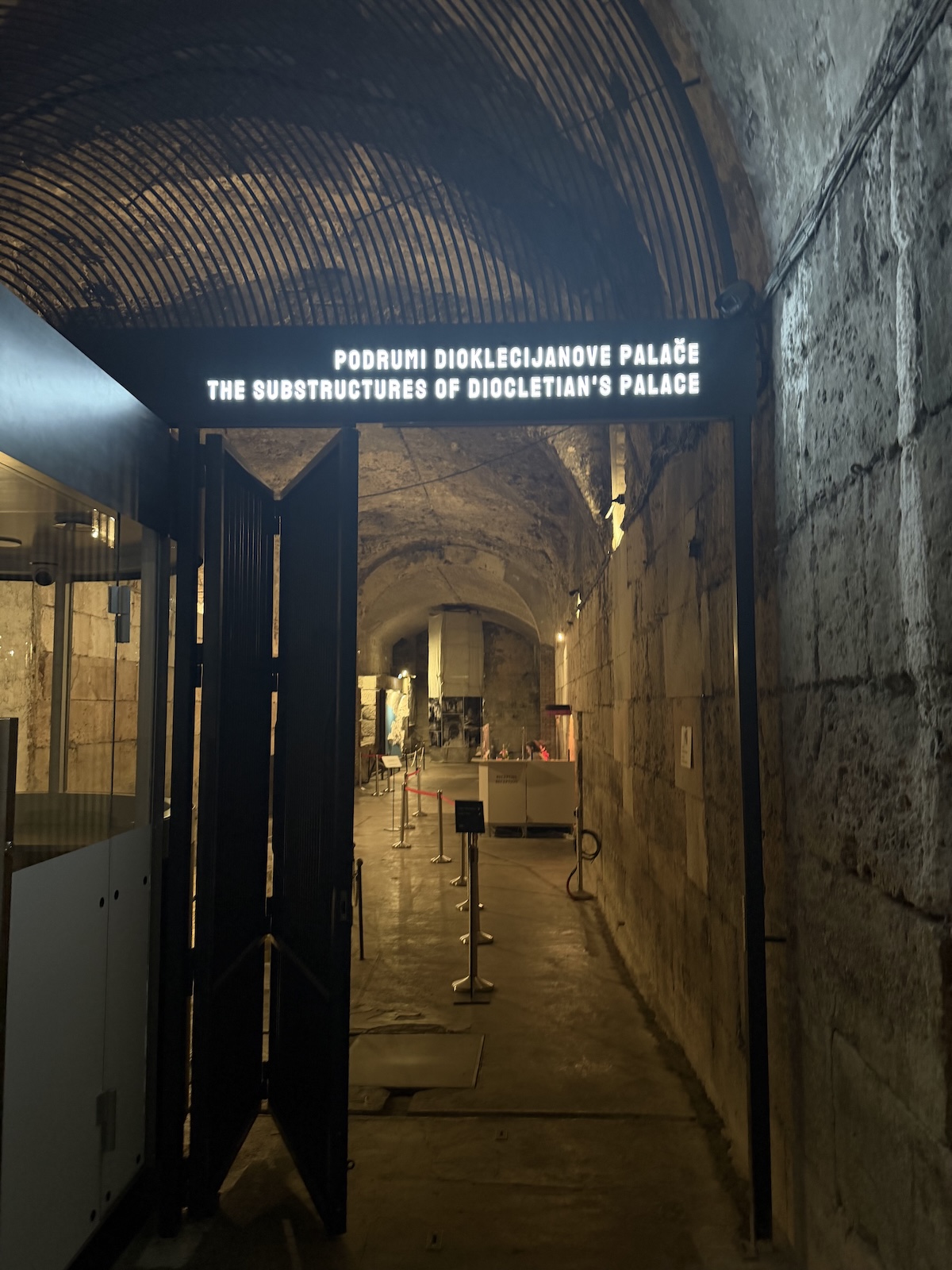
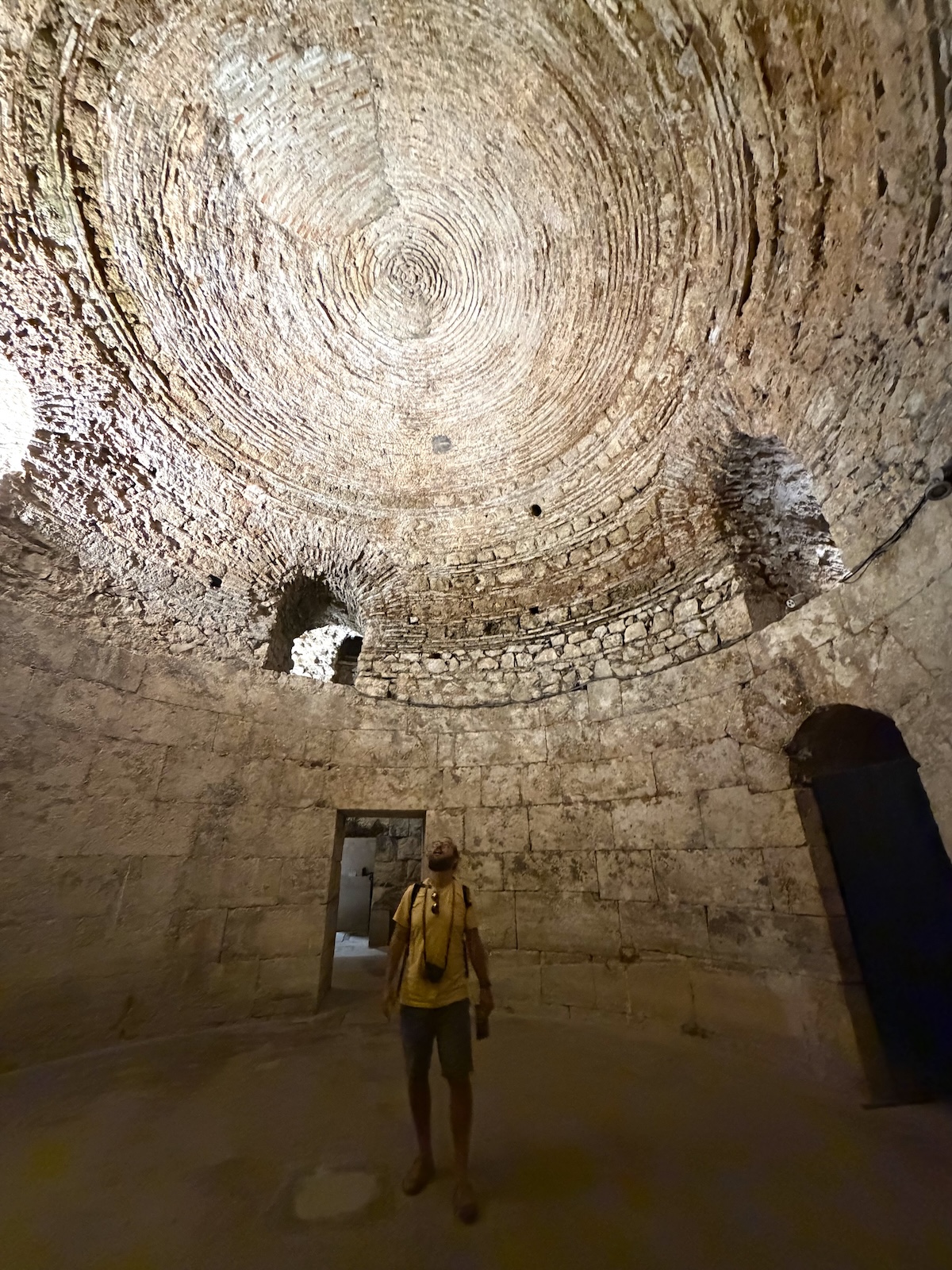
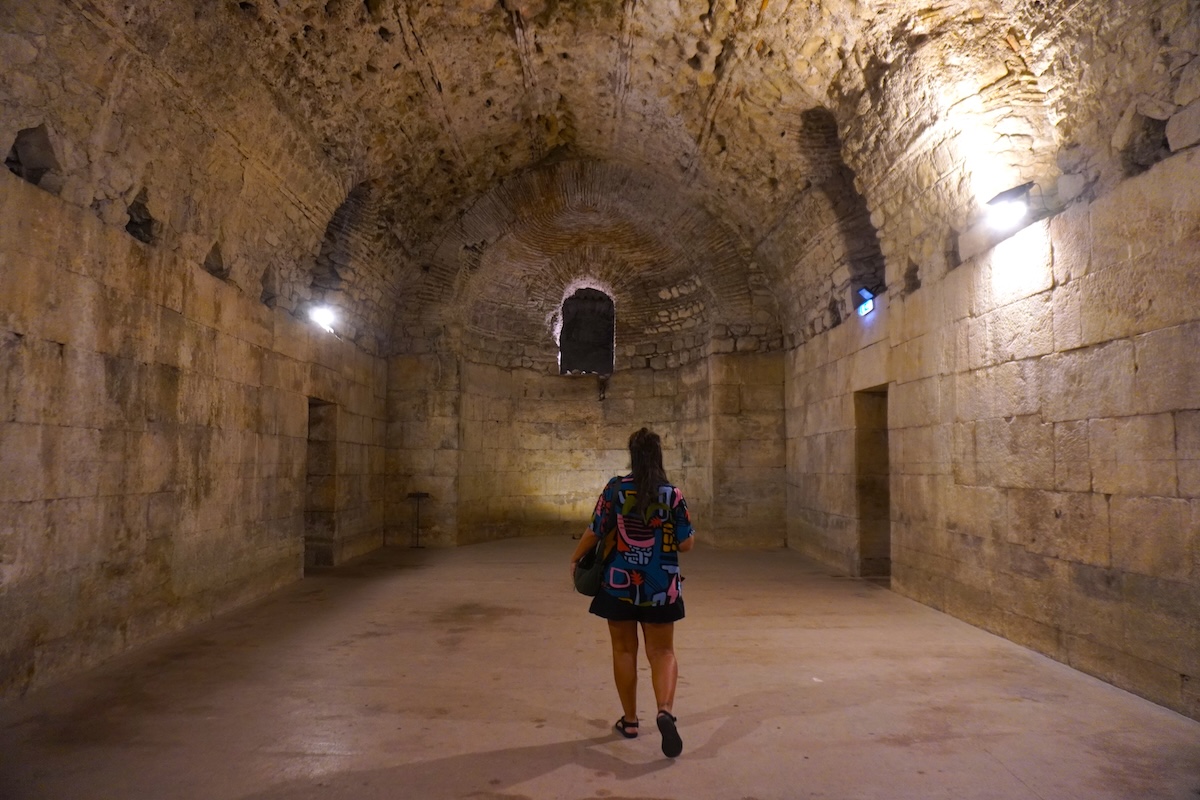
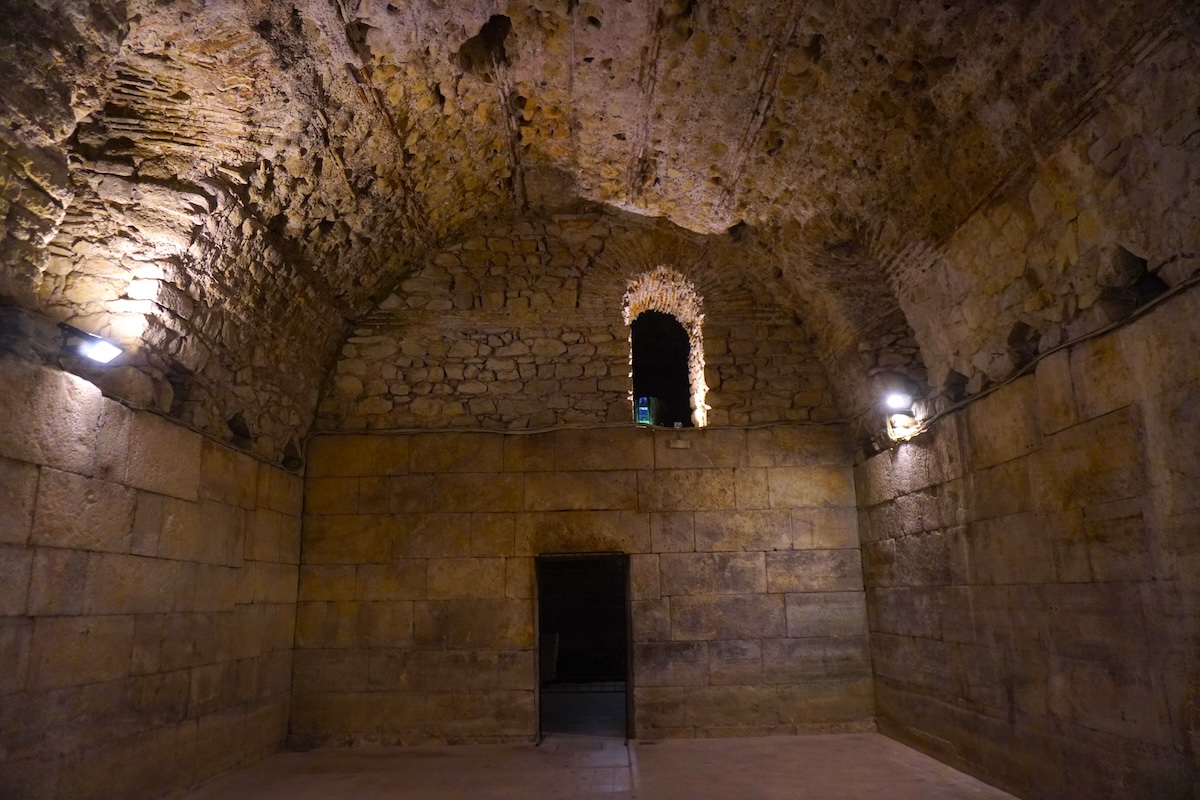
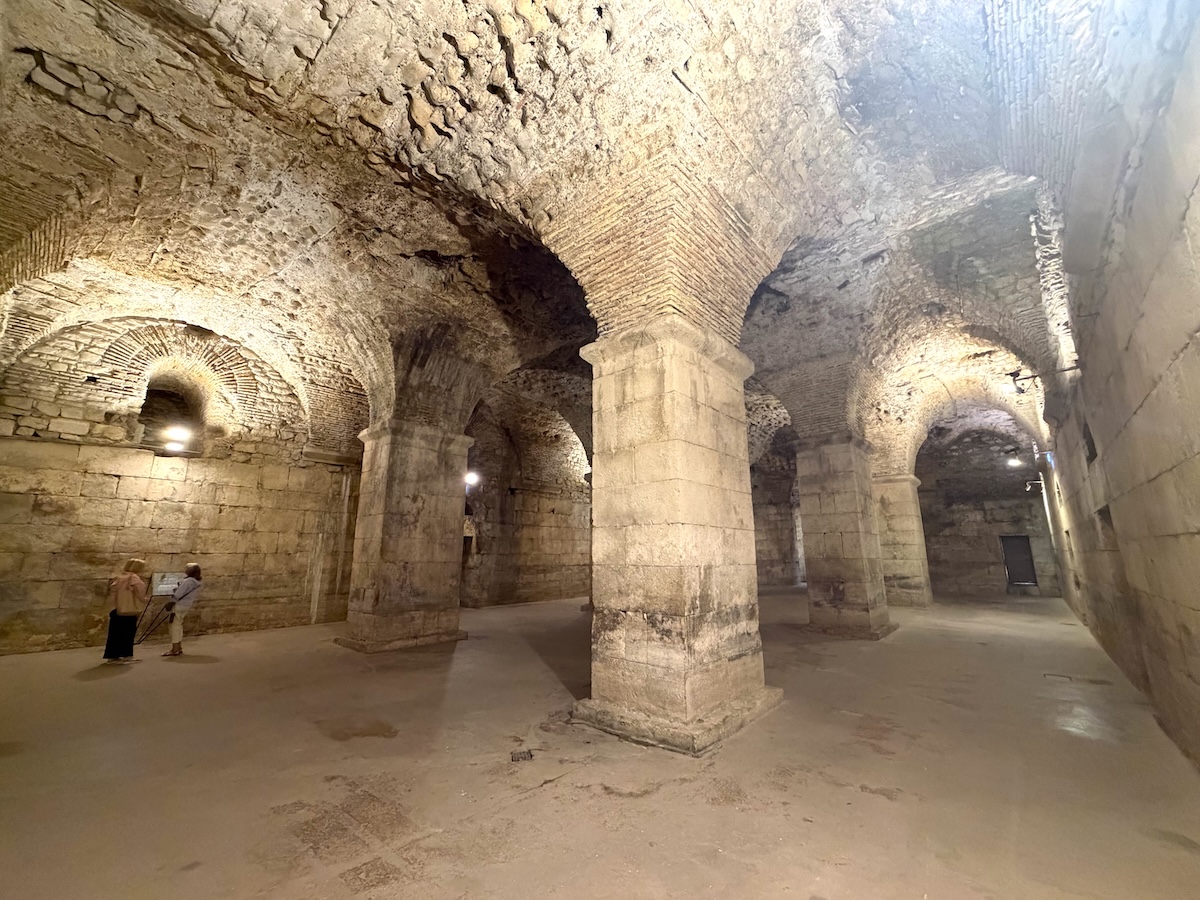
You can visit part of it without paying an admission fee (the central corridor, where there are now several souvenir stands and through which thousands of tourists pass each day), but to see the most interesting parts, you’ll need to pay the admission fee. With a ticket, you can see the original layout of the emperor’s chambers, and for Game of Thrones fans, this is where Daenerys Targaryen imprisoned two of her three dragons, Rhaegal and Viserion, in the dungeons of Meereen that we see at the end of the series’ fourth season. To exit, a staircase at the north end of the cellars leads directly up to the Peristyle.
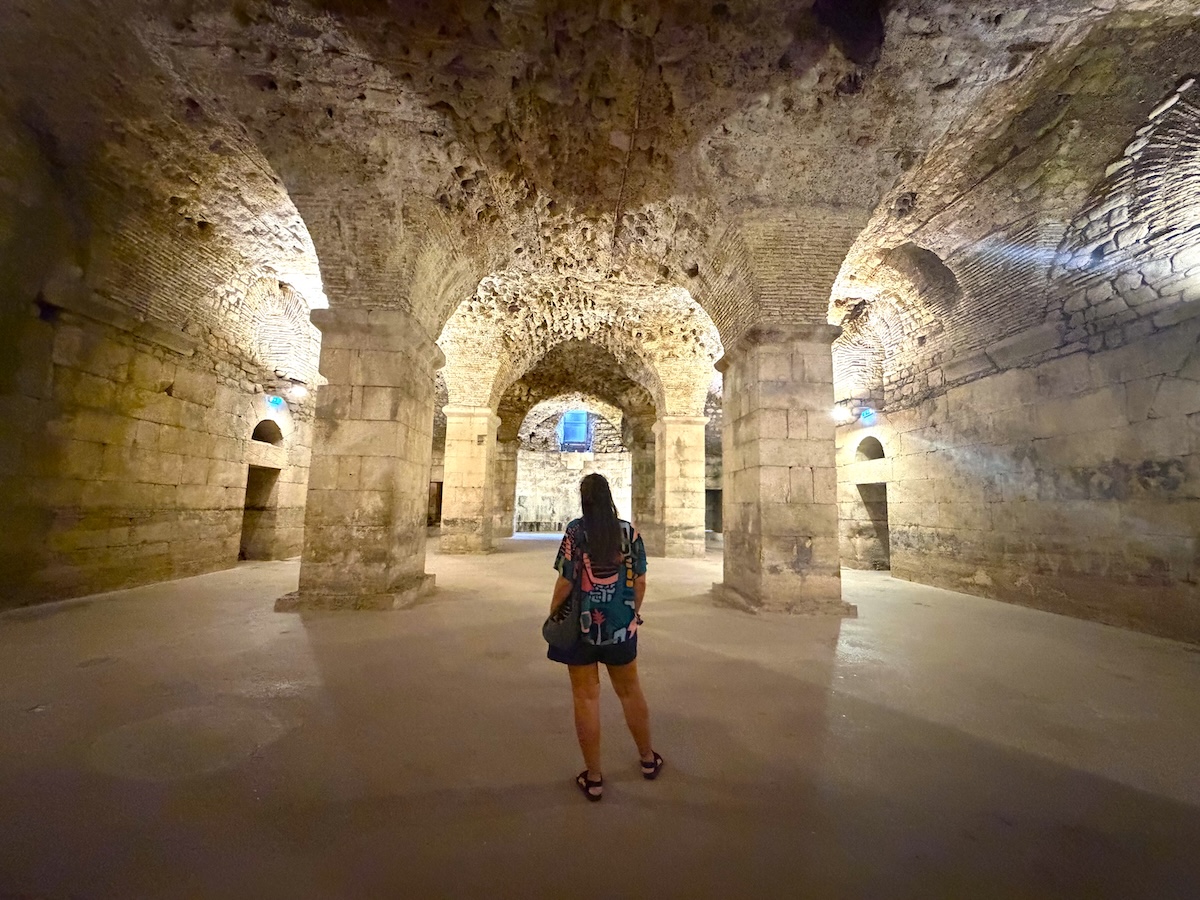
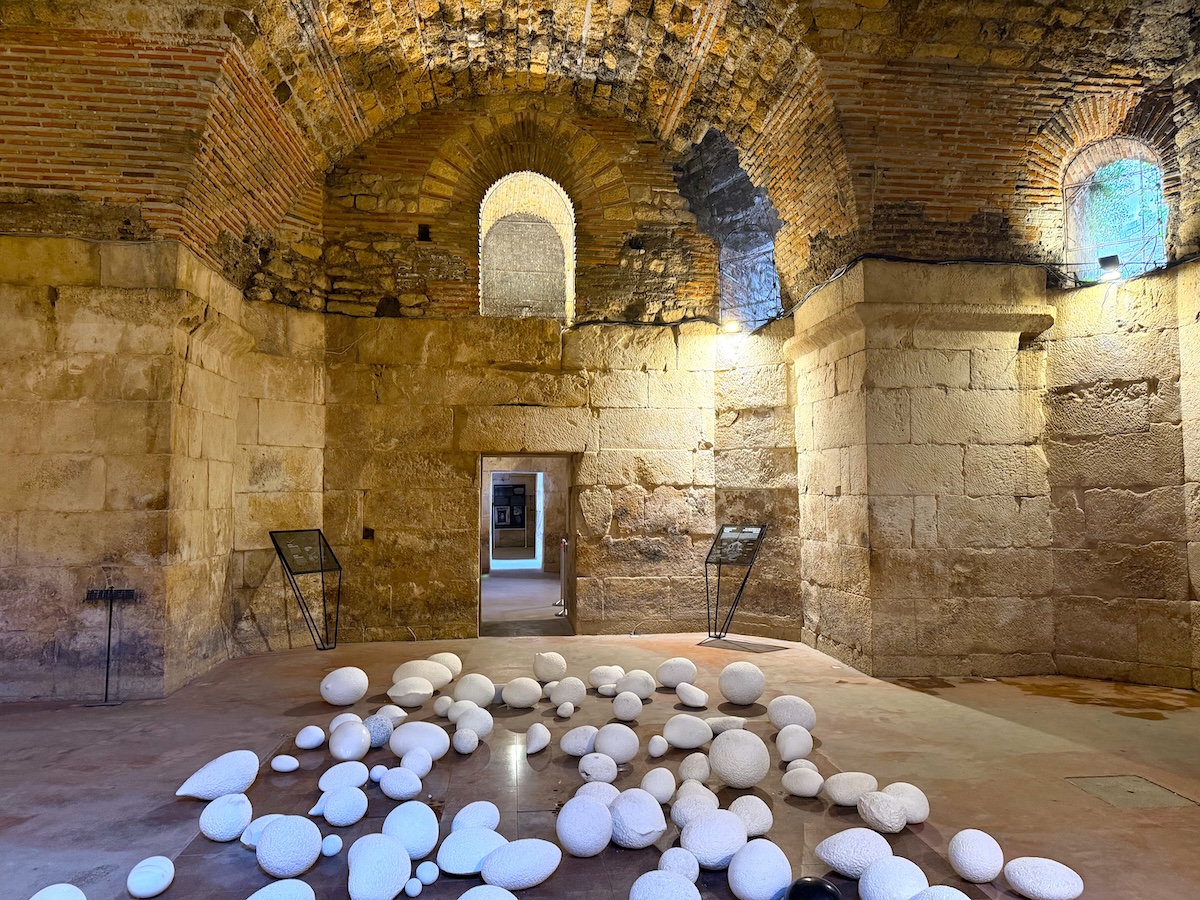
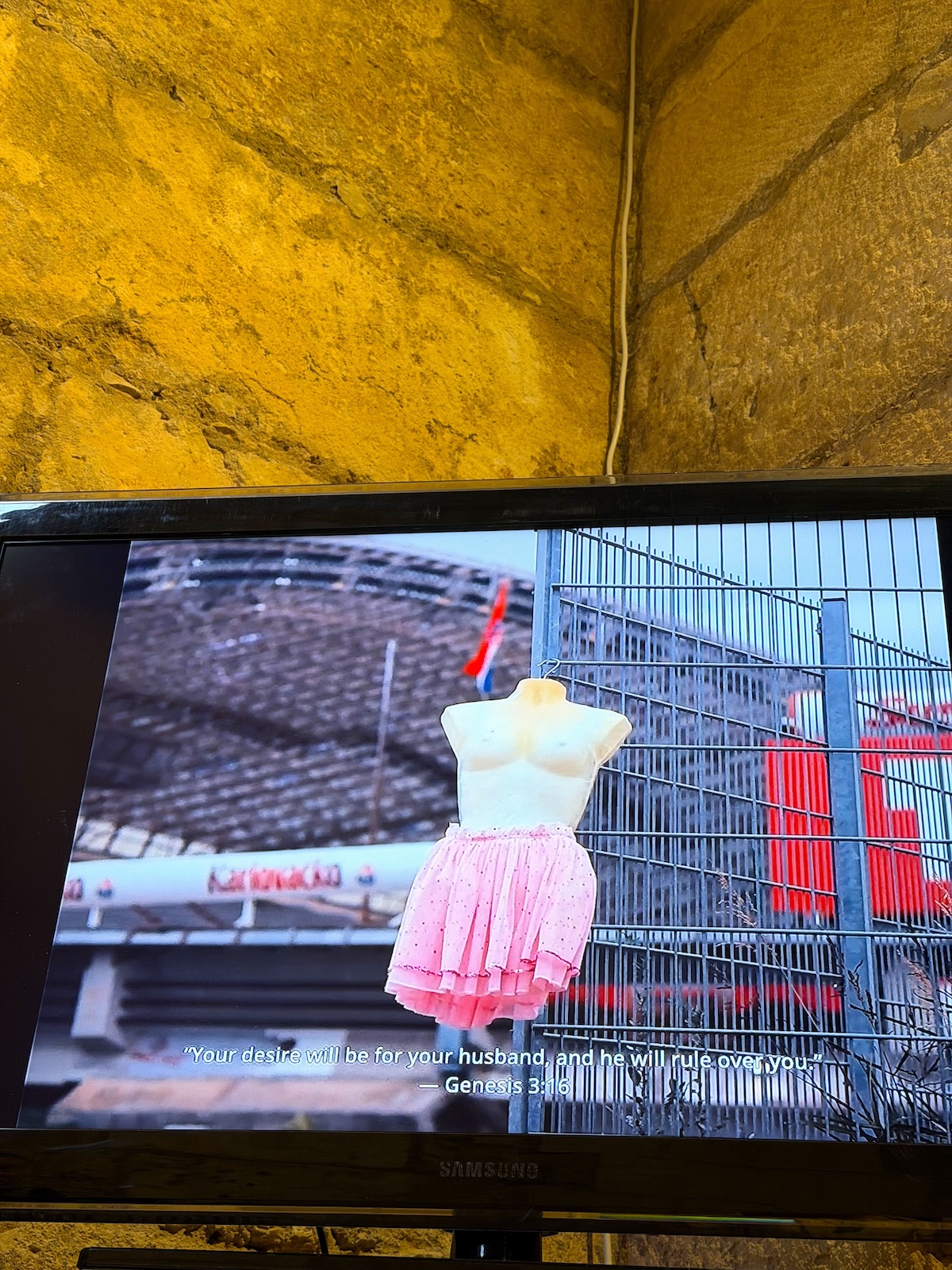
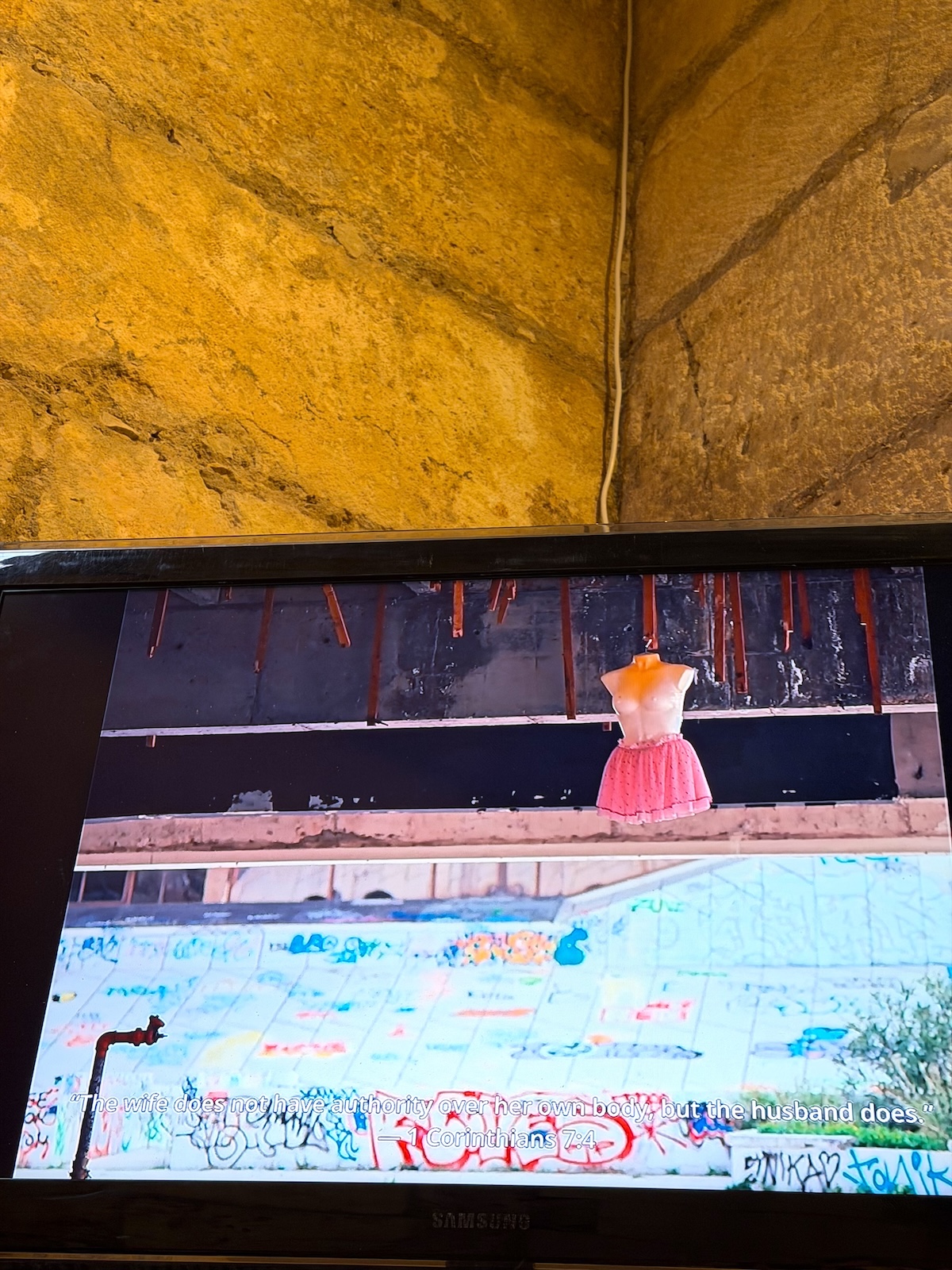
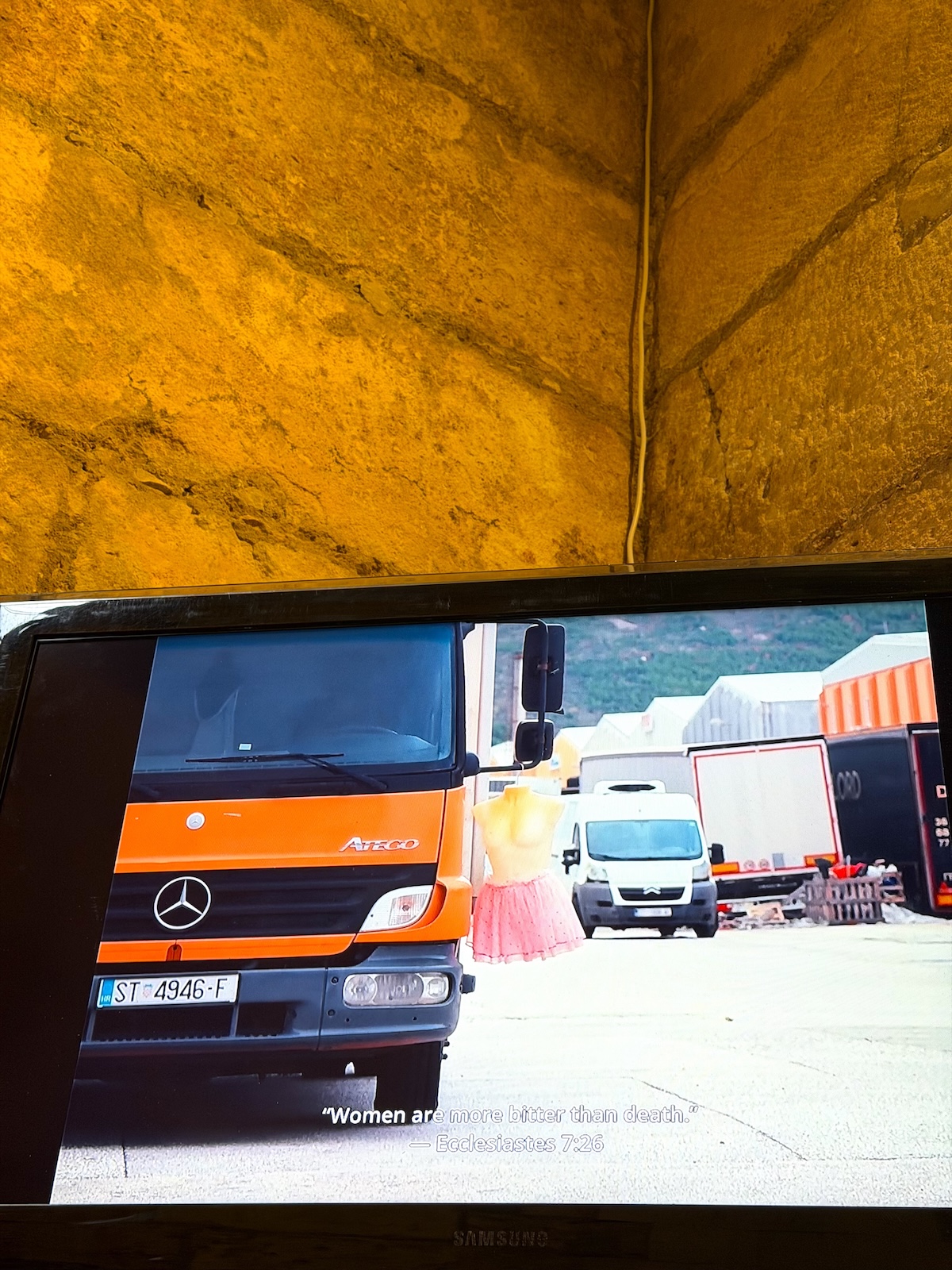
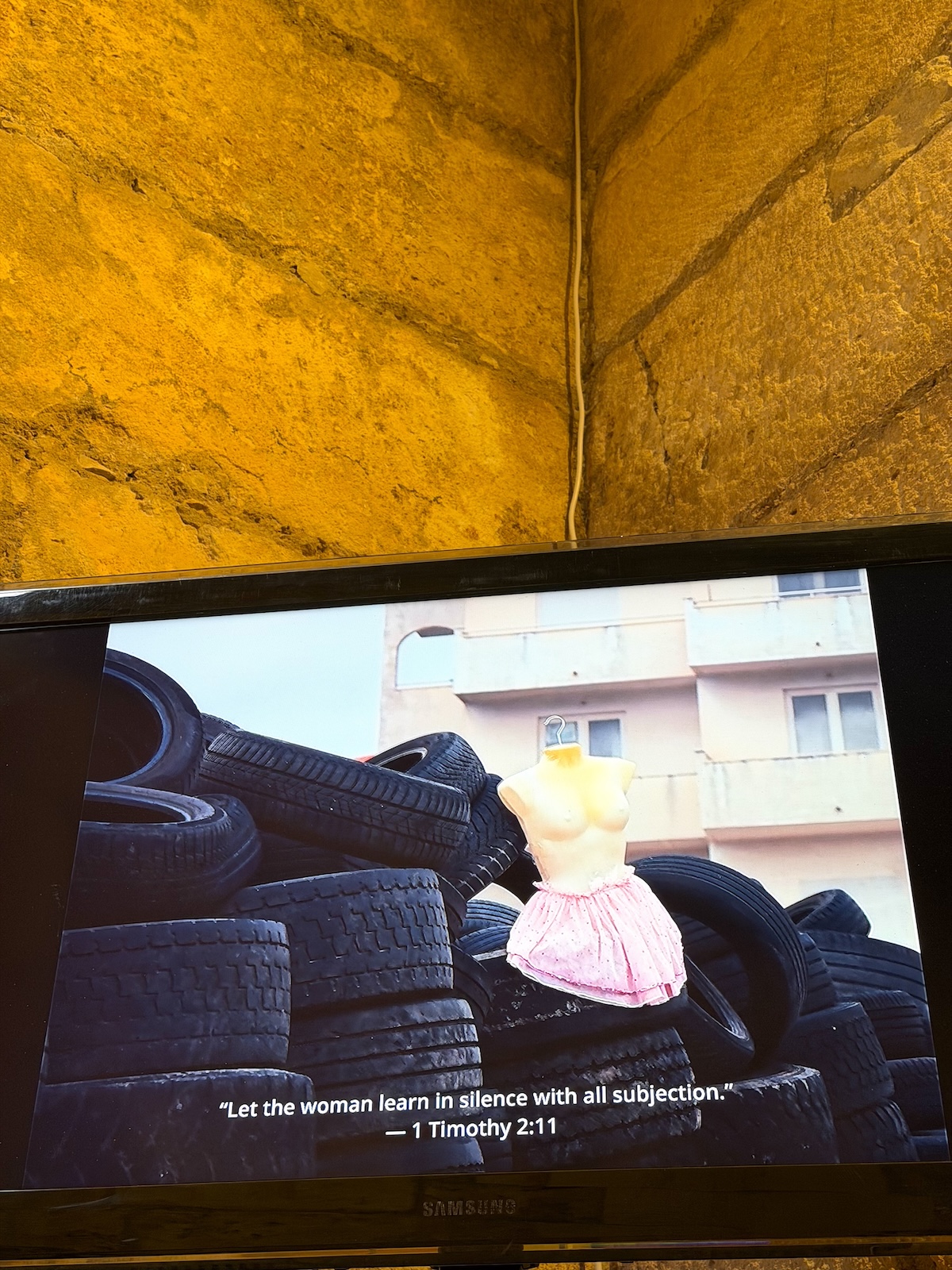
In addition, the cellars host interesting temporary exhibitions, and it was here that we saw one of the most fascinating contemporary art exhibitions of the trip. As part of the Umas Festival (Festival of the Academy of Arts in Split) we enjoyed installations by various artists.
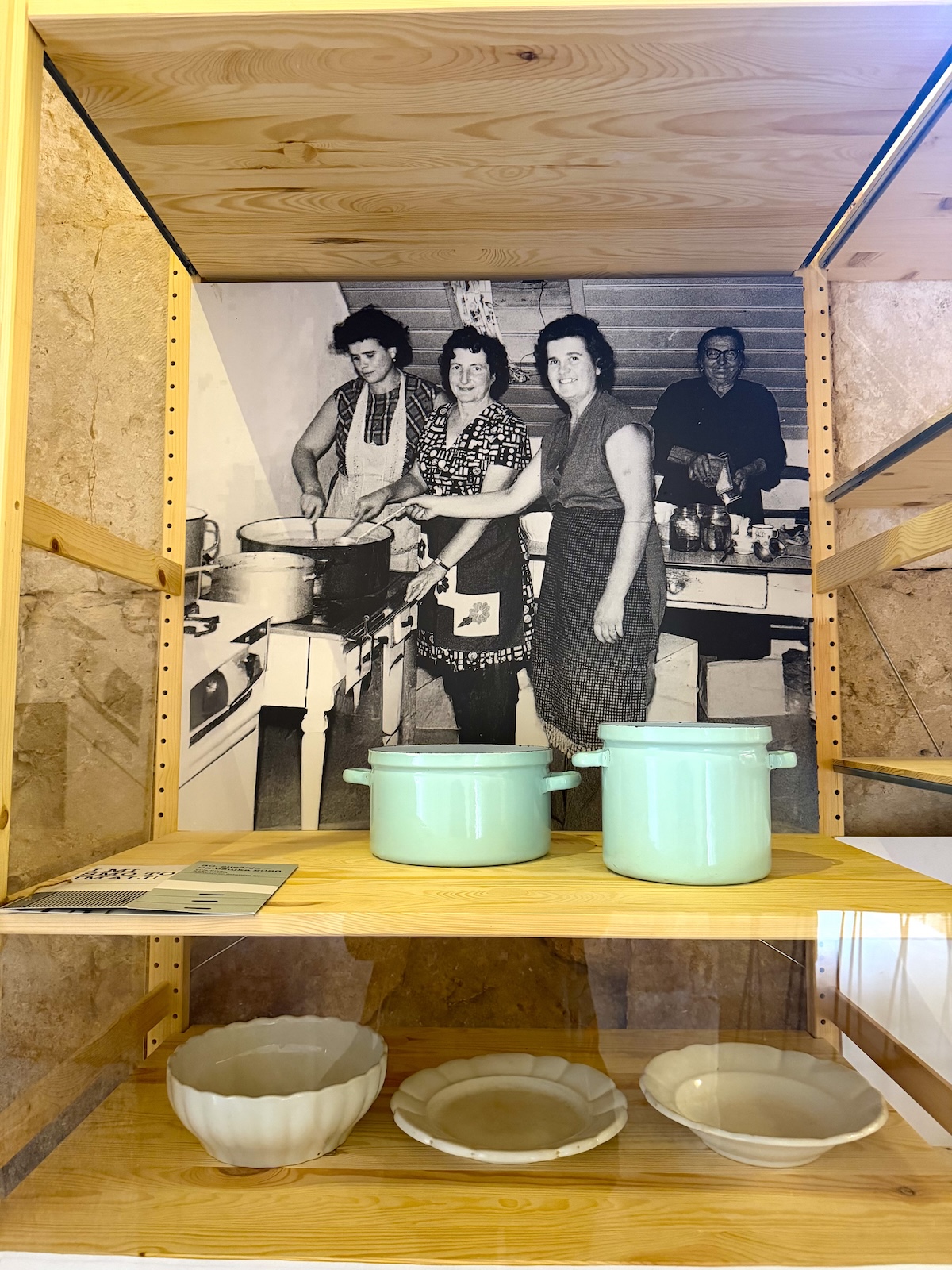
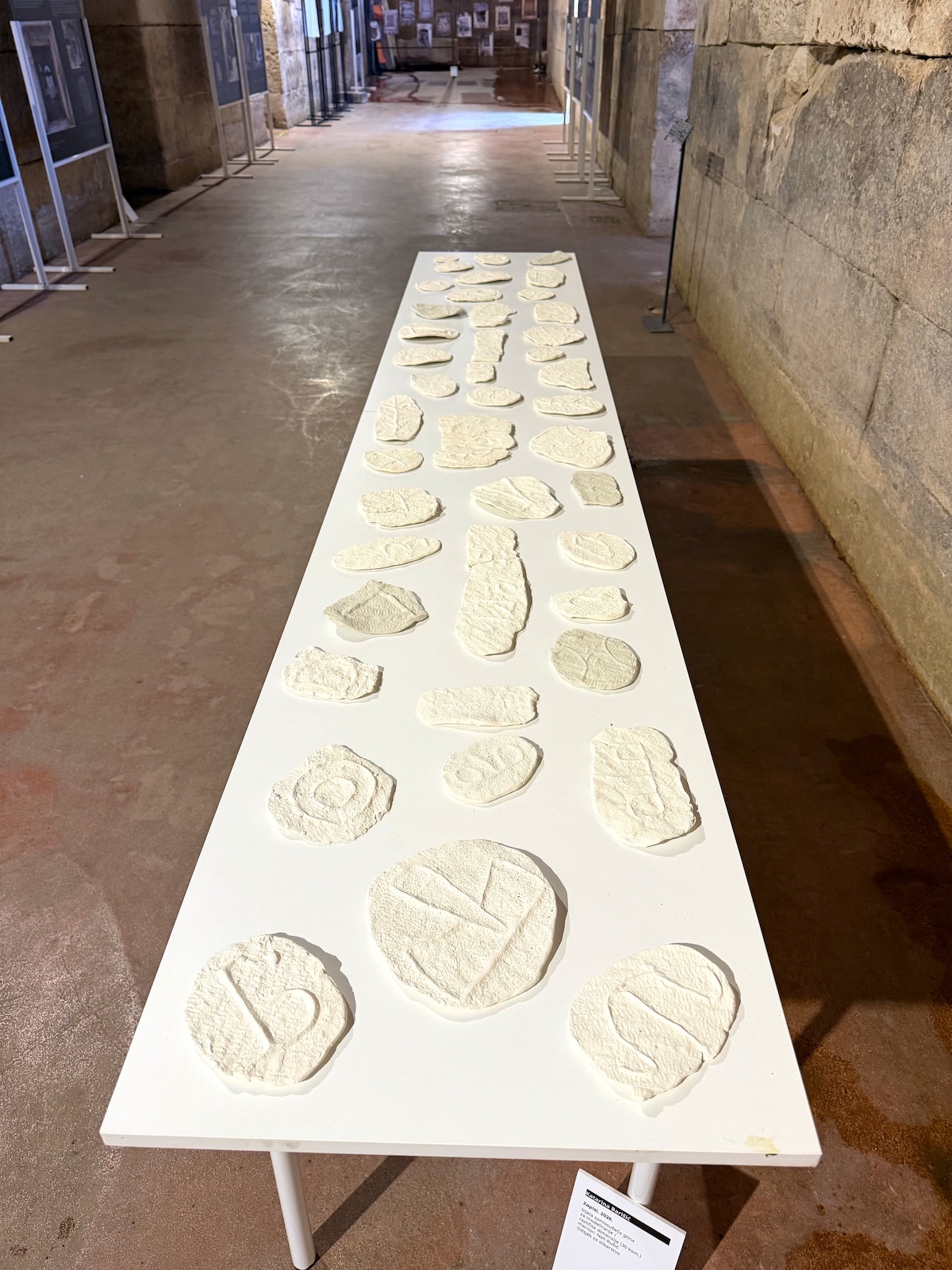
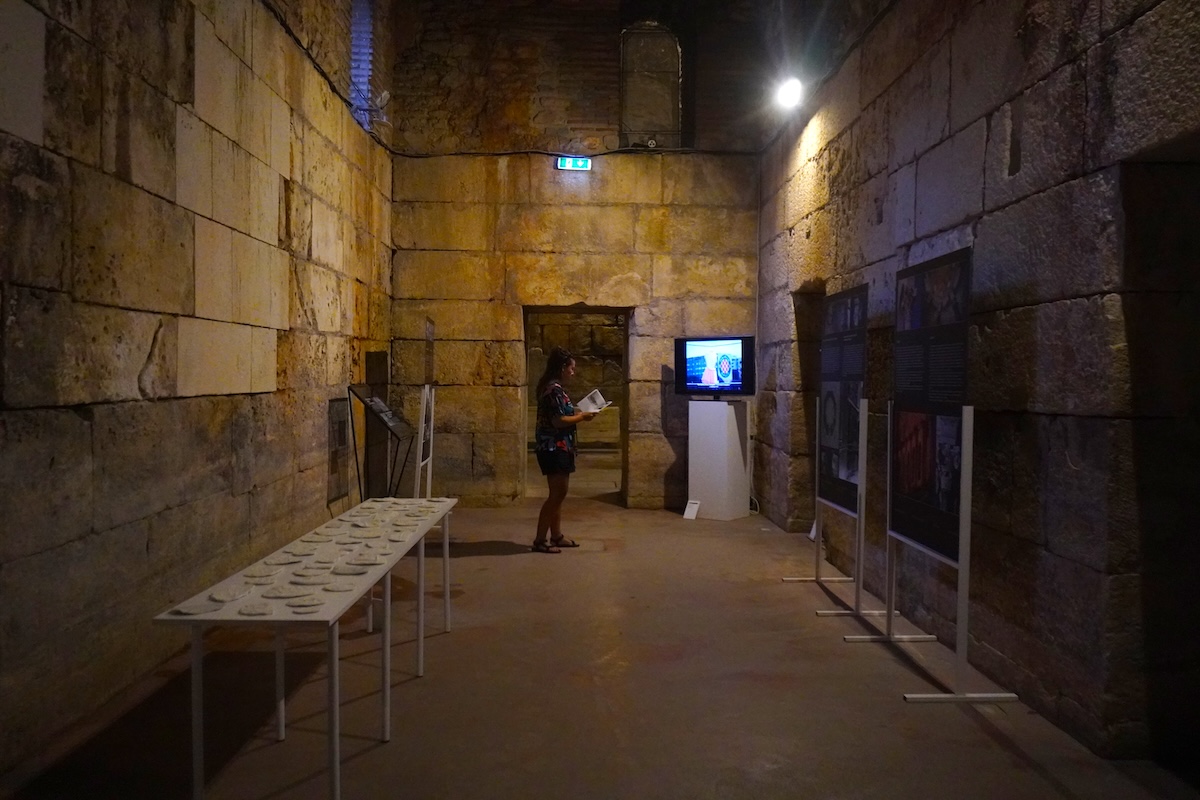
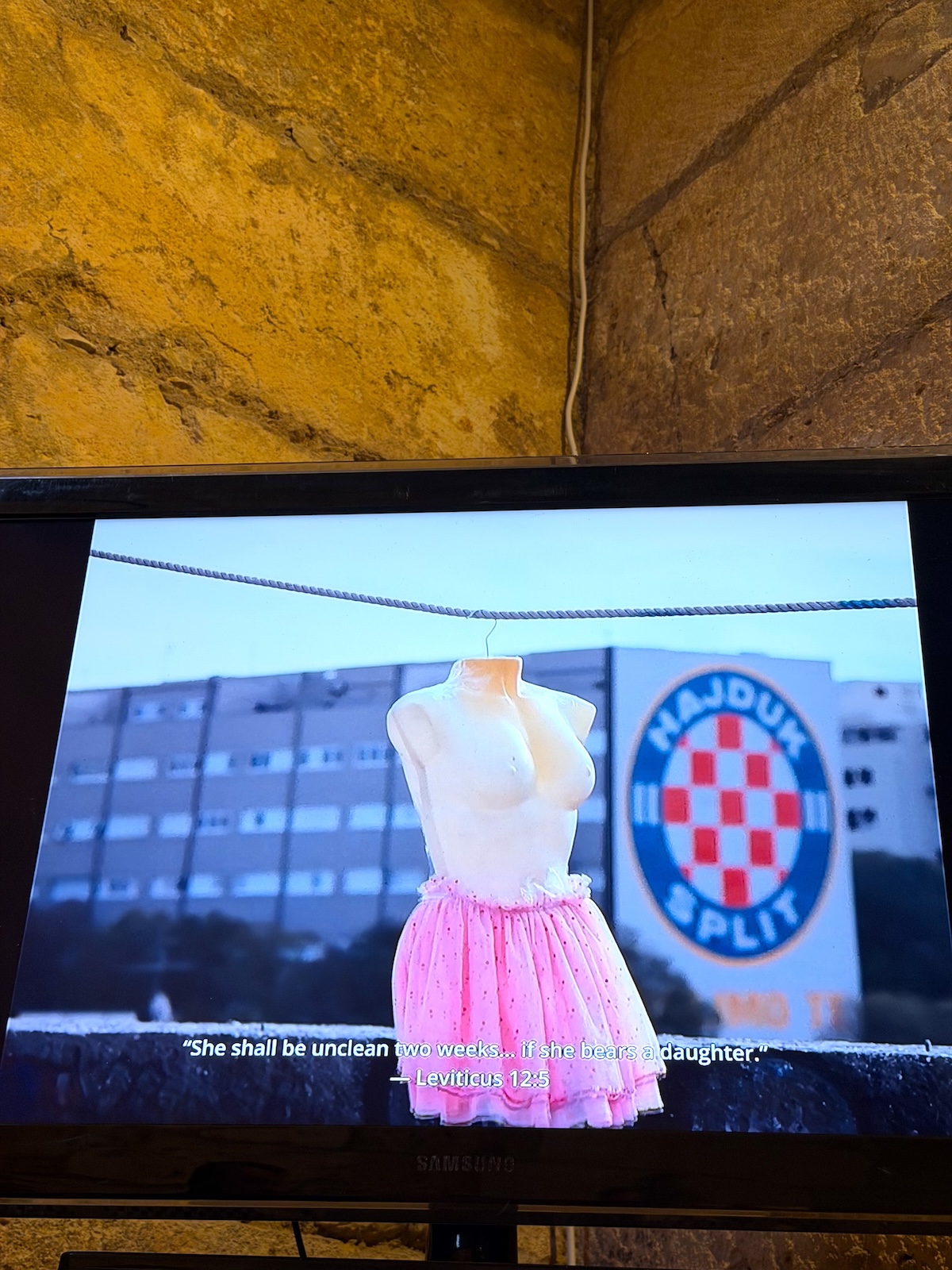
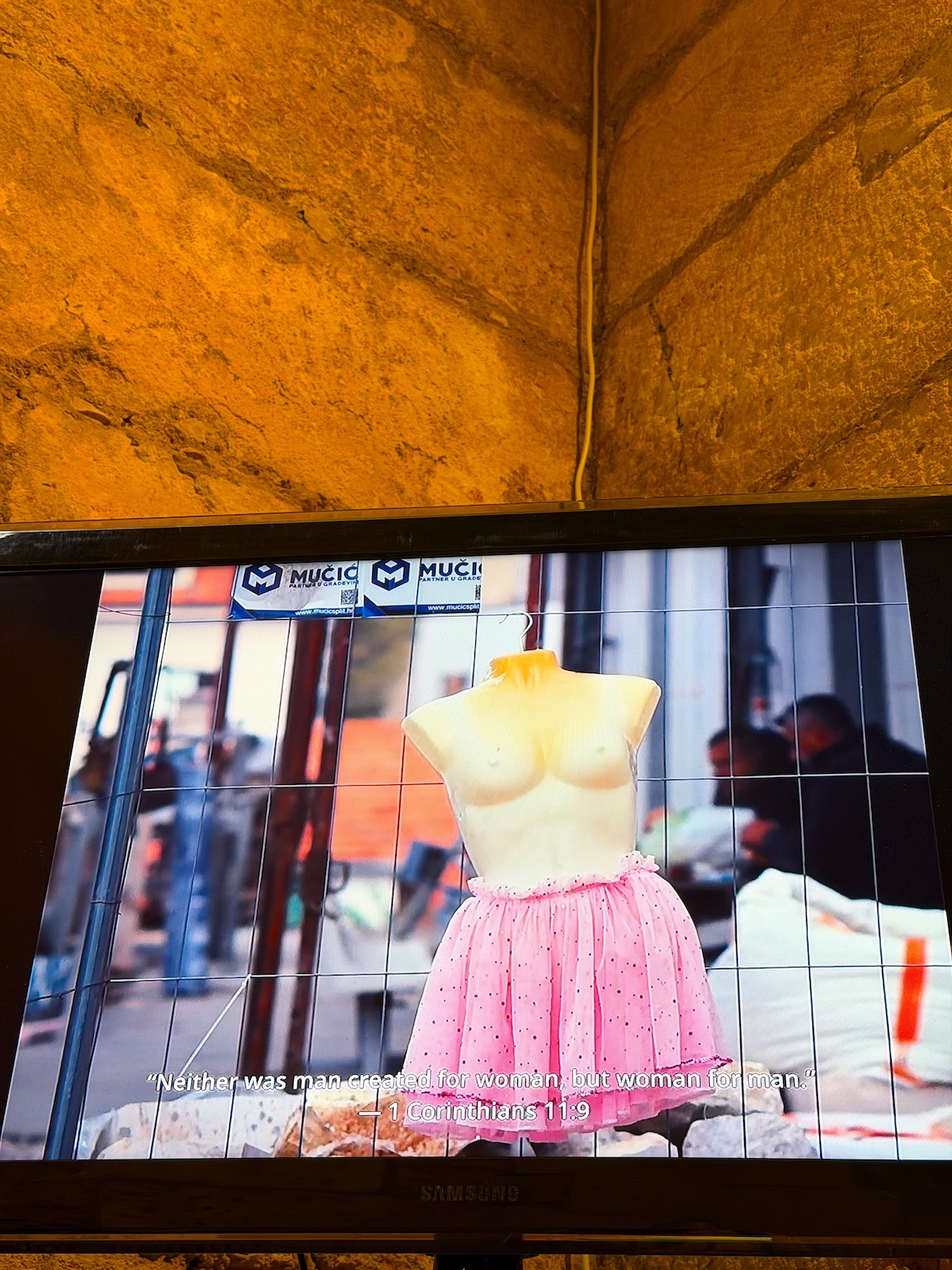
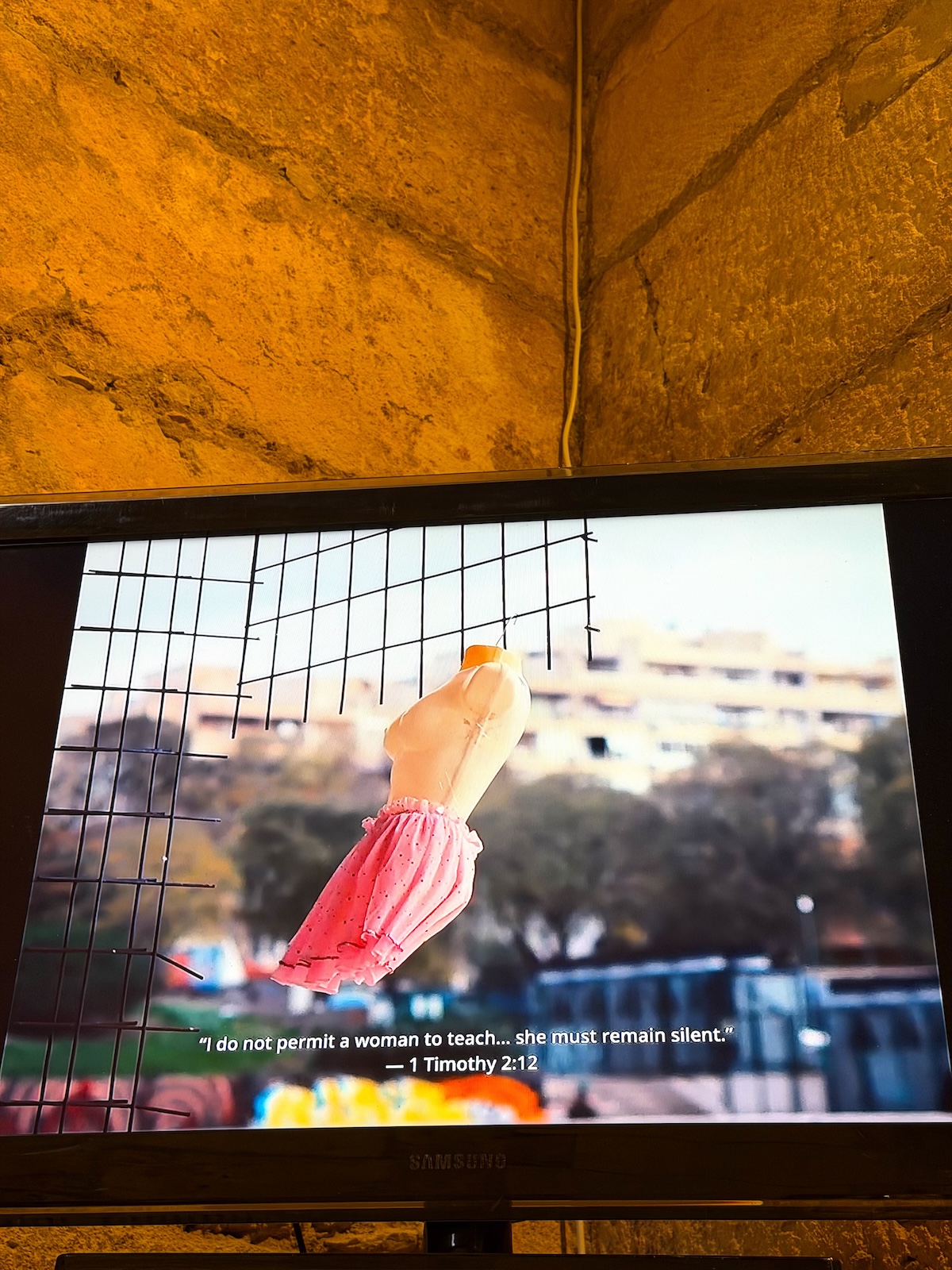
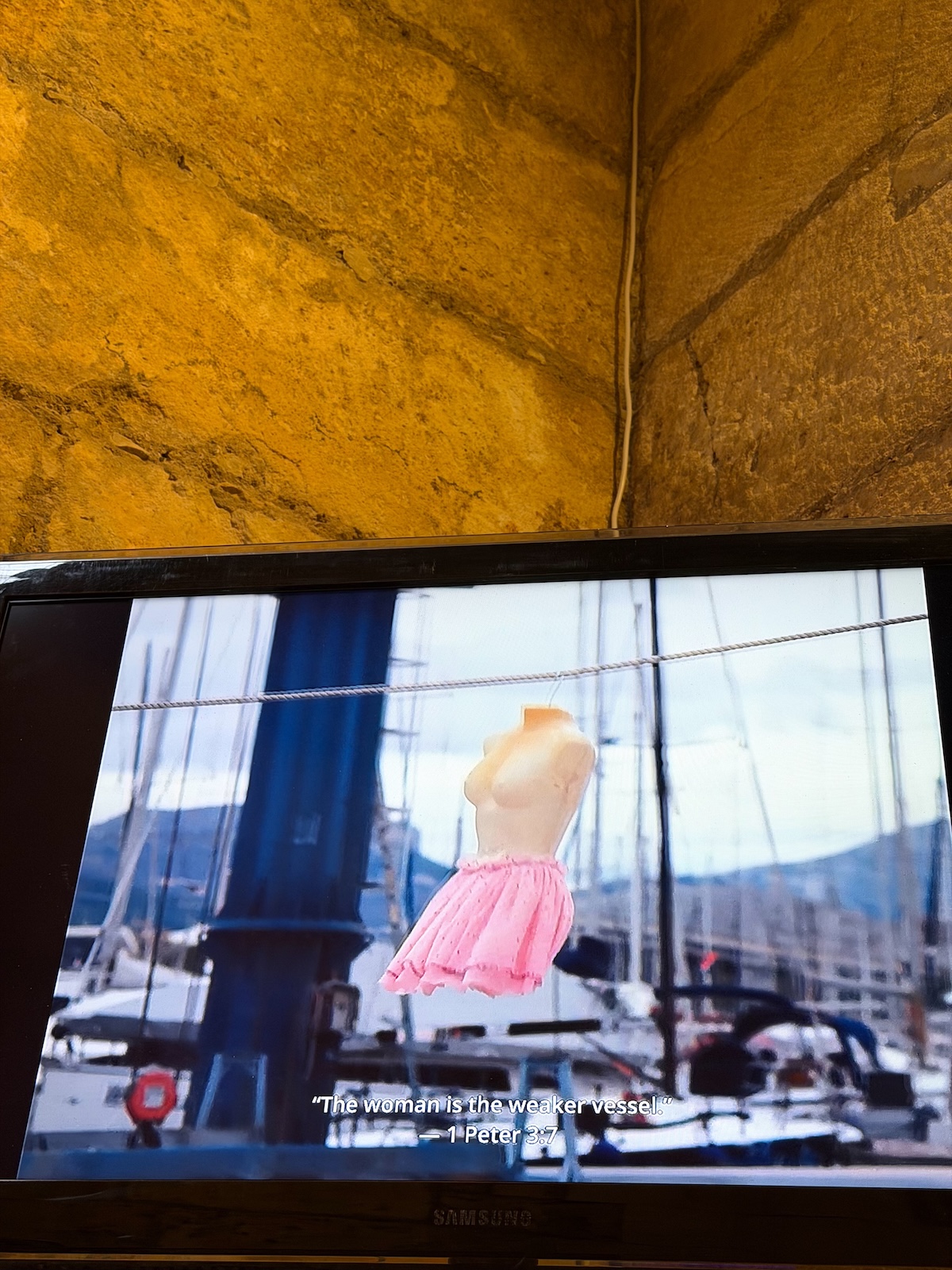
One of these installations particularly caught our attention: the video installation by artist Ani Biščan titled “The Creation” (2026). In this four-minute video, the artist selects several verses from Genesis to highlight the misogyny of the Old Testament, while showing the body of a headless mannequin, dressed in a pink tutu, in various corners of the city (for example, in front of the logo of Hajduk Split, the city’s best-known soccer team). In our opinion, the artist succeeds, in a clear, visual, and accessible way for a wide range of audiences, in reinforcing the idea of objectification, inequality, and misogyny to which women continue to be subjected in society, and in issuing a protest: today’s way of thinking has not changed that much since then, or, rather, remains steeped in those same biblical roots when it comes to gender inequality, a reality that weighs even more heavily in a country like Croatia, where the Church continues to exert a highly visible influence on society.
If you enter the cellars through the Bronze Gate from the Riva, take a closer look at it: it’s modest in size and very different from the palace’s other three gates. Apparently, it allowed for escape by sea in the event of an attack from land.
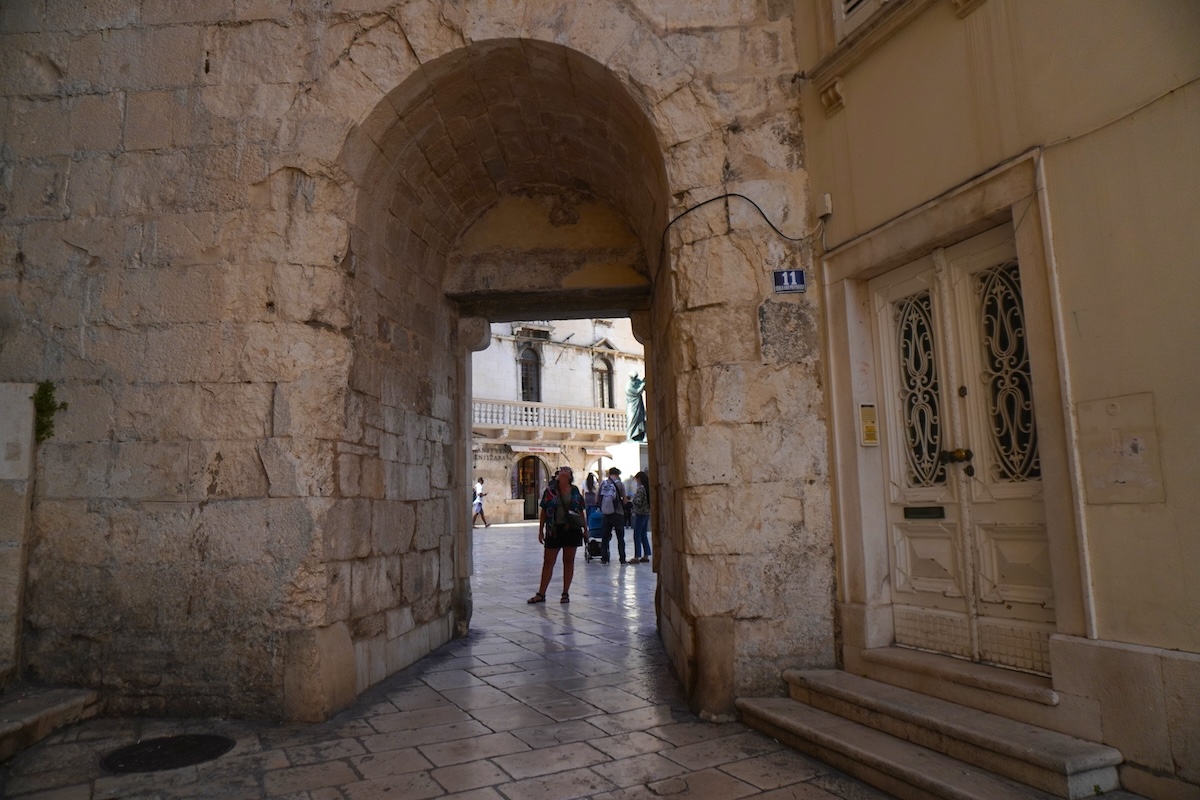
Admission: €10, with a discount to €8 for students and seniors. Family admission (2 adults with children under 15): €18. Free admission for children under 7. 25% discount with the Split Card.
Hours: daily from 8:30 a.m. to 8:00 p.m. Last admission is 30 minutes before closing.
Temple of Jupiter/Baptistery
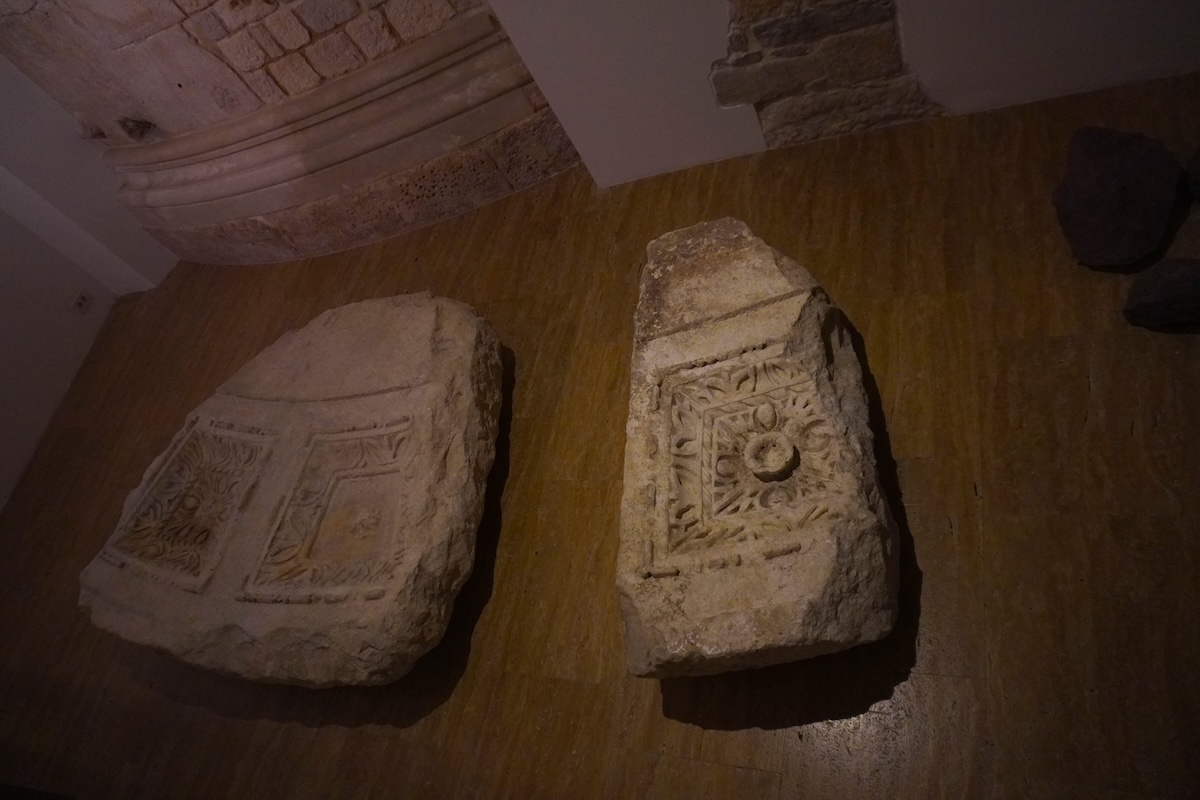
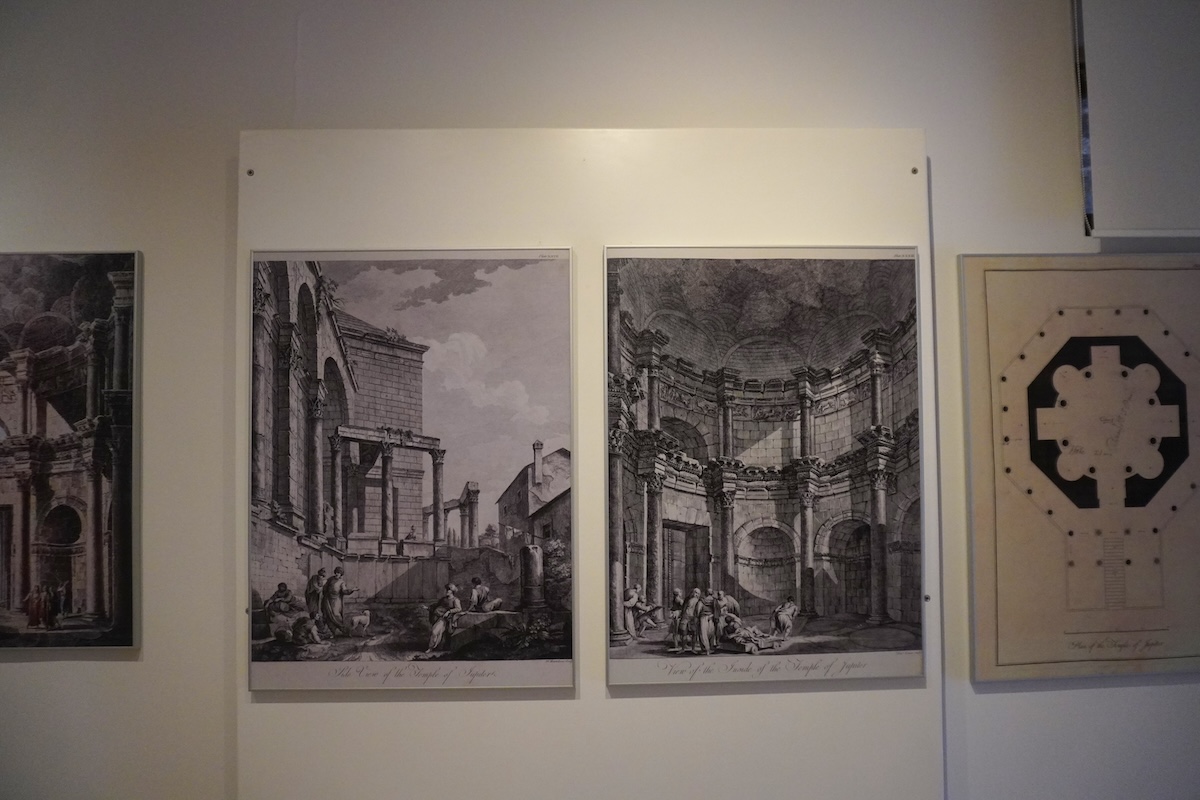
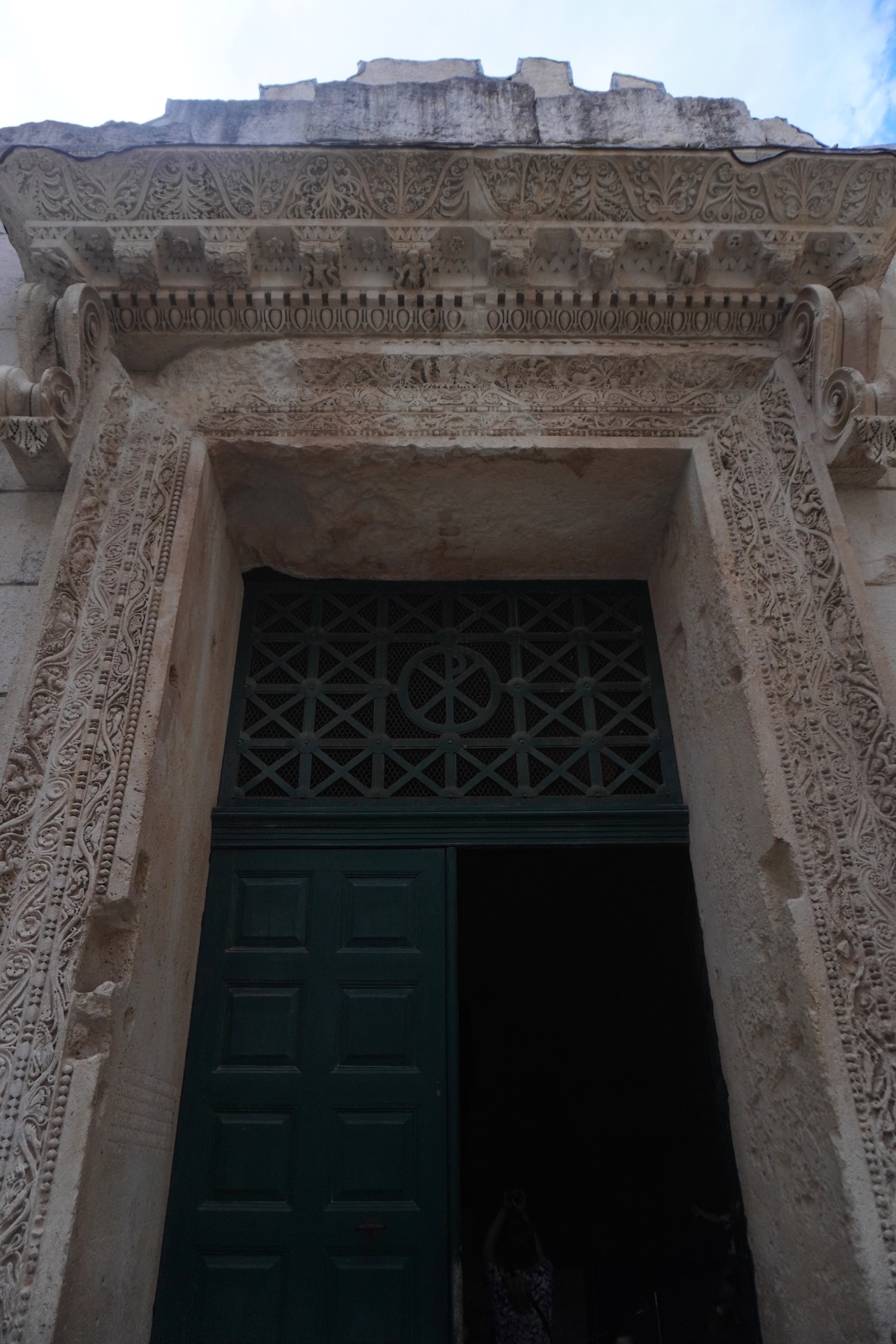
In the western part of the Peristyle, next to the Cathedral, there were originally three temples: one dedicated to Venus, another to Cybele, and this one, dedicated to Jupiter, the god from whom Diocletian claimed to be descended. The Christians destroyed the other two, but preserved this one, which in the 6th century became the Temple of Jupiter (or Baptistery of St. John the Baptist) and was one of our favorite sites in the Old Town.
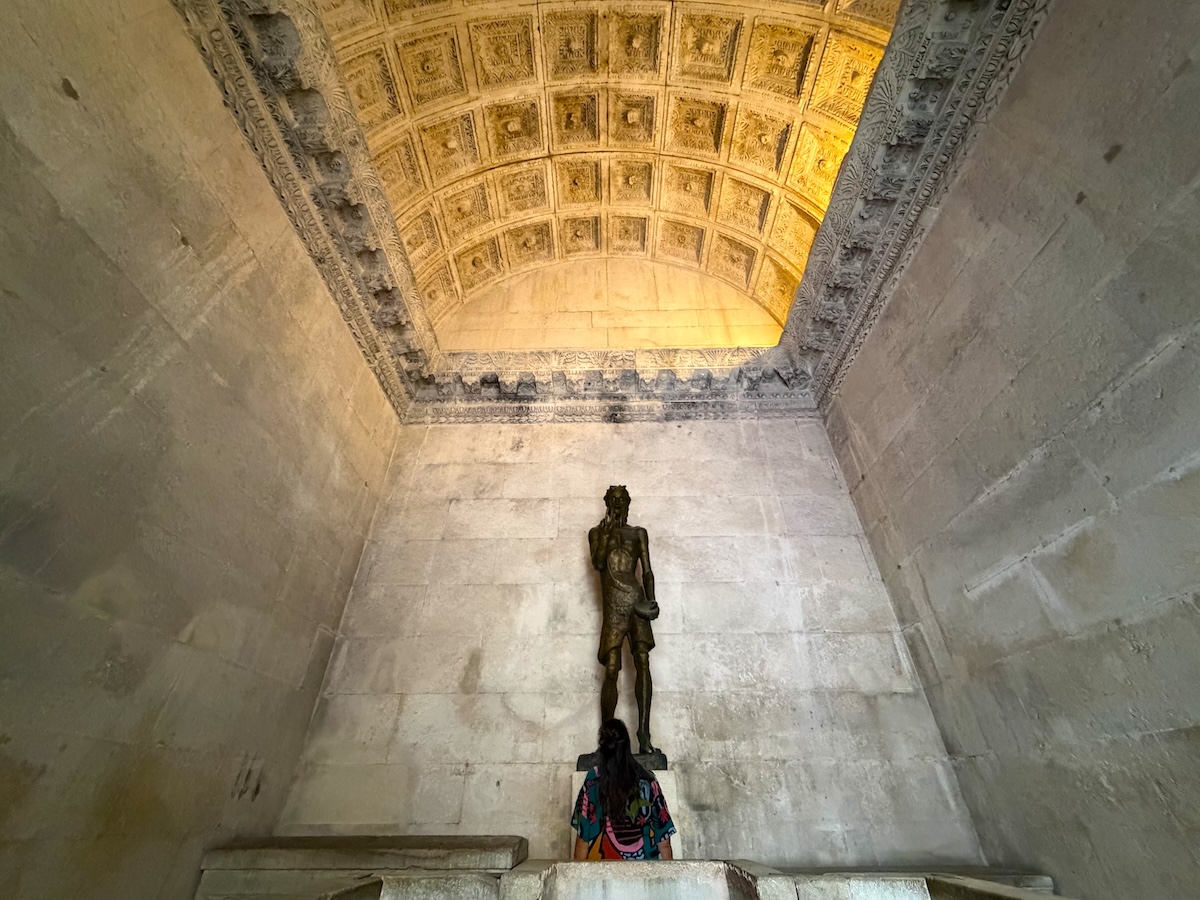
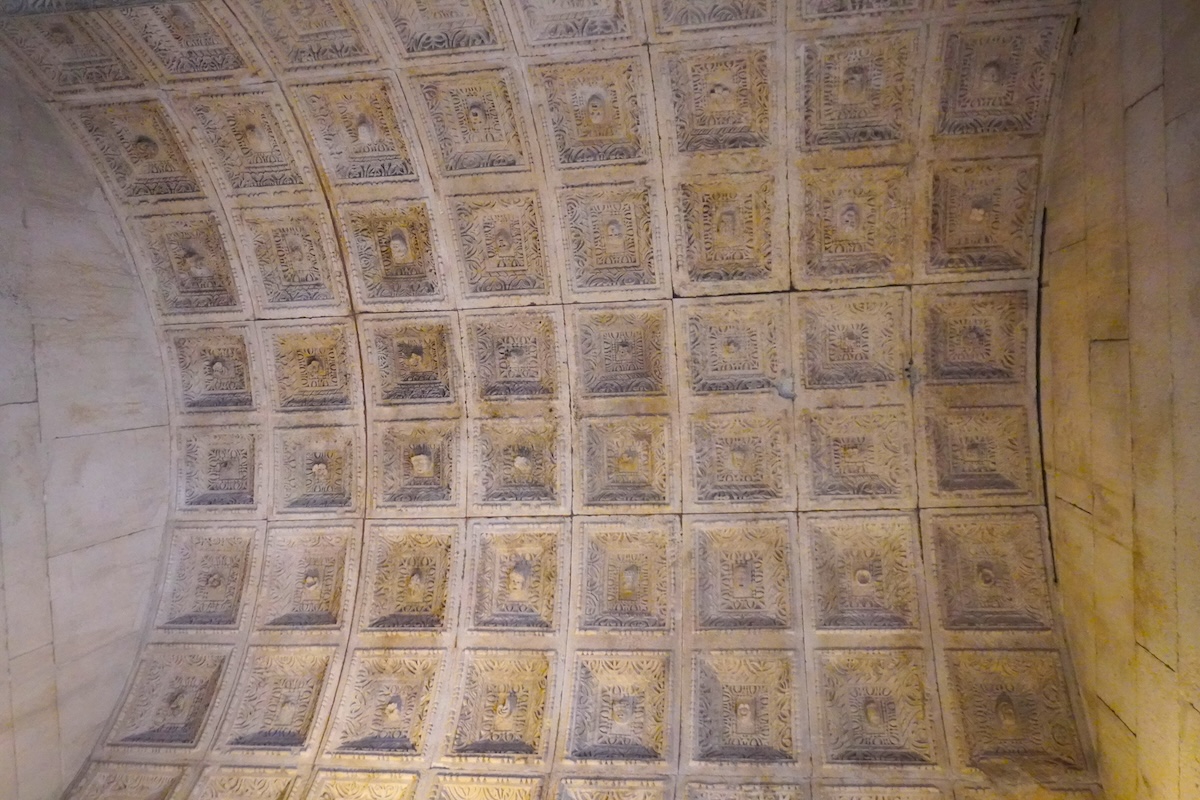
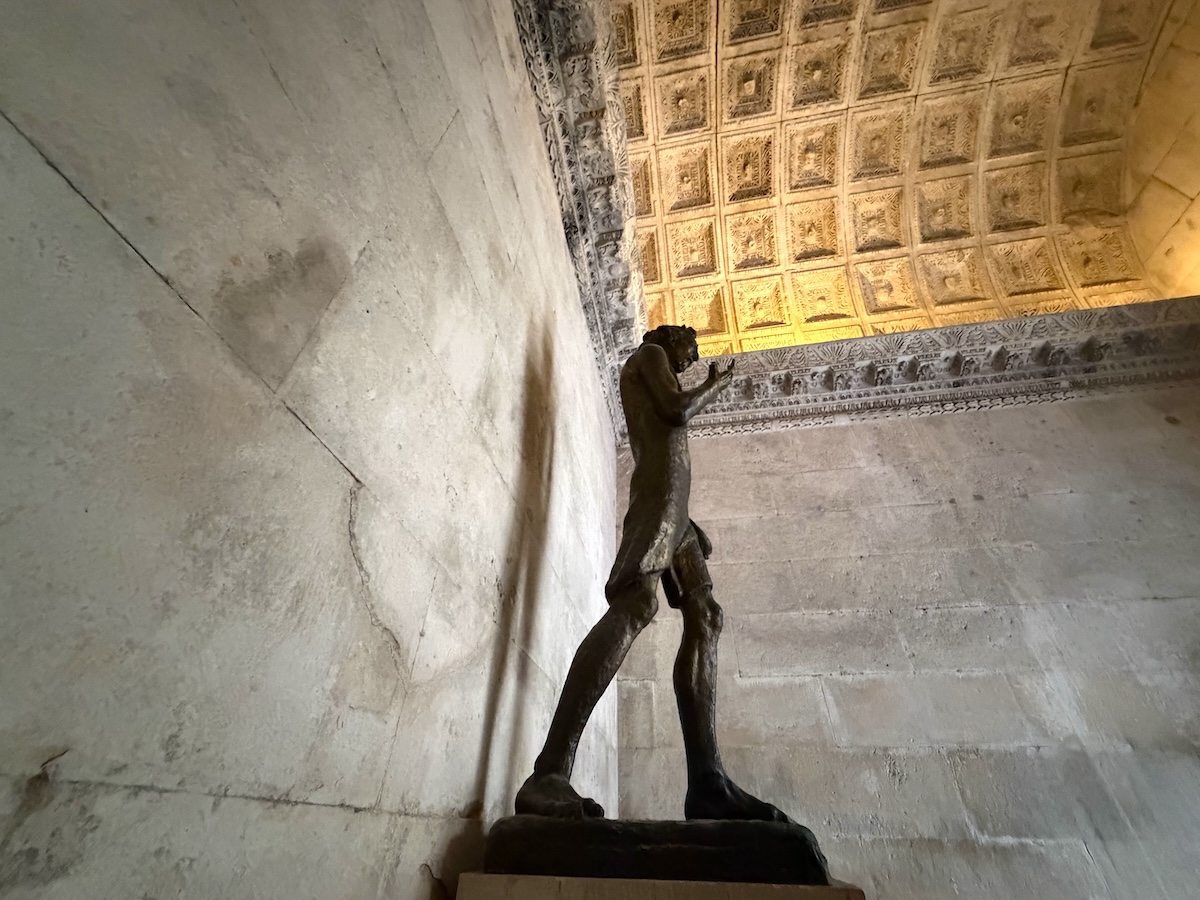
It’s a small space but one that’s truly surprising: the entrance is flanked by an Egyptian sphinx, the very one Diocletian brought to decorate his palace, though it has lost its head and legs over the centuries. Inside, the stone vaulted ceiling features a decoration of coffered panels carved with faces displaying a variety of expressions; we found it incredible.
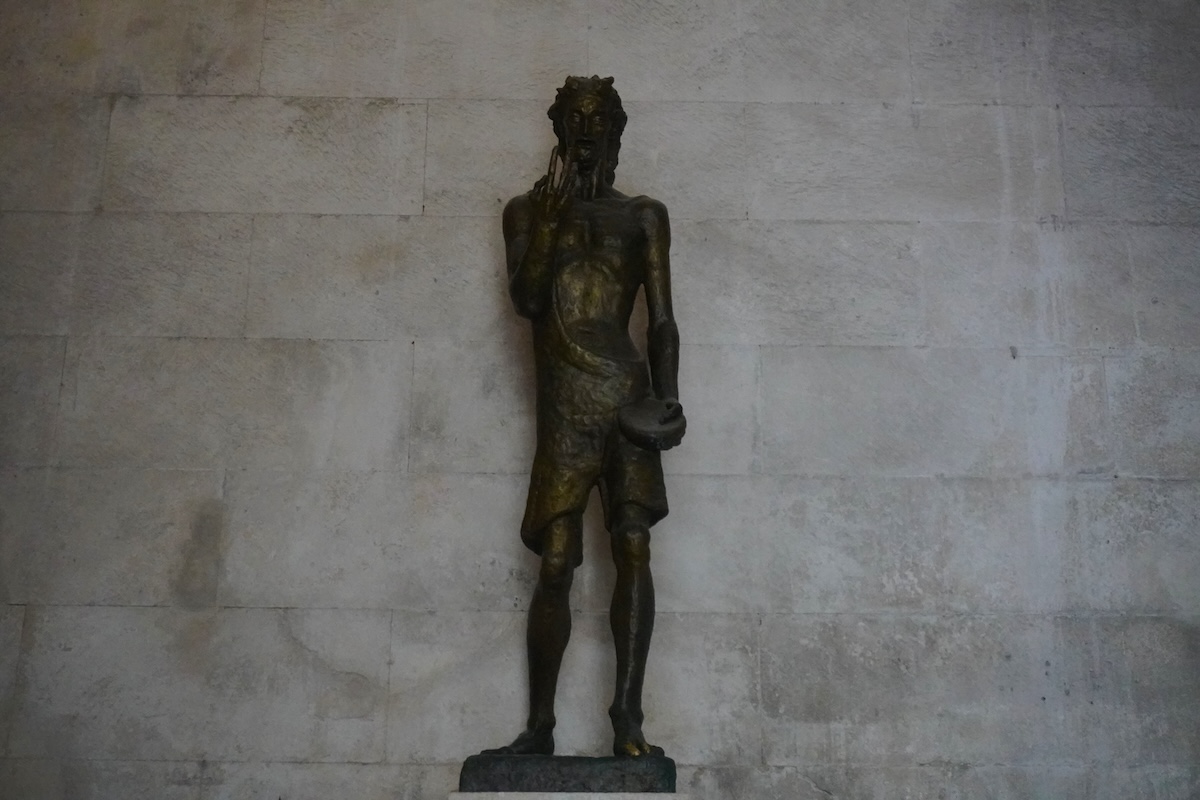
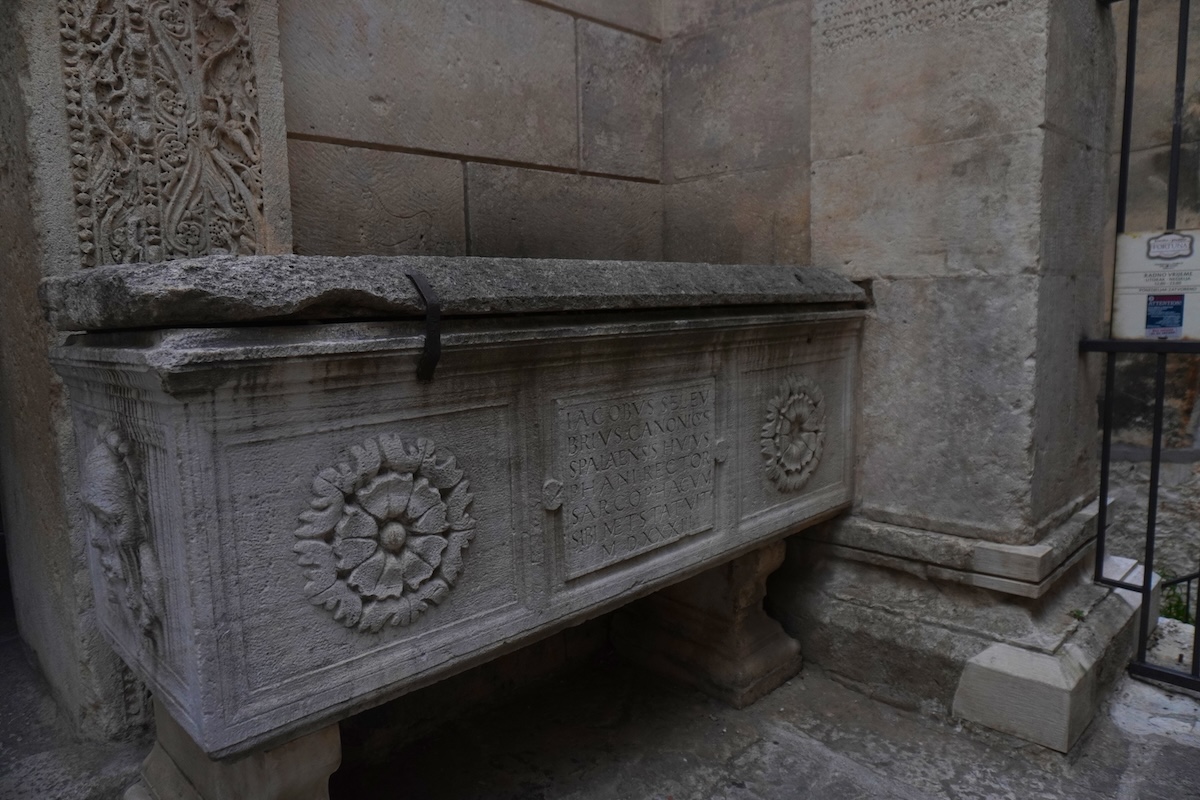
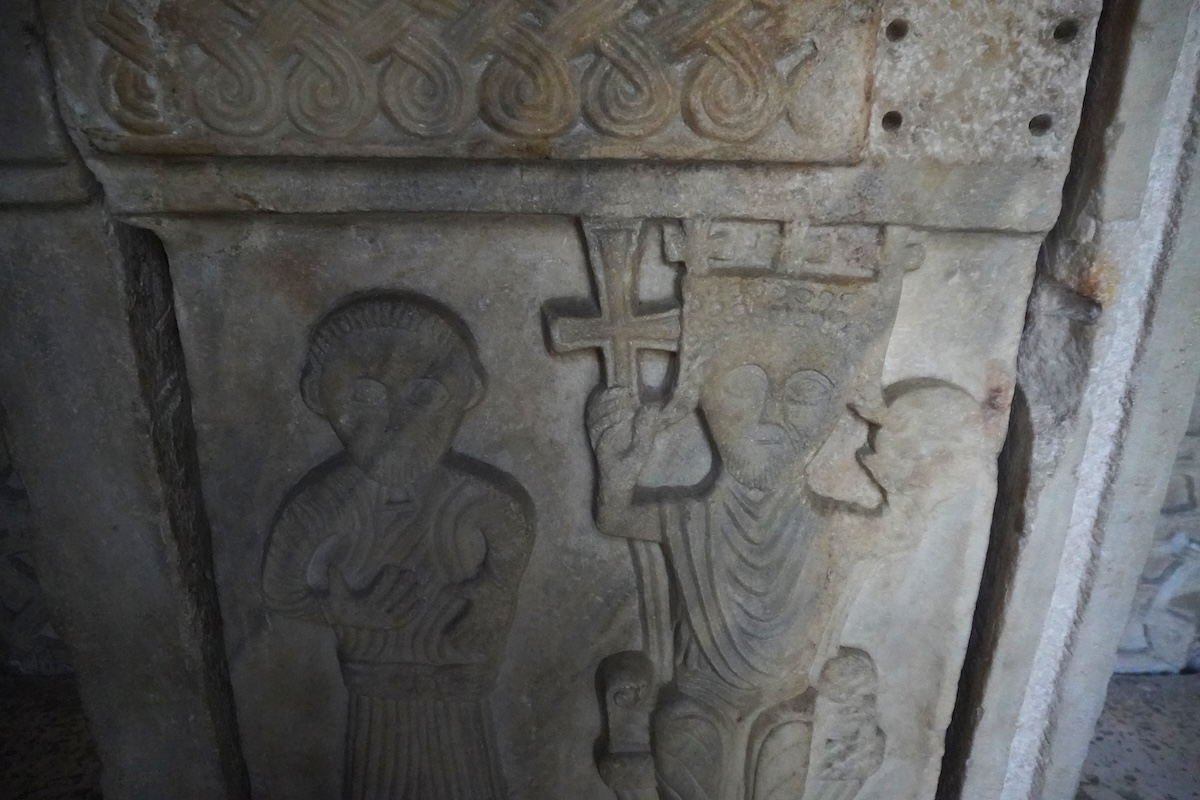
The centerpiece is the statue of St. John the Baptist, the work of the incredible Croatian sculptor Ivan Meštrović (you can learn more about his work at the gallery that bears his name, which we highly recommend), placed exactly where the Roman statue of Jupiter once stood. There’s also a 13th-century baptismal font, made from reused carved stones from the old cathedral, which features the oldest surviving depiction of a Croatian king, seated on his throne and surrounded by his court.
Admission: €4, or included in the Blue, Red, Yellow, Purple (the one we bought on Randomtrip), and Gold Cathedral combo passes (you can review the pass types in the section on the Cathedral).
Hours: Same hours as the Cathedral, Monday through Saturday from 8:15 a.m. to 7:30 p.m., Sundays from 12:30 p.m. to 5:30 p.m. No discount with the Split Card.
Narrow Street “Let Me Through” (Pusti me da prodjem)
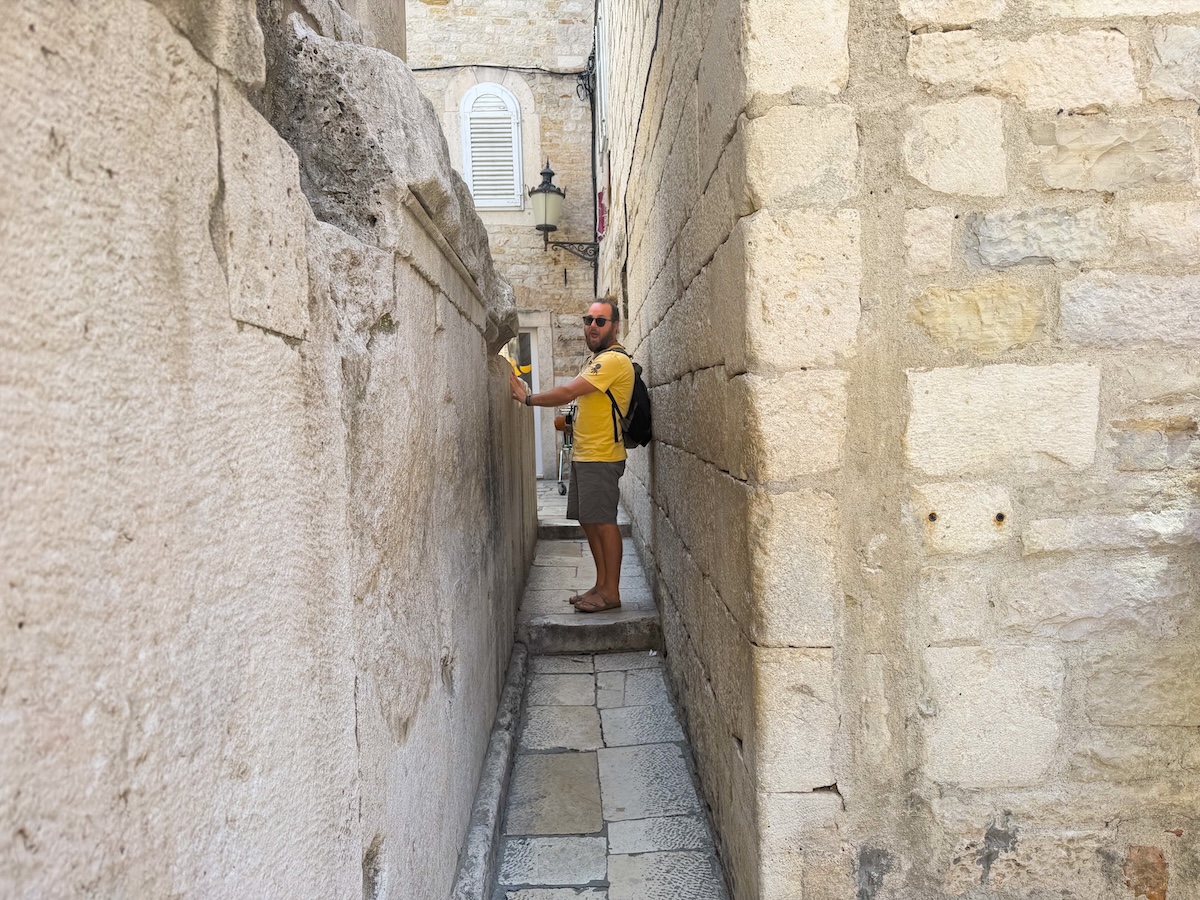
Just before reaching the Temple of Jupiter, there’s an alley so narrow that you can understand why it was given the name “Let Me Through”: it’s less than ten meters long, and two people can’t pass each other inside at the same time. Hence its name, which literally means “let me through” in Croatian. It’s unclear whether it was designed this way on purpose or simply ended up this way, squeezed between two buildings, over the centuries; what is clear is that today it’s a must-see for many people visiting the city (and you might even find a line of people waiting to walk through the alley…).
Split City Museum
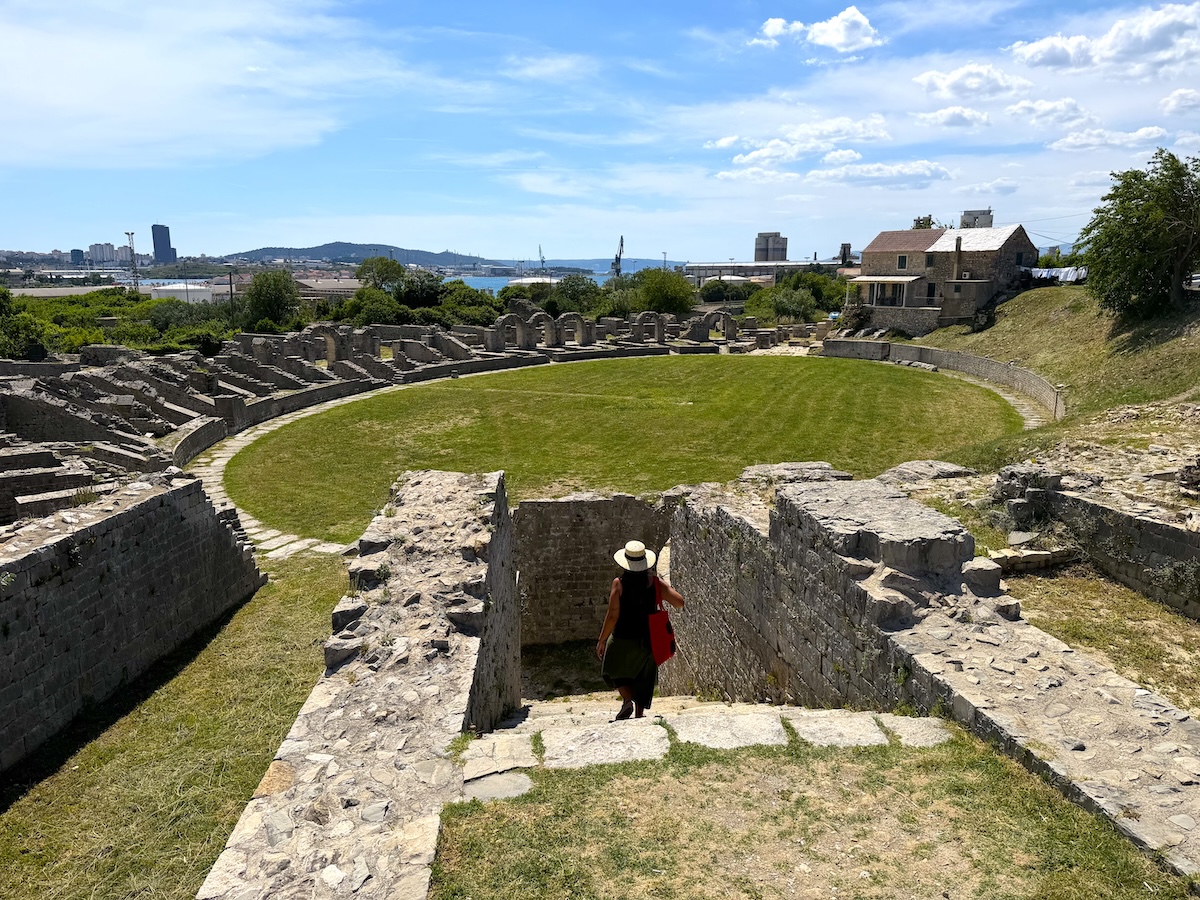
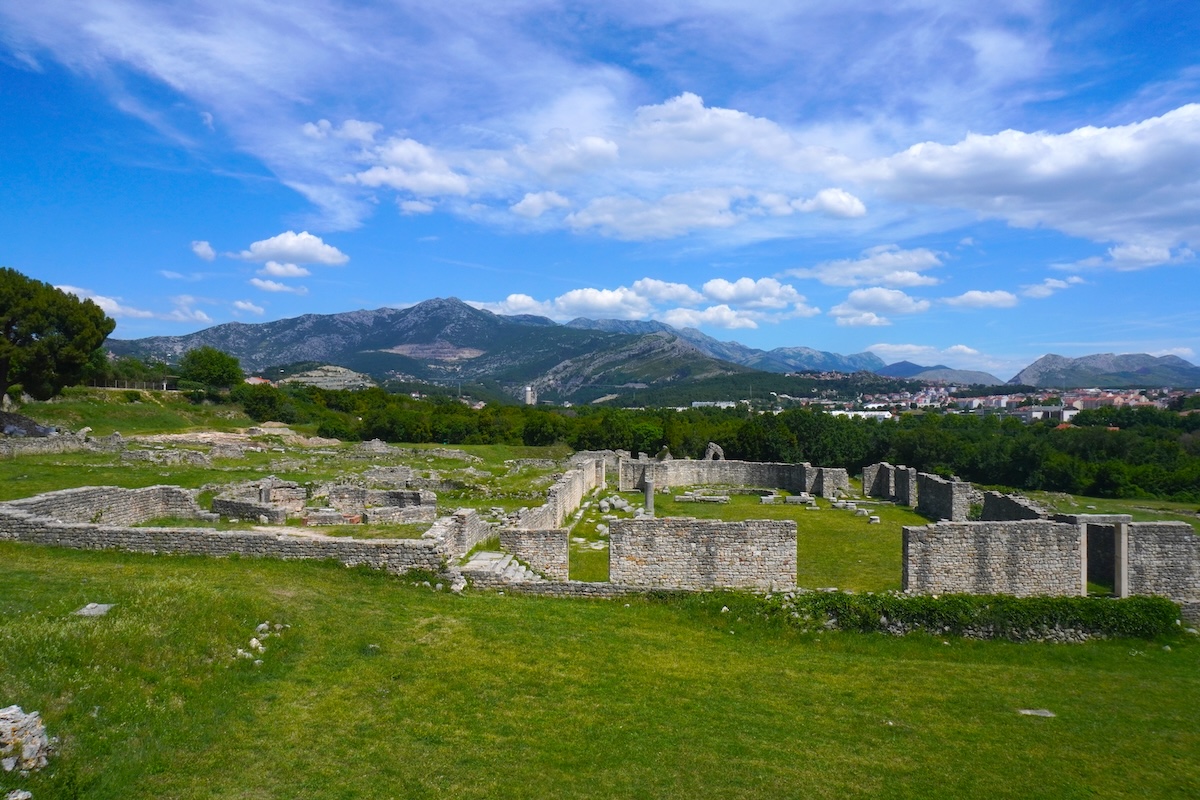
Near the Golden Gate lies the Papalić Palace, a Gothic-Renaissance building from the 15th and 16th centuries that now houses the Split City Museum. Interestingly, Split’s museum history begins right here: Dmine Papalić and the writer Marko Marulić explored the ruins of nearby Salona (Diocletian’s birthplace), collecting Roman inscriptions, which Papalić then embedded in the courtyard of his home.
Inside the museum, the permanent exhibition traces the development of Split through the most representative pieces in its collections.
Admission: €10, with a discount to €8 for students and retirees (the latter must present a Croatian ID). A family ticket (two adults with children under 15) is available for €18, and admission is free for children under 7. There is no discount with the Split Card.
Hours: Open Tuesday through Sunday from 9:00 a.m. to 8:00 p.m.; closed Mondays and on holidays.
Emanuel Vidović Gallery
The Emanuel Vidović Gallery is dedicated to the legacy of one of the most important Croatian painters of the 20th century, the Split-born artist Emanuel Vidović. It is part of the Split City Museum, which we discussed in the previous section, and is just a short walk from the Peristyle, in a house near the Silver Gate of the palace. In 2008, it was nominated for the European Museum of the Year Award (EMYA).
Among Vidović’s works are a large number of paintings, and the gallery also recreates the artist’s former studio, featuring dolls, curiosities, and wooden sculptures by the self-taught artist Petar Smajić.
Admission: €8; €6 for schoolchildren, students, and seniors. Free admission with the Split Card.
Hours: Tuesday through Sunday from 10:00 a.m. to 8:00 p.m. Closed Mondays.
Split Waterfront (Riva)
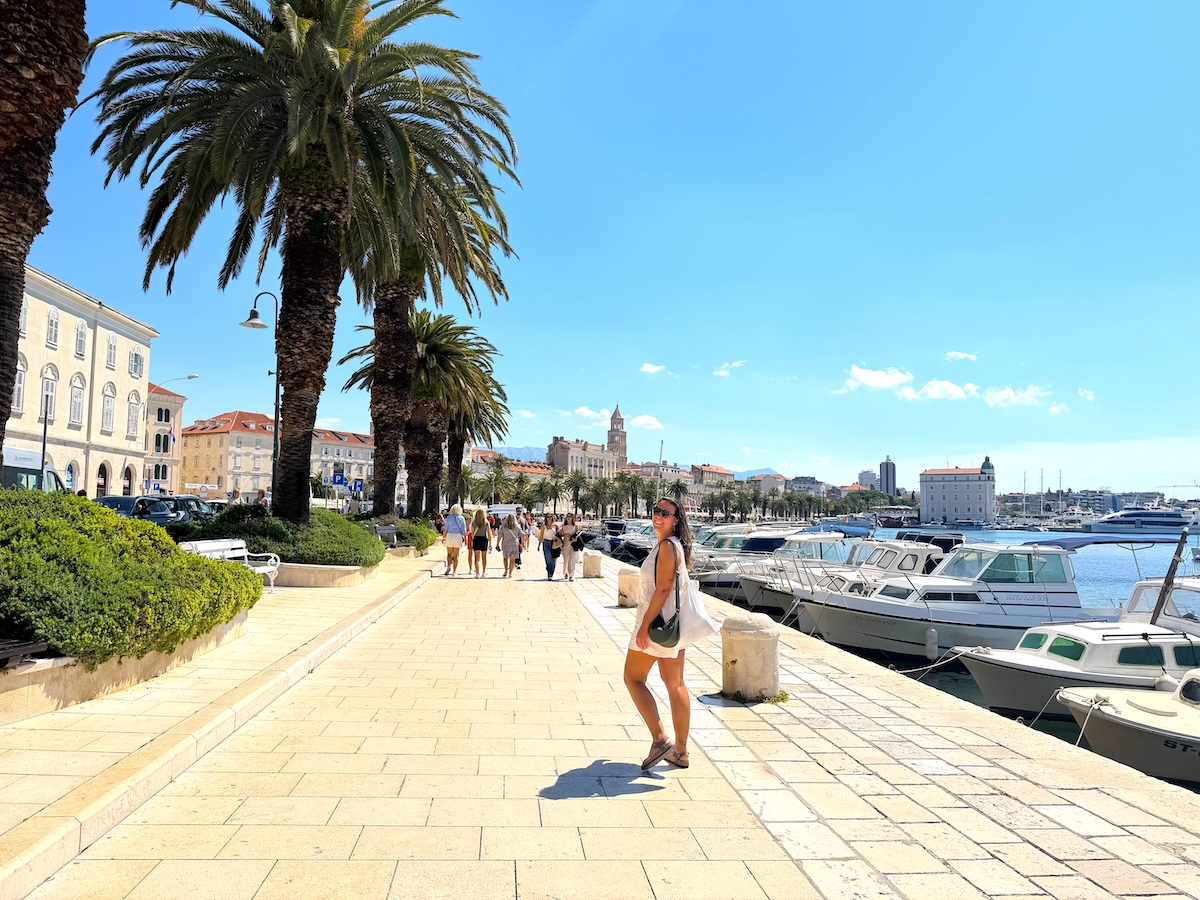
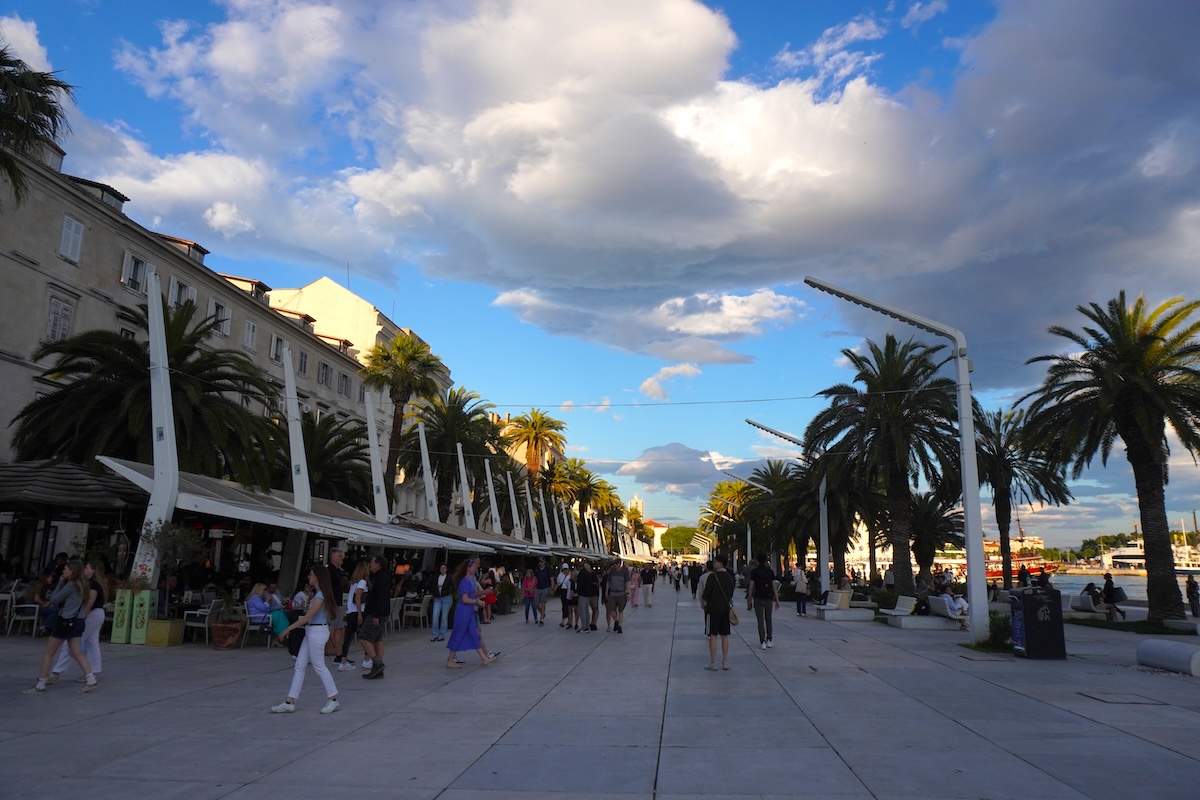
Split’s Waterfront, known simply as the Riva, runs along the southern facade of Diocletian’s Palace.
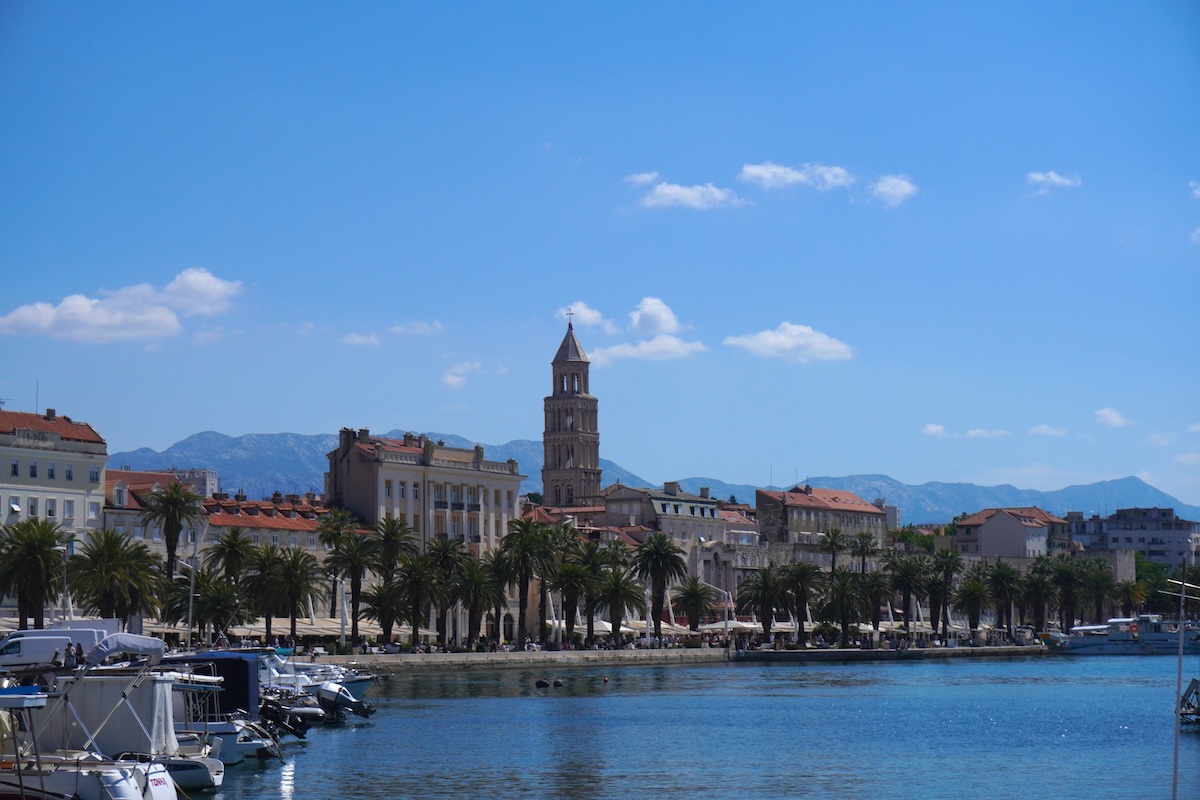
The Riva has looked this way for two centuries, dating back to the time of Napoleon, more specifically, under the French rule of Marshal Marmont, and has been renovated several times since then.
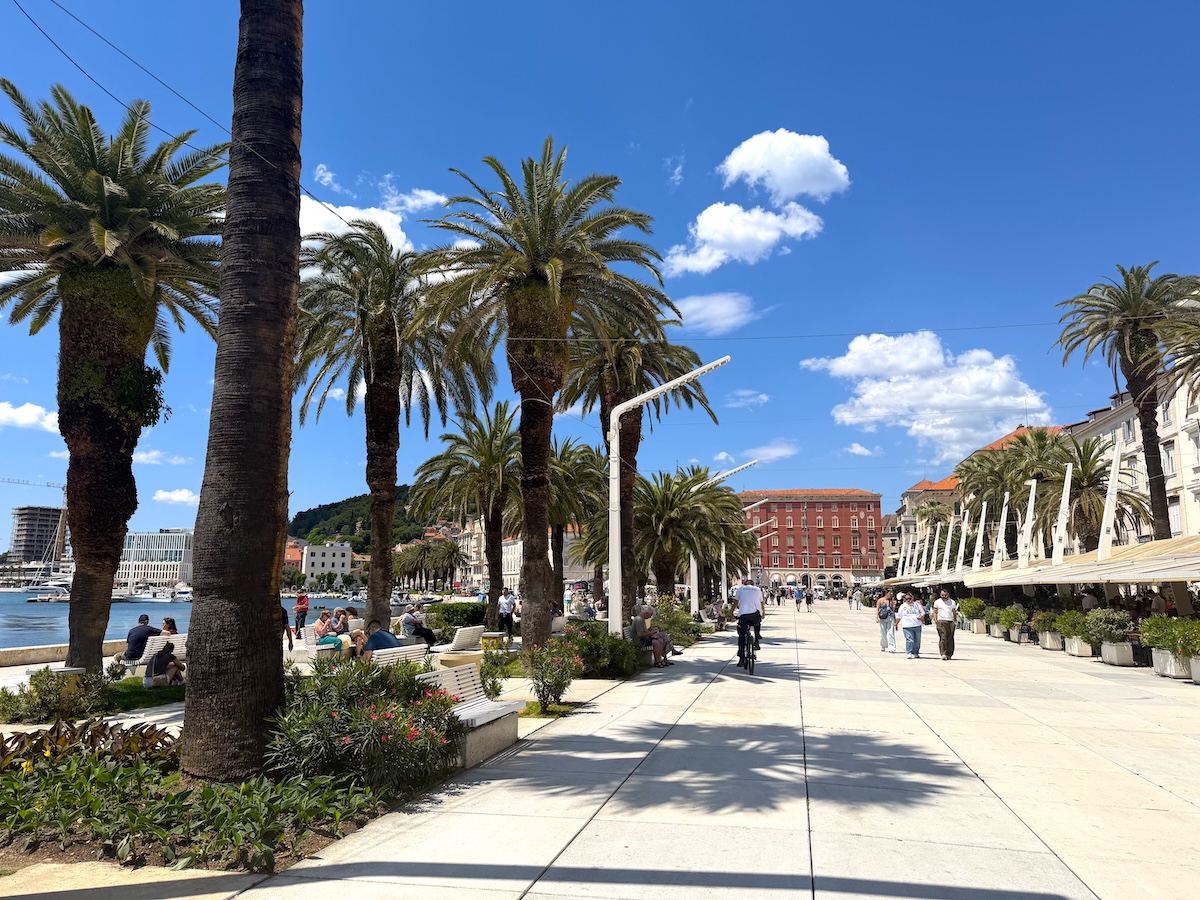
What remains in its original location is the palace’s south facade, with the entrance to the Subterranean Chambers, which has faced the sea for over 1,700 years. The rest of the surroundings were added later: to the west, the monastery and church of St. Francis and the 19th-century Bajamonti Dešković Palace, and at the eastern end, the Harbor Master’s Office. The palm trees lining it are much younger than the promenade itself : according to the city’s official guide, they are about 100 years old.
The Riva is also the city’s main stage: this is where the carnival is held, where concerts and events take place, and where Split welcomes its athletes after major victories. It has done so for tennis player Goran Ivanišević, the Hajduk soccer team and the Jugoplastika basketball team, as well as Olympic medalists, such as those from Paris 2024, including judoka Barbara Matić, who won gold. For decades, it has also been the site of political rallies. Its big day is May 7, Sudamja, the feast of St. Duje and City Day, when the saint’s relics are carried in procession from the cathedral to an altar set up on the Riva. And yes, this is the same St. Duje whom, according to tradition, Diocletian had executed, so the procession ends in front of the palace of the very man who ordered his death.
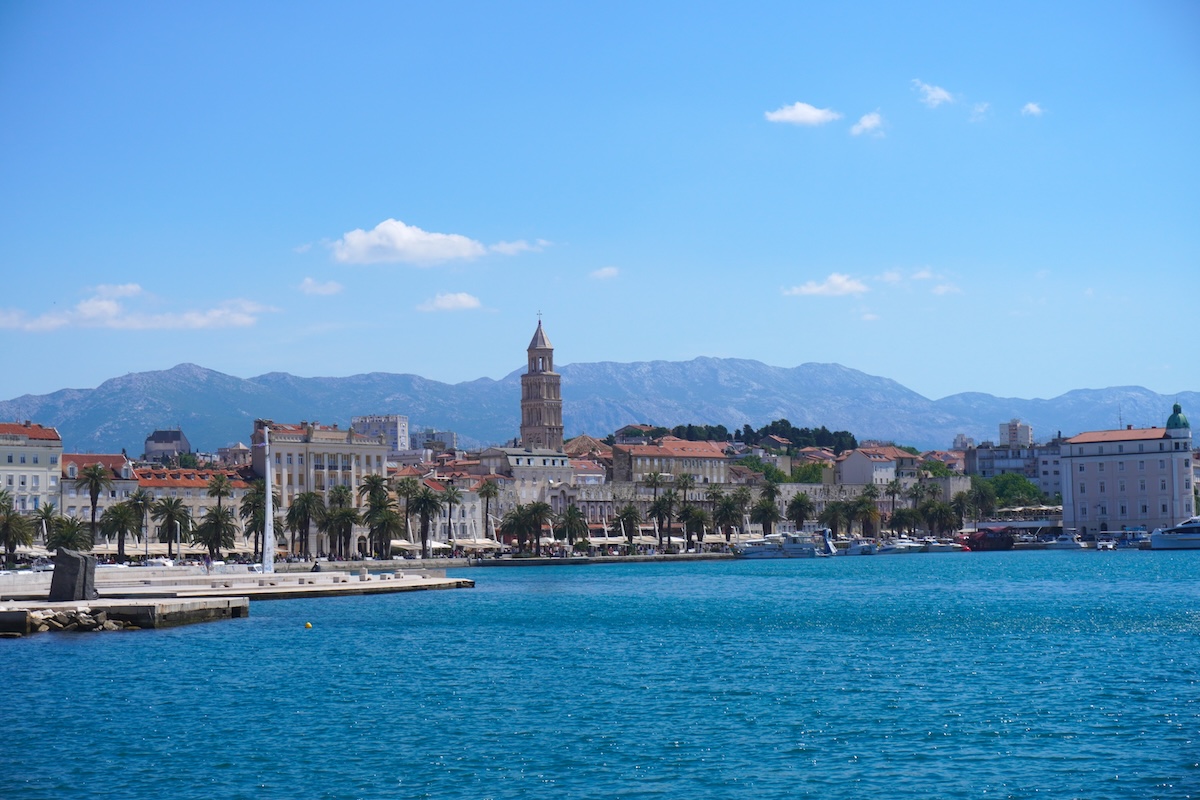
If you continue to the end of the Riva, the waterfront promenade continues along Split’s Olympic Promenade, which we’ll discuss later in the guide, in the section “Things to see and do outside Split’s historic center.”
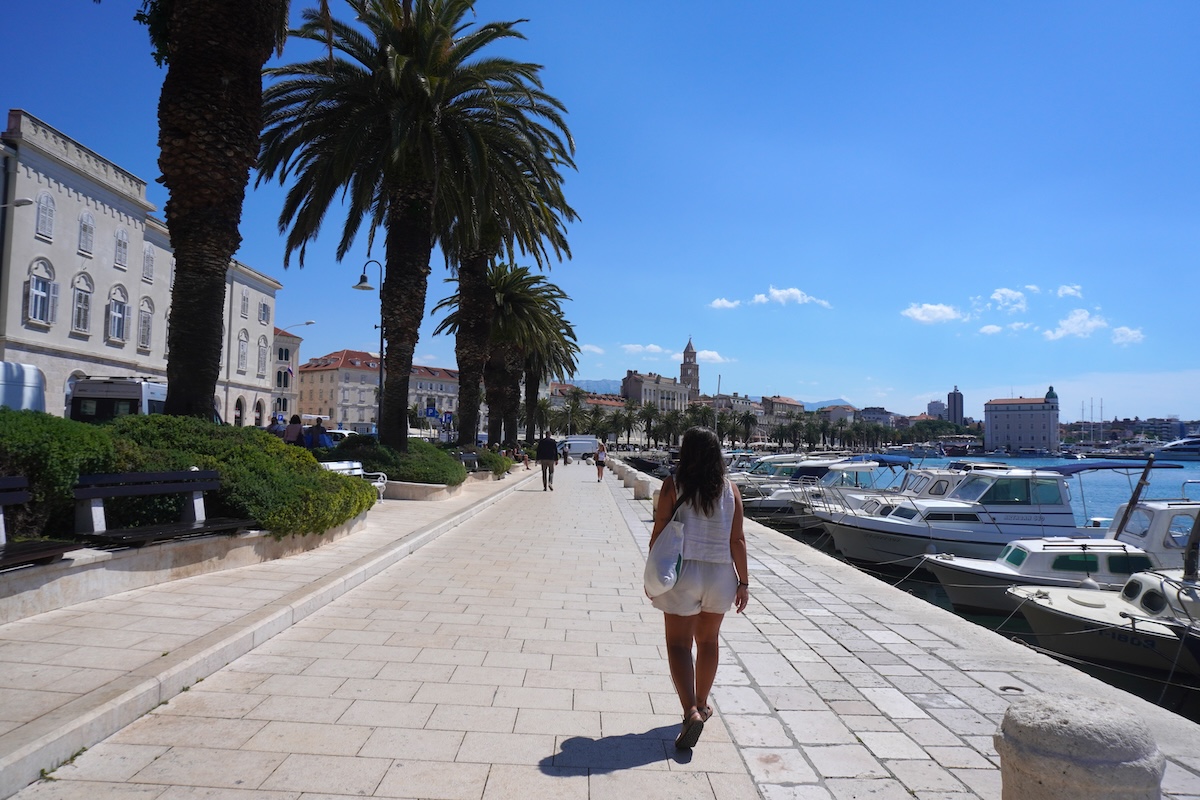
An important tip: the Riva is for strolling. In our opinion, it’s a pleasant place to walk and enjoy the view of the Adriatic, but not for sitting at one of its outdoor cafes, because most of the establishments are real tourist traps. You’ll rarely see a local sitting at one of those outdoor tables, but you will see them enjoying a stroll along the Riva, probably with an ice cream in hand.
Statue of Gregory of Nin
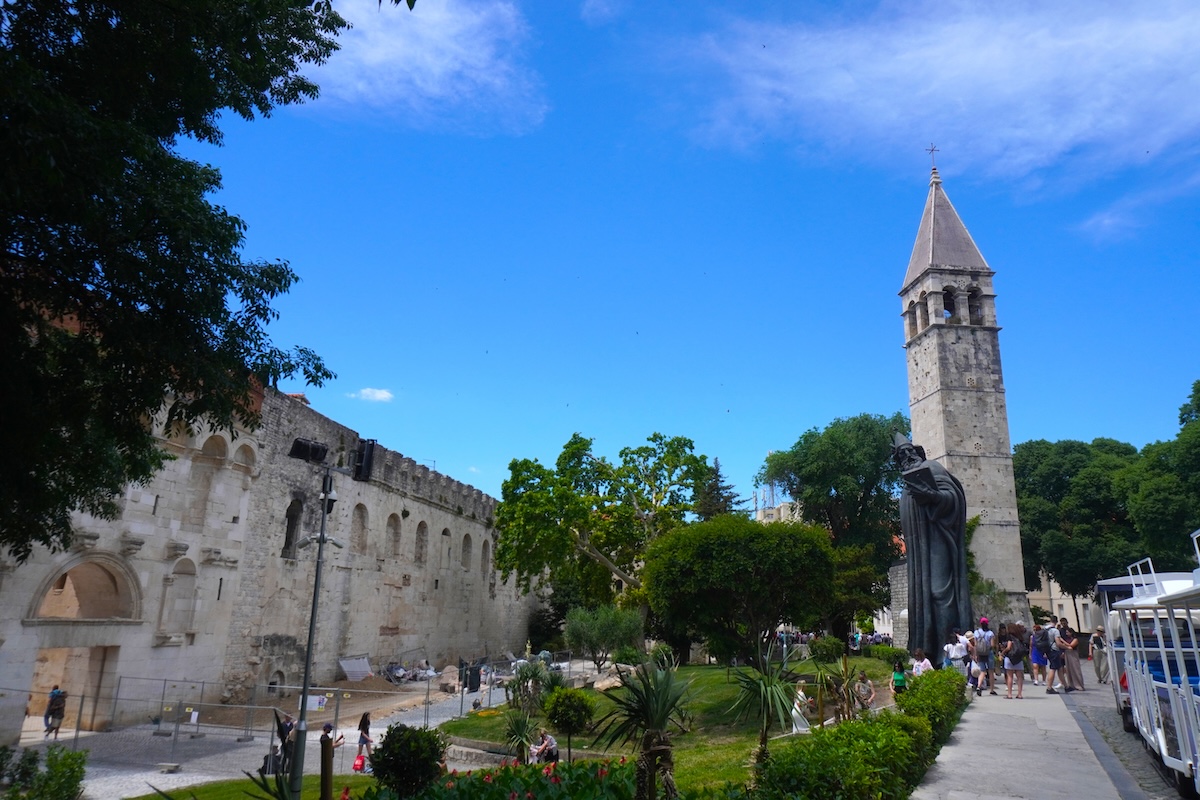
Next to the Golden Gate, outside the city walls, stands an 8.5-meter-tall, 13-metric-ton bronze giant: the Statue of Gregory of Nin, the work of sculptor Ivan Meštrović.
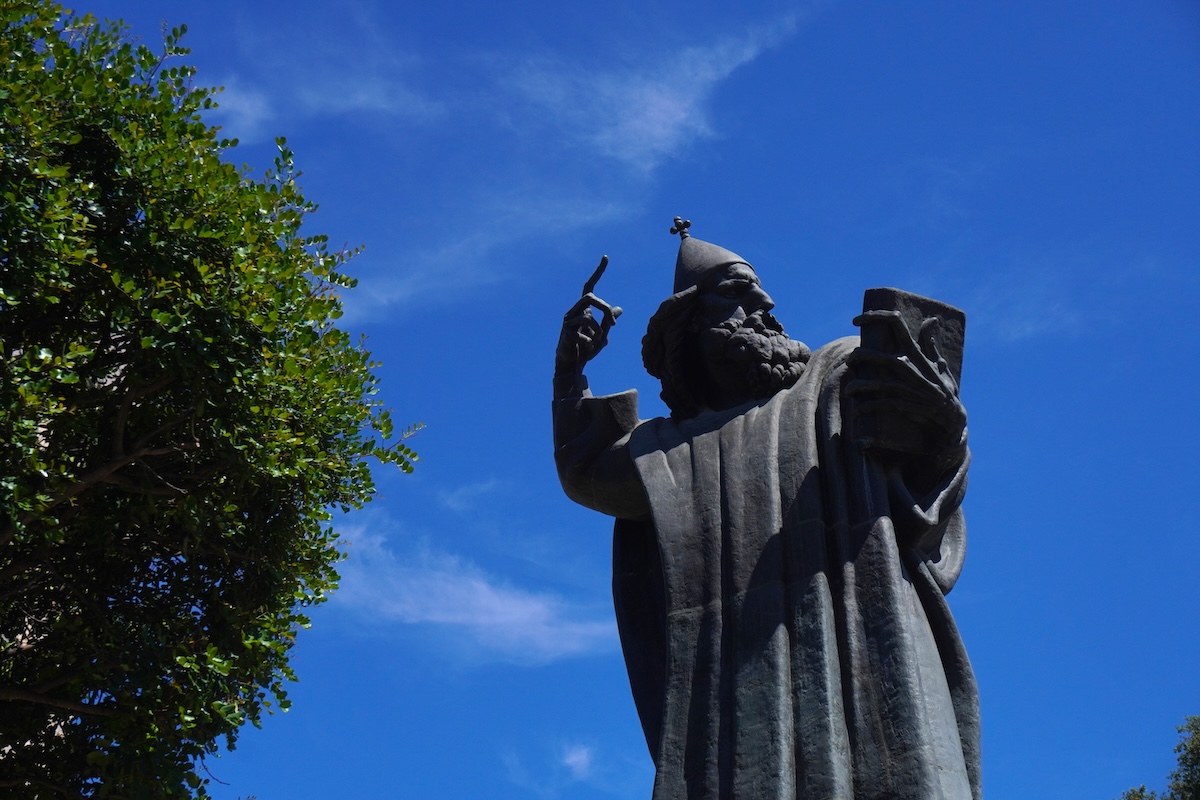
Gregory was a 10th-century Croatian bishop remembered as a champion of the use of the Croatian language in the liturgy, at a time when the Church mandated Latin. Ironically, it was in Split that he lost the battle: following the councils held here in the 920s, his diocese of Nin was abolished. So there is a certain historical justice in the fact that his monument stands, precisely, in Split.
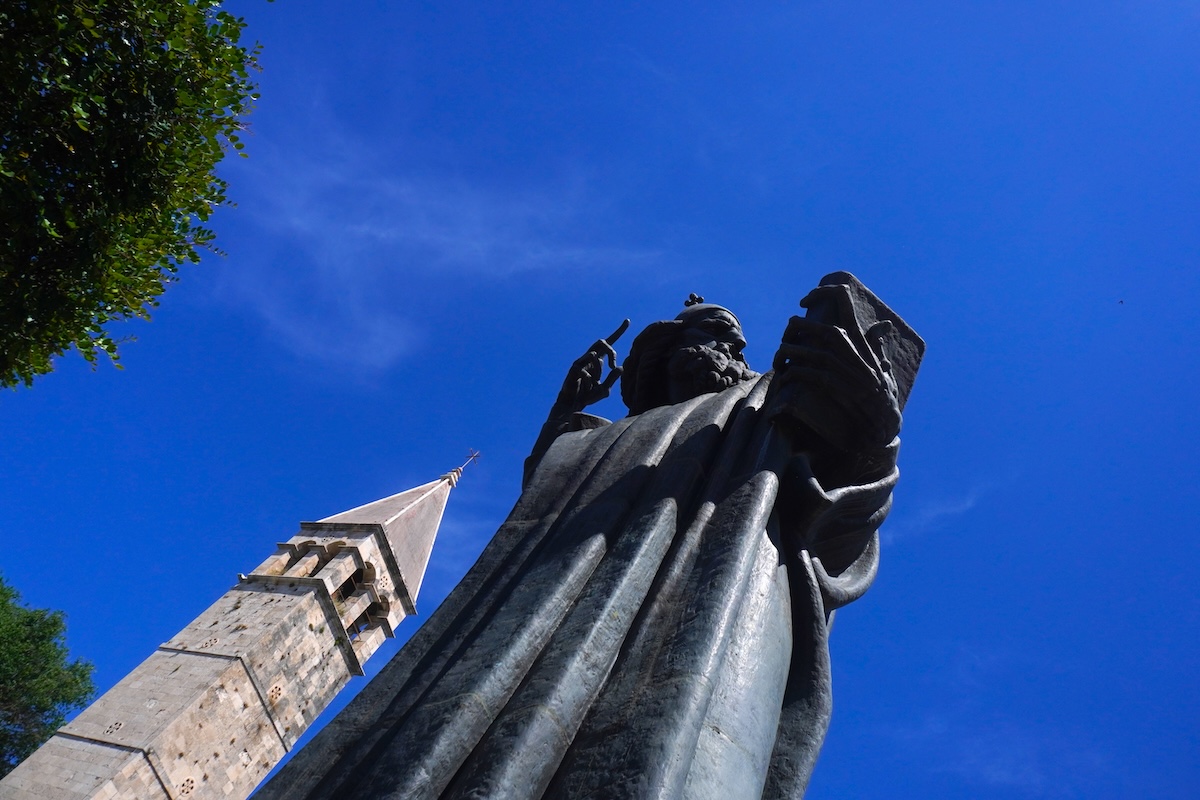
The statue was erected in 1929 in the Peristyle, the location Meštrović himself had chosen for it, and its installation was one of the greatest public controversies in Split’s history. The two leading figures in heritage conservation, Frane Bulić and Ljubo Karaman, opposed it and called it a “cultural scandal of European proportions.” Bulić even wrote to King Alexander in an attempt to stop it, and both men declined the mayor’s invitation to the unveiling. In 1941, during the Italian Fascist occupation, it was removed from the Peristyle, and after the war, it was re-erected in 1954 at its current location, outside the palace, in front of the Golden Gate.
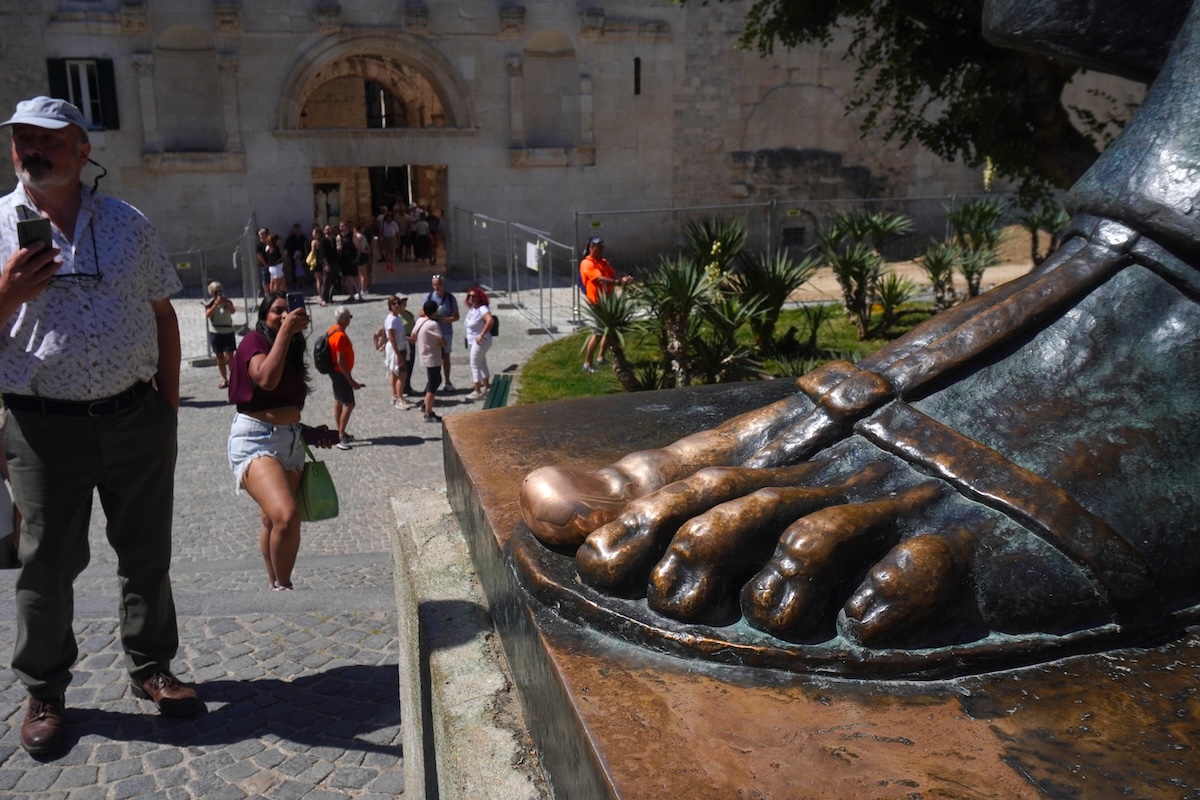
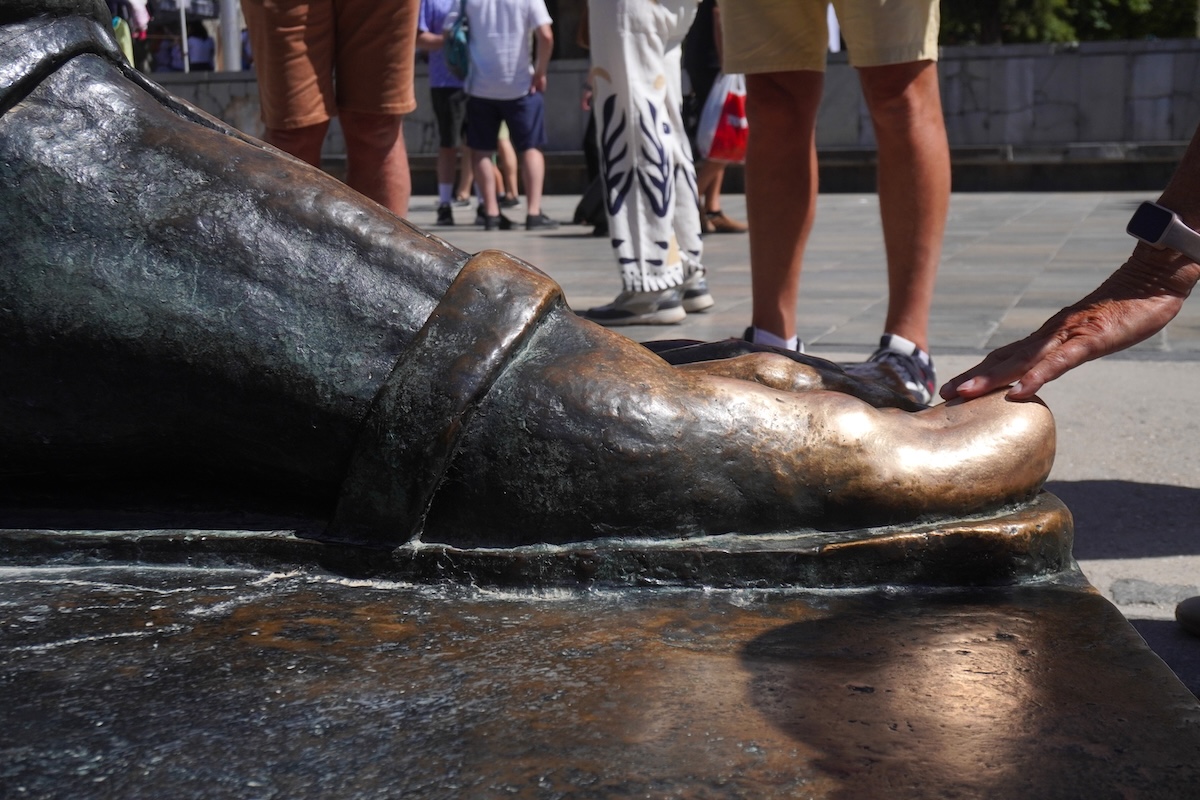
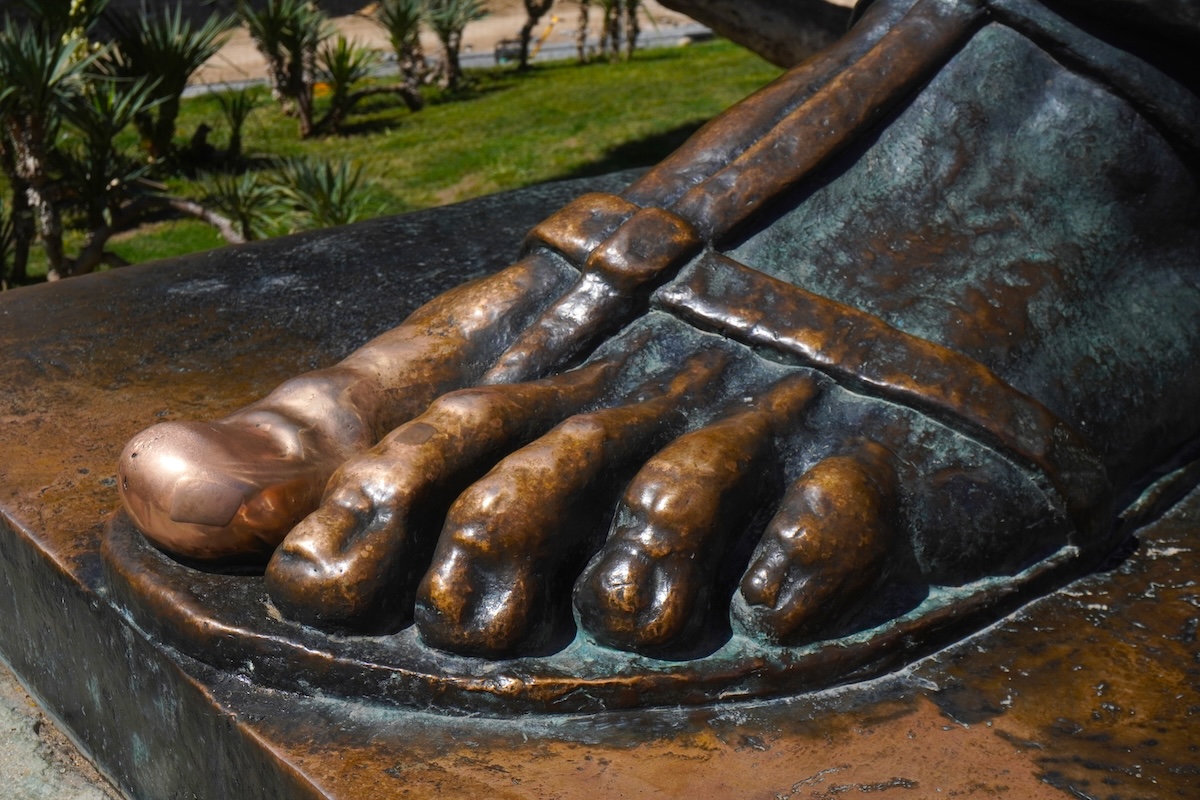
Meštrović created two other versions of the bishop, in Nin and Varaždin, and all three follow the same tradition: it is said that rubbing the big toe of his left foot brings good luck, and we’ve been told that it also ensures you’ll return to Split. That’s why you’ll see it shiny and polished, and, depending on the time of day, even people lining up to touch it.
St. Arnir’s Bell Tower
Very close to the statue of Gregory of Nin, you’ll see the St. Arnir Bell Tower, a bell tower without a church. Adjacent to the palace’s northern wall stood for centuries one of Split’s oldest convents, that of Saint Euphemia, which today is known almost exclusively for this bell tower. First, in the 11th century, the pre-Romanesque church of Saint Euphemia was built, and later, during the reign of Croatian King Petar Krešimir IV, a convent of Benedictine nuns was founded here. Over the years, it came to be known as St. Arnir, after the archbishop of Split who was buried in its church after being stoned to death in 1180 by members of the powerful Croatian Kačić family, with whom he was in conflict over Church lands.
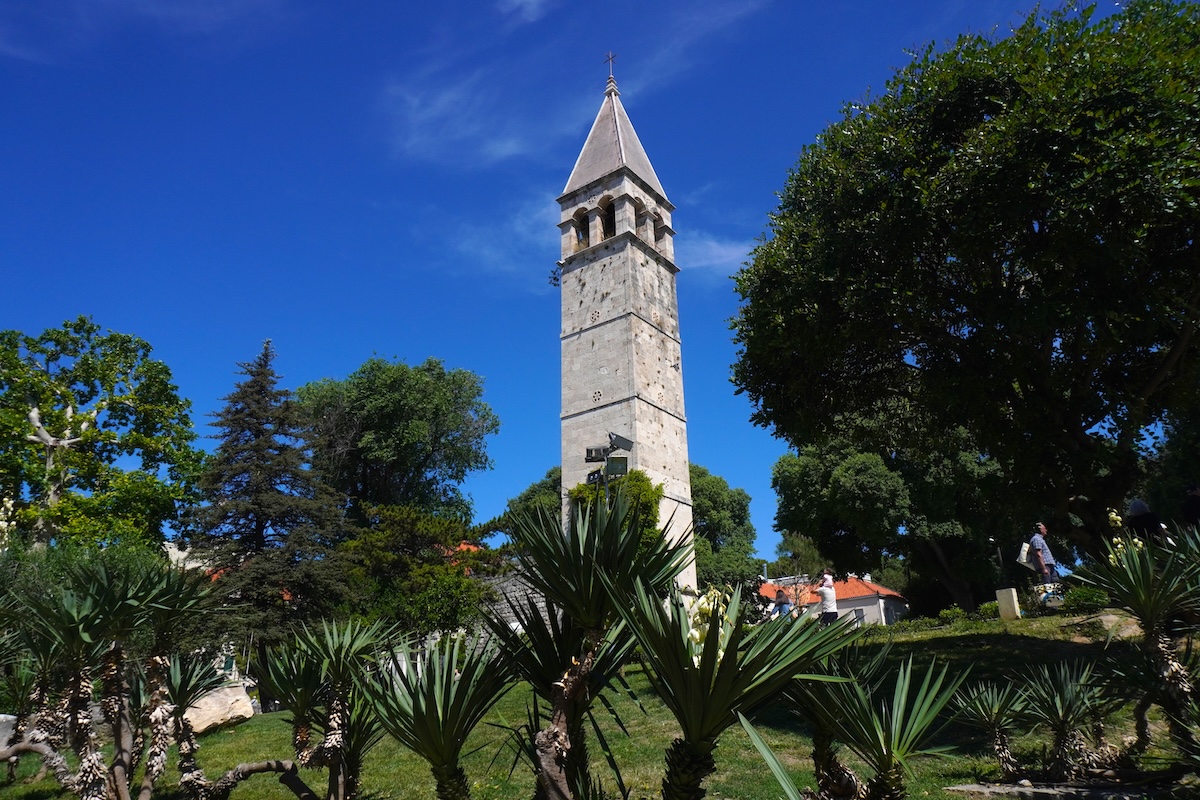
In the early 19th century, under French administration, the convent was closed and converted into a military hospital. Toward the end of that century, a fire destroyed much of the complex, and after World War II, the old hospital was demolished. Two structures were spared: the Chapel of Blessed Arnir, where in 1444 the sculptor Juraj Dalmatinac left his mark with a relief-adorned altar, and the bell tower, built in the 17th century, which is the one you see today. Across the street, in the park, you can see the remains of the old Church of St. Euphemia. At Christmas, the chapel becomes one of the city’s most beautiful nativity scenes and a place of pilgrimage for the people of Split.
Split Museum of Fine Arts (Galerija umjetnina Split)
The Museum of Fine Arts is Split’s main art museum, and we at Randomtrip absolutely loved it. It’s very close to the tourist bustle of the Golden Gate, and stepping inside the museum is like entering a bubble of peace.
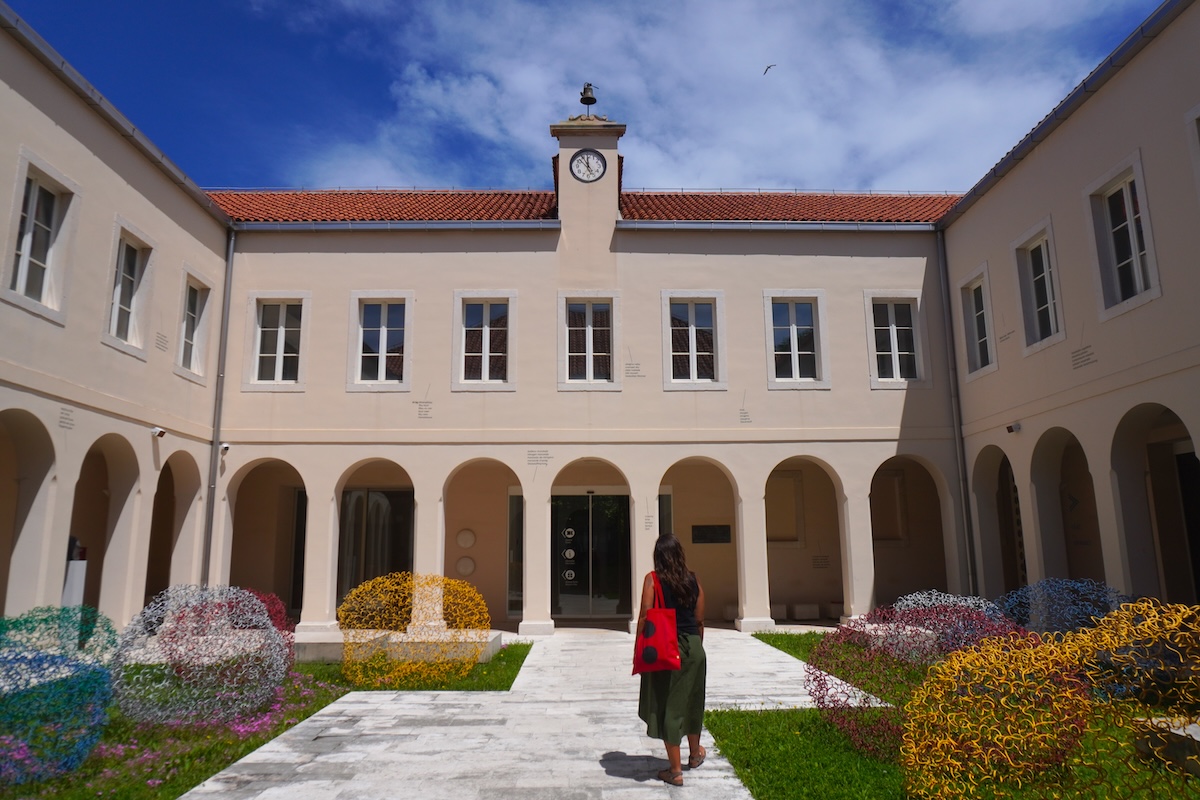
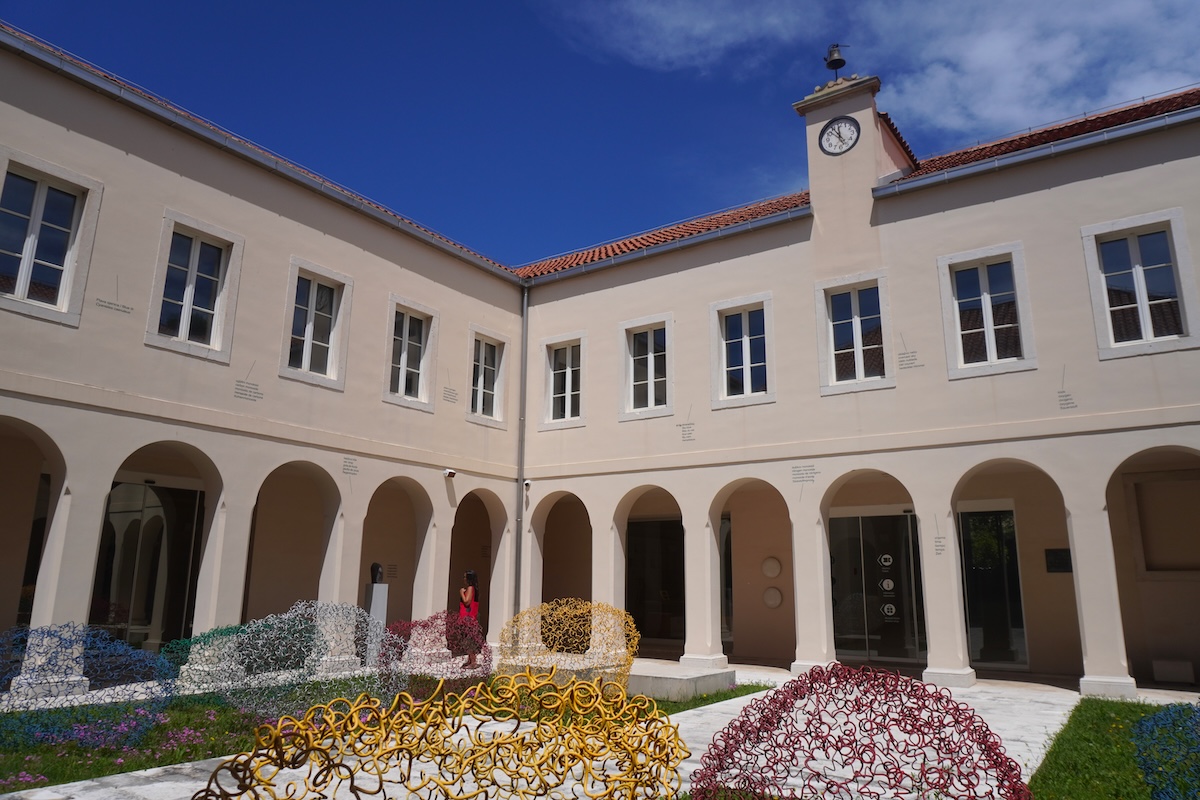
The museum building is a former hospital dating back to 1792, located next to the palace’s northern wall. The museum moved into this building in 2009, but it is actually older than its current location: it first opened to the public in 1931, in a different building.
Its collection brings together thousands of works, ranging from the 14th century to the present day. The tour begins on the first floor with the Old Masters and continues with Croatian Modernism and High Modernism. The ground floor is dedicated to Croatian and local contemporary art, and, along with the Modernist works, this was our favorite part of the visit.
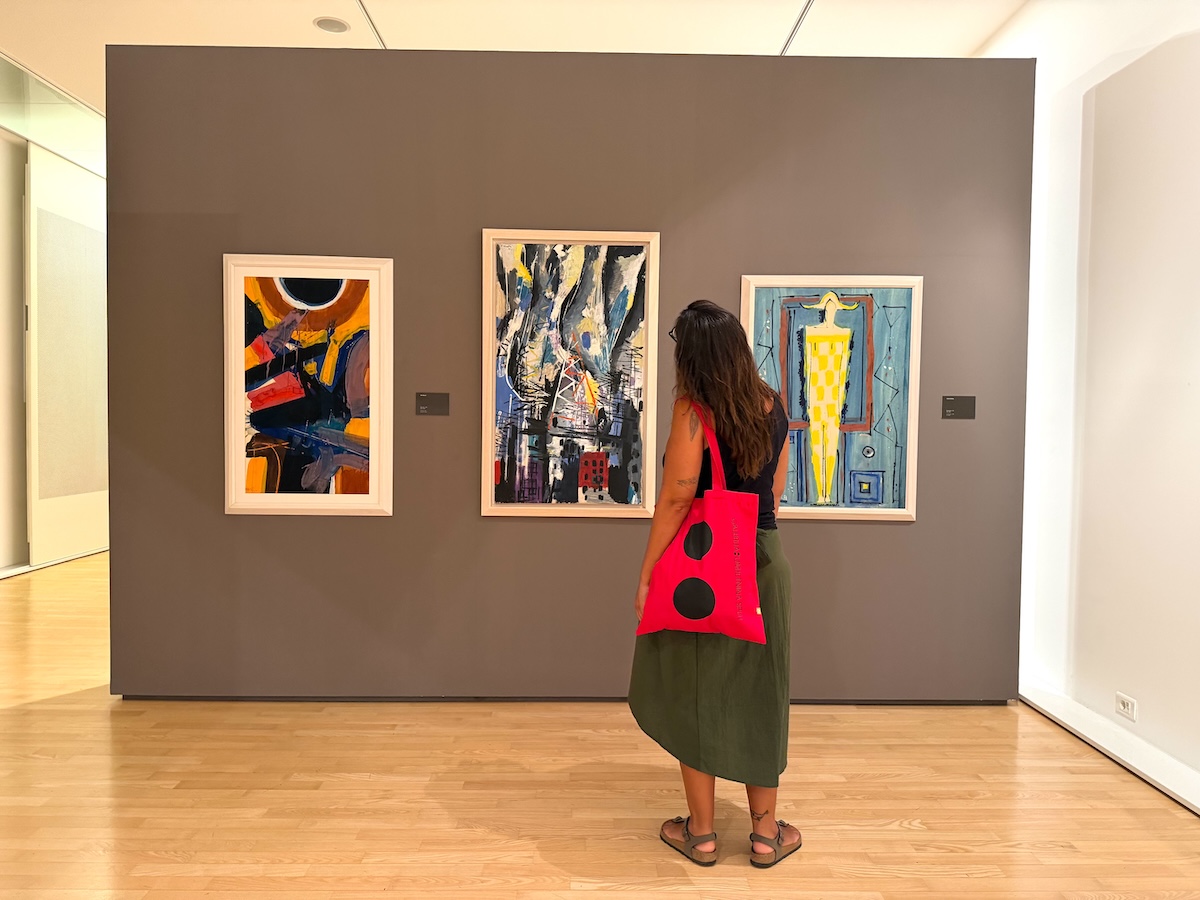
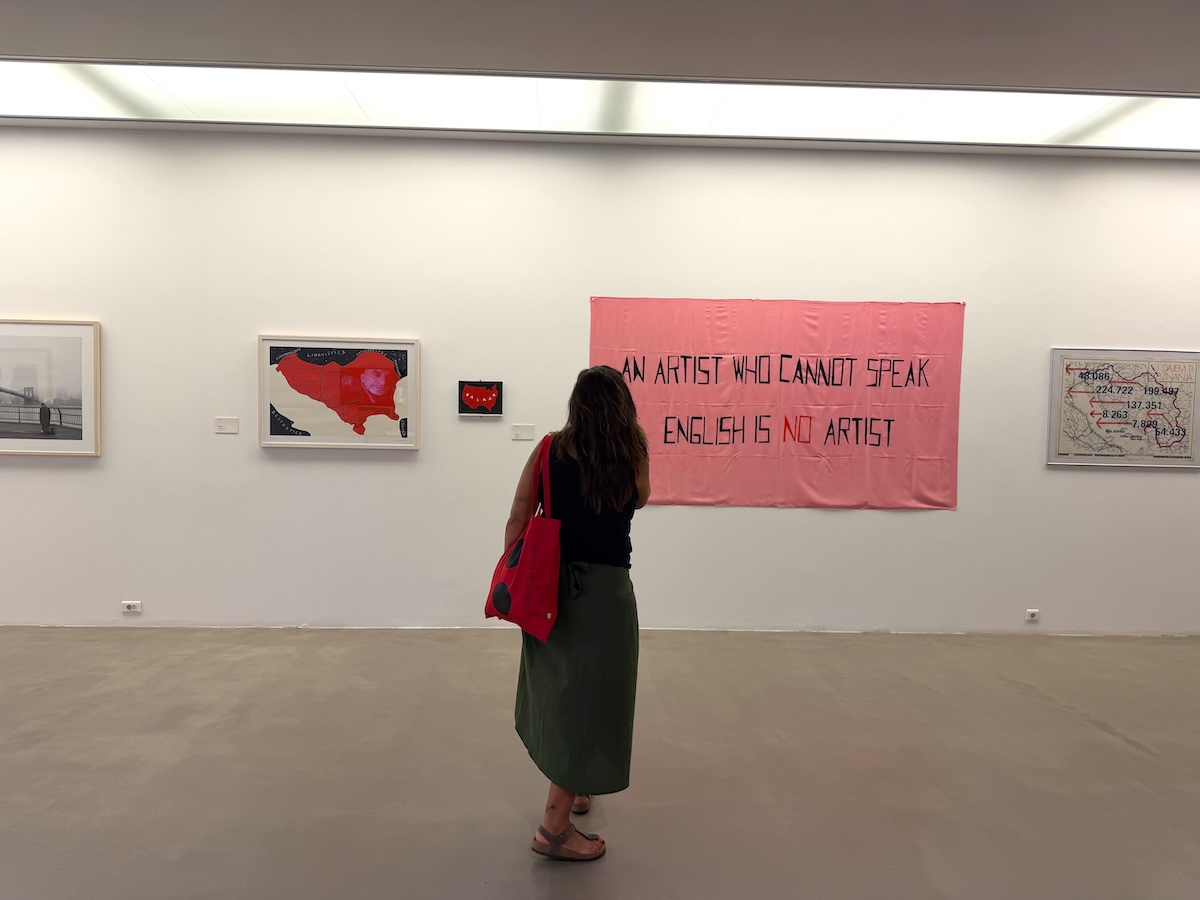
Among the works highlighted by the museum itself are Albrecht Dürer’s engraving Melencolia (1514), a polyptych attributed to Paolo Veneziano (c. 1345), considered the most important Venetian painter of the 14th century, and the Allegory of the Four Seasons by the Czech Baroque painter Peter Brandl. In modern art, it houses 15 works by Vlaho Bukovac, 24 by Mato Celestin Medović, and more than 45 paintings and drawings by Emanuel Vidović, as well as works by foreign artists such as Egon Schiele and Georg Grosz. According to the museum, the works Bukovac painted in Split between 1884 and 1885 mark the beginning of modern Croatian art.
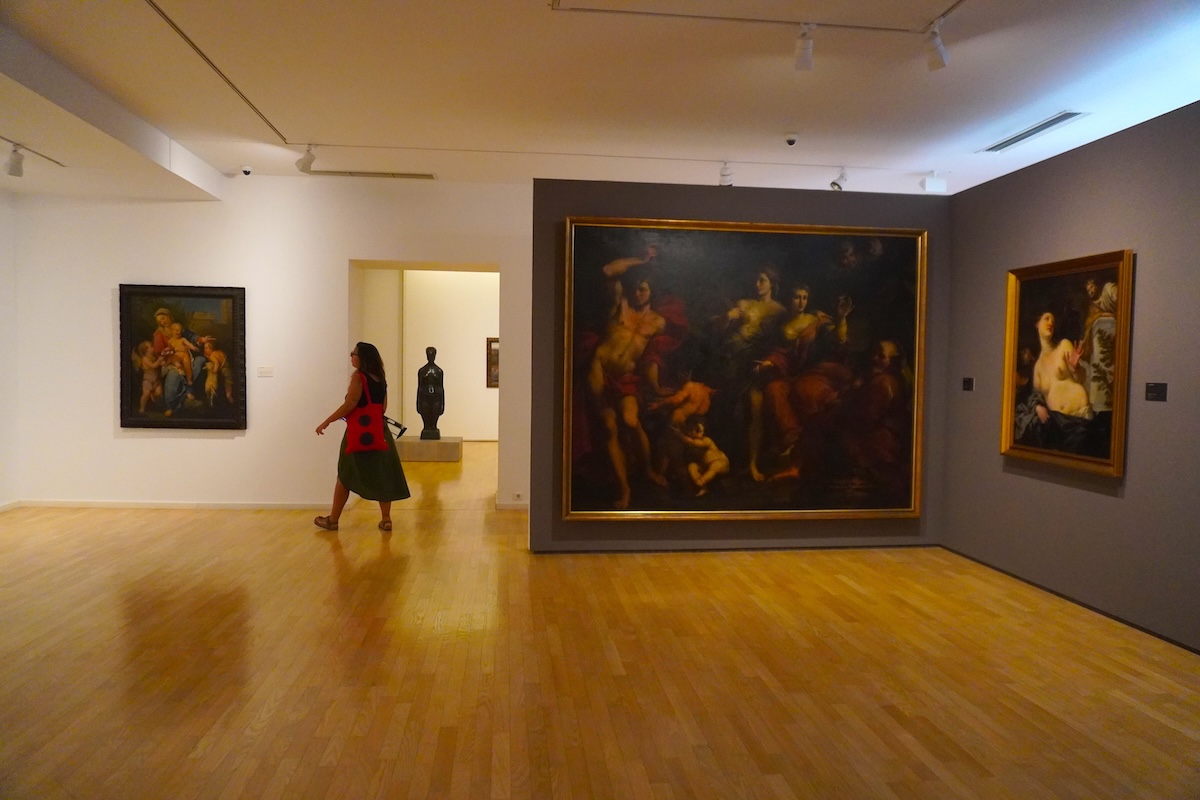
Admission: €5 per exhibition (permanent and temporary), €3 for schoolchildren, students, and seniors, and €3 with the Split Card. Free admission for children under 7, visual artists, students of fine arts and art history, and members of ICOM, CIMAM, and AICA.
Hours: Open Tuesday through Friday from 10:00 a.m. to 6:00 p.m. and Saturdays and Sundays mornings only, from 10:00 a.m. to 2:00 p.m. Closed Mondays and on holidays.
Game of Thrones in Split: Museum and Tour
As is well known to all Game of Thrones fans, Split was one of the cities that served as a filming location for the HBO series: starting in the fourth season, it stood in for Meereen, one of the cities conquered by Daenerys. The streets and interior scenes were filmed at Diocletian’s Palace, and the Klis Fortress (which we discuss later in this guide, in the “Around Split” section) served as the city walls and exterior locations.
Game of Thrones Museum
If you want to delve deeper into the series’ filming, the Game of Thrones Museum features five themed galleries, starting with Meereen and continuing through locations such as King’s Landing and Winterfell, with replicas of weapons and costumes, life-size figures, and scale models of cities from the series. You can book your ticket here.
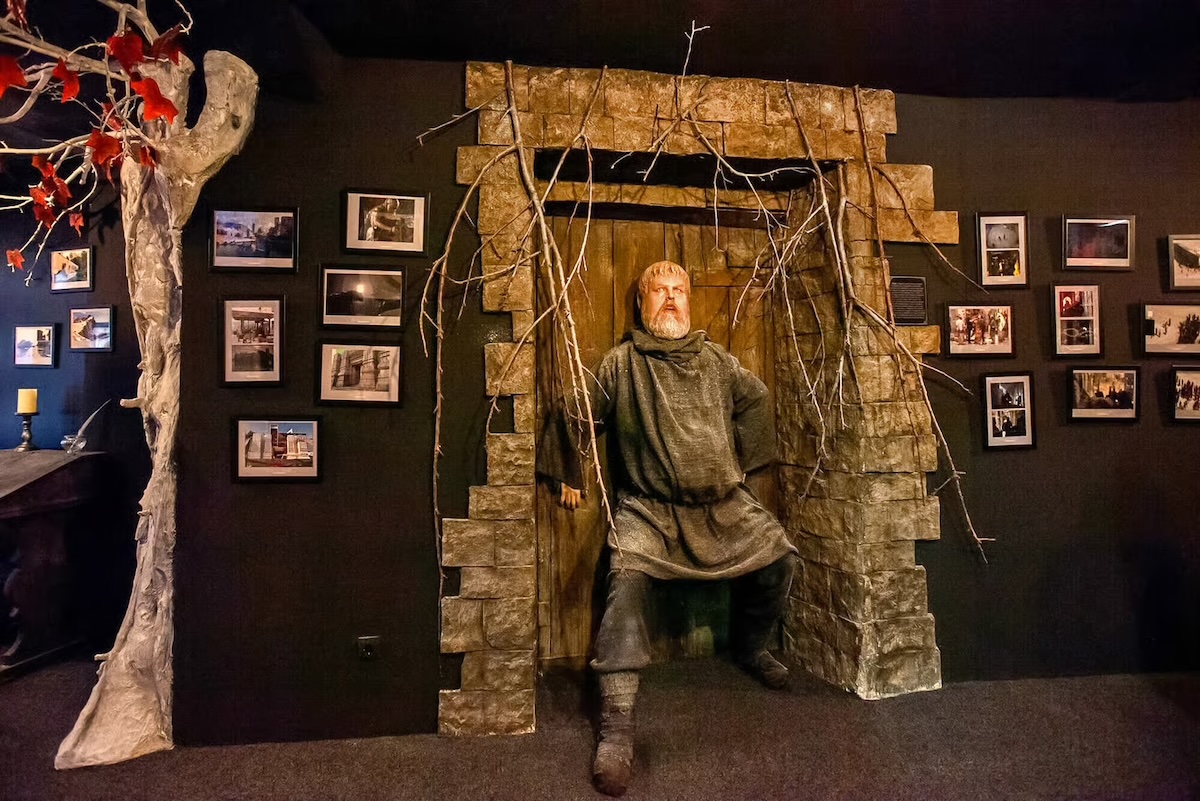
Admission: €15. 10% discount with the Split Card. Hours: The museum is open Monday through Saturday from 10:00 a.m. to 5:00 p.m. (though it closes later during peak season-it’s best to check before you go). Closed on Sundays.
Game of Thrones Tour
If you prefer, you can take a guided tour of the Game of Thrones filming locations in Split, such as this one from GetYourGuide or this one from Civitatis. Many of these locations are places we’ve already covered in this guide: the palace’s cellars (Substructures) where Daenerys kept her dragons, the Vestibule, and even the Golden Gate, which in the series serves as the main entrance to Meereen, but with explanations of all of them from a Game of Thrones perspective .
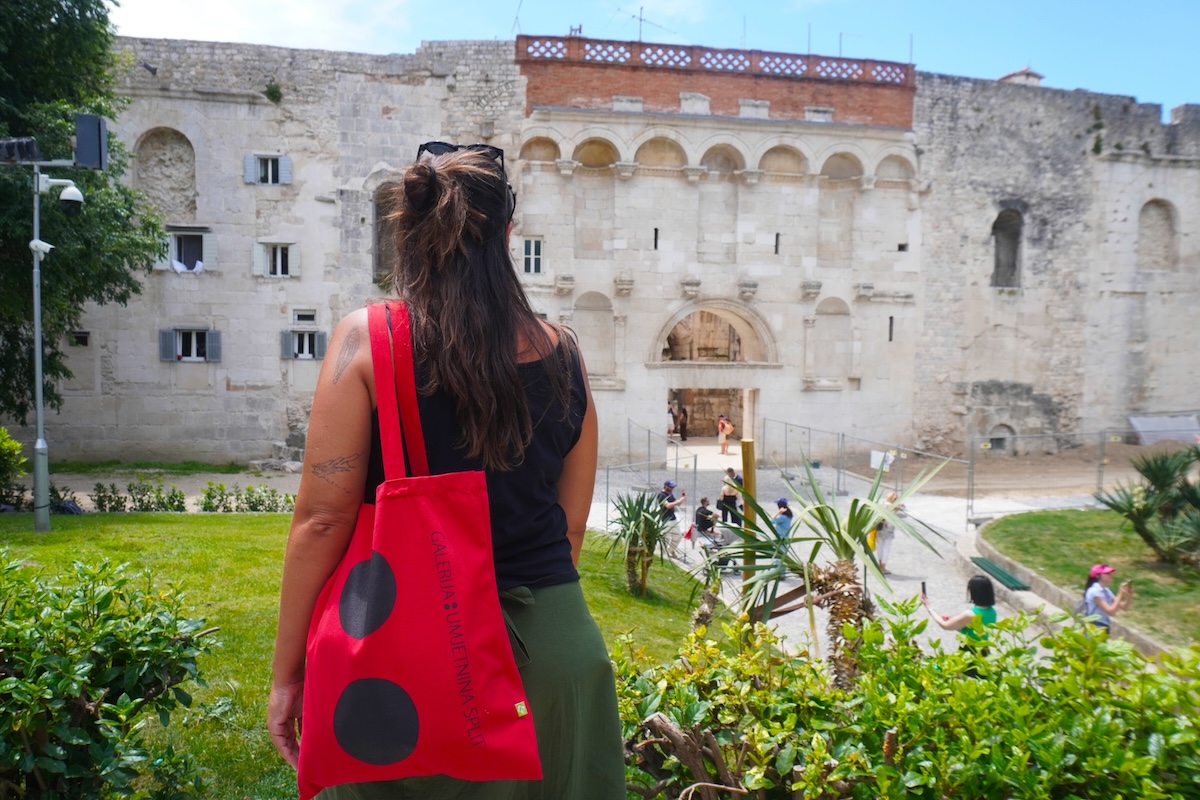

The tour lasts about an hour and a half, departs next to the statue of Gregory of Nin, is conducted in English or French, includes admission to the Sub-structures, and costs starting at €39 per person.
Froggyland Museum
On the same street as the Museum of Fine Arts, just a few steps further down, you’ll find the curious Froggyland Museum, a museum that can be summed up in one sentence: 507 stuffed frogs arranged as if they were people. They’re spread across 21 scenes depicting everyday life from a century ago. There are frogs in a blacksmith’s shop, a carpenter’s workshop, a tailor’s shop, a circus, playing cards, and in a classroom, complete with a frog teacher. If taxidermy isn’t your thing, this museum isn’t for you.
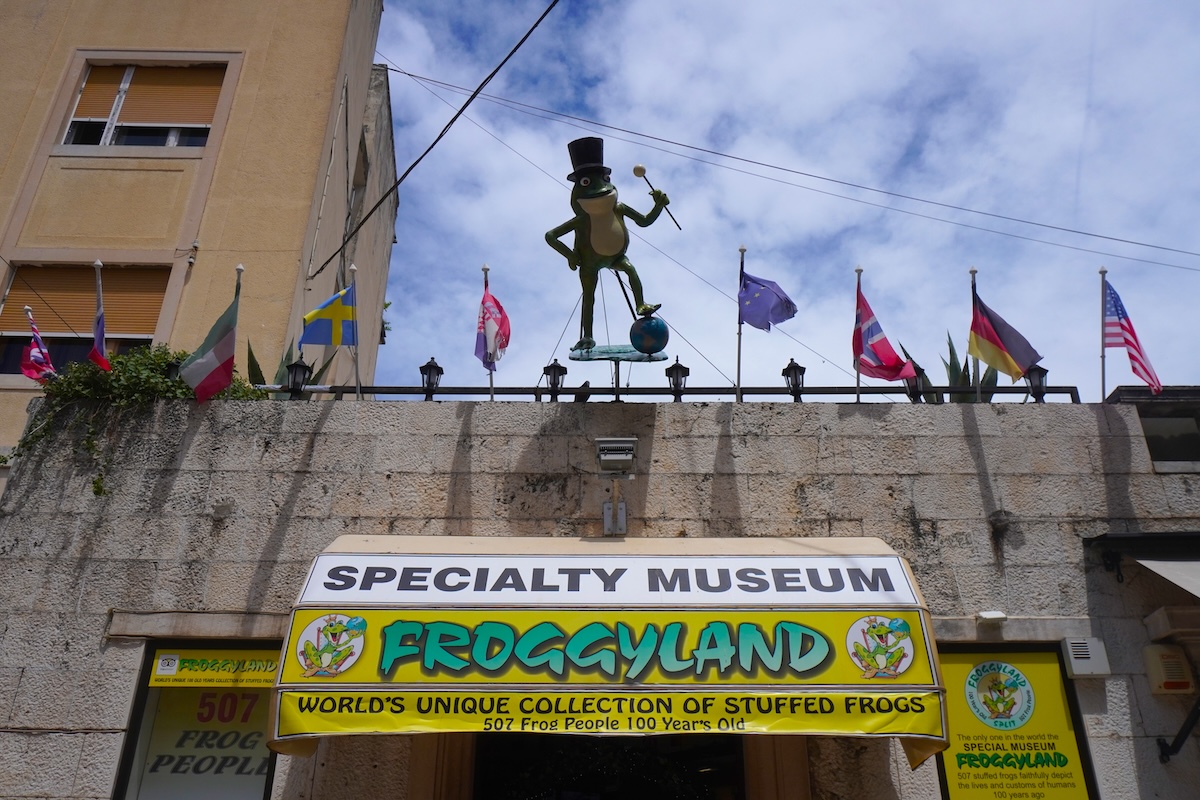
The frogs were prepared between 1910 and 1920 by Ferenc Mere, a taxidermist of Hungarian origin, and the museum takes pride in this: he stuffed them through the mouth, without making any incisions in the body, a very labor-intensive process that took him ten years. At Randomtrip, we didn’t make it past the reception desk, but we read that there were originally about 1,000 frogs and 507 remain. It also says that this is the largest collection of its kind in the world, surpassing those of other taxidermists such as Walter Potter (79 frogs) or François Perrier (108). According to the story, the collection ended up in Serbia, where it was found by the parents of the current owner, Ivan Medvešek. They brought it to Split, and today the museum remains in the family’s hands. A tip from the museum itself: take note of the number on each display case and look it up in the text at the back, as it describes the scene.
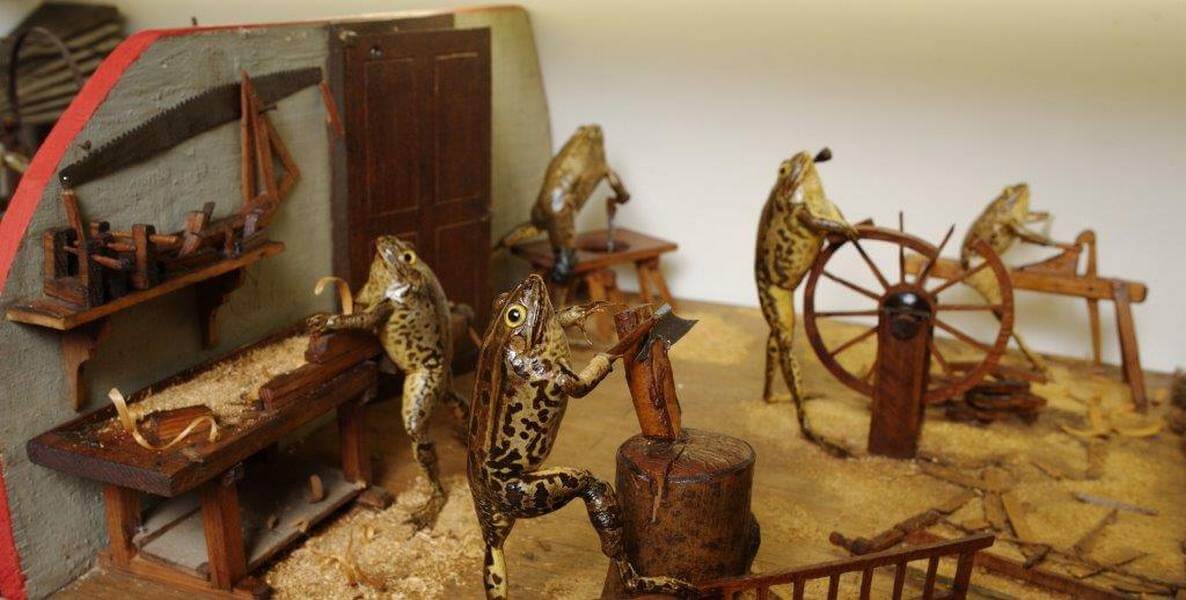
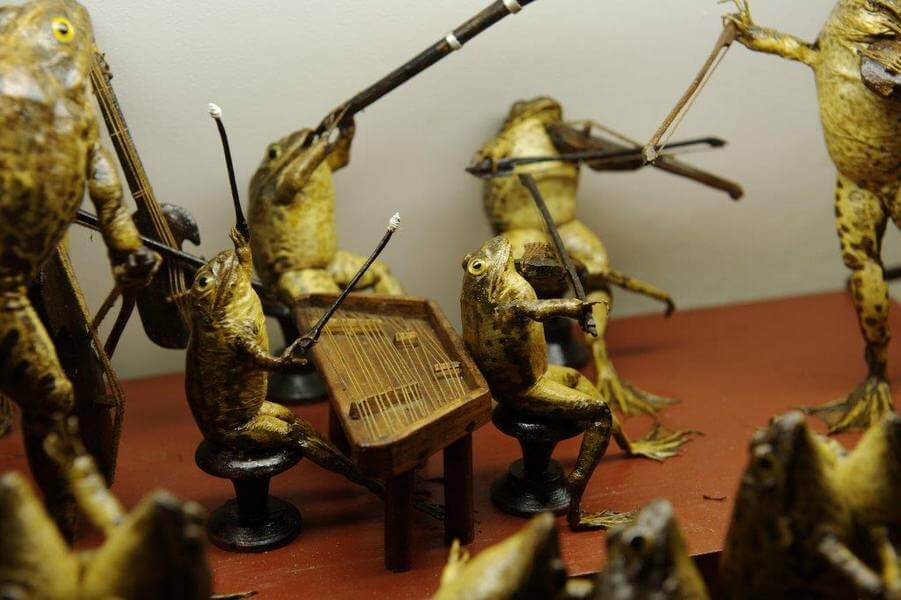
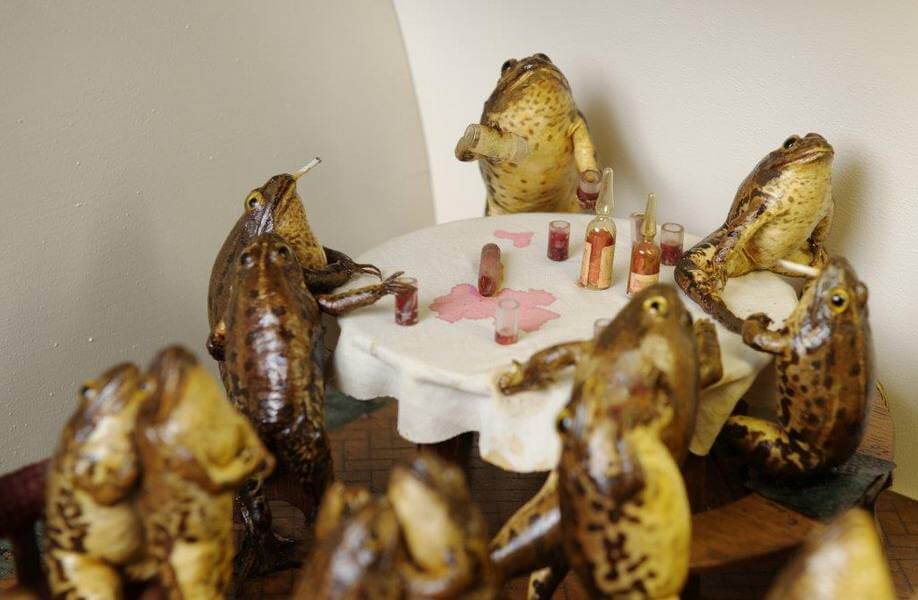
Admission: €15 if you pay in cash and €17 if you pay by card. There is no discount with the Split Card. Children under 5 get in free, and students with a valid ID can enter at a reduced rate. Hours: Open from 10:00 a.m. to 10:00 p.m.
Croatian National Theater in Split (Hrvatsko narodno kazalište Split)
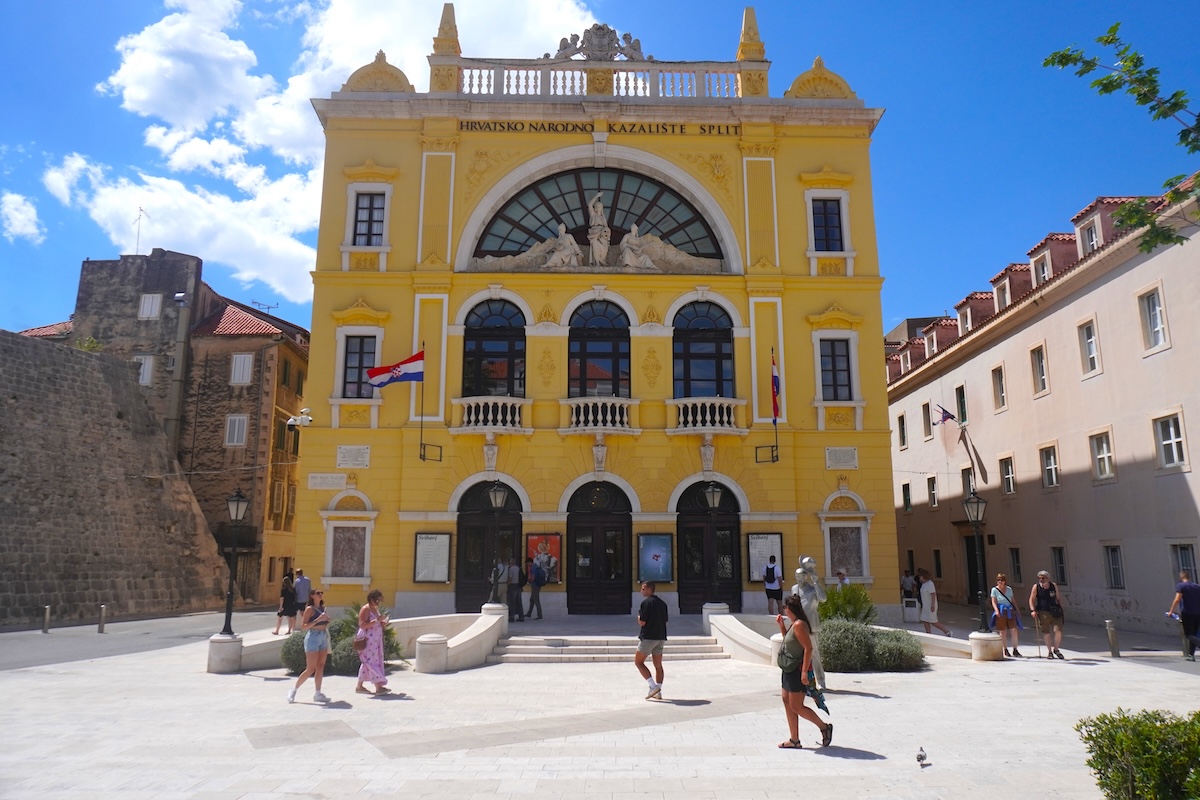
The Croatian National Theater in Split (not to be confused with its namesake in the country’s capital, Zagreb) is located in a square just a few minutes’ walk from the Peristyle. It opened in 1893 as the Municipal Theater and was designed by architects Emilio Vecchietti and Ante Bezić. It had a capacity of about 1,000 people and was the largest theater in southeastern Europe when it was completed. In February 1970, a fire almost completely destroyed the building, which reopened in 1980.
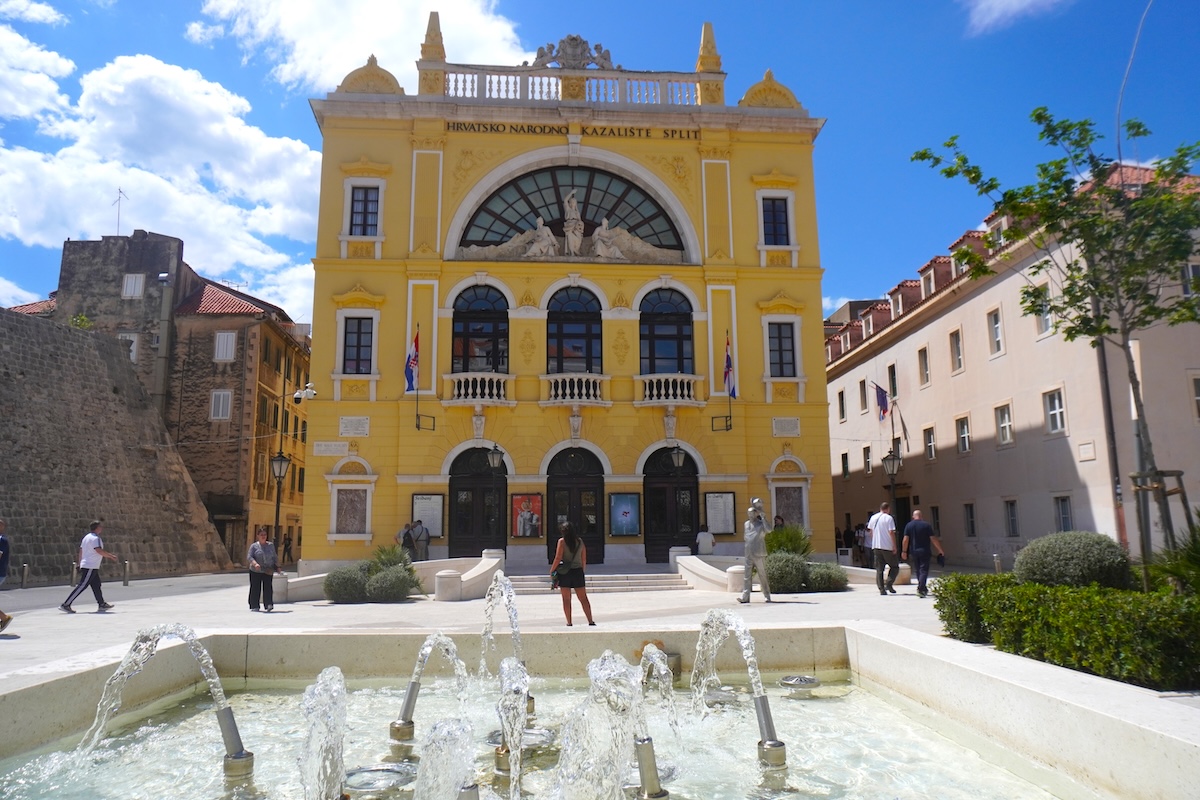
In front of the theater’s yellow facade stands a silver-plated metal sculpture of a man tipping his hat in greeting. It is the monument to Gajo Bulat, unveiled in 2021. A plaque on the ground identifies him as a leader of the Croatian National Revival in Split and mayor of the city from 1885 to 1893, the year the theater opened.
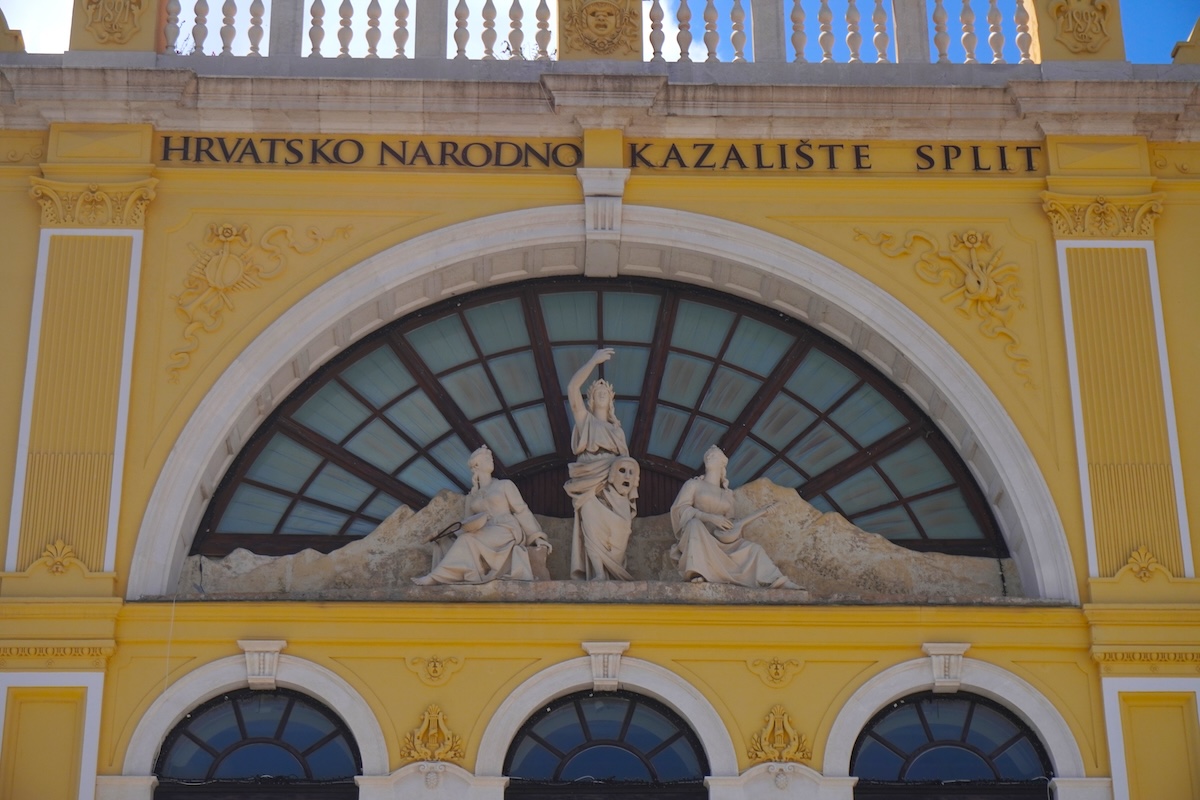
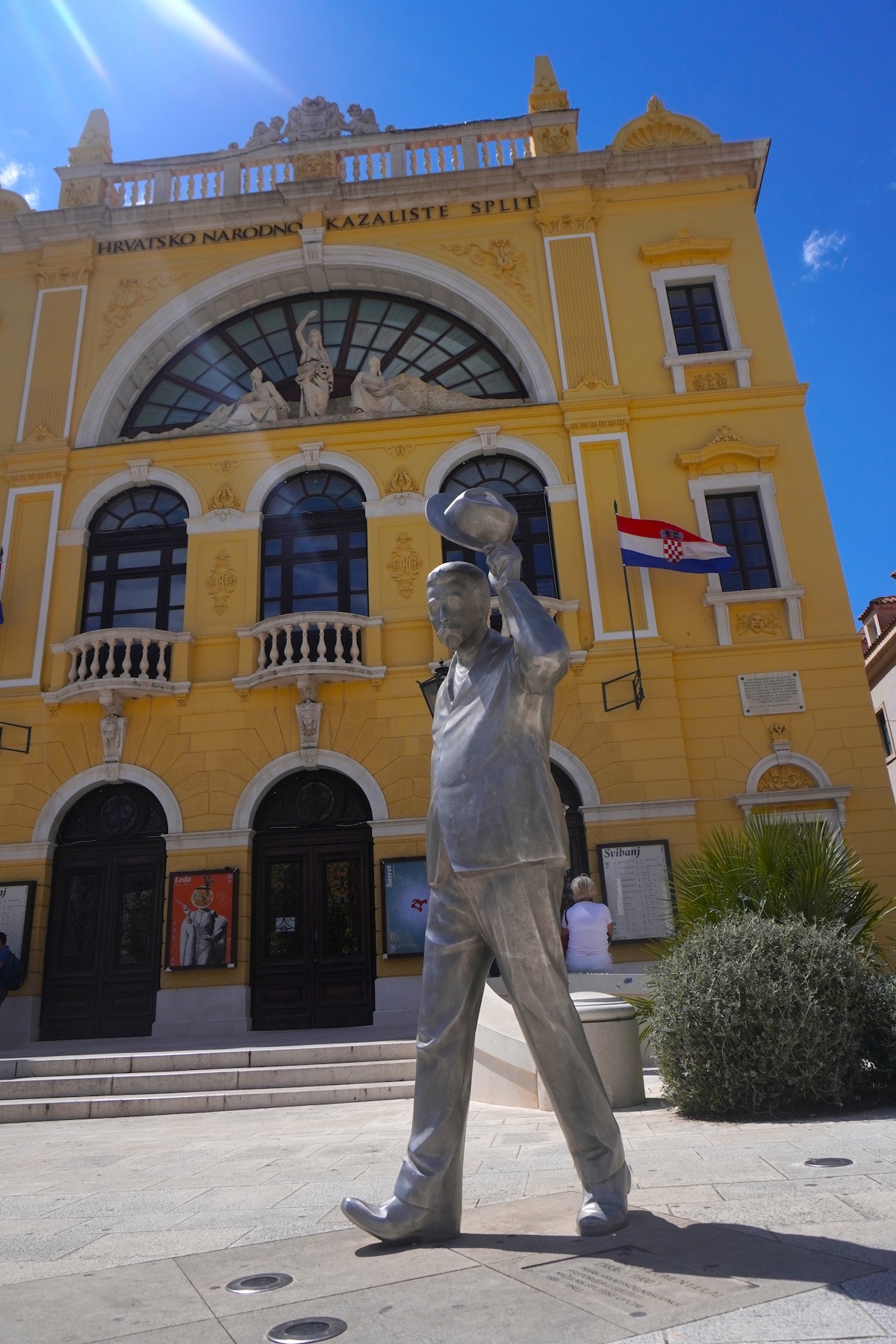
Currently, the theater hosts about 300 performances a year, including opera, ballet, concerts, and plays. The performances are in Croatian, so if you don’t speak Croatian fluently, opera, ballet, and concerts would be the most accessible options. It also organizes the Split Summer Festival ( Splitsko ljeto), which runs from mid-July to mid-August.
The season runs from fall through June. You can buy tickets for any performance on this website or at the box office, although if you have the Split Card, it’s better to buy them at the box office since you’ll receive a 20% discount.
Marmontova Street
Marmontova Street is the best-known pedestrian shopping street in downtown Split. It runs from the Riva up to Gajo Bulat Square, where the Croatian National Theater is located, and several passageways connect it to Prokurative Square (Republic Square, which we’ll discuss shortly).
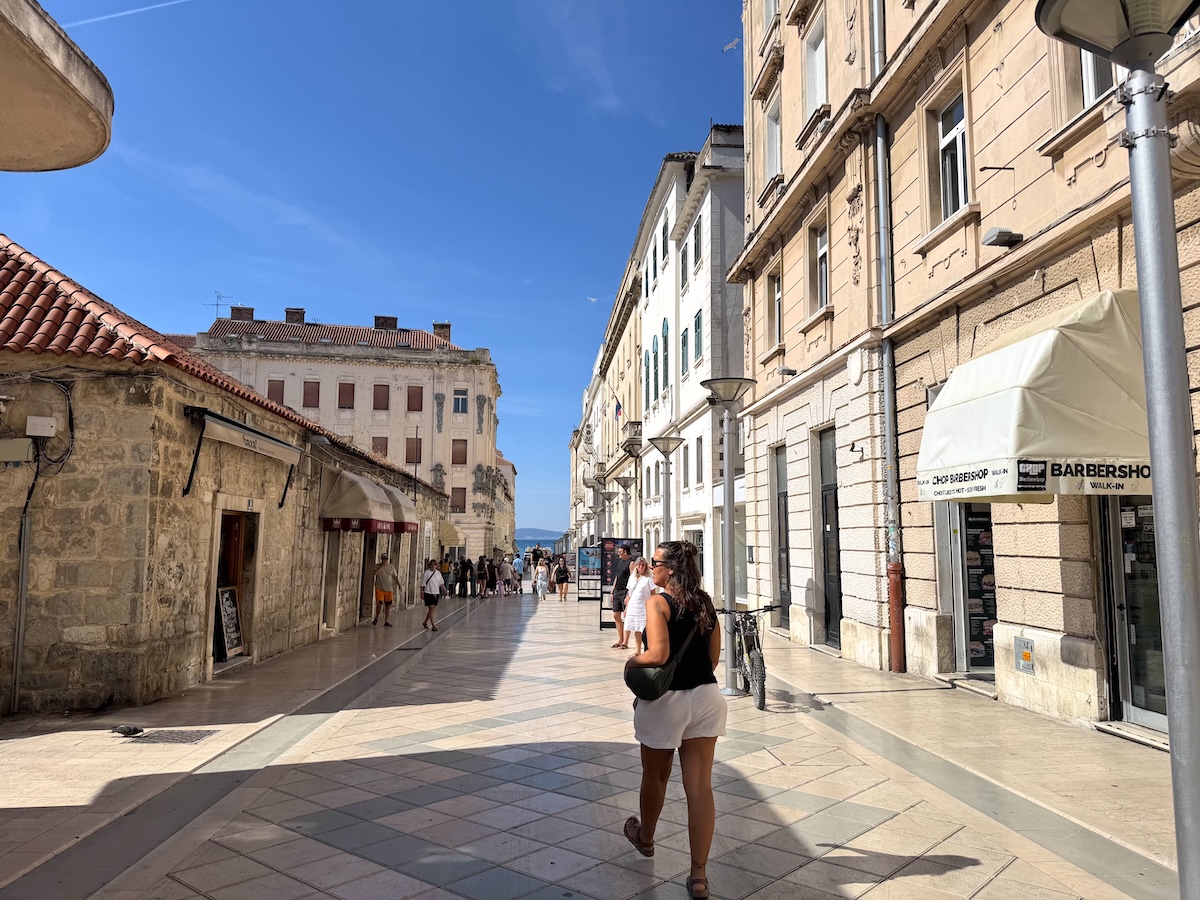
It is named after French Marshal Auguste Marmont, one of Napoleon’s commanders, who governed Dalmatia during French rule (1806–1813) and modernized several Dalmatian cities. The street was laid out at that time, and to build it, part of the 17th-century western city wall had to be demolished. The buildings lining the street date from the 19th and 20th centuries, such as the Modernist Duplančić and Tončić houses, and it has been a pedestrian street since 1996.
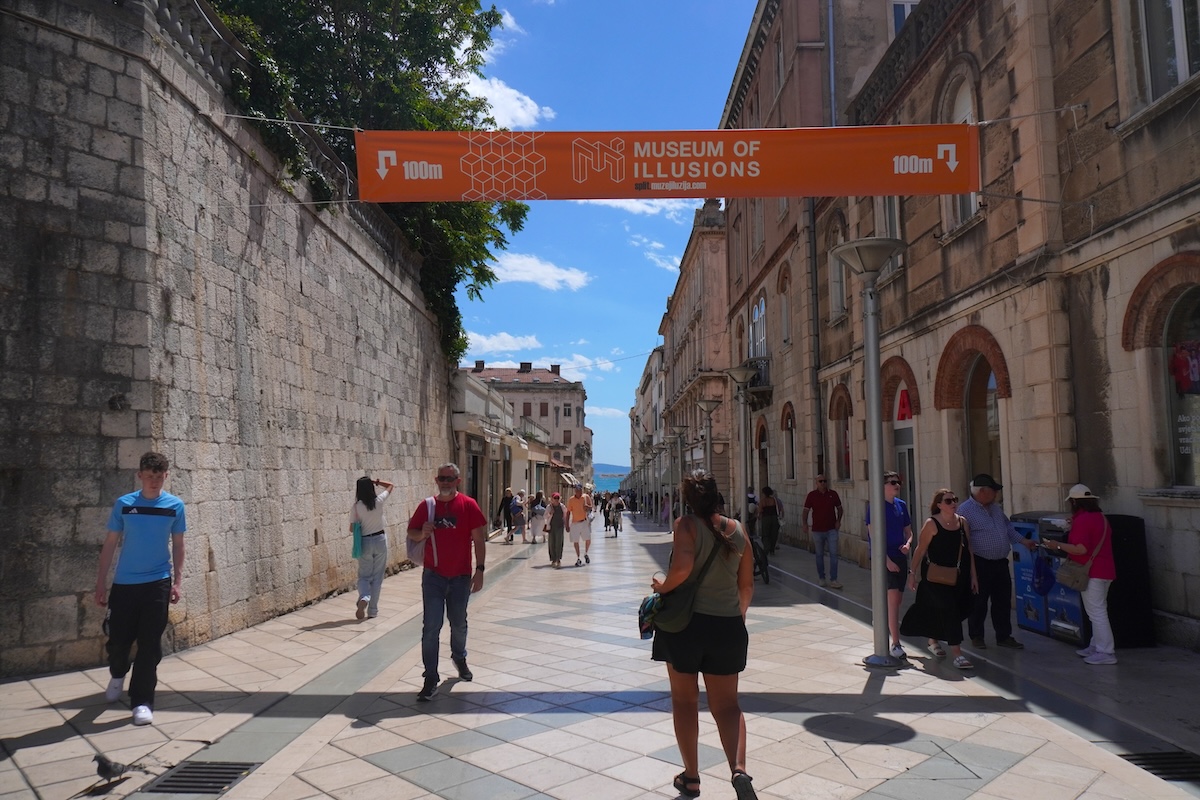
It’s lined with shops, mostly international brands, the same ones you’d find on any downtown street in a European city. In our opinion, it has nothing particularly special or local about it in that sense, although there are cafés and restaurants in the upper part. Halfway down the street is the fish market (ribarnica), a good spot to experience the local atmosphere first thing in the morning, and along the way you’ll come across the Pirja Fountain, a modern bronze sculpture. We’ll discuss both of these in more detail in the following sections of the guide. There’s also the headquarters of the Alliance Française, which was founded in 1922 as a library for French enthusiasts. At the end of the street, next to the theater, stands the Church of Our Lady of Health (Gospe od Zdravlja).
Fountain and Bowl
Right in the middle of Marmontova Street stands a fountain that’s hard to miss. It’s known as the Fountain and Cup (Pirja or “Figa i Pirja”) and was created by Croatian sculptor Kažimir Hraste in 1998. It consists of two pieces that work together. On the ground is a large funnel with a handle, which looks like a giant cup. Protruding from the stone wall along the street is a bronze hand with a clenched fist and the thumb sticking out between the index and middle fingers, a gesture of mockery or defiance known in Spanish as “higa” (in Croatian, “figa”). A stream of water shoots from the hand, arching through the air before falling into the funnel. Apparently, the gesture expresses the stubbornness and resilience of the Croatian people in the face of adversity, and the water symbolizes the constant flow of life.
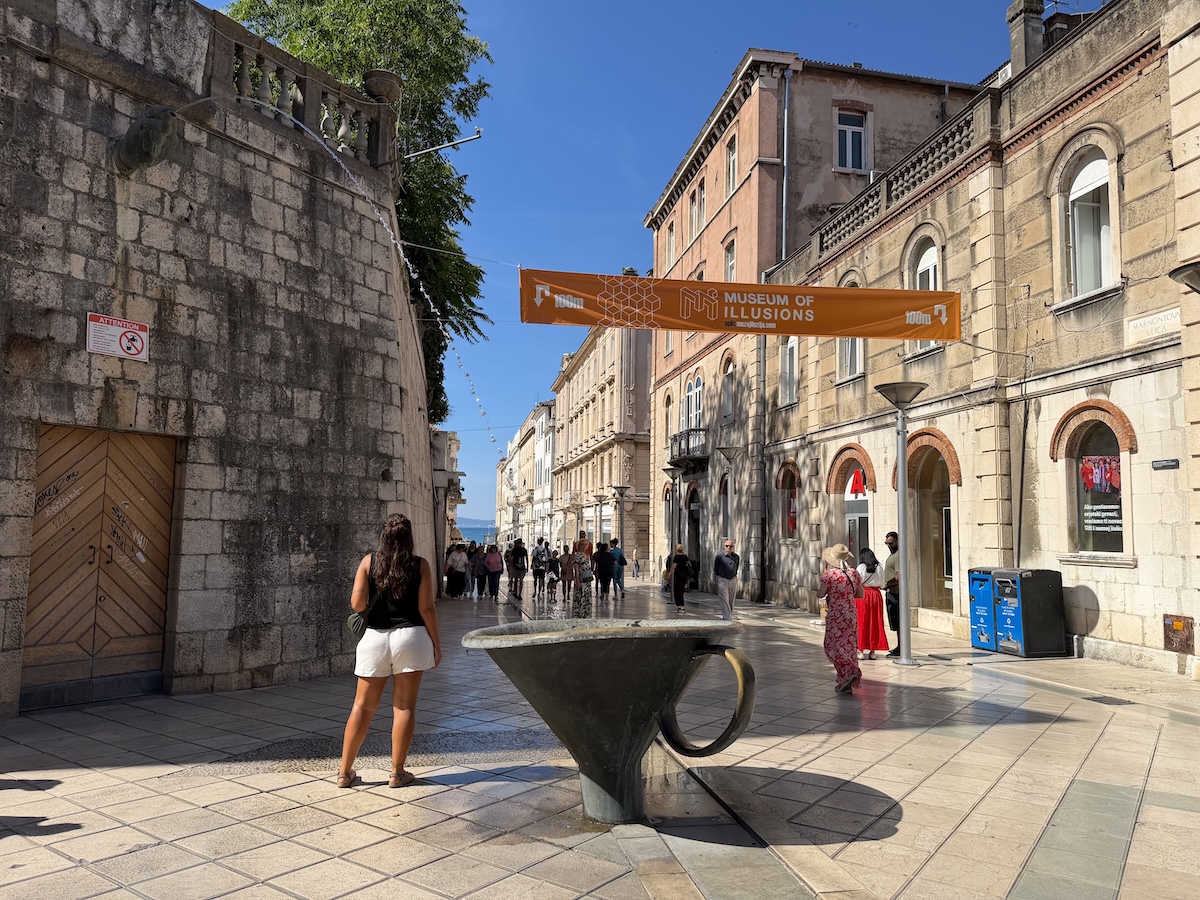
It splashes a little, but we at RandomTrip visited the city in the middle of a heat wave, so it felt great.
Fish Market (Gradska ribarnica)
Split’s Fish Market is located right in the city center, in a small square halfway down the Marmontova pedestrian street, next to the public restrooms. It’s a modernist (Art Nouveau) building over 120 years old, made of white stone with iron columns, and is now considered one of the city’s architectural landmarks.
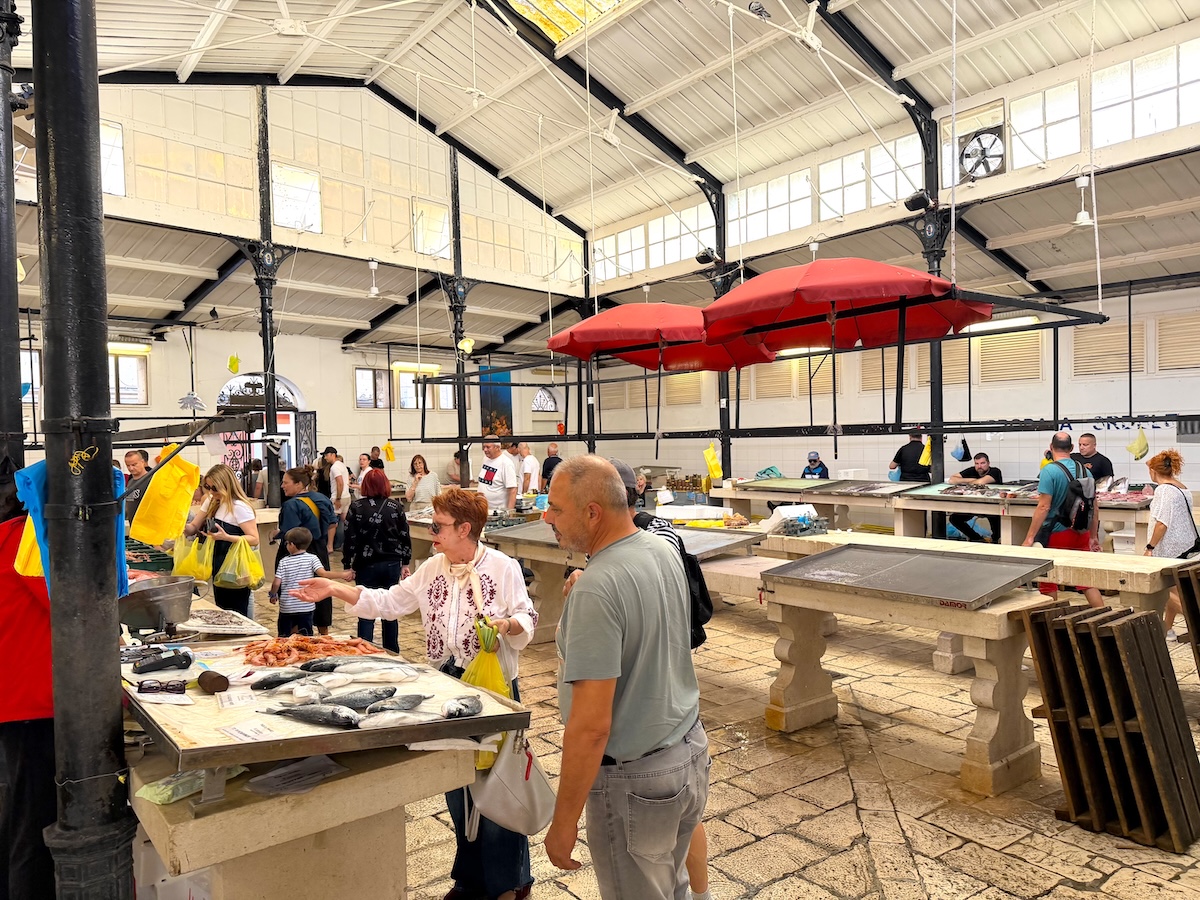
It sells fish and seafood from the Adriatic, from sardines and mackerel to sea bass, lobster, and clams, with stalls both inside and outside. One of its unique features is that, unlike other fish markets, it has almost no flies. They say this is because there’s a sulfur spa nearby and flies don’t like the smell. It hasn’t been proven, but it’s a good excuse to go inside and check it out, as well as to admire the architecture and the morning bustle.
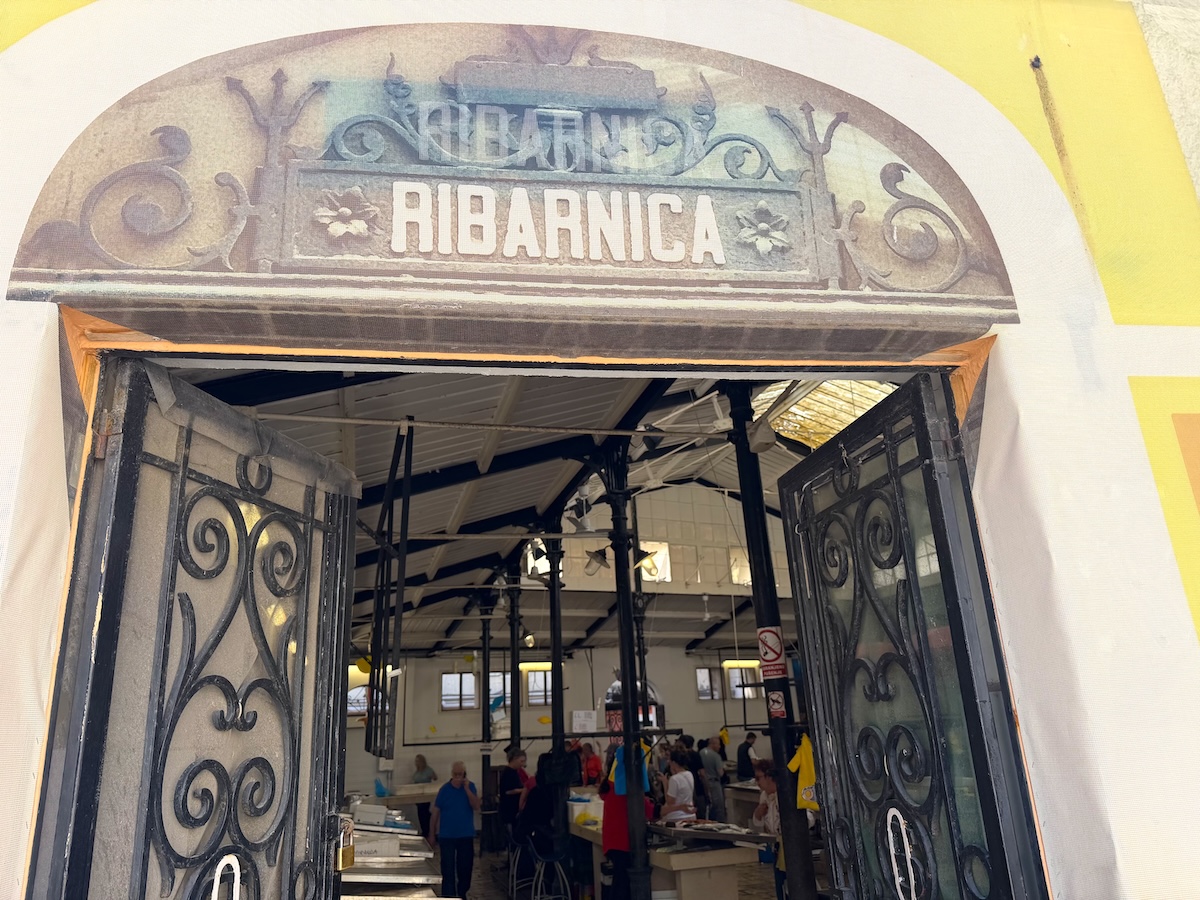
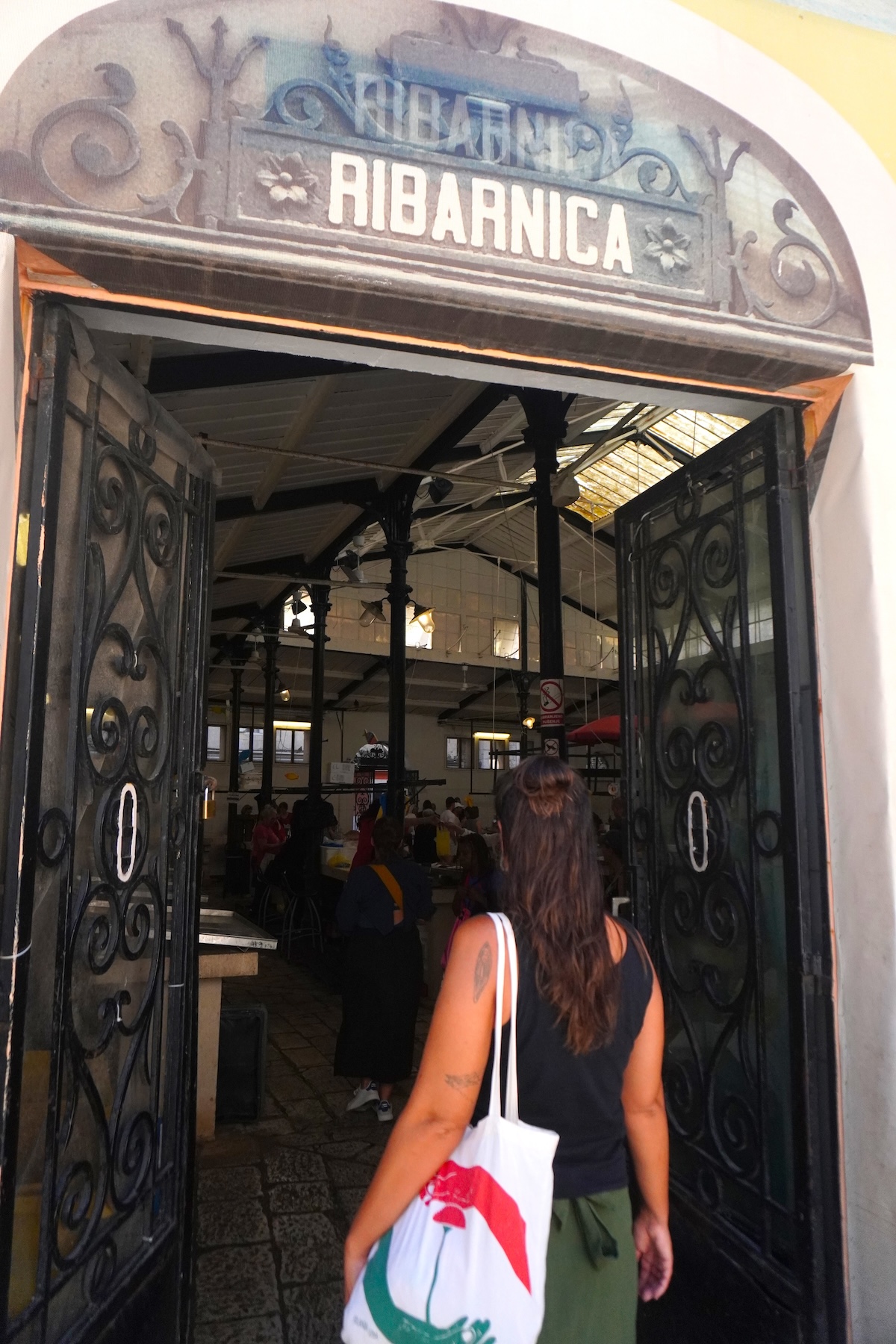
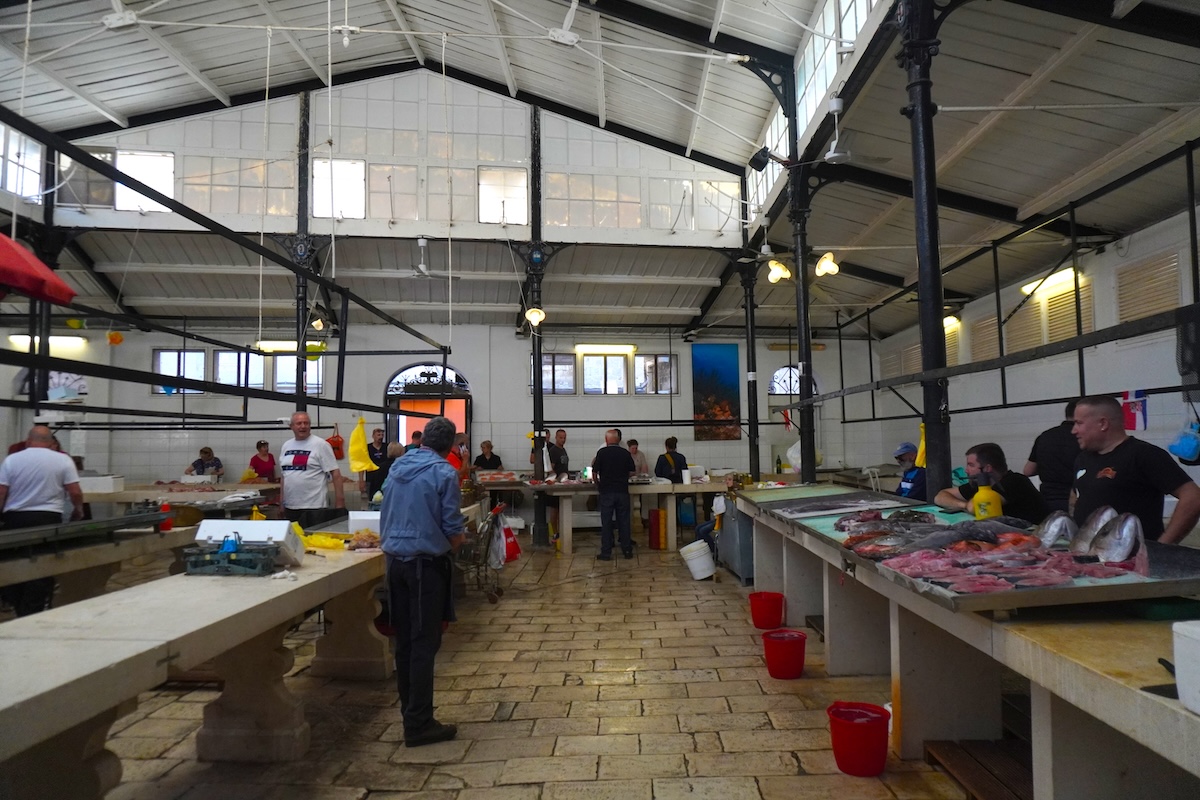
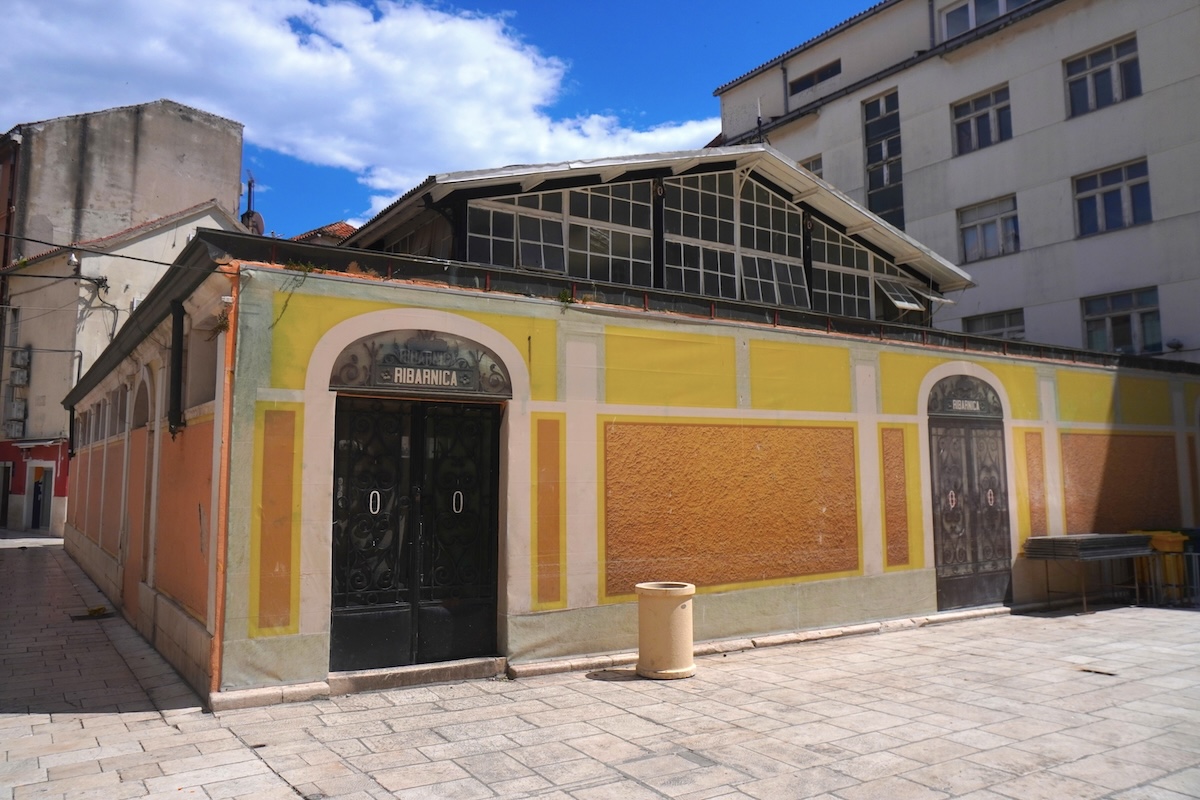
The market opens very early, around 6:00 a.m. or 6:30 a.m., and closes around 1:00 p.m., with reduced hours on Sundays. Admission is free. It’s best to go in the morning, when the atmosphere is liveliest and the most stalls are open.
Republic Square (Trg Republike)
Republic Square (Trg Republike) is better known as Prokurative and is one of the most pleasant squares in the city center, just west of the Riva. It features Neo-Renaissance arcades on three sides, with reddish-toned facades and windows with semicircular arches, so photogenic that Wes Anderson would love to film here.
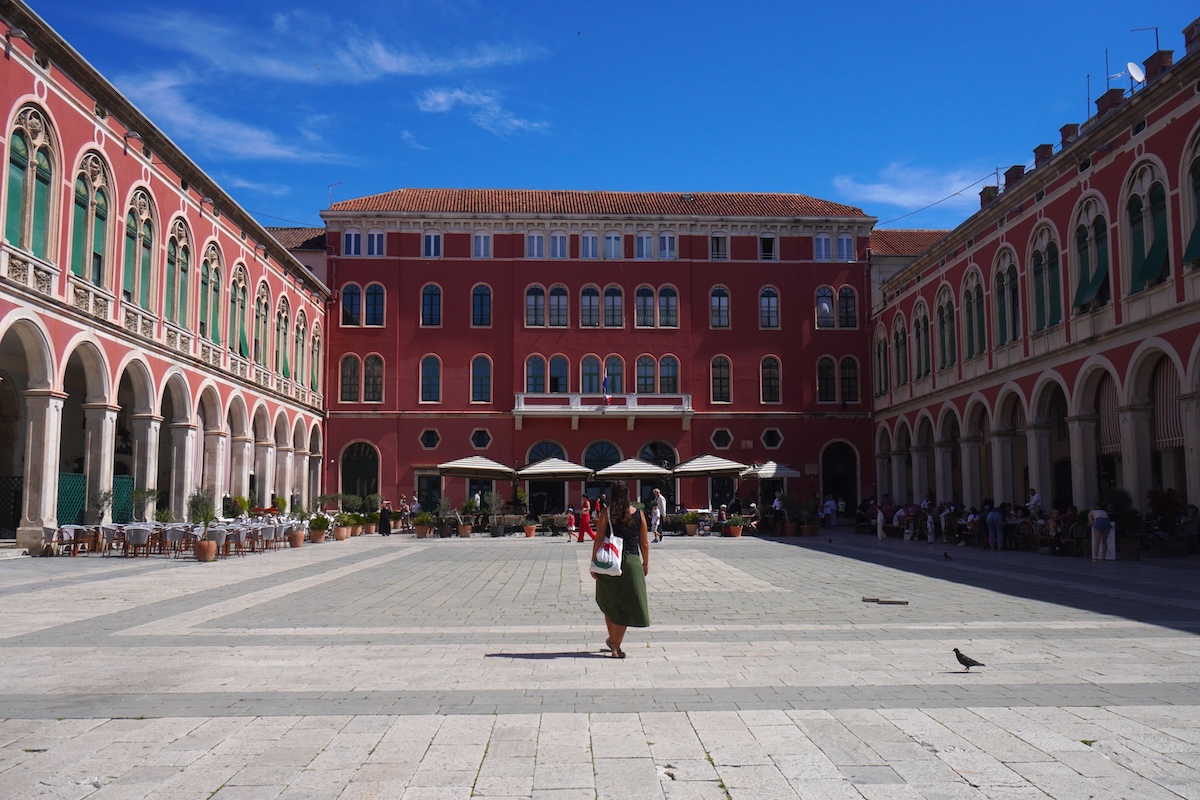
The south side opens onto the sea, offering views of the harbor and the Riva. The name comes from the Procuratie, the arcaded buildings in St. Mark’s Square in Venice, which served as its inspiration.
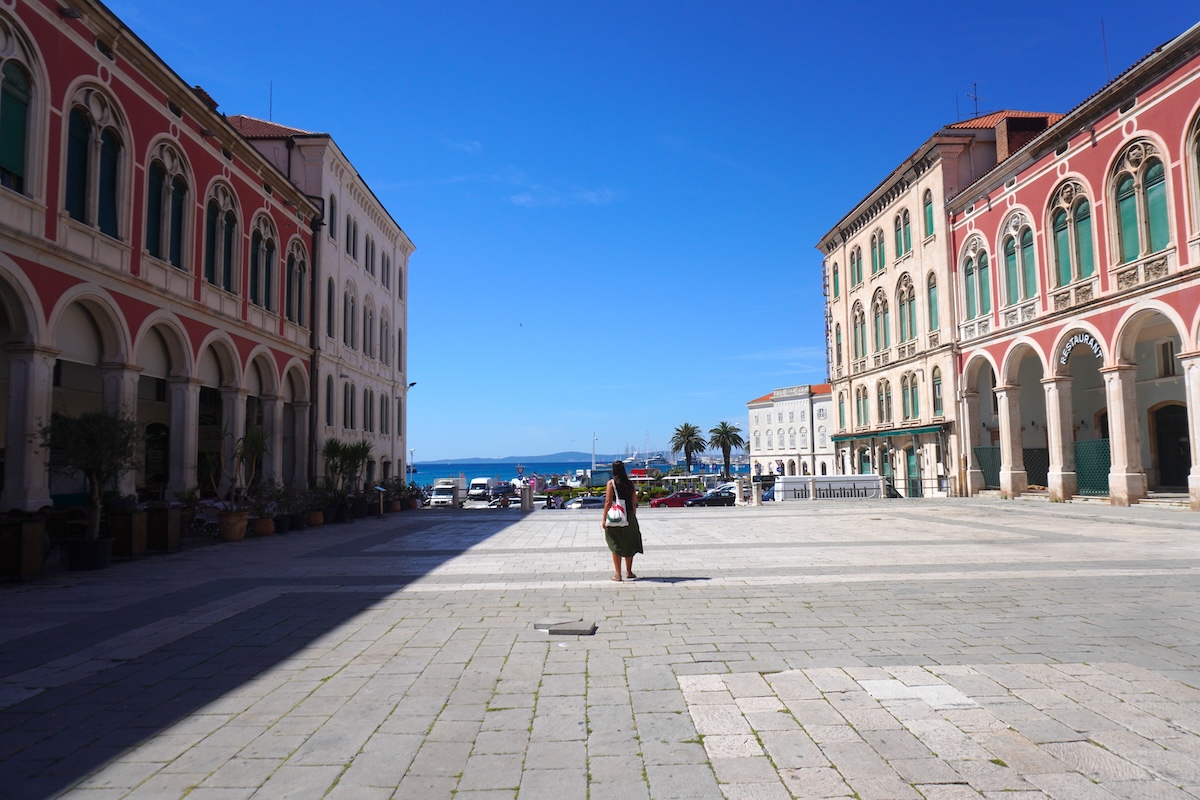
Construction was spearheaded in the 19th century by Mayor Antonio Bajamonti, a great admirer of Venice. Bajamonti also built a large theater in the square that was eventually destroyed by fire, and on the south side there was a neoclassical fountain that was demolished in 1947 because of its alleged connection to Italian rule over the city.
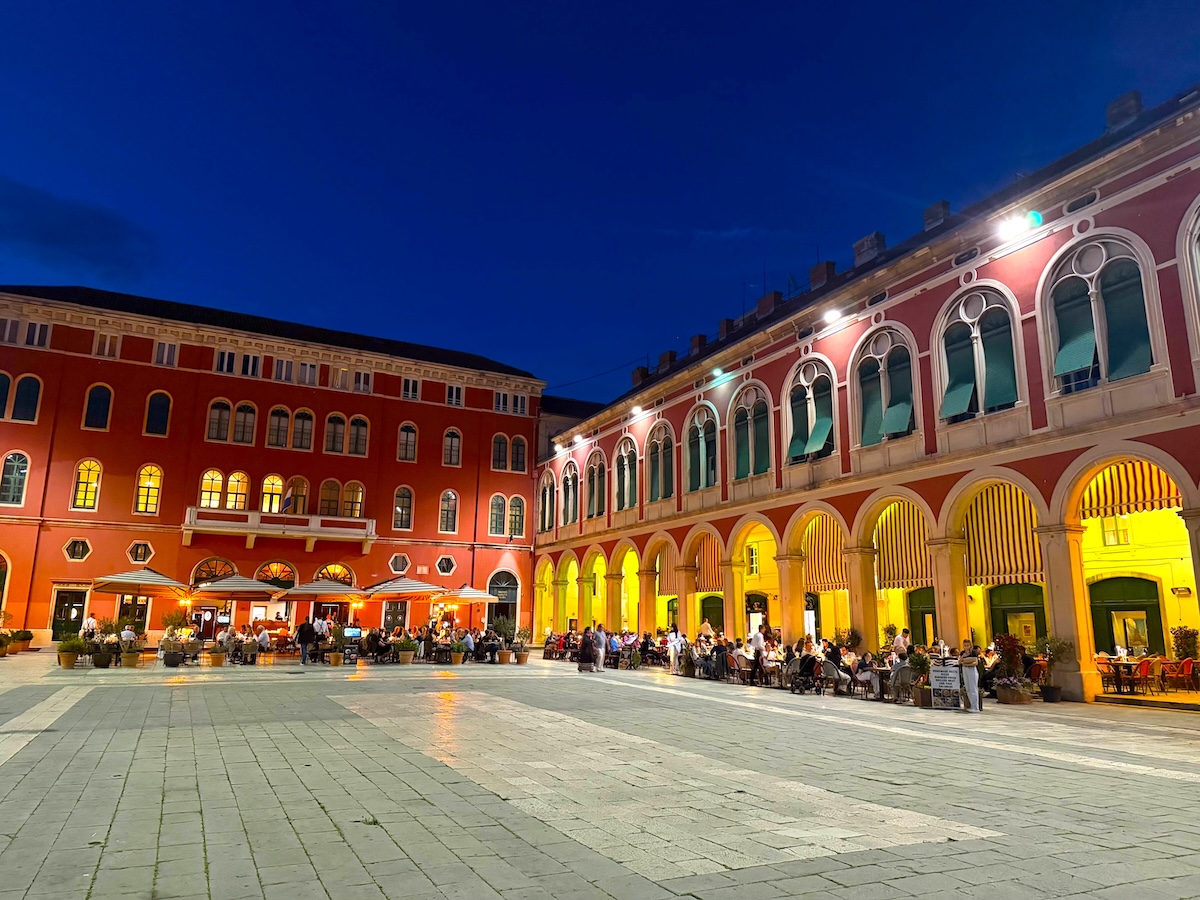
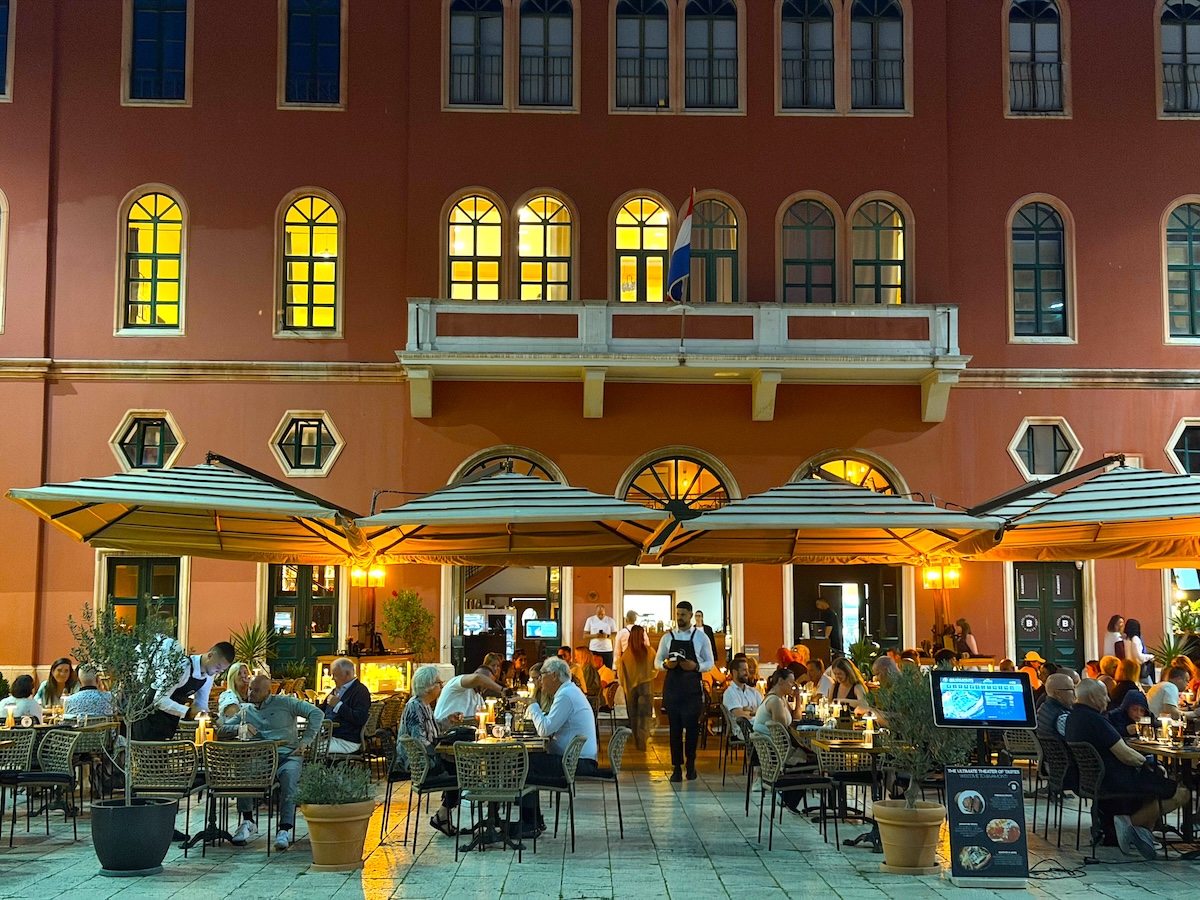
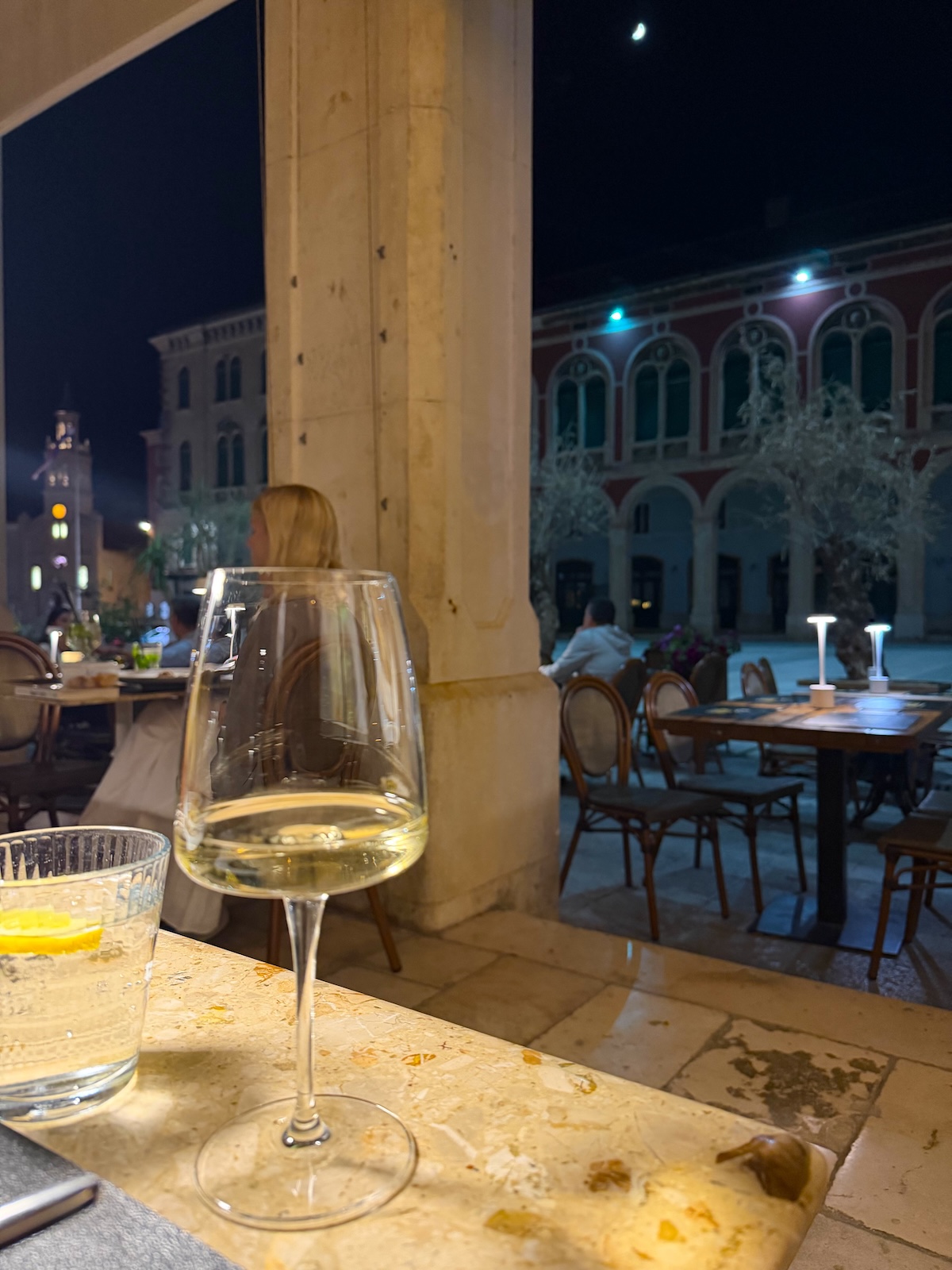
Today it is a gathering place with bars and restaurants, and a venue for cultural events, particularly the Split Pop Music Festival, founded in 1960. At RandomTrip, we took a chance and decided to have dinner here one night (accepting the risk of choosing such a touristy spot and the potential drop in quality that might come with it, something like having dinner in Madrid’s Plaza Mayor, who would even think of that?). The evening was perfect for staying out, so we chose the terrace at Fish Mama, one of the square’s restaurants serving Mediterranean cuisine. We ordered tuna pašticada and shrimp risotto, along with two glasses of wine, and everything was delicious. We found the prices reasonable for the location. It’s not the best restaurant in Split, but if you’re looking for one in this square, it’s a good option.
People’s Square (Narodni trg)
People’s Square is the city’s main square, which grew up outside the walls of Diocletian’s Palace, just west of the Iron Gate. Since the Middle Ages, it has been one of the centers of public life in Split. That’s why it has had several names over time, such as St. Lawrence Square or Nobility Square. Its current appearance is the result of centuries of changes: the layout was originally triangular and was modified in the 19th century, when several municipal buildings were demolished.
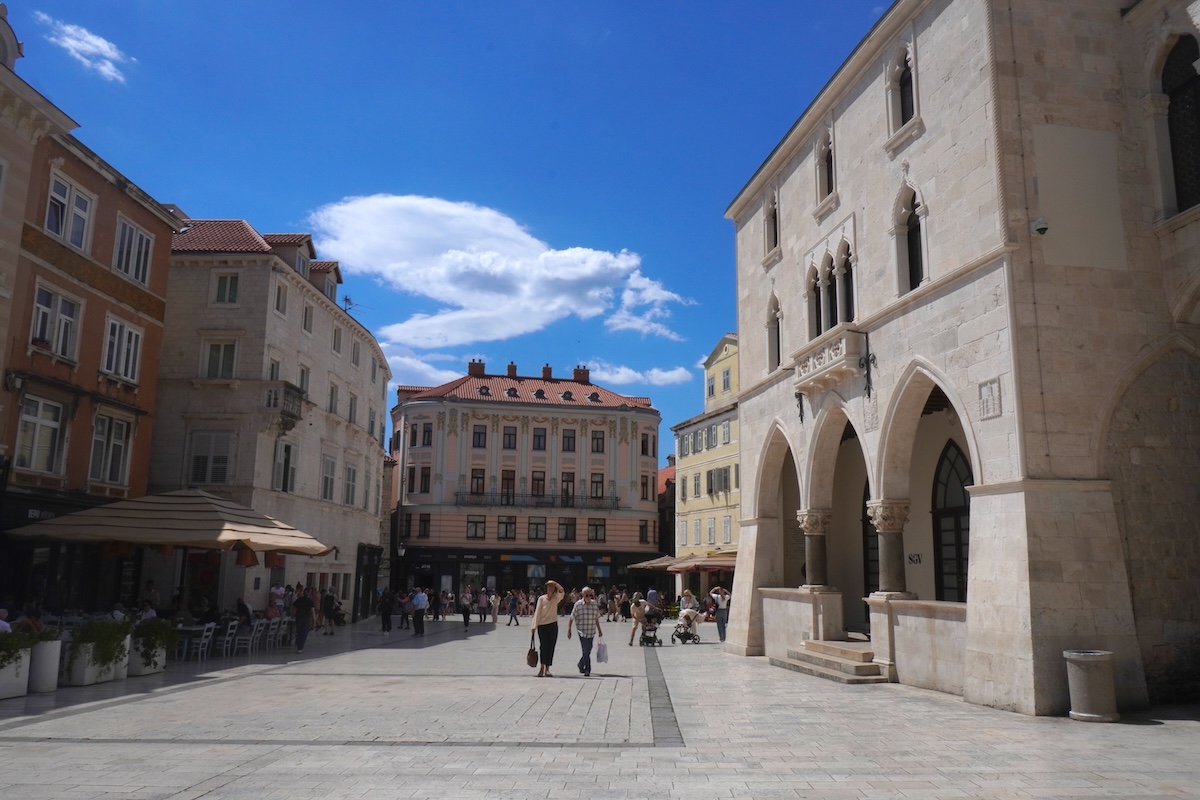
We think it’s one of the most beautiful squares in Split; it’s a spacious square, surrounded by facades in various styles, ranging from Venetian Gothic to Renaissance and Baroque. Many of the buildings are former palaces that now house restaurants, cafés, and shops. At RandomTrip, we found it to be a great spot to sit for a while and watch people go by while enjoying an ice cream from the aMare ice cream shop, which we loved. It has another location in Fruit Square, which we’ll discuss shortly.
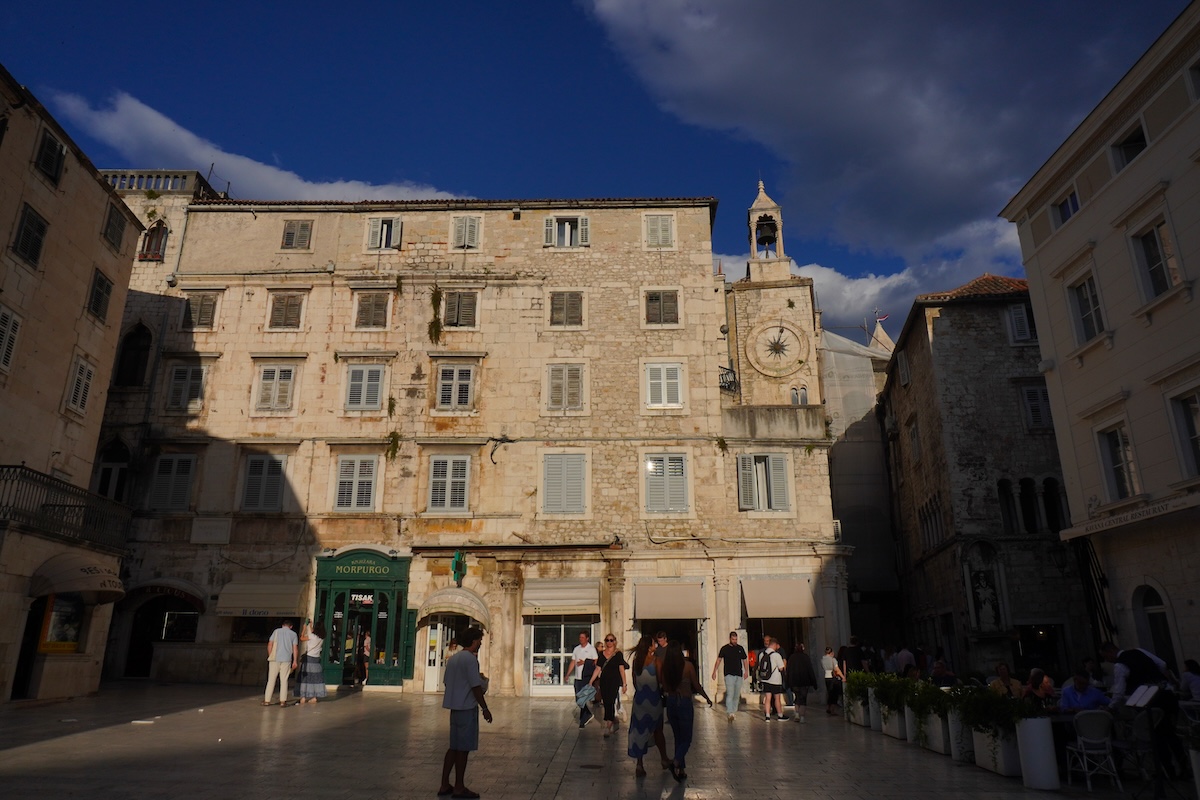
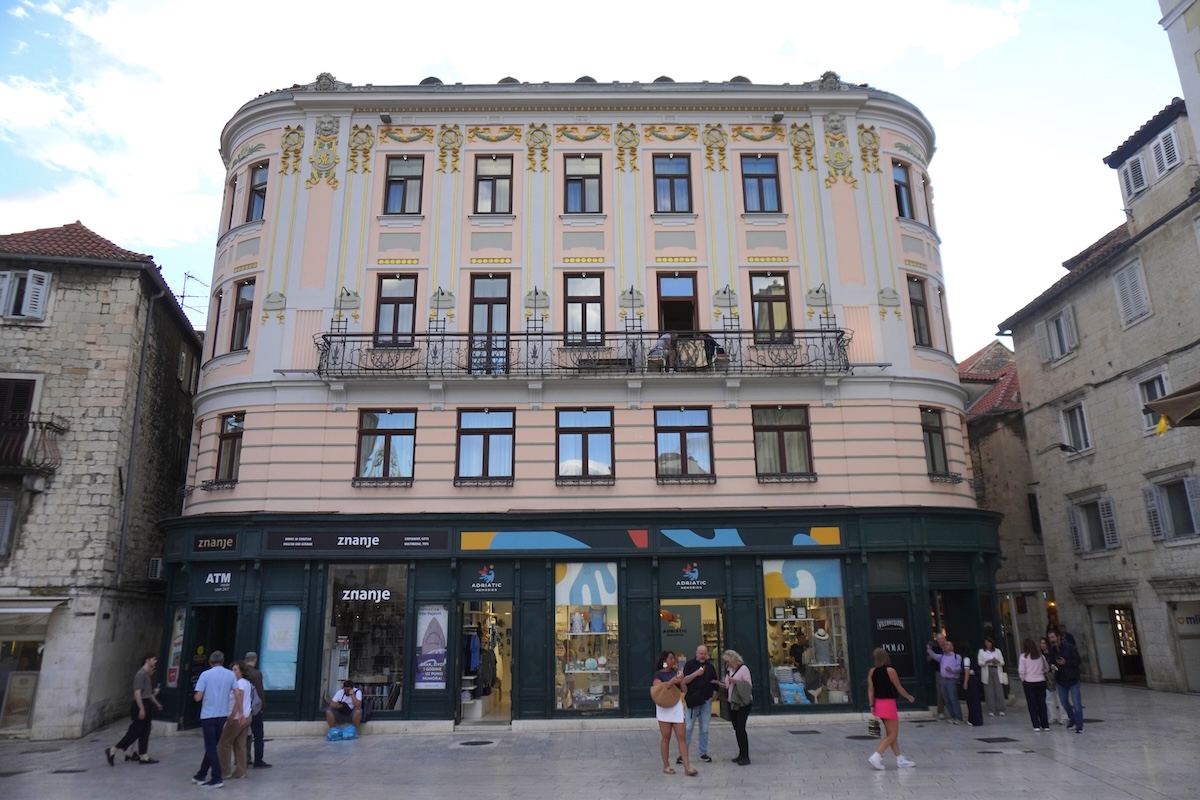
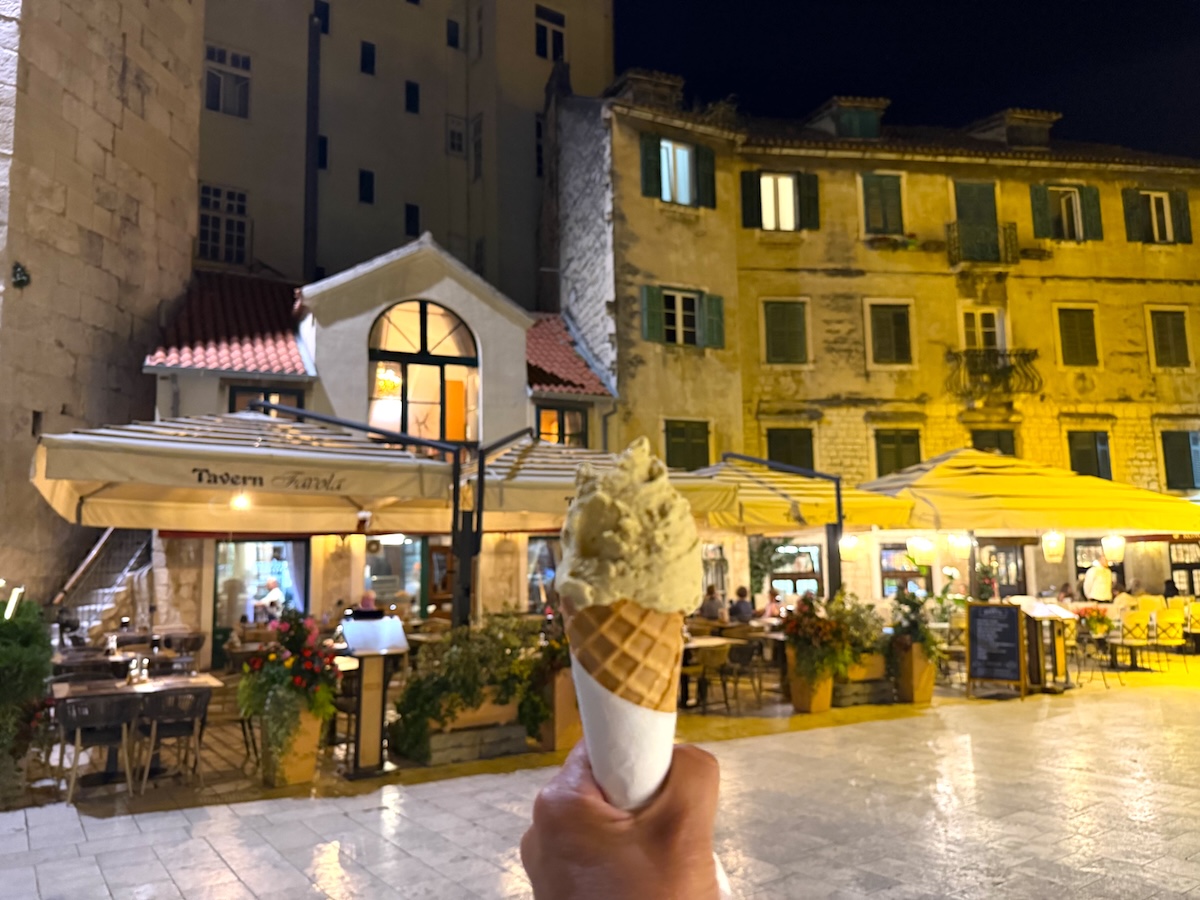
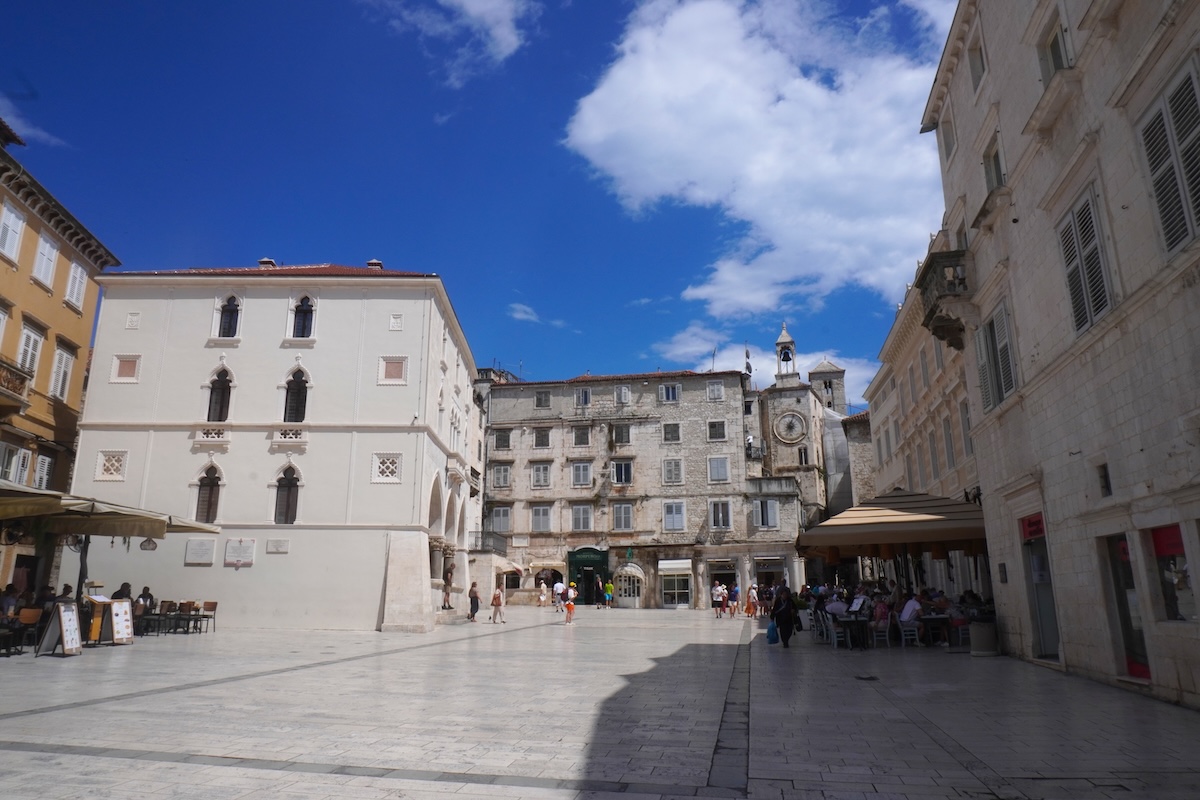
At RandomTrip, we’d like to highlight two features of this square:
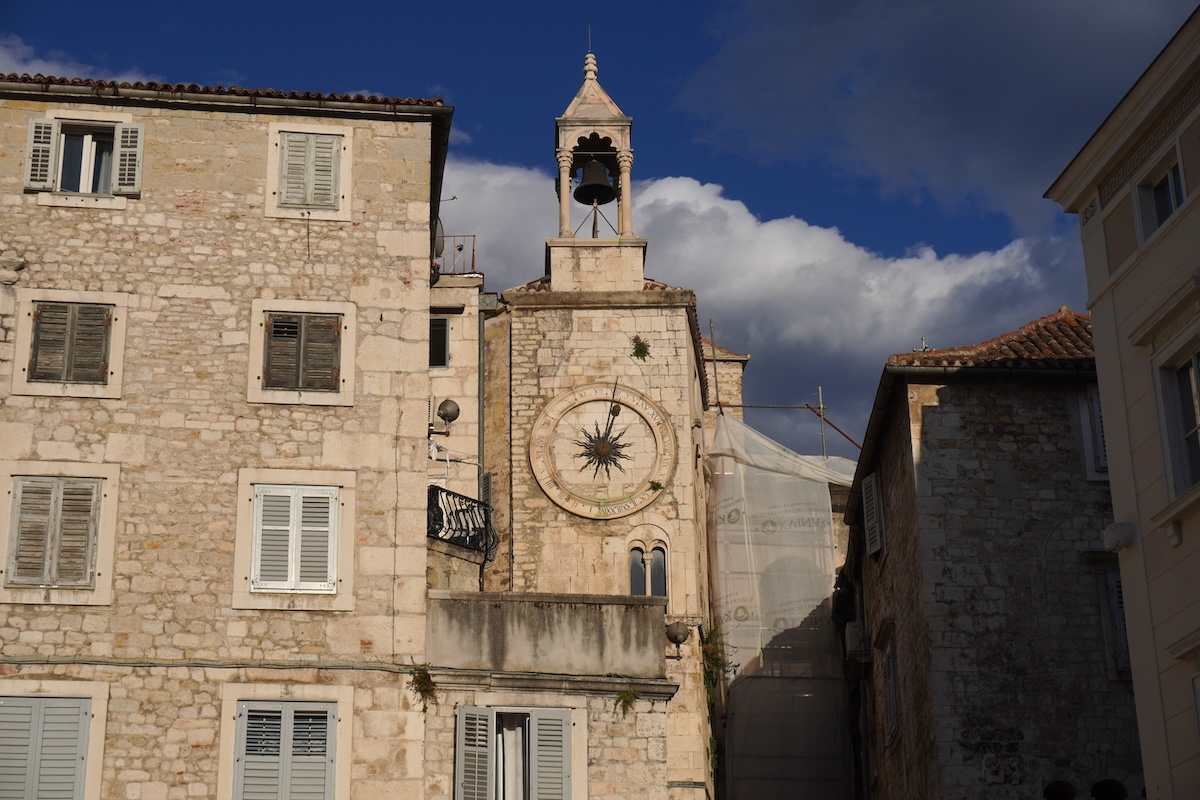
Clock Tower: One of the most intriguing features of the square. The clock face has 24 hours and makes a single rotation per day, so you have to read it differently than a normal clock. Apparently, the clock you see today is a replica of the original, which dates back to between the 15th and 16th centuries. Sometimes it works and sometimes it doesn’t. At RandomTrip, we found it stopped the day we visited, but it remains a common landmark and meeting spot for locals.
Morpurgo Bookstore and the plaque on the ground: In this square stands the Morpurgo Bookstore, with its green facade and the sign “od 1860” (since 1860). It’s considered one of the oldest bookstores in Europe and is protected by a municipal ordinance. Today it operates as a branch of the Tisak chain, selling newspapers, books, drinks, and souvenirs, though it retains its original facade.
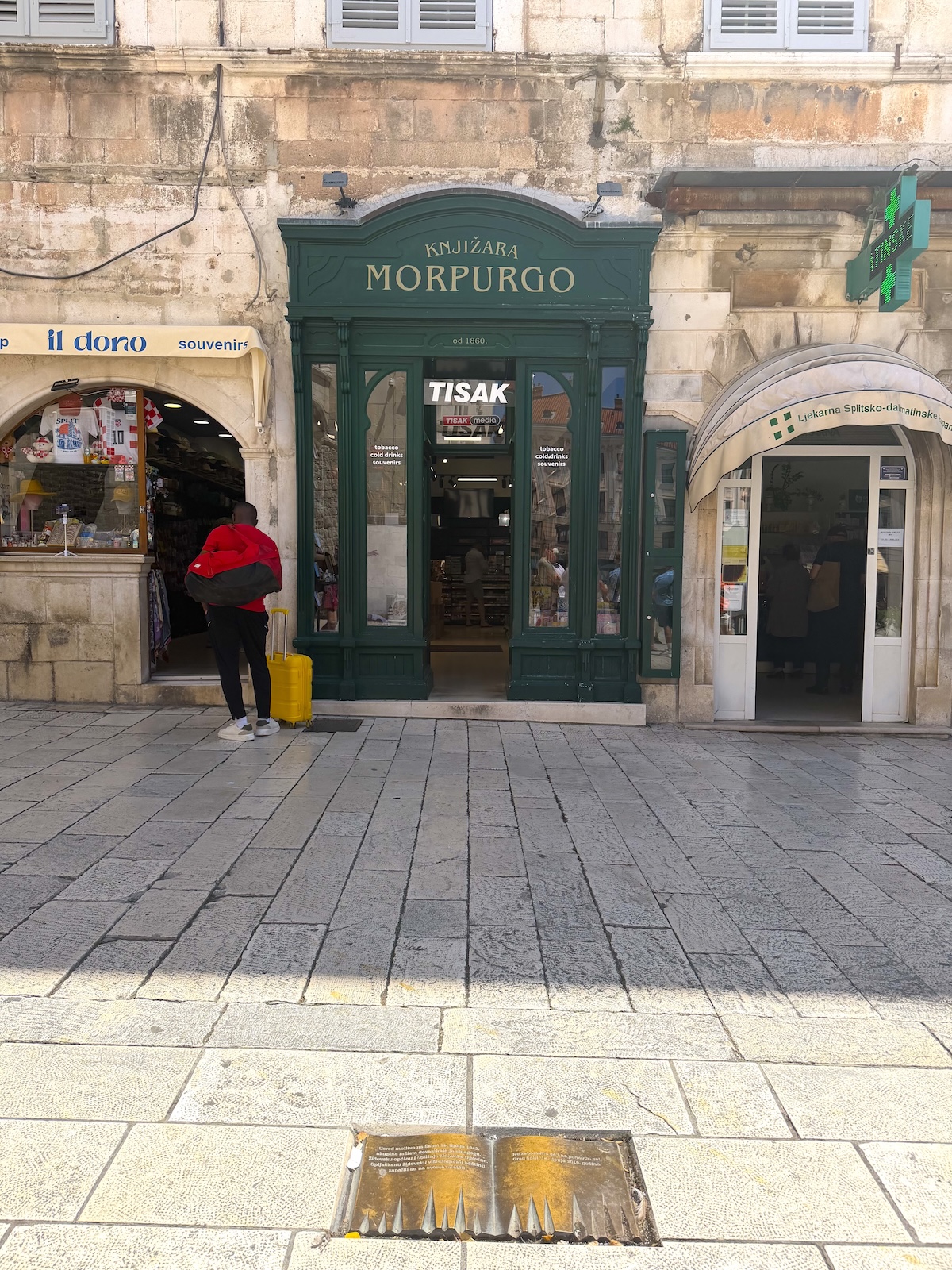
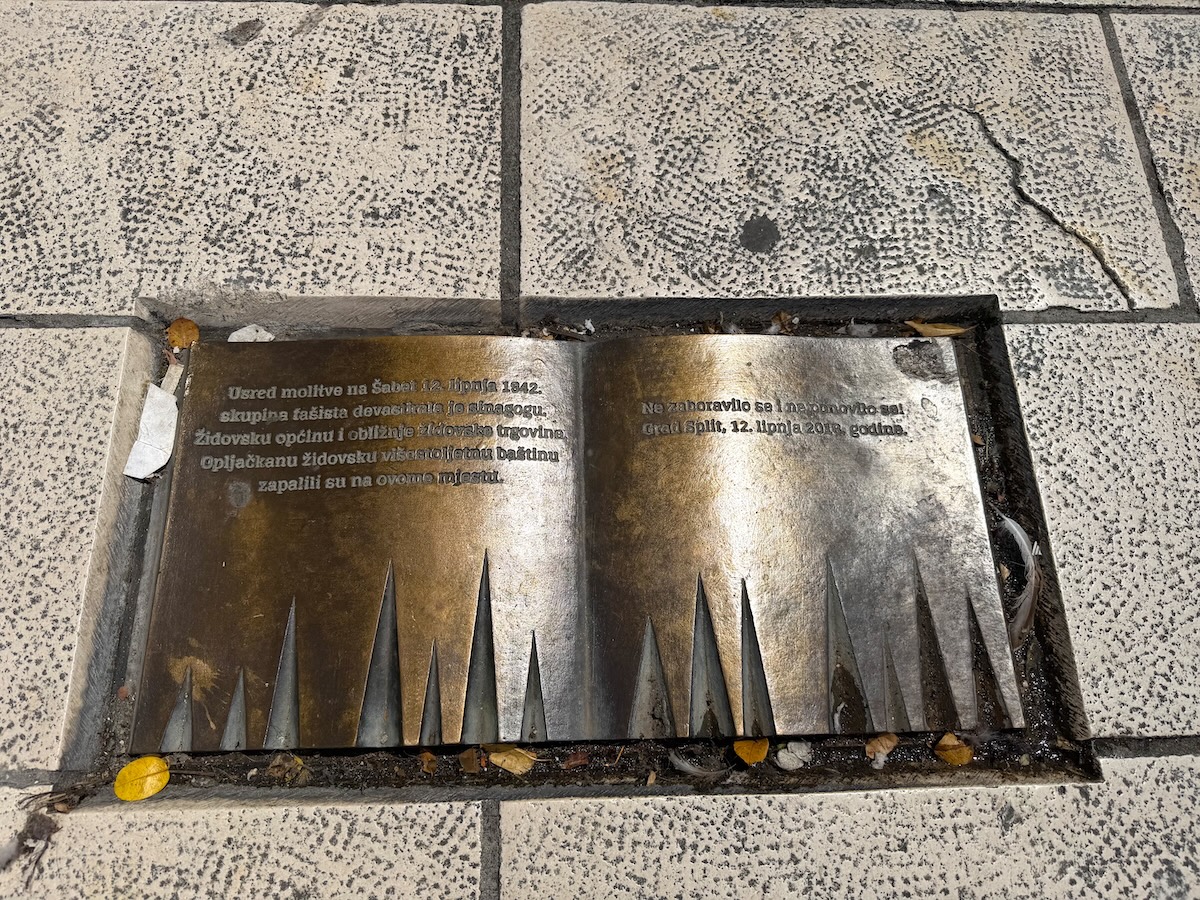
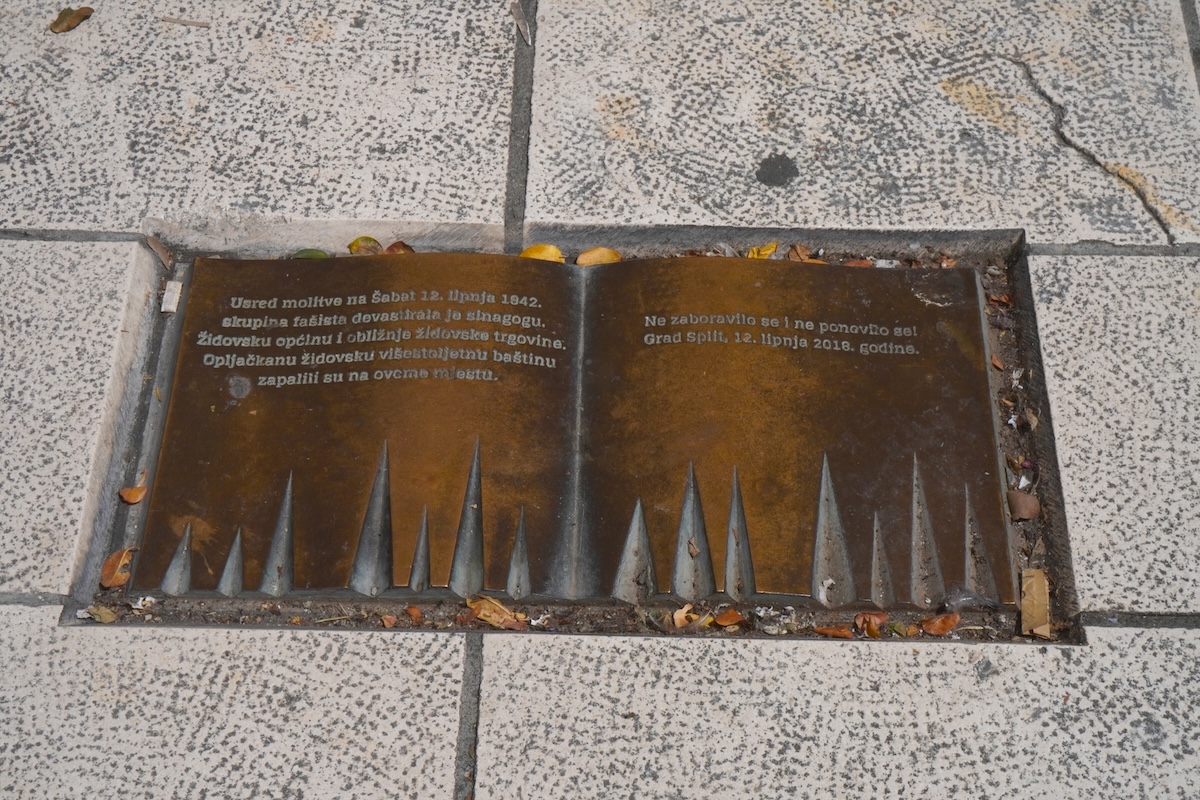
In the nearby neighborhood, the former Jewish ghetto, stands the synagogue, located on the second floor of two medieval houses. On June 12, 1942, a group of fascists ransacked the synagogue and burned religious objects, books, and scrolls, among other looted items of Jewish heritage, in this square. In front of the bookstore, on the ground, there is a bronze plaque shaped like an open book, installed by the City of Split in 2018, commemorating the event. It ends with the phrase:“Ne zaboravilo se i ne ponovilo se!” which means “May it not be forgotten and may it not be repeated!” At RandomTrip, we think of the Palestinian people when we read it, and we reflect on how hard it is that this message remains so necessary (and so overlooked) even today.
Fruit Square (Voćni trg)
Fruit Square is officially called Trg Braće Radić ( Radić Brothers Square), though it’s known throughout the city by its popular name. The nickname comes from the fact that there used to be a market here where women from the surrounding villages sold their fruit. As the city grew, more space was needed, and the market moved to the other side of the palace, the Pazar, around St. Dominic’s Church (if you want to go, it’s best to go in the morning and ideally on Saturdays).
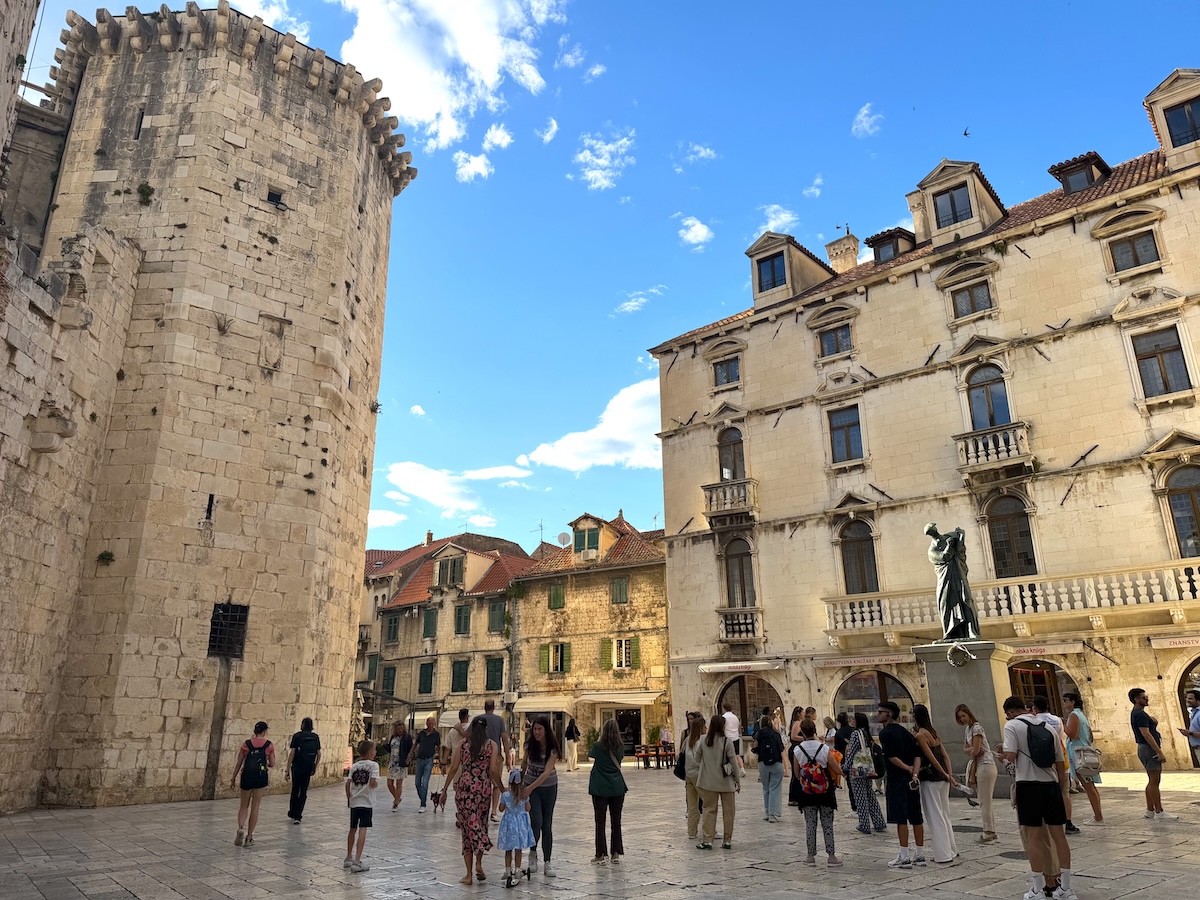
In the center of the square stands the statue of Marko Marulić, a work by Ivan Meštrović, the same sculptor responsible for other statues in the city (and whose gallery we recommend visiting; we’ll discuss it later in this guide), which has stood here since 1925. Marulić was born in Split and is considered the father of Croatian literature. His best-known work is Judith, written in Croatian and published in Venice in 1521. Marulić is also credited with the first use of the word “psychology” in a work written in Latin between 1510 and 1517.
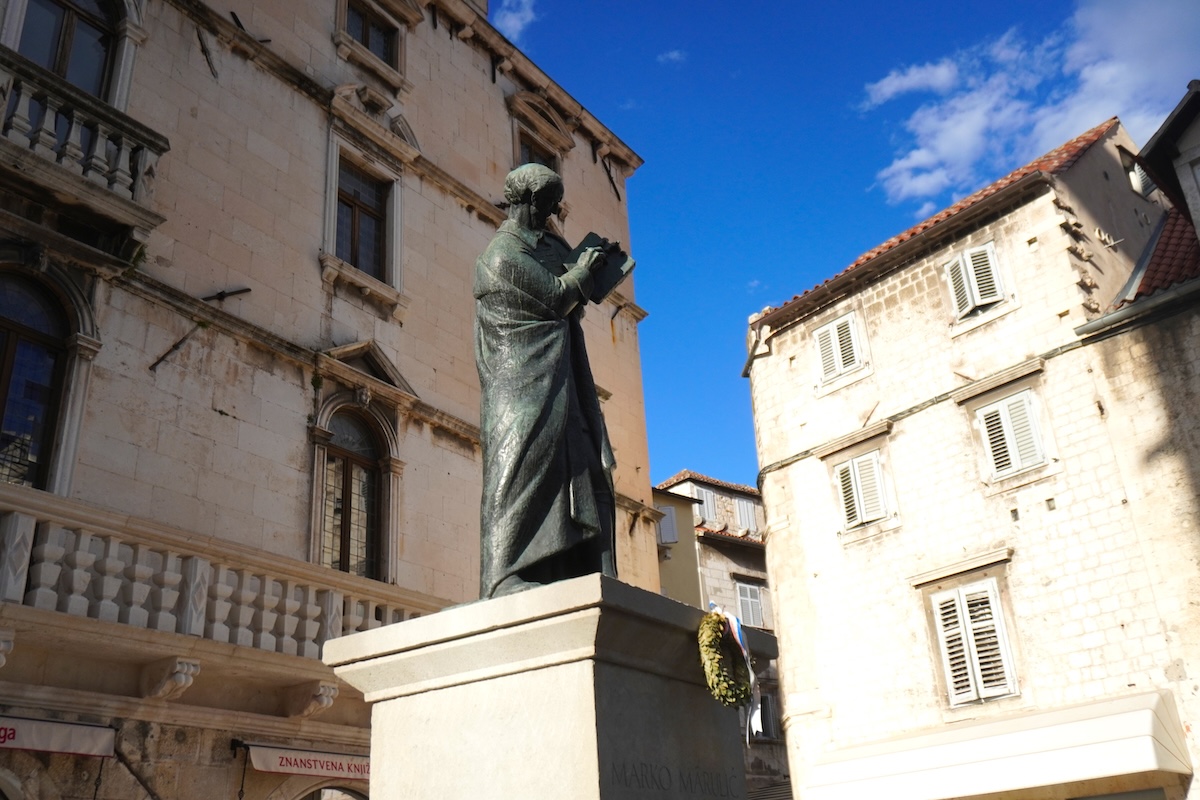
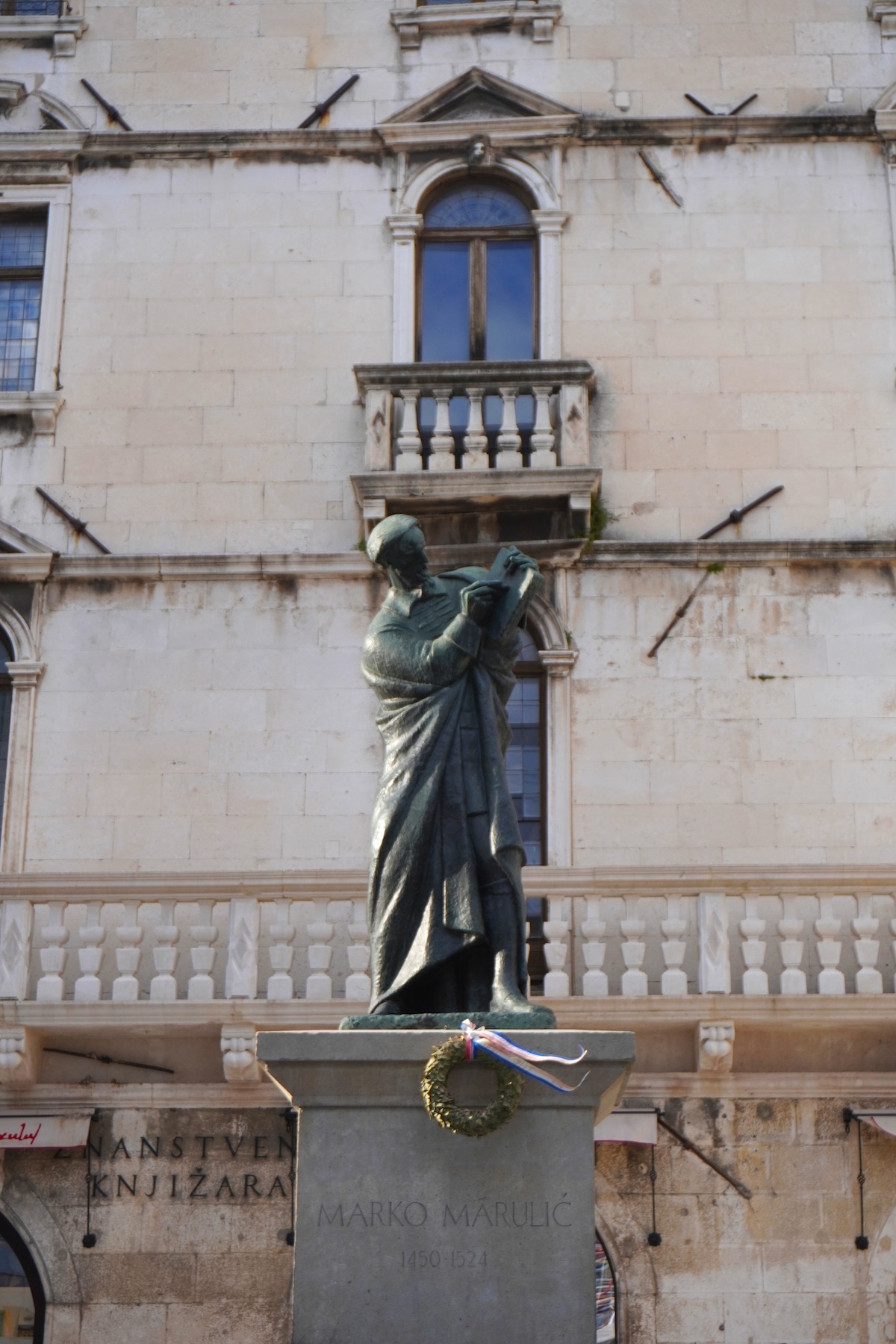
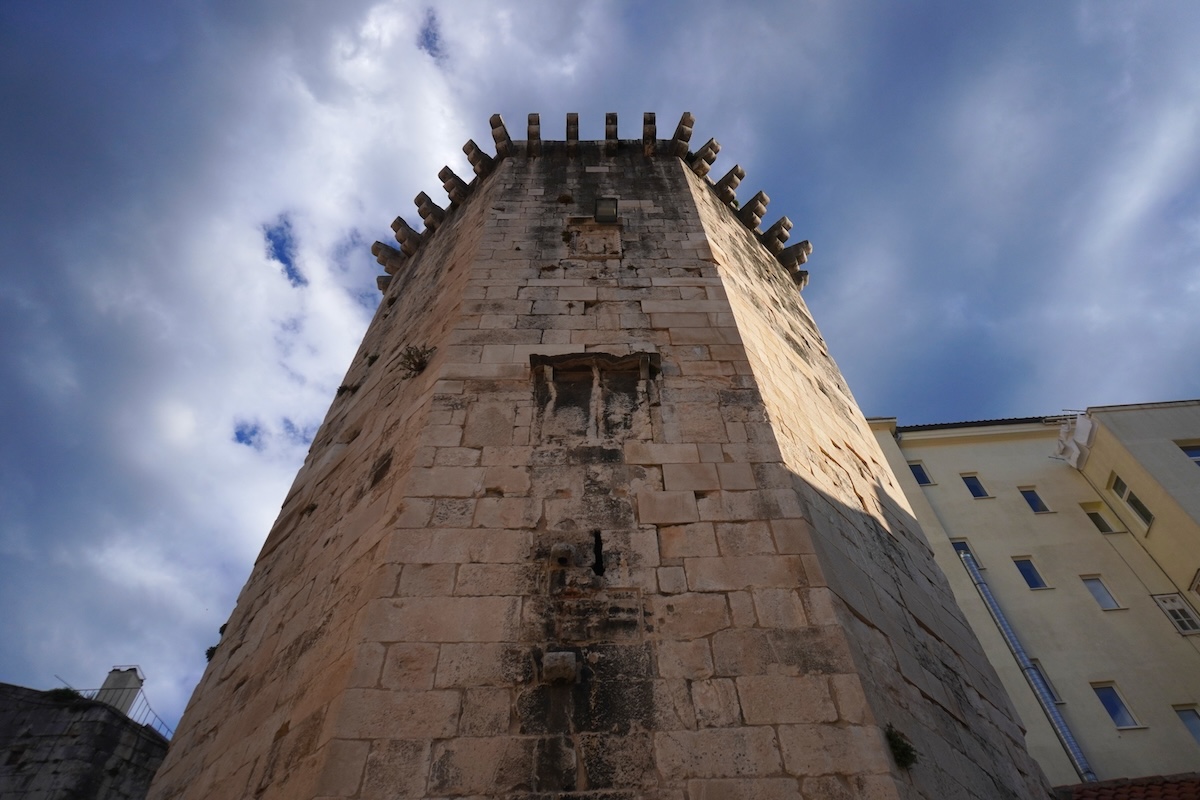
In the background, you can see the remains of the Venetian castle, of which the Venetian Tower, a large octagonal tower, and a smaller tower, connected by a wall, still stand. The Republic of Venice built it in the 15th century as a defensive fortress, but over time it lost that function. Under French rule, in 1806 and 1807, its southern walls were demolished, resulting in its current appearance.
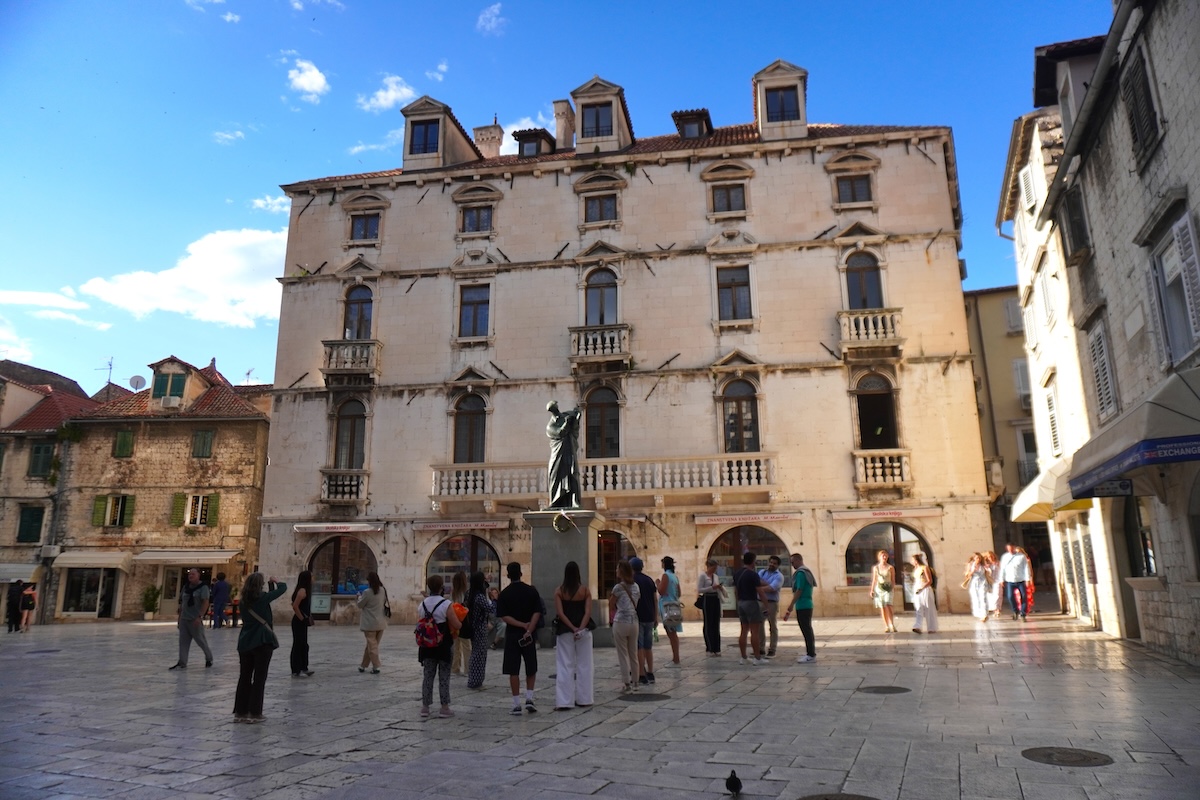
Opposite the tower stands the 17th-century Milesi Palace, whose façade is one of the finest examples of the Baroque style in Dalmatia.
And here’s an interesting fact: in the passageway next to the Venetian Tower, which connects this square to the Riva, on a house with an Oriental-style façade, there’s a plaque featuring a relief of the face of Sigmund Freud, the father of psychoanalysis. It commemorates his stay there in September 1898. He was only there for a few days, and there are no records explaining why he came, so not much else is known. That said, the local joke is that it was here where he developed his concept of “split personality” (and “Split” is the name of the city).
Franciscan Church and Convent (Crkva i Samostan sv. Frane)
The Franciscan Church and Monastery are located at the western end of the Riva, next to the roundabout with the fountain. From the outside, it is a narrow, unassuming church, but it has a rich history. The Franciscans settled here in the 13th century, on the site of a much older place of worship: a small early Christian church dedicated to St. Felix, a martyr from the time of Diocletian. The complex was destroyed and rebuilt several times, so its current appearance is not the original one.
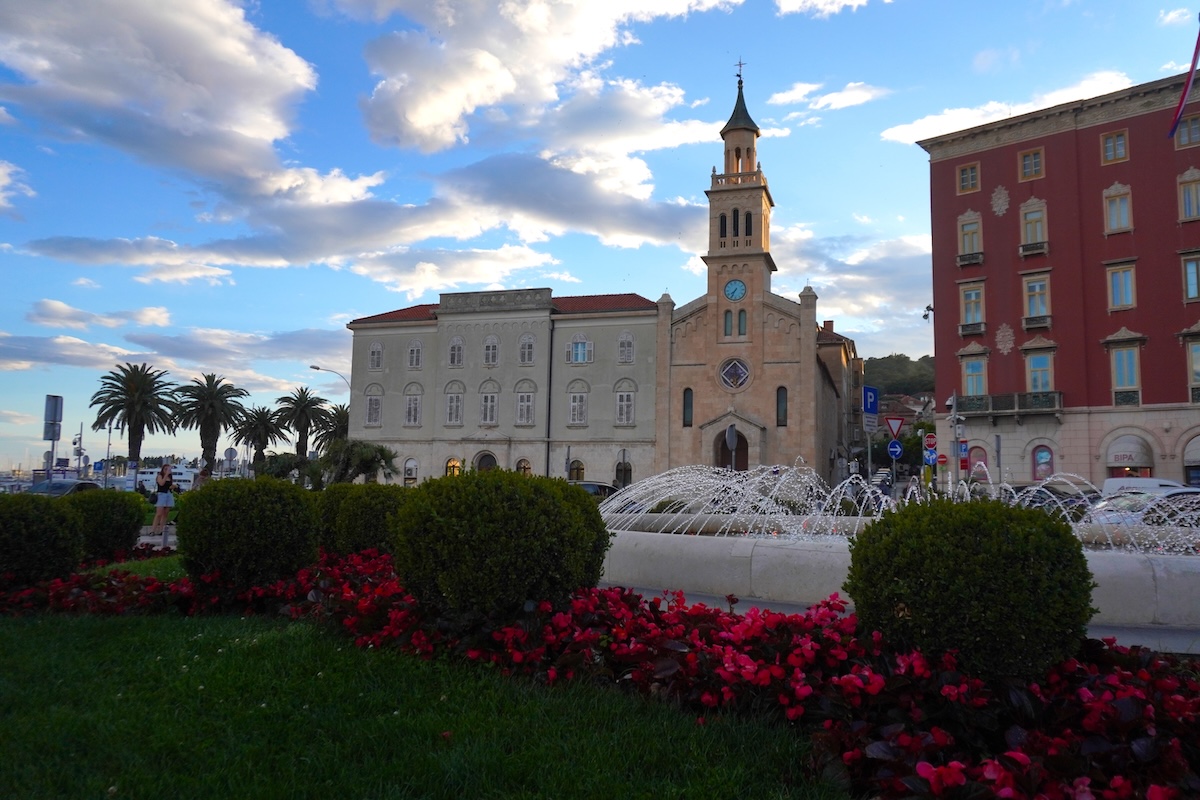
Inside, highlights include a Gothic crucifix painted by Blaž Jurjev of Trogir in the early 15th century and a Roman sarcophagus depicting the crossing of the Red Sea. Marko Marulić, the writer whose statue stands in Fruta Square, is buried here, as is Ante Trumbić, a Croatian politician, in a sarcophagus by Ivan Meštrović. Next to the church is a cloister with Romanesque and Gothic features, and inside the convent is a library containing books dating back to the 16th century.
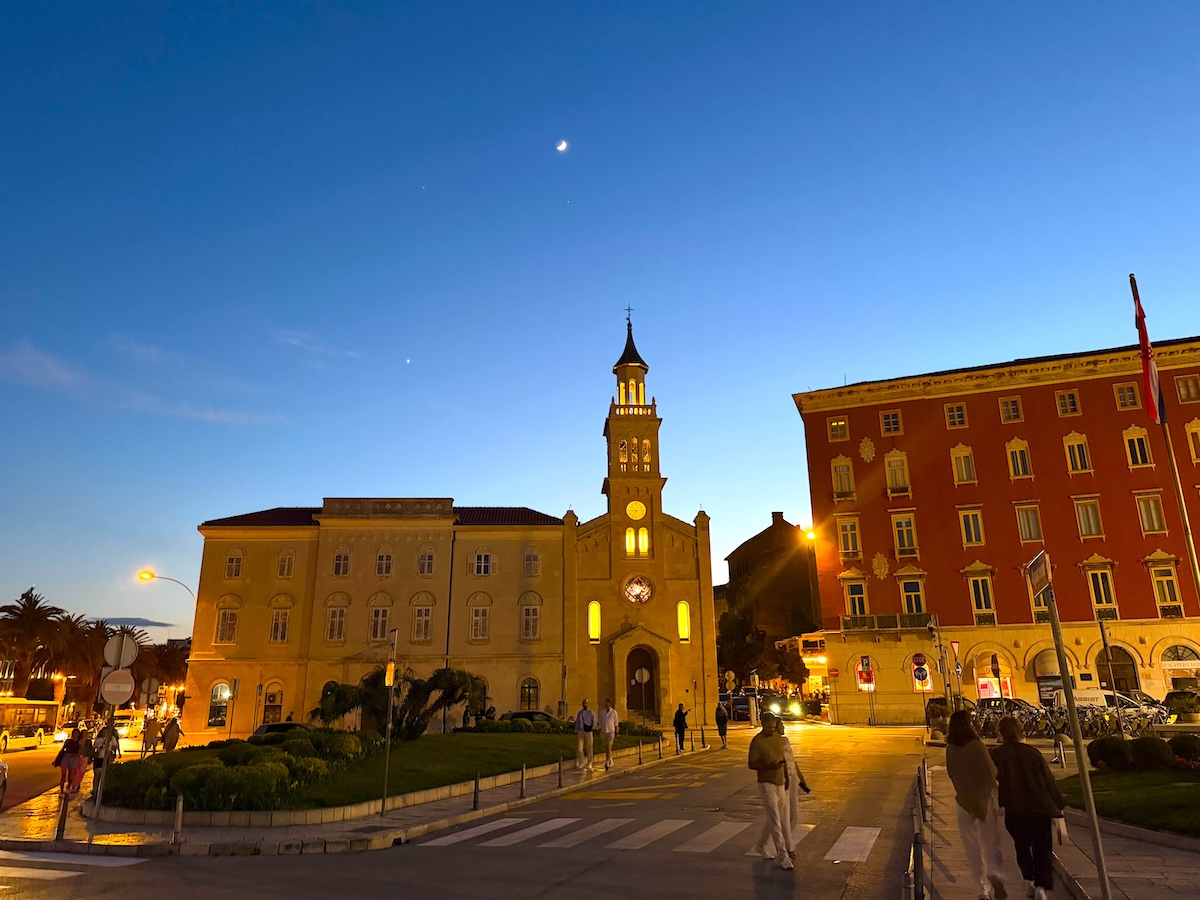
Admission to the church is free, but hours and access to the cloister may vary, so it’s best to check with the convent itself.
Things to see and do outside Split’s historic center
Veli Varoš: A stroll through a traditional dalmatian neighborhood
Veli Varoš is the neighborhood west of the historic center where you can experience a more authentic side of Split, away from the hustle and bustle of the palace. It was traditionally a humble fishing village, with steep, winding streets and traditional Dalmatian architecture. It boasts of being one of the city’s oldest suburbs, a title it vies for with the neighboring neighborhood of Lučac. This was the neighborhood where we stayed during our Randomtrip (specifically in this apartment).
The best-known landmark is the 11th-century Church of St. Nicholas. In addition to strolling around, this is the route to the Marjan Lookout, which offers views of the rooftops, and from there to Marjan Park, places we’ll discuss below.
Marjan Lookout (Prva vidilica na Marjanu)
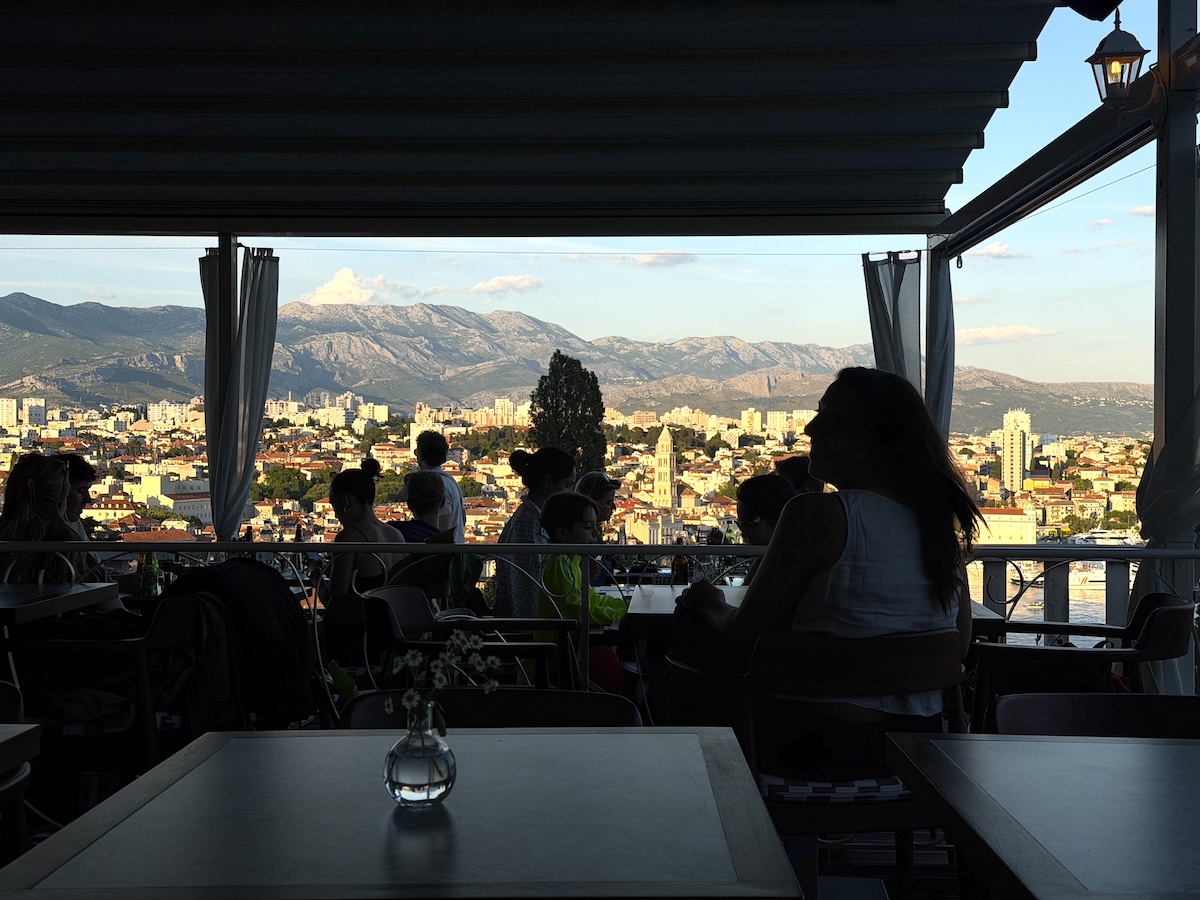
The Marjan Lookout ( Prva vidilica in Croatian, meaning “first lookout”) offers, in our opinion, one of the most beautiful panoramic views of Split. It’s located on the slope of Marjan, the wooded hill that borders the city to the west, and from here you can see the Old Town, the harbor, the stone rooftops, and, in the distance, the islands. The views are stunning, and it’s definitely worth a visit.
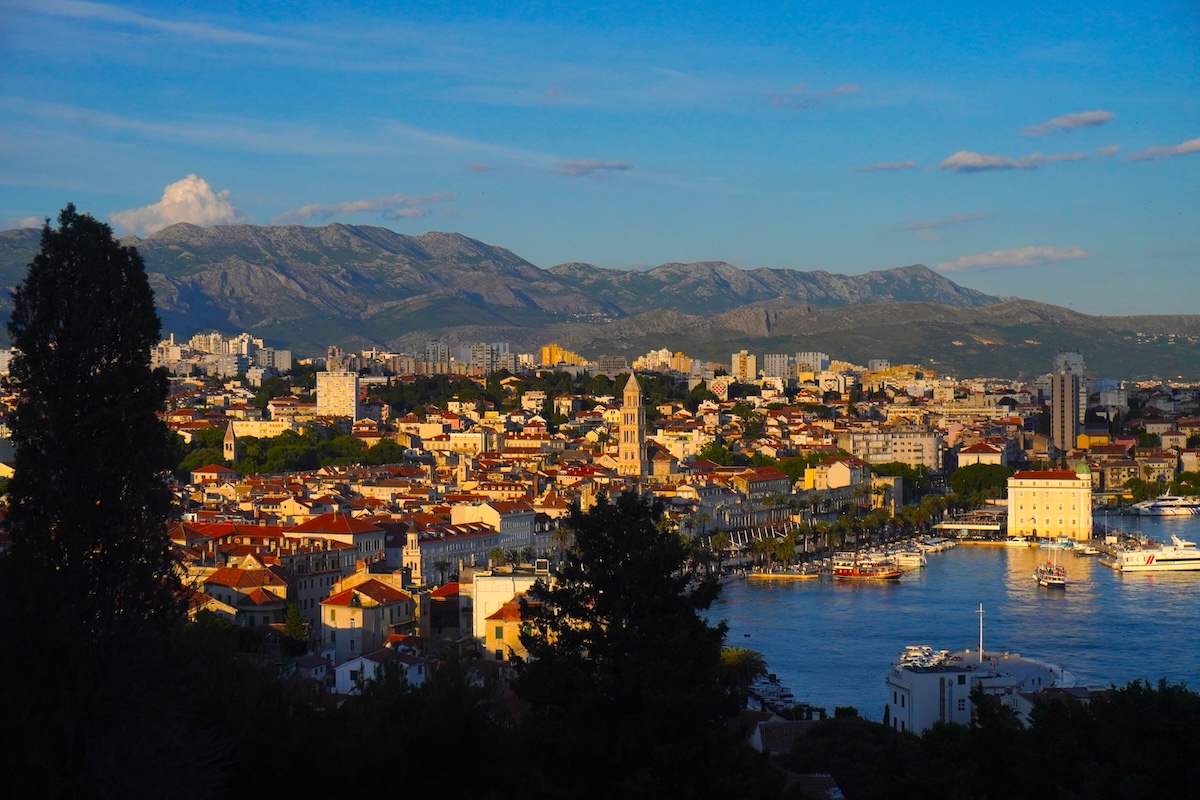
You can get there by climbing these stairs, the Marjan Stairs, or by walking up Senjska Street, which starts at Šperun Square, and then taking the stairs down, or vice versa. At RandomTrip, we stayed right next to the Marjan Stairs, in this apartment, away from the hustle and bustle, close to these stunning views, and even closer to the historic center, just a few steps from the lovely Šperun Square, which takes on a special charm at night.
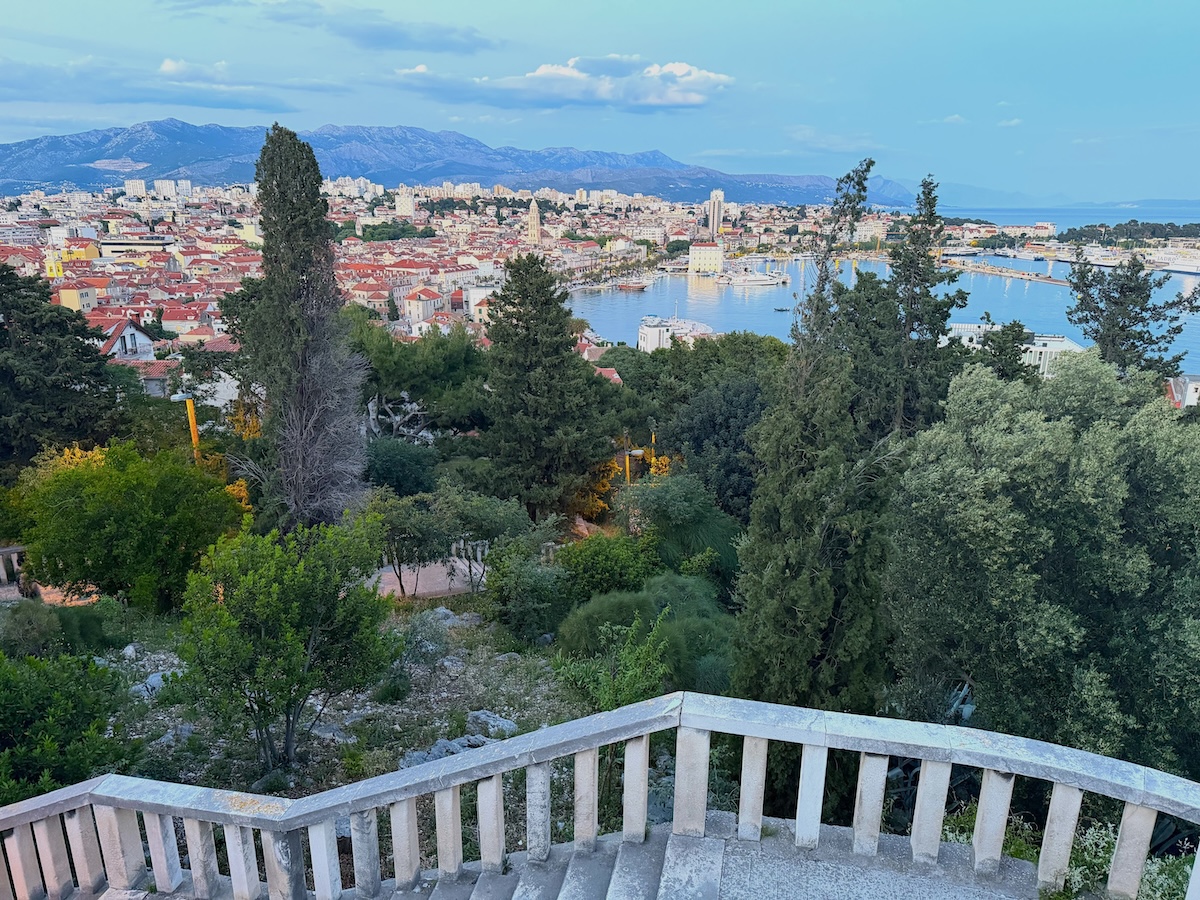
Right at the viewpoint is a bar-restaurant, Terraca Vidilica, with a terrace offering a view of the entire city. In our opinion, the prices are a bit high, but the view makes up for it. At RandomTrip, we recommend going during the day or a little before sunset, because at that time the light falls on the city, reflects off the rooftops, and the scene is absolutely beautiful. Keep in mind, though, that the sun sets on the other side of the hill, so you won’t see the sunset from here.
Marjan Park
If you’ve climbed up to the viewpoint, you’ve already set foot on Marjan, the hill that borders Split on the west. It’s a protected forest park, and its highest point is Telegrin Peak, at 178 meters, offering views of the Split Riviera.
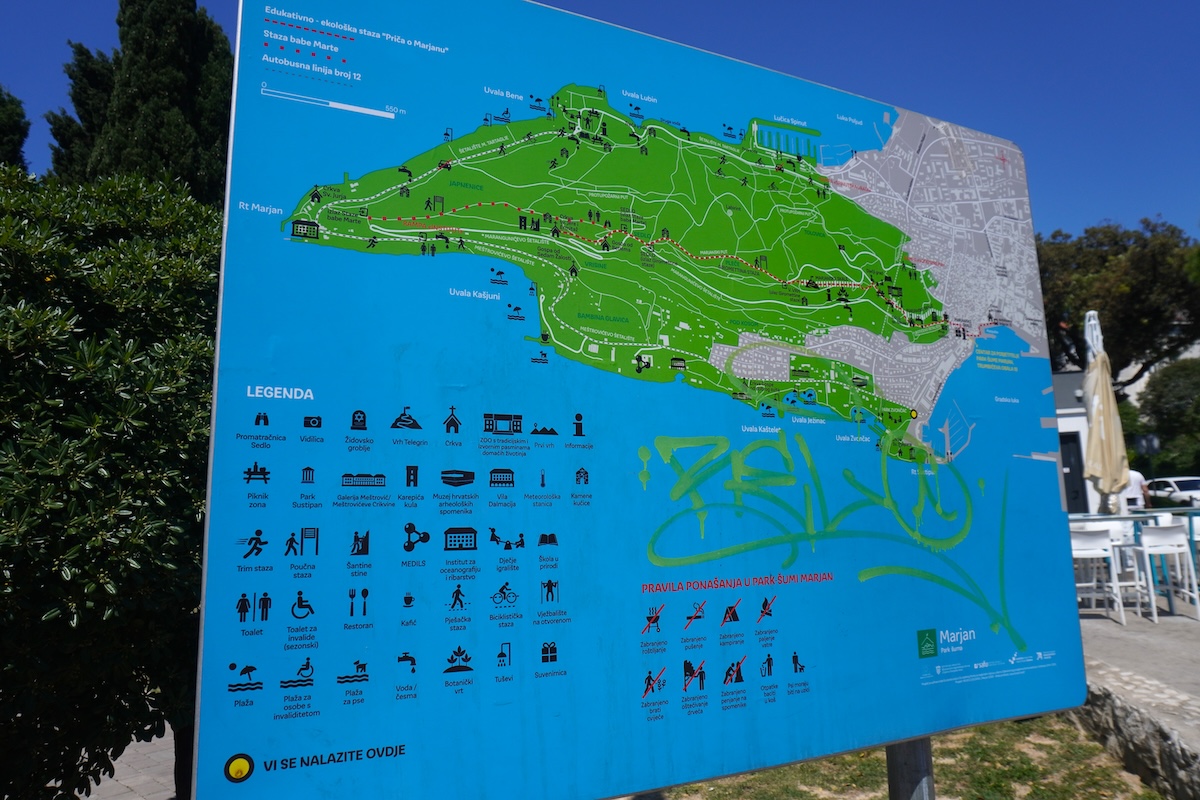
The park features several themed trails focusing on Marjan’s vegetation and geology. To explore them, there’s an app (available on Google Play and the App Store) with an interactive map and an audio guide. The audio guide can also be accessed via your browser and features 51 points of interest marked on the map.
If you prefer to get around by bike, the park has five rental stations for electric and traditional bicycles, a mountain bike trail, and a fitness trail (with exercise stations) that runs through the park parallel to its northern coastline. You can find all this information on the park’s website.
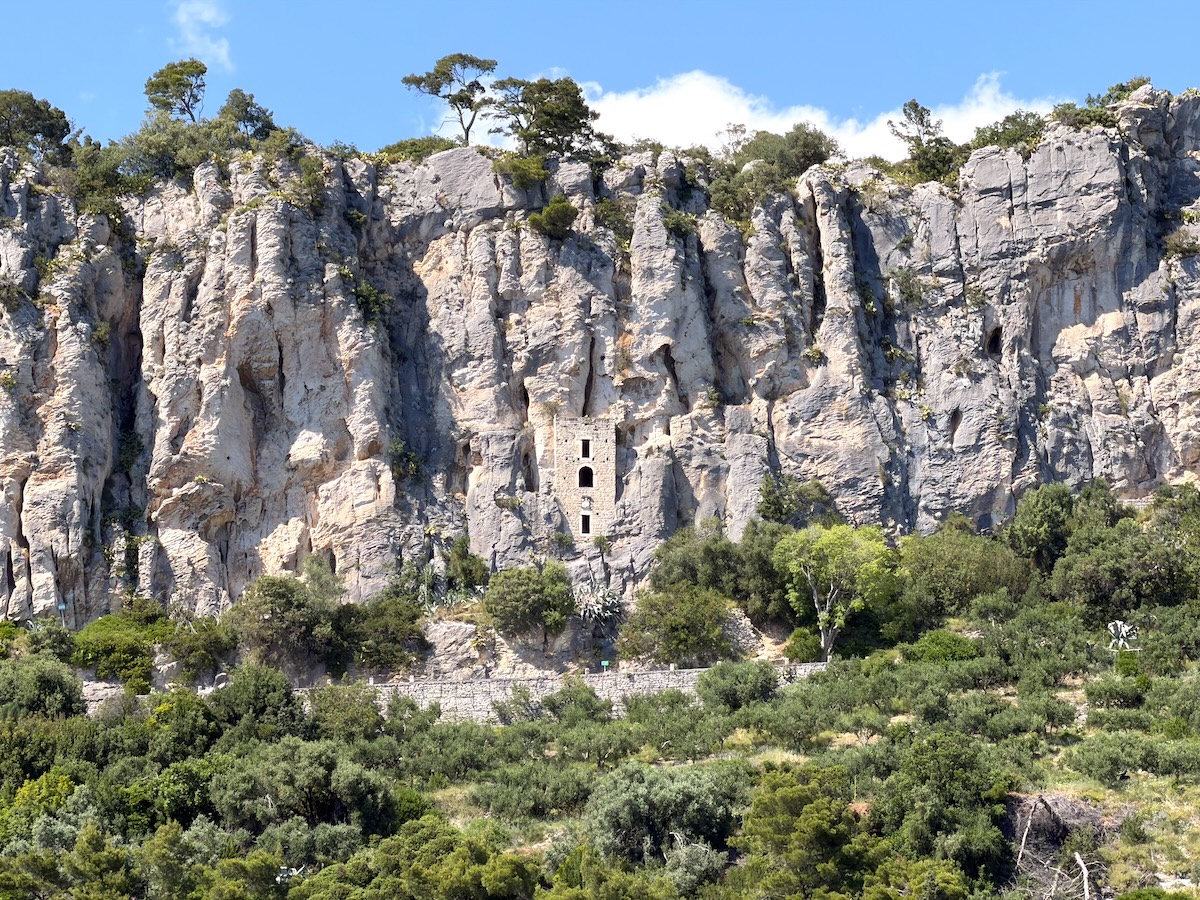
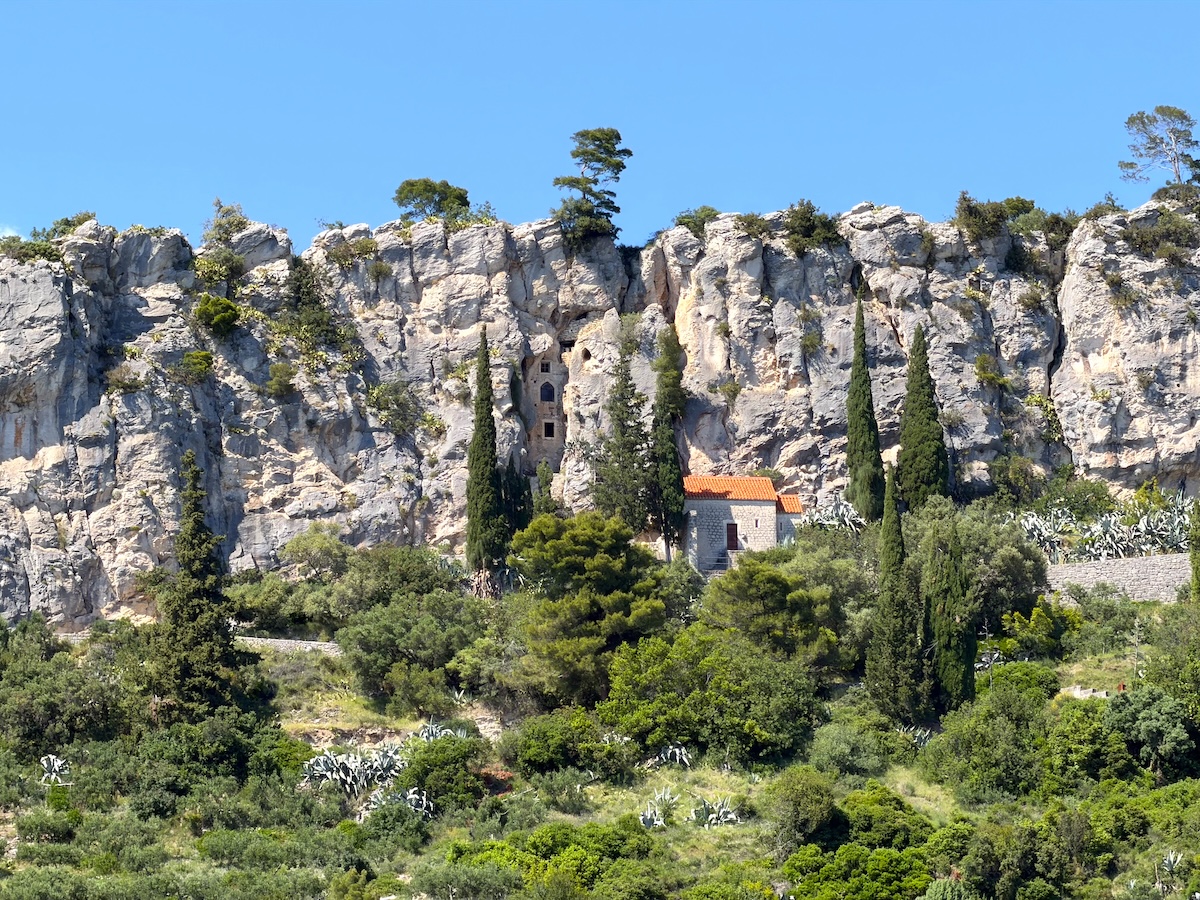
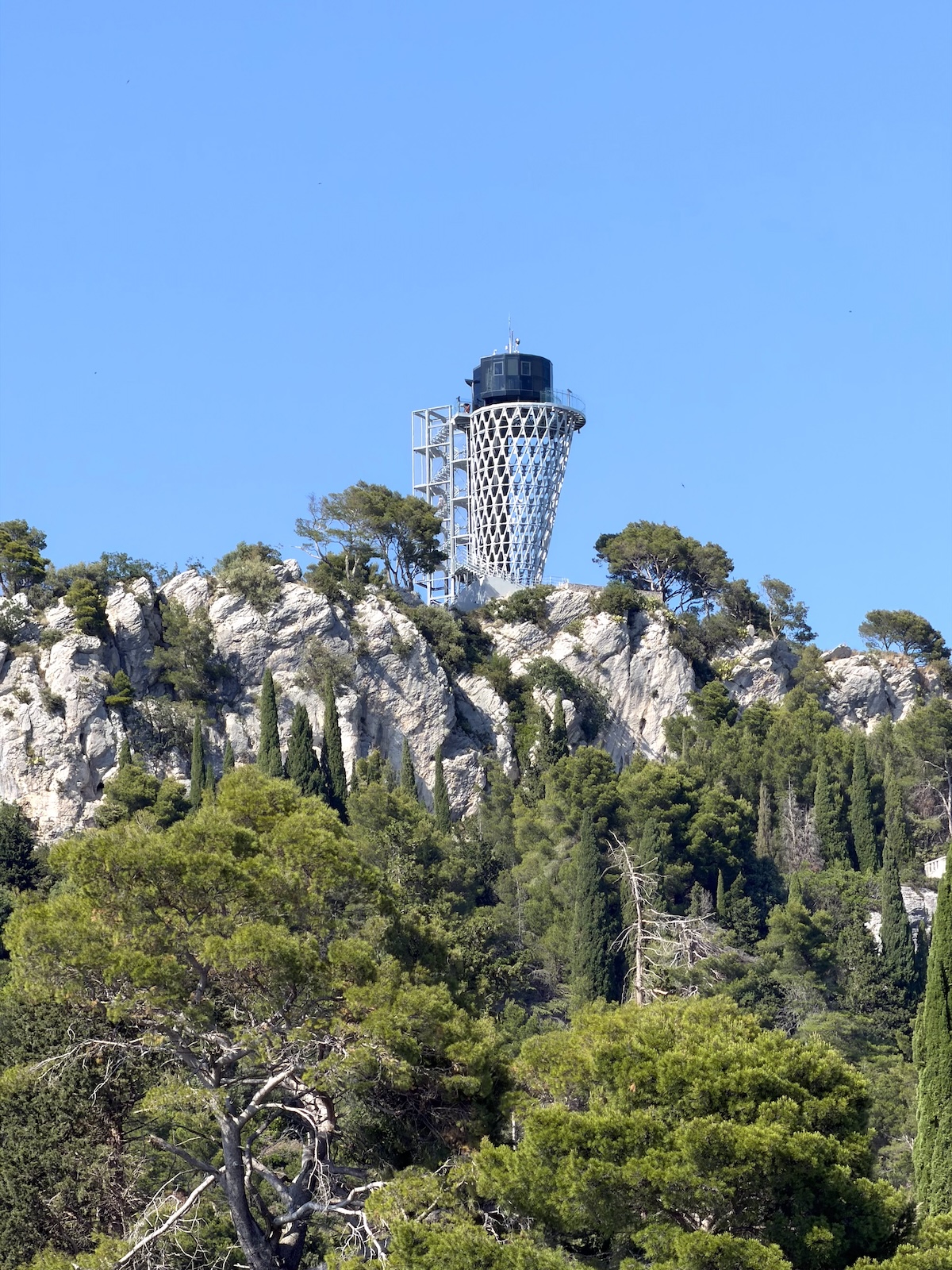
You can walk up to Marjan from the Riva via the Marjan stairs. At the foot of the hill are beaches such as Kasjuni, Bene, and Kaštelet (Obojena), which we’ll discuss further below in the “Split Beaches” section. The Jewish cemetery, founded in 1573, is also located on the hillside. Inside the park, there are three points of interest that caught our attention, specifically from Kasjuni Beach, albeit with the help of our phone’s zoom feature: a tower built on the cliff, a church with a chapel, and a lookout point.
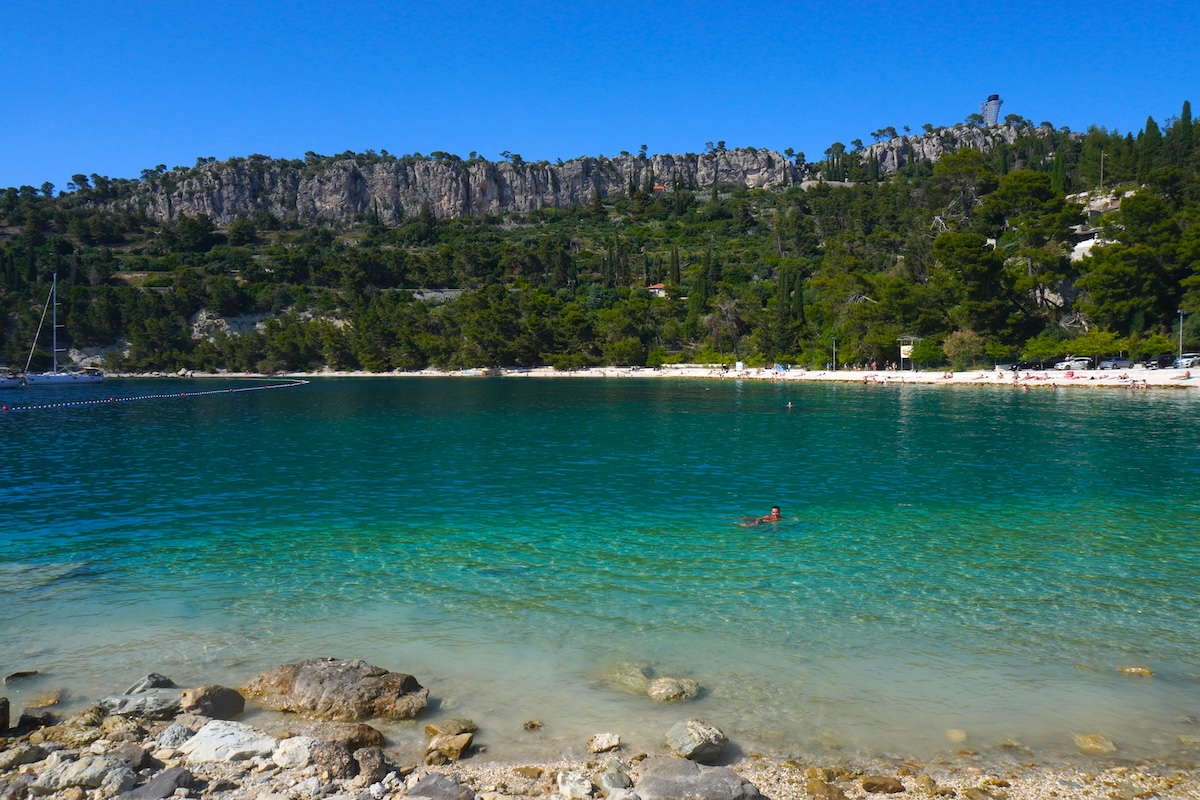
The Karepić Tower was built into the rock of the cliff itself in 1523 by the Karepić family as a refuge for those working in the fields during times of attacks and raids.
The Church of St. Jerome (Sv. Jere) is a small 15th-century church. Its exact date of construction is unknown, but it was already completed by 1480, when Andrija Aleši crafted and signed its altar, which features St. Jerome.
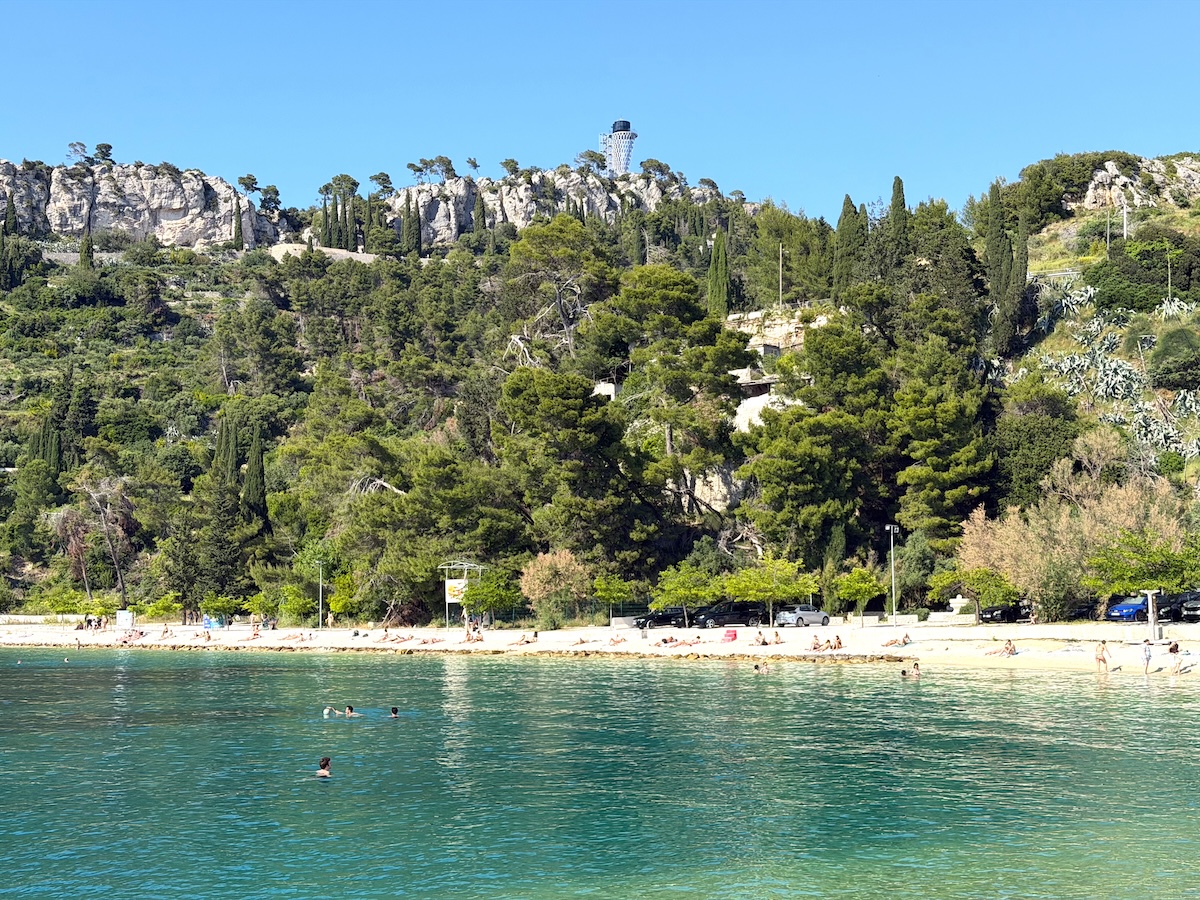
The Vidikovac Observation Tower is 19 meters tall and was inaugurated in September 2024. Admission is free. Until the end of September, it’s open from 8:00 a.m. to 8:00 p.m., and the rest of the year, the hours are adjusted to daylight hours. It’s closed at night and during inclement weather. From Kaštelet Beach (Obojena), you can see it peeking out over the cliff, and that’s exactly where we took a photo of it. We didn’t get a chance to go up, but the panoramic view must be incredible!
Split’s Olympic Promenade (Šetnica splitskih olimpijaca)
Split’s Olympic Promenade is the continuation of the Riva (which we mentioned earlier), where you’ll see many yachts moored. It stretches 623 meters along a path paved with white stone from Brač, lined with terraces of cafés and restaurants (somewhat posh and expensive, otherwise, they wouldn’t be frequented by the people who have their yachts moored there) all along the route.
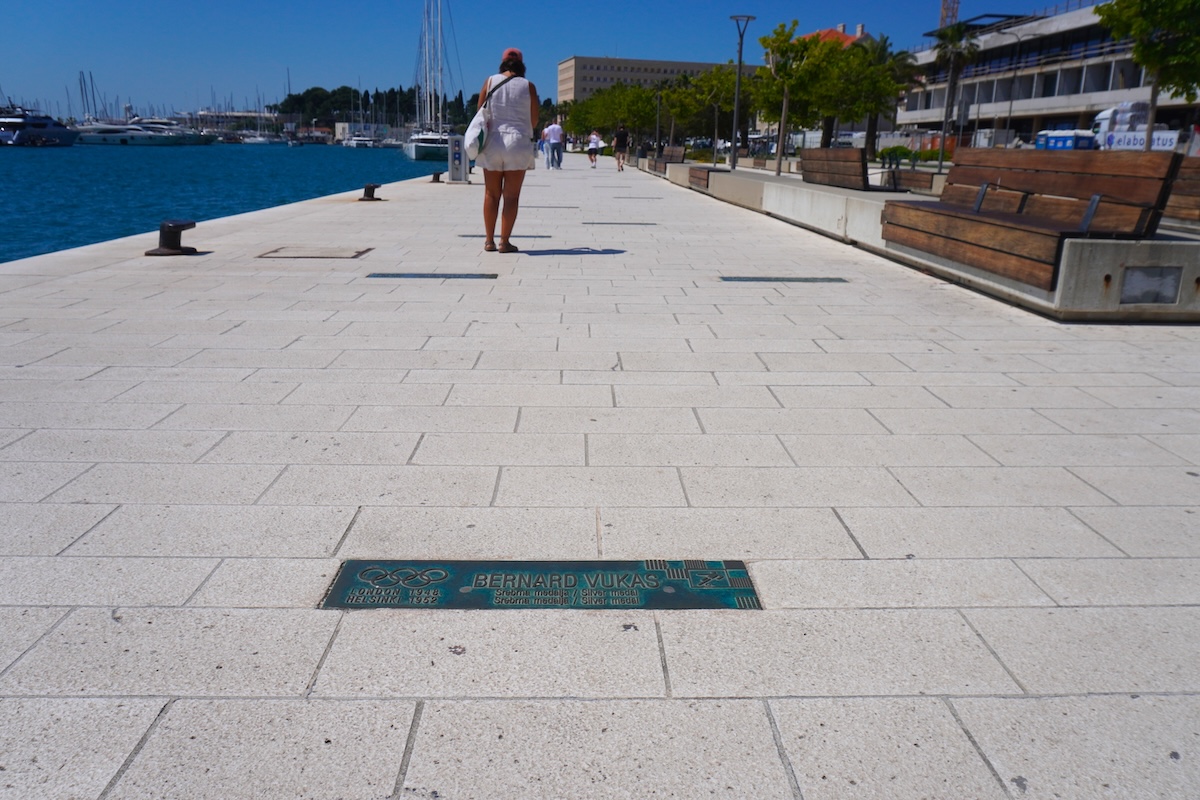
What sets it apart from other seaside promenades is the pavement: right by the sea, there are bronze plaques bearing the names of athletes from Split who have won Olympic medals. Each plaque lists the athlete’s name, the year and city of the Games, the medal won, and an image of the sport, and they’re arranged in chronological order. The first commemorates the silver medal won by soccer players Bernard Vukas, Frane Matošić, and Božo Broketa at the 1948 London Games. Among the names are well-known figures such as Blanka Vlašić, Toni Kukoč, Goran Ivanišević, and Barbara Matić.
As of 2021, there were plaques honoring 76 athletes who had won a total of 94 medals across 11 sports, and the list has continued to grow after each edition of the Olympic Games. In May 2023, an additional 21 plaques were added to honor those who have won medals at the Deaflympics, the Olympic Games for the deaf. Split natives have earned a total of 30 gold, 4 silver, and 12 bronze medals in handball, soccer, track and field, and taekwondo, with the first medal coming in 1949.
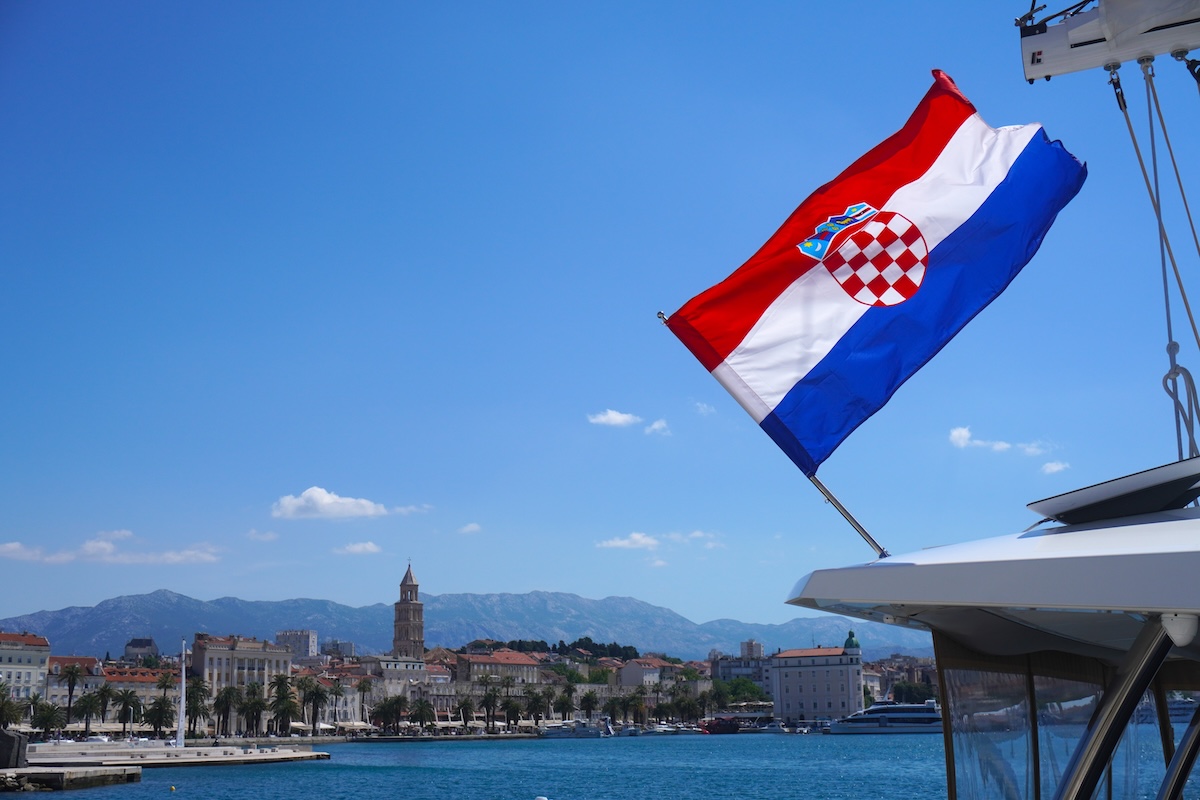
Split boasts the highest number of medalists per capita in the world, a reflection of the city’s sporting tradition. If you’d like to learn more, there’s a free online audio guide featuring the biographies and achievements of the medalists.
Sustipan Park and Zvončac Park
Sustipan Park is located at the southwestern tip of Split Harbor, just a few minutes’ walk from downtown along the coast. Its name comes from the medieval monastery of St. Stephen (Sv. Stjepan pod Jelsom, “under the pines”), which was the site where Stjepan II, the last king of the Trpimirović dynasty, was buried in 1091. All that remains of the monastery are the foundations of the basilica and a 19th-century church.
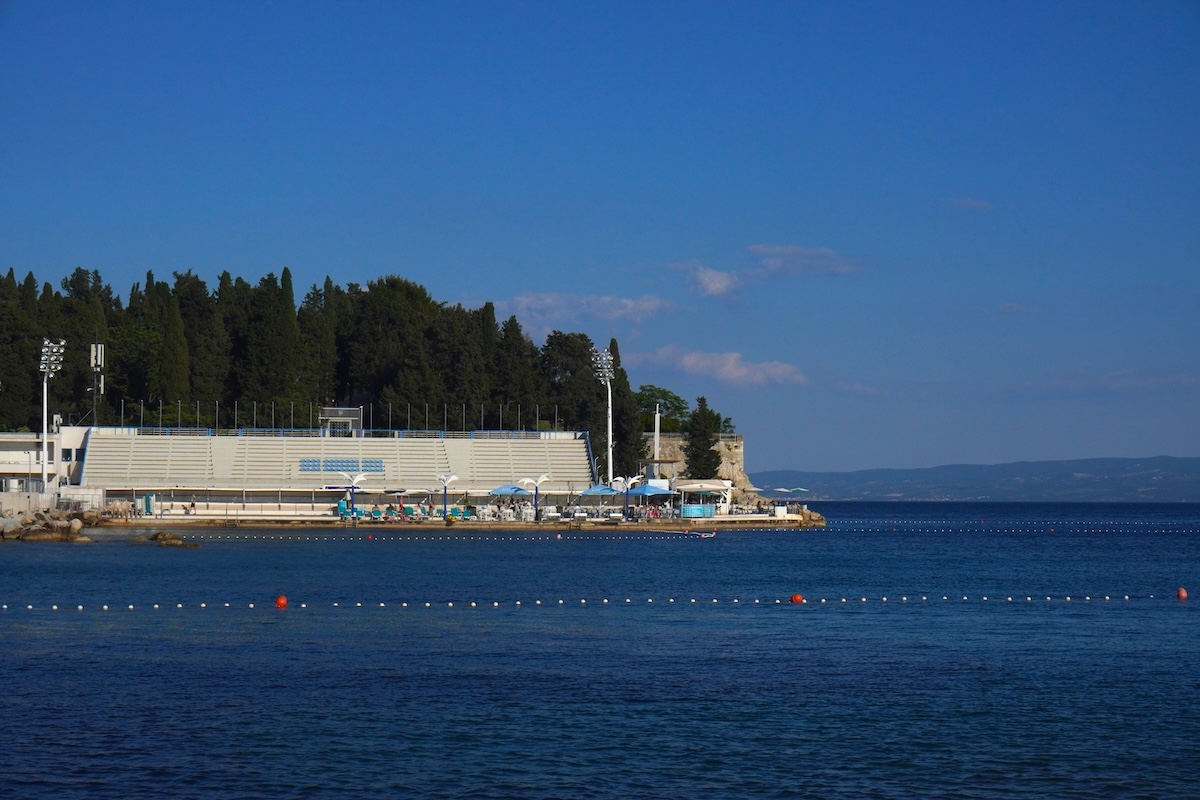
In that same century, the headland became the city’s first cemetery, which the Yugoslav authorities demolished after World War II. Only a neoclassical shrine remains. Today it is a park with views of the open sea and the islands. You can also see the ACI marina on one side and the pool of the Jadran swimming and water polo club on the other.
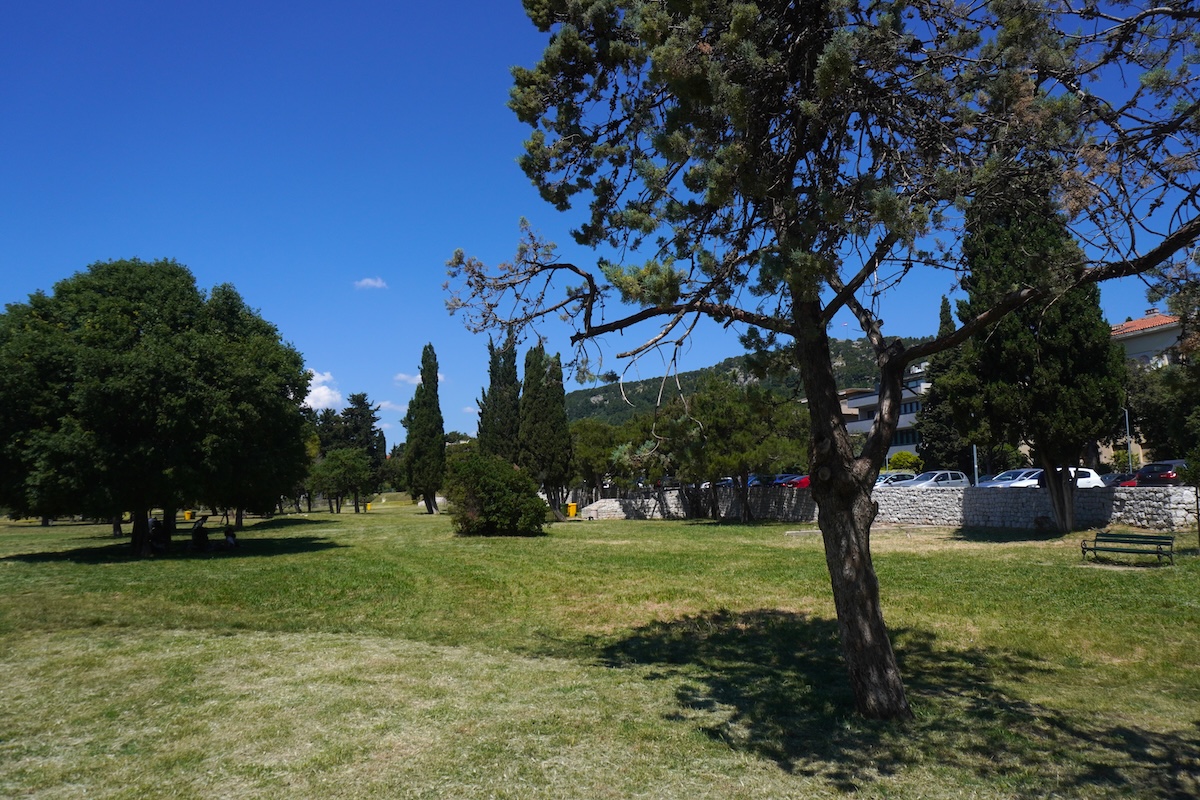
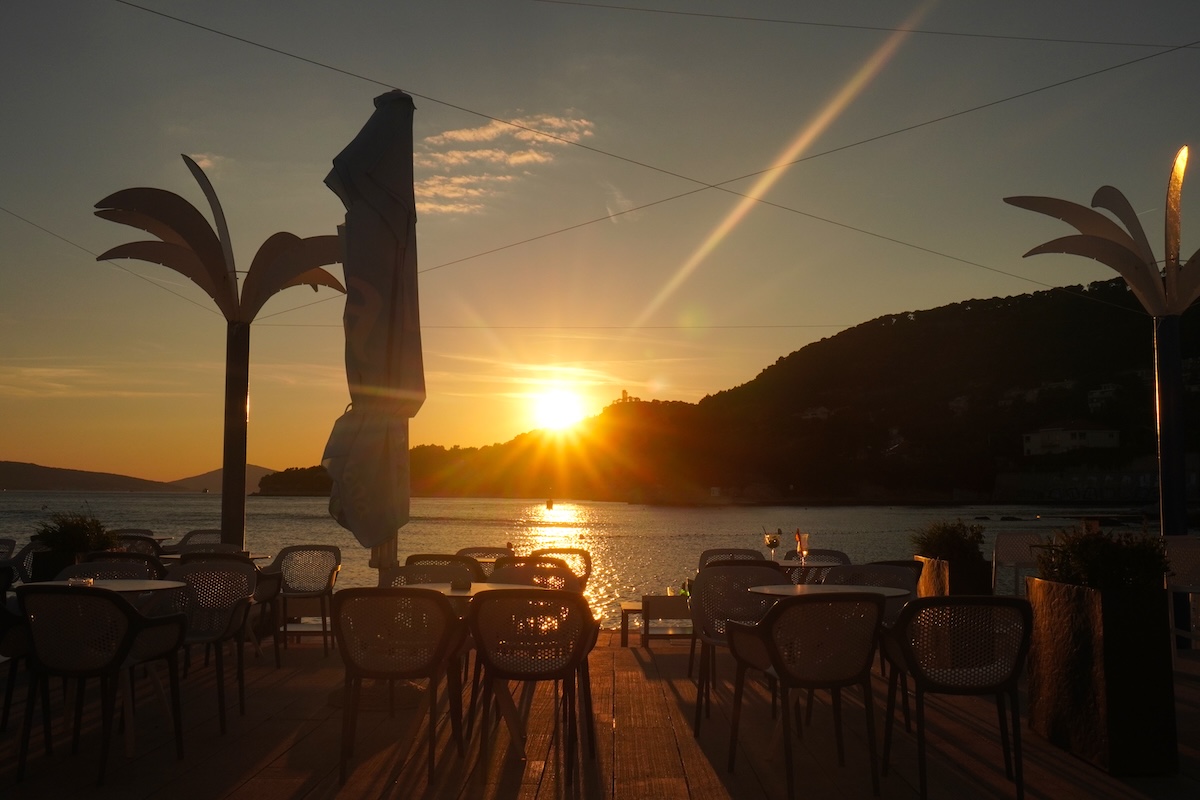
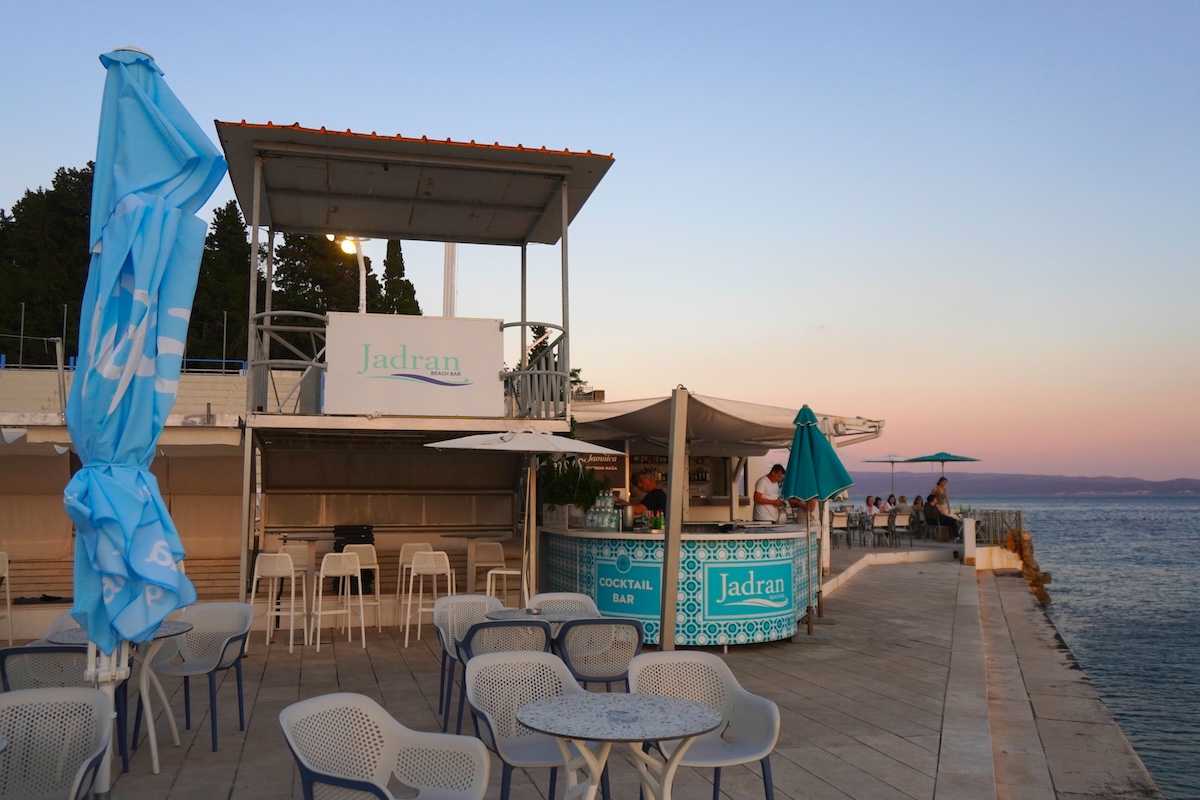
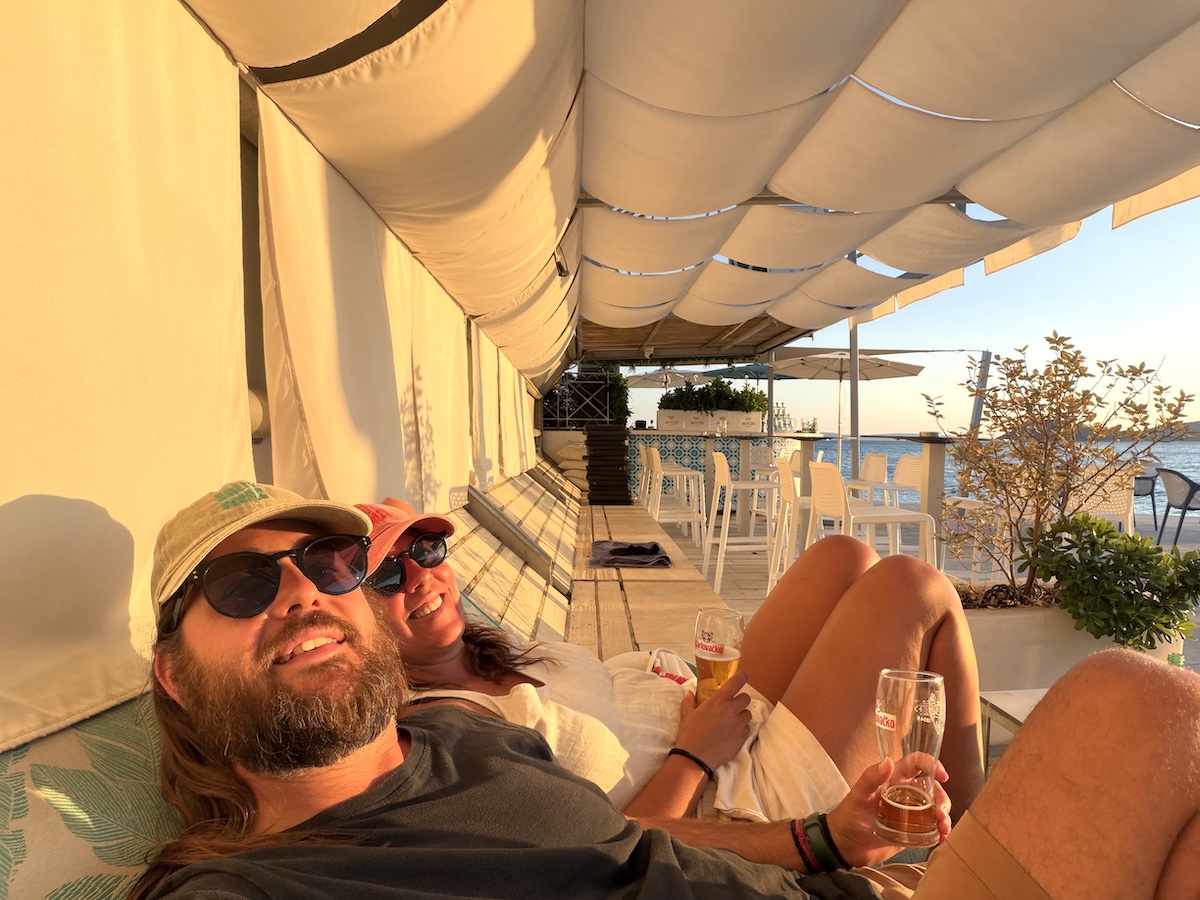
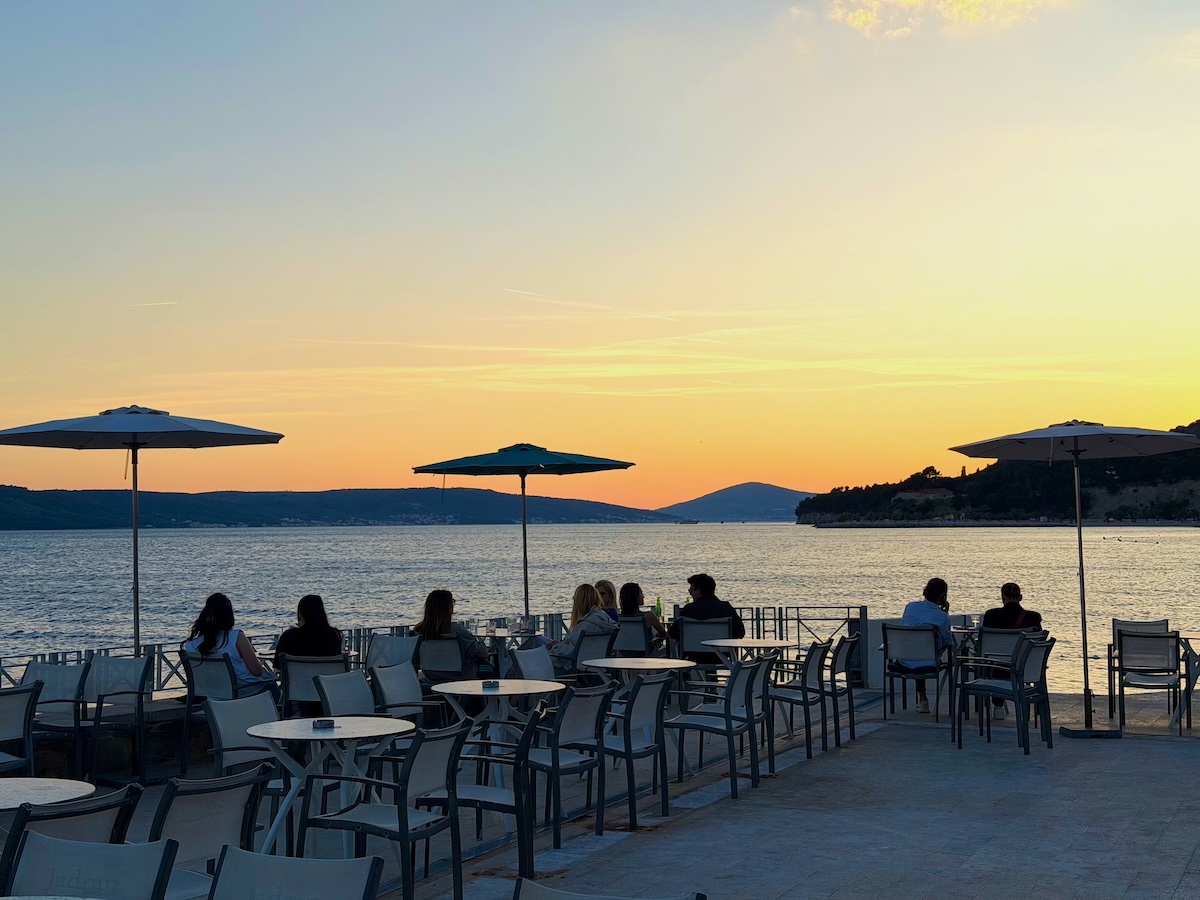
Zvončac Park is one of the city’s most visited parks. It is close to the beaches, and you can watch the sunset from Bar Jadran. In 2025, the first of four phases of its renovation was completed, featuring a path accessible to wheelchairs and strollers; future phases will include an accessible playground, more greenery, solar-powered lighting, a dog park, and a public restroom.
Meštrović Gallery (Galerija Meštrović) and Kaštilac: A feast for the denses
Ivan Meštrović is the most famous Croatian sculptor of the 20th century, and the Meštrović Gallery is the best place to understand why.
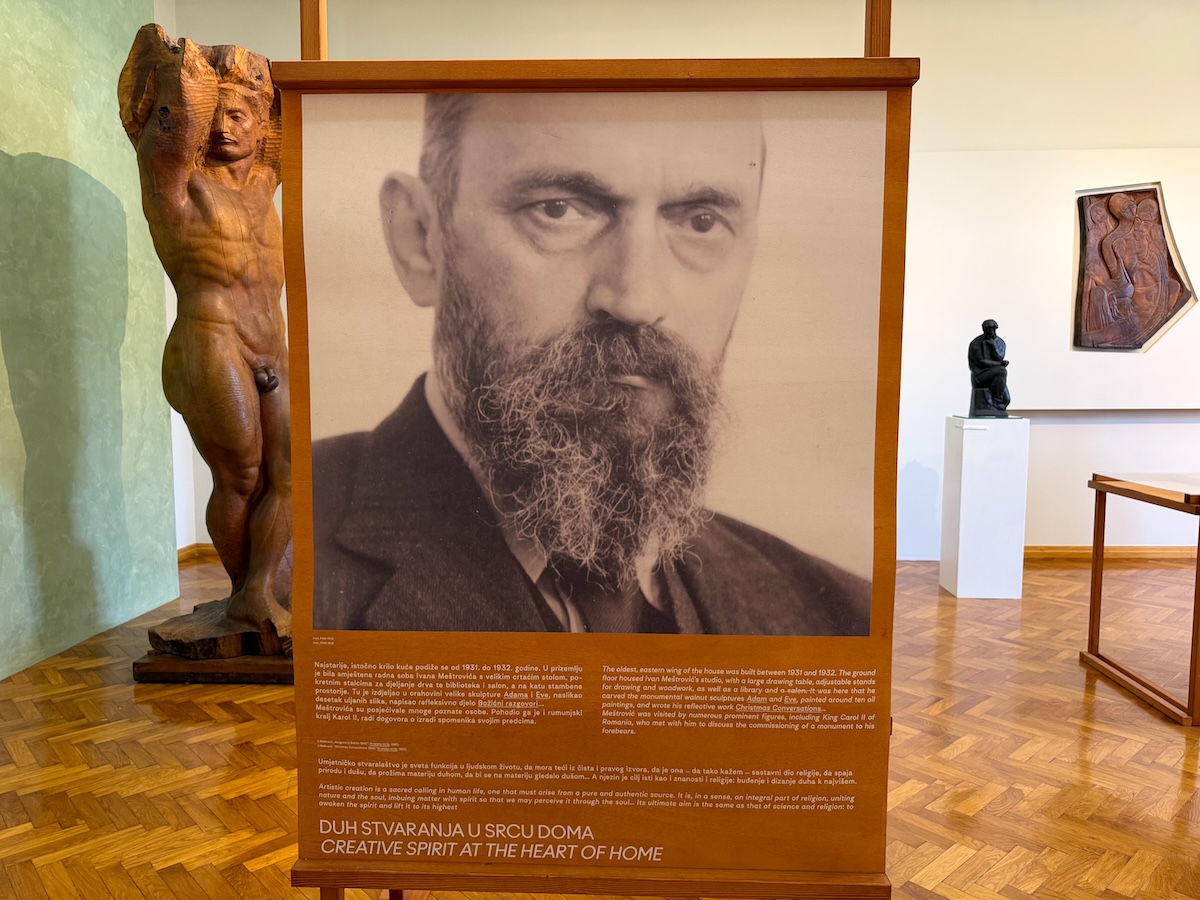
Meštrović was born in 1883 in Vrpolje, in Slavonia (eastern Croatia), and grew up in Otavice, in inland Dalmatia. At around age 17, he learned to carve stone in Pavao Bilinić’s workshop in Split. He later studied at the Vienna Academy, worked in Paris and Rome, and exhibited in London. He later settled in Zagreb, the country’s capital, and in 1947 moved to the United States, where he taught sculpture at the universities of Syracuse and Notre Dame. He died there in 1962 and is buried in the family mausoleum in Otavice.
Meštrović Gallery
The building that houses the gallery was his summer home. He purchased the land west of Split in the 1920s and built a villa to work, live, and exhibit his art. He constructed it gradually, from east to west, between 1931 and 1939, with the architects Fabijan Kaliterna, Lavoslav Horvat, and Harold Bilinić. From the summer of 1932 onward, it was his favorite home, although he never lived there permanently. In 1952, he donated the villa and 132 works to the Croatian state, and the gallery opened to the public on September 9 of that same year. The dining room still retains its original appearance.
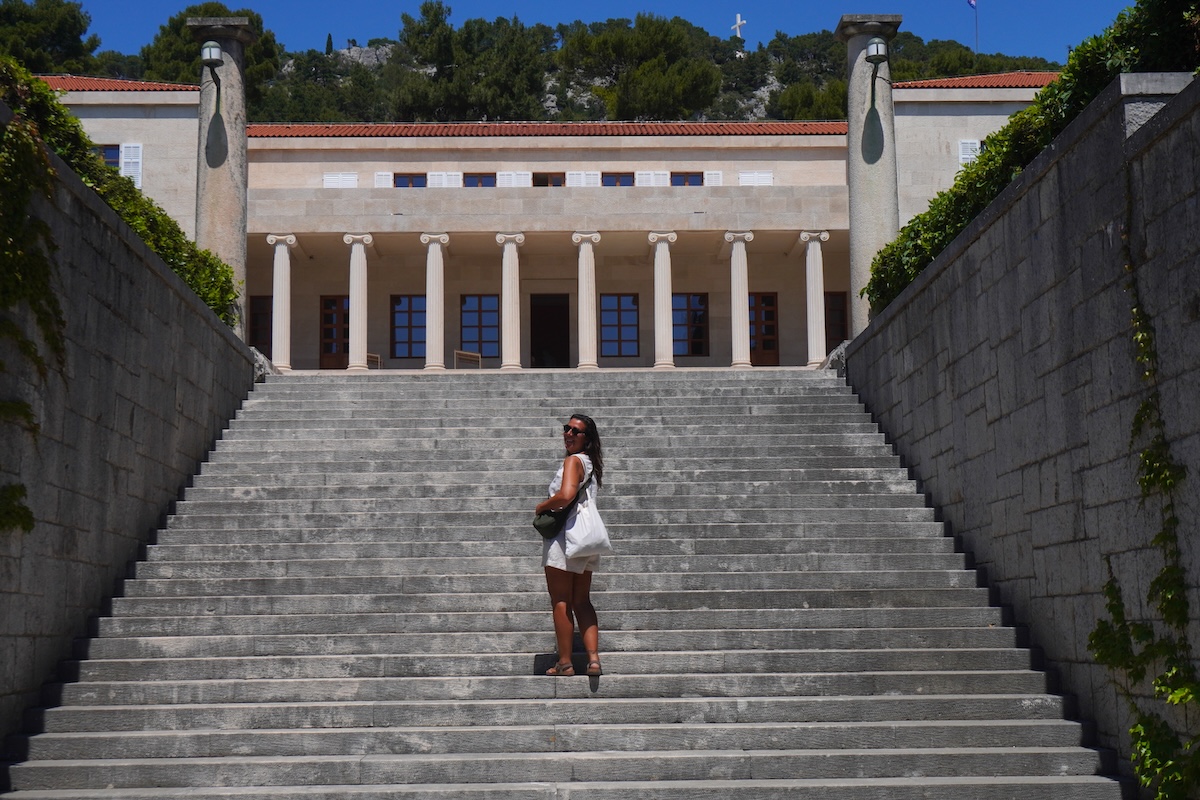
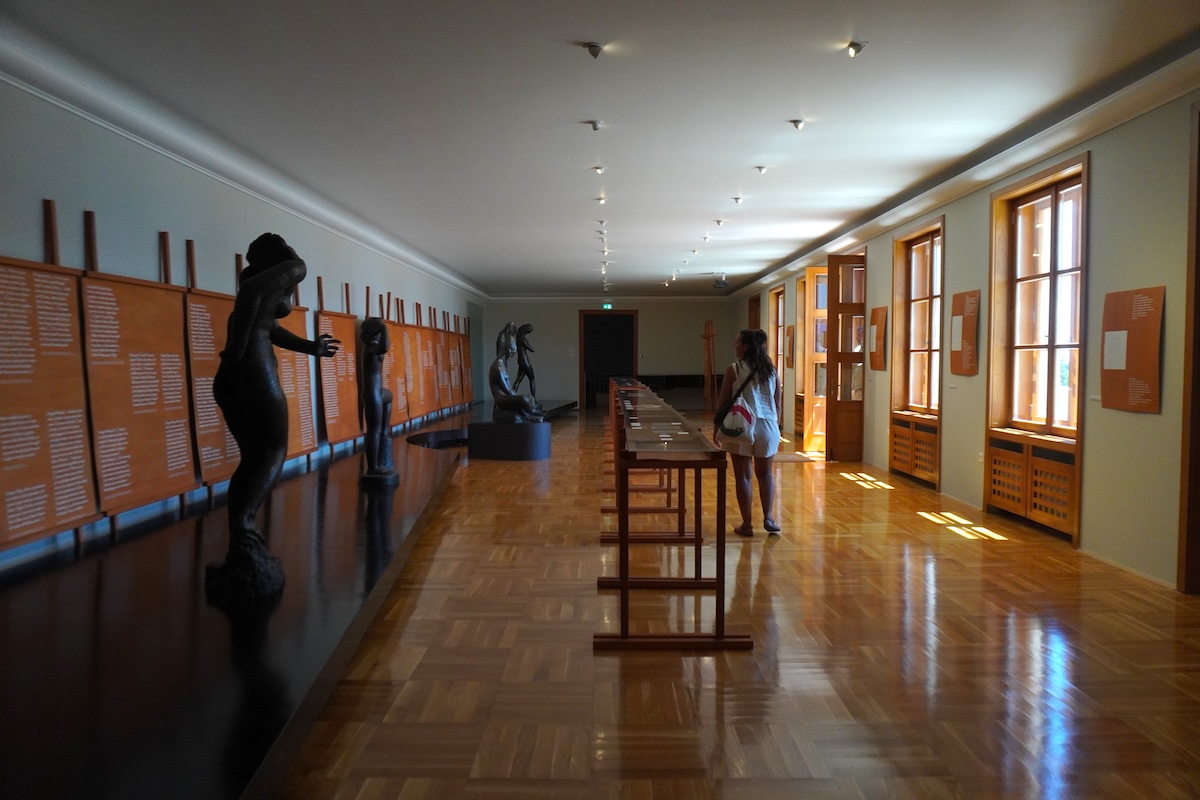
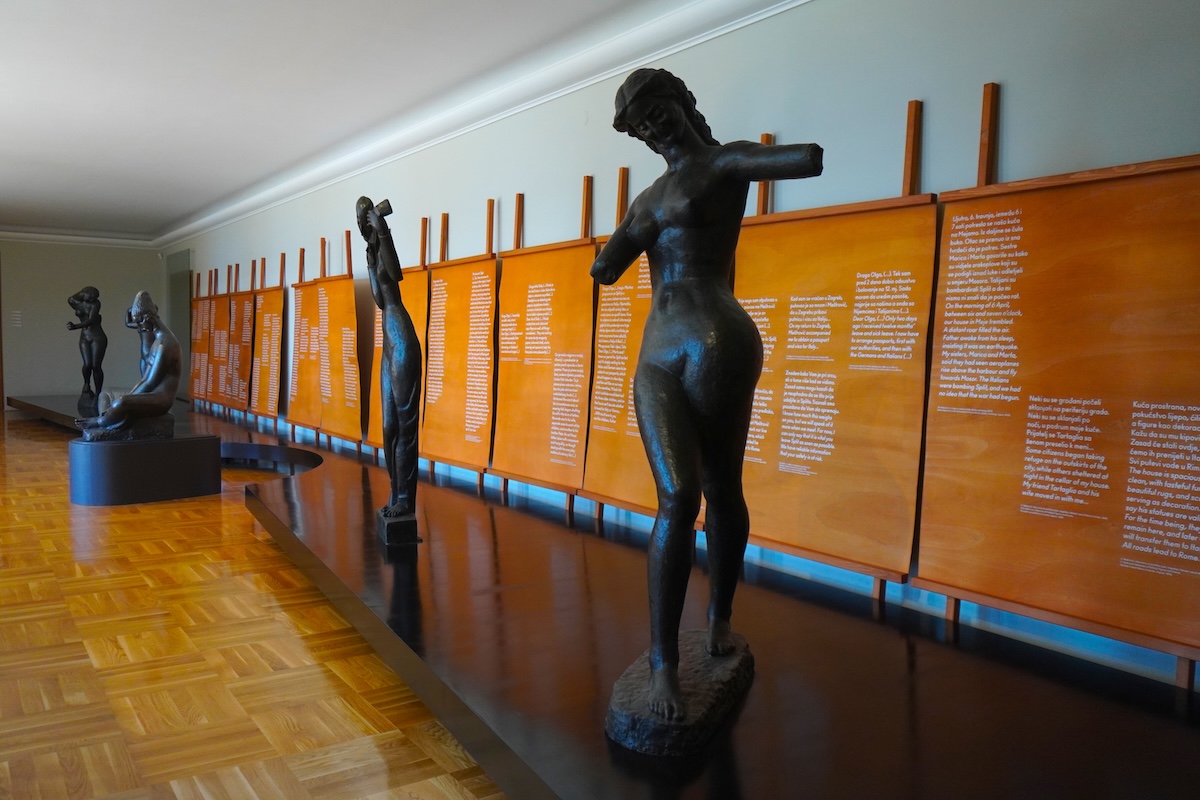
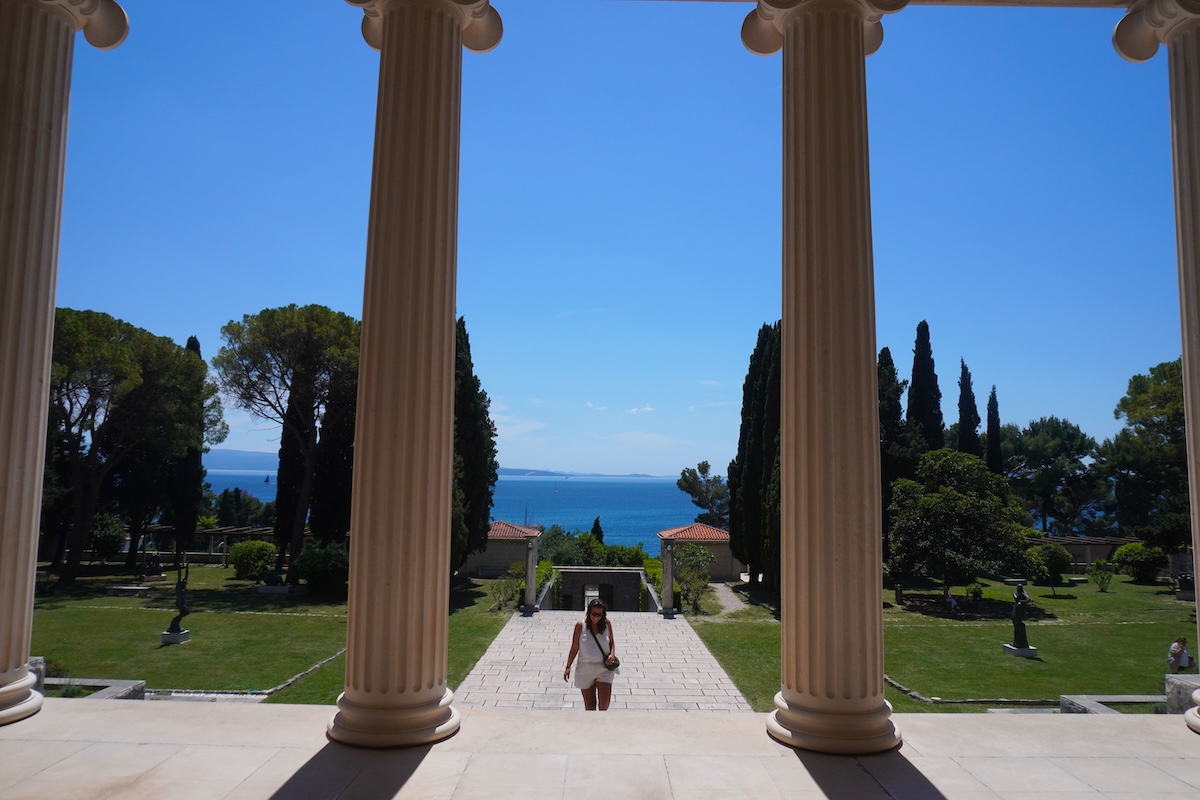
At RandomTrip, we enjoyed our visit to the gallery as a feast for the senses, an oasis of tranquility near the city. It’s located close to the historic center and right next to two beaches, Ježinac and Kaštelet, where we went to cool off afterward, and it became one of our favorite stops on the trip.
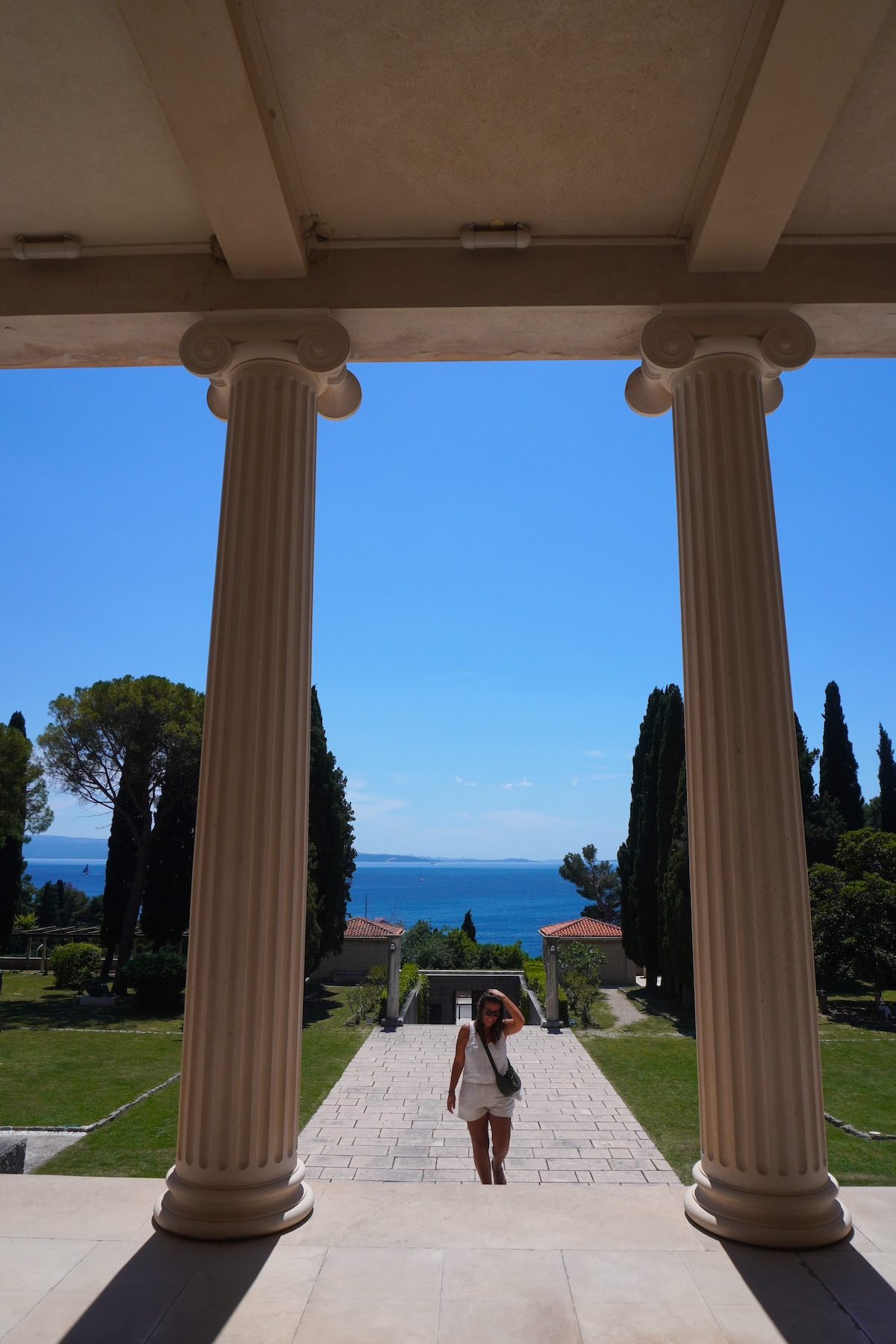
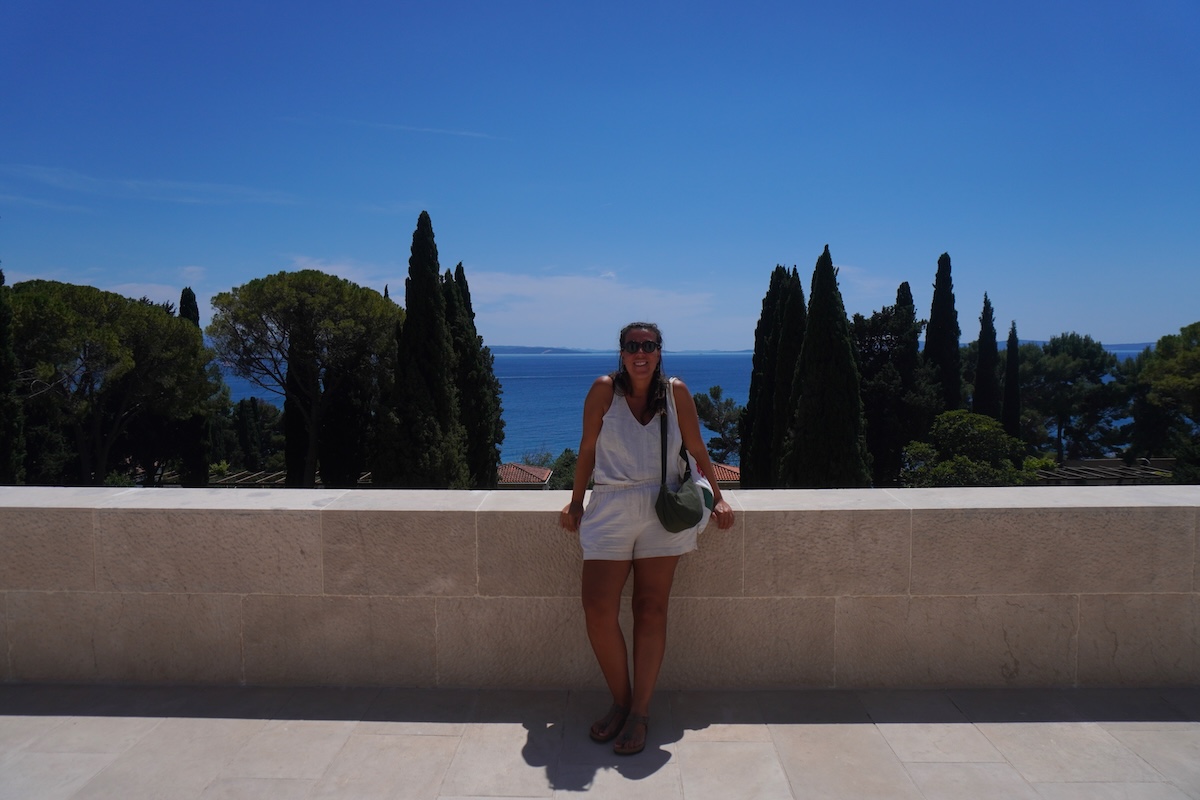
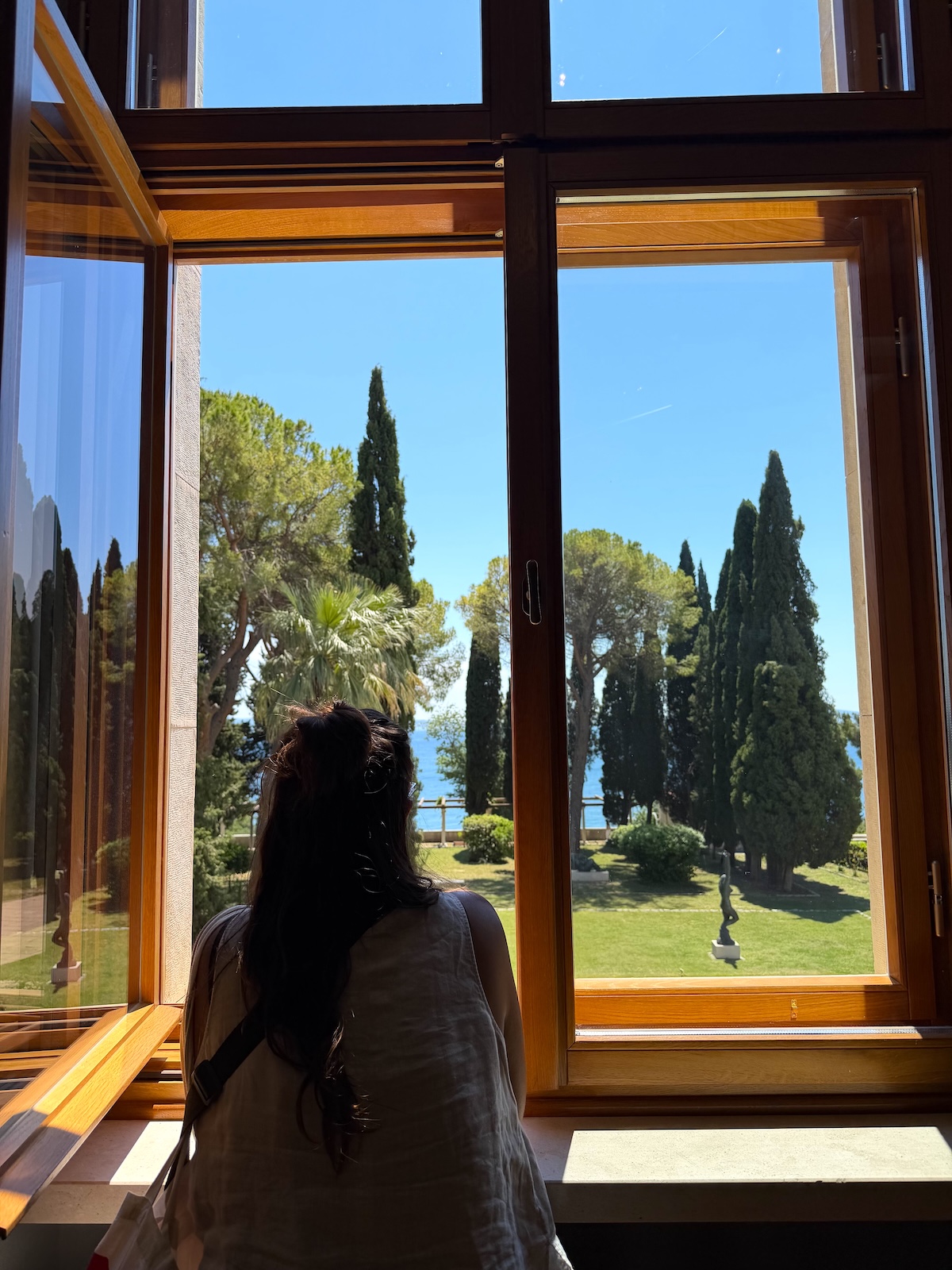
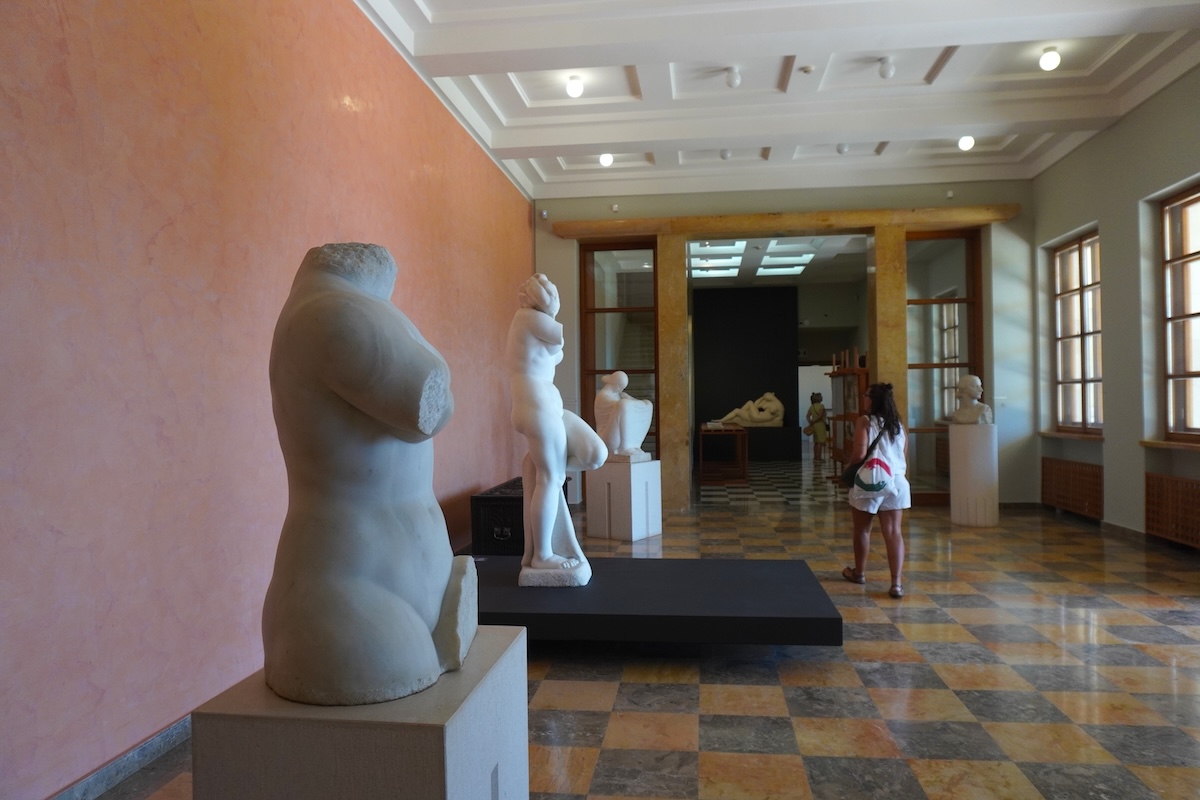
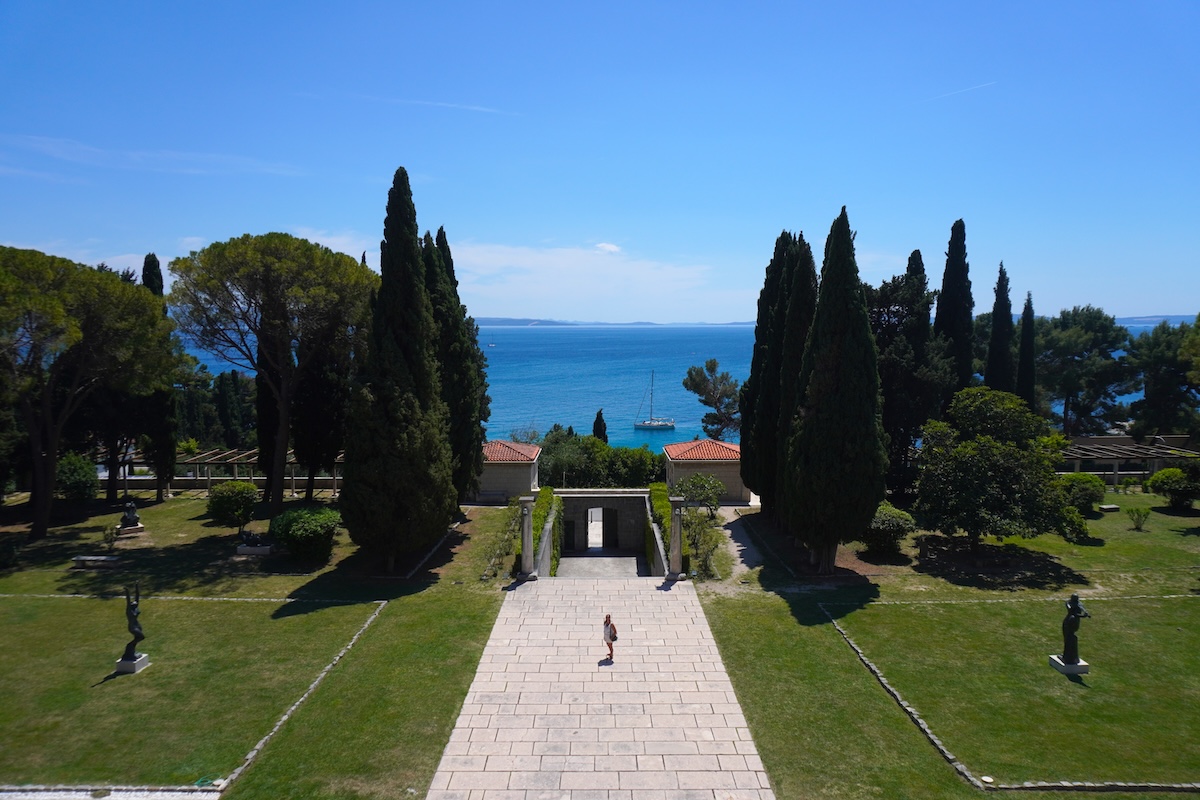
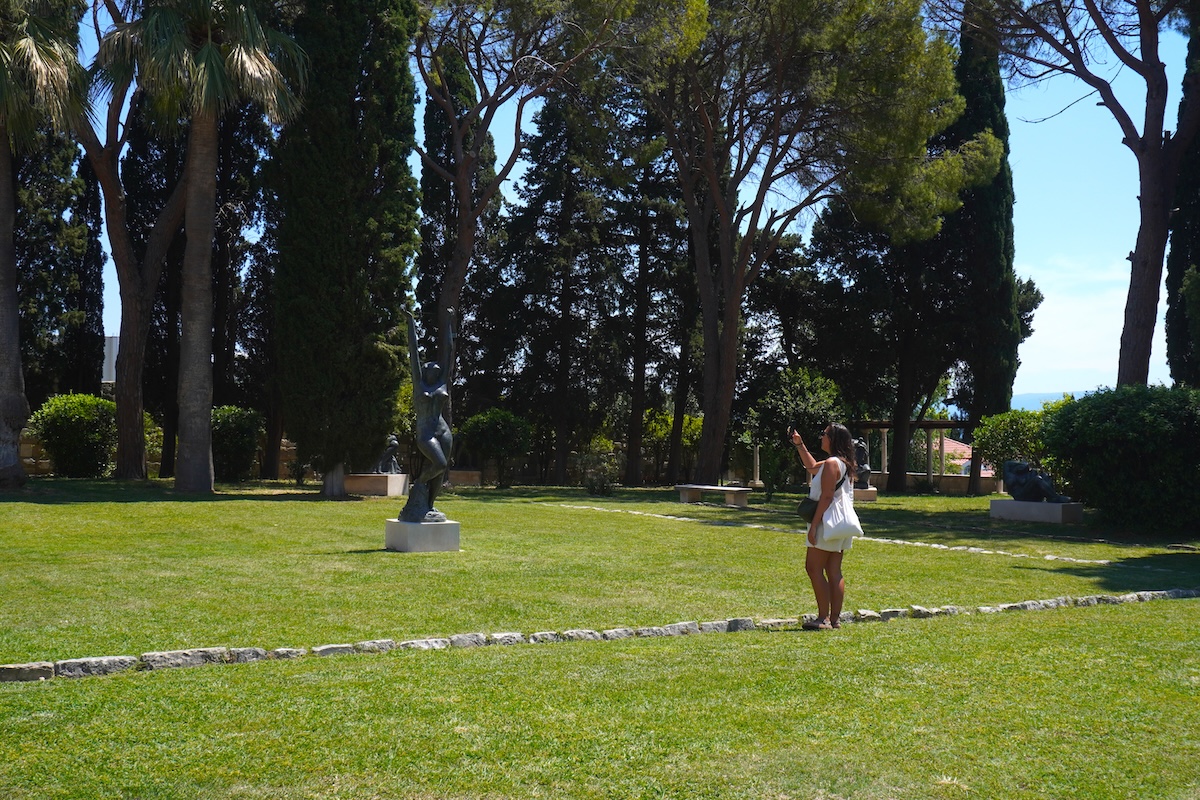
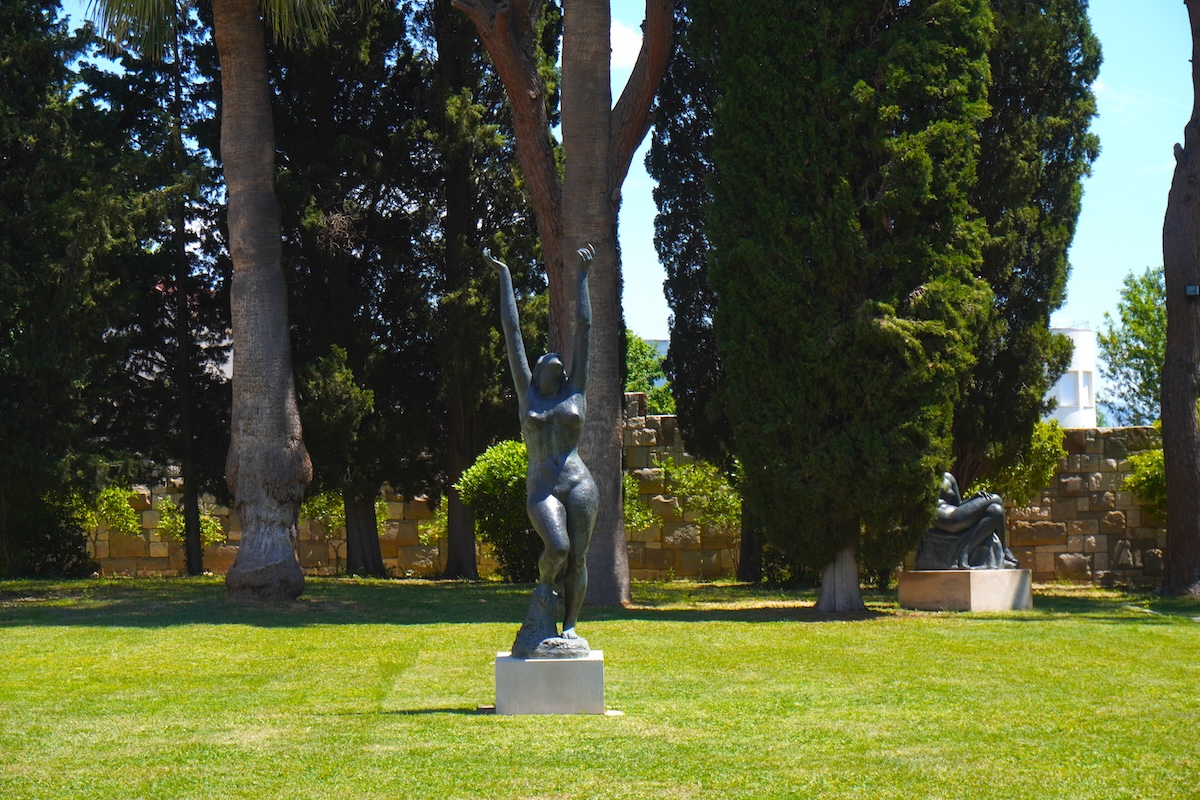
The gallery’s garden is dotted with sculptures by Meštrović, offering views of the Adriatic. We could hear little more than the sound of the sea and, carried by the breeze, the rustling of the treetops. There, our attention was drawn to Persephone, a bronze figure from 1946 that the artist created in Rome and who seemed to be experiencing the same sensation we felt in the garden: with her arms raised, she almost seemed to come to life. However, we later discovered, thanks to what we read inside the gallery, that Persephone’s raised arms actually express the very lack of freedom that Meštrović experienced after his arrest in 1941 in a prison run by the Ustaše regime (the Croatian fascist government of World War II) in Zagreb.
Inside, the tour through the galleries is a journey through his sculptures. Among the highlights is Job, another bronze from 1946 that evokes his captivity between 1941 and 1942. It is considered a masterpiece of his second, expressionist period and has its own room.
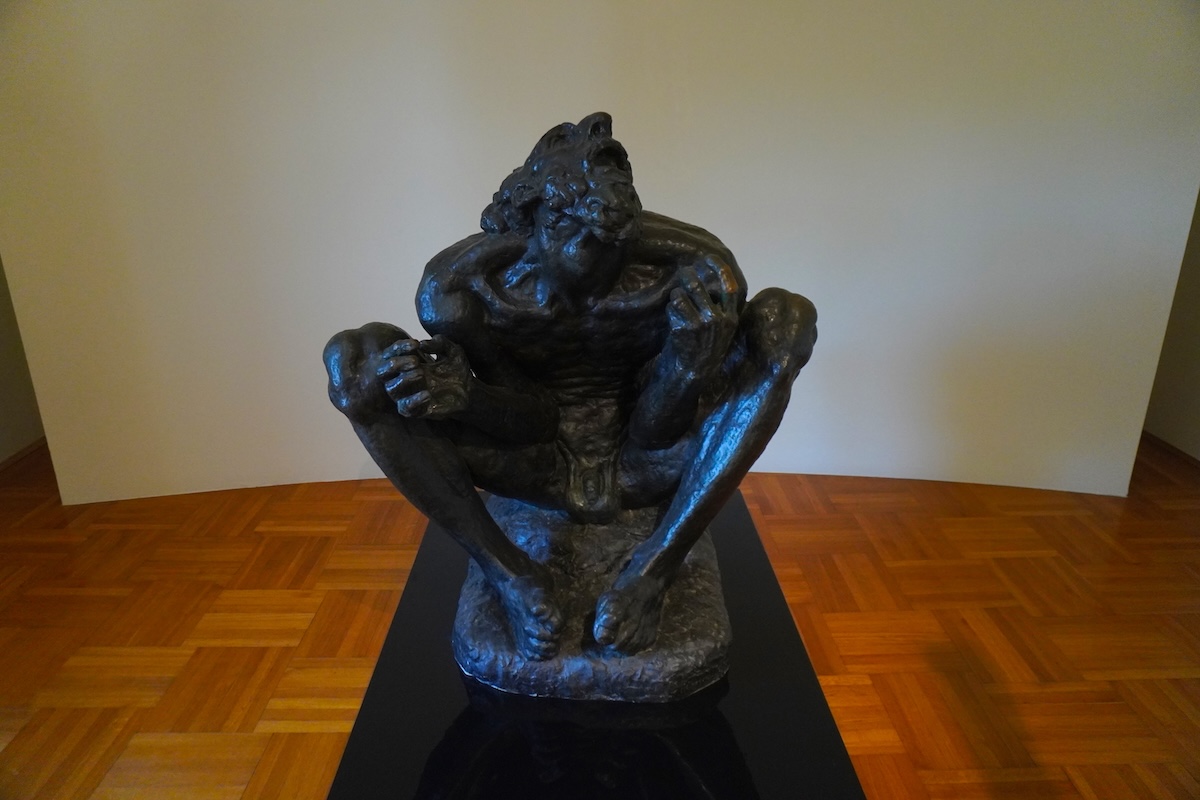
In the Job room, there is a quote from Meštrović about war that is worth reading slowly:
“No one reflects on the causes of war, much less on its consequences. It is rarely acknowledged that war, and all that it brings with it, represents a loss for both the ‘victors’ and the ‘vanquished’: a loss of human lives, of material goods, and, perhaps most profoundly and immeasurably, of moral value…”
A. Kadić, Meštrović’s Christmas Conversations, 1940, notes from a lecture. Quoted in Dennoch will ich hoffen, 1945.
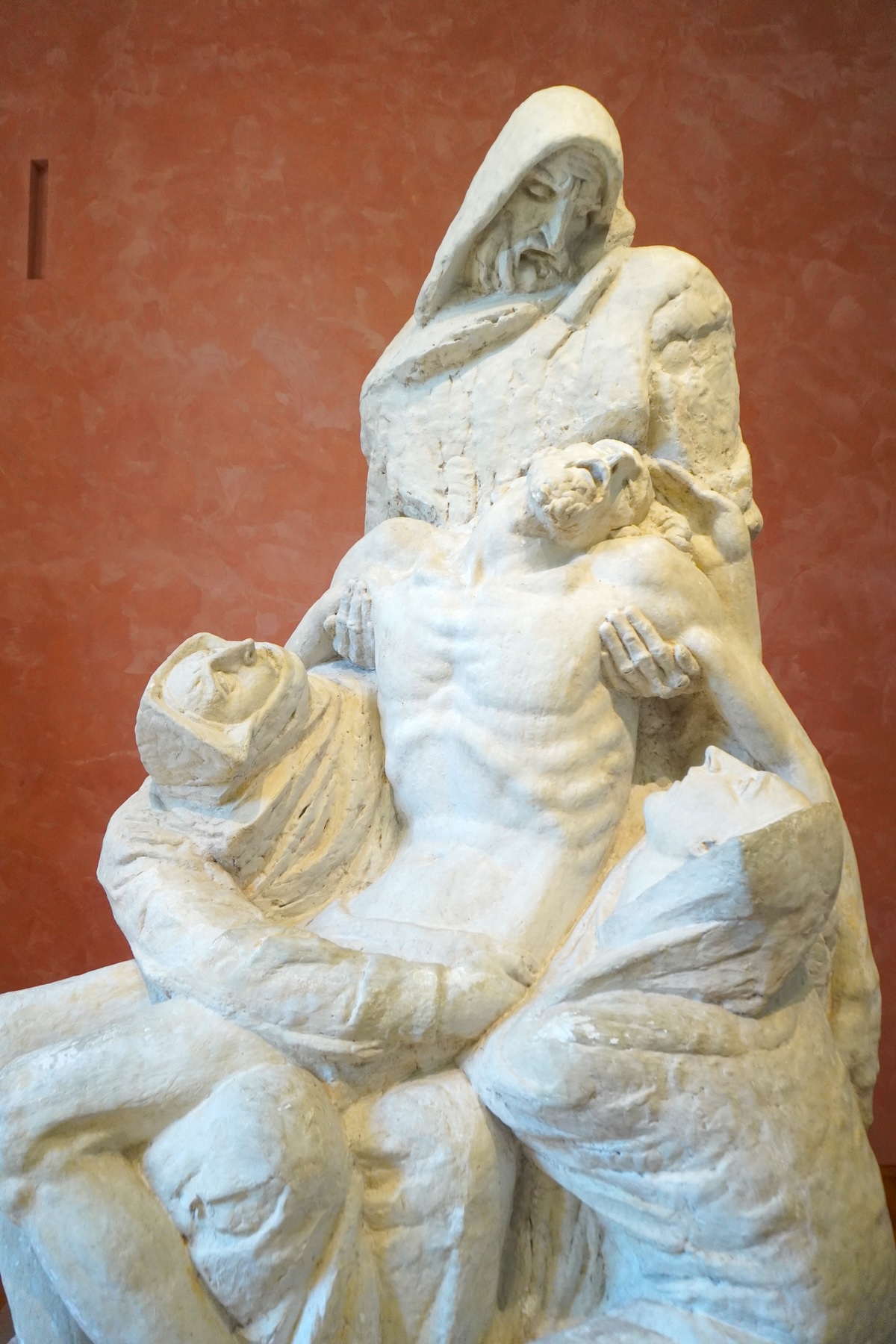
There is also his Roman Pietà, a plaster sculpture (1942–1943) whose composition is inspired by Michelangelo’s work. It depicts Joseph of Arimathea holding the body of Christ, alongside the Virgin Mary and Mary Magdalene. Meštrović portrayed himself as Joseph, gave Mary Magdalene the face of his daughter Marica, and Christ the face of his son Tvrtko.
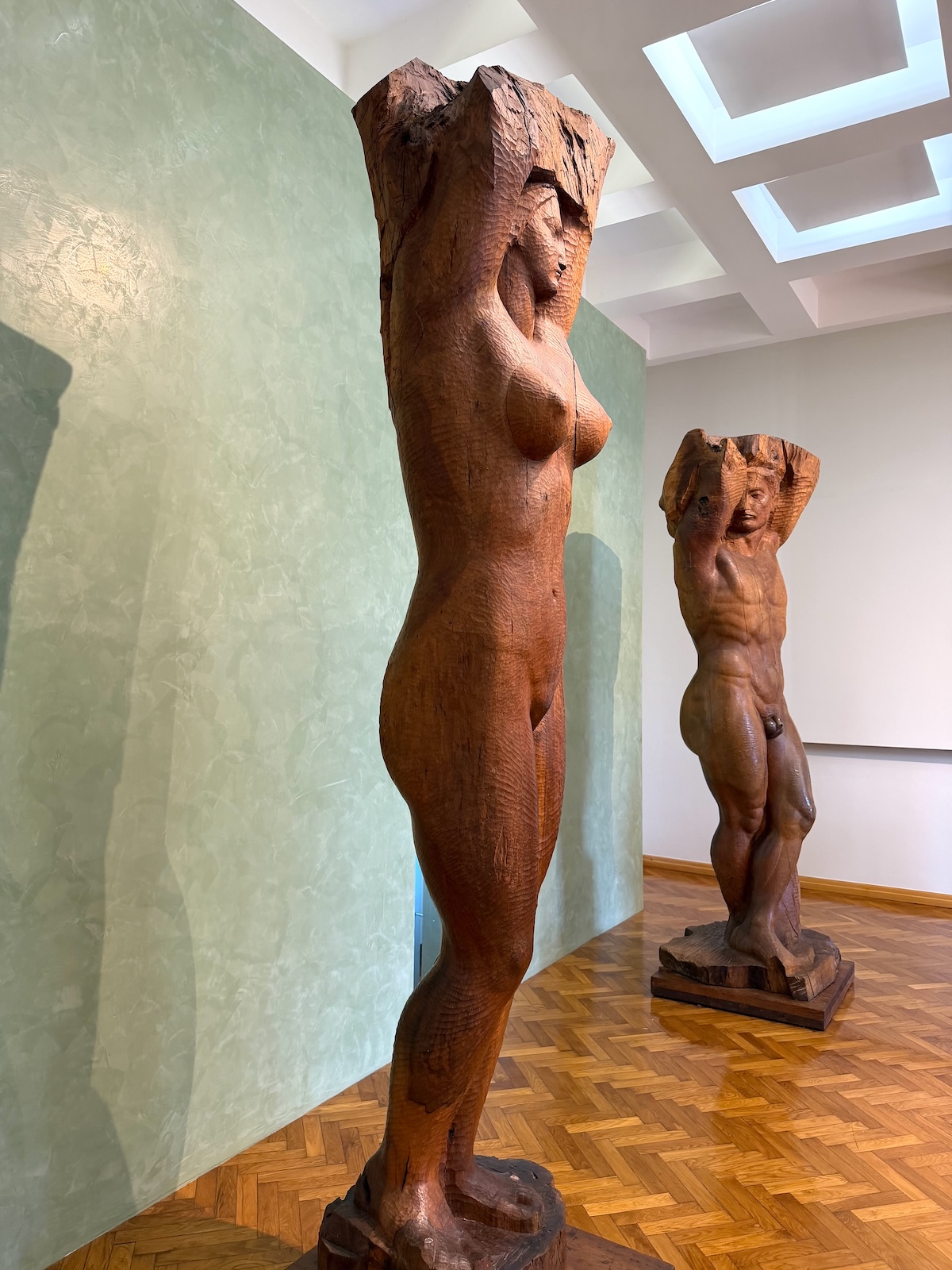
And there are many other incredible works that make you want to linger, such as the impressive Adam and Eve, carved in wood (1939-1941), My Mother, in bronze (1909), Virgin with Children, in marble (1925), or Head of Christ, in walnut (1913).
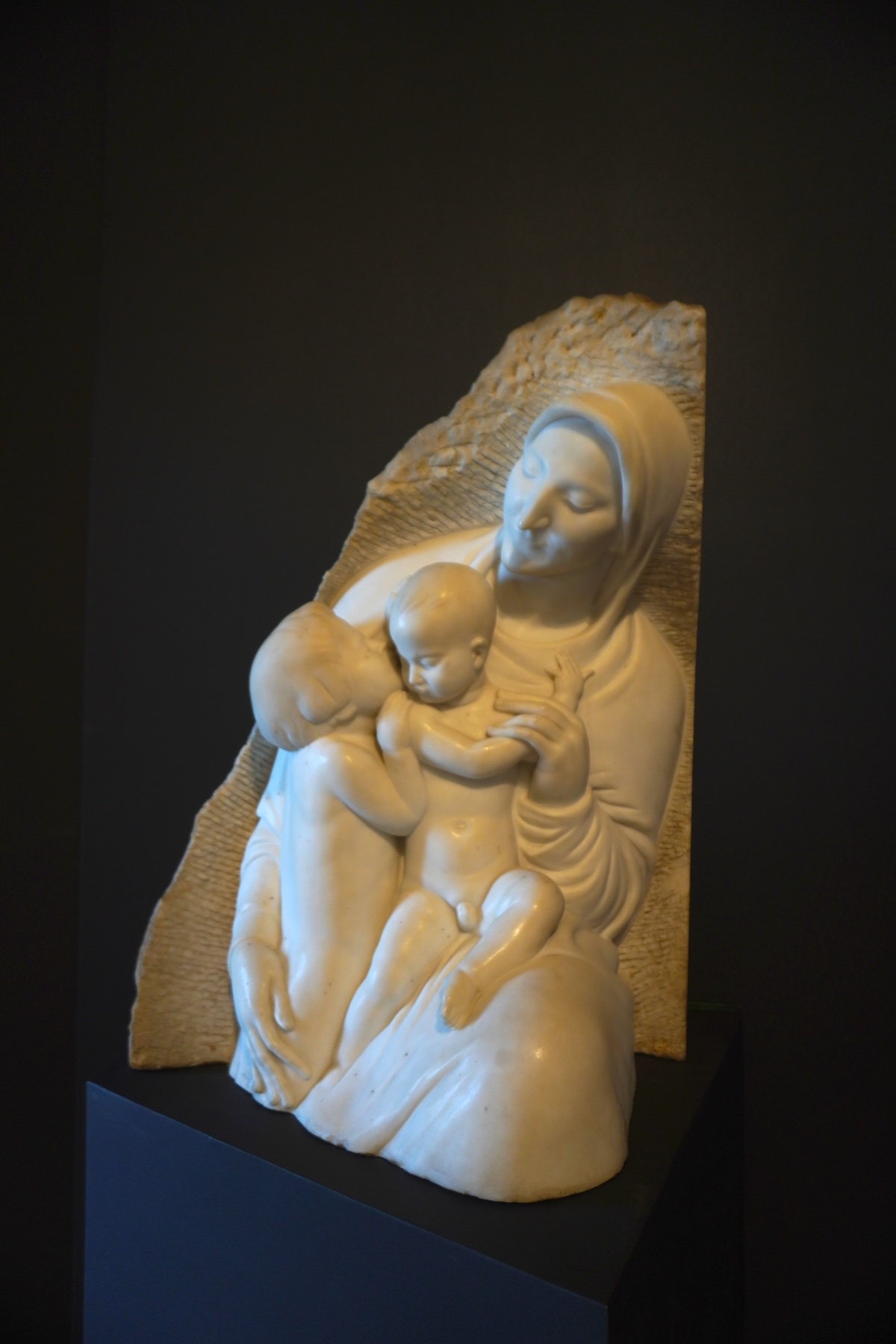
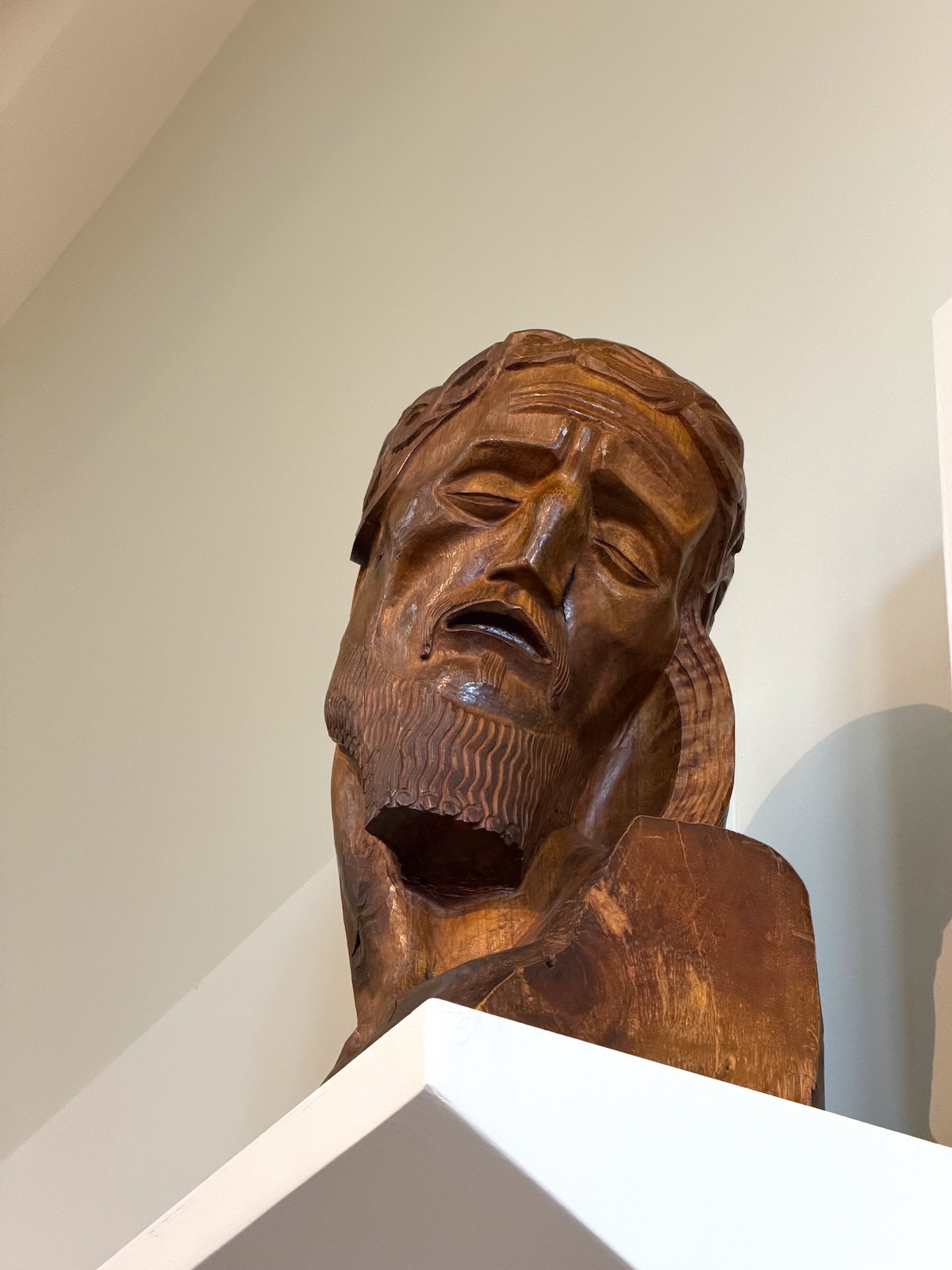
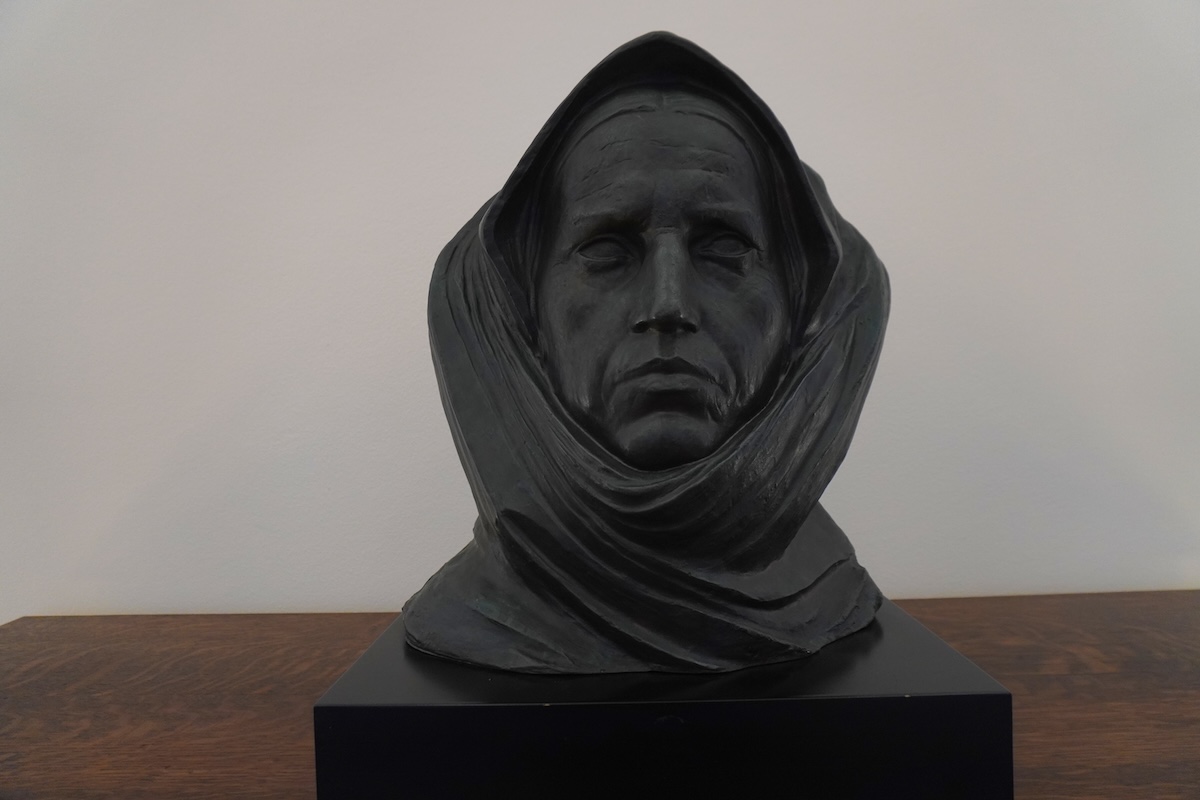
Admission: €12. With the Split Card, 30% off. €8 for children, students, and senior citizens. Families with children under 14: €20. Free admission for children under 7. Admission also includes Meštrović’s Crikvine-Kaštilac, which we’ll discuss below. Hours: Tuesday through Sunday, 8:00 a.m. to 6:00 p.m. Closed Mondays and on holidays. Last admission is 30 minutes before closing.
Kaštilac
Admission to the gallery also includes access to Meštrovićeve Crikvine-Kaštilac, located just a few meters from the gallery, which we highly recommend visiting. Kaštilac was a fortified estate belonging to the patrician Capogrosso family, overlooking the sea, built in the early 16th century as a refuge from Ottoman raids. In the 17th century, it served as a workshop for weavers and tanners, and in the 18th century, as a quarantine station during the plague.
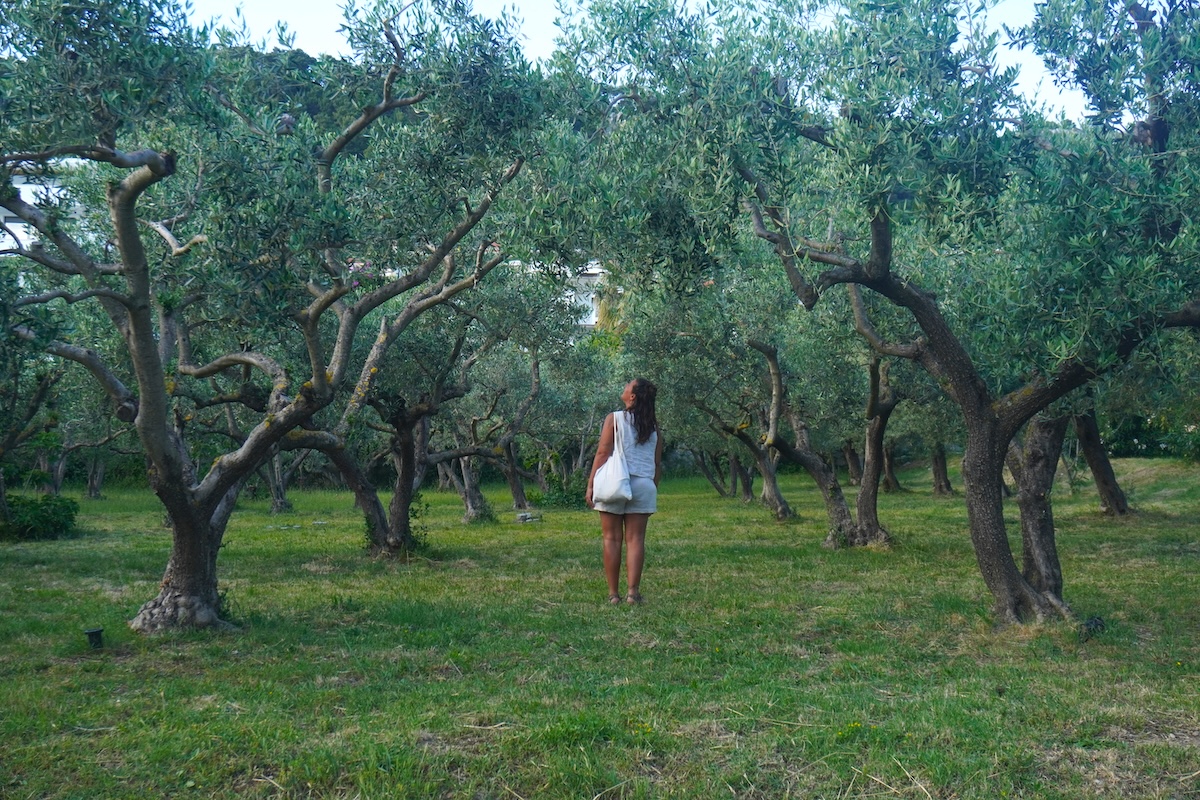
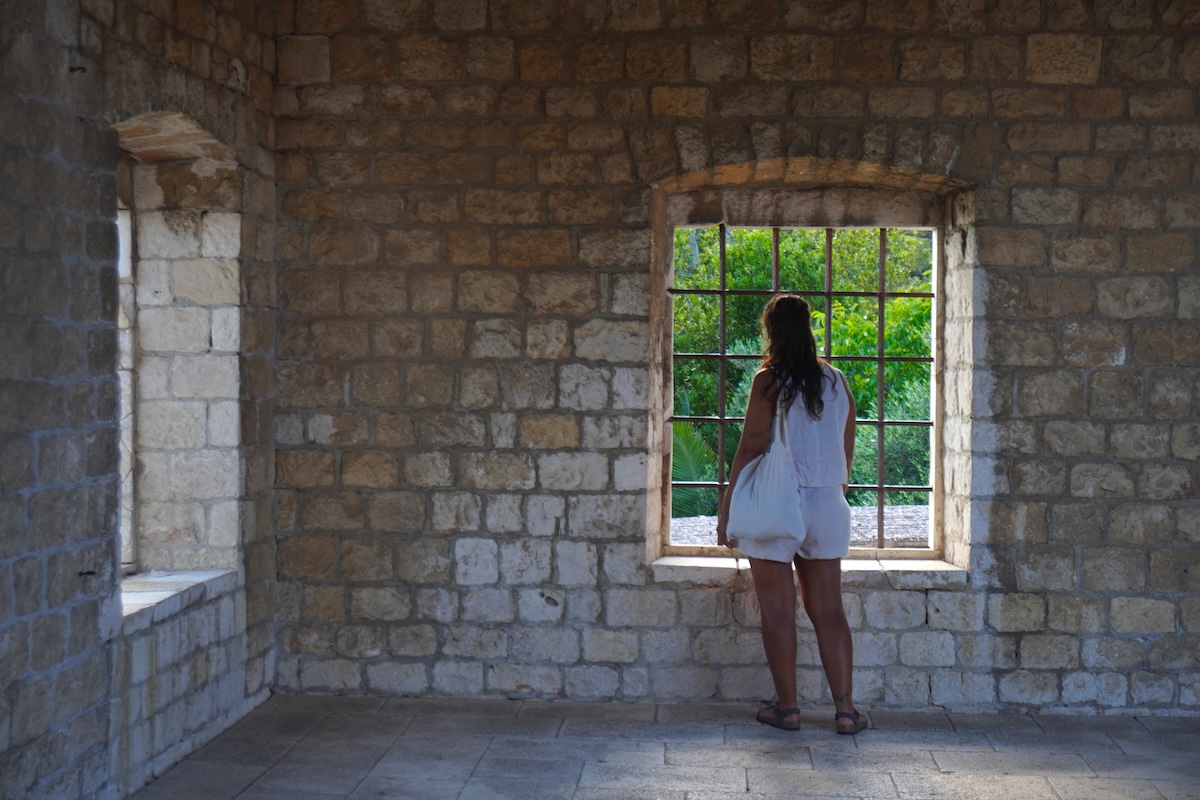
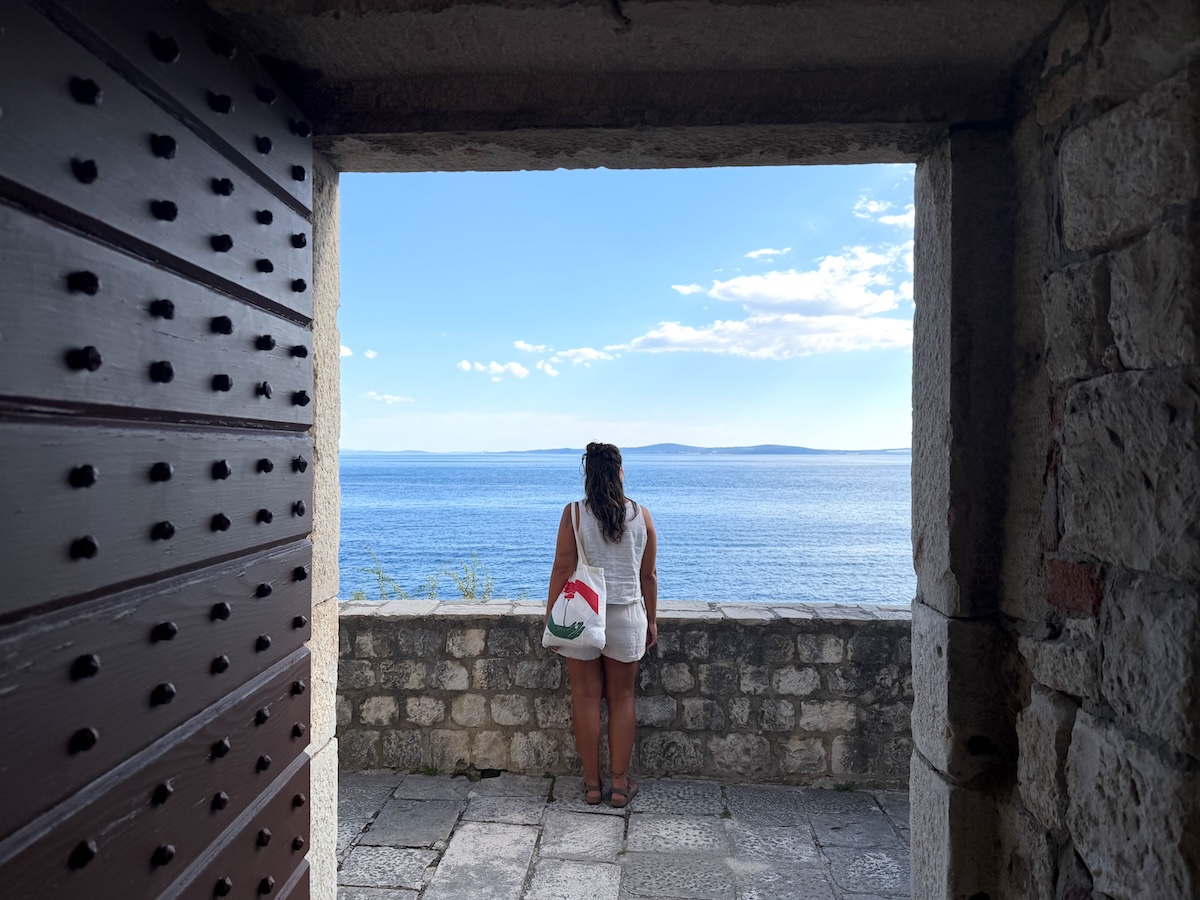
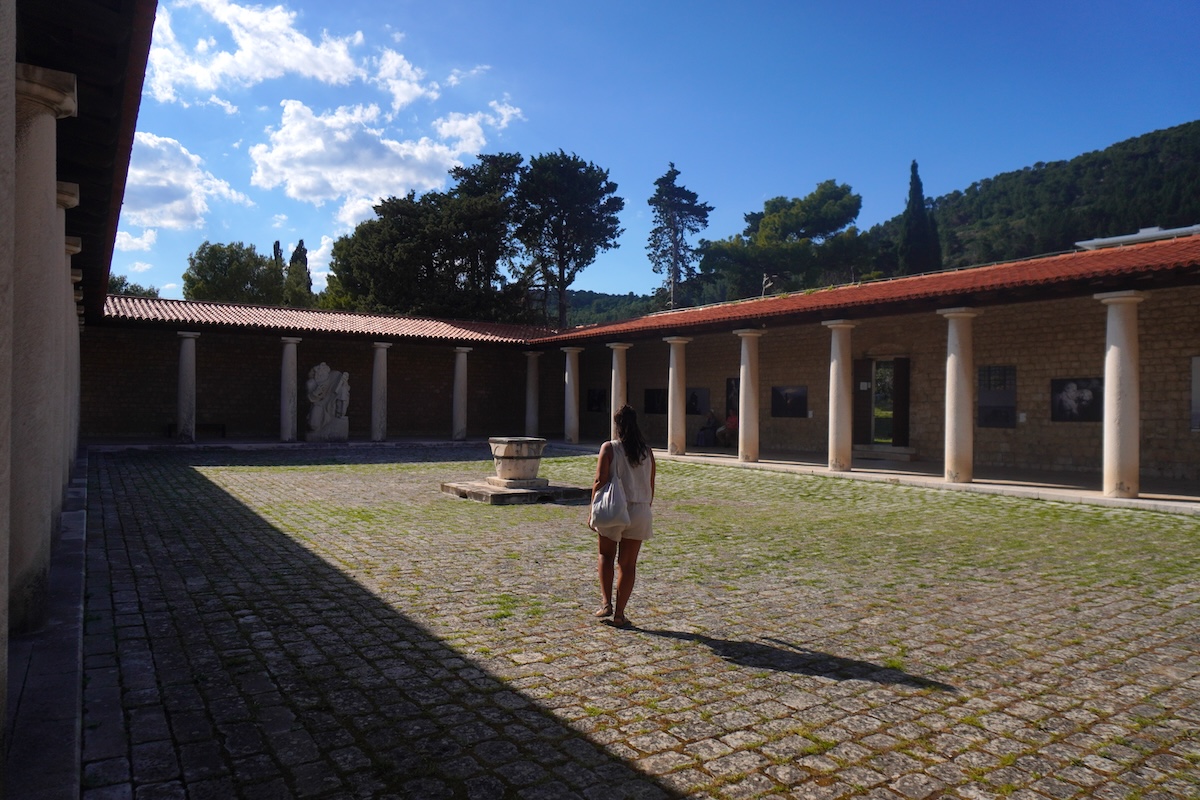
Meštrović purchased it in 1939 (the year World War II broke out) and, based on his sketches, added a courtyard with a portico of 28 Doric columns leading to the small but striking Church of the Holy Cross.
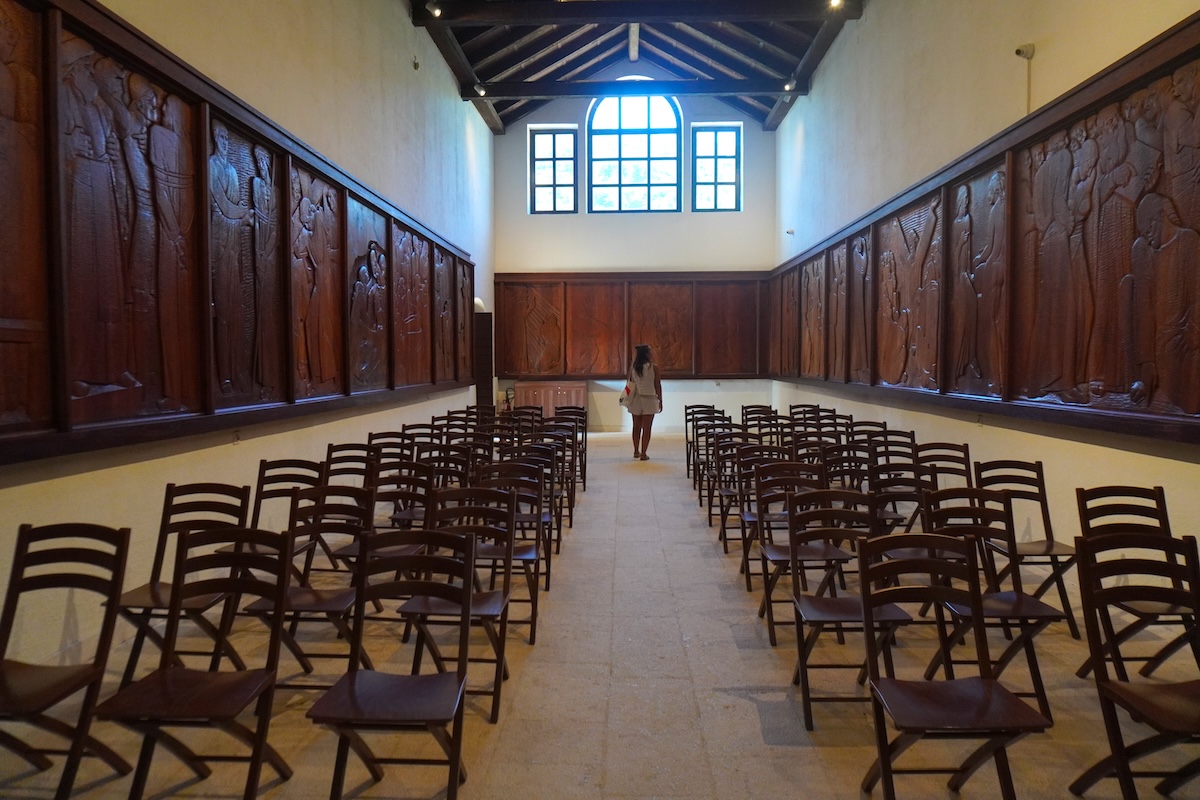
At RandomTrip , we believe Meštrović designed one of the most beautiful churches we’ve ever visited. Its simplicity, the white walls and wood, the play of light streaming through the large window, and the views of the landscape, moves even the most atheistic or agnostic person.
Inside are housed the Great Walnut Crucifix, carved in Geneva in 1916, and the cycle of 28 wooden reliefs depicting the life of Christ. Meštrović began the reliefs in 1916-1917 and completed them in Syracuse in 1950. He created the last twelve while in the United States. Under the portico of the cloister stands The Author of the Apocalypse, a travertine sculpture created by Meštrović in Rome in 1946.
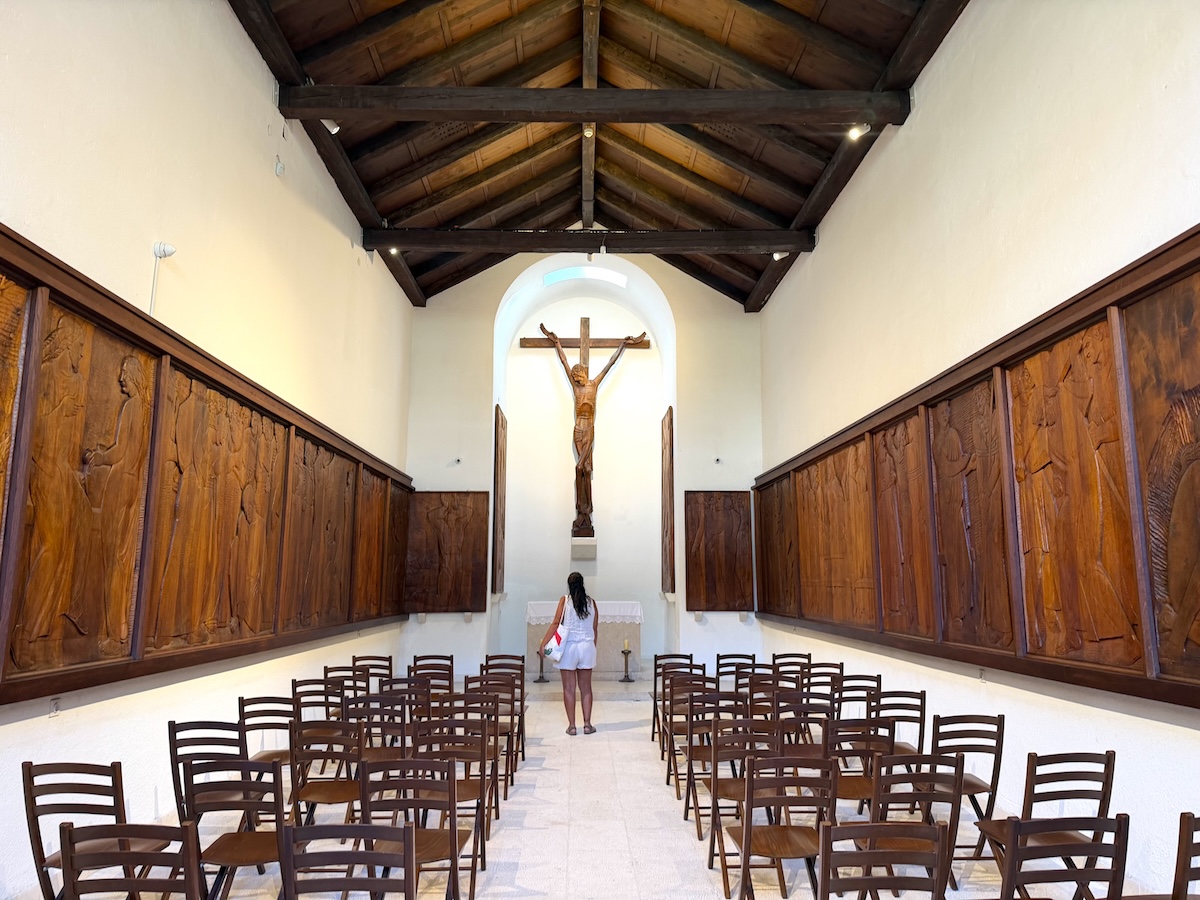
Hours and admission: same as the gallery. A gallery ticket grants access to both spaces.
Archaeological Museum of Split (Arheološki muzej u Splitu)
The Split Archaeological Museum is Croatia’s oldest museum: it was founded on August 22, 1820, although during its early years it did not have its own building and kept its collections in rented warehouses. Its first building was completed in 1836, next to the eastern wall of Diocletian’s Palace. The current building, located north of the historic center, was constructed between 1912 and 1914 according to a design by architects August Kirstein and Friedrich Ohmann.
Its collections span history from prehistory to the Middle Ages, with artifacts primarily from central Dalmatia. The highlight is Salona, the ancient Roman city on the outskirts of Split, which we’ll discuss in the next section, where the museum has been conducting excavations since its founding. The museum also houses pottery and glass from the Greek and Roman periods, as well as an extensive collection of stone inscriptions. A 17th-century copy of the Statute of Split, the city’s code of laws from 1312, written in Latin, is preserved here.
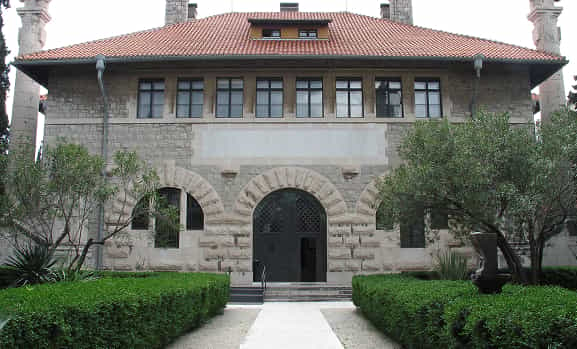
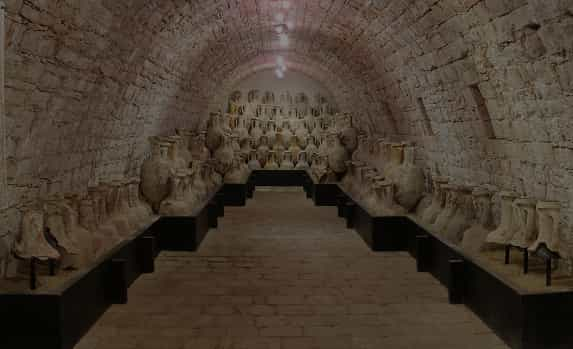
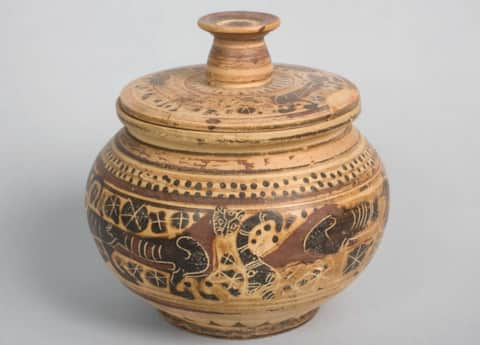
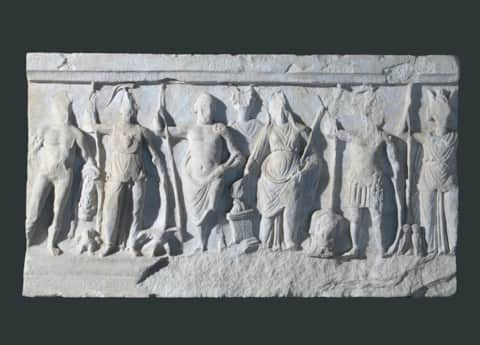
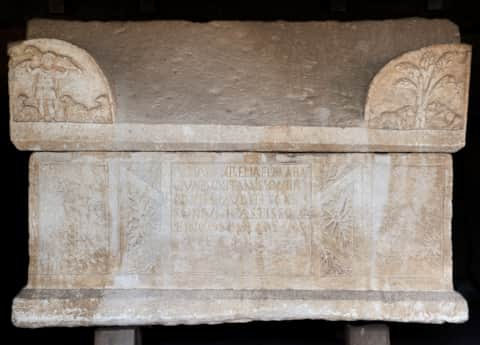
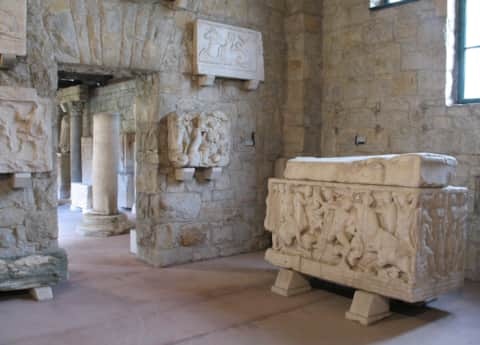
We at RandomTrip weren’t able to visit it: it was closed because they were setting up an exhibition. Before you go, it’s a good idea to check their website, as the permanent exhibition may be replaced by temporary exhibits.
Admission: €8 for adults and €4 for children and students. Families (maximum 2 adults with children): €15. Free admission for children under 6. A combined ticket with Salona is available for €10, valid for 7 days. With the Split Card, you receive a 50% discount. Hours (June 1–September 30): Monday through Saturday, 9:00 a.m. to 2:00 p.m. and 3:00 p.m. to 8:00 p.m. Closed on Sundays and holidays.
Croatian Maritime Museum
The Croatian Maritime Museum was founded in 1925 and is housed in the city’s Gripe Fortress. Highlights of its collections include the underwater archaeology collection and the shipbuilding museum that operated at the Split shipyard. For families with young children: there are real boats in the courtyard that you can climb aboard!
Admission: €3.50; €1.80 for schoolchildren, students, and seniors; €0.70 for children ages 5-7; free admission for children under 5. 50% discount with the Split Card. Guided tour in Croatian: €15. Guided tour in English: €30. Hours: Monday through Friday from 9:00 a.m. to 7:00 p.m., Saturdays from 9:00 a.m. to 5:00 p.m., and Sundays from 10:00 a.m. to 5:00 p.m. Closed on January 1 and 6, May 1, November 1 and 18, and December 25 and 26.
Salona Archaeological Site
Salona was the capital of the Roman province of Illyria (later known as Dalmatia) and one of the most important cities in the empire. It is estimated that it once had a population of over 50,000. Today, the Salona Archaeological Site is located about 6 km from Split, in the town of Solin. According to tradition, Diocletian was born in this area, so the palace you’ve already seen in Split was originally built as a retirement residence for an emperor who hailed from here.
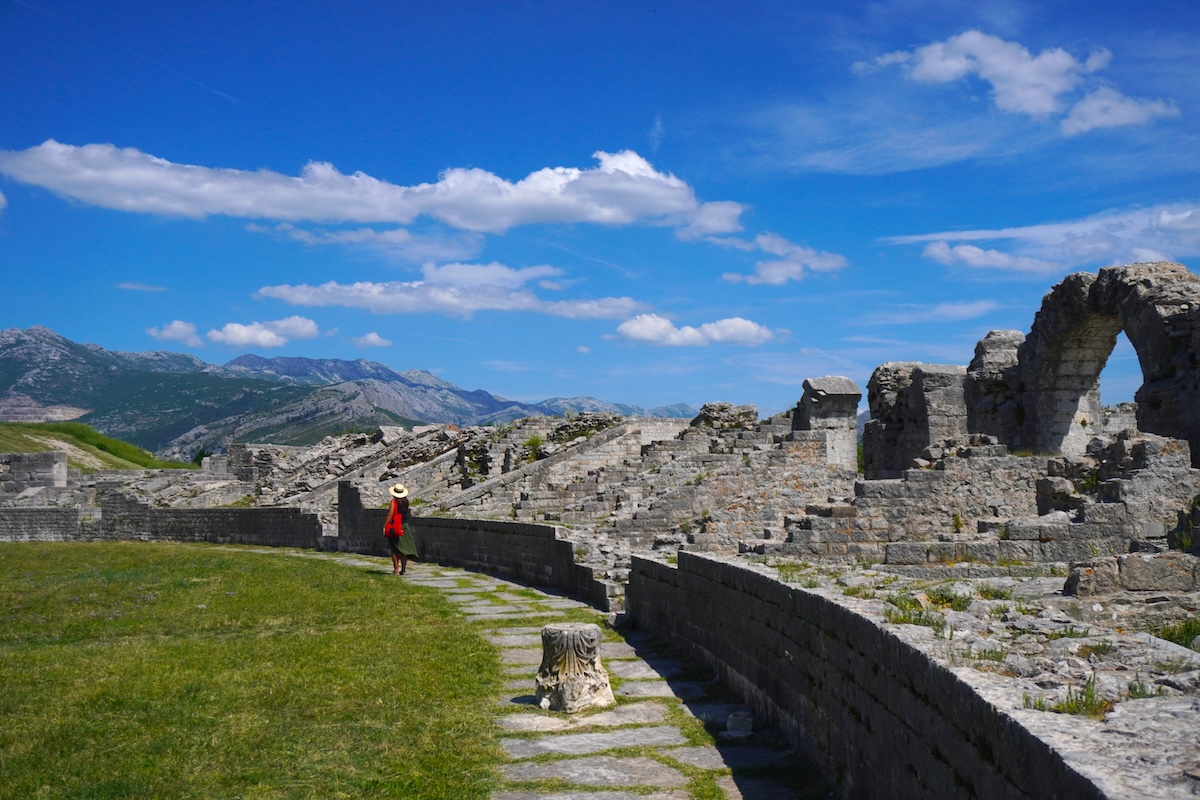
Preserved from the complex are sections of city walls with towers, the monumental Porta Caesarea (the city’s eastern gate, dating from the time of Augustus), the forum with temples dedicated to Jupiter, Juno, and Minerva, the theater, the thermal baths, and the amphitheater, which is one of the most impressive ruins.
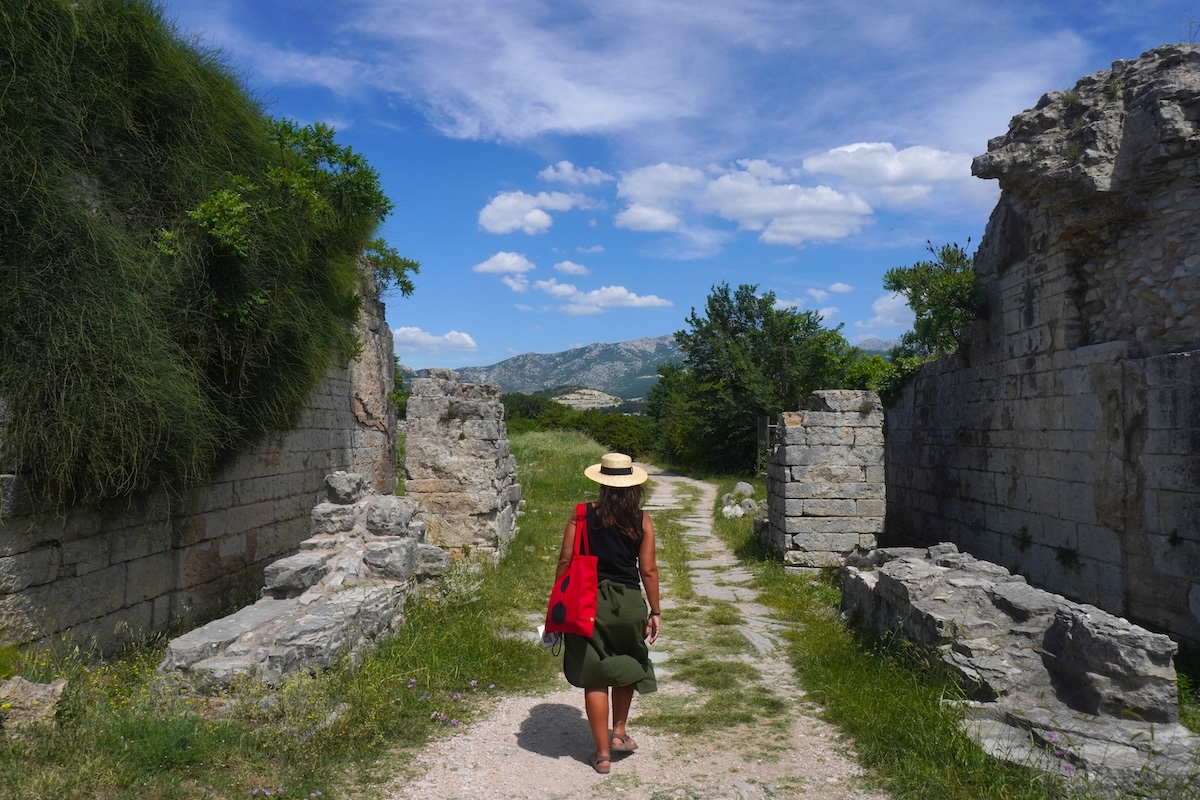
There is also an episcopal center with two twin basilicas, a baptistery, and the bishop’s palace, as well as the Christian cemetery of Manastirine. Bishop Domnius was buried there; he was executed in the amphitheater on April 10, 304, during Diocletian’s persecution. It is this same Saint Domnius (Sveti Duje) to whom Split’s cathedral is dedicated and who is the city’s patron saint.
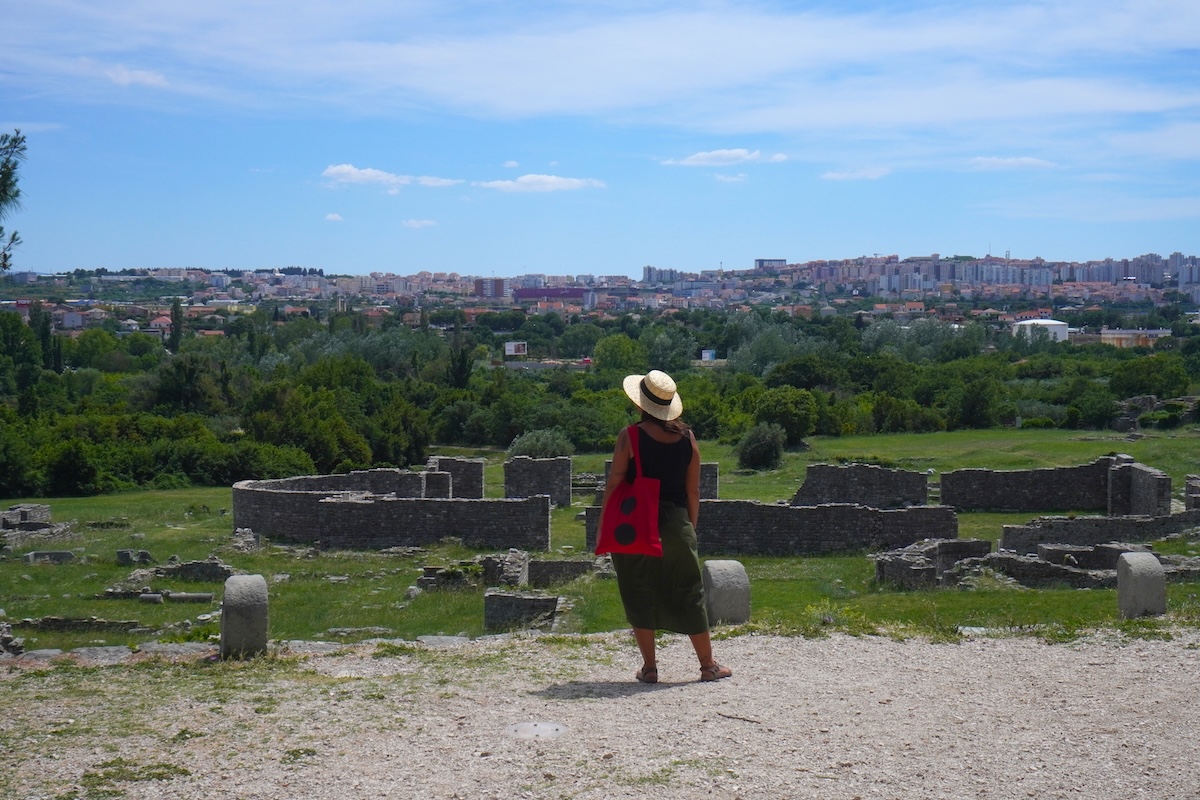
Salona was sacked and almost completely destroyed by the Avars in the 7th century. Today, much of its Roman splendor remains buried underground, and excavations are ongoing.
The site is spacious and open-air. At RandomTrip, we recommend taking the tour in this order:
- Start at the Episcopal Center.
- Follow the route to the theater and the basilica.
- Head back and continue on to the amphitheater, to save, in our opinion, the best for last.
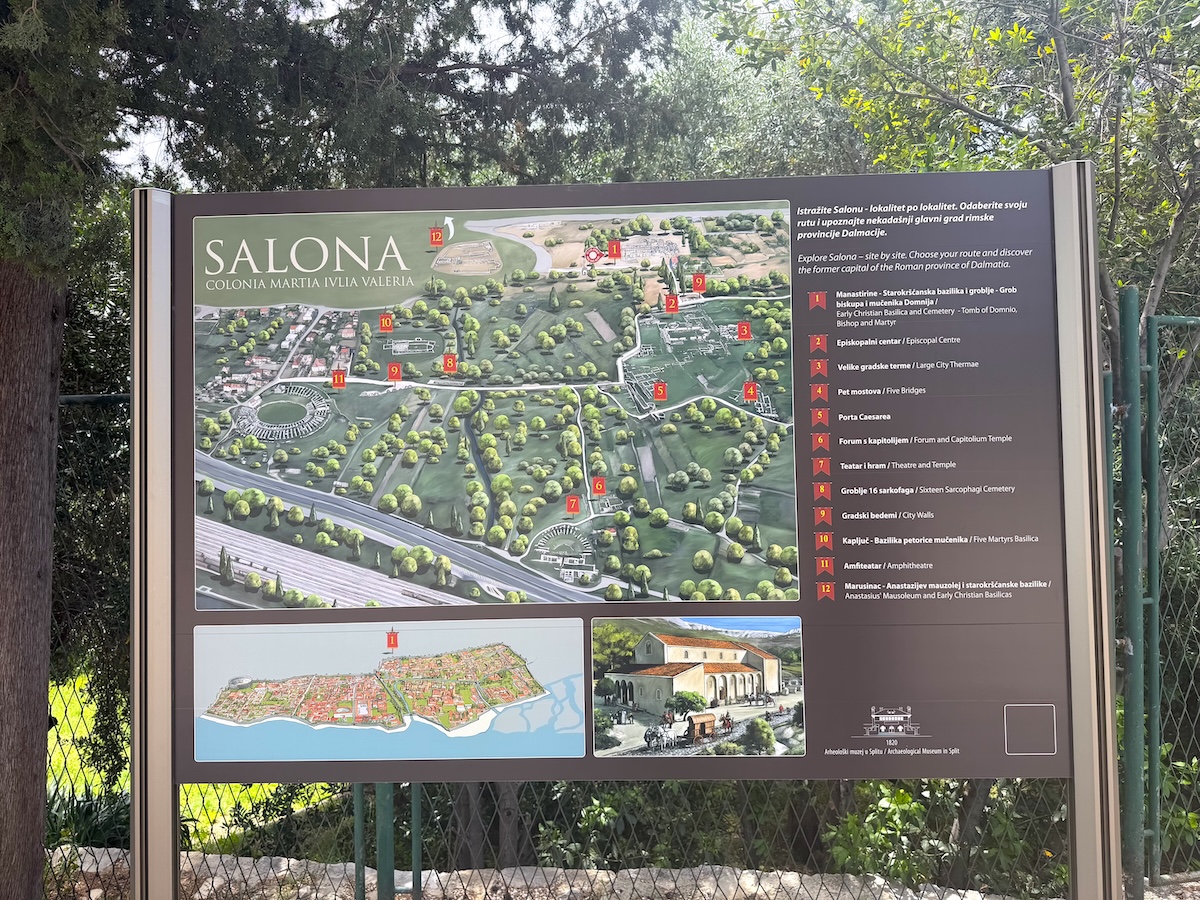
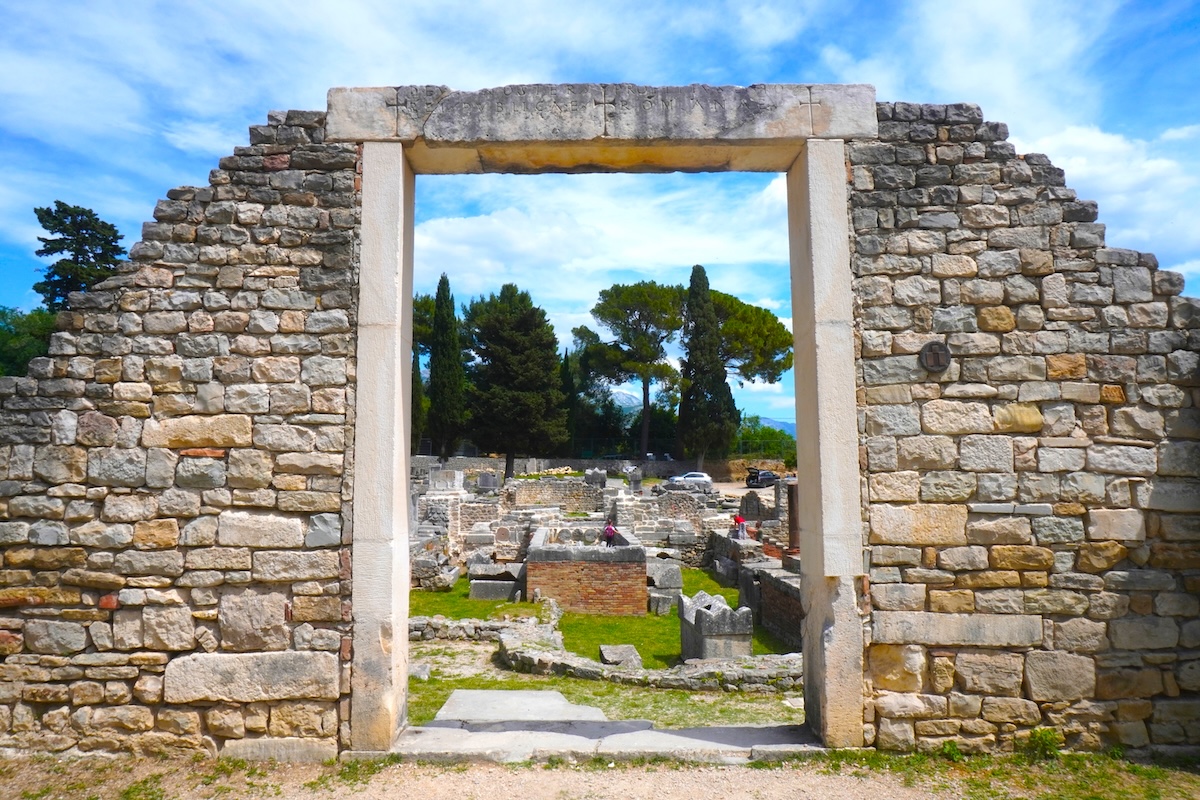
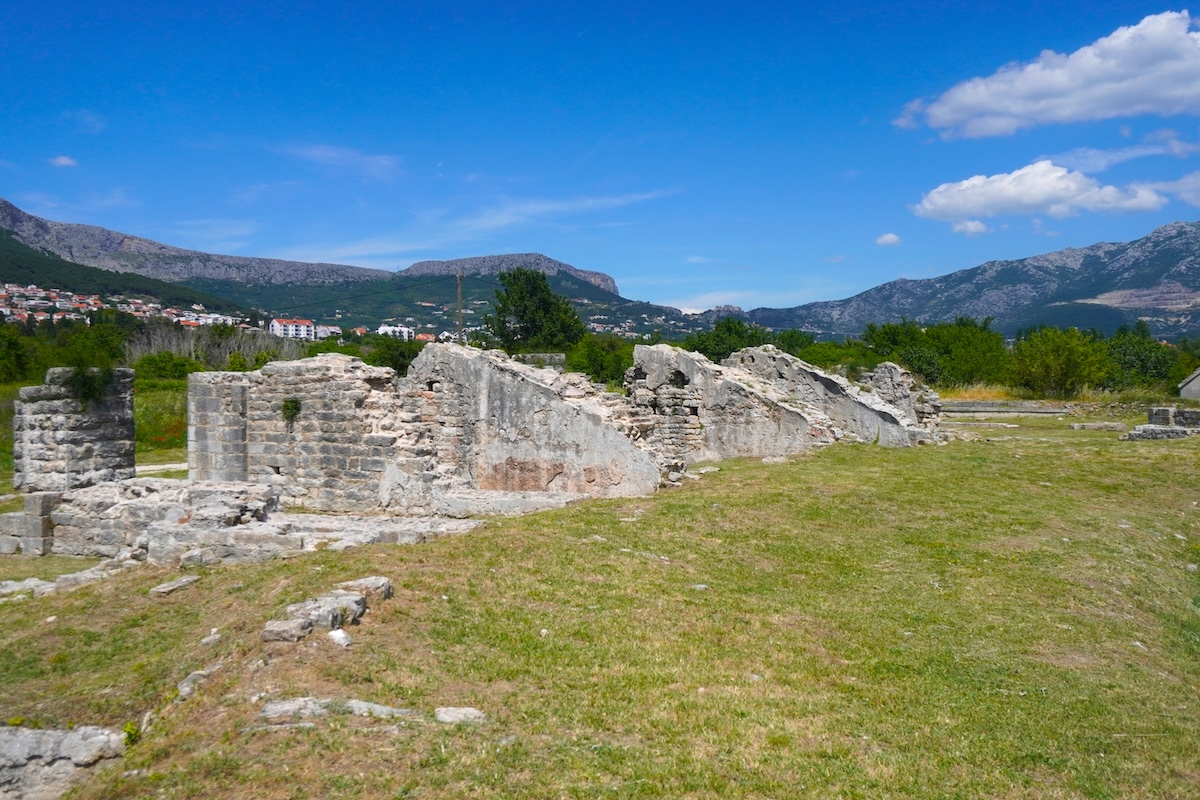
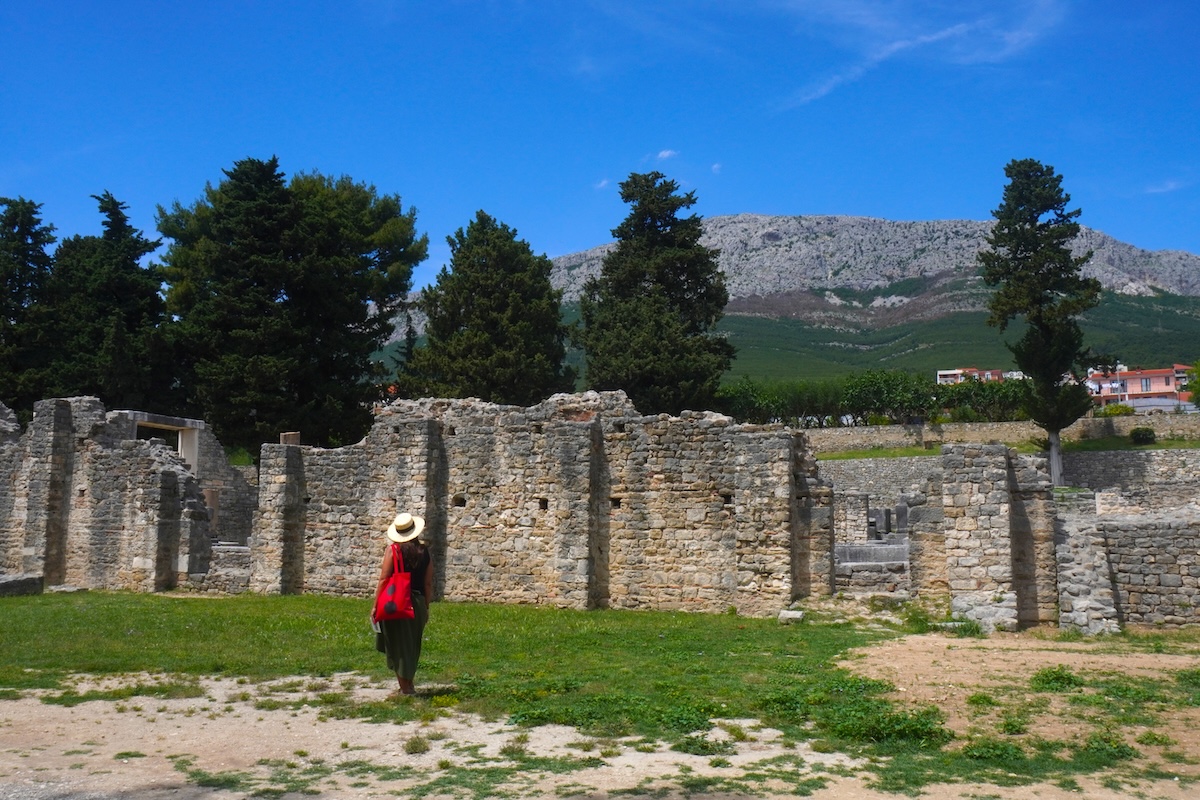
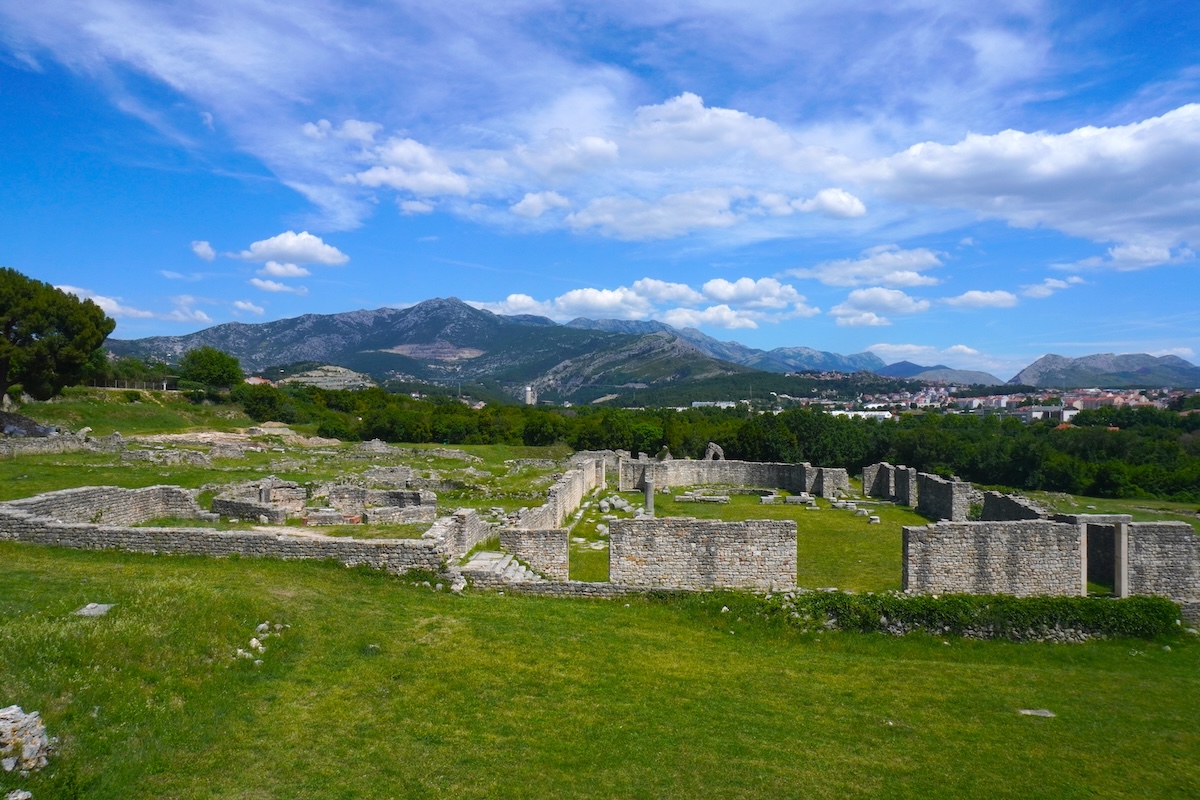
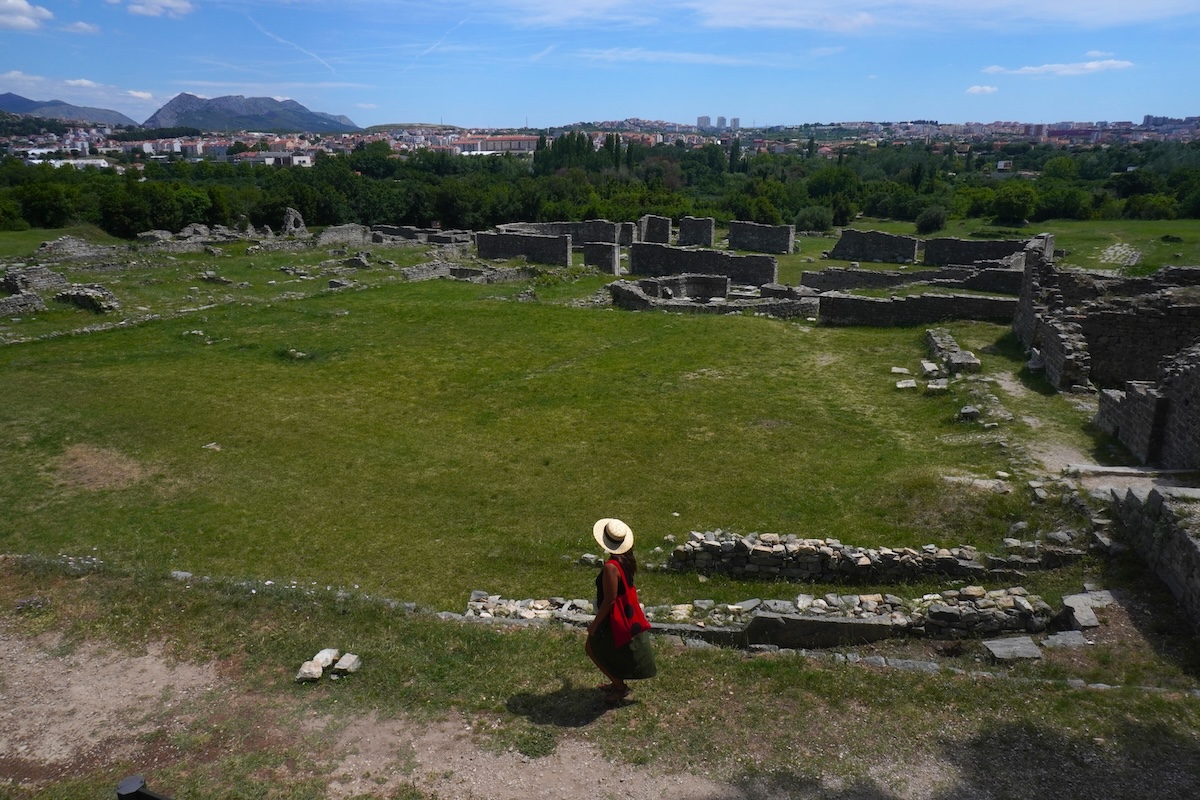
If you didn’t come by car, you can exit directly through the amphitheater without having to return to the entrance. If you came by car, you’ll have to return to the parking lot at the entrance. By the way, you can see the amphitheater from the outside without entering or paying, but in our opinion, it’s not that impressive.
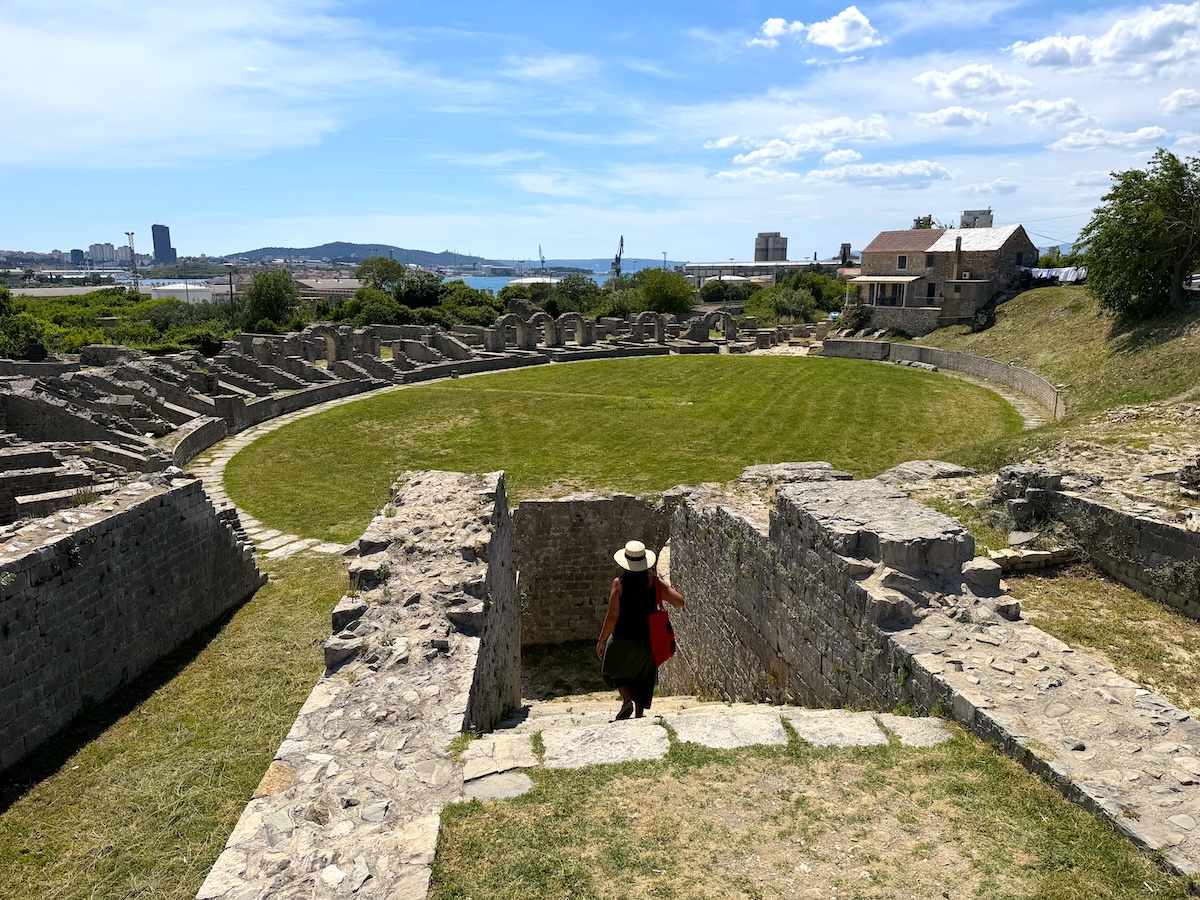
Admission: 8 €. 50% discount with the Split Card (4 €). 4 € also for children, students, seniors, and people with disabilities. Free admission for children under 6.
Combined ticket: 10 € (Salona and the Split Archaeological Museum, valid for 7 days).
Hours: June 1 through September 30, daily from 9:00 a.m. to 8:00 p.m. October 1 through May 31, daily from 9:00 a.m. to 6:00 p.m. Closed on holidays. Last admission is one hour before closing.
How to get there: by car, Uber/taxi (as we did on Randomtrip), or bus 37 from Split.
Klis Fortress
About 12 km from Split, between the Mosor and Kozjak mountains, stands Klis Fortress, which overlooks one of the most important passes in the area. Its name comes from the Greek word kleis, meaning “the key,” and this is no coincidence: the region’s roads were controlled from here, which is why it is known as “the key to Dalmatia.”
Its history dates back to the 2nd century B.C., when the Illyrian-Dalmatian tribe of the Dalmatians built a fortification here. Centuries later, it became one of the centers of the ancient Croatian state. It withstood attacks by the Avars, Slavs, and Ottomans until March 1537, when Captain Petar Kružić died and the fortress fell into Turkish hands. After 111 years of Ottoman rule, it was liberated by the Venetians, who turned it into a fortress. Its current appearance bears traces of the Austrian period, with 19th-century renovations.
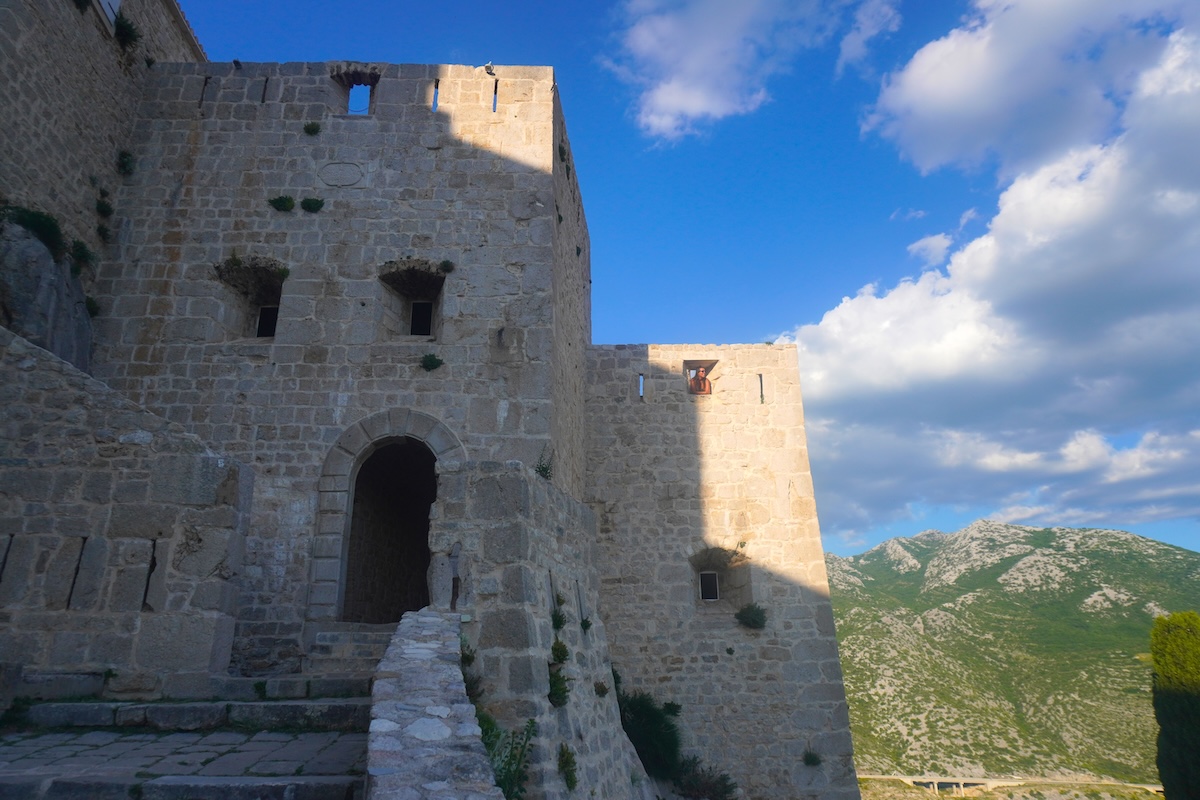
Inside the complex, visitors pass through several gates and courtyards, and there is a church (St. Vitus, which was formerly a mosque), the former governor’s residence, an armory with a small exhibition of weapons, water reservoirs, and a bastion. There is even a secret entrance that was used during sieges. Additionally, a 3D presentation at the visitor center tells the story of the fortress.
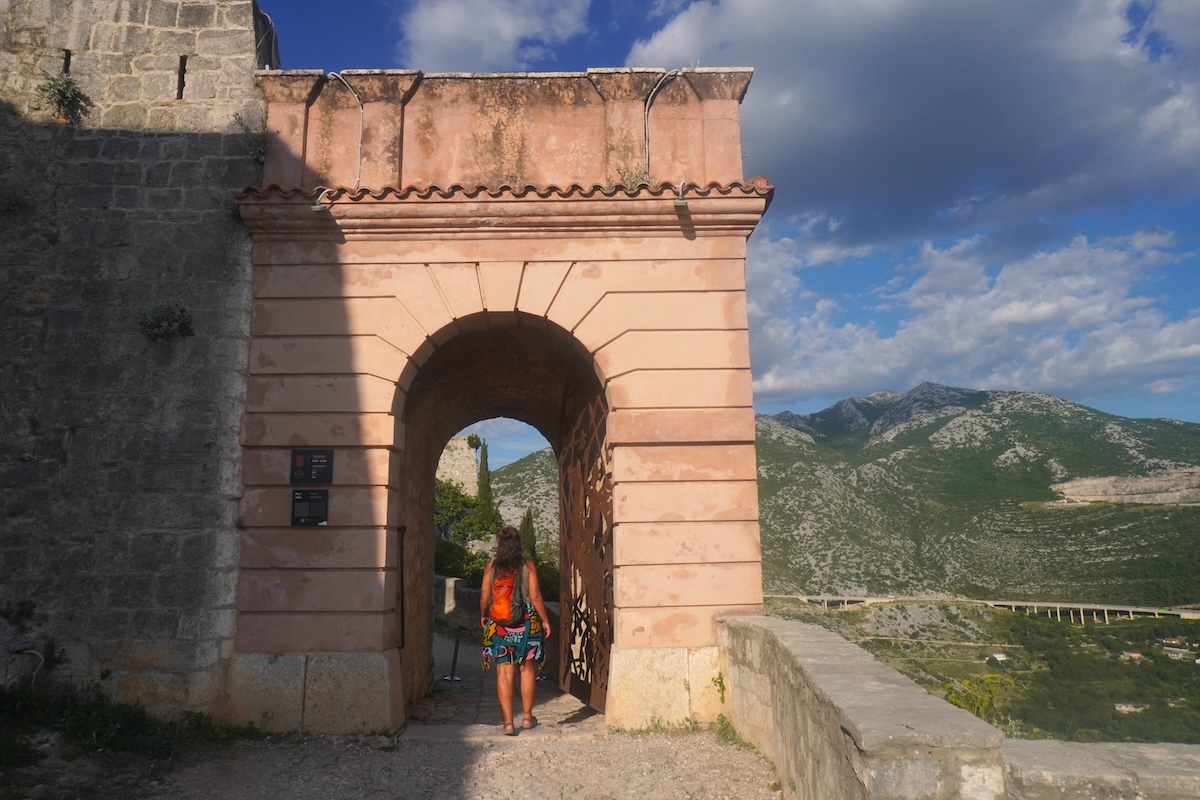
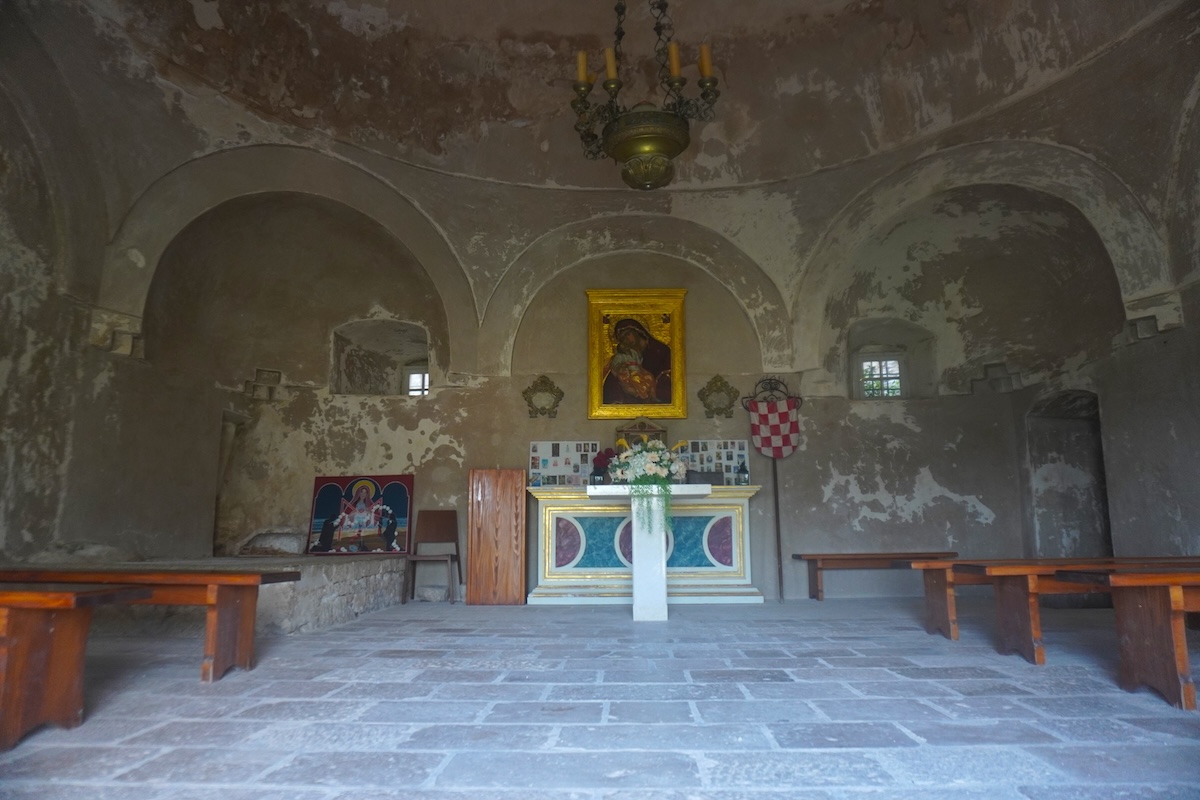
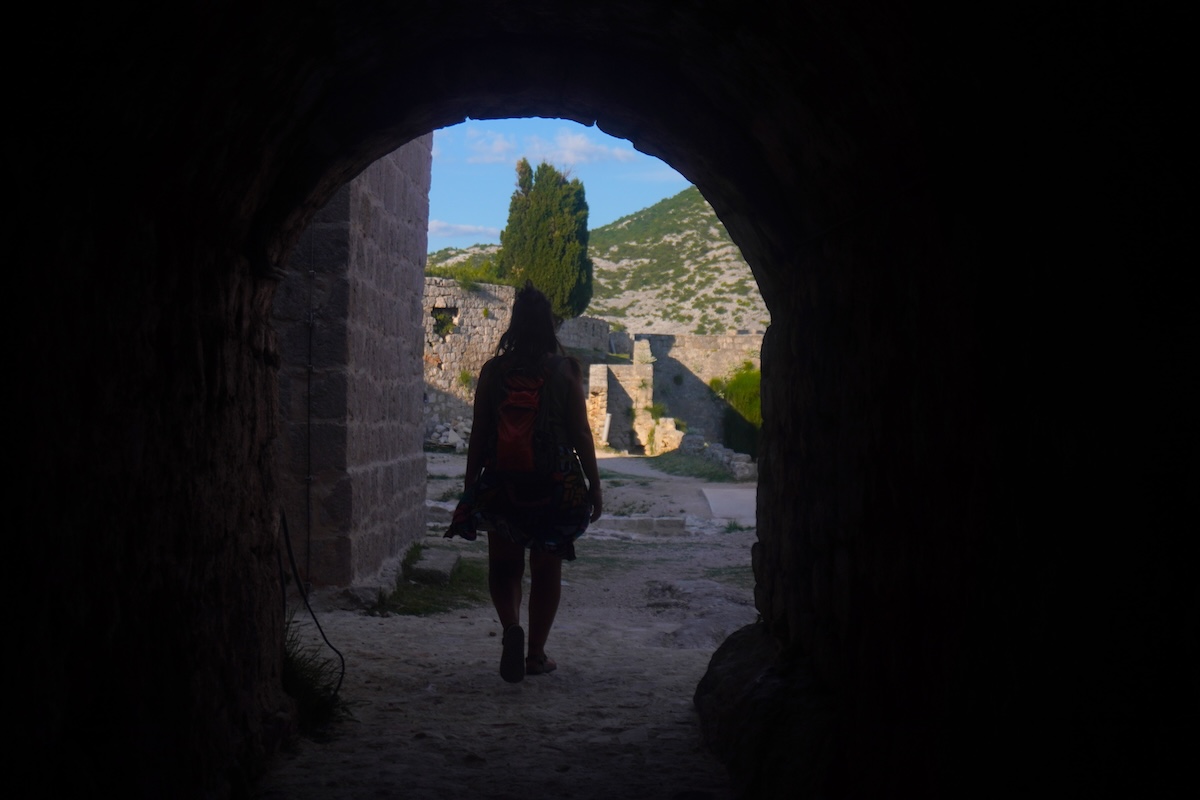
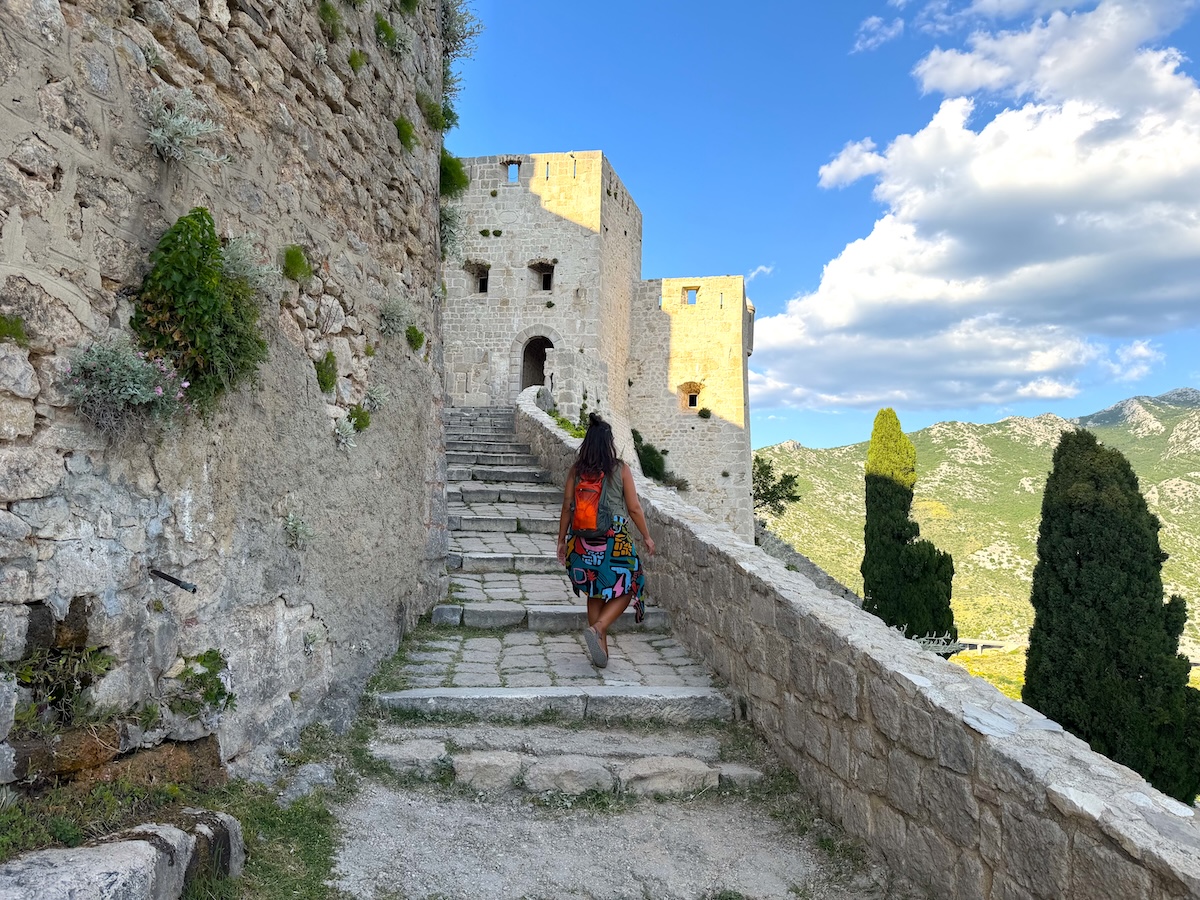
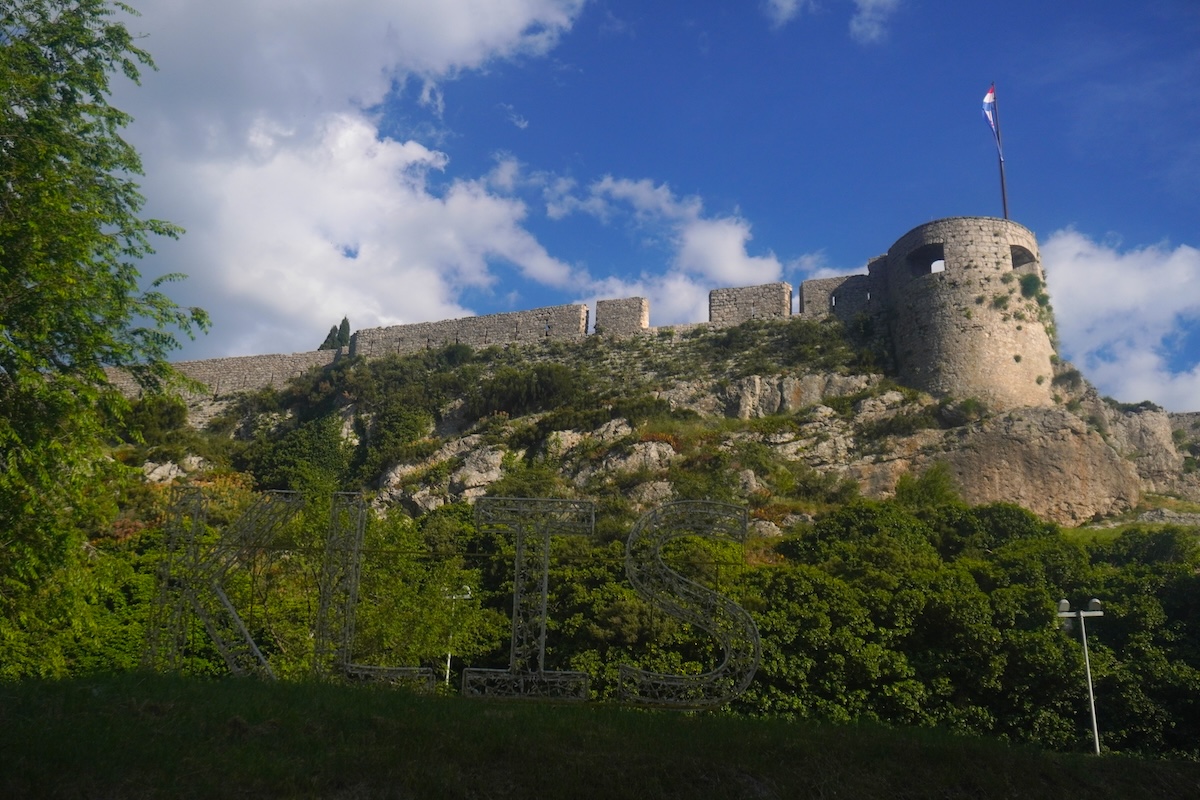
The views from the top are the highlight of the visit: on a clear day, you can see Split, the sea, the islands, and the mountains.
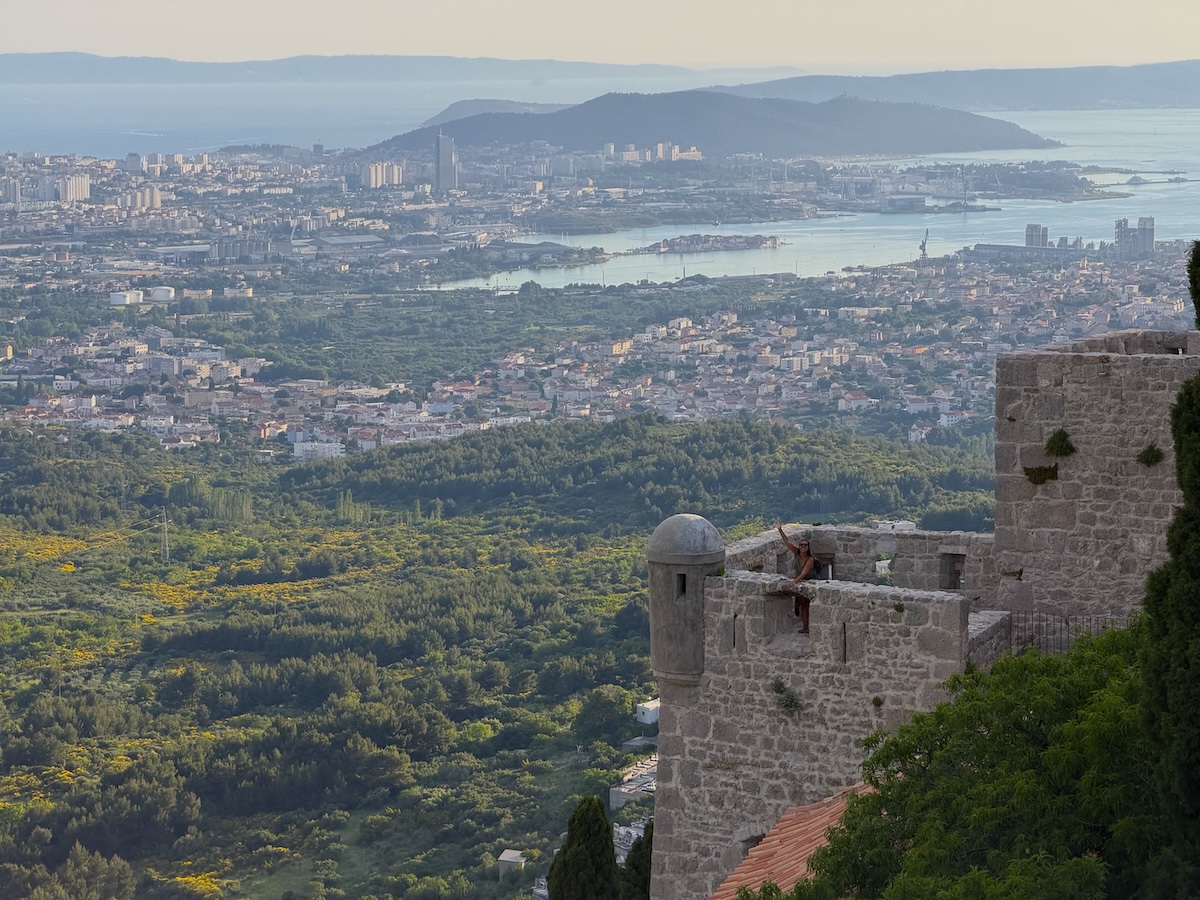
And yes, it’s a fortress from Game of Thrones: in 2014, the series chose it as the setting for Meereen, the city conquered by Daenerys. We at RandomTrip can confirm it: walking along its walls, we felt a bit like Khaleesi.
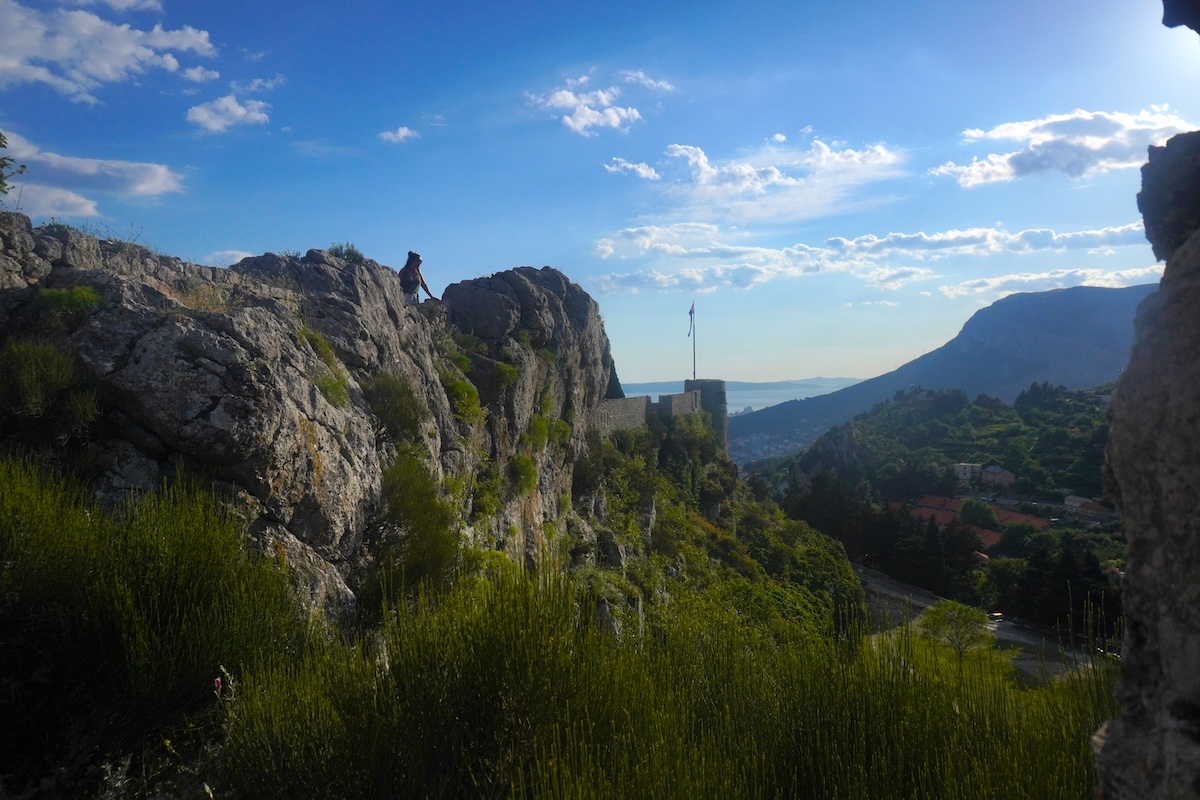
Admission also includes access to Stella Croatica, an estate just a few minutes’ drive away featuring a museum dedicated to the olive tree, a botanical garden, and a workshop producing traditional products. There, you can learn about olive oil, participate in tastings, and more (transportation is not included).
At RandomTrip, we took an Uber there and back from downtown Split (about €15 each way). If you want to save money, there’s a city bus from Split.
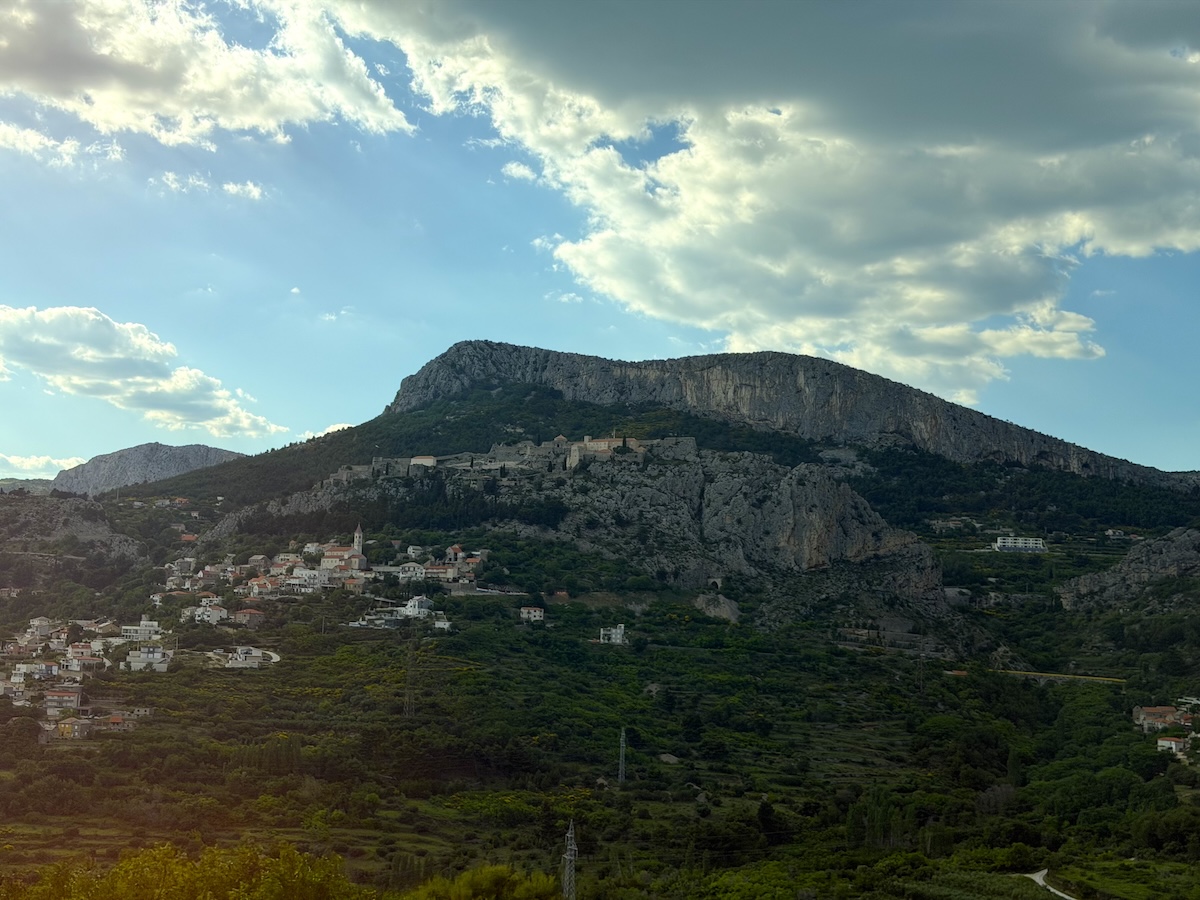
Admission: €12 per person. Children under 15: €4. Includes: the fortress, the visitor center (Mejdan Square), and Stella Croatica, with its olive museum. Hours: daily from 9:00 a.m. to 7:00 p.m. Parking: free.
How to get there: by car, Uber/taxi, or bus from Split (the easiest option is bus #22 from here)
Beaches in Split
Split has several beaches in the surrounding area where you can cool off, especially if you’re traveling in the summer and/or the weather is nice (in our case, we were very lucky in late May and were able to enjoy the Croatian waters every day).
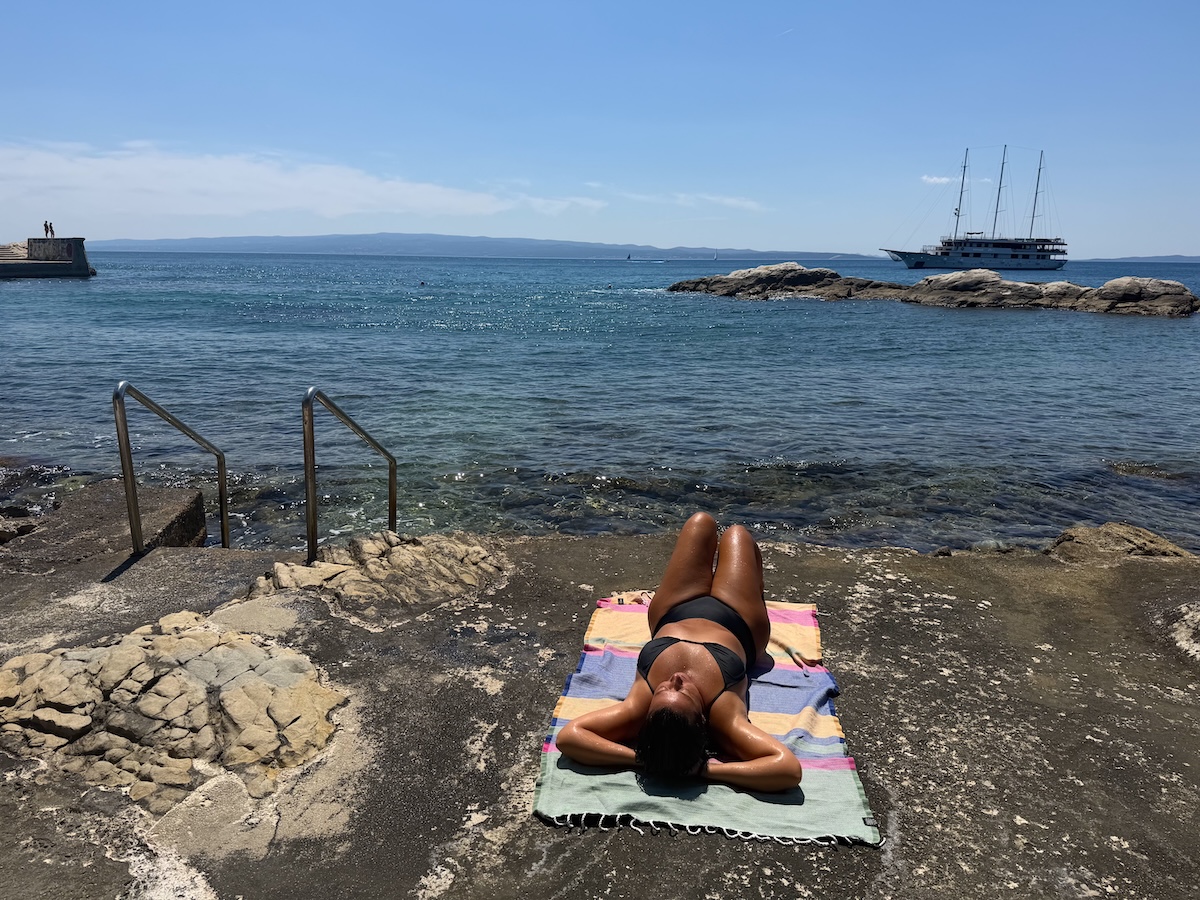
There are plenty of beaches to choose from; generally, the closer they are to the city, the more crowded they tend to be, so depending on what you’re looking for, you can pick one or the other. In any case, we recommend bringing water shoes (like these) since the beaches are rocky:
- Zvončac Beach: It’s the first one you’ll come across and the “least appealing” (though with water like this, you’ll always want to take a dip); it’s simply a promenade with access to the sea
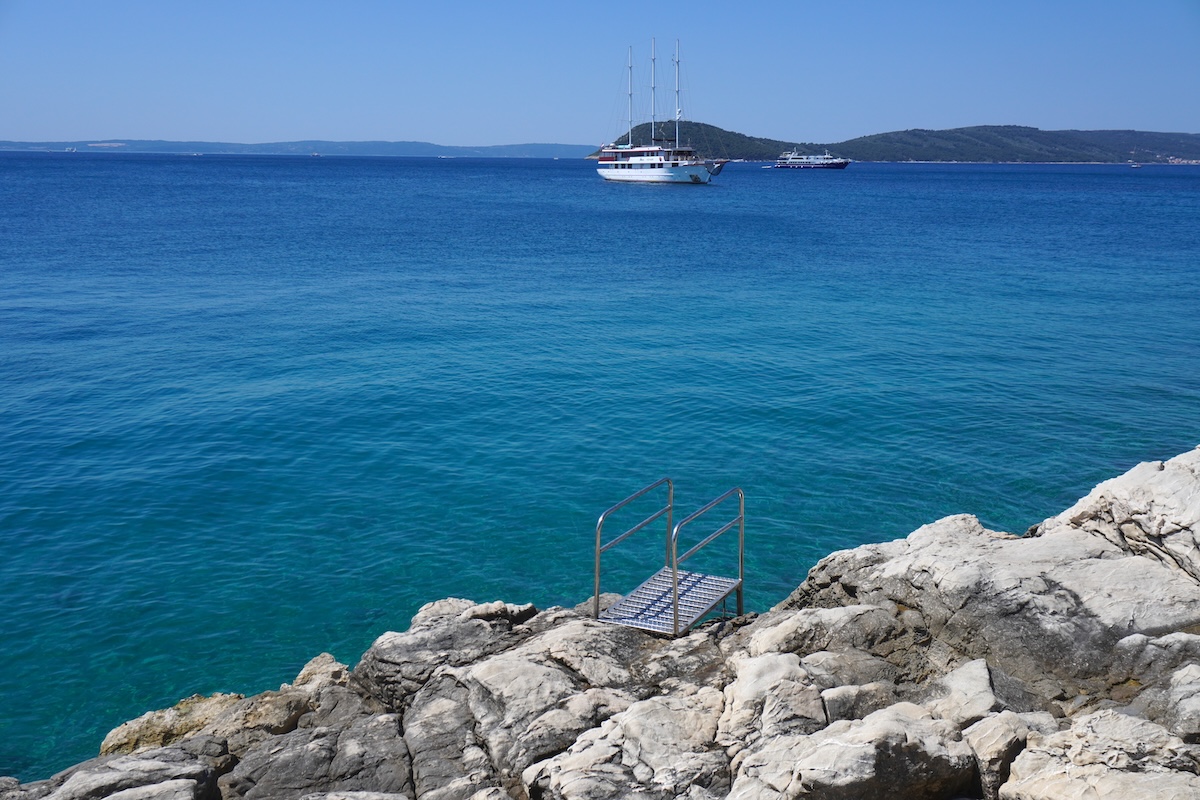
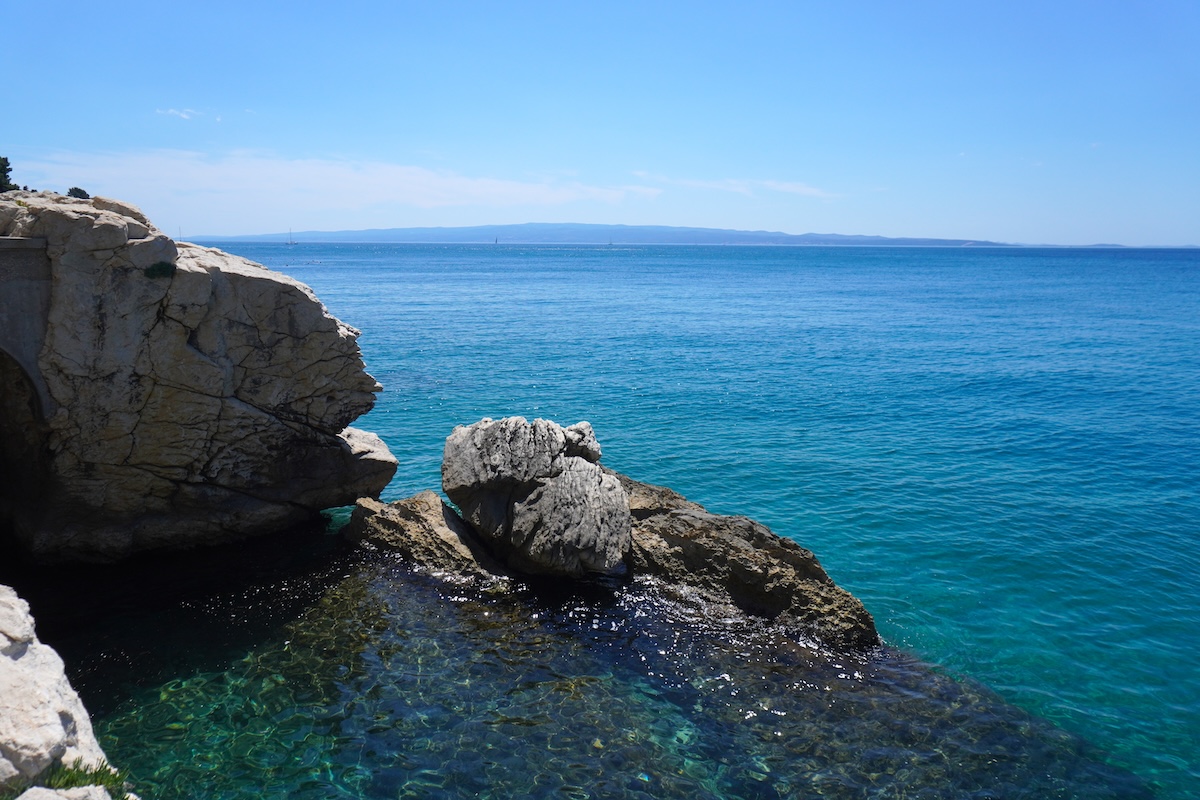
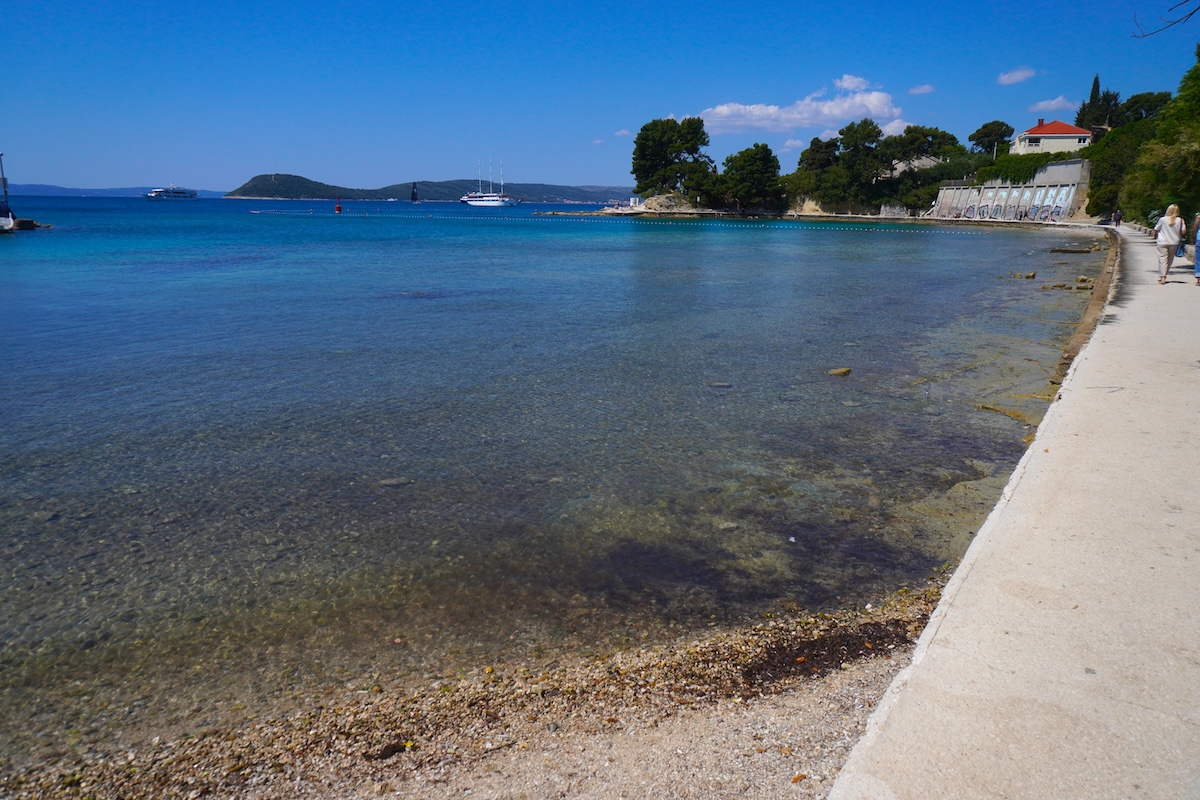
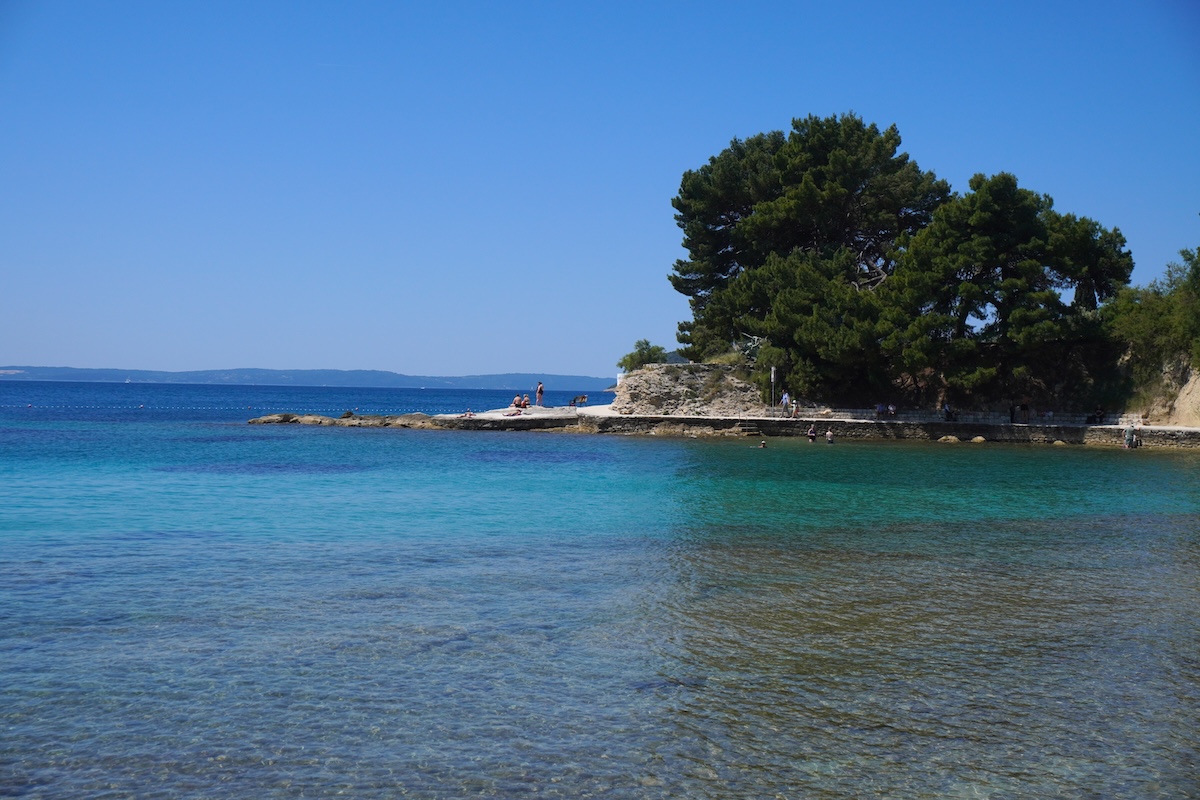
- Ježinac Beach and Kaštelet/Obojena Beach: two adjacent pebble beaches with crystal-clear waters and stunning scenery, at the foot of Marjan. On the left is a flatter concrete area with steps leading into the water, where we took a dip. There are showers and changing areas.
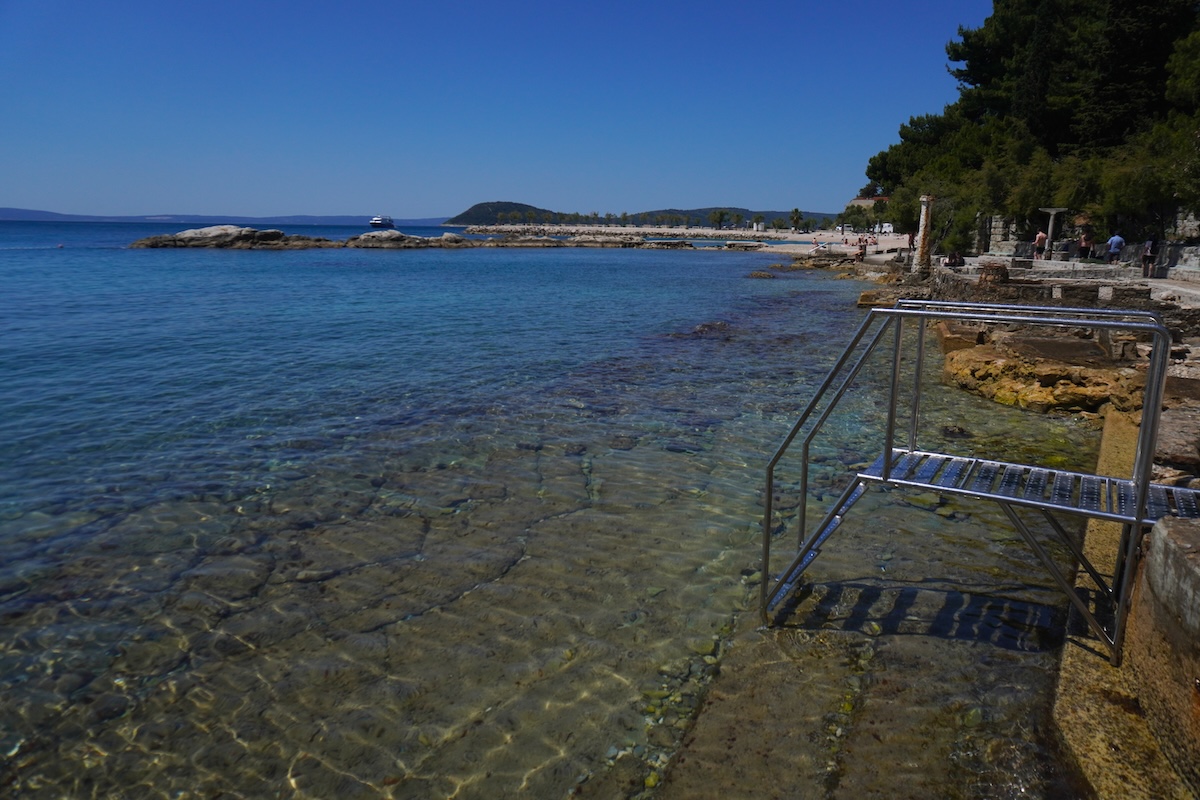
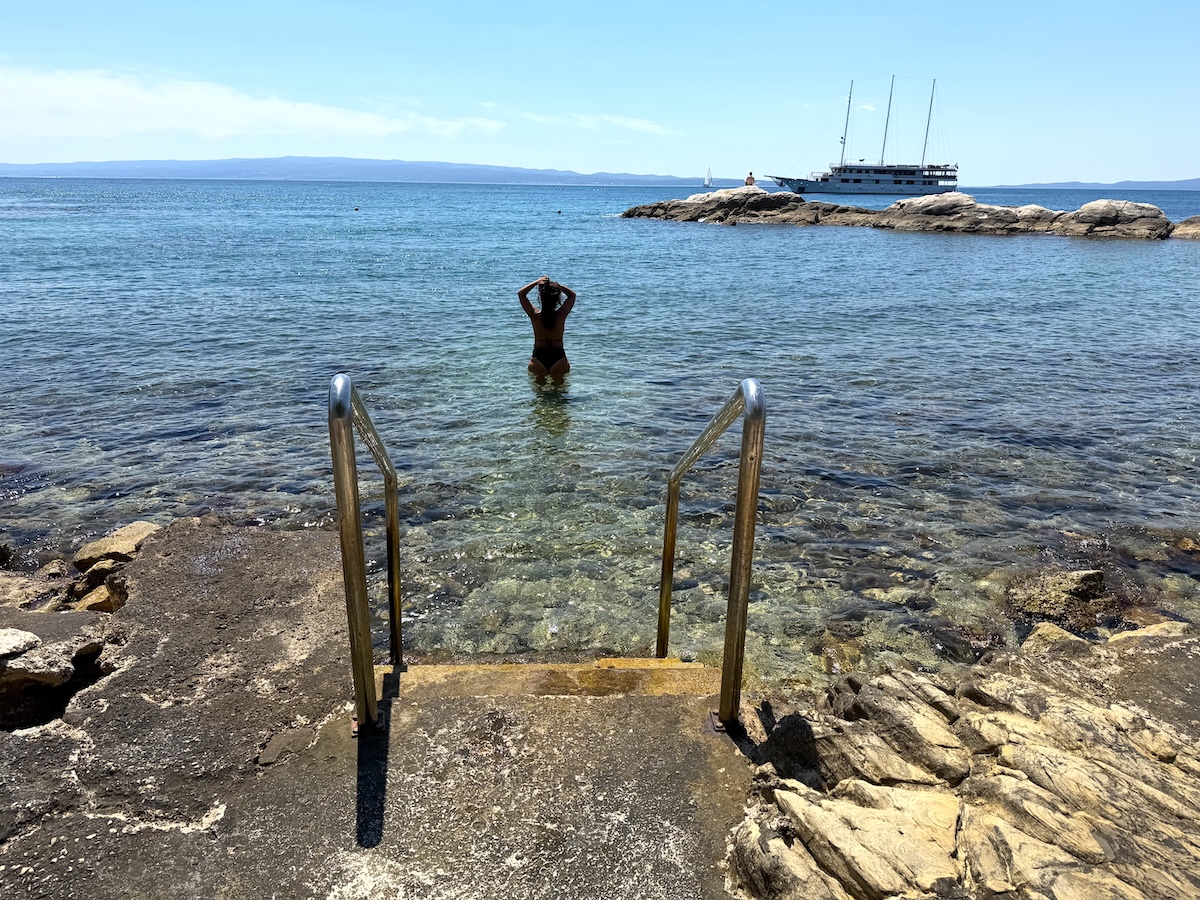
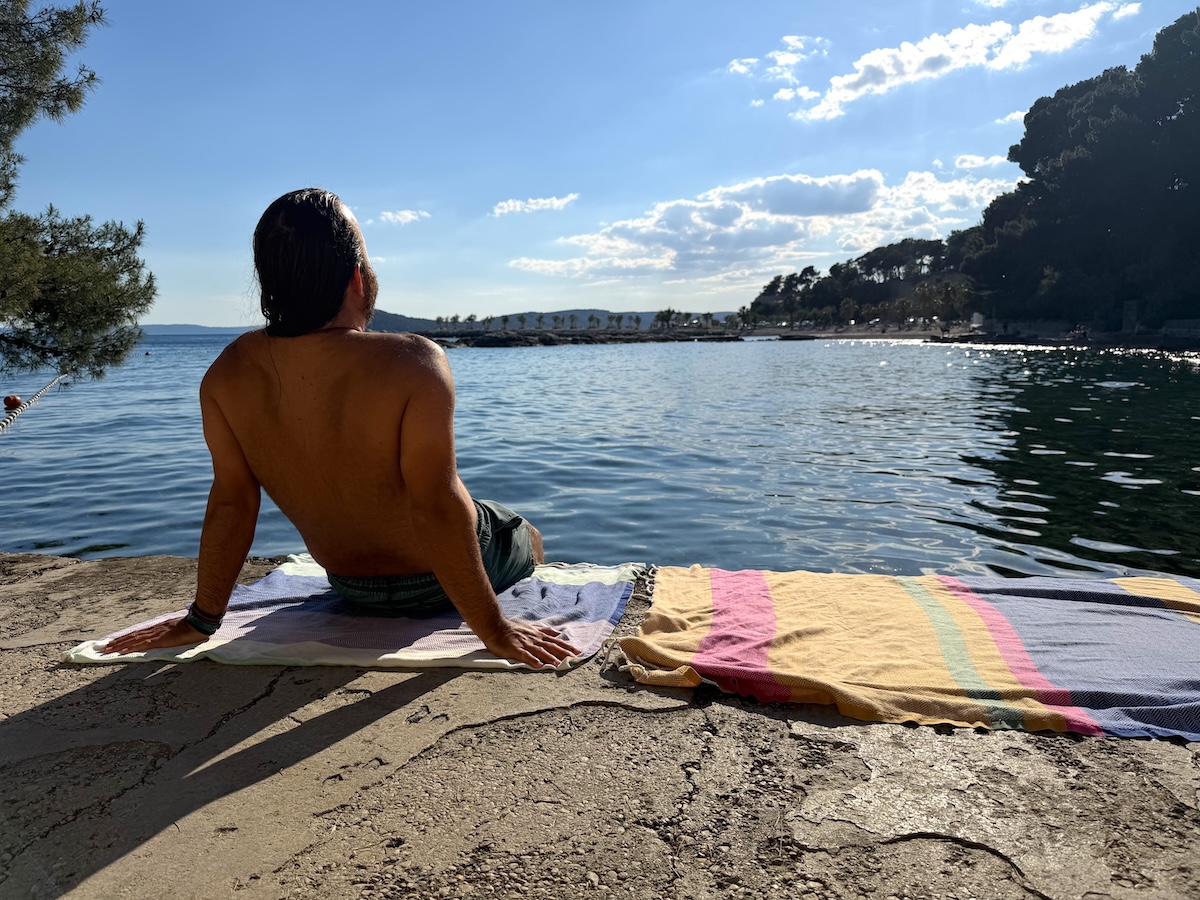
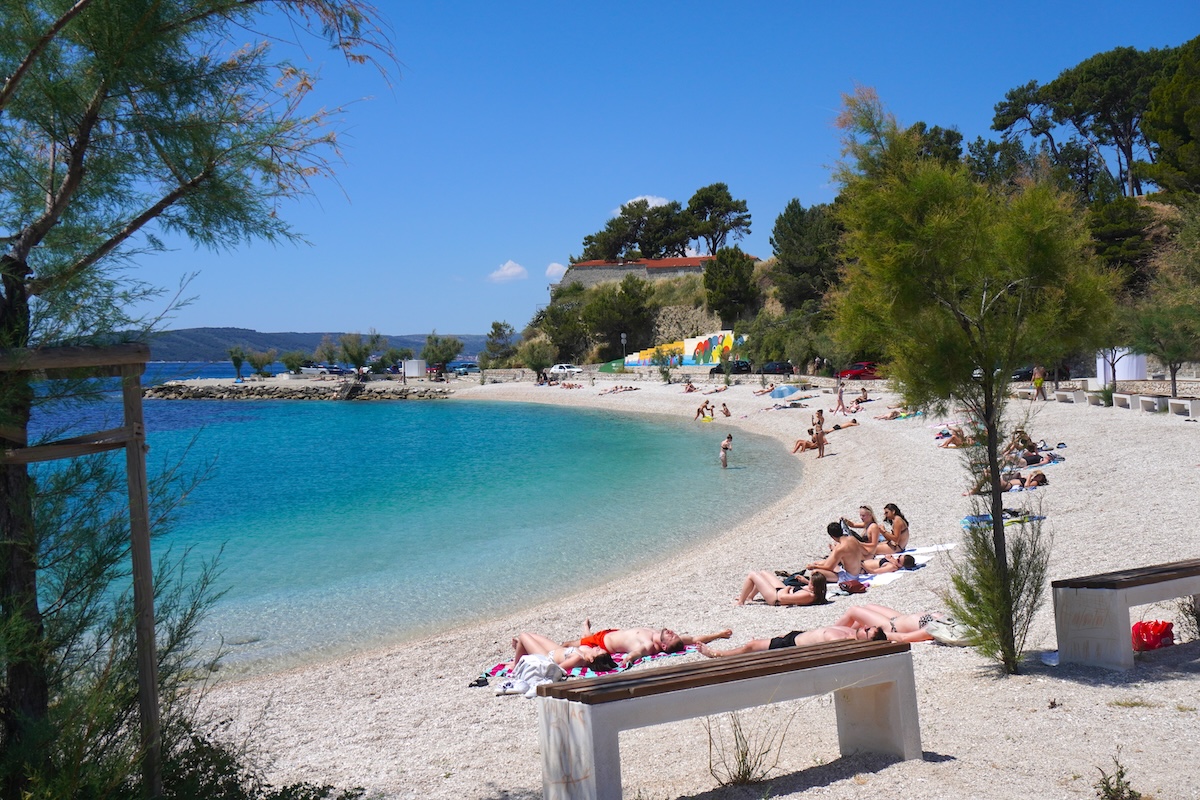
- Kasjuni Beach: a large pebble bay at the foot of the southwestern slope of Marjan. When we went, there were quite a few more people than at the previous beaches, but they were all concentrated in the central area. We thought it was a beautiful place to swim; the views of the mountain from the water are breathtaking. In addition, the beach has food and drink options and changing rooms, although, unfortunately, the showers weren’t working when we were there to rinse the salt off our bodies. Next to the main beach, separated by some rocks, there’s a dog beach and a section reserved for nudists, marked with a sign.
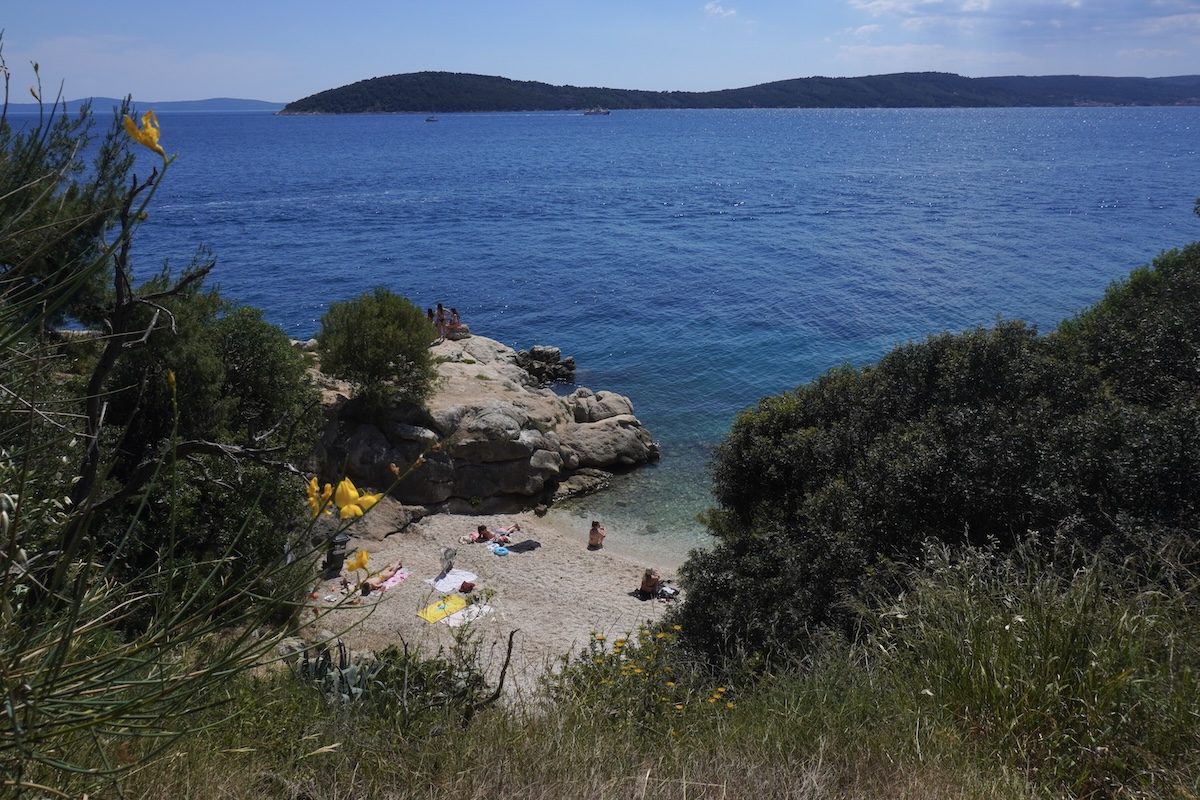
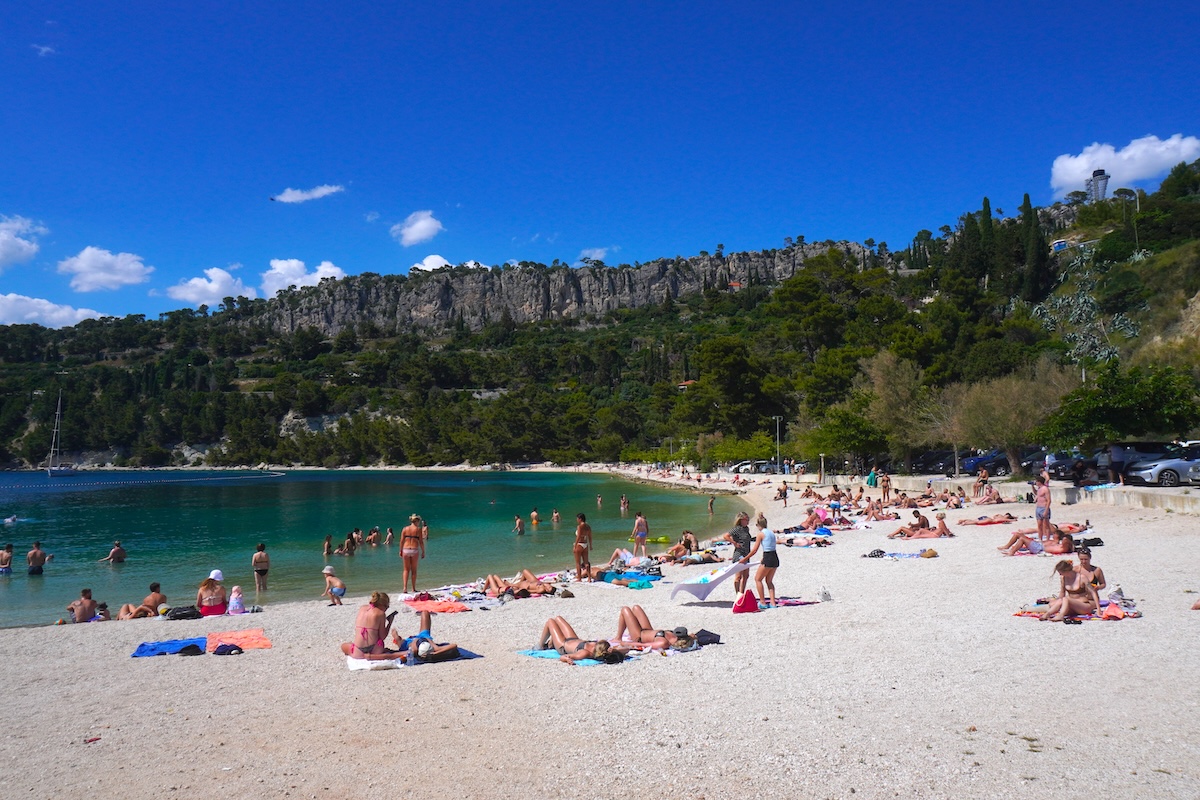
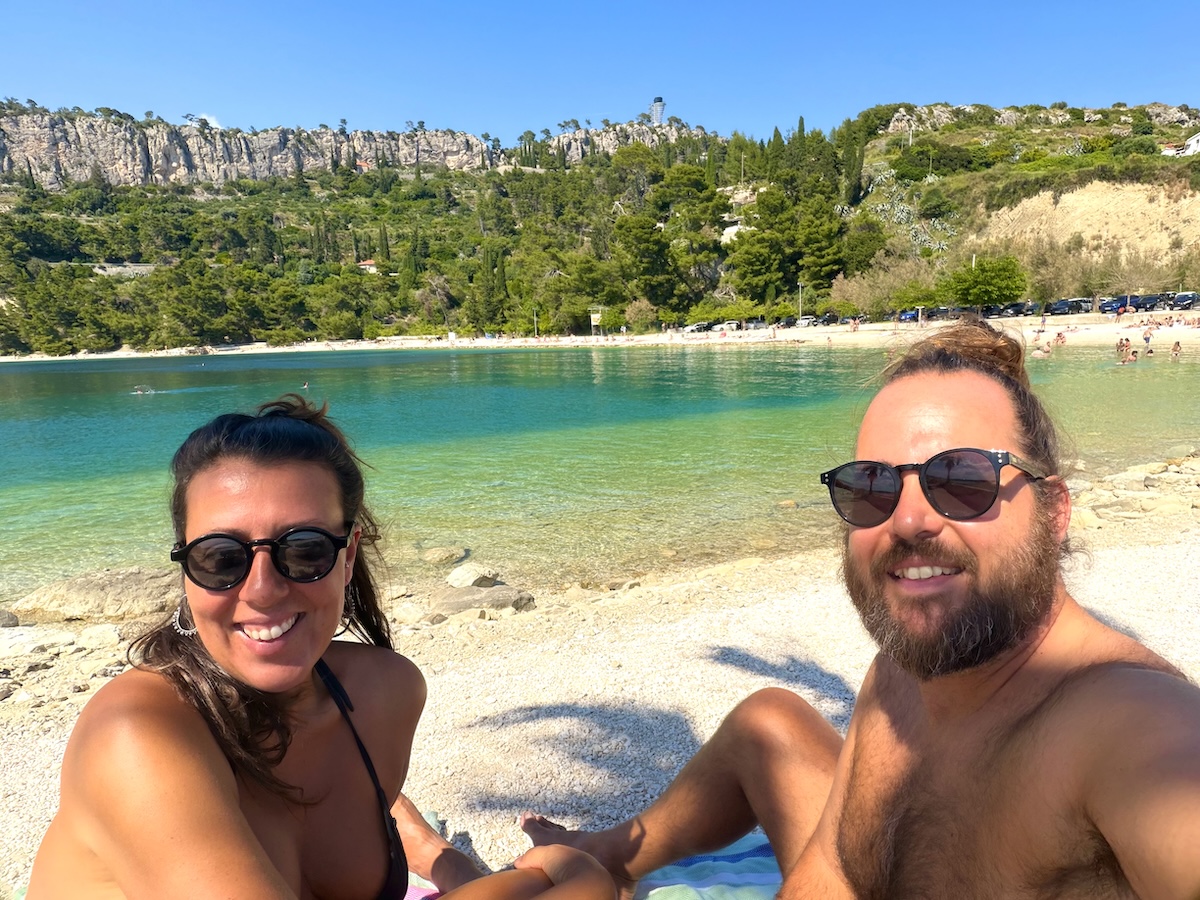
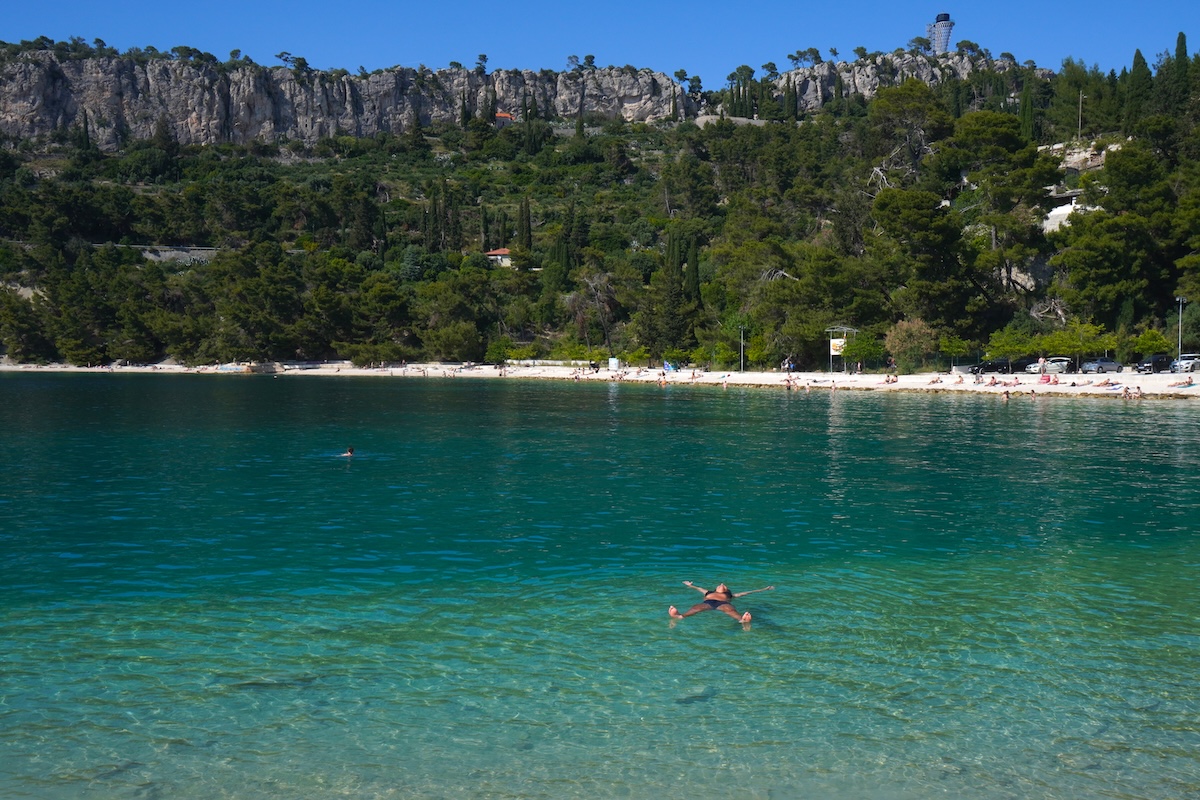
- Bene Beach: a sandy beach in a pine forest that provides natural shade. It has a restaurant, tennis courts, a playground, showers, and changing rooms, as well as accessible access via an elevator leading down to the sea. You can get there by taking bus 12.
- Bačvice Beach: Split’s urban sandy beach, next to the harbor. It’s a nightlife hotspot for young people and the place where they play picigin, a ball game played in shallow water that’s very typical of the city.
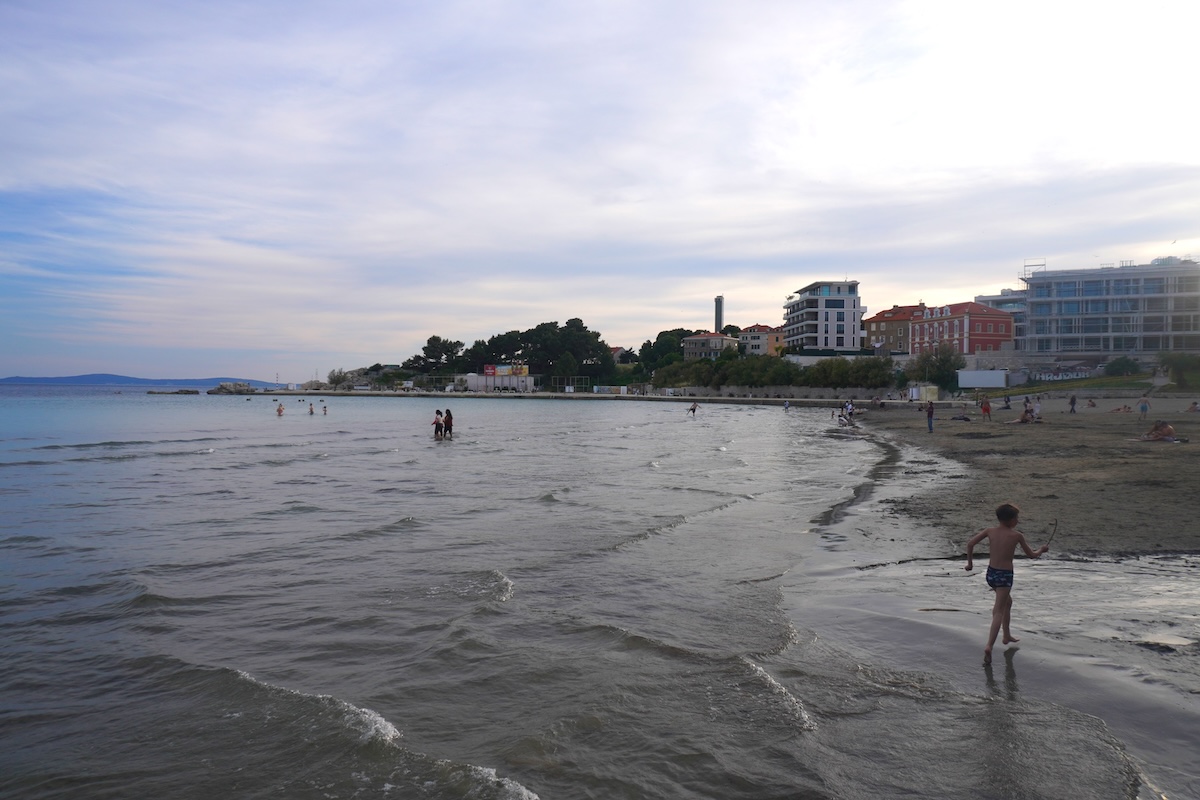
- Ovčice Beach: Located near the previous beach, this is another urban sandy beach with a bar/café; it’s very popular with families.
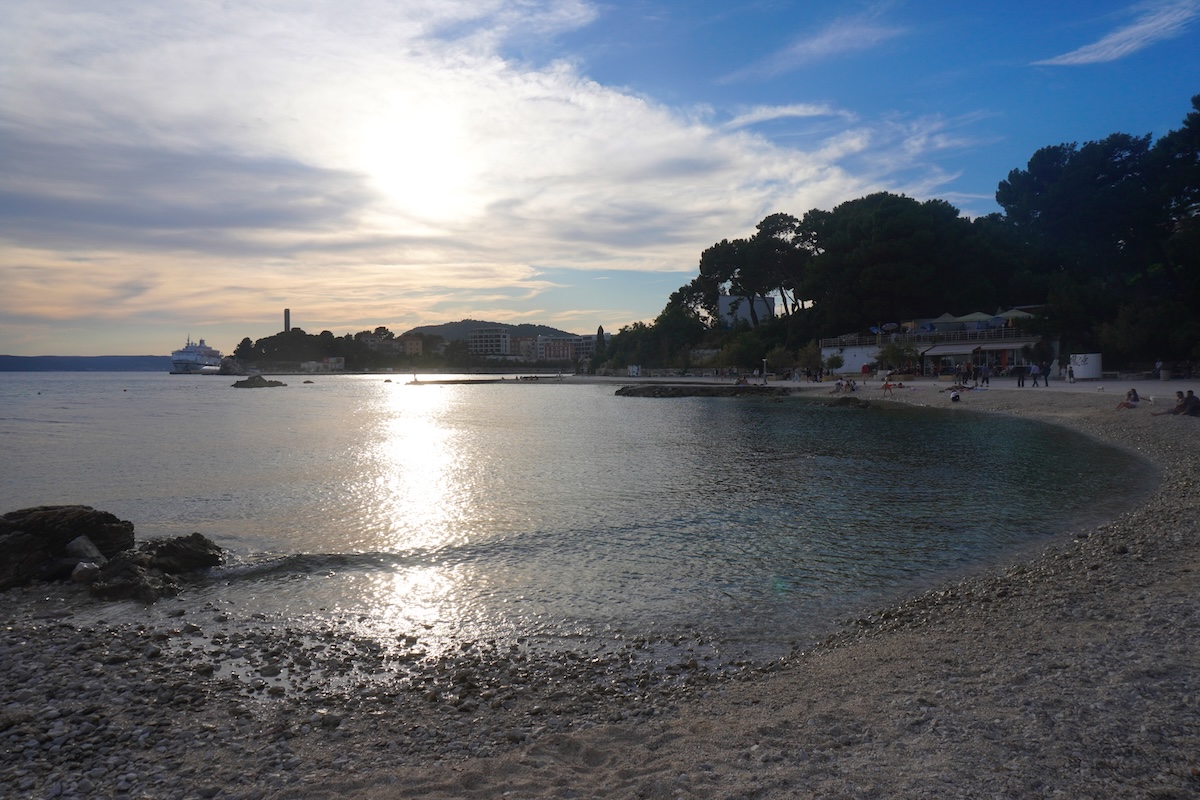
- Firule Beach: a sheltered bay with fine sand, very popular with families and known for its tennis school, which has produced world-class players.
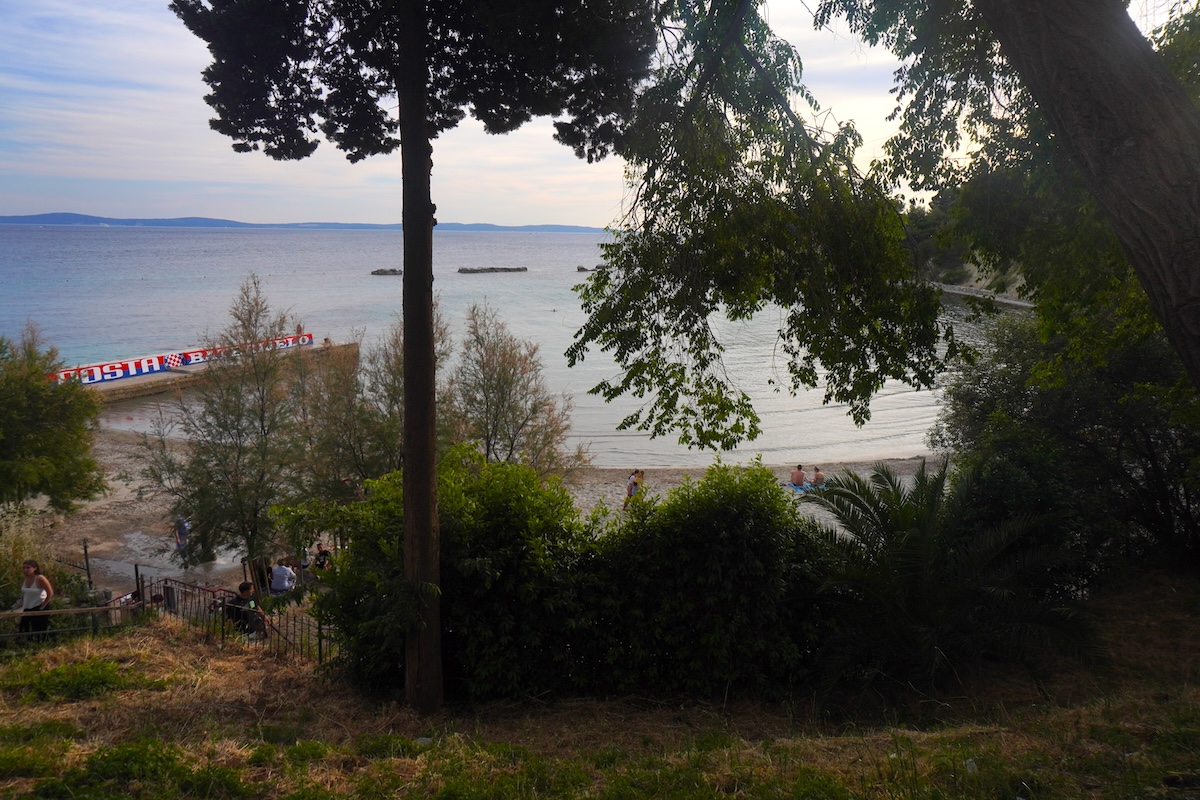
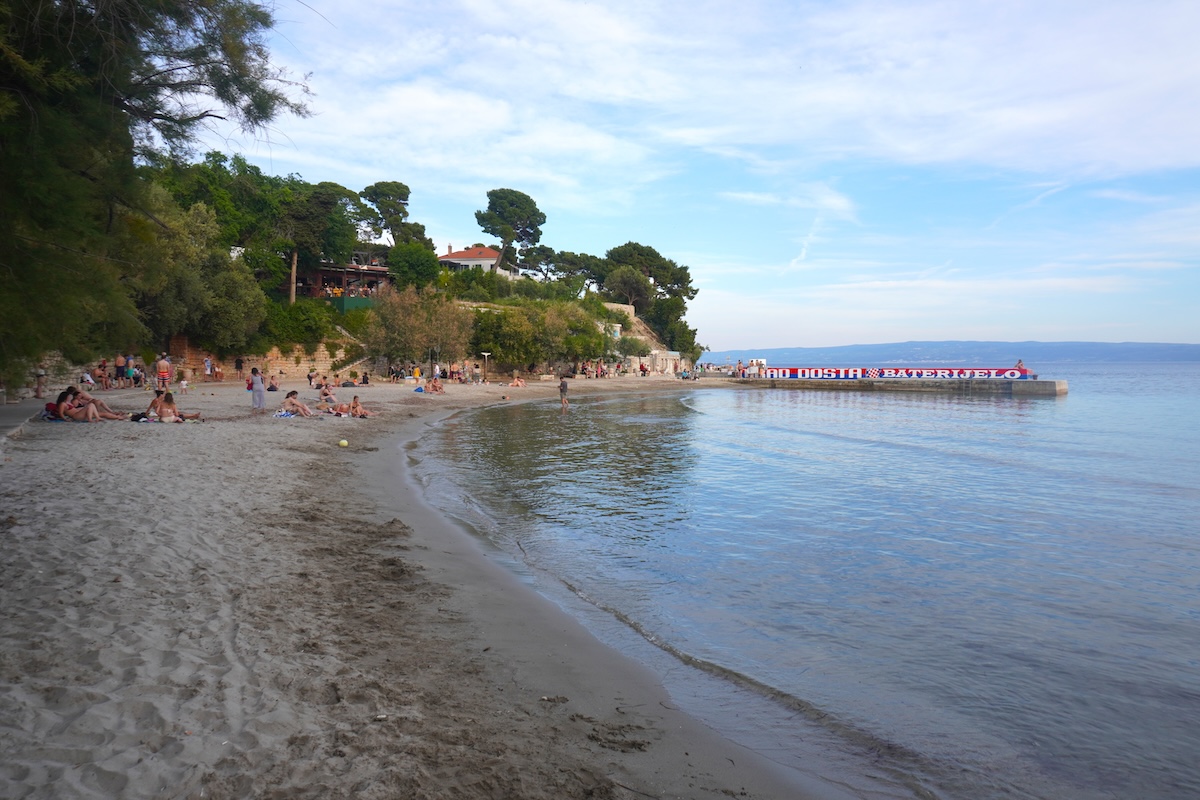
- Trstenik Beach: Super relaxing and not very crowded, even prettier than the previous two. It’s a pebble beach with easy access to the sea, ideal for families. The area around the renovated Radisson Blu hotel received the Blue Flag for its management.
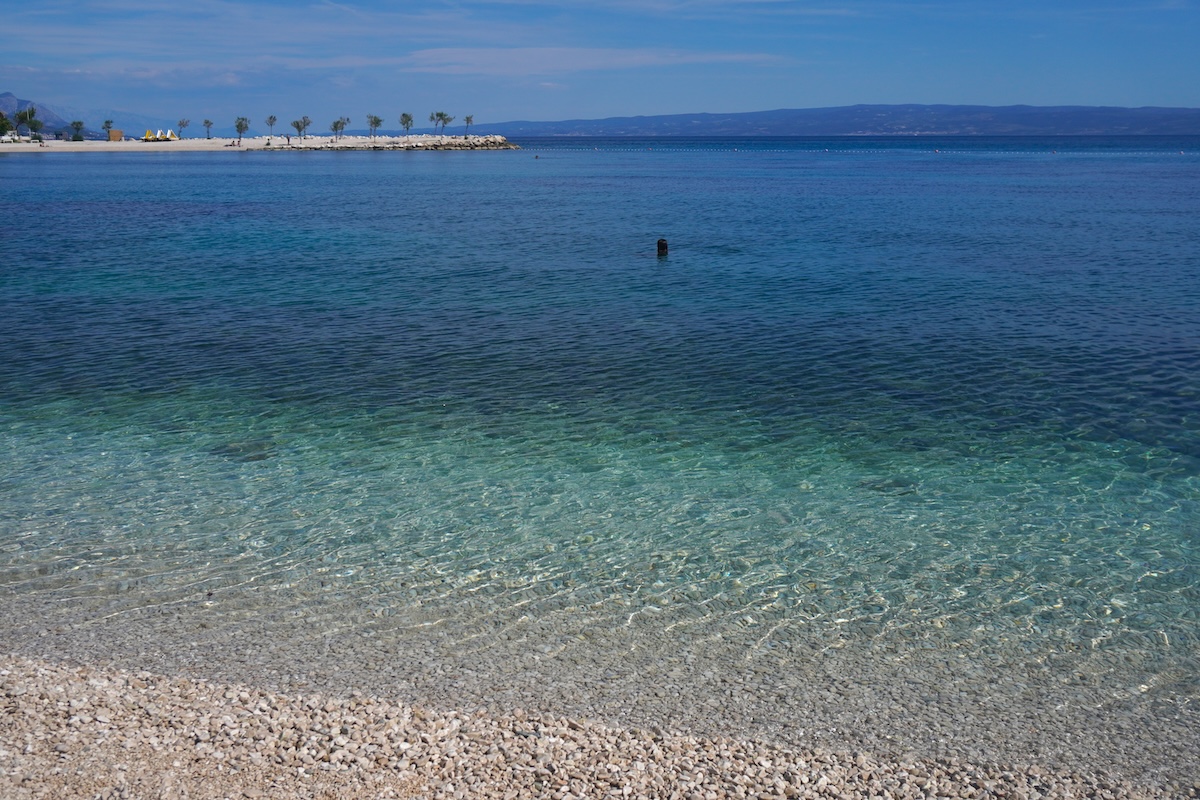
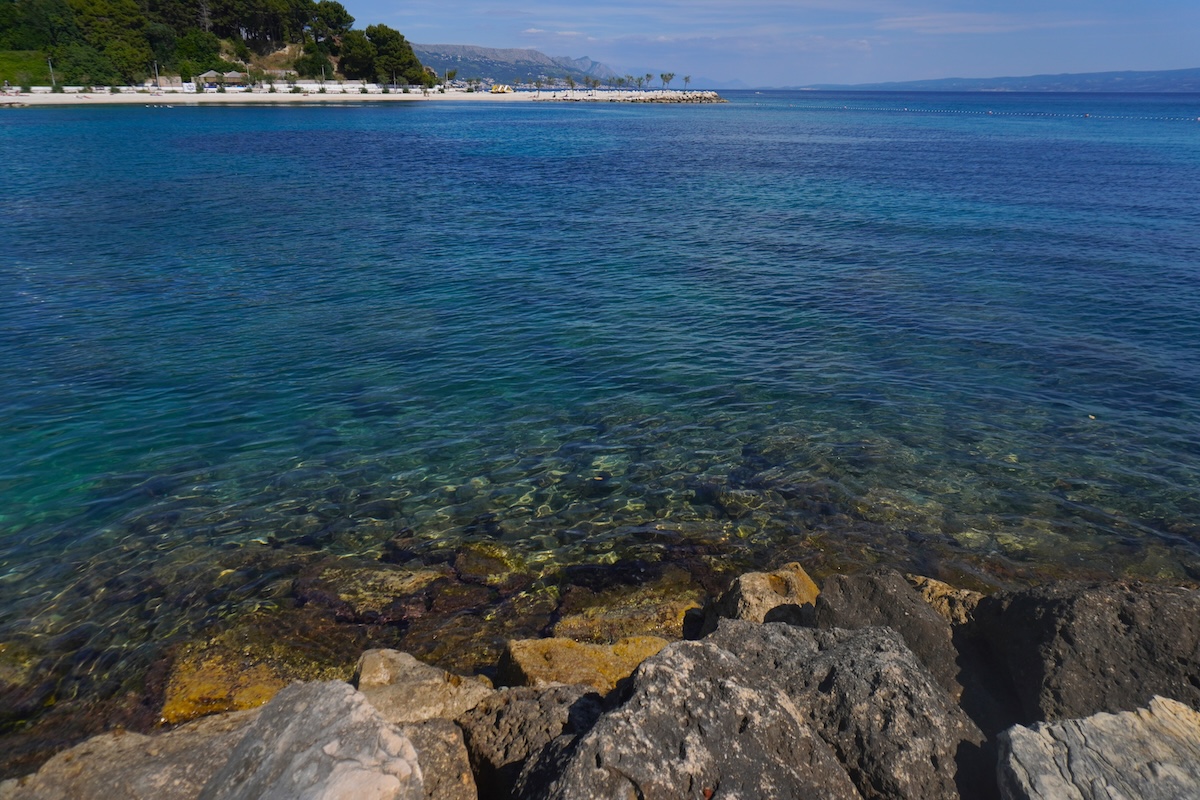
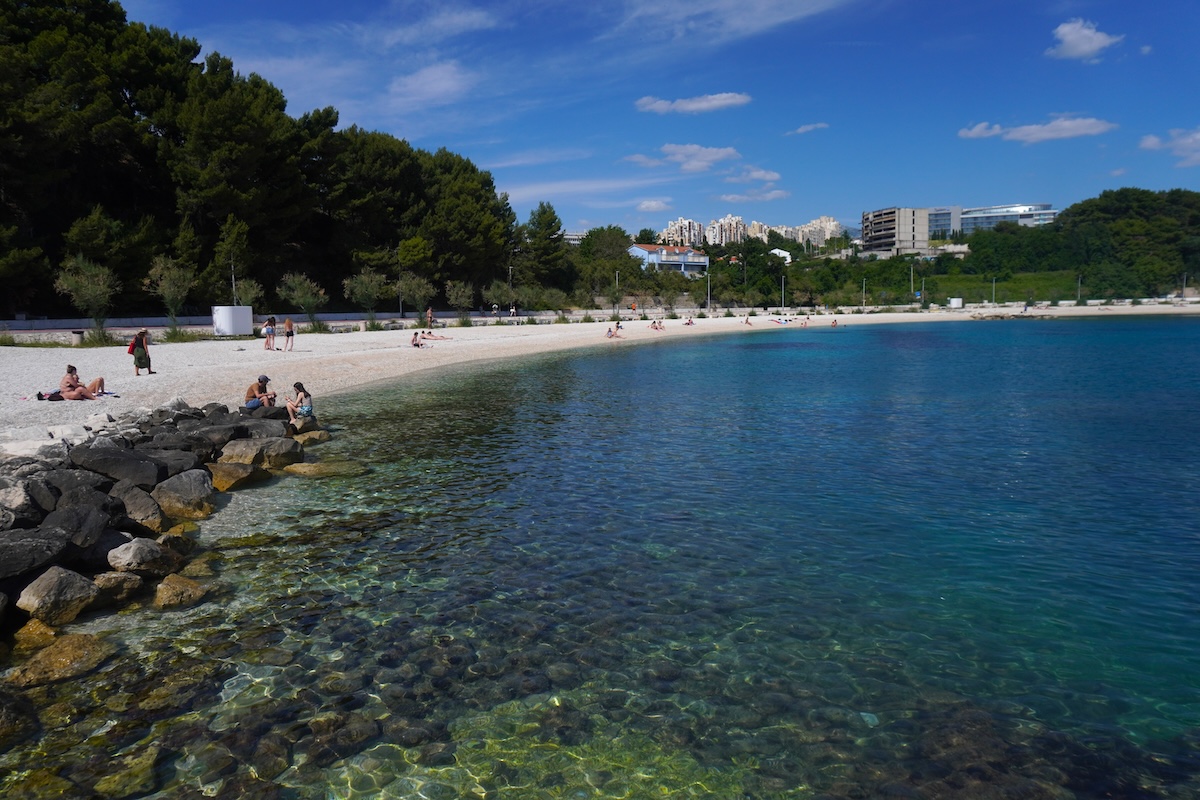
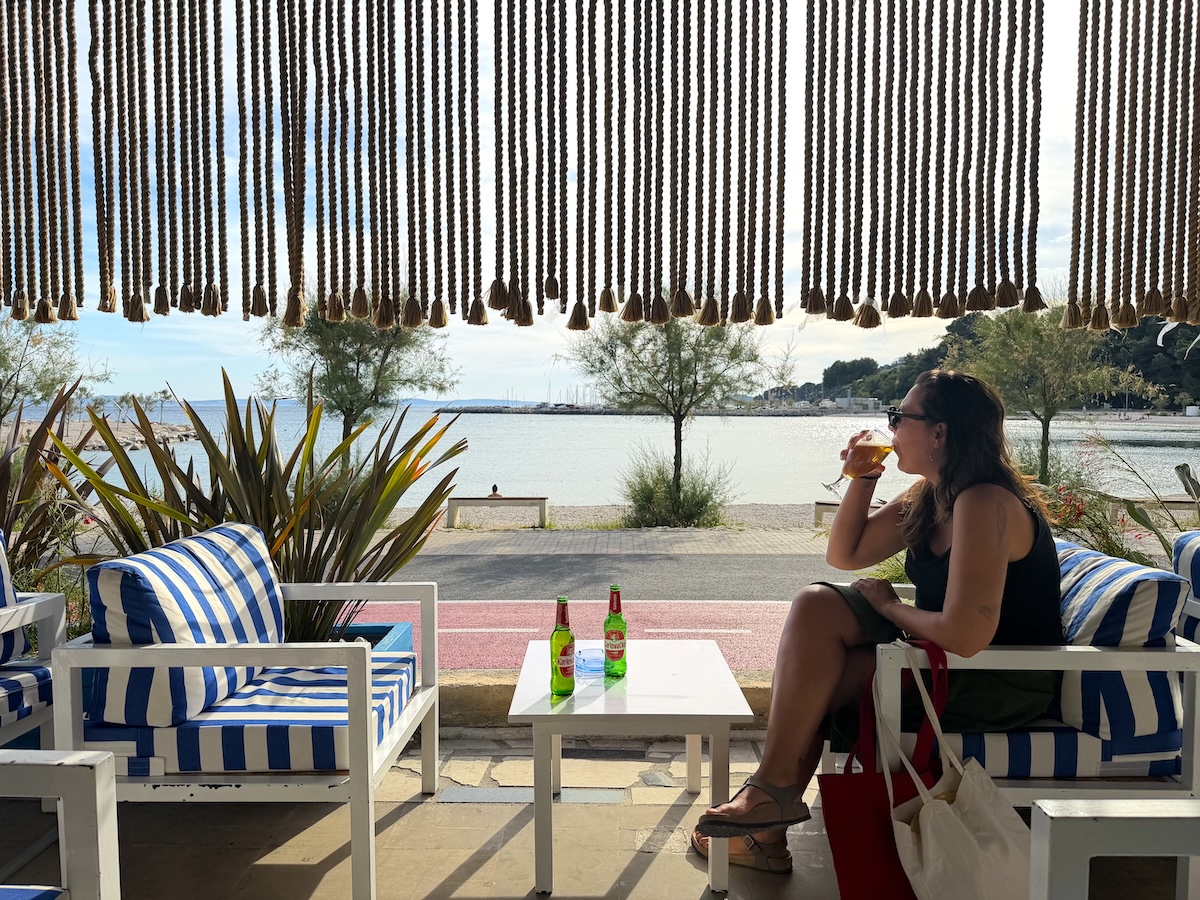
- Žnjan Artificial Beach Area: More like a large park with artificial beaches, located between Trstenik and Duilovo. It features a playground, a water park with inflatable water attractions, a bike path and bike rentals, sports fields (soccer, basketball, and tennis), and an amphitheater. Very popular with locals and families.
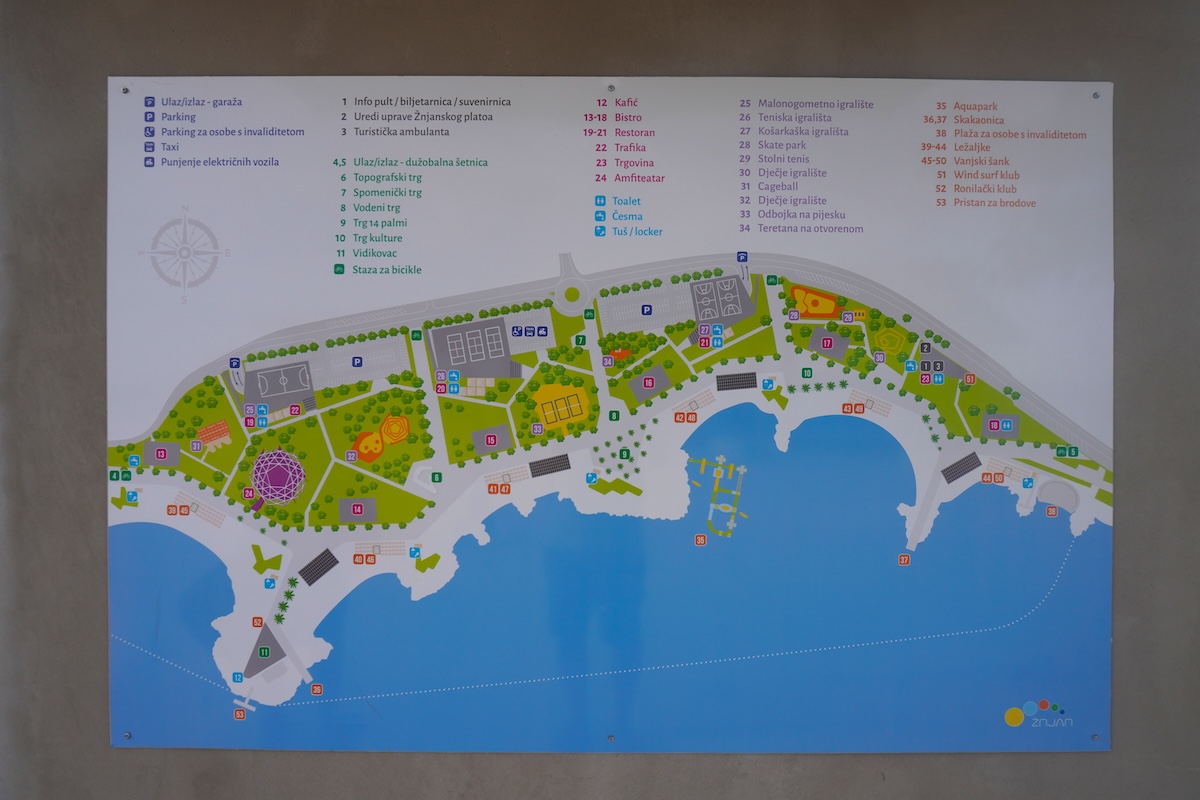
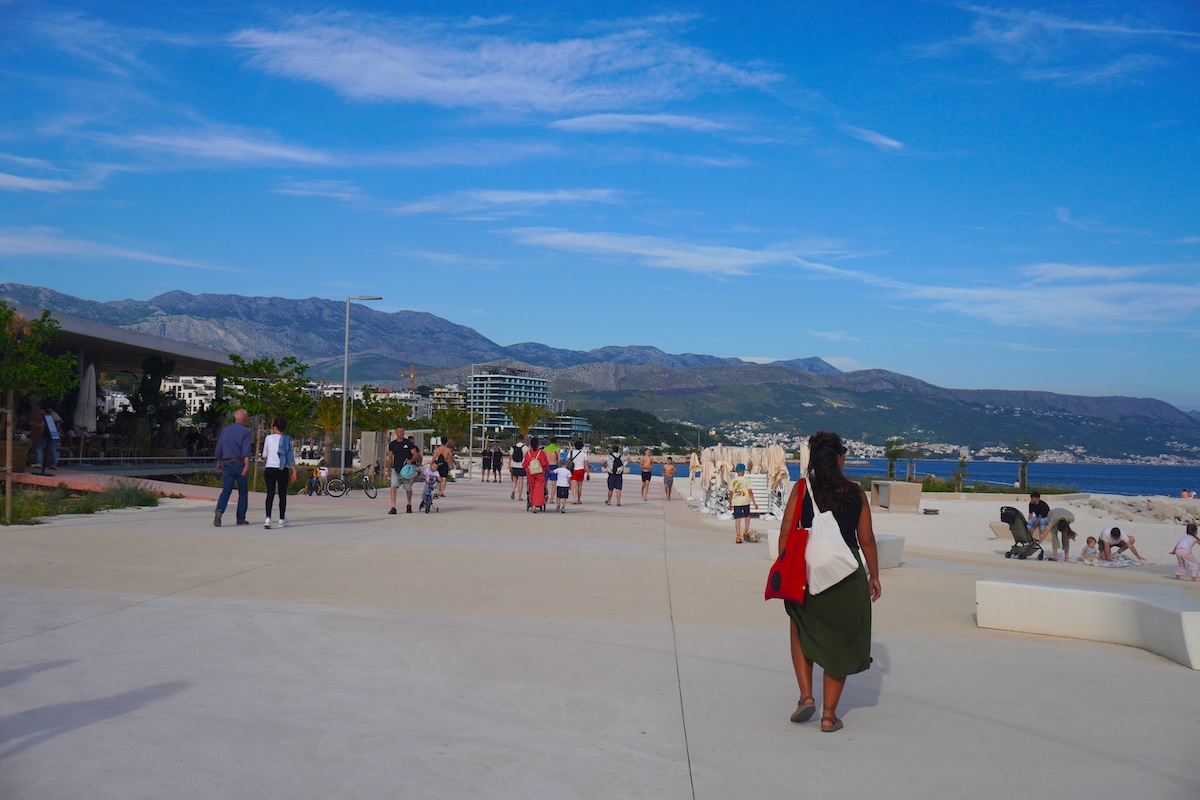
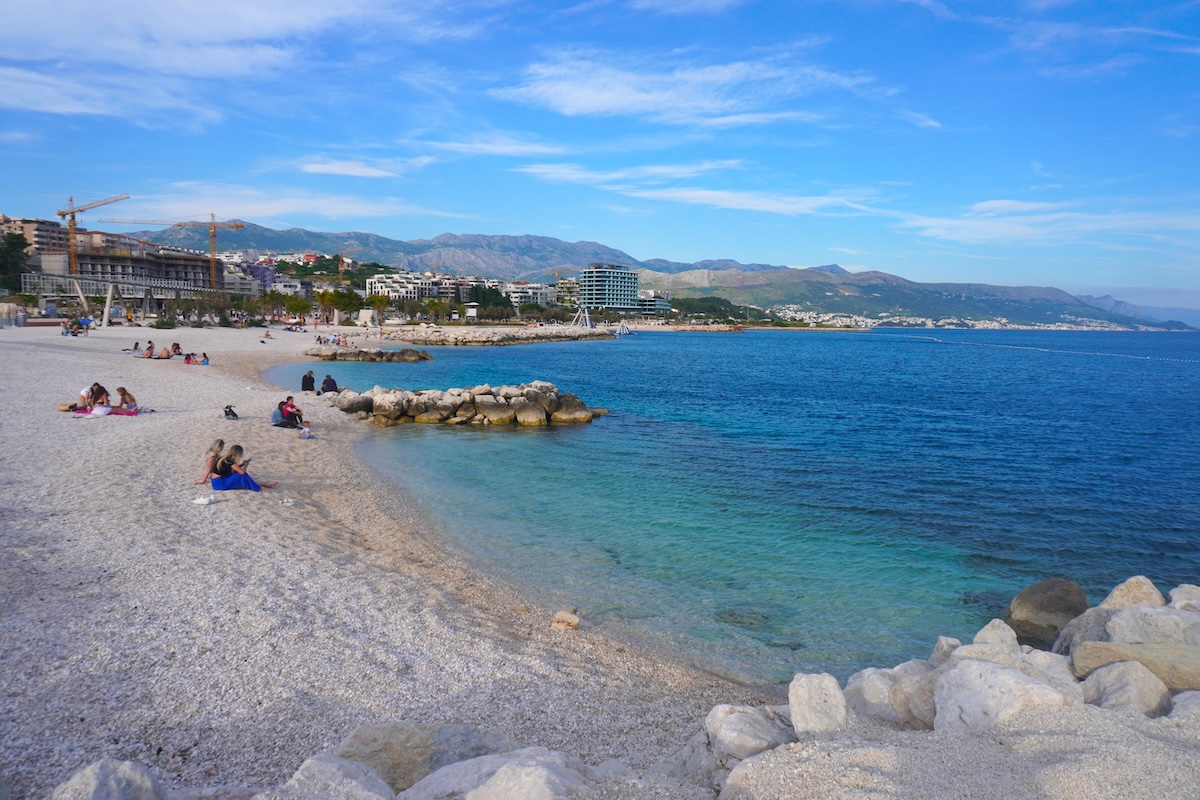
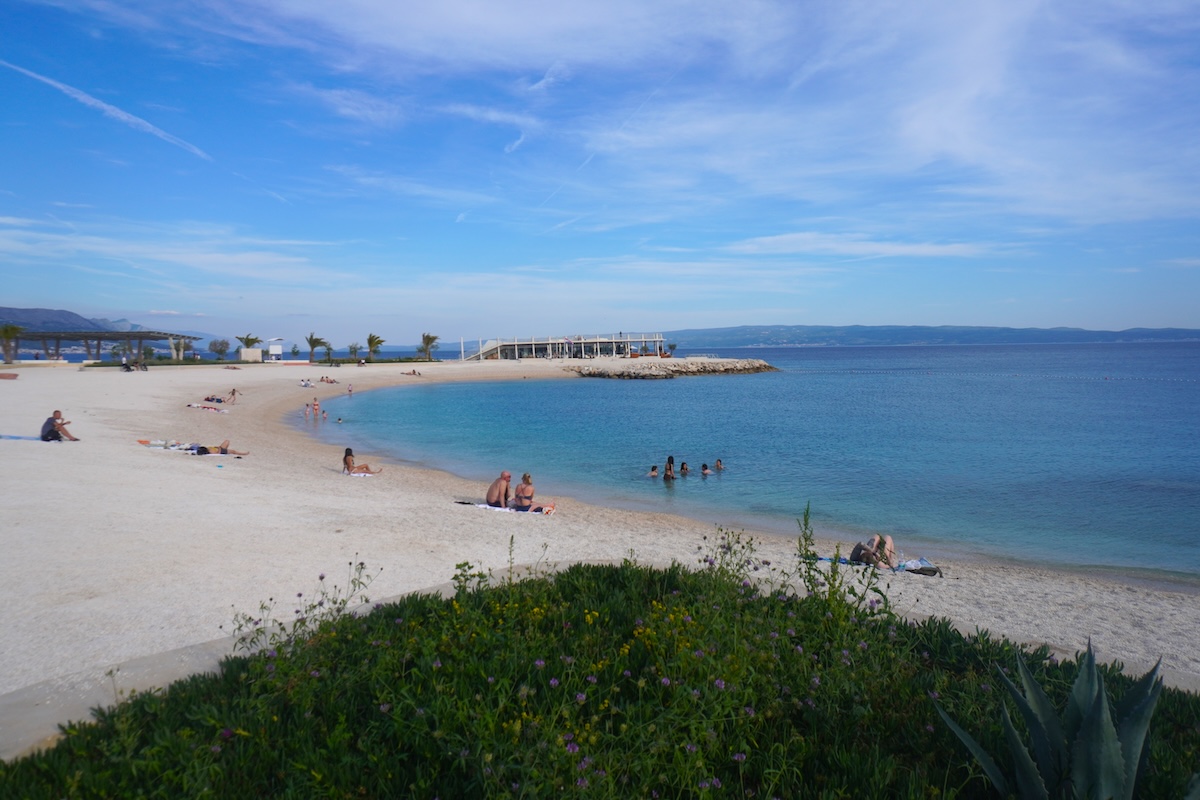
- Bonus: the changing rooms at Split’s beaches. One of the things we liked most about Split’s beaches is that most of them have showers and changing rooms, and they’re free to use. At RandomTrip, we thought the changing rooms were very well designed: they’re oval structures covered with white fabric, allowing you to change in privacy without having to search for a spot among the rocks. It’s a practical touch that’s much appreciated, especially if you’re going to spend several hours at the beach or are heading straight from downtown with your swimsuit in your backpack.
Day Trips from Split
From Split, you can take several day trips, each offering very different landscapes: spend the day in a national park with stunning waterfalls like Krka, explore one of Dalmatia’s most beautiful historic cities, such as Trogir, or simply take it easy on one of the nearby islands, there’s something for everyone near Split.
Krka National Park
Just over an hour from Split, Krka National Park is one of Croatia’s most beautiful natural parks. It was designated a national park in 1985 and covers 109 km² of the Krka River and its watershed. Its main attraction is the seven tuff barriers (a type of limestone formed when calcium carbonate from the water is deposited on mosses and algae) that create a series of waterfalls rarely seen in karst rivers.
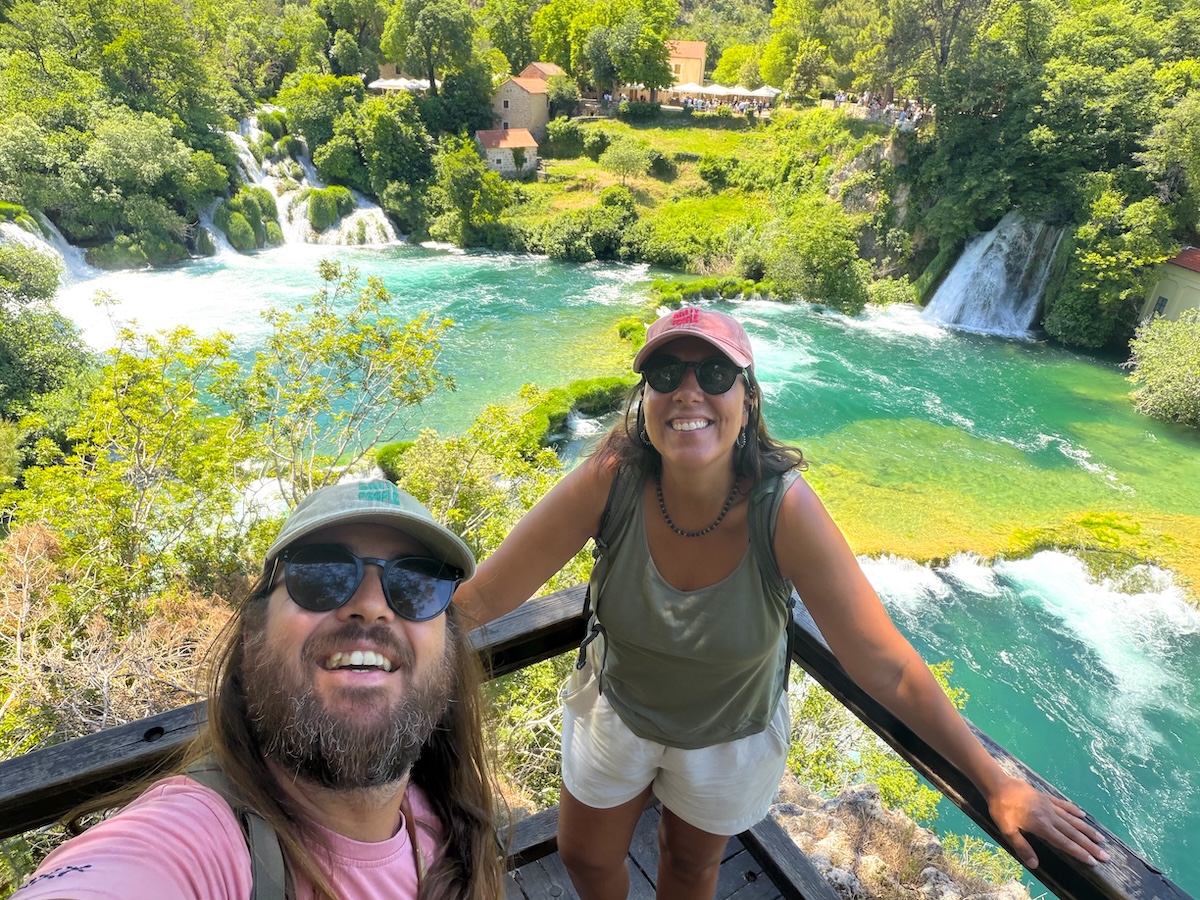
The park also features historical monuments, such as the Franciscan monastery on Visovac Island (dating from 1445), the Orthodox monastery in Krka, and the Roman military camp at Burnum, home to Croatia’s only military amphitheater.
The park’s most famous (and most visited) waterfall, and the longest on the river, is Skradinski buk, located at its southern end, about 4 km from the village of Skradin. There is a wooden walkway about 1,900 meters long that winds through the waterfalls; the walk takes about 45 minutes to an hour, depending on your pace. You can enter via Lozovac, taking a bus inside the park, or from Skradin, by boat. From April through October, these modes of transportation are included in the admission fee.
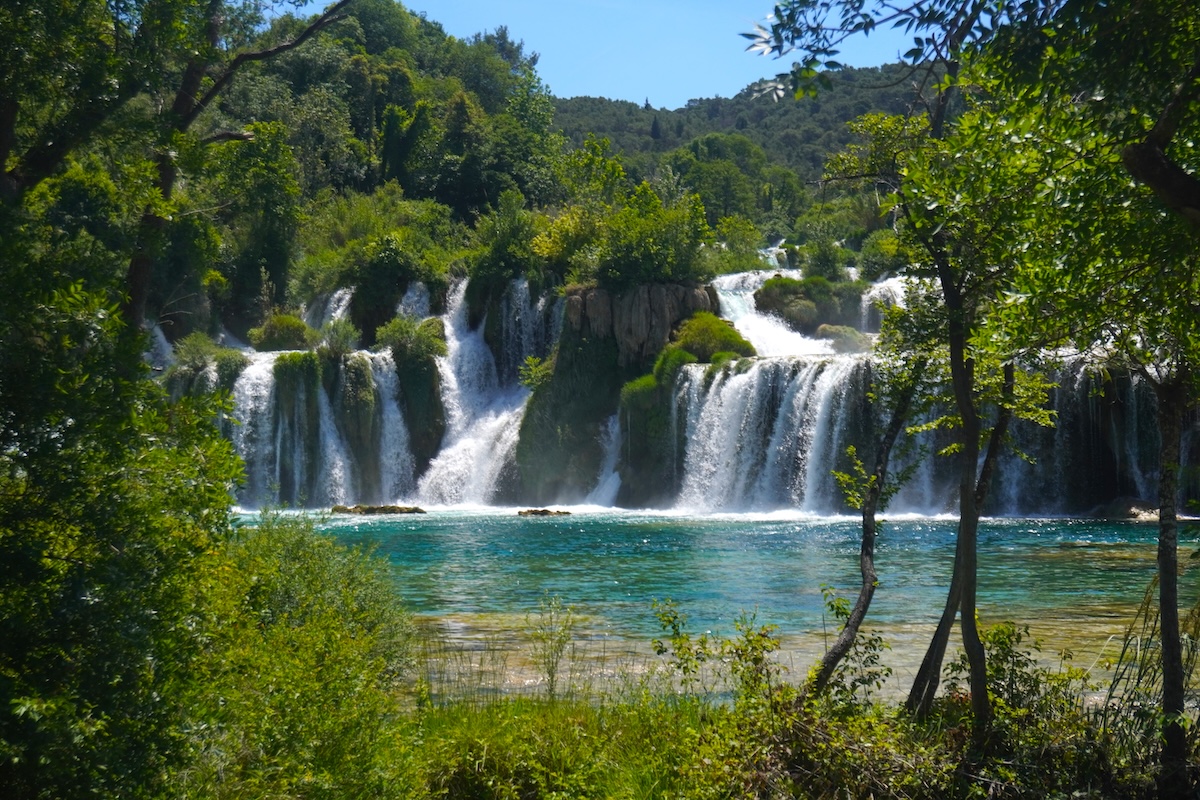
That same waterfall has an interesting history related to electricity, as a hydroelectric power plant was built right at Skradinski Buk and began operating in 1895, just two days after Tesla’s plant at Niagara Falls. Thanks to this plant, Šibenik, the coastal city closest to the park, had electricity before many European cities. Today, only its ruins remain, and an exhibition in a restored mill recalls its history.
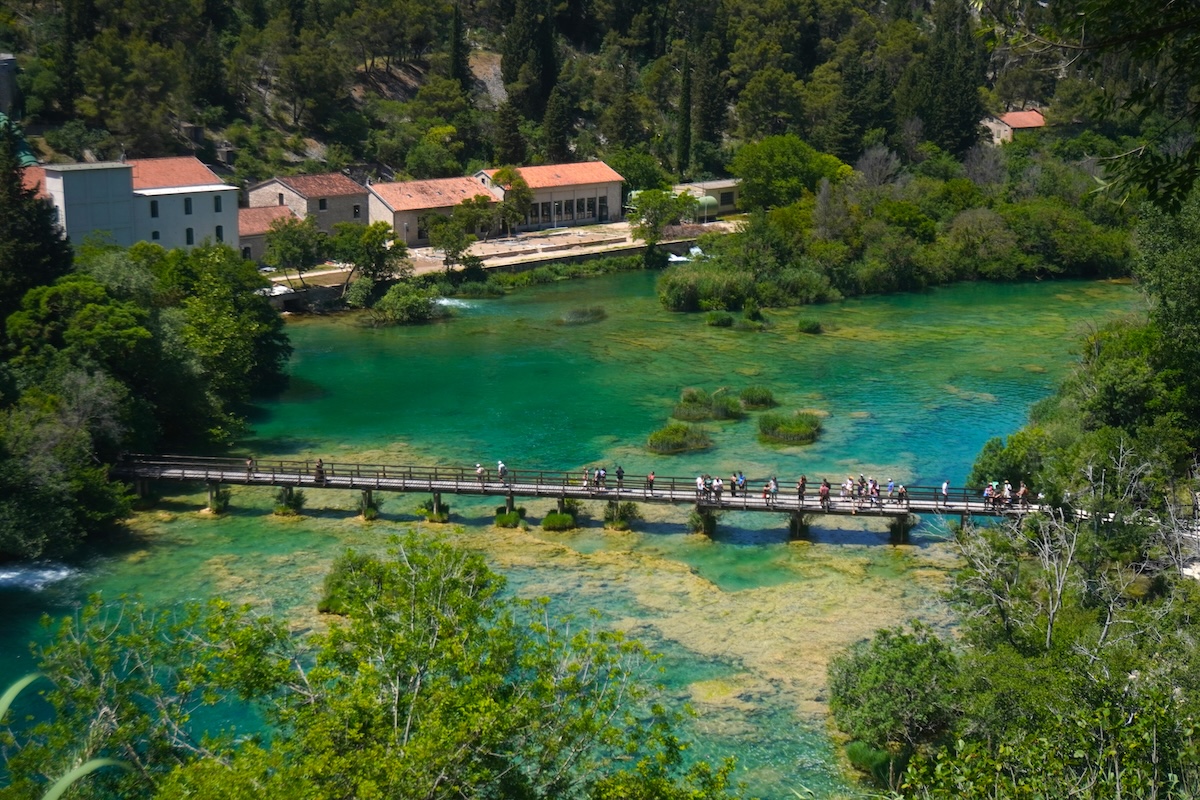
At RandomTrip, we visited Krka National Park on this organized tour from GetYourGuide and we highly recommend it. We paid €35 per person plus the park entrance fee, and we’ll share our experience below. If you prefer, you can check out a similar tour on Civitatis here.
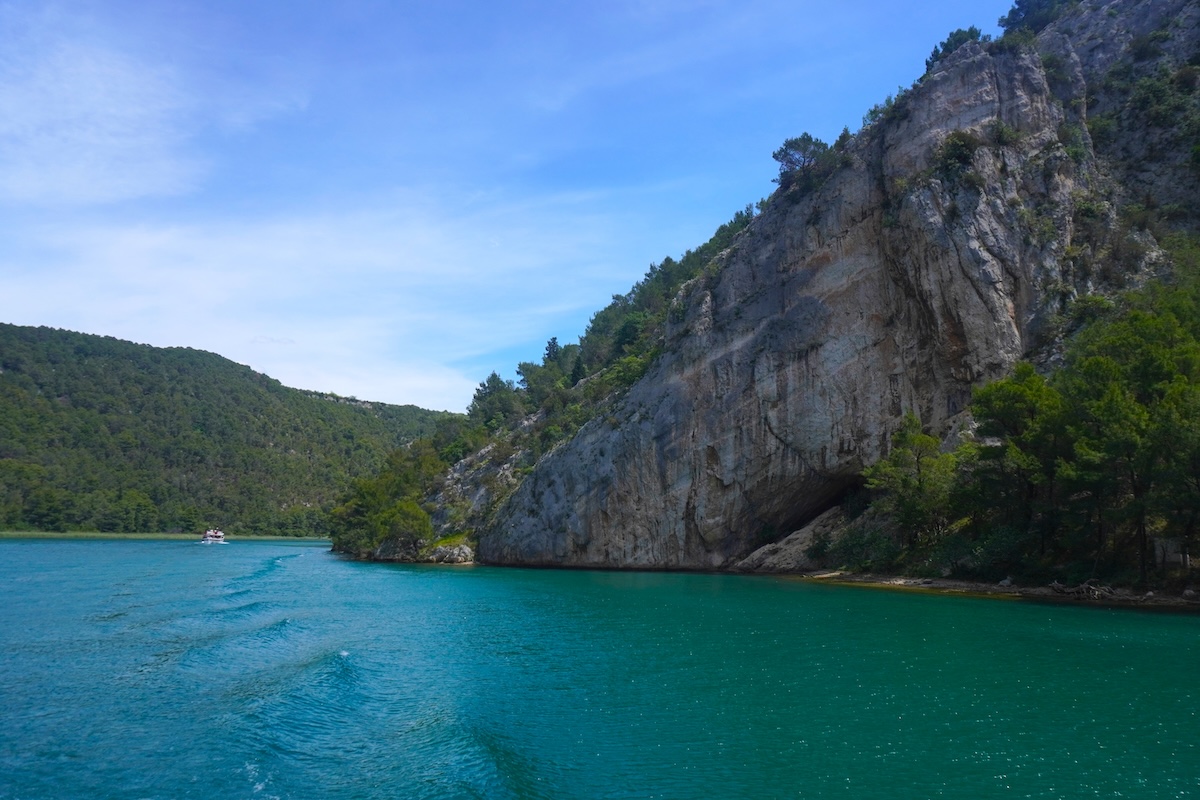
Park admission: in April, May, and October, €20 (adults) and €12 (children ages 7–18 and students). From June through September: €40 and €15, with reduced rates after 3:00 p.m. (€30 and €11.25). From November through March: €7 and €4. Children under 7: free admission. Includes the boat ride from Skradinski buk to Skradin and the bus from Lozovac (April through October).
Hours: The park is open year-round. Boats from Skradin do not operate in winter.
Our Experience at Krka National Park
Although we at RandomTrip like to explore on our own, the truth is that we didn’t have time to do so at Krka: we had one day left on our trip before saying goodbye to Split, and we wanted to at least get a small taste of what is said to be one of the country’s most beautiful national parks and see the famous waterfalls, so we decided to be practical. We went on this organized tour from GetYourGuide, which was ultimately operated by Gray Line, and we highly recommend it. We paid €35 per person plus the park entrance fee (€20 per person, since we went in May) and didn’t have to worry about organizing anything.
The itinerary for our tour was as follows:
- We met at 9:30 a.m. at The Riva, where we paid for the National Park entrance tickets, which were not included in the tour (€20 per person in cash, since we went in May)
- We waited for everyone to arrive and pay, and around 10:15 a.m. we boarded the bus for the hour-plus trip to Krka National Park. At this point, our guide (Tin) began giving us a briefing on the tour and created a WhatsApp group with the participants (to send us real-time updates and maintain a quick line of communication during the visit), since we were a large group (a full bus, about 50-something people). Tin also took this opportunity to tell us a bit about the history of Split and Krka National Park.

- At 11:30 a.m., Tin handed out the park tickets, and at 11:40 a.m., the bus dropped us off inside the park, right where the boardwalk begins. We had free time to explore the national park until 4:20 p.m., at which time we were to meet at the tour’s end point in Skradin to head back.
- For 1 hour and 30 minutes, we walk along the wooden boardwalk, enjoying the views of the national park, its flora and fauna, and taking in the impressive Skradinski Buk waterfalls! We then head to the boat departure point at the lower part of the park. If you visit the park from June through September, you’ll be able to take a dip in those inviting waters.
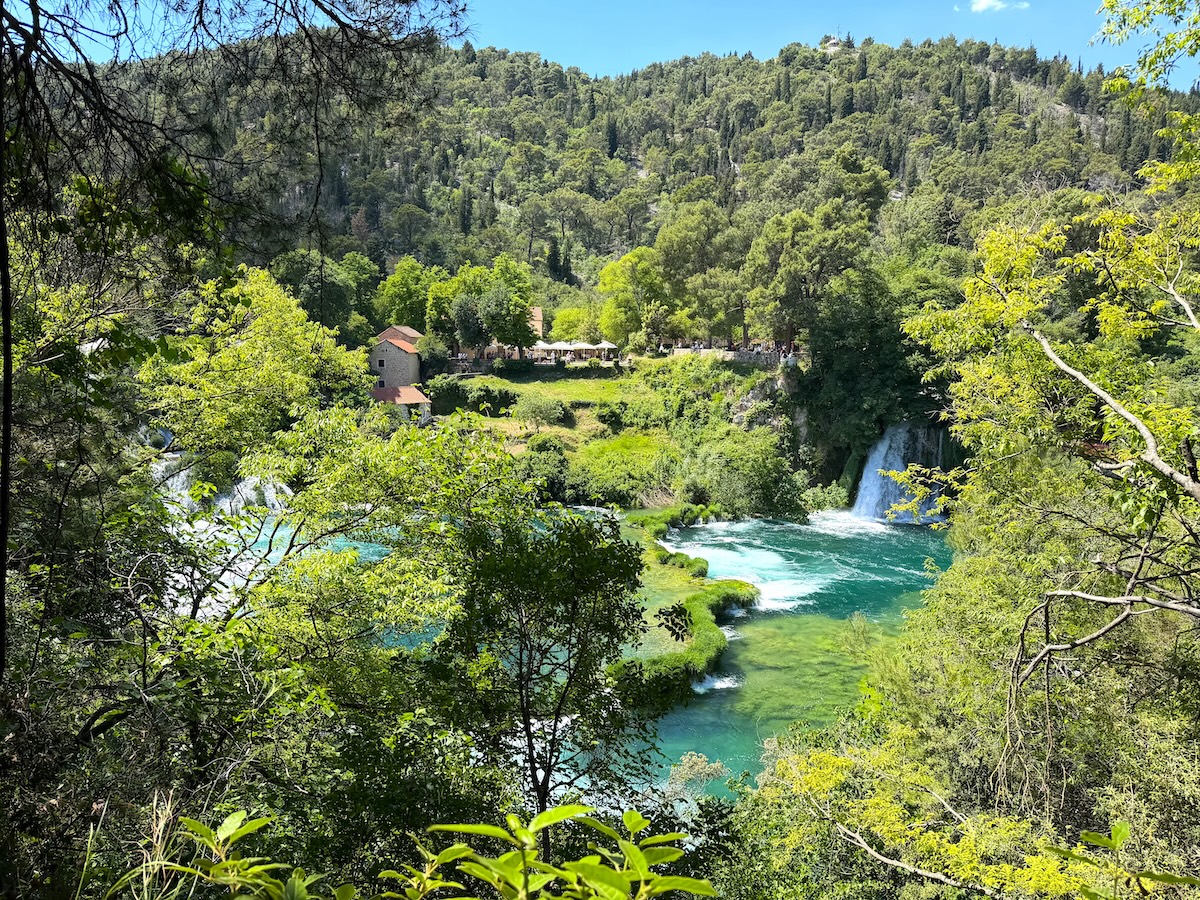
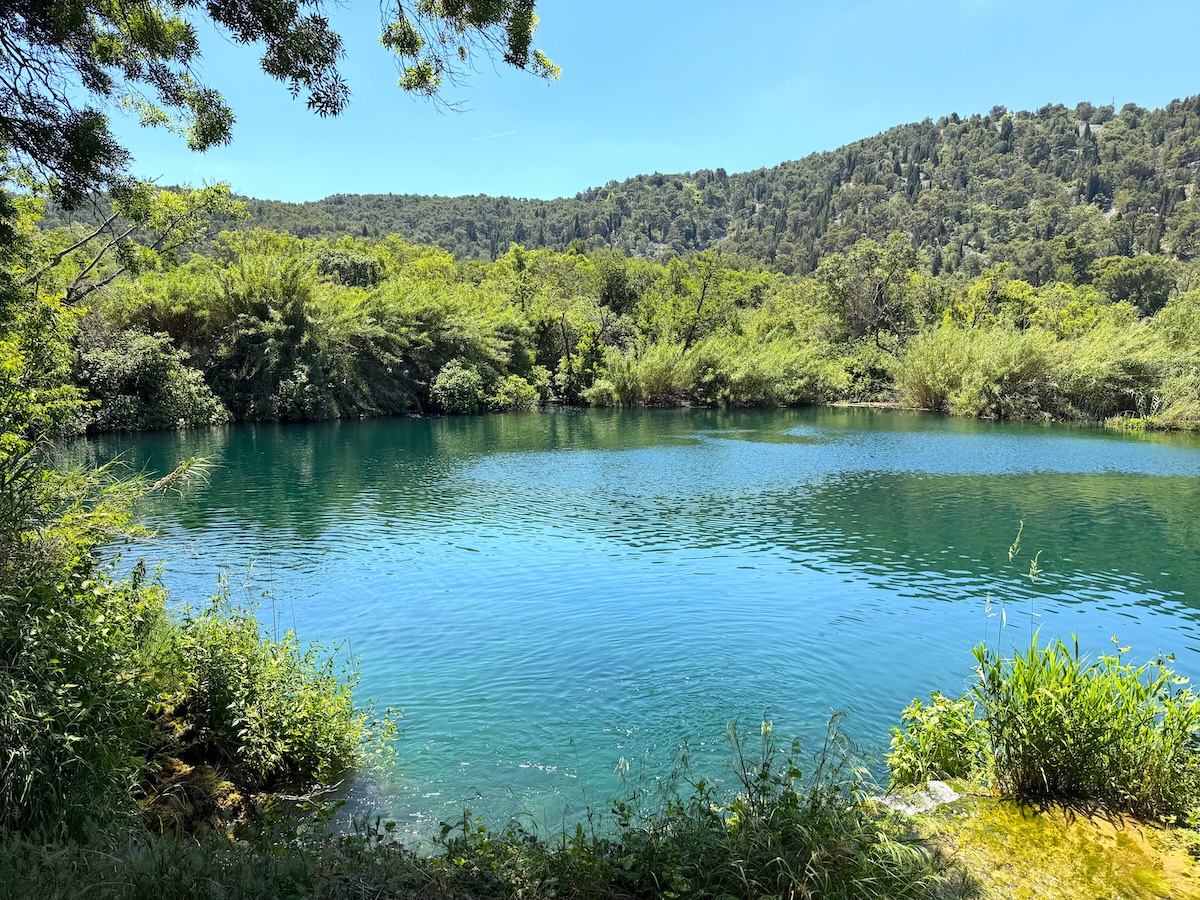
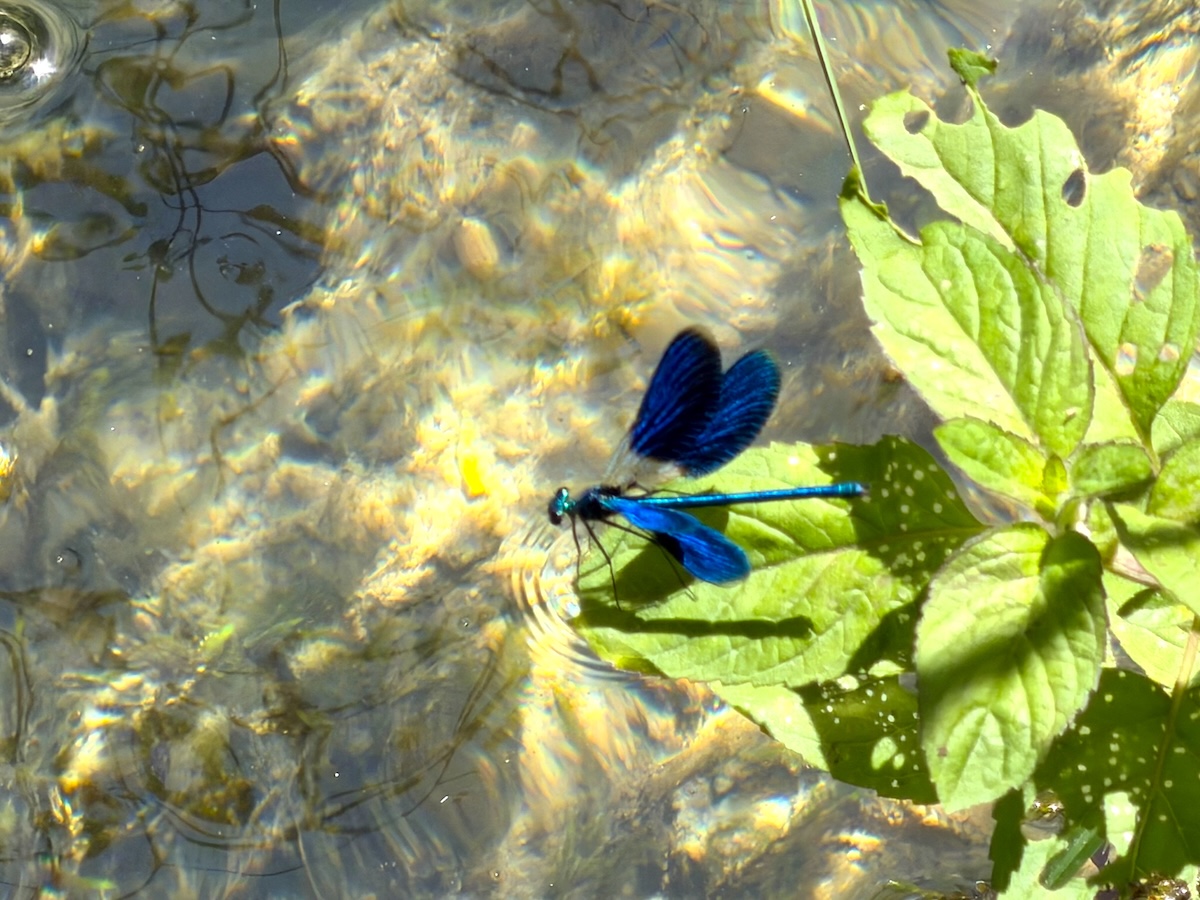
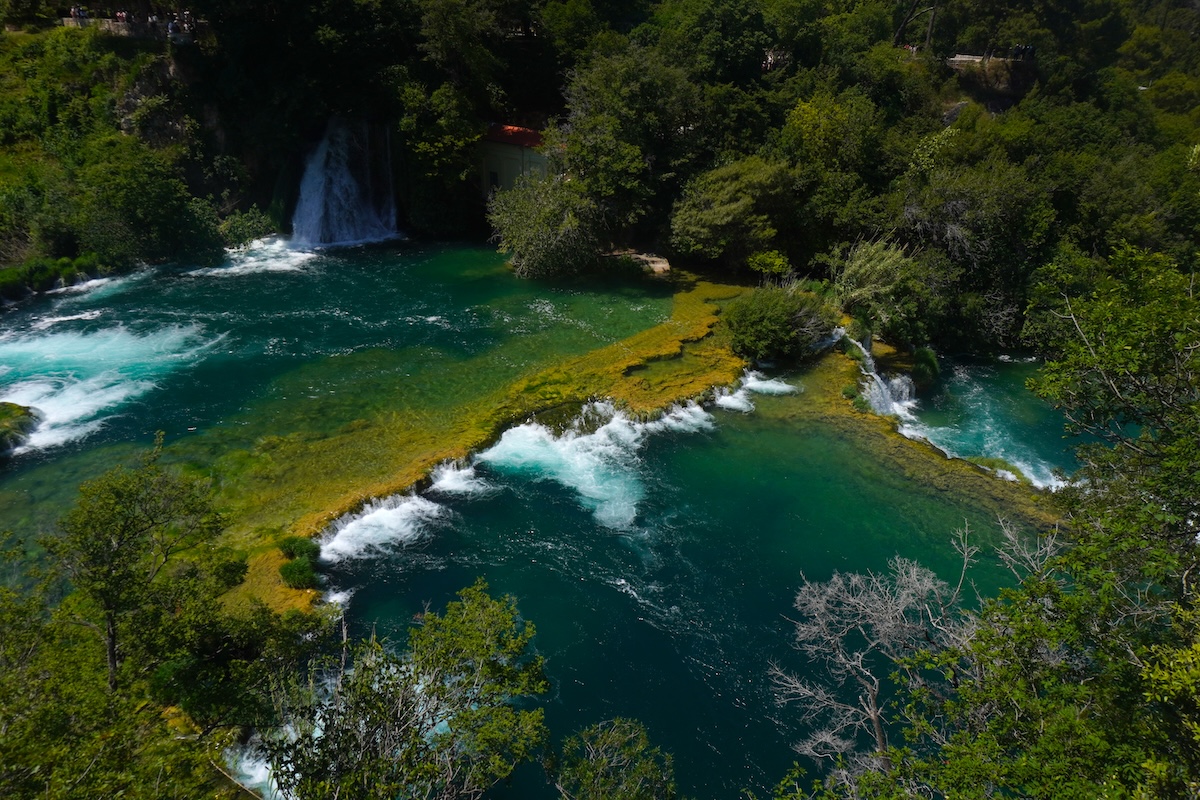
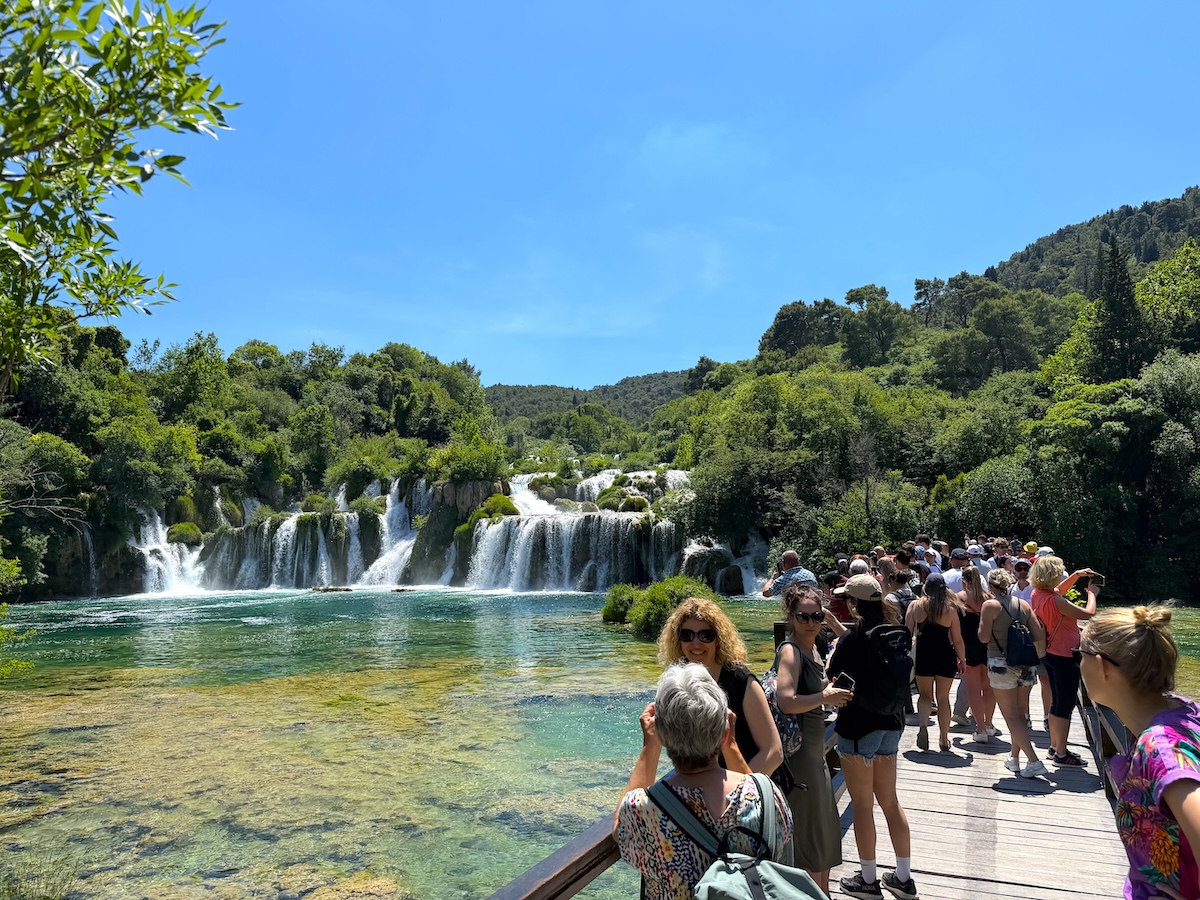
- Around 1:00 p.m., we arrived at the pier. In theory, the boats leave every 15 or 20 minutes, although there was a sign there stating that they leave every hour. In our case, we set off just a few minutes after boarding the boat, and just as we were leaving, another boat arrived, so we assume that during tour hours there’s quite a crowd and little waiting time.
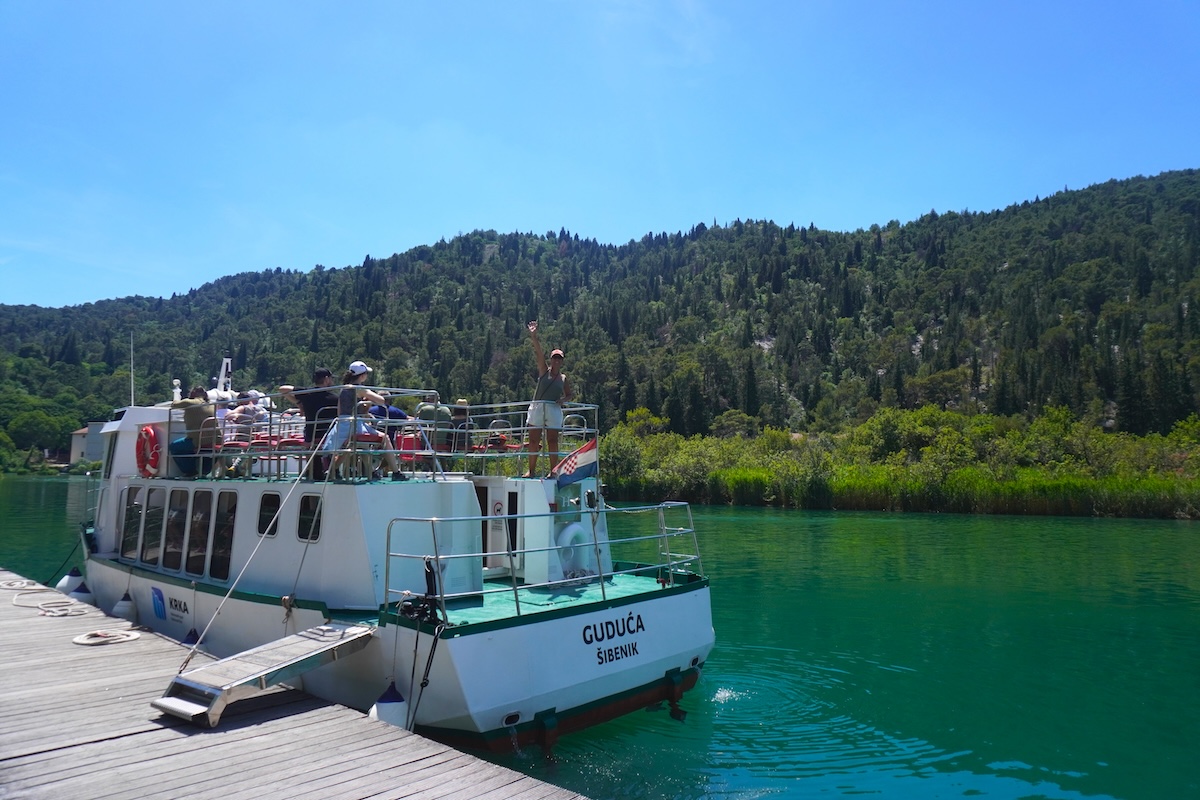
- The boat ride to Skradin takes about 20 minutes and is charming and relaxing. You pass through incredibly beautiful scenery while discovering the national park’s flora and fauna. We arrived in Skradin at 1:15 p.m.
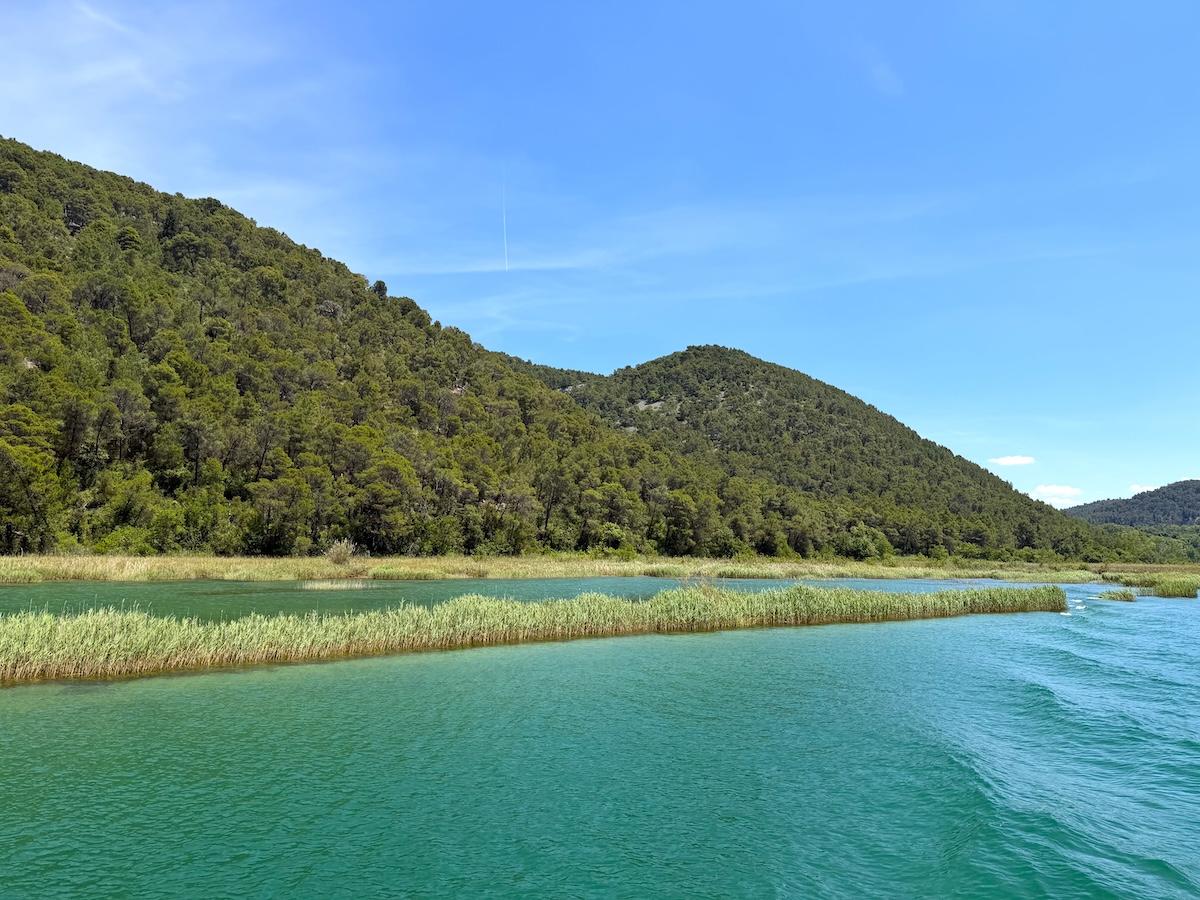
- In Skradin, there’s a river-sand beach where you can swim, a fortress with great views, a couple of churches, and several bars with outdoor seating and restaurants. We had a few beers at the Mojito bar (€4.20 each). Then we strolled along the riverbank, climbed up to the fortress (about 10 to 15 minutes, it’s easy, and the views are worth it), and walked down to the square and the church. Our guide recommended this restaurant for lunch, the Dalmantino, famous for its Skradin risotto.
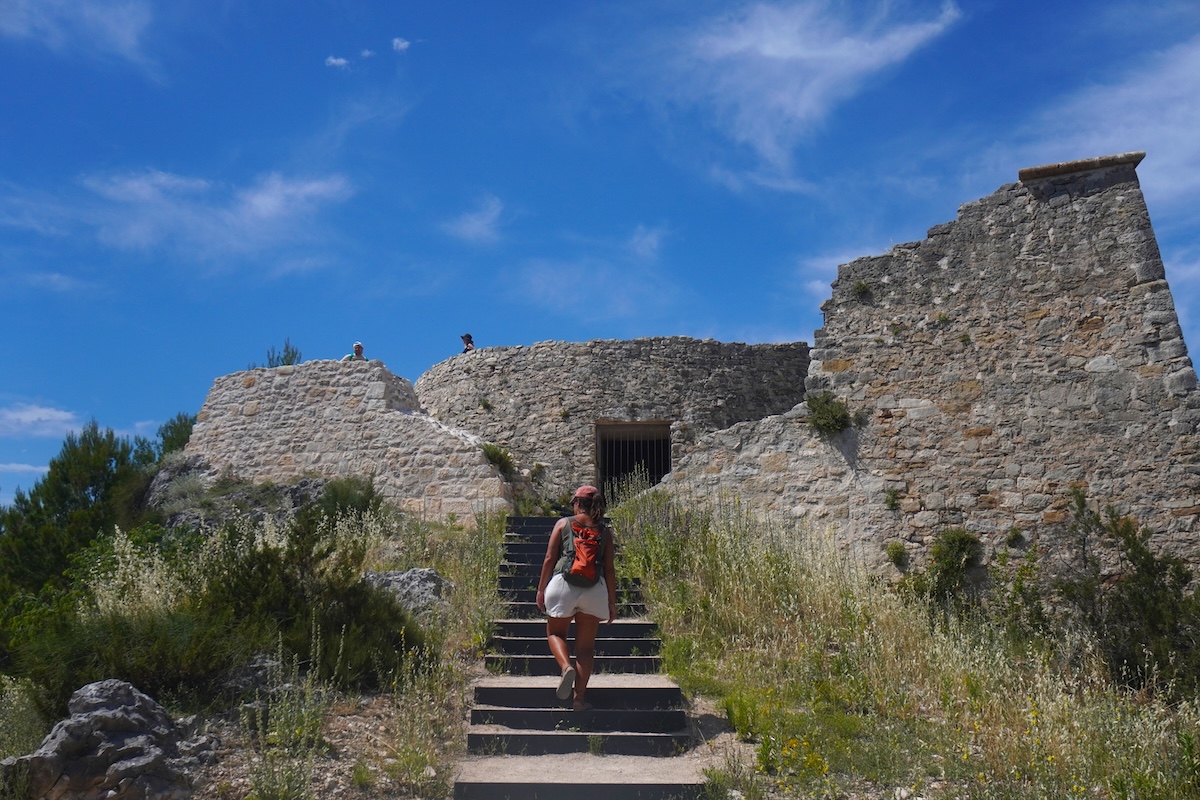
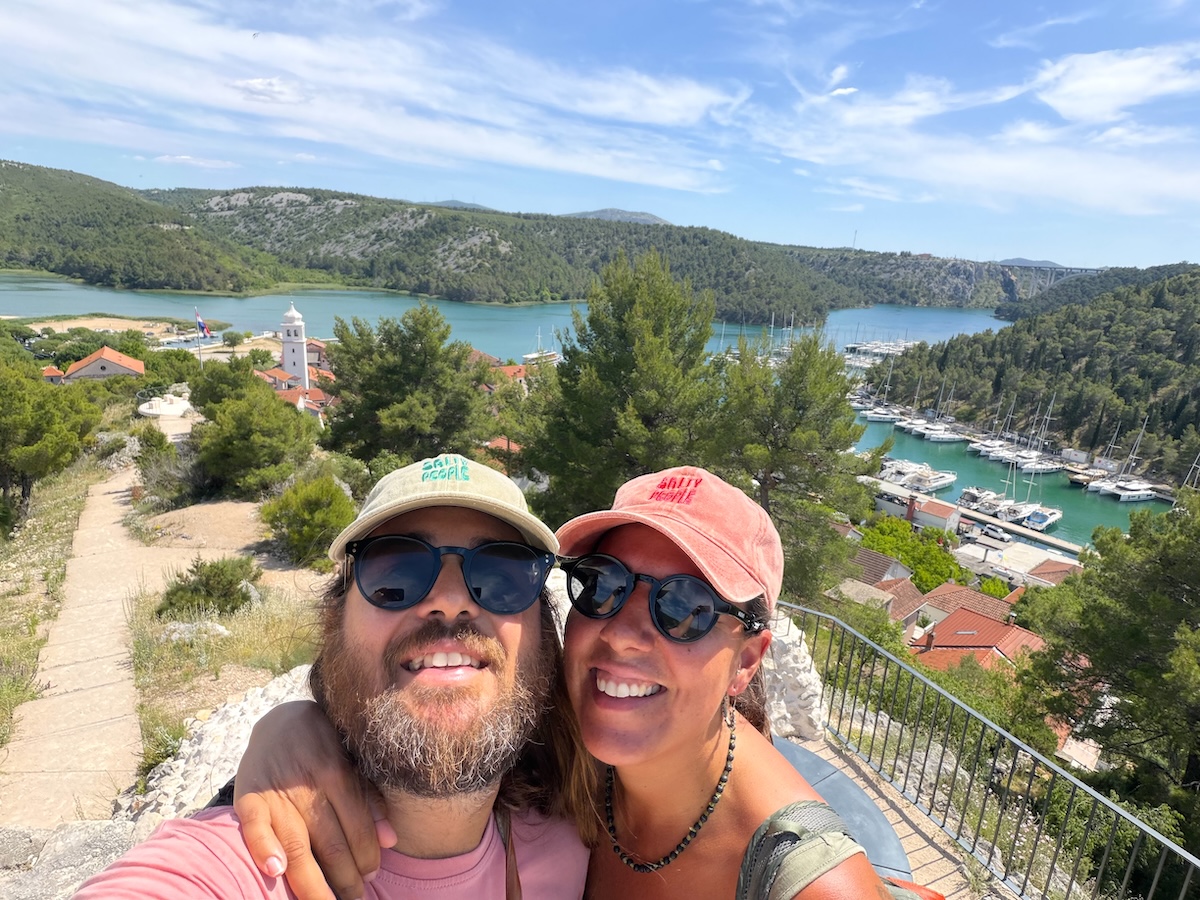
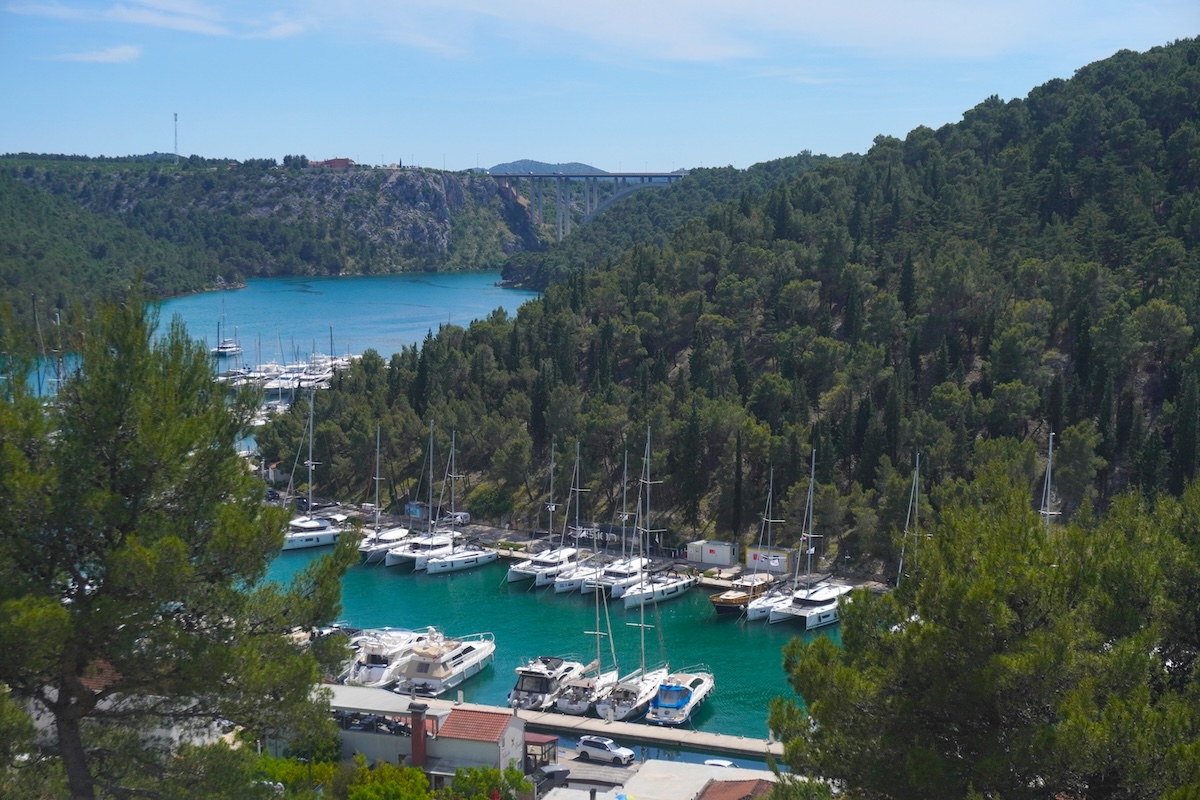
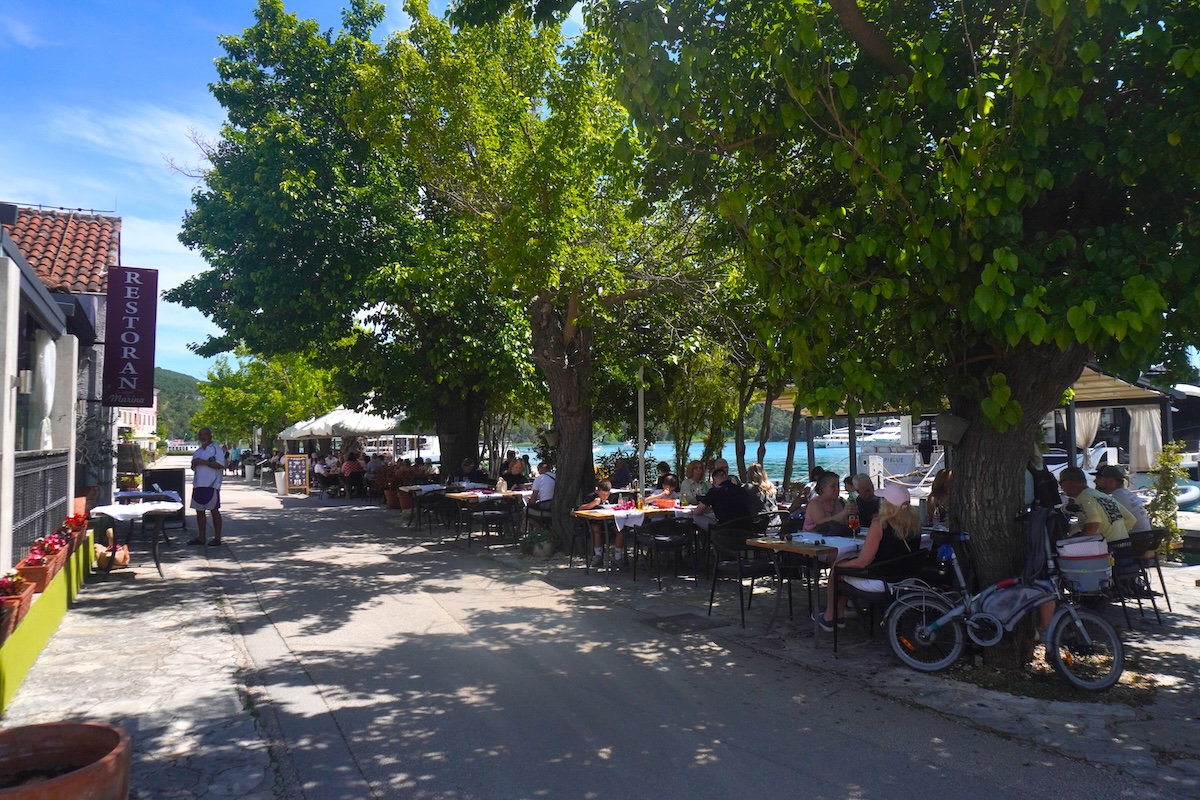
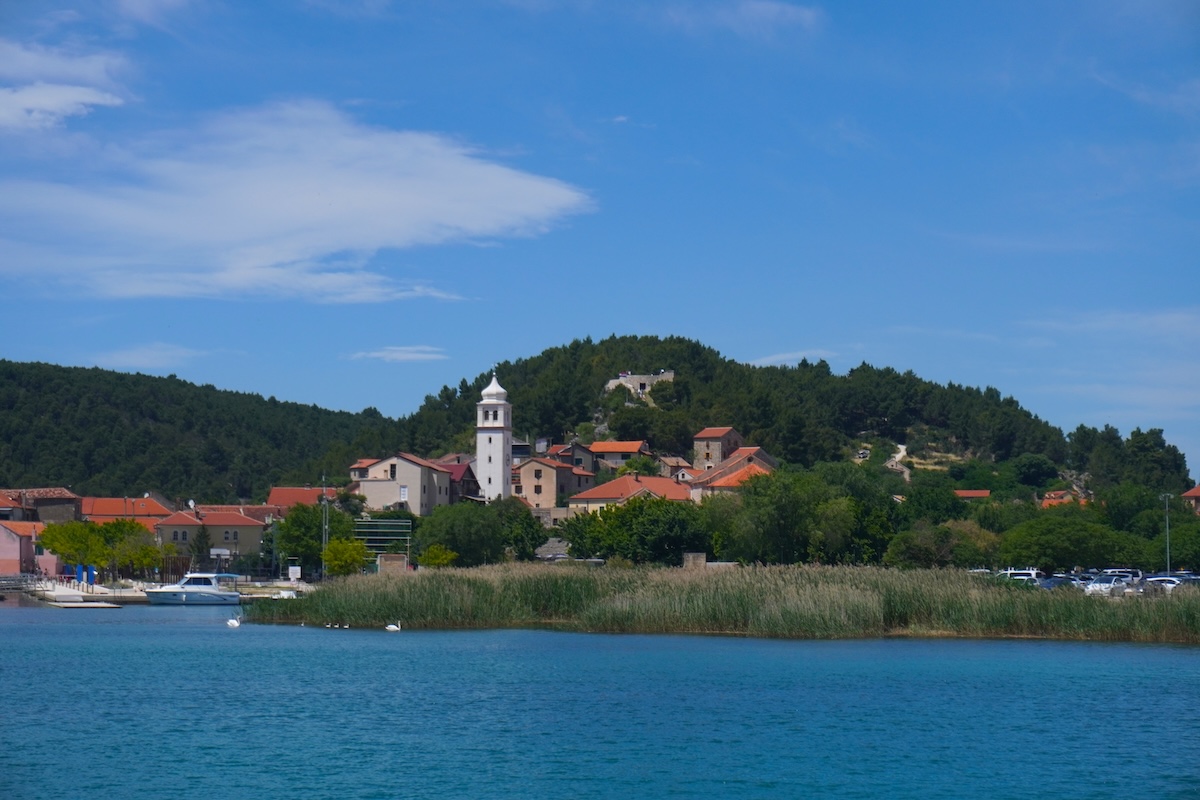
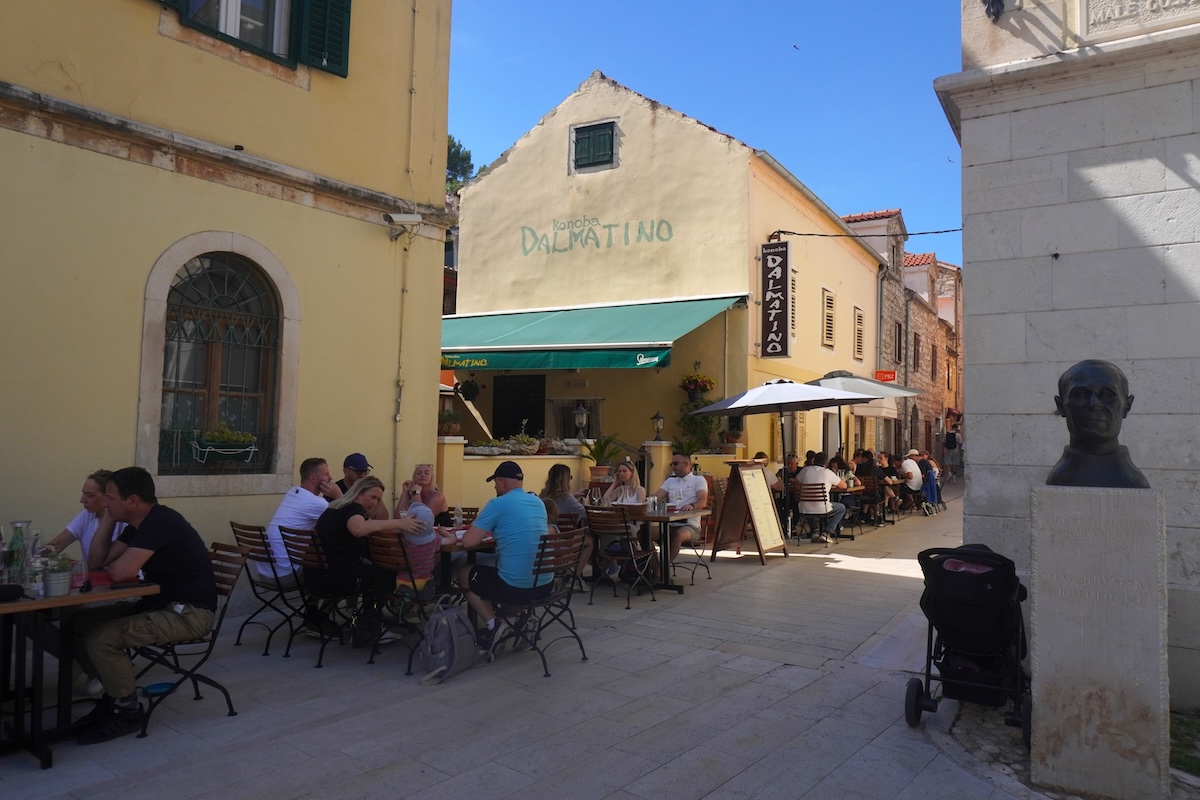
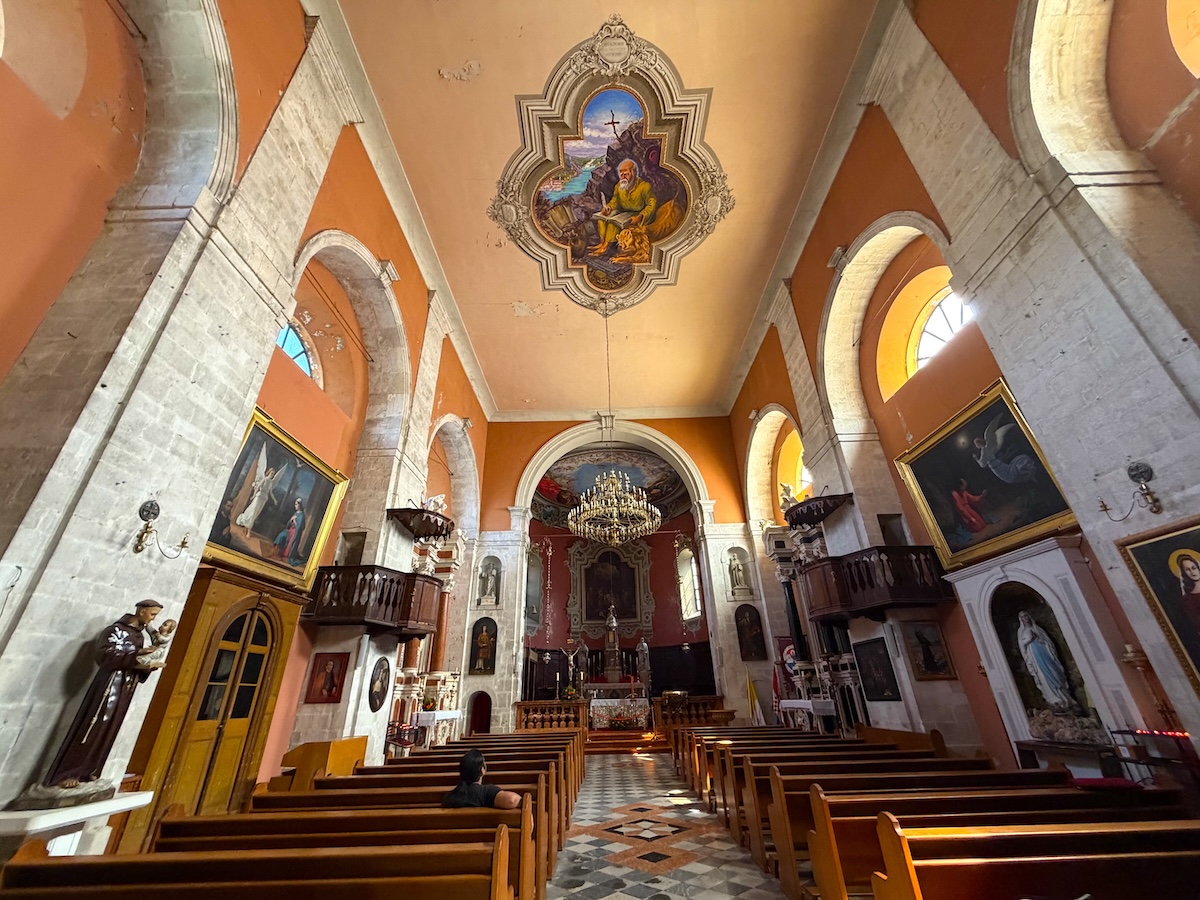
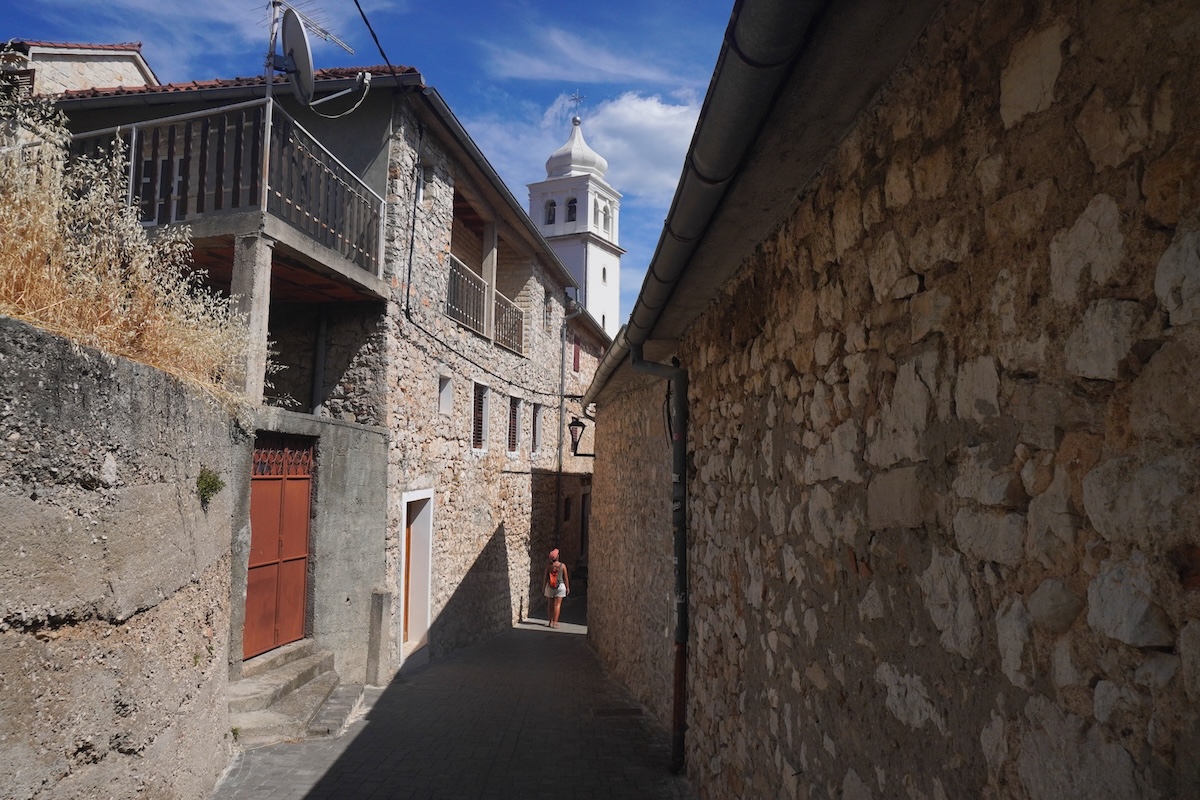
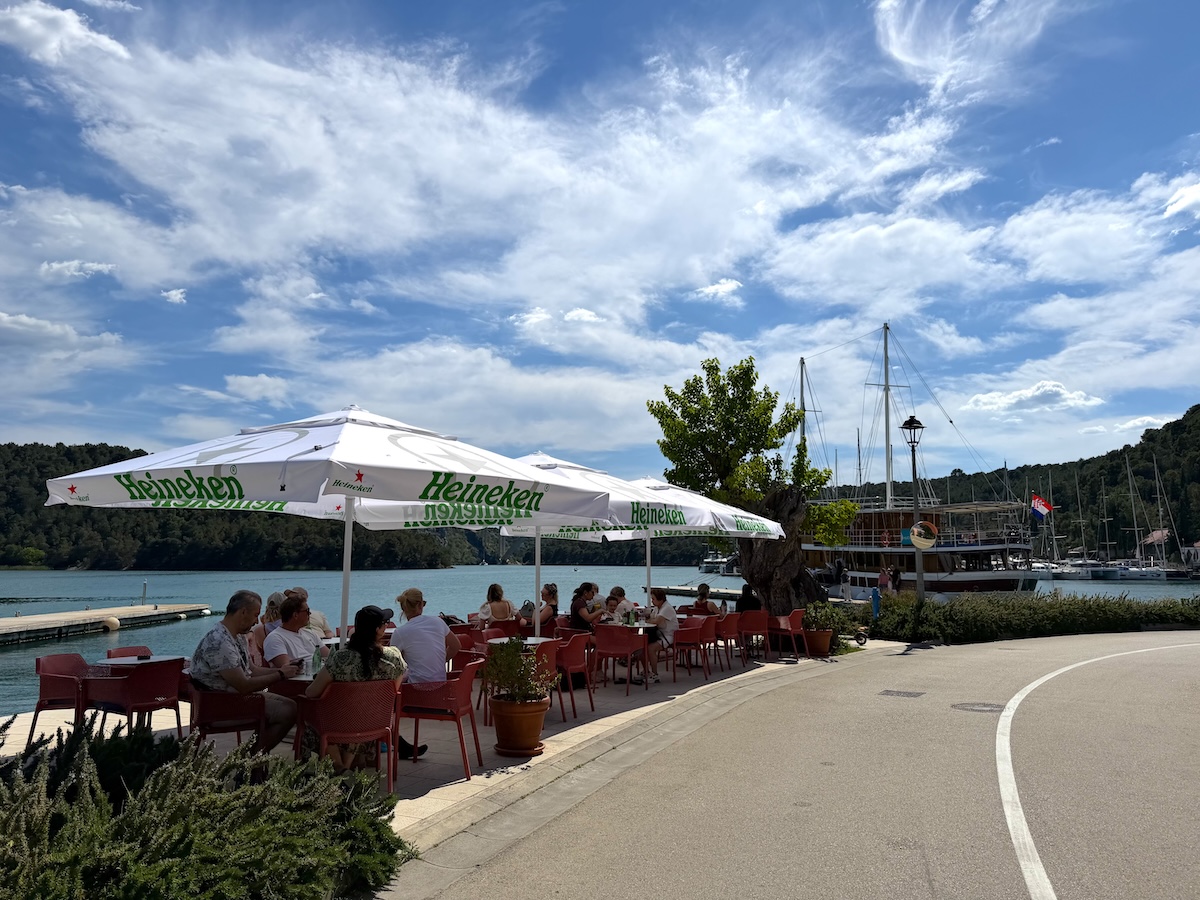
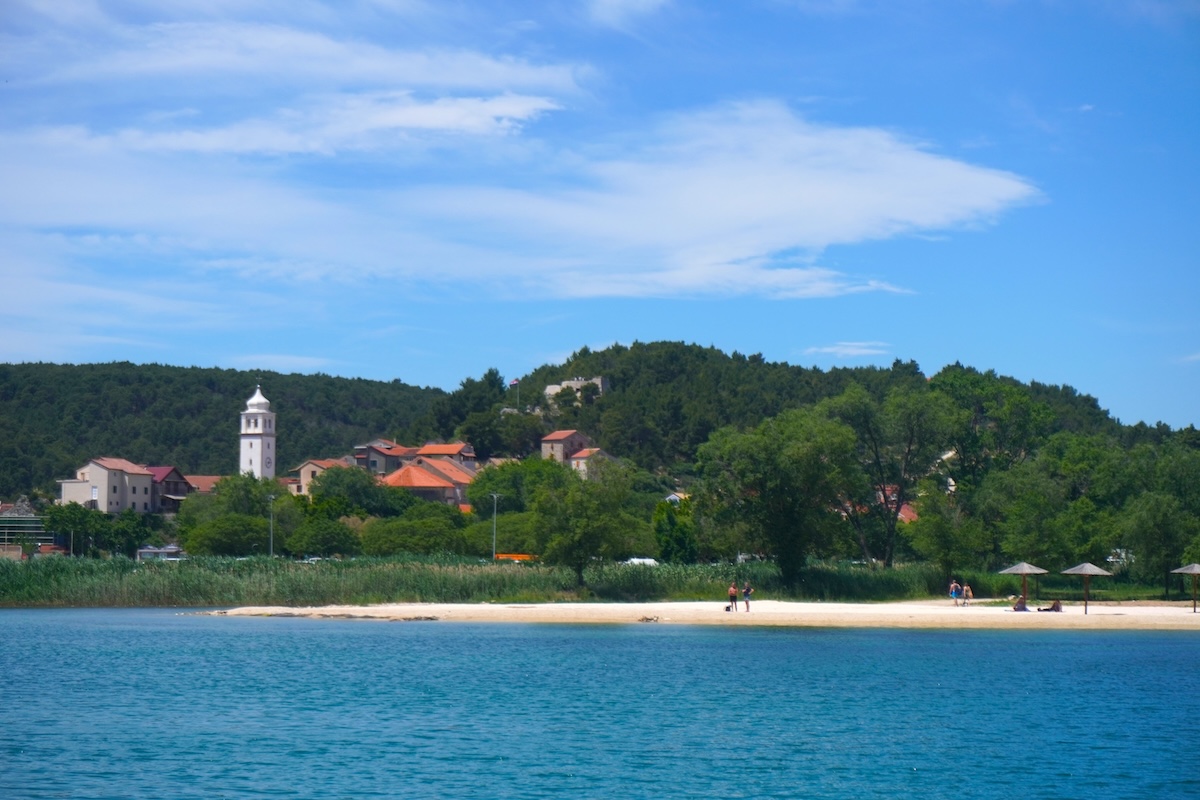
- At 4:20 p.m., we met up with the group near the playground in Skradin and left right on time to return to Split (while Tin gave us several recommendations on what to see and where to eat in Split), where we arrived around 5:30 p.m.
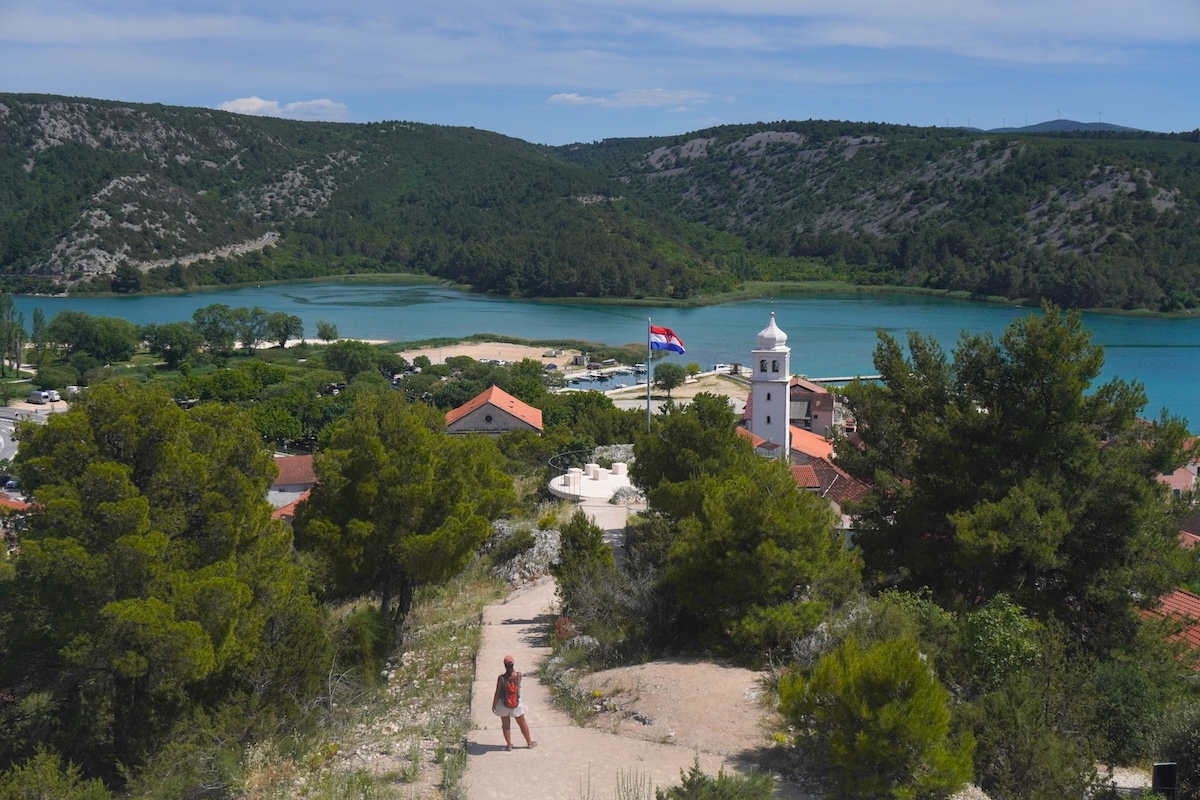
Tips for Your Visit to Krka National Park
- Bring water and a snack for the tour; at Randomtrip, we brought some delicious burek that we bought that very morning at a bakery near The Riva. In the park, at the end of the walkway, there’s an area with stalls selling ice cream and other items, which in our opinion were expensive and of poor quality, so it’s better to bring something in your backpack
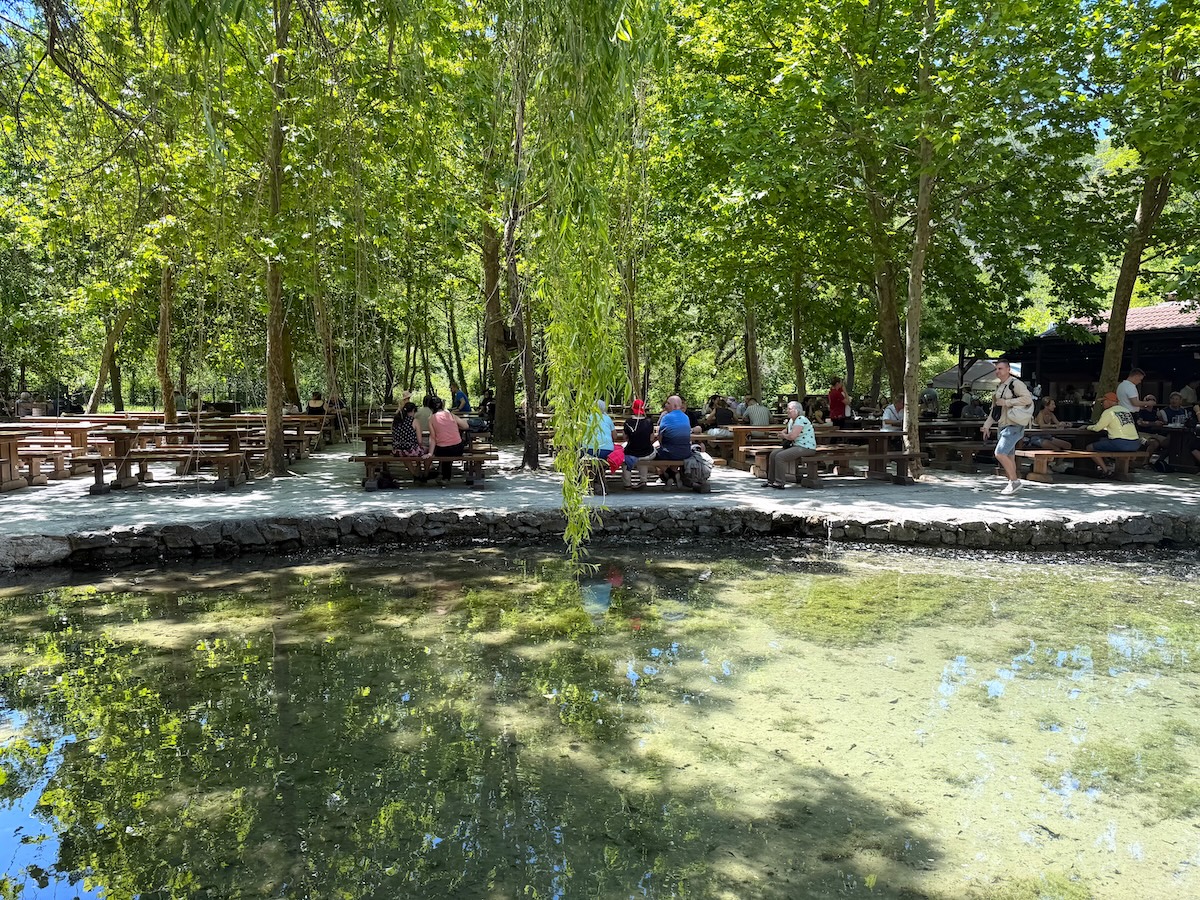
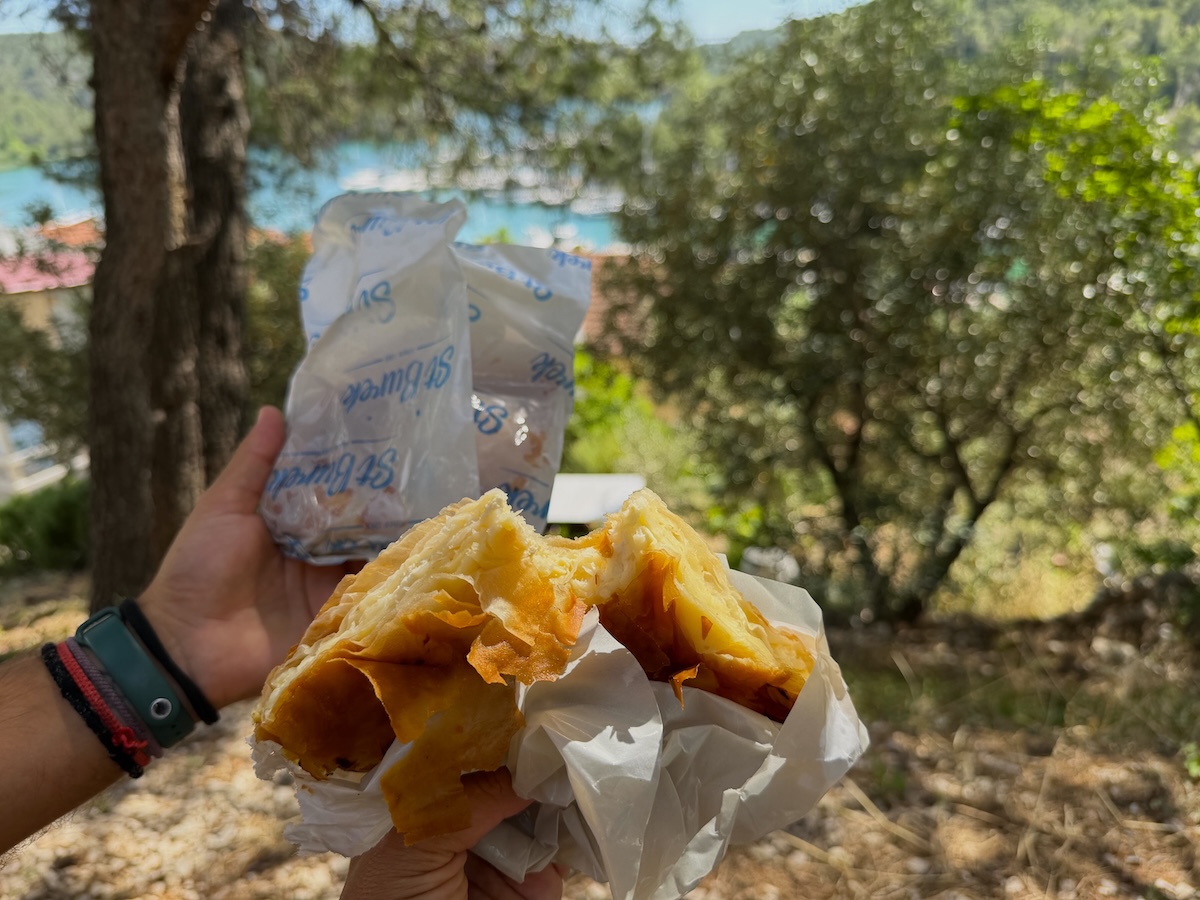
- When you reach the end of the walkway, you’ll see a bridge on the left with views of the main waterfalls, the Skradinski buk, it’s worth stopping to take a look. Watch out, the boat to Skradin leaves in the opposite direction, to the right! If you cross the bridge to see more viewpoints, you’ll have to turn back before catching the boat. We’re mentioning this because several people in our group got lost at this point, and the group WhatsApp chat was going crazy (poor Tin!)
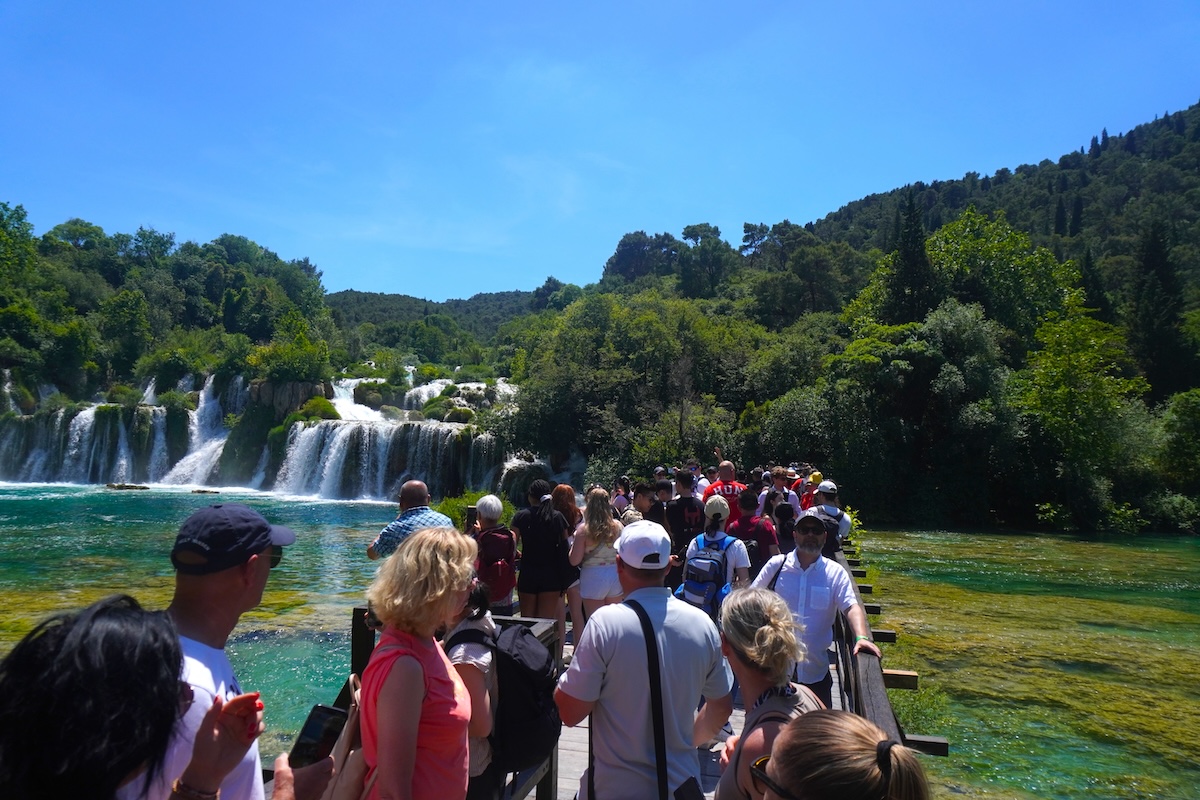
- Make sure to have the park map on Maps.me as well. In our opinion, it works better than Google Maps inside the park, where not all the trails and attractions are shown.
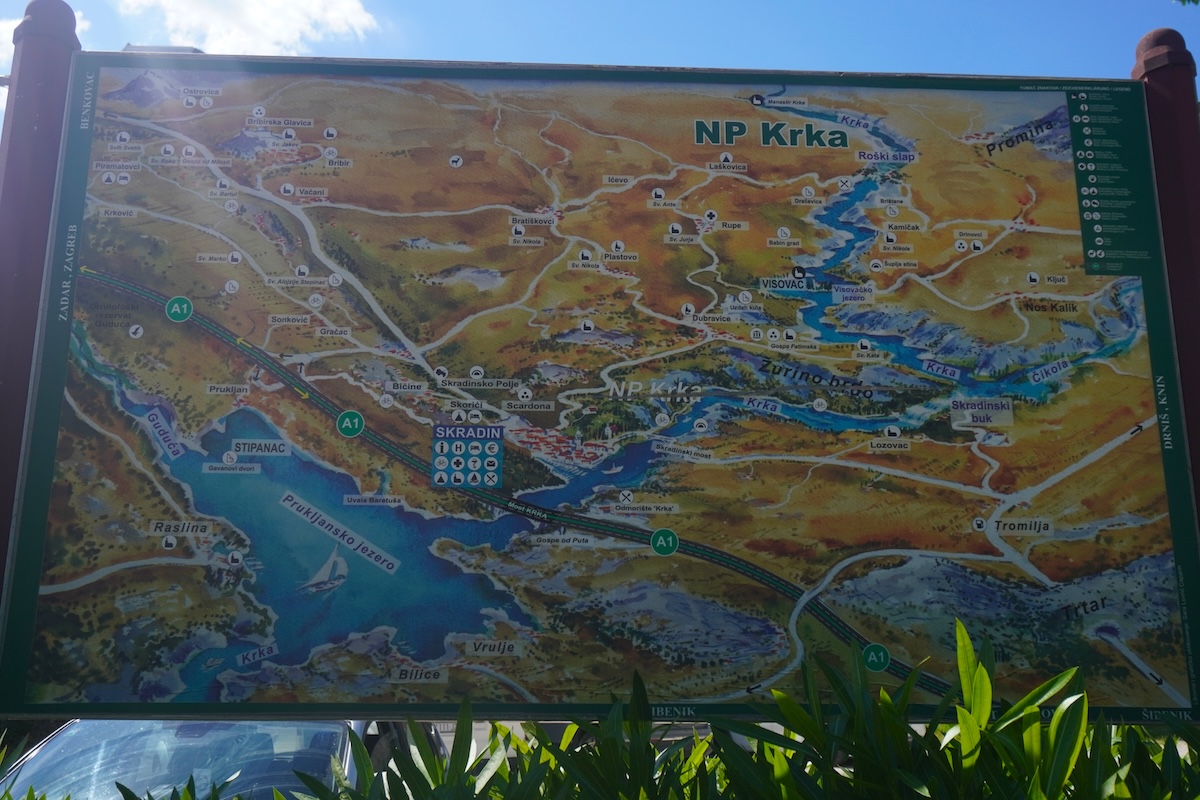
- If you’d rather walk than wait for the boat, you can reach Skradin on foot from the pier in about 45 minutes to an hour.
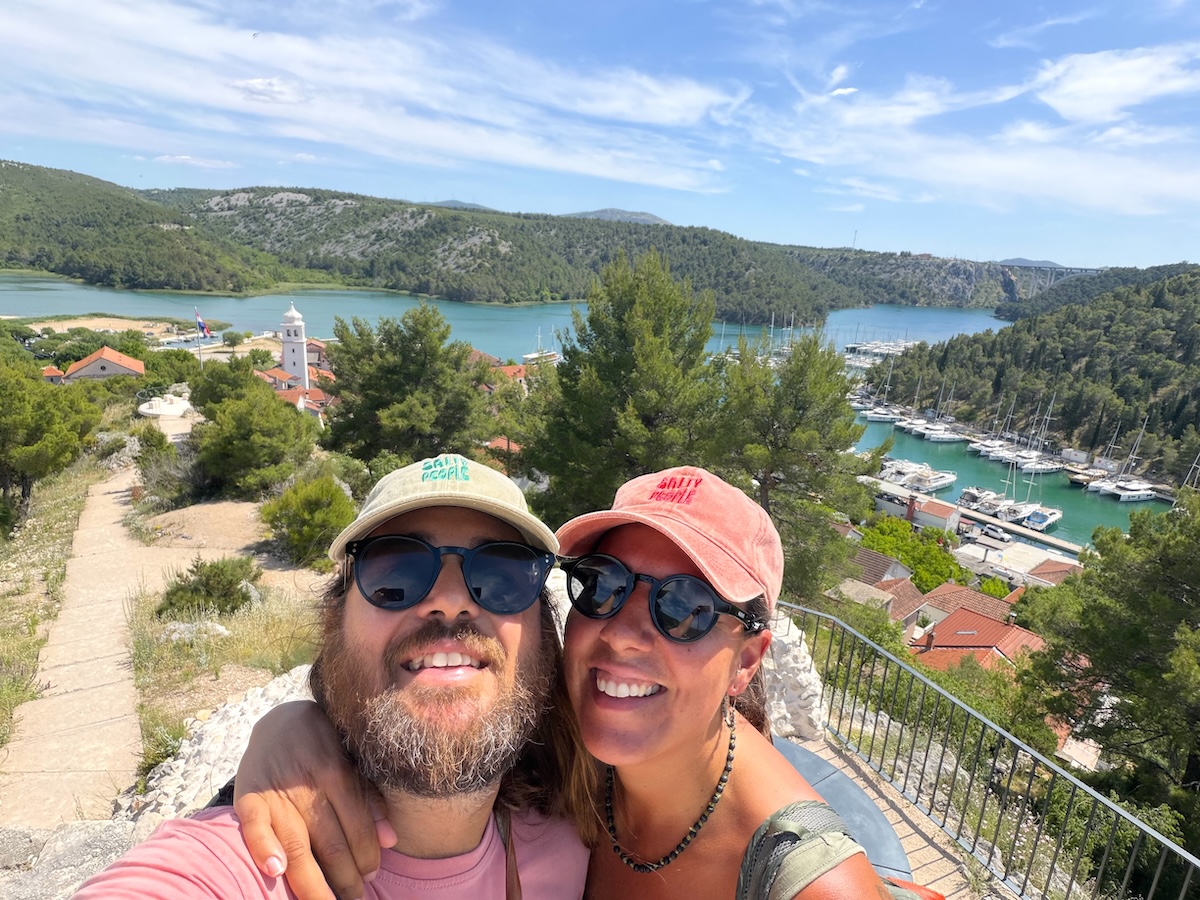
Trogir and Čiovo
Trogir is a small historic town that really surprised us, and we highly recommend visiting it (we’re currently putting together a specific guide to Trogir). Its historic center has rightfully earned the reputation of being a “museum town”, as it packs a wealth of history into a very small area. You can walk through it in about 30 minutes; it’s a UNESCO World Heritage Site, and unlike Split, its origins are Greek. Highlights include St. Lawrence Cathedral, which took about 400 years to complete and features a portal carved by Radovan in 1240, and the Kamerlengo Fortress, which offers the best panoramic view of the city. You can get there by bus (line 37) or by water taxi during the season.
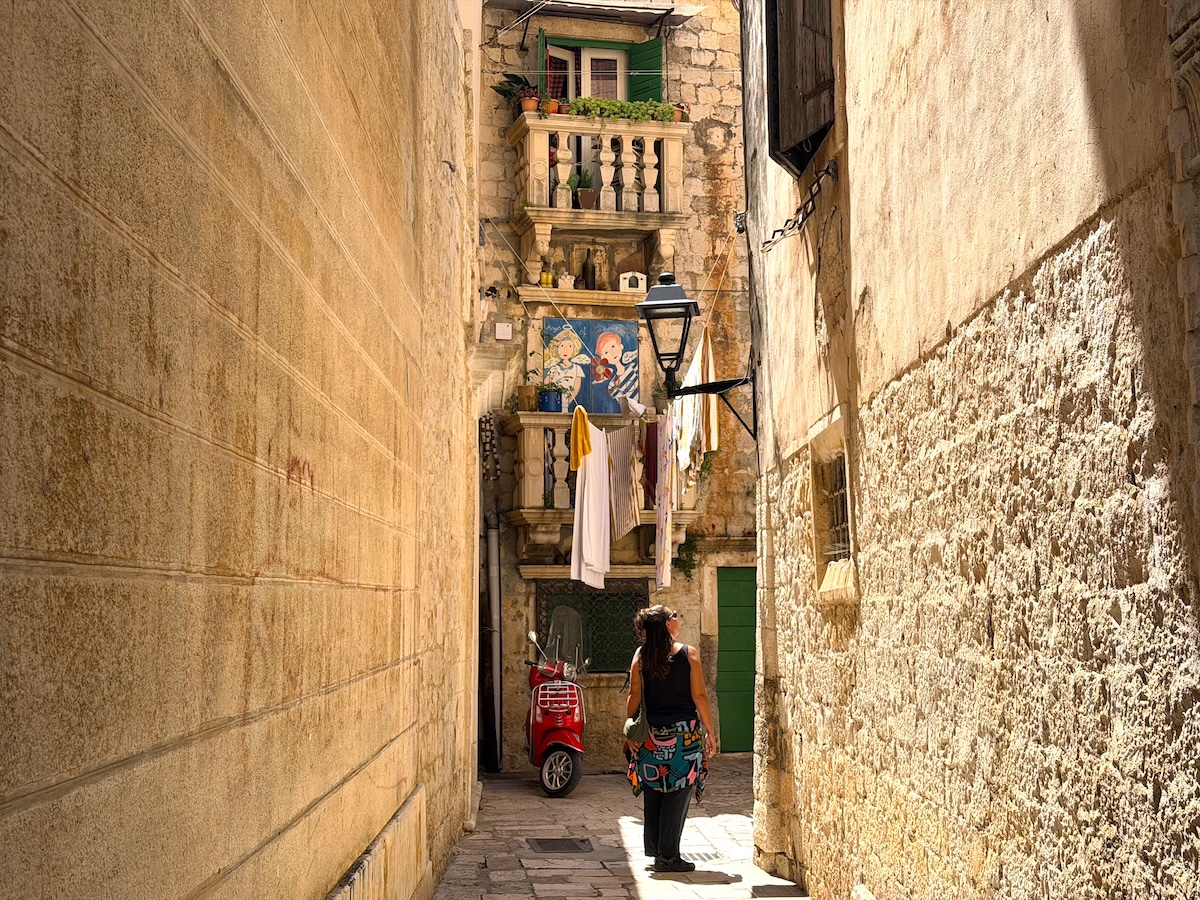
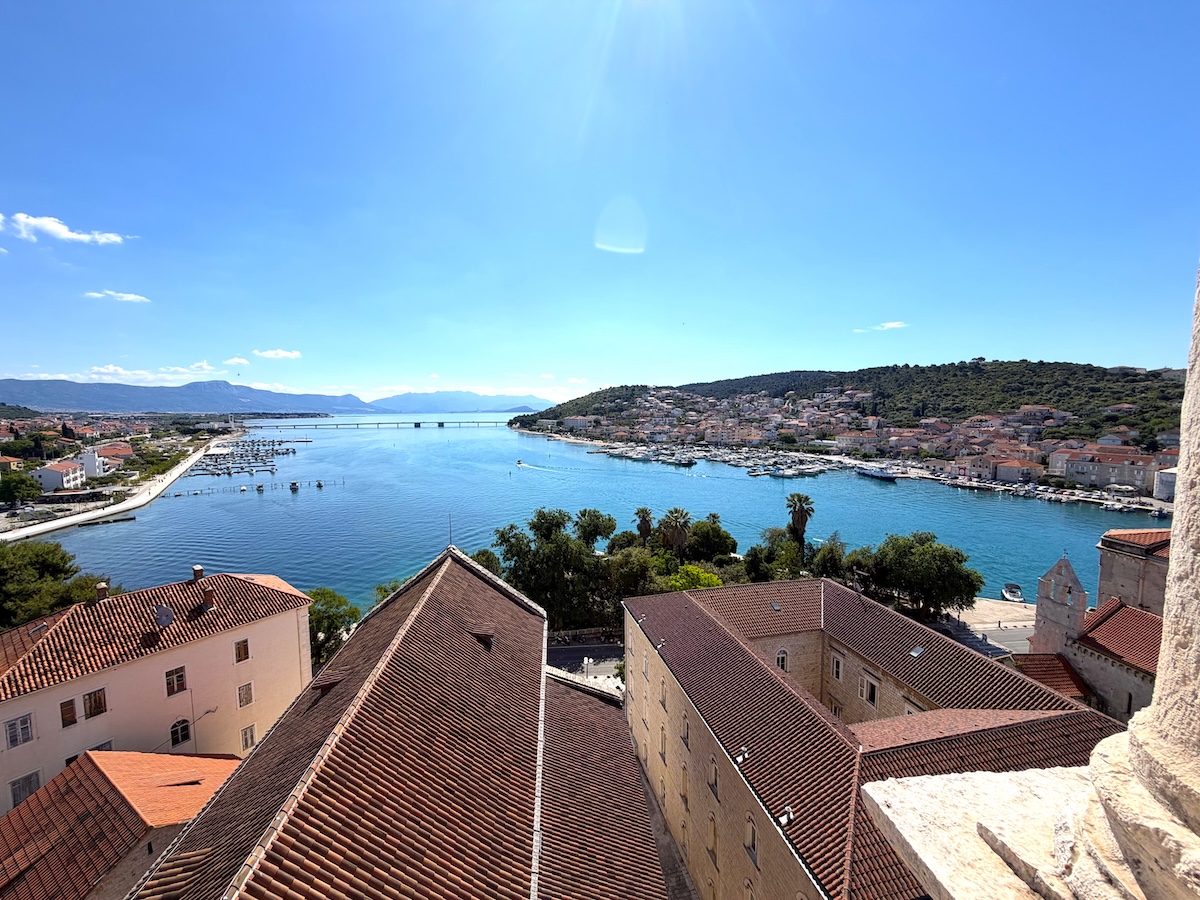
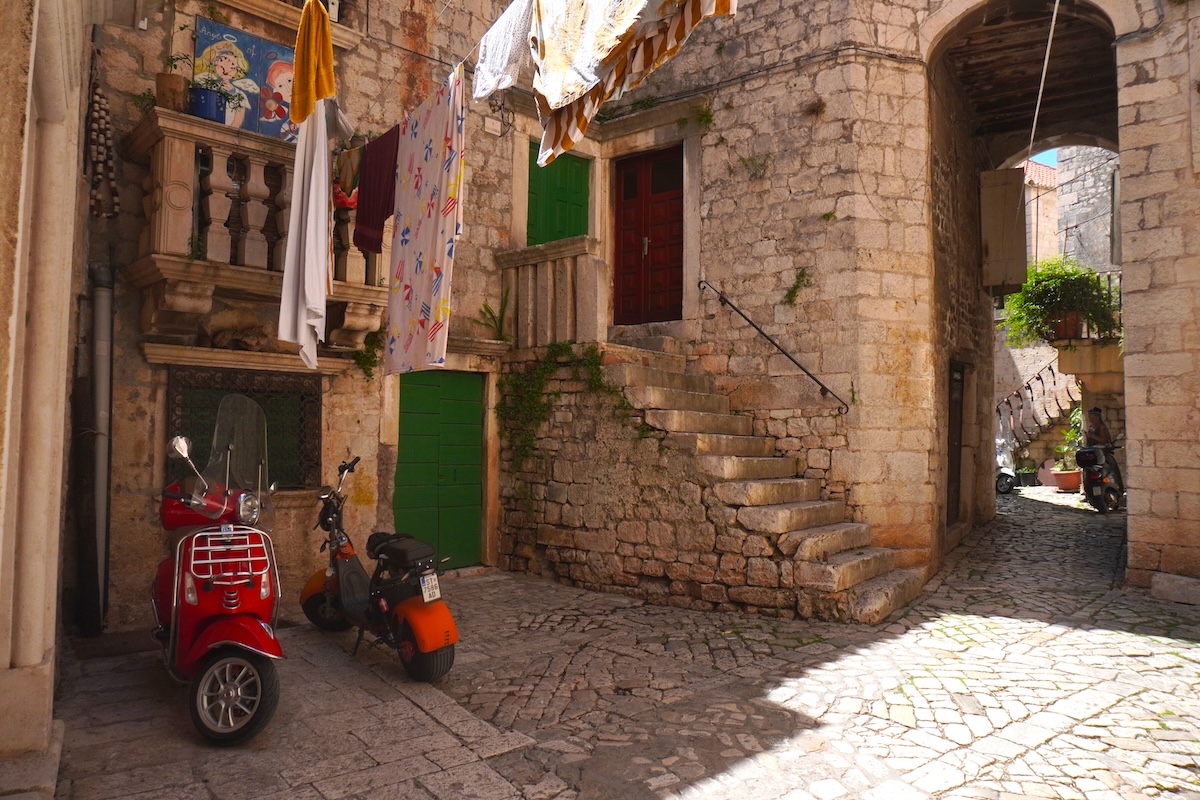
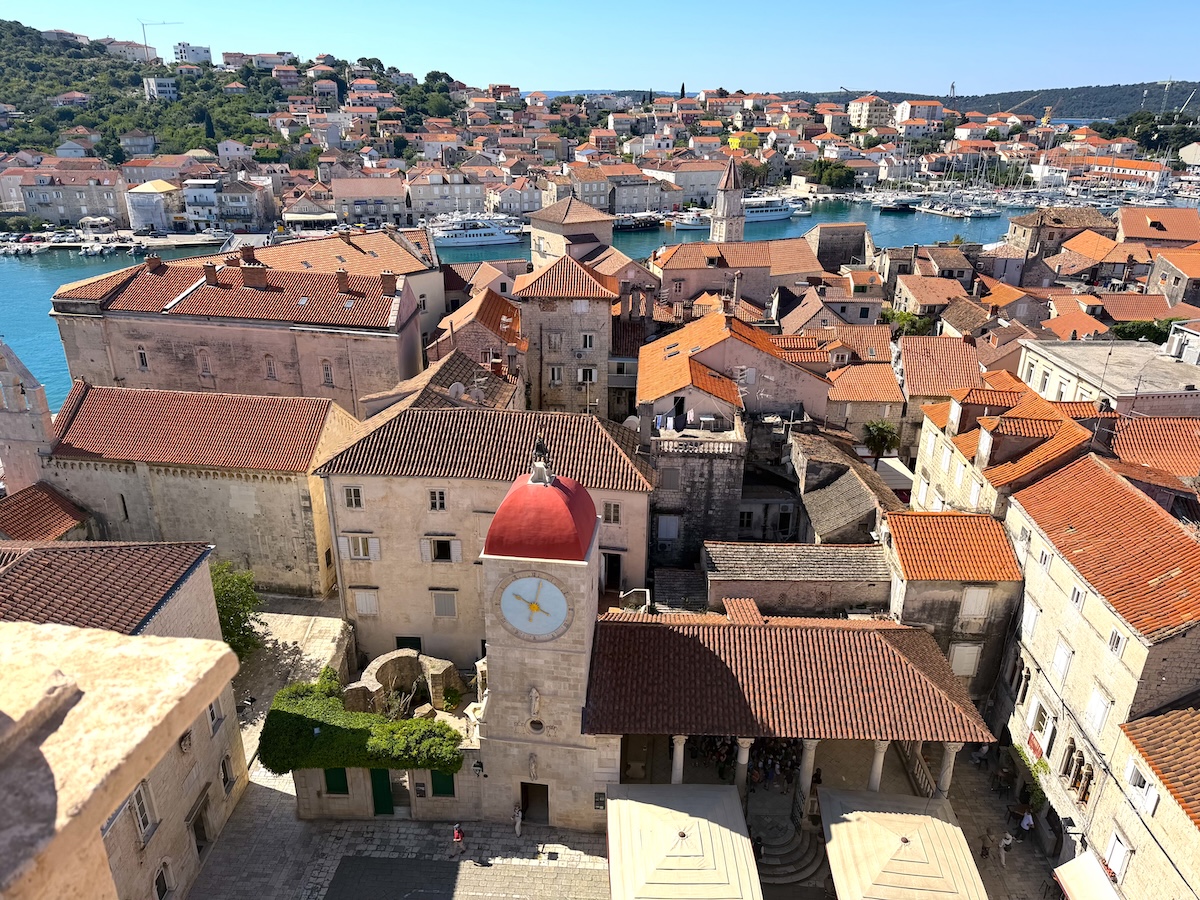
Čiovo is the island accessible from Trogir, and you don’t need a boat to get there, as a bridge connects it to the old town. It’s an island of small villages with medieval churches and monasteries (such as the Dominican monastery and the 15th-century Church of the Holy Cross in Arbanija, or the Church of Our Lady of Prizdinica in Slatine) and beaches that vary depending on the village. Okrug Gornji has the liveliest beaches, with bars and cocktails, while Okrug Donji, Slatine, and Arbanija offer quieter beaches with unspoiled natural beauty.
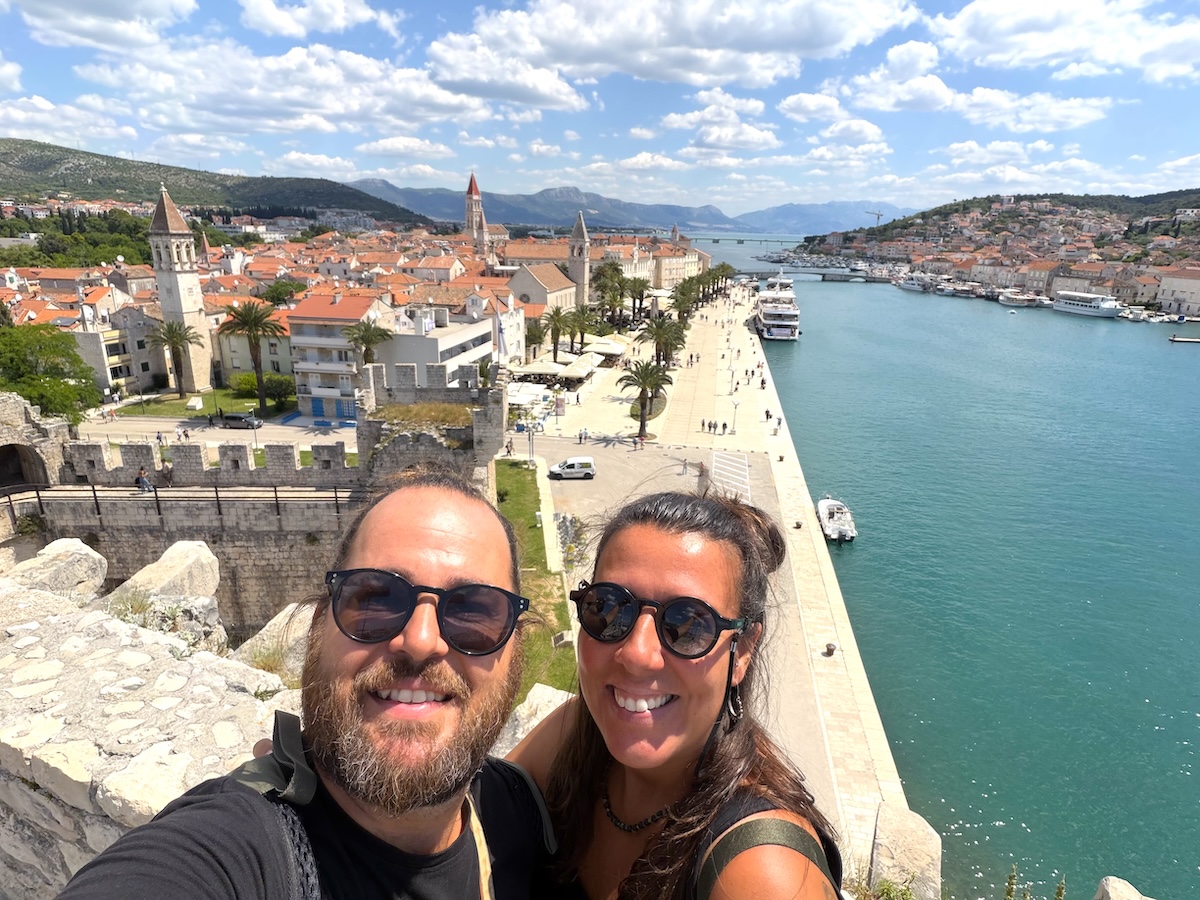
At this link, you can book a tour to Trogir and the Blue Lagoon. If you’re a Game of Thrones fan, you might prefer to take a tour that combines Trogir and Meereen, that is, the Klis Fortress.
Blue Cave and Blue Lagoon
From April through October, boats depart daily from the port of Riva bound for these two destinations. The Blue Cave is located on the island of Biševo, about a 90-minute ride by speedboat, and is the most popular tour. When sunlight streams through an opening in the ceiling and illuminates the sea cave, the water glows an otherworldly blue. In the summer, be prepared to wait in line before entering, and swimming is not allowed inside the cave, small boats take you further in. You can book the tour to visit the Blue Cave (and 5 other islands) here on Get Your Guide.
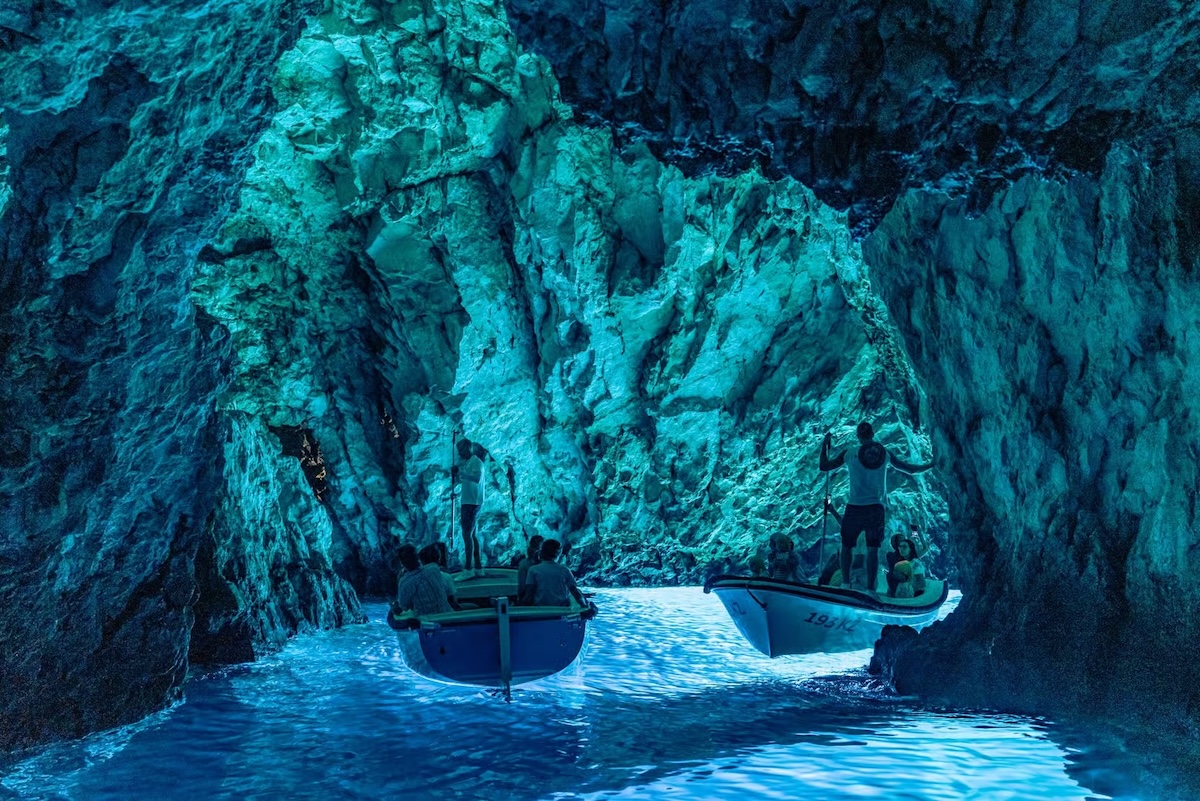
The Blue Lagoon, near the island of Drvenik Veli, is about a 30-minute boat ride from Split. It’s a natural bay with turquoise waters, perfect for swimming and snorkeling. Many tours combine both destinations with stops at other islands, such as Vis, Hvar, the Pakleni Islands, or Šolta. You can book a tour to the Blue Lagoon (and 3 other islands) here on Get Your Guide.
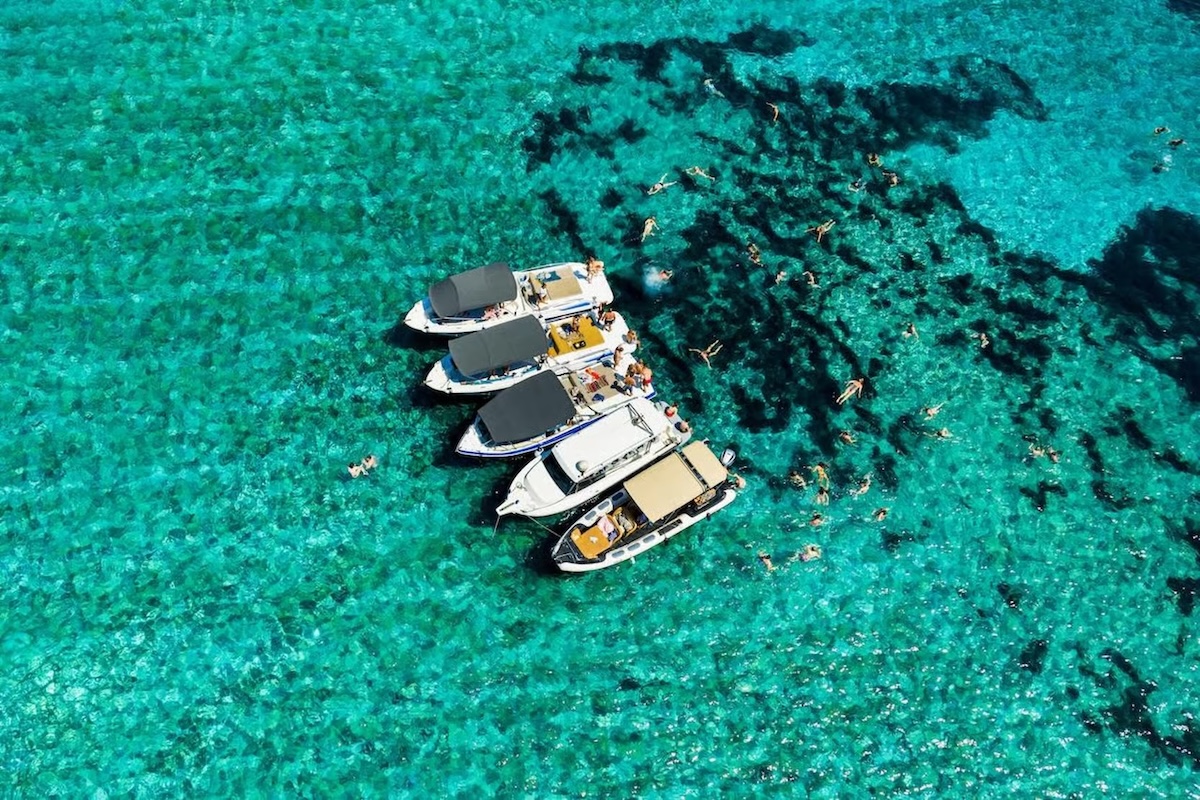
Book your Blue Lagoon tour here, including snorkeling at its underwater museum!
Islands: Šolta, Brač, Hvar, Vis…
- Šolta: It’s the closest island to Split, about a 45-minute ferry ride to Rogač, and it’s peaceful, with olive trees, honey, and wine, and fewer than 2,500 year-round residents. It’s great for hiking and biking, not to mention taking a dip, of course. On Randomtrip, we discovered Maslinica, a village considered one of the most beautiful spots on the Adriatic, and we loved it. We also explored two stunning bays on the island where we anchored the sailboat we’d been traveling on for several days: Stracinska Bay, a cove with crystal-clear waters, and Uvala Šešula, a sheltered cove featuring the delicious restaurant Konoba Šešula.
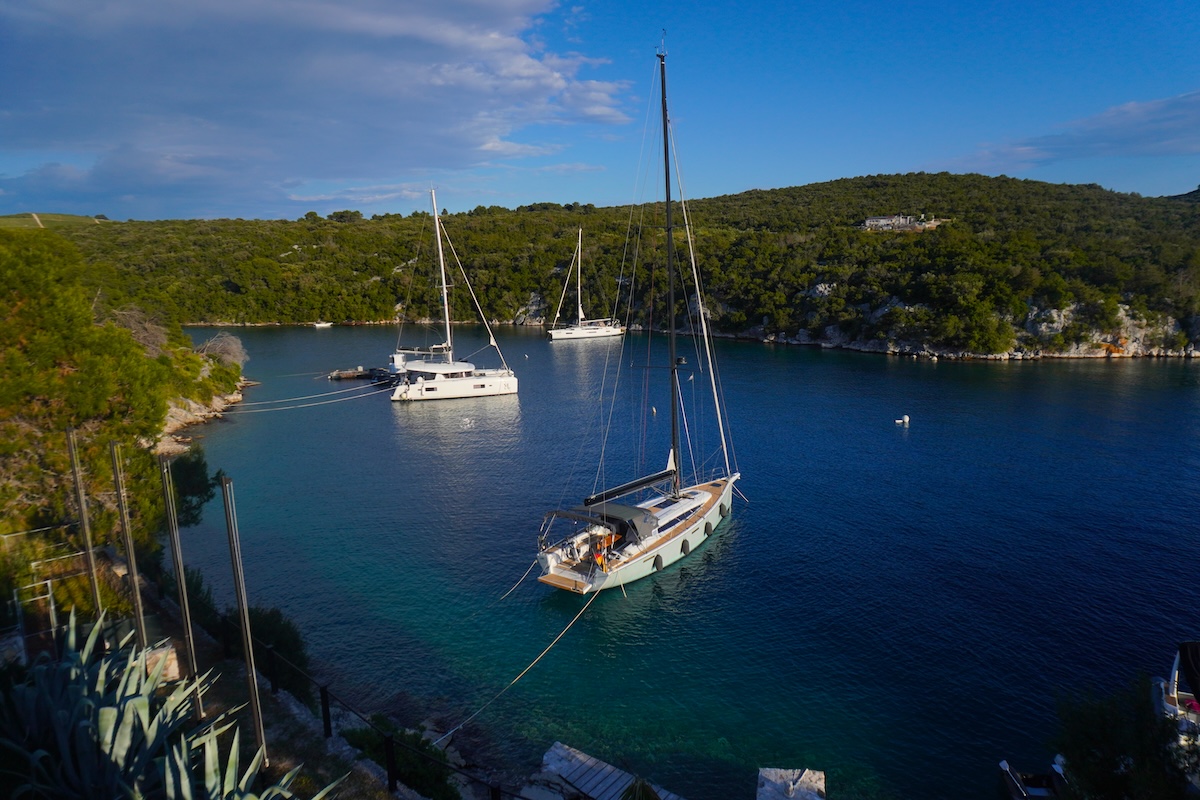
- Brač: The main ferry port is Supetar, about 45 minutes from Split. Highlights include Zlatni rat Beach in Bol, known as the Golden Horn, the village of Škrip, the Blaca Monastery carved into the cliffs, and the stone-carving workshops of Donji Humac. On Randomtrip, we discovered Uvala Smrka, which, in addition to its crystal-clear waters, is known for its old military tunnel used by submarines and other vessels from the Yugoslav era, so you could say that was the day we took a dip in history.
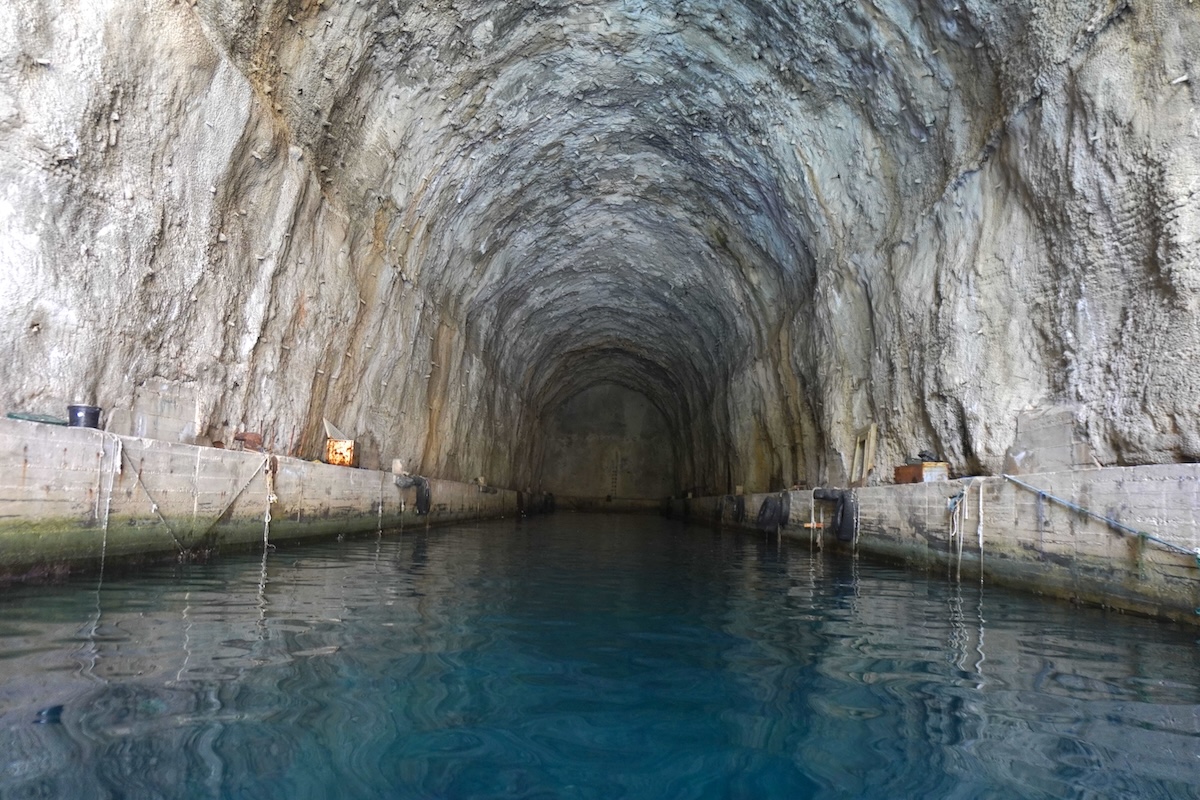
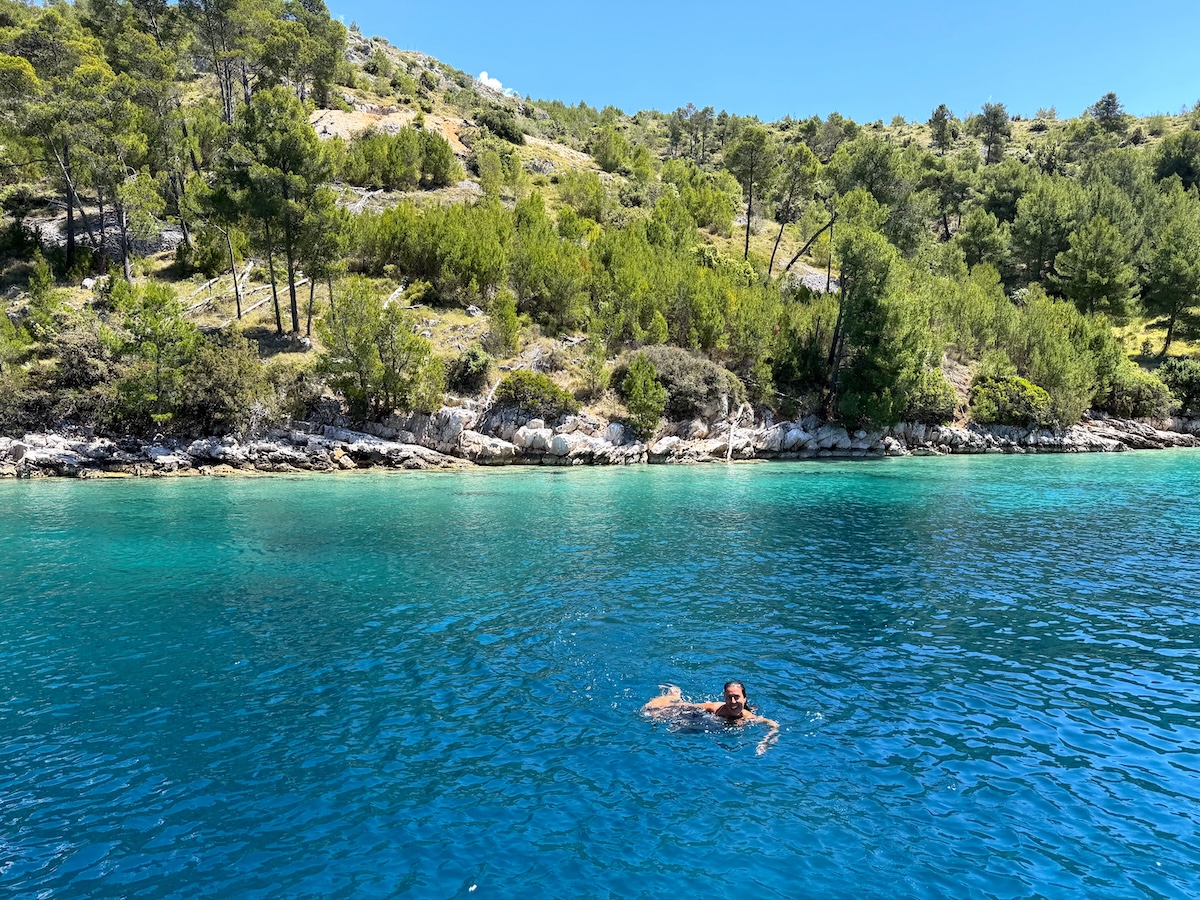
- Hvar: one hour by catamaran or two hours by ferry from Split. On Randomtrip, we took the ferry from Split to Hvar, where we spent several days exploring the island and absolutely loved it. The island’s capital of the same name features Renaissance architecture and a fortress, and Stari Grad (founded by the Greeks in 384 B.C.) is one of Croatia’s oldest cities, with its agricultural plain designated a World Heritage Site. But what really stole our hearts was Milna, our peaceful retreat that we found so hard to leave behind. We’ll tell you all about it in our guide to Hvar.
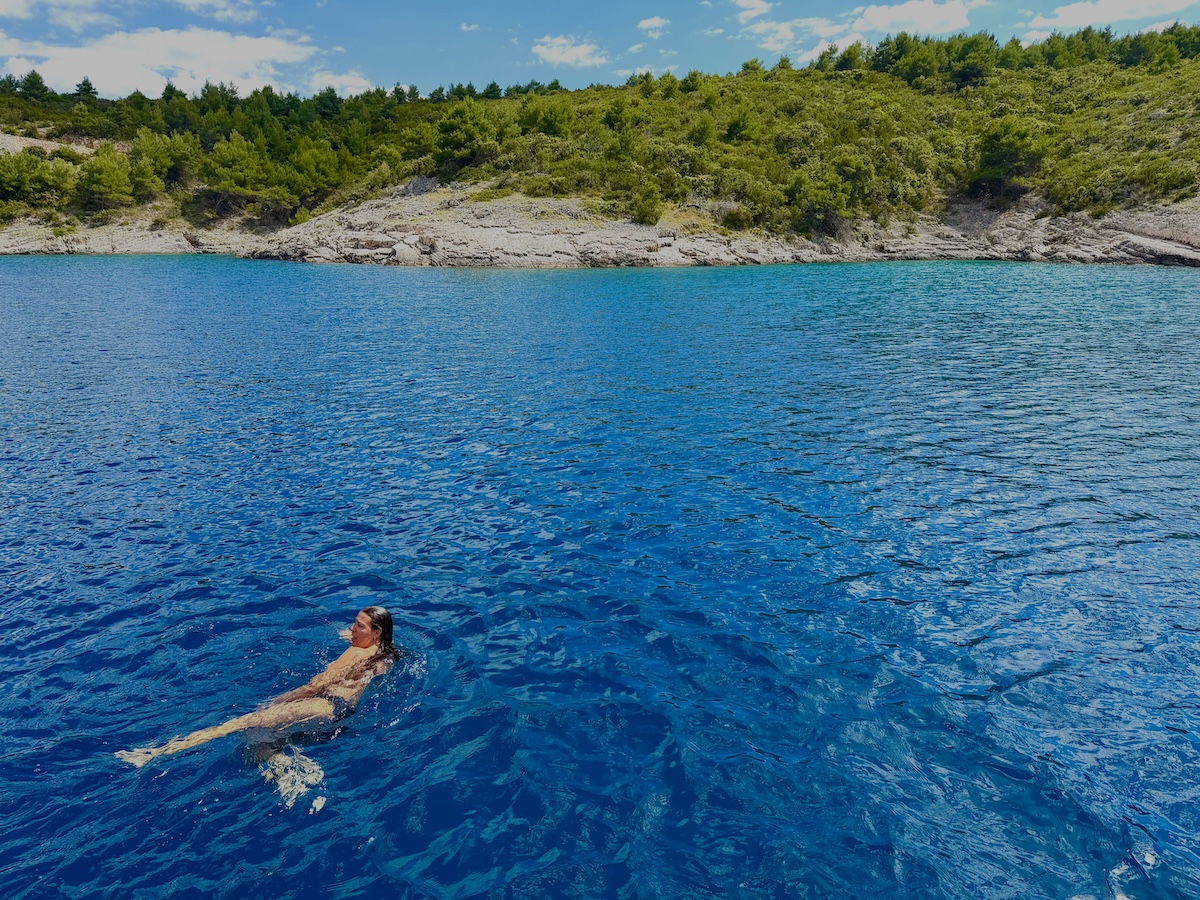
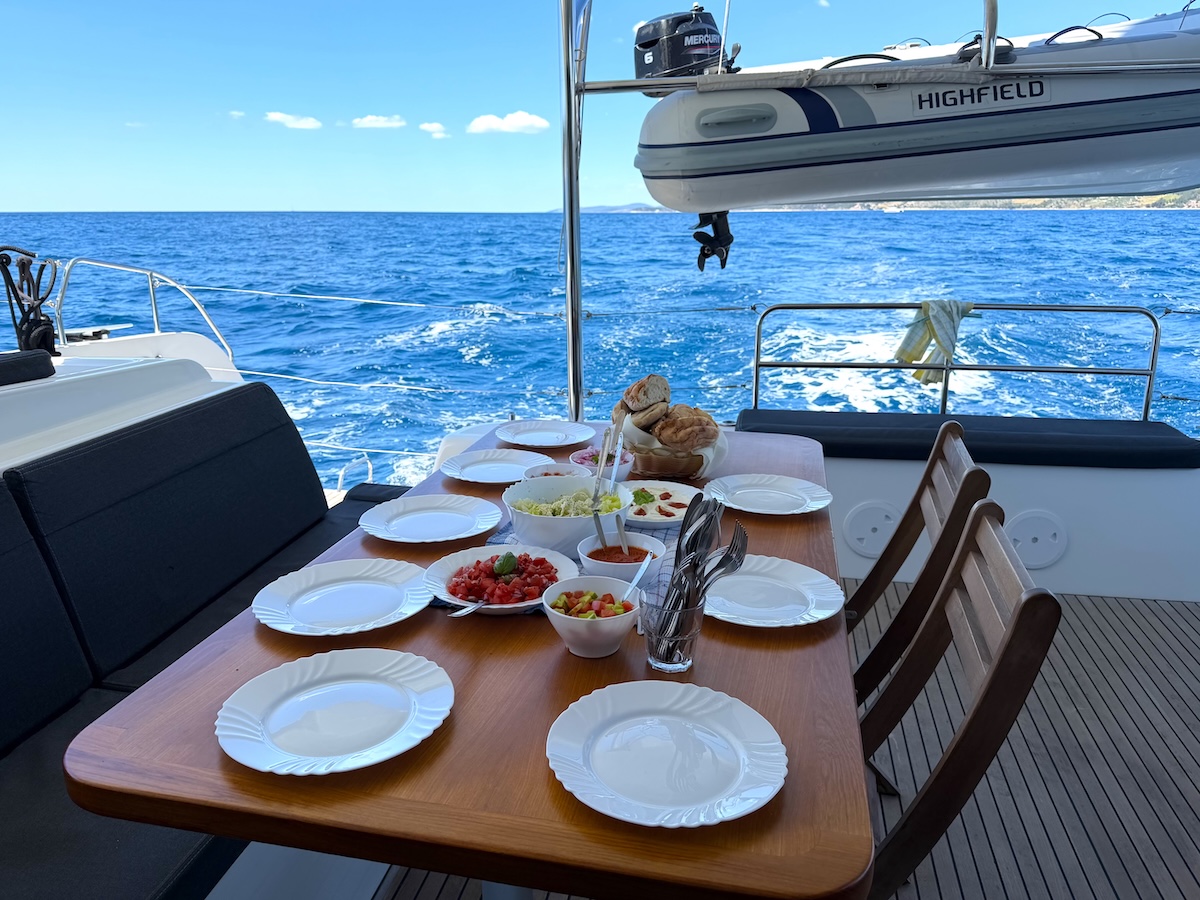
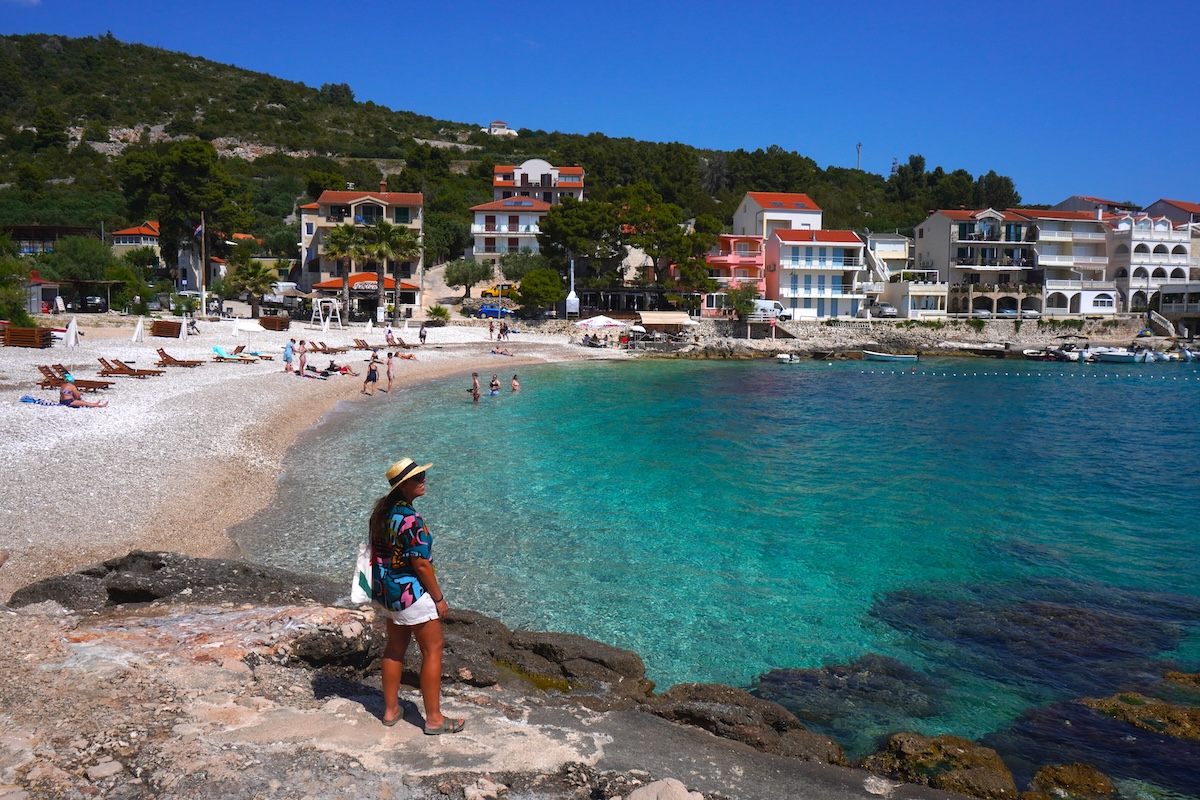
- Vis: the most remote island, which served as a military base for decades and today still boasts largely unspoiled nature. It was the island we were most eager to explore and plan to visit the next time we go to the country.
To explore these islands from Split, you can book this tour to the islands of Šolta and Brač or, if you prefer, this tour to the islands of Hvar and the Pakleni Islands.
At Randomtrip, we visited all of these islands (except Vis) on our sailing trip along the Croatian coast with More Sailing, and we spent a week exploring the island of Hvar with Pomalo (the Hvar guide will be available here soon).
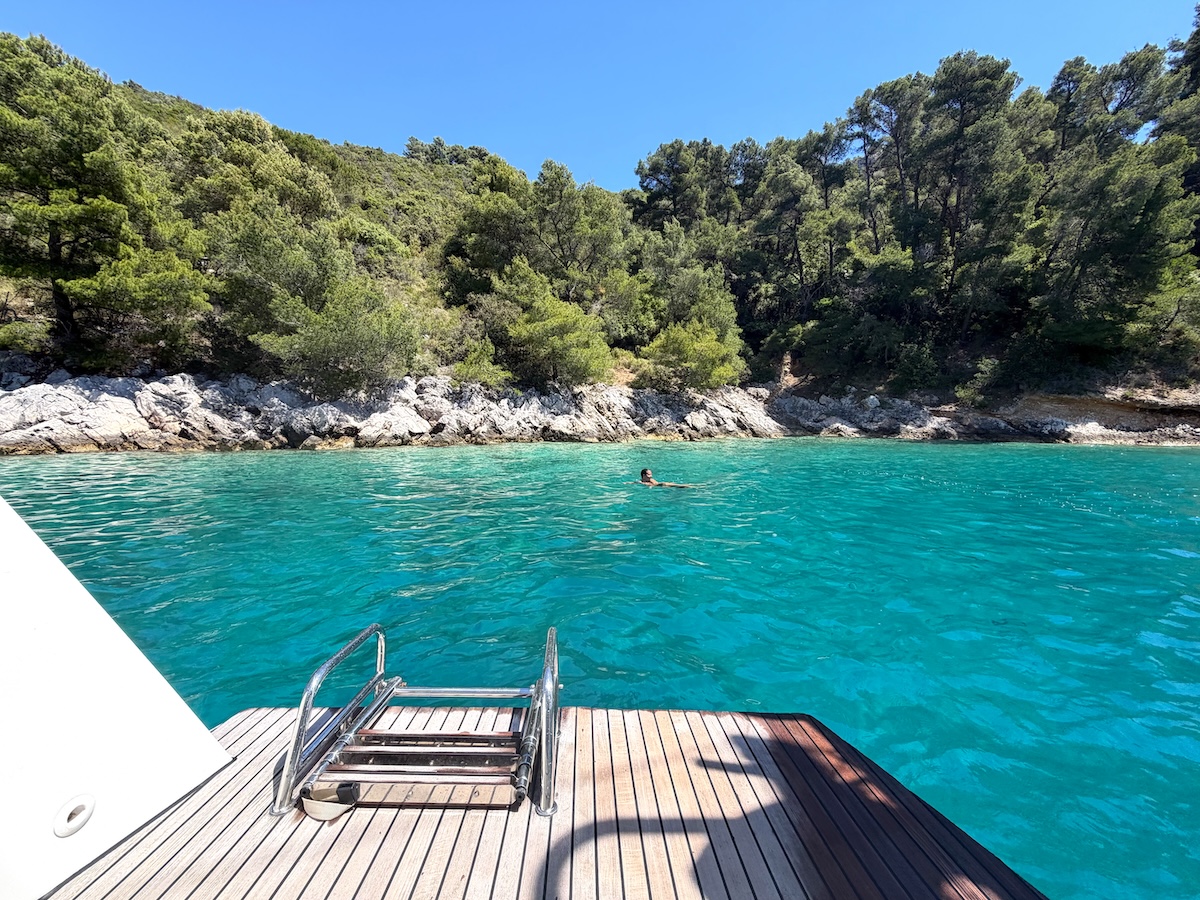
Omiš
About a 30-minute drive away, Omiš is a small town nestled between the mountains and the Cetina River, with a pirate past (its pirates terrorized maritime trade for about 200 years, between the 12th and 13th centuries) and a city beach. It’s the starting point for adventure activities: rafting, rock climbing, hiking, and zip-lining. The rafting trip lasts about four hours and covers 9.5 km, with Class 2 and 3 rapids, a stop for swimming at the Studenci waterfall, and lunch at the Radman Mills. You can get there by taking bus 60 from Split’s Green Market.
Makarska
Makarska has a sandy beach about 2 km long, a lively nightlife, and, just a few minutes away, the Biokovo Nature Park, with 16 peaks over 1,400 m. There are frequent buses from Split and, during the season, catamarans operated by the Krilo company. The Makarska Riviera begins here, featuring towns such as Brela and Baška Voda.
Plitvice Lakes National Park
About 3.5 hours from Split, Plitvice Lakes National Park is a UNESCO World Heritage Site and one of the country’s most visited parks, attracting nearly 2 million visitors a year. It covers about 30,000 hectares and features 16 lakes and 90 waterfalls, as well as caves and forests. The largest of the waterfalls, the Great Waterfall, is 87 meters high. It is larger and more spectacular than Krka, but it is also farther away; that’s why people usually go on an organized tour, which is a long excursion, although you can also go on your own.
You can book your trip to Plitvice Lakes.
Imotski (Red Lake and Blue Lake)
Less than an hour from Split via the toll highway, Imotski is a small town perched atop a cliff, featuring an ancient fortress called Topana that you can explore. There are two lakes in the surrounding area: Red Lake is one of the deepest in the region, and near the town center, a set of stairs leads down to Blue Lake, where you can swim in the summer.
Dubrovnik by Ferry
From April through October, there are daily, very comfortable catamarans and ferries running from Split to Dubrovnik. The one-way trip takes about 4.5 hours and makes stops at islands such as Brač, Hvar, Mljet, and Korčula, where you can get off, spend the night, and continue your journey the next day. You can also make a round trip in a single day, though it’s a long journey.
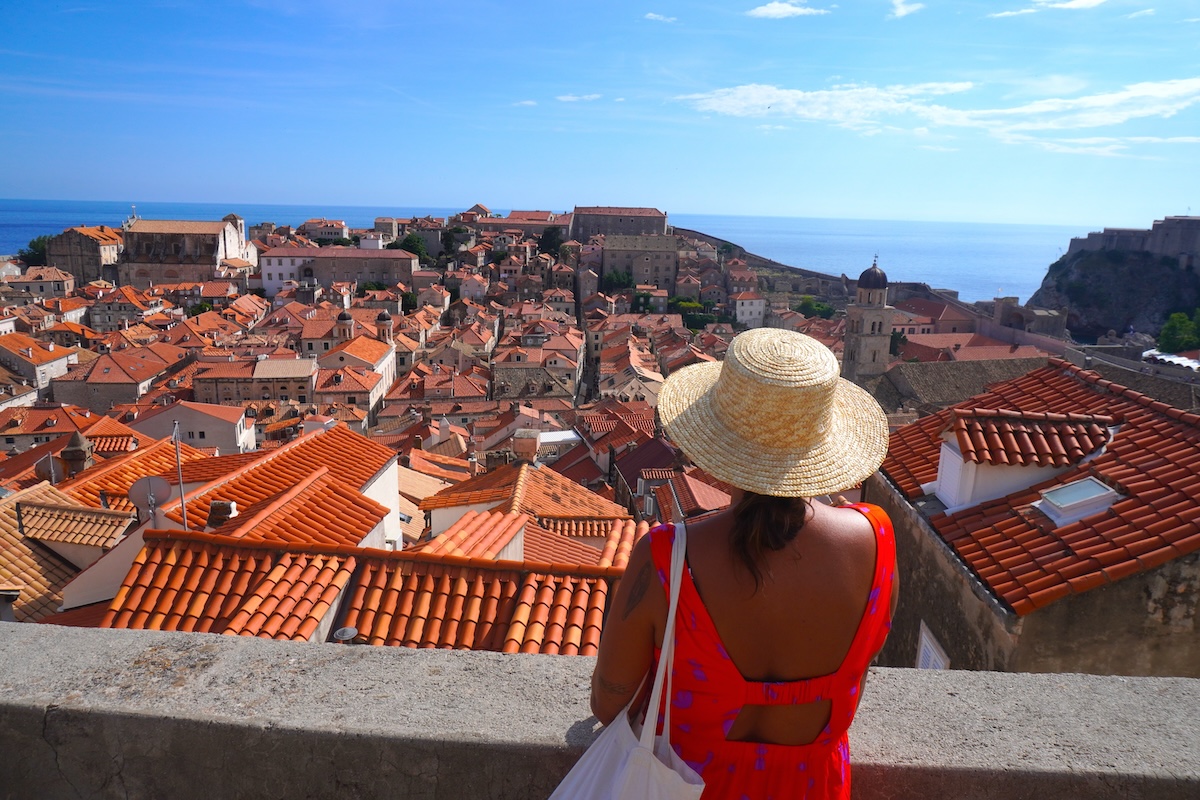
If you’re planning to visit the Pearl of the Adriatic during your trip through Croatian Dalmatia, here’s our complete guide to Dubrovnik, where we’ll tell you what to see, suggest 1-, 2-, 3-, or 4-day itineraries, and even recommend restaurants to try.
Sinj and Vrlika
Sinj is famous for the Sinjska Alka, a knights’ tournament that has been held annually for over 300 years and commemorates the victory of 700 Sinj residents over a 10,000-strong Ottoman army, following the alleged miraculous apparition of the Virgin Mary the night before the battle. The town has a museum dedicated to the tournament, a Franciscan monastery with a collection of Roman artifacts, and a new visitor center. About 30 minutes from Sinj, Vrlika is a small village ideal for those seeking nature and adventure. Nearby is Lake Peruća, covering 29 km², the country’s second-largest reservoir, where you can swim, row, and kayak. There are also ancient churches and fortresses.
Kaštela
This is the coastal strip of seven castles (Kaštela) between Split and Trogir, which later became a stronghold of the Croatian nobility. Several still stand today. One of them, Vitturi Castle in Kaštel Lukšić, now houses the tourist office and a small museum with artifacts and ethnographic exhibits depicting life in days gone by.
Get inspired by the stories from our visit to Split
If you’d like, you can check out our days in Split in the Instagram Highlights from our visit to Split here.

Fun Facts About Split
- This is where the word “psychology” originated. Marko Marulić (1450-1524), considered the father of Croatian literature, was born in Split and lived there his entire life. Between 1510 and 1517, he wrote a work in Latin titled Psichiologia de ratione animae humanae ( On the Psychology of the Human Soul), which marks the first known use of the word “psychology.” As a trained psychologist myself, you can imagine how excited I was to learn this.
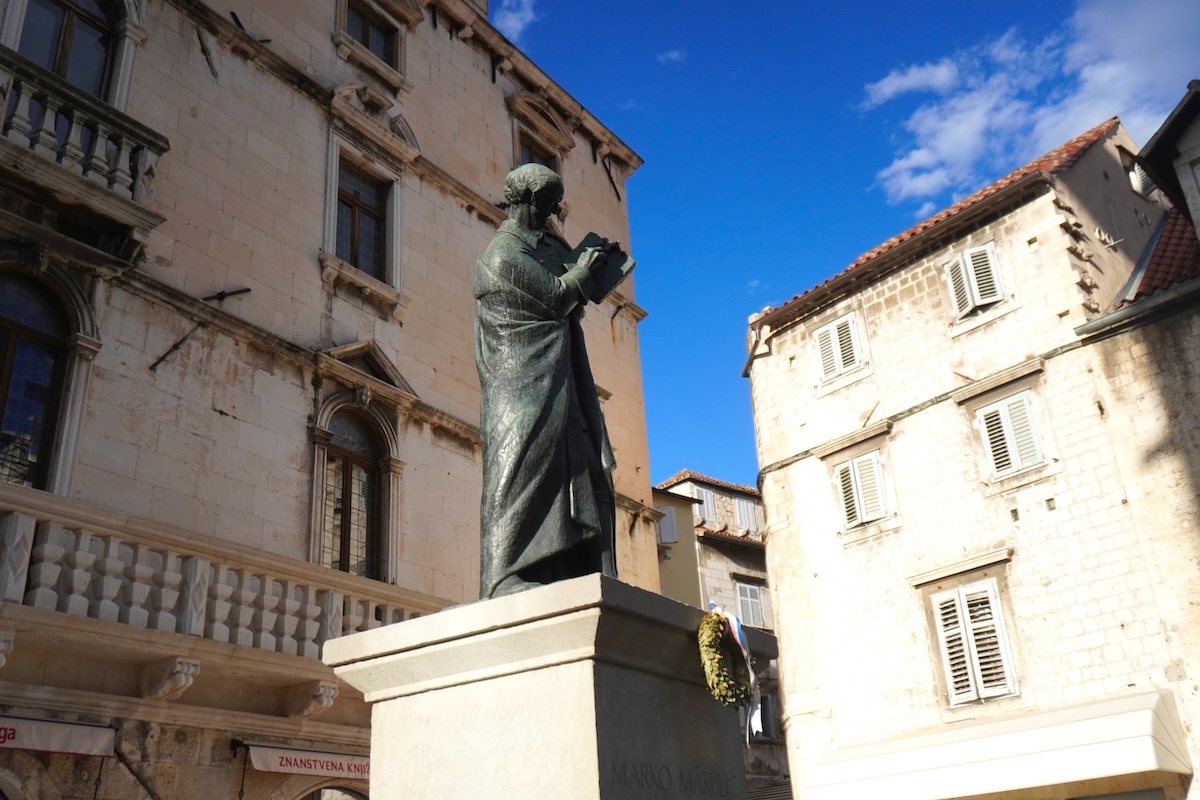
- The last legitimate emperor of the West died in the palace. Julius Nepos, the last legitimate emperor of the Western Roman Empire, was assassinated by his own guards inside the palace in the year 480. There is a street named after him, Nepotova, and halfway down it, a mural that tells the story.
- The oldest cathedral in the world. St. Duje’s Cathedral, which began as Emperor Diocletian’s mausoleum, is described in the official guide The Split Guide as the oldest Catholic cathedral on the planet.
- Freud in Split. The father of psychoanalysis visited Split in 1898. In Fruit Square, in the passageway next to the Venetian Tower, a plaque on a house commemorates him. The local joke, of course, is that it was here that he developed his concept of “split personality” (and Split is the name of the city).
- A bookstore protected by law. The Morpurgo Bookstore, on People’s Square (Pjaca), with its green door, was founded in 1860 by Vid Morpurgo and is considered one of the oldest bookstores in Europe. It is protected by municipal law, and the only items it is allowed to sell are books and other printed materials.
- Goran Ivanišević, Wimbledon champion in 2001. Born in Split, he was the first unseeded player, that is, one not among the tournament favorites, to win the Wimbledon men’s singles title since Boris Becker in 1985. At the 1992 Barcelona Olympics, he served as Croatia’s flag bearer and won two bronze medals. Another interesting fact is that Split boasts the highest number of medalists per capita in the world.
- A Constitution from 1312. The Statute of Split, written in Latin, dates back to 1312. Unlike other Dalmatian statutes, its author is known: Perceval, son of John of Fermo, the podestà (highest judicial authority) of Split. A 17th-century copy is preserved in the city’s Archaeological Museum.
- The First Open-Air Movie Theater. In 1906, Split’s first open-air movie theater, the Kino Karaman, opened; it continues to screen films today.
- The last king of Croatia is buried in Split. Stjepan II, the last member of the Trpimirović dynasty, was buried in 1091 at the Sustipan Monastery, at the western end of the waterfront, facing the sea.
- The synagogue and Jewish cemetery, among the oldest in Europe. Next to Bosanska Street, in a covered passageway called the Jewish Passage, part of the old medieval ghetto, stands the synagogue, the third oldest in Europe. The Jewish cemetery dates back to 1573 and is located in Vidilica, behind a building that is now a café, at the top of the staircase leading up to Marjan.
- The tallest building in Croatia, or almost. The Dalmatia Tower, at the entrance to Split from the highway, stands 135 meters tall and has 27 floors, making it the tallest building in the country. But nearly three times as tall, at 340 meters, is the smokestack of the Plomin power plant in Istria.
Where to stay in Split
If possible, it’s best to stay in Split’s historic center or within walking distance, since most attractions are located in that area. At Randomtrip, we stayed in this apartment (King’s Garden Studio), a simple studio in an excellent location. We can say that Petra gave us one of the warmest welcomes we’ve ever received on our travels, she was very friendly, gave us several suggestions for exploring the city, and did everything she could to make our stay as pleasant as possible. The studio is simple but well-equipped (kitchen, washing machine) and in a perfect location. You can reach the waterfront in less than five minutes.
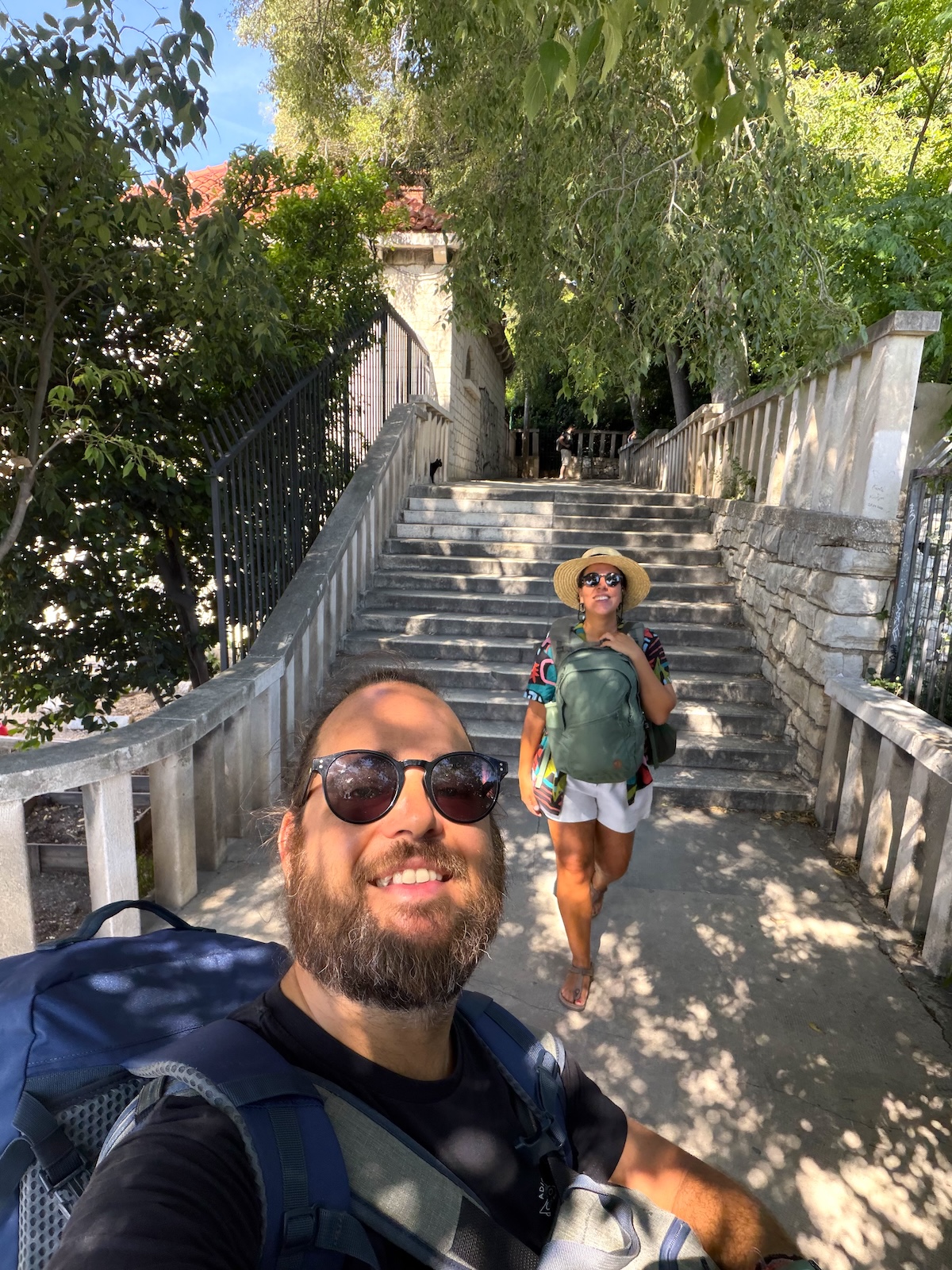
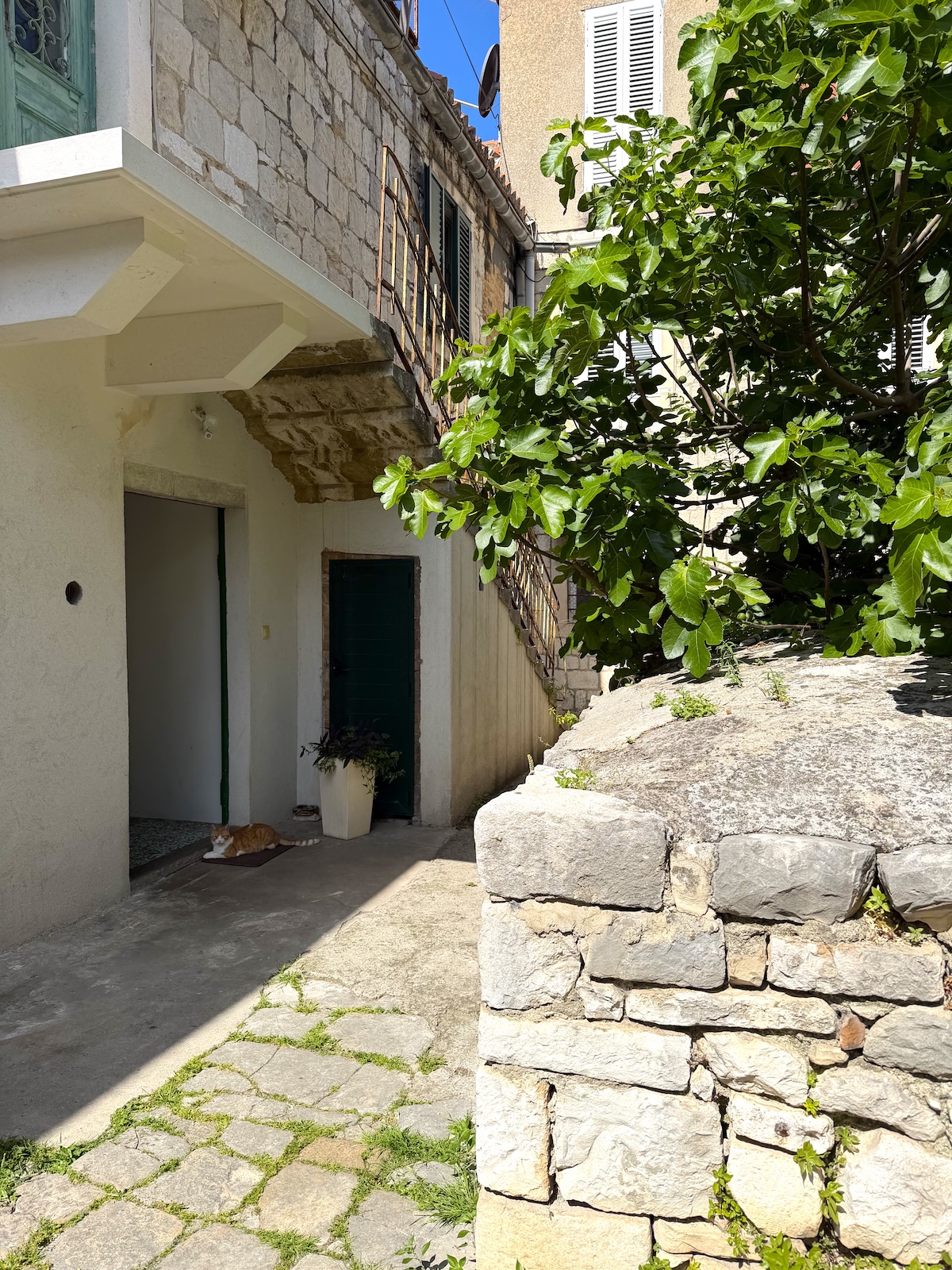
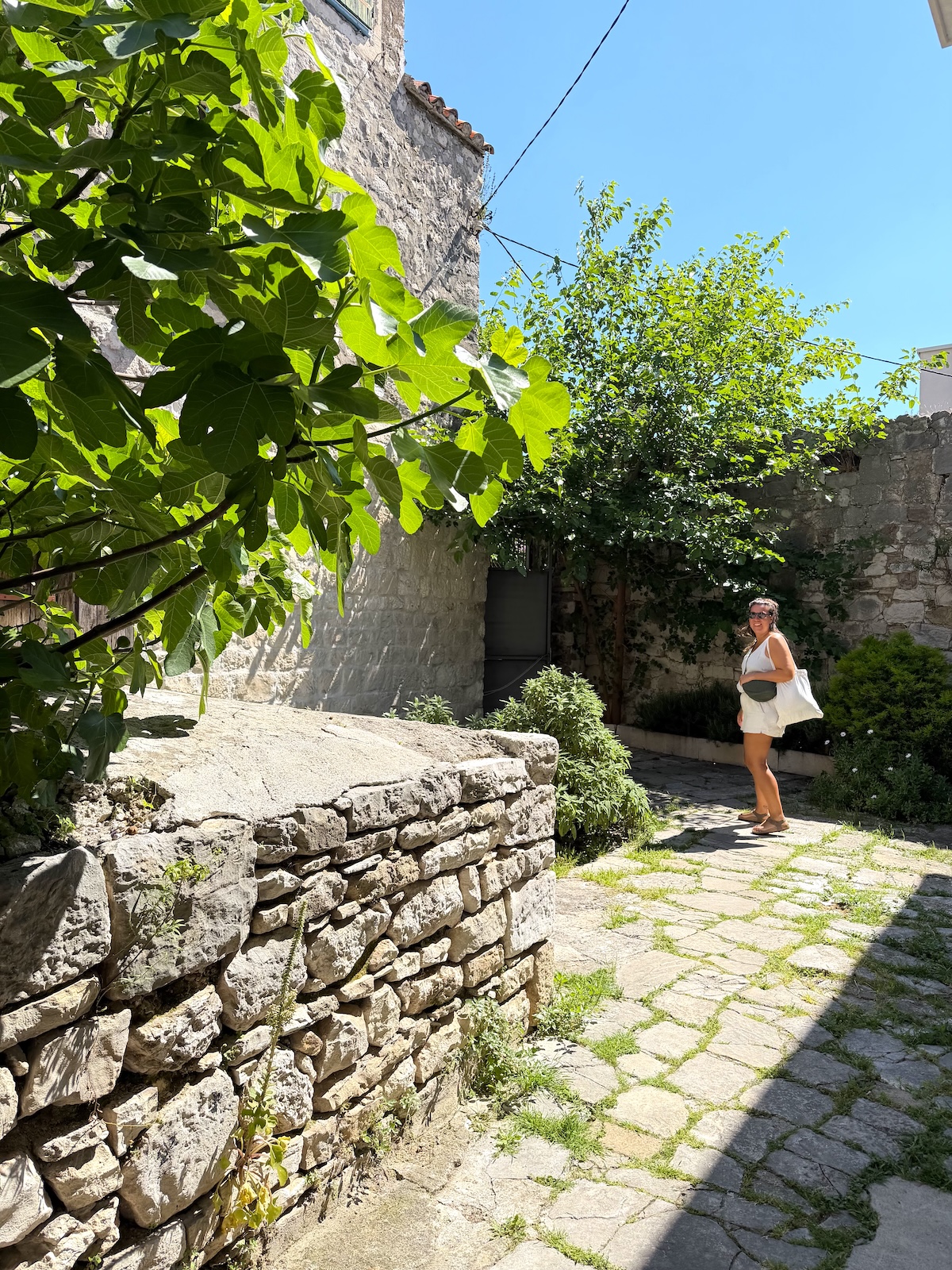
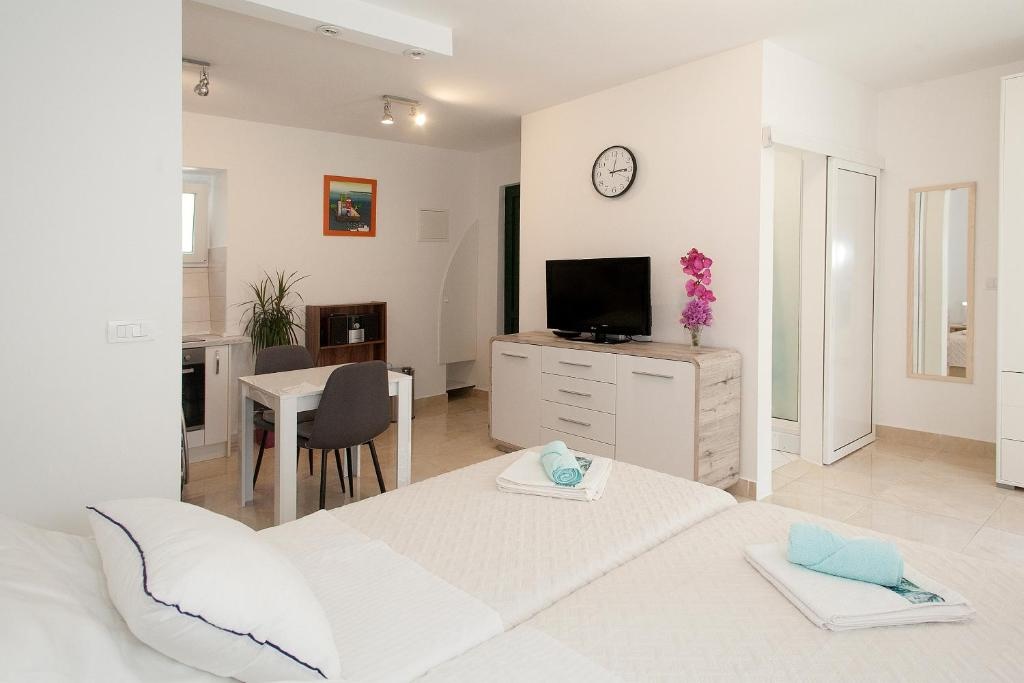
Below, we’ve listed the different areas where you can stay and several recommended options in each area
Where to stay in Split’s Historic Center (Diocletian’s Palace)
Staying within or near the Diocletian’s Palace area is the best option if you want to be right in the center and just a few steps away from most of the attractions, although due to the increase in tourism and limited space, prices tend to be quite high. Also, the streets are pedestrian-only, so if you rent a car and/or don’t want to walk around with your luggage, you’ll have to walk. You may also hear some noise, depending on the specific street.
Here are several options in the city center that we’ve reviewed or that were recommended to us:
- Luxury Rooms Lucija and Luka (from €60/night): several reasonably priced double rooms in the city center
- Marcantun Spalatum in Diocletian’s Palace (from €60/night): reasonably priced rooms right in the heart of the city
- Luxury Residence Mareta (from €80/night): bed and breakfast right in the heart of the city
- Hotel Consul (from €90/night): a 3-star hotel in the downtown area but outside the Palace
- Heritage Hotel Santa Lucia (from €100/night): a 3-star hotel next to the West Gate
- Villa Split Heritage Hotel (from €125/night): a 4-star hotel within the Palace complex, next to People’s Square.
- Hotel Vestibul Palace & Villa (from €130/night): 4-star hotel within the Palace area
- Cornaro Hotel (from €150/night): a 5-star hotel outside the Palace area but close to downtown, with a rooftop pool and views of the city and the sea.
- Villa Nepos Hotel (from 300€/night): 1- or 2-bedroom apartments within the Palace area (next to the east gate)
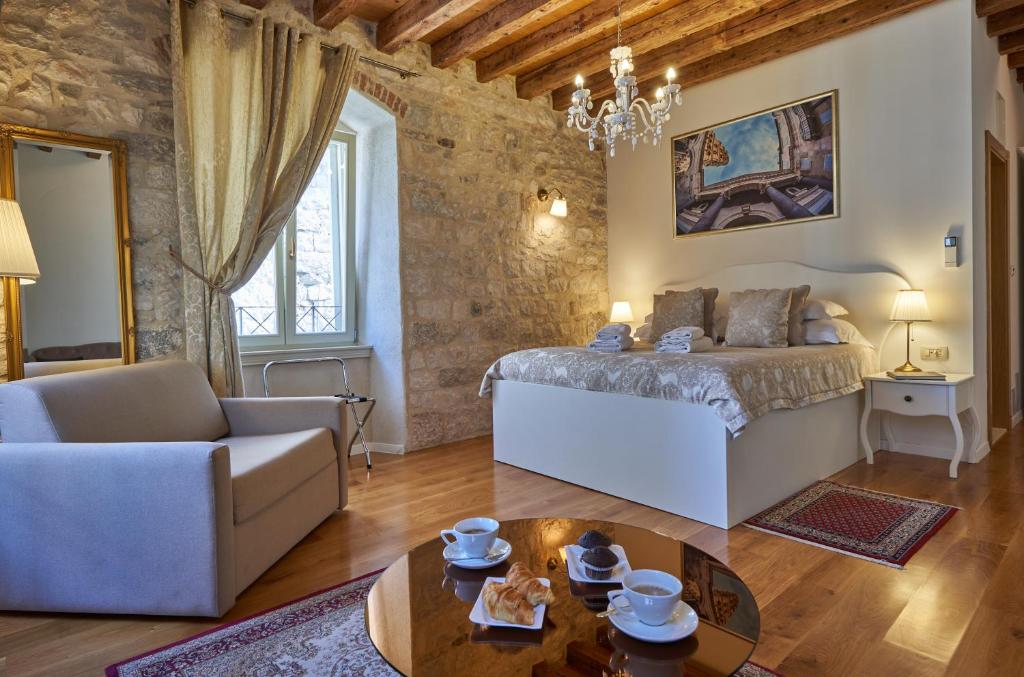
Where to stay in Varoš
Varoš was once a fishing neighborhood, west of the historic center, and much less touristy. In addition to having a few sights to see, staying in Varoš puts you within walking distance of the historic center, but in a much more local and quiet area, with more affordable prices. It also has options for lunch and dinner.
This was the area where we decided to stay on Randomtrip; we stayed in this apartment (King’s Garden Studio), right at the foot of the stairs leading up to the Marjan Lookout. We were just a few minutes from the city center and Diocletian’s Palace, able to walk everywhere, but on a super quiet street with absolutely no noise.
Here are some more options for where to stay in Varoš
- King’s Garden Studio (from €50/night): a very reasonably priced and well-located studio (next to the stairs leading up to the Marjan Lookout). We stayed here through Randomtrip, perfect if you’re looking for an affordable, quiet, and well-located option.
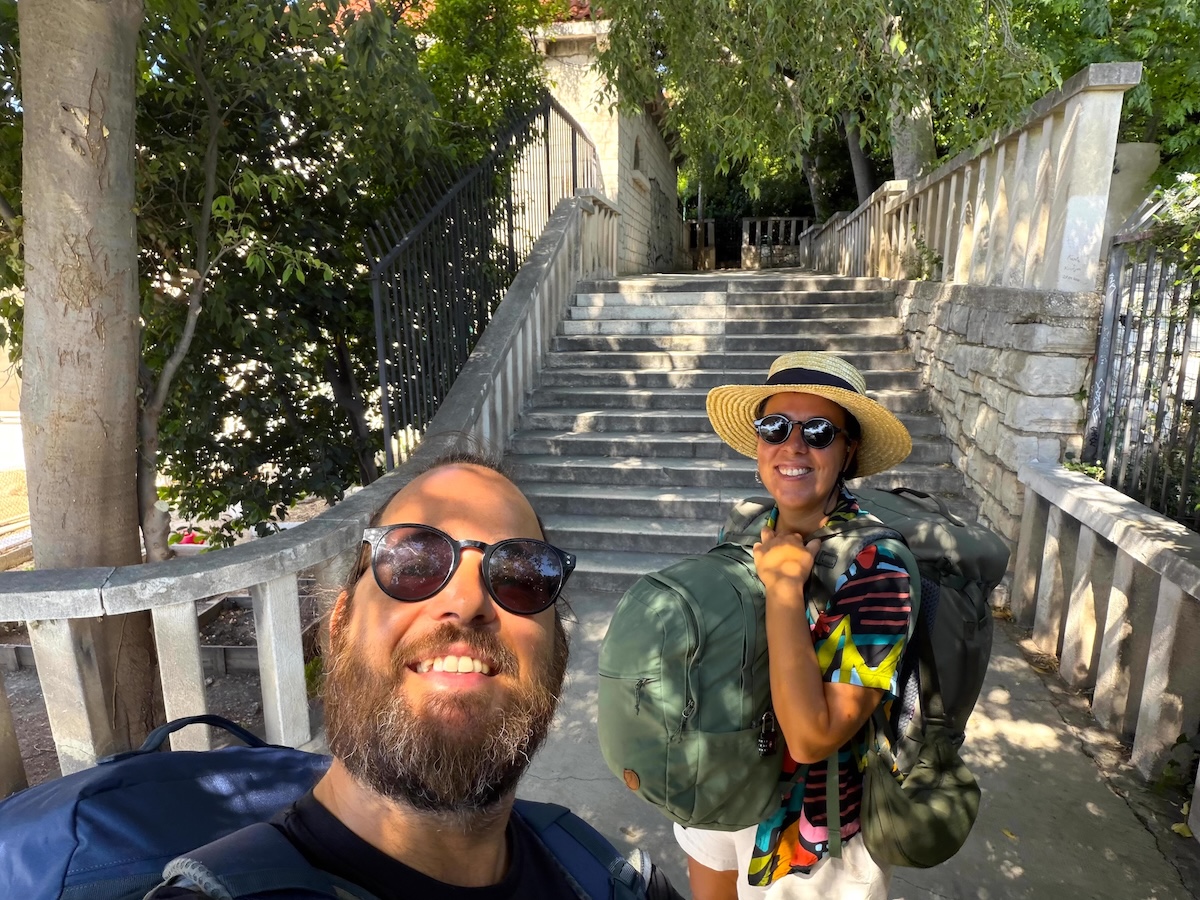
- Apartments Vidilica (from €65/night): a simple, reasonably priced apartment just a few minutes’ walk from the historic center.
- Bepo Apartment with Balcony (from €70/night): an apartment with parking included (an excellent option if you’re renting a car to explore this part of Croatia)
- Hygge Rooms Split (from €75/night): double rooms just a few minutes from the center
- Apartment Splendid Marjan (from €100/night): apartment with a terrace, ocean views, and parking
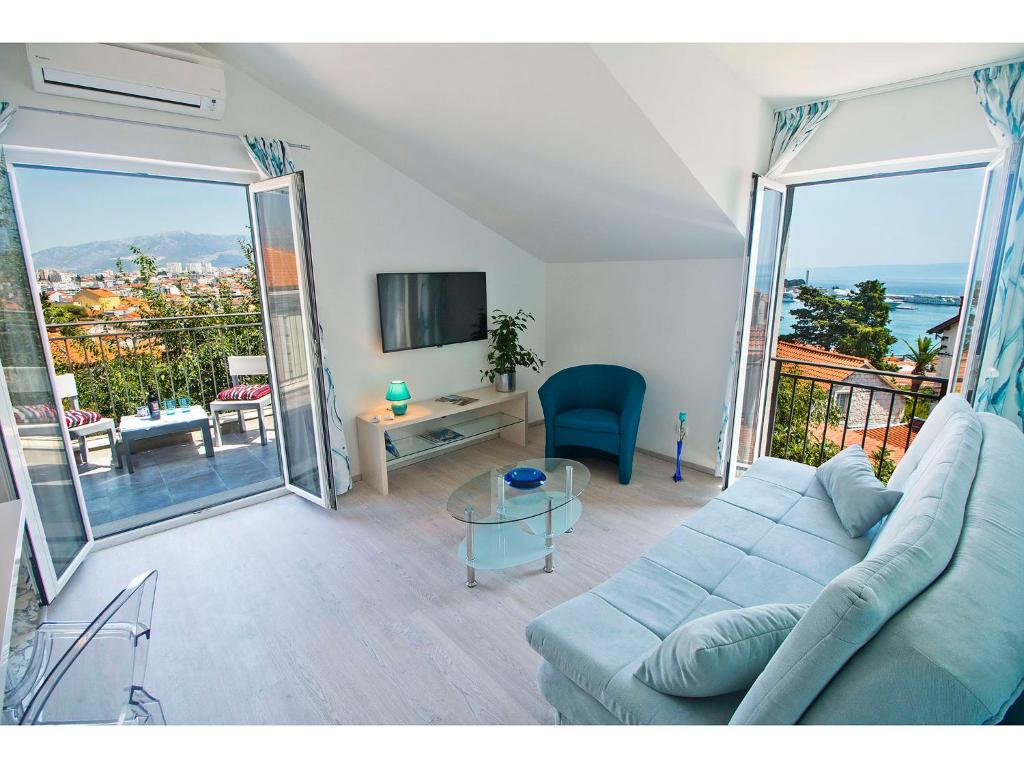
Where to stay in Meje
Another option for staying within walking distance of downtown is to stay in Meje: this is one of the most exclusive (and therefore most expensive) areas of Split, as you’ll be right on the beach but also just a few minutes from the historic center (10–20 minutes depending on the exact location), via a pleasant seaside walk (west of downtown). This area is dominated by villas, boutique hotels, and slightly more expensive apartments. It’s also important to keep in mind that this is a more residential area, so there aren’t many restaurants, bars, or supermarkets.
Below are several options for where to stay in Meje:
- Beachfront Apartment Milan, with Balcony (from €80/night): one-bedroom apartment with a terrace, just a few minutes’ walk from several beaches.
- Azure Escape SEA VIEW Apartment (from €90/night): 1-bedroom apartment with a balcony, terrace, and ocean views.
- Apartment LU (from €120/night): 2-bedroom apartment with ocean views
- Hotel Ambasador (from €140/night): 5-star hotel with ocean views and a pool
- Apartment MiraMare on the beach (from €150/night): 1-bedroom apartment with ocean views, just a few minutes’ walk from the beach and downtown.
- K Luxury Residence (from €225/night): a modern 2-bedroom apartment near the Meštrović Gallery, with a terrace and private parking.
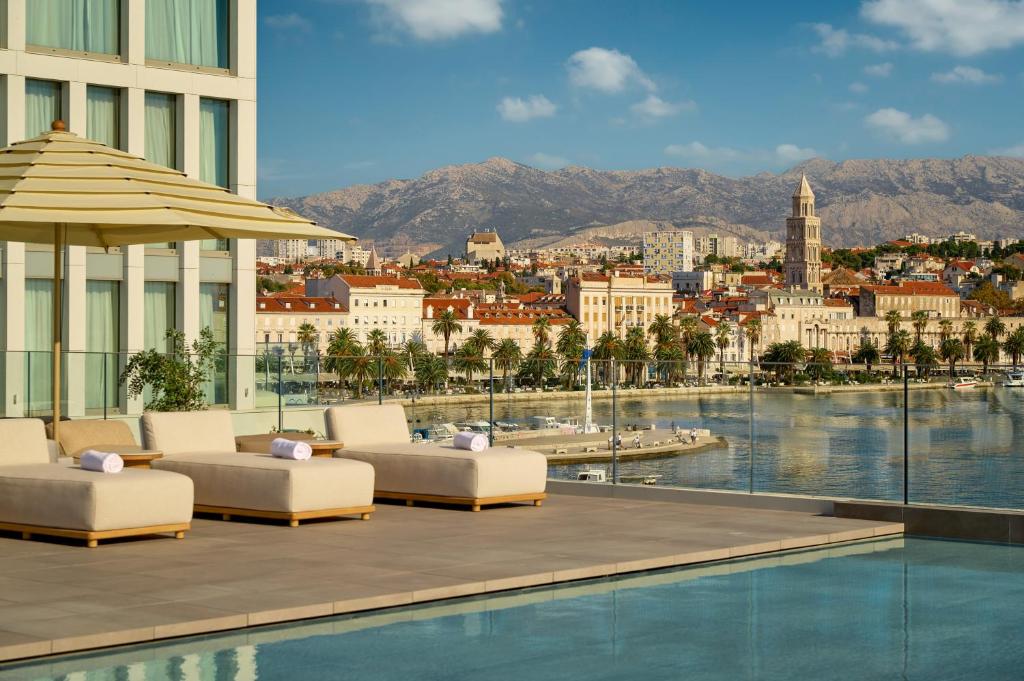
Where to stay in Bačvice and Žnjan
Finally, another option for staying near the beaches but at a reasonable distance from the historic center is to stay in the Bačvice or Žnjan areas. Both areas are located east of Split.
Bačvice is the closest option to the center; it has very popular beaches (some with sand), is within walking distance of the center, and offers plenty of entertainment, dining, and nightlife. It’s a popular spot among young people, and prices are moderate.
On the other hand, Žnjan is located east of Bačvice, at a considerable distance from the center (so it’s not really practical to walk back and forth to visit the city). It’s a more family-oriented area with resorts; it has plenty of artificial pebble beaches, everything is well-maintained and geared toward families, and prices are higher.
Below are several recommended options for where to stay in Bačvice and Žnjan:
- Sunshower Apartment and Studio (from €40/night): a simple, very affordable apartment just minutes from the beach and the historic center
- Luxury Rooms Silente Bacvice 1 (from €60/night): double room near the beach and the historic center
- FM Apartments (from €70/night): studio with ocean views
- Beach Apartment Suzy&Demi (from €90/night): a two-bedroom apartment with a balcony and ocean views, right next to the beach.
- Liberty Living Apartments Žnjan Beach (from €200/night): modern apartments near the beaches of Žnjan
- Beach Villa at Split Top Location (from €500/night): villa with 5 double bedrooms, ocean views, and a private pool, ideal for groups. Close to beaches and within walking distance of downtown.
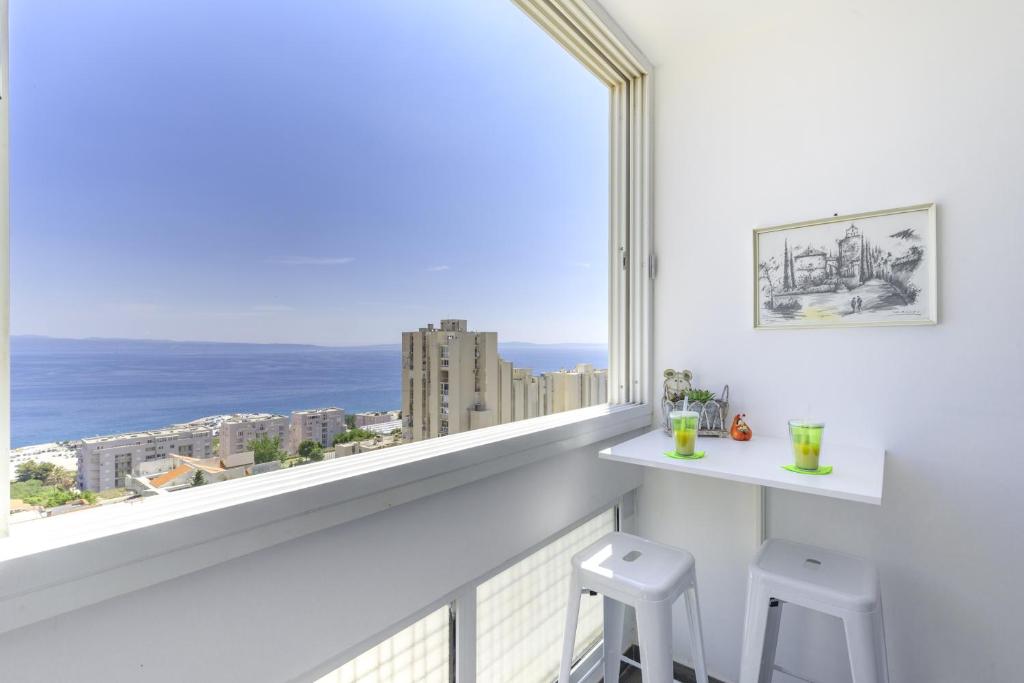
Where to eat in Split
Before recommending specific restaurants, including the ones we liked best (and a few we didn’t care for as much, so you can avoid tourist traps), we’d like to introduce you to the typical dishes and drinks you can try in Split. At RandomTrip, we believe that cuisine is a very important part of a country’s culture and, therefore, of any trip. The dishes we mention are suited for an omnivorous diet, and in our case, we tried several of them in adapted versions, with vegetables or fish.
- Peka: chicken and beef, or octopus, slow-cooked over hot coals in a large iron tray covered with a lid.
- Pašticada: a richly flavored beef stew with cloves, wine, and prunes, served with homemade gnocchi.
- Manistra: the local version of spaghetti with meat sauce, also flavored with cloves.
- Buzara: a method of cooking seafood typical of the Dalmatian region, in which the seafood is simmered in an aromatic sauce.
- Vegetables: artichokes, fava beans, and blitva (Swiss chard with potatoes).
- Fish: grilled, with olive oil.
- Street food: burek (puff pastry filled with cheese, spinach, or meat), ćevapi (small grilled meat rolls, served on soft bread with sauce and onions) and pizza.
- Desserts: fritule (fried balls, similar to fritters), Splitska torta (with dried figs, raisins, and almonds) and rožada (caramel flan).
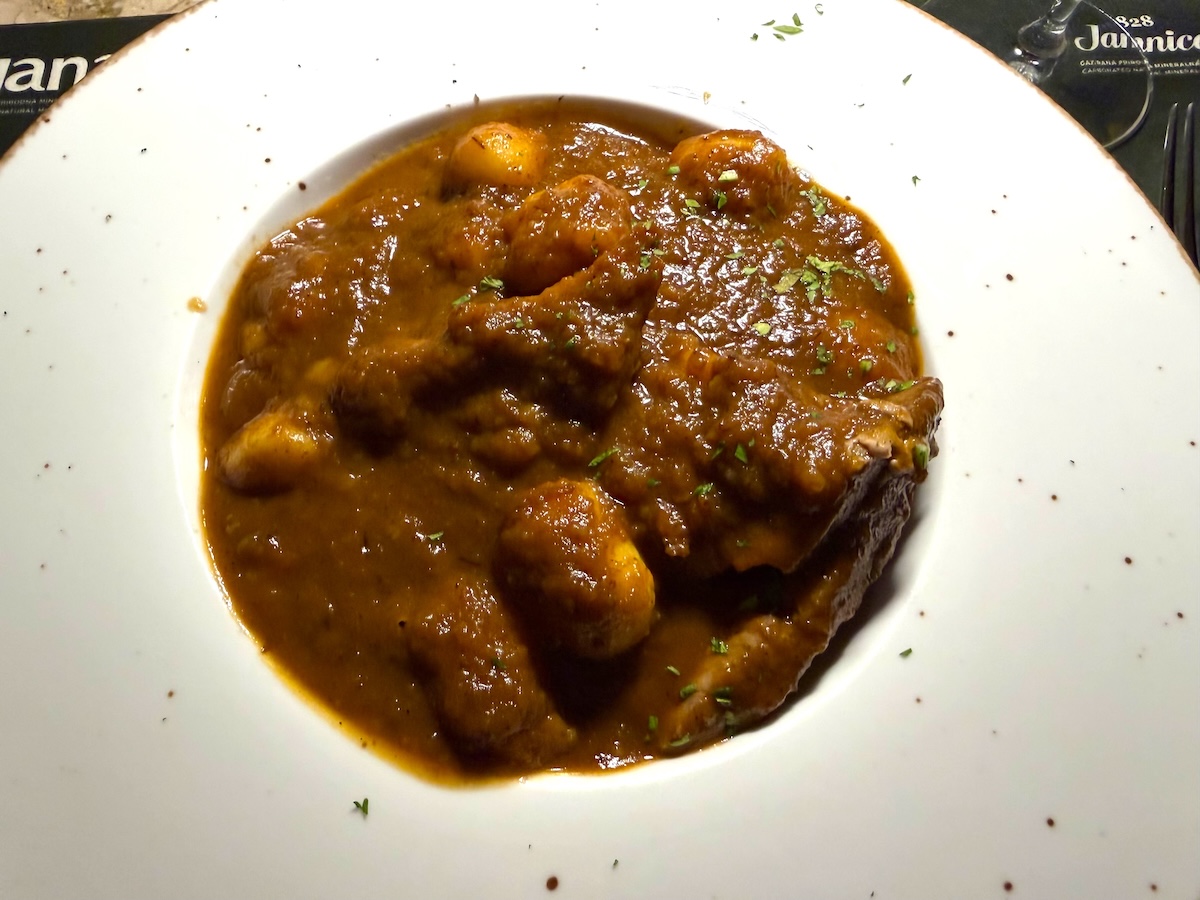
Below are the restaurants in Split that we recommend (or don’t), that we tried ourselves, or that were highly recommended but we didn’t have time to try:
- Kantun Paulina: a local spot serving traditional sandwiches with ćevapi, a sandwich made with delicious, super-soft bread filled with meat sausages, which can also include cheese, onion, and a paprika sauce. They also offer chicken cutlet sandwiches and chicken burgers. We paid 23€ for one small ćevapi sandwich, one chicken burger, one beer, and one Coca-Cola.
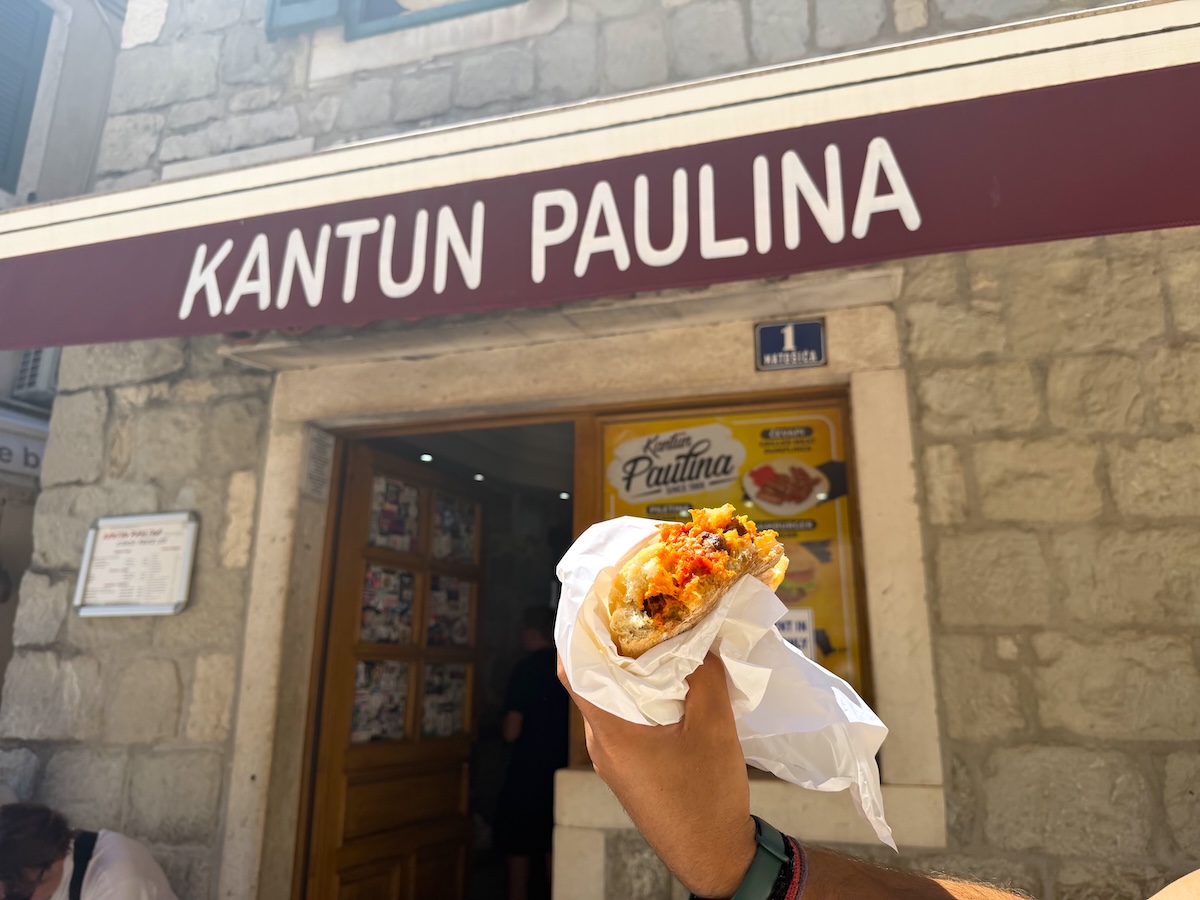
- ST Burek (bakery): a bakery specializing in burek, the typical Balkan-style stuffed pastry, with classic fillings like cheese, meat, spinach, and apple. It’s one of the oldest burek shops in Split and a quick, affordable option for breakfast or a snack. Here we picked up our burek to go for our trip to Krka National Park.
- Pizzeria Sette Sorelle: If you’re craving pizza, based on the ones we tried, we can say these are the best pizzas in Split. Excellent Neapolitan-style pizzas, a short but high-quality menu, we loved them! Plus, the terrace is gorgeous, so if the weather’s nice, dining outside makes it even more special. We paid €41.60 for 2 pizzas, 2 glasses of wine, and 1 bottle of sparkling water. We’ll definitely be back.
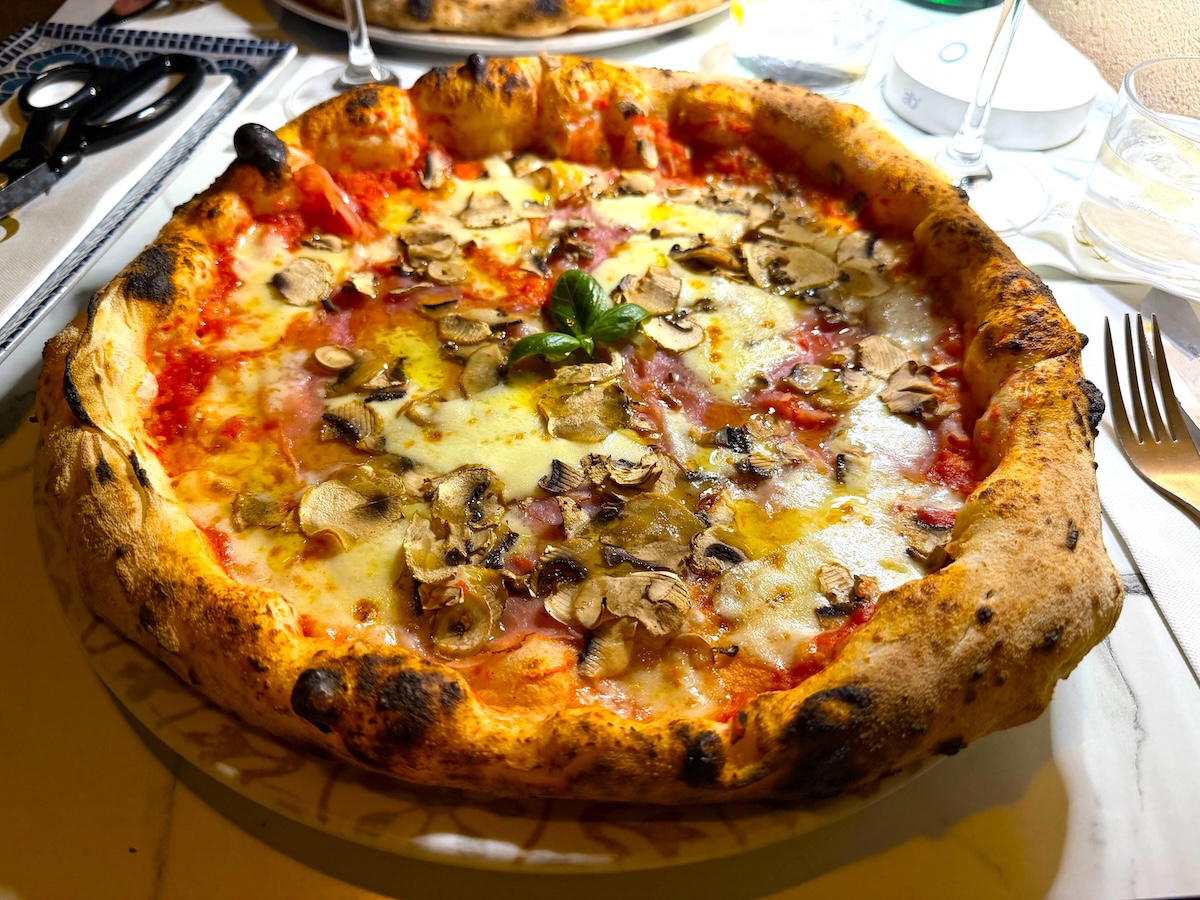
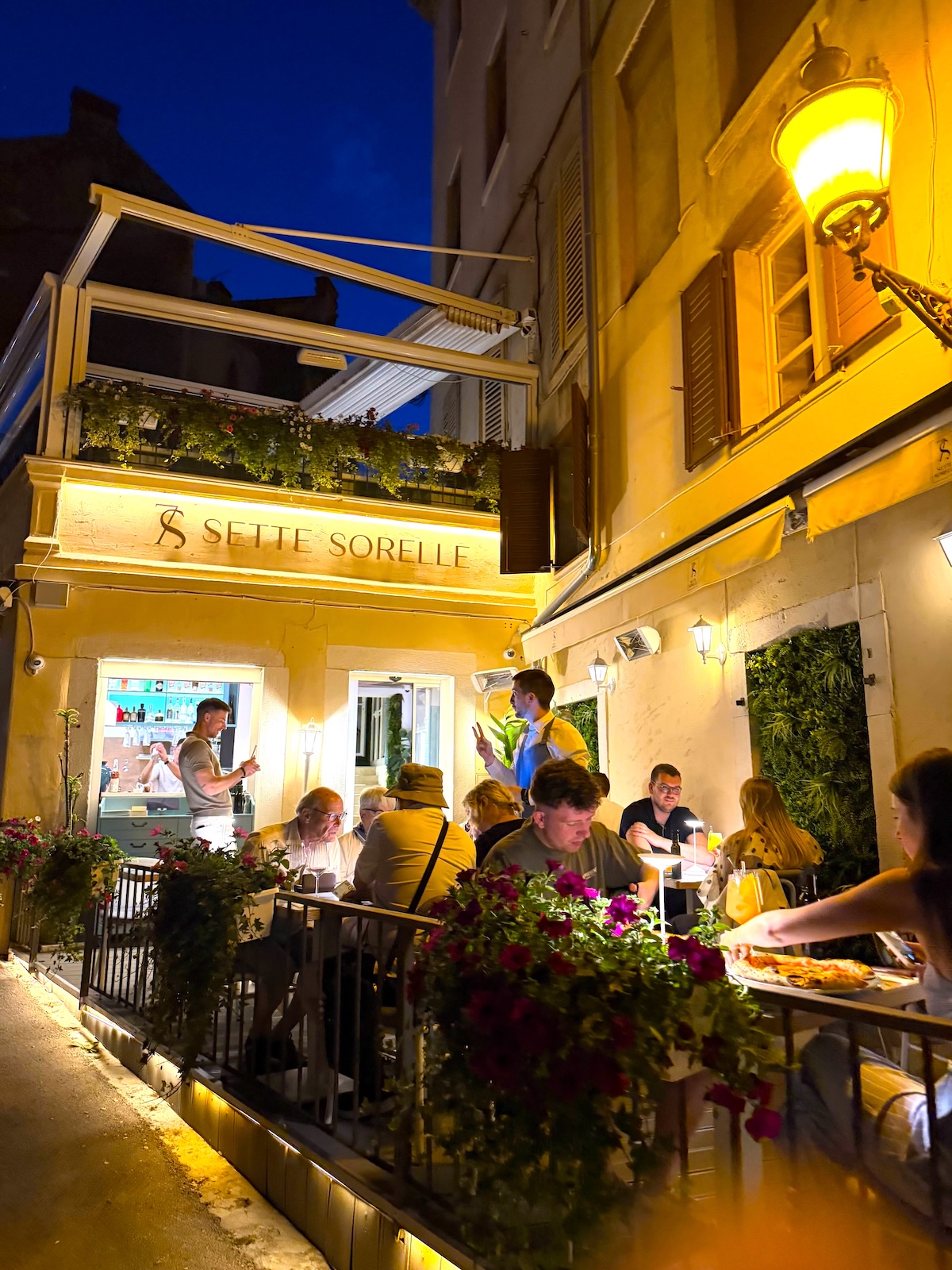
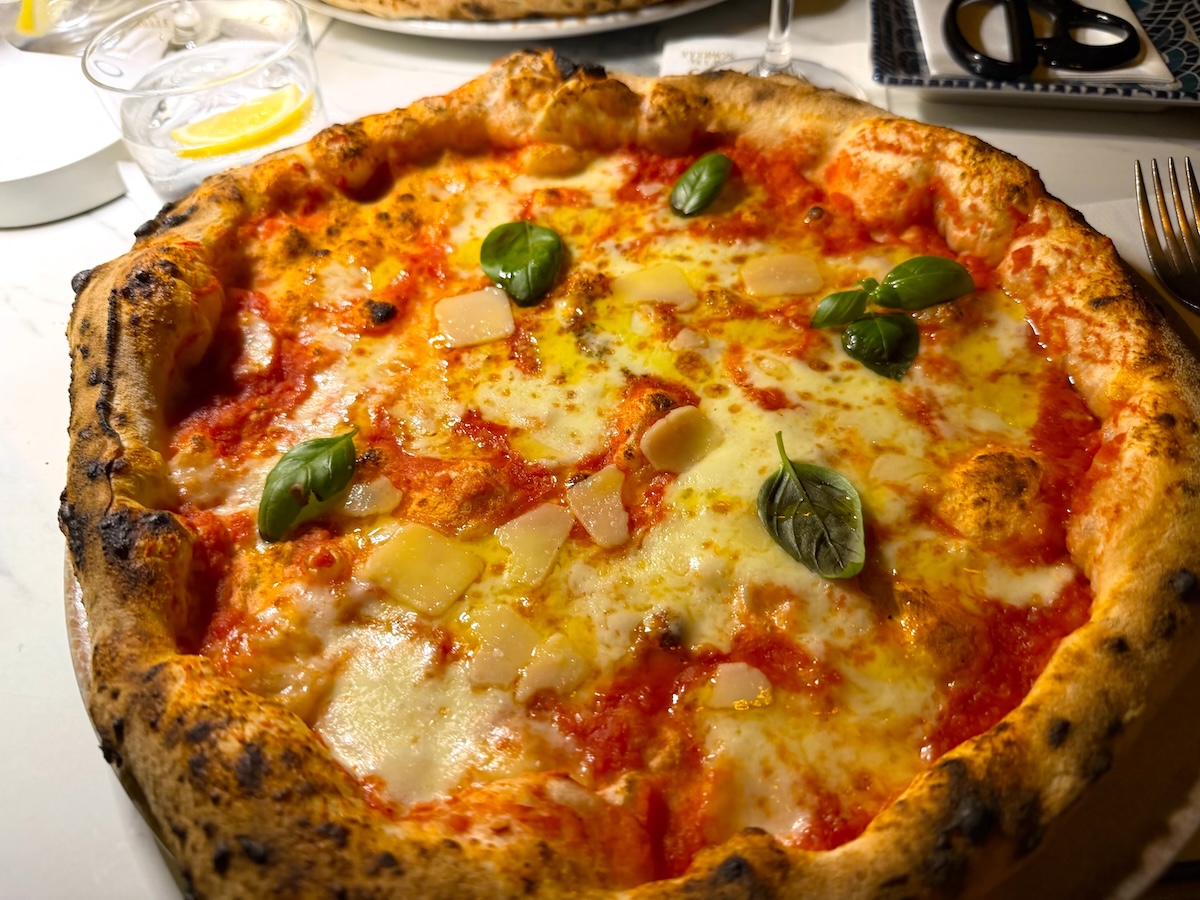
- Bokamorra: a pizza restaurant that’s quite busy. The pizzas were tasty, but we liked the ones at Sette Sorelle better. €50 for 2 pizzas, 2 glasses of wine, and 1 sparkling water
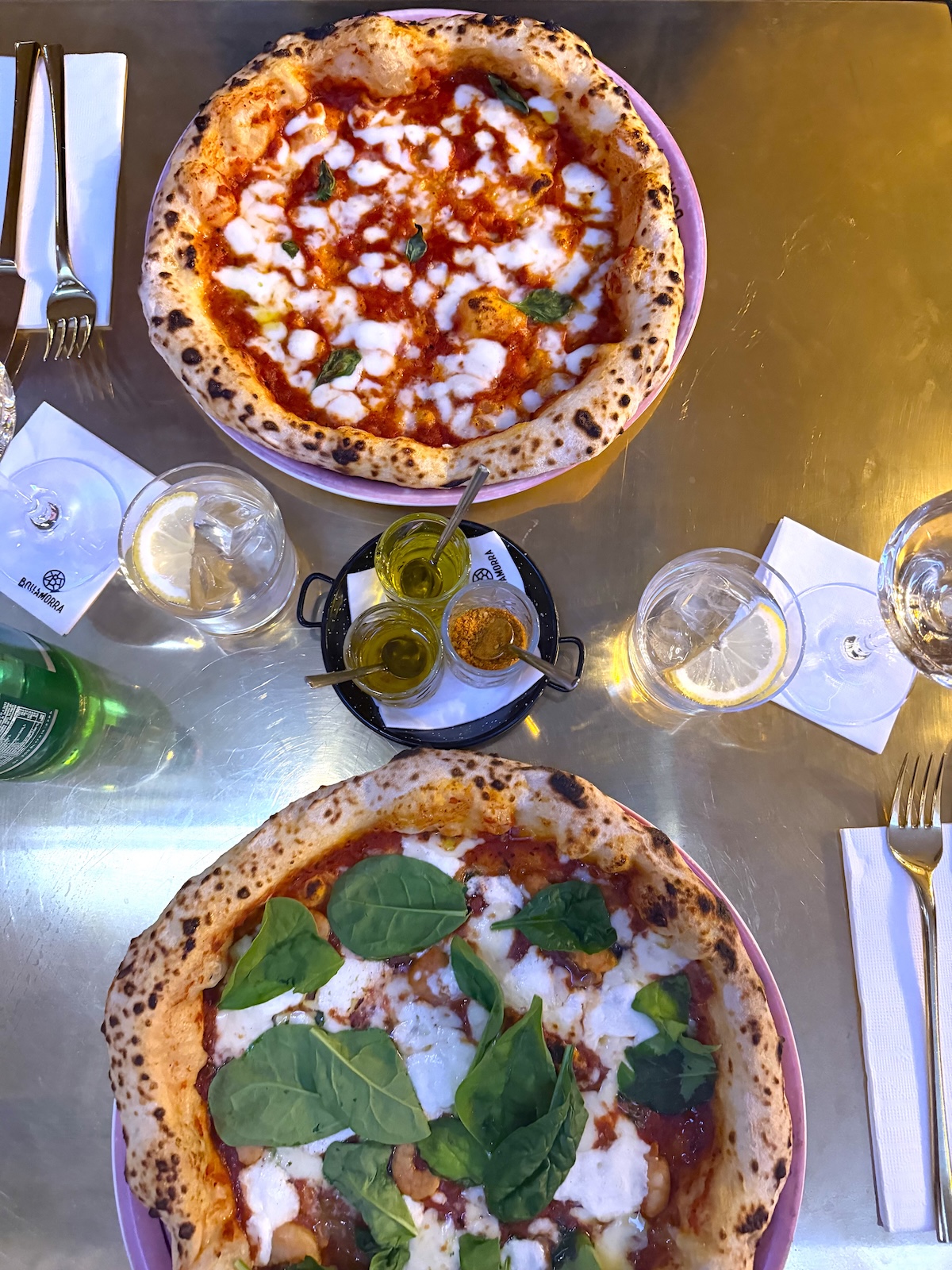

- Fish Mama: Right in the heart of Plaza de la República, with reasonable prices for its location. We ordered tuna pašticada and shrimp risotto, everything was delicious, along with two glasses of wine. It’s not the best restaurant in Split, but if you’re looking for somewhere to eat in this area, it’s a good option.
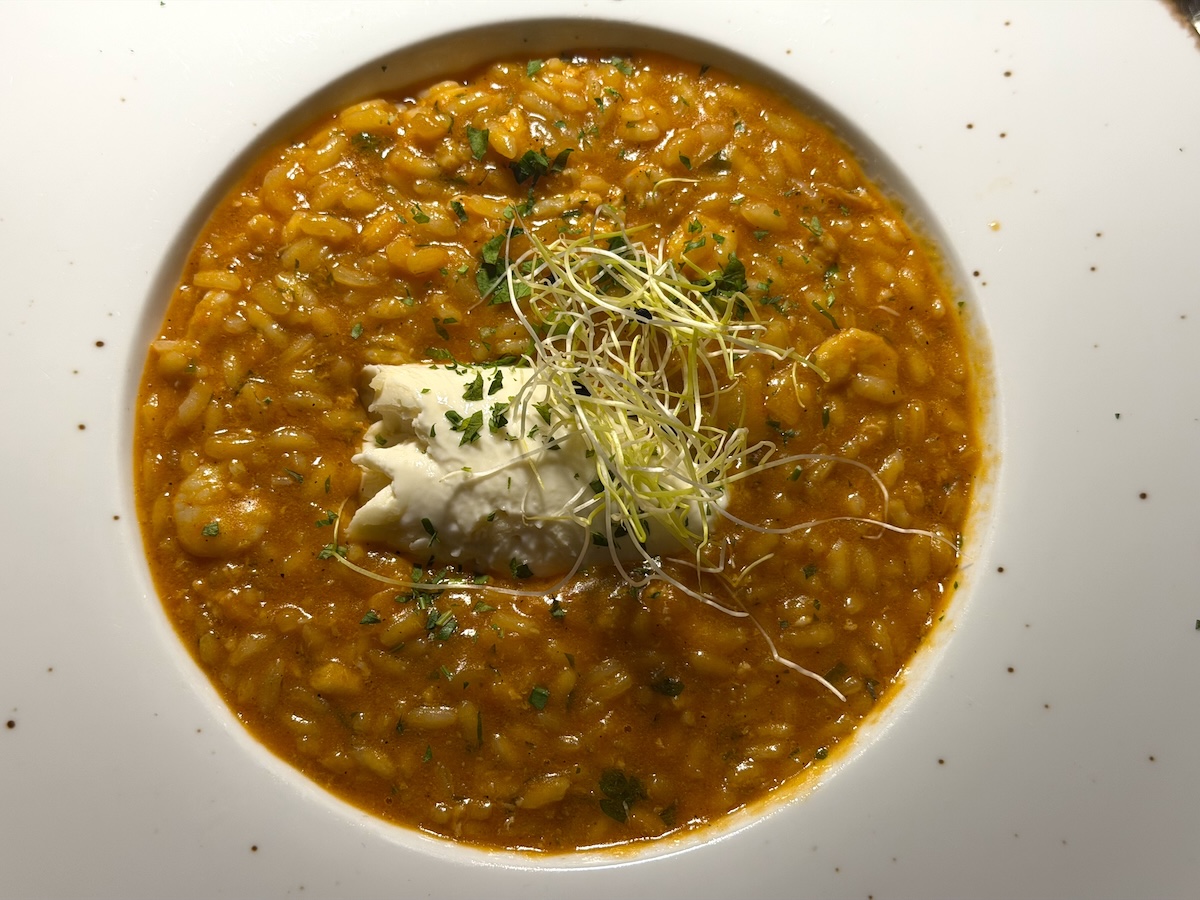
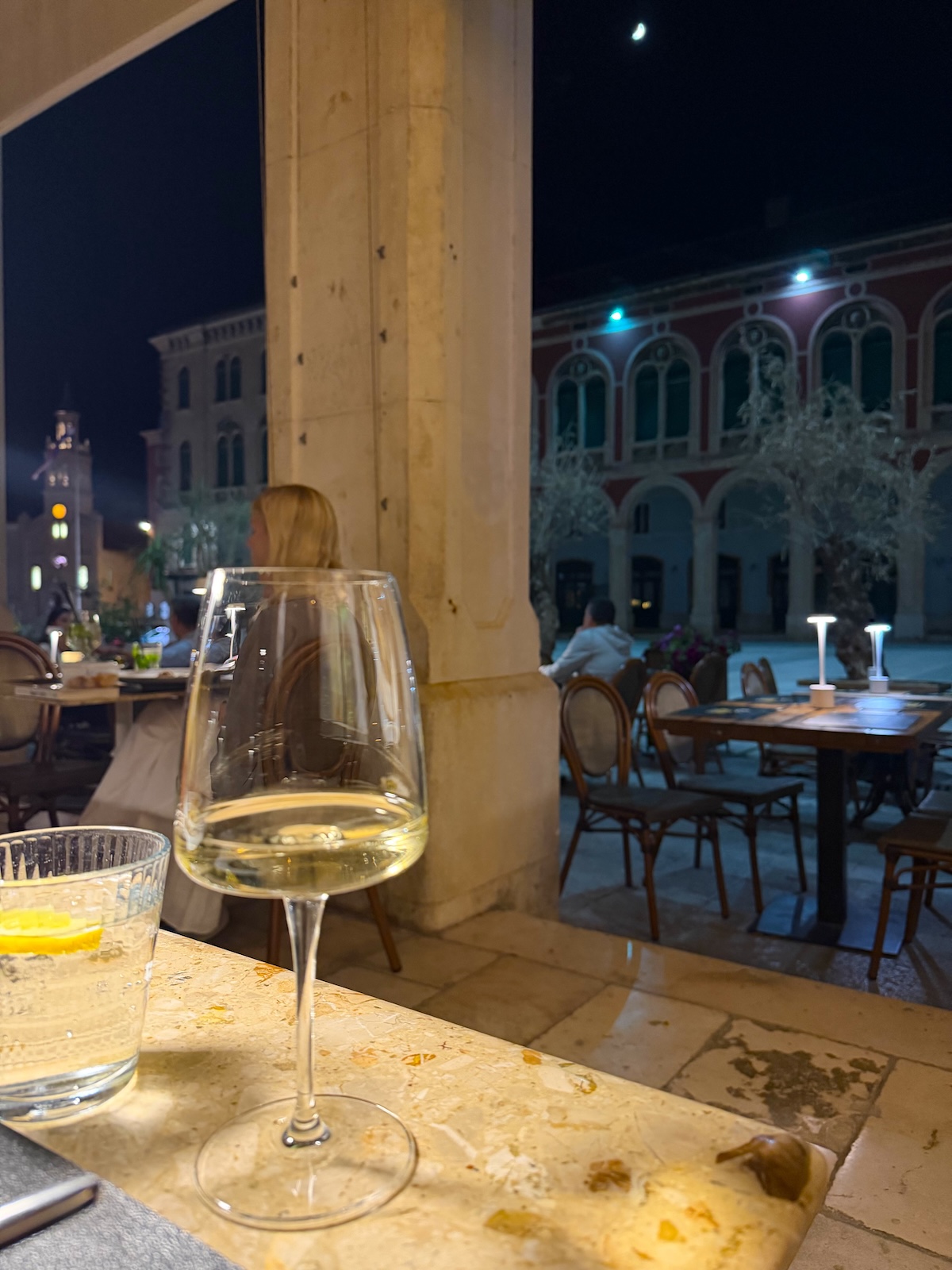
- Shakerato: We were looking for a light snack near the beach and the Meštrović Gallery, where we’d just been, and Shakerato popped up on the map. What a surprise! We ordered two sandwiches, the House Roast Beef and the Turkey Porchetta, along with two beers and two espressos. It wasn’t exactly a light meal because the sandwiches were quite hearty (we could have easily shared one), but they were both spectacular. We ordered both sandwiches, two beers, and a large sparkling water, and the total came to €44. Plus, the terrace is very pleasant, and the staff is incredibly friendly. A total success.
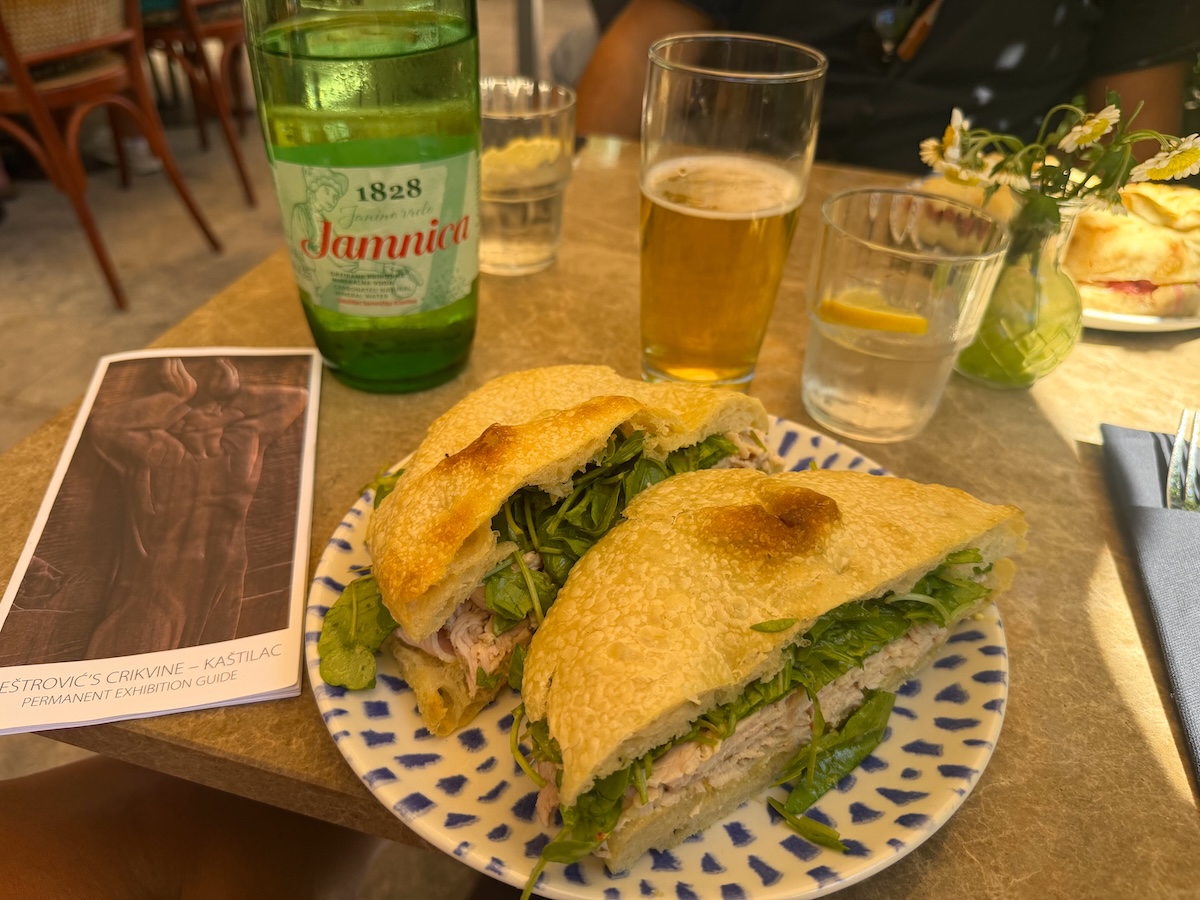
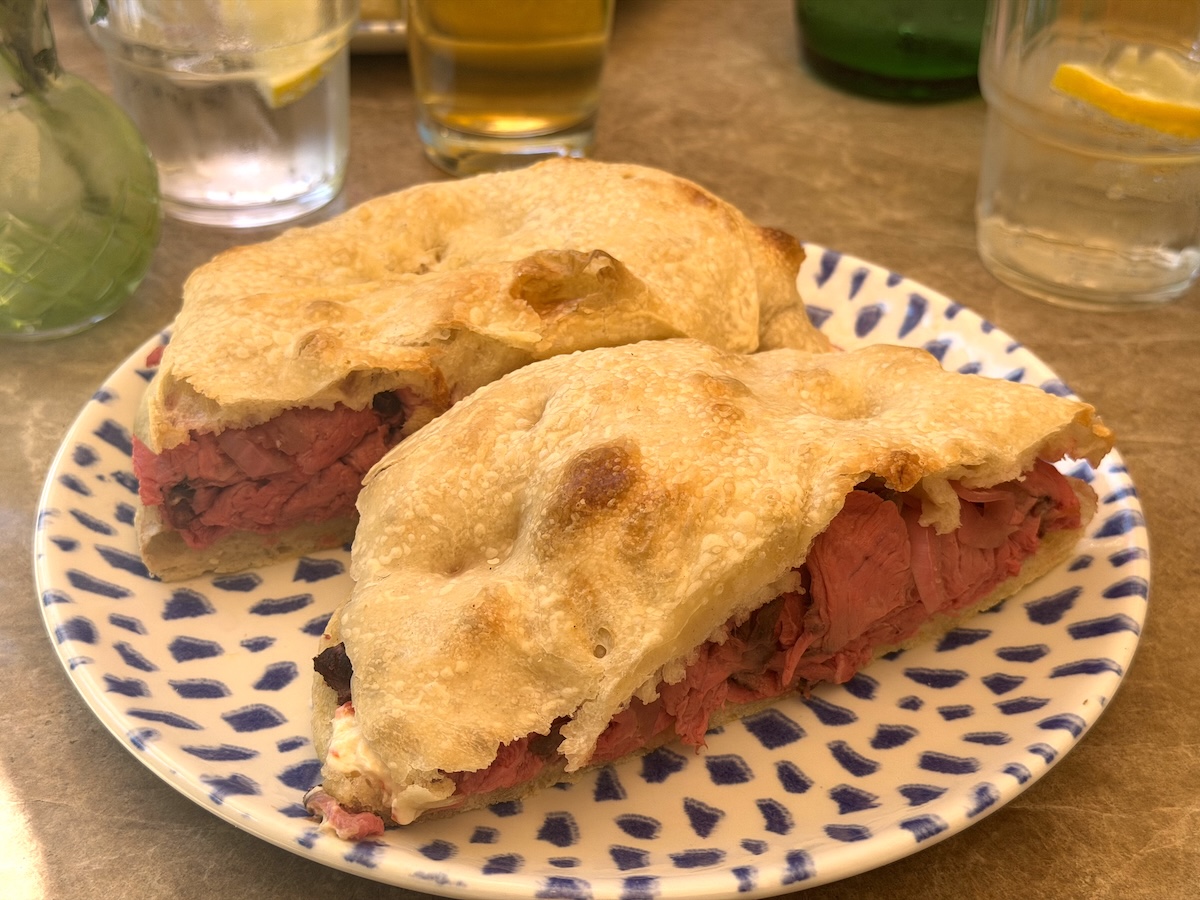
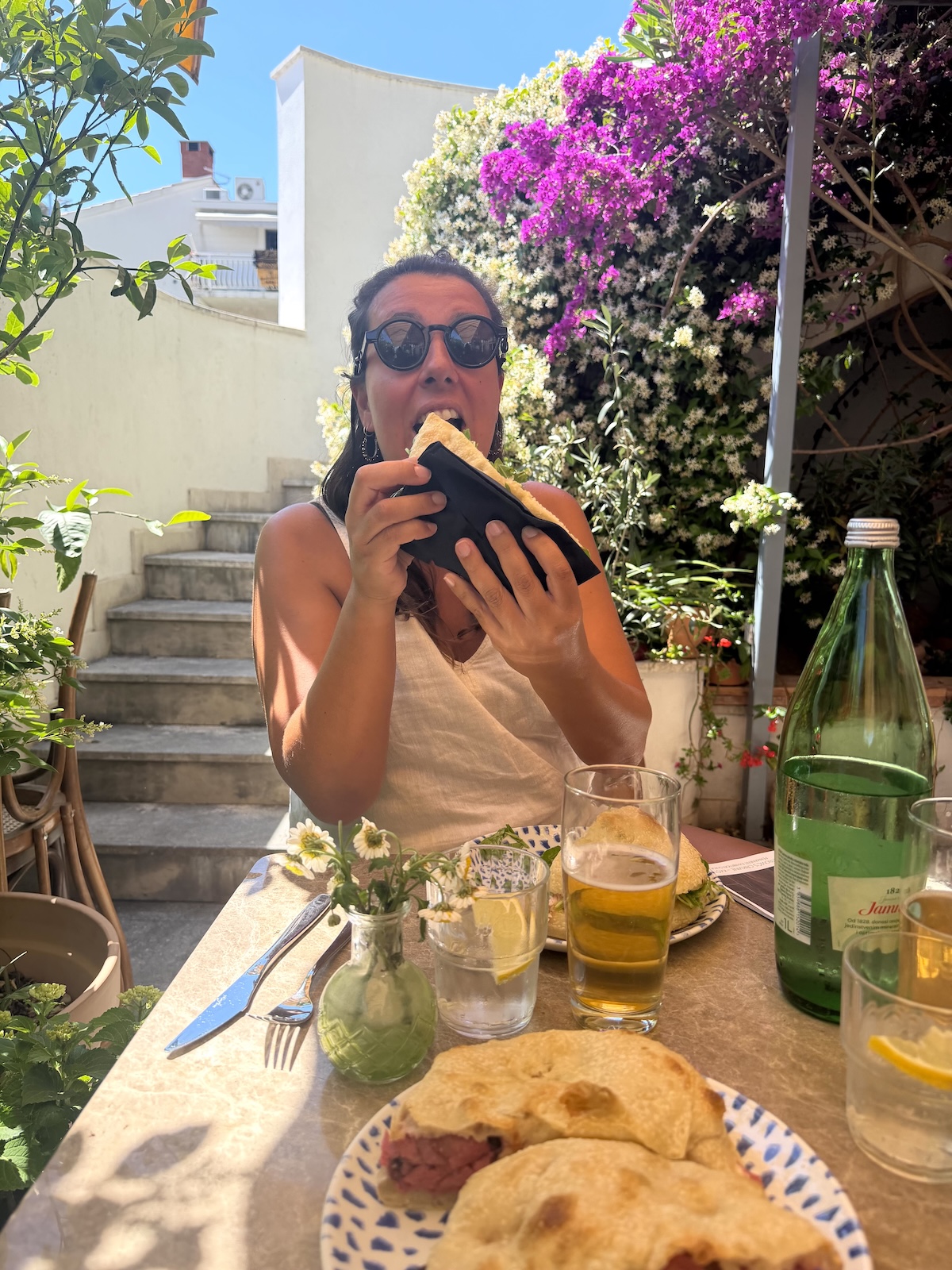
- Bokeria Kitchen & Wine: We went there on our last night in Split and loved it. It’s more refined and has a “trendy restaurant” vibe, but in addition to the excellent menu, it features a carefully curated selection of local wines where we were able to enjoy our favorite from the island of Hvar.
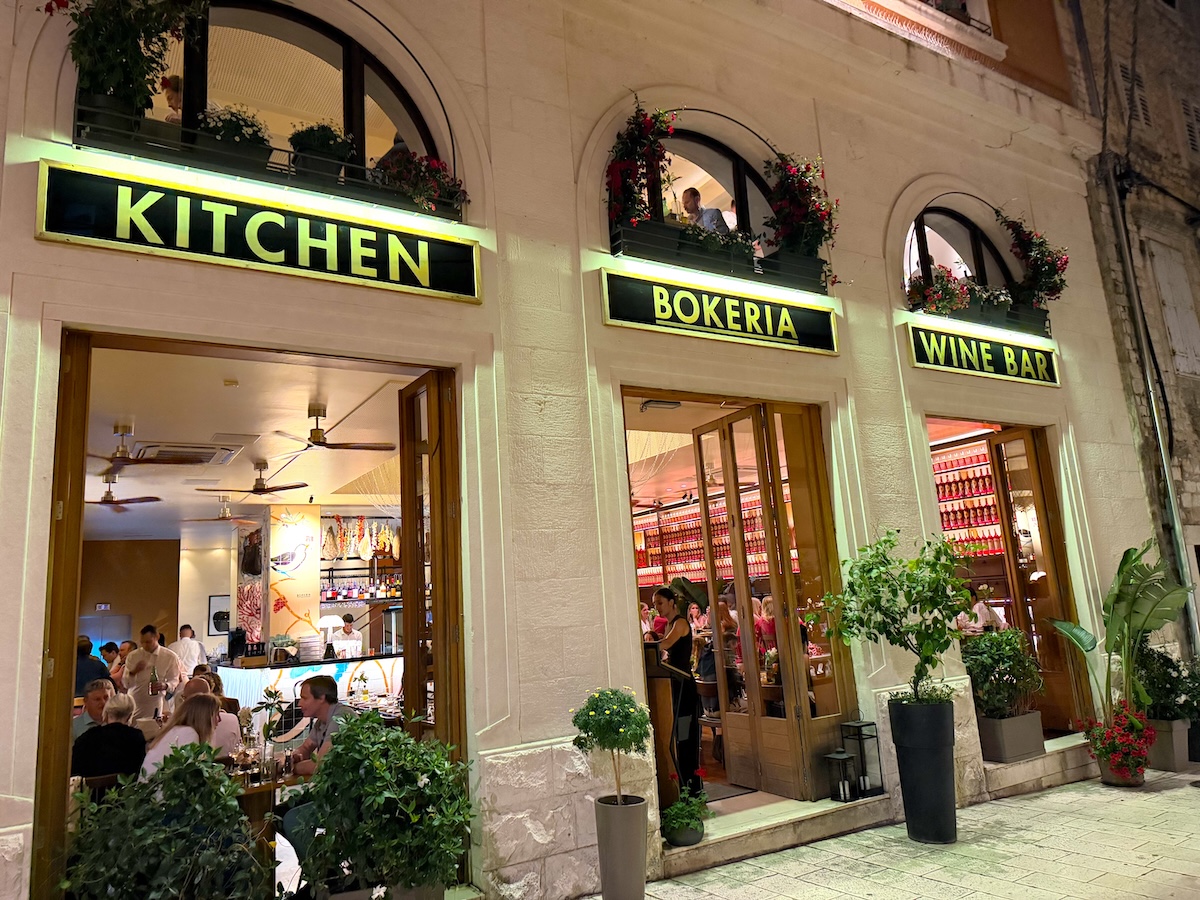
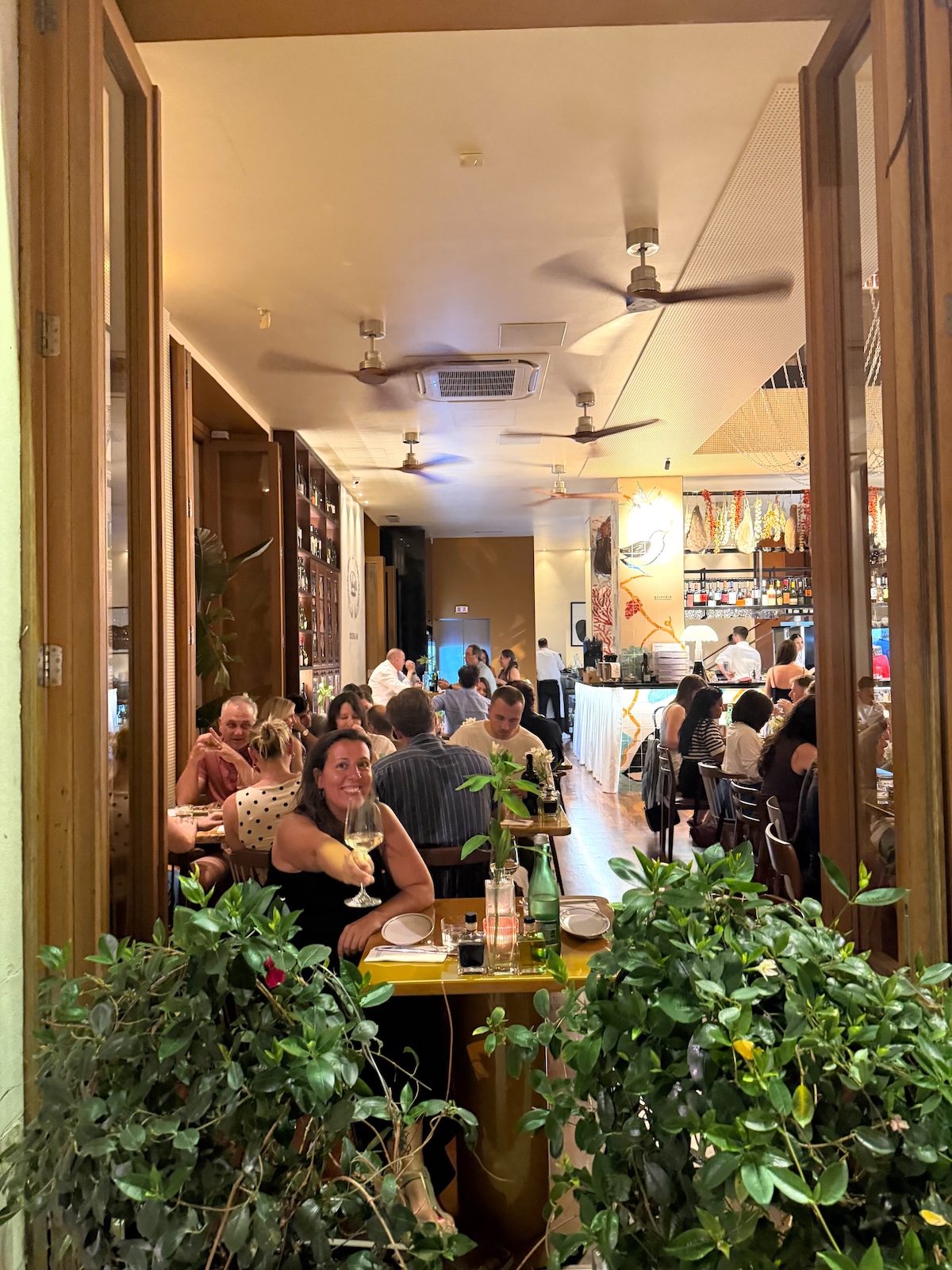
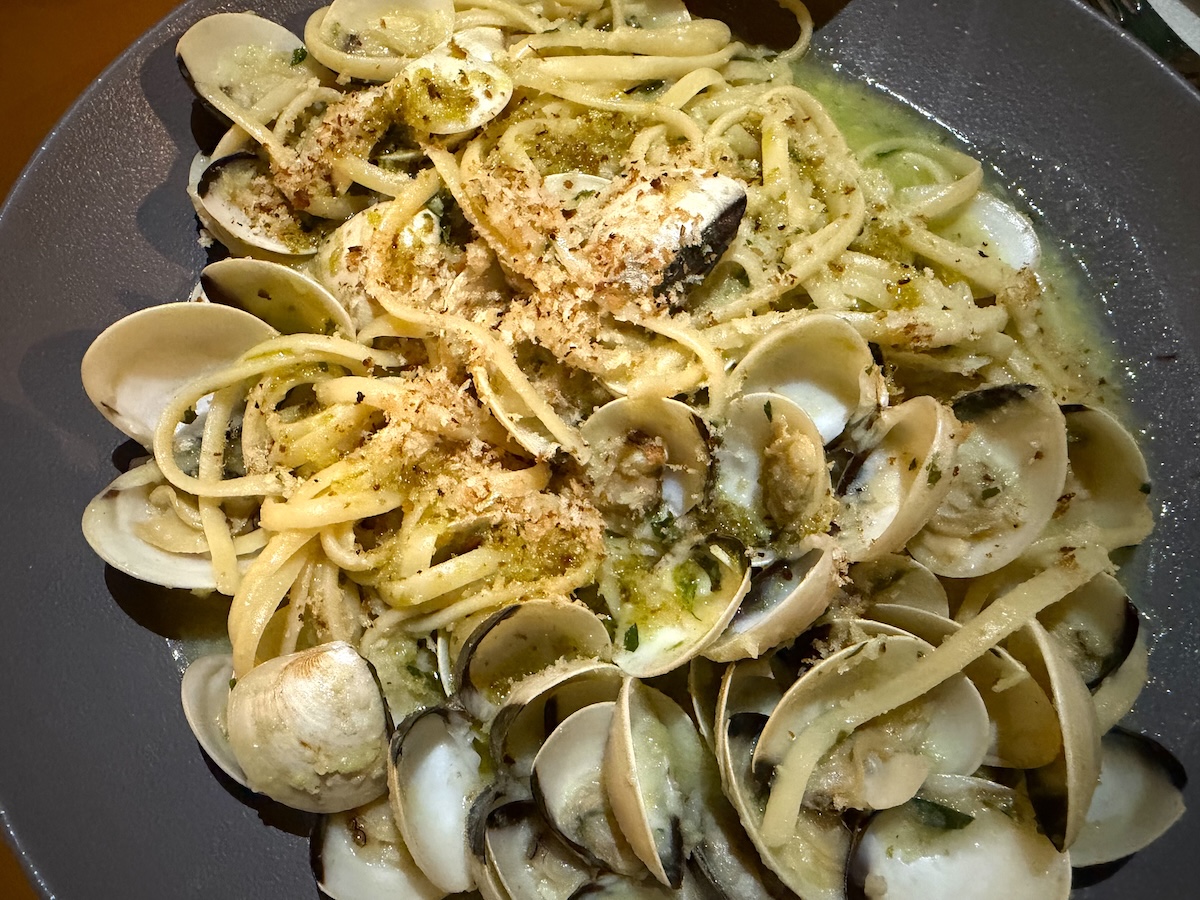
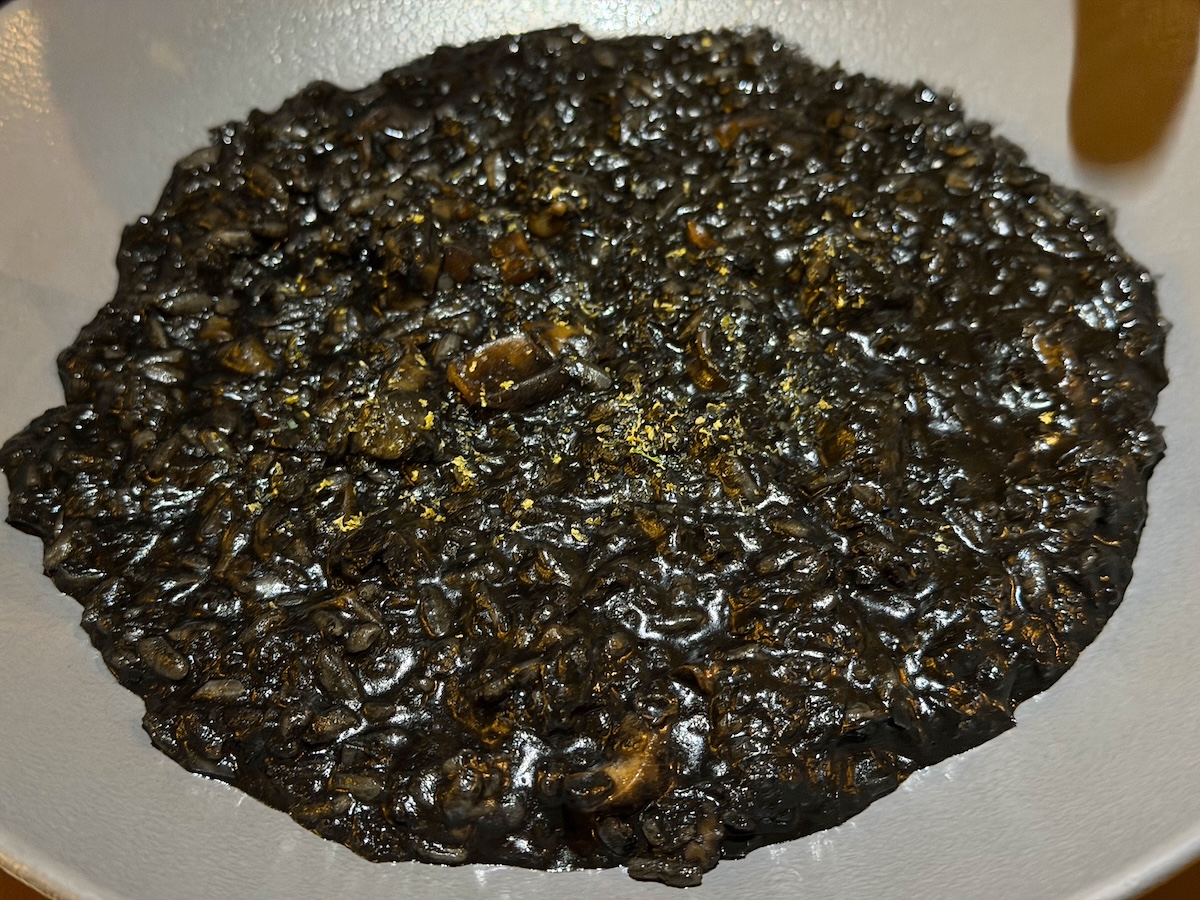
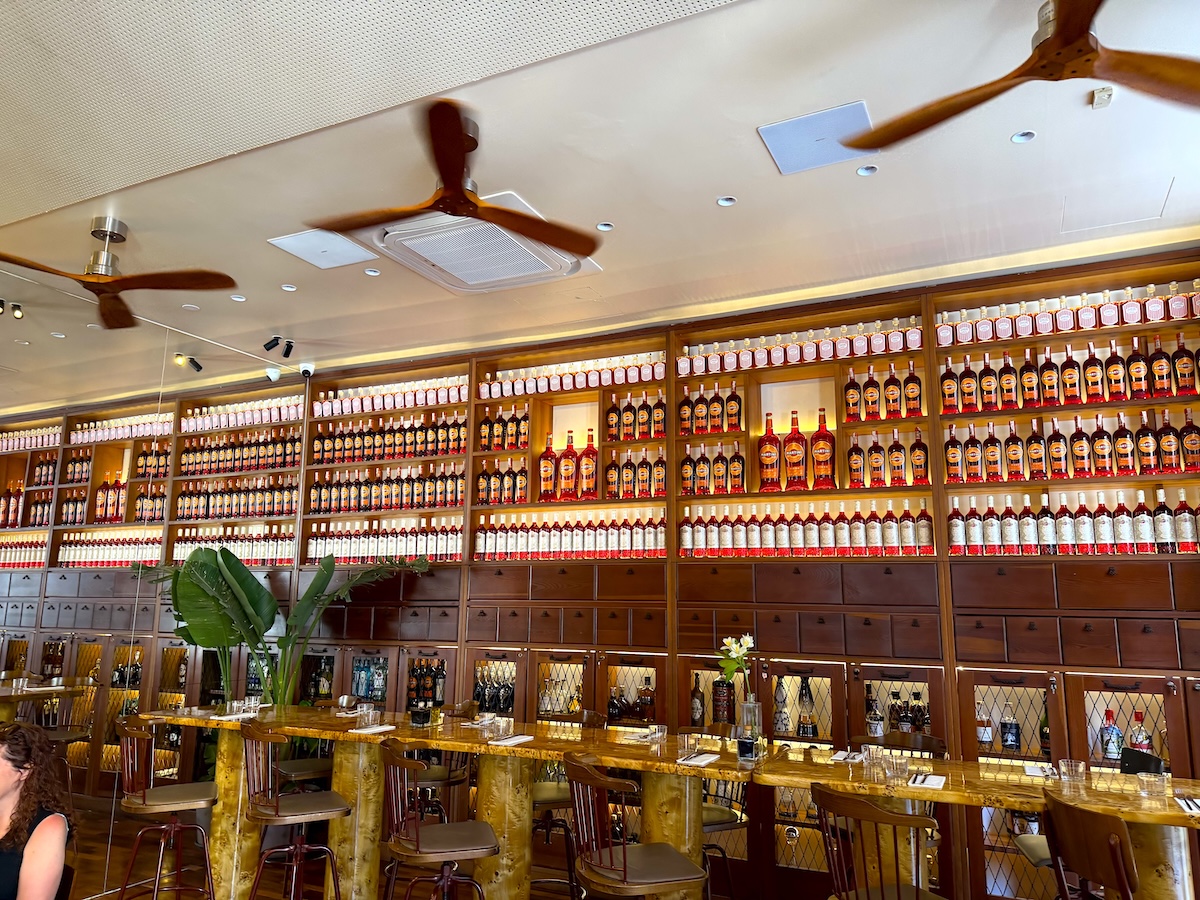
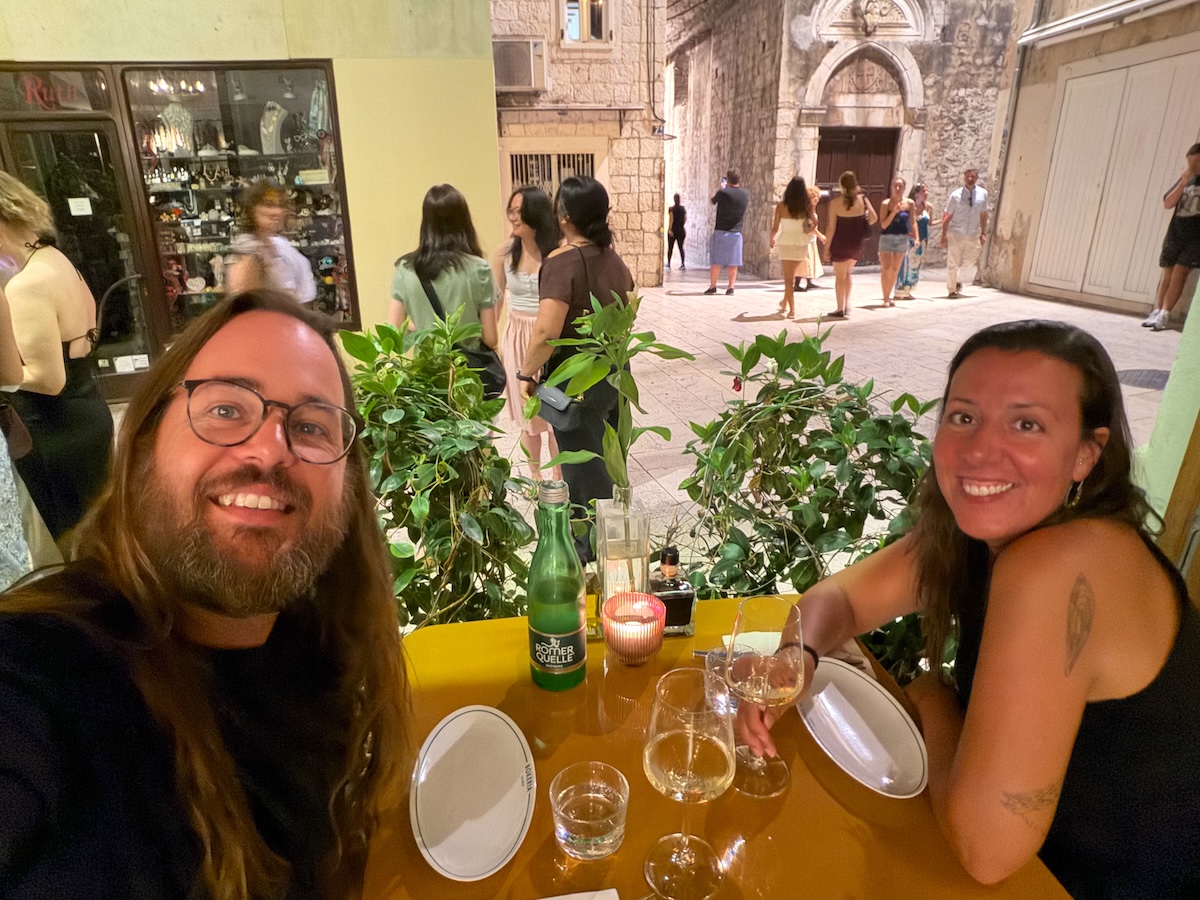
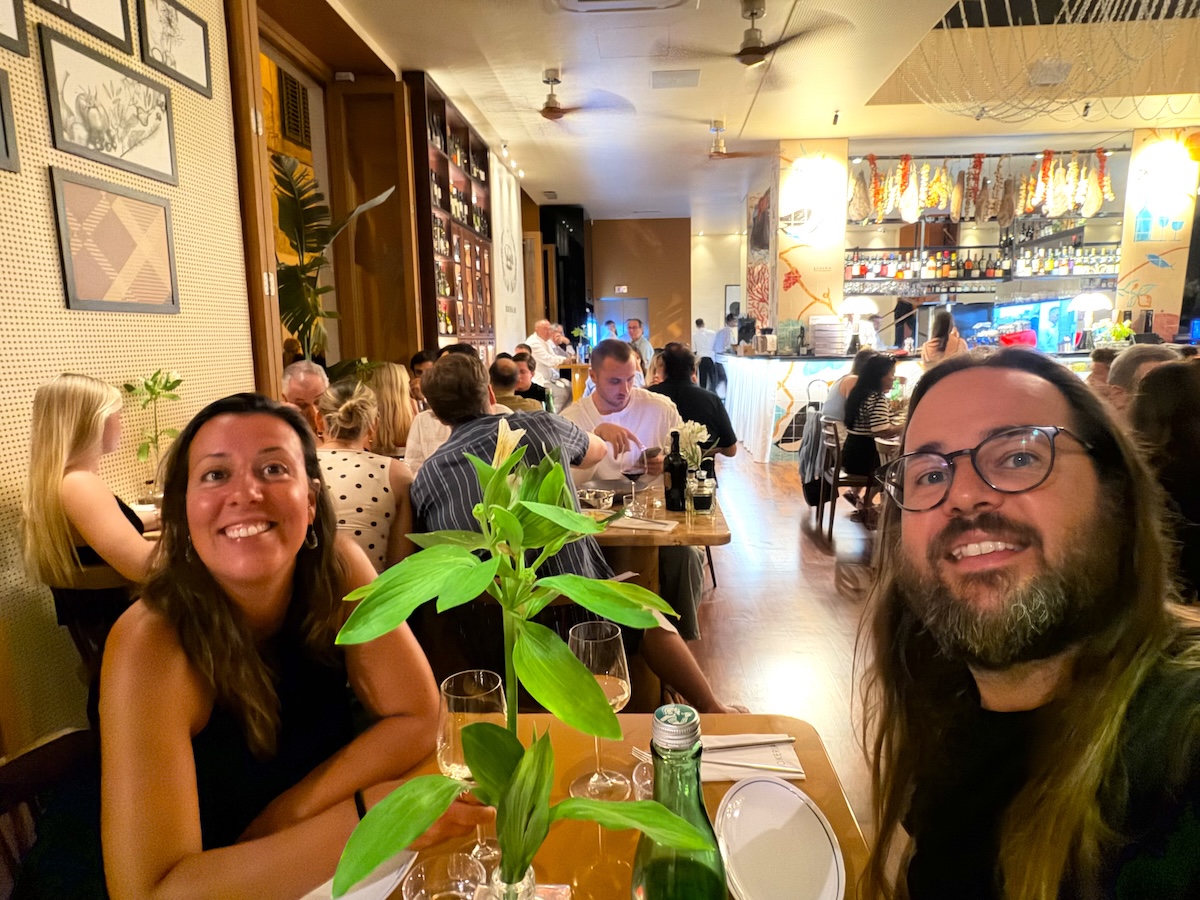
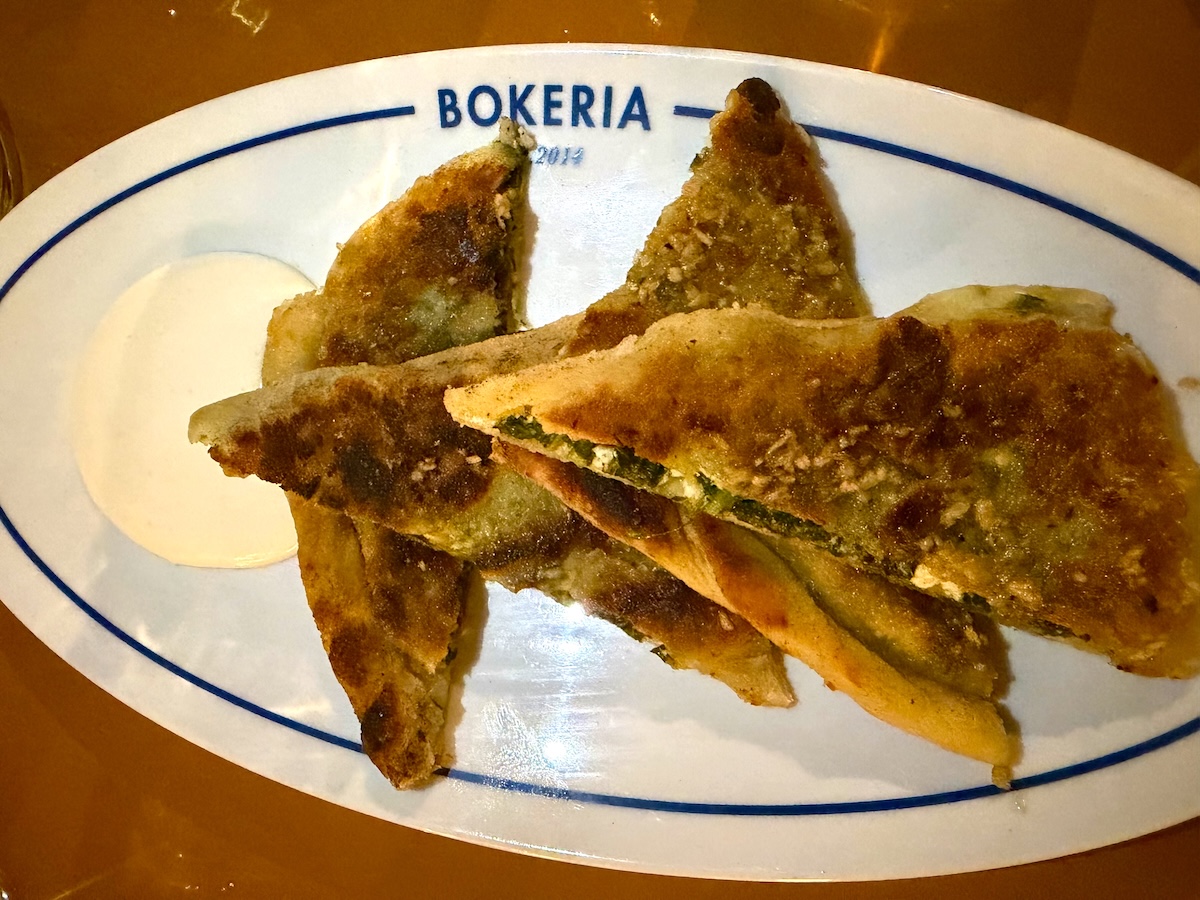
- Konoba Korta: We loved this restaurant in Split’s historic center. We had our doubts, because in such touristy spots the quality sometimes leaves something to be desired, but here it was just the opposite. We ordered the octopus with sun-dried tomatoes and olives and the homemade gnocchi with a spectacular tomato sauce (seriously, I think I’ll be dreaming about that sauce). The food was incredible, full of flavor and of excellent quality. We also want to highlight the friendliness, attentiveness, and professionalism of Orce, who made the experience even better. He recommended a wine that was exactly to our taste. It was one of the best dinners of our trip to Split. A wonderful surprise and highly recommended.
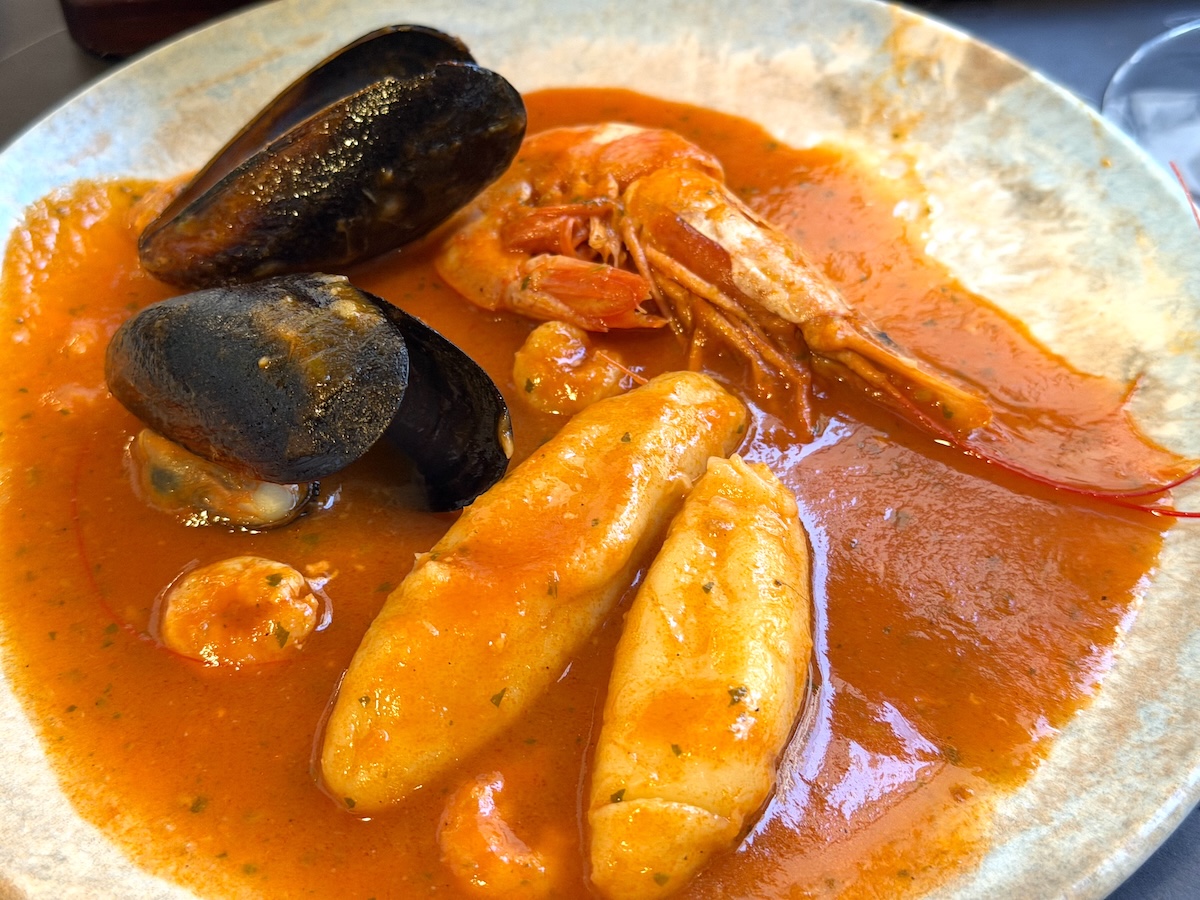
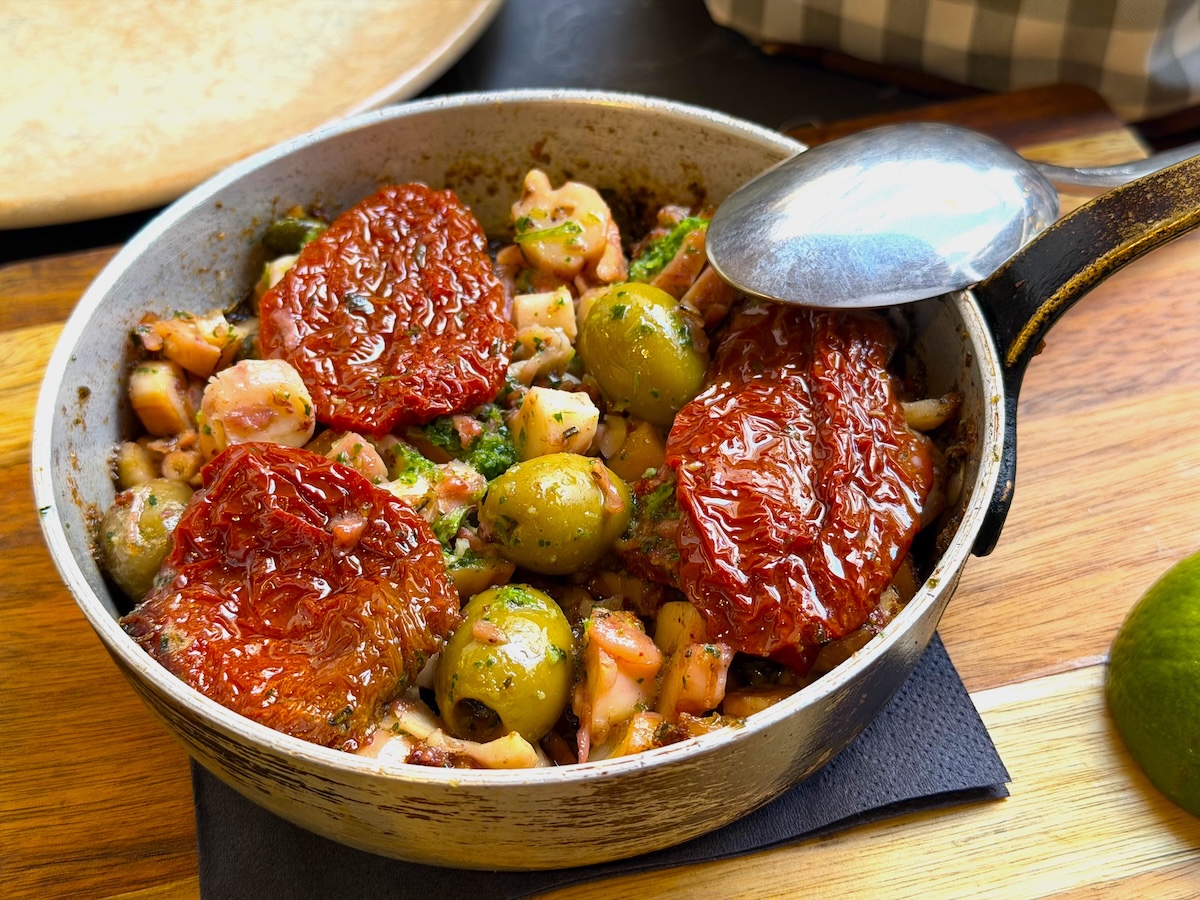
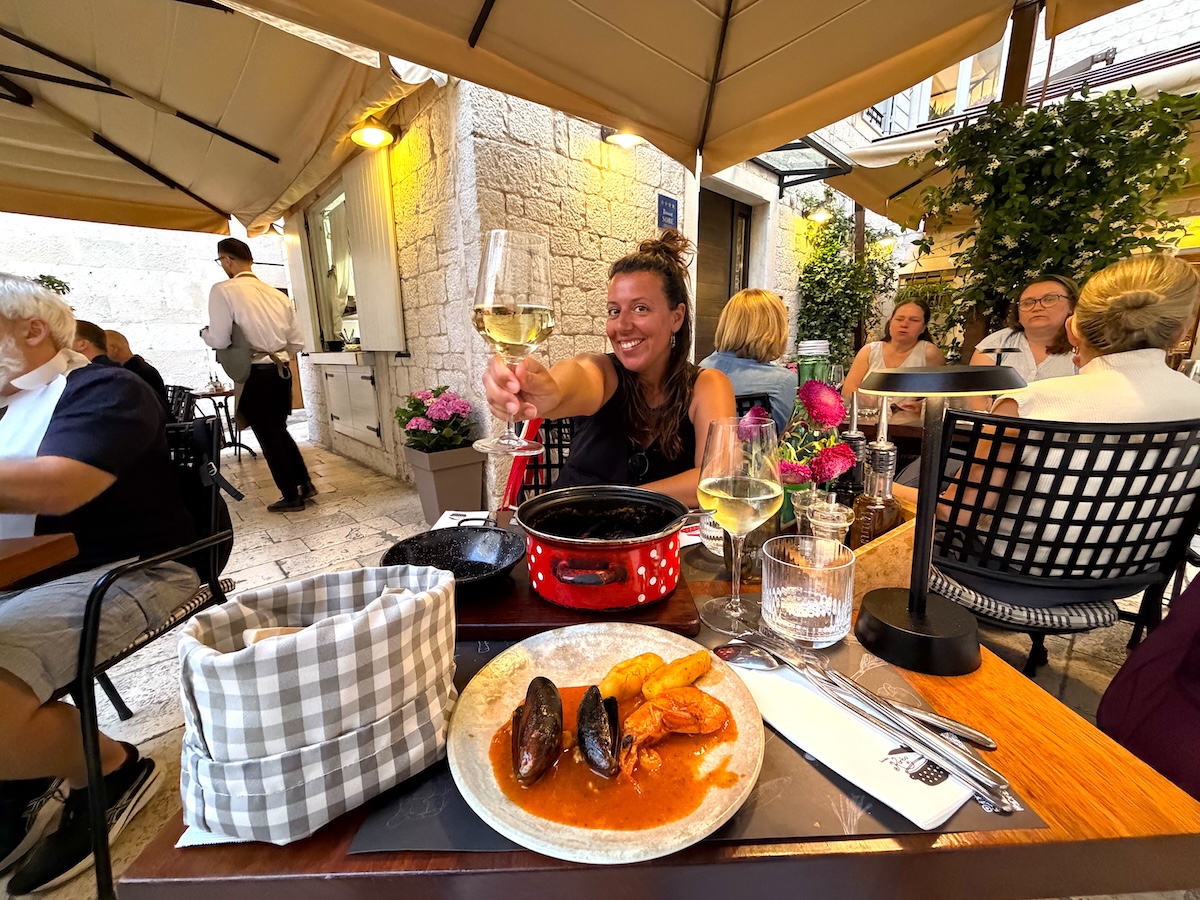
- Articok Food and Bar: a modern restaurant in the city center with a cozy, well-curated atmosphere. Its menu features risottos, mussels, rabbit, homemade macaroni, and platters to share, as well as gluten-free options. We haven’t tried it yet, but it has good reviews.
- Zlatna ribica: a simple spot next to the fish market that specializes in fried fish and seafood and grilled calamari, usually paired with a beer. It’s an affordable option with a casual atmosphere. We haven’t tried it.
- DeListes Restaurant Split: traditional Dalmatian cuisine and typical Split dishes, with generous portions. Its signature dish is black risotto, and it’s worth asking about the daily special. We didn’t get a chance to try it.
- Villa Spiza: a small, cozy restaurant just a few steps from Diocletian’s Palace. It offers traditional Dalmatian cuisine with a modern twist and seasonal ingredients, featuring a menu that changes daily. It typically features dishes such as risotto, pasta with shrimp, or lamb chops.
- Štorija Fine Dining: modern Dalmatian cuisine on the Riva promenade, with a seaside terrace and an extensive wine list. It’s an elegant spot, perfect for a special dinner, and it’s best to make a reservation in advance, especially during peak season. We haven’t tried it.
- ZOI: A restaurant serving Mediterranean cuisine with modern techniques, featured in the Michelin Guide, with a rooftop terrace overlooking the harbor. It offers tasting menus featuring ingredients from both the coast and the Dalmatian hinterland. It’s a high-end restaurant, and the prices reflect that. We didn’t get a chance to go.
- Cicibela Food & Wine: Very close to the apartment where we stayed through Randomtrip, just a few steps from the beautiful Šperun Square. Every time we walked by on our way home, we thought, “What a lovely place!” Plus, we’d read good reviews about the restaurant, so one day we took the opportunity to make a reservation in person for dinner the next day. They entered the reservation on their tablet right in front of us. They reconfirmed our name, time, and table on the terrace. When the day and time arrived, surprise!, we had neither a table nor a reservation for our special occasion. They remembered us perfectly well but said they hadn’t even looked at the tablet because they had so many interested tourists. Just like that, without showing any empathy, consideration, or apology to a customer who had made a reservation. We had to find another option during peak hours in downtown Split, so unfortunately, we can’t recommend this place.
- Kat Kitchen Brunch Club: It’s a brunch spot with an international menu and plenty of vegan options, including toast, pancakes, portobello burgers, juices, and smoothies.
- Veg Plant Based (vegan): A vegetarian restaurant with vegan options, located behind the National Theater. Its menu is more varied than that of other fast-food spots in Split, featuring breakfast items, soups, wraps, main dishes, and pastries.
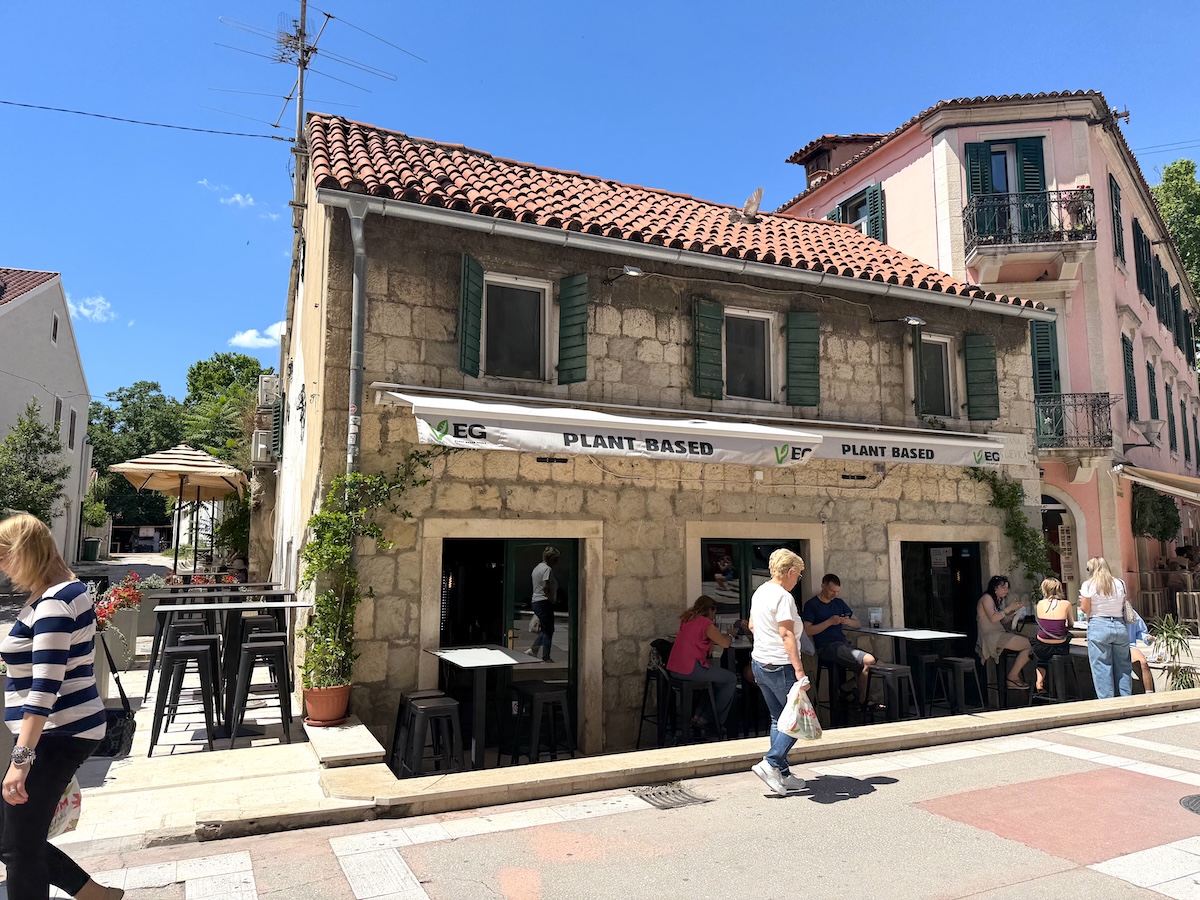
- Pandora Greenbox (vegan): an exclusively plant-based restaurant in the Old Town, featuring forest-themed decor. The dishes, such as plant-based burgers, stews, pastas, and risottos, are named after famous women.
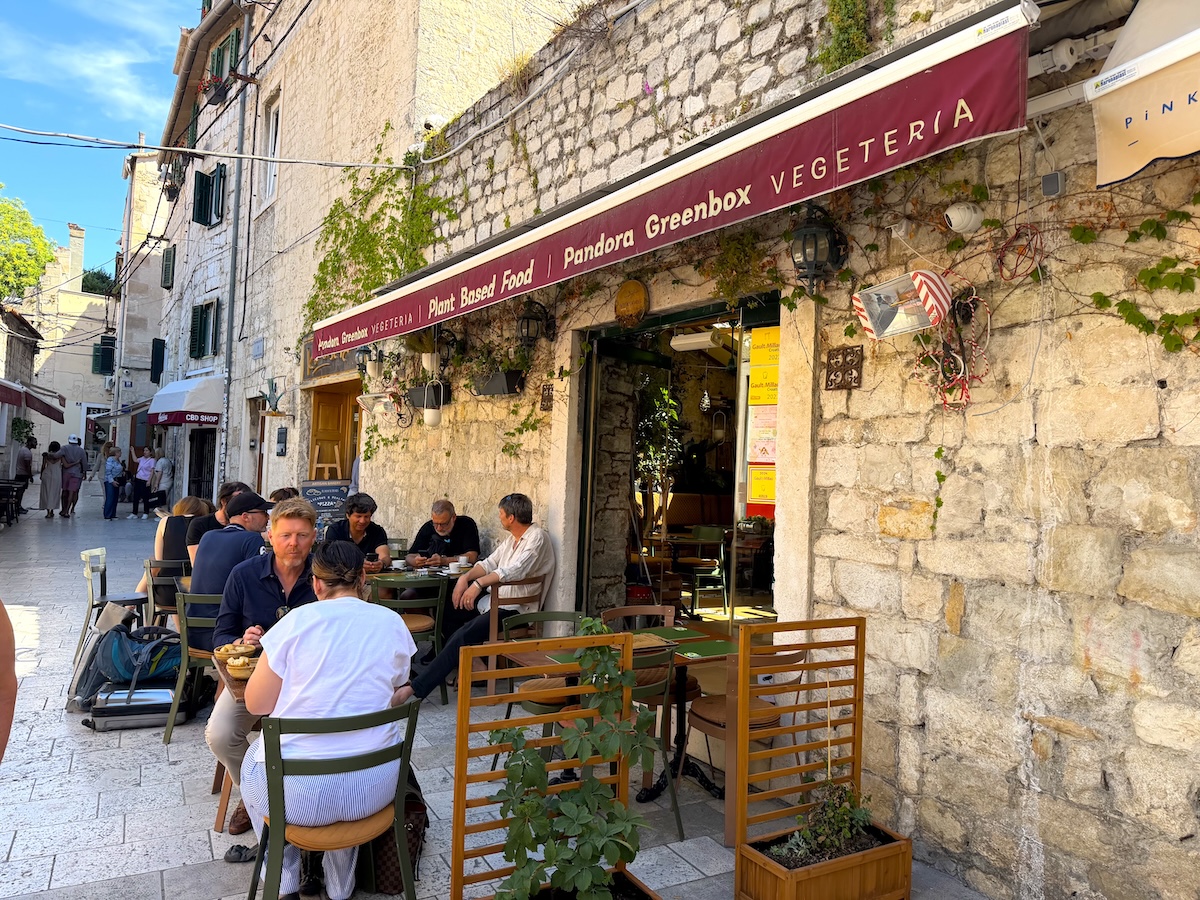
- Fife: Highly recommended. Good food, attractive presentation, generous portions, and affordable. It’s a Dalmatian konoba with a casual atmosphere, located next to the Matejuška pier, just a short walk from the Riva, with tables on the terrace.
- Ćevabdžinica 10 U POLA: a ćevabdžinica specializing in ćevapi, those grilled meat rolls typical of the Balkans, made with beef according to the menu, which are ordered in portions of various sizes.
- Bota sare: for oysters and sushi, it looks fantastic. It’s in the Old Town and blends Mediterranean and Japanese cuisine. Oysters take center stage, mostly raw and sourced from Mali Ston, and the menu also includes sashimi, nigiri, and rolls. It’s among the restaurants featured in the 2026 Gault&Millau guide.
- Tinel Specialty Coffee Shop – Split: We went to the Tinel in Split thinking it would be just as amazing as the one in Trogir, and we couldn’t have been more wrong. The croissants were bad (not fresh but from previous days), and the coffee wasn’t brewed properly or served hot. For those looking for a quiet specialty coffee spot on a vacation morning after waking up, this isn’t the best choice. You’re better off going to D16, which we’ll discuss next.
- D16: A specialty coffee shop in the city center, with excellent coffee (€2.80 for an espresso) and delicious filled croissants! Highly recommended, we loved it!
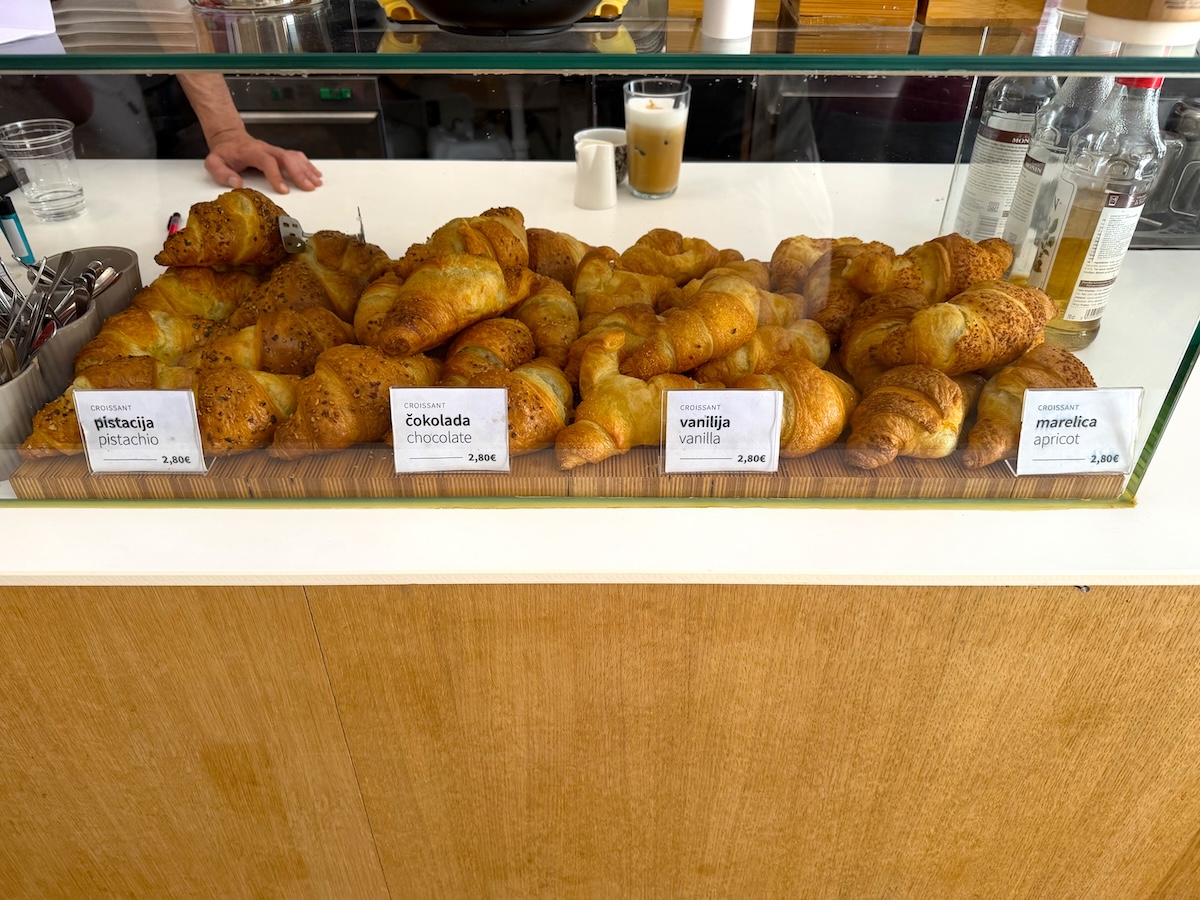
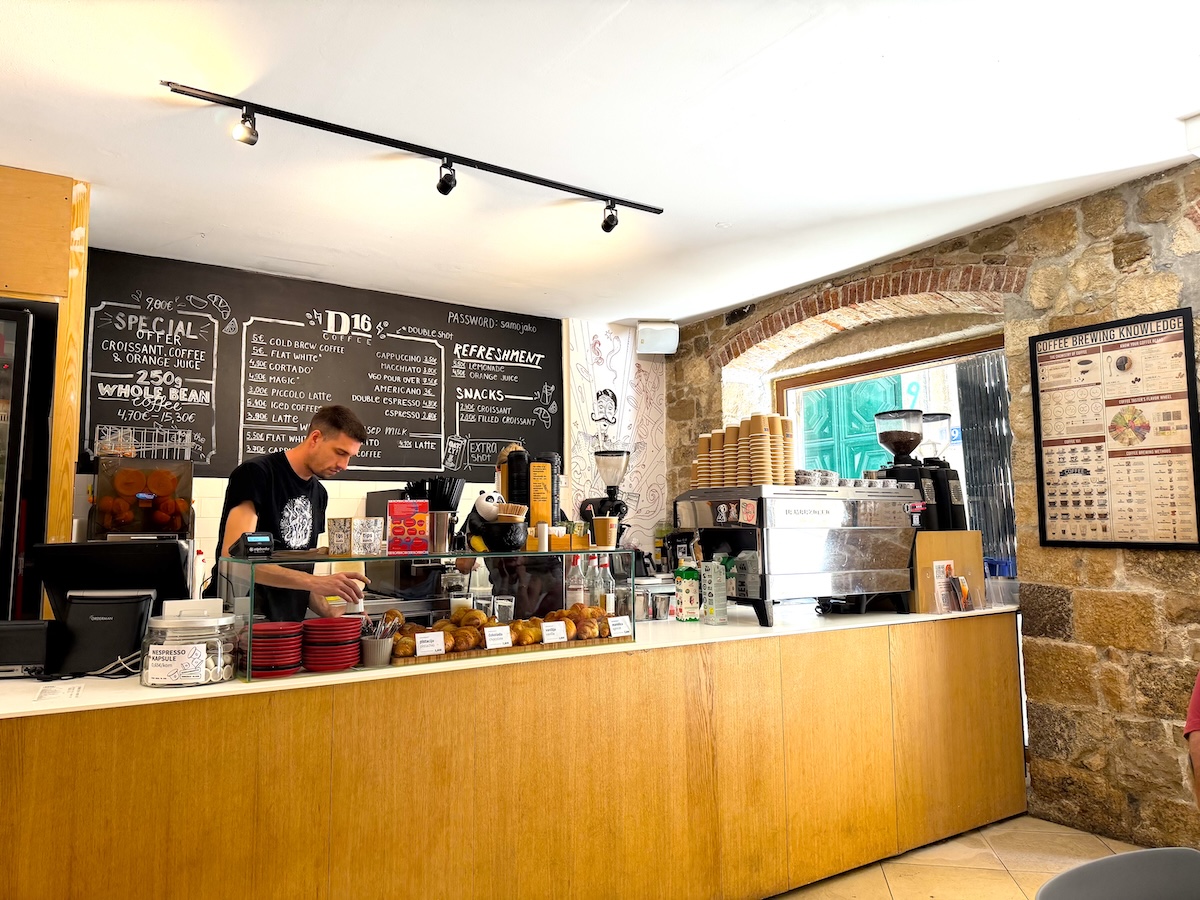
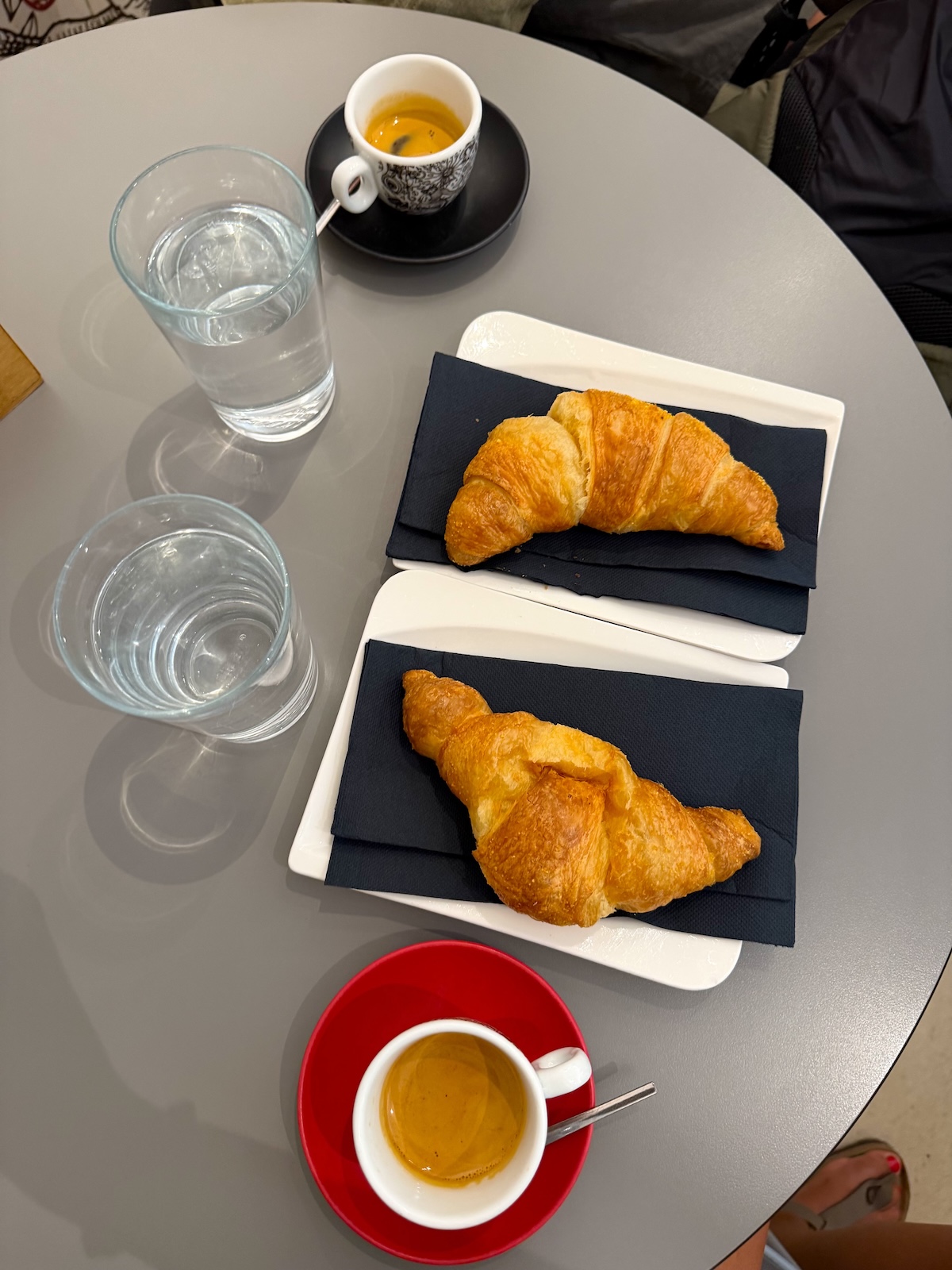
- Gelateria Emiliana: Very famous ice cream and huge lines. We prefer the ice cream at Gelateria aMare, which we’ll discuss next
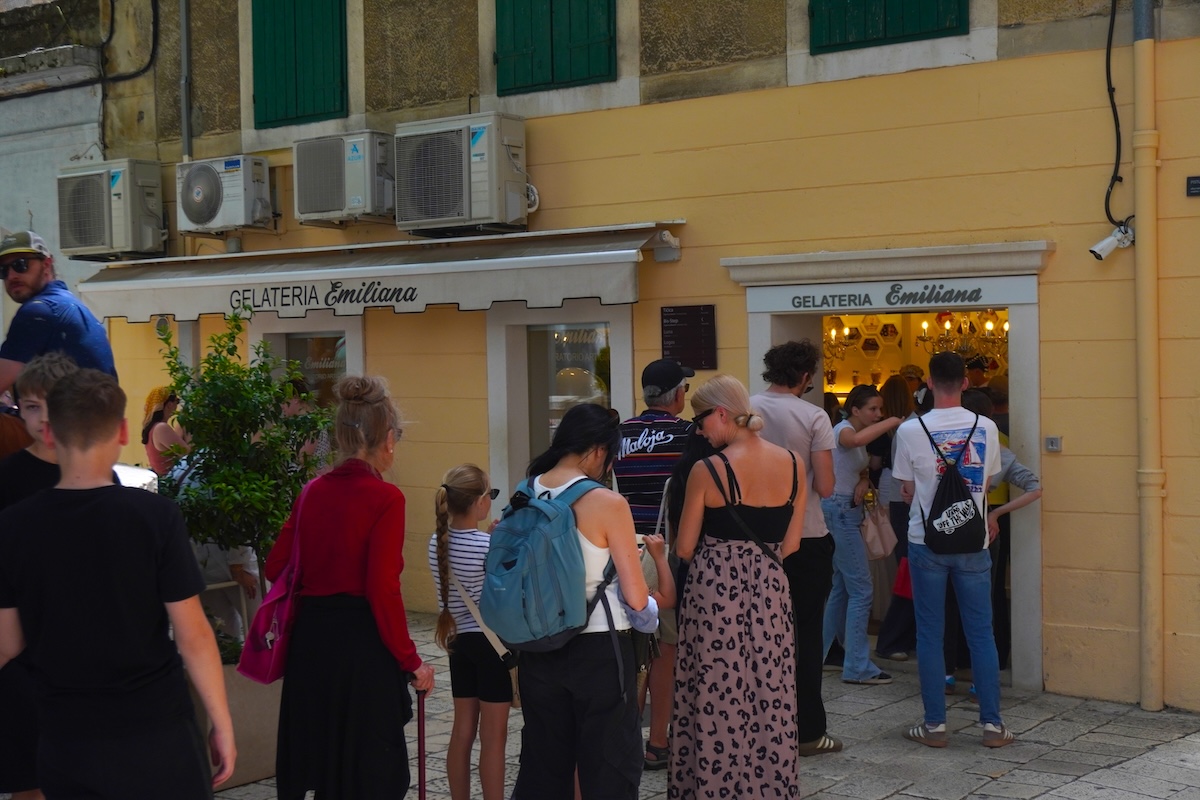
- Gelateria aMare: The best ice cream we tried in Split. The pistachio flavor is spectacular (and we have a very discerning Randomtripper when it comes to that particular flavor), and Ines tried the mango with chia seeds, made without milk. They also have unique flavors like vanilla with local olive oil, pistachio cheesecake, pistachio mousse, and white chocolate with pistachio and pomegranate. Highly recommended!
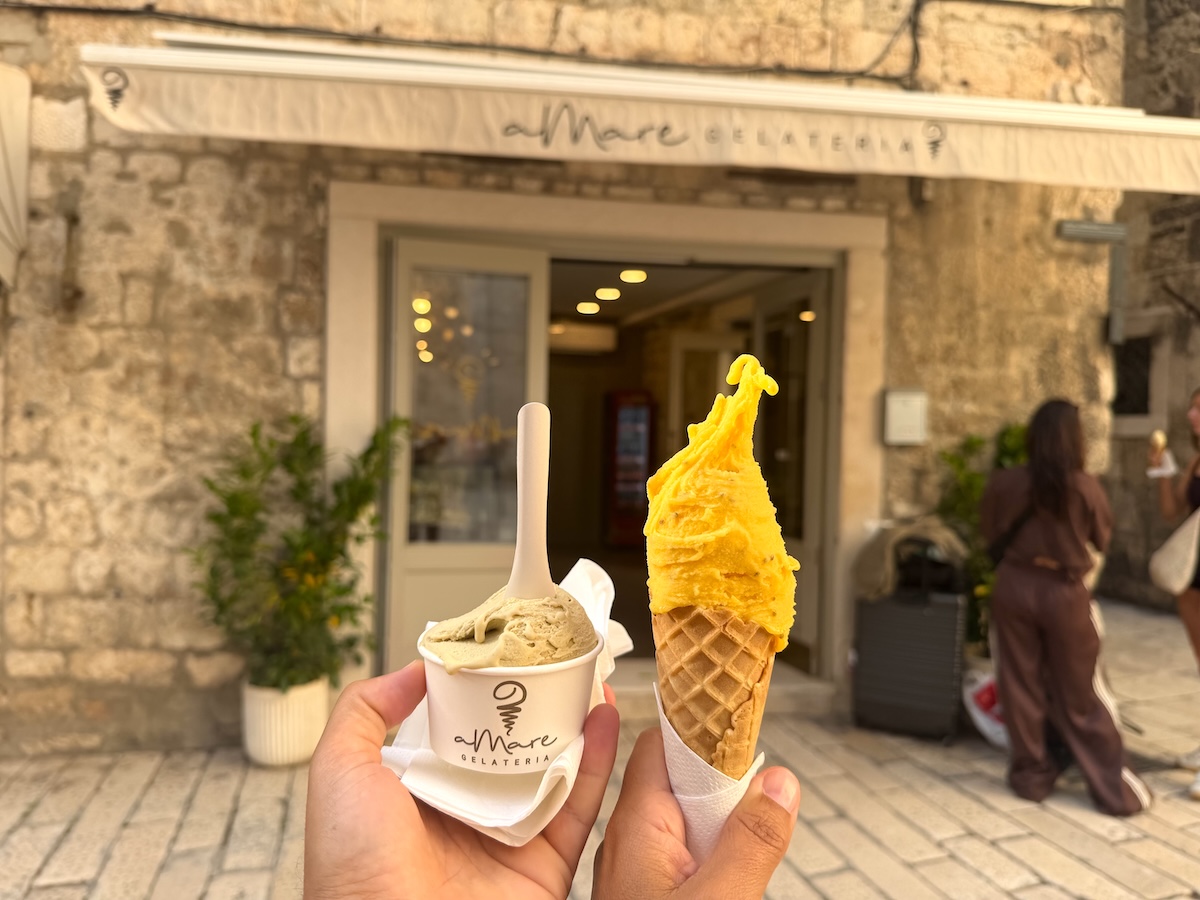
Where to grab a drink in Split
Split also has spots where you’ll want to relax and have a drink with a view of the sea, the city, or right on the beach. Here are the ones we tried at RandomTrip, we especially enjoyed watching the sunset with a beer in hand, and a few others that were recommended to us and that you might want to keep in mind.
- Teraca Bamba: a great spot for a drink with a view of the harbor
- Jadran Beach Bar: We at RandomTrip went there one Friday to watch the sunset after a few dips in the water, and it was practically empty. Beers are €5. It’s right next to Sustipan Park, which has lounge chairs, umbrellas, and a café.
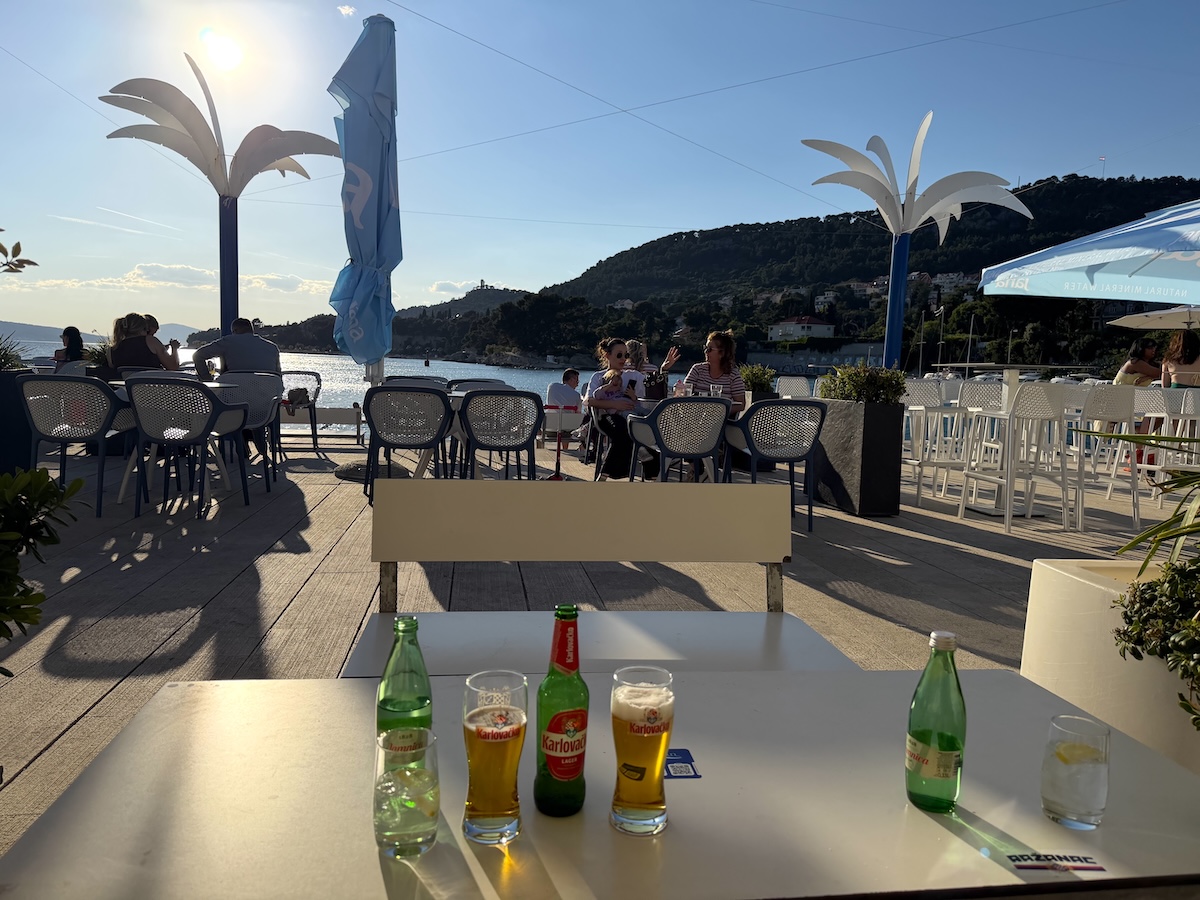
- Tap B Craft Brewery & Brewpub: A Croatian craft brewery with a taproom in the Manus neighborhood. If you like craft beer, it’s a great alternative to the usual beers.
- Terraca Vidilica: We went there at sunset to have a glass of wine. Stunning views of the city. Beers for €5, a glass of wine starting at €6, and cocktails starting at €11.
- Blue Bar on Trstenik Beach: A beautiful, uncrowded beach. Karlovačko beer for €4, cocktails starting at €10.
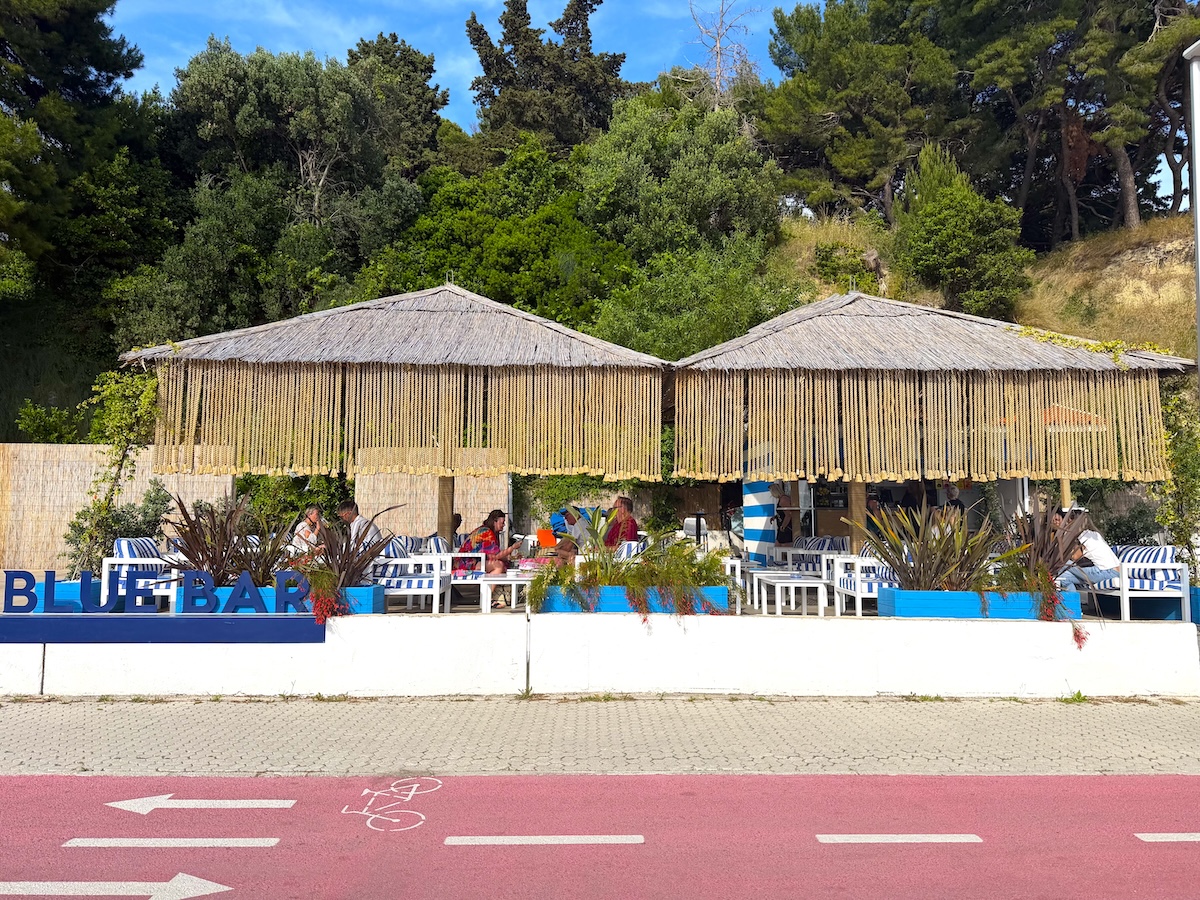
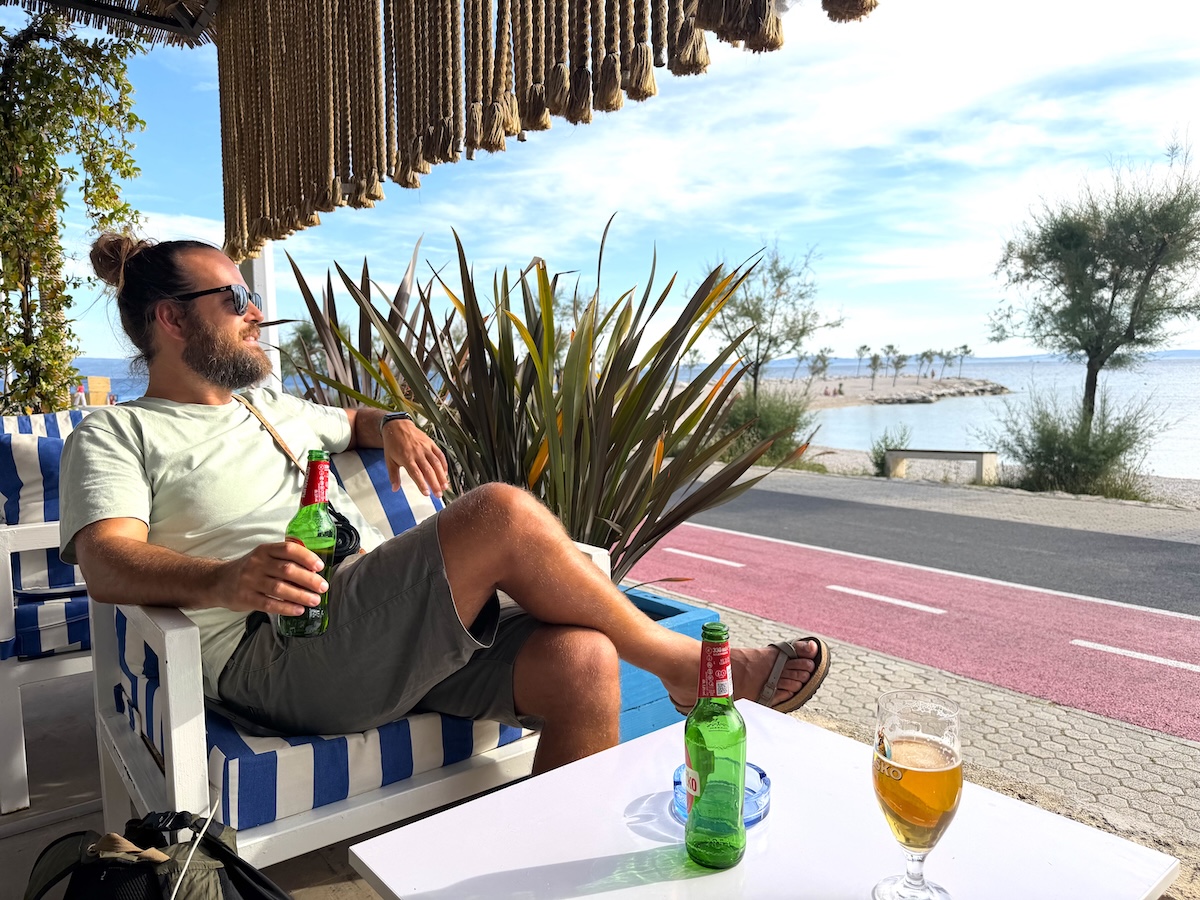
- Mistral Beach Club: It’s huge and has several areas: one with lounge chairs, another with Balinese beds facing the beach, and a bar and club area with a DJ right on the beach. When we went, on a hot May afternoon, the place was buzzing with energy. It’s part of the Radisson Blu Resort & Spa in the Trstenik area. It’s open from May 1 until the end of the season (in 2026, it closed on October 12), from 9:00 a.m. to 8:00 p.m., and the kitchen is open from 12:00 p.m. to 8:00 p.m.
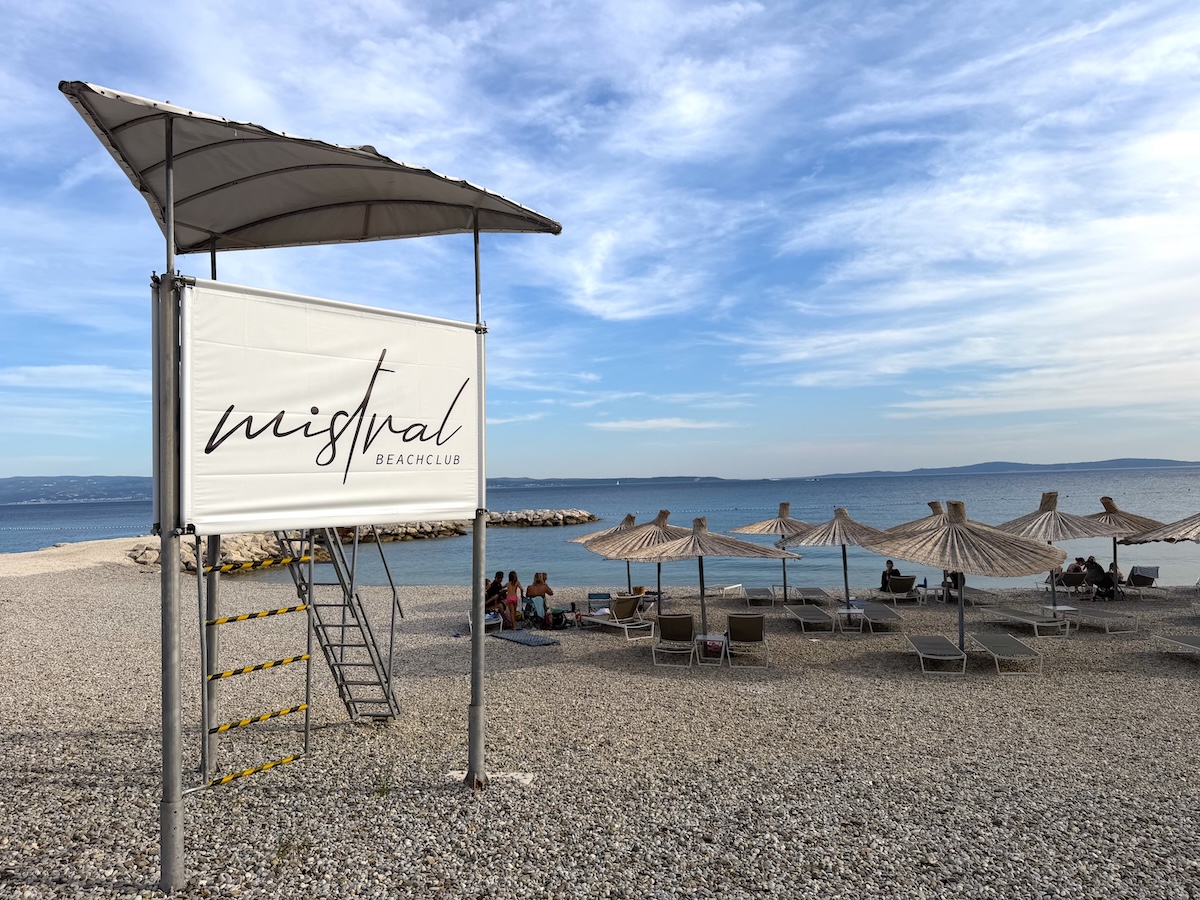
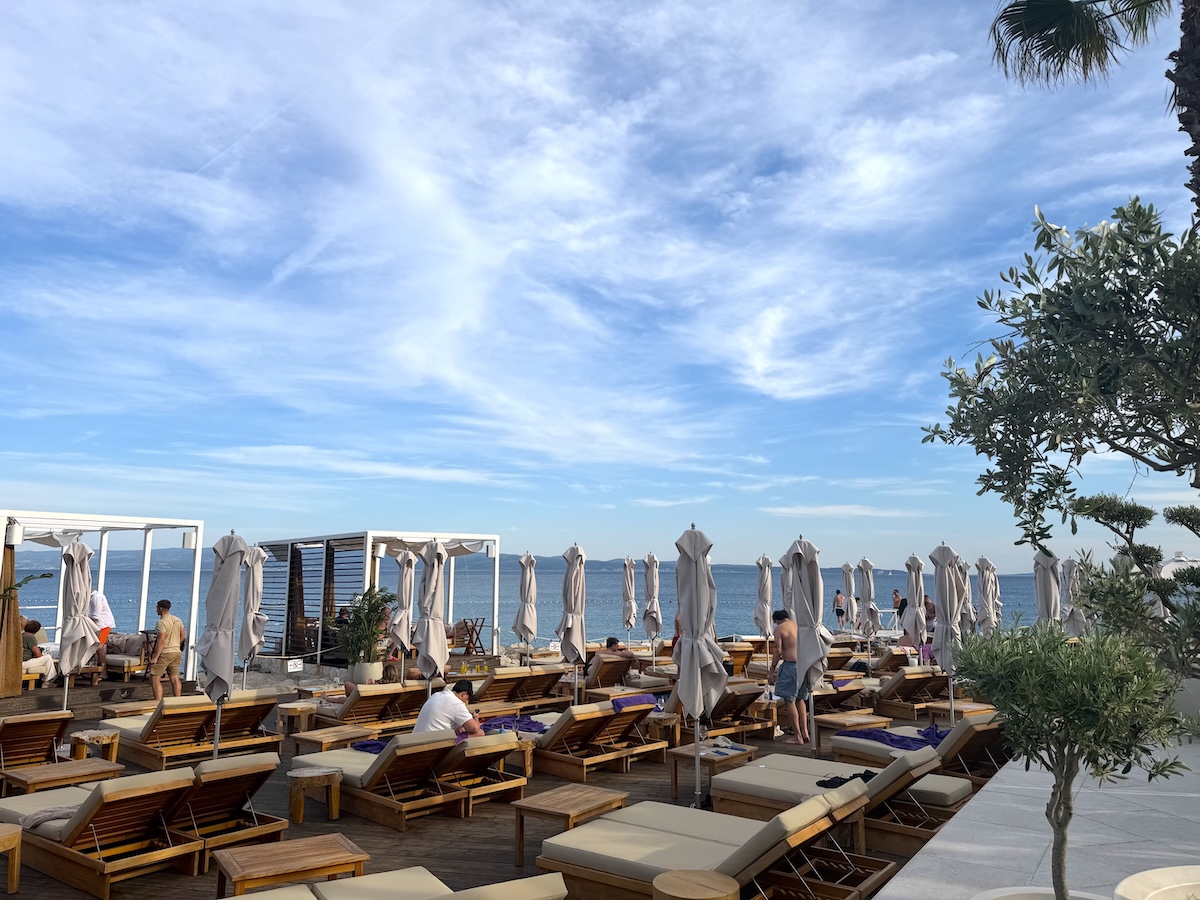
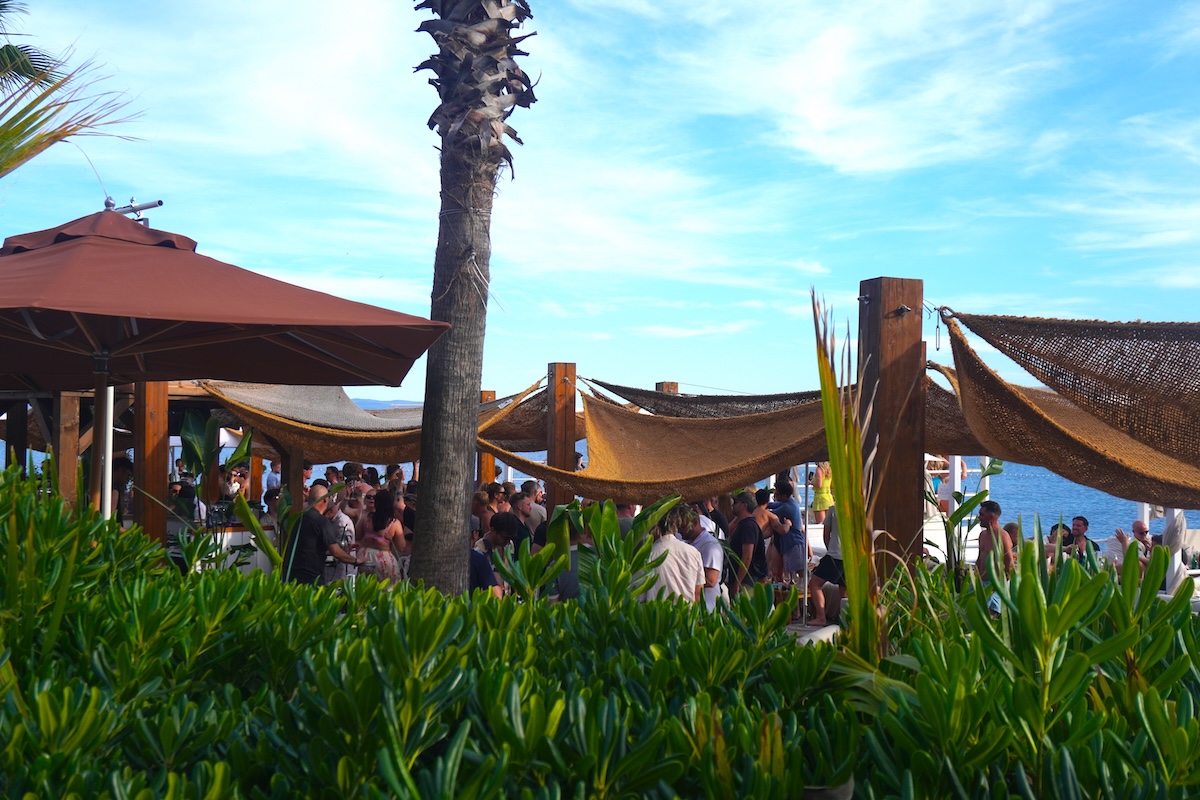
- Miyo Beach: Across from Žnjan Beach. We went for a weekend, and it was very popular with families (as was the beach).
Split Itineraries
As you can see in this guide, Split has plenty to see and do, so depending on your interest in monuments and historic buildings, museums, beaches, and the surrounding area and islands, you can spend anywhere from one to several days in Split without ever getting bored. Here are some suggested itineraries for 1- to 4-day trips in Split.
Things to see and do in Split in 1 Day
If you only have one day in Split, we’d recommend spending it in the historic center (Diocletian’s Palace). Here’s a 1-day itinerary for Split focused on the main attractions (you can choose others based on your interests and the information provided in this guide)
- Enter the historic center through one of its two main gates (for example, the north gate, passing by the statue of Gregory of Nin
- Wander through the narrow streets and visit the main monuments inside the Palace (and/or the ones that interest you most, remember that some require an admission fee and that you can save money on some with a combined ticket): the Peristyle, the Cathedral, the Vestibule, the Temple of Jupiter, and the Palace Cellars
- You can grab a quick bite (a burek or some ćevapi to go) or sit down for a leisurely meal at one of the restaurants we recommend in the guide
- Continue exploring The Riva and the various squares ( Plaza del Pueblo, Plaza de la Fruta, and Plaza de la República)
- End the day by heading up to the Marjan Lookout, where you can watch the evening light bathe the city, or watch the sunset at Jadran Beach Bar.
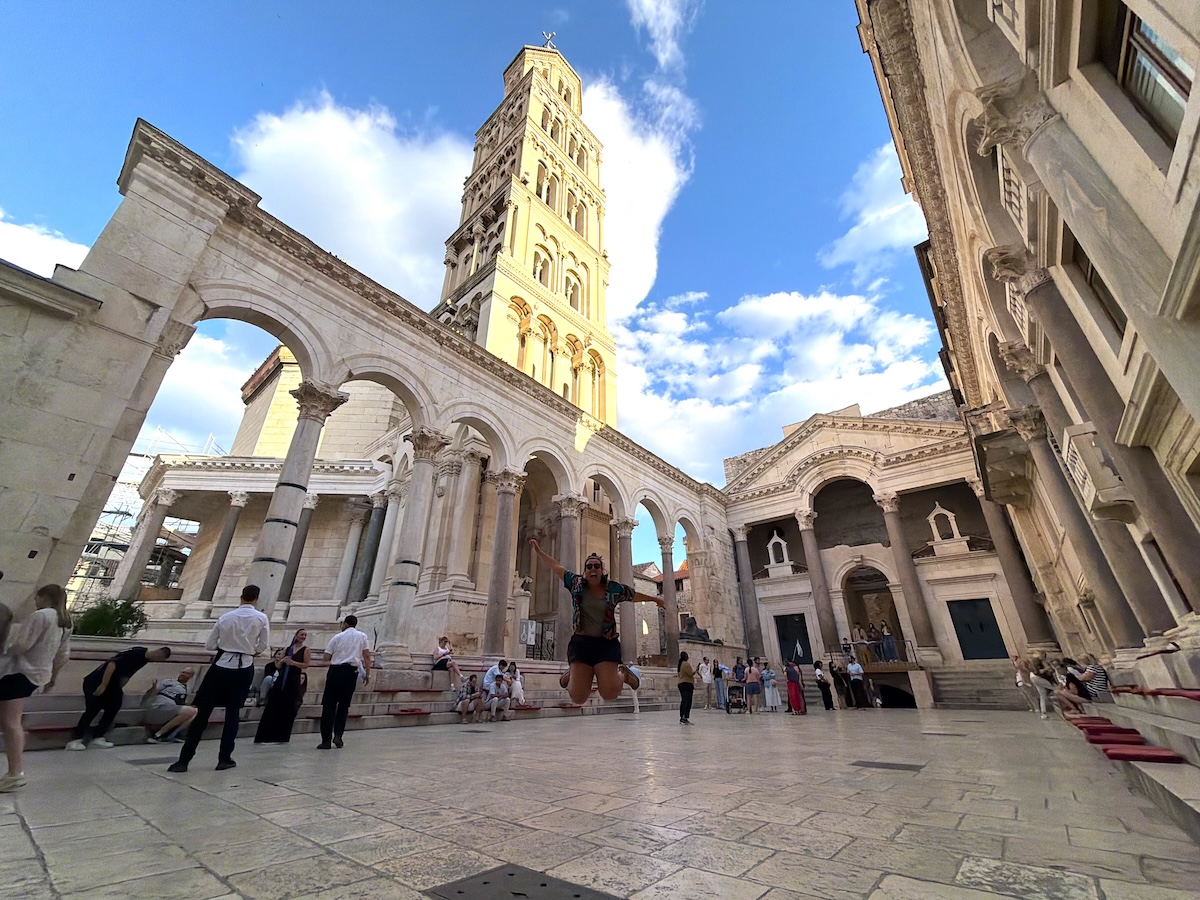
Things to see and do in Split in 2 Days
With 2 days, you can follow the same itinerary we suggested for a one-day trip at a more relaxed pace, visit more places, or complete it in one day and spend the other day exploring some of the nearby attractions:
- Day 1: 1-day itinerary shared in the previous section
- Day 2: Choose one or more of these activities in the surrounding area:
- Explore and enjoy the nearby beaches featured in the guide, as well as other activities in the surrounding area.
- Excursion to the Blue Lagoon with snorkeling at its underwater museum
- Excursion to Krka National Park + Kliss Fortress on the way back
- Excursion to Trogir and Kliss Fortress
Things to see and do in Split in 3 Days
With 3 days, you can thoroughly explore Split’s historic center, taking your time to visit most of the sights, or you can explore it in one day and use the other two to discover the surrounding area.
Here’s a suggested itinerary to help you make the most of your time:
- Day 1: 1-day itinerary shared in the previous section
- Day 2: Visit any places in the city center you haven’t seen yet and/or nearby beaches, as well as other activities in the surrounding area.
- Day 3: Visit a place near Split:
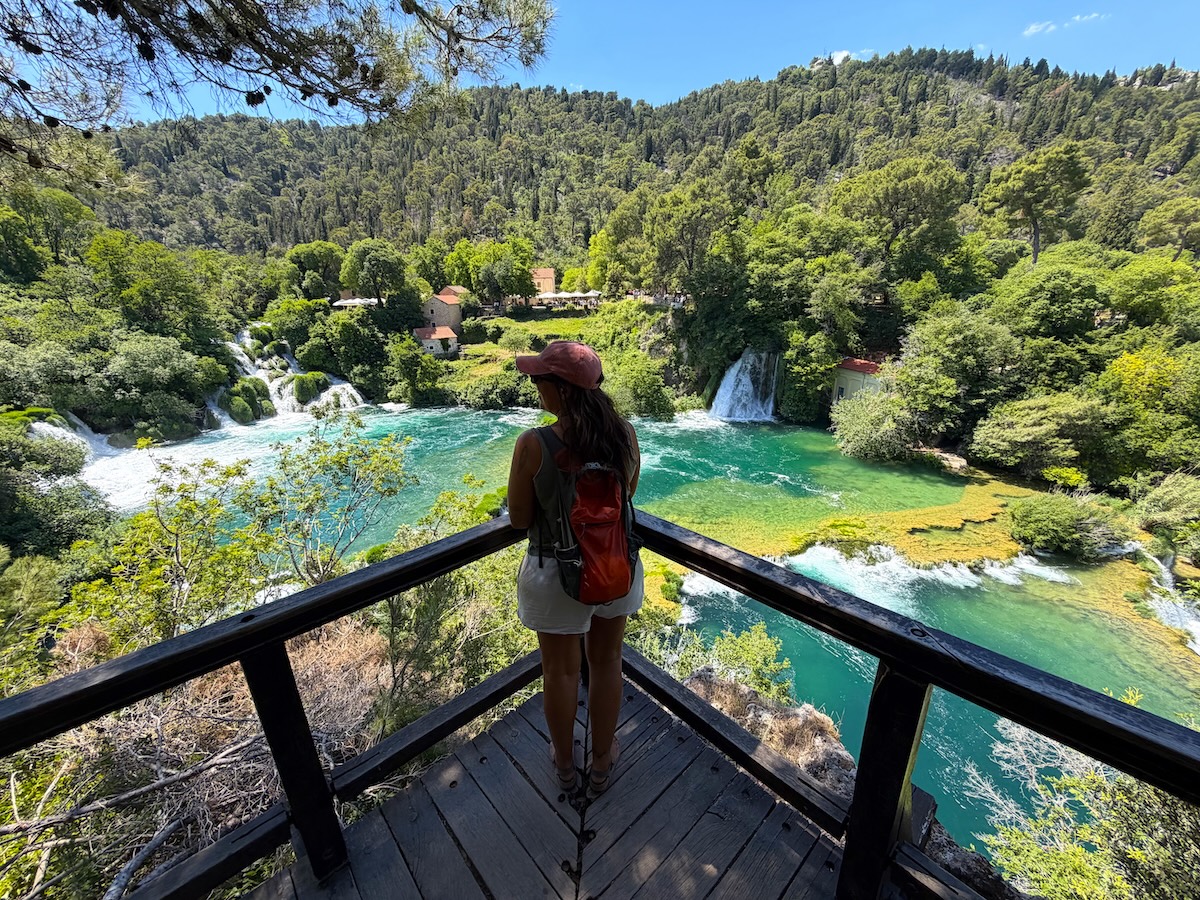
Things to see and do in Split in 4 Days
We think 4 or 5 days is the ideal amount of time to thoroughly explore Split and its surroundings. At Randomtrip, we stayed for 5 days (in May, including beach time) and didn’t have a single minute to spare. Here’s a suggested 4-day itinerary
- Day 1: 1-day itinerary shared in the previous section
- Day 2: Visit any places in the city center you haven’t seen yet and/or nearby beaches, as well as other activities in the surrounding area.
- Day 3: Day trip to Krka National Park
- Day 4: Take one of these tours
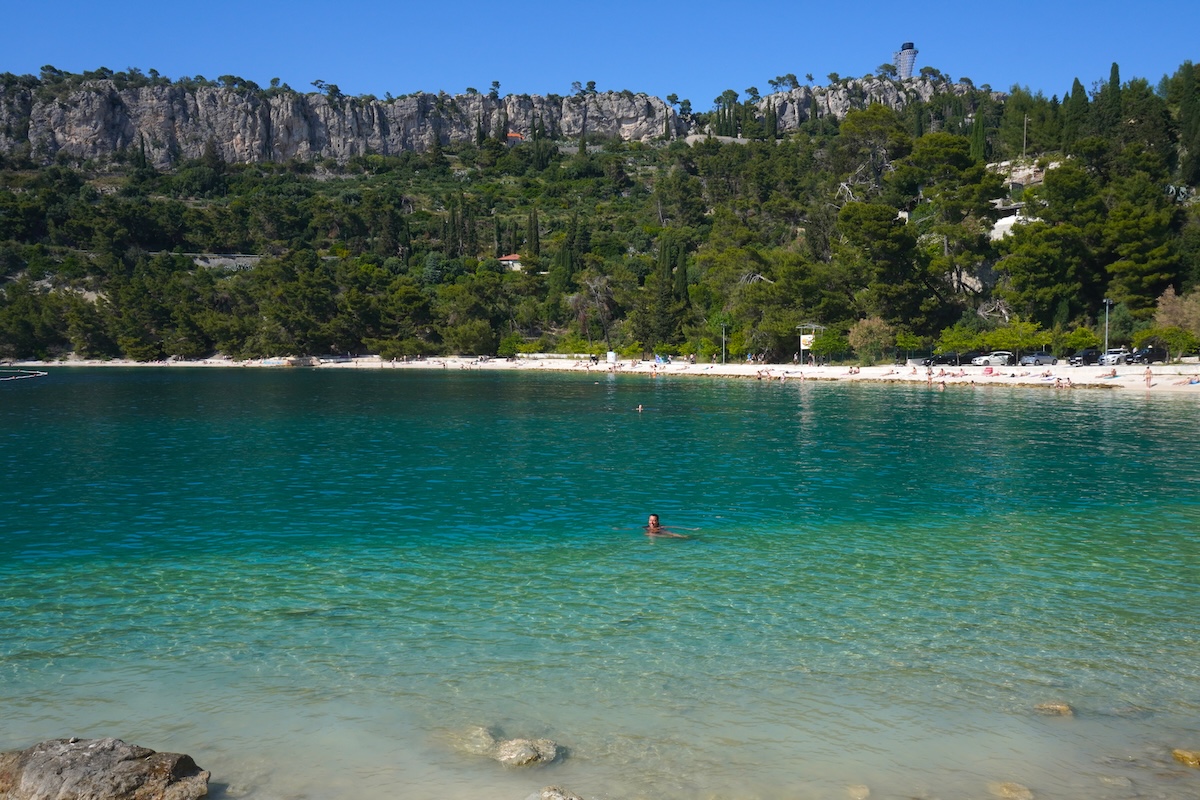
Transportation: how to get around Split
The entire historic center of Split is best explored on foot (in fact, many of the streets are pedestrian-only), and even several nearby attractions (Marjan, beaches, etc.) are within walking distance. If you’re planning a longer trip, you can always use public transportation or Uber/Bolt.
If you’re touring Croatia, it might also be a good idea to rent a car (we recommend using comparison sites like Discover Cars, the one we use at Randomtrip, to compare terms and prices), although you’ll hardly use the car in Split.
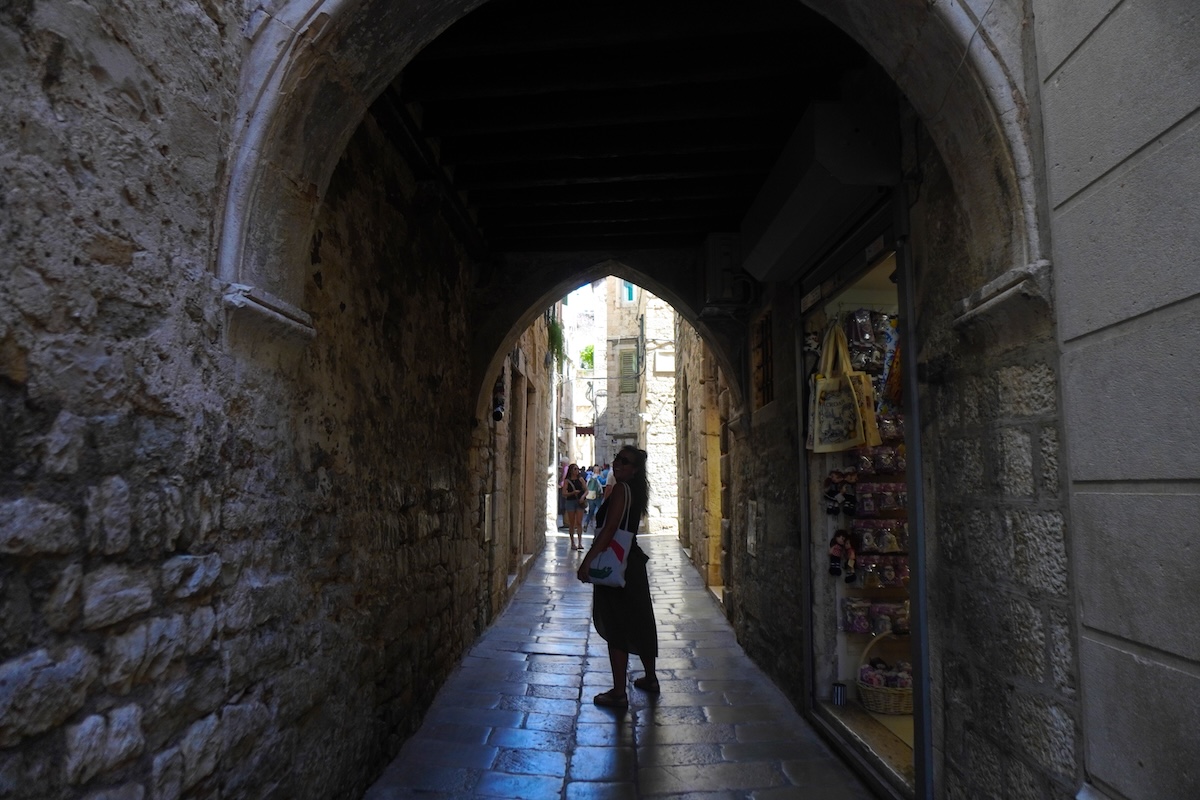
How to get from the airport to downtown Split
If you’re not renting a car, here are the different options you have for getting from the airport to downtown Split (and vice versa):
- Platanus shuttle bus: €10 one-way or €15 round-trip. Schedules depend on flight arrivals, and the trip takes about 30 minutes. It stops only at the Split bus station (an 8-minute walk from the East Gate of the historic center). If you’re looking for an even cheaper option, there are local buses: the No. 37, which runs between Trogir and Split, stops at the airport. It costs €3, and you can check the schedule here (it also drops you off at the Split bus station, though since it makes more stops, the trip takes longer, between 50 and 60 minutes)
- Uber/Bolt: You can use both apps in Split and elsewhere in Croatia. The ride from the airport to downtown Split usually costs between €20 and €40, depending on the time of day and demand. The trip takes about 30 minutes.
- Taxi: Faster than ordering an Uber or Bolt, but usually more expensive (between 30 and 50€). The trip takes about 30 minutes.
- Book a Transfer: If you want to make things easier on yourself and have someone waiting for you when you arrive, you can book a transfer in advance. The price is per vehicle, starting at €43. You can book a transfer in advance here
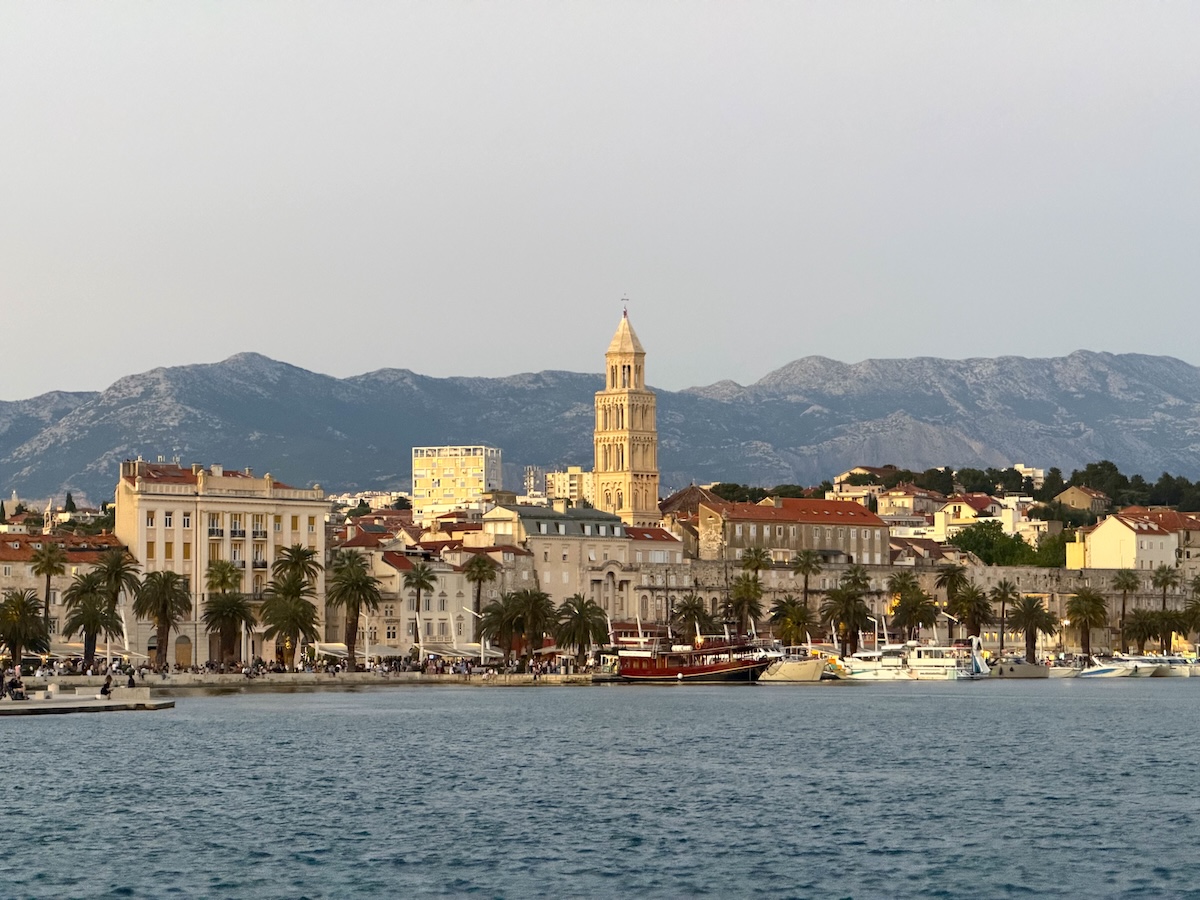
How to get internet in Split
Croatia is part of the EU, so if you have a European carrier, you can probably use your data plan there at no extra cost (check the terms with your carrier).
If that’s not the case, and if your phone supports eSIM and you want to keep things simple, we recommend the Holafly eSIM (unlimited data, 5% off with the code RANDOMTRIP) or the Sim Local eSIM (limited data, but cheaper, 10% off with the code RANDOMTRIP).
More information on how to get an eSIM for your trip to Croatia here:
Safety: Is it safe to travel to Split?
Both Split and Croatia in general are generally safe destinations with low crime rates. During our trip, we never felt unsafe, although, as always, we recommend taking the basic precautions that apply anywhere in the world.
In any case, we always purchase travel insurance (which also covers our belongings), which gives us greater peace of mind in case something happens:
Croatia travel insurance
Do you know what you should always have in your backpack? Good travel insurance! On our trip to Croatia, we purchased Heymondo Travel Premium. Beyond medical assistance in case something happens to you, the insurance also covers you for adventure sports. Plus, if anything happens to your luggage—damage, theft, delayed delivery, or loss—the insurance has your back. We use and partner with various insurance providers, and as a reader, you can enjoy the following discounts:
Carefully read the terms and conditions of each policy and hire the insurance that best suits your needs.
Money in Split: Cards to save on fees
Croatia adopted the euro in 2023, so if you’re coming from a country that uses the euro, everything will be much easier. To pay for things and withdraw money in Croatia while minimizing fees, we recommend the two cards we use ourselves:
- Revolut: With the free version, you can make unlimited card payments in euros. Up to 200€ in ATM withdrawals are fee-free; beyond that, a 1% fee applies.
- N26: With the free version, you can make unlimited card payments with no fees. For ATM withdrawals, there’s a 1.7% fee, which you can waive by signing up for the You (€9.99/month—the one we use) or Metal (€16.99/month) monthly plans.
It’s important to keep in mind that even if your card doesn’t charge a fee for ATM withdrawals, some ATMs in Croatia do charge a fee for their use. Be sure to check before completing the transaction.
In tourist areas, you can pay by card at most businesses, so we recommend getting one of the cards we suggest (or checking to see if the cards you already have allow you to pay without fees and without any problems) before you travel.
Tips: Tips in Croatia are not mandatory. However, especially with the growth of tourism from the United States, tipping has become more common in the most touristy areas, and in many cases, when paying by card, you’ll be required to choose a tip amount or indicate that you don’t want to leave a tip—which can be quite awkward in front of the person who served you.
Estimated budget: How much does a trip to Split cost?
Estimate a budget is tricky since it depends heavily on the type of trip you’re taking: how many activities you want to include, whether you’ll eat out or cook to save money, the type of lodging you’ll choose… In any case, to give you an idea, here are the average prices and what we consider the average daily cost (we’ll reiterate that these are APPROXIMATE prices and may vary at any time):
- Flights: starting at €80 round-trip with a minimum baggage allowance. As always, prices depend on the dates and how far in advance you book. Use flight comparison sites like Skyscanner and Kiwi to find the best price.
- Transportation: You can explore Dubrovnik’s historic center on foot, and get around the surrounding areas by bus or Uber/Bolt
- Accommodations: Starting at €60/night for a room with a private bathroom or a small apartment with a kitchen. Find accommodations of all types and price ranges on Booking, with up to a 15% discount.
- Restaurants: plenty of options starting at €15 per person, with something for every taste.
- Admission: Some attractions require an admission fee. You can get discounts with the Split Card depending on how many days you’re staying in Split and which attractions you want to visit
In total, a weekend trip (2 nights) to Split can cost between €70 and €90 per person per day, based on the cheapest accommodation options, eating out at affordable restaurants, and getting around on foot.
Useful apps for getting around Split
- Google Maps (Android/iOS): This is what we use to save and organize all the places we want to visit or have already visited, and as a GPS to help us find our way around, whether we’re walking or renting a car. It also includes public transportation information when available. You can view other people’s reviews of these places, photos, restaurant menus, contact numbers, and more. You can also open our map within the app , which includes all the places featured in this guide
- Maps.me (Android/iOS): an app similar to Google Maps but one that works offline (although Google Maps can also work offline, this one works better) and, in many cases, has information that Google Maps doesn’t have
- Uber and Bolt: apps for ordering taxis or ride-hailing services.
- Windy (Android/iOS/Web): an essential app for our trips. It lets you check forecasts for rain, clouds, wind, etc., to help you plan your days based on the weather. Obviously, the forecasts aren’t 100% reliable. It also includes real-time webcams
Tips for traveling to Split as a responsible tourist
- If you take tours, it’s best to choose small groups (maximum of 6 to 8 people) and local guides, rather than crowded free tours, which in such a compact city have a huge impact on noise, traffic, and the local community
- If possible, avoid the Old Town on days and at times when cruise ships arrive, because the city gets extremely crowded (you can take this opportunity to visit one of the beaches if it’s hot or check out some of the activities in the surrounding area). Here you can see the daily cruise schedule
- Bring areusable water bottle to refill with water and help reduce plastic waste. There are several drinking fountains throughout the Old Town.
- If you have a choice, avoid the summer months (July and August), which are the most crowded and also the most expensive.
- Be responsible when visiting a site: a large influx of people to a particular location can have a negative impact, so follow the rules: don’t climb the tree or monument you’re visiting, don’t deface the walls, avoid touching anything, and, out of respect for other visitors, don’t make noise or “monopolize” the spot with your photos.
- Take care of natural and archaeological sites and follow the rules
- If you rent a car, obey the speed limits on the roads
- Don’t litter on the streets or at the places you visit; use trash cans and recycling bins, and keep your trash with you until you find a proper place to dispose of it or return to your lodging.
- Do not be complicit in animal abuse: This includes any attraction where animals are kept in captivity and/or used for human entertainment.
- Respect other people: don’t play your music too loud, pick up your trash, and don’t throw away cigarette butts, etc. Leave the place in better condition than you found it.
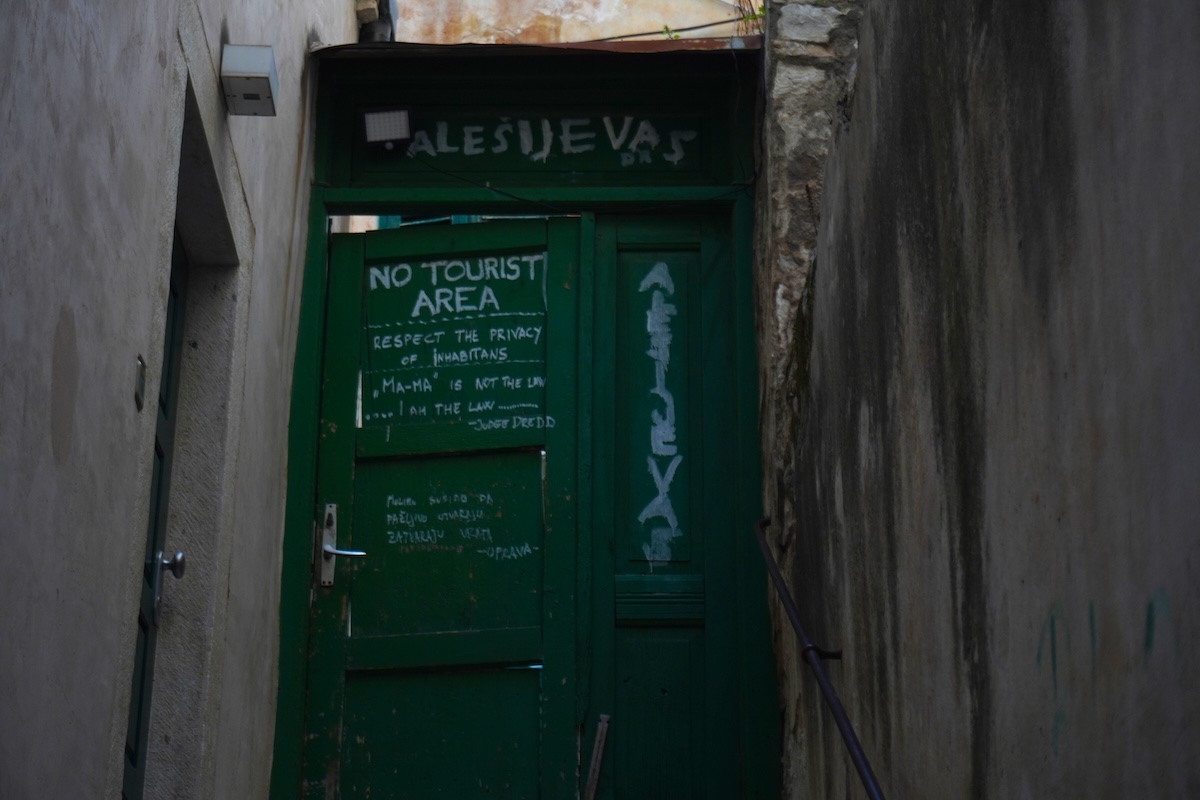
Checklist: What to Pack in Your Backpack or Suitcase for Split
Here’s a list of essentials you can’t forget to pack for your trip to Split:
- A reusable water bottle like one of these to carry water with you all the time and void single-use plastic.
- Water Shoes like these ones, ideal for not hurting your feet when entering the water or not touching the ground.Keep in mind that most beaches in Croatia are rocky, so they’re a must-have.
- Snorkel kit (mask and tube) like this one, a must to take on this trip to contemplate the seabed.
- Waterproof dry bag like this one, very useful for keeping your camera equipment, cell phone and wallet safe from getting wet on any boat trip (or even if the tide comes in on the beach).
- Fast drying towel like this one which doesn’t take a lot of space in your luggage
- A hat or a cap (like this one) and sunglasses to protect yourself from the sun
- Windbreaker waterproof jacket: like this one, to protect yourself from the sudden weather changes in Azores
- A good camera to register your adventures. At Randomtrip we carry a Sony ZV-E10 and a Gopro Hero13 Black (for underwater pictures)
- A Power bank: taking so many pictures will drain your batteries, so it’s always a good idea to carry a good powerbank. At Randomtrip we travel with these 2 (Anker 20000 mAh and Anker 10000 mAh), which allow us to charge both our phones and our cameras.
- Sun screen: always look for a Coral Friendly Sunscreen, i.e. one that protects your skin without harming marine ecosystems by avoiding ingredients such as oxybenzone and octinoxate, which are harmful to corals. Nor that it has been tested on animals.
- Mosquito repellent: like this one, it should have at least 15% deet
- First aid kit: In our first-aid kit there is always a medicine against seasickness (such as biodramine for seasickness on boats), antibiotics, anti-diarrhea medication (and a probiotic to recover more quickly), antihistamines, painkillers and antipyretics
- Travel insurance: always travel with travel insurance. We collaborate with different travel insurance companies so that you can get a discount with some of them:
Croatia travel insurance
Do you know what you should always have in your backpack? Good travel insurance! On our trip to Croatia, we purchased Heymondo Travel Premium. Beyond medical assistance in case something happens to you, the insurance also covers you for adventure sports. Plus, if anything happens to your luggage—damage, theft, delayed delivery, or loss—the insurance has your back. We use and partner with various insurance providers, and as a reader, you can enjoy the following discounts:
Carefully read the terms and conditions of each policy and hire the insurance that best suits your needs.
Split ended up becoming one of our favorite cities among those we visited in Croatia. At RandomTrip, we came away with the feeling that you enjoy it most when you combine the must-sees with time to get lost in its streets, sit down for a drink, or take a dip, and that we would have definitely stayed there a few more weeks.
We hope this guide helps you plan a trip to Split that’s just right for you and that your trip is as incredible as ours was. Sretan put! ( Have a good trip!, in Croatian).