

Turn of the Tide ( 2023-2025), (Rabo de Peixe in portuguese, its original title), is the first Portuguese series to enter Netflix’s global Top 10 non-English speaking series and is set in one of our favorite places in the World, the Azores Islands. Two reasons that alone already caught our attention to start watching the first episode. From the first scene until the end of the series, it was a weekend marathon. As soon as the second season came out, it was another marathon.
Warning, this article contains spoilers from the first and second seasons of the Netflix series Turn of the Tide

The fictional series created by Augusto Fraga has as its starting point an event that happened in reality on the island of São Miguel in 2001 when a ship carrying drugs was shipwrecked and caused the tide to drag half a ton of cocaine (505.84 kg of cocaine with a purity of over 80%) to the north coast of the island of São Miguel in the Azores and, more specifically, to the town of Rabo de Peixe, one of the poorest in the country at that time. It is one of those moments in history when reality overcomes fiction and, in this case and in our opinion, this team knew how to take a real fact and create an addictive fiction of seven episodes joining a suspenseful plot, an incredible work of the actors and actresses and a stunning photography in the stunning island of São Miguel.
If you are a fan of the series and are going to visit the island of São Miguel, or even if it was the series that whetted your appetite to discover the largest island in the Azores, in this article you will find the main locations of the most special scenes from the adventure starring Maboy Eduardo (José Condessa), Sílvia (Helena Caldeira), Rafael (Rodrigo Tomás), and Carlinhos (André Leitão), four young people from Rabo de Peixe in search of a different life.

Nothing in this seven-episode adventure in the first season would be the same without the fearsome and unscrupulous Arruda (brilliantly played by Albano Jerónimo) and his subordinate Zé do Frango (Dinarte de Freitas), the mobsters Francesco Bonino (Marcantónio del Carlo) and “il padrino” Monti (Francesco Acquaroli) and, of course, Father Antonio (Miguel Damião), who opens the first scene of the first episode.
The young rapexinhos (an affectionate term for the people of Rabo de Peixe, pronounced with pride by the characters) also have the help of Bruna (Kelly Bailey) and Ian (Afonso Pimentel), despite the relentless pursuit of justice by Inspector Frías of the “mainland” police, that is, mainland Portugal (Mª João Bastos), local police officer Francisco (Salvador Martinha), and his superior Banha (João Pedro Vaz). The first season comes to an end with the help of pyrotechnician Uncle Joe (Pepê Rapazote) to the young people.
The six episodes of the second season feature Brazilian actress Paolla Oliveira as drug trafficker Ofelia and her compatriot, actor Caio Blat, as the bloodthirsty Fagner (with an F!). Also noteworthy is the great José Raposo in the role of Orlando, an unscrupulous accountant (or he wouldn’t be Arruda’s brother), for whom family supposedly comes first (spoiler: it doesn’t), and the unrecognizable Ricardo Pereira in the role of Mike, the snake oil salesman (or rather, powder salesman) of High Powder. If the face of the corrupt commander João Canto Moniz, the “Rockefeller of the Azores,” looks familiar, that’s normal. He is Joaquim de Almeida, one of Portugal’s most international actors who has already participated in several Hollywood blockbusters, something like the Portuguese Benicio del Toro (a free and totally subjective comparison entirely the responsibility of Randomtrip). He is joined in the last episode by the nominee for the next regional governor of the Azores, the great actress Vitoria Guerra, who you may recognize from her role in the series Auga Seca (which, by the way, we also loved). For those of you who are not from Portugal, you may not be familiar with her, but Portuguese viewers were surely thrilled to see the stellar appearance of the great Ruy de Carvalho, one of Portugal’s greatest actors, who accepted a special role in Rabo de Peixe at the age of 98, in a short scene as Silvia’s obstetrician.
Although some parts of the series were filmed in Mafra, Almada or Lisbon, especially in interior spaces such as the Instituto de Medicina Legal e Ciências Forenses, the series is set on the Azorean island of São Miguel and the landscapes of the green island turned the island itself into one of the protagonists of the series and one of those responsible for its worldwide success.

Contents
- Filming locations for the Turn of the Tide series on the island of São Miguel
- Map with all the locations mentioned in this article
- Rabo de Peixe and Porto Formoso
- Porto Formoso
- Porto Formoso Church
- Praia do Monte Verde
- Furnas: Calderas, Lagoa das Furnas, and Grená Park
- Caldeira Velha: the thermal paradise of the second season
- Islet of Vila Franca do Campo and Vila Franca do Campo
- Arnel Lighthouse
- Mirador and Cascada das Lombadas
- Monte Palace Hotel and Lagoa Sete Cidades
- Faial da Terra
- Ponta Delgada
- Ananases A Arruda
- Marconi Antenna
- West Coast of São Miguel
- Bonus Track: Santa Maria, the new star island in the second season of Rabo de Peixe
- Related
Filming locations for the Turn of the Tide series on the island of São Miguel
Map with all the locations mentioned in this article
Here is a Google Maps map with the locations mentioned in this article:
Rabo de Peixe and Porto Formoso
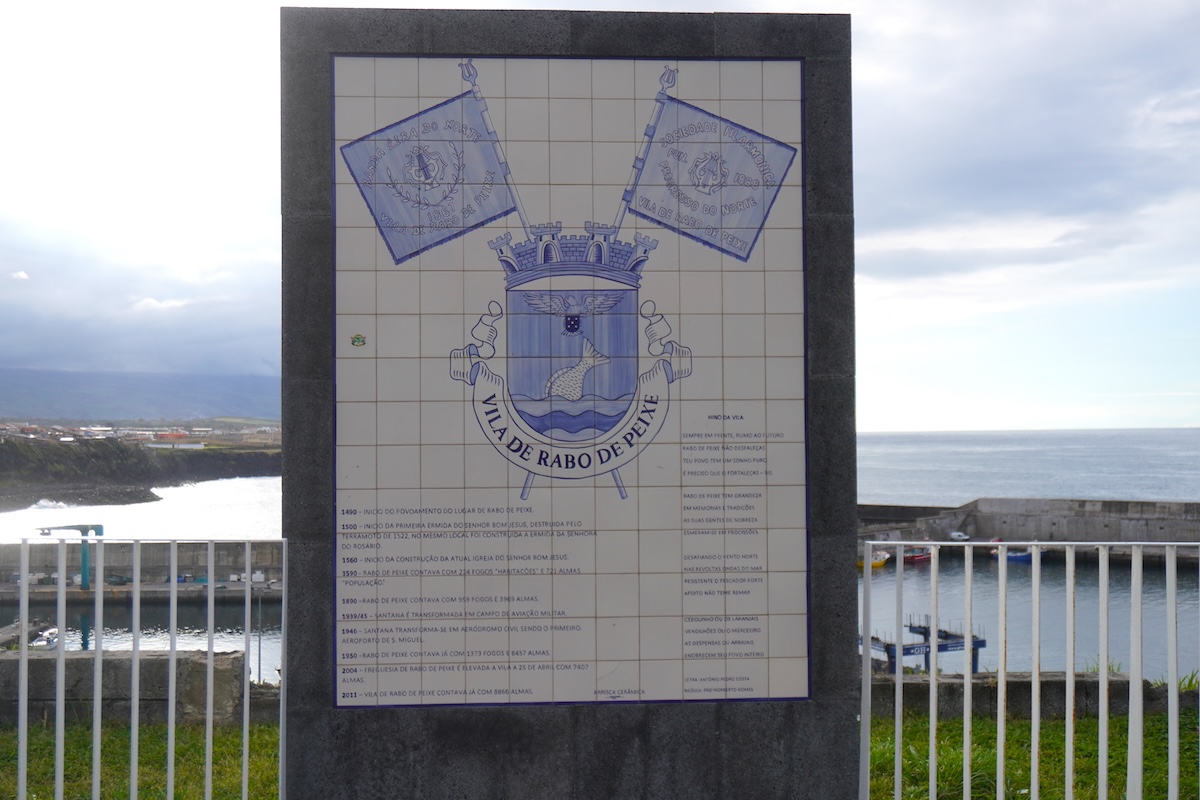
Of course, the first location mentioned in this article has to be the village of Rabo de Peixe, in the municipality of Ribeira Grande, on the north coast of the island of São Miguel. A humble village of 8,800 inhabitants and fishermen’s cottages where, in 2001, the tide washed up half a ton of cocaine, an event that sociologically altered the quiet town, one of those with the highest poverty rates in Portugal that year, and from which the plot develops.
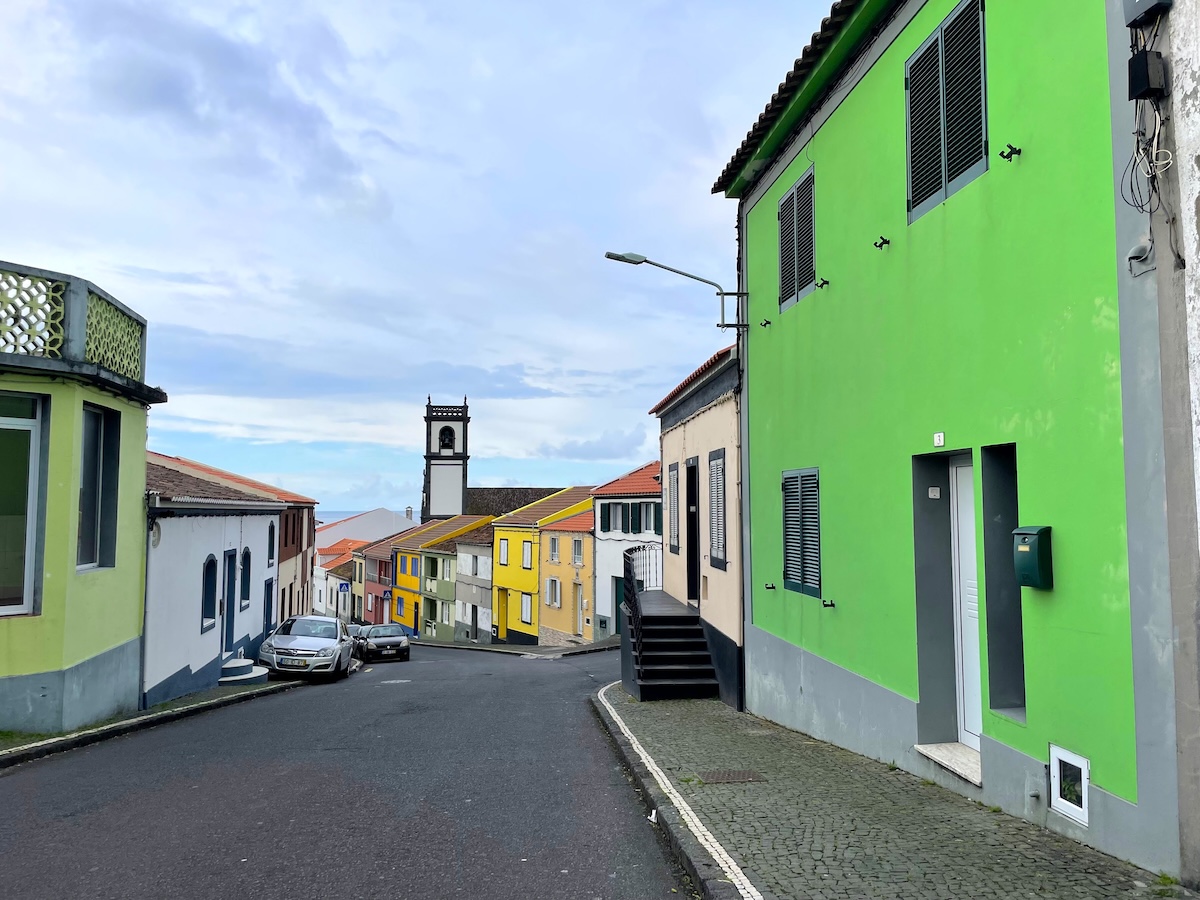
In the fictional series Rabo de Peixe, it is precisely in this village that the four protagonists, Eduardo, Silvia, Rafael, and Carlinhos, live; where the “América” video store (although the letter A on the neon sign is always off) where Silvia works is located; where Sandro G’s concert with his hit “Eu não vou chorar” took place, a concert at which Silvia suffers an overdose; and practically the central location for the entire series.
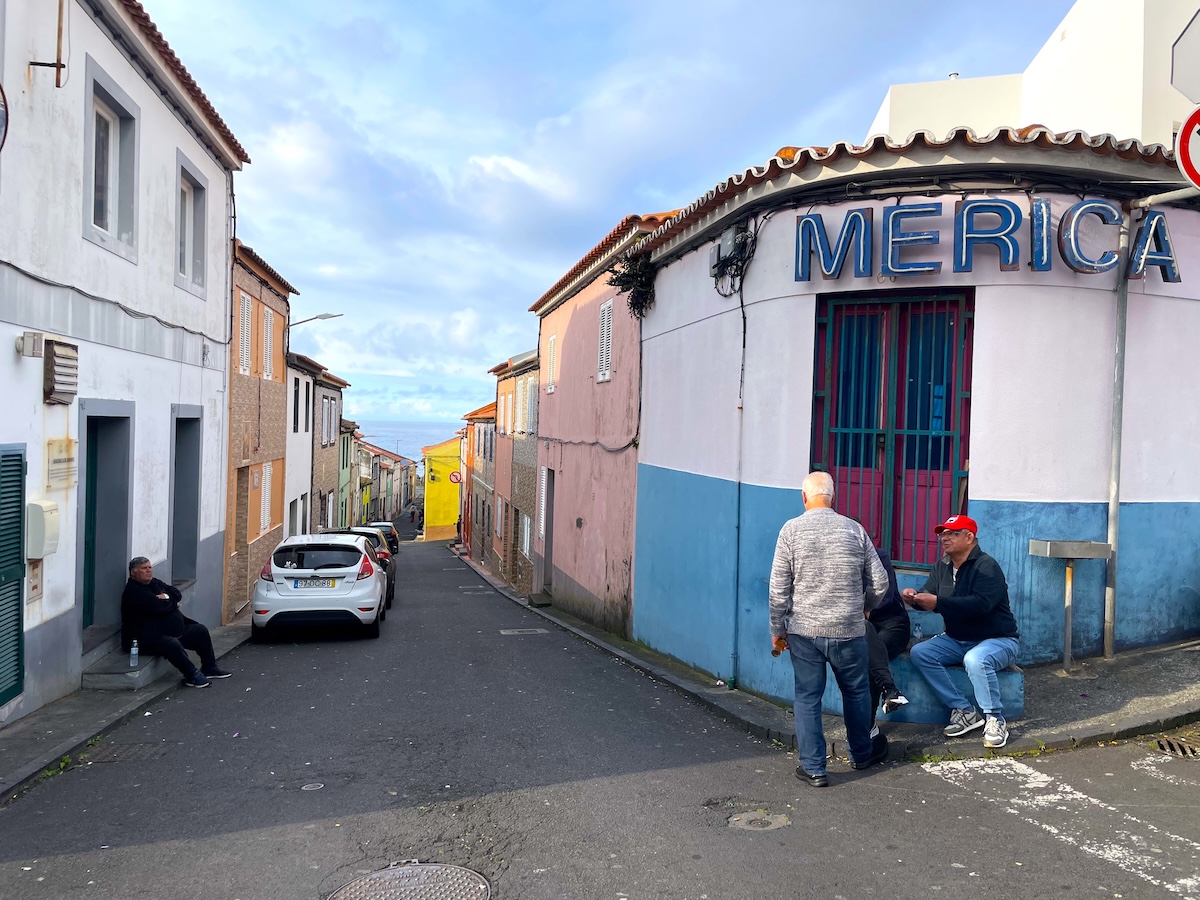
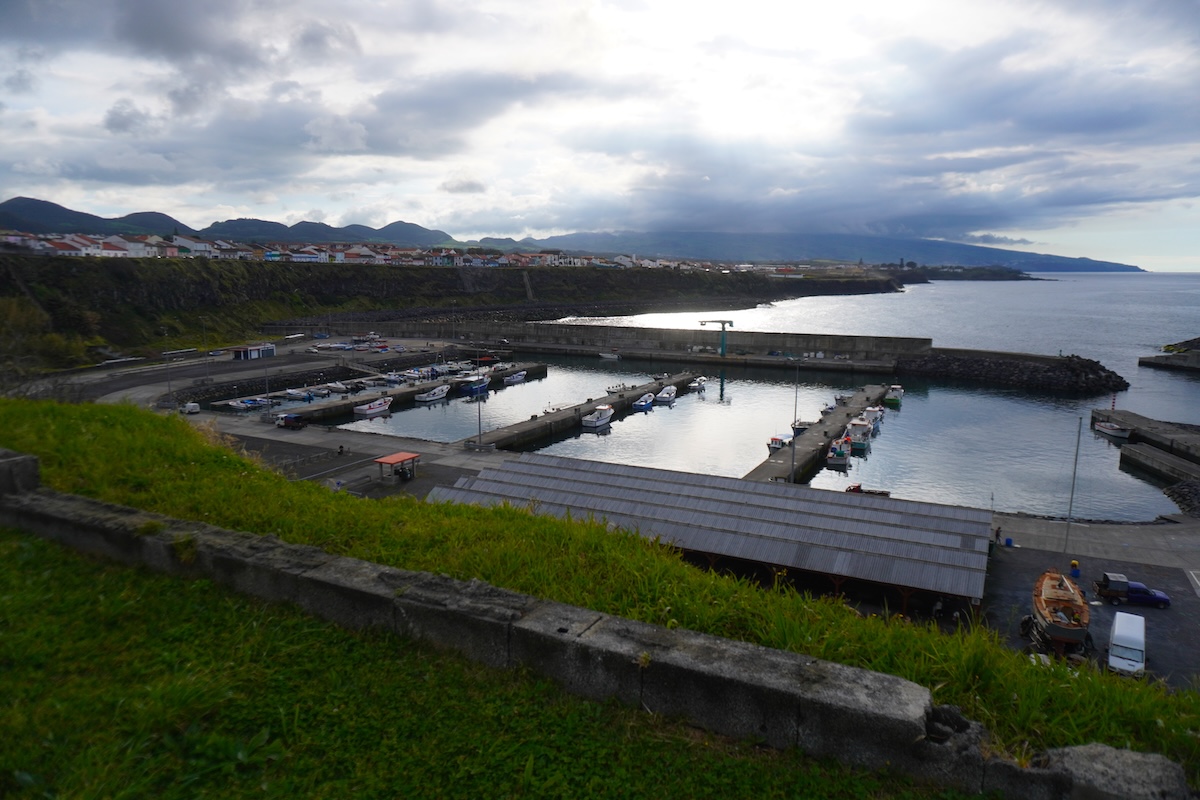
However, as far as the filming location is concerned, at Randomtrip we believe that most of the scenes in the series that correspond to the town of Rabo de Peixe were actually filmed in Porto Formoso, another town in the same municipality, 18 km from Rabo de Peixe.

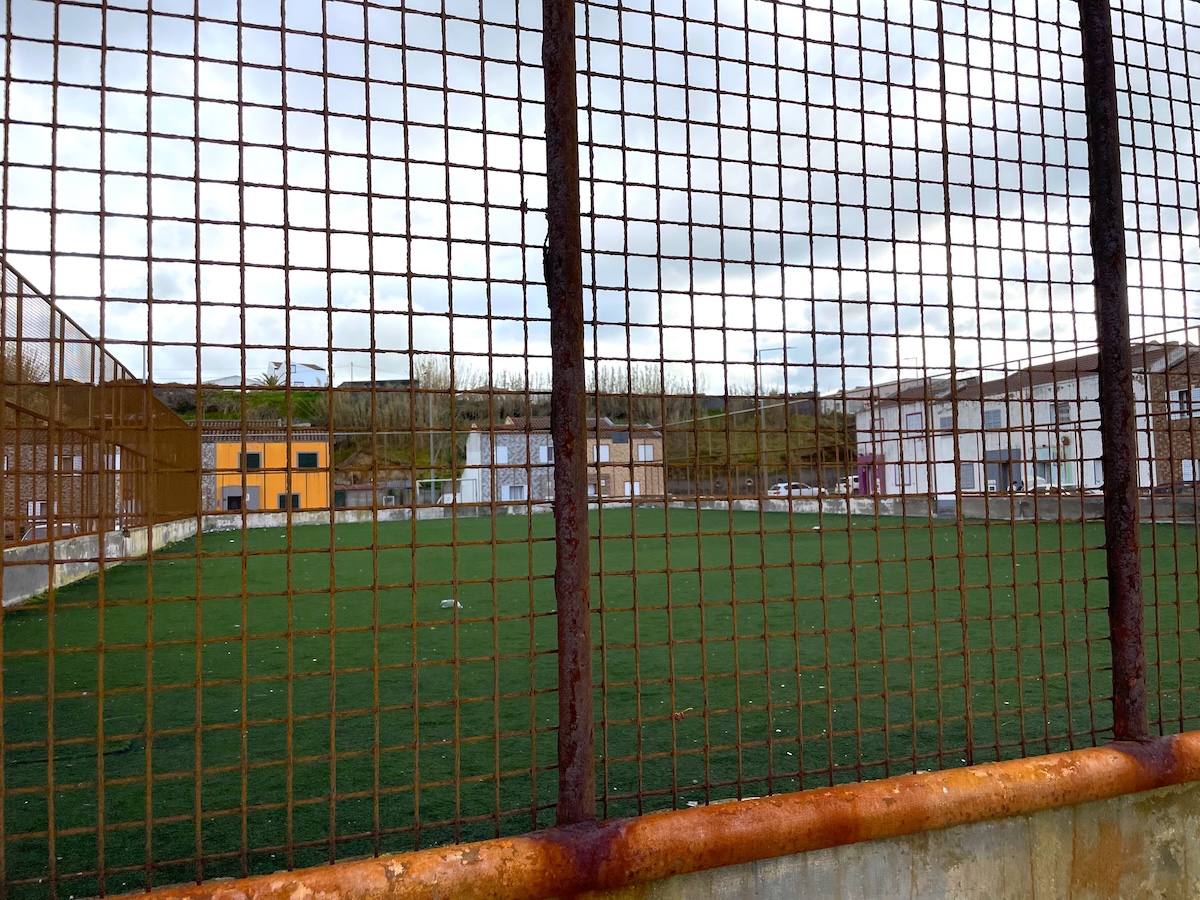
São Pedro Gonçalves Sports Center (Rabo de Peixe)
In almost all the episodes in which cocaine is bought and sold in Rabo de Peixe, there is a central location where the action takes place: next to a soccer field. This is the São Pedro Gonçalves Sports Center, near the sea and with colorful buildings behind it. This is where Arruda and Zé often park their car to keep an eye on everything that is going on.
It was in Rabo de Peixe, more specifically at the Botequim Açoriano restaurant, where we tasted the best tuna steak of our two-month trip around the nine islands of the Azores. As a curious fact, we’ll tell you that the restaurant overlooks another of the series’ filming locations: the Rabo de Peixe cemetery, where Eduardo’s mother, Fátima (Daniela Ruah), is buried and where Eduardo’s father, Jeremiah (Adriano Carvalho), will later be buried.

Hopefully the series will attract respectful tourism to the Azores Islands (more specifically to the island of São Miguel), an archipelago of sublime beauty and wonderful people, and not follow the path of narcotourism that we unfortunately experienced on our trip to Colombia (more specifically to the city of Medellin). The Colombian country has suffered and suffers from the stigma of drug addiction and drug trafficking revived by the successful Netflix series Narcos, to the detriment of the country’s heterogeneity, beauty and charming people. In our opinion, in this type of tourism, morbidity takes precedence over historical memory and, since we promote responsible tourism, our advice is not to contribute and not to be complicit in this type of tourism (which in turn is also irresponsible tourism) if given the chance.
Porto Formoso
Along with the town of Rabo de Peixe, the port is the setting for some of the most important scenes in the series. What you may not know is that the famous port in the series Rabo de Peixe is Porto Formoso, also belonging to the municipality of Ribeira Grande, 18 km from Rabo de Peixe. It is in this port that part of the population of Rabo de Peixe is seen collecting the packages of cocaine washed up by the tide. It is also in this port that we see the arrest of Italian mafia drug trafficker Francesco Bonino; where Eduardo and Rafael set sail in their boat; and where Arruda “kills” Rafael a few meters from the shore in the first season.

As a curiosity, it is worth mentioning that it is near this port where some of the only tea plantations in Europe and the last two tea factories in Europe are located: the Chá do Porto Formoso Factory and the more famous Chá Gorreana Factory. Visits to the Porto Formoso tea factory are free, and every year in spring there is a reenactment of the traditional tea harvest, complete with traditional costumes.
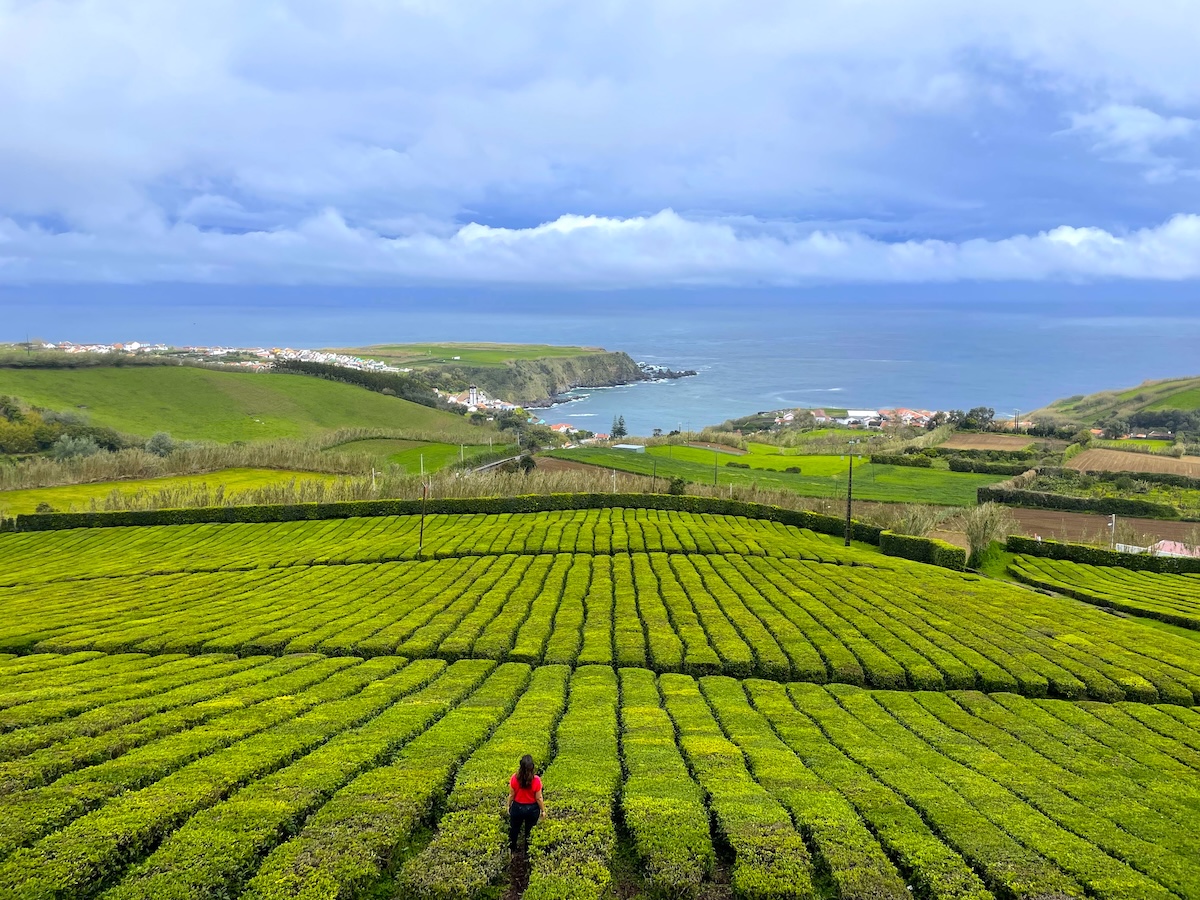
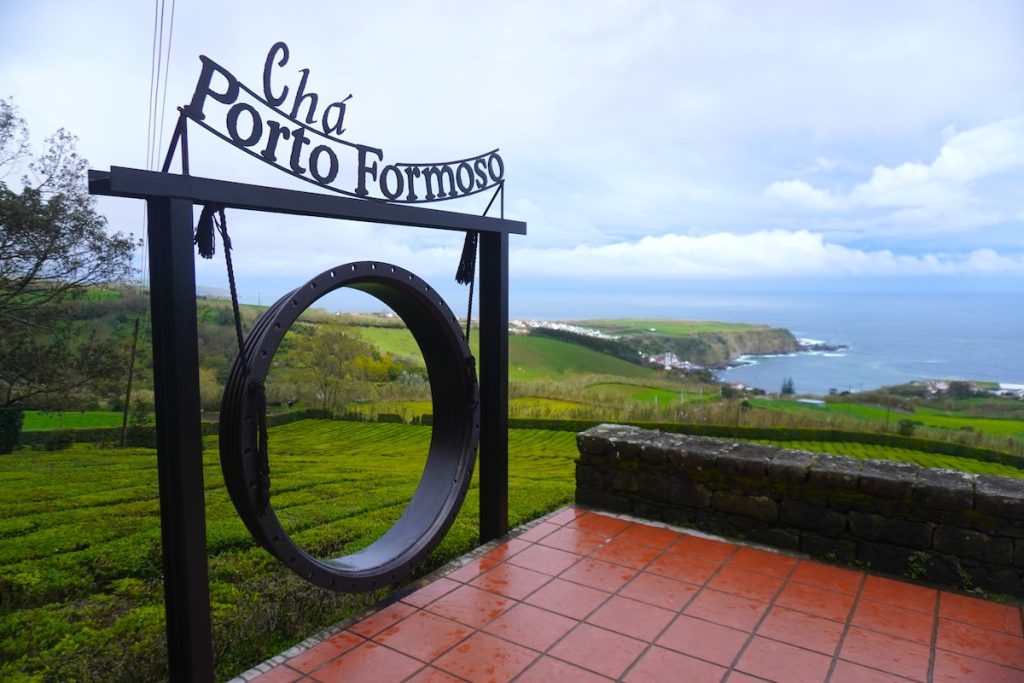
In fact, it is precisely among the tea plantations of the Chá Gorreana Factory that (in the second season) Uncle Joe Cunha meets his friend and former cellmate in the US prison, as this is where he lives with his daughter.


Porto Formoso Church
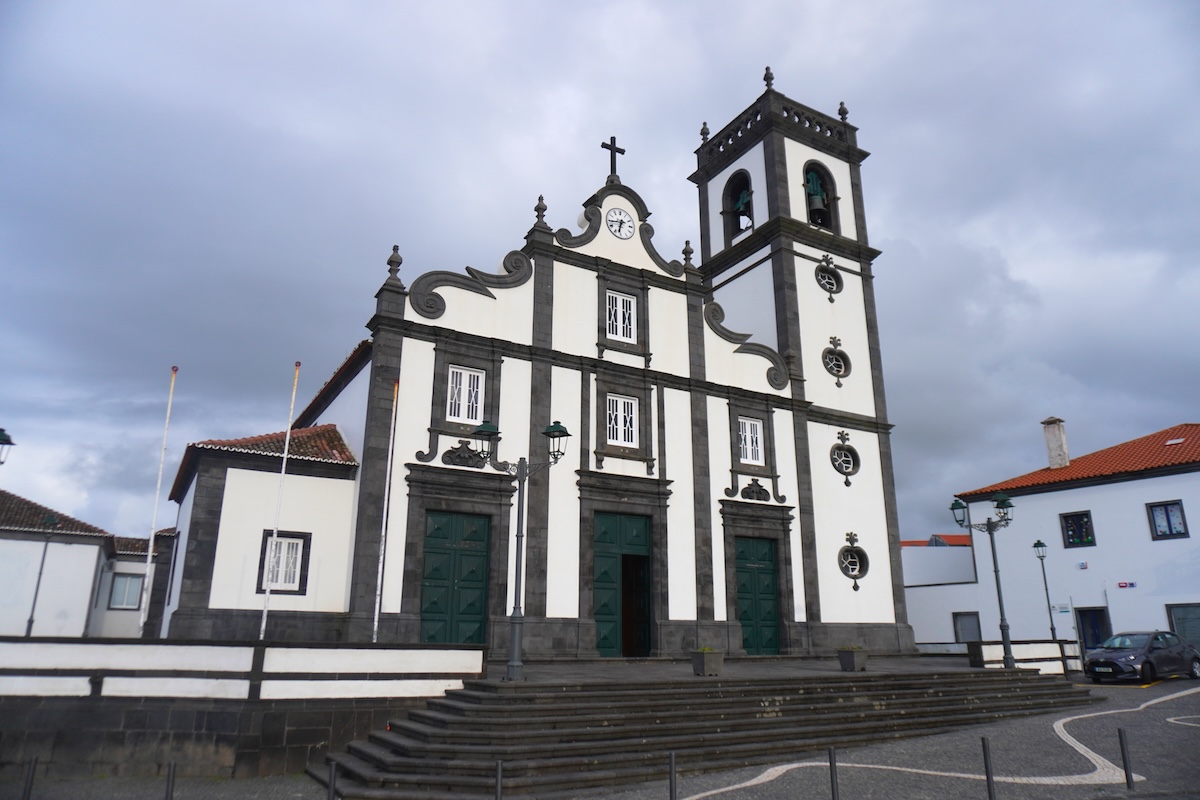
Porto Formoso is also home to another important filming location, so important that it is where the first scene of the first episode takes place: the church. Although the plot of the series is set in Rabo de Peixe and the first scene is, according to the characters’ dialogue, in the “Church of Rabo de Peixe”, the church that appears in the series is actually the beautiful Church of Porto Formoso, or rather, the Church of Nossa Senhora da Graça.

It is in this church where, in the first season, the priest of Rabo de Peixe, António, suffers an overdose while celebrating mass; it is also here that one of the most interesting conversations between Carlinhos and Father António takes place, and one of the most beautiful musical moments in the series when André Leitão sings and plays Erasure’s song “A Little Respect” on the piano; it is also in this church that the mobster Monti kidnaps Carlinhos.
Praia do Monte Verde
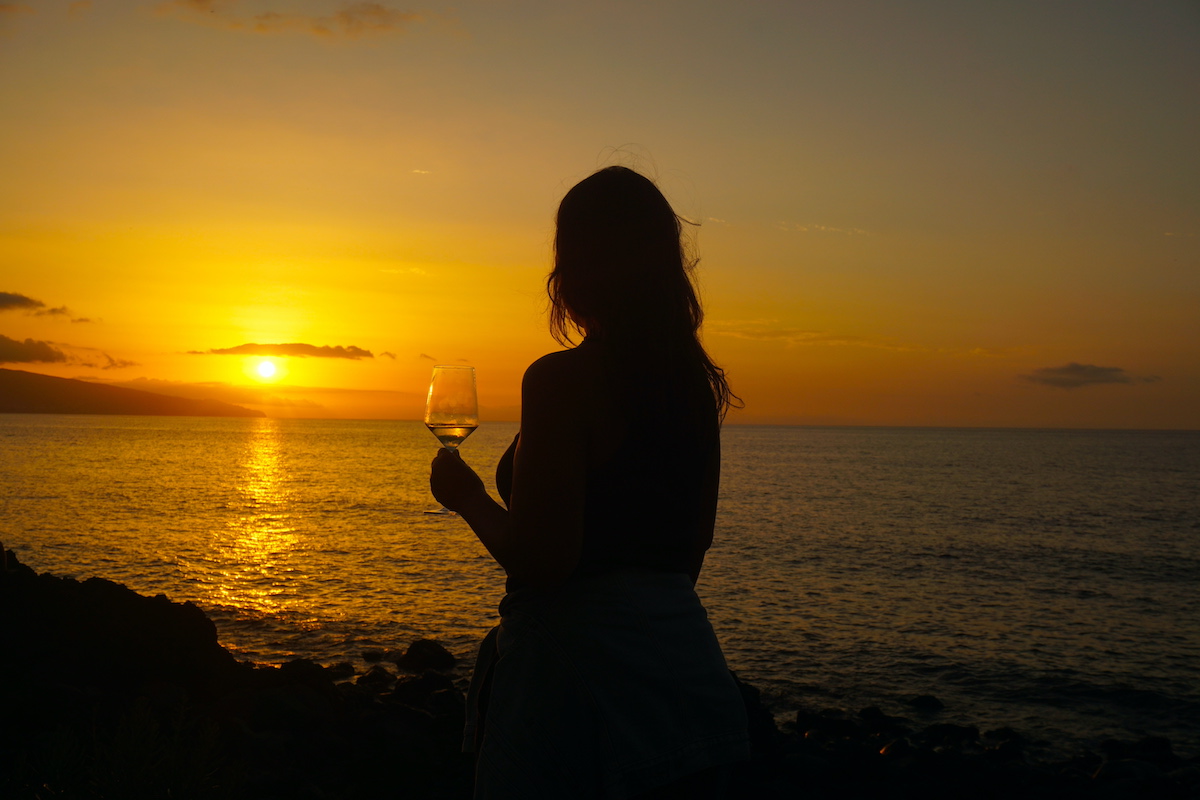
Praia do Monte Verde beach takes on special prominence in the second season, as it is here that the group of friends from Rapeixinhos celebrate with champagne (or, more likely, sparkling wine) that they manage to sell all the drugs to Mike (the smoke/powder seller) played by Ricardo Pereira.
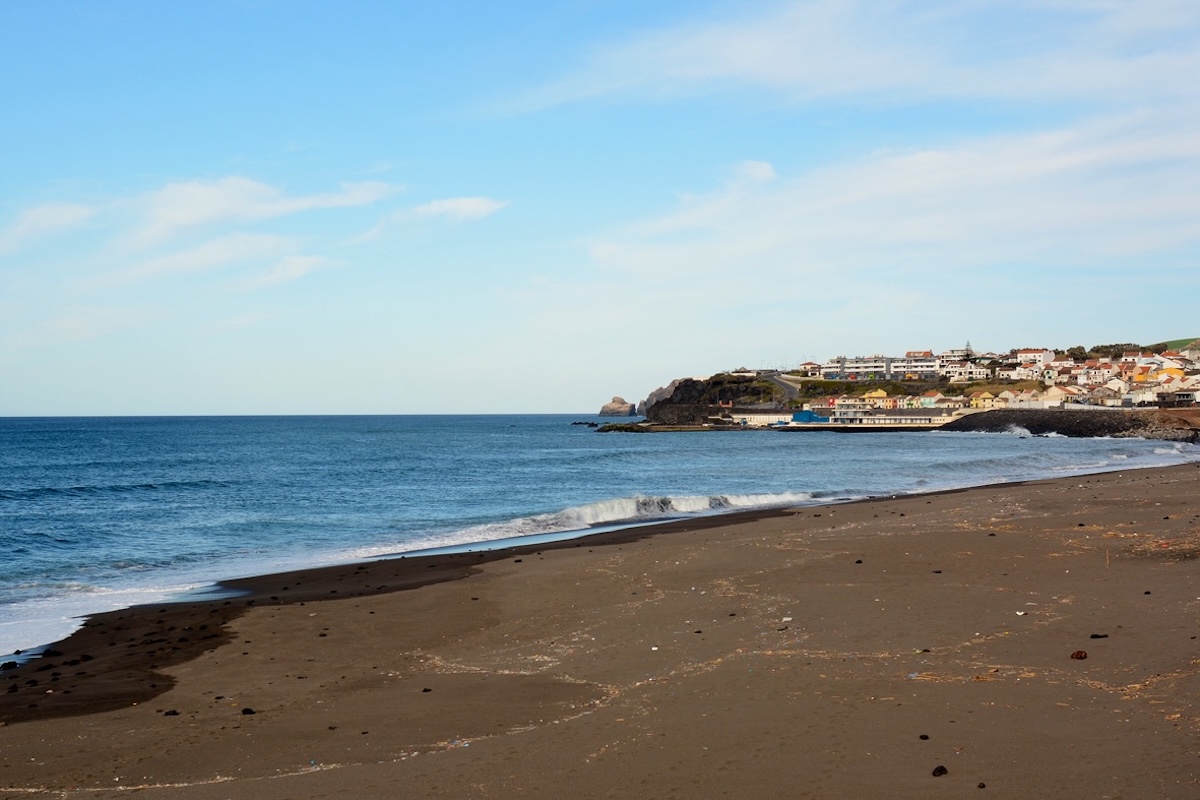
This beach, like Rabo de Peixe and Porto Formoso, also belongs to the municipality of Ribeira Grande, the surfing municipality par excellence, and is quite close to both towns.
Furnas: Calderas, Lagoa das Furnas, and Grená Park
One of the most heartbreaking scenes in the series is when the villain Arruda, in an act of revenge for the possible betrayal and distrust of one of his subjects, Zé dos Frangos, pushes him into one of the steaming volcanic calderas of Furnas.
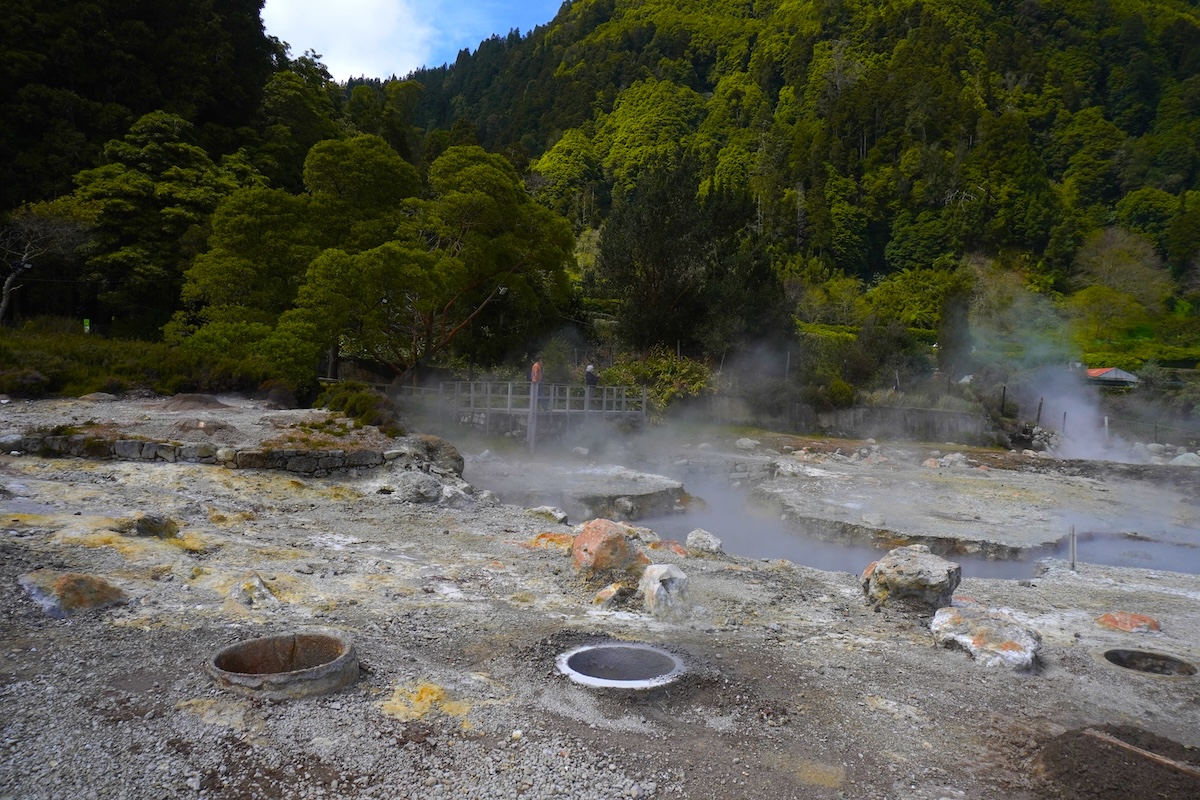
Furnas is one of the oldest areas on the island of São Miguel, formed approximately 750,000 years ago, and also the most visited on the island. Why? The “Furnas Valley” is located in the crater of the Furnas volcano, one of three still active volcanoes and the largest on the island of São Miguel.


And it is precisely next to Lagoa das Furnas that there are holes in the ground with “lids” ( like the one you see Arruda closing with Zé inside) that are authentic natural kitchens where a famous dish of the island is prepared: “Cozido das Furnas”! After adding all the ingredients of a “cozido à portuguesa” (meat, sausages, vegetables), the pan is wrapped in a linen cloth and a friendly local (unlike Arruda) carefully lowers it into one of the holes in the caldera, where the volcanic heat will cook it.

You have to be patient because “Cozido das Furnas” takes several hours to cook, and perhaps that is what saved Zé…. To give you an idea, the stew normally served in Furnas restaurants at lunchtime (from 12 noon) has been in the caldera since 4 a.m.
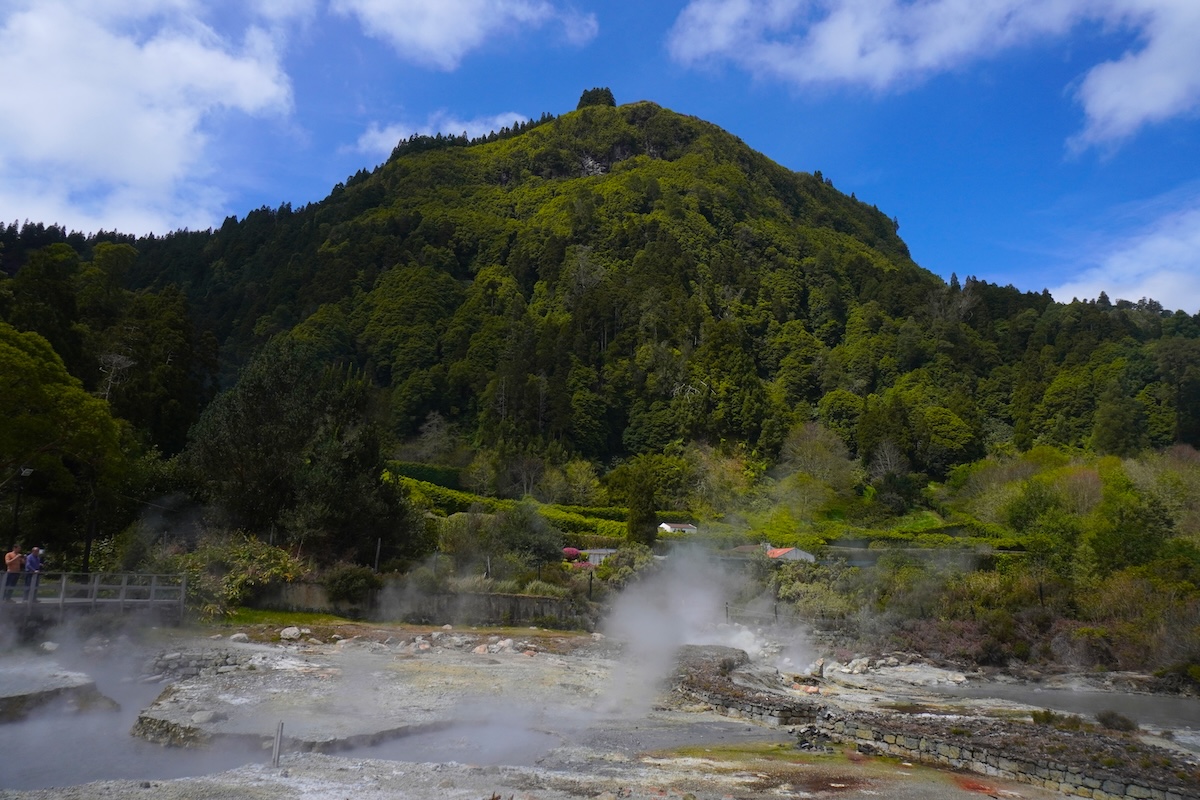
The best-known restaurants for trying Cozido das Furnas are Tonys, Vale das Furnas, and Caldeiras e Vulcões (which also offers a vegetarian stew). The price of the stew is around 15 euros.
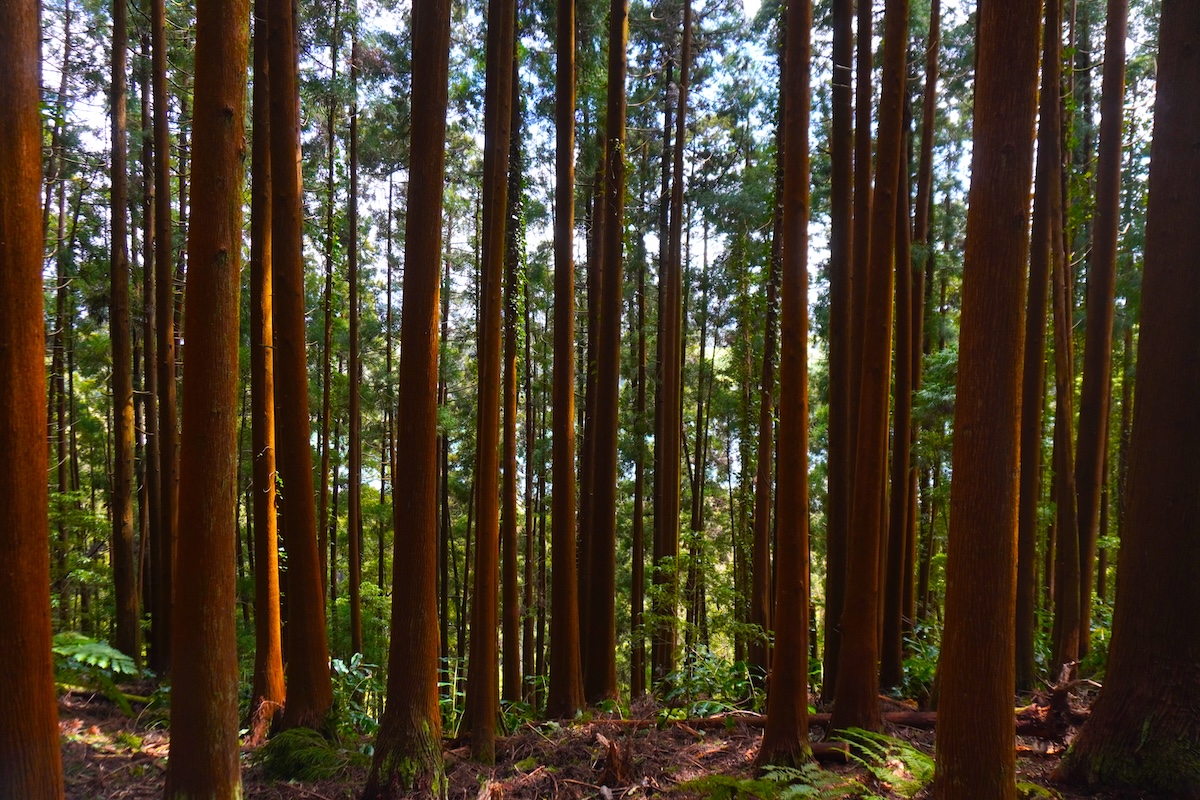
We also think that another side of Lagoa das Furnas appears in the second season of the series. Although we are not 100% sure, at Randomtrip we would bet that it is precisely the forest of Japanese cryptomeria trees in Parque da Grená, on the shore of Lagoa das Furnas, that witnesses the meetings between Inspector Frias and her informant, Eduardo, where she tells the Judiciary Police about the next steps of the Brazilian drug traffickers and the plan for the arrival of the cocaine shipment from Colombia.
We would like to take this opportunity to remind you that it is precisely from the volcanic waters of Furnas that several of São Miguel’s thermal paradises originate, such as Parque Terra Nostra, Poça Dona Beija, and Poça da Silvina. Although none of these have been chosen to appear in the series, there is a hot spring location elsewhere on the island that did appear, which we will tell you about below.

Caldeira Velha: the thermal paradise of the second season
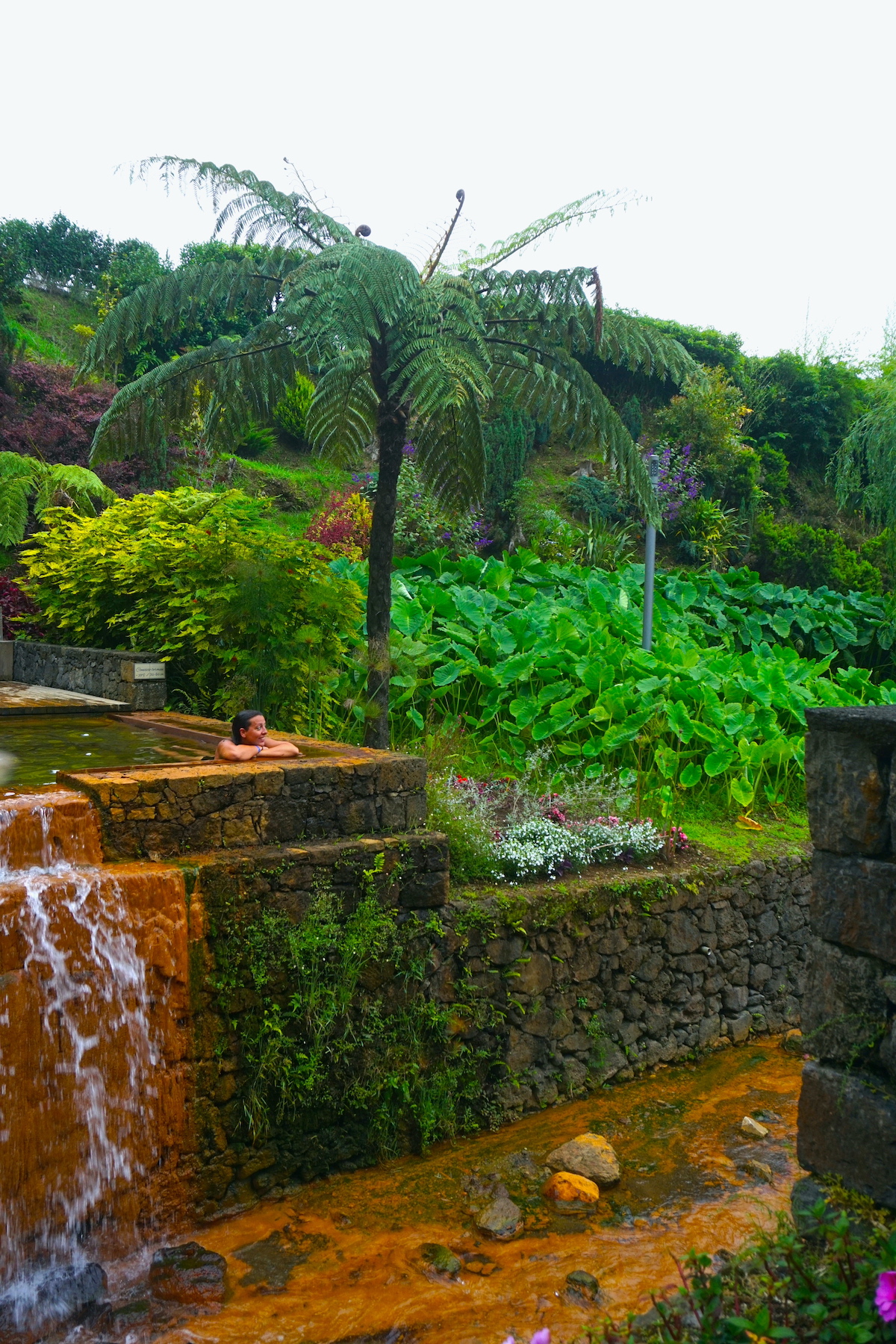
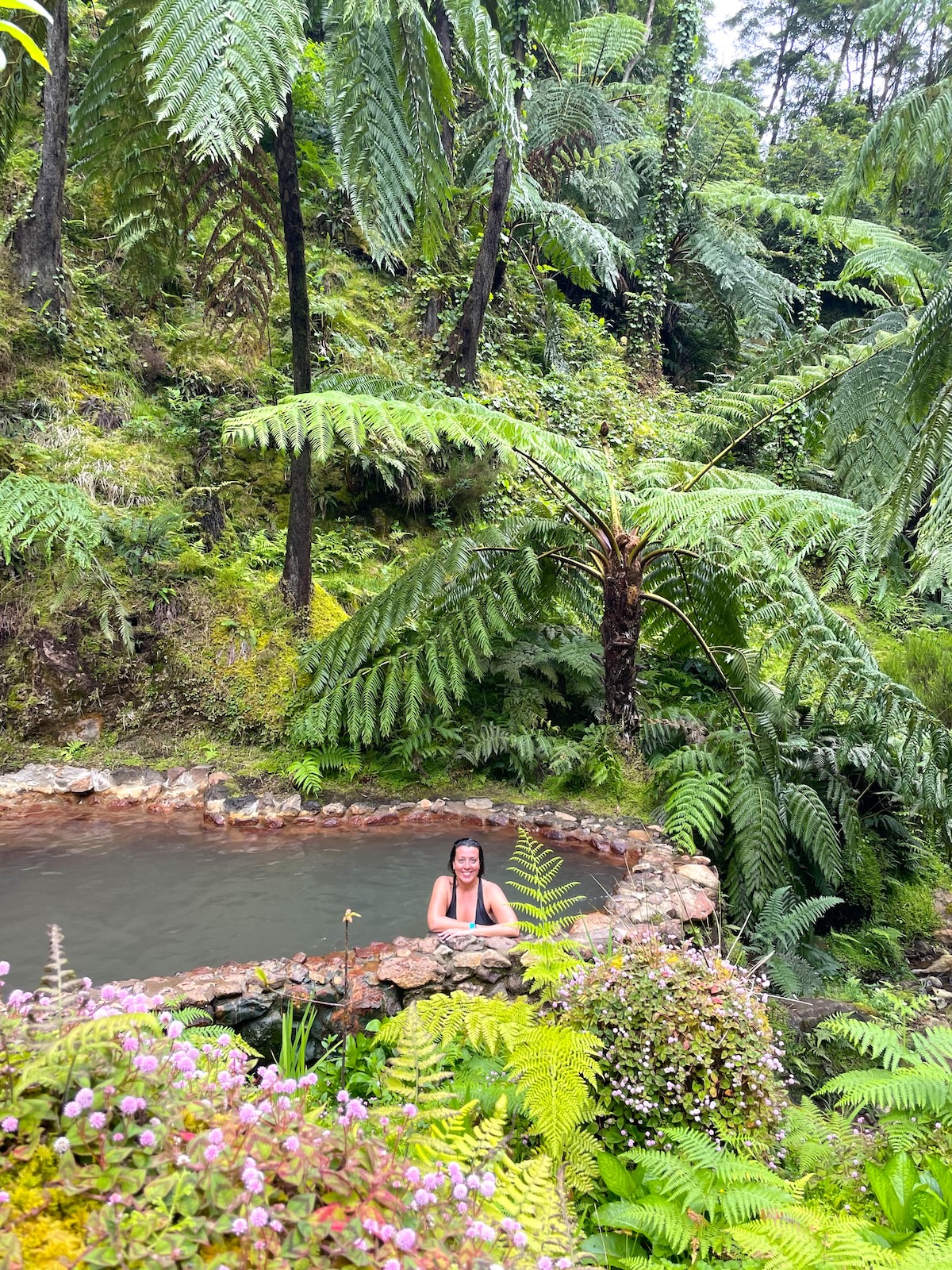
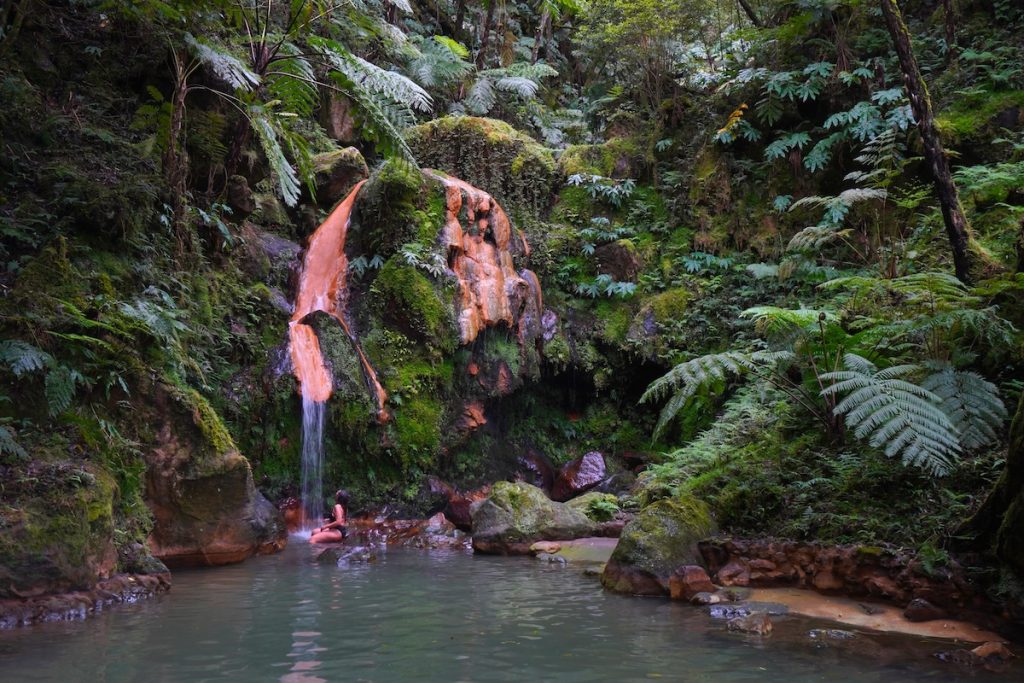
If you have seen the second season of the series, you will surely have been struck by the idyllic setting of the hot springs where Ofelia, the Brazilian drug trafficker, and Fagner relax. Later in the series, also in the second season, Inspector Frias’ daughter appears in the same thermal paradise. Well, we have good news for you: we have identified this paradise, and it is called… Caldeira Velha.
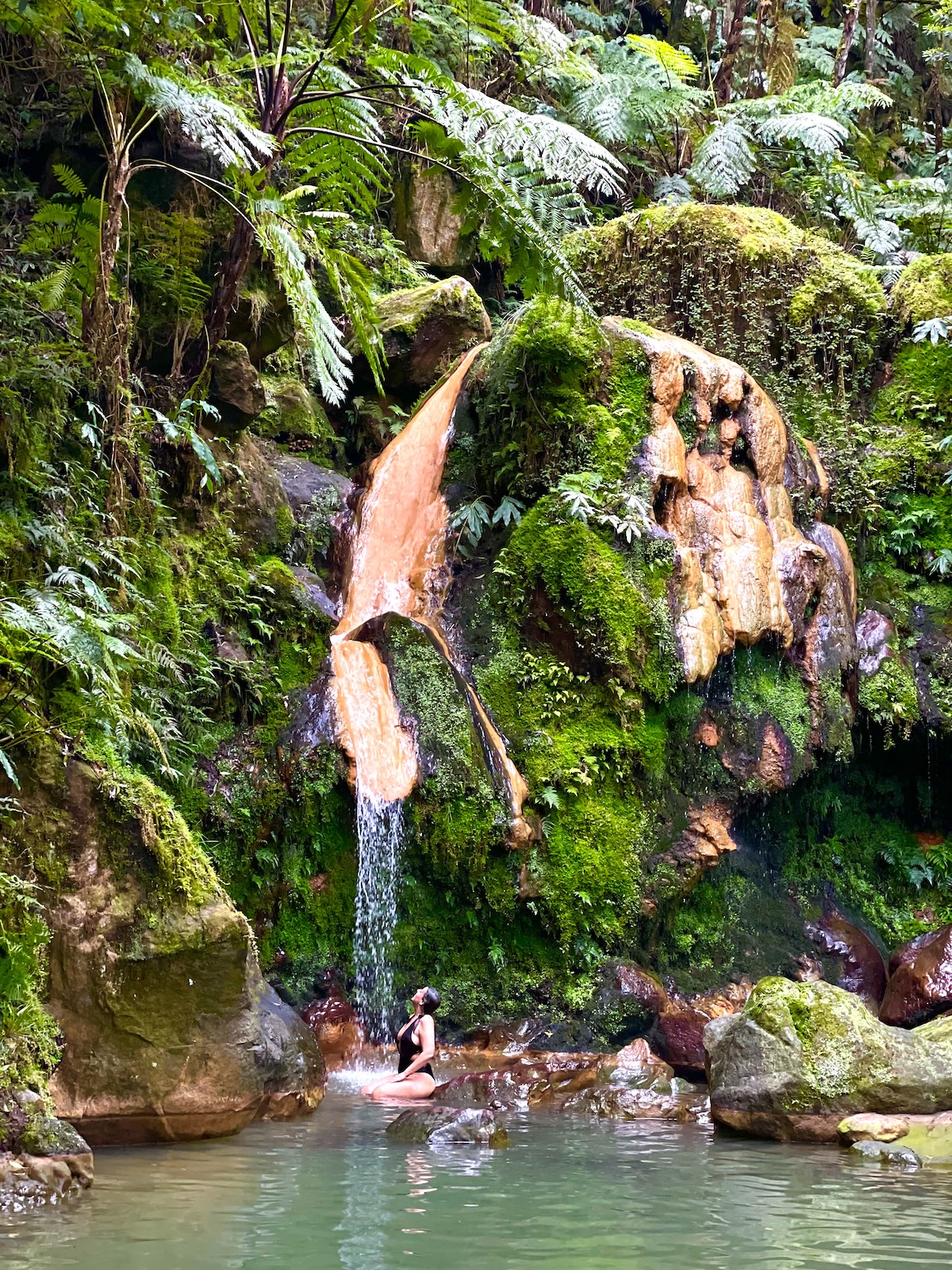
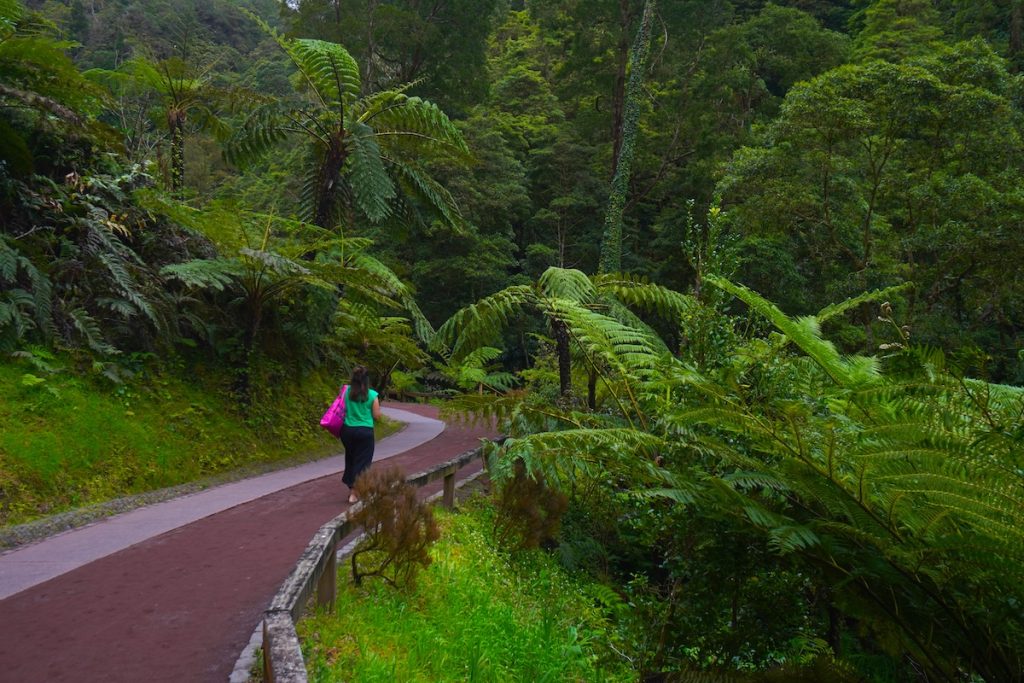
This garden, rich in endemic plants, invites you to take a deep breath and end up under a hot waterfall, which is perhaps why it was the place chosen by Ofelia to try to distract herself from the possibility that something could go wrong in the drug transport process managed by her team and the rapexinhos team (and spoiler: she was right to want to relax, it did indeed go wrong, especially for her). The temperature in this pool is around 25ºC, and in the other three thermal pools, the water is between 37ºC and 39ºC. The setting is incredibly beautiful.
Islet of Vila Franca do Campo and Vila Franca do Campo
In the center of the island’s south coast is the oldest municipality of São Miguel, the island’s capital until 1522, Vila Franca do Campo, and about 500 meters from the coast is the Ilhéu de Vila Franca or, as it is also known, the “princess’s ring” due to its shape. This islet is an ancient submerged volcano whose flooded crater forms an almost perfect circle with a small opening towards the sea.
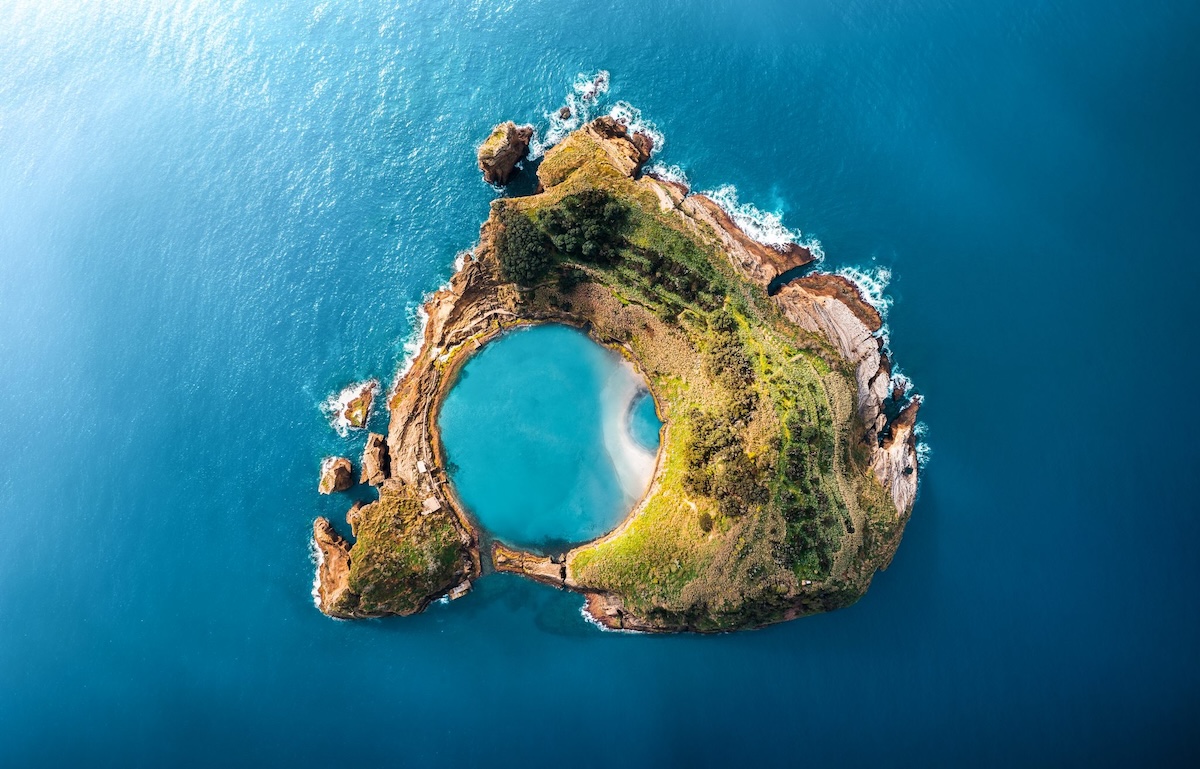
It is precisely on this islet that Eduardo and Rafael hide the cocaine so that Arruda cannot confiscate it. It is also on this islet that we discover that Eduardo and Jeremiah do not kill the mobster Monti after all, as he reappears on the islet and is discovered by a group of scouts, from whom he steals the boat to return to São Miguel.

In this “reappearance” of Monti on the islet of Vila Franca, there is a scene at night in which he silences the cagarros (Atlantic shearwaters), an indispensable part of the soundtrack of any trip to the Azores.

The cagarros (Atlantic shearwaters) are migratory birds that nest in the Azores and whose distinctive“awa awa” song (almost as if they were singing the chorus of the song Video Killed the Radio Star) leaves no one indifferent. If you are traveling to the Azores soon, you should know that to prevent young shearwaters from being caught or run over on the road, the Azores Government promotes the SOS Cagarro Campaign every year, which we recommend you learn about when you arrive in the archipelago.

In the second season, the municipality of Vila Franca do Campo takes center stage, more so than its islet (which continues to appear in drone footage between scenes). Vila Franca do Campo is the oldest municipality in São Miguel and was the island’s capital until 1522.
It is in this beautiful town of narrow streets leading to the sea that Carlinhos meets the priest (with whom he hooks up in the first season) for the first time since his return from the US and where he immediately goes to a pharmacy to try to find the opioid he started taking for his chronic pain in his hand and to which he developed an addiction. Unable to find it (the pharmacist tells him that the drug is not even sold in Portugal, referring to the lack of control over drugs in the US and the serious problem they have had with opioids in the country for decades), Carlinhos ends up buying it on the black market. The pharmacy in question is Farmacia Amaral, easily identifiable as it is located next to the Igreja do Senhor Bom Jesus da Pedra in Vila Franca do Campo.
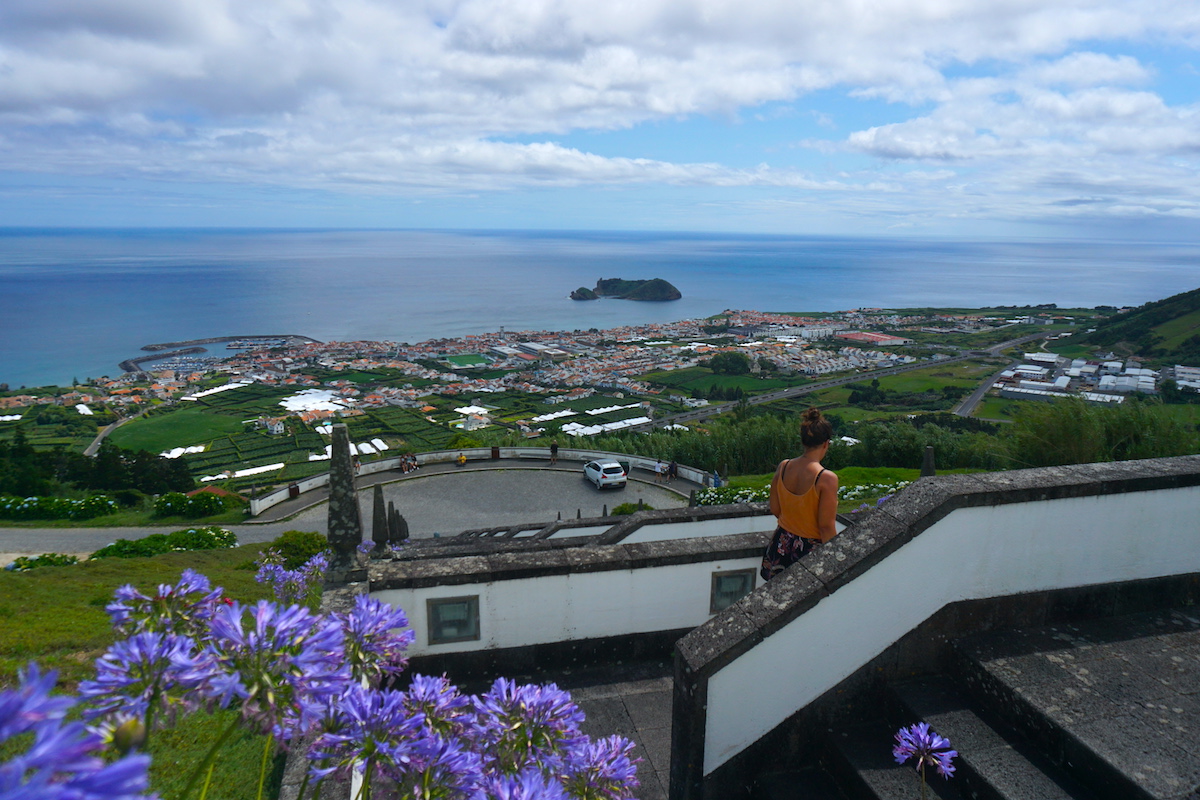
In fact, when Carlinhos is feeling ill, on the verge of overdosing (just before Eduardo appears to save him and begin the detoxification process in the cabin under Uncle Joe’s supervision), what they give him to raise his sugar level is precisely a queijada from Vila Franca do Campo.

Arnel Lighthouse
The place on the island where some of the most action-packed and tragic scenes in the first season take place is the Arnel Lighthouse. This lighthouse is the oldest in the Azores, installed in 1876 (it still works today, although it is automated and there is no lighthouse keeper on site). To visit it, you have to drive down a very narrow and steep road (35% incline) where the shootout between the Scandinavian Magnussons and Arruda and his subjects takes place. It is here that the Scandinavians realize that Arruda is trying to sell them flour with sugar instead of cocaine, and where Arruda realizes that he has been deceived by Ian, Bruna, Eduardo (or as Arruda calls him, “Quarta-feira” – Wednesday), his daughter Sílvia, and his subject Zé, as a form of revenge.

Unlike the characters in the series, at Randomtrip we do not recommend taking this short drive down (and then back up) to the lighthouse (you can take the risk, but keep in mind that less powerful cars may have problems on the way up, and if you encounter another vehicle on the way up, it could be a drama, although not as tragic as Rabo de Peixe). You can leave your car parked at the top, on the main road (EN1-1A), and walk down, which is good exercise. If you want to go inside the lighthouse to pay tribute to the place where Zé, one of the most beloved characters in the series, died, you can do so on Thursdays (from 2:00 p.m. to 5:00 p.m. in summer and from 1:30 p.m. to 4:30 p.m. in winter).

Don’t leave this area without taking in the panoramic view from the Miradouro da Ponta do Arnel, where you’ll have incredible views of the lighthouse and the surrounding area, and even a waterfall you can get close to, the Cascada de Ponta do Arnel.


This lighthouse is located in one of our favorite areas of the island of São Miguel, the Northeast. In the past, it was so difficult to reach the northeast of the island due to the existing roads and the time it took to get there that the area was known as the “tenth island” of the Azores. Today, with improved roads and the incredible landscapes it offers, it is increasingly on the tourist route for those visiting the green Azorean island.

Mirador and Cascada das Lombadas
Right at the start of the second season of Rabo de Peixe, we see a puppy being abandoned on the island of São Miguel (a criminal practice that is unfortunately common in Portugal) at the Lombadas viewpoint (and waterfall). Although we are not absolutely sure of the location, the panoramic view with the waterfall in the background is what made us choose this area. The Lombadas viewpoint offers a panoramic view of the river valley northeast of the Fogo volcano, and the Lombadas waterfall, visible in the valley, has a main drop of around 45 meters.
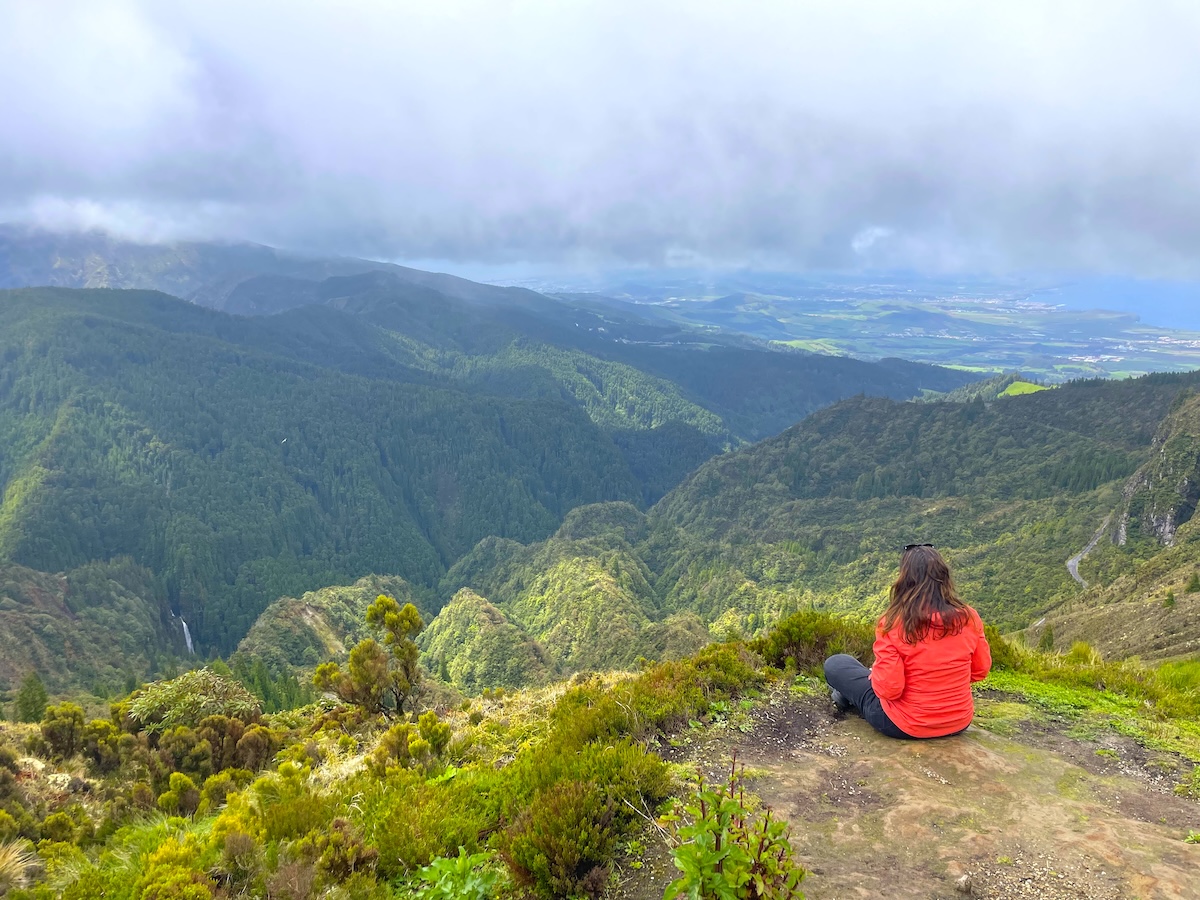
Another setting that appears quite often, especially in the second season of the series Rabo de Peixe, is the impressive Lagoa do Fogo, one of our favorites and close to Lombadas.

Monte Palace Hotel and Lagoa Sete Cidades
There is something poetic and sinister about abandoned buildings. Perhaps that is why the ruins of the Monte Palace Hotel were chosen as the setting for one of the most important scenes in the plot of the first season of the series Rabo de Peixe: the encounter between the police and the mobster Monti, who (spoiler alert!) finally manages to escape.

The Monte Palace Hotel’s building, opposite the incredible Vista do Rei viewpoint and its panoramic view of the Sete Cidades Lagoon (which makes it even more photogenic and videogenic), tells the story of what was once a luxury hotel that opened in 1989 (apparently six years later than planned) and closed less than two years later due to financial problems.

The terrace on the top floor of the hotel offers breathtaking views of the Sete Cidades lagoon. Knowing that the Level Constelation real estate group has recently acquired the hotel to turn it into something beautiful (and hopefully as sustainable as a hotel can be), even though it currently has no security or signage, you should be aware that it is private property and entry is prohibited.
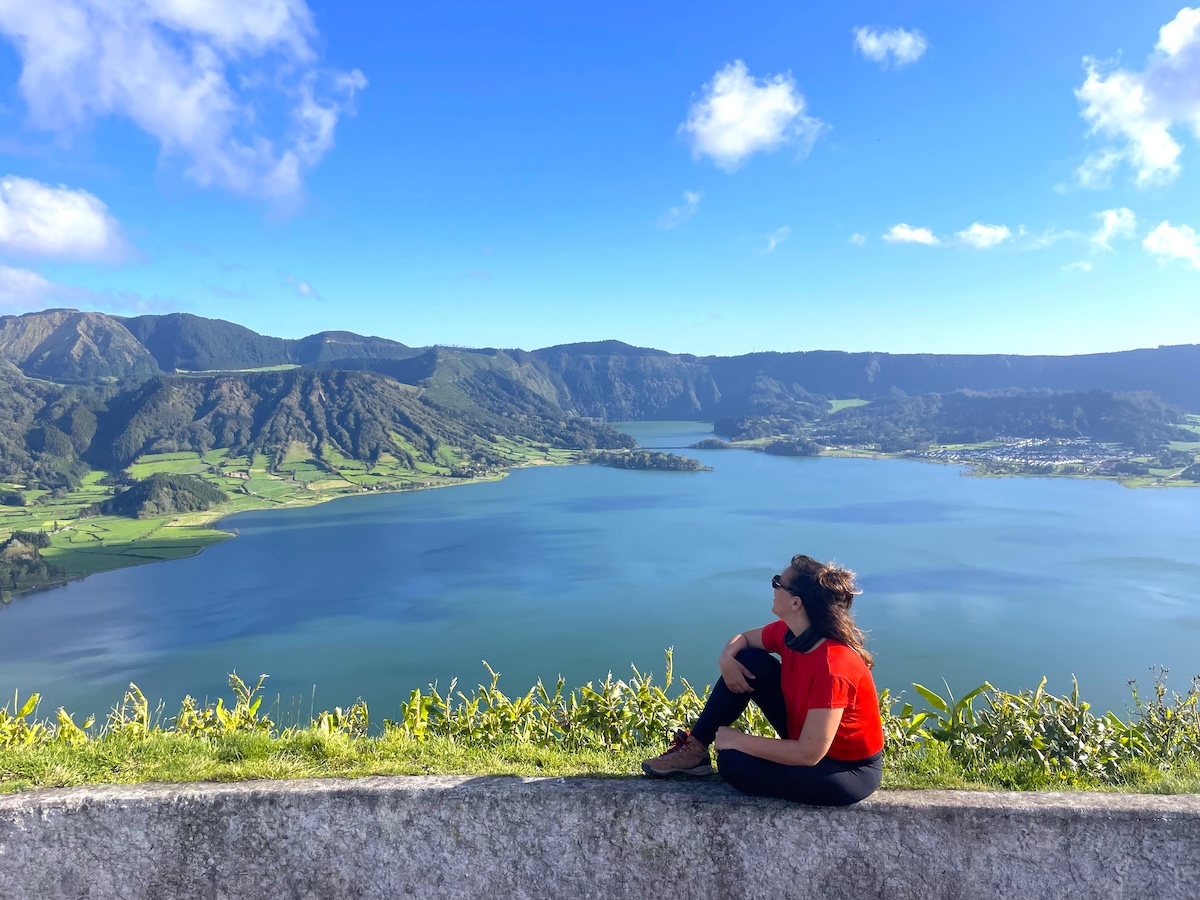
This hotel is located opposite one of the most beautiful and photogenic lakes on the island of São Miguel, Lagoa das Sete Cidades. Although they may look like two lakes joined together, one green and one blue, they are actually a single lake with green water on one side and blue on the other, with different depths and concentrations of algae, which do not mix. There is a legend associated with this lake that gives it its name. You can read about this legend in our complete guide to the island of São Miguel.

We think that Lagoa das Sete Cidades takes on even more prominence in the second season of the series Rabo de Peixe. Although we cannot say for sure, at Randomtrip we would bet that it is precisely in this lagoon, more specifically in an area called Jardim da Lagoa Azul, where the dog that is abandoned at the beginning of the second season meets some (frightened) scouts with Arruda’s hand in its mouth. On the other hand, could it be that the series’ screenwriter and director, Augusto Fraga, was a scout in his childhood? Because scouts always appear in the series, linking important scenes in the narrative. Remember that it was also the scouts who found the mobster Monti in the first season…
Faial da Terra
Another new location in the second season is Faial da Terra, where Rafael Medeiros takes refuge after being found alive at sea by a fishing boat (and after—according to the series’ narrative—returning from a short stop in Santa Maria, where the fishermen were headed first before returning to São Miguel). It is here that we see Rafael, wrapped in a blanket as if he had just docked at the port below ( Portinho de Faial da Terra), arrive at the house of Lídia (his father’s widow?) who takes care of him until he “feels the call of the Lord.” He tries to become a different person, one with a drug-free life, and even becomes the leader of the island’s anti-drug movement (spoiler alert: Rafael’s attempt at a new life doesn’t last long). It is also at this house in Faial da Terra that Silvia, his ex-girlfriend, visits him (pregnant, although he does not know this yet), after finding out on TV that Rafael is alive and well (doing good, even preventing a young man from committing suicide) at his stepmother/lover’s house. Silvia and Rafael say goodbye, confirming the end (for now) of their relationship, with Portinho de Faial da Terra as the backdrop.
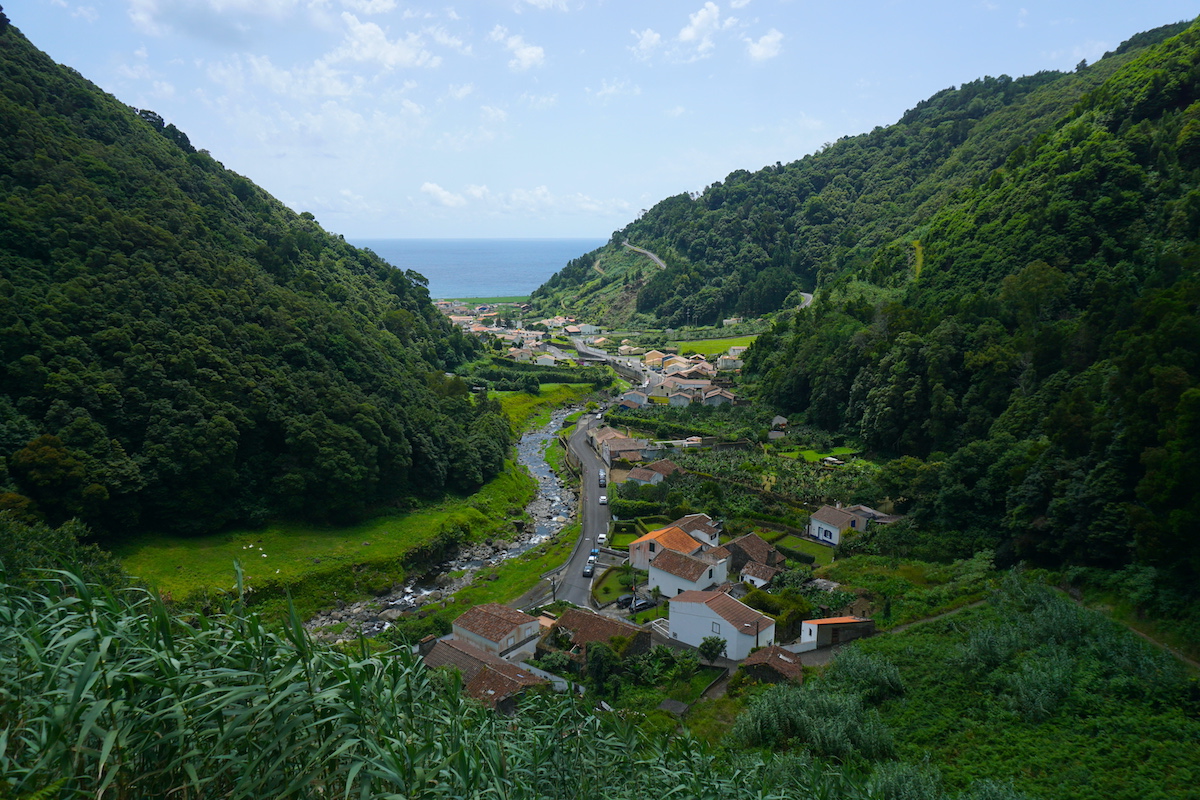
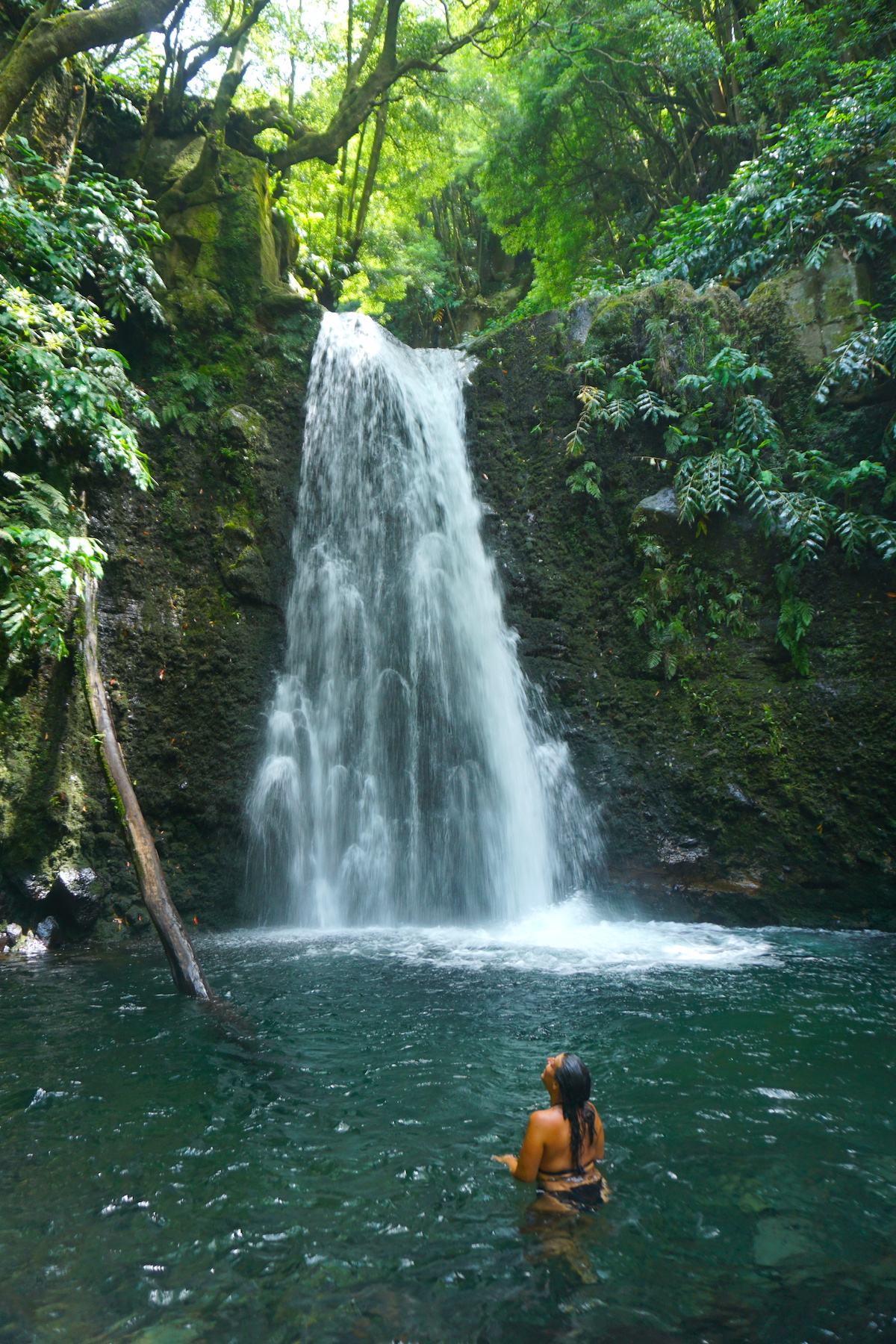
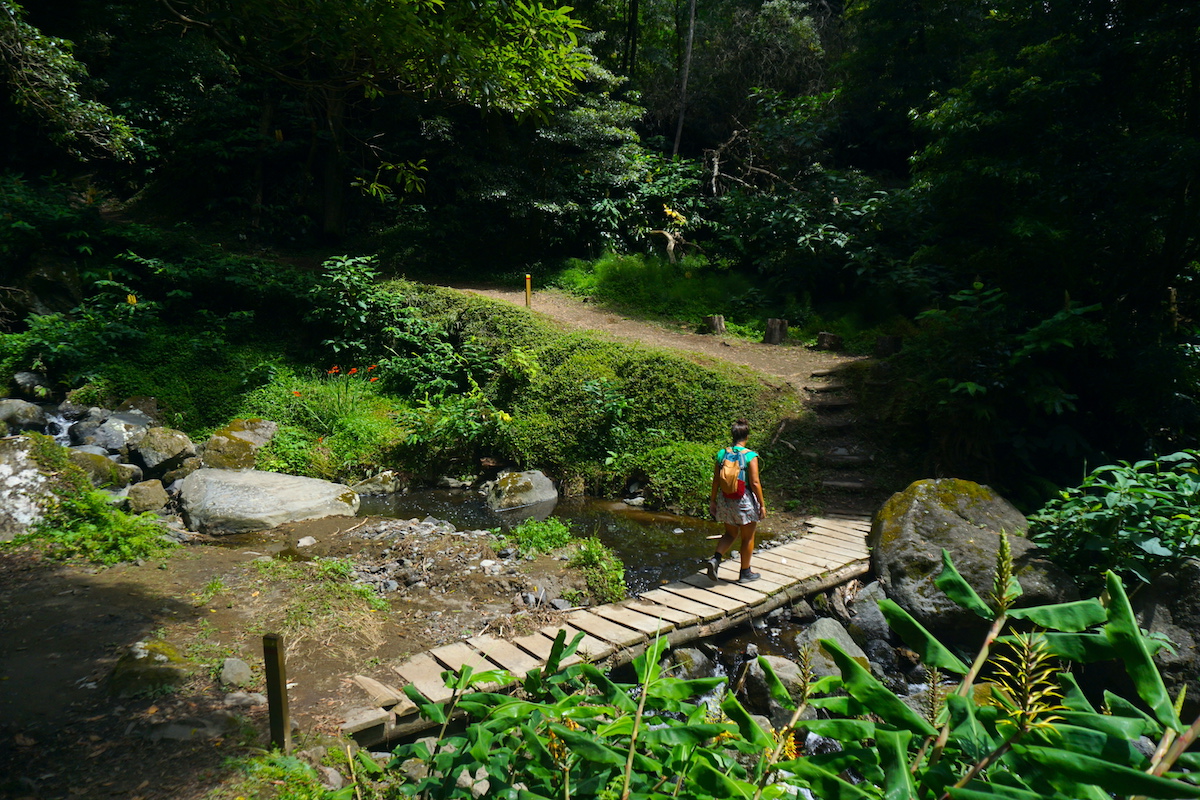
As a curiosity, it is worth mentioning that one of the most beautiful trails on the island starts here in Faial da Terra. It is a 4.5 km circular trail that starts in Faial da Terra, passes by the impressive Salto do Prego waterfall for a refreshing dip (the water is freezing) – you can take a detour to another waterfall called Salto do Cagarrão – and ends in Sanguinho, a beautiful restored rural village where you can stay overnight.
Ponta Delgada
The island’s capital is where, “supposedly,” Inspector Frías (who comes from mainland Portugal specifically to help with this case) and the rest of the Ponta Delgada Police, such as Banha and Francisco, are based. It is also in the capital where the Ponta Delgada Prison is located, where, in the first season, Francesco Bonino is arrested and later escapes with the help of the corrupt prison officer Morcela (Rafael Morais). In the second season, there are new developments regarding this escape and this corrupt officer (for spoilers, see the “Antena Marconi” section of this post)…

When Inspector Frías meets with the Secretary General of the Autonomous Region of the Azores at Clube Micaelense, this location is also in the island’s capital. We recall that it is precisely at this meeting that the Secretary General makes one of the most forceful statements in the series about the neglect, condescension, and superiority complex with which mainland Portugal has been managing any matter relating to the Autonomous Region of the Azores: “It took more than 400 years for a Portuguese king to deign to visit the archipelago.”
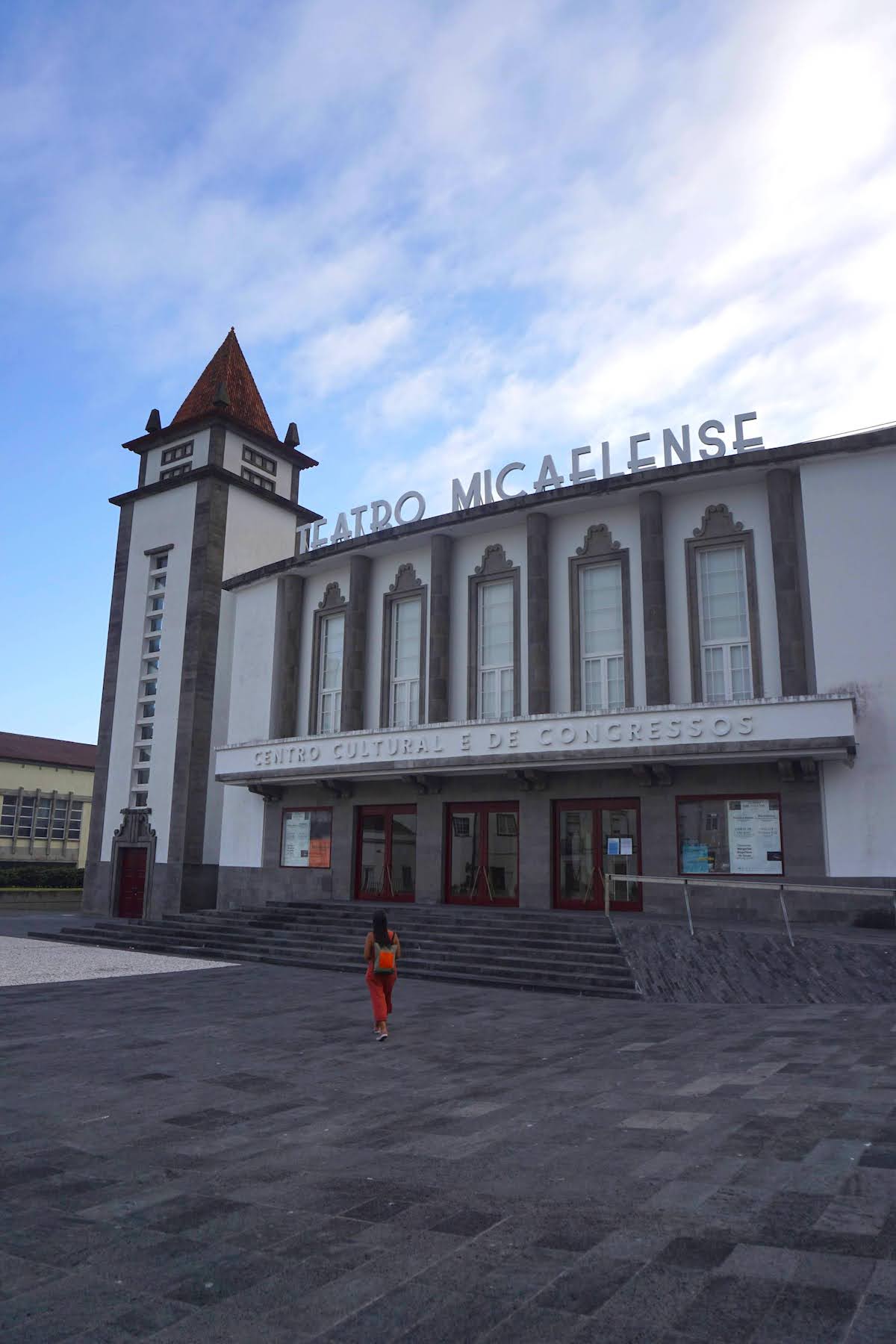
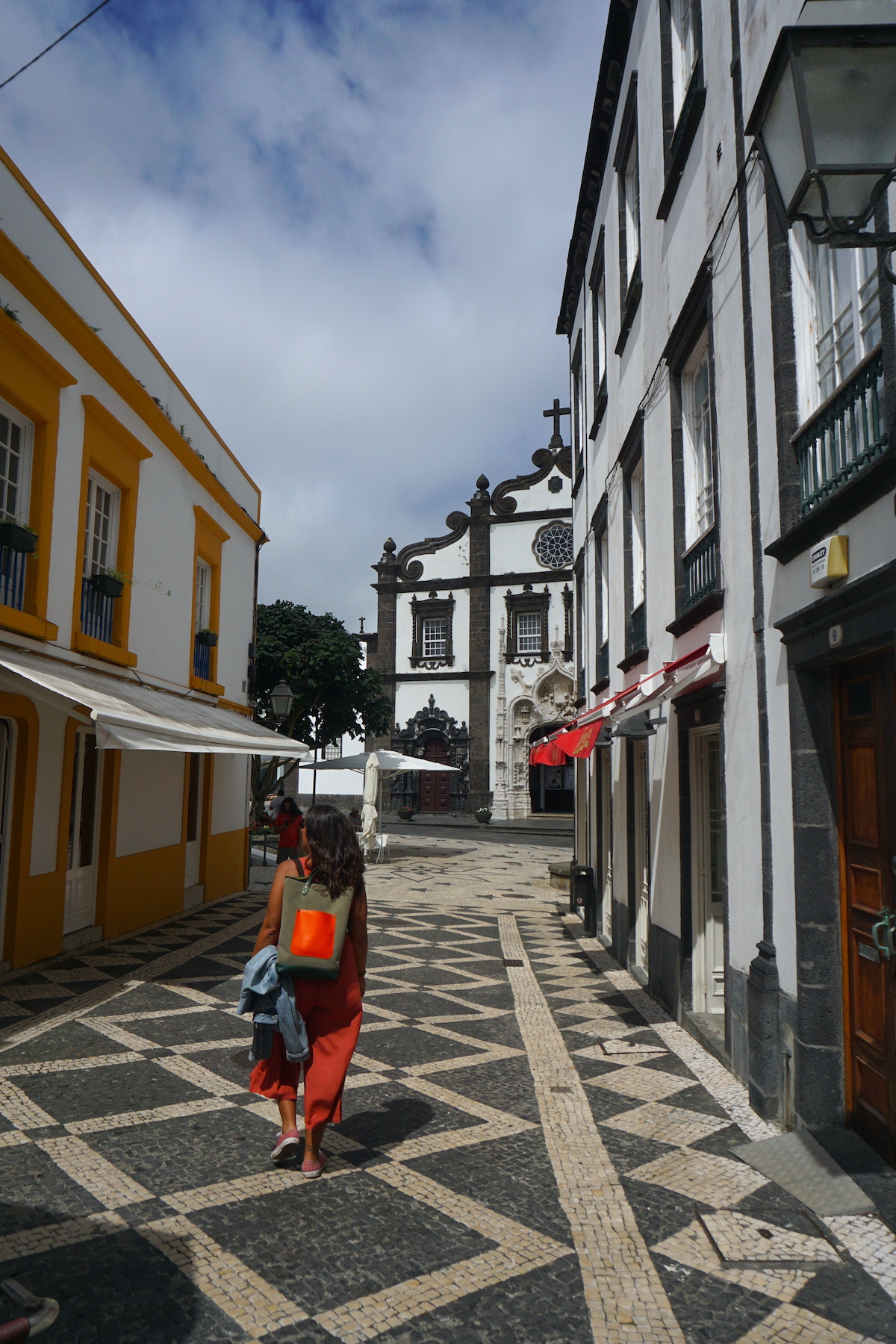
We say “supposedly” because, as these scenes were filmed indoors, they could easily have been filmed in Lisbon or Almada.
In the second season of the series, it is the capital’s seafront promenade that takes center stage. It is here that, with the “Padaria da Vila” van, the young rapexinhos, loaded with money, almost run over Inspector Frias’ daughter as she crosses the crosswalk.


Here is our complete guide to the capital so you don’t miss a thing in Ponta Delgada:
Ananases A Arruda
When the gang of rapexinhos are brainstorming with accountant Orlando (Arruda’s brother and Silvia’s uncle) about ways to transport the drugs without the police finding out, several options arise. Rafael suggests the possibility of transporting the drugs inside typical Azorean products (an idea already used in the first season where they hid the drugs in cans of Azorean tuna), one of the star regional products being pineapple.
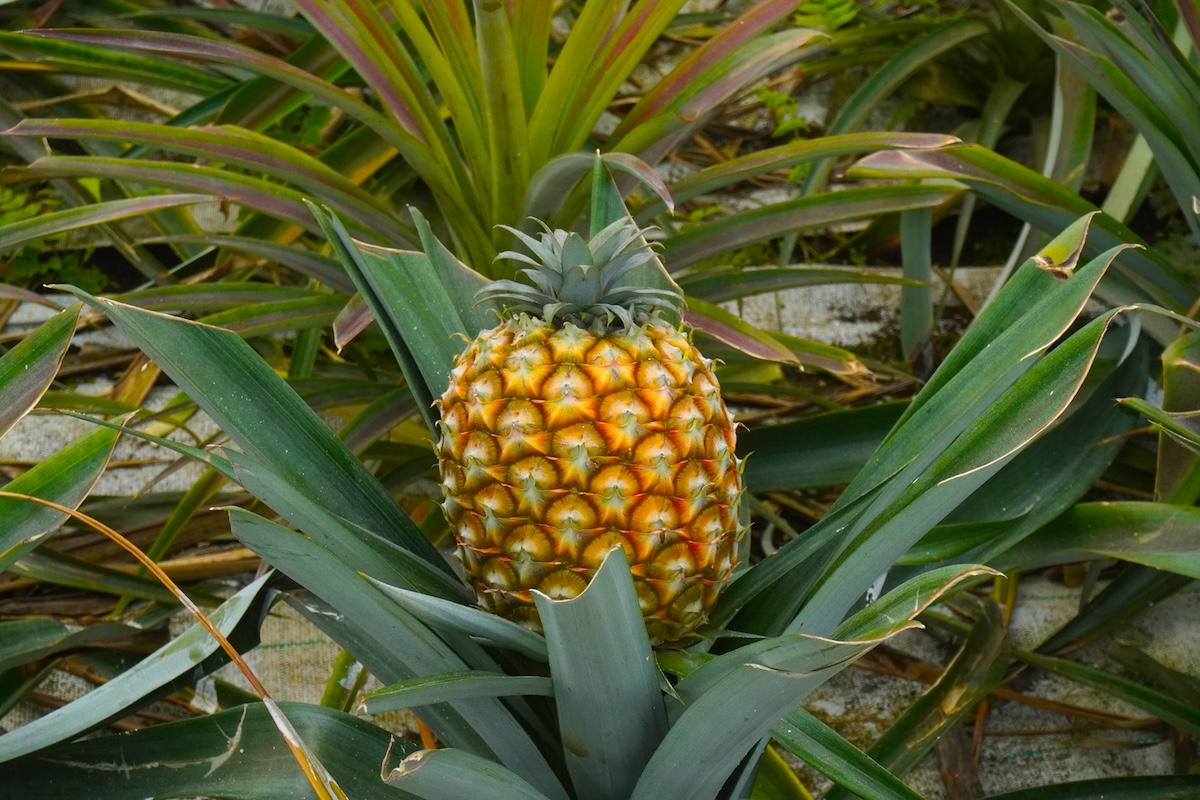
Pineapples from São Miguel have been grown in glass greenhouses since the 19th century, a local solution following the collapse of the orange trade due to disease, with the first “industrial” greenhouse dating back to 1864 and a development that led to thousands of greenhouses and exports to Europe. The traditional method combines organic “hot beds” and “fumo” (smoking) to synchronize flowering, in a slow cycle of approximately 18–24 months that defines the intense flavor of the so-called “Ananás dos Açores.”
The series specifically features a pineapple plantation on the island (in Rafael’s mind when he considers the pineapple option—an idea that, incidentally, ends tragically in his head and does not go ahead) which is the Ananases A Arruda plantation.
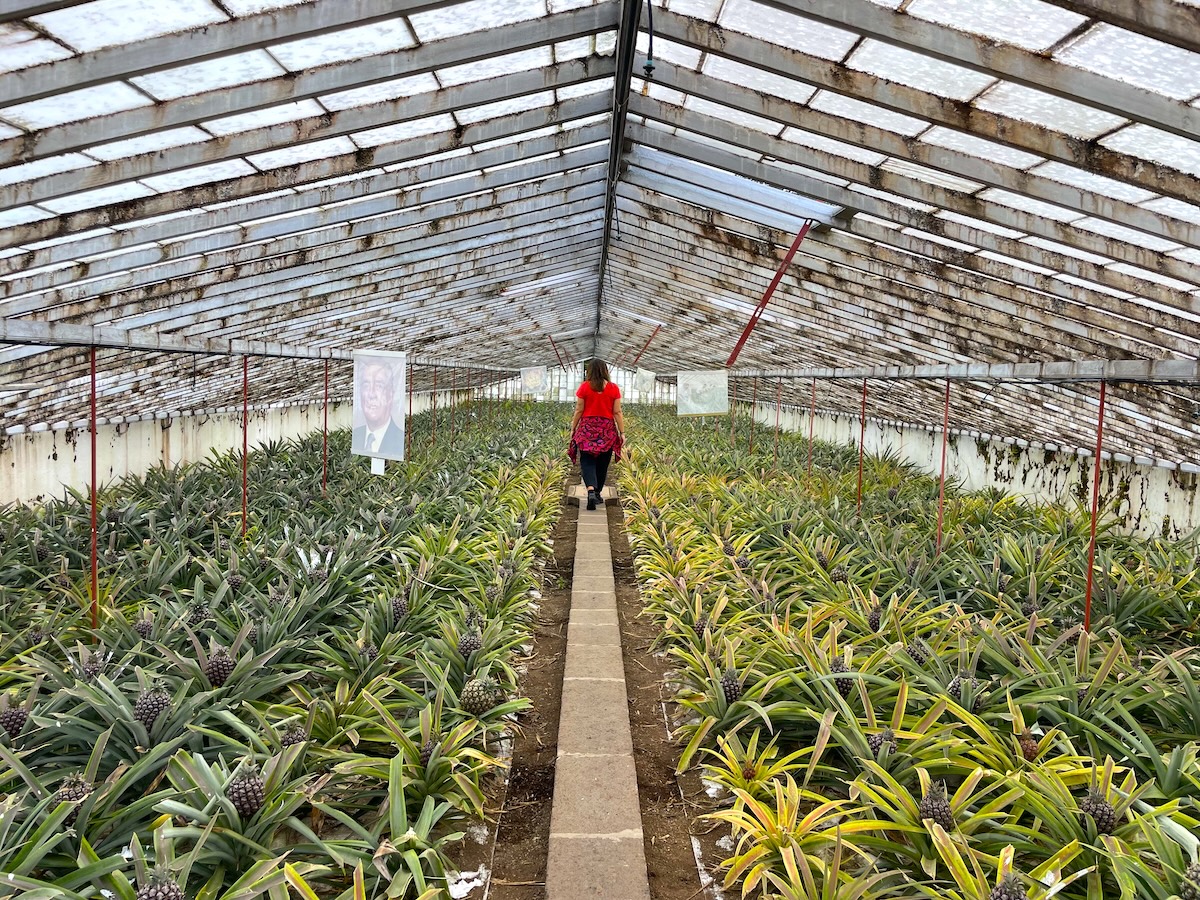
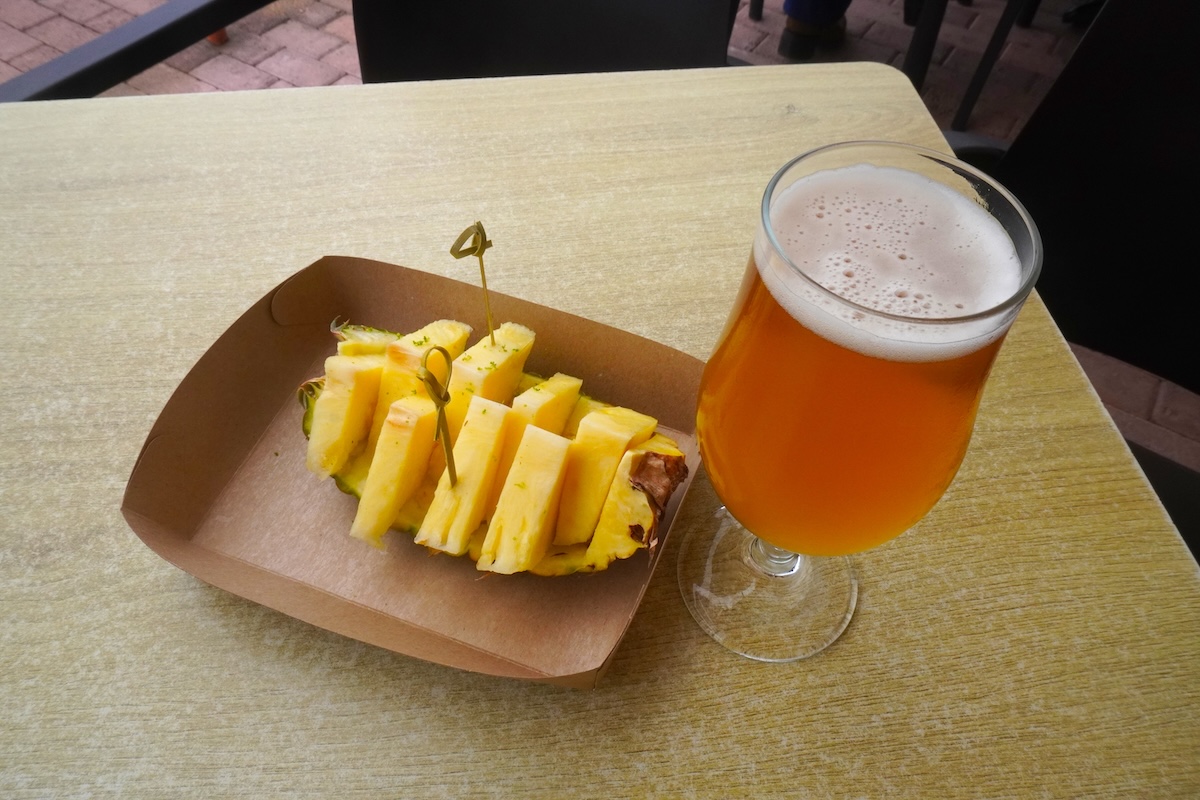
Ananases A Arruda is ahistoric pineappleplantation in Fajã de Baixo (Ponta Delgada) where you can tour the greenhouses in different stages of cultivation (propagation, growth, flower induction, and ripening), a true living museum of this unique culture, with free admission, a shop, and even a small bar where you can try their own pineapple liqueur and derivative products such as pineapple beer!, pineapple cake, grilled pineapple burgers, and, of course, pineapple itself, cut from the plantations. Highly recommended.
Marconi Antenna
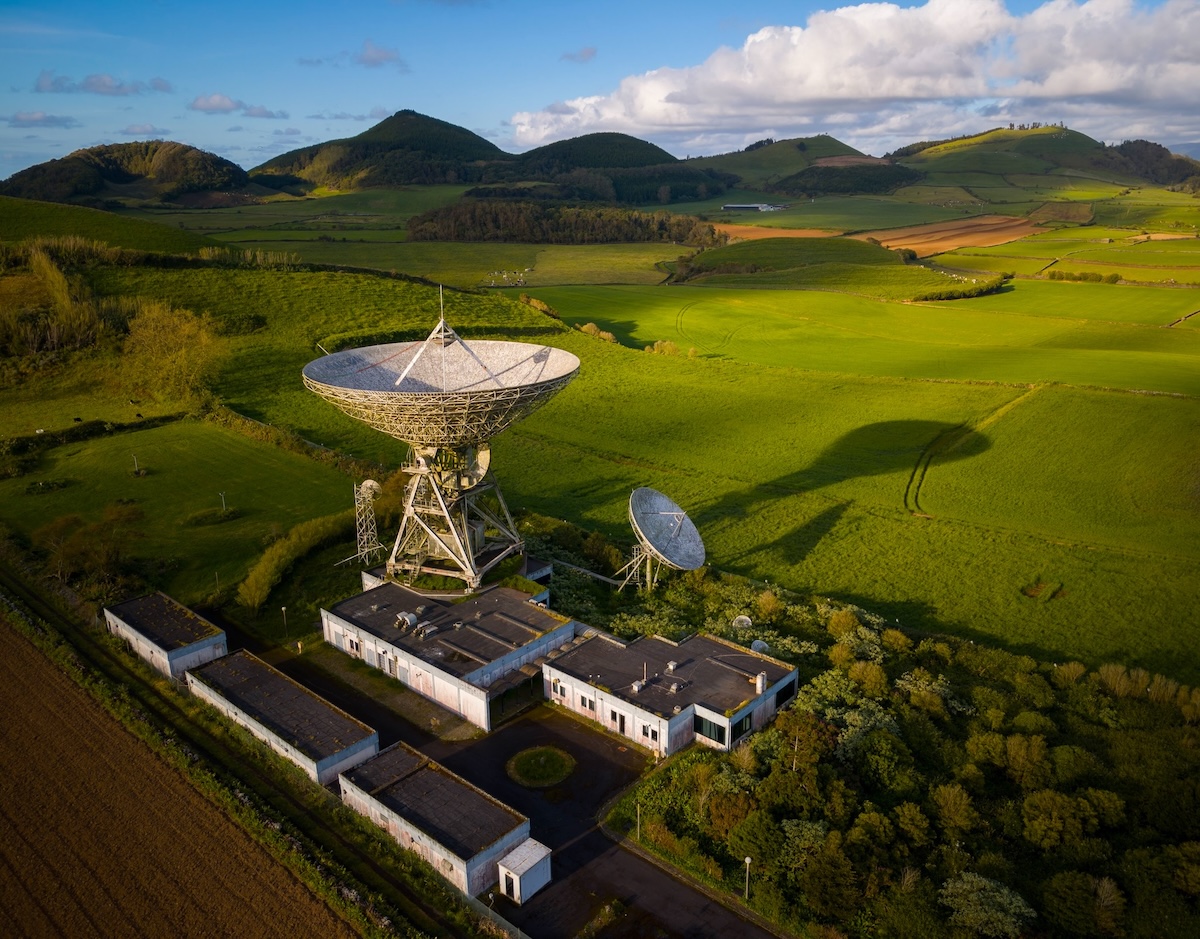
Do you know that place where the Italian fugitive Monti has his trailer parked, where he is living in hiding and where the corrupt prison officer Morcela knows exactly where he is? Yes, that’s the one, where there’s a giant antenna next to some cabins, where Morcela takes Uncle Joe Cunha and he tells him he can help, that he knows where the drugs are and where, without knowing it, it would be the beginning of the (tragic) end of both their lives at the hands of Brazilian drug traffickers (although Uncle Joe’s end is much more altruistic than Monti’s…).
This location is called the “Marconi Antenna”in São Miguel and is a large satellite communications antenna located in an old technical station historically linked to the radio and telecommunications infrastructure operated in Portugal by the Companhia Portuguesa Rádio Marconi (CPRM). It is currently out of service and the facilities are abandoned and closed to the general public.
West Coast of São Miguel
Finally, the most difficult location, both for Randomtrip and viewers (it is not easy to figure out where it was filmed) and, in the fiction, for Arruda (who wanted to discover where Eduardo, Silvia, and Carlinhos were hiding): the location on the island of São Miguel of Uncle Joe’s Cabin and its surroundings. As is well known, Eduardo’s uncle (as he calls his nephew), Uncle Joe (brother of Eduardo’s mother, brother-in-law of Jeremiah), after spending several years in prison in the United States, was deported to his country of origin, Portugal, and more specifically, to the island where he was born: São Miguel. And it is precisely in his house that the three young people, Eduardo, Silvia, and Carlinhos, take refuge, wanting to escape both the villain Arruda and the police.

It has been confirmed that the cabin is not located on the island of São Miguel but in Mafra, but the scenes shot on the beach, where Eduardo and Silvia finally resolve their unresolved romantic and sexual tension throughout the season; where the three have moments of happiness with Uncle Joe, each traveling back to their childhood; and where Eduardo receives the sad news of his father’s murder; at Randomtrip we bet (note, this is just an idea) that it is on the west coast of São Miguel. These scenes transport us to the volcanic landscape of Mosteiros Beach or its surroundings; Ponta da Ferraria or Ponta do Escalvado. Although it could also be a scene from the south coast of the island, near Feteiras.

If, in addition to the places mentioned here, you want to know everything there is to see and do on the island of São Miguel in the Azores, with specific itineraries for a weekend or a week on the island, don’t miss our comprehensive (and free!) guide to São Miguel with all this information.
Bonus Track: Santa Maria, the new star island in the second season of Rabo de Peixe
In the second season of the series, another Azores island takes center stage: the neighboring island of Santa Maria, the closest island to São Miguel.

Santa Maria is the grandmother of the Azores (the oldest geologically, in fact it was born twice), known as “the Algarve of the Azores” for its extensive sandy beaches and mild, stable climate throughout the year, and in the latest season of Rabo de Peixe, it plays an important role.
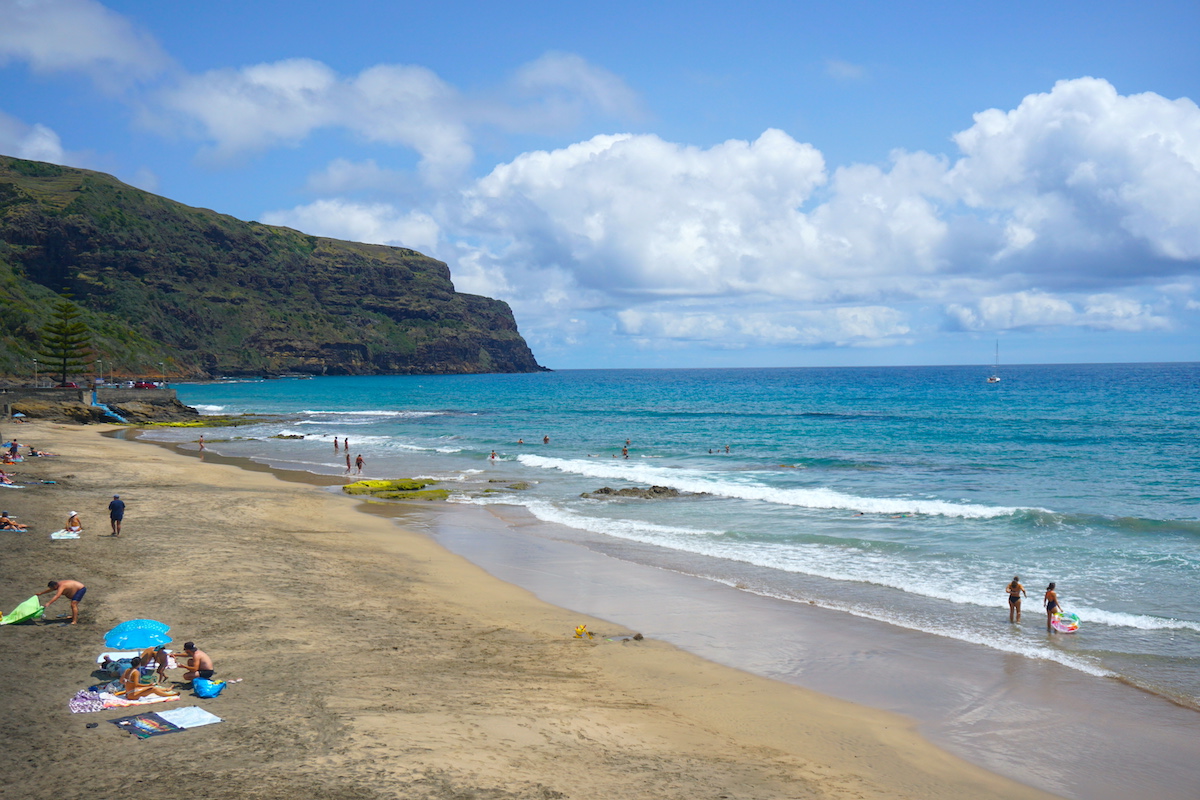
Santa Maria appears both at the beginning of the second season, when a fishing boat rescues Rafael from the sea (after Arruda’s attempted murder at the end of the first season in which, we later learn, he pretends to be dead), and halfway through the series when Brazilian drug traffickers put them to work transporting drugs from São Miguel to Santa Maria. after a cathartic moment between Eduardo and Rafael on the boat (“Mas quem será, mas quem será o pai da criança,” as the Portuguese pop song says), they both arrive safe and sound at the runway of the small airport in Santa Maria.
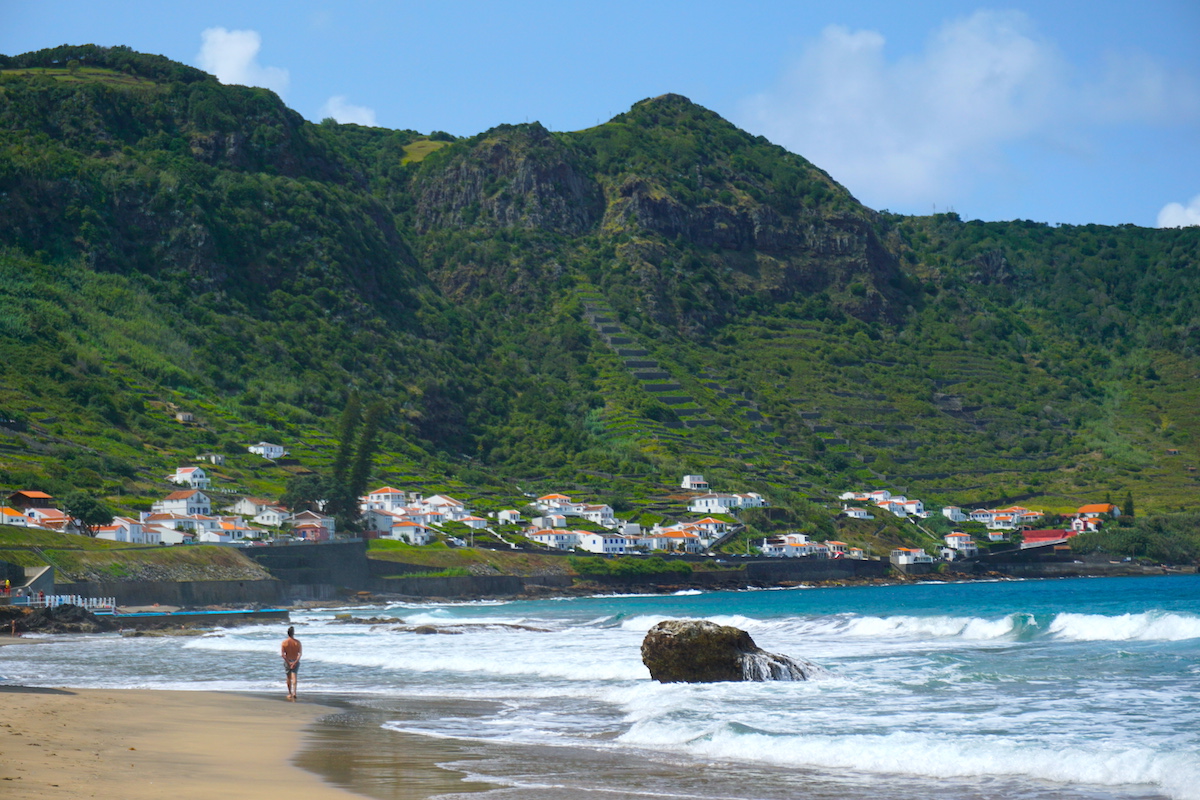
Fun fact: Did you know that Frank Sinatra’s first two concerts in Europe were on the Azorean islands of Terceira and Santa Maria? Yes, Sinatra performed in Santa Maria (one day after performing in Terceira) in June 1945 (the year World War II ended) for the American soldiers who were on the island. The performance took place at the Atlántida-Cine, a movie theater at the airport built by the Allied military with a capacity for more than 500 spectators. It’s clear to us that he performed in Terceira, due to the American military base there, but why Santa Maria? In the context of World War II and negotiations between the US and Portugal (which was “supposedly” neutral in the war, with emphasis on the word “supposedly”), it was decided that Santa Maria had suitable land for building an airstrip, and so it was. Incidentally, once the war was over, it became a civilian airport, the first in the archipelago. We tell you more interesting facts about this island in this section of the guide.
The island of Santa Maria was one of the best surprises we had on our various trips to the Azores archipelago, and we highly recommend it. If you’re interested, here’s our complete and free guide to Santa Maria:
The first season of the series Rabo de Peixe was so successful that it premiered on May 26, 2023, and on June 15, 2023, Netflix announced a second season, which premiered on October 17, 2025. At the time of writing this post, a third season has not yet been announced, but the truth is that the ending leaves the door open for “To be Continued”… What do you think? Did you like the first or second season better? Tell us in the comments! And if you go to the island and visit any of these locations, be careful not to get too hooked because São Miguel is addictive!
Disclaimer: All the filming locations mentioned in this article are the work of Randomtrip, who recognized these places from scenes in the series’ episodes after a two-month trip (in 2021) and another month-and-a-half trip (in 2025) to the Azores (including three weeks in São Miguel and one week in Santa Maria), and created this article. These locations have not been confirmed by the production company Ukbar Filmes. All photos and texts in this article are the property of Randomtrip, with all rights reserved (except for the one photo owned by Netflix, which is mentioned as such). You can see some of the filming locations from the first season with audio and information on the VizitAR app (iOS, Android).

